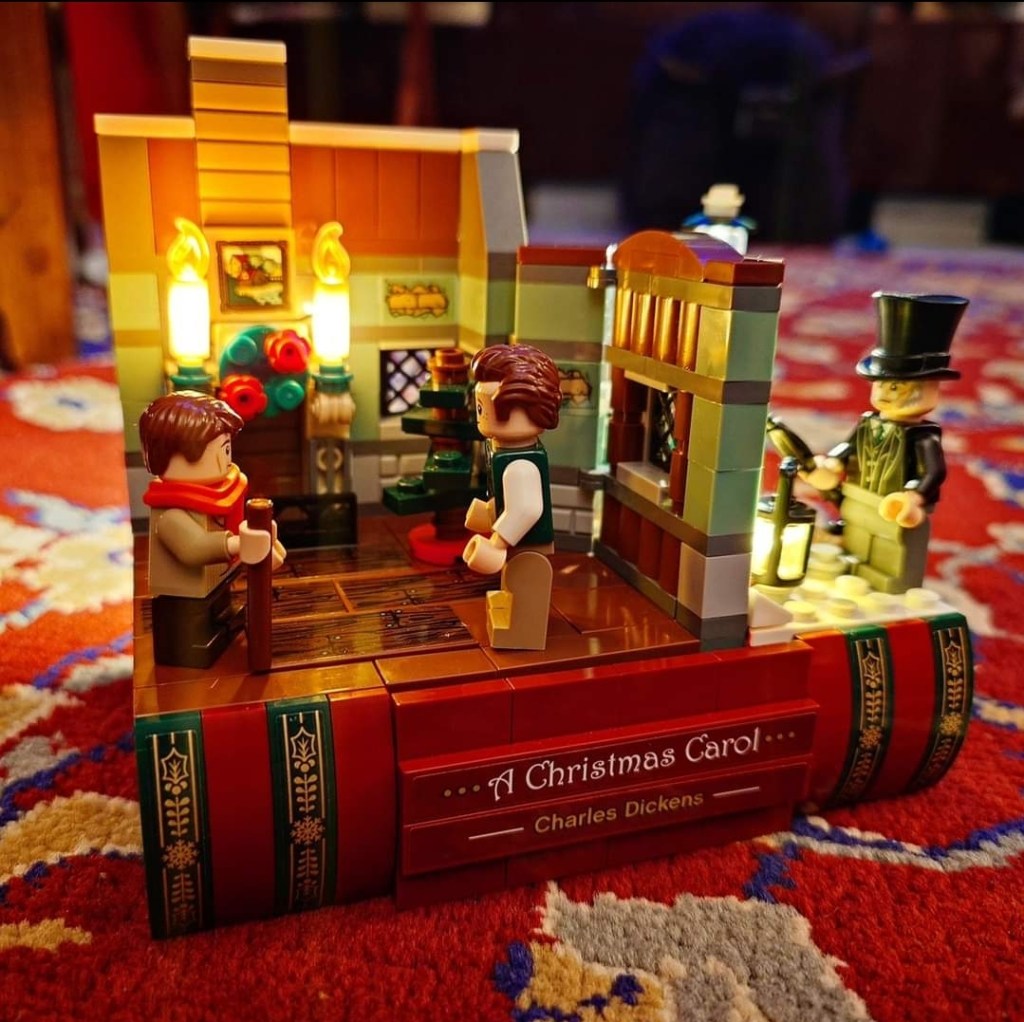
Scrooge was better than his word. He did it all, and infinitely more; and to Tiny Tim, who did not die, he was a second father. He became as good a friend, as good a master, and as good a man, as the good old city knew, or any other good old city, town, or borough, in the good old world. Some people laughed to see the alteration in him, but he let them laugh, and little heeded them; for he was wise enough to know that nothing ever happened on this globe, for good, at which some people did not have their fill of laughter in the outset; and knowing that such as these would be blind anyway, he thought it quite as well that they should wrinkle up their eyes in grins, as have the malady in less attractive forms. His own heart laughed: and that was quite enough for him.
He had no further intercourse with Spirits, but lived upon the Total Abstinence Principle, ever afterwards; and it was always said of him, that he knew how to keep Christmas well, if any man alive possessed the knowledge. May that be truly said of us, and all of us! And so, as Tiny Tim observed, God bless Us, Every One!
A Christmas Carol by Charles Dickens
Merry Christmas everyone, wishing you all love and laughter and excessive amounts of good cheer!
For regular readers of this blog, the fact that I adore Christmas probably comes as no surprise. It contains everything I love, time with people I care about, movies, heaps of romance, and an excuse to indulge in lots of lovely food and drink. I’m not religious. I embrace the shamelessly commercial, and I dive right in. I make Christmas puddings the week after Halloween. My Christmas tree gets delivered on the last weekend in November, and from that point on I’m full blown carols and Christmas cheer for as long as I can get away with. So, in this, my last post before Christmas, I wanted to share all of the reasons why I love it and explain, even as someone who won’t be at church on Christmas Eve, all of the benefits I think the season can provide!
Time for reflection
Number one on my list (that’s definitely not hierarchical) is the fact that this time of year encourages me to spend some time on active reflection. I spend so much of my working life in responsive mode and fire fighting, that it can feel like I achieve nothing and go no where. When looking at what I need to close off before the end of 2024, I am also trying to take some time to actively reflect. What did I actually achieve? What went well? What have I learnt, especially from the things that didn’t go so well? What do I want to take with me in terms of life lessons and priorities into 2025? Almost more important, what do I need to let go off? What baggage am I leaving in 2024 in order to leave me with room for grow moving forward? This is the time when I review what’s happened, take both the learning and the good, and leave the rest in the frozen tundra so it doesn’t start to define me or weigh me down.
Time to review progress
As the nights draw in, I, like most of us, desperately try to close off some of my outstanding work list. I am, therefore, almost forced to give some of my focus into what that list will look like going into the next year. The thing that I’ve tried to do is to review whether things that are going to roll into 2025 are a) still needed or b) still serve me in my direction of travel. There are always going to be jobs that are still needed and not optional (so many apologies for not getting these done in 2024), but there are other goals, such as writing an environmental IPC textbook, were worthy of review to see if they were still something I wanted. If you are wondering the answer is yes to both the textbook and the book of this blog, both of which fell by the wayside due to limitations in capacity in 2024. I refer to this period of activity as my Christmas mental cleansing, and I find it both a helpful and comforting process that can be undertaken under a blanket with a warm cup of tea. This is also the time where I make an active choice to celebrate my successes and forgive myself for everything else.
Time for joy
Another of my favourite things at this time of year is to give myself permission to make time for joy. It’s probably no surprise to anyone that my life is pretty work heavy and there isn’t a lot of space for downtime. At this time of year I have a list of things that bring me joy that I actively schedule in and am determined to find time for. Christmas movies make up a lot of this. Watching a Muppet Christmas Carol, either on Christmas Eve or when decorating the tree. Sobbing to Love Actually and Serendipity as I take a moment to remember happy times with my sister. Indulging in the delights of spending time with my husband whilst watching Die Hard, which is a Christmas movie, on Christmas Eve. Carols whilst cooking and sitting together to highlight the Christmas Radio Times. There is never enough time to do all that I would wish, but these stolen moments make my soul feel lighter and instil every day with an extra level of joy that means I value every single single hour in the run up to the main event.
Time to indulge
OK OK, I acknowledge we all need to be healthier. I’m aware that I do not ‘need’ another cocktail, piece of chocolate, or an extra roast potato, but I am a lover of all things food and sparkling, so what’s a girl to do. Don’t get me wrong, I don’t just indulge in edibles, I also indulge in Christmas experiences, like theatre shows and more shopping than is probably good for my bank balance. I usually don’t like crowds or areas with lots of people, Christmas is the exception. I love the buzz, the feel of the atmosphere and lights whilst carols play in the background. For me, even the provision of time to shop that isn’t time restricted and just has plenty of browsing time without any time pressure built in is an indulgence. It’s a time where I allow myself to prioritise enjoyment and experiences, not just tasks. For me it’s about, for a short while, experiencing the joy of living in the moment and what it feels like to live a life without a deadline.
Time for family
It shouldn’t count as an indulgence, but sadly sometimes I am aware that I can be so focused on work and task that I forget to make room for the most important thing in my world, my family. I’m aware that I am really fortunate to have such a great relationship with my family, but I also include here the family we have by choice, not just by blood. In general my family put up with a lot; lateness, lack of focus, even the odd missed event. At this time of the year, despite the fact that it should be all year, I really do try to ensure that my priorities are in order and that they come first. It’s one of the reasons that the indulgence part is important to me, as it also involves making room and time for those indulgences and experiences to be shared. To build new memories together and to celebrate both each other and each others company. I’ve lost too many people I love in recent years to not realise what a precious gift this is and would encourage us all to take the time to slow down and smell the poinsettia.
Time to remember
My sister and I felt the same way about Christmas. It was always important to us, as well as to mummy and Mr Girlymicro. So much so that when life at Christmas meant that we had too much on and couldn’t celebrate ‘Goosemas’ together we have been known to celebrate Christmas in September, or actually at many other times of year, when we could still get together and cook a goose in each others company. You see, fundamentally, it isn’t about the date for us, it’s about the company and the time spent together. Now she’s gone we keep my sisters memory alive by watching the movies we always used to watch together, like Serendipity. This one was so much a feature of our Christmas celebrations that when Mr Girlymicro and I got married, our wedding present from my sister was to spend 3 nights at the Waldorf Astoria in New York, purely so we could re-create the lift scene from the start of the film, and visit Serendipity 3. Unlike the couple in the movie, Mr Girlymicro and I both picked the same floor (our wedding date) and manage to move direct to our happy ever after. I cry buckets every time I watch these films, but making space to remember the loved ones we’ve lost along the way, and to remember the joy they brought, is an important part of my Christmas experience.
Time to take a break
One of the reasons that any of this is possible is because this is the time of year where I always prioritise taking a break. It feels easier to do as many people are doing the same, so the addition to the email mountain is never quite as much as when you are the only one fleeing with an out of office on. It is also important for me as I know that I am going to find the months from January to March really hard. I work in a windowless converted toilet cubicle as my office, I love it, but it means that in the darker months I barely see sunlight, and after a while it gets to influence my mood. Having this little bump of joy is the foundation I use to get me through till when the flowers start to bloom and my heart starts to lift again. It’s like I’m creating a festive battery to serve until that time.
Time to reconnect
The very act of having a period of days off, when other people are often more available, means that there is an opportunity to really reconnect with people. I have very patient friends and family. I am lucky to have people in my life who I may not see for months, or even years, and yet once we hear from each other it’s like no time has passed. These people are both precious and rare in life, and so I try to ensure that this is the time that I at least reach out, even if I can’t meet up as time is short and we are geographically far away. Time is the resource that I have least of, so using it at Christmas is actually the most valuable gift I can give.
Time to feel re-inspired
A side consequence of taking a break and doing some processing is that I genuinely always come out of this time so re-invigorated and inspired. I feel like I have permission to have conversations with others about what I still want to achieve, and these very conversations give my brain all kinds of ideas. It’s so nice to have time to bounce ideas around, and feel like you are truly having time to have dialogue, rather than the sometimes perfunctory task based thinking that is all there is normally time for. The excitement that comes from these conversations really does fuel me and these things can’t happen without space and connection, and so inspiration really is a gift I give myself at this time of year.
Time to show gratitude
It’s so easy to take people for granted. I do it all the time, even though I really don’t want to. Life is run at pace, and in that rush it is easy to believe we acknowledge and thank others more than we really do, and more than they may have time to hear. My life functions because of Mr Girlymicro. He makes untold sacrifices so that I have time to sit here on the sofa writing, rather than partaking in my share of chores. Mummy Girlymicro does not get the devoted daughter she deserves, as I’m always focusing on too many things at once. This is before you bring me onto colleagues, that cover so I can undertake teaching and research, or my other friends and family, who put up with cancellations either due to work or exhaustion. I owe so many thanks to so many people. They really do make my life a blessed existence. This time of year I hope that I shout my thank you’ s loud enough to be heard and recognised, and that I put down the laptop down for long enough that, for once, I am the one taking care of others, rather than the other way around. I also want to say thank you for reading this blog. It’s come to mean so much to me, and I know that everyone has so many other options about what to do with their time. So thank you. Thank you for reading. Thank you for commenting. Thank you for liking. Thank you for coming on this journey with me.
Time to look to the future
All of which brings me to my final point. The things this season provides enables me to lift myself up and look to the future. It enables me to do so free of the baggage that has built up in the previous 12 months. It lets me do so with a focus born of reflection as to what I want and what needs to be done. It grounds me in connection and means that I remember the core values that drive me. It supports me in entering 2025 in an inspired mindset, which acts as a spring board for everything else. So I will enter my future with optimism, a clear sense of direction and the certainty that I will not be travelling alone as I move forward.
Who doesn’t love a Christmas game!
Now, if as Mr Girlymicro has stated, that was a little motivational speaker, lets bring it back to the real spirit of Christmas, festive games!!! I, being a gamer, love a festive game and so here is a fun one to kick off your day.
All opinions in this blog are my own
I know that not everyone loves this time of year or finds it easy. Please don’t feel alone and reach out for any support you need to make it through the season.
This time of year is always special to me. Not only do I adore all things Christmas, but 10 years ago on the 10th December, I passed my PhD viva, and so it holds some pretty significant memories.
The thing is, and what I did not fully realise in the moment when this awesome photo and meme were made by Mr Girlymicro, was that although it felt like the end of something, it was really just a brilliant beginning.
Now, I say a brilliant beginning, but since this picture was taken there has been my fair share of being lost in the wilderness. There has been a chunk of self-doubt. There’s been plenty of agonising about career decisions and next moves. When you are working towards a PhD, although challenging, the end point is clear and there’s plenty of sign posting along the way. When working towards a career, all of those things are much more amorphous, and it’s much harder to know whether the decisions you are making are either right or significant, in any given moment.
In light of all of us I thought, to celebrate being 10 years on, now might be a good time to share some of what I’ve found to be helpful in navigating the forest of decision-making that comes with entering your post doctoral era.
Take time to know yourself
When you finish any big piece of career development it is both joyous and, for me, confusing. You have been running head long towards a goal for years, laser focussed on crossing that finish line. If, like me, you focus so much on the target you forget to think about what comes next, the end can actually be quite jarring. So, I think it’s actually important to build in time to review throughout the process if possible, but definitely at the end. Which aspects did you really enjoy and would like to ensure you include as a priority in any future career planning? Which bits did you not enjoy? Can the bits you didn’t enjoy be avoided or reduced by making decisions linked to next steps? Bearing in mind we all have bits of any job we don’t adore…….If the bits you dislike are a feature of academia, then maybe also think more widely about where your science might fit.
Another thing that it is worth doing, is really taking some time to map and focus on your skill gaps. The great thing about entering a different career phase it that it is an opportunity to really re-invent yourself and re-set. The next thing you do, science wise, after a PhD might actually be pretty different. Choosing a post doc is an opportunity to take all you’ve experienced during your PhD and use it make a more informed decision about your future. It may be that you, for example, had never had the opportunity to undertake bioinformatics before your third year, and now it really interests and inspires you. What skills would you need to develop to have this as a more dominant feature in your career? What further experience do you need to make you competitive in the job market? Then use this reflection to make informed choices when you are developing your next steps.
The final thing to really take some time to review will be your personal priorities. I don’t want the same things now that I did in my twenties. To be honest I don’t really want the same things now that I wanted before the pandemic, my priorities have definitely changed. When you reach the end of a big career stage it is worth doing a piece of reflection, as you may have been working towards something for a period of years whilst life went on around you. I’ve had plenty of friends who were super career focussed and then reached a point, post 1st post doc, where their priorities changed and they wanted to focus more on their families for a while. Giving yourself some time to decide what work life balance looks like for you, and what your priorities are, will mean you maintain yourself as well as your career along the way.
Foster the old
It can be tempting, especially if you didn’t have the greatest experience, to walk away from everything linked to what you’ve just completed, like a PhD, into the sunset and never look back. Some people have great PhD experiences, some have awful ones, and most people have a time of both highs and lows. No matter how tempting it is to close the door on this chapter of your life this is my plea to you to consider maintaining those links. You will have spent years working in an environment where you will have invested in networks, relationships and learning. Utilising that foundation, even if not all of it, to support your next steps is one of the best things that can come out of your PhD. It doesn’t have to be via your supervisor, but through the peers you bonded with, or even other academics you encountered during the way. Invest a little in making sure that you don’t lose the things you have already put a lot of energy into when you start to move into something new.
Find your people
Now, having said about maintaining the old, we all know people who’ve clung so tightly to where they’ve come from that they never really move forward. This is also not great. You’re entering a new phase and you can’t truly maximise on the potential of that if you carry over too much of where you’ve been. If you want to continue to thrive, this is the time to expand and find your new tribe.
This can be an intimidating time but there are often routes out there within your organisation that really support you in doing this. I would advocate that, during any career transition phase, it is worth taking some time to see if you can find a mentor or get access to coaching, in order to help you through the reflection and to maximise the opportunity.
A key early focus should always be to get out there and start making your own connections, building your own relationships, and start stepping into that independent researcher space. Mentorship can really help with this, as its an intimidating thing to need to do, and it’s important to not shy away from. If you are not the best networker, like me, one of the things that I found really helpful for this was joining and becoming an active participant in professional bodies/societies or other opportunities that may exist within your organisation. This provides an organic way to meet people and build relationships, whilst also undertaking activities that interest you and service your CV. The people I met early on are not only my colleagues but many are now my friends. They are the people I call who keep me sane. So it’s time well spent.
Be prepared for the studying to continue
You reach the end of your PhD and most of us say that’s it, we are never studying again. Then, within a fairly short time, reality makes a liar of us all. If you want an academic career then the studying will continue. There will be a need to become a better educator, as well as researcher, with things like working towards Fellowship of the Higher Education Academy (FHEA) to support how well you teach, and ensure you remain competitive in the job market. There are always new techniques and specialist skills to pick up, and I would make a plea that we could all do with spending some time on developing our communication skills. I’m talking everything from grant writing skills, to media training and public engagement skills. No matter how little you think you need some of these things, you will always need them more than you predict. The added bonus is that they will also beneficially impact on other parts of your work, for instance things like public engagement skills make your general presentation skills better.
Throw your hat into the ring often
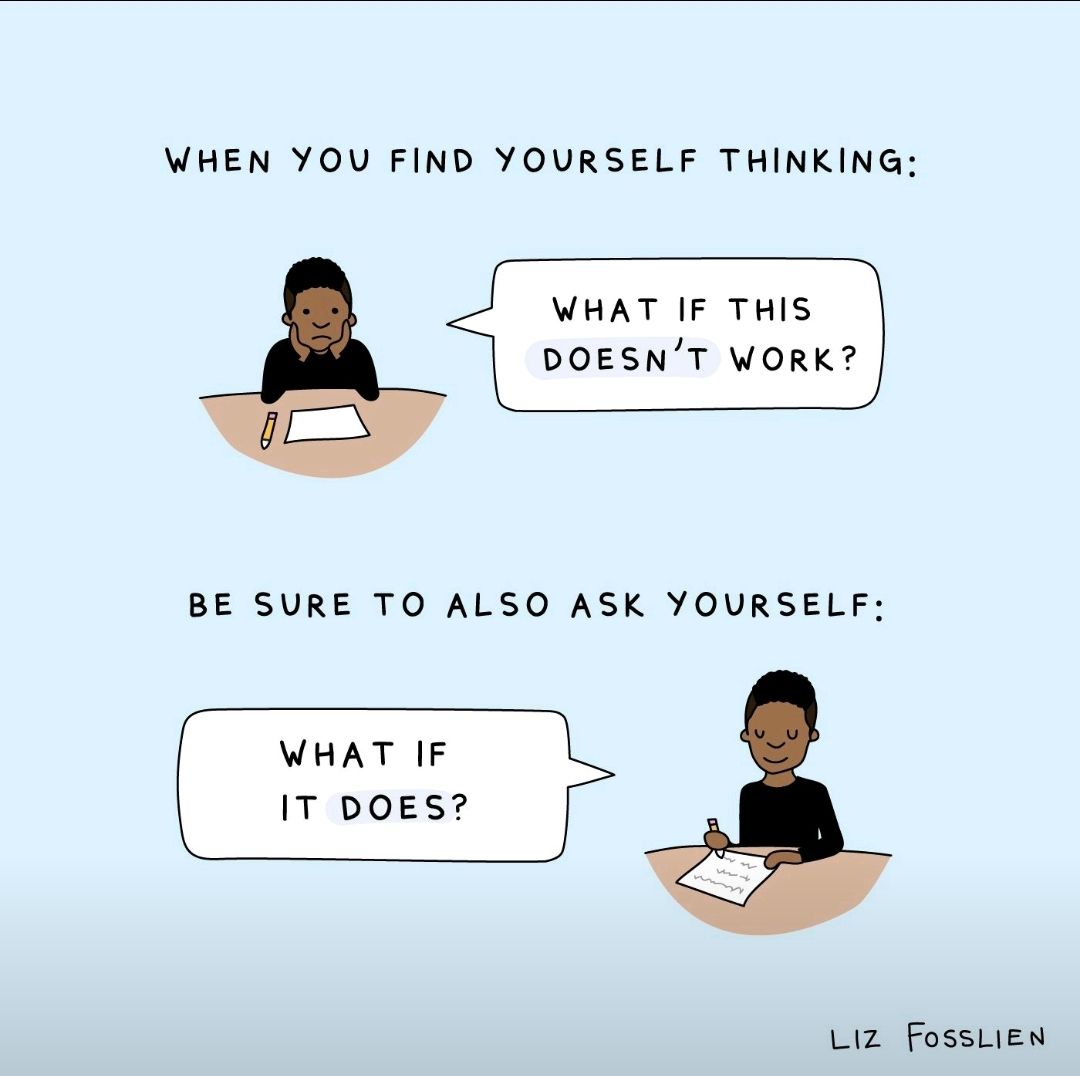
We all have moments of high and low confidence. One of the things that I’ve learnt is how important it is to notice and acknowledge whatever period I’m in, but not let it impact my activity, as how I’m feeling personally does not really alter my chances of success on any given thing as that it usually linked to external factors. It is also easy to not be applying for grants and other things if you are in a comfortable place, because you have funding etc. The thing is, the most important thing, for both your CV and your development is consistency. You won’t get better at writing grants, papers etc if you aren’t doing it, so even if you don’t ‘need’ to do it as you have funding that doesn’t mean that you shouldn’t. You may choose to apply for a public engagement or development grant instead, but you should still do it.
The same is true for throwing your hat into the ring for roles and other opportunities, you often don’t know where they will lead you, but if you don’t do it you’ll never know. Practice makes perfect, and you won’t always succeed in the moment, but the experience gained will always stand you in good stead.
Learn how to process failure
I’ve posted plenty about failure before, and why I actually think I’ve learnt more from my failures than my successes. The truth of it is that academic feels like it is 80% failure and rejection, and it is, if you only focus on the outcome instead of the process. The learning is in the experience. In producing the work. So yes, by throwing your hat into the ring you are opening yourself up to a lot of failure when it comes to outcomes, but there is a lot less uncertainty linked to the fact that you will develop as a consequence. Each of us has to come to terms, and find a way of thinking about and dealing with the outcome failures in a way that supports our personal thinking and processing. Yours is likely to be different to mine, but investing some time working out how best to manage yourself in these moments will be ones of the best investments in time you can make if you want to maintain an academic career.
Practice all forms of communication
I’ve mentioned this a little all the way through, but I’m going to re-state it here as it’s important. Take every opportunity you are offered to practice and improve your communication skills. Every chance to write a lay summary, or patient information leaflet. Every chance to present, small or large, no matter how terrified you are. Every opportunity to copy edit someone’s grant or paper. Every chance to be on an interview panel, or review committee. All of it will enable you to see how other people communicate and find new ideas for things you like, or get you to put your research dissemination in a new way to a different audience, and therefore be able to see it in a new light. The only way you get better at any of this stuff is by putting in the hours, there are no short cuts.
I’m not the best writer, but it’s not about skill, it’s about putting in the time and practicing. I write every week, and hope that I get better by doing so. Some people may have an initial talent, but even they need to do the work. So take every opportunity you can to develop your skills early so that you can maximise the benefit during your career.
Don’t be tempted by rabbit holes
Coming out of something, like a PhD, where the your focus has had to be on a single very defined goal, it can be tempting to approach the next phase of your career in the same way. I don’t think it hurts to have focus, to have your list of gaps to address, and the things you’ve identified that you want to include and prioritise. I also want to state here that unlike your PhD phase, you might want to consciously keep the next phase broad and ensure that you maximise your opportunities to try and experience a breadth of options. Not just to help inform future decision making, but also because, as I’ve posted linked to making professor, you can’t progress on the basis of one area of interest alone. You may be an amazing researcher, but you also need to know how to communicate your research. You may be a wonderful teacher, but you also need to develop your strategic awareness skills in order to understand how best to navigate the system you find yourself in. Be aware of your future career needs and make sure you don’t close doors without realising it by failing to maintain and grow across development areas, and know how much these areas cross support each other to make you the best scientist you can be.
Be prepared to be flexible
I’ve discovered that pathways are never as direct as I once believed them to be, and I have previously struggled to be kind to myself in understanding that the most direct path is not always the correct one for me. I failed to see the joy in the diversions for a long time. Looking back on it though, this diversions and deviations have frequently ended up in giving me the experiences and opportunities where I’ve learnt most about myself or gained most in terms of career progression. Being open to the less travelled path can reap unexpected rewards. Being open minded when presented with choices, and sometimes over looking short term gain, can have great career benefits in the long term.
Sometimes this flexibility is also about allowing yourself to choose to prioritise your personal priorities at times over career ones. It can feel like, if you are making a choice, it is a permanent closing of a door but more often than not it is a choice you are making for right now based on what works for you. Being mindful of when choices are permanent or for ‘right now’ can be really helpful in evaluating next moves. Also, knowing that your choices are about you and what’s right for your life, and not listening too much to outside distractions can be helpful. It may be right for you to move into industry, to step back from clinical, to move into strategy or policy, only you can judge. There can be perceived judgement linked to leaving a standard academic path, but career paths are so much more diverse and flexible than they used to be, and so we should not just accept but embrace the freedom that creates.
Define yourself, don’t let others do it for you
The truth is, if you don’t define yourself you will be defined by other people. It is natural for human beings to want to put each other into boxes, that’s how we process and see the world, but you need to step up and choose which boxes are right for you and not be scared if they are perceived as different or unusual. Knowing how to communicate who you are, your unique selling points, and almost developing your own brand, can also help others understand and support you.
If others start to define you it can be easy to become a passenger in the early stages of your career, and then once you’ve established yourself enough to know who you are you’ve travelled down a path that takes time to re-set. Being able to communicate your values, beliefs and core vision, is essential in so many different interactions, be they in your personal or professional life. Doing this well means you are less likely to swayed or worse mis-labelled, leading you to end up somewhere that is out of alignment with who you are and where you want to be. This path leads to unhappiness and real issues with career satisfaction and fulfilment. Don’t be a passenger in someone else’s story, or an imitation of someone else’s aspirations, work hard to ensure you are the leading character in your own life. That is the path to real satisfaction in your career and supports you finding the happiness you deserve in your day to day life.
All opinions in this blog are my own
If you would like more tips and advice linked to your PhD journey then the first every Girlymicrobiologist book is here to help!
This book goes beyond the typical academic handbook, acknowledging the unique challenges and triumphs faced by PhD students and offering relatable, real-world advice to help you:
Master the art of effective research and time management to stay organized and on track.
Build a supportive network of peers, mentors, and supervisors to overcome challenges and foster collaboration.
Maintain a healthy work-life balance by prioritizing self-care and avoiding burnout.
Embrace the unexpected and view setbacks as opportunities for growth and innovation.
Navigate the complexities of academia with confidence and build a strong professional network
This book starts at the very beginning, with why you might want to do a PhD, how you might decide what route to PhD is right for you, and what a successful application might look like.
It then takes you through your PhD journey, year by year, with tips about how to approach and succeed during significant moments, such as attending your first conference, or writing your first academic paper.
Finally, you will discover what other skills you need to develop during your PhD to give you the best route to success after your viva. All of this supported by links to activities on The Girlymicrobiologist blog, to help you with practical exercises in order to apply what you have learned.
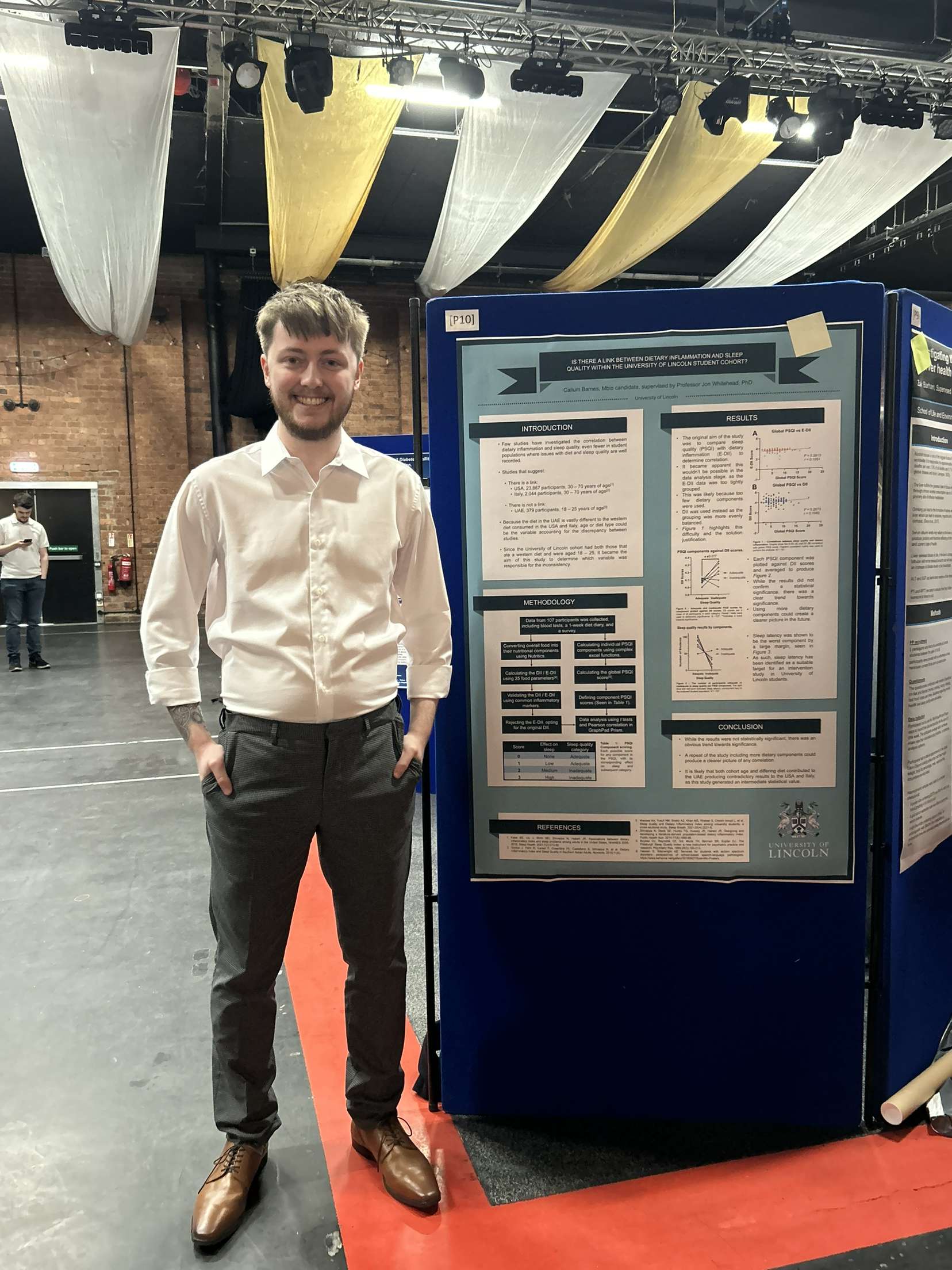
I’m back from a lovely week away at Disneyland Paris, celebrating Christmas and escaping reality (a post on Disney and denial as a coping mechanism is on its way). Whilst I am still struggling with the return to reality this weeks blog post is supplied by the wonderful Callum Barnes. Callum is a disciple of the biomedical sciences, current masterโs student creating a more authentic lab experience for those after me, aspiring consultant microbiologist (the best discipline, sorry Claire – you see he understands, like me, that micro will always trump immunology).
Callum is supervised by Dr Claire Walkerย who is a paid up member of the Dream Team since 2013, token immunologist and occasional defector from the Immunology Mafia. Registered Clinical Scientist in Immunology with a background in genetics (PhD), microbiology and immunology (MSc), biological sciences (mBiolSci), education (PgCert) and indecisiveness (everything else). Now a Senior Lecturer in Immunology at University of Lincoln. She has previously written many great guest blogs for The Girlymicrobiologist, includingย oneย on turning criticism into a catalyst for change.
Two years ago, I began a placement year in the microbiology department of a pathology lab, unsure of what was to come, and unsure of myself and my skillset as a scientist. As I think every scientist feels at some point, I was mostly concerned that I would be a hinderance to all the wonderful staff that were just trying to get on with their jobs. Everyone was amazing though and helped me develop the skills and confidence I needed to successfully complete my IBMS portfolio verification. Returning back to university for my final year, I found the lab-based work so much easier than in my second year with my experience, butโฆ something was different. This wasnโt the same stuff I just spent the last year working on, where was the LIMS? The booking in of the samples, the investigative process and the, frankly, the occasional chaos were missing. Thatโs not to say the labs werenโt good – they were great – and the staff that developed and ran them miles better, but something felt like it was missing. And thatโs when my now supervisor Dr Claire Walker came to me with a project for my Mbio year.
Claire and I both have experience in the NHS, herself a lot more than me, but we have both felt and experienced the environment that a pathology lab has. It has a very unique feel to it, slightly alive in my opinion. This is not a very common experience to have in academia though as most academics have a research background, which means that the practical pathology side of things can sometimes get lost when students do their practical work. As such, Claire and I have been working on creating a lab experience that is as authentic to an NHS pathology lab as possible.
But why even bother? The students are learning the same things, just in a different way, so does it really matter? Well in fact, yes, it does! As Claire has said previously, the pilot study she did had very good results, so the data is there to back up our work. But imagine for just a second that you are looking at applying for medicine, and you have two offers. One university offers a fully simulated experience using manikins and actors โ the whole shebang. And the other university teaches mostly through theory and shadowing โ no practical experience is offered. I know which course I would enjoy and learn the most from. Medical schools know this too and is why most of them offer simulated teaching โ it makes for better doctors too.
So, we should really ask, why isnโt this offered for biomedical scientists? Maybe itโs cost, maybe there isnโt the associated prestige. Whatever it is, I am sure that our work will guarantee a truly authentic clinical laboratory experience here on the iBMS accredited course at the University of Lincoln โ something I know will provide the right skills for the pathologists of tomorrow.
Back in the mists of time, before she really knew what microbiology was, there was a girl who just knew that she liked science. Now, this girl had a father who liked physics, a sister who liked chemistry, and a brother that liked both. This girl was not particularly found of mathematics however, and chemistry was a foreign language, and so she starred in the lab and wondered,’What kind of science is right for me?’.
I have previously posted about having missed so much school and not really being prepared to go to university. I didn’t, therefore, have exactly the most normal build-up to uni as I didn’t think it would happen. In a rather spectacular science irony, when it suddenly turned out I might be able to go, I just hadn’t done my research. I didn’t have much of a clue what my options or routes to a scientific career might be. Hopefully if past me found my how to be a scientist blog it would be a useful starter for 10. In my defence, at least I acknowledged this, and so I chose a degree that allowed me to specialise after my 1st year, when I would have had time to try out a few potential options.
One of the other things I should probably admit at this point, is that lab work terrified me. I hadn’t been in the class room when people were shown how to use microscopes or pipettes, and I was just too embarrassed to ask as I already felt both stupid and so behind everyone else. I’d done very little lab work as I’d missed most of my 5th year at school, and during my A-levels I had to undertake condensed study to make sure I had enough points to go to uni. So the idea of spending a lot of time outside a traditional lab space definitely held appeal, as it felt like I was finally starting at the same point as everyone else.
So this girl finally chose her specialty and worked super hard to be accepted onto the zoology course.
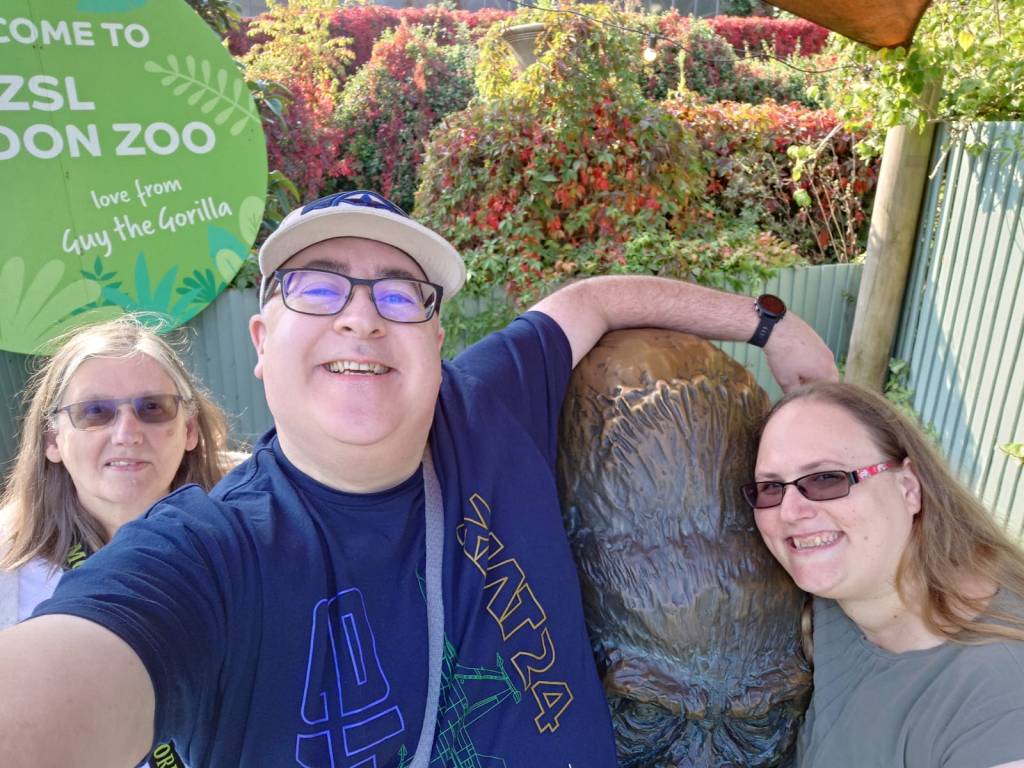
All of this feels like a different world at this point, over 20 years on. As some of my team love to point out, I started uni when they were still at primary school (1999). These years were so formative however for how I developed as both a scientist and a person, I was so excited to be able to revisit the subject when I spent a night at ZSL London Zoo with Mr and mummy Girlymicro and remind myself of days of science past.
What is zoology anyway?
When you say Zoology, I suppose the first thing that springs to mind are zoos. Now, you may find quite a lot of zoologists in and around zoos, but this is actually just one place place where the study of Zoology happens. In fact, zoology is so much more than the study of animals in zoos. It is, in fact:
The scientific study of the behaviour, structure, physiology, classification, and distribution of animals
I was aware that the area of animal behaviour really interested me. It was something that I’d touched on during psychology A-Level, and that then extended into human behavioural modelling with things like group decision making. Comparison of group behaviour between primates and other animals and how attachment develops between adults and infants was something that I found fascinating. This was, for me, the gateway that made me think about choosing Zoology, but there was so very much more to it than I knew at that point.
Because of this, when we arrived to spend the night at London Zoo, I was particularly excited as the lion enclosure had just welcomed three cubs, one girl and two boys. Mali and Syanii and girl Shanti were born at London Zoo on 13 March 2024ย to seven-year-old mum, Arya, and 14-year-old dad Bhanu. The first thing we got to do was to spend some time after the zoo had closed watching them at their most active, as it was evening, in a small group with one of their keepers. We got to drink prosecco, take all the photographs we wished, hear a talk, and pepper them with questions. It was a truly wonderful way to kick off the evening. It was also as far away from my old zoology field trips as you can imagine, where as a student I would find the most comfortable spot on the ground I could in order settle in for the next eight hours, with a pile of stationary and a timer, nursing a bottle of water and a sandwich so I didn’t have to leave my space until I was done.
What was the degree like?
One of the great things about the degree was that, as long as you took the correct modules for your target specialism, you could try all kinds of science topics, especially early on. So, as well as modules on invertebrates and ecology, I also took modules on psychology and microbiology. In my first year, although I feel it disliked me as much I disliked it, I also took mandatory modules, which included Biochemistry. That first year was a whirl wind of things I was unfamiliar with. It was also the year that, although I thought I liked human genetics, I discovered that it really wasn’t the field for me. I learnt a lot about how I think and what kinds of topics align better with how that process works for me. A version of the course exists even now if anyone is interested, although I suspect it has moved on somewhat:
Now, I was still terrifed of lab work and so the fact that some modules came with weekend field trips rather than traditional lab work made me very happy. There were also other kinds of ‘labs’ which involved a lot of drawing of skulls and anatomy, where I discovered I hadn’t missed my calling as an artist.
There were also some super super fun exercises that I remember fondly even now. At one point we were sent out to learn how to capture and undertake population statistics by recording taxi cab license plates (as they link to age) and working on the population stats of births and deaths using this. I found a lovely window in a McDonalds and stared at a taxi rank for a day chatting with my friends, and it was great. These moments really taught me that science was not all about lab work, as I had previously thought, but it could be undertaken anywhere and in a way that was not only interesting but also enjoyable and fun.
One of the other things this course taught me about myself was that I like to take the less trodden path. For my final year dissertation, I could have taken a lab based project, but I still wasn’t that confident. Instead, I chose to do a library based project with a twist. The library was the British Library (https://www.bl.uk/), and the project was based in evolutionary psychology looking at The Demographics of Witchcraft Accusations (1625 – 1720). I got to go through every documented witchcraft trial in England and then look at the legal changes that drove resource competition and compare it with the US and Europe, where the drivers were different. This exercise stays with me, as it showed that no matter what the outward appearance, you always need to understand the underlying drivers to fully investigate a situation.
Moments that stay with you
I’ve already said that my aim was always to choose Zoology because of my interest in animal behaviour, but it was a pretty competitive selection process. Places were allocated to specialisms on the basis of a combination of choice and grade. So the top person in the year was guaranteed their choice of degree, if you were 300th, not so much. I believe my 1st year had over 1000 combined students, and the bottom 50% were dropped every year, so the year group size got smaller but was still competitive. Dissertation topics were given out in the same way. So there was an ever-present motivation to work hard, not just so you didn’t get booted, but so you could have the best chance to influence your future. I suspect it’s all very different these days with tuition fees, but it was pretty brutal for some people.
If you secured the grades you progressed and specialised. This meant we got to do some zoo visits and start exploring topics like animal behaviour and undertake behavioural observation studies. Several of these were zoo based and included observing primates, but also Giant Tortoises. We also did a fair amount of non-zoo based observational studies, including undertaken observations in the uni canteen looking into group and sentinel behaviour.
I loved this mix. I love the fact that it really embedded science for me as a team sport, as so much of it you couldn’t accomplish on your own. It also taught me how much I value both collaboration and variety in what I do, a valuable lesson in choosing my future career.
In all honesty, over time, despite loving the science I grew to believe that sitting in fields in the lake district wearing water proofs for weeks at a time was less aligned with my future life choices, but at least it gave me fun memories that years later I could turn into a comedy sketch as part of public engagement work.
How did all of this help with the day job?
This was all very fun, but how does any of that help me now?
Well, I obviously covered a certain amount of animal related infection, which is still useful, but I think it was the wider stuff that gave me such a good foundation for every day working life as a scientist.
Firstly, there was always a strong focus on group communication. You just couldn’t succeed on the course without developing your group work and collaboration skills. Almost everything we did required multiple people to support. You can’t observe a group for 8 hours on your own, at least not efficiently. This meant the planning and analysis stages also involved a lot of group discussion. Being young and enthusiastic, there were lots of strong and differing opinions. Learning to manage in those environments has been a crucial skill that has supported working in healthcare and multi-disciplinary environments later on.
Due to the variety of different types of work, I also got used to needing to access information from all kinds of different resources and from a lot of different disciplines. One day, I would be accessing psychology or physiology papers, and the next, I would be in a field reading ecology guides or in the British Library accessing centuries old court records. This also taught me the value of being a generalist with a solid supporting skill set. I don’t feel like I will ever be a real ‘expert’ in anything, but I learnt to take things from 1st principles and rationalise my way through. This is an approach I will be forever grateful for as so much of what I see in my day job I haven’t experienced previously. Getting back to 1st principles is something I have to do often and this training enabled me to do that without fear of the unknown.
Finally, the whole process of struggling to get to uni when it was generally considered to be ‘not for me’ and spending a lot of my time there feeling behind and playing catch up taught me a lot of things that are so valuable in my day today. It taught me to see science as a puzzle, and that to solve something you sometimes have to give it space and come at problems from different angles. During these periods it also taught me to be comfortable with being uncomfortable, and knowing that uncertainty is OK, in fact it is often essential. The very way the course was structured also gave me permission to mix up my science and follow routes that interested me, not some pre prescribed path. I think keeping to this principle has been key to me ending up where I am career wise. Follow your passion and the rest will work out, has become a guiding principle when I’m undertaking decision making.
What is a zoonosis?
Speaking of things that help the day job, I spent plenty of time in my third year studying infections related to animals and animal to human interaction. One of the other great benefits of a background in Zoology is the fact that, having learnt things from the animal side, I can combine that learning with the info I now have from the human side. Zoonosis are an increasingly important part of health based conversations, especially in light of increased travel, climate change, and urban expansion. So, what is a zoonosis?
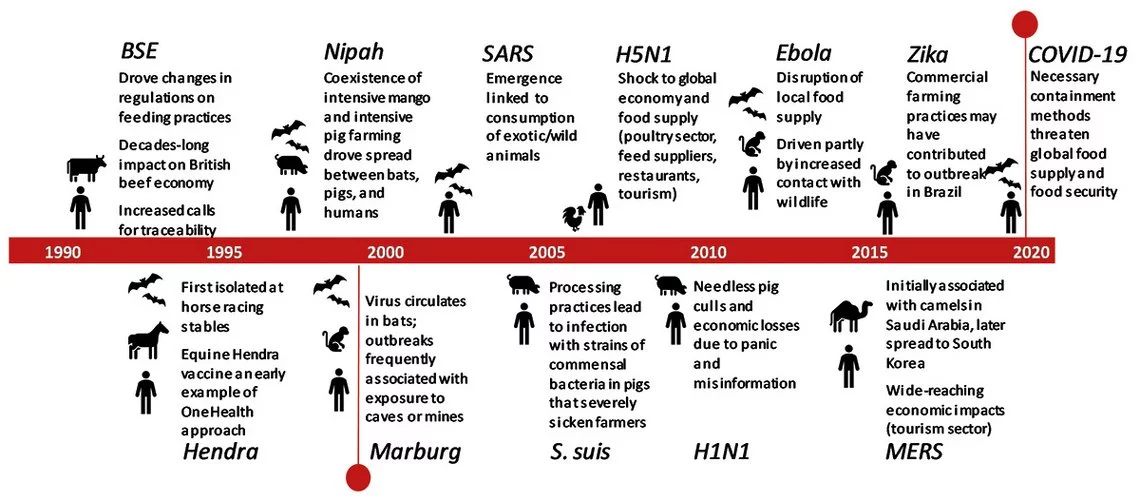
A zoonosis is an infectious disease that can spread from animals to humans, or vice versa. Zoonotic diseases can be caused by a variety of pathogens, including bacteria, viruses, fungi, protozoa, and prions.
There have been multiple occasions during my career where zoonosis have been flagged as causing wider public health implications, and some of the big hitters are listed below:
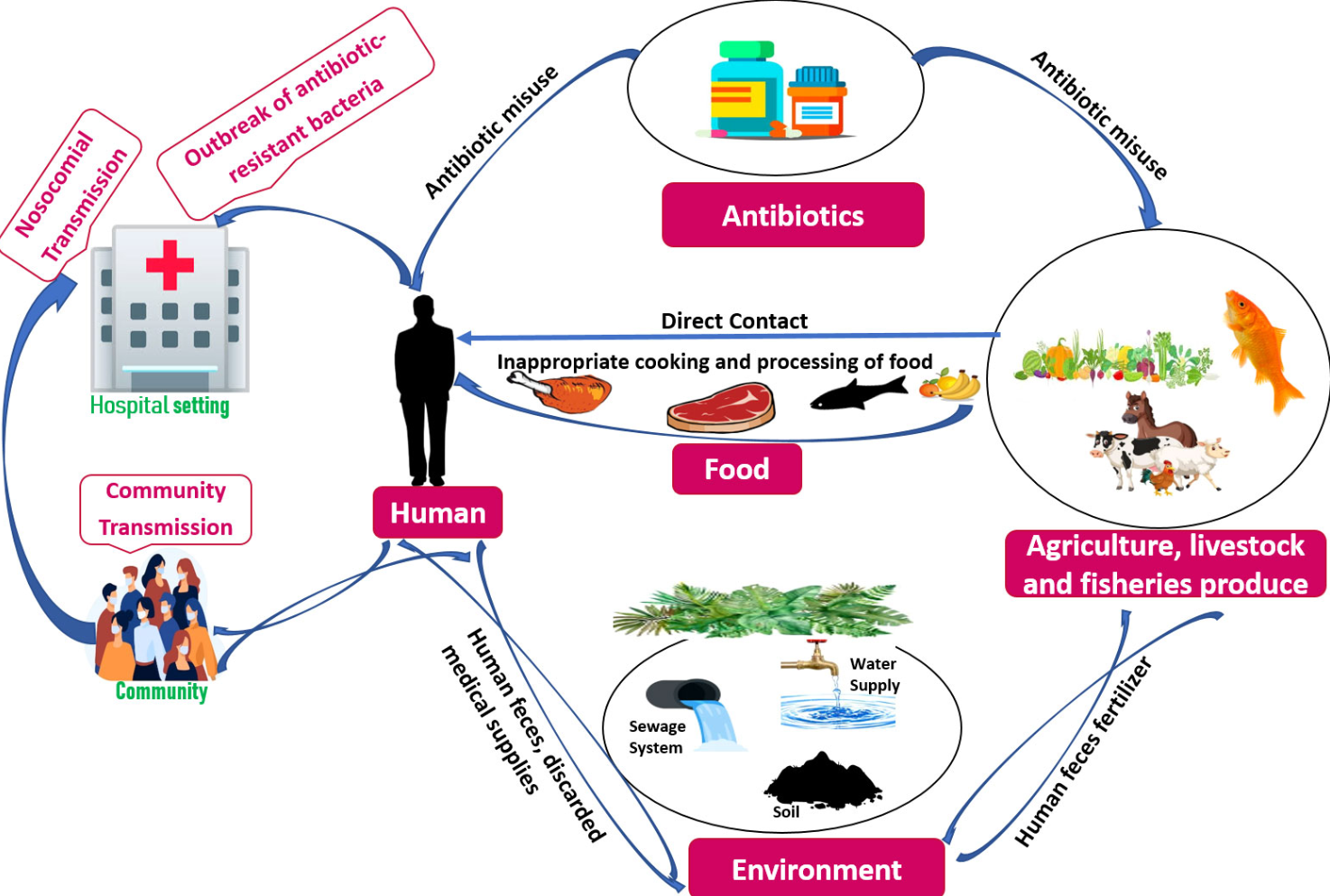
One of the other reasons why zoonoses and a background in Zoology are increasingly important is linked to the One Health approach to antimicrobial resistance (AMR). This requires us not to look at AMR from a purely human or animal perspective, but that we need to look at food production/agriculture, human and animal, as a holistic whole. I’ve recently been involved with a podcast series that involved discussing One Health issues with a vet, Simon Doherty, called going Macro on Micro, and hearing the veterinary perspective has been really helpful and eye opening.
Embedding public engagement
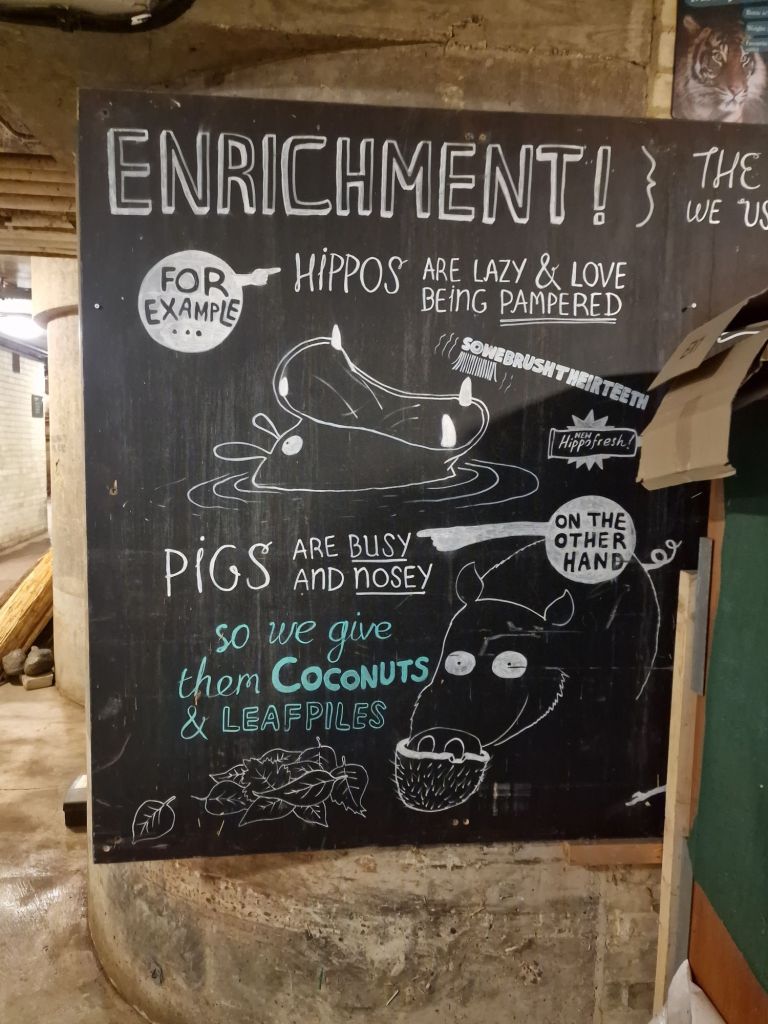
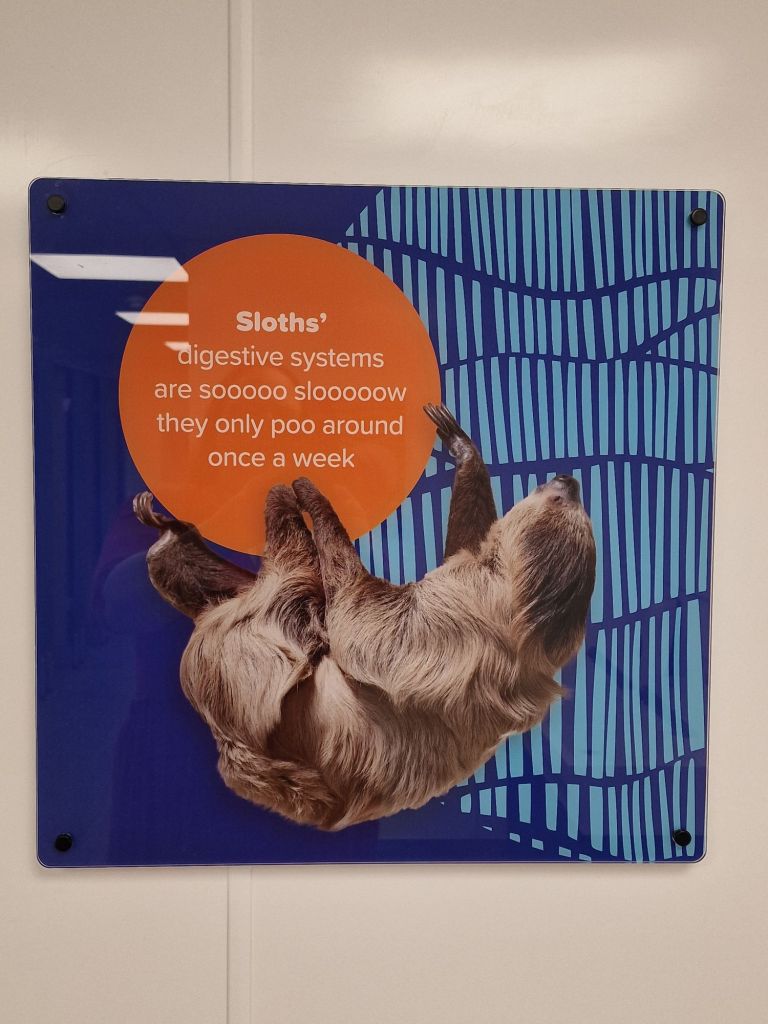
One of the things that I loved about staying overnight at London Zoo, apart from it reminding me of a joy for science and of fond memories, was the way that science and science engagement was embedded wherever you went, from the toilets to the canteen. Not only was information wherever you looked, but it was done in such a fun variety of ways, including an entire focus on poo, which was brilliant to see. It was science delivered in an accessible, engaging way that didn’t feel like you were being ‘taught’ but that you learnt through play and exploration.
This is such a great lesson for all of us involved in teaching and education, in both formal and non-formal settings. Learning can be achieved without it being arduous and by enabling those visiting to understand that science can be fun without it feeling ‘other’ or out of reach. It is the best way to introduce a generation of future scientists to the subject. Work such as this, also goes a long way to break down stereotypes of what science is (often considered to only be lab based) and what a scientist looks like (often considered to be the realm of older white men). In reality, science is for everyone, undertaken by everyone, and takes place everywhere. Embedding this concept early is the best way to change how science will be perceived in the future.
A peaceful escape
To end, I just wanted to quickly talk about what a delightful experience staying over night was. I am not a camper, and I am barely a glamper. I want an en-suite bathroom and a proper bed, with the ability to have tea whenever I want it. Fortunately, the cabins at London Zoo provide all of these things.
They are set in a zone of tranquillity, that whilst surrounded by the zoo, do not in any way feel impacted by the hustle and bustle of those visiting. That said, you are also in the centre of the zoo, so all of the walking tours around do not feel like you are walking miles im order to explore. You also get to undertake some activities that you simply wouldn’t be able to do any other way, including preparing enrichment activities for the animals and feeding some of the nocturnal species.
Whilst staying over you get full access to the zoo the day before, and on the following day. You also get to have dinner together after the zoo closes and breakfast together before the zoo opens. There are two different groups of bookings, one that includes kids of all ages, and one that is targeted at older kids and adults. This enables some of the tour content to be targeted, and for our tour, the group consisted entirely of adults. It was such fun, I can’t recommend it enough, and it was great to share it with mummy and Mr Girlymicro. It books up fast though, so if you want a chance at this unique insight, it’s worth booking several months ahead.
The World Health Organisation (WHO) talks about it like this:
Antimicrobial Resistance (AMR) occurs when bacteria, viruses, fungi and parasites no longer respond to antimicrobial medicines. As a result of drug resistance, antibiotics and other antimicrobial medicines become ineffective and infections become difficult or impossible to treat, increasing the risk of disease spread, severe illness, disability and death.
I think it’s easy to forget that although AMR is a big part of the professional life of most Infection Control and microbiology professionals, even for other healthcare professionals it features less often, let alone for members of the public. It can be surprising therefore when you do go out and about, or even just talk to friends and family, to hear some of the ways that non infection professionals think about how AMR works and who it impacts.
Common misconceptions I hear when talking to people about AMR:
Itโs the body that becomes resistant to antibiotics
I have never taken antibiotics so I cannot get a resistant infection
Antibiotics treat all types of infection
Antibiotics can be stopped when the symptoms stop
Only infected patients can transmit antimicrobial resistance
If you reflect on some of these myths, it’s actually pretty easy to understand how they come about. Most people are focused on themselves and act from a human centric point of view. Many people give little, if any, thought to the multitudes of living bacteria that co-exist in their bodies. Once you accept this as the starting point, most of these myths are actually based on pretty small mental leaps. If, however, you don’t switch your point of view before you start having conversations about AMR, you can unwittingly end up reinforcing the very misconceptions you were aiming to address.
One of the reasons that I think this post is timely right now, is that I am already seeing more posts linked to how we should not be putting artificial medications into our bodies, alongside the back lash against vaccines, and so it seems to me a good time to remember what a difference these, now common, medical interventions have made to the lives of individuals and public health in general.
Let’s start with a little bit of context
Hardly any of us will have living memory of life without access to antibiotics and what life was like in a world without vaccination. One way to really get a feel for the impact these common interventions have made is to look at the impact in the last 30 years on reducing child mortality (death). Even in this recent time period, massive progress has been made due to advances such as the rota virus vaccine, but also in getting more global access to antimicrobial therapy where it is most needed.
Public health is multi factorial, with impacts being cumulative and made by more than just one thing, so not all of these impacts are made by antibiotic and vaccine availability. Other steps to reduce death linked to infectious disease include everything from clean water and sewer systems to pasteurisation and other means of food safety controls. The impact of these combined approaches is massive, but as the UN sustainable development goals show us, those of us who are access to clean water are not actually in the majority and more is yet to be done to ensure equality of access.
To aim to undo some if not all of this century plus of progress is something I find pretty hard to process. If you’ll forgive the momentary indulgence, I have to state that I think the current anti-vaccine and general anti medical stance that is being seen within some groups and communities is ultimately an act of extreme privilege It’s a privilege to be able to choose not to access something that is readily available to you and not available to others. It is a privilege not to have to live first hand the consequences of what the alternative might hold. It’s also a privilege to be able to change your mind and choose to access something later. Thinking of things in this light doesn’t necessarily help with having conversations in a supportive and open way when some of the underlying thinking may be so different, but it may mean we can flip the dialogue from one of imposition to one about the power of choice, and supporting evidenced based decision making for all.
Where does AMR come into this?
There’s a big stat that everyone quotes about more people dying from AMR than cancer by 2050, with an estimated 10 million deaths. As a scientist, I get the need to quantify and use numbers, as a human being however, I find that numbers that are so big can just be off-putting. They are so large it can make us, as individuals, feel powerless to impact them.
For me, the reason this conversation is so important to have in the right way, and pitched to the right communities, is because if we are going through a period of global push back against the common interventions, such as vaccination, that have successfully reduced mortality and provided first line protection, then our final line of defence in terms of treatment is now even more vital. 2050 isn’t that far away, and we are already seeing consequences linked to more resistant organisms being identified in severe infections. Therefore, the time to be having conversations and really raising awareness to impact decision-making is now. Sadly, this is coinciding with a period of time when trust in healthcare professionals and science in general feels very low. Instead of being defeated by this, however, we need to use it a driver to really focus on how we can do it better.
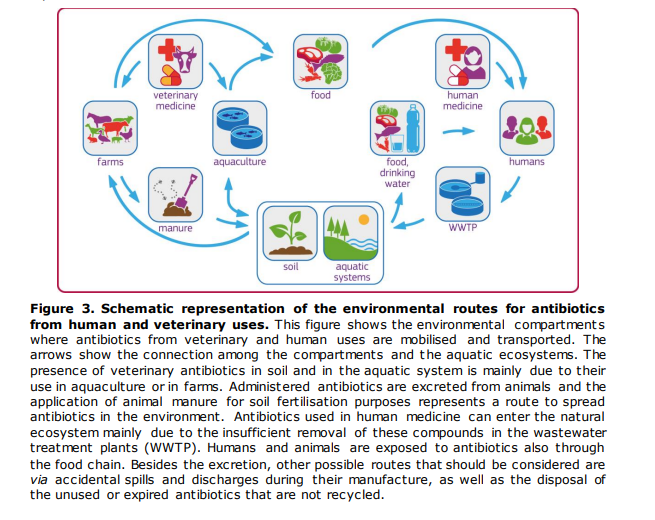
One of the other reasons that AMR is both important and challenging to communicate is that it is always in constant flux. You can’t just learn about it and move on. The mechanisms change, the diagnostics change, and the interplay of all of these factors within the bacterial host interactions can make it even more complex and hard to engage with. To exemplify this, the figure below was something I saw posted on Bluesky and fell in love with, as I adore the fact that it lists all kinds of routes to AMR in a single image, thus capturing the complexity of what we’re dealing with.
That said, you don’t have to understand all or any of this image to understand the core of why AMR is going to be a problem moving forward. The main thing to take away from it is that AMR is complicated, and as a result you will hear many different messages linked to it, and those messages will continue to change as we learn more and the impacts are felt differently. As a result, it can then sound like we don’t know what we’re doing, or just end up really off putting, as there isn’t one clear message we are getting out there for people to cling onto. We, therefore, need to build this flexibility into messages and link around core themes rather than trying to talk in absolutes. Otherwise, we risk losing more of the public confidence than has already occurred.
What is being done nationally?
This year, a new version of the UKs National Action Plan for confronting AMR has been released and within it there is a strong focus on the acknowledged need to educate both members of the public and healthcare professionals on AMR.
There is also plenty in there about increasing equitable access to antimicrobials, the need to improve diagnostics to help support both diagnostic and antimicrobial stewardship, and something that pleased me greatly, a special mention of the role of the built environment in managing AMR.
The thing is, top-down approaches will only ever get us so far. At some point, those of us involved in all things infection also need to be consciously including some of these drivers in our own every day practice.
No one can do everything, but whether you are collaborating with industry, undertaking research, or working in clinical practice, we have to embed AMR based action into our encounters. Do you include an AMR slide into all of your teaching? No matter the audience? Do you take the moment when it comes up with friends and family to just talk about the fact that this issue exists? Can you free up some capacity and undertake some public engagement?
Recognising there is a need is not the same thing as addressing that need, and we also have to be there to hold strategic partners and organisations to account in order to make sure action happens. So, let’s consciously match that top-down approach with a bottom-up drive for change.
What resources are there to help talk about AMR to other professionals
Having talked a lot about the need to talk to other healthcare professionals and seeing so much about #WAAW this year, it does really feel progress is being made to support us all to do this better.
Those of you who are UK based have probably heard of and support the Antibiotic Guardian programme (https://antibioticguardian.com/). This programme has lots of resources and supports personal action by asking you make a specific pledge about what you will undertake linked to addressing AMR.
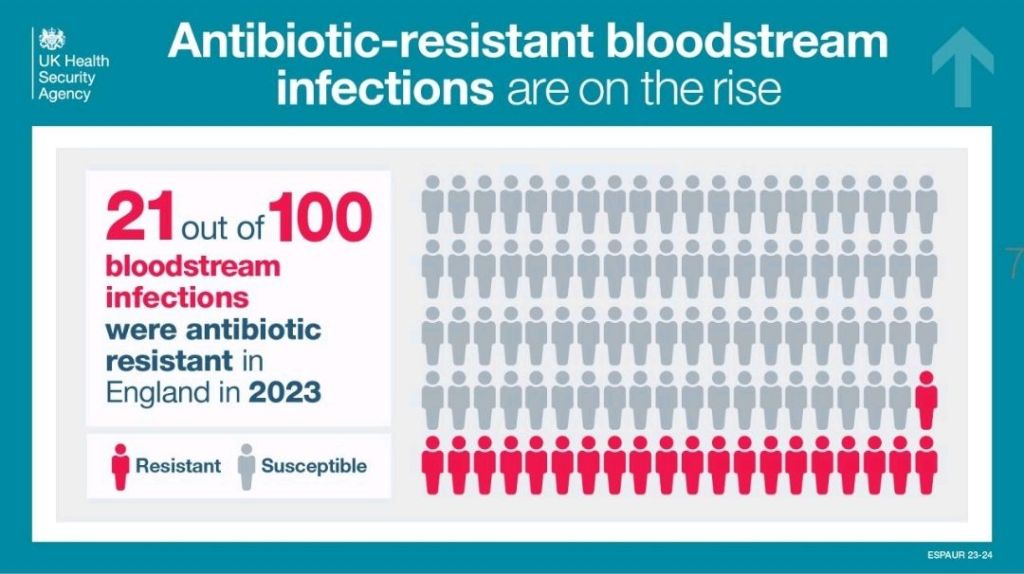
Every year, new infographics come out that talk about different aspects of AMR. Some of these, like the one above, link AMR into commonly known components of healthcare practice, such as hand hygiene, in order to support individuals to feel empowered to act. Others focus more on messaging about antibiotic courses, or as we heard a lot about at the FIS/HIS conference last week, things like IV to oral switches, and sending the right samples to enable a switch from broad to narrow spectrum antibiotics. There’s plenty of ones out there now that can be really useful to embed in talks or laminate and put up on walls. The UKHSA especially have recently released a lot for WAAW, and because there are so many, you can keep them on rotation so that they don’t just become invisible as people see them too frequently.
I’ve also been involved in creating various content this year, as have many others, including webinars and podcasts to explore some of the issues linked to AMR and provide different routes via which healthcare professionals can engage with information and CPD on this topic. I’ve included a link to just one of these below in case it’s of interest, but a quick internet search will provide you with all kinds of others.
The main thing to remember is that we all like to receive our learning in different ways, and so ensuring that we remember that when we’re designing our education strategies is one of the best ways to be impactful.
What resources are there to help talk about AMR to members of the public
The resources you might want to use linked to AMR will vary greatly based on your target audience. It’s important to remember that even if someone is a healthcare worker they are also a member of the public, and depending on their personal background or setting they work in, utilising content created for the general public may serve both purposes.
There is some really great video, podcast, infographic, blog, and other content aimed at public outreach on AMR. There’s even a musical called The Mold that Changed the World, about Fleming and Penicillin, as the first antibiotic.
There are lots of different entry points when you are thinking about content that might be appropriate, and you’re likely to go to different depths depending on whether you are doing a one off encounter or a more prolonged piece of relationship building.
The post that is linked to at the start of this article on AMR as a Super Wicked Problem may help with choosing your content. You may also want to consciously address some of the myths mentioned at the start or even start your conversation with the fact that many antibiotics actually started as products identified in nature, and so are not as far from natural compounds as may be frequently thought.
Some of you who have been reading this blog for a while will know how proud and passionate I am about The Nosocomial Project, which aims to use a science, technology, engineering, arts and mathematics (STEAM) approach to talk about infection and infection risks.
As part of this work, we organised a two part festival linked to AMR entitled Rise of the Resistance Festival. All of the content is split across YouTube and the website. I’ve included linked here in case any of it is useful in your own settings when you are looking for inspiration or planning content. The content covered in the festival included everything from a play aimed at pre-school aged children entitled Sock the Puppet, who is a hand puppet who is scared of germs, expert panels, comedy sets, and Klebsiella as a drag queen. I still have so much fun rediscovering this content, and I hope you’ll feel the same way.
I would make a plea that we all work together on this one to do some myth busting and get messages about AMR out there, but also find a way to get messages across that are entertaining/joyous and filled with hope for what we can achieve, rather than focusing on the horrors of what happens if we don’t get our act sorted. I think all of us, including healthcare professionals, have had our fill of trauma in the last few years. So, let’s focus on empowerment and positivity to make this change happen, rather than following in the footsteps of those who want a world of decisions driven by fear.
I’m off to the Federation of Infection Societies (FIS) conference this week. I’m involved in 3 sessions over 2 days, and in many ways, these types of events are a complete highlight for me. I get to be inspired by hearing new science, I get to catch up with wonderful colleagues who I don’t get time to see very often, and I get to immerse myself in all things microbiology without the distraction.
There is another side to this coin, however, and that is both the anxiety that builds before I go, and that can last throughout the whole event. The ever-present spirals of ‘do I know anything?’, ‘will I say something stupid?’, ‘will I know anyone?’, and the classic ‘do any of these people actually like me?’.
The combination of this social anxiety with the, sometimes long, very peopley days, can mean that I hit spirals pretty easily and the lack of solo recovery time means that I can find it pretty exhausting by the end.
Now, I’m obviously not talking about extreme cases of social anxiety that may require informed medical or long-term support. I’m talking about situational anxiety that most of us may find ourselves in from time to time.
Just in case there is anyone out there in a similar boat, I thought I might put together some things I’ve learnt along the way that help manage some of my anxiety traits and enable me to actually enjoy the experience rather than dreading it.
Do your prep work ahead of time
The first thing I’ve had to learn is that I can’t just pretend that doesn’t happen. I can’t wish it away. What I can do is be prepared and make sure that I have made the process as trigger free as possible.
For me, this is about simple things, like getting a hotel as close to the venue as possible. It means that if I just need a 30-minute alone break, I can take one. It removes anxiety about getting lost or forgetting something crucial and not having time to go back for it, which, although minor, can be the final straw. It’s also about making sure that I have pre-found all the rooms I need to locate ahead of time, so I know where I’m going, and that ahead of multi-day meetings I have a plan for which sessions I’m going to before I even travel to the event.
Know your triggers
I know that I have a few things that really lead to anxiety, but perhaps more unique to me, is the fear that I was have an auto immune attack and won’t be with people who understand what is needed. I learnt early that the best way to cover this one off is that I very rarely travel alone, especially over seas. I often travel with my mum or one of a very small list of truly trusted people, who I know would understand how to get me help if required.
Something that is more likely to strike a cord with others, is that I am also the girl who has walked into conference rooms, spent 15 minutes and walked out, as I knew no one and was just overwhelmed. I’m not proud of these moments, but I think it’s important to acknowledge that they have occurred. Although, to be honest, when they’ve happened, I mostly felt invisible, so I doubt anyone noticed.
I have discovered that I need to know that the space is one where I feel welcome for me to perform at my best. This sense of welcome can be either intellectual, because of the topics covered, or because of feeling a sense of community, as the room contains people within my field or in strong alignment with my values. I’ve found the overwhelming feeling hits most strongly when I’ve been in very large political or strategic sessions, where I felt out of my comfort zone on both intellectual and community counts.
That said, I’m not too bad in the sessions themselves, I’m there to learn something new, and learning excites me even now. It’s the breaks that are my nemesis, especially when large groups all surge into a space at the same time, and the weight of expectation that you must now network lands. The seconds that feel like hours of desperately searching for faces you recognise and being forced to face the fact that yes, you really should go up and speak to that absolute stranger, as it’s the right thing to do. It’s these moments that can cause me to bolt for the nearest bathroom.
Carve out time for yourself
One of the key mechanisms I’ve identified to help with my triggers is that I make sure I have enough time to myself, be that eating food away from the venue so I feel more certain what it contains and less at risk, to making sure I have evenings to myself to process and unwind.
I usually come over as really social, and really into spending time with people, and I am both of those things. I also only have a limited amount of social battery, and so in order to maintain that extrovert part of myself I have to have recharge time. I love talking to people about this blog, I love hearing about and responding to other peoples work, but at a certain point I need to sit down with an audio book and a cup of tea in order to do it well. This means that when I go through the brochure ahead of time, and plan my sessions, I make sure that I have enough blocks of time to enable me to be my best self when I’m in the space with others. Sometimes all you need is a walk to a local coffee shop and back to give you the perspective you need.
The wonderful thing about having hit my 20th year as a Healthcare Scientist, is that I now also know quite a few people, some of whom I’ve known for well over a decade. This means that at most events, there are also people who I count not only as colleagues but as friends. People that I can just go and spend time with that doesn’t include social commitment. Those friends you have that you can just be in the same space without any demands being made. If I’m at an event where these people are also attending, then I know that I have someone I can just excuse myself to catch up with if I’m having a moment. It’s also the great thing about ensuring that you have a hotel room nearby. Your safe bolt hole is only minutes away.
Make an agreement with yourself about how much is enough
The fact that you have social anxiety does not provide a free pass to escape one of the fundamental purposes of attending conferences, networking. It’s key to your career, it’s key to your development, it needs to happen. The thing is that there are varying degrees of what networking can be, and before you’re in the space, you need to decide what level you are aiming for and will therefore achieve. For me, my deal is that I will, on each day, speak to one person I don’t know. I am not allowed to finish my day without this happening, but once I have had that one daily interaction, then any further moments are a bonus. Once that one challenging moment is over with the pressure is off, and then I almost always over achieve on my goal.
Be realistic about how much you can expect of yourself
The key thing I’ve learnt is that I have to realistic when I’m making that deal with myself and deciding on achievable targets. For me, there is not point is saying I will speak to five people I haven’t met before, as I’ll just be setting myself up for failure. You will also find that I rarely sign up for conference dinners, as I have over the years found that if I’m in a space with other people from 08:00 – 18:00 I will really struggle to then spend yet more time with other people, no matter how lovely or interesting those people are. All I will want at that point is room service, tea, and a movie in my room.
Everyone will have their own tolerances and lines. The important thing is to have enough self reflection to know what yours are. Otherwise, you just add guilt into the anxiety mix, which is not much fun for anyone.
Learn how to work a room using tools you are comfortable with
One of the other things that I’ve learnt about myself, is that although I get super anxious standing in a room trying to approach someone at the coffee table, I am much much more comfortable moving around the exhibitor stands. The guys at the exhibitor stands are motivated to speak to those who approach, and there are usually science based discussions that I am eager to have. This, for me, is a match made in heaven, as it breaks me into the speaking to people I don’t know in a very gentle way. If I’m lucky, I will also meet others when I’m wandering around, which will allow me to tick my ‘speak to one stranger box’ as exhibitors do not count on that front. The added bonus is that I also often manage to find cool new stuff I’m interested in or develop collaborations whilst this is happening, so it’s a no lose scenario for me.
The other thing that having worked for 20 years has given me is the opportunity to be asked to be involved with sessions. For this girl with social anxiety, this is actually a great thing, despite the fact that it sounds like it should be stressful. I’ve never minded public speaking in the same way as I worry about 1:1 interactions. When I speak, all I can do is put my best foot forward and hope that others will be interested in what I have to say. For the most part, if people don’t engage they will just leave and not give it another thought. On the positive side though, if people find what you say interesting enough to want to speak to you afterwards, this a great way to tick the ‘speak to one person you don’t know box’ and as they are approaching you all you have to do is respond. I find this so rewarding, but I also appreciate how fortunate I am to have this type of opportunity and how much it helps me manage to get the most out of events.
Prepare your exit strategy
One of the important things to bear in mind, and which I often forget, is that others do not necessarily feel the same way about social requirements. I struggle when people arrange evening meals at meetings when you’re already booked to spend a full day together. I understand the purpose, it’s lovely to build bonds and memories, and logistically it’s easier. I rarely, if ever, hit the end of the meeting day and wish to spend the few hours downtime I have with others, over reading in the bath however. There are frequently times I can’t opt out of these moments, but where I can, I will often have a pre planned reason to excuse myself. Often, this is work related, as I will always genuinely need to do some email catch up, and doing this after dinner means working till midnight. I don’t lie but I may pre-plan my rationale for not being available to support both my work load and my mental well being. I will never not pre-inform, as that is rude. People will have budgeted and made arrangements, so I will never last minute drop, but if the option arises I may flag unavailability at the planning stage.
Don’t succumb to expectations and pressure
People are amazing and much more welcoming than you expect. I’m always counting myself as so fortunate is be asked to unexpected drinks, meals and catch ups at conferences. I have learnt that I need to not get caught up in the moment and end up crossing the carefully curated boundaries I have put together, in order to ensure that I can last the social distance of the conference. I’m a planner for a reason and I don’t riff off the plan well. I also struggle with saying no. This means that there have been multiple times when I’ve said yes to that dinner, or those drinks, and have then suffered the consequences afterwards. Now, I work hard to keep to my boundaries so that I don’t make life harder for myself. This can be surprisingly difficult as all these invites are inclusive and well intended, I just have to remind myself to make the sensible choice to enjoy the entire event, rather than burning out after a single evening.
Know that this is an essential part of the job, so invest in coping strategies early in your career
The truth is that networking and attending these kinds of events is essential. They are a fundamental way of hearing the latest science and expanding your knowledge. They are also key for collaboration and building your networks, as well as dissemination of your work. No matter what anyone says, I have found that science fields tend not to be meritocracies, there’s plenty of ‘who you know’ involved, and the only way to address that is to get yourself out there. So you will need to learn how to navigate these settings, and the earlier in your career you manage that, the more rewards you will reap.
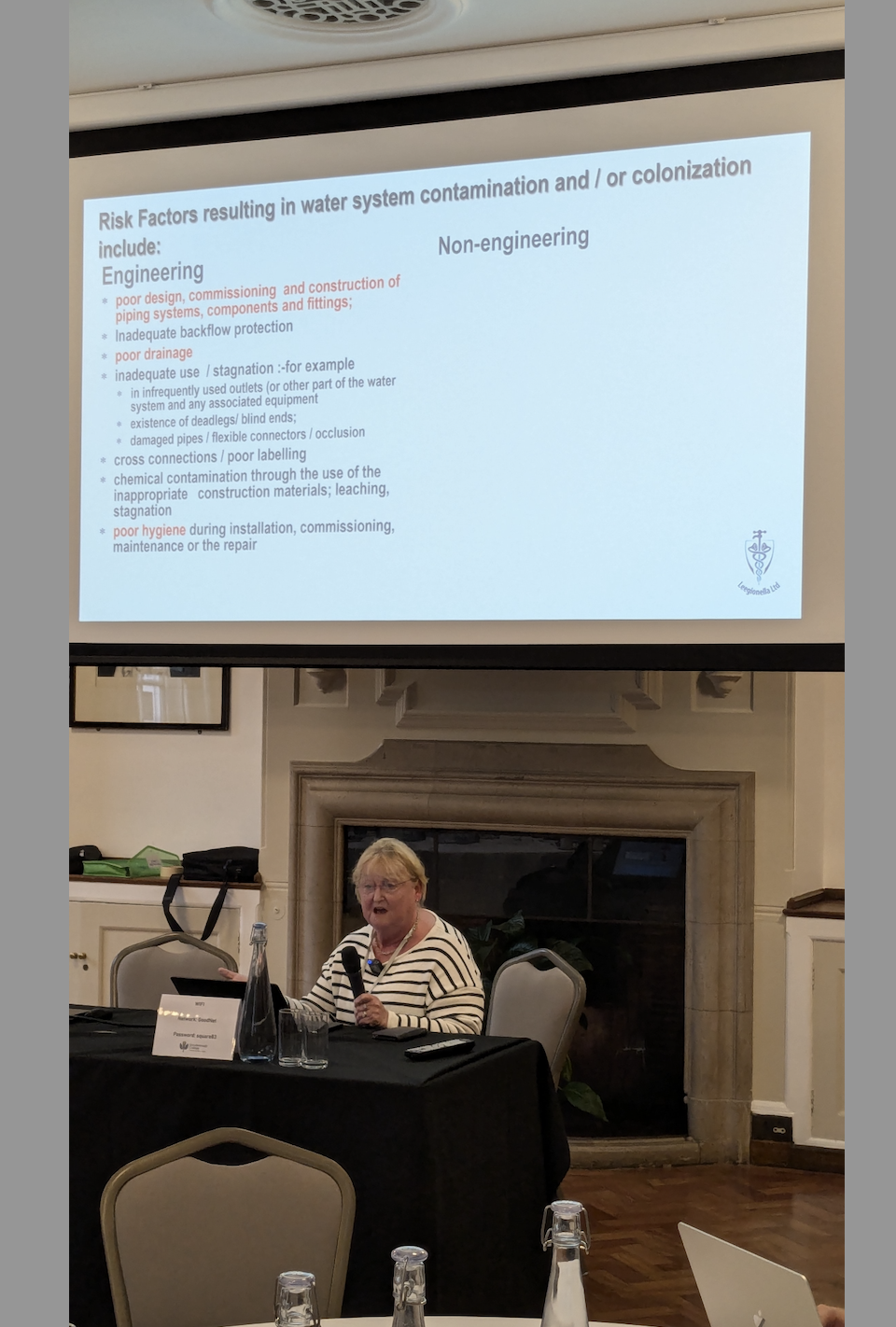
I’ve talked about some of my own pitfalls and things that I’ve implemented to help me, but you will have your own triggers, and each response will need to be customised to yoi and your needs. What is true for all of us is that you are not alone, and if you are in need of someone to speak to during the horror of a break, then I am always happy to be your person. This is what I look like and I will never turn you away.
Know that it gets easier
The longer you hang on in there, the easier it gets, honestly. I haven’t walked out on an event in a decade, although the toilet hiding is still a little more frequent ๐คฃ
Pre manage your expectations of yourself and make sure they are reasonable
Book with a group or a friend if you can to take the edge of socialising with strangers
Join a social network, as you can use it to find like-minded people, and it can give you a virtual introduction rather than the cold approach
Similarly, join a society. Societies often have small meet-ups either before events or at meetings, and so you can make connections in a smaller, less intimidating space
Submit work. It’s much less intimidating if people come and speak to you rather than the other way around
Know it’s absolutely OK to need to tap out and have your own space, but make sure this is pre-planned so you don’t miss the reason you came to the event
Right, well, having talked about the need to be prepared. I haven’t even packed yet, so I’d better get on that. If any of you are Liverpool bound, make sure you come and say hi. I’m there Wednesday and Thursday.
All opinions in this blog are my own
If you would like more tips and advice linked to your PhD journey then the first every Girlymicrobiologist book is here to help!
This book goes beyond the typical academic handbook, acknowledging the unique challenges and triumphs faced by PhD students and offering relatable, real-world advice to help you:
Master the art of effective research and time management to stay organized and on track.
Build a supportive network of peers, mentors, and supervisors to overcome challenges and foster collaboration.
Maintain a healthy work-life balance by prioritizing self-care and avoiding burnout.
Embrace the unexpected and view setbacks as opportunities for growth and innovation.
Navigate the complexities of academia with confidence and build a strong professional network
This book starts at the very beginning, with why you might want to do a PhD, how you might decide what route to PhD is right for you, and what a successful application might look like.
It then takes you through your PhD journey, year by year, with tips about how to approach and succeed during significant moments, such as attending your first conference, or writing your first academic paper.
Finally, you will discover what other skills you need to develop during your PhD to give you the best route to success after your viva. All of this supported by links to activities on The Girlymicrobiologist blog, to help you with practical exercises in order to apply what you have learned.
It has not been a great week for science, with many of us being concerned about how the presence of a vaccine denier on the successful ticket to the white house will impact public health initiatives and the quality of science communication in general. I’ve been thinking a lot about how we got here and how, even more than previously, embedding good science into mediums that are routinely accessed by the majority, will be crucial in ensuring the reach of accurate science communication when some of the more standard public health routes are bound to suffer in the coming years.
I think it will be a surprise to none of you that I am a bit of a lover of TV and movies, we’ve also covered a number of book reviews linked to this blog, and I like nothing better than snuggling down with a good book and a cup of Darjeeling. What does any of this have to do with anything? Infection, infection control, and science in general is a huge chunk of my every day, but this isn’t the case for everyone, or even most people. Many people are passive absorbers, meaning that they may not search out information but take on board when they encounter it when going about their lives. This means that the quality of what they encounter may be hugely variable, depending on how and where this happens. I’ve previously talked about the quality of the science in some of the books I enjoy, including the News Flesh series, as well as posting last week about how infection control is represented the Alien movies for Halloween. These are fun posts to do, but it made me think of the most popular movies that are linked to infection out there. How good is the science they represent? and by doing this better, could we support science literacy in general?
IMDB list of Top 25 Virus/Pandemic/Epidemic/Infection Movies
In order to think about this more detail I hit the Internet Movie Database (IMDB) which contains all kinds of lists, including a top 25 of Virus/Pandemic/Epidemic/Infection Movies (https://www.imdb.com/list/ls094715071/)
A Quiet Place (2018) (Girlymicro comment – I don’t know that this should count as it’s an alien invasion film)
Bird Box (2018) (Girlymicro comment – I don’t know that this should count as it’s an unknown enemy film that does not appear to be linked to infection)
Now, I have only seen 16/25 of these, Mr Girlymicro has seen 22/25, so between us we have most of these, so hopefully I’ll be to comment from a position of knowledge on a fair few of these. Before we even start however, as you can see from my commentary on this list, the poor science starts early during the classification of some of these as infection movies, even before we start to talk about the science content of the movie/show itself. Firstly, let’s look at the name of the list = Top 25 Virus/Pandemic/Epidemic/Infection Movies and how it related to the actual definition.
An increase, often sudden, in the number of cases of a disease above what is normally expected in a specific population and area.
An outbreak, which carries the same definition as an epidemic, but is often used for a more limited geographic area.
The CDC suggests epidemics occur when an agent and susceptible hosts are present in adequate numbers, and the agent can be effectively conveyed from a source to the susceptible hosts. Whereas a pandemic refers to an epidemic that has spread over several countries or continents, usually affecting a large number of people. The starting epidemic is usually due to a combination of factors including:
A recent increase in amount or virulence of the agent,
The recent introduction of the agent into a setting where it has not been before,
An enhanced mode of transmission so that more susceptible persons are exposed,
A change in the susceptibility of the host response to the agent, and/or
Factors that increase host exposure or involve introduction through new portals of entry
So you can see from the above that a number of movies on this list don’t actually count under the terms linked with to the title. Some of them are alien invasion, some of them are climate change related, and one is even on the topic of bioremediation. Yet there they are on the list.
For some of the others, I’ve already covered their concept during my Zombie post, so I’m not going to go through these in this blog, but focus instead on the ones that fulfill the epidemic based criteria. That said, give me a shout if you’d like a more in-depth zombie comparison post as Train to Busan is an awesome movie, and I’ll accept any excuse to re-watch it.
Let’s start at the very beginning
The first film on the list is Outbreak, a film that came out in 1995, with a description of ‘A team of Army doctors struggle to find a cure for the deadly Motaba virus that was transported from Africa to North America by a white-headed Capuchin monkey and is now spreading quickly throughout a small California town.’
This movie has an amazing cast, but I have to say I don’t want any of them in my team if it came to trying to lock down a high risk infection from an unknown source (vector). In terms of the escape monkey component. You’d think that it is far fetched, and if you’d asked me yesterday I would have said just that, but just today on BBC News there was a story on 43 escaped monkeys from a research lab in the US. So far fetched it may be, but not unheard of, in the case of vector escape.
Even if the vector component may not be quite as unlikely as I’d previously thought, I’d like to say that the rest of the practice in this is highly suspect at times. That said, I do have to admit, that I once went to a talk by a scientist who was looking for viral transmission sources of haemorrhagic fevers in Africa. They showed pictures of the table where they performed autopsies on found deceased animals in the jungle, under the same canopy as the table where they then sat down for dinner. So, as much as the way that high consequence infectious diseases (Ebola etc) are not portrayed as accurately as I’d like, maybe this is a movie of its time, as was that lecture. I really want to enjoy this movie, as it so defined how many of us had our first introduction to outbreaks and what they could mean, but almost 30 years on I don’t think I could recommend the scientific accuracy it portrays. The fact that this is still the top rated movie does not bode well for our scientific literacy hopes.
What a difference a decade makes
Almost 15 years after Outbreak, Contagion was released in 2011. This was the first of the infection movies on this list that I saw after I’d started working within Infection Prevention and Control. Contagion is described as ‘Healthcare professionals, government officials and everyday people find themselves in the midst of a pandemic as the CDC works to find a cure.’ I remember going to see this with a scientist friend and whooping out loud at the explanation of an R0, it gave me so much joy I was shushed by someone else in the cinema, to my ongoing shame.
The CDC defines an R0 as ‘The basic reproduction number (R 0), also called the basic reproduction ratio or rate or the basic reproductive rate, is an epidemiological metric used to describe the contagiousness or transmissibility of infectious agents.’ So, see if you share my joy at how the movie explains what this is, in a way that is so much more approachable than the CDC definition:
This film is not perfect, I clearly remember losing my mind about the glove use at one point, and SPOILER ALERT, it was that poor glove use that meant I was OK with one of the characters dying, but the underlying science is well explained and some of the approaches to containment and vaccination are definitely well routed in evidence. The differences in the quality of embedded science between Outbreak and Contagion are highly noticeable. Part of me wonders if some of the drivers for this heightened quality is linked to awareness of the topic due to the 2009 Swine Flu pandemic, or whether this was part of a wider shift towards improved factual grounding in these kinds of movies.
When talking to Mr Girlymicro about this movie, whilst writing this post, he has pointed out that despite my enjoyment he found it an act of ultimate depression which he will not be watching again, and that was when he watched it before the pandemic. It may therefore be, something that triggered my science joy may, in fact, be too depressing or triggering for other reasons to equate to true enjoyment for the general public. This may be an example of something that could risk being dis-engaging by being too close to the truth, despite being second on the IMDB list. Especially in a post pandemic world, this is a line that may prove difficult to walk and prove to be a barrier to movies and TV on this topic being commissioned in the short to medium term.
A completely different movie about primates
Still on viruses and re-visiting our primate theme from Outbreak comes Rise of the Planet of the Apes , which was also a 2011 release. It came out the same year as Contagion, and in the same discussion as Mr Girlymicro stated he would not re-watch that movie, for all the accuracy of it’s science, he would watch Rise repeatedly, and I can testify that in fact he has. Rise has the following description ‘A substance designed to help the brain repair itself gives advanced intelligence to a chimpanzee who leads an ape uprising.’ This is a really interesting addition to the category, as the pandemic aspects of it are mainly actually addressed in the closing credits which demonstrate how a pandemic can spread across the globe, with the film very much focused on the human (and primate) story behind the build up.
This film utilises a viral vector to try to address and revert brain abnormalities linked to Alzheimer’s, with a scientist desperately trying to find a cure for his father, whilst undertaking clinical trials on primates. Now, the clinical trial aspects of this film could not be further from the reality, and any scientist caught undertaking clinical trials and then sneaking the medication to treat their father would at best be fired and at worst been imprisoned. Somehow, because of the focus on the relationships rather than the science, the bad science in this movie bothers me significantly less than that represented in Outbreak, possibly because it feels deliberately portrayed as more like science fiction than science fact. There are some aspects of science to this one that I find interesting and like. The idea of a vaccine or medication behaving differently across species barriers is something that is interesting and could be deeply seated in evidence based plot-lines. I am aware, in this age of post truth and vaccine denial, having a film that focuses on how a vaccine or treatment could end life as we know it may not play into the goals I’m wishing to achieve using popular culture.
Let’s not forget about fungi
In recent years there’s been a rise in the quality of TV and the amount of choice has exploded, especially on streaming and other services. The switch to being able to film big budget TV over shorter film equivalents has provided storytellers with the capacity to really explore bigger and more complex tales that may not have been possible in under 3 hours.
This is last and most recent entry onto the IMDB list and is also the only TV entrant. It is our first step away from the world of viruses, into the world of mycology and all things fungal. The Last of Us came out in 2023, although it’s based on a computer game that was released in 2013. The series is set ‘after a global pandemic destroys civilization, a hardened survivor takes charge of a 14-year-old girl who may be humanity’s last hope.’ This is therefore a great combination of the way different mediums impact popular culture. The plot asks big questions about how far you would go to get a cure for the world, how much is one persons life versus the possible saving of mankind. It’s a real homage to the power that vaccination could hold to impact the world, and how when one isn’t available how desperately people might act in the search for a cure. This is the only entry on the list that came about post pandemic, and I think it is because of that (despite being a parallel to the game) that really resonates on where that desperation comes from, and despite the current vaccine back lash, shows how different outcomes could be.
The very first scenes of the series are a flashback interview from before the pandemic where a scientist talks about what they think the next bit pandemic will be, and I have to say the whole scene brings me unacceptable levels of science joy.
Anyway, this one played so much into my particular ball park that I worked with Liv Gaskill at ID Transmission on a series of articles that talked about the science behind both the Last of Us computer game and the resulting TV series, which pretty closely followed the same plot. This four part series was a real joy to be involved with and so I’m hoping that you might enjoy them too:
I wonder if fungi will be increasingly represented in this genre a) due to the success of The Last of Us and b) as viruses feel a little too close to home these days and so the fungal world might feel like a safer sand box to play around in. This could provide a safe way to have accurate science portrayal, alongside entertainment, as the real prospect of a fungal pandemic is thankfully pretty small.
A shocking oversight
We’ve reached the end of the list, but not the end of the blog post as I want to address an appalling over sight on the IMDB list, and that is the omission of The Strain on the list. This is also a TV series, where season 1 was released in 2014, covered a series of 3 books, and ran for 4 seasons. The series is described as ‘A mysterious viral outbreak with hallmarks of an ancient and evil strain of vampirism ravages the city of New York.’
The strain – episode one, season one
There are many reasons why I love this series (and at some point I should do a vampirism and infection blog to include things like Ultraviolet) is that some of the main characters are epidemiologists linked to the CDC and so some of the science exposition as part of the job based discussions is very pleasing. The other reason I like this series is there is a definite bait and switch, in terms of the causative agent, with all the initial dialogue being linked to your standard viral outbreak, with a gradual reveal that the culprit is actually a parasite. This adds a layer of interest as the approaches to dealing with transmission really start to reflect this, and provide an interesting change as the characters are also forced to pivot and discuss the differences. So, the use of a non-viral infection is not as unique as some of the coverage of The Last of Us may imply. That said, the general science outside of the epidemiology in this definitely becomes more to serve the horror plot than feasibility as time progresses.
Where are the bacteria?
You’ve survived ~3000 words of outbreak talk, covering viruses, fungi and even parasites. You may however be struck by the lack of bacterial cause in any of these listings. I’ve been thinking about this whilst I’ve been writing this blog and I’ve come up with a few thoughts as to why this might be the case:
Too close to home – many people have experienced bacterial infections themselves in their loved ones, sometimes with tragic consequences. It may be hard to therefore suspend belief enough to enjoy the offering. I wonder if this will be true to an extent for viruses now, or whether popular culture will be a safe way to explore collective trauma linked to the pandemic
Too slow – one of the features of many of the scenarios in these movies and shows is that the impact to fast and significant. This an important aspect of making events have real risk and in raising tensions. If accurately portrayed bacterial infections may be too slow in their impact OR the deterioration is so quick there is insufficient time for viewer engagement
Not dramatic enough – bacterial transmission (as described by R0) are not going to be as dramatic as their viral counterparts, so if you subscribe to ‘go big or go home’ this transmission route is probably not the one to drive a sprawling plot-line forward
Too commonly encountered – there are 101 medical shows which have bacterial infections and their consequences featured and so they may be too close to a different genre
The science is pretty hard to get right – as people are more familiar with the topic the less story flexibility there is and the greater the need to not be too jarring for those you are trying to engage. At least in the UK, many people will have been taught about Typhoid Mary and the John Snow Cholera outbreak, and so may have some familiarity. It may also be that these also make people think of the past, and this is not the feel many of these properties are trying to evoke.
So maybe bacteria are a harder sell, although I’d be intrigued to throw a little antibiotic resistance into the mix, or some bacterial toxin related drama and then see what cool things could be done as a result. Maybe that might be my future project ๐ Let me know if you think that there is a bacterial based film/series that I’ve missed.
It’s Halloween weekend, and in previous years I’ve talked about all things Zombie and infection transmission. This year, though, I thought we talked about something a little different, infection control precautions through the lens of the Alien movie series. Most importantly, I’m going to talk aboutย those initial interactions with the unknown that we frequently see in both these movies and in infection prevention and control (IPC), and whether we too would open the door when someone presents at the air lock?
Spoiler warning! This post is going to mention things that happen in various Alien movies. If you haven’t seen them it may, therefore, contain spoilers – the best way to deal with this oversight in your viewing (if you are concerned) is to just get out there and watch them as Alien is the same age as me ๐
This post was inspired by watching Alien Romulus again this weekend, which, if you haven’t seen it is the best Alien movie in forever.
In preparation for the cinema release I also did a re-watch of a number of the movies in the franchise. Just in case you are less familiar, and inspired to do the same, the list includes a variety of films in different sub-genres as listed below:
Whilst watching these I was struck by a number of moments that made me think about behaviours during the pandemic, but also tales of heard of some activities that occurred during the response to the Ebola pandemic and other high risk clinical settings. Not all of these moments would have been massively out of place, in terms of parallels with these films, and demonstrate that both risk assessment and clarity of thinking can be impacted and lead to responses outside of what would be normally expected.
The thing to remember is that there are usually protocols for just about everything, so most of the decision-making should occur and have been thought out long before the situation ever arises. The problems are almost always linked to human factors in the way we respond to stress and unexpected situations, and when the protocols appear to go out the window. So, just like every character and every space ship in the Alien franchise has a protocol for how to behave when they encounter new life, strange situations or sick crew members, every healthcare facility also has protocols to help deal with illnesses we see less often or that get issued when new diseases are encountered. Healthcare facilities may not have air locks, but they do have labs and isolation facilities, so the parallels may be more present than you’d imagine.
Infection is not always obvious
One of the first themes that recurs throughout all the movies is that infection is not always obvious, either to those on the other side of the air lock, or to the individuals outside waiting to come in. Infection with the parasite sometimes occurs when the stars of our show are unconscious, be that due to trauma or medical interventions, and so they are unaware of the Facehugger on character action that has occurred.
In terms of IPC the same if frequently true, both for viruses and bacteria. Some viruses have what is known as a pre-symptomatic phase, where you are infectious to others before you even know you are sick. This was a big problem in the early stages of the SARS CoV2 pandemic. Even for bacteria, when we talk about antibiotic resistant bacteria, most people are colonised and have the potential to act as silent sources without even knowing it, with only small numbers going on to develop infections.
The truth is not always apparent
Even when an individual knows that something has happened, and are aware of their close encounter with Alien kind, the truth of their scenario may still not be apparent to either them or to others. If you look at the Facehugger situation, surely once the terrifying creature has dropped off without apparent poor consequences, then everyone breaths a sign of relief and is grateful for the near miss, not knowing that this is only the beginning. When you combine this with the fact that some people will determine this to be a low risk event and therefore not want to disclose, as they are aware of the inconvenience that will result, you end up in situations where not all the information is available.
This can also be true in real life clinical situations. Patients may not know they have been exposed. Patients may also present with symptoms that they haven’t recognised as significant, or that they have risk assessed themselves and decided they aren’t concerned about and so don’t disclose. This can happen more easily they you think, especially at the start of something, where patients don’t feel particularly unwell, or they just have a couple of vesicles/small rash. In the latter stages, when patients are presenting because they feel unwell, they may be confused or not always able to accurately disclose what’s happened. Occasionally, this may be a deliberate attempt to withhold personal details, but most often it’s because they are rightly focussed on how they are feeling in the moment. Plus, if you asked me to accurately recall everyone I met and everything I ate a week ago, I’m not sure I could, even when well.
By the time you realise the condition is a threat it may already be a risk/out of control
One of the consistent themes across all of the movies is that situations get out of control before anyone truly understands the situation and the risks. It’s only when the person that you breached protocol for suddenly starts to writhe and the horror stands before you in all its glory do you truly understand the implications of the decisions you’ve made. At that point you are trapped in your glass med bay with a growing Alien and your self recriminations are not going to save your life.
This one is a rather more dramatic version of some of the conversations that happen amongst healthcare workers when you phone to give results and have conversations about whether patients had been in the right precautions and the staff member was wearing the right personal protective equipment (PPE). There have definitely been times when staff have made a risk assessment and not followed the protocols about what PPE to wear and have then responded to these phone calls with ‘what can you do?’ in relation to the exposure. Sadly, in some cases there is nothing that can be done once the guidance has been bypassed but to wait and see, which is the reason for the guidance in the first place. Fortunately, for most scenario’s in the real world, the consequence isn’t bloody horror, death and an alien threat to mankind.
Risk assessment is linked to risk management
One of the reasons that protocols are in place in the Alien movies is that someone, somewhere, has obviously recognised the risk of infection in a small contained community where everyone interacts and lives on top of each other. Even in Aliens, when you’re talking about somewhere the size of a colony, this principle stands. This is because you are unlikely to be able to access a clinical trial on a mining ship, or develop a novel antiviral on terraforming mission, even if what you’re importing is a more traditional style of infection, versus an Alien parasite. The extent of the risk mitigations needed will always align to the risk itself. If you are concerned about an introducing something that is untreatable, then your measures are going to be much more extreme than if your infection is likely to just mean someone goes to bed and takes paracetamol for a weekend. If you can’t treat, then prevention is your only option. After 9 movies there doesn’t appear to be a Xenomorph (Alien) cure and so measures taken to prevent allowing one into your space need to match the risk they present.
This approach is definitely seen in response to infection in IPC. If you have a condition that spreads easily, rapidly and can be incapacitating for a period (i.e. norovirus) then you will use a different set of precautions to those that you use to manage something which may not be as transmittable but is untreatable or has life threatening consequences such as a haemorrhagic fever. Having conversations and being open with people about the risks of getting things wrong and ensuring that individuals understand why responses are different in different circumstances are a key requirement for people working in IPC, and something I think we should all endeavour to do better at. I think the days of asking people to blindly follow protocols should probably be behind us, as I think the Alien movies demonstrate that if people don’t get the why, they often ignore some of the core components based on external drivers
So, what lessons can we learn?
Beware of acting on incomplete information
Decisions are consistently made in these movies based on incomplete information, which leads them to underestimate both risk and consequences. A great example of this is the way people use information related to the black goo, especially in Alien Romulus, maybe don’t inject yourself with a substance that doesn’t have a proper name let alone a full data set for you to understand what it does. The other thing is that information is often treated as static, and so there is very little rapid inclusion of new info, rather than being mindful of an iterative response to new data, so help constantly inform and improve your risk assessment. It’s always worth being conscious of when is enough is enough when it comes to information and decision making.
Emotions get in the way of logic
During the movie Covenant, the entire crew is made up of couples. I get this in terms of colonisation, but in terms of good decision making, and in relation to risk this is just a one way route to bad outcomes. There’s a reason that in a certain Zombie series husbands have kept their zombie wives locked in basements rather than removing the risk to them and others. There’s a reason medical professionals should not manage their loved ones. Emotions interfere with logic, and there is no way under this setting you are managing to make decisions without your emotions getting in the way. It’s a reminder that if we become aware that we are in an emotive place, it may be the time to step away and take a deep breath, before making that judgement call or even tap out entirely and allow someone more removed to take our place.
The contrast between human emotional decision making and evidence based decision making, usually undertaken by the android cast, is beautifully explored during Romulus via Andys story arch and is one of the highlights for me in terms of enjoyment.
Science doesn’t change based on how much you wish the outcome to be different
One of the reasons that emotional involvement in decision making can be so challenging is that it can interfere with perspective and accurate interpretation of risk, thus impacting risk perception. Sadly the truth that wishing does not impact outcomes is hard to argue with, but it is human to try to persuade ourselves we have more control and ability to influence the outcome than we do. Under stress, our natural tendencies towards pessimism or optimism are definitely amplified. All of this means that when there is someone at the door banging and begging to be admitted, it is easy to persuade ourselves there is a) enough time to manage to open the door safely and b) the consequences of opening said door will not be as bad as we fear. Emotions don’t change outcomes but we are almost programmed to hope that they can.
An individual will always want to be the 1 in a million
The reason someone opens the door is the same reason that when one character looks at another and utters the fateful and true words ‘it’s too late’, and it almost definitely is, neither one acts before everything gets out of control. Humans are not good at dealing with numbers and risk when they are actively involved in the situation. One of the reasons we aren’t in that we throw sentences around saying it is a 1/million chance. We, as humans, have a tendency to focus the fact that, although it is a long shot, there is a chance that things can go your way. Sadly, as someone who has experienced the opposite, where my sister died in a 1/10,000 pregnancy, someone always need to be the one. The stats work both ways, whereas most of us survive in the world by only focussing on one side of the equation. This therefore impacts our capacity to evaluate any risk in situations we are involved with. Somebody always bears the cost and few of us can bear the vulnerability of acknowledging that that somebody could be us.
The people with the most experience are not always the ones making the decisions
One of the other main themes in these movies is that decisions, when not being made by friend and loved ones, are often being made by people in positions of power, not necessarily based on knowledge or even accepting of prior experience. This works well or not so well based on how well they listen to those who do have the information to help improve their decision making. Chains of command, especially in high stakes scenarios, are not necessarily bad, as we’ve already talked about the risks linked to emotional decision making, but so much depends on how well they work and how they place value on evidence based choices rather than hierarchy.
The other theme here is the trusting of unknown sources, especially ones with no evidence of expertise, over those who have either lived experience or expertise. I think this one resonates a lot right now, when there are so many sources of misinformation out there, and so many conspiracy theories that rely on speculation and rumour. Fact checking is key, be that on a space ship or deciding on your vaccination options.
Not everyone has the same thought processes
One of the other reasons decision making goes astray in these movies is because those involved in that decision making often have undisclosed values, beliefs or drivers that are impacting their choices, and this process is not always obvious to those others involved. This is true from androids that may or may not be obviously androids and who will have programmed ‘primary directive’, as well those working for the corporation. This is interesting as they often have more complete information than the others involved, as well as seeing the situation through a different lens because of how they view the world. This means that they can see others as disposable or views risks different, as they have a set of criteria that they wish to achieve which is more than just survival. Although in clinical life the juxtaposition is rarely so extreme, the challenge of reaching alignment when people come with different world views can definitely impact shared decision making.
Smart people can do stupid things
Having said all of that, smart people can in general do stupid things, even without all of these complications. Even when the experts are the ones making the decisions they can still make the wrong ones, especially when tired,ย stressed, or lacking all the information. This is the reason why protocols are key, drawn up and decided upon when all of the confounders to good decision making are not present.
You need to follow the standard operation procedures
In the end this entire post has been a very very long way of saying ‘JUST FOLLOW THE SOP!’
Many of these movies but have been much shorter with a much reduced body count, if those involved had just followed the pre-established procedures laid down for their safety. Obviously, we don’t have so many Xenomorphs as a daily risk factor in healthcare, but the same is true for us. SOPs are rarely there for the sake of it, they are there to support decision making so that in times of stress or information overload, you are not having to seek extra information to support good decision making, you have it freely pre-digested and available to you. So the next time you think twice about donning that PPE or the closing that isolation room door, ask yourself ‘would you open the airlock door?’, think twice and do the right thing.
And now for something completely different
Finally, because this is something that has amused me whilst watching these films and is probably not something that I can talk about in general down the pub. The computer in the Alien movies is usually referred to as Muthur, pronounced Mother. I just want to share my joy that the analysis software that is used to help analyse 16S rDNA runs, to give you microbiome analysis i.e. tell you what bacteria are present in your sample, is called Mothur, and also pronounced Mother. I’m sure the two things have nothing to do with each other, but allow me my scientific joy that something which was so ‘other world’ when it came out to me as a scientist has the same name as something imagined from ‘another world’.
Also, if anyone needs a science advisor on their next project, give me a shout as this post has brought me much joy and I think I may have missed my calling ๐
Firstly, lets start with an apology. I’ve haven’t posted for a month as I’ve been struggling health wise and not really been able to get to a laptop to be able to write. Although annoying, it has given me plenty of time to think about what I might want to write next, so hopefully you’ll forgive me.
Now, onto the present. I’ve been in post for 20 years this month, and have also just spent some time recording a couple of webinars that covered bits about the journey to consultant. It felt timely, therefore, to put something out there talking about my experience of the consultant journey. Word of warning, though, this is only my experience, and everyone’s journey is different. I hope my sharing this it will help others, both in validating the aspiration but also in supporting expectation setting by talking about what it was really like to go through. Frankly, I want to be clear that it is never as linear as it appears from the outside and that that is perfectly OK.
So, let’s start at the very beginning. On my first day in post (all the way back in 2004) I was told that I was on an 11 year programme from trainee to consultant, and boy did I drink that cool aid and believe that would be the truth, after all these people were my bosses, supervisors and mentors. Sadly, it transpired that although they were being inspiring they were also far from being completely honest in terms of disclosing how straight forward, or not, the programme and progression actually were. I am now a Consultant Healthcare Scientist, although it took me 16 years rather than 11. Now I’ve reached the promise land I want to be clear that it was no where near the linear journey that I was sold on recruitment and there was a lot of struggle at every single stage. That being said however, now I’ve crossed the line, I wouldn’t have had it any other way. It was dealing with those barriers and obstacles that made me really decide who I was and what I wanted. It was also where most of the learning was truly at. So I wanted to write a blog post that doesn’t sell the ideal but discusses the realities of what some of those barriers looked like and to make those facing them a) feel less isolated and b) know they can be overcome.
You have to be doing the job to get the job
This one took me a long time to fully comprehend, as it can feel counter intuitive, but you have to already be doing most of the role in order to be able to get the role permanently. It is easy, in moments of frustration, to turn around and say ‘that’s not what I’m paid to do’ or ‘if they want me to do that job they need to pay me for it’. There are definitely times when you need to dig your heels in about workload and boundaries, but this generally needs to be the nuclear option. For the most part, you need to be prepared to roll your sleeves up and jump in to get the experience so that you are well placed to advocate for a post to be created, if that’s your aspiration, or to enable you to apply elsewhere with confidence. For me, I learnt huge amounts when I provided maternity cover for a year as a trainee. It built trust and showed willing to my clinical lead as well as providing me with experiences I would not have had in any other circumstance, enabled me to springboard into my next post, and meant my clinical lead wanted me stay enough they found money at the end of my training. Maintaining an openness to opportunities and an awareness of the fact that stepping up, although not always recognised financially or otherwise, does come with benefits on all sides and is an important part of playing the long game.
There is no single way to get from A to B
When I started, I thought the journey would be straight forward. I’d finish training, I’d get my 4th year funded, I’d get a Clinical Scientist post. Then I would work towards FRCPath and a PhD, hopefully moving into a Principle Clinical Scientist post. Once I’d achieved my tick boxes, my loyalty and hard work would be rewarded and a Consultant post would be forth coming. That’s just not the way work places and budgets work however. On this one patience is THE virtue, and the sooner you can acknowledge that A doesn’t immediately lead to B, the better for your mental well being. That said, the training pathway now available for Healthcare Scientists does make, at least the early stages, more straight forward.
Counter intuitively I’m going to say that, looking back, not having access to the straight forward route has been the most beneficial thing that could have happened to me. I would never have ended up with a clinical academic career if I hadn’t needed to acquire further salary funding and a PhD. I would never have ended up in Infection Prevention and Control if my training programme had been funded for the full four years. So many of the things I value the most only came about because I had to find ways around barriers and due to glorious happenstance. Despite being challenging in the moment, I’m grateful for every detour taken.
When it comes down to it, the person responsible for your progression is you
This one may feel harsh to hear, but no one is as invested in your career as you are. I’ve had a fair few people over years who’ve come to me and said that they deserve to be given X or Y. No matter how true this may be, this isn’t how it works in reality. If you want something to happen, you have to be the driving force to make it so. You are the star of your own movie.
I think a good example, for me, of this was my training programme.ย I was really fortunate that no one would block anything I wanted to do. The flip side of that coin was that no one sorted anything out on my behalf. It was my responsibility. I could go to any clinic, shadow anyone I wanted to shadow, but I had to reach out to find the contacts and arrange it. I had to have a vision of where I wanted to be and put together the pieces to enable me to get there. This is, in turn, enormously freeing and terrifying. It taught me early to be the master of my own destiny, and this is an important lesson for anyone on this pathway,ย irrespective of how supportive your surroundings at some point you will have to make it on your own.
You will hear a lot of no
One of the reasons to learn early to be your own driving force is that you will hear a lot of no as you under take this journey, whether that be linked to funding, exams, or posts. If you haven’t set your own direction then it can be hard to keep driving, as you may not be sure what you keep pushing for. As the old adage says, if you don’t have faith in yourself, no one else is likely to.
A lot of the no you hear will not be personal, a lot of it will be nothing to do with you or your skills. That doesn’t stop it from being hard to hear or from it feeling personal when it is not. A key skill that isn’t much talked about is learning how to respond to these challenges. You need to move to a place where you are able to process and move on without carrying that rejection with you. To learn from the moment and then let it go, so you always emerge a stronger, better person for the experience.
You have to know what matters
Something that can really help when facing the barriers and challenges along the way is being really clear what matters and why you are pursuing the choices you’ve made. Why does this route align with your own personal values and beliefs? If you understand your ‘why’ then you can weather the delays. It makes it so much easier to get back up when you’ve taken a knock.
The other side of this, which we don’t talk about anywhere near as much, is the importance of knowing what doesn’t matter. You can’t fight a battle on all fronts, and there will be positions you get into when you discover that you are fighting for something out of habit or without thinking about it. This is a waste of energy that you could be focusing on something that actually matters to you. Developing the self reflection to know when this is the case and using it to remove yourself from the arena is one of the most freeing and valuable skills you can invest in. I learnt this late, and I really wish I’d realised it earlier.
It is not an even playing field
I started this journey as pretty naive. I think I genuinely thought everyone would have a similar set of challenges and barriers to overcome. This just isn’t true. I know people who’ve become Consultants over a weekend with no external advert or interview. I know of trainees who’ve gone from point A directly to point B because their faces fit and everything aligned for them, not many but some. The challenging reality is that sometimes the playing field just isn’t even. Some disciplines are more set up for straight forward progression than others. Some disciplines have a bigger medical leadership who may not understand the role of Healthcare Scientists. In all honesty,ย being a woman in science is also not always straightforward. The gender issues are not always as obvious, but they are definitely still there, and that’s before we even start talking about other diversity issues.
When confronted with moments where this imbalance becomes apparent, we always have 2 choices, you can quit, or you can continue to fight. One of my core values has always been about parity of access, and one of the reasons I became a Lead Healthcare Scientist was to be in a position where I had the capacity to influence in this area. So when you come across inequality on your journey, whether it’s something you face or become aware of as an ally, I would always encourage you to be the change you want to see and to remember these moments when you are in a position to make life different for those that follow you.
Know that it’s OK to change your mind
So far, I’ve talked a lot about making Consultant, but I think it’s important to talk about the fact that it’s OK to also not want to end up as one. Life is about far more than work, and even in work we all find different sources of joy. The job role as a Consultant is not the same as a qualified Clinical Scientist. You won’t get lab time. There’s an expectation that it’s not a 9 – 5 role, and you will sacrifice a lot to get there, both financially and in your home life. It’s not the right choice for everyone, irrespective of your capability to do the role if you chose. I just wanted to take a moment out to write something that is supportive of starting along this route and then deciding it isn’t for you, for all kinds of different reasons.
Sometimes, I think people feel pressured to continue as ‘I’ve started so I must finish’. I love where I’ve ended up, and it was always my passion. If that wasn’t the case, then I would always support ending up where your passion does lie. That could be in the lab, in education, in quality or leadership. We are so lucky to have so many different options.ย I’m also aware that I talk about ending up working where your passion lies, and that is also not right for everyone. For many people, that passion doesn’t lie at work at all but with other aspects of their lives, and work is just what enables those things to happen. In my clunky way, I suppose what I’m trying to say is you do you boo and don’t let the pressure of expectation or external influences lead you down a pathway that isn’t right for you.
Bring yourself to every interaction
This all brings me onto something that also took me a long time to embrace. You can’t spend a career spanning decades pretending to be somebody else. For about my first 5 years in post, I didn’t really talk about the things that interested me. I didn’t talk about being a gamer and a geek because I was just really concerned about any judgement and how that might impact my career progression. It took me a while to accept that putting on a front is both really tiring and limits the amount of genuine relationship building you can do.
That said, I acknowledge that it can also be really hard to turn up as your whole self. I know there are some leaders out there who say we don’t owe our full selves to work, but I don’t think I know how to do it any other way. If I want those I lead to share something of themselves so we can build true connections, then I don’t think I can do differently.ย I’m not saying that everyone has to share every aspect of their lives, but I think I have to lead by example. For me, this means embracing the fact that I am not perfect and that I will have bad days as well as good, and make it OK to talk about those things. For me, that opens up dialogue on coping strategies and deeper dialogue versus pretending that everything is perfect. Everyone brings something different and we should honour that difference by embracing it rather than hiding who we are.
Sometimes, it’s just a case of continuing to show up
I’ve talked a bunch about some of the reasons that making Consultant may involve surmounting or finding a way around barriers. I think one of the things we talk less about is the fact that the thing that often makes the most different is continuous effort. At its heart it’s about continuing to show up, on good days and on bad. It’s about demonstrating commitment and being in it for the long haul.
Now, when I say continuous, no one expects every day to be the same, but there is a consistency linked to intention. If you are clear where your ambition lies and stick to it, it is easier for those around you to also factor that into their thinking. If you areย changing the goal and ambition regularly, then can be harder for those trying to support you. It’s not that you can’t change your mind, but you should try not to scatter gun your approach. Making Consultant, to me, like getting a PhD, mostly seems to be about a tenacity of purpose that means you keep showing up, combined with the patience to know it will happen eventually.
Always remember why you started the journey
I think many of you will know that patience is not my greatest asset and so I found the journey so frustrating at times, as I had such a clear vision that was not always shared by others. For this reason, you really need to know that the pursuit of this is right for you, right for you when start, but also stays right for you along the way. It’s that clarity of purpose that can re-centre you when things are tough or when you are facing those no’s. Without it you could easily falter and it may be that it really isn’t the right option for you.
The other reason to have that clarity of purpose is that it is not like reaching the destination transports you to a land of rainbows and bunnies. Consultant roles have their own challenges, and in many ways just having the title doesn’t really change anything. The job is still the job. Therefore, if you aren’t sure along the way, you may just be signing up for more of something that may not be what you want it to be. The flip side of that coin is that if you are sure, and know what you are working for, you are likely to end up in the job you’ve dreamed of and aspired towards for over a decade, and that feels pretty damned good.
The people make the journey worthwhile
I just wanted to finish with something that has struck me more and more as I moved along the stages to becoming a Consultant. Although all the professional stages feel significant, it’s the people I’ve met along the way that I am most grateful for. It’s these people who will stick with you long after the nerves and stresses of an exam are just a distant memory. They will be the ones that guide and pick you up when you hear the no and face the obstacles. They are the ones that, when they celebrate with you, make the celebrations really worthy of the name. So don’t be so focused on putting one foot in front of the other that you forget to look up and find time to develop the relationships that will last a life time.
I’ve been thinking a lot about goals lately as I have two awesome PhD students who are currently in the thesis writing mines, and having taken a few years away, I’m preparing to re-enter the grant writing labyrinth. This thinking has led me to actively spend some time considering what can make a goal helpful, but also what can make it a millstone around your neck and something that actually makes life tougher.
As you’d probably expect, I spend a lot of my working life talking to people about goals, be they personal or organisational. I’ve also spent the last 20 or so years setting good goals and also setting some truly dreadful ones, either because they were unachievable or developed in a way that just wasn’t helpful. So I thought this might be a good moment to share what I think a good goal should look like in case it helps.
Goals should be S.M.A.R.T.
You will hear an awful lot about how goals should be S.M.A.R.T. These criteria were proposed by George T. Doran (1981) and stated that goals should be:
Specific: Targeting a particular area for improvement.
Measurable: Quantifying, or at least suggesting, an indicator of progress.
Assignable: Defining responsibility clearly.
Realistic: Outlining attainable results with available resources.
Time-related: Including a timeline for expected results
These principles can make goal setting sound really complex, and like their development will take a whole bunch of time. That can definitely be true if you are setting things up for a big piece of work or a project. The principles can however also be applied to more modest goals that aren’t about big things. For instance, if I manage to do a 20 minute block of writing right now, I will reward myself with a pot of the pink earl grey tea I currently love so much. Therefore getting into a habit of thinking what is achievable and embedding specificity, even into the little things, is a good routine to get into.
One of the reasons I find goal setting so useful is it can get me away from big picture thinking. Sometimes, seeing the big picture is what you need. They are other times, however, when seeing that big picture can feel overwhelming or dis-empowering, and what I need is to be able to break my task/goal into small enough chunks that I think I will be able to take the steps forward that I need.
In all honesty, sometimes those chunks have to be pretty damn small if I’m struggling. Sometimes, they can be larger. Sometimes, they can aim at controlling the next 5 minutes of my life, and sometimes, they can focus on a whole day. A key piece of learning for me has been to understand what I need to have in order to service the need, whilst acknowledging that I’m not a robot, and so some days I will need to accept that my productivity looks different.
If I’m setting up a big set of goals for a project, I therefore need to be flexible enough in my approach to allow variation in how any blocks of sub goals written can be brought together or modified based on the needs of the day. Motivating enough to get me over the hump, not so formidable that I’d rather do nothing than look them in the eye.
No goal stage should take longer than you can attain in one sitting
This is a big one, for me at least, no individual goal should take you longer than one sitting. That one sitting could be a day, on some days that one sitting could be 20 minutes, but one sitting is my time boundary for an individual sub goal.
There are a few reasons for this:
Different sub goals can get combined based on how I’m feeling and my capacity to be challenged on any specific day
Keeping them time limited means that they are easier to monitor, tick off and see progress, even when it feels like a slog
I find it easier to plan my total work that needs to be achieved/go into something if I have a workable unit of input that is going to be required
It means that I only ever have to do one achievable thing in order to feel like I’ve done something. Otherwise, failing to complete my goal because I’ve set myself too much to do, can leave me feeling like I’ve failed rather than I’ve failed to plan appropriately
A lot of this, for me, is about learning how to trick my brain so I can move forward even on those days when I just don’t really want to but it has wider benefits in terms of tracking and flexibility in terms of thinking outside of delivery alone.
Goals can be multistage
All of this doesn’t mean that you can’t use goal setting to work towards a big plan, a big vision, or a big task. If you are working towards your 5 year plan, your thesis, your fellowship, you absolutely need to have a plan and goals that encompasses everything. The plan cannot however be ‘write a thesis’ or even ‘write a thesis by the end of 2024’. Those types of goals are the ones that become millstones as they include all the expectation aspects of a goal with none of the pathway that would enable you to achieve what’s needed.
Multistage goals require you to look at your big picture and then turn it into a 1000 piece jigsaw, where most of the time you are trying to find a home for a single piece, but you keep the lid of the box with the picture to hand in order to guide you along the way. Getting to a point where you are able to break the whole down requires you to do 2 things. One, do your research so you know about the project/larger goal in detail. This enables you to sensibly decide where you can segment it. Two, spend some time getting to know yourself, what motivates you and your rhythms, so that you can be sure you are breaking down the whole in a way that facilitates rather than hinders the way that you work. There is no point in being deluded and pretending you are or work like someone else. At this point, realism, no matter how much you like or dislike the truth, is key.
Goals should have details
I will say this once more with feeling (still one of my favourite Buffy episodes). Your goals must never be things like: ‘write a chapter’, ‘write a paper’, ‘write a thesis’. Not unless you have a constant level of superhuman motivation. Your goals need to be much more specific and achievable.
There’s an example of a high level goal written below, but I tell you that I would find that unachievable if that is all I had. I would need sub goals below it per week and per day. I say this as someone who used to run half marathons. I would need a ‘on week one of training I will run so many miles’ and ‘on day one of week one I will do X’. Otherwise, I would get to the end of week one supposedly needing to run 30 miles that week having run none, and facing up to the fact that I would have failed at the first hurdle as there was no way I was running 30 miles on a single weekend. This kind of failure can really get into your head and change how you feel about the next stage, and ensuring you don’t make life harder for yourself is a key life lesson.
Goals should aid focus
You will not feel world beating every day. What good looks like will change on different days. It is foolish, therefore, to pretend otherwise when you are planning your sub goals. Again, you need to be planning for reality, not idealism. It is not only sensible but essential therefore to include flexibility in your goal setting that takes this into account.
One of the best ways I’ve found to do this is to make sure that I have a mix of different styles and types of goals. I include tasks for those days where I don’t have the focus for sustained deep activities, where all I can face is picking around the edges, as well as ones for those days when I can tackle the big thinking and can really dig deep. A good example of this is making sure you have a list of the essential, time consuming but slightly mindless work that always needs to be done for any paper or thesis. Things like figure checking, formatting wrinkles and cross referencing. Don’t waste your days when you have energy and focus on these, keep a list to one side so that even on days you don’t feel ‘on it’ you are able to still feel like you are moving things forwards. Be cogniscent of your state of mind and use that to make the best use of your time.
Goals should support your process not become an additional stressor
My husband has probably lost count of the number of times he’s found me crying on the sofa, and when he’s asked what’s wrong, I’ve said the world is going to end because I’m going to miss deadline X or Y. When he’s then followed up with a question linked to who has set the deadline, invariably he finds that it’s self imposed. He then looks at me with compassion and gently (or forcibly depending on my need) reminds me that if I set the deadline I could also, you know, change the deadline…..
These moments always remind me that the purpose of a goal is that it should enable you to cut out the noise and focus on the now, not become a distraction or thing to be overcome. A good goal should enable you to be motivated even when you don’t feel like it. A good goal should give you an objective way to capture progress, even when you feel you aren’t making any. The best kind of goal should mean that you don’t end up in a crying heap on the sofa as they stop you reaching that point. So develop good habits about goal setting, and your future self will thank you.
Ensure you have a way to monitor progress
I’ve said a good goal should be measurable. There a couple of reasons for this. First, at a very basic level you need to be able to tell when it’s been completed. Setting a goal like ‘improve my piano skills’ sounds fine, but how do you classify that? When will enough improvement be reached? Is sitting for 5 minutes and running scales enough, or are you wanting to be able to play more than Chopsticks?
Second, if you are involved in something that is big or multi goal, you will need to be able to see progress being made. Part of this, if you think like me, is that I need to be able to visualise that I’m moving forward in order to maintain my motivation, and being a scientist I like quantitative data to show that I’m not just lying to myself. The other component of this is about learning for future activities. By setting measurable goals that have time scales attached, in order to can capture trends, supports you to be able to set better goals in the future . For instance, I know that I always under allocate time and have learnt the hard way that I need to add 1/4 additional time to things vs. the time I originally planned. I have also learnt that I will take an age on the initial phases of any piece of work, way way longer than I had allocated. This means, however, that my writing phases tend to be much shorter than allocated, as if I’ve done my planning/thinking, I can get 5000 words down a day.
If I don’t have goals that are not only measurable but monitored, I can only get part of the benefit of undertaking the work linked to setting the goal in the first place. So do future you a favour and make sure that you have mechanisms for doing both as part of your day to day to maximise both your outputs and your learning.
Goals should be regularly reviewed
You will only get the learning potential out of goals if you see those goals as live items. Pieces of a puzzle that should be regularly reviewed by holding them up against the box lid, which has the wider picture. Goals that are no longer helping should be reviewed, and the whole plan should remain flexible enough to change so that it can better fulfil the purpose. If you find out that you have allocated time scales that don’t work, missed out crucial stages, or just made individual goals too big and need to break them up, this is much easier to fix if you embed reflection throughout. Otherwise, you can end up crying on the sofa as you have been too inflexible or focused on the finish line to flex the details along the way.
I would advocate setting reflection points at regular time intervals, but also at the start and end of a new stage, in order to think what went well and not so well. For instance, if you are writing the first data chapter of your thesis, were your time allocations correct? How did your list of mop up activities work? Was there anything you missed out or had present that you didn’t need? Then, use this learning to adjust everything moving forward. It’s also worth having a wider review stage at the end so that you can roll any higher level themes into your learning for next time. You may not write another thesis, but you will write other large documents, so maximise the learning opportunities where ever possible.
At the end of the day, you rather than the goal, are the one who needs to be in control
The purpose of all of this thinking and preparation is not, in the end, to make extra work for yourself. The purpose of this is to give yourself a framework to support thought and mean you don’t waste time or lose direction later on. A goal is a tool to help, not a noose to choke self confidence or creativity.
The other thing to bear in mind is that a goal is not a deadline, and we should stop treating them as such. A goal is a way of helping you deliver to deadlines, but it is not an end in itself. You will have goals for things that don’t have formal deadlines, and you may even have deadlines for things that don’t require goals. Knowing the difference and seeing goal setting as just another tool in your toolkit that is there to help you achieve and reach your aspirations can really help change your relationship with goals and goal setting. If your goal does take control and end up becoming a deadline in itself, lay back and enjoy the feeling that comes with the sound of it whooshing past in order to re-set your relationship and put yourself back in the driving seat. You are the one in control after all.
All opinions in this blog are my own
If you would like more tips and advice linked to your PhD journey then the first every Girlymicrobiologist book is here to help!
This book goes beyond the typical academic handbook, acknowledging the unique challenges and triumphs faced by PhD students and offering relatable, real-world advice to help you:
Master the art of effective research and time management to stay organized and on track.
Build a supportive network of peers, mentors, and supervisors to overcome challenges and foster collaboration.
Maintain a healthy work-life balance by prioritizing self-care and avoiding burnout.
Embrace the unexpected and view setbacks as opportunities for growth and innovation.
Navigate the complexities of academia with confidence and build a strong professional network
This book starts at the very beginning, with why you might want to do a PhD, how you might decide what route to PhD is right for you, and what a successful application might look like.
It then takes you through your PhD journey, year by year, with tips about how to approach and succeed during significant moments, such as attending your first conference, or writing your first academic paper.
Finally, you will discover what other skills you need to develop during your PhD to give you the best route to success after your viva. All of this supported by links to activities on The Girlymicrobiologist blog, to help you with practical exercises in order to apply what you have learned.
As Girlymicro has a) got tonsillitis and b) attempting to run the day, todays blog is a guest blog brought to you by frequent Girlymicrobiologist contributors and Environment Network stakeholder members: Sam Watkin and Dr Claire Walker.
It’s the most wonderful time of the year! Today is the Environment Network meeting where we gather together to talk all things environmental risk assessment. ย This is a network for people in clinical, scientific and engineering roles within the NHS and other associated organisations who are interested in the role of environmental infection prevention and control in preventing infection. Despite being an immunologist (Claire Walker) for most of my career, this is one of my favourite meetings of the year. Everyone is deeply passionate about what they do and how we can work together to exchange ideas and improve practice.
Too kick us off, we have the wonderful Professor Elaine Cloutman-Green and Lena Ciric welcoming us to a day of interactive sessions on key issues in the field. Prof C-G sets the scene for our day introducing the concept of our different perceptions of risk assessment and the challenge of unexpected consequences. Of course we understand the triumvirate of identify, understand and mitigate problems but how an engineer approaches risk is quite different to how a clinician might. As Prof C-G says clinical risk assessment is not a zero harm game, it is about controlling real rather than theoretical harm. A balance needs to be stuck between what is most appropriate for the patient – we could keep patients in bubbles and not even have healthcare professionals approach them, but I doubt that patient would fare very well! There is a need to balance the approach of the clinical and the engineer to find an optimal position to minimise harm. To make these decisions we need to consider the interaction between organism, patient and the built environment in order to work out what the control measure should look like. Problems aren’t simple, we need to accept and embrace that risk assessment is a complex process. And perhaps most importantly we need to take the time to see the perspectives of others, or we might never see the elephant in the room.
Risk assessment has the potential to make use all uncomfortable, as scientists we do not enjoy the unknown. In good risk assessment A plus B does not always equal C, it might do 50% of the time so we have to rely on our best judgement. Moreover, risk is not static. All patient and clinical environments are quite different as we need to pick the point that works for that situation – National guidance can never cover all of these unique situations. A multi-disciplinary team approach is essential to ensure we are asking the right questions.
Next up we have Dr Susanne Surman-Lee giving a talk on combining clinical and engineering risk and why working in silos hinders risk assessments. Silo working at all levels, even within a team, can cause a raft of problems, with poor communication, different priorities, resource conflicts and inefficiencies. This can mean those in each silo work to their desired outcomes, not taking into account what other requirements may be. The danger of this is that it ultimately increases the risk to patients.
A poll found that the event was well attended by people from a range of disciplines, covering many relevant professions to environmental infection control. We often all want different things from a building, be that aesthetic, cost or usability. What is critical, and reflected in new guidance, is that the purpose of a building must be to put the patient first.
To escape working in silos, the audience recognised that communication is absolutely key. Working as a single team, sharing respect, data sharing and fostering a collaborative culture is all needed to break down individual working silos. This enables the project team to work as a single unit, supporting faster, safer decisions across strategic levels.
A set of examples on real-world decision-making processes highlighted not only the importance of accurate record keeping when it comes to decision-making, but also what can happen when an IPC challenge is only viewed through teams working in silos.
When considering waterborne infection risks, a multitude of challenges, both from an engineering and non-engineering standpoint must be considered. This can range from inadequate usage leading to stagnation, poor hygiene during installation and poor labelling, outlet misuse, poor cleaning techniques and inappropriate assessment if transmission risks as examples.
Ultimately, we must consider the problem as a whole. Different hazards and sources of pathogens overlap, meaning we must work across disciplines to mitigate risk. We also must gather information from multiple sources to identify risks to make sure a risk isn’t overlooked.
Updated guidance has recently been produced following an outbreak of non-tuberculous Mycobacteria for the safe design and management of new buildings calls for collaborative working throughout the project, with continual risk assessments and project ownership by the trust. Having a multidisciplinary approach can help effectively design and manage risk, improving IPC risk assessment and decision-making procedures.
In this final session before some essential caffeine, we have Andrew Poplett taking us on a whistle stop tour of derogation management. Derogations, like puppies, are for life – if you agree to one you must be sure as they are extremely difficult to reverse. We know that unless specifically stated much of the guidance in not mandatory. However departure or derogation from HTM should provide a degrees of safety NOT LESS THAN that achieved by following the guidance laid out in the HTM.
A derogation is an exemption from or relation of a standard or rule but it must be carefully managed, documented and justified. It must be risk assessed and cannot be to reduce costs. Of course, the bugs haven’t read the HTMs and they really don’t care about the budget! Minimum standards and patient safety guidelines cannot be derogated, but for those for those ‘nice to haves’ there is some wriggle room. So why do we want to derogate? Situations like conflicting guidance and refurbishment of existing buildings. Once again we are lead to the conclusion that these decisions must be the result of a multi-disciplinary team approach and risk assessments – these decisions can’t be made solely by a financial manager, an engineer, a microbiologist or infection prevention and control, but requires a meeting of minds to reach the right conclusion. The cornerstone of derogations is communication, ideally reaching a sensible and agreed consensus that balances risk, compliance and other important factors (like cost!). Ego needs to be left at the door or we might need to start hiring some referees!
If you break the rules, you really need to document why, what, who and when. It’s not to say that we shouldn’t, as we know every circumstance is difference. But transparency is essential to the process, and they do need to be reviewed regularly. As a final thought, Andrew invites us to consider that it is important to remember that it is always cheaper to invest the time upfront because short cuts tend to end in expensive disaster.
After a quick coffee break, we have Louise Clarke from GPT Consult discussing capturing water and ventilation risks as part of governance strategies. First off, we must understand what risks we actually need to assess and manage. We often have aging infrastructures, changes in usage, hidden infrastructure, access challenges and maintenance works. Not only that, how people use and view spaces factors into the risks we must assess.
When assessing risk, it must be suitable and sufficient. But what does that actually mean? It depends on what you are trying to deliver, what you are looking for and what is being managed. Five-by-five risk matrices do not necessarily capture the complexities of these risks. Not only this, a huge amount od information is required for effective assessment. Factors like patient factors, unique building features, data from building management systems must all be considered. Not only that, but there are a large amount of unknown factors which need to be considered. The current state of a building and the equipment in place is important to consider, with the impact these may have in the future on risk taken into account. Overall risk profiles are needed but challenging to achieve as many people view the risk of a setting from different perspectives.
All risk assessments must be performed within the appropriate legislation. This covers government legislation, approved codes of practice and best practice guidance (such as the HTMs). To ensure that all standards and met and the process of derogation is appropriately followed, governance structures have to be followed. But these structures themselves can be difficult to navigate. The reporting of information gathered from the building (such as information from the building management system) can be challenging through these structures. How do we ensure the data is appropriately recorded, interpreted and presented? Do governance structures effectively allow for this process and make sure that the data collected useful and enables risk assessment? So, how should the data we collect from the building be presented? As with many things, it depends. What the intended use of the information is, how is needs to be interpreted and disseminated all matter.
Typical governance structures include water and ventilation safety groups. These groups serve to bring together estates, infection control, representatives from the relevant clinical units, contractors in order to assess risk and make informed decisions. Are such meetings suitable to address risk? The volume of data that must be presented, understood and used to inform decisions is massive, and these meetings are time-constrained. A lot of the processes will be informed by the risk appetite of the organisation. Information may not be available and work may not be possible. As such, appropriate record keeping and reporting is crucial. Taking this all in, governance strategies which to be implemented must be practical, realistic, effective, suitable and sufficient.
Sadly Dr Derren Ready from UKHSA is enjoying a marvellous holiday so we have a recording from him today. We are venturing into the field of community risk assessments and the considerations that are notably different from in the hospital. There are significant challenges, as highlighted by the consideration of the prison system where an outbreak might further restrain the liberty of the prisoners impacting significantly on their mental and physical wellness, thus careful balances need to be struck. In essence, the challenges of the community require a different set of questions to be answered in risk assessment.
In community risk assessment the first stages fall to information gathering and fact checking. Information gathering might focus on the clinical, epidemiological, microbiological or environmental factors. Context of the information should be considered. In public health we often act on suspicion as time is of the essence. In the initial stages there is often simply anecdotal information and there is a need to all the facts to be checked through this dynamic process.
UKHSA bases its risk assessment of five key areas. The first of which is severity which is the seriousness of the incident in terms of the potential to cause harm to individuals or to the population. This is graded from 0-4 where 0 has a very low severity like head lice in a school whilst class 4 are extremely severe illnesses which are almost invariably fatal, like rabies or Ebola virus outbreaks. The second area is uncertainty, how sure are we that the diagnosis is correct based on epidemiological, clinical, statistical and laboratory evidence. The third area is the likelihood of the organism spreading covered by an assessment of the infective dose, virulence of the organism, mode and routes of transmission, observed spread and susceptibility of the population. Again the areas are graded from 0 to 4 allow qualification of the potential risk. The fourth area is intervention, what could be done to alter the course of the outbreak? This ranges from minimal, non invasive procedures like handwashing to an urgent mass immunisation campaign or withdrawal of all contaminated food products. Clearly some outbreaks don’t lend themselves well to specific interventions an example would include responding to a cluster of vCJD disease where remedial intervention is particularly challenging. The last key area is context. The easiest way to consider this is to think about the broader environment in which the event is occurring. Factors like public concern, attitudes, expectations, strength of professional knowledge and politics have the potential to influence decisions about the appropriate response to an outbreak.
The best way to approach this complex process is through the use of a dynamic risk assessment where the risk assessment is continually reviewed throughout the outbreak. This allows UKHSA to make the best possible decisions based on the best information available. These dynamic risk assessments can be classified an routine, standard or enhanced based on the response required to an event. The take home message is very much that risk is not static and we need robust frameworks to ensure we make the right decision at the right time.
In our final talk of this morning, we have our own soon to be Dr Sam Watkins from UCL/UKHSA. Sam’s research interest in detection of surface based pathogens in the hospital. Surfaces can be come contaminated and play an important role in the spread of infection around the hospital. Once considered tenuous, the role of surfaces in the persistence of healthcare associated infection is now well established for several pathogenic organisms. The current standard is for surfaces to be visibly clean but there is no guidance on assessment of microbiological hygiene of surfaces. It’s extremely important to remember that just because something looks clean, doesn’t mean it isn’t crawling with bugs! Again, we must consider that a one size fits all approach cannot be enforced across the NHS as we have so many different situations and patient requirements.
Sam’s research focuses on development of new tools for assessing surface-based transmission risk. Surface sampling can be many different things from contact agar plates, to specific swabbing or sponges, to PCR identification of specific viruses in a outbreak scenario all of which have different purposes. All of this information can help support clinical risk assessment and the actions of infection prevention and control. Currently surface sampling is most commonly used as a retrospective measure after a clinical incident during outbreaks. Sadly there is little guidance or framework in place to guide process in this area. Furthermore, the identification of a pathogen on the surface doesn’t provide sufficient information on if this is the cause of the outbreak. Sam’s work has been to gather prospective evidence gathering through surrogate markers which mimic a microorganism in the environment without posing any infectious risk. In Sam’s work, he has been using cauliflower mosaic virus across an outpatient and inpatient haematology oncology unit. Three markers derived from the genome of the cauliflower mosaic virus were used and inoculated on various risk level surfaces. After 8 hours the swab samples were collected from pre defined sites. The movement of the surrogate markers across the unit were investigated over the course of five days. Within 8 hours there was widespread movement of the markers across the outpatient unit. A slightly less dramatic spread was noted in the inpatient site. From this we see that there is huge variability in the dissemination of markers, markers deposited on high risk sites where identified in a greater number of places. Paediatrics certainly adds an additional dimension to this work, with children spreading viruses through an exciting game of hide and seek in the department! An important take home message here is that a one size fits all approach is unlikely to be successful, given the highly varied nature of clinical settings. A unique approach to surface-based transmission risk assessment and mitigation may therefore be needed.
With the morning session drawing to a close. We look forward to a delicious lunch, more coffee and interactive case based discussions this afternoon!
If you want to find out more about environmental infection prevention and control and future events you can check out the Environment Network here. Girlymicro has also previously posted about risk assessment and the role of the environment in healthcare settings, links to more posts can be found here. The main theme of the day was that we all need to get out of our silo’s and talk more, so let’s start that change by being bold, starting conversations and getting out of our boxes!
I’ve been thinking a lot about pathways in healthcare lately,ย from having conversations about T-levels and apprenticeships this week, to equivalence and Higherย Specialist Scientific Training (HSST) posts. It’s made me reflect a lot on my own training pathways and the fact that the majority of the advice I received was that the only option, in terms of approach, was to work harder and do more. Now, don’t get me wrong, there is some merit to that, and there is also some truth, but I had it drilled into me that you can’t be successful if you do a 9 – 5. You must always do more. You must always over deliver. You must always be adding to and diversifying your CV.
This advice and approach has been key to me developing into the person I am now. I am objectively successful and so grateful for the support I’ve received along the way. I have the long dreamed of Consultant post, and my dream job. I was made a professor within 10 years of finishing my PhD. I’ve held multi-million pound grants and have over 50 publications. The other side of the coin is that, despite being exhausted, I can never sleep for the number of things I haven’t finished, and I constantly feel like I’m not doing or achieving enough. I’ve also written before about the impact of my anxiety levels when I’m tired or try to step away. So, as new starter season comes upon us, I wanted to take a moment to really talk about the messages we are giving our trainees, and ourselves, to think about how true they are for current training opportunities and what we can do better for those that follow us.
Let’s start with a bit of history and the messaging that we used to focus on as part of training
Goal orientated view of the world
During my first week as a trainee Clinical Scientist, I was sat down and told that it was an 11 year training scheme to Consultant, but it was up to me to put in the work and make it happen. Well, I worked pretty damn hard, including not having a weekend off at one point for 3 years, and it still took me 16 years. Does that make me a failure? I don’t think so. Does that mean that I should have worked hard to make it happen in 11? I’m not sure of how I could. In fact, I don’t know of anyone who made it happen in 11 years. Of the 4 of us who started, only 3 are now Consultants, and we were a pretty committed bunch. So were we all set up to fail?
The whole scheme was designed with that 11 year target in mind. I understand it from a strategic point of view. There are a lot of boxes to be ticked. Our situation was made even harder as there were only 3 years’ worth of funding for a scheme that required 4 years of professional practice to gain registration. That meant you also had to prove yourself worthy and useful enough that someone would decide to fund you for that extra year. Otherwise, everything had been a waste, and you would walk away unregistered and unlikely therefore to get a job.
My main problem with this approach is that it doesn’t really allow scope for exploration, and it really doesn’t allow time for creativity. It trains you into the ‘onto the next thing’ approach. I certainly had no time for celebration or reflection between stages. I was always trying to make sure that I was useful enough to remain employed, and in later stages, as it took me 13 years to be made permanent, I had to also ensure I was bringing in sufficient money to cover my salary so I would be kept in a job. It also means that when you finally do get all those boxes ticked and get your dream job, you are so trained into the tick box way of life that you are left searching for what the next box should be, rather than embedding and celebrating what you have achieved.
There is nothing that cannot be fixed if you work hard enough
When I started work, I used to read a book at my desk during my lunchtime, like I had when I worked at Birmingham City Council. It would always be some variety of fiction novel. I came into work one day during my first few months, and a pile of textbooks had been left on my desk with a post-it note suggesting that maybe I should read these instead. The implication, to me, was that it was not acceptable to have downtime, that any moment I had should be used to continuously work and improve myself. In short,’I must try harder’ ‘I must work more’ in order to justify the privileged position I was in. If I wasn’t going to lunchtime talks, the time should be used for other improving activities.
I also remember clearly listening to amazing female Healthcare Scientists talking at events about how, to achieve as a woman, you always had to work harder and do more than anyone around you. It was made very clear that it was required to constantly go above and beyond if you wanted to reach their position, if you wanted to succeed, if you wanted to make a difference.
The messaging has always been pretty clear. No matter how hard you are working,ย it probably isn’t enough, and you must work harder. Otherwise, you will fail and let everyone who had faith in you down, as well as yourself. If experiments fail, you don’t go home, rest and reflect, and come back tomorrow. You stay and set it up again. There were just too many midnight finishes to count during my journey to Consultant. If you want it, you will just work harder until it happens. I submitted my PhD a year early in order to achieve FRCPath whilst on my fellowship. At the same time, I took a PGCert in education because I recognised that it was important for my career path and my interests. Looking back, doing those three things simultaneously was foolish beyond measure. At the time, I thought I was just demonstrating that I had what it took.
Effort must be continuous
At the very start of training, I remember sitting over a bunsen burner crying. I was so ill, but no one around me ever took any time off sick, and it was just not considered to be OK. Eventually, I was sent home as I just couldn’t breathe, but it was very much ‘see you tomorrow’. Having an ‘off day’ was not something that happened. The hard earned truth I’ve learned to accept is that my best looks different from day to day. Some days, I could take on the world. Other days, I struggle to crawl across the line at the end of the day. Especially with a health condition made worse by stress, the idea that I can just ignore it, carry on, and always achieve amazing things every day is sheer madness. This was how I tried to work, however, and it took seniority and growing older to come to terms with the fact that this was just not achievable.
The thing about seniority is interesting. There is something about seniority and being able to give yourself permission to do things differently, which is worth mentioning. That’s not the real difference, though. I think the real difference is in the expectation setting. I try to be the person who gives others permission to acknowledge that some days are harder than others. Who checks why people are still there when they should have gone home. Doing this for others has the side benefit of reminding me that sometimes it’s OK to also do this for myself. It is not possible, nor is it necessary, to work at 100% all of the time. There will be days when you absolutely need to bring it, but there will be recovery days when what you should do is catch your breath, and if possible, do some reflection in order to make things better long term. A career is a marathon and not a sprint, after all.
There is no room for failure
This one isn’t just a work thing. It’s definitely a family thing too. My father is infamous for saying that no child of his has ever failed anything, and we weren’t about to start now when I was worried about FRCPath.
The Clinical Scientist training programme has always been competitive. Getting into the programme was competitive,ย but even when you were in it, my experience was that the programme itself was pretty competitive. The people on it were used to being at the top of their class, and I experienced a fair amount of posturing throughout my first 4 years. Far from being tackled and a focus placed in peer support and collaboration, I feel like the rhetoric around the programme added to this. The focus on there not being enough places for us all to get posts when we finished, and the constant commentary on only the best of the best being able to get Consultant posts, placed us in direct competition with each other from day one. Therefore, you couldn’t talk about challenges for fear of disclosing weakness that would impact your future. That atmosphere is one of the reasons I’m so passionate about talking about the reality of the job on this blog, both the highs and the lows, as I didn’t have any way to normalise my experiences when I was training and in the midst of them. I hope posting will help others in finding a benchmark for ‘normal’ that I didn’t have.
Even on a day to day basis failure was not an acceptable part of training. To this day, I remember that one of my fellow trainees reported a NEQAS result (part of a quality control scheme), and she got it wrong. The result got reported, and the department lost a point on the national scheme. In reality, it should have been checked by someone else before it went out, but it happened. The virology consultant at the time never spoke to them again. We would sit in joint tutorials, and he would ask a question, he would then wait for my response even if I was just repeating what my colleague just said. He would respond to my answer but not theirs. There was never a review of what had happened and how the mistake had occurred. There was no acceptance of the fact that being part of a quality scheme is there to support learning and to identify where improvements can be made. There was just a long-term change in the way that trainee was seen and how they were then supported. It was a clear demonstration of what would happen if a mistake was made and that it would impact how your working life would be from that point on.
Quitting is not an option
The same trainee went through a hard time during her final year. She basically spent a lot of her time crying, and the response was that she was allowed to come in 30 minutes late. She started to see a therapist, and even though we never met, I owe that therapist a lot. Her therapist pointed out that in the three years she had been in post she had never been out for a cup of tea with a colleague, so she was given homework to ask someone out for tea, and she asked me. This was a real turning point for me. We went for tea, and we had a real conversation about the things that were both hard and good. It was the first time that I felt less alone. It was also the start of a conscious decision I made to take people off site for tea, to support better conversations, that I’ve continued to this day.
Later that year, she walked away. She made a decision to go a different way. It took enormous strength to do it, and even now, I have enormous admiration for her. Until that point, I hadn’t known anyone make a decision that prioritised their wellbeing rather than the CV tick boxing. The general attitude was that Healthcare Science is a small world, and you were incredibly fortunate to be a part of it. It was so hard to get into, and you had put in so much that you would be crazy to walk away. There was judgement linked to failed experiments, let alone walking away from the programme. Seeing someone break that mould was incredibly powerful.
The truth is none of these messages are entirely true, so how do we do a better job of messaging for current training programmes?
Training is just that, a learning programme, a time to explore, fail, and reflect on those failures in order to learn to do things better. If the messaging I experienced as a trainee now feel less than ideal, what messages should we be encouraging? I’ve been having a think and these are some that I would like us to have better conversations about:
We are more than the sum of our qualifications
Not everyone is going to become a Consultant. Not everyone is going to get FRCPath and a PhD. You know what, that’s perfectly OK. It doesn’t stop you aspiring for those things if that’s what you want. However, our trainees are not in a Hunger Games style competition to be the last one standing. More than that, how good you are at your job is not dictated by how many qualifications you pick up along the way. Some of the most amazing Biomedical Scientists I know and have the privilege to work with don’t have a masters degree. It’s OK to be a brilliant band 7, and be satisfied and fulfilled by the role you have. Your qualifications don’t define your worth, and it’s OK to make choices that aren’t about playing CV bingo. It is also OK to decide that those things matter to you, you still aren’t defined by them. They have the value you choose to give them.
It’s OK to pause and reflect
No career is a straight path, no matter how it looks from the outside. There will be bumps along the way and the odd hill/mountain to climb. You will reach the destination better for it. You will be able to handle the journey a whole lot better if you allow yourself time to pause and reflect along the way. A big part of development is about making time to reflect on where you are and where you are going to, but also asking the big questions about whether those decisions and reflections you’ve made previously are valid for where you are now. You will be working for decades, and the decisions you make in your 20s are unlikely to reflect the decisions you might make in your 40s, so making time for active reflection isn’t a luxury, it’s an essential part of a professional career.
Knowing when to change direction requires courage
In many ways, I’ve been pretty fortunate, the things that I’ve wanted have aligned with my values and have stayed pretty consistent. This could easily have changed, however. I suspect that if I’d been able to have a family, my focus may have altered somewhat. Knowing when to change your focus or direction is important. This a balancing act between knowing when you just need to double down because things are getting difficult, or when you have truly shifted as a person and that you have to change direction to reflect this. Mentorship and coaching can really help with both this and the reflection that may get you to that moment. Acknowledging that continuing down a path ‘just because’ may not be the right thing and that it requires courage to sometimes jump off a cliff and make a big switch is a step that may require additional support.
Your value is not defined by your productivity
This is the one that I struggle with most and therefore know I probably fail to provide the best leadership around. I often feel that ‘I’m do what I say’ not ‘do what I do’ in this area. I often feel defined by my to-do list, and when that gets out of control, as it often does, I place a LOT of judgement on myself. The thing is, if I get hit by a car tomorrow, no one is talking about my to-do list failures at my funeral. I hope that they will talk about how I made them feel, and maybe even this blog. It is hard, but we can choose what defines us. You have that power. One of the reasons this blog is ‘Tales of a recovering workaholic’ is because I recognise I need to change, and I’m hoping to do a better job of playing this on forward and encouraging our trainees to be defined as well rounded individuals with interests outside of work. We need to encourage a holistic view of value in ourselves and others.
There is no prize for working the hardest
The biggest lie I felt that was embedded in my original training programme was that if you just worked hard enough and ticked the required boxes, the prize was there at the end of the race. The hard truth is working hardest does not get you the job. Ticking all the boxes makes the outcome more likely, but it doesn’t guarantee you anything. There is no prize for the most midnight finishes. Trust me, I’ve done enough of them to know. To a certain extent, the prize for working hard is more work. If you set the bar at working most weekends, then your work just expands, so you have to work most weekends in order to keep on top of everything. If you require external validation, like me, this can be a really dangerous game to get into. If we see this in our trainees or ourselves, I think it’s important to recognise and actively find other ways to find that validation before it becomes built in or results in negative consequences.
The next generation of trainees deserve to benefit from the experiences of those that came before, both in terms of knowledge and in learning how we could do it differently. The working environment has changed, as have our trainees and training pathways. By thinking more about our messaging we can make the work place right now more suited to where we want it to be, rather than relying on chance to make it better. Everyone has a role to play, but we, as leaders and educators, should be prepared to lead by example and own the change we wish to see.
Over the weekend, whilst I was playing email catch up, Mr Girlymicro headed off do a museum tour with our long-term friend. Whilst he was wandering he fell upon part of the Taylor Swift songbook trail and sent me this picture:
Now, everyone globally now seems to be a Tay-Tay fan, but she and I go all the way back to FRCPath revision tracks. I’m currently obsessing about the track Anti-hero, which has the following bridge:
It’s me, hi, I’m the problem, it’s me (I’m the problem, it’s me) At tea time, everybody agrees I’ll stare directly at the sun but never in the mirror It must be exhausting always rooting for the anti-hero
Whilst working on a Saturday, when I would have preferred to be the one taking the photos in the Victoria and Albert Museum, these words really struck a cord. I was making my way through over 2000 emails, and it’s true, I am the problem, it is me. I am the one who apparently spends most of her time asking the questions people don’t want asked or holds the line saying ‘none shall pass’ (and not in a cool way like Gandalf).
This can feel really soul destroying. It can be hard to be perceived as the person ‘who always says no’ or the person ‘who is just being difficult’, especially when you are undertaking that role with patient safety and the best practice of all involved as your priority. So for this week’s delayed post I thought it might be useful to remind myself, and you if you need it too, why sometimes being difficult just means we’re doing the job we’ve been employed to do.
Needing to understand before agreeing
I’ve talked before about how important it is to understand what your role in the room is. Are you there as an advisor or a decision maker? Either way, I’d like to think it is crucial to understand what is being suggested in a thorough way before either advising or making a decision. This is important as Group Think is something you can see happening in a lot of rooms across the different types of spaces I work in.
Groupthink is a phenomenon that occurs when a group of well-intentioned people makes irrational or non-optimal decisions spurred by the urge to conform or the belief that dissent is impossible. The problematic or premature consensus that is characteristic of groupthink may be fuelled by a particular agendaโor it may be due to group members valuing harmony and coherence above critical thought.
We’ve all been there. There is one dominant or senior member in the room, and they speak first. Instead of engaging in discussion or unpicking the components, other people in the room then just agree. This unchallenged agreement can come from all kinds of individual drivers:
Not really being engaged in the issue
High levels of respect and low wish to challenge
Avoidance of challenging as may impact on relationship capital
Lack of understanding combined with a wish to not draw attention
Absence of empowerment to question
Time pressures
There are obviously plenty of other reasons, and every group is slightly different. What doesn’t change, however, is that if we are in the room, we have the responsibility to ensure that the evaluation process is as effective as possible, and sometimes that requires us to be the ‘difficult’ person who drives the discussion to go that bit deeper before decisions are made.
Asking the annoying questions
One of the key ways to drive discussions to a deeper level is through the use of questions. These can help in the obvious ways to gain a greater understanding of process, evidence, or data. They can also help in other ways by increasing your understanding of the drivers behind positions and eliciting responses from those who are participating less actively.
The way in which this is done can be very audience dependent. If a rep from a company comes to see me selling a product, I will feel I am licensed to ask probing questions linked to their evidence, as they have come to me and my job in that space is to thoroughly evaluate their claims. In a room where I may not fully understand a process that is being suggested, then my questions will be aimed at clarity and come from a place of curiosity so that I can feel I have everything I need to comment. I’m quite far past a fear of looking stupid at this point. I’m OK with appearing foolish as long as it gets us to the right place. Questions are key to avoiding group uncertainty and Group Think, so buckle up, we may be here for a while.
Standing against the tide
This all sounds pretty straightforward, right? Sadly, I’ve been in rooms where it has been anything but. There are quite a lot of ways where meeting structures themselves can be manipulated, either by design or unintentionally, to make discussion and questioning difficult. A really simple example of this is the allocation of timings to agendas. This is, in general, a really great thing and allows significantly improved Chairing of a meeting. If an agenda item has only been given a 5 minute slot however, it is unlikely to get a decent level of discussion associated with it. It can then require commitment and bravery to ask the Chair for it to be re-tabled at a later date with increased time allowed. Chairs, in meeting settings, are key to facilitating good decision making. It is a hard and often thankless job. The problems really tend to happen when your dominant voice is also the Chair and doesn’t recognise the need to flex their style whilst they are in this different role. At this point making requests to change agendas, or increase discussion time can be challenging, as it depends on the Chairs appetite to support.
Pointing out the obvious
Earlier in my career, I sat in many of a room where I felt I could see obvious flaws or issues, but kept quiet as everyone else seemed OK with it, and I therefore felt I was just missing something. I’d then leave the room and point out what I’d noticed, and invariably, someone else in there had been thinking the same thing, but was also reticent to speak up, or saw things differently after the discussion. This taught me how important it is to own your role in the room. If you are there, you have a responsibility to understand and then speak up if needed.
This isn’t easy. It isn’t comfortable. If you don’t do it, however, then you are complicit, and you have to own any negative outcomes. I find this one particularly hard when you are pointing out fundamental flaws in a passion project or where others are highly invested, and therefore may only be seeing the positive aspects rather than a holistic view. Being the lone voice in this setting can be incredibly hard, but that doesn’t make it any less necessary and probably makes it more important.
Holding your ground
I’ve been called a lot of names for trying to ensure the best possible outcome, with difficult and obstructive probably being the nicest version of them. The thing is, I’m never doing this for the sake of doing it. I welcome innovation. I’m excited by change. I’m not interested in either at ‘any cost’, especially working in healthcare. For example, adding a beautiful ‘green wall’ makes complete sense from a mental health point of view, but no sense from a patient risk perspective in an immunocompromised setting. My job is to articulate that, and both draw and hold the line where needed. So, sometimes, I can be pretty intransigent on the big issues. That’s because big issues can have big consequences if we get them wrong, and my role is to put patients before my ego or comfort. To me, that’s what working in Infection Prevention and Control is all about. I suspect it’s also why I don’t get sent boxes of chocolates from other departments at Christmas.
Keeping others to account
One of the other reasons it’s important to be able to hold your ground and bring discussion to the table is that Group Think is not just how you react as part of the table, it’s about how the whole group is working. The way groups develop and work changes over time, as there are different phases of group formation, according to Tuckman’s model:
Forming
Storming
Norming
Performing
Adjourning
Depending on where the group is, in terms of its development, can influence how comfortable members are with communicating, but also how at risk of Group Think the group is.
Being a conscious participant in this process so that you can raise awareness of how well decisions are being made and how the structure of the sessions are set up to, either to help or hinder, is a key responsibility of being part of any group. Groups can become pretty toxic or non-performing, but they tend to do so by inches, and that sometimes means it takes time to notice or a big act/decision for it to become apparent.
It takes bravery to stand out and be the one who says that things aren’t working well, but it is better than becoming complicit in the process by knowing and not doing something. It can be even harder during the initial phases of a group becoming less effective, as this is often more of a feeling than a tangible change. Finding the right time and the right way to talk about it is therefore key. I often think that it is, at times like these, encouraging an active group effectiveness review is a good way to start, where you look at what the group is trying to achieve and how well they are achieving it, combine with some anonymous survey questions to capture the ‘feeling’ component. Building these reviews in from the start at period intervals can also enable any creep to be captured without relying on individuals to put their heads above the parapet.
Speaking your truth
I know I’ve said this before, but sometimes, at its most basic, it’s OK to disagree. You are allowed your opinion, and you shouldn’t have to feel silenced, or that your opinion doesn’t matter, just because you are not the most senior/dominant person in the room. You and your voice matter.
I had an interesting conversation with a colleague a few weeks ago who pointed out that from their perspective, we never agreed. Now, putting aside the dialogue about whether this is true, I don’t think that disagreement is a fundamentally bad thing, especially if it’s handled with mutual respect. We don’t want clones of each other in a room. We want diversity, we want different lenses and visions of the world, we want different lived experience, and different ways of thinking. It is only through that constructive challenge that we may find the route forward that no one can see on their own, or from their own perspective. Good discussion, good collaboration enables us to make better decisions, that’s why we have groups in the first place.
All of this is a long way of saying that I think it is crucial to speak your truth, to offer your opinion and insight, as long as you don’t believe it is the only truth or way forward. It’s OK to be the person who disagrees as long as you are doing it for the right reasons.
Keep it classy
This brings me on to the fact that I think there are different ways of handling how you speak up and associated discussions, and they can impact how the situation feels for all involved. One of the reasons that I think it’s important to start with curiosity and questioning, is not only to gain information, but to show you are not starting out with judgement. The other thing that I find helpful is to keep the focus on the task, process, object in question, rather than letting it drift into me and them territory. This can be so hard because people are often deeply invested in their position and view points. I’m no different. It can also be hard as it can feel, when someone is questioning, like the individual is being attacked rather than the item in question. This can lead to an emotional, rather than logical response on all sides and mean that discussions become much less productive. Being aware of this and how choices of approach and word selection can impact is crucial to outcome.
One of the reasons that I’m emphasising this, is because when we are worried about speaking out, we, at least I, can work myself up prior to it happening, because I expect the worst. You can then enter the scenario is a defensive stance, when really you need to focus on being as open as possible in order to facilitate the discussion. The balance between openness and holding the line can be a difficult line to walk, but both are important. I’m still learning and trying to be better at this one, but where you can, leave your emotions at the door.
Keep the faith
At the end of the day, when you get home and look at yourself in the mirror, you need to be able to face what you see. For me, although I’m a people pleaser, I also know that I need to put that aside and be OK with being uncomfortable, in order to deliver on my role and ensure that patients are the constant focus. Does that mean it is easy? No. Does that mean I should stop doing it? Hell no. Nothing in this life that is worth doing is easy. Do I sometimes wish that others would appreciate what it takes to sit as the lone woman in a room and voice an opinion that does not align with the rest? All the time. No one is going to give you a medal for the kind of bravery this takes however, the reward is knowing that you left things just a smidgen better than how you found them. So keep the faith. Keep the faith in the system, but most of all, keep the faith in yourself. You are able to make great change and achieve great things, you just have to keep going, keep moving, one step forward at a time.
I was having a retro moment recently, and I happened to hear The Mending Song from Bagpuss. It landed with me in a way that it hadn’t before. Many of us are ‘fixers’, that’s probably the reason we ended up working in healthcare. We are focussed on trying to make everything better, be that people, organisations, cultures or situations. There is no challenge that many of our ‘fix it’ nature’s won’t try to tackle.
This seemed especially poignant, as I posted last month about approaches when work life becomes challenging. A key aspect that struck me when I was writing that post was about really understanding what sits within our scope to impact and what doesn’t. There’s a really clear reason why it is important to understand this. If the thing you are trying to impact or ‘fix’ is outside your scope of impact or control, no matter how much you want it to be otherwise, you are setting yourself up for failure if your success criteria include change. You are setting yourself up for disappointment, stress, and frustration before you even start. This doesn’t mean that you can’t work to change your scope of influence or set a different set of success criteria, but that is really a different thing. If just just dive right in there, without first addressing this fundamental barrier, all you will impact is your blood pressure.
We will find it, we will bind it We will stick it with glue, glue, glue We will stickle it, every little bit of it We will fix it like new, new, new.
So, how do we understand what is in and out of our scope to impact or control. Well, there are layers to this, and it does truly depend on whether you are trying to influence or whether you are going as far as trying to control.
In terms of true control, the only person is we can exert that on is ourselves. Trying to control anything else sets us up for failure. So why did we try?
Impact and influence are a bit different. I think deep down we know the piece about control, but we are less good at having the conversation with ourselves about impact and influence. We start trying to ‘fix’ things and then see ourselves as failures when it doesn’t happen. The years during and since the pandemic have been a real life lesson in this area for me. So, in this post I’m going to talk about 6 areas where I’ve sought to undertake ‘the fix’, failed, and learnt why I’d set myself up with expectations that could not be achieved.
You can’t always ‘fix’ people
Throughout my life, I have been a somewhat collector of lost souls. From early boyfriends to PhD students who have had supervision issues, I’m a real believer that we should always be there for others and take situations as we find them, rather than judging based on hearsay or prior scenarios. Before I get started here, I’d like to say that I still strongly believe in this. What I have learnt the hard way though is that a certain percentage of time, the prior experiences of the person are so strong that patterns cannot be altered. If you take the open door approach, there will, therefore, be times when you can’t change the outcomes in the way you’d like.
When this happened to me recently, I wasted a lot of time agonising about what I should have done differently, where my flaws were in terms of response, where I had failed. I have come to realise that that time was wasted emotional energy that removed my focus from other important things. Don’t get me wrong, I think active reflection is always important, but there is a difference between that and entering into a self flagellation pity party. One is essential and productive, and the other leads to spirals and self recrimination.
Once I exited the spiral I realised I had fallen into thinking I had control rather than understanding my influence on another person, especially a person who is not a close friend or family, is always going to be highly limited. You can offer support, and you can change environments within your influence, but the person who actually has the control is the individual you are aiming to support. The work has to be done by them and not you. You can’t work harder as a surrogate for them.
As a result of this, I’m trying to be much more self-aware of where my control actually sits and using this to support my thinking in terms of boundaries and expectation setting. I’m giving myself permission to avoid entering into relationships that extend beyond support into ‘fixing’ territory. I’m also learning that this is important in maintaining my mental health and well-being. It is hard to see how badly those can be impacted until the situation is resolved, but I can’t help anyone else if I am not in a good space, and so sacrificing my mental well being is actually a short sighted response that leads to no one getting a good outcome in the end. It feels selfish, but sometimes you have to put yourself first.
You can’t always ‘fix’ situations
There are plenty of times when people come to you as someone in a leadership position and want you to ‘fix’ something. Sometimes, this is possible, often, more often than I’d hoped, you can make or help someone to make a step, but the ‘fix’ is out of your control.
On a large scale, I have previously written about some of the decision-makingย during the pandemic. It was a really humbling and eye opening experience to discover how quickly scope of influence can expand and contract, and how much that scope of influence changes based on whether you are currently acting in the role of decision maker or not. Having people come to you and advocate for vastly different positions, combined with actually having a time limited ability to influence, made me realise how important it is to face up to the reality of where your scope lies. It also made me realise how much you may need to review where those zones lie in rapidly changing situations. Relationships and scopes of influence are never static and so always require periodic review, but this is even more important in changing or high stakes situations.
On a one to one level, I often experience this, not about organisational but about individual situations. A common one is the ‘I want to do a PhD’ approach. This happens multiple times each year. Sometimes, people just want more information about the pathway or what the options are. I’ve written a blog about this as I get asked the question a lot. Other times, it’s framed more like ‘what can you do to get me a PhD?’. In these circumstances, I give the information, but I often get stared at towards the end as if I’m not delivering. I then have to enter the discussion that acquiring a PhD is a self driven process and needs the individual to drive it. The same is true with a lot of postgraduate training pathways or career opportunities.ย I can help and support, but I can’t do it for them. I can’t ‘fix’ the holes on CVs that need filling. Only they can do that. I can open doors, but they are the ones that need to choose to walk through them.
You can’t always ‘fix’ injustice
Sometimes, when I’m approached, it is about a situation, but just on the surface. When you dig deeper, it’s not about someone not stepping up and doing the work. It’s about a whole bunch of barriers they didn’t know about or haven’t been able to fix. Individuals either then reach out or I become aware, and of course, what I want to do is ride into those barriers, sledge hammer swinging, and break them down to bring equity and justice to the situation. This is definitely one where I thought, and do, have more influence over as I get more senior. The sad news is that although I can do more, I’m discovering I still can’t ‘fix’ everything.
I have a great number of examples on this one, anything from male colleagues not having to apply for or be interviewed for roles when female colleagues are made to jump through hoops, to scientists getting paid a third less to do the same jobs as medical colleagues. I wish I didn’t have so many, but if I started listing, I would be here all day.
So if I can’t fix it, what are my other routes of action. Well, firstly, writing things like this blog enables me to shine a light and at least raise awareness of the injustices I can’t ‘fix’. Then there are a whole bunch of active positions I can take with my leadership, even if the issue is too big for me to ‘fix’ alone. Actions such as advocacy and saying people names in rooms where they are absent in order to increase access. Being brave enough to call things out as they happen, challenging that misogynistic, racist or homophobic comment in the moment, and taking a stand. Being accountable and actively demonstrating my values, and by doing so, hopefully offering a safe space to those who might need it. Being there to support, whilst acknowledging that no sledgehammer wielded by a single person is going to be enough, so you have to lift up others so you can hammer those walls together.
You can’t always ‘fix’ cultures
Organisational cultures bring with them different values and different aims. They are complex and act almost like living beings, in that they develop and change over time. If ‘fixing’ individuals is difficult, then ‘fixing’ cultures can come with mind-boggling complexity.
One of the things I’ve found challenging is when I’ve been part of a group or organisation which started off with values that were completely aligned with my personal value set, which is the reason I joined, and then morphed into something where those two things were far from the same. It is also complicated even further when the espoused values do match, but the values demonstrated by the group decision making tell a different story.
There are a few different choices I’ve made at various points in my life and career, depending on how much continued participation mattered to me. The big one is always do you stay or do you go. Do you stay and try to influence internally, or do you call it quits and move on to something that is better aligned. The right decision, for me, is based on a) how committed you are to the purpose of said group and b) how much influence do you have to affect the change you want to make?
Large-scale organisations are even more complex as they not only have an overall culture,ย but they will also consist of a number of smaller subcultures, which may be easier to change or influence. I count myself fortunate to be part of a team that I feel is super aligned with my values and beliefs. It hasn’t always been that way however. I’ve been part of other teams that haven’t been the same. On one occasion, many moons ago, my then team mates and I even had to escalate that we would leave if a change in leadership did not occur as the disconnect was so pronounced.ย This was one of the most powerful examples of collective action I’ve been involved with, and it succeeded because our point of escalation was also aligned to our values and purpose. Knowing your scope of influence and the landscape you are navigating can therefore be incredibly powerful,ย but understanding that scope is key to success.
You can’t always ‘fix’ the way others see the world
Firstly, and I cannot say this strongly enough, just because someone holds a different opinion, view, or vision of the world to you does not automatically make them wrong. There is room for diversity of thought in this world, and the very presence of that diversity makes us stronger as a whole. This is especially true when that diversity of thought is not causing anyone harm and drives us to better evolve our thinking in response.
The ‘not causing harm’ component of this one is key for me. If that world view is harming others by restricting access to care or opportunities, for example, I will always endeavour to challenge, as already discussed. What I’m having to learn, though, is that that challenge does not necessarily lead to changes in behaviour, no matter how many facts you put behind the discussion. Human beings are complex, and they have both intrinsic and extrinsic beliefs. Sometimes, it’s not even those that are proclaiming their beliefs that are the ones who are most firmly set in their world view and then it can be difficult to even identify where to start your discussions.
I think accepting our scope of influence in these cases is crucial to understand in order to not get disheartened.ย In a world of spiralling conspiracy theories and loss of faith in science, it is important to know that it is not just a case of sitting someone down with a bunch of evidence and having a single good discussion. Changing someone’s beliefs or understanding of the world requires you to understand where the origin of those beliefs lies, and it may be no where near as obvious as we’d like to think. Additionally, long-term change is usually not seated in facts but in emotion, and that’s a whole different ball game that we may not be equipped to play.
Interestingly, for me, this ‘not causing harm’ component also extends to harm to self and links nicely back to not being able to change individuals. I’ve had people I’ve thought of as friends, who were so locked into self-destructive patterns of behaviour, based on their view that the grass was always greener elsewhere, that they couldn’t stay in any one situation long enough to start to ‘fix’ those patterns. I discovered the hard way that no matter the presented evidence you couldn’t get them to see the world in a different way. Sometimes, an external lens is just what someone needs to see themselves enough to spark change. Sometimes, that view is just so alien that discover you are not even speaking the same language.
You can’t always ‘fix’ yourself
Talking about changing people, we are not ourselves above having the same light cast upon us, and in theory, this is the one area where our scope should include control and not just variable levels of influence. The problem with discussion about ‘fixing’ ourselves is the mistaken assumption that some form of perfection can or will be able to exist. I have to tell you, as a recovering perfectionist, there is no such thing, and this is one of the biggest lies we tell ourselves. Worse than that, by aiming for such a lie, we set ourselves up to fail, over and over again.
None of us are, or can be perfect, we are constant works in progress. Perfection indicates some form of static existence, whereas that cannot be the reality. Life is change, and we need to change and adapt with it. We learn and grow, and with that comes failure and the ability to do better next time. So my view on this has become: accept your flaws, and own your areas for improvement. After all, we are humans, not machines. The most powerful thought that I’m striving to embed is that I need to acknowledge there is sometimes beauty in both the flawed and the broken. If it is necessary for me to ‘fix’ parts of myself, as part of striving for improvement and healing, it is because I am better for it rather than because of punishing myself with the myth of perfection.
The one thing I hope we all take away from this blog is to not confuse the reality that change is outside of our area of influence with powerlessness. We always have the power to change. To change ourselves, to change our scope of influence, and eventually, if it matters enough, to work towards collective bigger change. Until then, treat yourself with the compassion that you would offer others and learn to not set yourself up for failure and distress by understanding where your current boundaries and influence lie. Stop trying to ‘fix’ what cannot be fixed, and try learning to love the flawed and different when it is right to do so.
Many of us are coming up against a lot of challenge when we are talking to patients and the public about science right now. Post pandemic, so many people just respond that they are ‘done’ and that everything is over now. The thing is, nothing is ‘done’, we are in another SARS CoV2 wave, measles is everywhere, and Bordetella pertussis (whooping cough) has already killed a number of previously healthy children this year. Sadly, infectious diseases don’t go away when we have had enough of them impacting our lives. So what can we do? How can we have these conversations differently?
I was at RIAT (Royal International Air Tattoo) last weekend for Mr Girlymicros’ birthday, and like the scientist I am, I couldn’t help but make some time to see what their STEM (science, technology, engineering and mathematics) offering was, and I was pleased to find it was so so much larger than I had expected.
The first thing they had was an entire interactive STEM tent, called the Tech Zone, which also included an area called the Inspire Stage. This stage had full days of talks and interactive sessions covering a large range of ways to talk and engage audiences about STEM using an aviation focus.
In addition to the talks and activities, they had something I’ve never had access to before, an entire area dedicated to science planes!!!!
Spending time attending activities, talks and walking around the planes has got me thinking, what things do you need to think about if you are running an event like this? Why do they offer advantages over standard school based teaching? What could we learn in order to think about how we talk about some of our big science challenges differently, and how could this be relevant to infection prevention and control (IPC) and microbiology?
Designing your day
During an event like this, you need to know that attendance will ebb and flow. It’s before 9 and I’m the only person here at this point, but it will get really busy as the day goes on. It is important therefore to be able to flex your expectations and approaches based on who ends up in the room in front of you. You may also need to bear in mind, when designing your session, that people may turn up late or leave early to see something else, and therefore your session needs to make sense to someone who hasn’t seen it from start to finish.
Because of this drop in and out set up, you are unlikely to get to keep people’s attention for long, so you need to plan short activities or sessions. What they may look like will depend if you have a stall with people who are walking by, where you may get them for 5 minutes, or a talk with seating where you might get 20 minutes. Making any session consist of small blocks of no more than 5 minutes, will probably stand you in good stead to be able to engage whomever is there in the moment. Either way what you are planning needs to be fun, well pitched and ideally interactive, so that the audience feel like they are part of what is going on. They have a lot of options about other places they could be after all.
You need to bring people in
It’s important to acknowledge that different people are likely to want different things and ensure that you have a spread of different sessions that will appeal across different types of audiences. The Inspire stage had everything from the Red Arrows to knitting in space, and so serviced a wide audience. They also had a range of very interactive sessions, to ones that were more like interviews, and the interaction was therefore limited to asking questions. When choosing how to put together an agenda like this one, it’s worth thinking about what is going on elsewhere. The sessions with an England international rugby player and a pop star were scheduled when a lot of display teams were flying. Display teams are a big draw and so you may need an equally big draw to keep people in your tent when they could be elsewhere. You may also be less likely to schedule your interactive kids activities over a lunch time slot, as children are more likely to need to eat at a regular time and so are less likely to be available and may be less settled even if they are.
You need to know who you are trying to speak to
The other thing you need to decide when you are putting together your agenda is who you are actually trying to speak to? The age range, interests, and backgrounds at events like this are broad, and so you need to decide are you trying to appeal to everyone? In which case you will need different sessions that speak to different groups. You could decide instead to only target families, children, or students.ย All of these decisions are completely valid, but they need to be consciously made, as they impact on the content and level of embedded interaction which will be required.
I was speaking to Fran from Great Scott! Productions afterwards about the challenges of this, and she talked about how important it is to also allow the audience to always feel like they are slightly ahead of you. This enables them to feel comfortable and can give them the confidence to engage with interactions and ask questions. No one wants to sit through a session where they don’t feel like they know what is going on or be made to feel stupid for not following. Pitching your content correctly is super important.
Invisible or hard to understand concepts
Keeping your audience on board and following your train of thought is key. One of the great ways they did this over the weekend was by having segments that enabled the audience to visualise usually invisible concepts, such as energy use. One example of how they did this, was by using thermal detection from a plug socket using a camera to show energy in the form of heat. This is a great way to bring theory to life and an approach we can think about in terms of how it is applicable to infection. So many of our challenges are invisible and, therefore, hard to cognitively tackle. Making the invisible visible is a great starting point when talking about topics such as antimicrobial resistance or vaccination.
Demonstrate diversity and break down stereotypes
Many children are put off engaging in STEM topics because they don’t see reflections of themselves in the people they see talking about these subjects on TV or in the movies. Historically, there have been a lot of white men occupying this space. Events like this are a great chance to break down some of these stereotypes in order to show that anyone can undertake any of these careers. To allow people to feel seen.
My two minor niggles with the agenda for this event were that the main pull was occupied by interviews between white men. I get why. I get that you need your big ticket numbers to compete with the outside draw. I do think they could have sandwiched a session demonstrating diversity and inclusion between them. This would have meant this session may have had a bigger audience than might have been achieved otherwise, and therefore supported impact. My other comment was that, although gender diversity felt well represented, I’m not sure other diversity aspects were. That being said, I know how hard it is to get this balancing act right, and some of your speakers are always based on your networks, so it is not easy to achieve.
Engage parents as well as kids
Running events, like Reach Out for Healthcare Science, has made me aware that even when targeting events at children, it is so important to include parents in the conversation. Parental influence on career choices are really strong, and you can inspire someone, but if their parent doesn’t know what that career looks like, it can lead to nothing. Having interactive areas that include careers information to also get parents onboard can mean that you impact in a longer term way.
To a certain extent, at an air show, you probably have a lot of low hanging fruit to talk about careers in aviation, but they can also lead to wider conversations about engineering in general, or other sciences. It is a great place to have the ‘have you thought about’ conversation in order to expand horizons. It is a good idea that you have hand out material that can also be engaged with by the adults,ย as well as those aimed at students or different age groups attending.
Provide an idea of a day in the life
One of the great ways that RIAT helped with discussion linked to careers was in the science planes area. They not only had the planes to look at, but they had signage and stands where you could talk to scientists and pilots about what a career in this area actually entailed. They used a super cool draw to get people in and then offered them the level of detail they were happy to engage with.
I think this is so important as there are a lot of misconceptions about what a career in STEM actually looks like, and there are limited opportunities for many people to actually sit down and talk to someone who does it for a living. This informal setting means that people can ask any questions they want without having to put their hand up in front of a lot of other people or deal with a scrum to get to the front of an activities queue.
Photo credit Jon Cloutman-Green
So, RIAT had a lot of cool ideas that we can use to think about designing our activities and agendas in order to talk to people about STEM, but what does it engagement on this scale offer that we can learn about in terms of thinking about the benefits with partnering our STEM offerings with large scale events?
Provides access to non-standard audiences
RIAT has a massive attendance with 80,000+ people on the day I was there, and over 200,000 over the weekend. There are very few face to face events with the possible level of reach that RIAT offers, although there are others like Glastonbury, where STEM can be and sometimes is embedded. The advantage of these events is not just numbers, it’s the fact that some of this audiences may not engage with other types of STEM engagement, such as visits to science museums or festivals. This means there is a massive opportunity to raise awareness and engage with audiences that may not normally feel like these events would be ‘for them’ or something they would seek out. It gives opportunities to drop by taster experiences without requiring any huge amount of commitment or pre-existing level of interest. Yet these small encounters can really alter individual trajectories and change lives.
Photo credit Jon Cloutman-Green
Routes to talk about the big issues
One of the other things these kinds of events can enable is access to conversations about pretty big issues. Climate change was a big topic of discussion at RIAT because of the fact that it was linked to aviation. This led to lots of interesting talk about how bio fuels are a scientific and engineering solution to a number of aviation associated climate change issues. One thing that I found really interesting was the use of virtual flight and simulation training as an alternative to standard ‘in air’ flight training for the RAF. It was quoted that 50% of the flights taken by the RAF are training flights, and so the ability to use non-airborne alternatives provides great opportunities to reduce carbon emissions and impact climate change risk.
I think there is so much that could be taken away from the way these interactions were undertaken to think about how we could discuss big issues in IPC and microbiology, issues such as antimicrobial resistance. My main takeaways from those activities I attended included:
embedding discussion of the big issues within wider activities
make references present but not preachy
ensure that message is about empowerment and change, rather than catastrophe and fear
discuss how individual actions can be taken
focus on how STEM can change things for the better
spring board from subjects that you know the audience are already interested in
I would love us all to be inspired by these offerings and really start to think of other spaces we occupy in our non professional lives where we might be able to talk about bringing STEM in, either as part of collaborations or driven as individuals. So, if you have any ideas, or places where I could help, please please reach out and talk about how we can bring our whole selves to these spaces with the aim to inspire and help others to feel seen. To help the next generation access careers that we know are exciting, creative and impactful. To create an inclusive legacy and safe space where stereotypes don’t define who gets to access STEM professions. To leave the profession that much better than we found it.
In the mean time, whilst I cogitate on how to do all of this better, one the other great things about attending these events is that you also get to partake in the wider wonderful offering, and even when it rains, there’s are plenty of planes and tea to bring you joy. Here’s to more STEM activities on the big stages and sharing the joy of embracing science as part of your life!
This blog post is late, which seems to be a bit of a theme recently. The truth is there’s a lot going on, from a colleague passing away and auto immune flares, to mummy Girlymicro being about to re-locate. All of which have meant that I’ve been struggling to get out of bed and do the day job, let alone find the time and head space needed to get words down on this blog.
2024 was always going to be hard going. There is a lot of change. There is a whole heap of challenge. There is not enough time, people, or resource to make any of those things easier. The reality is that there is little I can do about any of these things. There is only one way, and that way is forward, but knowing that and getting there are not always the same thing. So today’s post is about how to just keep going when all you really want to do it stop.
Decide what is important
I had to cancel meetings last week as, to be honest, I was so unwell I could barely manage emails, let alone speak. It amazed me when push came to shove how many meetings I could cancel and it not have any catastrophic effect. Many of them could easily be moved by a week, and some others could just be straight out cancelled. The world did not end. It struck me then that I need to be so much better at curating my diary so that I don’t spend 8 hours a day in meetings, meaning that all my other work has to be done on evenings and weekends.
The other thing I’ve had to think quite hard about in recent months is what things am I doing because they are important to me and which things I’m doing because I’ve a) always done them, or b) they are important to other people and I’ve just passively agreed. You’d be amazed at how much a and b there is. My career has progressed at a fair amount of pace, and I have failed to do any of the spring cleaning that should probably come with that. The things I need and want to do now that I’m a professor are understandably different to what was required as an early career scientist, and yet I have carried on bringing all of that workload with me into my current post. It’s frankly unsustainable and so a re-evaluation of task list was much needed.
Become a quitter
All of which brings me to spring cleaning. I hate to break it to you, but if you are like me, you need to learn to quit. You need to quit regularly and firmly. What I mean by that is, in order to keep your sanity, you need to review the things you do and decide what purpose they still serve. I’ve failed to do this. I’ve failed to do this over a period of years. I suspect partly due to a failure to recognise that I have changed and my needs are different. Partly just because I failed to recognise that my needs were even part of the equation.ย I feel very strongly about giving back to my profession and the community, and so, in general, I haven’t really included myself in any evaluation.ย This is how I’ve ended up working every weekend and 14-hour days, and sadly, my body just can’t sustain it. My mind is writing checks my body cannot cash. I’ve had to quit things that I never thought I would quit, committees I’ve sat over for over a decade, just to keep my head above water. The thing is, quitting will open up that opportunity to someone else. Someone who will benefit more than I was and open me up to new opportunities when life calms down. I’m convincing myself that it is a win-win.
Confront your FOMO
I’m a fear of missing out (FOMO) addict. I’m terrified when I say no to anything that it might be the wrong decision. That it might impact my career, or my future. Partly, this is because I spent the first 13 years of my career on temporary contracts, and that lack of security means you are always needing to have multiple plans in order to stay employed and pay the bills. Partly, this is because I’m too greedy to choose a single interest and stick to it.ย I want to maintain interests in my clinical work, research, and education. You can’t do everything in all areas, however. I couldn’t do that when things were going well, let alone now. Now, I’m having to ask myself ‘what’s the worst that can happen?’.ย If I don’t go to that event, if I don’t manage that networking, if I don’t manage to post that blog, what’s the worst that can happen? Most of the time, the answer is nothing permanent or, more frequently,ย nothing at all. I may miss out on the odd opportunity,ย but at the moment, I’m havingย to turn down a lot of those anyway. So hard conversations are being had with my brain where I have to challenge both my FOMO and associated anxiety.
Try to live in the moment
One of the reasons that I think I experience FOMO so badly is because I’m always looking to the future. I always have a plan. It’s how I’ve managed to survive the uncertainty of the Healthcare Science progression pathway. It’s how I’ve managed to end up in my dream job, that didn’t really previously exist. The problem with this is that when you remove things and impact the ability to plan then my stress levels go through the roof. Uncertainty and a lack of control, or ability to impact can make everything feel overwhelming, leading to me spiralling. It also means that I struggle to feel peace or achievement in the moment. Right now though, I need to deliberately move from staring at the horizon to spending more time looking at my feet. Getting through each day, each moment, for what it is, be that good or bad. Knowing that the next moment will be different and I will deal with it as it arrives. Accepting that the future is uncertain and concentrating on the concrete of the now.
Accept failure
A wise Consultant once told me that the best advice he was given when he got his first post was to become comfortable with failure.ย I cannot express how true I find this statement. Right now, keeping on top of everything is quite literally impossible. There are not enough hours in the day, even if I was in a position to just push through and work 20 hours a day. Failure is, in fact, my only option. This is an important realisation as it empowers you to make decisions about where those failures are going to occur, rather than letting them happen naturally by living in denial. After all, not all failures are equal. Needing to write and request a review extension on a paper is not the same as missing a clinical action. Failing to get a blog out on a Friday, and instead getting it out on a Wednesday, is not the same as missing a board report deadline. It feels horrible. I reproach myself for not being able to be more efficient and do more, but I accept it because in acceptance I regain a modicum of control and ability to manage risk.
Try being kinder to yourself
The acceptance of failure and the internal disdain for the fact that this is where I’ve landed brings me to the fact that the self judgement is not a helpful additional load to bear. I hold myself to pretty high standards and the fact that I’m not meeting those is pretty difficult to process.ย I keep coming back to what I would expect of a member of my team or a friend if they were going through the same set of circumstances. I would never tell them to ‘buck up and get on with it’ which is the self-talk I use. I would tell them that’s it’s OK, that they will be OK. I would tell them to give themselves a break and to deal with the things directly in front of them and ask if there was anything I could do. I would have a judgement free conversationย focusing on ways forward. Those are the conversations I’m trying to learn to have with myself. Followed by some honesty about what is actually achievable and what it is that I actually need in order to keep going.
Learn to ask for help
One of the things I would immediately ask someone else if my conversations were external, rather than internal, would be ‘what can I do to help?’. Well, I’m learning to ask for help. I’m learning to use the amazing support I have around me to get meetings sorted and to remind me of what I have going on. I’m trying to ask people to cover some of those meetings that don’t specifically need me. I’m asking for some task related help or taking it up when offered. I am not a one woman army, and I need to stop acting like I am. There is no shame in asking others for support.
Forgive yourself for bad days
When I’m in a bad space, I become more demonstrably emotional, my fuse is shorter, my bandwidth is smaller, and my memory becomes pretty poor. All of these can combine to impact my performance and handling of individual scenarios. All in all, I probably become just less efficient at a time when I need to do more and be more efficient than I normally am. The combo is not great. It means the frequency with which I walk away from a day feeling like I’ve messed up increases, just what you need when struggling. Some days are just bad, whether it’s all self perception or not. This is a key point though. A lot of this is my perception and me measuring myself against my mental benchmarks. I don’t even know how much others see it. So, I’m giving myself some self-talk about putting the bad days behind me. Trying to use the ‘living in the moment’ approach and reminding myself that each new day is just that, new. It’s a fresh chance to try and do it better than the day before, and if some days work out better than others, that’s OK. I am doing what I can, and that needs to be enough.
Acknowledge there may be no alternative
The reason I have to be more forgiving of myself is that there is no alternative or better way forward right now. It takes years to train staff. You can’t just pluck them off a shelf. The built environment and its challenges take months or years to fix. A period of tight deadlines is just that, a period of time, which needs to be got through. My grief at losing a valued colleague will stabilise. All things will pass. Until they do this, this is the reality, and everything needs to continue moving forward. Acceptance of this reality is the first step in finding a way to just get through it. We all have periods in our lives and careers where there is no ‘fixing it’. It’s just about getting through it. That’s the real world, and it’s OK.
Plan for a better future
I’ve talked about being a planner, and that one of the things I’ve needed to realise is that broadly planning doesn’t help me right now. The one area in which it still does however, is planning for when life returns to normal. Planning for what I will be able to use my annual leave for. Planning for what fun things Mr Girlymicro and I will do with mummy Girlymicro whilst she’s living with us. Planning for nice things when I have the mental space to enjoy them. Non work things that have nothing to do with pressure or deadlines. Engaging in frivolous daydreaming. When the moment becomes too much, I give my brain permission to dream of a better future. My nickname is Dream after all.
I’m painfully aware that this post is all about me rather than tips and tricks, which was the original intention. I guess it was the post I needed to write right now. I hope that despite the rather ‘me’ focus, it is still useful.ย I also hope that if there is anyone out there who is having a hard time right now, you will read this and feel less alone. I hope you will read this and know that’s it’s OK to have hard days. I hope that you will read this and know that good times are coming and that we just need to hang on in there. Finally, I hope that we remember, when those good times arrive, to shed our fears, stress and worries, and fully deep dive in and embrace them for all the joy they will bring. Until then, be kind to yourself and dream!
Last week I was running a course alongside some amazing Healthcare Science, IPC, microbiology and estates colleagues. It always amazes me how we start the week as a room full of strangers and by the last day you watch as they have formed bonds and built relationship, and leave having swapped contact details.ย When I first started running the course it was suggested that paying for food and refreshments was a waste of resources but I stood firm, as I genuinely believe that there by providing food makes a difference, both in how people learn, but also in facilitating networking and having more time in the room. In light of these continued reflections, it felt like today was the right time to talk to you about cake!
Sometimes we all need a little self care
It’s no secret to those of you who read this blog that I love a cup of tea, I’ve posted about it enough. Sometimes tea alone may not be enough, shocker. Sometimes, we need to do a little something more that is a demonstration that we are being kind and treating ourselves. I’m not advocating daily cake or using cake as a crutch for dealing with lives daily issues. I’m advocating for balance and the occasional indulgence that shows we are putting ourselves as a priority every now and again. It’s horses for courses. Some people would go for a ramble, Sunday lunch, and a pint. I’m a cake, bath, and book kinda girl. Life is hard and sometimes taking a little of what you want is not a bad thing.
If you feed them they will come
The second place I’ve found feeding people really helpful is when I’m expecting people to give of themselves or their time, and acknowledging this by giving something back. If I’m running events, especially public engagement events, and people have turned up to contribute or participate then offering food is one small way of thanking people for that contribution. This is especially true if you are running sessions during times when people would normally be eating, such as lunch or early evening events, as you will also get less fruitful discussions if people are hungry or distracted about if they will have time for food.
Sometimes, we all need a little pick me up
I’ve already said that life can be hard and, for me, cake can also be used to enable me to provide comfort. There’s plenty of data about the link between sugar and serotonin, and the ability of a little something sweet to provide comfort is a chemical fact. This one isn’t about sugar addiction and eating our feelings. It’s about a practical step that can enable an interaction that may help someone.
It can sometimes be challenging to talk about difficult topics whilst staring someone in the face. Bringing something else into the mix that allows someone to talk whilst eating, staring at, or playing with the food on their plate, can be a surprisingly powerful tool to enable an individual to get past that particular barrier to expressing how they feel.
Can make someone feel seen
Cake isn’t just about comfort however, sometimes it’s about celebration or just acknowledgement of a change or achievement.ย There’s a reason we have cakes at our big life moments after all. Taking the time to arrange/make/buy a cake demonstrates that you are invested in the other person. It demonstrates that you care or are acknowledging something that can be a big deal to the other person. It’s a way of not letting moments past by unmarked. Making people feel seen is one of the best gifts we can give, and providing cake is just one way of doing it.
Breaks down barriers
We all sometimes put our defences up when we are facing the unknown or feel at risk. This can happen in all kinds of situations, from attending an education event where you worry about sticking out to meeting a lot of new people at a friend’s social gathering. Much like the weather, food, and the quality or lack of, can be used to provide an ice breaker that can make many social situations that little bit easier. The whole ‘oh you went for the lemon drizzle’ comment can open that first difficult conversational door.
Is an act of show don’t tell
Too often, it’s easy to make conversational pleasantries, especially in leadership.ย We all know of scenarios where the words that come out of the mouths of those in charge are not matched by their actions. I think it is therefore important to consciously undertake acts of ‘show don’t tell’ where possible. In these cases, simple gestures, such as a card and cakes for Biomedical Science day, demonstrate that you not only recognise that such a day exists and is important to people, but that you care enough about those people to engage with it, even if you are not a Biomedical Scientist. There are plenty of examples of this, but I think as leaders we should think more about whether words alone are enough.
Takes the financial burden off another
I spent a few months in the states on sabbatical before the pandemic and one of the things that struck me was that whenever I went to an academic meeting at breakfast, lunch or after work, there would always be food provided. It was both nice and plentiful, and at one point I was chatting with some of the students who attended about whether this was standard. They said in most good departments it was because university fees and living costs are so high that many post graduate students can’t afford to buy food despite working extra jobs. Obviously that is an awful state of ‘normal’ but it also struck me that I don’t know that my students would be so open about not being able to afford things. Since then, whenever I take any one of my team, students, or staff out, I will insist on paying just in case and as a demonstration of the fact that I care about them. As I said, life is hard, so let’s try and make it easy.
Supports levelling of hierarchy
A lot of reasons I’ve talked about so far are linked to leadership, but there are other reasons where deliberately using the offering of food to remove hierarchy is important. Conversations and openness can be inhibited by artefacts such as hierarchy. There are reasons why, in high stakes moments, hierarchy in healthcare may be beneficial, but most of the time it can run the risk of inhibiting openness and collaboration. Food can really support breaking down some of these inhibitors. Some of that is because we will often move to a more neutral, less loaded, location in order to have our tea and cake. It’s often not going to happen in a consultants office. The other reason is that food is pretty embedded as a way of demonstrating friendship in most human cultures, and therefore it works on a subliminal part of our minds to support engagement.
Buys time away to focus on each other
Another benefit of the fact that we may need to step into another environment to enjoy our tea and cake, is that you are also removing yourselves from distractions. I don’t know about you, but I feel like I have emails that drop into my inbox and pop up every few minutes. If it’s not emails, it’s calls, or someone knocking at the door. Stepping away from those distractions so you each have the mental space and capacity to undertake some active listening and really be in the moment with each other is pretty priceless, way more than the cost of some tea and cake.
Gives the gift of time
One the things I have least of in my life is time. I have very little capacity to do anything other than survive and work. Therefore, if I take the time to make Christmas puddings for my friends, or bake a cake for colleagues, I think it goes some way to showing what those people mean to me. It means that I prioritised that act over something that I could have chosen for myself, such as bath and book time. I also hope that it holds greater meaning for them because they know how hard it is for me to carve out those moments in my life. I could buy a cake, and I often do, but when I can I will also try to give the gift of time by making one myself.
Enables you to show you care about the person not just the task
I often take my team out for tea, and sometimes lunch, but those sessions are usually working sessions. Sessions where we may be eating but we are also planning a project, talking through results/feedback, or developing a strategy. It’s so important sometimes to do the same thing but without work being on the table. I can be a pretty task focussed individual. It’s one of the reasons I probably ended up as a scientist. For getting stuff done, all that is pretty great, but to really do it well requires us to value the person and not just the task. Every now and again it’s important therefore to step away from the normal and catch up without a job or agenda, and to just be in the company of people you work with. It helps you get to know them better as people. To understand the challenges that they have going on, and not just in their work life. To value them as people, not just as cogs in the machine. It’s easily forgotten but crucial to do.
Can be a great educational tool
The slide below is one that I use to talk about molecular typing through the medium of cake. I find it works because most people know about cake, whereas many people don’t know about molecular typing. I talk about phenotypic, or growth based identification, being like a Victoria Sponge. You can see everything, you don’t need to cut it open to work out what it is. It’s a classic and will please most people most of the time. I then talk about fragment based typing, things like PFGE, VNTR, typing that looks at sections of the genome in order to decide on whether two things are linked or not. For the most part, this is like a meringue dessert. You can tell it from the outside that it’s meringue, but won’t be until you cut into it and get more information whether it is lime or lemon. Finally, you have whole genome sequencing, which is more like a pie. You can look at something and know that is a pie, but when you open it up you can get all kinds of information. You’ll be able to tell whether its fruit or savoury, what kind of fruit, and you’ll even be able to have a guess at what spices were used. It all depends on what level of information you need before choosing your cake.
Sometimes, it’s just nice to eat cake
Finally, and not to be under estimated. Sometimes it’s just nice to have cake. Be it because the world is glorious, or the world is gloomy. Be it on your own in glorious solitude, or to spend time with someone you care about. Be it on your sofa, tucked up in bed, or at the Savoy. One of the best things about the joy of cake is the flexibility to enjoy it (or not) however you wish!
I posted a couple of weeks ago about application tips when applying for a PhD. In that post, I talked a bit about researching the supervisors in order to be able to talk about their work and department. In all honesty, though, there is a much stronger reason to start early on understanding your supervisor. They can make or break your experience during your PhD.
It’s no secret that I did not have the best supervisory experience during my own PhD, and there are plenty of reasons for that, but one of the main ones was that I didn’t start off understanding enough that there is a requirement to curate and nurture the supervisor – student relationship. I didn’t know what questions to ask, what clarity to seek, or frankly even what was normal. The relationship therefore broke down, and I retrospectively had to unpick why. Having learnt the hard way, and now having sat on both sides of the table, I thought I would share some thoughts about how to get the most out of your relationship with any academic/educational supervisor, PhD or not.
Do your research
As I’ve said, doing your research should probably start before you even have the post. It’s worth reaching out and speaking to previous and current students so you can to get an idea of what their experience has been. If you are already in post, it’s still worth speaking to people to find out as much as you can about what kind of supervision style they’ve experienced. Every supervisor is different, just like every leader is different. The more you know, the better placed you are to understand what the dynamics of your relationship might look like, and importantly whether there are any possible pitfalls which you could then address early, preventing then becoming something more. In this one, knowledge really is power. So get as much knowledge as you can as early as you can.
Expectations matter
We all enter relationships and situations with expectations, but too often, these are internalised and therefore opaque to both ourselves and others. Not getting these into the open where they can be discussed and expectations clarified can be a key reason for relationship breakdown, at least it was for mine. One of the reasons I think this happens is because, as students, we are often entering a completely new arena, and so we just don’t know the unwritten rules. I’d like to think that most supervisors know this and will therefore spend time at the starting point of the relationship to talk through what their expectations are. I’ve previously written about the use of learning agreements to help this process. Sadly, I’m all too aware that this is often not the case, and supervisors, who live in this different world, often forget that others don’t come with all the information they may need to deliver what is expected.
Get to know their work and working patterns
My inbox is the place where emails go to die, and my diary is a horror show. These are facts. No matter how much I try to keep up, I get hundreds of emails every day, and to be honest, I can’t. If you only send me a single email, it will get lost. If you try to get a same day meeting with me, you will fail. I therefore ask that, if it is important, you email me three times and make it high priority. This vastly increases the chance that I will see it. If you want to see me every 2 weeks, then let’s get a regular slot in, which will move, but at least it’s there. All of this is not because I don’t care, it’s just the only way I can manage multiple competing priorities. Everyone is different. You will have your own way of working, as will your supervisor. There is no point in being passive in the process and miserable about the outcome. If you have needs, you have to actively work to find the best way that they can be met.
Be aware that you are the one driving your work
One of the largest changes when you start a PhD is that it is YOUR PhD. You are in the driving seat. A PhD is effectively a job, and the switch up to the responsibility sitting with you can be a challenging shift. No one is policing deadlines, and in fact, you are the one that should be setting them. No one is prioritising your workload. You need to work out, with support, what needs to come first at any given time. The lesson about not being passive is important across all aspects of your PhD. You are no longer in a taught process. A PhD is effectively an apprenticeship in research, and like in any job, there are expectations placed on the employee in terms of delivery and performance. The earlier you can come to terms with this the easier your pathway will be.
Identify peer support
All of this change can make the start of any PhD stressful, and you will need to find sources of support outside of your supervisor. Even if you have a great relationship with your supervisor, even if everything is going well, there will be times when you dislike them or part of your PhD. In these circumstances, you need to have safe spaces to vent and seek support alongside benchmarking from others. It’s important to invest some time early on to build wider relationships with your peers and, if in a small lab, potentially seek out groups or networks. These will stand you in good stead during your PhD, but also in your future career, as learning to build networks is a key skill to be invested in.
Know your benchmarks
Everyone enters a PhD at a different place. The same is also true for PhD projects, some are more developed on day one than others. It can be hard therefore to work out how you are doing, especially if you haven’t established supervisor expectations. There are some useful tools out there to help. Every University should have some form of pathway which lays out the dates and timelines that PhD students need to deliver on, from reporting and upgrade to final submission. These are invaluable in making sure that you are on track and on target for your work. Projects will often have individual timelines, if they are grant funded, that you need to maintain. Grant funded projects will usually have milestones, reporting, and dissemination deadlines, which need to be kept to. It is worth noting that some of these things mean that it is not always so meaningful to benchmark against your peers. I would always advocate using them as a source of support rather than self judgement, as you may not be comparing like with like.
Manage your relationship
All relationships require work. All relationships, especially ones that last years, will go through peaks and troughs. Your relationship with your supervisor is no different, and because of this, communication is key. This sounds easy enough, but sadly, it is often not. Finding the balance between being that student who needs supervisor input into ever thought/decision, meaning you don’t find independence, and being that student who never speaks up and therefore ostriches on issues, meaning that issues don’t get addressed, is not an easy one. It requires the pair of you to build trust, and that is a gradual process. A lot of this is helped by laying the groundwork and having open discussions about expectations. Being open to supportive feedback, asking questions, and owning your work by doing things like reading and coming prepared to meetings goes a long way towards making these relationships flourish. Also, being transparent about challenges and identifying issues early can mean that both sides are facilitated in addressing issues. Your supervisor can’t help if they don’t know.
Friendly is not the same as friends
I’m going to say this here, being friendly is not the same as being friends. We all hear great tales of supervisors and students being best friends. I’m sure that happens after the PhD is over, but I’ve never known it happen during. I’d like to say I get on really well with most of students. I’m invested in them. I care about them. I will happily buy them a beer in the pub. We are however not friends. My wellbeing is not on them. It is not an even relationship. I am there to support them, but I am also their boss. In a friendship, if we went to the pub, my friends and I would take turns buying in rounds and discussing our problems. I’m pretty open about my work based challenges, but I don’t expect my students to take them onboard. I don’t ever expect them to buy me a drink. I personally don’t think that’s how these things should work. When they are done being my students, when I no longer have responsibility for them, then the relationship can become more bi-directional. Until then I have a duty of care which means I should put them first.
Know the rules
These next few ones are for if, like mine, your relationship takes on a less healthy trajectory. The first thing I learnt was that I really needed to understand the rules. That’s both the formal written rules and the informal social academic rules. It’s only by knowing these that you can judge whether the breakdown is precipitated by a valid breach. If you don’t know the rules, how can you tell if you’ve broken them? If you have broken them, then we all need to act like adults, hold up our hands, and seek forgiveness whilst taking corrective action. The other reason to know the rules is that you may need the information. My primary supervisor refused to sign off on allowing me to submit my thesis. As I’d done my research, I knew that I didn’t need supervisor sign off, it just meant I couldn’t sue the University if I failed. Hopefully, you will never get to a similar point, but knowing your parameters will never do you any harm. This one is back to knowledge is power, and so gain as much of it as you can.
Keep up your end of the bargain
It takes two to tango, and knowing the rules won’t help if you don’t keep up your end of the bargain. Grant deadlines, if you are externally funded, are often immovable, and so if you are required to get data or reports out by a certain date it can hold ramifications, not just for you, if you don’t deliver. Even if you are not grant funded, you need to deliver on the agreed timelines you made with your supervisor. This may all sound really simple, but you would be shocked at the number of students who don’t seem to grasp this fairly straightforward concept. PhDs are not like undergraduate work where you can ask for an extension on every piece of work or merely have an assignment capped. This is your first job in research, and like any job, if you keep missing deadlines, then eventually you will get fired. I had one PhD student who kept missing all deadlines because they believed no one would ever be allowed to fail a PhD or would be removed from the course. I had to explain to them that this was not true and show the mechanisms that existed to do just those things. After which we got on much better and they re-focussed on the task in hand. It’s obviously better if things don’t reach that point before being addressed, and so it is key both sides bear in mind the social contract they have made.
Have a plan B
If academic life has taught me anything, it’s that you should always have a plan B, and I think it’s a sensible approach no matter what stage you’re at. Hopefully, you will never need it, but strategic thinking is a good skill to develop regardless. You should always have more than one supervisor, even if the others have variable involvement. If you can, it’s always worth trying to include them and investing in developing relationships with them as well. They can provide a counterpoint view on your work, and they can help with benchmarking your relationship and expectations with your primary. Your secondary supervisor is also likely to be involved at times, such as your upgrade viva, and so understanding their expectations can be really helpful. In the unlikely event that your relationship with your primary is not great, they can also take on a mediation role to help both sides gain clarity and hopefully move forward. If you hope for the best and plan for the worst, you should have all sides covered and hopefully have the most fulfilling experience possible during you PhD.
Finally, it’s worth remembering that supervisors are people too. They have good days and bad days. They have personal stuff going on that can impact their mood and decision-making. They will make mistakes and hopefully apologise for them. They will aim for perfection and always fall short. What I hope more than anything is that you will find a supervisor who wants and drives for you to reach your potential and who always has your best interests at heart. Sometimes, that means that there will be hard conversations, and sometimes that means they will push you, as they have faith in your ability to improve. I want all of my students to grow to be better than I am. I want them to know that I have faith in them even when they feel lost and can’t find faith in themselves. So do your research and find a supervisor who works for you and the way you work. Find that supervisor who will make you better than you could be on your own.
All opinions on this blog are my own

If you would like more tips and advice linked to your PhD journey then the first every Girlymicrobiologist book is here to help!
This book goes beyond the typical academic handbook, acknowledging the unique challenges and triumphs faced by PhD students and offering relatable, real-world advice to help you:
Master the art of effective research and time management to stay organized and on track.
Build a supportive network of peers, mentors, and supervisors to overcome challenges and foster collaboration.
Maintain a healthy work-life balance by prioritizing self-care and avoiding burnout.
Embrace the unexpected and view setbacks as opportunities for growth and innovation.
Navigate the complexities of academia with confidence and build a strong professional network
This book starts at the very beginning, with why you might want to do a PhD, how you might decide what route to PhD is right for you, and what a successful application might look like.
It then takes you through your PhD journey, year by year, with tips about how to approach and succeed during significant moments, such as attending your first conference, or writing your first academic paper.
Finally, you will discover what other skills you need to develop during your PhD to give you the best route to success after your viva. All of this supported by links to activities on The Girlymicrobiologist blog, to help you with practical exercises in order to apply what you have learned.
Today is a bit different, today is about celebrating all of who we are and what we bring to everything we do. Friday was also the day for Healthcare Science Education 2024 (#HCSEd24) which was conveniently titled ‘Embracing your authenticity’. As I know that not everyone could make it I thought it might be useful to share what the sessions contained. To do this, the organising team have come together to each blog about their key take aways from each session. So grab yourself a cup of tea and have a read, and hopefully you will finish reading this post as inspired and as happy as the day made me.
Barriers and facilitators in Healthcare Science careers – Aimee Pinnington (Keele University)
Aimee gave a superb talk covering her diverse career pathway, from her experience as a Biomedical Scientist to transferring to a professional doctorate. Despite a long list of achievements, unfortunately there was a lack of support from the department, building in barriers. After a move to a teaching fellowship, this lack of support continued, with additional barriers becoming apparent. This prompted a further move to a full time lectureship, Aimee began her PhD looking at how to improve biomedical science as a profession and empower the workforce.
Her PhD research focuses on the impact Biomedical Scientists have on the patient, with there being a lack of direct evidence on the quantifiable impact on diagnostic pathways on patient outcomes. Furthermore, a lack of training posts and placement opportunities can hamper progression. There is further ambiguity of how to progress through the Biomedical Scientist profession to advanced roles. Her research has so far highlighted accreditation, registration, student preparedness, training capacity, clinical impact and career advances as key area of importance to the profession as part of focus groups.
Her research has focused on career advances in the biomedical science profession, which when done well and encouraged, can benefit all areas of the profession and support students entering clinical laboratories. To address this, the project is looking deeper into investigating behavioural traits that impact career progression. Are the opportunities clearly available? Do staff members feel empowered within their departments to take on opportunities for progression? It is also important to consider how barriers to progression change as someone moves through the profession, looking at how a trainee may feel compared to a more senior staff member.
Getting the room actively engaged in the session, a poll identified management support as a key barrier when done poorly, and excellent facilitator for progression when done well. One comment stated how there can be an expectation from managers for staff to progress, without actively facilitating this progression.
The students dilemma: how to reduce bias in student peer and self-assessments – Dr Neil Holden (University of Lincoln)
Neil brings a fresh perspective to the conference with a background of academia and international pharmaceutical industry experience. He’s passionate about what placements can bring to the academic journey. A key theme developing through our talks this morning is finding our barriers and how we can overcome them. Neil has been asked to talk today about authentic assessment and how to engage our students in this work. How we might bring them into the fold of University culture. We need to acknowledge how education is changing and how we can keep up. Neil feels an essential part of this is bringing the students into the process, and learning how they might assess themselves. The view inwards is becoming more important in this modern AI generated world.
Neil has instigated a peer review assessment in his popular Pharmacology and Toxicology module. Peer review is hugely beneficial – it has enhanced performance, and it massively helps with social skills and ownership. It can have greater impacts than even the lecturers feedback, when it is done well. But how can we ensure that it is done well? How do we identify and overcome bias to create an authentic assessment?
Neil’s approach to this covers around 180 students per year from a really wide range of disciplines – Bioveterinary through to Chemistry students. He makes use of real-world toxicology case studies and asks students to work on a group presentation in small seminar groups. Neil walks us through an arsenic poisoning case as an example of the materials the students engage with – it’s surprising just how funny the odd case of poisoning can be (!)
In this approach three different assessors are used; the tutor, their peers and self assessment. They all mark on a number of criteria, with the opportunity to add in constructive peer comments to justify their responses. To avoid bias in the marks the tutor mark, the median peer mark and the student’s self mark are all recorded. Calculation of the final mark is a fairly complex process! If all three marks are within 5% of each other, they get the highest of the three marks. But if they are >5% but lower than 10% they get the average of the three marks. Furthermore, if the self mark is >10% but the tutor and peer marker are within 10%, the mean of the tutor and the peer is awarded. This inventive process really encourages self reflection, and an understanding of the students skills in the difficult area of group presentation. and it works! Last year half the students were within 5% of Neil’s mark, whilst only 7 were awarded with the outlier removed. It’s amazing to see how rarely students are inclined to massively over or under estimate themselves.
Student feedback – they feel engaged, and just about all of them come out of it with a net positive experience. This is a second year module which really helps develop the students skill prior to their third year work. What a nice note to end the final session of the morning on! Authentic assessment leading to such positive benefits to our next generation of pathologists.
Navigating educational comfort zones for impactful teaching – Dr Claire Walker (University of Lincoln)
We are all being asked to do more with less, but that means we may need to acknowledge that this will require us to step out of our comfort zone. Comfort zones are about delivery teaching in areas where we feel relaxed and at ease – either linked to topic or style. Many of us who are of a Healthcare Science background feel comfortable delivering 1:1 training or teaching within the lab, this is less possible however if you end up teaching tens or hundreds of students. Claire is a paediatric immunologist, but acknowledges that in her current lecturing role she will only get to give teaching on that topic once a year, all of the rest requires her to become comfortable with stepping out of her preferred teaching area.
Although stepping out of your comfort zone has many benefits, as it expands and supports your learning, that doesn’t stop it being challenging. So how do you create an authentic learning experience? How does this relate to the education and learning that most of us experienced during our training, where most of us learnt from a didactic teaching i.e. standard lecture style, but that often doesn’t work for the topics or students of the day. Claire’s comfort zone is narrative style teaching where she uses stories to communicate, weird wonderful and gross stories, although memorable however it could still be considered didactic. Students love it, but sometimes they find it difficult to tie the stories they remember to the facts that they will need to be able to answer assessments and therefore apply it in practice.
It was suggested by Neil (previous speaker) that it might be worth using an interactive learning approach based on a top trumps style gaming method. It was so out of her comfort zone that when it was first run she ran the game as effectively a lecture, that sat within her comfort zone, delivering for eight hours with limited engagement. It made her reflect that her comfort was actually impacting on what students’ experience of the session actually was. Some of the student feedback was positive, but some of it included that watching someone passively playing a game was not engaging, or that they felt uncomfortable interacting in big groups, which limited their participation. So, for the same session the next year she acknowledged that it did need to truly change. Therefore Immunity: the race to the cure was born. She made it really clear to students that this was an experiment and tried again. Students fed back that they really like the engagement but also gave extra feedback about how it could improve.
Version 3, Claire changed the way the session was constructed again, and put students much more in control of the session and the game. It vastly improved the student feedback, it improved their comfort and feeling of safety. The students now play the game in order to revise in small groups where they full interact with each other. Although, it still feels out of her comfort zone, the feedback makes it worth it. There is also a shared understanding that this is an iterative process where both Claire and her students need to reflect on the session and improving it, with Claire also focusing on why it felt so uncomfortable in the first place. It’s about expanding your comfort zone, but also about understanding yourself. As part of this process it’s really important to take on the feedback. Growing with that feedback, even if it’s bad, and even if it isn’t pleasant to hear. It is an essential part of any process. Learning to take on what serves you and using it to develop is the best possible approach for both yourself and for those you teach/train.
Blogged by Girlymicro
The London Healthcare Science (HCS) collaborative project – Ant De Souza (Great Ormond Street Hospital)
Anthony De Sousa (Lead Educator for HCS at GOSH) gave a wonderful presentation updating us around the work of London Healthcare Science Education Collaborative Project. This is a consortium of HCS at various London NHS Trusts who have secured funding to provide opportunities for HCS workforce education across NHS sites, with a focus on bringing people together to develop networks and to actively form collaborations. Ant illustrated the impact and reach this approach has had for London HCS.
Ant told us that the collaborative formed in 2018 as a result of a Healthcare Science Education event. Post pandemic it is has provided opportunity to re-engage with each other. He showed how, when viewed through the lends of authenticity, there were four key pillars of authenticity: Self Awareness, Unbiased processing, behaviour, rational orientation.
The first event was led by Dr Jo Horne where the concepts of buddying, coaching and mentoring (team mentoring) were introduced. There was small and large group working, alongside individual activities and reflection and listening activities. Ant showed that the learners feedback was overwhelmingly positive. He also discussed how many HCS have never been exposed to mentoring or coaching.
Event two was led by a playwrite called Nicola Baldwin. Nicola explored ways of communicating, encouraging reflection on strengths and weaknesses, and building confidence when communicating in all its forms. Challenging role play was utilised alongside small/large group and individual activities. The key points from learner feedback was that HCS already communicate in different ways in different situations but had never reflected on this and understanding how those decisions were made. Overwhelmingly, learners felt reassured that others were in similar situations with in difficult communicative arenas.
Event three focused on the pillars of professional development:
Leadership
Education
Scientific
Clinical
Research
Key points included:
Senior staff wanted more strategic leadership, educational development and inter-professional education
Juniors wanted sessions on career pathway progression, technical and digital skills, resulting and analytical skills
Event 4 on women in leadership was led by Betty Adamou and Dr Claire Walker. This session aimed to tackle impostor syndrome, encouraging women to say sorry less and to celebrate more. Sessions aimed to enable connection, collaboration, ownership, and encouragement of success. Ant shared that learners at this event felt empowered and had never encountered a celebratory event like this before.
Ant summarised the benefits felt by HCS learners who attended all the events:
Self-awareness โ learners worked out how they react, what their values are, and how not to work against themselves (Johari Window)
Unbiased processing โ learners were able to objectively self-assess without blame or denial. He showed how attendees learned to hold themselves to accountability and to not to get in their own way and filter out noise
Behaviour โ Learners explored their values and if they were crossed how they would react. They learned how to be aware of the way they are reacting
Rational Orientation โ attendees learned how to develop close relationships & have difficult conversations.
Ant summarised that learner feedback during these sessions indicated that they:
To close the day we had the incredibly inspiring duo of Jane and Kerrie talking about how we are more than the sum of the professional hats we wear, and why it’s important to acknowledge who we are as people, not just professionals. They also emphasised the importance of giving yourself time and the use of tools to reflect on who you are, both as individuals and leaders. Not just because this is important in allowing you to find your place, but also in order to understand how it might impact how we interact with others. It’s also important to appreciate how much strength there is in diversity and bringing all sorts of different approaches together for the best possible outcomes.
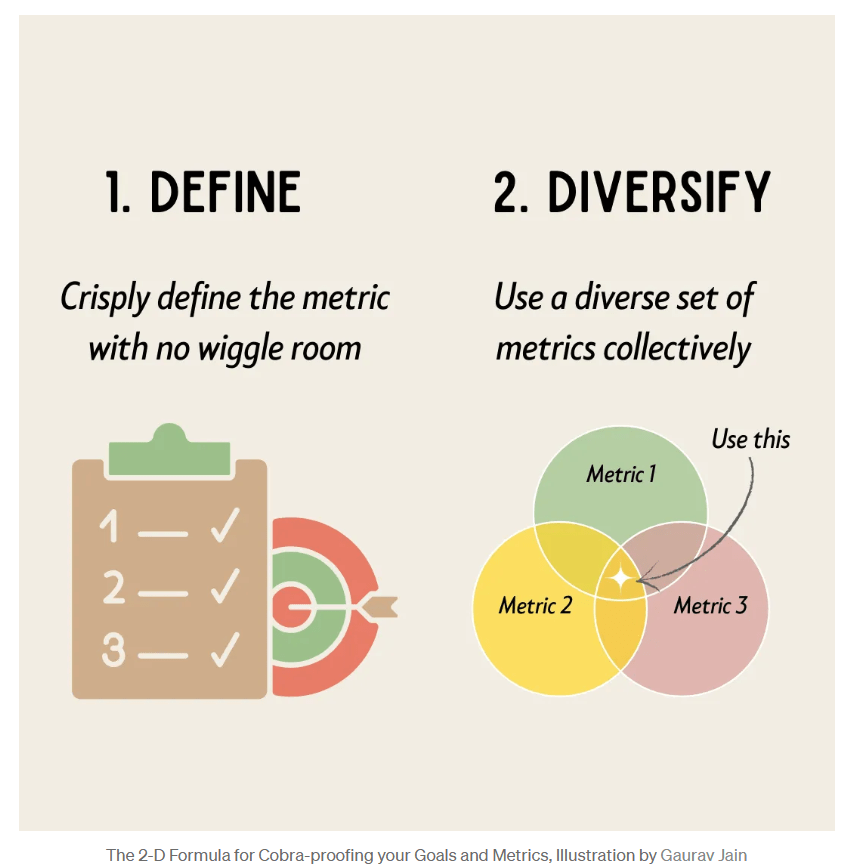
This was such a brilliant way to end the day and to encourage us to think more, strive more and be more. Thank you to everyone who contributed to the day, but also to those who guest blogged today. You guys are the best! We hope you can join us next year for #HCSEd25!