Guest Blog from Anthony De Souza: 2015 Ebola Response Deployment to Sierra Leone – A Personal Reflection

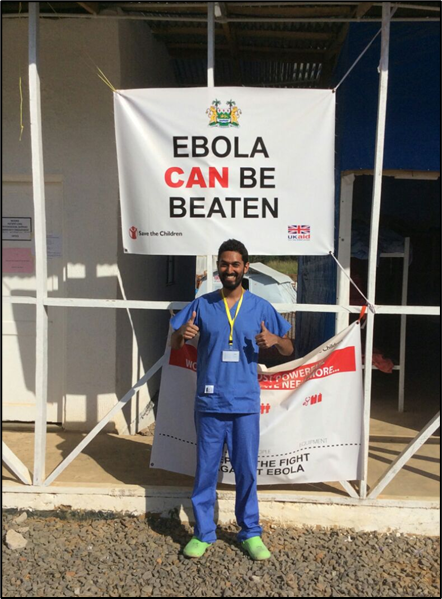
Last week I wrote about the challenges of the current Ebola virus outbreak, talking about some details linked to the virus itself, and also some challenges that mean this outbreak may be more challenging to manage. I was involved in previous outbreaks, but definitely in a peripheral support capacity, because of my underlying autoimmune condition I did not travel to Sierra Leone. Context and learning from previous events is important however, so I tapped my good friend and colleague Ant De Souza, who was directly involved in supporting diagnostics, to write me a guest blog of his experiences.

Anthony De Souza is an award-winning Healthcare Science educator with over a decade of experience as Biomedical Scientist in microbiology. He was the first Healthcare Scientist to gain a permanent Practice Educator post, a post he has only continued to develop and expand since its inception. Ant’s transition into strategic education leadership has empowered the Healthcare Science workforce to improve patient outcomes based on his approach; which links strengthening multidisciplinary collaboration, expanding clinical capabilities, and elevating the profile of the healthcare science workforce to ensure they are invited to have a seat at the table. The impact of this has been recognised not just by me, but by him being named on The Pathologist’s Power List for his outstanding contributions to the field.
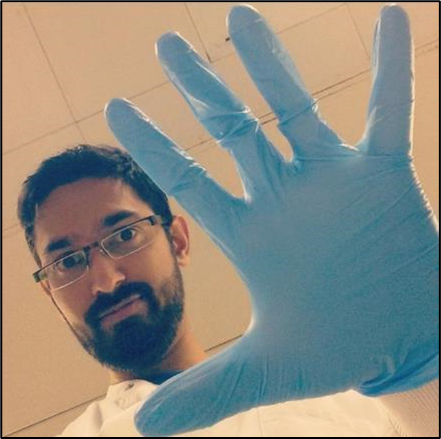
Ebola Deployment, Sierra Leone – A Personal Reflection

In 2015, when an urgent appeal was issued by Public Health England (now UKHSA) for scientists to support the Ebola crisis in West Africa, I didn’t hesitate—I knew I had to go.

In the past, I’d seen similar calls for volunteers and questioned whether my skills were enough to make a meaningful contribution. The last thing I would ever want was to become a burden on a mission of such importance. But this time felt different. For the first time, my experience, confidence, and mindset aligned with what was needed. I was working as a Band 6 Biomedical Scientist at Watford General Hospital, in a busy microbiology department delivering a 24/7 service. I was used to working under pressure, and I felt ready to contribute.

Before committing, I spoke with my colleagues. A five-week deployment would mean they would take on additional workload, and it was important to me that I had their full support. With their encouragement, I signed up.
Preparation and training

Preparation for deployment was thorough and, at times, intense. I travelled to Porton Down in Salisbury for specialist training, where we learned how to work safely with high-risk pathogens such as Ebola. This included simulation exercises in a laboratory environment designed to mirror the Kerrytown facility, where we practised managing realistic scenarios, including equipment failures and power outages.

We also completed security awareness and hostage survival training, alongside a series of vaccinations for diseases such as yellow fever, cholera, and typhoid. Anti-malarial medication was essential. The preparation highlighted not only the scientific challenges ahead, but also the environmental and personal risks we would face.

The journey

Getting to Sierra Leone was a journey in itself. We travelled by plane, transferred in Morocco, then boarded another flight to Freetown. From there, the journey continued by minibus to a port, a boat crossing, and finally another minibus to the site.

It was a strange experience travelling with a group of people I had never met—yet over the course of five weeks, these individuals would become a close-knit team.
Arrival and first impressions

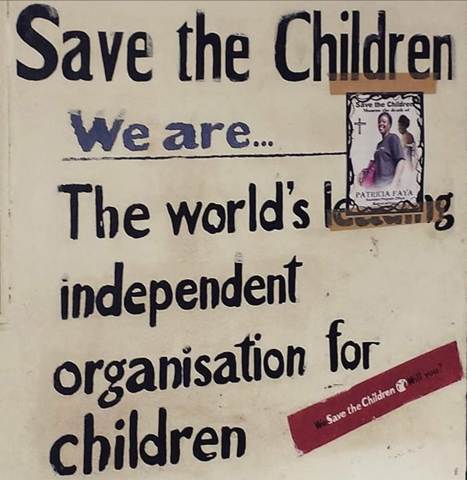
On arrival, small behavioural changes immediately became part of daily life. Handshakes were replaced with elbow taps, a simple but important measure to reduce transmission risk. Regular temperature checks became routine, particularly at checkpoints when travelling to and from the treatment centre.
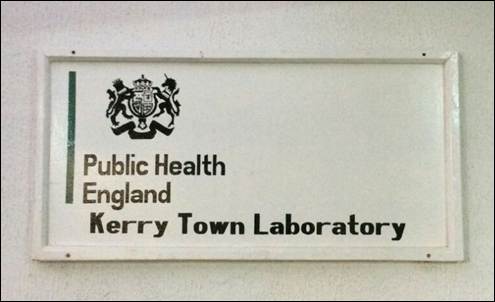
We were based at the Ebola Treatment Centre (ETC) in Kerrytown, outside of Freetown—a facility built by the British Army Royal Engineers and funded by the Department for International Development. The scale of the operation was impressive, and there was a strong sense of shared purpose. People from different organisations and backgrounds worked together with a single goal.

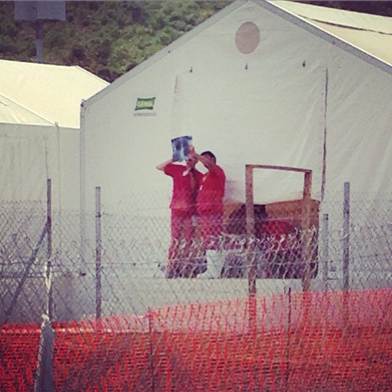
The ETC was divided into zones based on risk, from green (low-risk areas) to red (high-risk patient areas). Full personal protective equipment (PPE) was mandatory in higher-risk areas.
Working in the laboratory

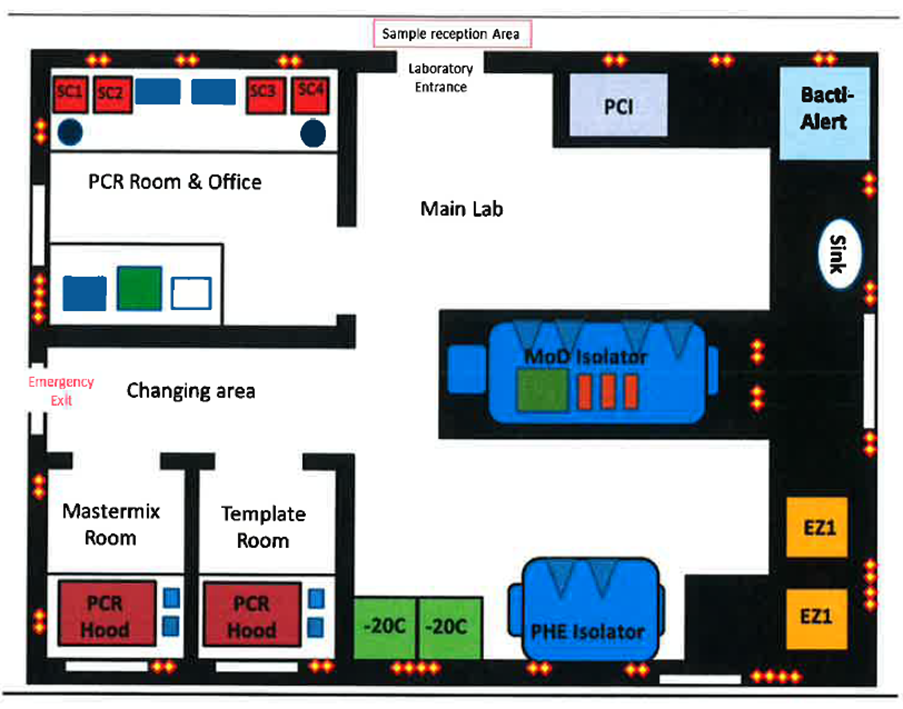
Our laboratory was located centrally within the site, shared with the Ministry of Defence. After donning PPE, we met the outgoing team and received a rapid but essential handover. For a few days, we worked alongside them before taking full responsibility.

Our role was to test blood and swab samples from individuals suspected of having Ebola. We operated six days a week, with two teams of six covering shifts from 06:00 to 22:00.

Many samples came from community settings, including remote villages. A significant proportion were post-mortem samples, taken to determine whether Ebola had caused the death. The high number of samples from children and infants was particularly difficult to process emotionally.

Specimen reception took place outside the lab. Samples were placed into chlorine solution for decontamination before being handled further. Wearing full PPE in the heat of the sun was physically exhausting, and the need for constant vigilance—checking for incorrectly packaged samples or hidden sharps—added to the pressure.

Inside the lab, resources were basic but functional. The space had sealed cement benches, limited air conditioning, and no negative pressure system. Testing was carried out using PCR techniques for Ebola, alongside POCT testing for malaria. A flexible film isolator was used to safely inactivate the virus before analysis.
Life beyond the lab

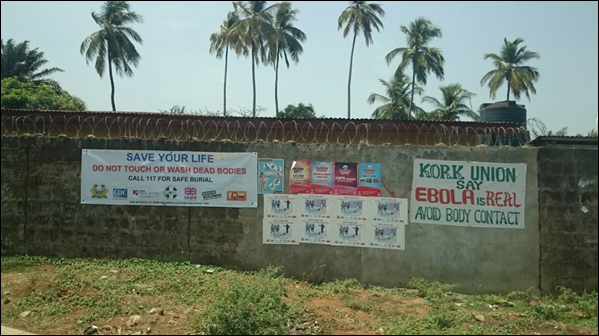
Outside of the laboratory, the scale of the public health response was visible everywhere. Posters, radio messages, and community outreach efforts aimed to educate people about Ebola transmission, safe burial practices, and how to protect themselves.

Strict measures were in place:

  • Large gatherings were prohibited
  • Schools and religious services were disrupted
  • Curfews were enforced
  • Checkpoints monitored movement and health status
  • Movement restrictions between districts

Daily life, as it once was, had largely come to a standstill.

Cultural challenges and adaptation

One of the most striking aspects of the outbreak was its impact on traditional burial practices.

In Sierra Leone, burial rituals are deeply rooted in cultural and religious beliefs. Traditionally, families wash, dress, and physically say goodbye to loved ones. However, in the context of Ebola, these practices posed a significant risk, as the virus remains highly infectious after death.

To reduce transmission, specially trained burial teams were introduced. These teams worked closely with communities and religious leaders to adapt traditions safely. While physical contact was removed, efforts were made to preserve dignity—allowing families to view the body from a distance, limiting attendees, and involving community leaders in the process.

This collaboration was essential. Without it, there was a real risk that families would carry out burials in secret, increasing the spread of the virus.
Reflections

There is much I could say about my time in Sierra Leone—far more than can fit into a single blog. The work was challenging, both physically and emotionally. There were moments of exhaustion, uncertainty, and sadness.

But above all, what stays with me is the resilience of the people.

In the face of immense hardship, communities adapted their traditions, supported one another, and worked alongside international teams to combat the outbreak. It was a powerful reminder that effective public health is not just about science or medicine—it is about trust, collaboration, and cultural understanding.

This experience reshaped my perspective on global health, teamwork, and the role we each play in times of crisis. It remains one of the most challenging and meaningful periods of my career.
All opinions in this blog are my own
Lead WITH Us: Why making history is important, and not just about walking in a parade

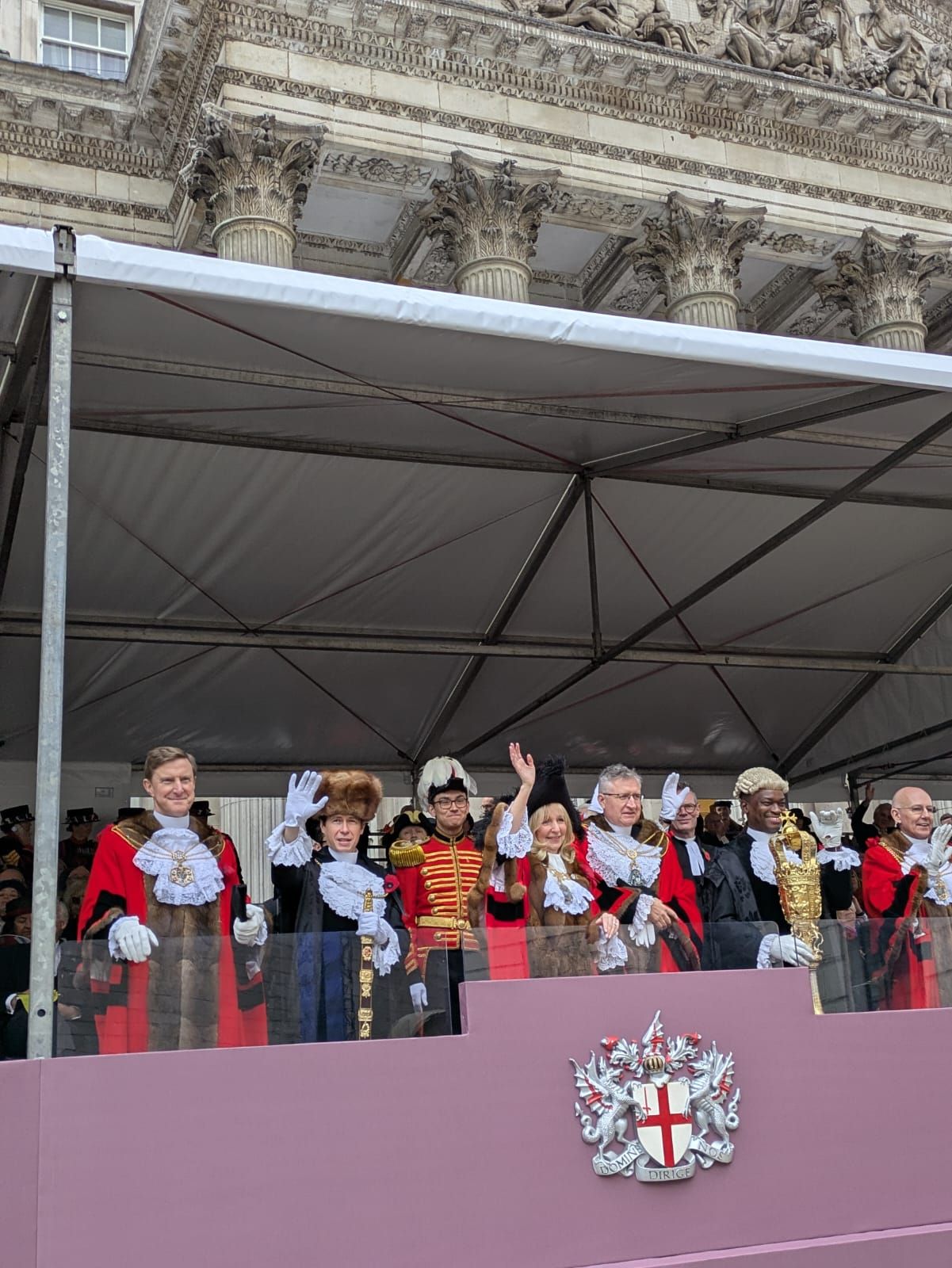
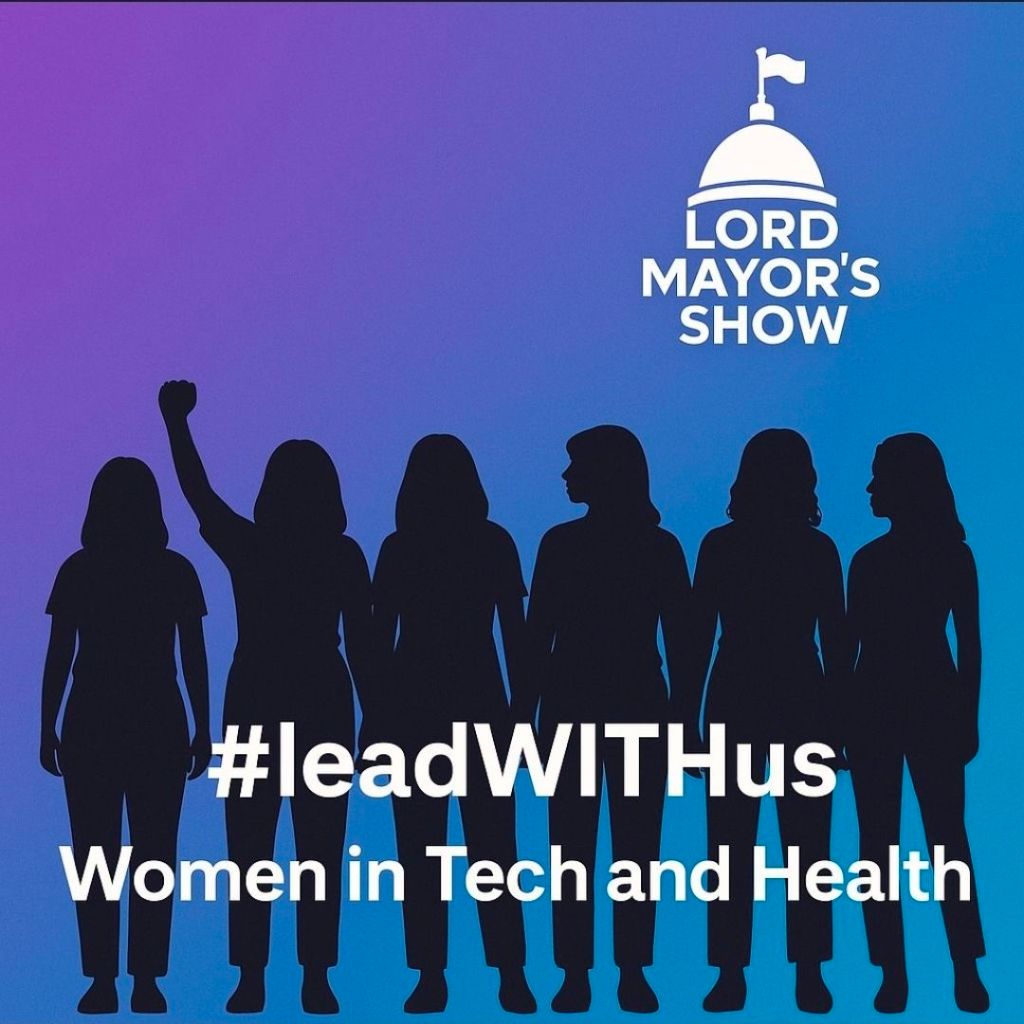
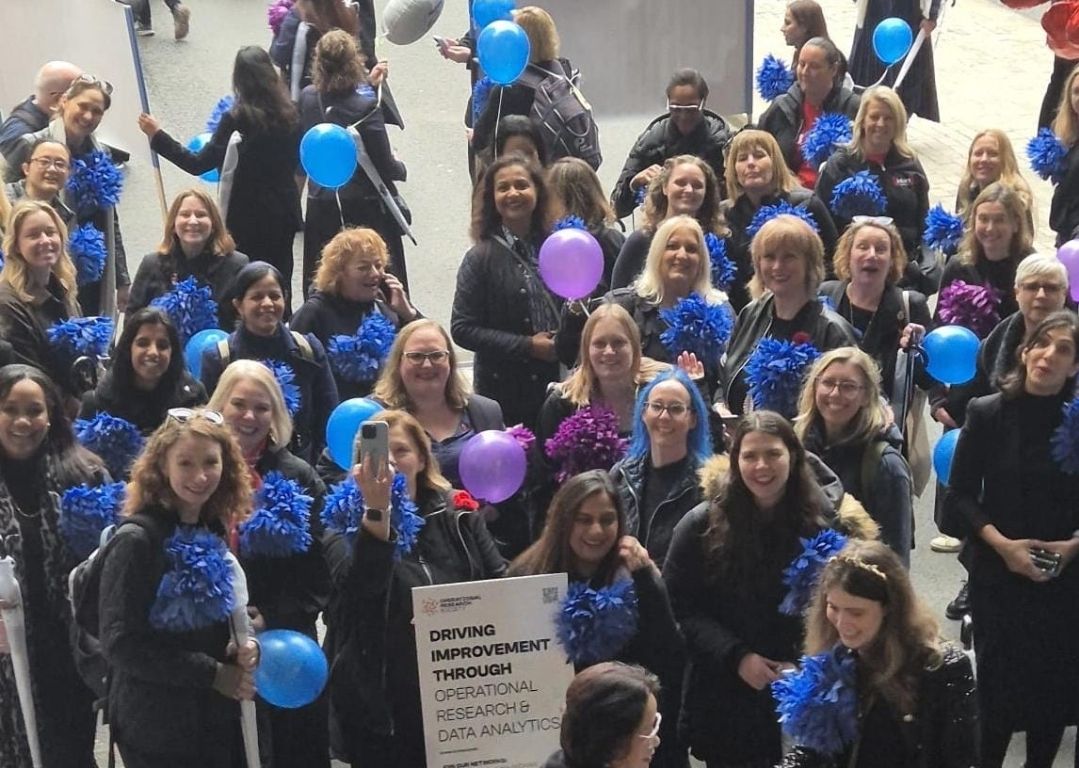
On 8 November 2025, 200 women from across the worlds of tech and health walked together in the Lady Mayor’s Show answering Dame Susan Langley’s 697 call for change. They formed part of 697 women walking to support the historic shift that Dame Susan is introducing as the 697th Lord Mayor of London.

This post was just going to be about the privilege of being involved in walking in such an amazing historic event, but then an article was published by the New York Times on the 6th November which both changed what I wanted to say, the context of why I think the walk was important, and also required a few weeks of calm reflection before I felt I was ready to write it.

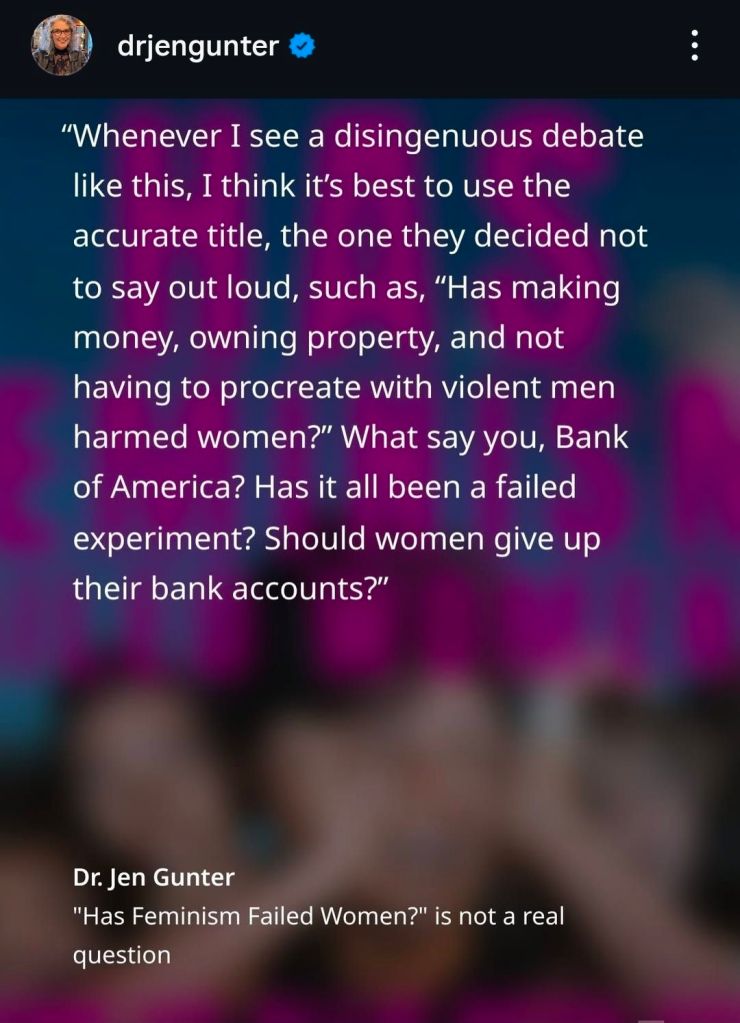
The article was called “Did Women Ruin the Workplace? And if So, Can Conservative Feminism Fix It?” Needless to say it garnered quite the response on social media and across the internet:

If you, like me, don’t have a New York Times subscription, this article summarises it pretty well: https://www.glamourmagazine.co.uk/article/conservative-feminism-new-york-times

Reading and processing my response to both the article and the coverage led me down a number of rabbit holes, both about the history of women in the work place, and women’s right to equality linked to both work and the money acquired as a consequence of that work. Some of which shocked me.

History is important, as it leads us to the present. It also means that we acknowledge the fight it took to get to our current ‘normal’ and prepares us for the role we need to play to make the changes for those that will follow. So, before I talk about how this ties into the Lady Mayor of London and the Lead WITH Us movement, I thought it was important context to share.

Why does having women in the workplace matter?

Access for women to work has not been an easy path, many women had to stand up, be seen, and be counted in order for progress to occur. In my mind, most of this change happened when Queen Victoria was on the thrown, but that assumption was far from correct. Here are some key points of that history:

  • Elizabeth Garrett Anderson was the first female doctor allowed to train and become legally qualified in 1865, no British hospital would accept her qualifications however and so she studied in Paris to gain her formal degree and was eventually admitted to the British Medical Register in 1870. She then worked to bring in the Medical Act of 1876 to formally open the medical profession to women, and co-founded the London School of Medicine for Women which now forms part of UCL
  • The first female MPs were permitted following the Parliament Qualification of Women Act in 1918. The first woman elected was Constance Markievicz, but she didn’t actually take her seat. The first woman to actually sit as an MP was Nancy Astor. Despite this, women could not sit within the House of Lords until after the Life Peerages Act 1958 that permitted Baroness Swanborough, Lady Reading and Baroness Wooten to take their seats
  • Women were not allowed to serve as magistrates or on juries until 1919. Even when the law changed however, juries remained predominantly male for another 40 years. The same act permitted women the right to undertake professional careers, such accountant, or vet, but women did not have protection for the income they earned until much later
  • Women were not allowed into ground combat roles in the UK military until 2016, with the RAF opening up roles in 2017, and the wider military 2018. Women had served in combat prior to this, but were banned from serving in front line military units

Unless you have women in the rooms where decisions are made the voices of women will never truly be heard. This is why the role of women in the workplace is so key. Much of the change that has occurred has been incremental, as it was only when women made it into positions where they could influence change, that that change occurred for the wider population. Even when laws change, culture change takes longer, and so embedded change requires conscious effort for decades after the first shift occurs. We have all seen recently how quickly rights can disappear that had been considered to be part of day to day life, and so there is a continuing need to not take rights that were hard earned for granted.

Why is women working important for both them and society?

Access to work supports both financial and societal freedom, supporting autonomy and decision making. When looking into the history of how work placed change impacted on financial autonomy I was pretty shocked by the fact that the timeline for some of these changes occurred within my lifetime.

  • The first petition for women’s suffrage in parliament was in 1867, but it wasn’t until Parliament Qualification of Women Act of 1918 (the same act that permitted female MPs) that eligible women were granted the right to vote. It wasn’t until 1928 that the Equal Franchise Act passed that gave women equal voting rights to men, making 15 million women eligible to vote
  • The Married Women’s Property act passed within the UK in 1870, which allowed women to become the legal owners of any money they earned. Women could not however inherit property on the same terms as men until 1922, when a property act change meant that that a husband and wife could inherit each others property. Prior to this, women had to give up all rights to their property when they married
  • Women had no legal right to equal pay until the 1970 Equal Pay act which came into being after 850 female workers went on strike at Ford Motor factory in Dagenham. Even so this allowed men to be paid no more than 15% more than women. The Equal Pay amendment act (1983) allowed women to be the paid the same as men for equal work – the pay gap however remains ~15%
  • It took until 1975 for women to be allowed bank accounts in their own names with no counter signatories (when the sex discrimination act came into law). Before then, although no law forbade women from having their own accounts, but many banks and financial institutions still required a male guarantor to open accounts, access credit, or get a mortgage
  • It was not until 1982 that the law changed to mean it was illegal to refuse to serve a woman a drink if she was unaccompanied by a man
  • Statutory maternity introduced in 1987 permitted eligible women to have 6 weeks leave at 90% of their usual earning. This wasn’t expanded to all working women until 1993 as a result of a European directive

It is no coincidence that the right of women to work in professional spaces changed alongside the right of women to have representation and the right to vote. Change often comes with privilege, and not everyone benefits from the changes initially, this can be seen in some of the step wise changes above. It is beholden on those who have access via that privilege to continue the work to ensure that access is widened and available to all, rather than a select few.

What’s the Lady Mayor’s Show and how does this tie in?

The role of Lord Mayor of London has been in place since 1189 when Henry Fitz-Ailwyn first took it up, although the holder wasn’t referred to by the title of Lord Mayor until 1354. Since then there have been 697 Lord Mayors, of which only three have been female.

The first two were:

  • Dame Mary Donaldson, in 1983, who famously fined people for referring to her as Lady Mayoress
  • Dame Fiona Woolf, in 2013, who focused on trying to promote women into senior roles within the City of London

The role of Lord Mayor, these days, changes annually and is based upon an annual election held by the Liverymen (more on that in a separate post to come) who are members of the City of London’s Livery Companies. The process involves Aldermen presenting two candidates, followed by a vote by Liverymen to select the new Lord Mayor, who then serves a one-year term as an ambassador for UK financial services. Only sitting Aldermen are eligible for election, and so even to even be in a position to be nominated is a feat within itself, especially when many Livery Companies are still male dominated. In 2025, Dame Susan Langley was elected at the third ever female Lord Mayor.

It took until my lifetime to have a woman serve as Lord Mayor, and until 2025 to have a Lord Mayor who was happy to represent female visibility enough to call herself Lady Mayor, and set out to embrace difference in order to increase visibility and impact. The parallels between this change and some of those linked to female autonomy and role acceptance have not been lost on me. This change was celebrated as part of the annual parade at the start of the Lord Mayors term, when the parade was renamed the Lady Mayor’s Show.

As part of the principles of her term Dame Susan has focused on something called the “697 call for change” which refers to the fact that she is the 697th person to hold the office of Lord Mayor of the City of London, and the first to use the title “Lady Mayor”. This call includes:

  • Adopting the Title “Lady Mayor”: While she is the third woman to hold the post, she is the first to be officially known by the title of “Lady Mayor”. This decision reflects a commitment to modernising the role and promoting diversity and inclusion within the City’s traditionally male-dominated institutions.
  • The “Lady Mayor’s Show”: In another historic first, the traditional Lord Mayor’s Show was renamed the “Lady Mayor’s Show” for her procession in November 2025.
  • Inclusion in the Parade: The show included 697 women from various City sectors walking in the parade with her, symbolically representing her position as the 697th holder of the office and highlighting women’s roles in the City.
  • “Modern Mayoralty” Initiative: Dame Susan is committed to introducing a “Modern Mayoralty” initiative, a long-term vision to ensure the role’s ongoing relevance and to “un-square the Square Mile” by championing innovation, prosperity, and inclusion. 

Having talked about historically why having women visible and in positions of influence matters to supporting changes and improvement for women more widely, the shift to clearly embracing diversity and incorporating female visibility, feels like an important declaration. It should not be a news worthy moment to include reference to Lady rather than Lord within a title, but it is indicative of a wider agenda which is significant for a role that has existed for 836 years.

Why does it matter?

We may say, well why does this matter? I certainly don’t face the same barriers as a woman of my grandmothers generation, or even those that impacted my mother. I have never been stopped from having a bank account, no one has ever stopped me having a drink in a pub. Those barriers were present in my lifetime however, and just because they are gone does not mean that other barriers do not exist. Within STEM (science, technology, engineering and maths) careers women are still under represented at senior levels, with women making up only 28% of the overall workforce in 2024. Women are still on average paid ~15% less than colleagues for the same job, and so the pay gap is certainly still present and there is still work to do.

Even in my career I have encountered numerous incidents where being a woman was included as part of a value judgement of my career trajectory, including a male colleague congratulating me when they discovered I couldn’t have children as it meant that ‘they could continue to invest in my career’ as I wasn’t going to disappear off and have children. There have been decades of my career where I was utilised to write grants and other work for my male professors, and my name was never included. Some of this is earning your way, but I am aware that there was a definite difference between how some of their male students were treated in comparison. This isn’t whinging, I found my own way. I learnt lessons. I also had the privileged (if you can call it that) to not be managing a family or caring issues which would have meant that life was harder.

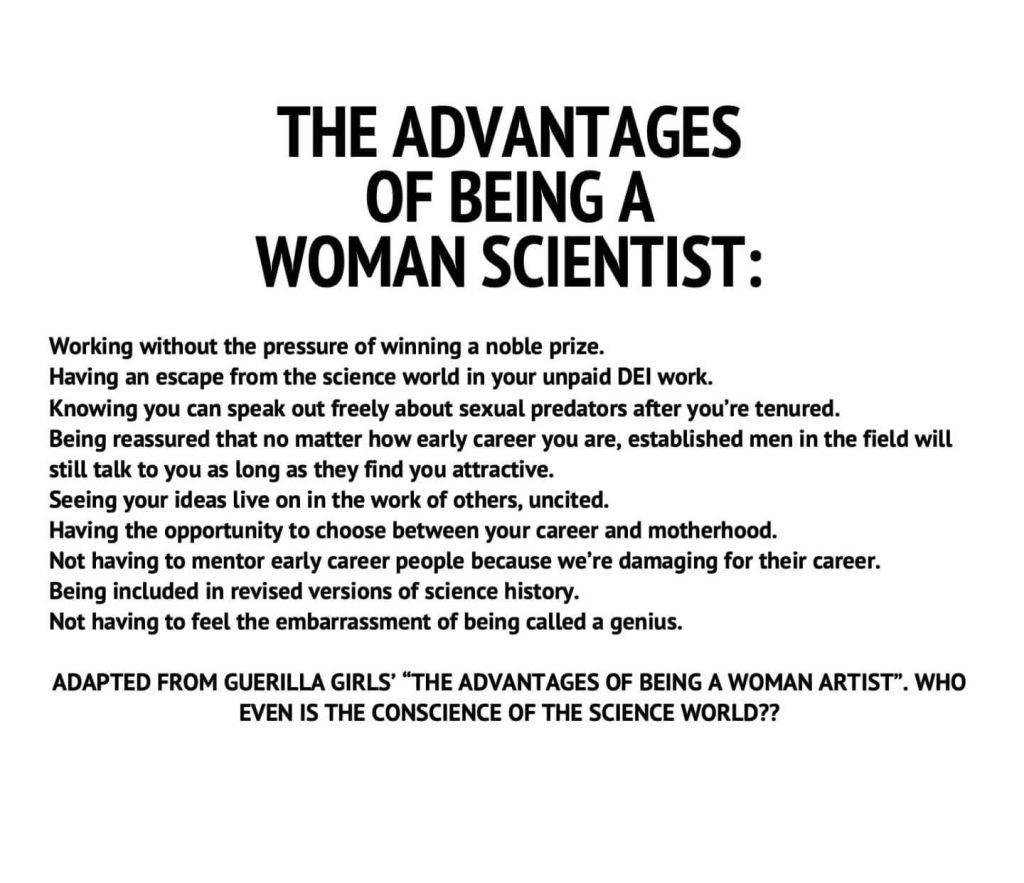
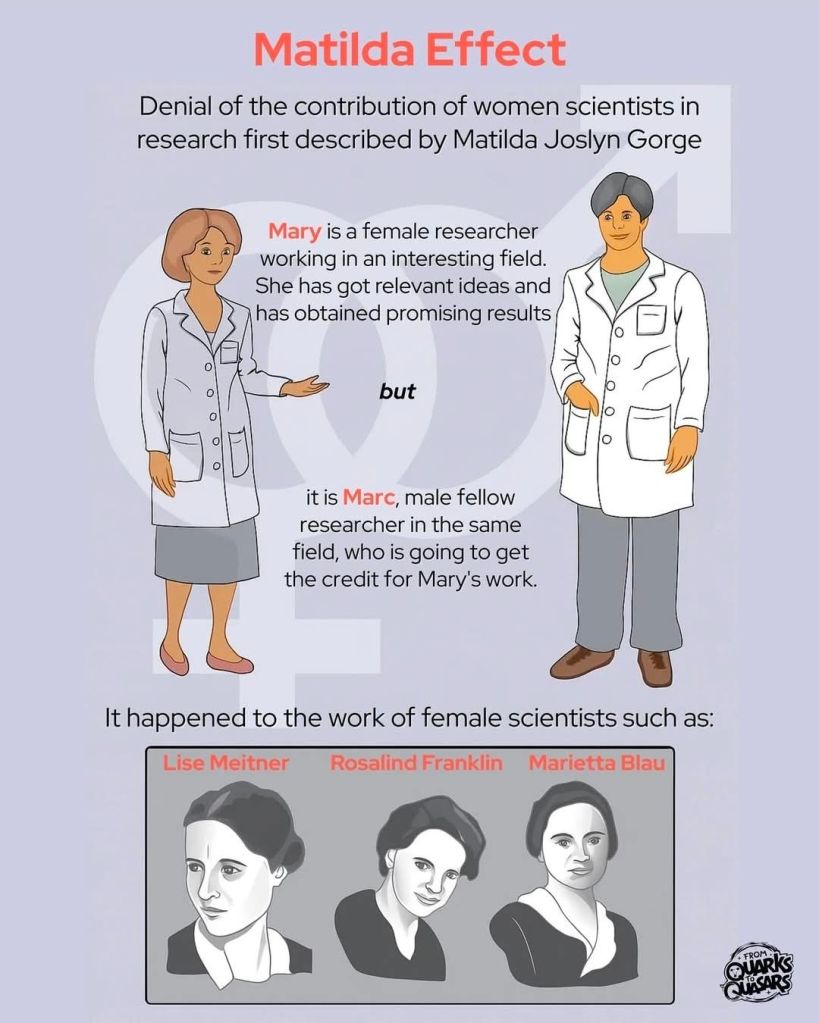
This attainment difference due to lack of recognition in science linked to gender is so common that it even has a name, the Matilda Effect. This makes it even more important that women are represented at senior positions within science and tech, not just to show that it is possible, but also to change the dynamics so that some of the embedded cultural norms are subject to change.

Why did I think it was important to walk?


All of this brings me onto why I believed it was it important to walk as part of the 200 women representing science and technology. As the wonderful guys at Lead WITH Us state:

‘This isn’t just a float. It’s a signal. A collective act of visibility. 200 women. One shared purpose. Infinite possibility. A reminder that leadership takes many forms and that women are already leading, shaping, coding, building, healing, innovating, and challenging systems in ways that often go unseen.’

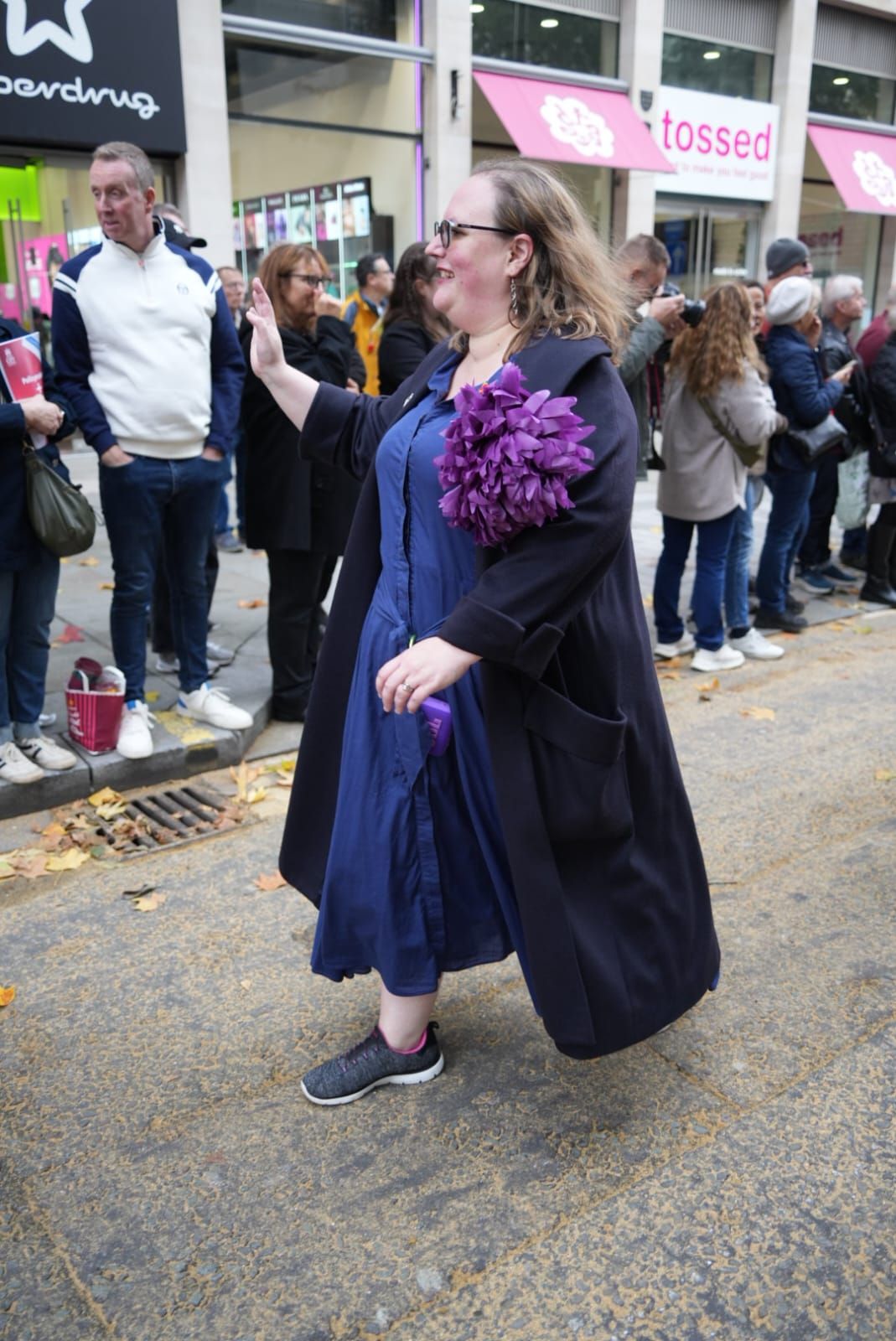
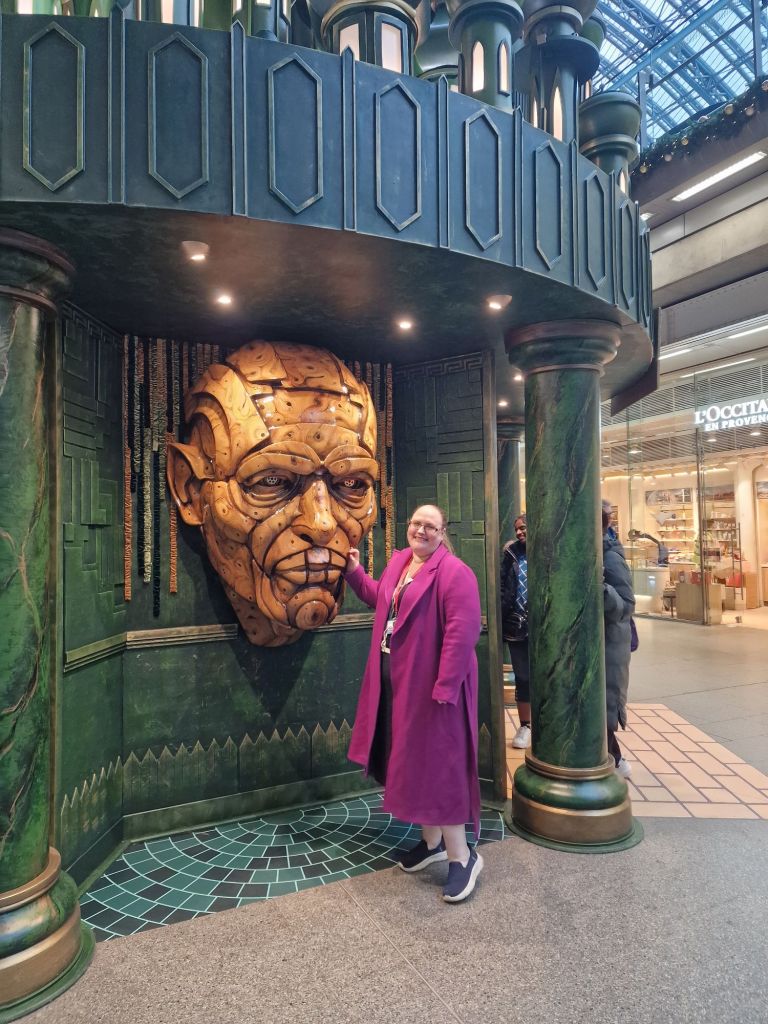
That was the reason that I chose to walk, but the experience was so much more than I had predicted. We walked for 3 miles along a route that was lined with people of all ages, backgrounds, and reasons for being there. The smiles of the children we encountered, the number of high fives requested and given. Walking as a group of women in science and tech, flying my geek flag proudly, being surrounded by a wonderful group of women who shared a goal and were there to support each other. Role modelling leadership in action. Hearing the cheers and feeling the welcome was an amazing reminder of the difference that science makes and how much it is appreciated.

Representation matters

The other great thing about walking with this group of women, was that the group itself was as diverse as those who lined the streets. People brought their parents, sisters, children, friends. I even brought Mr Girlymicro to help with tech and take some photos.

We come from different disciplines and backgrounds:
Some of us are Healthcare Scientist, Allied Health Professionals, nurses and clinicians working in the NHS.
Some are immersed in data and code.
Some lead strategy or drive system change.
Others are disrupting the infrastructure across delivery and design.
And some are just starting out but already creating waves.


We were walking to be visible, but more than that we were walking so others can re-imagine the future. We walked standing on the shoulder of giants who came before. Those who created a momentum. A momentum we want to continue. So much of what we do builds upon the work of those who came before.

There is still change that needs to be made. Representation still needs to be improved so that it leads to real change and that the barriers faced by those that come after us are different again from the ones that we are overcoming.

What will the legacy be?

Plenty of work will be ongoing in 2026 during this one year term and it is well worth keeping an eye on the City of London website. More than that though, there is a real hope that the 697 will become a movement and a legacy of this year. Certainly the 200 of us who walked are still linking in and a community is forming. From Whatsapp groups to a LinkedIn page, spaces are being made where we support each other, share successes, and form connections that will help everyone in their roles and ambitions. If you know a woman in Tech or Health who’s made a difference in your life or career, or if you would like to be involved yourself, then follow the links and get involved. Change can happen, but it happens best and last longest when we make it together.

All opinions in this blog are my own

Leadership: In the words of Wicked ‘It’s All About Popular’, or is it?

With the news of the Oscar nominations for Wicked Part 1 coming out, I thought  it was finally time to dust off this post that has been languishing in draft for over a year. I guess it will surprise none of you dear readers, that I am something of a musicals fan and Wicked is one of my favourites. I saw it for the first time on honeymoon in New York with Mr Girlymicro and knew very little about it going in. Whilst watching it, the song Popular rapidly became one of mine and Mr Girlymicro’s favourite tunes (alongside What Is This Feeling?).

The words have always triggered something in me in terms of thinking about leadership, especially the line ‘It’s not about aptitude, it’s the way you’re viewed’. With everything going on in the world right now, it feels like a really important concept to explore. Is leadership all just really all about being popular? And what does that actually mean?

When I see depressing creatures
With unprepossessing features
I remind them on their own behalf
To think of
Celebrated heads of state
Or specially great communicators!
Did they have brains or knowledge?
Don’t make me laugh!
They were popular!
Please!
It’s all about popular
It’s not about aptitude
It’s the way you’re viewed

So it’s very shrewd to be
Very very popular
Like me!

What’s makes someone popular?

I’d like to start this by saying that I don’t really think I would know what makes someone popular from first principles. If I was in a 90s school based movie, like Mean Girls or Clueless, I would definitely be the girl who hides out in the library rather than being an IT girl or one of the popular kids. So, I’m probably not coming from a position of expertise on this one. I have however put those library skills to use and come up with this from those with greater expertise:

This popularity doesn’t just impact how we interact with others, it also impacts how we are treated, opportunities that we are offered, and helps reduce negative emotions linked to social rejection. This may seem self evident but it is also backed up by research with one study defining popularity as ‘generally accepted by one’s peers’.

How we are perceived by others can, therefore, definitely impact on our working lives and likability, or popularity. Whilst how we are liked one on one is referred to as inter-personality, popularity is determined at the group, rather than the individual level, and is related to a person’s ability to make others feel valued, included, and happy on a more general level. The question is………is all popularity therefore about making others happy, and is leadership therefore all about attempting to make the most people happy in the widest possible way? Does getting ahead professionally mean that you need to be part of the ‘in crowd’ in order to succeed.

Is it all about people pleasing?

If you’ve seen Wicked, there is a great scene where The Wizard talks about how he wants to be seen. A lot of the plot across the entire musical is about superficial appearances rather than the ‘truth’. A lot of sub-par decision making within the plot is hidden behind the mask of popularity, and poor leadership is permitted because of the wide spread popularity of those making the choices.

I’ve written previously about the challenges of being a people pleaser and how it is impossible to please everyone. One of the challenges, in terms of leadership, is that if popularity is considered to be the way forward, in terms of being a good leader, you will be forced to chase good opinion rather than focusing on strategic or other vision. It also inevitably leads to your leadership being less and less authentic as you try to follow, not your central ethos, but a diluted version based on the perceived views of others.

What are the advantages of being civil?

So am I saying that it is not necessary to be nice? Just being ‘nice’ is often considered to actually be a disadvantage within work place settings, it is often good for making friends in a 1:1 setting, but as I’ve said popularity is determined on the group rather than the individual level. Within this context being nice or perceived as ‘warm’ can actually have a negative impact on careers, as warmth is often considered to be inversely associated with competence i.e. you can’t be nice and good at your job. According to Porath (2015), being seen as considerate may actually be hazardous to your self-esteem, goal achievement, influence, career, and income. So being nice alone is not enough. What does allow the switch from nice to being popular?

According to the same paper by Porath, it is about not being considered nice, but is actually linked to respect, and in this context civility, which comprises of both warmth and perceived competence:

“Civility is unique–—it leads people to evaluate you as both warm and competent. Typically, people tend to infer that a strength in one implies a weakness of the other. Many people are seen as competent but cold: He’s really smart . . . but employees will hate working for him. Or as warm but incompetent: She’s friendly . . . but probably is not smart. Being respectful ushers in admiration–—you make another person
feel valued and cared for (warm), but also signal that you are capable (competent) to assist them in the future.”

Civility, in this professional context, demonstrates benefits that being nice alone does not, especially in the context of leadership, where those who reported feeling respected by their leader reported 89% greater enjoyment in their work and 92% more focus. So maybe less about pop…u…lar and more about civ…..ili….ty? Or maybe they are one and the same thing?

Being able to be civil is itself a privilege

I do have quite a significant word of warning linked to this linking however and that is, is the ability to be civil linked to privilege? If being considered civil, and gaining the associated advantages, linked to not having to fight or voice unpopular opinions? Anything that requires warmth as part of the algorithm risks benefiting those who are in a position where they can court popular support, rather than feeling like they need to make a stand. Having the energy and resources to be able to invest in being seen as civil is in-itself linked to privilege. If you are working part time or under resourced, you are unlikely to have the time resource to invest in some of the relationship building needed to be identified as both warm and competent. There are also people who believe that they cannot invest because of the risks to their careers in coming off as warm without the associated benefits of being seen as competent. The costs in terms of income or self esteem are not ones that everyone can risk in case it goes wrong.

Is civility just another way of benefiting those already in positions of seniority?

Is it therefore that civility, and it’s associated popularity, are just another route that benefits those that are already in a position of privilege. Is popularity linked to status? Traditionally status is based on attention, power, influence, and visibility, rather than acceptance from peers, and so popularity may be more significant in informal vs formal leadership settings. This isn’t saying that senior leaders shouldn’t be civil, and that they shouldn’t come across as warm. It does mean that they are probably at lesser risk from the disadvantages and risks once they are in a formal leadership position, where they are able to draw upon different markers of power and visibility to gain influence. This can give the false impression that you need to be popular in order to be a senior leader, whereas the reality may be that you can afford to be popular as a senior leader as you are less at risk of any of the negative consequences of you only being viewed as part of the equation.

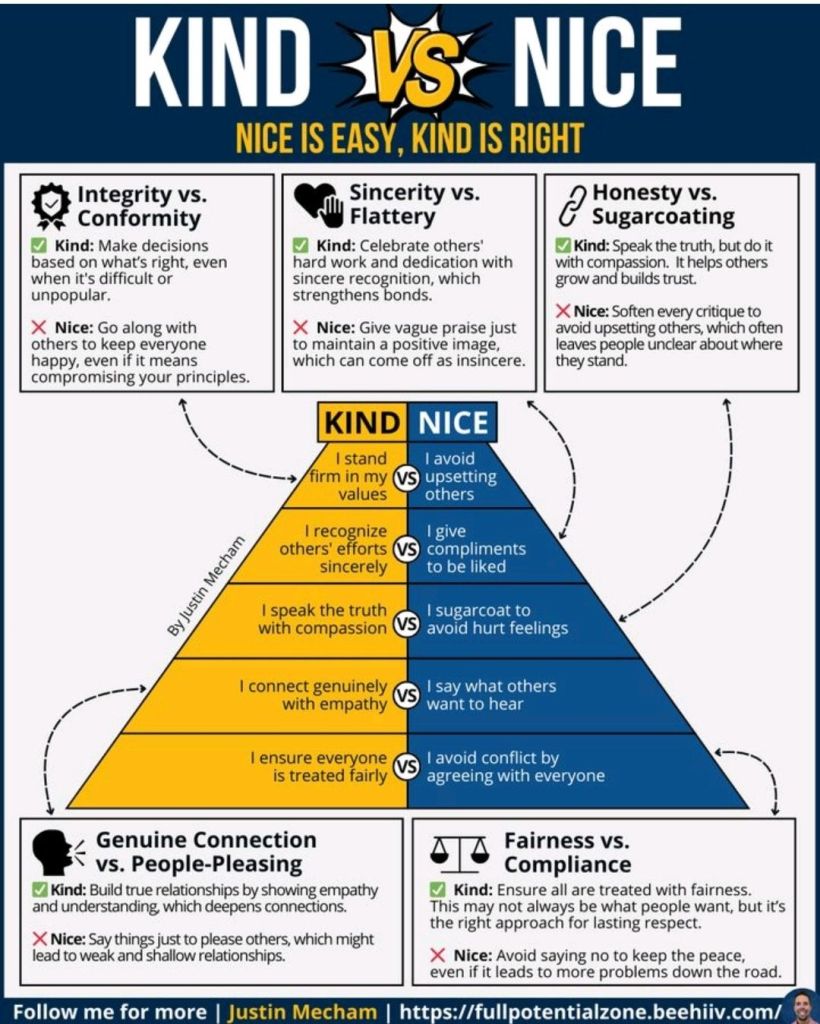
What is the difference between being nice and being kind?

So, I’ve talked about being nice as not always a risk free move in terms of career progression, but what about kindness? I’m a massive advocate of kindness, but sometimes I wonder if people have the same understanding of the term as I do or whether they use it as a proxy marker for other things. For instance, we often talk about kindness and niceness as if they are interchangeable, but I’ve been wondering if the difference between the 2 is where the perception of warmth vs civility (combined warmth plus competence) actually sits.

I have certainly met people who believe that being kind and supportive means always being in agreement or always saying yes, whereas I believe that this is more acting from a position of people pleasing and being nice. In contrast I believe that sometimes the kindest thing that you can do is to say no, either because you’re not in a position to deliver what they want or that saying yes would put the other person in a challenging position. Nice can often feel right in the moment, whereas kind considers the wider, and sometimes longer term, implications.

How do we manage kindness in a way that is authentic?

Being kind can be challenging as it is not always about taking the easy route, sometimes it’s about making hard choices in order to help yourself, others or the organisation, to be the best version of itself. It can challenge some of the behaviours linked to people pleasing in order to move towards authenticity in terms of interactions and leadership. For me, kindness is very much about doing the right thing instead of the easy thing, but to really deliver on your values, you need to invest the time to understand what those values are first. What do we stand for? What three words would we assign to our core descriptors of self? Knowing what your core values are enables you to have a self check benchmark to help identify when we are being nice over kind.

Where does social capital fit in here?

Obviously, civility and kindness are not the only factors that come into play in the ‘popular’ discussion.  There are all kinds of other forms of social capital that can impact on how successful we are at network building, influencing and leadership. Especially in the world of science and healthcare, expertise comes into play quite significantly, and access to funding can never be under estimated, in terms of providing leverage and empowerment.

It is always worth being aware of, and investing in, all of these different strands for long term success. Having said that, all of these also require you to have the capacity to invest. As someone who can’t have children, and therefore have greater freedom to balance my work and home life, I’m aware that I probably wouldn’t have been able to build a clinical academic career if my life had been different. If I’d had to leave on time for school pick up or had to be lead carer on the weekends, I wouldn’t have been able to publish the papers or apply for the grants required. There is inbuilt privilege in my being able to prioritise my career at times. This blog requires hours every week. Hours that I enjoy investing and which I reap the benefits of in terms of networks and connections. These are things that I wouldn’t be able to do if I needed to pick up a second job or was caring for a parent. When we ask people to have these additional pieces of capital to progress, we need to be aware that we are putting barriers in place so that not everyone can make the most opportunities. We need to make the most of the tools we have available to us, but as leaders, we also need to understand how to support people to access opportunities in a way that doesn’t disadvantage them in relation to others.

Let’s not forget that leadership is hard

I think that one of the things that it is often easy to forget is that leadership is hard, in some ways, if it’s easy you probably aren’t doing it right or stretching yourself enough. Part of leadership is making the unpopular and challenging decisions, and sometimes there are no win wins. Being popular, being considered empathetic is always a nice thing but it is not the only thing that makes your leadership successful. So is it, in the end, actually all about popular? If you were to ask me it is instead all about authenticity. The key thing, from my perspective, is to let people know who you are, connect with people as much as possible and share/co-create the vision. Then they can make informed decisions about whether to get on board the Girlymicro train or not! On this one, I may be with Elphaba.

All opinions in this blog are my own