Finding the Positives: Ten reasons why I am still grateful, even for the bad days

I got a cab this yesterday, and I said good morning and asked how the driver was doing, as I always do when I grab a cab. They looked at me and said ‘you are a happy person, so many of my rides are not’. This really got me thinking about happiness and outlook. Life is challenging for a lot of us right now. The world is a scary place. A lot of the rules that we thought existed to manage how society works are being challenged, and for those of us who work in the NHS the job feels harder than it’s ever been. It is easy to fall into what Mr Girlymicro and I describe as the pit of despair. Some days, the only thing we can control is what that pit looks like. Can you line it with pillows, blankets and Darjeeling tea, to make it manageable until you find the ladder out? On days where I find myself within the pit I try to focus on what positives I can i.e. find my pillows, and use what comfort there is to ride the wave. Here are a few of my reflections from my recent pit time about my things to be grateful for, even on bad days in case anyone else is finding it hard right now.

Allows people to show you who they are

I like to think that I approach everyone with the same baseline attitude of trust and optimism. There have been a few times in my career where this may have been an approach that ended up costing me, either emotionally or professionally. I’ve made an active decision that this is how I want to continue however, as I don’t want to be someone who is forced into a cynical existence. I want to continue to think the best of everyone and their intentions.

If I then get caught out because of this ‘glass is half full’ approach I think there are still positives, even if it can come with a cost. It may not always feel like it but knowing who people are is a gift. Seeing the person behind the mask enables you to know what really motivates their behaviour, which only makes you more empowered to interact with them in the future. In this one, reality, no matter how painful, is better than existing in your previous delusion. That said, someone told me once ‘when someone shows us they are believe them the first time’. So I now try to face up to my new reality on first exposure rather than getting stuck in a loop of second chances.

Aids with learning more about who you are

When your back is against the wall, when resources are limited or you are in a place where every interaction feels like a battle, it’s tiring, it’s draining and boy is it depressing. Part of survival in these circumstances is choosing your battles, and often doing a lot of thinking about how to manage yourself within that space. If you’re like me, there will also be a lot of questioning about how you ended up in that difficult spot. All of this can feel a bit like self flagellation in the moment, but it actually fulfils an important purpose, and it’s not just about survival. All of this strategising and reflection is an essential part of learning.

The learning, for me, is always about which decisions did I make that led me to this place, and how can I make better choices and see red flags when I have previously missed them. When making decisions about which battles to go into, what do those choices say about my priorities and the things I value? How can I use this self knowledge better? The big one though,ย is also what was/is my role in where I’ve found myself. The ugly and oft unwanted truth is that I have always played a role, so where was I the protagonist is the piece? Where is my learning about how to be better? A better person? A better colleague? A better scientist? Learning is a gift and we should take it where we can find it.

Motivates you to channel creativity

You may not be able to control the external forces that feel like they are whipping your existence into a hurricane, but you can control some of your responses to them. Now, I’m an emotional person, and in my hurricane I often feel like Dorothy in her house as it’s flying to Oz. For me, I need to find a way to ground myself and my thinking. I need an outlet and something that I can focus on to stop my mind from running wild. During these times I have so many thoughts but also moments of inspiration.

If I were a more creative person I suspect I would paint or write poetry. It will surprise none of you though to find that instead I tend to list possible future blog titles based around what I’m processing. If a particular ideas seizes me I will just sit and write the whole thing but often it’s about capturing the moment in the form of titles. I know that 2024 and 2025 have been hard times by the fact that I have over 300 blogs in some level of draft. Some of those will get collated, some of them will go nowhere, and some of them will keep me busy writing for the next several years. Looking back on these titles shows me that positive things can come out of difficult times, and helps me process where I’ve been, where I am now, and where I’d like to get to.

Provides you with moments to practice responses

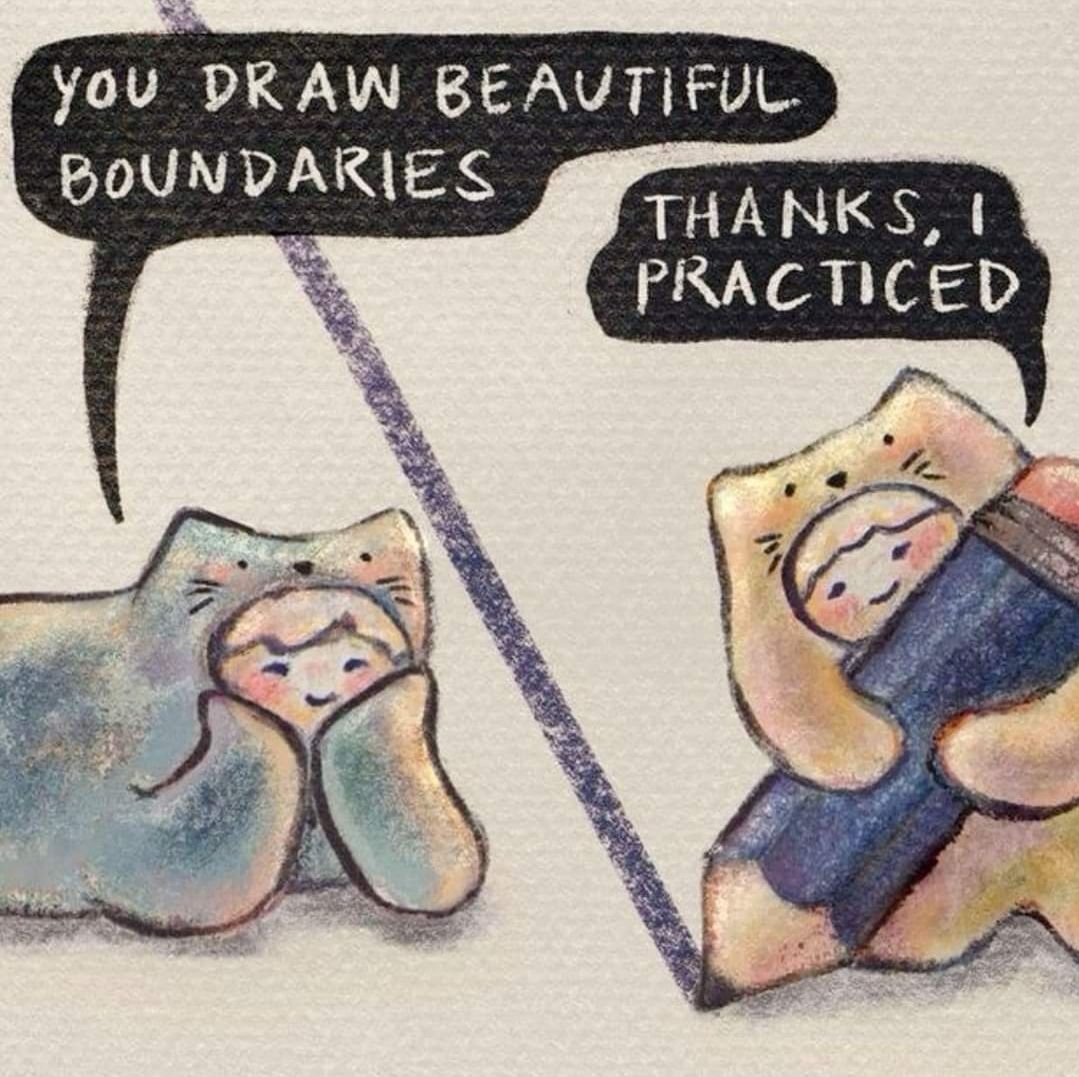
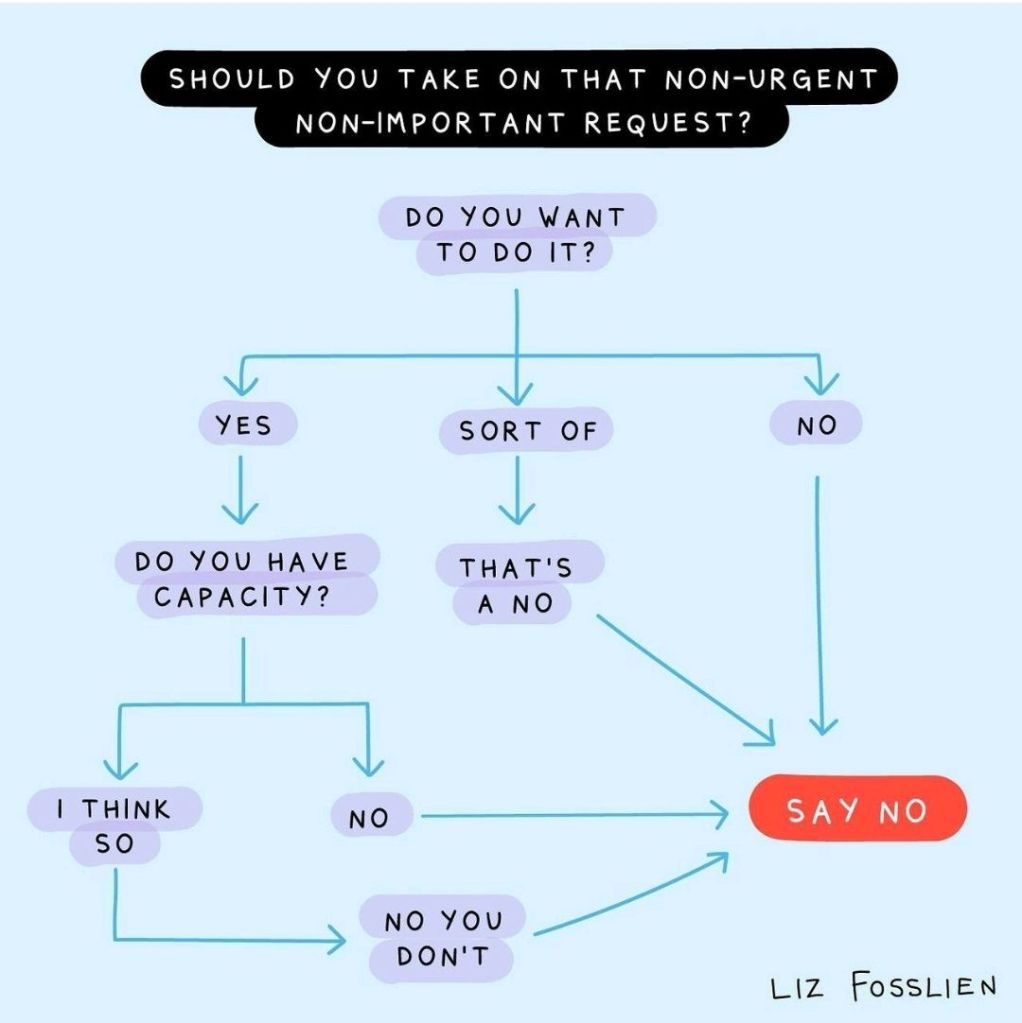
It’s not just practical skills where practice makes perfect, it’s also valid for our coping responses and communication skills. This can be anything from saying no or setting boundaries, to skills that help you manage emotional overwhelm or anxiety. No one wants to find themselves in difficult times or managing difficult relationships, but I don’t think I’ve ever met anyone who hasn’t gone through periods of challenge in their lives, so the sooner we get better at some of these responses the better we will manage when the bad times hit.

That said, you don’t want to be doing the self reflection or learning needed to identify what responses might help you when you are in the midst of things. It’s probably best to do your thinking in calmer times, and use the moments of trouble to practice applying them. I don’t want anyone to have enough of these moments to excel at the application piece, but the reality is you will hit difficult times and so having them as part of your toolbox can only help.

Helps you learn who your trusted friends are

I have a small number, and I mean below 10, of people in my life I trust with all of me. The people I trust to give me the difficult truth and help me through managing my response. The people I know who are always there to support and don’t have an agenda, or want anything from me for being in my life. When I was younger, like many of us, I thought it was nice to be popular, to have a long list of people I thought of as friends. It’s taken me time to realise that I have friends, and then I have the people I can call at the darkest and worst times in my life who would catch a flight to wherever I was and just give me a hug if that was what I needed. The people who would answer the phone if I needed them to at 3am and just listen to me cry it out. I am so grateful for these people, but you often only work out who’s who during the dark times.

Gives you an opportunity to review priorities

It is very easy to get into a vibe and just carry on down a pathway that you set your mind to without ever taking the time to review. This is especially true for healthcare careers, where you decide in your early 20’s the pathway of professional and educational development you will follow for the next 20 years. As you are going through difficult times and learning who you are however, it is also a good time to decide whether this is what you want any more? Is it worth the challenge? Is it worth the fight? Is it worth the energy you are putting in to keep going? Every time I’ve been through this exercise the answer has come back yes to the general sense of direction. I have come to a different conclusion about different components of the whole though.ย  I’ve quit committees and other commitments, where the answer has come back as no. All to enable me to put more time and energy into the things have come back as yes. Not everything works at every phase, and so bad times give you an opportunity to drop those things that no longer serve your inner purpose.

Makes you focus on what is important

Dropping things leads me onto my next thought. Once you have reviewed yourself and your priorities the next question I ask myself is ‘what do I need to survive this?’. What are the important keystones of your life that you can focus on in order to ride out what is going on.ย  Sometimes what you need are big things and big changes. Sometimes the thing you need is just something that will get you through the moment of struggle. For example, there are days where what I need more than anything in the world is to lie on my sofa with the lights out, the patios doors open, and to just listen and watch while the rain pours. It’s been something that calms my soul since childhood, where I would gather a duvet and sit on a swing wrapped up and warm while the rain fell all around me. It depends on the situation and the moment.

My responses to the hard moments have a tendency, in general,ย to be more insular. Some people, in these difficult circumstances, become extraverted and focus on spending time with people, be it for distraction or support. I tend to want toย  reduce my exposure to the outside world and outside stimulus, and retreat to my safe space, being at home in my castle with Mr Girlymicro. I want to pull up the drawbridge and immerse myself in things that will distract my mind, like movies and games, or calm my soul, until I’m forced to re-engage with the outside. There’s a lot to be said for understanding yourself enough to know what aids you when the world feels like it is crumbling around you. These moments can remind you of what you value, and the self care that you perhaps should have been doing more of.

Aids in future planning

I talked earlier about how being conscious of the decisions and things you prioritise during hard times in order to learn more about yourself, but I think it also goes beyond that. Bad times can provide moments where you can thoroughly review your life and start to refresh your thinking about who and where you want to be when you come out the other side. When the world is so shaken you lose your centre, it’s an opportunity to find a new balance that will enable you to strike out in a new direction when the clouds do eventually clear.

I often struggle to live in the moment. Even more so when I don’t like the moment that I am in. In order to escape the reality of where I’m at I will play with dreaming of different futures, like some people imagine outfits I imagine where I could be. If I find one that speaks to me I think ‘what do I need to find my route forward?’ ‘What could lead me there?’ Obviously a lot of this is just release via dreaming, but sometimes things stick and it can change how I plan my next steps. This is how I decided on writing a pathology murder mystery series when I retire, and how I’m even taking steps now to prepare for that aspiration as I pootle along in my everyday life. Using this method to review and map your ambitions can be a helpful use of your time, not just an escape.

Reminds you of what you are grateful for

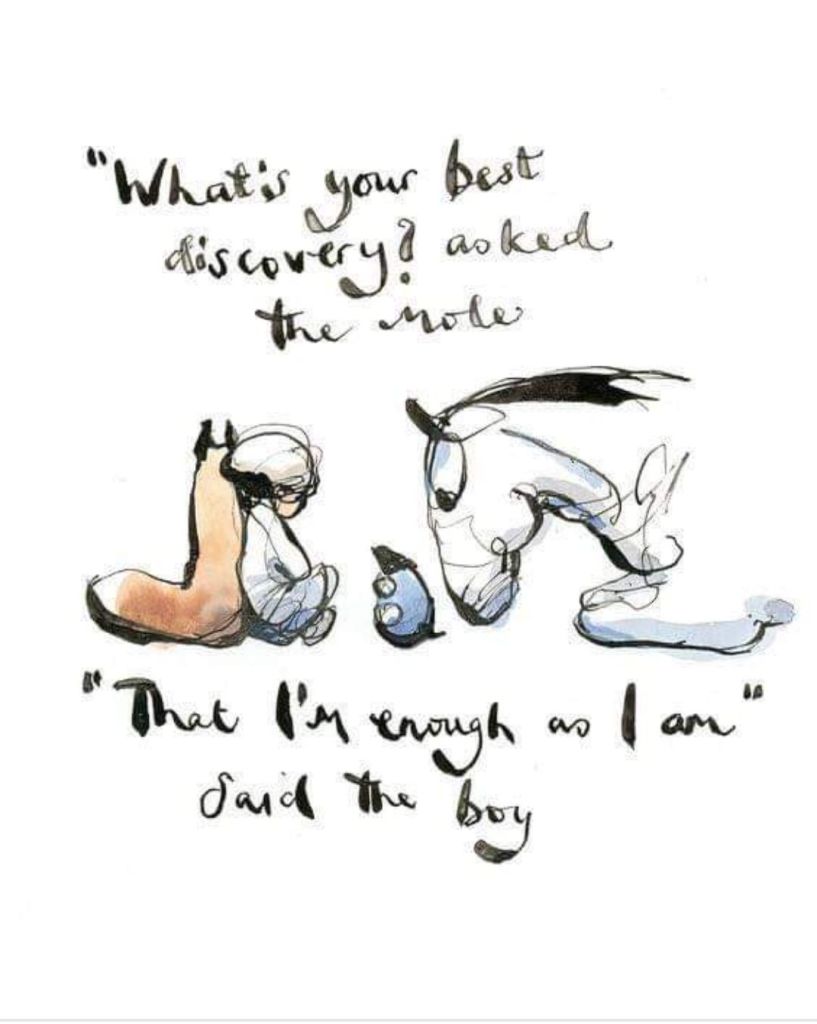
As dear Taylor says ‘If you never bleed you’re never gonna grow.’ย  Growth is hard and sometimes unwelcome, but if we want to be better it is inevitably something that needs to happen. That said, we need something to get us through, and if I had to sum it up, that thing is gratitude. It’s remembering through the maelstrom who we are and what we value. Different people are grateful for different things but, for me, in terms of the big stuff,ย it always comes down to family.ย  My family by blood, and my chosen family. Both of whom will be with me no matter what.

As for the smaller and everyday, during the pandemic friends of mine went out of their way to send me little gifts.ย  A teacup to have my favourite tea in. A bottle of gin or champagne so I could enjoy what little down time I got. Many of those items sit on my dresser in the kitchen and remind me to be grateful. It’s often not the large gestures that stay with us, but the small things that remind us we are in peoples thoughts. The moments that remind us that we are seen by others, so we don’t succumb to feeling invisible in our gloom. Whatever you are grateful for though, make sure you pay it forward when you can, so your things can sit in someone else’s kitchen and remind them they matter.

Helps make you ready for what comes next

I wanted to finish with a reminder that getting through the hard times prepares us for the future. If you take on the learning, about yourself and others, you will walk out of that storm a better, more prepared person than when you entered it. There will be a future that will be brighter because of the darkness you’ve lived through it. That doesn’t make what you are experiencing right now better, it doesn’t make it fair, but sadly life is like that. What it enables you to end up being is a more defined version of yourself. A person who knows who you are and what you want. Hopefully a person who is able to go after those things. It can also help you to be a person who now knows what you don’t want, and what you are prepared to let go of carrying in order to improve your life. That too is a different kind of bonus.

When I’m deep in the darkness I tell myself if I can find my ‘second star to the right, and just keep on till morning’ I too will find my way out of the storm and end up where I want to be.

All opinions in this blog are my own
Celebrating The People That Make It Worthwhile: Taking a moment to appreciate the positive people in our lives

Being present on social media or even listening to the news right now can be hard and take me into a pretty dark head space. It’s easy to write negative posts as a result of this head space and to give energy to the people or situations that make life challenging, or who make us feel badly about ourselves. Those people get to spend enough free time in my mind, however, without me giving them more air time or more of my energy than they already have. So, in the spirit of active rebellion, let’s turn the world around and talk about the people who do deserve the energy and recognition. The ones who give liberally, support unconditionally, and act as the cheer leaders that we all need in our daily lives to just get through the week. Let’s focus on the good rather than being drawn into the dark.

Thank you to the people who catch us when we spiral

We all know that I have a strong tendency to spiral, especially linked to event triggered anxiety. I’ve written about it before. I wanted to take a moment to thank those people out there who recognise and actually help flag to me when I’m spiralling, as sometimes it can take me some time to even notice the deterioration in my thinking. Just recognising that you have fallen into that head space can be challenging, but recognition is the first step in managing and exiting the spiral.

The second reason having ‘spiral friends’ is super helpful is that I have a very very small list of friends who I can call (and they can call me) and say ‘I’m in a spiral’. We then support each other by talking through the source of the anxiety, the validity of the anxiety, and if there are any actions that are valid/required. People who take time out to talk through and validate responses when needed and dispel irrational thinking as required, give the greatest gift in terms of time and support.

To the people who listen to the repetitive statements until we’ve worked through our process

I not only have a tendency to spiral, but to sometimes get stuck in my thinking. When I’m fixated on something, I can be one of the most annoying people in the world to be around. Becoming hyper focussed is one of my greatest gifts, as it means that I can just sit down and write 5000 words or focus for hours at a time. It’s also one of my greatest curses, as when that fixation falls onto something that I have no control over or is more of an emotional block, it can be really challenging to stop that focus becoming an unhelpful fixation.

When I fixate on something I just can’t let it go. I have to process my way through it. Sadly for those around me that processing tends to take the form of a very repetitive conversation cycle, whilst I try to talk my way through the weeds I have gotten caught up by. This means, for Mr and mummy Girlymicro, and my besties, they get stuck also having to have these conversations with me. On repeat. I do eventually get to the point where I come out the other end, but I know it would be easier for everyone around me if I could just put it in a box and move on without the thorough exploration this process requires. So thank you for your patience and generosity with your time, I know you all have other things to do and I owe you a lot of champagne in return.

To those who love us, not grudgingly, but because they truly accept our imperfections

Having just read the last two paragraphs it should come as no shock at all that I am far from perfect. I annoy myself sometimes, let alone anyone else. The thing is, I have some people in my world that truly love me. They don’t love me despite my flaws. They love me because of them. They love all I am, despite how challenging that person can be. Knowing that is the most empowering thing I can wish for someone. It makes me feel safe enough to express and face my fears. It empowers me to share my failures, challenges and learning, through things like this blog. It is my greatest hope for all of you that you also find your people who make you feel this way, whether they are your family by blood or by choice. These people enable us to be the best versions of ourselves, and I couldn’t be more grateful.

Shout out to those who truly embrace difference as a positive

Humanity is tribal. Most primates are. That means that we can have a tendency to like people who act like us and hold similar values. The thing is, our diversity and difference is what makes us stronger, and should be something that is embraced rather than suffered. As someone who holds a rather weird and wonderful mind, that may not process and see the world in the same way as others, I sometimes really feel how I am seen at ‘other’. I often just don’t fit in and, even more than that, I frequently want to walk a path that is not valued or trodden by others. There are people out there, who rather than being baffled or thrown by this approach, fully embrace it and what this difference offers. Instead of trying to make me fit into a box that doesn’t feel comfortable, they support and encourage the risk taking that is required to walk my own path. They do not find my difference a challenge or a threat, but an inspiration and a positive trait. They see value in me as me, and that is not so common. These people are the ones that have the ability to change the world by expanding acceptance and re-defining normal. We need to find them, honour them and celebrate their vision.

Thank you to those who remind of our strengths rather than focusing on our flaws

Part of learning and growing as an individual is having the self reflection to understand our flaws as well as our strengths. It’s easy to lose perspective, as our area of change is often linked to the things we want to fix, to the extent that out flaws loom large and we forget about the strength side of the equation. Many of us are perfectionists who struggle to come to terms with the fact that we are, and always will be, a work in progress. It is also easy, therefore, to lose sight of how far we’ve come and to just see how far we have yet to go. So, this one is a shout out to the people who help us re-focus, and bring back into perspective all that is positive about ourselves. The ones who help us bench mark that, actually, we’re doing OK.

To those people who will hold us while we cry it out

I wear my heart on my sleeve, I always have. I’ve lost count of the number of times I’ve felt judged for this and when I’ve received comments such as ‘you’re too emotional to be a leader’ or other judgements that indicate you cannot be emotionally expressive and be good at your job. Comments that indicate empathy or emotional intelligence may actually be a risk rather than something to be developed. For a long time this meant that I tried not to fully engage or bring that part of myself to my working life, to try to be more remote and not express how I was feeling. Now, I’m not saying we should scream and shout, but I do think that I am a rounded individual who is not a robot, and neither are the people I work with. Therefore, to be my authentic self I need to acknowledge that I come with feelings, beliefs and biases, which need to be noted and managed, but also make me a better human being if handled appropriately.

Outside of work especially, I’m such a crier. I weep at movies, I cry with both sadness and joy, and don’t get me started on my behaviour at weddings. I am so grateful to have friends and family who allow me to safely experience all the peaks and troughs of these emotions, and know that a box of tissues or three may be required if we are going to Les Misรฉrables.

I am beyond grateful to those who give us courage to be the true versions of ourselves

Speaking of my emotional side brings me onto authenticity. When I started my job I wouldn’t talk about being a gamer. I wouldn’t talk about movies, or other things that interested me, as people would comment ‘geek’ and roll their eyes. Over the years since I’ve realised how important it is to fully show up, and to bring my whole self to spaces, especially when in a leadership role. If I don’t lead the way, how can I expect others to. It’s not always easy however. Sometimes the comments cut deeper when they are made at our authentic selves rather than at a protective shell. It can be easier for others to try and bring us down when we offer so much of ourselves as a target. There are definitely times when I just want to retreat into my shell and take the easy road.

Even when writing these blog posts, there are times when it would be easier to hide from some of the challenges, especially when there are comments made linked to my choices. I stand by those choices however, I stand by sharing the highs and the lows, and by showing my flaws as well as my strengths. It takes courage some days. Some days more than I have available. So I want to say how grateful I am to those of you who lend me courage on days when I lack it. I look back on the many of the positive comments on this blog when I start to doubt myself, and use them to give me clarity and strength to move forward when it might be easier not to.

No matter how hard it gets, if you can find these people in your life it’s worth fighting for

It took me a long time to feel (mostly) comfortable in my own skin, and so much of that progress has been due to me finding the people in my life who told me that it was OK to be me. I’m fortunate to have a great family by blood, but I also have key members who are my family by choice. No matter where you find them, treasure them. In these difficult times, when the world can feel like you could be swallowed by quick sand any second, use them to anchor you. Use them to reflect. Ask, will this matter in 6 days, 6 weeks, 6 months or 6 years? Use them to help gain the perspective you need to pull yourself up and get out there to fight the good fight and stand up for what’s right. Just don’t forget to also thank them for the amazing role they have in your world and pay it forward so you can be that same person for others. The world is always darkest before the dawn, so lets get through this time together.

All opinions in this blog are my own
Sorry, Not Sorry: The challenges of being an anxious apologiser

I’ve been finding myself in a bit of a hole recently where my first response to anything, and the first words out of my mouth, are always an instinctive ‘I’m sorry’. Whether I have done something wrong or not, whether someone is accusing me of something or not, I just can’t get the words ‘I’m sorry’ not to be the first ones that immediately leap to my lips. Now, owning when you need to apologise is a really important thing. The thing is, that there are a lot of consequences to unnecessary and anxious apologising that I don’t think we necessarily recognise. After all, what does it matter if we say sorry too much? No one is hurt by the words ‘I’m sorry’. Is that true though? After a particularly anxious weekend last week I spent some time thinking about how apologising too much can actually be a leadership issue, and what steps you can take to reduce the downsides if this is something you are impacted by, like me.

It can make you come across as weak

Leadership can be challenging at the best of times, but in a resource limited setting with competing pressures, it can feel more challenging than ever. Those you are leading need to feel secure in your direction of travel and protected in your leadership.

Despite authenticity being important, being an anxious apologiser can come over as weakness and something that can be exploited by others.  It can come over as not owning your time, boundaries, responsibilities, or actions.  Worse than that, it can also make those you lead feel more uncertain, depending on the context of the apology. Owning up to mistakes and proportionate apologies are great, inappropriate ones, very much less so.

Makes setting boundaries more challenging

One of the things that I am super aware of is that my anxious apologies make boundary setting less easy. I am allowed to take time off sick or to be on holiday, I should not feel the need to apologise for it. Doing so makes others feel less able to also take the time they are owed. I am an emotional person. I wear my heart on my sleeve. In many ways, I believe that makes me a better leader. I, therefore, need to stop apologising for trying to be myself rather than attempting to fit some predetermined mould. If I don’t feel I can be authentic, it makes me a lesser leader and means others will also feel like they need to hide who they are.

You may accept culpability even when you don’t

Another thing about anxious apologise is that your immediate response can end up making it look like you are taking responsibility for something which you actually aren’t. A recurrent example of this one, for me, is when someone takes action and ignores advice/guidance, and I end up apologising for not providing sufficient clarity. In reality, it was up to the individual to seek additional clarity if required, not for me to be psychic and try to predict their actions. Just one example of an easy trap to fall into.

It can make genuine apologies feel less authentic

This is a big one for me. If you apologise all the time, as an auto response, it can make those moments when you choose to do so consciously feel like it has less impact for the person receiving it. Making sure those moments where you need to own your actions and learning are undertaken with sufficient thoroughness helps, but avoidingย using apologies as punctuation is a longer-term change.

You may end being annoying to be around

Speaking as someone who does this a lot, I hear from many of my friends just how annoying it is. A favourite quote of Mr Girlymicro to me when I get in a particular space where I constantly need to be told it’s OK is ‘stop apologising, it’s a sign of weakness’ from the film Little Miss Sunshine. It makes me laugh every time and reminds me of how much the required back and forth is an energy drain on everyone involved. Take a deep breath and step away from the spiral, and acknowledge the costs you are placing in others.

May make your leadership confusing

Another way that anxious apologies can make your leadership confusing it that they can work to actively derail trains of thought. They can end up de-railing conversations, so they become all about a single thing rather than the original focus of the discussion. They can make your communication less clear and end up meaning that key points are obscured, or worst of all, forgotten by all involved. As clear communication is a key foundation of good leadership, this is good for no one.

Conversations that are not about you can pivot

I had a moment last week when I got hit from out of the blue with an emotional response to a conversation.ย  This meant that a conversation that should have been about me offering support, guidance, and clarity, became all about the people involved comforting me. This is a disastrous thing to have happen. My immediate response is then to apologise more for letting it occur, but this then drives the cycle. Stepping away from it. Knowing you should do better and reflecting with yourself why it occurred is the only real remedy you can offer.


So, how can we do things differently?

Acknowledging that this is not a healthy habit or coping strategy is a start, but what we actually do about it in order to do it less or limit the impacts on our leadership?

Listen to your frequency

One of the primary actions is to be aware of the frequency of your anxious apologies. For me, at least, this isn’t an always-on/always-off thing. It comes in waves depending on other things that are happening and my general levels of anxiety or confidence dips. Knowing when you are going through a bad patch enables you to focus some resource on reduction, especially in risky or high stakes moments. Doing the constant apologising at home may be annoying. Doing it in the wrong situation at work could have much bigger consequences.

Be aware, especially during high stakes moments

There are moments, for both you and your leadership, where being perceived as weak or accepting ownership when you don’t, can have significant impacts. In these moments it’s crucial to be aware of where your head is at and your tendency to undertake this behaviour. These high stakes moments tend to also be high risk moments, so if you apologise as a stress response, you are even more likely to fall into an apology during these encounters.

In order to help with this, one of the main things I try to do is just take a beat before I open my mouth. Those of you who know me probably know this isn’t my strongest skill. Mouth open, should be shut. At times like these, though, it is so important. That breath allows me to sense check my response and remove the work ‘sorry’ from my automatic vocabulary. It allows me a moment to try and re-phrase my immediate thoughts or dialogue to make it more in line with my core meaning. It helps me avoid throwing myself and others into an unnecessary bear pit.

Don’t let others take advantage

It is also worth remembering that it is not just you that notices this behaviour. In the past I had a colleague, who was perhaps not my biggest fan, who I realise in hind sight would almost set me up in scenarios to take advantage of my tendency to accept responsibility readily. If your apologies do come across as a sign of weakness, and you work in a high competition environment, then this is a risk. Taking time to understand how others respond to your anxiety trait (irritated, sympathetic, exploitative, etc) is an important part of learning how to manage your own behaviour. Know when to bite your tongue and stay silent despite all of your instincts telling you otherwise.

Try to embed change

One of the easiest ways (although still far from easy) to manage this tendency is to try to find other ways to respond. Ways that still allow you to feel you have responded but that are less likely to be interpreted as you taking ownership all the time. Embedding these changes consistently, even if you are going through a particularly bad spell, can make it easier. Language is a learnt response, and much of it is based on habit. Getting into a space where you only apologise consciously for things that actually require it is a habit worth gaining.

I’m still not good at this. I think it’s an area of constant improvement. I have found it is easier to try and embed this shift in written communication first, and then it comes a little easier with verbal reinforcement later. Just take it one conversation at a time and see what works best for you.

Find trusted friends

For me, one of the best ways I have to manage this is to find my people, my trusted friends. There are two main reasons for this. One, Mr Girlymicro loves me enough to cope with me apologising, me talking about apologising, and me agonising about whether I need to apologise, for the hours it sometimes takes to get me to work through what is going on, and to then move past it. I also have some key people in my life who I know I can text and be ‘this happened, do I need to worry’, and who I 100% trust in their response to guide my actions. The second area where I find these people really useful in my life is that they will flag to me, when I lack the self awareness to notice, when I’m starting to increase my anxious apologising, so that I can be more aware of my own emotional state and the impact it is having. Knowing that others have your back, and can support you, even when you are not aware that you need support, is a real gift in this life and if you have access to those people make sure you hear what they have to say.

Be OK with not always getting it right

You are not going to get this right all the time. There are times in my life when I don’t manage to get it right even most of the time. Treat yourself with the grace that you would give to others. Anxious apologising is driven by, guess what, anxiety. Don’t drive your anxiety further by diving deeper into the rabbit hole and stressing about things you can’t control. It happened. You may be able to fix it, you may not. Nothing is to be gained by stressing about it, and the best cure for some of that anxiety is to take action if you calmly decide there is an action to be taken. The irony of me writing these words is in no way lost on me, as I can never stop the resulting panic, that doesn’t mean that the logical part of my brain does not acknowledge that it is the right move however. Try choosing grace over guilt whenever possible, as you will be a better person as a result.

Invest your energy based on circumstance

Having acknowledged that you won’t get it right all the time, a key thing is to know when you MUST get it right, or when to invest energy in order to bring your best self. We’ve talked about being aware of your high risk moments, and if you only have a certain level of energy resource to invest, then this is where to choose to spend what you have. When I’m working through a significant anxious period I can’t keep it together at all times, I just don’t have that level of cognitive resource. I have to have my safe people who I can spend time with, so I have periods where I can just let myself be and work through how I’m feeling. I also tend to stay away from people or situations who I don’t need to interact with at that time and tend to make me feel less safe/triggered, in order to not fuel the situation I find myself in. No matter what is going on, trying to be self aware enough that you make good decisions to help yourself through is definitely worth the resource requirement.

Don’t forget to deal with the underlying drivers

At the end of the day, however, it’s important to remember that anxious apologising is a symptom and not the cause. It’s really easy to focus on the symptom that is taking up you energy and cognitive space, when really we need to be stepping back and seeing what is driving the current situation. In my case, it’s often when I’ve not recognised that my health is not great and anxiety is often secondary to flares, lack of sleep and generalised discomfort. That said, I am also of an age where being peri-menopausal is definitely a thing, and my hormones are definitely writing their own story right now, with little input from me. Whatever the reason, making sure that you try to understand what is driving you means that you can start to focus on the root cause of the problem, not just react to the moment, giving you both actionable intel and hopefully a way out of the way you are feeling. None of this stuff is easy, but know that you are not alone in managing it or finding a way forward. If you need one, I’m always happy to be your safe space.

All opinions in this blog are my own
Leadership: In the words of Wicked ‘It’s All About Popular’, or is it?

With the news of the Oscar nominations for Wicked Part 1 coming out, I thoughtย  it was finally time to dust off this post that has been languishing in draft for over a year. I guess it will surprise none of you dear readers, that I am something of a musicals fan and Wicked is one of my favourites. I saw it for the first time on honeymoon in New York with Mr Girlymicro and knew very little about it going in. Whilst watching it, the song Popular rapidly became one of mine and Mr Girlymicro’s favourite tunes (alongside What Is This Feeling?).

The words have always triggered something in me in terms of thinking about leadership, especially the line ‘It’s not about aptitude, it’s the way you’re viewed’. With everything going on in the world right now, it feels like a really important concept to explore. Is leadership all just really all about being popular? And what does that actually mean?

When I see depressing creatures
With unprepossessing features
I remind them on their own behalf
To think of
Celebrated heads of state
Or specially great communicators!
Did they have brains or knowledge?
Don’t make me laugh!
They were popular!
Please!
It’s all about popular
It’s not about aptitude
It’s the way you’re viewed

So it’s very shrewd to be
Very very popular
Like me!

What’s makes someone popular?

I’d like to start this by saying that I don’t really think I would know what makes someone popular from first principles. If I was in a 90s school based movie, like Mean Girls or Clueless, I would definitely be the girl who hides out in the library rather than being an IT girl or one of the popular kids. So, I’m probably not coming from a position of expertise on this one. I have however put those library skills to use and come up with this from those with greater expertise:

This popularity doesn’t just impact how we interact with others, it also impacts how we are treated, opportunities that we are offered, and helps reduce negative emotions linked to social rejection. This may seem self evident but it is also backed up by research with one study defining popularity as ‘generally accepted by oneโ€™s peers’.

How we are perceived by others can, therefore, definitely impact on our working lives and likability, or popularity. Whilst how we are liked one on one is referred to as inter-personality, popularity is determined at the group, rather than the individual level, and is related to a personโ€™s ability to make others feel valued, included, and happy on a more general level. The question is………is all popularity therefore about making others happy, and is leadership therefore all about attempting to make the most people happy in the widest possible way? Does getting ahead professionally mean that you need to be part of the ‘in crowd’ in order to succeed.

Is it all about people pleasing?

If you’ve seen Wicked, there is a great scene where The Wizard talks about how he wants to be seen. A lot of the plot across the entire musical is about superficial appearances rather than the ‘truth’. A lot of sub-par decision making within the plot is hidden behind the mask of popularity, and poor leadership is permitted because of the wide spread popularity of those making the choices.

I’ve written previously about the challenges of being a people pleaser and how it is impossible to please everyone. One of the challenges, in terms of leadership, is that if popularity is considered to be the way forward, in terms of being a good leader, you will be forced to chase good opinion rather than focusing on strategic or other vision. It also inevitably leads to your leadership being less and less authentic as you try to follow, not your central ethos, but a diluted version based on the perceived views of others.

What are the advantages of being civil?

So am I saying that it is not necessary to be nice? Just being ‘nice’ is often considered to actually be a disadvantage within work place settings, it is often good for making friends in a 1:1 setting, but as I’ve said popularity is determined on the group rather than the individual level. Within this context being nice or perceived as ‘warm’ can actually have a negative impact on careers, as warmth is often considered to be inversely associated with competence i.e. you can’t be nice and good at your job. According to Porath (2015), being seen as considerate may actually be hazardous to your self-esteem, goal achievement, influence, career, and income. So being nice alone is not enough. What does allow the switch from nice to being popular?

According to the same paper by Porath, it is about not being considered nice, but is actually linked to respect, and in this context civility, which comprises of both warmth and perceived competence:

“Civility is uniqueโ€“โ€”it leads people to evaluate you as both warm and competent. Typically, people tend to infer that a strength in one implies a weakness of the other. Many people are seen as competent but cold: Heโ€™s really smart . . . but employees will hate working for him. Or as warm but incompetent: Sheโ€™s friendly . . . but probably is not smart. Being respectful ushers in admirationโ€“โ€”you make another person
feel valued and cared for (warm), but also signal that you are capable (competent) to assist them in the future.”

Civility, in this professional context, demonstrates benefits that being nice alone does not, especially in the context of leadership, where those who reported feeling respected by their leader reported 89% greater enjoyment in their work and 92% more focus. So maybe less about pop…u…lar and more about civ…..ili….ty? Or maybe they are one and the same thing?

Being able to be civil is itself a privilege

I do have quite a significant word of warning linked to this linking however and that is, is the ability to be civil linked to privilege? If being considered civil, and gaining the associated advantages, linked to not having to fight or voice unpopular opinions? Anything that requires warmth as part of the algorithm risks benefiting those who are in a position where they can court popular support, rather than feeling like they need to make a stand. Having the energy and resources to be able to invest in being seen as civil is in-itself linked to privilege. If you are working part time or under resourced, you are unlikely to have the time resource to invest in some of the relationship building needed to be identified as both warm and competent. There are also people who believe that they cannot invest because of the risks to their careers in coming off as warm without the associated benefits of being seen as competent. The costs in terms of income or self esteem are not ones that everyone can risk in case it goes wrong.

Is civility just another way of benefiting those already in positions of seniority?

Is it therefore that civility, and it’s associated popularity, are just another route that benefits those that are already in a position of privilege. Is popularity linked to status? Traditionally status is based on attention, power, influence, and visibility, rather than acceptance from peers, and so popularity may be more significant in informal vs formal leadership settings. This isn’t saying that senior leaders shouldn’t be civil, and that they shouldn’t come across as warm. It does mean that they are probably at lesser risk from the disadvantages and risks once they are in a formal leadership position, where they are able to draw upon different markers of power and visibility to gain influence. This can give the false impression that you need to be popular in order to be a senior leader, whereas the reality may be that you can afford to be popular as a senior leader as you are less at risk of any of the negative consequences of you only being viewed as part of the equation.

What is the difference between being nice and being kind?

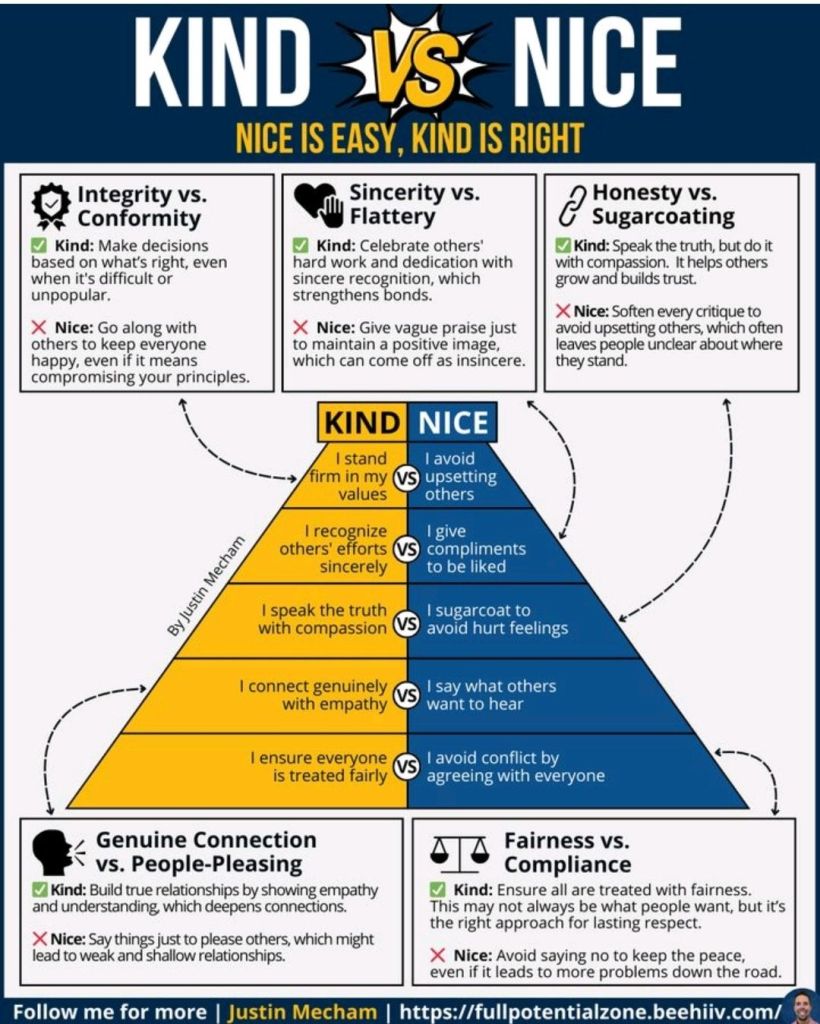
So, I’ve talked about being nice as not always a risk free move in terms of career progression, but what about kindness? I’m a massive advocate of kindness, but sometimes I wonder if people have the same understanding of the term as I do or whether they use it as a proxy marker for other things. For instance, we often talk about kindness and niceness as if they are interchangeable, but I’ve been wondering if the difference between the 2 is where the perception of warmth vs civility (combined warmth plus competence) actually sits.

I have certainly met people who believe that being kind and supportive means always being in agreement or always saying yes, whereas I believe that this is more acting from a position of people pleasing and being nice. In contrast I believe that sometimes the kindest thing that you can do is to say no, either because you’re not in a position to deliver what they want or that saying yes would put the other person in a challenging position. Nice can often feel right in the moment, whereas kind considers the wider, and sometimes longer term, implications.

How do we manage kindness in a way that is authentic?

Being kind can be challenging as it is not always about taking the easy route, sometimes it’s about making hard choices in order to help yourself, others or the organisation, to be the best version of itself. It can challenge some of the behaviours linked to people pleasing in order to move towards authenticity in terms of interactions and leadership. For me, kindness is very much about doing the right thing instead of the easy thing, but to really deliver on your values, you need to invest the time to understand what those values are first. What do we stand for? What three words would we assign to our core descriptors of self? Knowing what your core values are enables you to have a self check benchmark to help identify when we are being nice over kind.

Where does social capital fit in here?

Obviously, civility and kindness are not the only factors that come into play in the ‘popular’ discussion.ย  There are all kinds of other forms of social capital that can impact on how successful we are at network building, influencing and leadership. Especially in the world of science and healthcare, expertise comes into play quite significantly, and access to funding can never be under estimated, in terms of providing leverage and empowerment.

It is always worth being aware of, and investing in, all of these different strands for long term success. Having said that, all of these also require you to have the capacity to invest. As someone who can’t have children, and therefore have greater freedom to balance my work and home life, I’m aware that I probably wouldn’t have been able to build a clinical academic career if my life had been different. If I’d had to leave on time for school pick up or had to be lead carer on the weekends, I wouldn’t have been able to publish the papers or apply for the grants required. There is inbuilt privilege in my being able to prioritise my career at times. This blog requires hours every week. Hours that I enjoy investing and which I reap the benefits of in terms of networks and connections. These are things that I wouldn’t be able to do if I needed to pick up a second job or was caring for a parent. When we ask people to have these additional pieces of capital to progress, we need to be aware that we are putting barriers in place so that not everyone can make the most opportunities. We need to make the most of the tools we have available to us, but as leaders, we also need to understand how to support people to access opportunities in a way that doesn’t disadvantage them in relation to others.

Let’s not forget that leadership is hard

I think that one of the things that it is often easy to forget is that leadership is hard, in some ways, if it’s easy you probably aren’t doing it right or stretching yourself enough. Part of leadership is making the unpopular and challenging decisions, and sometimes there are no win wins. Being popular, being considered empathetic is always a nice thing but it is not the only thing that makes your leadership successful. So is it, in the end, actually all about popular? If you were to ask me it is instead all about authenticity. The key thing, from my perspective, is to let people know who you are, connect with people as much as possible and share/co-create the vision. Then they can make informed decisions about whether to get on board the Girlymicro train or not! On this one, I may be with Elphaba.

All opinions in this blog are my own
Realising the World Isn’t All About You: Understanding the Spotlight Effect and how it can impact perception and response

It’s been a tricky few weeks health wise, hence the lack of posts. I managed to come down with Norovirus, after writing a blog post about how much of it was out there. Post infection it sparked a whole world of inflammatory cascade symptoms that definitely did not bring me joy. I then followed it up by passing it onto Mr Girlymicro, who really wishes I’d stop bringing my work interests home with me.

All of this meant that I ended up having to take 3 days off work sick. During this time and for the week after, whilst feeling still pretty wiped out, every single little word in any messages from work, or even a lack of any, led me into a spin. Were people angry because I was off? Had I messed anything up that people were now having to fix? Was I being judged for not being on full form? The levels of anxiety that being away induced were so high, but let’s face it, in reality no one was really thinking about me.

Now I’m feeling better I am so aware of the fact that everyone was just focused on getting through their own days, dealing with their own challenges. My ability to rationalise and manage my perceptions were just highly impacted in those moments, and I lost the ability to remember that the Spotlight Effect is a thing. In light of this, and having just ridden the roller coaster of forgetting how this can impact, I thought it was worth taking some time to talk about the Spotlight Effect and its possible real world impacts on our leadership and decision making.

What is the Spotlight Effect?

We are the lead in our own dramas. By definition we should have ‘main character energy’. Being focused on self is therefore understandable. We are programmed to be the center of our own universe. It does need to be acknowledged, however, that this very positioning can bring with it a biased world view and set of perceptions.

Due to this natural tendency to be self centered we tend to interpret our worlds through the lens of ‘self’. We interpret communication and interactions with other people in a way that up playing up our importance in their worlds and down playing their own real life demands on how they interact with us. This is known at the Spotlight Effect.

This happens in positive situations, where we believe that colleagues may be more impressed by things that mean a lot to us, or over estimating relationships and the amount of influence we may have. The inverse is also true in terms of negative situations, where we believe that our failures or mess ups are noticed by others way more than they really are.

What does it mean for how you see the world?

This tendency to over estimate how much others notice or are impacted by us can really impact how we see the world. It means that we can end up agonising over an off hand comment, believing that we have offended or pitched something incorrectly, when the other person has not even noticed that the moment happened. I’ve written previously about how much I can spiral, and there is no doubt that the Spotlight Effect can mean that I spiral, wasting time and energy on something that is objectively not real. Wasting energy and focus on things that aren’t real means we can miss the real opportunities for change and learning in our lives, as well as meaning we are less able to live in the moment and really appreciate the good things we have going on. Plus, let’s be honest, the stuff is exhausting and I don’t know about you, but I don’t have energy to waste right now.

What does it mean for our interactions with others?

It isn’t just spiraling and anxiety that can result as a consequence of mis-interpretation of social cues linked to the Spotlight Effect. It can actively impact how we engage with our daily lives and relationships. It may mean that we avoid others unnecessarily, as we are keen to not have to deal with the imagined slight we caused. It may also mean that we hinder relationships by talking too much about our lives and our successes, and therefore fail to demonstrate enough interest in the lives of other people. Being unaware of how this ego centric approach can impact not just ourselves but others can mean that connections are driven towards the superficial, and that our ability to lead and influence is negatively impacted.

How does it impact bad days?

There are some really concrete ways that the Spotlight Effect impacts me. For instance, I should probably have taken the whole week off work as I was in a really bad state. Instead, due to the fear of phantom errors and fictional judgement I made myself go back early, thus continuing to drive the issue. There are definitely other ways that this phenomenon impacts me in general life, if sense checking doesn’t occur. I have a tendency to hide and withdraw from interactions, as I fear judgement. It’s easy for me to assume that someone being quiet or not interacting with me is because I’ve offended them or done something, when in reality they are just busy with their own lives, and if I reached out everything would just be as it always was.

It can also impact on how I handle conflict, partly because I will usually have played out all of the different conversations in my head beforehand, and yet somehow expect the other person to have been part of those imaginary conversations. This can, if unchecked, mean that my actions can cause conflict resolution to not go the way I’d hoped because I’m listening to social cues in my head instead of the ones that are present in front of me.

How does it impact good days?

You would have thought that the Spotlight Effect would have it’s biggest impact on bad days and when you were already feeling anxious. I think the truth may be that actually the most damage can be done, if not aware, when things are going well. It can mean that just because life is going well for us, we assume that a) everyone else recognises and is similarly pleased for us and b) that life is the same for those around us, with everyone experiencing contentment.

In reality, this may lead us to not hear clearly enough what others have to say or think. We may miss clues that would have enabled us to understand challenges and anxiety in others. Thus losing the opportunity to address issues early. It can also mean that we feel over looked, as our accomplishments feel like they should be obvious to others, when in reality we just have assumed that everyone is paying as much attention to our careers as we do, which is obviously not the truth.

When does it mean for your leadership?

How we communicate as leaders and decision makers is always important. Understanding how that communication is going to be received and processed, not just based on our intent, is a crucial factor that we often forget to evaluate as we focus so much on the message itself. The Spotlight Effect means that we need to think about how others receive the message, both when things are going well and when the individual may be in a more anxious state. In order to do this effectively, timing, word choice and content are all key. Choosing words that are unambiguous and judgement free is important. Taking time to explain decision making, so that individuals don’t feel like they are over looked, unrecognised, or punished, can avoid mis-understandings. Reading your audience, so you are having the communication at a time when people are able to engage with it, can also be crucial.

When individuals are interacting and responding to us, we should be cognisant of how their current thought processes are influencing how they react. It is critical to not fall into spotlight behaviours ourselves, and therefore focus on really listening to responses and actively checking on our perception of what it is that we are being told. Sub-text is key, especially if others feel like they aren’t in a position where they can be heard.

What can it mean for your well-being?

Like many moments in life, self awareness is key. Understanding and questioning how your perception of situations and your sense of self is driving your behaviour is critical to trying to make the best decisions for yourself, both personally and professionally. I think I’ve covered in this post that I am far from perfect in this regard. I can often recognise that my perceptions are skewed but cannot always enable the next step of putting that to one side and so still feel the resulting anxiety and other effects. The thing that I can usually manage, is to be aware enough that I don’t make decisions or actions on the basis of what I know is inefficient thought processes.

As well as being aware of your thought processes it is also worth being aware of your areas of focus. Are you spending a lot of time placing resource into any one thing? Is this use of resource appropriate or is it due to obsessive or faulty thinking? It’s easy to get drawn into something without realising how much energy it’s taking or quite how far down the rabbit hole you’ve travelled. A level of self-check in terms of being conscious about where you’re investing your focus and energy can save you from wasting what resources you have on a problem that may not be as you perceive.

None of us get this right all the time. When you find yourself realising you’re staring into the glare of the spotlight and all that comes with it, the most important thing is to give yourself a break by being kind to yourself. We all have moments where we’ve mis-read situations, been deaf to the commentary of others, or reacted based on an ego centric focus. It happens. The key things are the actions we take as a result of the realisation of the bias we’ve engaged with and how we develop the self awareness to do better next time. Accepting that the lessons learnt are the most constructive way forward, rather than wasting more energy on self recrimination.

How do we sense check?

Knowing that we are unreliable witnesses to our own lives can offer a major step forward in being able to improve our insight into the reality of our situations, rather than interpreting it so strongly through our own glasses, be they rose or darkly tainted. I find there are three key moments when active engagement with self reflection is key in order to try to reduce ego centric bias from my thinking:

  • Checking expectations
  • Checking perception
  • Checking responses

Having clear stop and reflect moments at these key points can help reduce the Spotlight Effect, but also enable me to realise when I’ve already veered into spotlight territory to support me in trying to step out of the glare. I would also flag here, not to under estimate how much other people can help with these moments of reflection. I drive Mr and Mummy Girlymicro crazy with my constant need to talk through my thought processes, especially when I’m struggling to gain clarity or re-frame my thinking from a less ‘me’ focus. Having those trusted companions who can assist, and if needed call you out on your ego centrism, for me, is just an important thing in all aspects of my life.

How can understanding lead to better conversations?

One of the major interventions we can build into our interactions in order to prevent the Spotlight Effect impacting our leadership and decision making is trying to ensure that we have better conversations, in order to understand the drivers of others and embed their life experience in our relationship building and social interactions. So how do we have better conversations? How do we ask better questions that enable us to engage better in order to truly be interested rather than trying to be interesting. The main switch is to the use of open ended questions so our conversations can be driven by curiosity, not by the need to re-enforce concepts we already hold.

Focus on the use of questions that start with:

  • How?
  • What?
  • Why?

You can even frame questions by saying ‘tell me about’ or ‘describe’. By actively listening to the responses and following up with appropriate further open questions based on the answers, you can build both a deeper understanding and trust.

Embedding curiosity at the heart of our leadership leads to unexpected insights and outcomes that you couldn’t achieve alone. So, whenever you find yourself too focused on how you believe the path should be walked, phone a friend and ensure that you step out of the spotlight in order to see what different routes may be available in order to move forward in ways that benefit everyone involved. Only then can we demonstrate leadership which aspires to help everyone, rather than choosing pathways that benefit us alone.

All opinions in this blog are my own
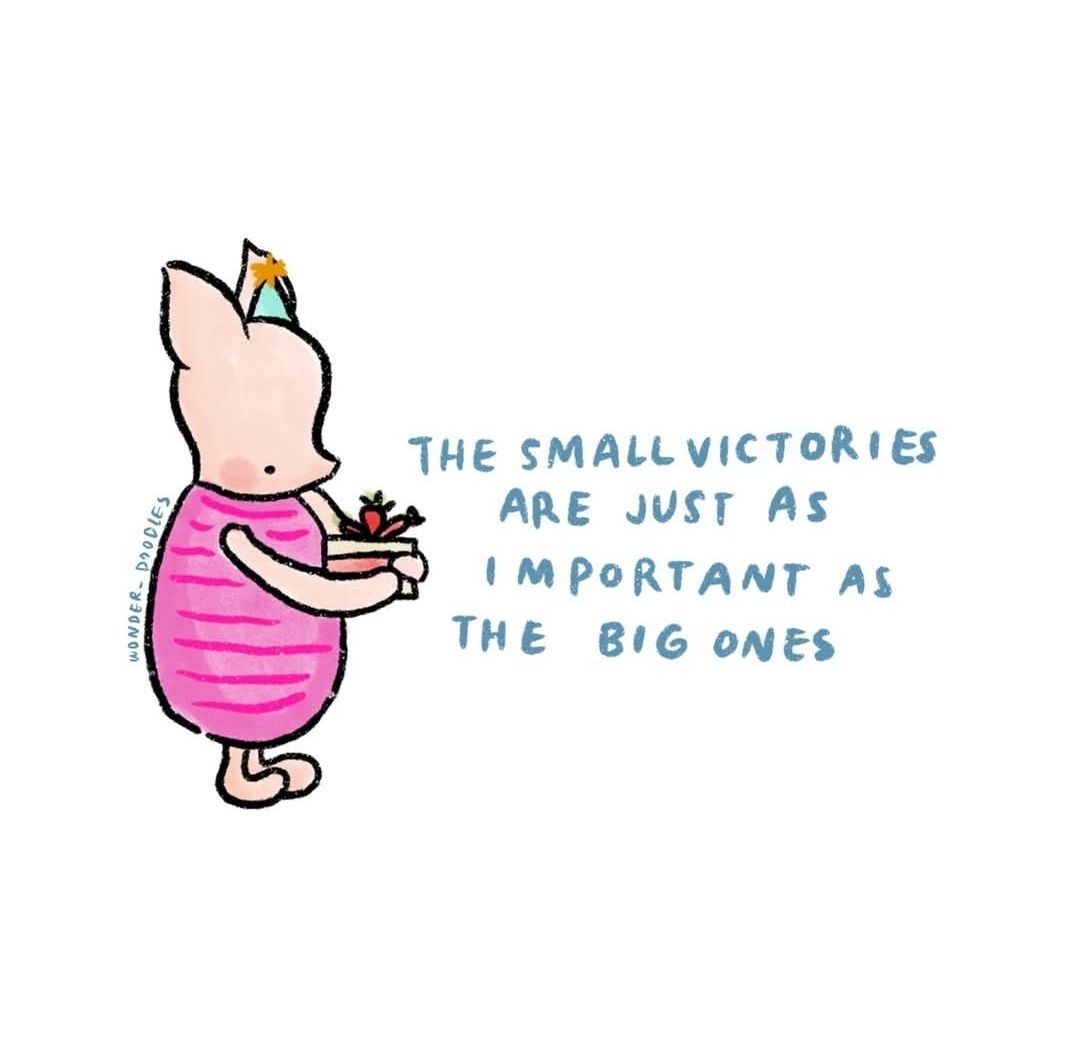
I’m Still Learning After All These Years: My focus in 2025 is to continue my personal development journey

It’s that time of year. The time when New Years resolutions get shared and we all try to persuade ourselves that overnight, if we just put in a bit more effort, we can change big facets of our lives. I’m becoming increasingly aware that the big gesture and external stuff is not really the space I want to be in, however. I’m fortunate to have ticked a lot of the external boxes at this point in my career, and so, in 2025, I want to focus on me and my development as a person rather than ticking another box linked to how people see me.

One of the reasons for this shift is the nature of the job, as it feels, in a post pandemic world, like I spend a lot of time in responsive mode. This becomes a habit and a way of being. Instead of running to keep up and fire fighting, however, I want to have time to experience the joy I feel when I’m learning and developing.  This is especially important as I think many of us who went through the pandemic as healthcare workers are still very much in recovery mode, and there’s a lot to still be worked through and resolved with little time to actually do so. So, rather than create a list of tasks to be measured against, my list this year is about aspirations linked to becoming. Becoming a better version of me, becoming more joyful, and re-finding some of that pre-pandemic me.

I want to have time to catch my breath

As I sit here on a Sunday afternoon, I realise how much I need time to chill and unwind at the moment. 2024 was full on, and there wasn’t a lot of respite. It feels, therefore, that I’m hitting 2025 already pretty wound up and in need of prioritising some time off the treadmill. Even at work, having just managed to get down from just under 18,000 emails to ~200 over the Christmas break, I realise I need to stop being in responsive mode and guard my time more efficiently. I need to carve out planning time, and in a more basic way, time to make tea, have lunch, or god forbid – leave on time. I’m aware of how much better I will be at my job if I can catch my breath, see through the fog and take time to develop a plan or creative approach to the problem, rather than jumping in or going for the most obvious approach. All in all, a different strategy will have all-around benefits, so I need to work better at finding a new way to manage my time.

I want to live in a positive space

I have a tendency to swing from optimism to ostriching, and whilst most of the time I’m a ‘glass is half full’ kind of girl, it sometimes takes more energy than I have at present to live in that positive space. In 2025, however, I want to have enough energy to expend to make it happen. I want to listen to the noise, criticism, and the negative inner voices less. I want to focus less on what I lack and more on what I have. It’s easy to constantly focus on our areas of required improvements instead of celebrating how far we’ve come and where our strengths lie. There is always a space to focus on improvement, but it shouldn’t come at the cost of recognising the work we’ve already done. This year, I don’t want to benchmark myself and my progress. I want to live in a space where I accept and celebrate the place I am at. For once in my professional life, I want to be satisfied with the boxes I have already ticked and live in the moment.

I want to see my ride or dies

One of the reasons I am keen to find additional spare time and not take on more is that I want to carve out more time for me. Selfishly, this is nothing to do with work, but for me as a person outside of my professional life. The main driver for this is that I spent most of 2024 in work mode, and I didn’t spend enough of it in life mode. I’ve written about how fortunate I am with some of my friends, but in 2024, I just didn’t carve out the time to spend with them. They are super cool, and would never hold it against me, but for the sake of my soul I want to spend time with the people who see me, flaws and all, and love me any way. The people who are my ‘stick by you no matter what’ friends inspire me and drive me to do better, and I will be better for prioritising spending time with them.

I want to re-find my confidence

To be honest, I don’t know if it’s being peri-menopausal, post pandemic burn out, or just work over load in general, but my confidence has definitely taken a hit. Don’t get my wrong. I’m still the same bolshie girl, but the tendency to spiral after the moment is hitting me hard. The creeping self doubt is present in a much more apparent way than it was before the pandemic. Part of me thinks it’s because I’ve been living in ‘Professor Cloutman-Green’ mode for so long rather than having enough time in my own skin as Elaine/Dream. Whatever the reason, I want to find that confident girl again. The girl who had plenty of self doubt but didn’t let that doubt overwhelm her or take over who she was. She’s still in there, but I suspect a break and a significant amount of napping will be required to persuade her to put in a more consistent appearance.

I want to create and be inspired

Some of the things I want to make time for are pretty straight forward. I want to have time to cook when I get home and enjoy doing so with Mr Girlymicro. Cooking is something we love to do together, but time restrictions in recent years have made everything a functional task rather than an enjoyable endeavour. I want to spend the weekend drinking pots of the many different types of tea we have and languidly enjoying each others company, rather than having anxiety about the list of tasks I should be undertaking just to keep up distracting me from the moment.

A very specific thing I want to do with Mr and mummy Girlymicro in 2025 is to spend time visiting museums. Great museums, weird museums, museums that no one else visits. In 2023, we visited the Met in New York, and the joy and inspiration that filled my soul has stayed with me. In 2024, we managed a few stolen moments at the V&A, British Museum, and Natural History Museum, but I have to say I want more. London is filled with niche places to visit, and I want to wander with an open mind and just take in what speaks to me in the moment. This kind of activity is food for my soul, and I’m greedy for more. Also, if you have any recommendations, hit me up in the comments or DM/email me.

I want to invest in this blog

Being inspired helps me in many aspects of my life, but one of the biggest ones is the number of ideas I get for this blog when I’m just out and about experiencing life, and not just in scientific contexts. Focusing that inspiration into a creative endeavour like this blog then leads to even more fulfilment and joy. I know I’ve been talking for a couple of years now about developing a book out of this blog, and I’m not promising it will happen in 2025, but I want to take some serious steps in moving it forward if I can. At its most basic, I want to feel like I have time to enjoy sitting down and writing rather than squeezing in stolen moments on the tube when already exhausted.

2024 delivered more reads than I could have dreamt possible, finishing the year with over 21,000 reads from over 120 countries. I can’t believe that something I thought would be seen by a handful of people is now read by so many. I want to build on that momentum. I know professional blog writers get those numbers in a month, but I’m returning here to my pledge to not bench marking against others and just to focus on measuring myself against myself to capture growth. So here is to improving year on year and to doing more of what brings us joy!

I just want more

I know it sounds greedy, but I’m not embarrassed to say it, I want more. I want to sleep, and drink tea. I want cocktails and time spent with friends. I want more cozy rainy afternoons under a blanket and getting back to reading real books, rather than only having the focus to listen to audio books. I want Sunday afternoon walks with Mr Girlymicro, talking about nothing and feeding the ducks. I want to laugh so much my chest hurts and smile so much my face aches. I want to make time for the parts of myself that aren’t linked to work and outputs and re-train my brain to not measure myself against the ‘busyness scale’. I am not the sum of what I produce and I must learn not to measure myself as such. I am so much more, and in 2025, I am OK for it to be the year of greedily wanting more and giving myself permission to need.

I need to catastrophise less

At times of high stress, and let’s be honest I feel like it’s been high stress since 2020, my brain manages that stress by running scenarios. In many ways, it is not a bad way of managing my existence. Good, bad, disaster outcomes, all run wild in my brain. The main challenge over the last few years is that that scenario running has tended more and more to the disaster scenarios taking up my bandwidth. This can make the world feel darker and more challenging than it probably is, especially if it is compared with a more objective mindset. In 2025, it’s time to put on my positive pants and try to utilise the tools I have in a more balanced way in order to not create stress and drama where no such situation exists.

I need to step off the carousel

Catastrophising means that, by it’s very nature, I’m not living in the positive space I’d like to habit. Worse than that though, it can lead to spiralling, leading to negative rabbit holes that aren’t even linked to the original trigger. I’ve posted before on what this can look like for me. This isn’t good in the moment, but it also tends to result in a lack of sleep, as this is a frequent 3am affair, and thus impact on my general well-being. Everything becomes a self-fulfilling prophecy, as the tireder I get, the less perspective I have, the more likely I am to spiral, and therefore, get less sleep. In 2025, I want to step off both the carousel that leaves me so tired that the spirals happen in the first place, and also to step off the spirals earlier when they hit. For me, it’s focusing on using what serves me rather than being a passenger in the moment.

I need to take better physical care of myself

All of this brings me onto the fact that I just need to take better care of myself physically, as well as mentally. So much of my underlying health has suffered since the pandemic, and I have not allowed myself the recovery time that is required to really fix that. In 2025, I need more of option three in the pic below and way less of 4. I need to be more than intellectually active. I also need to find time to eat and drink in my work day. I often fail to help myself by forgetting or getting too busy to do the simple things, like taking meds. The reality is, I don’t have anyone to blame but myself, and I need to look after myself in the way that I would expect of others. It’s a simple thing, and I need to stop making life so complicated that it doesn’t happen.

I need to not make New Years Resolutions

Finally, and this is a big one for me. None of these things are New Years Resolutions. At best, I am saying that these are aspirations. I refuse to make a list that just adds yet more pressure to my every day life. I am a work in progress, and it is more than naive of me to think that I will wake up in a New Year and change who I am. I feel my habits make me more like the Titanic than a super yacht, and so any change in direction to avoid the icebergs takes time. 2025 is about self-love based on acceptance post self reflection and understanding that changing the dial is a choice that will need to be made daily. Starting the year by ignoring the noise of everyone elses’ proclamations and purely staying in my lane, whilst focused on what serves me, I think is a great way to kick off the year. I know some people find the resolution bit helpful, but I, for one, feel like celebrating the freedom I give myself by deciding not to comply with this particular tradition. Which ever way you decide works for you, I hope that 2025 brings you all of the joy and that you get what you need out of the next 12 months, and find the time to celebrate all that makes you you!

All opinions in this blog are my own
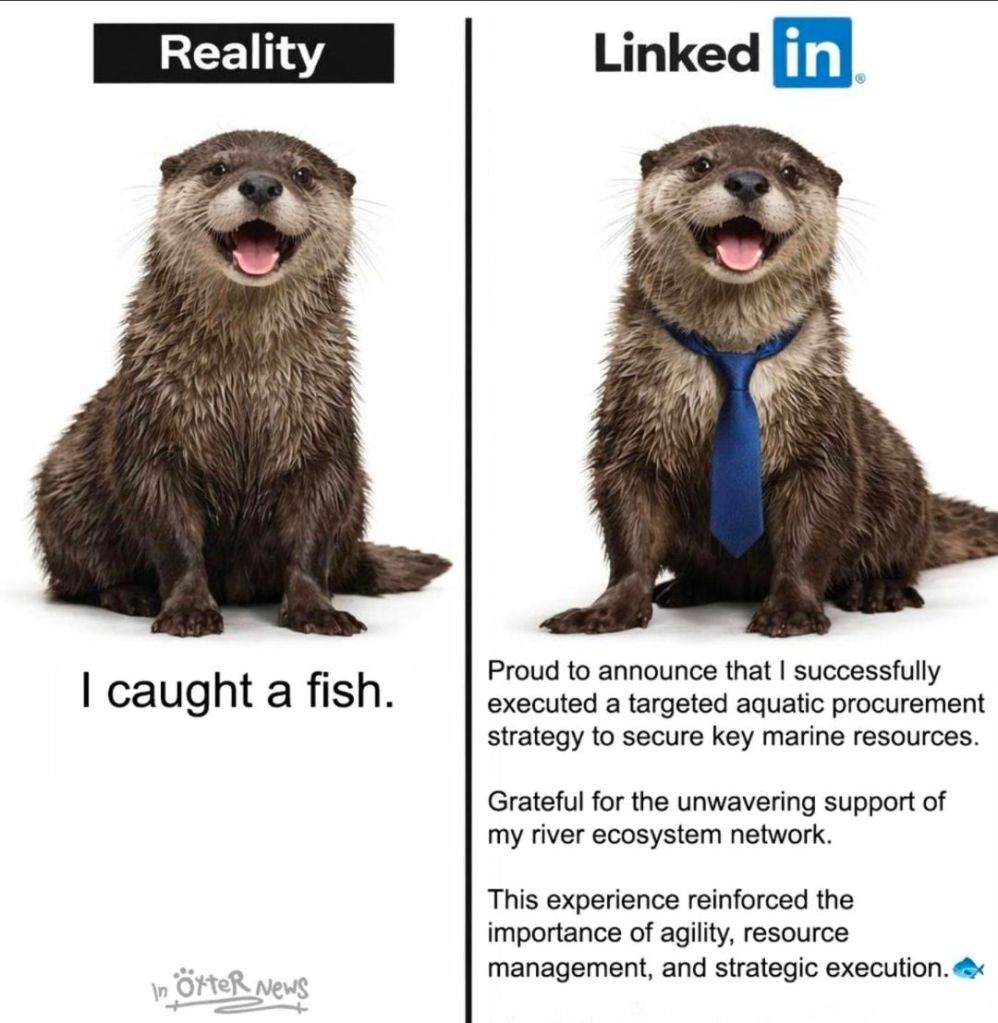
Let’s Talk Con Fear: Talking about social anxiety at conferences and events

I’m off to the Federation of Infection Societies (FIS) conference this week. I’m involved in 3 sessions over 2 days, and in many ways, these types of events are a complete highlight for me.  I get to be inspired by hearing new science, I get to catch up with wonderful colleagues who I don’t get time to see very often, and I get to immerse myself in all things microbiology without the distraction.

There is another side to this coin, however, and that is both the anxiety that builds before I go, and that can last throughout the whole event. The ever-present spirals of ‘do I know anything?’, ‘will I say something stupid?’, ‘will I know anyone?’, and the classic ‘do any of these people actually like me?’.

The combination of this social anxiety with the, sometimes long, very peopley days, can mean that I hit spirals pretty easily and the lack of solo recovery time means that I can find it pretty exhausting by the end. 

Now, I’m obviously not talking about extreme cases of social anxiety that may require informed medical or long-term support. I’m talking about situational anxiety that most of us may find ourselves in from time to time.

Just in case there is anyone out there in a similar boat, I thought I might put together some things I’ve learnt along the way that help manage some of my anxiety traits and enable me to actually enjoy the experience rather than dreading it.

Do your prep work ahead of time

The first thing I’ve had to learn is that I can’t just pretend that doesn’t happen. I can’t wish it away. What I can do is be prepared and make sure that I have made the process as trigger free as possible.

For me, this is about simple things, like getting a hotel as close to the venue as possible. It means that if I just need a 30-minute alone break, I can take one. It removes anxiety about getting lost or forgetting something crucial and not having time to go back for it, which, although minor, can be the final straw. It’s also about making sure that I have pre-found all the rooms I need to locate ahead of time, so I know where I’m going, and that ahead of multi-day meetings I have a plan for which sessions I’m going to before  I even travel to the event.

Know your triggers

I know that I have a few things that really lead to anxiety, but perhaps more unique to me, is the fear that I was have an auto immune attack and won’t be with people who understand what is needed. I learnt early that the best way to cover this one off is that I very rarely travel alone, especially over seas. I often travel with my mum or one of a very small list of truly trusted people, who I know would understand how to get me help if required.

Something that is more likely to strike a cord with others, is that I am also the girl who has walked into conference rooms, spent 15 minutes and walked out, as I knew no one and was just overwhelmed. I’m not proud of these moments, but I think it’s important to acknowledge that they have occurred. Although, to be honest, when they’ve happened, I mostly felt invisible, so I doubt anyone noticed.

I have discovered that I need to know that the space is one where I feel welcome for me to perform at my best. This sense of welcome can be either intellectual, because of the topics covered, or because of feeling a sense of community, as the room contains people within my field or in strong alignment with my values. I’ve found the overwhelming feeling hits most strongly when I’ve been in very large political or strategic sessions, where I felt out of my comfort zone on both intellectual and community counts.

That said, I’m not too bad in the sessions themselves, I’m there to learn something new, and learning excites me even now. It’s the breaks that are my nemesis, especially when large groups all surge into a space at the same time, and the weight of expectation that you must now network lands. The seconds that feel like hours of desperately searching for faces you recognise and being forced to face the fact that yes, you really should go up and speak to that absolute stranger, as it’s the right thing to do. It’s these moments that can cause me to bolt for the nearest bathroom.

Carve out time for yourself

One of the key mechanisms I’ve identified to help with my triggers is that I make sure I have enough time to myself, be that eating food away from the venue so I feel more certain what it contains and less at risk, to making sure I have evenings to myself to process and unwind.

I usually come over as really social, and really into spending time with people, and I am both of those things. I also only have a limited amount of social battery, and so in order to maintain that extrovert part of myself I have to have recharge time. I love talking to people about this blog, I love hearing about and responding to other peoples work, but at a certain point I need to sit down with an audio book and a cup of tea in order to do it well. This means that when I go through the brochure ahead of time, and plan my sessions, I make sure that I have enough blocks of time to enable me to be my best self when I’m in the space with others. Sometimes all you need is a walk to a local coffee shop and back to give you the perspective you need.

Pre establish a safe space or person

Just in case it does all become too much, I always have a plan. I posted a while ago about how spending time in bathrooms may feature way too much in my career, but part of that is that they can sometimes present a safe bolt hole.

The wonderful thing about having hit my 20th year as a Healthcare Scientist, is that I now also know quite a few people, some of whom I’ve known for well over a decade. This means that at most events, there are also people who I count not only as colleagues but as friends. People that I can just go and spend time with that doesn’t include social commitment. Those friends you have that you can just be in the same space without any demands being made. If I’m at an event where these people are also attending, then I know that I have someone I can just excuse myself to catch up with if I’m having a moment. It’s also the great thing about ensuring that you have a hotel room nearby. Your safe bolt hole is only minutes away.

Make an agreement with yourself about how much is enough

The fact that you have social anxiety does not provide a free pass to escape one of the fundamental purposes of attending conferences, networking. It’s key to your career, it’s key to your development, it needs to happen. The thing is that there are varying degrees of what networking can be, and before you’re in the space, you need to decide what level you are aiming for and will therefore achieve. For me, my deal is that I will, on each day, speak to one person I don’t know. I am not allowed to finish my day without this happening, but once I have had that one daily interaction, then any further moments are a bonus. Once that one challenging moment is over with the pressure is off, and then I almost always over achieve on my goal.

Be realistic about how much you can expect of yourself

The key thing I’ve learnt is that I have to realistic when I’m making that deal with myself and deciding on achievable targets. For me, there is not point is saying I will speak to five people I haven’t met before, as I’ll just be setting myself up for failure. You will also find that I rarely sign up for conference dinners, as I have over the years found that if I’m in a space with other people from 08:00 – 18:00 I will really struggle to then spend yet more time with other people, no matter how lovely or interesting those people are. All I will want at that point is room service, tea, and a movie in my room.

Everyone will have their own tolerances and lines. The important thing is to have enough self reflection to know what yours are. Otherwise, you just add guilt into the anxiety mix, which is not much fun for anyone.

Learn how to work a room using tools you are comfortable with

One of the other things that I’ve learnt about myself, is that although I get super anxious standing in a room trying to approach someone at the coffee table, I am much much more comfortable moving around the exhibitor stands. The guys at the exhibitor stands are motivated to speak to those who approach, and there are usually science based discussions that I am eager to have. This, for me, is a match made in heaven, as it breaks me into the speaking to people I don’t know in a very gentle way. If I’m lucky, I will also meet others when I’m wandering around, which will allow me to tick my ‘speak to one stranger box’ as exhibitors do not count on that front. The added bonus is that I also often manage to find cool new stuff I’m interested in or develop collaborations whilst this is happening, so it’s a no lose scenario for me.

The other thing that having worked for 20 years has given me is the opportunity to be asked to be involved with sessions. For this girl with social anxiety, this is actually a great thing, despite the fact that it sounds like it should be stressful. I’ve never minded public speaking in the same way as I worry about 1:1 interactions. When I speak, all I can do is put my best foot forward and hope that others will be interested in what I have to say. For the most part, if people don’t engage they will just leave and not give it another thought. On the positive side though, if people find what you say interesting enough to want to speak to you afterwards, this a great way to tick the ‘speak to one person you don’t know box’ and as they are approaching you all you have to do is respond. I find this so rewarding, but I also appreciate how fortunate I am to have this type of opportunity and how much it helps me manage to get the most out of events.

Prepare your exit strategy

One of the important things to bear in mind, and which I often forget, is that others do not necessarily feel the same way about social requirements. I struggle when people arrange evening meals at meetings when you’re already booked to spend a full day together. I understand the purpose, it’s lovely to build bonds and memories, and logistically it’s easier. I rarely, if ever, hit the end of the meeting day and wish to spend the few hours downtime I have with others, over reading in the bath however. There are frequently times I can’t opt out of these moments, but where I can, I will often have a pre planned reason to excuse myself. Often, this is work related, as I will always genuinely need to do some email catch up, and doing this after dinner means working till midnight. I don’t lie but I may pre-plan my rationale for not being available to support both my work load and my mental well being. I will never not pre-inform, as that is rude. People will have budgeted and made arrangements, so I will never last minute drop, but if the option arises I may flag unavailability at the planning stage.

Don’t succumb to expectations and pressure

People are amazing and much more welcoming than you expect. I’m always counting myself as so fortunate is be asked to unexpected drinks, meals and catch ups at conferences. I have learnt that I need to not get caught up in the moment and end up crossing the carefully curated boundaries I have put together, in order to ensure that I can last the social distance of the conference. I’m a planner for a reason and I don’t riff off the plan well. I also struggle with saying no. This means that there have been multiple times when I’ve said yes to that dinner, or those drinks, and have then suffered the consequences afterwards. Now, I work hard to keep to my boundaries so that I don’t make life harder for myself. This can be surprisingly difficult as all these invites are inclusive and well intended, I just have to remind myself to make the sensible choice to enjoy the entire event, rather than burning out after a single evening.

Know that this is an essential part of the job, so invest in coping strategies early in your career

The truth is that networking and attending these kinds of events is essential. They are a fundamental way of hearing the latest science and expanding your knowledge.  They are also key for collaboration and building your networks, as well as dissemination of your work. No matter what anyone says, I have found that science fields tend not to be meritocracies, there’s plenty of ‘who you know’ involved, and the only way to address that is to get yourself out there. So you will need to learn how to navigate these settings, and the earlier in your career you manage that, the more rewards you will reap.

I’ve talked about some of my own pitfalls and things that I’ve implemented to help me, but you will have your own triggers, and each response will need to be customised to yoi and your needs. What is true for all of us is that you are not alone, and if you are in need of someone to speak to during the horror of a break, then I am always happy to be your person. This is what I look like and I will never turn you away.

Know that it gets easier

The longer you hang on in there, the easier it gets, honestly.  I haven’t walked out on an event in a decade, although the toilet hiding is still a little more frequent ๐Ÿคฃ

Until you are at a point where the dread diminishes from paralysing to merely present, here are some top tips (on top of some of the networking tips I’ve previously blogged about):

  • Pre manage your expectations of yourself and make sure they are reasonable
  • Book with a group or a friend if you can to take the edge of socialising with strangers
  • Join a social network, as you can use it to find like-minded people, and it can give you a virtual introduction rather than the cold approach
  • Similarly, join a society. Societies often have small meet-ups either before events or at meetings, and so you can make connections in a smaller, less intimidating space
  • Submit work. It’s much less intimidating if people come and speak to you rather than the other way around
  • Know it’s absolutely OK to need to tap out and have your own space, but make sure this is pre-planned so you don’t miss the reason you came to the event

Right, well, having talked about the need to be prepared. I haven’t even packed yet, so I’d better get on that. If any of you are Liverpool bound, make sure you come and say hi. I’m there Wednesday and Thursday.

All opinions in this blog are my own

If you would like more tips and advice linked to your PhD journey then the first every Girlymicrobiologist book is here to help!

This book goes beyond the typical academic handbook, acknowledging the unique challenges and triumphs faced by PhD students and offering relatable, real-world advice to help you:

  • Master the art of effective research and time management to stay organized and on track.
  • Build a supportive network of peers, mentors, and supervisors to overcome challenges and foster collaboration.
  • Maintain a healthy work-life balance by prioritizing self-care and avoiding burnout.
  • Embrace the unexpected and view setbacks as opportunities for growth and innovation.
  • Navigate the complexities of academia with confidence and build a strong professional network


This book starts at the very beginning, with why you might want to do a PhD, how you might decide what route to PhD is right for you, and what a successful application might look like.

It then takes you through your PhD journey, year by year, with tips about how to approach and succeed during significant moments, such as attending your first conference, or writing your first academic paper.

Finally, you will discover what other skills you need to develop during your PhD to give you the best route to success after your viva. All of this supported by links to activities on The Girlymicrobiologist blog, to help you with practical exercises in order to apply what you have learned.

Take a look on Amazon to find out more

Tales of a Recovering Workaholic: Talking about the darker side of success

I’ve been thinking a lot about pathways in healthcare lately,ย from having conversations about T-levels and apprenticeships this week, to equivalence and Higherย Specialist Scientific Training (HSST) posts. It’s made me reflect a lot on my own training pathways and the fact that the majority of the advice I received was that the only option, in terms of approach, was to work harder and do more. Now, don’t get me wrong, there is some merit to that, and there is also some truth, but I had it drilled into me that you can’t be successful if you do a 9 – 5. You must always do more. You must always over deliver. You must always be adding to and diversifying your CV.

This advice and approach has been key to me developing into the person I am now. I am objectively successful and so grateful for the support I’ve received along the way. I have the long dreamed of Consultant post, and my dream job. I was made a professor within 10 years of finishing my PhD. I’ve held multi-million pound grants and have over 50 publications. The other side of the coin is that, despite being exhausted, I can never sleep for the number of things I haven’t finished, and I constantly feel like I’m not doing or achieving enough. I’ve also written before about the impact of my anxiety levels when I’m tired or try to step away. So, as new starter season comes upon us, I wanted to take a moment to really talk about the messages we are giving our trainees, and ourselves, to think about how true they are for current training opportunities and what we can do better for those that follow us.

Let’s start with a bit of history and the messaging that we used to focus on as part of training

Goal orientated view of the world

During my first week as a trainee Clinical Scientist, I was sat down and told that it was an 11 year training scheme to Consultant, but it was up to me to put in the work and make it happen. Well, I worked pretty damn hard, including not having a weekend off at one point for 3 years, and it still took me 16 years. Does that make me a failure? I don’t think so. Does that mean that I should have worked hard to make it happen in 11? I’m not sure of how I could. In fact, I don’t know of anyone who made it happen in 11 years. Of the 4 of us who started, only 3 are now Consultants, and we were a pretty committed bunch. So were we all set up to fail?

The whole scheme was designed with that 11 year target in mind. I understand it from a strategic point of view. There are a lot of boxes to be ticked. Our situation was made even harder as there were only 3 years’ worth of funding for a scheme that required 4 years of professional practice to gain registration. That meant you also had to prove yourself worthy and useful enough that someone would decide to fund you for that extra year. Otherwise, everything had been a waste, and you would walk away unregistered and unlikely therefore to get a job.

My main problem with this approach is that it doesn’t really allow scope for exploration, and it really doesn’t allow time for creativity. It trains you into the ‘onto the next thing’ approach. I certainly had no time for celebration or reflection between stages. I was always trying to make sure that I was useful enough to remain employed, and in later stages, as it took me 13 years to be made permanent, I had to also ensure I was bringing in sufficient money to cover my salary so I would be kept in a job. It also means that when you finally do get all those boxes ticked and get your dream job, you are so trained into the tick box way of life that you are left searching for what the next box should be, rather than embedding and celebrating what you have achieved.

There is nothing that cannot be fixed if you work hard enough

When I started work, I used to read a book at my desk during my lunchtime, like I had when I worked at Birmingham City Council. It would always be some variety of fiction novel. I came into work one day during my first few months, and a pile of textbooks had been left on my desk with a post-it note suggesting that maybe I should read these instead. The implication, to me, was that it was not acceptable to have downtime, that any moment I had should be used to continuously work and improve myself. In short,’I must try harder’ ‘I must work more’ in order to justify the privileged position I was in. If I wasn’t going to lunchtime talks, the time should be used for other improving activities.

I also remember clearly listening to amazing female Healthcare Scientists talking at events about how, to achieve as a woman, you always had to work harder and do more than anyone around you. It was made very clear that it was required to constantly go above and beyond if you wanted to reach their position, if you wanted to succeed, if you wanted to make a difference.

The messaging has always been pretty clear. No matter how hard you are working,ย it probably isn’t enough, and you must work harder. Otherwise, you will fail and let everyone who had faith in you down, as well as yourself. If experiments fail, you don’t go home, rest and reflect, and come back tomorrow. You stay and set it up again. There were just too many midnight finishes to count during my journey to Consultant. If you want it, you will just work harder until it happens. I submitted my PhD a year early in order to achieve FRCPath whilst on my fellowship. At the same time, I took a PGCert in education because I recognised that it was important for my career path and my interests. Looking back, doing those three things simultaneously was foolish beyond measure. At the time, I thought I was just demonstrating that I had what it took.

Effort must be continuous

At the very start of training, I remember sitting over a bunsen burner crying. I was so ill, but no one around me ever took any time off sick, and it was just not considered to be OK. Eventually, I was sent home as I just couldn’t breathe, but it was very much ‘see you tomorrow’. Having an ‘off day’ was not something that happened. The hard earned truth I’ve learned to accept is that my best looks different from day to day. Some days, I could take on the world. Other days, I struggle to crawl across the line at the end of the day. Especially with a health condition made worse by stress, the idea that I can just ignore it, carry on, and always achieve amazing things every day is sheer madness. This was how I tried to work, however, and it took seniority and growing older to come to terms with the fact that this was just not achievable.

The thing about seniority is interesting. There is something about seniority and being able to give yourself permission to do things differently, which is worth mentioning. That’s not the real difference, though. I think the real difference is in the expectation setting. I try to be the person who gives others permission to acknowledge that some days are harder than others. Who checks why people are still there when they should have gone home. Doing this for others has the side benefit of reminding me that sometimes it’s OK to also do this for myself. It is not possible, nor is it necessary, to work at 100% all of the time. There will be days when you absolutely need to bring it, but there will be recovery days when what you should do is catch your breath, and if possible, do some reflection in order to make things better long term. A career is a marathon and not a sprint, after all.

There is no room for failure

This one isn’t just a work thing. It’s definitely a family thing too. My father is infamous for saying that no child of his has ever failed anything, and we weren’t about to start now when I was worried about FRCPath.

The Clinical Scientist training programme has always been competitive. Getting into the programme was competitive,ย  but even when you were in it, my experience was that the programme itself was pretty competitive. The people on it were used to being at the top of their class, and I experienced a fair amount of posturing throughout my first 4 years. Far from being tackled and a focus placed in peer support and collaboration, I feel like the rhetoric around the programme added to this. The focus on there not being enough places for us all to get posts when we finished, and the constant commentary on only the best of the best being able to get Consultant posts, placed us in direct competition with each other from day one. Therefore, you couldn’t talk about challenges for fear of disclosing weakness that would impact your future. That atmosphere is one of the reasons I’m so passionate about talking about the reality of the job on this blog, both the highs and the lows, as I didn’t have any way to normalise my experiences when I was training and in the midst of them. I hope posting will help others in finding a benchmark for ‘normal’ that I didn’t have.

Even on a day to day basis failure was not an acceptable part of training. To this day, I remember that one of my fellow trainees reported a NEQAS result (part of a quality control scheme), and she got it wrong. The result got reported, and the department lost a point on the national scheme. In reality, it should have been checked by someone else before it went out, but it happened. The virology consultant at the time never spoke to them again. We would sit in joint tutorials, and he would ask a question, he would then wait for my response even if I was just repeating what my colleague just said. He would respond to my answer but not theirs. There was never a review of what had happened and how the mistake had occurred. There was no acceptance of the fact that being part of a quality scheme is there to support learning and to identify where improvements can be made. There was just a long-term change in the way that trainee was seen and how they were then supported. It was a clear demonstration of what would happen if a mistake was made and that it would impact how your working life would be from that point on.

Quitting is not an option

The same trainee went through a hard time during her final year. She basically spent a lot of her time crying, and the response was that she was allowed to come in 30 minutes late. She started to see a therapist, and even though we never met, I owe that therapist a lot. Her therapist pointed out that in the three years she had been in post she had never been out for a cup of tea with a colleague, so she was given homework to ask someone out for tea, and she asked me. This was a real turning point for me. We went for tea, and we had a real conversation about the things that were both hard and good. It was the first time that I felt less alone. It was also the start of a conscious decision I made to take people off site for tea, to support better conversations, that I’ve continued to this day.

Later that year, she walked away. She made a decision to go a different way. It took enormous strength to do it, and even now, I have enormous admiration for her. Until that point, I hadn’t known anyone make a decision that prioritised their wellbeing rather than the CV tick boxing. The general attitude was that Healthcare Science is a small world, and you were incredibly fortunate to be a part of it. It was so hard to get into, and you had put in so much that you would be crazy to walk away. There was judgement linked to failed experiments, let alone walking away from the programme. Seeing someone break that mould was incredibly powerful.

The truth is none of these messages are entirely true, so how do we do a better job of messaging for current training programmes?

Training is just that, a learning programme, a time to explore, fail, and reflect on those failures in order to learn to do things better. If the messaging I experienced as a trainee now feel less than ideal, what messages should we be encouraging? I’ve been having a think and these are some that I would like us to have better conversations about:

We are more than the sum of our qualifications

Not everyone is going to become a Consultant.  Not everyone is going to get FRCPath and a PhD. You know what, that’s perfectly OK. It doesn’t stop you aspiring for those things if that’s what you want. However, our trainees are not in a Hunger Games style competition to be the last one standing. More than that, how good you are at your job is not dictated by how many qualifications you pick up along the way. Some of the most amazing Biomedical Scientists I know and have the privilege to work with don’t have a masters degree. It’s OK to be a brilliant band 7, and be satisfied and fulfilled by the role you have. Your qualifications don’t define your worth, and it’s OK to make choices that aren’t about playing CV bingo. It is also OK to decide that those things matter to you, you still aren’t defined by them. They have the value you choose to give them.

It’s OK to pause and reflect

No career is a straight path, no matter how it looks from the outside. There will be bumps along the way and the odd hill/mountain to climb. You will reach the destination better for it. You will be able to handle the journey a whole lot better if you allow yourself time to pause and reflect along the way. A big part of development is about making time to reflect on where you are and where you are going to, but also asking the big questions about whether those decisions and reflections you’ve made previously are valid for where you are now. You will be working for decades, and the decisions you make in your 20s are unlikely to reflect the decisions you might make in your 40s, so making time for active reflection isn’t a luxury, it’s an essential part of a professional career.

Knowing when to change direction requires courage

In many ways, I’ve been pretty fortunate, the things that I’ve wanted have aligned with my values and have stayed pretty consistent. This could easily have changed, however. I suspect that if I’d been able to have a family, my focus may have altered somewhat. Knowing when to change your focus or direction is important. This a balancing act between knowing when you just need to double down because things are getting difficult, or when you have truly shifted as a person and that you have to change direction to reflect this. Mentorship and coaching can really help with both this and the reflection that may get you to that moment. Acknowledging that continuing down a path ‘just because’ may not be the right thing and that it requires courage to sometimes jump off a cliff and make a big switch is a step that may require additional support.

Your value is not defined by your productivity

This is the one that I struggle with most and therefore know I probably fail to provide the best leadership around. I often feel that ‘I’m do what I say’ not ‘do what I do’ in this area. I often feel defined by my to-do list, and when that gets out of control, as it often does, I place a LOT of judgement on myself. The thing is, if I get hit by a car tomorrow, no one is talking about my to-do list failures at my funeral. I hope that they will talk about how I made them feel, and maybe even this blog. It is hard, but we can choose what defines us. You have that power. One of the reasons this blog is ‘Tales of a recovering workaholic’ is because I recognise I need to change, and I’m hoping to do a better job of playing this on forward and encouraging our trainees to be defined as well rounded individuals with interests outside of work. We need to encourage a holistic view of value in ourselves and others.

There is no prize for working the hardest

The biggest lie I felt that was embedded in my original training programme was that if you just worked hard enough and ticked the required boxes, the prize was there at the end of the race. The hard truth is working hardest does not get you the job. Ticking all the boxes makes the outcome more likely, but it doesn’t guarantee you anything. There is no prize for the most midnight finishes. Trust me, I’ve done enough of them to know. To a certain extent, the prize for working hard is more work. If you set the bar at working most weekends, then your work just expands, so you have to work most weekends in order to keep on top of everything. If you require external validation, like me, this can be a really dangerous game to get into. If we see this in our trainees or ourselves, I think it’s important to recognise and actively find other ways to find that validation before it becomes built in or results in negative consequences.

The next generation of trainees deserve to benefit from the experiences of those that came before, both in terms of knowledge and in learning how we could do it differently. The working environment has changed, as have our trainees and training pathways. By thinking more about our messaging we can make the work place right now more suited to where we want it to be, rather than relying on chance to make it better. Everyone has a role to play, but we, as leaders and educators, should be prepared to lead by example and own the change we wish to see.

All opinions in this blog are my own
Understanding the Scope of Our Influence: Why we have to stop trying to ‘fix’ everything

I was having a retro moment recently, and I happened to hear The Mending Song from Bagpuss. It landed with me in a way that it hadn’t before. Many of us are ‘fixers’, that’s probably the reason we ended up working in healthcare. We are focussed on trying to make everything better, be that people, organisations, cultures or situations. There is no challenge that many of our ‘fix it’ nature’s won’t try to tackle.

This seemed especially poignant, as I posted last month about approaches when work life becomes challenging. A key aspect that struck me when I was writing that post was about really understanding what sits within our scope to impact and what doesn’t. There’s a really clear reason why it is important to understand this. If the thing you are trying to impact or ‘fix’ is outside your scope of impact or control, no matter how much you want it to be otherwise, you are setting yourself up for failure if your success criteria include change. You are setting yourself up for disappointment, stress, and frustration before you even start. This doesn’t mean that you can’t work to change your scope of influence or set a different set of success criteria, but that is really a different thing. If just just dive right in there, without first addressing this fundamental barrier, all you will impact is your blood pressure.

We will find it, we will bind it We will stick it with glue, glue, glue We will stickle it, every little bit of it We will fix it like new, new, new.

So, how do we understand what is in and out of our scope to impact or control. Well, there are layers to this, and it does truly depend on whether you are trying to influence or whether you are going as far as trying to control.

In terms of true control, the only person is we can exert that on is ourselves. Trying to control anything else sets us up for failure. So why did we try?

Impact and influence are a bit different. I think deep down we know the piece about control, but we are less good at having the conversation with ourselves about impact and influence. We start trying to ‘fix’ things and then see ourselves as failures when it doesn’t happen. The years during and since the pandemic have been a real life lesson in this area for me. So, in this post I’m going to talk about 6 areas where I’ve sought to undertake ‘the fix’, failed, and learnt why I’d set myself up with expectations that could not be achieved.

You can’t always ‘fix’ people

Throughout my life, I have been a somewhat collector of lost souls. From early boyfriends to PhD students who have had supervision issues, I’m a real believer that we should always be there for others and take situations as we find them, rather than judging based on hearsay or prior scenarios. Before I get started here, I’d like to say that I still strongly believe in this. What I have learnt the hard way though is that a certain percentage of time, the prior experiences of the person are so strong that patterns cannot be altered. If you take the open door approach, there will, therefore, be times when you can’t change the outcomes in the way you’d like.

When this happened to me recently, I wasted a lot of time agonising about what I should have done differently, where my flaws were in terms of response, where I had failed. I have come to realise that that time was wasted emotional energy that removed my focus from other important things. Don’t get me wrong, I think active reflection is always important, but there is a difference between that and entering into a self flagellation pity party. One is essential and productive, and the other leads to spirals and self recrimination.

Once I exited the spiral I realised I had fallen into thinking I had control rather than understanding my influence on another person, especially a person who is not a close friend or family, is always going to be highly limited. You can offer support, and you can change environments within your influence, but the person who actually has the control is the individual you are aiming to support. The work has to be done by them and not you. You can’t work harder as a surrogate for them.

As a result of this, I’m trying to be much more self-aware of where my control actually sits and using this to support my thinking in terms of boundaries and expectation setting. I’m giving myself permission to avoid entering into relationships that extend beyond support into ‘fixing’ territory. I’m also learning that this is important in maintaining my mental health and well-being. It is hard to see how badly those can be impacted until the situation is resolved, but I can’t help anyone else if I am not in a good space, and so sacrificing my mental well being is actually a short sighted response that leads to no one getting a good outcome in the end. It feels selfish, but sometimes you have to put yourself first.

You can’t always ‘fix’ situations

There are plenty of times when people come to you as someone in a leadership position and want you to ‘fix’ something. Sometimes, this is possible, often, more often than I’d hoped, you can make or help someone to make a step, but the ‘fix’ is out of your control.

On a large scale, I have previously written about some of the decision-makingย  during the pandemic. It was a really humbling and eye opening experience to discover how quickly scope of influence can expand and contract, and how much that scope of influence changes based on whether you are currently acting in the role of decision maker or not. Having people come to you and advocate for vastly different positions, combined with actually having a time limited ability to influence, made me realise how important it is to face up to the reality of where your scope lies. It also made me realise how much you may need to review where those zones lie in rapidly changing situations. Relationships and scopes of influence are never static and so always require periodic review, but this is even more important in changing or high stakes situations.

On a one to one level, I often experience this, not about organisational but about individual situations. A common one is the ‘I want to do a PhD’ approach. This happens multiple times each year. Sometimes, people just want more information about the pathway or what the options are. I’ve written a blog about this as I get asked the question a lot. Other times, it’s framed more like ‘what can you do to get me a PhD?’. In these circumstances, I give the information, but I often get stared at towards the end as if I’m not delivering. I then have to enter the discussion that acquiring a PhD is a self driven process and needs the individual to drive it. The same is true with a lot of postgraduate training pathways or career opportunities.ย  I can help and support, but I can’t do it for them. I can’t ‘fix’ the holes on CVs that need filling. Only they can do that. I can open doors, but they are the ones that need to choose to walk through them.

You can’t always ‘fix’ injustice

Sometimes, when I’m approached, it is about a situation, but just on the surface. When you dig deeper, it’s not about someone not stepping up and doing the work. It’s about a whole bunch of barriers they didn’t know about or haven’t been able to fix. Individuals either then reach out or I become aware, and of course, what I want to do is ride into those barriers, sledge hammer swinging, and break them down to bring equity and justice to the situation. This is definitely one where I thought, and do, have more influence over as I get more senior. The sad news is that although I can do more, I’m discovering I still can’t ‘fix’ everything.

I have a great number of examples on this one, anything from male colleagues not having to apply for or be interviewed for roles when female colleagues are made to jump through hoops, to scientists getting paid a third less to do the same jobs as medical colleagues. I wish I didn’t have so many, but if I started listing, I would be here all day.

So if I can’t fix it, what are my other routes of action. Well, firstly, writing things like this blog enables me to shine a light and at least raise awareness of the injustices I can’t ‘fix’. Then there are a whole bunch of active positions I can take with my leadership, even if the issue is too big for me to ‘fix’ alone. Actions such as advocacy and saying people names in rooms where they are absent in order to increase access. Being brave enough to call things out as they happen, challenging that misogynistic, racist or homophobic comment in the moment, and taking a stand. Being accountable and actively demonstrating my values, and by doing so, hopefully offering a safe space to those who might need it. Being there to support, whilst acknowledging that no sledgehammer wielded by a single person is going to be enough, so you have to lift up others so you can hammer those walls together.

You can’t always ‘fix’ cultures

Organisational cultures bring with them different values and different aims. They are complex and act almost like living beings, in that they develop and change over time. If ‘fixing’ individuals is difficult, then ‘fixing’ cultures can come with mind-boggling complexity.

One of the things I’ve found challenging is when I’ve been part of a group or organisation which started off with values that were completely aligned with my personal value set, which is the reason I joined, and then morphed into something where those two things were far from the same. It is also complicated even further when the espoused values do match, but the values demonstrated by the group decision making tell a different story.

There are a few different choices I’ve made at various points in my life and career, depending on how much continued participation mattered to me. The big one is always do you stay or do you go. Do you stay and try to influence internally, or do you call it quits and move on to something that is better aligned. The right decision, for me, is based on a) how committed you are to the purpose of said group and b) how much influence do you have to affect the change you want to make?

Large-scale organisations are even more complex as they not only have an overall culture,ย  but they will also consist of a number of smaller subcultures, which may be easier to change or influence. I count myself fortunate to be part of a team that I feel is super aligned with my values and beliefs. It hasn’t always been that way however. I’ve been part of other teams that haven’t been the same. On one occasion, many moons ago, my then team mates and I even had to escalate that we would leave if a change in leadership did not occur as the disconnect was so pronounced.ย  This was one of the most powerful examples of collective action I’ve been involved with, and it succeeded because our point of escalation was also aligned to our values and purpose. Knowing your scope of influence and the landscape you are navigating can therefore be incredibly powerful,ย  but understanding that scope is key to success.

You can’t always ‘fix’ the way others see the world

Firstly, and I cannot say this strongly enough, just because someone holds a different opinion, view, or vision of the world to you does not automatically make them wrong. There is room for diversity of thought in this world, and the very presence of that diversity makes us stronger as a whole. This is especially true when that diversity of thought is not causing anyone harm and drives us to better evolve our thinking in response.

The ‘not causing harm’ component of this one is key for me. If that world view is harming others by restricting access to care or opportunities, for example, I will always endeavour to challenge, as already discussed. What I’m having to learn, though, is that that challenge does not necessarily lead to changes in behaviour, no matter how many facts you put behind the discussion. Human beings are complex, and they have both intrinsic and extrinsic beliefs. Sometimes, it’s not even those that are proclaiming their beliefs that are the ones who are most firmly set in their world view and then it can be difficult to even identify where to start your discussions.

I think accepting our scope of influence in these cases is crucial to understand in order to not get disheartened.ย  In a world of spiralling conspiracy theories and loss of faith in science, it is important to know that it is not just a case of sitting someone down with a bunch of evidence and having a single good discussion. Changing someone’s beliefs or understanding of the world requires you to understand where the origin of those beliefs lies, and it may be no where near as obvious as we’d like to think. Additionally, long-term change is usually not seated in facts but in emotion, and that’s a whole different ball game that we may not be equipped to play.

Interestingly, for me, this ‘not causing harm’ component also extends to harm to self and links nicely back to not being able to change individuals. I’ve had people I’ve thought of as friends, who were so locked into self-destructive patterns of behaviour, based on their view that the grass was always greener elsewhere, that they couldn’t stay in any one situation long enough to start to ‘fix’ those patterns. I discovered the hard way that no matter the presented evidence you couldn’t get them to see the world in a different way. Sometimes, an external lens is just what someone needs to see themselves enough to spark change. Sometimes, that view is just so alien that discover you are not even speaking the same language.

You can’t always ‘fix’ yourself

Talking about changing people, we are not ourselves above having the same light cast upon us, and in theory, this is the one area where our scope should include control and not just variable levels of influence. The problem with discussion about ‘fixing’ ourselves is the mistaken assumption that some form of perfection can or will be able to exist. I have to tell you, as a recovering perfectionist, there is no such thing, and this is one of the biggest lies we tell ourselves. Worse than that, by aiming for such a lie, we set ourselves up to fail, over and over again.

None of us are, or can be perfect, we are constant works in progress. Perfection indicates some form of static existence,  whereas that cannot be the reality. Life is change, and we need to change and adapt with it. We learn and grow, and with that comes failure and the ability to do better next time. So my view on this has become: accept your flaws, and own your areas for improvement. After all, we are humans, not machines. The most powerful thought that I’m striving to embed is that I need to acknowledge there is sometimes beauty in both the flawed and the broken. If it is necessary for me to ‘fix’ parts of myself, as part of striving for improvement and healing, it is because I am better for it rather than because of punishing myself with the myth of perfection.

The one thing I hope we all take away from this blog is to not confuse the reality that change is outside of our area of influence with powerlessness. We always have the power to change. To change ourselves, to change our scope of influence, and eventually, if it matters enough, to work towards collective bigger change. Until then, treat yourself with the compassion that you would offer others and learn to not set yourself up for failure and distress by understanding where your current boundaries and influence lie. Stop trying to ‘fix’ what cannot be fixed, and try learning to love the flawed and different when it is right to do so.

All opinions in this blog are my own
One Step. One Day. One Moment at a Time: My top ten tips for carrying on when life feels a bit too much

This blog post is late, which seems to be a bit of a theme recently. The truth is there’s a lot going on, from a colleague passing away and auto immune flares, to mummy Girlymicro being about to re-locate. All of which have meant that I’ve been struggling to get out of bed and do the day job, let alone find the time and head space needed to get words down on this blog.

2024 was always going to be hard going. There is a lot of change. There is a whole heap of challenge. There is not enough time, people, or resource to make any of those things easier. The reality is that there is little I can do about any of these things. There is only one way, and that way is forward, but knowing that and getting there are not always the same thing. So today’s post is about how to just keep going when all you really want to do it stop.

Decide what is important

I had to cancel meetings last week as, to be honest, I was so unwell I could barely manage emails, let alone speak. It amazed me when push came to shove how many meetings I could cancel and it not have any catastrophic effect. Many of them could easily be moved by a week, and some others could just be straight out cancelled. The world did not end. It struck me then that I need to be so much better at curating my diary so that I don’t spend 8 hours a day in meetings, meaning that all my other work has to be done on evenings and weekends.

The other thing I’ve had to think quite hard about in recent months is what things am I doing because they are important to me and which things I’m doing because I’ve a) always done them, or b) they are important to other people and I’ve just passively agreed. You’d be amazed at how much a and b there is. My career has progressed at a fair amount of pace, and I have failed to do any of the spring cleaning that should probably come with that. The things I need and want to do now that I’m a professor are understandably different to what was required as an early career scientist, and yet I have carried on bringing all of that workload with me into my current post. It’s frankly unsustainable and so a re-evaluation of task list was much needed.

Become a quitter

All of which brings me to spring cleaning. I hate to break it to you, but if you are like me, you need to learn to quit. You need to quit regularly and firmly. What I mean by that is, in order to keep your sanity, you need to review the things you do and decide what purpose they still serve. I’ve failed to do this. I’ve failed to do this over a period of years. I suspect partly due to a failure to recognise that I have changed and my needs are different. Partly just because I failed to recognise that my needs were even part of the equation.ย  I feel very strongly about giving back to my profession and the community, and so, in general, I haven’t really included myself in any evaluation.ย  This is how I’ve ended up working every weekend and 14-hour days, and sadly, my body just can’t sustain it. My mind is writing checks my body cannot cash. I’ve had to quit things that I never thought I would quit, committees I’ve sat over for over a decade, just to keep my head above water. The thing is, quitting will open up that opportunity to someone else. Someone who will benefit more than I was and open me up to new opportunities when life calms down. I’m convincing myself that it is a win-win.

Confront your FOMO

I’m a fear of missing out (FOMO) addict. I’m terrified when I say no to anything that it might be the wrong decision. That it might impact my career, or my future. Partly, this is because I spent the first 13 years of my career on temporary contracts, and that lack of security means you are always needing to have multiple plans in order to stay employed and pay the bills. Partly, this is because I’m too greedy to choose a single interest and stick to it.ย  I want to maintain interests in my clinical work, research, and education. You can’t do everything in all areas, however. I couldn’t do that when things were going well, let alone now. Now, I’m having to ask myself ‘what’s the worst that can happen?’.ย  If I don’t go to that event, if I don’t manage that networking, if I don’t manage to post that blog, what’s the worst that can happen? Most of the time, the answer is nothing permanent or, more frequently,ย nothing at all. I may miss out on the odd opportunity,ย  but at the moment, I’m havingย  to turn down a lot of those anyway. So hard conversations are being had with my brain where I have to challenge both my FOMO and associated anxiety.

Try to live in the moment

One of the reasons that I think I experience FOMO so badly is because I’m always looking to the future. I always have a plan. It’s how I’ve managed to survive the uncertainty of the Healthcare Science progression pathway. It’s how I’ve managed to end up in my dream job, that didn’t really previously exist. The problem with this is that when you remove things and impact the ability to plan then my stress levels go through the roof. Uncertainty and a lack of control, or ability to impact can make everything feel overwhelming, leading to me spiralling. It also means that I struggle to feel peace or achievement in the moment. Right now though, I need to deliberately move from staring at the horizon to spending more time looking at my feet. Getting through each day, each moment, for what it is, be that good or bad. Knowing that the next moment will be different and I will deal with it as it arrives. Accepting that the future is uncertain and concentrating on the concrete of the now.

Accept failure

A wise Consultant once told me that the best advice he was given when he got his first post was to become comfortable with failure.ย  I cannot express how true I find this statement. Right now, keeping on top of everything is quite literally impossible. There are not enough hours in the day, even if I was in a position to just push through and work 20 hours a day. Failure is, in fact, my only option. This is an important realisation as it empowers you to make decisions about where those failures are going to occur, rather than letting them happen naturally by living in denial. After all, not all failures are equal. Needing to write and request a review extension on a paper is not the same as missing a clinical action. Failing to get a blog out on a Friday, and instead getting it out on a Wednesday, is not the same as missing a board report deadline. It feels horrible. I reproach myself for not being able to be more efficient and do more, but I accept it because in acceptance I regain a modicum of control and ability to manage risk.

Try being kinder to yourself

The acceptance of failure and the internal disdain for the fact that this is where I’ve landed brings me to the fact that the self judgement is not a helpful additional load to bear. I hold myself to pretty high standards and the fact that I’m not meeting those is pretty difficult to process.ย  I keep coming back to what I would expect of a member of my team or a friend if they were going through the same set of circumstances. I would never tell them to ‘buck up and get on with it’ which is the self-talk I use. I would tell them that’s it’s OK, that they will be OK. I would tell them to give themselves a break and to deal with the things directly in front of them and ask if there was anything I could do. I would have a judgement free conversationย focusing on ways forward. Those are the conversations I’m trying to learn to have with myself. Followed by some honesty about what is actually achievable and what it is that I actually need in order to keep going.

Learn to ask for help

One of the things I would immediately ask someone else if my conversations were external, rather than internal, would be ‘what can I do to help?’. Well, I’m learning to ask for help. I’m learning to use the amazing support I have around me to get meetings sorted and to remind me of what I have going on. I’m trying to ask people to cover some of those meetings that don’t specifically need me. I’m asking for some task related help or taking it up when offered. I am not a one woman army, and I need to stop acting like I am. There is no shame in asking others for support.

Forgive yourself for bad days

When I’m in a bad space, I become more demonstrably emotional, my fuse is shorter, my bandwidth is smaller, and my memory becomes pretty poor. All of these can combine to impact my performance and handling of individual scenarios. All in all, I probably become just less efficient at a time when I need to do more and be more efficient than I normally am. The combo is not great. It means the frequency with which I walk away from a day feeling like I’ve messed up increases, just what you need when struggling. Some days are just bad, whether it’s all self perception or not. This is a key point though. A lot of this is my perception and me measuring myself against my mental benchmarks. I don’t even know how much others see it. So, I’m giving myself some self-talk about putting the bad days behind me. Trying to use the ‘living in the moment’ approach and reminding myself that each new day is just that, new. It’s a fresh chance to try and do it better than the day before, and if some days work out better than others, that’s OK. I am doing what I can, and that needs to be enough.

Acknowledge there may be no alternative

The reason I have to be more forgiving of myself is that there is no alternative or better way forward right now. It takes years to train staff. You can’t just pluck them off a shelf. The built environment and its challenges take months or years to fix. A period of tight deadlines is just that, a period of time, which needs to be got through. My grief at losing a valued colleague will stabilise. All things will pass. Until they do this, this is the reality, and everything needs to continue moving forward. Acceptance of this reality is the first step in finding a way to just get through it. We all have periods in our lives and careers where there is no ‘fixing it’. It’s just about getting through it. That’s the real world, and it’s OK.

Plan for a better future

I’ve talked about being a planner, and that one of the things I’ve needed to realise is that broadly planning doesn’t help me right now. The one area in which it still does however, is planning for when life returns to normal. Planning for what I will be able to use my annual leave for. Planning for what fun things Mr Girlymicro and I will do with mummy Girlymicro whilst she’s living with us. Planning for nice things when I have the mental space to enjoy them. Non work things that have nothing to do with pressure or deadlines. Engaging in frivolous daydreaming. When the moment becomes too much, I give my brain permission to dream of a better future. My nickname is Dream after all.

I’m painfully aware that this post is all about me rather than tips and tricks, which was the original intention. I guess it was the post I needed to write right now. I hope that despite the rather ‘me’ focus, it is still useful.ย  I also hope that if there is anyone out there who is having a hard time right now, you will read this and feel less alone. I hope you will read this and know that’s it’s OK to have hard days. I hope that you will read this and know that good times are coming and that we just need to hang on in there. Finally, I hope that we remember, when those good times arrive, to shed our fears, stress and worries, and fully deep dive in and embrace them for all the joy they will bring. Until then, be kind to yourself and dream!

All opinions in this blog are my own
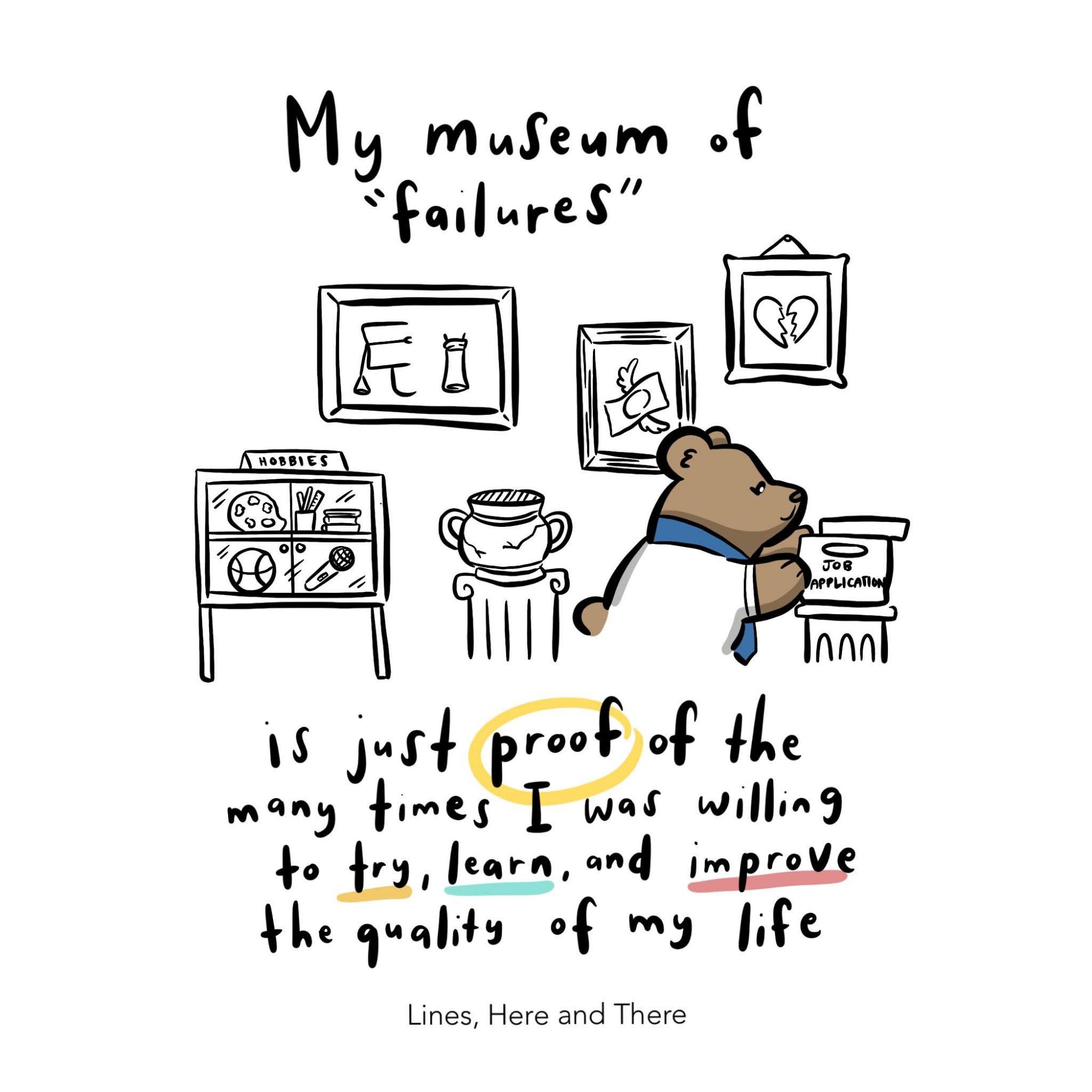
PhD Top Tips on Managing Your Supervisors: Love em or hate em, there’s no completion without them

I posted a couple of weeks ago about application tips when applying for a PhD. In that post, I talked a bit about researching the supervisors in order to be able to talk about their work and department. In all honesty, though, there is a much stronger reason to start early on understanding your supervisor. They can make or break your experience during your PhD.

It’s no secret that I did not have the best supervisory experience during my own PhD, and there are plenty of reasons for that, but one of the main ones was that I didn’t start off understanding enough that there is a requirement to curate and nurture the supervisor – student relationship. I didn’t know what questions to ask, what clarity to seek, or frankly even what was normal. The relationship therefore broke down, and I retrospectively had to unpick why. Having learnt the hard way, and now having sat on both sides of the table, I thought I would share some thoughts about how to get the most out of your relationship with any academic/educational supervisor, PhD or not.

Do your research

As I’ve said, doing your research should probably start before you even have the post. It’s worth reaching out and speaking to previous and current students so you can to get an idea of what their experience has been. If you are already in post, it’s still worth speaking to people to find out as much as you can about what kind of supervision style they’ve experienced. Every supervisor is different, just like every leader is different. The more you know, the better placed you are to understand what the dynamics of your relationship might look like, and importantly whether there are any possible pitfalls which you could then address early, preventing then becoming something more. In this one, knowledge really is power. So get as much knowledge as you can as early as you can.

Expectations matter

We all enter relationships and situations with expectations, but too often, these are internalised and therefore opaque to both ourselves and others. Not getting these into the open where they can be discussed and expectations clarified can be a key reason for relationship breakdown, at least it was for mine. One of the reasons I think this happens is because, as students, we are often entering a completely new arena, and so we just don’t know the unwritten rules. I’d like to think that most supervisors know this and will therefore spend time at the starting point of the relationship to talk through what their expectations are. I’ve previously written about the use of learning agreements to help this process. Sadly, I’m all too aware that this is often not the case, and supervisors, who live in this different world, often forget that others don’t come with all the information they may need to deliver what is expected.

Get to know their work and working patterns

My inbox is the place where emails go to die, and my diary is a horror show. These are facts. No matter how much I try to keep up, I get hundreds of emails every day, and to be honest, I can’t. If you only send me a single email, it will get lost. If you try to get a same day meeting with me, you will fail. I therefore ask that, if it is important, you email me three times and make it high priority. This vastly increases the chance that I will see it. If you want to see me every 2 weeks, then let’s get a regular slot in, which will move, but at least it’s there. All of this is not because I don’t care, it’s just the only way I can manage multiple competing priorities. Everyone is different. You will have your own way of working, as will your supervisor. There is no point in being passive in the process and miserable about the outcome. If you have needs, you have to actively work to find the best way that they can be met.

Be aware that you are the one driving your work

One of the largest changes when you start a PhD is that it is YOUR PhD. You are in the driving seat. A PhD is effectively a job, and the switch up to the responsibility sitting with you can be a challenging shift. No one is policing deadlines, and in fact, you are the one that should be setting them. No one is prioritising your workload. You need to work out, with support, what needs to come first at any given time. The lesson about not being passive is important across all aspects of your PhD. You are no longer in a taught process. A PhD is effectively an apprenticeship in research, and like in any job, there are expectations placed on the employee in terms of delivery and performance. The earlier you can come to terms with this the easier your pathway will be.

Identify peer support

All of this change can make the start of any PhD stressful, and you will need to find sources of support outside of your supervisor.  Even if you have a great relationship with your supervisor, even if everything is going well, there will be times when you dislike them or part of your PhD. In these circumstances, you need to have safe spaces to vent and seek support alongside benchmarking from others. It’s important to invest some time early on to build wider relationships with your peers and, if in a small lab, potentially seek out groups or networks. These will stand you in good stead during your PhD, but also in your future career, as learning to build networks is a key skill to be invested in.

Know your benchmarks

Everyone enters a PhD at a different place. The same is also true for PhD projects, some are more developed on day one than others. It can be hard therefore to work out how you are doing, especially if you haven’t established supervisor expectations. There are some useful tools out there to help. Every University should have some form of pathway which lays out the dates and timelines that PhD students need to deliver on, from reporting and upgrade to final submission. These are invaluable in making sure that you are on track and on target for your work. Projects will often have individual timelines, if they are grant funded, that you need to maintain. Grant funded projects will usually have milestones, reporting, and dissemination deadlines, which need to be kept to. It is worth noting that some of these things mean that it is not always so meaningful to benchmark against your peers. I would always advocate using them as a source of support rather than self judgement, as you may not be comparing like with like.

Manage your relationship

All relationships require work. All relationships, especially ones that last years, will go through peaks and troughs. Your relationship with your supervisor is no different, and because of this, communication is key. This sounds easy enough, but sadly, it is often not. Finding the balance between being that student who needs supervisor input into ever thought/decision, meaning you don’t find independence, and being that student who never speaks up and therefore ostriches on issues, meaning that issues don’t get addressed, is not an easy one. It requires the pair of you to build trust, and that is a gradual process. A lot of this is helped by laying the groundwork and having open discussions about expectations. Being open to supportive feedback, asking questions, and owning your work by doing things like reading and coming prepared to meetings goes a long way towards making these relationships flourish. Also, being transparent about challenges and identifying issues early can mean that both sides are facilitated in addressing issues. Your supervisor can’t help if they don’t know.

Friendly is not the same as friends

I’m going to say this here, being friendly is not the same as being friends. We all hear great tales of supervisors and students being best friends. I’m sure that happens after the PhD is over, but I’ve never known it happen during. I’d like to say I get on really well with most of students. I’m invested in them. I care about them. I will happily buy them a beer in the pub. We are however not friends. My wellbeing is not on them. It is not an even relationship. I am there to support them, but I am also their boss. In a friendship, if we went to the pub, my friends and I would take turns buying in rounds and discussing our problems.  I’m pretty open about my work based challenges, but I don’t expect my students to take them onboard. I don’t ever expect them to buy me a drink. I personally don’t think that’s how these things should work. When they are done being my students, when I no longer have responsibility for them, then the relationship can become more bi-directional. Until then I have a duty of care which means I should put them first.

Know the rules

These next few ones are for if, like mine, your relationship takes on a less healthy trajectory. The first thing I learnt was that I really needed to understand the rules. That’s both the formal written rules and the informal social academic rules. It’s only by knowing these that you can judge whether the breakdown is precipitated by a valid breach. If you don’t know the rules, how can you tell if you’ve broken them? If you have broken them, then we all need to act like adults, hold up our hands, and seek forgiveness whilst taking corrective action. The other reason to know the rules is that you may need the information.  My primary supervisor refused to sign off on allowing me to submit my thesis. As I’d done my research, I knew that I didn’t need supervisor sign off, it just meant I couldn’t sue the University if I failed. Hopefully, you will never get to a similar point, but knowing your parameters will never do you any harm. This one is back to knowledge is power, and so gain as much of it as you can.

Keep up your end of the bargain

It takes two to tango, and knowing the rules won’t help if you don’t keep up your end of the bargain. Grant deadlines, if you are externally funded, are often immovable, and so if you are required to get data or reports out by a certain date it can hold ramifications, not just for you, if you don’t deliver. Even if you are not grant funded, you need to deliver on the agreed timelines you made with your supervisor. This may all sound really simple, but you would be shocked at the number of students who don’t seem to grasp this fairly straightforward concept. PhDs are not like undergraduate work where you can ask for an extension on every piece of work or merely have an assignment capped. This is your first job in research,  and like any job, if you keep missing deadlines, then eventually you will get fired. I had one PhD student who kept missing all deadlines because they believed no one would ever be allowed to fail a PhD or would be removed from the course. I had to explain to them that this was not true and show the mechanisms that existed to do just those things. After which we got on much better and they re-focussed on the task in hand. It’s obviously better if things don’t reach that point before being addressed, and so it is key both sides bear in mind the social contract they have made.

Have a plan B

If academic life has taught me anything, it’s that you should always have a plan B, and I think it’s a sensible approach no matter what stage you’re at. Hopefully, you will never need it, but strategic thinking is a good skill to develop regardless. You should always have more than one supervisor, even if the others have variable involvement. If you can, it’s always worth trying to include them and investing in developing relationships with them as well. They can provide a counterpoint view on your work, and they can help with benchmarking your relationship and expectations with your primary. Your secondary supervisor is also likely to be involved at times, such as your upgrade viva, and so understanding their expectations can be really helpful. In the unlikely event that your relationship with your primary is not great, they can also take on a mediation role to help both sides gain clarity and hopefully move forward. If you hope for the best and plan for the worst, you should have all sides covered and hopefully have the most fulfilling experience possible during you PhD.

Finally, it’s worth remembering that supervisors are people too. They have good days and bad days. They have personal stuff going on that can impact their mood and decision-making. They will make mistakes and hopefully apologise for them. They will aim for perfection and always fall short. What I hope more than anything is that you will find a supervisor who wants and drives for you to reach your potential and who always has your best interests at heart. Sometimes, that means that there will be hard conversations, and sometimes that means they will push you, as they have faith in your ability to improve. I want all of my students to grow to be better than I am. I want them to know that I have faith in them even when they feel lost and can’t find faith in themselves. So do your research and find a supervisor who works for you and the way you work. Find that supervisor who will make you better than you could be on your own.

All opinions on this blog are my own

If you would like more tips and advice linked to your PhD journey then the first every Girlymicrobiologist book is here to help!

This book goes beyond the typical academic handbook, acknowledging the unique challenges and triumphs faced by PhD students and offering relatable, real-world advice to help you:

  • Master the art of effective research and time management to stay organized and on track.
  • Build a supportive network of peers, mentors, and supervisors to overcome challenges and foster collaboration.
  • Maintain a healthy work-life balance by prioritizing self-care and avoiding burnout.
  • Embrace the unexpected and view setbacks as opportunities for growth and innovation.
  • Navigate the complexities of academia with confidence and build a strong professional network

This book starts at the very beginning, with why you might want to do a PhD, how you might decide what route to PhD is right for you, and what a successful application might look like.

It then takes you through your PhD journey, year by year, with tips about how to approach and succeed during significant moments, such as attending your first conference, or writing your first academic paper.

Finally, you will discover what other skills you need to develop during your PhD to give you the best route to success after your viva. All of this supported by links to activities on The Girlymicrobiologist blog, to help you with practical exercises in order to apply what you have learned.

Take a look on Amazon to find out more

Beware the Lure of the Anxiety Rabbit Hole: Having the self-awareness to recognise when your thinking lacks clarity

April is always an interesting time for me and my mental health and well being. I’ve written a couple of posts as to why, but the main thing to know is that due to bereavement, I am probably not the most resilient version of myself at this time of year. In addition to this, I have a tendency to be pretty self-critical, which probably doesn’t help.

I’ve written before about shame spirals and how these play out for me. Shame spirals, for me, tend to be discreet events linked to a stimuli. In contrast, anxiety rabbit holes tend to be protracted. They build over time and tend to come to a bit of climax. They are driven internally by my state of being, although external stimuli can often pile onto what is already a pretty hard time. If I get into full-on ‘rabbit hole’ mode, it’s not pretty, not for me, but also for those around me. My husband refers toย  these periods as me ‘developing bunny ears’, and it’s a pretty accurate description. I’m like a rabbit in the headlights, and every action, or lack of it, makes the anxiety worse. I’ve never really talked about this outside my family, but in the hope that others find it yourself I thought I should talk about what it looks like, for me, and how I’m learning to manage it better.

Know what your rabbit hole looks like

Everyone’s anxiety response looks different, feels different, and impacts differently. Mine hits with a massive decrease in confidence accompanied by an unhealthy dose of paranoia about how I’m perceived by others. Do I work hard enough? Am I committed enough? Am I good enough?

These particular drivers mean that I start to try to manage them by working harder, agreeing to more to justify my existence and holding myself to an even higher levelย of account. Sounds like it’s not a problem, right?ย  The problem is that the more I do the less I’m managing the cause, which is usually linked to tiredness or physical symptoms in my case. Pushing harder, driving harder, makes these symptoms worse until before I know it, I haven’t had an evening or weekend off for weeks and I’m on the verge of both physical and emotional collapse, as I still feel bad at my job and I have nothing else to give and yet I can no longer ‘push through’. At this point it really is a no win situation. The very thought of not working creates panic attack levels of response, but I also can’t work any harder or anymore. Just stepping away may mean I can be found crying over a laptop. It’s not pretty.

Become familiar with your warning signs

The ideal is obviously to recognise early in the process that the descent into the rabbit hole has begun. Sometimes, this is easier than others. Sometimes, the descent is slow and steady with a fair amount of warning signs.ย  Sometimes, it happens so rapidly that I’m at the bottom of the pit before I’ve even recognised I was falling. Some of that variability is linked to triggers and things that put me in a more vulnerable position, either physically or mentally. I sometimes find it hard to work out why the pattern of longer days and weekends occurs, whether it is the lack of rest that drives the anxiety, or the anxiety is what comes first, either way I need to recognise it’s happening. I think the other big sign for me is that I start to lose the ability to have a good nights sleep due to waking up and being faced by waves of anxiety linked to lists of things that I haven’t done, or reflections on conversations. None of which can be dealt with at 3am, and are therefore an unproductive use of time and emotional capital. Exhaustion then becomes a state of being, and any form of clarity or rational thought process becomes increasingly difficult to achieve and performing an intervention becomes required.

Identify your triggers

I’ve said that some things can get me into the hole faster than normal, knowing what those triggers are, for me, has been key to managing my approach. Specific triggers for me can be linked to:

  • Anything bad going on with my family, as this a direct short cut back to unresolved trauma linked to my sister
  • Health spirals, sometimes the auto immune responses I experience make sleeping harder and can generally make life uncomfortable
  • Mistakes or anything that makes me come up against my perfectionist tendencies
  • Attacking critiques, we’ve all been there, sometimes criticism is constructive, sometimes less so

All of these things can make it more likely that I’m going to respond in a less robust way to the general pressures of life than I would normally hope to. I therefore find being aware of these triggers a useful way of being self-aware linked to my anxiety levels and my responses. Everyone will have their own, I suspect there are some similarities, but these are mine.

Beware of poking the bear or rabbit in this case

There are always people out there who can help or hinder. I am super aware that when I’m in an anxious place there are definitely people who can accelerate my descent. Those people who take some joy in pointing out your flaws, who talk about how they don’t have ‘these issues’, or who take advantage of your anxiety driven need to agree to stuff to give you as much work as they possibly can. There are also those who will try to help by encouraging you to talk through what’s going on, but whilst doing so just draw focus onto the thing that is the source of your anxiety, whether it’s actionable or not. I personally need to step away from these high risk encounters when it’s not going well in order to have a little self preservation.

Be aware of how your behaviour impacts others

Having said that others can make the scenario worse, it’s also important to own the way that your behaviour may also impact others. I can get pretty short with people not responding in, what I have determined to be, a timely manner – as I can feel that everything is time critical even if it’s not. I can struggle to disengage and let others own their tasks, or properly delegate, which can muddy the waters or lead others to believe that I don’t have faith in them, which is definitely not the case. I can also make things worse for my colleagues by setting an example, or standard, of being constantly available, which is neither good nor sustainable. It can then appear that I expect others to do the same, and worse than that, it can mean that when I return to a more normal rhythm or routine, they get expected by others to pick up the slack. None of these things are intentional, but they are true none the less, and so being aware of how our responses impact others is key.

Have mechanisms to help you cope

So, having talked about how I end up in the anxiety rabbit hole and the less pretty consequences of it, how do I cope and manage myself? The first thing is, I have a couple of solid go to members of friends and family, and I have a very low bar for asking for help. This may mean that I need a bench marking phone call with the amazing Captain Claire about whether my responses are appropriate. I also have a wonderful team who I will sometimes message and ask for a second opinion on how an interaction went that I am replaying. I will also go to Mr Girlymicro and confess that I need a weekend completely off with no work and ask him to support me in being able to do so. To check in with me when he sees me opening my work laptop, or opening a blog post to write, to help me in stepping away. I also have a world of bad reality TV lined up which is sufficiently distracting but doesn’t require me to actively care, that enables some of the more challenging parts of my mind to be occupied doing something else.

Try to set yourself some rules

The hard bit comes when I’m in such a bad place that I have to set rules. Rules like, I will log off at 5pm, or that I won’t work at all over the weekend, that I will book leave and step away entirely. Sounds easy right? When I’m in the depths of the hole it’s anything but. If I could just get to the end of the inbox I would feel better. If I could just complete this task the anxiety would go away. It’s false, it doesn’t actually work that way. It just leads to the next thing and then the next thing, as it’s actually making the situation worse. It’s like when I have a skin flare, the scratching helps for the period I’m scratching, but the situation once I stop is oh so much worse. The only solution is to stop scratching and let it heal. The same is true for using work to manage my anxiety, it doesn’t fix it, only dealing with the root cause does that.

Understand that it will be uncomfortable

The long and short is that the crawling out of the hole is just incredibly hard and uncomfortable. A couple of week ago, as 5pm on a Friday, I knew I was in such a bad place that I had to stop as I was exhausted and needed some proper rest to be in a better place. At the same point closing that laptop screen was an act of willpower. The anxiety spike caused by walking away, when your brain says that everyone will be let down because you are failing to be on top of things when you do, is so hard. Even when the rational part of your brain knows that a) none of the way you are seeing the world is currently real, b) that everyone else is logging off and there is actually nothing to be accomplished by persisting and c) by working every weekend you are setting yourself up to never be able to have a weekend off as everyone will assume you are always around. It is uncomfortable to step away. It feels like you are making it worse, not better, but it is the only way out of the hole and the only way is through.

Know that you will get through it

The one thing that always helps me more than anything else is that I know that I have been here before and I know that I have come out the other side. It is not fun, it is not something that I like about how my brain works, but it is the reality of living with the mind I have. I have the best family, friends and colleagues who are supportive and understand that I am not always a bunch of roses to work/live with. I think they all know however that I strive to be better. Part of that striving is reflecting and building self awareness so that you are better able to cope in your own skin. Learning to love ourselves for the reality of who we are, warts and all, is a key part of life and happiness, and the sooner we accept the need to be as kind to ourselves as we are to others, the better our lives will be. So make sure you have a sign above the entrance to your rabbit hole so you know where it is, build in a ladder to help you climb out when you fall in, and importantly, if you find yourself there, more than anything else be kind.

Image credit Kate Rennie

All opinions in this blog are my own
Reputation is Everything: Why reputation matters & how reputational attacks can create shock waves

It’s not something that comes up in conversation on this blog very often, but I’m a bit of a swifty. Watching the Taylor Swift in the Reputation concert video is a happy place for me, I often watch it on my commute when I’ve had a challenging day, and the music forms a staple of my ‘get psyched’ mixes, along with a fair share of rock and big band music.

Now, for those of you who have yet to discover this particular joy, there is a speech she makes linked to why we worry about how we are perceived and the impact of having a ‘bad’ reputation that really lands with me:

“For example, having a bad reputation in our mind could get in the way of finding real friendship, real love, real acceptance, people you really fit in with because you think what if they have heard something about me that isn’t true, what if they’ve got these preconceived notions about me that they heard from gossip and then they never want to meet me and then we’ll never know what could’ve happened,” she continued. “And I think that’s why some of usโ€ฆmeaning if not most or all of us are sort of afraid of having a bad reputation because we’re so scared of something fake, like gossip, or a rumor about you or a name you got called getting in the way of you finding something real.  And so, when it comes down to that fear and that anxiety, it’s just all really delicate,”

Taylor Swift – Reputation Tour 2018

There are many forms of reputation:

  • Personal
  • Professional
  • Organisational

I think there are a couple of reasons why anything that impacts reputation is so powerful. The first one is that both trust and reputations take a long time to build and can be destroyed in the blink of an eye, depending on the scenario. Another is that, I believe, at the core of our being most of us want to be liked, and having someone affecting how we are perceived can directly impact on that. Finally, it is difficult to know how to respond to situations that influence our reputations.ย  We say ‘stick and stones may break my bones, but words shall never hurt me’, implying we should rise above it, but we also say ‘no smoke without fire’, implying there is a burden of proof upon us to correct what is being said.

I think, depending on who you are and the circumstances, the impacts on different types of reputation may not feel equal. Now, I went to a girls school, and one of the reasons I’m glad to no longer be a teen or in my twenties is because I’ve learnt and grown so that personal reputational attacks in general have a lesser impact on me. I would love for everyone to like me, but I know the reality is that this will never be the case. Although often highly impactful, personal reputation attacks can often be dealt with by removing the individual from your social circle. You often have the choice to interact or not, and the other members of your circle often know you well enough to not listen too closely.

What I have found more challenging are circumstances that impact my professional reputation. For a self declared people pleaser, like me, the thought that someone could lead you to be a scenario where you were perceived to be difficult, mean, or destructive, is particularly stressful. This is doubly so when you have a very particular set of values, about being collaborative, supporting others, opening doors, and being patient focused, and the commentary indicates you are anything but.

There’s a movie I love called Gossip, most people have never heard of it. It starts with a group of college students running an experiment where they create some untrue gossip and then track how far it spreads, how it evolves, and the impact. Needless to say,ย  it doesn’t end well. Now, I’m as guilty of gossip as the next person. We all want to feel in the know and to almost feel special by knowing something others do not. There’s a bunch of research about why this is. Gossip in real life, just as in fiction, isn’t harmless however.

Although gossip is bad enough, I feel there is also a significant difference between gossip and the escalation to deliberate character assassination or attempts to damage the reputation of another person. The weaponisation of reputational attacks, or even the threat of them to gain leverage, can be one of the most stressful things I’ve encountered in my professional career. Partly because they tend to come as a complete surprise to those targeted, but also because it’s difficult to know how to respond whilst in the midst of it. I’ve seen this happen to others and been a (somewhat) minor victim myself. Having hopefully come out the other side, I wanted to capture my thoughts for anyone caught in a similar situation in the future.

You may not escape the fallout

The first thing to say is that I am always a fan of taking the high ground and not engaging. Engagement can just end up adding energy to the situation rather than letting it burn out. It is important to note that taking this sensible higher ground approach may not mean you escape reputational damage, however, at least in the short term. You need to be aware of the fact that a time may come when you do have to address what is happening, and you may need to have a plan for how you will do so. Hopefully, it will never get to that point, but like with many things in life, preparation is key.

You have to remember the long game

One of the reasons to start out with a policy of none engagement is that most of the time, this will just turn out to be a blip and nothing more. Something you will look back on in a few years, possibly sigh, but see as a learning experience and nothing more. Professional careers span decades. Sometimes, it’s very easy to be caught up in the now rather than seeing it in that context. No matter how bad it feels in the moment, you need to ask yourself: how will this feel in 6 weeks, 6 months or 6 years? Very often, with the distance of time, it won’t feel anywhere near as bad, and that is the context you need to hang onto.

You have to faith in those that know you

It can be pretty shocking when you first hear reports of things being said that could impact how you are seen by others. It can be easy to feel like you should rush in and respond, but as I’ve said, for many reasons that is unlikely to be the best option. During what can be an unsettling time, it is important to remember that nothing really has changed. You have had professional relationships with many people ahead of this moment, relationships built on mutual trust and respect. These relationships haven’t changed, and you have to have faith in those people who know you and know the value you hold. Never let a single moment devalue everything you have already built.

You have to believe in the system

We work within systems, systems that provide individuals with routes for escalation and complaint. It’s incredibly important that everyone has the opportunity to feel heard. Everyone has their own perception that is unique to them, and those perceptions are real, even if they don’t match our own. This can be hard to accept when that variance in perception means that we feel attacked, or worse than that, if it feels that there are other drivers behind the responses that mean they are less genuine. The harsh truth is that it doesn’t matter. The system is set up, crucially, so that individuals can pursue making complaints, and this is an essential part of parity and fairness. If actions are taken that are erroneous, you have to believe that the requirement for evidence and facts count. That truth will out. Even if it takes a little time.

You have to try and not get sucked into the whirlpool

Whilst rumours/gossip/complaints are swirling it can be easy to get sucked into the drama and the emotions of it. It can be easy for those voices to be the voices that you carry with you and for you to only hear them in your head, not the ones of those that support you. To focus on the negative, the stress and the fear that comes from a lack of control. It’s hard, but none of this is useful to you. If you can’t find a way to put it in a box and distance yourself from it, it will be all you see and experience. This can really start to impact how your interact with the rest of your working life, or even how you feel outside of work. You need to make a deliberate effort to not engage with the whirlpool and to maintain your sense of self.

You have to control your own responses

Part of not engaging is making sure you retain what control of the situation you can. In the end, the only thing we can ever truly control is how we respond. You have no control over how others perceive you, you have no control over their actions, or what they say. You can absolutely decide how you react to that stimuli. It is all too easy to let the fear associated with being unsettled lead to responses that are seated within that fear, or to appear angry and let that drive our interactions. Those kinds of responses aren’t helpful however, in fact they just add fuel to the fire. You have to be aware, that if not careful, you can end up with a self fulfilling prophecy if you lose control, becoming what you are accused of.

You have to keep being authentic

For me, some of the worst reputational attacks, are those that attack us around those values that we use to define ourselves. Calling us self interested, when our focus is on parity and fairness, calling us unsupportive, when we believe in lifting others. These may not seem so significant in the scheme of things, but when those things you prioritise and use to define yourself, are the things that are under attack, it can feel incredibly personal. From what I’ve seen, responses to this tend to go one of two ways. First, people stop undertaking some of the associated activities, as they fear further attacks or putting their head above the parapet. Or, second, they change the way they do it, through anxiety or fear. Now, I’m not saying changing is bad, but I think it needs to be based on genuine reflection, rather than in response to negative emotions. I think stopping, in some circumstances as a temporary measure, is a wise choice, but it shouldn’t be the long term solution. It’s important to not allow circumstances to change who you are and your values.

You have to find your support systems

All of these aspects can be highly challenging, and to be honest you are not going to be able to navigate this on your own. You will need support, you will need help to undertake reflection, you will need an external view point to aid you to sense check and evaluate responses. Feeling personally attacked can really throw off your sense of inner balance, and you will need other people to help you find and retain the sense of self that you need to traverse what is happening. I think you need to find people from your professional context, as well as your personal, so that you have people who know you, all of you, as well as people who know the players and the landscape in which this is all playing out. It can be easy to want to ostrich, whereas, in reality, what you need to do is use those connections and networks you have to be able to understand what is really going on. Word of warning here, I am not suggesting you go out and start talking to everyone about what is happening, or the person who is doing the talking, that would be as bad as the initial reputational attack. I’m talking about having a few key supports where you can safely and openly talk about how you feel and what’s going on.

You have to make the sensible choices

I’ve said to not engage, but I’m not saying to be foolish and ignore what it happening. I’ve already talked about the fact that you function within a system, with processes and requirements. The first thing you should do is really learn about what those processes look like. What are the requirements upon you, what kind of evidence may be required. Have you encouraged reporting/escalation? Have you referred to occupational health? Have you offered alternative lines of reporting/management? Have you spoken to your line management or HR to confidentially gain advice? You may not need to do anything complex, it could be as simple as recording meeting content in emails, or not meeting 1:1. Seeking advice however is key, as these scenarios can also be complex, dependent on whether the person is in your organisation, a direct report, a peer, all of which impacts the information you need. You need to know enough to make sure you are making sensible choices to protect yourself and that you are acting proportionately and appropriately.

You have to check what is perception and what is reality

It can be easy, when you feel like the rug has been pulled from under you, to lose your sense of what is real. The resulting self doubt can make you question every interaction you have. Paranoia can set in and it can colour the way that you see the world. It can also colour your perceptions of your interactions with those associated with the commentary that is currently ongoing. You can’t let this happen. You need to find strategies to manage this, otherwise you will read negativity into everything. This is another reason why being sensible and not having 1:1s, or having email confirmation of any discussions, can be helpful. You can get a neutral opinion that gives context to interactions, and written communication can be helpful to ensuring shared understanding. As the emotions can spill over into other spaces, you also have to check yourself more widely. If you are like me, you can be sent into a spiral of being hyper critical about yourself, and this can colour your perceptions. Awareness is part of the challenge, and if you can become aware of how you are responding, and how that might impact on the lens through which you are seeing your interactions, you can start making proactive steps to adjust appropriately.

When it is over you have to let it go

You will get through this situation, you will come out the other side. No matter what the outcome, this isn’t forever. It can leave you with a certain amount of trauma, or a changed view of the world, or level of trust. That’s understandable, I get it, depending on what has happened the personal cost can be significant, even in just emotional impact. The thing is, despite recognising this, you have to let it go. You need to take the learning, and grow, without letting it fundamentally change who you are. You can’t become less trusting, or have less faith in people, there wasn’t enough of both of those to start off with and the world can’t afford for us to have less. You have to move on, wiser, but fundamentally unchanged. So deep breaths, take one day, one hour, or if needed one minute at a time. Keep the faith, and the world will turn out OK.

All opinions in this blog are my own
Greetings from the Laziest Girl on the Internet: Living with a mind that won’t stop in a body that doesn’t want to begin

I woke up at 5 this morning, the alarm wasn’t set to go off until 6:15. I am desperately tired and in need of more sleep. Instead of allowing me this simple luxury my brain decided to a) run through an experimental protocol, b) draft a paper I need to write, and c) plan a conference presentation. Sadly, my body wasn’t in alignment with this and so none of it has been written down or recorded anywhere. I am therefore exhausted still and have no concrete outputs to balance it out. I’d like to state this was a one off, but it is in fact my life and daily existence.

People often ask me how I manage to ‘do’ so much. The sad fact is that I really don’t think I manage to ‘do’ very much at all. I’m always a chapter behind on my ‘to do’ list. That combined with the fact that I only manage to get as much done as I do because Mr Girlymicro keeps our lives together by making everything happen at home, means that I thought I’d write something that talks openly about what the reality of having a mind that just doesn’t stop looks like.

I only have 2 speeds

I think those people who think I achieve a lot only see me in ‘doing’ phase. Running around spinning multiple plates at the same time and being totally ‘eyes on the prize’ focused. The other side to this is that when this Duracell bunny phase is over, I become the sloth girl who inhabits the sofa and doesn’t contribute to house work or the want to leave the house. The challenge is that work generally gets the Duracell bunny which means there is very little left over for real life. Hence Mr Girlymicro deserving the husband of the year award 15 years running, and the fact that I need to find a way to split my energy better.

My mind can’t switch off

One of the reasons for the enormous to do list, is that although my body switches off, my mind really doesn’t. I would really love it if it did. Today is Easter Monday, it’s before 9am, and I would really love to be able to sit and chill out. Instead I’m writing this blog as my mind is so full of stuff that this is my equivalent of relaxing as it enables me to focus, and thus relax a little. I don’t know if this is how everyone lives? I really don’t. I have so many thoughts, I remember so many things I should have done, things I should be doing. My mind can make my life a less than relaxing existence. Lovely Mr Girlymicro has brought me some Lego for later though so that I can use it to help, as the process of doing something whilst watching a movie or listening to an audio book, is basically my relaxed happy place. It’s important to have a strategy when my head is spinning out of control.

I find it very uncomfortable to only do 1 thing at a time

This leads me onto another thing. I need to be doing at least 2 things at once to feel comfortable. I’m writing this blog whilst watching CSI on Netflix, later I’ll be putting together Lego whilst enjoying a movie, I even need an audio book to sleep. One of the reasons I’m so happy to have my little bathroom office is that I find it really challenging to work in silence and so it means I can have music or a book running as background audio. I really find it helps me focus. The advantage to this way of living life is that does it enable me to plan talks in my head whilst doing other things, or to plan a text book or blog outline whilst writing a policy. This adds to my ‘to do’ list but also helps keep my head above water when I’ve made too many commitments.

I’m physically lazy and don’t pull my weight

For all that my mind is active I am physically lazy. I always joke that I was born to lounge on a chaise lounge with a book in my hand surrounded by my library with someone to bring me Darjeeling on request. I know that I must be challenging to live with. I get so focused on things, that without adult supervision, I have a tendency to forget to eat or drink, one reason that I am much healthier when I work from home. When I work on-site I tend to come home in a ball of flames, exhausted by my working life and physically broken, and therefore contribute negligibly to doing any form of physical chores. I’m working on it, but saying that, whilst Mr Girlymicro is working upstairs here I am writing this blog instead of tidying the kitchen. I did say he deserves awards, and I am a work in progress.

My mind doesn’t let me rest

One of the other factors that contributes to my physical laziness is that I am so tired all the time. I rarely get a decent nights sleep. If I wake up between one and three to go to the bathroom, my brain kicks in as I’ve had just enough sleep. It’s then fully engaged, whilst my body remains sleepy, with things I should be doing or random thoughts. The same is true even if I get back to sleep, I rarely if ever manage to sleep to the alarm. I do all the tips that everyone talks about, I keep a notebook by the side of my bed, I make notes into this blog so get things out of my mind, but I find switching off really hard. Some of this is because I should probably just take some painkillers/antihistamines, to manage other things, but some of it is definitely the fact that my brain just doesn’t want to play normal.

I am a starter not a finisher

Another side effect of having a mind that is constantly full of ideas, is that it can be challenging to bring any of them to completion. I am very much a starter not a finisher. Finishing anything requires a lot of active effort, otherwise I have a tendency to get distracted by the next good idea that comes along. I think it’s one of the reasons that over the years I’ve become slightly obsessed about keeping my promises and deadlines if I’m given them, even if it means I work weekends and evenings, as I’m hyper aware of my natural tendency to drift. If I make a commitment I can be pretty over the top and harsh with myself about delivering on time. As a people pleaser, this has gotten me into trouble in the past due to over committing to too many things. There have been a lot of very late nights and lost weekends. These days I’m trying to not over commit, whilst using this particular fear of failure to ensure that I still finish things on occasion.

I find focusing on being in the moment incredibly challenging

I am aware that some people are able to really ‘be’ in the moment. When they achieve something, when they have successes, they are able to really be fully present in the moment and enjoy the depth of emotions that that presence achieves. Don’t get me wrong, I enjoy the moment, but my brain is always onto the next thing. I’m always planning and looking forward. In many ways this is a really useful trait, but it means that I’m pretty rubbish at stopping and smelling the roses. I think this is another contributor to why I find it so hard to relax, as even when I’m having a lovely time I’m planning for the next thing. When I’m on holiday, I find it hard not to be planning for how I need to address work when I get back. When I’m at work, it’s always about how to keep us moving forward, and what needs to happen next. I need to make more run for tea ๐Ÿ™‚

I spend my day being reactive when I would love to be visionary

My tendency to plan is one of the reasons that I find the current state of the NHS and my role within it so stressful. I want to be planning how to make us better, but because we are still recovering from the pandemic, even if the outside world has moved on, I spend a lot of my time still in reaction mode. It’s one of the reasons that research is so very important to me. In that aspect of my role, as well as in education, I feel like I can be focused on how to make things better and move things forward, whereas that can be more challenging clinically. It is why I love and value the different aspects of my role, education, research and clinical, as they balance each other off for the different needs that I have personality wise. It’s why my role is perfect for me and I’m so grateful that I have been able to develop it the way I have.

I feel I should be doing so so much more

All of this leaves me with a continuous general underlying feeling that I should be doing so much more, that there is so much more to do, and that I need to be better. There’s a lot about this which is good, especially when I was training and it could be channeled into ticking off the necessary boxes. Frankly, it was also easier to work full force and recover when I was in my 20’s and 30’s. I don’t think I had the self awareness, or self reflection skills I have now to understand my drivers in the same way back then. I also don’t think I had the self forgiveness to handle my lack of perfection and therefore be open to change. Now, although looking in the mirror and seeing my flaws can be challenging, it also inspires me to be better and I try to treat myself with the kindness I would offer to others. All traits have a light side and a dark side. My brain means that I am more physically broken and can make the lives of those around me harder by not contributing as much as I should. It also enables me to create change and make the lives of others better. It has been the enabler and the driver to allow me to reach where I am today, and to do things like start this blog. Although peculiar, it is of more benefit than it is harm, and after 44 years in each others company, we have finally reached an en tant cordial, where we still strive for improvement but also live in acceptance of the reality of what the day to day looks like. So my advice, learn to love yourself for who you, whilst striving to be better.

All opinions in this blog are my own
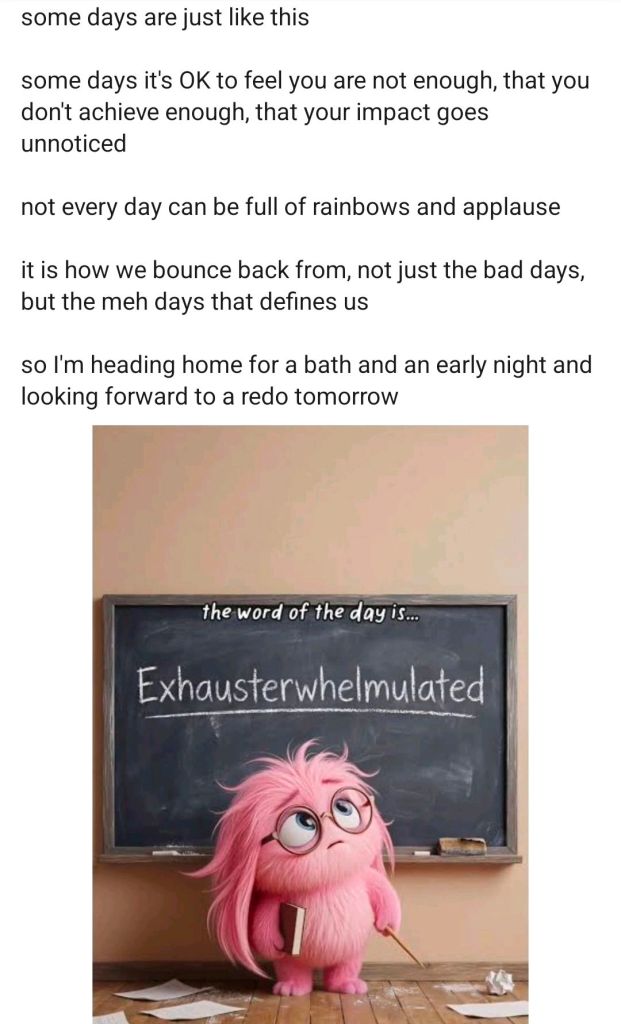
Taking the End of Year Hype with a Pinch of Salt: Understanding the social media declarations of successes probably come with undeclared context

I’m not a massive New Year person. I talk a lot about how much I love Christmas, but when it comes to New Year’s Eve, I kind of find putting so much pressure on a single night a bit much for me. That said, I do understand the benefits of using it as a moment to reflect, celebrate, and recognise the progress we’ve made. We all know that I’m a fan of ring fencing some time for reflection, I think the benefit and challenge of New Year is that it feels like the whole world is doing it simultaneously and occasionally the messaging that comes with that can be hard to digest and process.

I think it can be especially challenging if perhaps the year hasn’t gone so well or if you are going through something hard just as the year turns. The plethora of messaging out there, whilst laudable, can easily send individuals into a spiral that adds to what they were already dealing with. So, this year, instead of adding to that burden by merely posting my highs, I thought I would post a blog that I hope will remind anyone struggling to read those posts for what they truly are, nice words with limited context. I thought I would also throw in a few thoughts on how I work to process them when the world overwhelms me. Happy New Year, and welcome to 2024!

New Year is an arbitrary marker

The first thing I want to be clear about is that New Year is actually a completely arbitrary marker. There is nothing that states that this is the best time for you, as an individual, to reflect. January is cold and dark, and depending on how you feel about Christmas, it can come after a time that has already been emotionally challenging. It may not, therefore, be sensible to think you have the bandwidth to undertake some true reflection at this time. I see the world differently when the days are longer and when I have access to sunlight. I feel differently about the world when spring hits, and my challenges donโ€™t seem as overwhelming. I thought I would start by saying, therefore, that there is no rule that you should do your reflection piece now. Choose a time that works for you. Be as individual as you choose and empowered to just opt out if you so wish.

Celebration and supporting others is important but…….

I’ve posted about how important I think it is to celebrate and support others. I think lifting each other up is key and an important way to give back. The way you do this doesn’t have to result in you damaging your own mental health and wellbeing however. You can choose to like posts as you scroll down them rather than fully engage and comment if you are having a difficult time. You can choose to have a social media break and know that at this time of the year, there will be plenty of others prepared to carry that particular load on your behalf. Sometimes, noting and filing away, so your congratulations or support comes later and individually, can actually be the more meaningful way to respond. My point I suppose is this, if you are in a difficult place there is nothing wrong with periodically prioritising your wellbeing.  This is different from choosing not to engage and celebrate others, and it’s OK, not that you need my permission or anything.

Not everything is as shiny as people say

One of the reasons I don’t fully engage with the hype at New Year is that I’m aware that people feel like they have to put something out there. Many people feel like they have to find something to shout about. I can, in many ways, see why this is helpful, as even if you’ve not had a great time, it encourages you to find the good. I actually feel this is a positive way to process if you are in the right space for it. If you are not, however, it can add undue pressure and make things worse. If you are in a place where you can’t do that processing, it’s worth noting 2 things. First, you will get to that place at some point. You just don’t need to get there in time for an arbitrary date that may or may not work for you. Second, a percentage of what you’re seeing posted won’t be from a place of true reflection and joy. It will come from the social pressure to post something.  There are a heap of people out there desperately trying to find something to say, and even more who are not posting anything as they are in the same space as you, they are just not visible in their absence. On this one, I would be aware of the absence of things as well as the presence of others and use it to help contextualise how your feeling.

Benchmarking against others is not always helpful

Betty, from the Tales of Female Badassery podcast, reminded me of a phrase today ‘comparison is the thief of joy’. It really struck me, today of all days, how true that can be. Benchmarking is a useful tool. It can inspire you, show us the possible, and help us plan the paths to our dreams. If you try to do it without full context or all the information, however, it can lead to negativity and self-recrimination. So, if you are tempted to fall down this particular rabbit hole, ask yourself……is this helpful? If the answer is no then it’s time to crawl your way back out into the sunlight and park it for later, you are probably either using the wrong sources or are not in the right head space for the undertaking. Your journey is yours, and benchmarking is a tool, not an outcome.

Life is multifactorial

You’ll see a lot of posts about professional success at this time of year. I wanted to take a moment to remind us all, however, that life is not just about work. When you are considering successes it needs to include not just work financial components but what happened in other aspects of your life. Did you take that drawing class you’ve wanted to? Did you finally manage to finish writing a poem? Did you get the kids to school in one piece this term? We are more than one thing, and our reflections should encompass all of who we are, not just a box that society deems we should tick off. It’s OK to bring all of you to whatever it is you’re doing, and that includes reflection and celebration. No one gets to tell you what matters and what is significant but you.

People are often not sharing the bits that didn’t go well

I have had an objectively amazing year. I got to go to eurovision, to the Kings Coronation, I got papers out, and won awards. All of which are brilliant.  The other side of that coin is that I’ve pretty much broken myself physically and mentally at points, to the extent that even writing this blog, which means so much to me, had to be paused for a month. Now, because of what this blog is, I’ve shared some of those challenges as well as the highs. You often don’t get to see both sides of the coin, however. Success often comes at a cost, and that is a conversation we often seem to avoid having. There is nothing wrong with deciding that it’s a cost that you are not currently prepared to pay. Even straightforward things, like exams, come with a financial and time penalties, and depending on where you are in life, you may say not now, or not ever. People are also always shocked when I talk about failure, as so many people don’t, but failure is a part of life, and it’s OK both that it happens and that we talk about it. You’ll see some people sharing their CVs of failure and this time of year, as well as their successes, and I think that that is brilliant and brave act, and something we should do more of.

You are on your own journey

Fundamentally,  we are all on our own path. No one will be on the same path as you. You have your own values, your own goals, your own history, all of which will be personal to you and impact on your decision-making. Celebrating rather than crushing that individuality under the weight of expectation and comparison is something I’ve found is key to my own happiness.
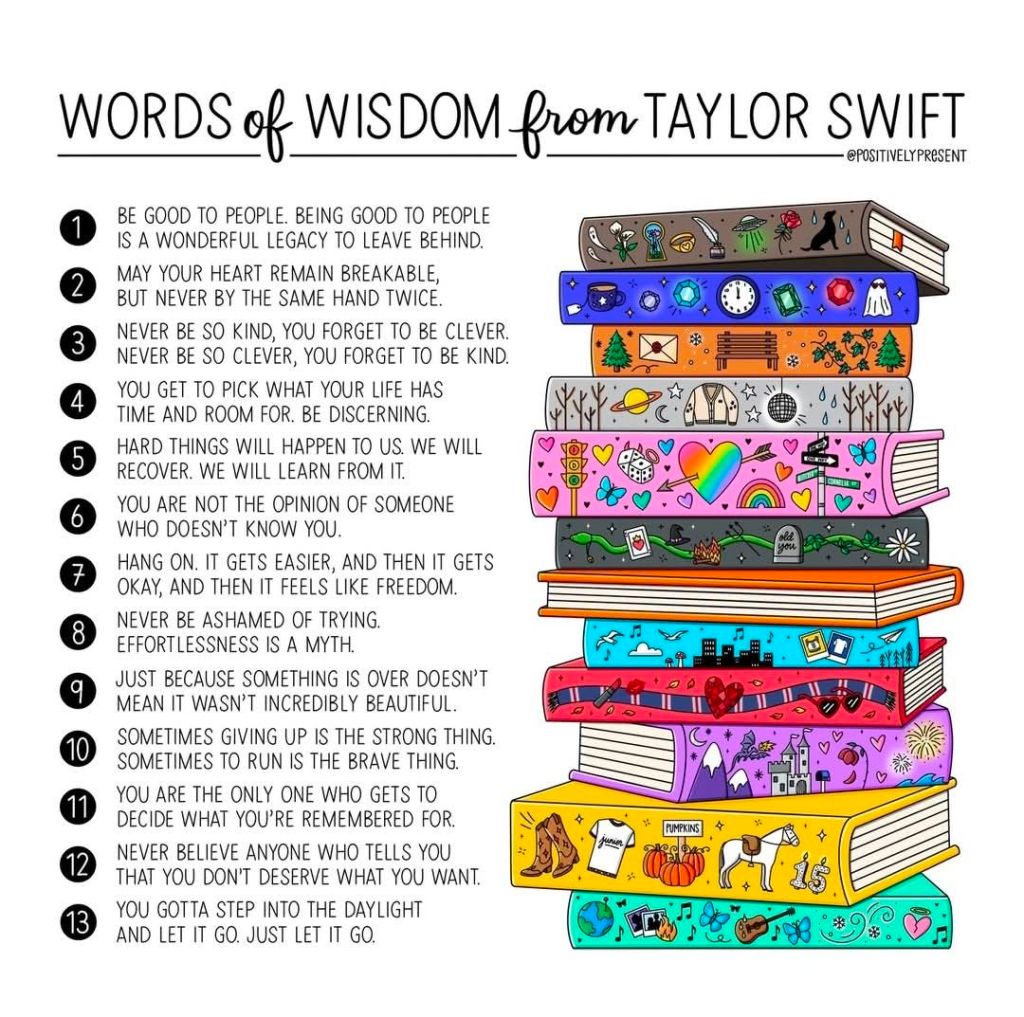
It actually, from my experience, takes a fair amount of courage to own this individuality and way of approaching the world. So what I’m wishing for us all in 2024 is the bravery to walk and own our paths, and to use that ownership to be a little less impacted by the distraction of the paths of others. You do you! Leave others to be themselves in turn.
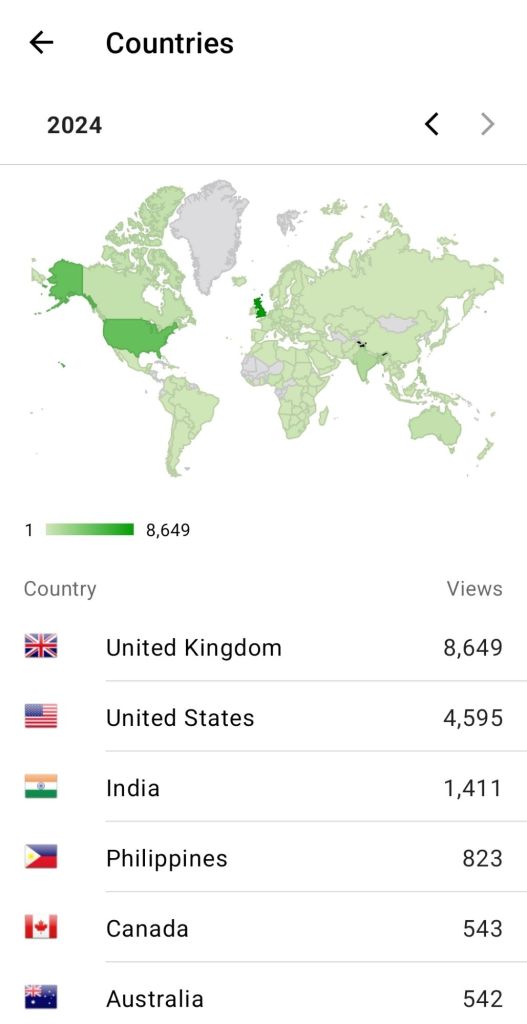
Goals should support aspiration, not self-recrimination

Goals and even New Year’s resolutions should be tools that help us on this journey. They should not be a weight around your neck to suffocate you if you do not achieve them. Goals need to be flexible enough to change as the landscape changes, and we need to be able to respond and throw them off if there are no longer relevant. I think we should all bear this is mind, least of all me, even with what should be simple things. Sometimes, when I say I will post on a specific day and I don’t manage it, I will go into a flight of self recrimination that baffles Mr Girlymicro who points out that the world has neither ended nor has someone been harmed by my lack of delivery. Perspective is needed. What are the consequences of achieving a goal or not? They should be map markers to aid you. If they become more than this, they probably need to be reviewed and further understood as to why they matter so much. Understanding your drivers is key to understanding yourself after all.

Sometimes, getting off the hamster wheel is more important than staying on it

One of the things I can’t work out if I learnt due to the pandemic or would have learnt in my 40s anyway is that sometimes the goal itself may be to become OK with not having a goal. Sometimes, the important thing is not to tick another box, add another level, or achieve more. Sometimes, the important thing is to do the opposite, to do less, take on less, to feel freed. In a world about consumption and visible gain it can be hard to feel legitimately able to make decisions that go against the tide and decide it’s time for a break. It’s often not even talked about as an option. It is however one. It’s OK to step away. It’s OK to table something for later. It’s OK to pause and re-evaluate. The rat race isn’t going anywhere. It will be there waiting for you when you are ready to re-join it. So go ahead and breath, everything will be fine.

Here’s to celebrating the little things in 2024

My 2024 will not therefore be filled with grand declarations. I’m hoping that it will still be filled with success, but the success that I want is about the little things. It’s about finding time to make and drink tea out of the pot instead of always rushing and having it from a tea bag in a cup. It’s about finding time to write this blog and be creative in a way that is joyful, not squeezed into existence. It’s about balancing my life and work, finding time to deal with my emails during working hours, and even on occasion seeing the bottom of my inbox. It’s about finding more moments with friends and family by achieving that balance. It’s about all those little moments every day that, for me, make life worthwhile. I hope that in 2024, you get whatever it is that you wish for and know, whatever you decide that is, that it is practically perfect in every way. Happy New Year.

All opinions in this blog are my own