You may have noticed that I’ve been a little poor at keeping up with the Girlymicrobiologist site admin, and missing the odd weekly blog post. This isn’t because I’ve been slacking, honest, it’s more because I may have become a little distracted by a new project. I promise to get back on top of things soon, but in the meantime I thought I owed you an update.
Many of you have been kind enough to support last years project, which was a book aimed at supporting people to engage with research and research degrees, and I couldn’t be more grateful for your cheer leading. This new project, however, in the words of Monty Python could be described as ‘and now for something completely different’. It couldn’t be further from a book about academic study. This one is all about something else I love passionately, movies and TV.
I finished and launched the last book last October, and to be honest it hadn’t occurred to me, prior to letting it go into the wild, that I would write anything else till my retirement – when I’m planning to write some pathology based murder mysteries. It was never the plan to do something again, at least so soon. Frankly though, my brain tends to disrupt all my best laid plans, and ideas come meaning I just can’t help myself but get swept up. I’m blaming Ian McKellen inspiring me to ‘practice any art’.
Despite having no plans to do more, I have to say that I really enjoyed writing the first book, and I found the process of being able to write in a different way very fulfilling. I love writing this blog, and the first book is based on a lot of the pieces I have written for here, but it was nice to see them come together and take on a new and different life of their own. I also enjoyed mixing up the writing of something on a single theme with writing blogs on different topics for here, although I did rely a lot on Dr Claire Walker bringing together many guest blogs to allow me some writing time. It was lovely to see what those guest blogs brought to the site, and I really enjoyed seeing how including those voices really makes this feel even more like a community space. Without realising it, I think I caught ‘the bug’. Now, I’ve always enjoyed writing, this is my happy space, but I had never seen myself as an author, having held a book I’d written in my hands though, I can see how it could become a little addictive.
As I was sitting watching horror movies as part of my post release recovery, and researching for my 2025 Halloween post, I suddenly realised what I’d like to do next. I really wanted to write about some duel loves of mine, movies and TV plus infection.
Without any expectation of writing another book, all of a sudden I had a structure in my mind, and Don’t Open That Door had began…
You all know how much I am a movie and TV buff, everything from guilty pleasure reality TV, like The Secret Lives of Mormon Wives, to documentaries, and all genre of film (with the exception of torture porn horror movies, I’m a Blumhouse girlie). Whilst enjoying some down time with Mr Girlymicro, I realised how widely infection is featured in all kinds of different genera settings, some of it was actually pretty good, whilst some of it was really poor. So the first step was to do a whole bunch of research about what kind of examples were out there, by hitting up a bunch of different lists that have been collated by others, internet searches, and sourcing opinions from my movie loving friends. All of which led to the creation of a list of 138 options that needed a review to see if if they were actually linked to infection, and if they were infection based….was the infection content any good.
If you follow me (Girlymicro) on Instagram, you will have probably seen a number of stories that I’ve posted recently linked to movies I’ve been watching with some Infection Prevention and Control/micro commentary:
These have come about whilst I’ve been watching the 138 films/series with Mr Girlymicro to decide which ones make the cut to be included. I’ve watched some awesome films, some like Sinners, weren’t based on infection so couldn’t be included. I have also watched some truly bad movies, I even gave Resident Evil another go, and have spared you all by making sure that it is not included on the list. One of the considerations was that, even if the science wasn’t dreadful, I haven’t included anything that I or Rotten Tomatoes include as being truly horrible. I’m not just saving you on this, but also myself, as I’m having to watch included examples many times as part of the writing. I also felt it was really important to cover infections linked to viral, fungal, parasitic, and bacterial causes, just because they behave so differently and the interventions needed are so different. So the final list for inclusion involves movies and TV series that sit across infectious agents, although viruses are more represented than any other cause.
There are plenty of horror movies on the list, purely because they represent A LOT of the infection genera, but I was surprised at how many options there were outside of horror movies. I also tried to mix up certifications where I could, so that there are some options that everyone might enjoy.
Not everything could be included however, and there were also some exclusion criteria that impacted what I could include. Exclusion criteria included factors such as availability – no point including things that people can’t access, language options – I sadly only speak English so it needed at least English subtitles, and most importantly not based on real life events – this is about fiction.
For inclusion examples also needed to have infection as a central theme. This meant that health dramas could not be included as they only feature infection in some episodes, but at some point I do really want to write something that compares different medical dramas (House, New Amsterdam, Holby City etc) and maybe do a ranking scale….let me know if you think that would be a fun blog post.
Image credit The Red Dress
The reason it felt timely to talk about this today, is that the Biomedical Scientist magazine has been kind enough to do a whole feature on what the new book will look like, with a bit more detail, and some examples of what chapters will look like. It dropped on the 27th March and you can check it out the link here: https://thebiomedicalscientist.net/2026/03/24/infections-films. Also, how awesome is the art work they’ve done, can’t say enough how awesome The Red Dress are.
Whilst writing the article for the Biomedical Scientist and watching the example movies, I couldn’t happen but note how many weird and wonderful things are included as part of the science representation. Things that in my scientific career I rarely if ever encounter, but seem to crop up time and time again in Hollywood depictions of scientific life. I’m collating these for one of the final chapters in the book called ‘Science House of Horrors’ as I find them a bit fascinating. I’ve included some of the ones in the Biomedical Scientist article that I noticed, as well as those sent through as responses from social media, but I’d love to know if you have any others that I should include.
There are other opportunities to get involved though, I have 23 films and series examples, but there is room in the book to cover 25. I’m really keen to get other examples that include fungi, but if there is just something brilliant I haven’t included please let me know. There will also be a chapter called ‘Hall of Fame’ that covers both amazing movies that just don’t have enough infection in them to be included, or ones that were great but not quite as good an example of an infection characteristic as the ones already included. There is also the ‘Hall of Shame’ for examples, such as the TV series The Rain and Resident Evil, where the science is so bad that it is note worthy in itself.
Anyone who drops me an email to elaine@girlymicrobiologist.com and inputs into the House of Horrors, volunteers film examples I’ve missed, or suggests contenders for the ‘Hall of Fame’ or ‘Hall of Shame’, will get their name included in the list of contributors at the back of the book. Science takes a village, so does pulling together a book, and I’m really keen that this feels like it comes from our community. I hope you enjoy the article and I can’t wait to hear from you about your suggestions.
I’ve just dipped my toe into the world of self publishing, so I am far from an expert. That said, one of the reasons it took me a while to move from ‘that is something I’m interested in knowing more about’ to ‘screw it, let’s just give it a go’ is because there is a lot to think about, and there are a lot of options. I thought it might be useful therefore to pull together some of the components that came up for me in an effort to pay it forward, so anyone else thinking about taking a leap can start a little further ahead than I did.
Fair warning, this is a long one as there’s a lot to cover.
The first thing to say, and this now sounds horribly naive, is that I thought that the writing would be the hard part, or the bit that took up most time. How wrong I was.
Before I properly kick off though, one quick word of warning. These are tips and reflections on the steps I took for the type and method of publishing that worked for me and the book I wanted to get out into the world. You will, of course, have your own aims, aspirations, and content type, so you will need to do research that links to the type of book that is in your mind. I found that there is all kinds of great content out there, but it is a bit like a jigsaw puzzle you need to put together to match your own personal needs. I would start by working out what personal resources you already have available to you, then go on an active search for the rest.
Places to consider accessing information include:
YouTube
Blogs
Websites
Books
Social media
Phone a friend
I am really fortunate to have a number of friends who have either written and published books, or who work in/with the publishing industry, and so the phone a friend option was particularly useful for me. I’m hoping that by writing this blog I am helping to pass that good fortune forward to support others.
Even without the assistance of someone who has greater knowledge than you in your friendship circle, I found places like YouTube a great way of learning some of the key phrases and structural terms that then enabled me to move onto more targeted research via other sources.
Writing is the easy part
I don’t know if I’m fortunate or cursed to live with a mind that constantly requires distraction or something challenging to process, but one advantage of it is that I will often arrive at an idea pretty fully formed as I’ve been putting it together in the back of my mind. That means that one day I just woke with a 40 chapter structure for a book that remained pretty much unchanged, even as the word count developed.
Even with this though, in my project plan most of my time was allocated to word count and far far too little of it was allocated to the other tasks. Partly this was because I just had no idea how long they would take in practice until I came to do them. In hindsight though, I think there was a fair amount of denial and ostriching as it was these other parts that triggered my anxiety and fear linked to not really being comfortable with the process. This denial got me to the finish line, but I think the whole book preparation would have gone more smoothly if I had focussed on my discomfort rather than the comfort zone that was the writing process.
What are you planning to publish?
Talking of your project plan. There are some components that it is really helpful if you make decisions about early, as they will impact not only your workload and structure, but also whether self publishing is the right route for you.
The first of these decisions is whether you are working towards a fiction or non-fiction book. I don’t think I’d ever sat down and made a list of the differences between the two until I started to plan both types of content. The first obvious difference is in the type of the content itself, but beyond the actual words, which may have legal and other impacts for non-fiction, there are differences in everything from word count expectations, to paper type, and book size, if you are thinking of including print versions.
This then brings you onto deciding what kinds of formats you are planning to publish in:
Ebook
Print:
paperback
hardback
Audiobook
Now, I haven’t done an audiobook so I’m not going to talk too much about that here. For the other format types it’s key to know what formats you are aiming for as this will dictate all of the formatting, cover and costing decisions you will make moving forward. That said, just because you decide to aim for more than one format it doesn’t mean that they all have to come out simultaneously. You could decide to aim for an Ebook first, with a plan to bring print editions later on.
It is worth doing some bench marking with similar book topics at this stage, not because you have to do what everyone else does, but because it can give you some parameters to work with and mean you feel less overwhelmed by the number of decisions you need to make. I ended up launching all content type pretty simultaneously, as that’s what worked for me, you may choose to take a route that is kinder to yourself and launch them in stages. For instance you may launch your Ebook first so you can incorporate feedback before you move to print editions.
What are your success criteria?
The other key thing to do at this point is to decide what does success look like for you? Almost all of your next steps and decision making will depend on what success looks like and what it is that you are wanting to achieve.
No one can tell you what the answer to this is as there are many different reasons people decide to write books, all of which can be valid:
To educate and inform
To raise awareness of an issue/topic
For financial reasons
To improve the authors profile
To entertain
To process experiences
To tell a story
To connect with others
For career development
To inspire/empower
Once determined your success criteria should play a big part in determining your approach. If you want to make money or sell thousands of books then you probably need to aim for a traditional publishing approach, and this will then impact the kind of topic that you might choose. If your aim is to get something out there for low cost or in a relatively niche topic, the self publishing is probably a way forward.
You need to be realistic with what you are aiming for. For instance, my book topic is relatively niche as it’s linked to post graduate study, and when I did my research it looked like I could expect to sell 2 copies a month based on amazon purchasing number (I used Book Bolt on free trial to run the numbers). My goals and expectations were therefore based on those figures. My initial goal was to sell 20 books in a year, with stretch goal of selling 60. My success criteria have never been about selling huge numbers or making money, but about finding a different way to support the Girlymicro community, and therefore my goals match that. What’s happened in practice in that I’m over the moon to have reached my stretch goal in the first six weeks since publication, but I am also aware that those numbers are likely to drop off and I can’t use them to continue to judge how well the book has landed. If you don’t want to be disappointed it’s important to choose the right success criteria to match your driver for publishing in the first place.
Traditional vs self publishing
Once you’ve decided what it is you want to write, why you want to write it, and what success looks like, then you need to choose your next steps. The biggest of which is to decide whether to pursue traditional publishing or go for self publishing. Now, don’t get me wrong, both are a lot of work and require a lot of prep, but the steps are very different.
For traditional publishing you will need to start to put together a proposal, which for a fiction book will include the entire manuscript of your book plus some additional information. For a non-fiction book it will usually include at least 2 chapters and chapter outlines with descriptors for the rest of your content, plus information on other things you have written, target audience, and other books on the market taht could be used as benchmarks. The aim is to get an agent who will then pitch your book to a publisher, although for some markets you can approach a publisher directly, who will then take care of onward processes such as editing, formatting, cover production. A lot of the non-writing work is therefore forward loaded. There’s lot of advice out there on how to put together a book pitch and there are websites such as Query Tracker that can help you in finding agents to send your pitch to. For fiction this is still a mainstay of publishing, especially as you are wanting to reach wider audiences and have your book available in book stores and libraries.
In terms of self publishing, a lot of my reading indicates that up to 90% of non-fiction books now go down the self publishing and print on demand routes. Non-fiction book deals either tend to be books that have wide audience appeal, such as general popular science books, or have authors with a pre-established audience, think influencers with a million+ followers. So, although it may be worth your while pursuing a traditional publishing approach, it is well worth considering exploring the self publishing route. The down side of this route is that there a lot of tasks that you will need to organise yourself, which would have been taken care of if you’d traditionally published, so be prepared for a steep learning curve.
One extra thing to think of is how strong is your vision is. If you go down a traditional publishing route there will be co-development of your concept with a number of stakeholders. This will make the idea better, but you need to be prepared to hold onto your concept loosely, especially as a new author, and so it is worth considering this aspect of development as part of your decision making. If you go down the self publishing route you will have to fight harder for the credibility that is given to traditionally published authors however, so both routes have pros and cons to consider.
What kind of content are you planning to include?
OK you’ve decided to go down the self publishing route but what does this mean for your content? Content restrictions weren’t something I had considered when I started drafting It Shouldn’t Happen to a PhD Student, and so I included a load of exercises to support the word count that included tables and other non-text formatting. When I then started to format however, I discovered that the templates are set up for text alone, as novels only include text content. This seems obvious in hindsight I guess. That meant that when I undertook my final formatting I ended up removing this content and setting up a new web page on the girlymicrobiologist.com blog in order to host it, as it felt that it was still important to have. This was a lesson for me in how important it is to consider what type of formats are needed to support your content and embed these considerations from the start, rather than finding an eleventh hour fix.
Having discovered the format restrictions of book based content I’ve been thinking of maybe putting together an academic journal set of content that can sit alongside the book in order to host some of these exercises, but that requires finding a whole different set of templates or learning waaay more in order to set ones up myself. Honestly I’m not sure I have the mental energy for that right now. One of the things this experience has taught me is to think hard about the payoff for any energy you will need to expend in order to make something happen and be conscious in your decision making and energy allocations.
Choose your budget
Another thing to consider is that there are many ways to accomplish the tasks you will need to tick off in order to self publish, and the decisions may be more complicated than you think. There are a number of steps, each with a number of component parts, all of which could be outsourced, semi-outsourced, or managed by you:
Editing
Cover
Formatting
Marketing
Printing
Publishing
Book coaching
If you decide to outsource all of these stages, the process of self publishing could, in fact, cost you thousands of pounds. If, like me, you don’t have thousands of pounds just lying around you may need to think carefully about what you can spend, and on what you are prepared to prioritise spending money on.
I didn’t really have a budget for publishing It Shouldn’t Happen to a PhD student, as I didn’t have the disposable income, even so publishing the book ended up costing me several hundred pounds. Costs included things like buying ISBN numbers as I didn’t want to be completely tied into Amazon as a platform. In addition to direct book costs, you need to think about how you will get the word out there or build your community. For instance, many people aren’t aware that running this blog costs rather providing income, with a few hundred pounds a year in outlay to cover hosting costs, email address etc*, which although not directly book related is the reason the my book came into existence. This can all be important to bear in mind when looking at costing your book, and thinking about marketing exercises such as book launches, as you will have to buy in copies of your book, spend money on food etc, all of which adds to your initial outlay.
If you do have personal budget that you are prepared to invest then it is still worth being discerning with how you invest, and especially being aware of predatory publishers. There are plenty of people out there who will take your money, but spending time to look at freelancers who will undertake components is probably better than paying someone £5000 who offers to do it all, especially if there is limited evidence of what the output would look like. Just like in scientific research, predatory publishers exist, and it is important to have undertaken sufficient research to invest your money well.
*NB a good friend mentioned to me that I don’t advertise the fact that you can help with the costs associated with running this blog through a variety of options, from supporting the annual fees (mentioned on the top of the homepage where is says gift the author a wordpress.com plan), buying me a cup of tea as mentioned on the bottom of the blogs by theme page, or even engaging with my new Patreon page. There you have it, I shall swallow my pride and share the details with no expectations or requirement for anyone who might be interested in offering a helping hand.
Where are you planning to sell?
A number of your outlay and pricing decisions will be linked to how and where you wish to sell your books. Obviously, if you are traditionally publishing, all of these options are somewhat easier as they will try to make sure your book is widely available. If you are self publishing you need to decide yourself where it is that you are prepared to sell. Some simple choices, like whether to use a free Amazon ISBN or buy your own, will have significant impacts on subsequent onward options. If you use a free print ISBN from Amazon, then it limits you to only selling on Amazon. Deciding to invest <£100 on ISBN numbers for each of your print editions means that you can choose to sell on different platforms in addition, but also has requirements about providing editions to the British Library, meaning you have to buy the print copies to send off and pay for postage. If you want your book to be in libraries you also need to select these options on your print on demand platform, but they are much less likely to be taken up than if you were going down a traditional publishing route. There are no right or wrong decisions here, only the decision that is right for your success criteria and the audience you are trying to reach.
If you are happy to go down the print on demand route, there a number of different free options available to you:
The best option will depend on what you are publishing and the countries that you are hoping to publish in. It is worth bearing in mind that some platforms (such as KDP) require you to give exclusive rights for you to be involved in certain marketing options, such as signing up to Kindle Unlimited. This may expand your reader market but will tie you into a specific platform. There are also paid for distributions platforms that you could utilise if you have decided to allocate budget in that direction. Of note, there are some interesting YouTube videos out there where authors compare how much they sell across different platforms which can help you make decisions. Utilising multiple platforms requires you to invest energy across multiple formats, and so it is also worth being honest with yourself about what your energy budget is before committing to more than one, even if that might restrict your sales.
Finding your templates
I’ve talked about deciding on your content, and that’s because formatting is time consuming and essential. You may be a wiz at this, in a way that I am not, but if it doesn’t lie in your skill set then being able to access and utilise pre-existing templates is key. Even this can be a mine field though as there are both free and paid for versions available to you. You also need to know a number of things before choosing your template i.e. is it for print or Ebook, as the templates are very different, but also what size of book are you aiming for, as your paperback version will be a different size to your hardback. I did a bunch of research into what are the most common book sizes for non-fiction hardback and paperback versions, but even this changes by country, so you will need to look into what works best for you. I ended up going for 6 x 9 inches for hardback and 5.5 x 8.5 for paperback.
Having tried a few different options, these happen to be the best templates that worked for me and my brain, you may find others work better for you:
Even with the best templates there is a good deal of fiddling once you’ve imported your content, so make sure you leave plenty of time for this part of the process. I didn’t and it meant a number of 14 hour days whilst on leave trying to ensure I could keep to my self imposed deadline.
Choosing your pricing
I, misguidedly, thought I could price my book at whatever price point I fancied, but rapidly learnt that this wasn’t the case. All of the free self publishing platforms take a cut of any print on demand book, which is how they cover their costs. Everything from number of pages to paper type will impact on what your minimum cost point will be. For Ebooks, if you want your book included in schemes, like Kindle Unlimited to maximise your reach, you will also need to have minimum pricing levels. This is one reason why you need to have decided on where you want to sell and some of the book details before you start to think about pricing. Think about the fact that certain paper types are used more commonly for certain book types, and that choosing between them will impact on cost.
Helpfully, you can use things like the https://kdp.amazon.com/en_US/royalty-calculator in order to play around with likely book parameters to start to think about what your pricing range might be, even before you have fully completed the templates, to know what the final page counts look like. I have included a random example below so you can see the type of information required:
Once you have entered the information, the royalty calculator will tell you what the minimum price point will be, and from that you can think about what price you may need to charge to cover your costs.
If, like me, you are publishing not to make money but merely to cover costs, you should think about charging minimal amounts in order to maximise accessibility for those who may benefit from your book. If you have spent more on bringing your book to market, you are also likely to need to charge more in order to make your accounts balance. This is another reason why I invested my resources in terms of time rather than financial, as I didn’t want to have to charge more which could limit the book reaching those who would benefit most. This aspect may be less relevant to you, depending on your reason for publishing in the first place and so costing is a personal choice.
The book blurb
Once you have your book written, one of the final steps is thinking about what you are going to write on the back cover in order to help it reach its target market. I found this part, well to be honest the cover in its entirety, a bit of a nightmare. So these are the points I thought about when deciding what to write:
Keep it 150–200 words — short enough to hold attention, long enough to inform
Write in the third person to help you connect directly with the reader
Test different versions — your blurb is a sales tool, not just a summary, no matter how uncomfortable that feels
Think about your structure:
Start with a hook
Open with a single sentence that speaks directly to your reader’s problem
Identify the reader’s goal
Show you understand their challenge or aspiration. Use empathetic, relatable language and speak to how you will address it
Give your unique selling point
Briefly explain what your book delivers and why it’s different
Be specific
Build credibility
Mention relevant credentials, or experience
Give a taste of what’s inside
List 3–5 bullet points of key takeaways
Finish with an invitation or call to action
You can then also use this to help write the wording you will need for the websites you are selling on as an expanded version, and even use shortened versions of it as part of your marketing tools, such as on postcards.
Recognise the skills you have and the skill you don’t
The biggest aid in all of this planning was to be very honest with myself about the skills I have and the skills I don’t have. I am not artistic in any way, and so I knew that I would struggle with not only cover formatting, but with cover design. I know that I am able to utilise a word template, but that I don’t have the skills to make a word template. I know that editing is not my thing. All of the components that I recognised as weaknesses I actively sought out support in order to help me address. I roped in a number of people to help with copy editing, including Mummy Girlymicro. I roped in Mr Girlymicro, who is a keen photographer with an artistic eye, who worked with our good friend who works in book design and publishing Alice Wallace, to help with the cover. I found templates that made up for my lack of formatting and design skills for the internal contents. I was prepared to be honest with myself about where I fell short, and I invested time in learning what options were available to compensate. All of these weaknesses could be countered by outsourcing, but that wasn’t a financial option for me, and I feel that I’ve learnt so much in going through the process and the discussions. Something I would have missed out on if I’d paid a third party. That said, the learning feels worth it for me as I have plans to get more books out, if you have budget and you are only doing this once the decision making is likely to be different.
Find your cheer squad and support team
All of this brings me onto the importance of finding your cheer squad. I spent a lot of hours and a lot of leave on turning an idea into reality, and you can never do it alone. I used my ‘phone a friend’ system, my network, and my family, all of which helped with getting this project across the line. They helped me not only with the technical aspects, but also in managing the emotional aspects. There were a lot of highs and lows. To be honest there still are. Putting yourself out there always requires a certain level of bravery. It is always easy for people to find a way to criticise, or use this as a way to comment or target what you’ve tried to achieve. The other side of this coin though is how wonderful it is when people get behind you, cheer you on, and take the time to invest in you and your concept. When people came out for my book launch it meant the world. No one has a lot of time or money right now, so anyone investing in something I care about has such meaning, and makes the whole thing worth it. When I hear negativity, it is that which I focus on to aid in processing my responses.
The nightmare of a cover
Now, I’m just going to use this section to give the biggest ever thank you shout outs to Mr Girlymicro and Alice Wallace. I genuinely believe that there is one part of this process that I couldn’t manage, even if you gave me a month of full time capacity to play with it. I’m talking about The Cover! I’ve attached the guide link below, but even with this I don’t think I could have achieved it. It is the one part that I just couldn’t get my head around.
There is so much maths involved, let alone the actual design process. That maths changes based on the precise number of pages, but also what those pages are. Can you believe that cream paper is a different thickness to white. I had no idea.
I mention this in order to be transparent that you too may hit certain components that you just can’t get your head around. That’s OK, you can’t be good at everything. More than that, it’s OK to have things that just fill you with so much anxiety that you can’t face them. For me that was the cover, for you it may be something else. The main thing is to have a plan in order to counter these obstacles before you get to the point where it will impact on your delivery.
The submission process
Once all this is done, it is time to submit. I had thought this process would be much faster than it was, and so now I’ve done it I would recommend allowing at least a month window between submission and having any marketing or other components planned. Nothing is immediate. Once uploaded, and this in itself took a number of attempts, all versions need to be checked out by the platform you upload to. For print versions you will also want to build in time to order proof copies (which will need paying for) in order to check you are happy and that your formatting has worked before you release them out into the wild.
My top tip for this stage is to have pre-completed the boxes and info where possible in order to allow you to focus on just the upload when the time comes. This means that fairly early on in the process you want to have set up accounts, provided registration information, undergone identity checks, so that you can start you populate the appropriate pages. I would do the account setting up as part of the research phase of your book development.
Bits I hadn’t thought about
There were several things I had not even thought about before I started this process. For instance, I didn’t know that you had to buy ISBN numbers, let alone that you need one per format and one per edition, and so you can end up needing to buy quite a few. You don’t need an ISBN for Ebooks but if you don’t want to be tied to Amazon (who will give you a free one for use on the Amazon platform) then you will need to buy them for your print versions from here (if UK based) https://www.nielsenisbnstore.com/.
This brings me onto another thing I didn’t realise. If you have a print book you will need to submit a copy to the British Library within a month of it going live for sale. This will require you to have a copy to send and to pay for postage. They may also request that you send 5 copies to a separate address which means they can then be considered for purchase by libraries. All of which is great, but will require you to have brought enough books to post and has cost implications.
Other outlays I hadn’t thought about were the fact that you need technology to sell books, by this I mean the ability to take card payments. This one completely passed me by until Mr Girlymicro mentioned it, and then thankfully he spent a bunch of time looking at how to make it happen before recommending something. He ended up recommending Zettle, which has worked really well. Again, there was no point in spending a lot of money on this as I wasn’t planning on going to book fairs and selling thousands of copies, however it did mean I could sell copies of my book at the book launch, which made the expenditure worth it.
Finally, I was so focussed on getting the book out there that I don’t think I’d prepared myself for some of the commentary. Now, I’ve been really fortunate so far that almost all of the comments have been positive, but there have been some people who I felt were less happy about me a) getting a book out there and b) it being well received. To be honest the same has been true about this blog on occasion. Questions such as why you? Why should anyone care what you have to say? Don’t you have better things to do with your time? Nothing is going to be universally well received, and at some point someone will no doubt put up a review that breaks my heart. That doesn’t make the endeavor any less worth while. It is better to have something real out there that can support people than wait until it reaches a point of perfection and not putting something out for years. Nothing will please everyone, and so being prepared to cope with critique thrown your way is something to be prepared for.
The discomfort of marketing
Once the book is live is to a certain extent when the real work actually starts. There is no getting around the fact that if you want your book to reach the people it could help or who will find it interesting then you are going to have to tell people about it. It is not comfortable but you have to channel why you decided to do this in the first place and focus on that to overcome the discomfort.
This is one of those things that if you have gone down a traditional publishing route may have been more supported but you would still be expected to drive sales on your own. Make sure that you have an idea of where to show content on social media, make accounts if you don’t have them. Think about using stores like Vistaprint to print postcards, book marks, and in my case giant foam boards of my own head, to help with advertising. Again, this is an initial outlay to be aware of. You will also need to buy a number of copies of your own book so you will have some to sell, and that requires thought as you don’t want a hundred copies that will just sit around and do nothing, so how many is enough?
Think about having an event to kick off and celebrate that you have turned a concept into a reality. I was so worried about having a book launch, but it was actually just a wonderful event. It felt so lovely to see people hold physical copies of the book in their hands for the first time and see their reactions. You can also see the people who are really there to show up for you, and it’s a great way of giving back and thanking the cheer leaders who’ve supported you along the way. Note of caution, this is another one of those things that is lovely but will also cost you money, so be prepared to outlay a few hundred pounds if you are going to do it, as you will need to pay for everything from books to catering.
If you have budget, this is another area where you can choose to invest. There are places on the Kindle Direct Publishing page for your book where you can choose to pay money to have your book featured, social media pages will let you run adverts, and you can even pay companies specifically that do this kind of work. I don’t have the budget to go down that kind of route but if you choose to give it a try let me know what your learning and advice is and I can share in a future post, or better yet write me a guest blog.
The long and short of it is that your book won’t reach the people you’ve written it for if they don’t know about it, so suck it up buttercup and get your marketing hat on. No matter how uncomfortable it makes you, and it makes me very uncomfortable, there is no getting around it. If you can find friends and/or champions who will talk about it on your behalf that is a life saver, but you will not be able to avoid putting yourself out there. You wrote a book for a reason, this is the time to remember that reason and step out bravely in order to make your success criteria happen.
In that vein, if you want to check out the final version of my labour of love, you can find the link below:
I must admit I shed a bit of a happy tear when this arrived unsolicited in my inbox, it’s been a bit of a week. My next thought was that there is no way I could share it, as it would be the epitome of self promotion, and that’s never considered to be a good look. Then I sat and thought, what would I advise a friend to do if they were in the same situation and I decided something. I decided to be proud of what I’d achieved. To be proud of the hours spent to achieve the output earned, and to be proud to have someone so invested they would take the time to write an unsolicited review for this blog. I know that is what I would advise and hope that all of you would do, and so this is my moment I decided to model the advice I would give. We all have the right to own our achievements and not make ourselves small to avoid the commentary of others.
Dr Walker is a paid up member of the Dream Team since 2013, token immunologist and occasional defector from the Immunology Mafia. Registered Clinical Scientist in Immunology with a background in genetics (PhD), microbiology and immunology (MSc), biological sciences (mBiolSci), education (PgCert) and indecisiveness (everything else). Now a Senior Lecturer in Immunology at University of Lincoln. She has previously written many great guest blogs for The Girlymicrobiologist, including one on turning criticism into a catalyst for change.
Full disclosure: I wasn’t invited to write this review, I insisted. I also haven’t been paid for it; quite the opposite, in fact. I went out and bought two copies of Professor Elaine Cloutman-Green’s book with my own money: one for me and one for my PhD students to share (or squabble over). And yes, I did get her to sign them. What can I say? I’m a lifelong fangirl.
Professor Cloutman-Green’s It Shouldn’t Happen to a PhD Student is a rare gem in academic literature a compassionate, wise, and profoundly practical guide that feels like a conversation with the mentor every research student wishes they had. Written with warmth, humour, and candour, the book demystifies the PhD journey from start to finish, transforming what can often be an isolating experience into one filled with clarity, community, and hope.
Elaine, known affectionately as my favourite Professor or the GirlyMicrobiologist, draws upon two decades of experience as both scientist and supervisor to craft a guide that balances rigour with humanity. Structured in three accessible sections; getting onto a PhD programme, surviving and thriving during it, and using it as a springboard for the future. The book serves as both a roadmap and a reassuring companion. Each chapter blends actionable advice with reflections that acknowledge the emotional highs and lows of research life, creating a tone that is both authoritative and deeply empathetic.
From the very first chapter, “Knowing Your Why,” Elaine invites readers to pause and reflect on their motivations, an exercise that sets the tone for the entire book. Rather than treating doctoral study as a mechanical career step, she frames it as a personal journey of purpose and growth. As she writes, “A PhD should be a step towards delivering on your aspirations, not just a title to put in front of your name.” It’s a line that perfectly encapsulates her philosophy that research is not about prestige, but about purpose.
What truly elevates this book above other graduate-school guides is its inclusivity and warmth. Elaine writes as a mentor who has seen it all: the sleepless nights, the imposter syndrome, the joy of a successful experiment, and the power of perseverance. Her anecdotes and checklists are peppered with practical wisdom not the vague “work harder” platitudes found elsewhere, but concrete steps to manage deadlines, develop professional skills, and build meaningful academic networks. The inclusion of “Top Tips” sections at the end of each stage provides digestible summaries that make the book easy to dip in and out of throughout the PhD journey.
And it’s not just students who need this book. Supervisors – myself included – will find plenty here that resonates. Elaine reminds us, gently but firmly, that supervisors are people too: flawed, human, and still learning alongside our students. Her reflections on empathy, communication, and shared growth are as valuable for those guiding PhDs as for those undertaking them. Every research group could benefit from having this guide on their shelf, it’s as much a manual for mentorship as it is for PhD survival.
Of course I must acknowledge my own bias, Elaine was my mentor during my own PhD, and many of the insights in this book feel like familiar echoes of the advice that got me through my hardest days. She taught me so much about science but more importantly that research, like life, is all about surrounding yourself with people who lift you up when you falter. It Shouldn’t Happen to a PhD Student captures that same generous spirit, showing that the best kind of academic success is shared success: when mentors and students grow together, celebrate each other’s wins, and keep curiosity at the heart of everything they do. Everyone deserves a mentor like Elaine someone who reminds you that with compassion, courage, and community, the PhD journey can be one of the most transformative experiences of your life. Oh, and she provides the most excellent of snacks, the occasional much needed gin and tonic, and a rousing rendition of ‘Drop it like it’s hot!’… but that’s a story for another time.
This week marks the 5th anniversary of regular posting on Girlymicrobiologist.com. I can’t believe that time has flown by so quickly. I also can’t believe that something that started out with such small expectations has grown to play such an important part in my life, and in my sense of identity. This was all really cemented for me in something that also happened this week, the publication of my first ever book.
Now, it’s been no secret that I have been putting some time aside to try and write something for the last few months. You have all been very patient with me whilst I posted a little less frequently, and I cannot help but give a massive thank you shout out to Dr Claire Walker who has curated some wonderful guest blogs in order to keep the content flowing. It’s a world of different having an idea and starting to write it, to holding the real thing in your hand, and so my brain is still catching up to the reality. I plan to write a bit more of a step by step guide to what the experience has taught me about self publishing, and why I thought self publishing was the right choice for this particular book, but for today I wanted to focus on moving something from a vague wish to a reality you can hold in your hand.
So how did I get here?
Back in 2022 I wrote a post about the fact that I was playing with the idea of writing a book, although I wasn’t quite sure about the direction that book would take, and listing a number of steps:
Further formulate the concept i.e. what kind of book? I actually have 2 ideas. One is turning this blog into a book format. The second is that I also have an outline structure for a Pathology murder mystery. I’m excited by both, but right now I think option 1 is more achievable with my current resources
Review what I already have. If I go for a non fiction book I need to undertake a gap analysis of what I have, what can be modified and what new content is needed. For the fiction version I need to start getting my concepts down so that I know how viable they are
What good resources are available to me? This is an ambition of plenty of people and there is a wealth of information out there. I need to explore, quality assess and curate what there is so I don’t waste time and energy making unforced errors. There is no point in reinventing the wheel, modify it so it works for me, but let’s not start from square one.
Undertake some appreciative enquiry. Success is often about asking the right questions and making the right connections in order to increase your odds. I have some friends in this field but not in the area I’m thinking of working in. I need to be brave and put myself out there to gain insight into the ‘Known Unknowns’
Use the knowledge and information gained to put together a project plan. Establish some small steps that can make the project as a whole less overwhelming
Establish my success criteria. What does success look like? For right now it’s the process of creating that will feel like a success with a stretch goal of sharing what is produced, but that might change based on what I discover
Research your audience. If I decided to include sharing what is produced as part of my success criteria who would like to see such a book? If I were to share the content what would that look like and what would be needed?
You’ll notice that those early steps involved a lot of information gathering, and reflection before formulating a plan. Writing that blog post encouraged me to do just that, but more than that it meant that I had made a declaration to all of you and started talking about what the next steps would look like, so I could be held to account by others as well as myself.
One of the things that my research led me to understand with greater clarity, is that to get from where I was to publishing a book required both the formulation of a plan, but also the development and practicing of skills. To a certain extent, the project plan was the easy bit, as long as my research was effective. The skill development piece was harder. It seemed to me, that the best way to go about this was to support others by being involved with their work in order to learn and develop more.
This led to me being involved with everything from textbooks, to a book on the impact of waste on our society. Every encounter taught me something. Every encounter helped me to refine what I was interested in and how I was interested in working. It also supported me in developing an author page so that I had a place where I could sign post others to the work.
Fairly early on I realised that I didn’t have the time or bandwidth to develop my pathology murder mysteries right now, although I am still drafting plot on the side. The writing style is just too different for me to be able to dip in and out of , and I need to put in many hours of practice to get that style to a point where it would be acceptable.
That left me with content linked to this blog. Many of you will know that I started drafting, and am still working on a book called White Coat Syndrome (or similar). This is still in the works but a wise friend suggested that I keep working on getting it traditionally published, so I need to give it some focussed time. That left me with looking at the content I already have for trying out what the self publishing process could look like. Over 90% of non-fiction books are self published these days, and of the ones that are traditionally published still, most are linked to people in the public eye or with social media followers in the millions. It will be a surprise to no one that I do not fall into either of those categories, and so exploring the process of self publishing felt like the right move, not just for this book but to understand more moving forward.
So why this topic? In a moment of frustration about life, the universe, and everything, I was having a late evening rant and Mr Girlymicro and he said ‘Why don’t you write a book on how to do a PhD? You talk about it all the time. You spend lots of time supporting others through it, and you have already written thousands of words on your blog linked to it’. I just looked at him, went to bed, and woke up with a 40 chapter book outline. It just felt right. Something in my brain just clicked, and so the writing in the end was the easy part. After all, Mr Girlymicro is pretty much always right, and yet again he proved it.
Once the topic and method of publishing was chosen, then all that was left was pulling it together. It was so important for me that this book came from a place of authenticity, a place where I don’t pretend that things are easy, perfect or even equitable. In fact, it was that sense of inequity as I was writing that became a real motivator for finishing the book. As I reflected and wrote I became increasingly aware of how inequitable access to PhD programmes have become. How the way access routes are set up to be even more challenging if you have health or caring needs, but also if you don’t have access to someone who has done one to advise you on how to apply and what factors might be significant to talk about.
The next factor was to to decide on a time scale. Now, this part might be a little piece of madness but I know how busy IPC gets once we hit winter, and so allowing a 4 month time frame in order to get the book out before winter pressures and to align the release with the start of the academic year seemed like a good idea. I’m not saying that it was a good idea…just that it felt like one at the time. I think tasks take up the time that is allowed to them, however. I think if I’d allowed a year it would have spread to take that much time. It is sometimes better to set a tight timescale and stick to it, rather than allowing a window which could extend the project for longer than is really needed.
I also gradually became aware that providing some practical exercises would add value in a way that I could not include in a book format, and so decided early on that several of the chapters would have these hosted on the Girlymicro website so they would be free to access and download. Providing a holistic, interactive approach was key to my thinking, as was making sure that at its heart the book is about community and supporting each other, the same as this blog. I didn’t want to pretend to be someone else, or write in a way that was more academic, as I think there are enough of those styles of books out there. I wanted this book to support everyone to bring their whole selves to their PhD and their topic, and so it was important to me to write in a way that I also did the same.
Now the book is ready. Now that it is a real thing that I can hold in my hand. There are two main tasks taking up my thinking. The first is trying to work out how to get it to people that it might help, something that I would be grateful for any advice that you can give to me. The second is about how I can help others by sharing the knowledge I’ve picked up myself as part of going through the writing and self publishing process, to make it easier for others to get their voice out there. There are benefits to both ways of publishing, but there is something empowering about being able to feel like you can speak directly to your readers by maintaining more control over the content, rather than it being seen through a commercial lens. I’m not in this for the money after all.
There is still one thing that I talked about on my list of steps, way back when, and haven’t yet addressed, and that was success criteria and decided how to benchmark what success looks like. As I’ve said, I’m not doing this to make money, I’m doing this in the hope that it might assist others, and so for me it has never been about a commercial approach. I still need some way of judging progress however. On doing some reading I discovered that many books never sell more than 20 copies, and most others don’t sell more than 250 copies in their first year. My aspirations are pretty small therefore, as this is something I’m just beginning. I would consider the book a success if I sold more than 20 copies. I would be over the moon if I sold anywhere between 50 and 100 copies in the first year. The topic is fairly niche after all. Mostly I just want to mark the event and use it as my own benchmark for improving during future projects. We all have to start somewhere.
If however, you’d like to add to those 20 I’ve included the link for purchasing below:
Thinking about what’s next
Like everything is life, my first thought when I finish something is to think…what’s next? I have learnt so much and my plan is to take a little time to reflect on that learning and to enjoy focussing on blog writing for a while. That said, I am now going to return some of my focus to the book pitch for the Girlymicro general book, and I do have to admit I have the title of my next book in mind if I decide to try another self publishing exercise. Mostly I would like a few weekends off as it’s been a while since I could embrace the sofa and fully rot for a weekend. So while I cogitate, I intend to treat myself with some truly awful reality TV, and spending quality time with mummy and Mr Girlymicro.
Taking a moment to enjoy, celebrate, and mark the occasion
Before I slob off to the sofa though…you all know that I am a strong believer in celebrating and marking the moments that impact our lives, and this book is no different. To mark the moment I’m a having a small, low key book launch on Friday 17th October and there are just a couple of free tickets still available if you’d like to join.
Whether you can make it or not, I’d love to hear what you think as I’m all about improvement and learning. If you do get the book it would also be amazing if you could leave a review on Amazon with your honest thoughts. Apparently reviews really help increase visibility, whether good or bad, and so it would be wonderful to think that this book is finding its way to those who would need it.
I want to sign off with a thank you. I would never have gone through the process of thinking about writing a book if it wasn’t for all your support. I wouldn’t have had the content or undertaken the self reflection needed to know what to write if you hadn’t kept reading this blog. Finally, I wouldn’t have had the motivation to get through writing it and working out so very many templates and decisions if I didn’t know you would support me in the effort. So thank you. I appreciate every read, every interaction, and every conversation we have.
For my birthday in 2014, I celebrated by submitted by PhD thesis for printing. I ripped off the band aid and committed.
For this birthday, 11 years later, I’m taking another leap of faith, and once more rolling the dice on myself. This time it’s still PhD related, but rather different. This time it’s to let you all know that I have written a book, which will hopefully go live on Amazon on Friday the 17th October.
It feels like birthday launches could become a tradition.
I’ve been talking about a super secret project for a while now, and the wonderful Dr Claire Walker has been taking on some heavy lifting in terms of arranging some guest blogs, so that I could write a book on my weekends rather than writing a blog. But what is the book, and why did it come about?
The Book
The book is entitled ‘It Shouldn’t Happen to a PhD Student: How to thrive, not just survive, during your PhD’. It has 40 chapters that take you all the way through from deciding you want to do to PhD, and thinking about where and what type, to submitting your thesis, and what kind of skills you may need to develop during your PhD to maximise your career success after it is done.
Professor Elaine Cloutman-Green, otherwise known as “The Girlymicrobiologist”, is a clinical academic with over 2 decades of experience leading research projects and supporting students at all levels, including PhDs. She also runs the popular Girlymicrobiologist blog, which aims to de-mystify science and support those wanting to engage with academic careers from A-level all the way through to career enrichment.
In this book, Girlymicro talks about the reality of what it is like to study for a PhD, what gateways you may need to pass through, and how to manage key relationships in order to achieve success.
This book starts at the very beginning, with why you might want to do a PhD, how you might decide what route to PhD is right for you, and what a successful application might look like.
It then takes you through your PhD journey, year by year, with tips about how to approach and succeed during significant moments, such as attending your first conference, or writing your first academic paper.
Finally, you will discover what other skills you need to develop during your PhD to give you the best route to success after your viva. All of this supported by links to activities on the Girlymicrobiologist blog, to help you with practical exercises in order to apply what you have learned.
Whether you’re planning your PhD, a healthcare professional looking to develop, or simply curious to know about how the world of academia works, The Girlymicrobiologist offers a refreshing blend of knowledge and relatable experiences. Get ready to laugh, learn, and be inspired to find a way into, what she describes as the best job on the planet.
This is the book I wish that someone had given me when I started on my PhD. I was pretty clueless and spent a lot of time finding my way, and making heaps of mistakes. It seemed only fair to write all of my learning down so that I can share it, not just with my own students but more widely, so that everyone is free to make their own new mistakes, not just repeat ones I’ve already made.
The Why
I’ve been talking about writing a book for ages, and I still have the original Girlymicro book I’d planned going on in the background. I was prompted to do this book now though, after spending an afternoon at an awards event and realising that I could tell you every person who was going to win in every category before the dinner even started. It made me think a lot about access and privilege. That night I came home and I was really glum, and I couldn’t quite process why I was feeling that way.
I slept on it and spent some time speaking to Mr Girlymicro the next day to process my thoughts. I talked about how much access to healthcare professions and even academic training schemes are now based on who you know, to describe the best way to get through gateways like applications and interviews. How, even once you are in them, to feel like you understand how things work and the undisclosed boxes that need ticking, you need to have someone who will let you in and tell you the unwritten rules, and frankly not all supervisors see that as their role. This means that I really feel like we are missing out on some amazing talent. People who would make wonderful PhD students, or academics, because they can’t get across the threshold or see themselves in the role.
Not everyone has strong connections with a university. Still fewer people know someone who has a PhD. The way the system currently feels is that if you can access information you really have such an advantage over those that don’t. I therefore see a lot of my medical colleagues getting access to PhD funding, and yet fewer and fewer of my nursing and scientific colleagues. I increasingly encounter more and more undergraduates who are reaching out because they need help to know why they aren’t being successful, because they don’t know what is expected of them. It has always been hard to get onto PhD programmes, and it should be. What it shouldn’t be is hard because you don’t have access to the right people to give you the knowledge you need to level the playing field.
I realised that was why I was feeling upset and unsettled. I don’t like unfairness. I don’t like inequity. I don’t like realising that I’m part of the problem. Mr Girlymicro commented, as I was off loading, that I had plenty of blog posts that talk about how to apply for and do a PhD, and so why didn’t I take the way I was feeling and turn it into something positive. A book. So, this book concept was born. A book where I set out to play my role in fixing the disparities as I see them.
The Vision
That conversation happened right at the end of May. I gave myself 3 months to take some content form this blog, as well as creating new content, to come up with a book of ~80,000 words that captures the advice I give to my PhD students, and those approaching me floating the concept of applying for a PhD.
Why 3 months? Well, if I allowed myself a year, I would take a year, and remember that other book? I still want that to happen at some point. The other thing was that I wanted it finished as close to the start of the academic year as possible, so that it could start benefiting people right away. We all also know that I have no patience, and so using my birthday as a cut off always felt right.
The book was finished at the end of August, and I’m in final edits before upload at the end of the month. I want it to be the kind of resource that people can dip in and out of, whether they are doing a PhD or not. Chapters, such as developing goals, or on public speaking, should stand alone to benefit even those who are not in academic study. The activities that can be accessed alongside the book, to help things like developing your elevator pitch, should only grow in number over time, and hopefully will be a good general resource for anyone that finds them, not just for those who are studying for a PhD.
My main hope however, is that people who are on a PhD will find it not only helpful, but something that will help them feel a little less alone in the process. There were times, as I was doing my PhD outside of a standard academic department, that I felt really lonely, and sometimes even very lost. Not everyone has a super supportive supervisor, not everyone finds those peers that keep you going. I was lucky that I had great colleagues who picked me, not everyone has that. I hope that this book can act a little like the friend you need, who you can turn to for advice, and to know that others have been there before and found a way to succeed.
What to Expect
I don’t know what to expect to be honest. I’ve never written a book entirely alone before, with thanks to Dr Helen Rickard and Dr Sam Watkin who have contributed text. I know why I needed to write this book, and as I say in the first chapter, knowing your why is the most important thing. I don’t expect it to be perfect, nothing is, but as I say to my students, the main thing is that it is done.
The book should go live on Amazon (depending on their turn around time) on Friday 17th October. It should be purchasable in 3 forms:
Ebook for £2.99 or included in your ebook subscription if you have one and free to download
Paperback for £9.99
Hardback for £15.99
None of this is about making money for me, but Amazon have minimum costs, especially if you want it to be available widely, so there we go.
To mark the occasion, although it is terrifying me at the moment, I’m holding a small book launch event at UCL on the same night. If you fancy, come and join me. After all, we should all do a little something that scares us, and I’m hoping if I feed you wine you will forgive any deficiencies knowing the reasons why this book came into being in the first place.
If you like, I’m kinda hoping you might also tell your friends…
I am currently in the middle of secret project, which I hope to announce more about in late August/early September. I’m really excited about it but it’s taking a bunch of my time. I’m hoping that you will be just as excited when I can share more details. The wonderful Dr Claire Walker is helping me deliver my passion project by curating the Girlymicrobiologist blog for a few weeks. This means that I hope you all enjoy getting some great guest blogs from a range of topics. Girlymicrobiologist is a community, and all of the wonderful authors stepping up, sharing their thoughts and projects, to support me in mine means the world. I hope you enjoy this guest blog series. Drop me a line if you too would be interested in joining this community by writing a guest blog.
Dr Walker who is a paid up member of the Dream Team since 2013, token immunologist and occasional defector from the Immunology Mafia. Registered Clinical Scientist in Immunology with a background in genetics (PhD), microbiology and immunology (MSc), biological sciences (mBiolSci), education (PgCert) and indecisiveness (everything else). Now a Senior Lecturer in Immunology at University of Lincoln. She has previously written many great guest blogs for the Girlymicrobiologist, including The Clinical Academic Path – From the Lab to the Lectern.
This weeks blog post is from Dr Shayda Karimi, who is a medical doctor and self published author, discussing how important creativity is in science.
Blog by Shayda Karimi
Hello! My name is Shayda.
I’m a medical doctor, specialising in anaesthesia and pre-hospital emergency care. Medicine has always been considered one of the ‘softer’ sciences, but never the less is more of a science than a humanity, and the subject takes pride in adhering to evidence based practice. Creativity lies at the heart of problem solving, and problem solving is key to providing high quality, innovative medical care, especially in dynamic specialities like emergency care. For example, I was recently faced with the dilemma of a man impaled on a large segment of aluminium ladder. The metal couldn’t be removed without a CT scan to determine which structures it had damaged, and due to the angle of penetration, the patient couldn’t fit through the scanner with it in place. The creative solution was to put a 999 call out to the fire service, who with specialist cutting equipment were able to reduce the size on the metal segment. The patient safely had his scan.
Creativity in science should be encouraged. Through my time at medical school, opportunities to be creative were very limited- most lectures were on never changing topics- anatomy and physiology. I took a student component module called ‘medicine in literature’- even that was factual. To resolve this gap in my undergraduate education, in my F3 year (a common point for junior doctors to take a year out of training, having completed two foundation years and before commencing higher specialist training) I decided to complete a masters degree in creative writing. I was the only person on my course with a ‘science’ background.
The dissertation for this course was a long piece of writing. Which for the first time in my post primary school life, could be completely and utterly false. This dissertation turned into my first novel. Writing fiction develops problem solving skills- characters must resolve the obstacles put into their path, and this must be believable with the rules they are living in. I learned about how language can be used to invoke emotions and atmosphere- this is of vital importance when speaking to patients and colleagues. Or even when writing emails! I developed an appreciation that though creativity is not fact- it can also be to a certain degree taught and developed.
The dissertation turned into my first published novel ‘Heirs’, set in a future dystopian London, conjoined twins are born next in line to the throne. They end up separated and in a fight for power. This was fun experience; taking the science I knew as fact, and adding a whole load of fiction to turn it into a familiar but bizarre future.
Creativity and science go hand in hand. We should all endeavour to leave the cold hard world of facts every once in a while and dive into something purely imaginative; an art class or high fantasy novel.
“The true sign of intelligence is not knowledge, but imagination” – Albert Einstein
There’s a lot going on right now, and life is busy for everyone. Despite the challenges, this lack of time can mean that reflection and taking a moment to catch your breath can be even more beneficial. I can’t believe this is the 250th post on this blog and so, if you’ll forgive the indulgence, I’m going to be taking my own advice and spending a little time celebrating this milestone by remembering why I started, what I wanted to achieve, whether that has worked out, and where I would like Girlymicro to go in the future.
Where did it start?
When I chose Girlymicro as my twitter handle back in 2012 I had no idea of the decision I was actually making. I didn’t set out to have a ‘brand’, I never imagined that it would exist outside of a platform that I had newly encountered and was trying to learn how to use. That said Girlymicro was chosen with purpose even back then. I wanted something that allowed me to represent, and consciously go against some of the advice that I had heard during my career. Advice that said that I could be good but I would be better if I tried to fit in and not bring my whole self to the table. To accept that fact that I should be a scientist first and a woman second, and that by putting my femineity and female perspective forward I would isolate myself and limit my ability to succeed. That scientists didn’t look like me. I also wanted to show that I can be Girly in a non-traditional way, I don’t wear lots of makeup, I don’t worry about my appearance, but I enjoy being feminine despite all of those things. I wanted to say I like wearing pinks and purples, and I can also still be good at science. So, Girlymicro was born.
Roll forward to the end of my PhD and I had discovered a love for science communication, and how education can be done differently. It didn’t all need to be lectures, where someone knowledgeable stood at the front of the room and gifted knowledge to those who sat passively within the space. That knowledge could be co-produced instead of given.
This inspired me to start thinking about how I could make a difference in this space. In 2015 I didn’t really know what it was that I wanted, I was still very much thinking about options but I hadn’t pinned anything down. For me, looking back, this shows that sometimes having a passion is the best place to start. You don’t have to have all the detail mapped out, and sometimes knowing what you don’t want to do is almost as important.
When I started to investigate the science blogging space, a lot of the blogs were very technical, highly referenced, and very science forward. These were all brilliant blogs, the trouble was I was pretty sure they weren’t what I wanted to write. This was for a couple of reasons, I’d just finished writing a PhD thesis and a whole bunch of papers. I knew that I could write that kind of work but I was aware that writing that every week would be incredibly time consuming, not necessarily teach me new skills, and not reach the audience I wanted to speak to. I also knew that I wanted to keep the Girlymicro mentality of bringing my whole self and so something that felt one dimensional didn’t tick my boxes for a project that I knew would require a big time investment. I knew that wasn’t right for me, but I had yet to work out what right looked like.
Where have I been?
In 2015 I registered the Girlymicrobiologist domain therefore, whilst not completely sure what it was that I wanted to do. Sometimes I knew you just have to get started. I put out my first, very short blog post, and then frankly kind of chickened out.
It wasn’t until the pandemic that I finally crystalised what it was I wanted to write and who it was I wanted to speak to. By the time my second blog post was launched I’d worked with Nicola Baldwin, as a playwright, on the Nosocomial project. I’d really started to find my feet in terms of knowing who I was as a communicator. I had also spent over 6 months doing various radio and comms linked to the pandemic, and I was getting really frustrated at the fact that all of it boiled down to sound bite communication. I didn’t have a space where I could speak without an intermediary, or where I could explore the complexity of what was happening. That dissatisfaction combined with the fact that I was increasingly aware of the fact that there may be people who were interested in engaging with this kind of content, due to questions across social media and from my friends, meant that I finally got over my fear and put out my first real blog post.
You’ll see that these early blogs are all pretty short. They are definitely Girlymicro blogs, but they fit into the expectations of the time when they will written.
We all know I love a bit of research, and when I started writing regularly I obeyed the rules of the time. That was that blogs should be 500 – 900 words and three pictures. I also really felt the need to demonstrate my credibility, to show that I had the right to be writing. I felt I had to prove to people that I was worthy of their time (not that I don’t now, but it feels different). All of this means that the early blogs feel a bit different to the ones I post today.
It took me longer than I would have thought to get to the point where I could finally do what I had set up my Girlymicro twitter handle for back in 2012, and that was bring my whole self, good, bad and sometimes mortifying, to my blogs. To share weakness as well as strength, and on occasion to write blog posts that are about things I’m exploring and don’t have any answers to. It took me quite a while to be brave and find the courage to throw it out there and deal with whatever reception happened.
It also took me a while to share the big moments, and to think that was OK, rather than being considered boastful. I clearly remember the anxiety of posting about receiving a New Years Honour, and even making consultant. Despite that anxiety I have chosen to live by ‘you can’t be what you can’t see’. It’s really important to show that someone as normal as me can achieve, and that those routes are open to everyone. It’s not about being special, or exceptional, it’s about bringing your whole self and continuing to show up, even on the bad days. Therefore being out there and visible is important both to show what can happen and options to get there.
It took me even longer to think of myself (and I’m not entirely sure I still do) as a writer, rather than someone who writes. I don’t think of myself as a particularly good writer, my knowledge of grammar is super weak. What I’ve learnt though is that, if you write from the heart, if you have something to say that is well intentioned and written to support others, then people forgive you for any lack of skill. You also won’t learn and get better if you don’t practice, so I’m practicing in a safe space with a load of supporters who are prepared to think the best of me.
Over the last 10 years, whether actively writing or not, I’ve learnt a lot about myself, how I want to communicate, and who I want to communicate and build a community with. It is that learning that has helped me develop and build. The feedback and support has been invaluable, and it’s help me to know that it is OK to learn and evolve as I go. It’s then so important to share that learning so that the next person looking to start a blog can build upon knowledge already gained and make something that works for them.
Life gets busy for all of us, and it can be challenging sometimes to get a blog out every week, plus we all know that sometimes I fail to deliver. Frequency is key though, both because I don’t want to let everyone down, and because it is all too easy to fall out of the habit of writing if you start skipping weeks. Those were the reasons for posting regularly at the start anyway. If you read any ‘how to start a blog’ page it will tell you about the importance of regular content updates.
I don’t think that’s the reason why I post regularly now and feel unsettled if I miss posts these days however. I think that I have come to find writing an invaluable way of sorting through my thoughts and processing my responses. I started writing a blog for the benefit of others, but I have discovered how much creating a regular space for reflection, as part of writing, has massive benefits for me and my well being. It’s become a habit that I absolutely don’t want to break, plus I have 350 plus posts in draft so it’ll take me time to get through them.
I also feel that as you build and develop you are able to see the vision more and more clearly, and so what you build naturally changes. I didn’t deliberately set out to post on key topics such as Infection Prevention and Control, Healthcare Science, Leadership, Academia/research and personal growth, but looking back now I can’t see that Girlymicro could have been anything but what it is. It started from a place of authenticity, and so what has developed is something that is uniquely me, and I couldn’t be happier.
What’s my current reality?
Talking about what Girlymicro is now, in the world of AI I thought it would be interesting to see what Gemini (Googles AI) thinks of the Girlymicro blog. So If you hit up Google and ask ‘what is the Girlymicrobiologist blog’ it comes up (as of the 22nd June 2025) with the below:
The Girlymicro blog is a science blog written by a Healthcare Scientist and Infection Prevention and Control Consultant named Professor Elaine Cloutman-Green. It focuses on various topics including leadership, academia, Healthcare Science, infection control, and personal experiences, with a strong emphasis on community and raising awareness within these fields.
Here’s a more detailed breakdown:
Focus Areas:The blog covers a range of topics, including leadership, PhD tips, Healthcare Science, infection control and microbiology, personal experiences, and guest blogs/book reviews.
Purpose:The blog aims to demystify science, make it accessible to everyone, and build a supportive community for those working in or interested in these fields.
Community Engagement:The blog actively encourages interaction with the audience, featuring guest blogs to broaden perspectives and inviting feedback to improve content.
Author’s Perspective:The author, Professor Cloutman-Green, shares her expertise as a scientist and consultant while also offering insights into her personal journey and experiences.
Content Style:The blog features a mix of informative posts, personal reflections, and discussions on current issues related to science and healthcare.
Now I know that AI will scrape a lot of what I wrote and therefore may be seen as just posting positive reinforcement, but I have to say that summary did not make me miserable. I’m pretty happy that it covers a lot of what I hope it would cover. When it is hard to write, it is sometimes nice to reflect and see if whether what you are doing still fits your purpose and the reason you started, so that alignment with my ‘why’ feels pretty good.
What am I proudest of?
Talking about evolution, when I first started I had never considered guest blogs or what they could look like. It took about a year for me to feel like I knew what I was doing enough to put out a call for people who would be willing to write guest blogs. Now, out of the posts published, ~13% are guest blogs, This is so important to me. I’ve always wanted Girlymicro to be a community, a community where we listen to and support each other. Guest blogs are an important component of that as they work to offer others a voice, and to be able to practice within what I hope is a safe and supportive space. Writing guest blogs enables others to feel supported in sharing their views, but also to try out a type of writing that authors may not have done before, and to build confidence. I’m especially happy that many of those who write guest blogs are undergraduates or early post graduates, where developing these skills and potentially raising their profile, might help them in their future.
I know that I asked AI what they thought of the blog, but in order to be a little more thorough I also reached out across social media platforms in order to ask others what they thought. What they liked and found helpful, but also where it could get better. So whilst I’m talking about gratitude, I’m so proud and grateful for the responses received. When everyone is up against it, the fact that people took time to respond and give their thoughts means the world:
What are the lessons I’ve learnt?
One of the thing I’ve discovered when speaking to people about this blog is that people read blogs for all kinds of reasons. Now, I know I said that I don’t write Girlymicro as a hard science blog, but I do always want to include interesting other pieces of reading where I can. Apparently, according to the article below, people read science blogs for a variety of reasons, and you can either try to double down on one of them, or do what I do, and hope to achieve all of the different aspects but at different moments and in different articles. This is probably quite obvious if you spend time thinking about it, but it was not something I had particularly realised. It is however one of the reasons why posting a variety of different types of content seems to work. Every day is a school day.
I knew none of those things when I started, and I will always continue to write the things that speak to me in the hope it is helpful to others, rather than trying to hit an algorithm or meet requirements laid out by others. That said, and as food for thought, I thought I would shared some of the lessons I’ve learnt over the last ten years, many of which could be applied to just life in general:
You don’t have to have it all figured out, but you need to have a direction of travel and a purpose
Things will change so don’t cling to where you started, be open to learning and evolution
Just keep showing up, even when you don’t want to, especially when it’s hard
Sometimes knowing what you don’t want to do is helpful and shouldn’t be dismissed
Take the risk, and make the jump. Nothing is perfect, failure will happen, but you will end up better for it
Have a little faith. Have faith in your gut. Have faith that others will be there to catch you and support you when you need it
Try to think about your community and building your networks. Focus on what serves them than what serves you only
Everything takes longer than you think and nothing is ever finished. Starting a project like this is a commitment of years with no end date. Make sure you have the passion to see you through
If you bring your whole self it will always be a success, as it will be truly and uniquely you
What are my hopes and aspirations for the future?
I still aspire to turning the blog into a book, I’m still working on it. I have big dreams and I’m not done yet. Most of my hopes are about continuing to build community though, that’s where my dreams are all seated. What can we do better to learn from each other? How can I do this better in order to help? How can I reach people who might find this useful? People who don’t read blogs in this way or exist on the platforms I use? This blog, like me, is a work in progress, and long may that continue.
The one thing that I am certain of is that I want to continue to be grateful, to see what we are building together and to continue to experience awe that I get to be a part of it. Girlymicro was never meant to be a brand but I’m beyond grateful for the fact that, with the support of all of you, it kind of is, and it’s a platform that I commit to using for the good of all of us. To support, to inform, and hopefully to enable positive change. Thank you so much for being part of this and here’s to the next 250!
I got an alert of my phone last week that I set up this blog on WordPress 10 years ago! That was a bit of a shock I can tell you. That said, as I posted about in 2020, although I set up the blog and made my first post as I finished my PhD in 2015, I didn’t start posting regularly of another 5 years. I started it as I was looking for my next passion project but I didn’t really know what I wanted to say for quite a while. Despite the gap between starting and regular posting however, 10 years still feels like a gateway and something worth marking. I thought therefore that I would write something that reflects how I, my practice, and in someways the world, feels like it has changed in the last 10 years to mark the event. On the back of that, it also seemed fun to embed a few of the blog posts that have been put together since Girlymicrobiologist began in order to show how this blog too has changed and grown.
Apologies, this turned into a bit of a long one.
Microbes have changed
In 2015 I had finished my PhD in January, as well as a PGCert in Teaching and Learning in Higher and Professional Education. I had just taken my final clinical exams (Fellowship of the Royal College of Pathologists) in September and found out I’d passed them in November. After a decade of focus linked to completing what felt like an unachievable list of academic steps I was done. The question therefore was………what’s next? So, in December 2015 I started my first ever blog post, although I had been sitting on the web page for 6 months not knowing how to begin. This is how that Girlymicro blog began:
So, this is my first ever blog post. Bear with me as I don’t really know what I’m doing.
I’m what is know as a Clinical Scientist and I work in Infection Control.
Most people don’t know what a Clinical Scientist is so I thought I should briefly explain.
Most scientists that work within hospitals are involved with imaging (X-rays, CTs etc) or processing patient samples. We all work to support diagnosing patients. Did you know that scientists are involved with >80% of all diagnoses within the NHS? Their work is crucial to improving patient care, but the scientists are often unsung heroes as they often never meet the patients they help.
I do not work in the lab all the time like many scientists. I’m a clinical scientist, so half my time is spent working in a patient facing role within infection control and the other half involves bringing science to infection control to make it more efficient/evidence based. I work within a hospital with a team comprised of nurses, doctors and scientists. I have a PhD in infection control. I am also working towards my final clinical qualification (Fellowship of the Royal College of Pathologists) which is the same as my medical colleagues. My job is to help the translation of the science into a form that healthcare professionals can work with. Sometimes this means working with language so we are all on the same page. Other times this means working with the latest science and technology and developing new tests that will help.
I’m passionate about my job, but I’m also aware that many people don’t know that it exists and I’m hoping that this blog will help to change that. I plan to share a bit about what my day to day life is like as well as the science which I hope will inspire others to become healthcare scientists. After all, I have the greatest job in the world. And that is worth shouting about.
During the 10 years between setting up the website, with a world of good intentions, and writing today, many things have changed. Not least of all are the organisms people care about and the way transmission is understood. My PhD thesis was on the role of the environment in transmission of healthcare acquired infection. In many ways, getting papers published out of it was a struggle as very few journals were interested in the built environment and Infection Prevention and Control (IPC). Now organisations such as the Healthcare Infection Society run entire events linked to it, and I run something called the Environmental IPC Network, as the topics impacts so many of us. On a national level I’m now involved in writing guidelines to help support environmental IPC, all of which was a pipe dream when my thesis was being written. It felt like a very lonely area to be working in, but over the last 10 years it feels like the built environment is finally being recognised as an important component to how we keep patients safe in the world of IPC. I’ve now even had my own PhD students continue the work.
The other thing that has changed are the organisms that are perceived as being important. Even more though, there are organisms that were not even thought about in 2015, or didn’t exist, that can or are impacting so many lives, for instance Candida auris is a new kid on the block, and Mpox was called something completely different. Few people cared about Gram negative bacteria when I started my PhD, let alone Adeno. This was true even to a certain extent when I finished. I’ve worked on Adenovirus for over 2 decades, so it feels especially vindicating to see it make it onto the UKHSA priority pathogen list for research. All of this is to say, you don’t need to follow the crowd, if you find a problem that you believe is important enough, stick at it. Gather the evidence and put it out there. Eventually you’ll find others that join you in seeing the significance of your direction of travel.
Speaking of organisms, in 2015 we testing for the odd Coronavirus, and of course the severe acute respiratory syndrome (SARS) outbreak had happened, and the Middle Eastern Coronavirus (MERS) outbreak was ongoing. Many of us had been concerned with the potential of Coronaviruses to cause a pandemic, but most of the planning was still linked to Influenza based risks, as that was what had been seen historically. Awareness sadly does not necessarily link to preparedness, and as lived experience shows, the SARS CoV2 pandemic was both fast and devastating. We were unprepared, but I don’t know that we ever could have been.
Outbreaks with a worldwide distribution are not unusual and the table below shows just how many have happened or have been ongoing from 2015 onward. It also shows that not all outbreaks with world wide spread are considered to be pandemics, and not all pandemics have death tolls in the millions. In fact a pandemic is defined as “an epidemic occurring worldwide, or over a very wide area, crossing international boundaries and usually affecting a large number of people”. With this classical definition including nothing about population immunity, virology or disease severity. So, preparing for a pandemic is not as simple as it can initial appear.
NB for ease I grabbed this list from Wikipedia, please don’t judge me for it
The table also shows quite how hard life can be in the world of IPC as the organisms don’t stop because we are tired and need a break. In fact the world re-opening post pandemic, combined with some of the scientific distrust that the political handling of the pandemic created, and the fear people experienced, means that managing outbreaks since has been an ongoing struggle. Vaccine hesitancy is having a real impact on transmission and making a key line of defense less effective. Many experienced experts in this field and others related to infection and public health have now retired or moved away due to the ongoing personal impacts. This means it’s more important than ever to turn up, be seen and to have engaged conversations across boundaries and silo’s in order to develop trust and support patient safety. No matter how hard it feels, it is still worth it.
My clinical world has changed a lot, partly because of the changing organisms and the pandemic, but also because the patients and healthcare are changing. It can take quite a lot to keep up with all of these changes, and you have to be fully engaged with an approach that aligns with continuous learning to stay up to date. On top of this, when you start out as a trainee with over a decade of training ahead of you, you have also got a list of key education targets to prioritise. It can therefore feel very much like you are just working your way through a list of items that need to be ticked off so you can eventually get to the finish line. There is a lot of ‘onto the next thing’ as soon as you manage each key milestone because otherwise it can feel overwhelming. One of the key things I’ve realised since 2015 is the importance of cherishing the moment and recognising the importance of progress, rather than rushing from one thing to the next with my entire focus about keeping an eye on the prize.
Passing FRCPath first time is still one of the most challenging things I’ve done in over 2 decades in healthcare. To be honest, I’d rather do another PhD than take FRCPath again, any day of the week. I wish that I could have found a way forward where I didn’t let my ability to pass, or risk of failure of an exam define me, but for many years it did. I’m pretty sure that telling my younger self this would have achieved nothing, as it takes time and distance to be able to understand that the tick list isn’t everything, but just in case it helps anyone reading this……you are more than the sum of the exams you sit, the letters after your name or the achievements on your CV. You have value no matter where you are on the pathway, no matter how many diversions you have taken, and to be honest, it’s OK to also decide the end destination is no longer for you. Who you are matters more than any tick list.
Part of the way I’ve gained perspective on my own training is by supporting others now through theirs. Seeing PhD students go through their own trials and tribulations, and sharing in their eventual successes., has given me insight I couldn’t have gained any other way. Supporting Healthcare Science training, everywhere from writing curricula to mentoring individuals at all stages of their careers, has allowed me to see things from all kinds of different perspectives. It’s given me so much insight, as well as time to reflect on how I felt and what might have helped me along the way, in order to try to help others better.
I feel more seen as a Healthcare Scientist than I ever have. I feel that Healthcare Science as a discipline and a profession is more seen than it ever has been. There are so many more routes into Healthcare Science these days, with so many more options. This is a truly brilliant step forward from when I joined, when there really was only one route as a Clinical Scientist and having to really fight to show that you could do things differently if you wanted to go another way. As the same time however, all that choice can feel a bit overwhelming, and in some cases paralysing, as people just don’t know where to start. In order to reach more people and support them in navigating this changing landscape though does require a willingness to be visible, to bring ourselves and our stories, in order to show others what an amazing profession this is. To show the openness and diversity of the workforce, in order to make sure everyone knows this can be a profession that is welcoming and open to everyone. You can’t be what you can’t see, so let’s make sure we are seen!
I have been fortunate enough to have experienced opportunities that I never believed would be open to someone as normal as me. I don’t come from a privileged background. I didn’t go to private school or attend Oxbridge. I don’t have connections, or a rich family to bail me out and pay for my exams/conference fees/fancy memberships. So when I get invited or asked to do amazing things, I of course say yes, but I’d think to think I’m saying yes for more than just me. I’m going into spaces and having conversations with people so that I can represent. Represent my workforce. Represent my gender. Represent my background and represent my family. To do so is an immense honour and a privilege that I don’t ever lose sight of.
No one I knew, outside of work, had ever had a New Years Honour, so it never even occurred to me I would get one. Being able to undertake work in Africa which aims to reduce infant mortality by 20% in high mortality settings, is not work that I thought I would ever get involved with, it felt too big for someone like me. That’s just it though, ‘someone like me’. We put so many labels and restrictions on ourselves. We limit our own vision. If the last 10 years have taught me anything it’s that you probably can’t see where you will end up, there’s too much joyful chaos in life for that, but you can control saying yes. Saying yes to things that scare you. Saying yes to rooms that may intimidate. Saying yes to being open to opportunities and changes in direction, even when you have no idea where they might lead you. Half the joy is in the discovery, so put on that adventure outfit and head out the door.
I’ve talked about the tick list and why visibility matters, and not just for you as an individual. Now I want to talk a bit about glass ceilings and choosing to do things differently. I have, over the years, lost count of how many times I have been told that something wasn’t for me. Not for me because of my background, profession or gender, or maybe just because I didn’t fit in. I used to hear a lot of ‘no’ and I used to feel like others could define me. The thing I’ve learnt is, that the only person who can define you is you. You can give away your power to others and let them made those choices for you, or you can own your path, your career and your choices, in order to define yourself. I’m not saying any of this is easy. I’m not saying it is fast or straight forward. I am saying it is a choice.
I became the first non-medical Infection Control Doctor (that I know of), because I worked to create the path to get there, which hopefully others will now follow. I didn’t know that was possible when I started, and it came with a goodly number of fights along the way. There were days when I definitely believed the ‘no’s’ and didn’t think it would happen, but I kept trying, I kept showing up. It became clear that I would never make Professor at my original home within UCL, due to long standing bias for medical over scientific backgrounds. So I pivoted and found a new academic UCL home that welcomed me and supported me in my journey instead. Things that are worth fighting for take time and commitment, and nothing is guaranteed. Paths are often not well trodden, and so finding the right people to support you along the way is key. Don’t drift. Make your choices consciously. Know what you are willing to fight for. Know also what you are prepared to let go of. When things come together share the knowledge, share the path, and make it easier for others to follow. Drop that ladder down or prop the doorway open.
I had thought it was post pandemic blues but I think it’s just transitioning to another phase of life and career that got me thinking about this one. I’ve been working at GOSH for 21 years this year, pretty much my entire working life. During this time there have been two mentors that have pretty much introduced me to and gotten me through everything. In my clinical life it has been Dr John Hartley, and in my academic world it has been Professor Nigel Klein. Now, John retired part way through the pandemic, and he really is the reason I have my Consultant post, as I took his Infection Control Doctor role. Nigel sadly passed away last year, before he had the chance to retire. In my head, I’m still the new girl on the block, the new person in the department, the young upstart. It is a shock to look around and realise I am now one of the people who have been there longest and I have very large shoes to fill, knowing how unprepared I feel to fill them. The giants that have gone before have left, but I wasn’tt prepared for them to leave. I think the biggest shocker has been that there are some who now look at me in the same way that I looked at John and Nigel, when I don’t feel like I am even in the same league. I think they will always loom large in my mind, and I honour what they taught me by embedding it in my practice.
Your career can feel like such an open pathway ahead of you. Then you wake up one day and realise you, probably, have less than a decade left. It’s at moments like that you really need to think about what it is that you want to achieve, what you want to prioritise, in order to maximise the impact of the time you have left. Ten years feels like a long time, but its really just 2 cycles of PhD students, 2 large project grants and only 3 trainee Clinical Scientists. It’s no where near as long as it feels and so planning ahead takes on an all new perspective. If your a planner like me, now is the time to plan for this new phase of your career.
Learning that you can’t fix everyone or everything
Part of that planning for the future is also knowing what not take on. I am a simple soul, I like being liked. It’s taken me a long time to grow in my leadership to the point where I acknowledge that I not a god, and I don’t have a magic wand, therefore I can’t fix everything or everyone. Nor can I be liked by everyone. Part of being a leader is making tough decisions, part of being a leader is also about honesty and not saying the easy things, just to be liked. Sometimes, I have learned, putting off the difficult conversations and the difficult decisions does no one any favours and so it’s best to have them early. As a mentor, you are there to advise, but the decision are owned by the person making them. You are not people’s parents and they are not children, we should therefore be aiming for adult adult conversations. Acting like a White Knight can actually do more harm than good, as you are removing learning opportunities for those you swoop in and save. It is a difficult balance to know when to step in and when to maintain a pure supporting role. It is one that I will continue to get wrong. All I can do is learn, do my best, own the consequences, and aspire to be better.
The flip side of learning you can’t fix everything is being aware of your duty to try to make things that are in your remit of control or influence as good as they can be. As I’ve said, I have a decade left in all likelihood, and therefore my job is to ensure that I maximise the opportunities for others until the day I don’t have the ability to influence any more. My career is very much no longer about me, it’s about those who I will be leaving behind to carry on once I’m writing murder mysteries and drinking martinis at three in the afternoon. My job is to support as many people as possible to be in the best position possible when I walk out the door for the last time. I realise it’s now my job to keep the doors open and assist people through them. Whether it’s mentorship, nominations, or speaking peoples names in rooms they haven’t been invited into, I plan to do all I can to make sure that I pay it forward every opportunity I get.
I have the job I planned for and dreamt about for 2 decades. It is my dream job and I love it I wouldn’t change it or my decision to go for it for the world. There is no doubt however that post pandemic it has been hard. I don’t know if it’s because I’m getting older, because the job and the world right now feels pretty intense and hard core, or because my body still kind of hates me for what I put it through during the pandemic, but I definitely feel burnt out and recognise that even a dream job can be a lonely place to be.
The thing is, not every day is going to be a great day. Even in a dream job there will be bits that are harder or speak to you less. It’s also OK to not be OK. The world, and especially those of us in infection control, have been through a prolonged period of pretty significant stress and trauma. We are not going to be the same people we were going in. You don’t have to change the world every moment of every day, sometimes showing up and doing your best is enough, and what your best looks like will be different at different times. I have learnt the importance of asking myself, what would I say to a friend in this situation, and to show myself the kindness that I would show to others rather than acting as my own harshest critic. Try to take a step back and give yourself the prospective you need to find a route forward.
Just the act of writing this post has made me realise how far I’ve come. If you’d asked me in 2015, I would have said being a leader is about setting an example, about getting things right, about showing competence and keeping a cool head. I’m sure leadership is about some of those things, but what I have learnt, for me, is that leadership is about authenticity.
It’s about prioritising bringing my whole self to every encounter. It’s about saying sorry when I make mistakes, rather than pretending to always be right. It’s about sharing that I too am finding it hard, rather than pretending to be OK, but that success is about showing up anyway. It’s about the fact that some people will find this bringing of self about sharing of weakness and use it as a route to criticise, not everyone will like or even ‘get’ what you bring to the table. It is also about knowing that you don’t have to like or be liked to work with others, but that it is instead about developing shared goals, and that diversity of thought makes us stronger and not weaker. Finally, it’s about knowing that it can be scary to share who you truly are as the comments and the insults hit harder without having an armoured shell in the way. However, if you don’t show that you can bring your whole self to a space others will feel less able to do so. Creating safe spaces where people can truly be themselves is one of the greatest things we can do, and so we need to model the way forward so that others don’t have to take that risk instead of us.
Of all the posts I was most scared to share when I wrote it in April 2021 was the one where I talked about losing my sister and how it felt to know that I wouldn’t be able to have children on top of losing her. It was one of the first really personal and vulnerable posts that I put out and I was really scared of what the response might be, both from family and from strangers. Instead, it was shared more times than any other post, and people still come up and talk to me about it, my sister, and Morgan my niece, who we also lost. Something that terrified me, led me to being able to talk about something that impacts so many and is talked about so little. Sharing, was a bravery I don’t think I would have managed in any other way than on this blog, and having conversations with people who read it are so meaningful to me, even now.
More recently I shared a post about what it feels like now, over 10 years since losing my sister. I really wanted to post how something that feels so insurmountable, in terms of not having children when you wanted them, can actually turn into something where your life still has so much meaning and joy. A position I could not have even imagined in 2010 when I lost them. I truly, honestly, love my life. My life has meaning and I have achieved things that I’ve been forced to admit would not have been possible if my life had taken a different course. I hope that sharing this can help others who are not there yet to know that there is a future where they will smile, laugh and feel valued again, no matter how dark the moment feels.
I’ve always been a family girl, but I’ve not always prioritised them in the way that I should. I’ve missed funerals and weddings for work. I’ve cancelled dinners and missed trains home. The pandemic, and life in general, has made me decide that I need to put my family first, and thus myself. There needs to be balance to make it through the marathon of a healthcare career, and some of that balance requires that the job cannot always be the thing that defines who we are. Mummy and Mr Girlymicro are my world, and every moment spent with them makes me a better person and thus better at my job. Bringing my whole self to my job and my leadership requires me to nurture precisely that, my whole self. So credit where credit is due. My family support me in being able to do what I do. They make me martinis when I’ve had a bad day, give me water when I’ve forgotten to drink, and feed me when I’ve inevitably forgotten to eat. They love me for my flaws as well as my strengths, and put me back together when I break. They are my everything, and so they need to feel like my priority in life. I guess my learning is this, don’t become so focused that you forget to acknowledge the people that got you there, and don’t be so ‘eyes on the prize’ that you forget to enjoy the journey with those who care.
Last, but by no means least. I have learnt to embrace the unexpected. I’m a planner but when I started posting on this blog I didn’t really have a plan. I had no idea where I was going or what I was doing. I just knew that it felt like it was something that was needed and had been asked for as part of a challenging time when people were looking for information. It was something that was supposed to be a little hobby that unexpectedly became a central rhythm of my life. Something that is a focus of a little time every day. Something that feels mine when less and less of my working life feels that way. It’s a space where I really feel I can connect, in a way that is probably a little insane for something I throw onto a page and don’t see people read. None of this was planned, and yet it has changed my world. It has changed my plans for the future. It has given me a creative outlet, and some hope in pretty dark times. So, if I have a thought at all for you to take from this overly long blog post, it is this. Embrace the random moments that come your way. Embrace the actions that you roll a dice on and don’t think will lead you anywhere, because every once in a while, without you even being aware of the whys or the how, they may change your life for the better.
Today, girlymicrobiologist.com hits a pretty big mile stone. Todays post is my 200th Girlymicro blog post! So far this year, Girlymicro has had ~8000 reads from more than 6000 users in 178 different countries. Those numbers kind of blow my mind. I know that in the scheme of things, it probably isn’t that many, but to me, it’s huge. Even so, looking at the stats page isn’t the thing that makes me want to continue. The thing that keeps me doing this week on week, despite being pretty exhausted and up to my neck in it clinically, is you.
You guys are everything, and I feel so lucky to feel like I have a real connection with those of you who give your time to read my, oft rambling, words. Every now and again, someone talks about how much they enjoy reading a post or how they have found the blog useful. Those are the comments that fuel me. They give the energy to write this on my super early commute instead of watching Bridgerton (I’m living for Penelope right now) or on my sofa after a long day. So, I wanted to say thank you. Thank you for reading. Thank you for liking and subscribing. Thank you for your kind comments. Thank you for taking the time when you have so much going on in your lives. You fill my heart and keep me going in the dark times.
Now, Girlymicro is all about sharing, and so many of you are being asked to write blogs yourselves, for your Trusts, universities, professional bodies, or even deciding to start writing ones yourselves. Having now written a few, I thought it might be useful to share some of the things I think I’ve learnt in case any of it is helpful to you as you engage in your own communication journey.
Titles matter
When I first started writing this blog the main flow to the site I got was by Twitter, and mostly through followers where they was a relationship as they’d already chosen to connect. Sadly, as most of us know, Twitter is no longer what it once was, although I still post there. Now, the majority of my readership comes through google searches, rather than where I share. This means that using titles that represent the content of the blog posts is increasingly important, as are associated key words. It’s always been the case that you need to use a title that means that someone wants to read more, but that it is not just click bait and represents what is actually discussed. Now, in the world of increasing challenges for social media circulation, titles are even more important than they once were, as they need to come up when someone is searching the entire internet, not just your name.
Try to be consistent
This one is slightly ironic at the moment, as I’m struggling to post at the same time every week because of work load. The truth is though, that being consistent matters. Try to post at a similar time, so that readers know when to look out for your content, especially when there are 1000s of posts on each platform everyday and it’s easy to get missed. It is also worth trying to be consistent with how you write and what you write about. Building a readership is mostly about consistency, setting expectations and then making sure you deliver on them. It is far easier to lose readers than to find them, and so you have to respect the social contract you’ve made.
Don’t get too hung up on the details
One of the reasons I posted once and then didn’t post again for years was that I was so worried about whether I could do something that was ‘good enough’. I though that writing as a scientist meant that I needed to write blogs in the same way I would write journal articles, that I would need write heavily referenced blogs from a completely scientific perspective. What I realised is that I didn’t need to write like someone else, or to meet others expectations. I needed to write like me, and the best blog that I could write. It was never going to be perfect, because I’m not perfect. My blogs are snap shots in time, and if each one is not the ‘best thing ever’ or ‘super impactful’ that’s OK because they represent only a single moment and are no more or less than that.
You’ll develop your own style
I was putting together a new blog page yesterday where my posts are all listed by theme. This meant I had to go back through my posts, and there is definitely a change over time. I think this is OK, in fact it’s probably important. I’ve now written over 200,000 words on this blog, and I’d hope that I would have also grown and changed as a person in the 4 years I’ve been regularly posting. One of the big changes is that over this time I have become comfortable with doing this right here, i.e. blog writing. I have my own way of writing these blogs, of sharing my thoughts and experiences, which I would guess are probably fairly distinctly me. When I started I didn’t really know what that style was or what kind of content I would cover. There is a certain amount of discovering as you go along, no matter how much thought you have put into it ahead of time. I have learnt there is no point in trying to write like you are someone else, or to pretend to be anything other than who I am, and my writing style now supports that. It’s important therefore to give yourself space and permission to just try things out and see how they go in order to develop who you are as a writer.
Seek advice not limits
One of the reasons that the style of these blogs has changed somewhat, is that I used to obey the rules. When I started writing blogs, when you read around, the general rule was that blogs should be 500 – 900 words with three images or sub-headers. You’re reading this, and you may feel I should have stuck with those rules and be about to stop 🙂 The reality is that I no longer limit myself to what I ‘should’ be writing. There are a few reasons for this. The first one is that newer research shows that actually readers want to engage with longer content, to feel like they are reaping a reward for engaging. The other reason is, frankly, I tend to have quite a lot to say, and I’d rather follow a complete chain of thought than split individual posts into multiple blogs, in order to comply with someone else’s thoughts of how it should be done. My advice on this one therefore is – you do you!
Find a platform that works for you
Shock news, I am not super technical. Don’t get me wrong, I can use most windows programmes in a way that isn’t horrible, but I am never going to a) have time, or b) inclination, to learn to code in HTML to set up a blog page. Time is one of my biggest limiting factors, and so any time I have, I want to spend it writing not formatting/coding. One of the reasons I’ve been able to set up this blog is because I found a platform (WordPress) that works for me. It works for my skill level. It works for the way I think, so I find it intuitive. There are lots of different platforms out there, and the same one that works for me may not work for you. It’s hard to move once you’ve started posting, and so it’s worth spending some time doing your research before you get things set up, so that you are ready to go with something that works from the start.
Decide how much of yourself you want to share
I share quite a lot of myself through these blogs. I like to think I’m pretty honest about the good, the bad and the ugly. I also share about things that impact my loved ones, Mr Girlymicro and mummy Girlymicro, but always with their permission and consent. You don’t have to do this to write a blog though. There are plenty of amazing blogs out there that focus on science and science content, without having a focus on the author. How much you share when you write is really up to you. This is also likely to change over time. My early posts have less of me in them, but as we built trust (me and all you lovely readers) I felt like it was acceptable and helpful to share more. It is always worth just double checking with yourself that you are comfortable with the response you might get to that sharing, because not all of it will be positive. Be intentional about your decisions, as once it is out there in the wild on the internet it is no longer under your control.
Know what’s your unique selling point (USP)
One of the reasons I share so much of myself in these blogs is that I wanted to create a space and content that would be honest about what it is like to work as a scientist and to be a scientific leader. For me, that means that you have to share the lows with the highs. I’ve always been pretty isolated at work. No one has been in quite the same job as me. Often I am the only person from my professional background in the room. Mix that up with working as a clinical academic in a very male orientated space, it means that I haven’t always had a lot of people in similar circumstances to reach out to. That said, a lot of the experiences I’ve had have not been unique, and a lot of the lessons I’ve learnt are applicable to others. I very much wanted to create a safe space to explore all of these things in the hope that anyone interacting with this blog will know a little more about what a scientific life is like, and potentially feel less isolated in any challenges they are facing. These are my reasons and this is what I try to ground any content created in, to make sure it always aligns with these values and the associated rationale. No matter why you decide to start creating content, you need to understand your why and how your content will deliver on it, and attempt not to get drawn too far away from your core rationale.
Writing is not enough, you need to share
When I first started out, I thought that writing the content was going to me the main part of the work. The thing is, content without readers is an aspiration unfulfilled. You have to put in, probably, an equal amount of effort in order to share what it is that you’ve produced. You need to build networks that you can then use to share what you write. This takes time, especially because the social media platforms keep changing. It’s a chunk of work. I’ve been fortunate enough a few times to be asked to come and talk about this blog, and that is the ultimately reward. To be able to move from just putting content out there, to being able to directly interact with people about it, there is no better experience and I’m always so grateful for the opportunity. At the start however, it’s all about putting in the work so people at least see what you’ve made.
You will never have enough time
You will never have enough time. This is a basic fact. I’m on annual leave and this is the way I have carved out enough time to sort out some of the things that have been on my blog to do list for forever. I think there are 2 main things that I have learnt to accept as a result of this basic fact. One, I have to be realistic in my expectation setting, which I find challenging. There is no point in saying you will post every day if you are not going to be able to deliver that. Frequency doesn’t matter, numbers of pages or edits don’t matter, as long as they are achievable. Two, I have to find ways to maximise my use of time. I usually try and write blogs on my commute, which could otherwise be dead time. I’m not good at doing one thing at a time, and I have a husband who is usually pretty patient with me, and so I will often write on the sofa whilst watching movies or video games. You have to choose what matters to you, and choose how much you are prepared to allocate to it, and then make it work. It’s as simple as that. This blog matters to me, you matter to me, and therefore I make it work somehow.
Ideas are not the problem
When I started writing this blog I was worried that I wouldn’t have enough ideas, that I would struggle to find things to write about. This is my 200th post and as of today I have 261 posts in some stage of draft. Not all of them will make it to become full blogs, but trust me, ideas are not the problem. I find things inspire me all the time. I will see things that trigger thought processes on social media. I find experiences at work or with my students that make me think they deserve further exploration. All that even before you consider events, such as scientific conferences, where you are surrounded by inspiring science and people, that provide more ideas than you can reliably capture. I discovered early on that I would start new posts even if they just contained a title, in order to jog my memory. I also store memes and pictures, I current have 8GBs, so that I can add them into posts when I have ideas. Some of these will sit around for years, some will be so strong in my mind that they will get written immediately over whatever else I had planned to write that week. Some of the best posts are the ones you didn’t expect to write. So don’t worry about whether there is enough, just make sure you have a method to capture those fleeting thoughts, so that they can become more than that when the time is right.
Reach out to your community
I very much started writing this blog in order to build community and to raise awareness of, and support, the wonderful professional, clinical and scientific communities I am a part of. One of the things I’ve been really lucky with is the number of guest blogs that have been written for me. Everyone gets sick, or needs down time now and again. Guest blogs enable me to still be publishing content when I’m not in a position to produce it myself. It also enables this blog to better represent the community as a whole, so it isn’t just my voice. On occasion, I’ve also been lucky enough to share guest blogs that have been able to raise awareness of great pieces of work or particular issues, which is a special honour. No one works or functions in true isolation and being able to give back is so important. It is also really valuable to hear what readers and the community are interested in. Sometimes, writing blogs can feel like you are just sending things out into the void. Hearing back from the audience you are writing for can really make all the time and effort feel worth it, as well as giving you feedback in order to make it better. So take the time to reach out and ask the questions
Decide what success looks like
Success really does mean different things to different people at different times. When I started writing this blog I really was thrilled if 20 people read something I wrote. Time moves on and success criteria change as things develop. I still try to be kind to myself and mainly aim for growth year on year. In 2023 for instance I had ~14000 reads, this year after 5 months I already have over 8000. That level of growth feels pretty good. I’m also still hoping to turn this blog into a book in the next 12 months, but some of that will depend on clinical work load. The numbers are great, but if I’m honest, it’s the feedback that actually ticks my success boxes. It’s the people who come up to me, or message and comment, to say that they have found what I’ve done helpful. One comment is worth 1000 facts, despite the fact that, as a scientist, I should be numbers driven. You need to know enough about who you are to decide what success looks like for you, and use that as your benchmark to motivate you to carry on.
Know that things change
If the pandemic has taught us anything, it’s that change is a fixture of life. Undertaking any project over a period of months, let alone years, means that things will change whilst it’s ongoing. I am not the same person I was in 2020, the things I want to and am comfortable to write about have also changed. The way I share my blogs has changed and so have my networks. All of these things are OK, in fact they are positively beneficial. It does mean that it important to not cling too tightly to anything, be that numbers, content, or structure. You can only do your best. You will write something one week that will land and have huge readership. You will write something else the next week and you’ll get less than 10 takers. A really good example is a blog I wrote in 2022 on the fact that you can’t please everyone. When it was published in 2022 it had 121 reads. In 2023 it had 27. In 2024, for a reason I don’t understand, it has 534 reads so far. I’m sure there is logic and structure behind some of these things, but I have yet to figure it out. The important thing is learn and improve where you can, but not to become too obsessed where you don’t have the information available to you.
Practice makes perfect
There is no such thing as perfection, all there is in learning. I think it’s probably clear that writing this blog is an exercise in continuous striving to do better, to be better, to serve my community better. I don’t think I will ever be ‘the best’ at anything, but I strive to do my best, and that is all I can do. You will never become a better writer if you don’t write. So my final advice is this, just try it. Do your research. Read blogs and the writing of people and sites that inspire you, but don’t try to become them. Always aim to be you, you are always going to be the best at that. By writing and seeing how people respond you will do it better the next time. By writing and finding what makes you feel good, or was easiest for you, you will develop your own style. By writing down ideas and things you see that spark concepts, then you will build a library that enables you to develop you USP. Just start, one word, one sentence at a time, and before you know it you too will be writing blog number 200!
One of my brilliant PhD students had his first experience of responding to reviewers comments last week, and as we sat and talked it through I thought that it might actually be a useful topic to write a blog about. Now, Sam was responding to reviewers comments on a review, but I think a lot of the principles stand no matter the response is linked to. I feel the same way about responding to comments and reviews on any piece of work I’ve poured my heart and soul into, be that manuscripts, grants, a piece of guidance, a policy or a business case, or my current horror – book submission. It might be that I need to remind myself of this advice as much as I wanted to share it with you 🤣.
Getting the opportunity to respond to reviewers is a success in itself
No matter how rough it feels in the moment when you first open the email/attachment and read all those comments where the reviewers have blatantly failed to read your carefully crafted wording in the way it was intended remember this. Being able to respond to reviewers is itself worthy of celebration. It means you haven’t got a full on NO. It means that the people see there is value in what you have done, even if they believe that it could be improved with some tweaking. Anything that isn’t a rejection is worthy of allowing yourself a mini celebration, chocolate bar, glass of wine, cup of tea, before you tackle the trauma of starting to make the changes.
Put on your positive specs
Whilst I drink my celebratory cup of tea I always take a moment to remind myself that this is actually an opportunity, an opportunity to make something I care about better than it would be without this process, that it’s an opportunity for improvement, and that this opportunity is something to be seized and embraced. Who doesn’t want to deliver the best thing they possibly can?
Always be polite
Now, it can also be said that sometimes recognising that opportunity for improvement can be challenging. Sometimes, those responding can have missed something that you clearly stated in both paragraphs X and Y. The thing is, they won’t have spent hours and hours reading your writing, and they are unlikely to have come to know it in the exquisite detail that you do. I tell you this as the person who blocks out only an hour to review your precious creation as that is all my diary allows. The thing is, most reviewers are doing it for the good of the community/trust/committee. They are, in essence, doing us all a favour. Therefore, when responding to what they have said its important to recognise that, and always always be polite in your response that you write. You are a professional after all.
The moral high ground gives combat bonuses
I have, on occasion, seen reviewers’ comments that shouldn’t have gotten by the editor or panel. Comments that could be considered racist or sexist, or to be honest, blatantly are. I’ve also seen responses where editors return those comments and just added a comment of their own to say ignore them and don’t respond in the review. This later one is interesting to me, I feel editors shouldn’t return these comments and should really respond to the submitter to say they are not acceptable. When responding to these, I think it’s even more important to respond with grace. I separate out the science and deliberately respond to these with my science head. I then flag and escalate the rest of it, as if it’s a completely separate incident.
Don’t respond immediately
This is my top tip, my one thing if you only take one thing from this blog post. Never ever respond immediately. Open the email, read it once, maybe twice, to really ascertain what’s been said and see the response deadline, then close it and walk away. Nothing good ever comes from responding in the moment. I personally have a 48 hour rule. I will leave that email closed for at least 48 hours before I open it again, during which time I will drink that celebratory cup of tea and try not to dwell. After 48 hours, I’m allowed to re-open and read it again. If at that point I can read it without an overt emotional response I’m ready to respond. If not, I will give it another 48 hours. Almost always, after 48 hours, I open it and it’s nowhere near as bad as I had originally perceived with my emotional goggles on and I can just get on with a response.
Bite the bullet and get on with it
I know, I know. I just told you you need space to switch from emotional to logical response and to read what’s there in an analytical way, but you also can’t wait too long to respond. This is for a number of reasons. One, there will be a deadline for you to accept or reject what you’ve been asked to do, and you have already invested a LOT of time to get to this point. Two, you want to draft your response when the original submission is still relatively fresh in your mind as it helps with rebuttals and references. Finally, if you need more than two 48 hour breaks to get your head in the right space it’s likely that this is feeding into something bigger and you probably need to find a coping mechanism and to start processing what that is, and responding is a good way to start unpicking and reflecting on what’s driving how you feel.
Decide on the structure of your response
You’ve finally got to the point where you are going to sit down and start drafting your response. There are lots of ways that you can do this, everyone is different, but in case you haven’t had the opportunity before, I thought I’d share how I do it in case it helps.
There are two main pieces that I would work on in parallel, the response to reviewers document and the in-text changes.
Response to reviewers:
I do this in Word and always have my paper title as the header.
I open with a paragraph where I thank my reviewers for their helpful comments (whether you truly feel it or not, this goes back to always being polite, but in all honesty there’s usually a lot of good to be thankful for)
I then break my responses down by reviewer, so I will have a section headed reviewer 1, another headed reviewer 2 etc, also a general one for the editors comments if there are any
Within each section for each reviewer, I will copy and paste over the comments I have received. I then break down these comments. Some reviewers give you a lovely bullet pointed list, sometimes with line numbers, and so this is easy. Some will give you paragraphs of text where you then have to extract each point and effectively make a bullet pointed list out of it.
At this stage, I tend to remove commentary, things where they is no change requested. This gives me a working list to work from, and I will colour code this text so it stands out from my responses, which I will write under each bullet point. I tend to make the reviewers comments red, I don’t know why I just do. Then, when I start writing my responses, I do these in black.
You can also, at this point, identify whether several reviewers have given similar comments, and then you can cluster those changes.
It’s only really at this point that I can see the wood for the trees, and generally, it’s much less bad than I had initially thought.
In-text changes:
This one is pretty straight forward. You may not have this if you are responding to a business case or grant review as they will want all the information contained in the response document. This additional document is mainly for manuscripts and contains the changes that you make in response to the review in your original paper. I tend to highlight changes to the text in yellow and then make sure I cross reference back in my response to reviewers with line numbers, as well as any commentary, so they are easy to find. The main thing to remember here is, once you’ve completed your response, save off a ‘clean’ copy without the highlights as well as the highlighted version as some places will want you to upload both.
Read what is there not what you think is there
So, the above information is about how you prepare to respond, but how do you actually respond? The first thing, and I think this is key, is to read what they have actually said, not what you think they have said. This is where I find splitting the points to be addressed up really helps, as it enables you to read them in a different way.
Common features that reviewers want added/addressed include:
addition of references
spelling mistakes
improvements in unclear sentence structure
other nuance changes
For all of these the action is fairly straight forward, you just make the changes within the original document and write a comment in your response to reviewers stating ‘changed in text – line XX and YY’. If you get similar comments from more than one reviewer, I would address them in the order in which they occur. So reviewer 1 has a similar comment to reviewer 3, I’d respond in the reviewer 1 section and in the reviewer 3 section state, for instance, ‘already addressed under reviewer 1 in line XX’.
Decide where you line is
It’s actually quite lovely if you just get quick responses as described above, sometimes however the comments require a little more. Sometimes the reviewers will want new points addressed, or occasionally fresh data included. At this point you need to decide how much the paper in it’s current format is important to you to maintain. This has happened to me a few times. Normally the additional points made actually really strengthen the paper and I am more than happy to spend the few extra hours to add in, especially as they tend to be points I already had in drafts but was forced to lose due to word count. There have however been occasions where I disagreed with the reviewer on either the fact that certain points should be included or the way they had suggested that they be done. On these occasions you are entitled, and I have done, to include commentary under the reviewers’ comment where you state why you don’t feel that it would be a suitable edit. You will need to be polite and clear, and ideally evidence, why you don’t agree. The decision will then lie with the editor as to whether they agree or not.
Get a second opinion
Once you’ve completed your response, or earlier if you are deciding to rebut points, it’s valuable to get a second opinion. You should send your response documents to your other authors for sign off, but if you are a sole author you should still find someone to sense check. This process is important, both to help ensure that you have actually addressed all the points raised, but also to help ensure that your arguments are robust where needed. I have been on papers where the first author has returned the response to reviewers without showing it to the other authors, and on reading it I have seen the response hasn’t fully addressed the reviewers which has then led to another round delaying paper submission. Some papers have loads of authors and you, with their support, may not need all of them to comment, but they should have sight prior to submission and at least the 1st and senior authors should have fully reviewed.
Learn lessons for when you are reviewing in the future
My final point is that this is a great learning opportunity, not just on the subject matter, but on what and what not to do when you are reviewing papers, grants etc. I always try to review and write comments in a way that is clear and actionable for those receiving the comments, in a way that I would like to receive them if the submission was mine. I also think it is so important to consider what should and should not be included in your review. Most journals, for instance, want to know whether the level of writing is good enough for publication but I would never cross the line into making comments about the English skills of the authors, I personally don’t feel that’s appropriate, for me, I’m there to comment on the science. It’s crucial to consider what it constructive and what is not as part of this process. When writing a review it is so important to think ‘is it helpful?’ ‘is it kind?’.
I hope all of this helps you when you are thinking about the best way to take onboard comments as they come in. I would also plea that you aim to see them as an opportunity to improve and learn rather than something that puts you into a spiral and causes you distress. Just getting the opportunity to respond is a success after all!
All opinions in this blog are my own
If you would like more tips and advice linked to your PhD journey then the first every Girlymicrobiologist book is here to help!
This book goes beyond the typical academic handbook, acknowledging the unique challenges and triumphs faced by PhD students and offering relatable, real-world advice to help you:
Master the art of effective research and time management to stay organized and on track.
Build a supportive network of peers, mentors, and supervisors to overcome challenges and foster collaboration.
Maintain a healthy work-life balance by prioritizing self-care and avoiding burnout.
Embrace the unexpected and view setbacks as opportunities for growth and innovation.
Navigate the complexities of academia with confidence and build a strong professional network
This book starts at the very beginning, with why you might want to do a PhD, how you might decide what route to PhD is right for you, and what a successful application might look like.
It then takes you through your PhD journey, year by year, with tips about how to approach and succeed during significant moments, such as attending your first conference, or writing your first academic paper.
Finally, you will discover what other skills you need to develop during your PhD to give you the best route to success after your viva. All of this supported by links to activities on The Girlymicrobiologist blog, to help you with practical exercises in order to apply what you have learned.
Heading into 2024 is a slightly odd event for me. Let me tell me why. 2023 ticked boxes for me I had never imagined existed, let alone had on my list. I attended the King’s Coronation. I got to fulfil a lifelong dream and go to Eurovision. I even managed to tick off the last remaining thing on my professional wish list and made professor.
Coming hard on the back of 2022 and 2021, I just don’t really have words for how privileged I feel to have had the experiences I’ve had. This is all amazing and mind-blowing. When you take a moment to breathe and reflect on all of this, however, it leaves me with one over whelming thought. What next?
I’m 44 years old. This year will be my 20th as a Healthcare Scientist, my 20th year working in the NHS. I have at least another 10 years of service in me. But what does that look like? I could never imagine where I am now, so how do I envision what’s to come? How do I therefore make it happen? I, like many others, have always kind of joked about people having a mid-life crisis, but for the first time ever, I can see how people get there. I’m super fortunate that I love my job, and I don’t want a change. At the same point, I also don’t want to stagnate. I want to keep on pushing. I want to keep getting better as a person and moving things forward for others.
Recently, though I have to admit, I am recognising how much I also need to get some rest and recognise how far I’ve come. I went from finishing my PhD to making professor in 8 years. Things have happened at pace. Part of my brain screams its time to sit back and smell the roses for a while and mentally catch up with all thats happened. The other part is saying that I need a plan to climb the next mountain, whatever that might be. I enter 2024 therefore in somewhat of a no man’s land, trying to work out who I want to be as I turn 45 and enter the next phase of my career. I don’t have much of this figured out yet, but I thought I would start by talking about the few things I do know.
It’s about giving back
For me, tunnel vision was very much a thing during the early stages of my career. I knew where I was going and what I wanted to achieve. In the last year or so I’ve very much had a change of perspective. I’m lucky enough to be offered a lot of opportunities, previously when I would have said yes or thrown my hat into the ring I’ve had a change of heart. When these opportunities come up, quite a lot of the time, I actively decide to not take them up, or to pass them on. It’s hard to gain experience and make connections when you are early in your career. I never really had that person in my career who would push me into the limelight, or pass things my way. I am aware, from seeing this happen with medical colleagues, quite what a difference it can make to someone’s career progression. I want to be the person who makes conscious decisions to do that now, and to pay things forward. I also want to still be open to mentorship and coaching opportunities where I can support others to take these steps. I feel like it’s not about me anymore, it’s about growing the people who will replace me, and do the job I’m doing even better, who will grow the change even further.
It’s about inspiring others
It’s so much harder to become something if you don’t know it exists. How do you follow a road map to a destination that you don’t have a location for. Everyone has their own pathway, but it’s so much harder if you can’t make informed choices about what your options could be. I struggled with this so much for a very long time. I was lucky, in that I could picture what I wanted, but as there was no one I could find in that space I just didn’t know how to get there. It must be even harder if you dont have that strong sense of where you want to be. Now, I don’t know that I’m particularly inspirational, but what I can be is visible and work to be even more so. Visible enough so that people feel they can reach out and ask questions, visible enough that I can show possibility for those thinking about future destinations.
I still remember the scientist who came into my primary school classroom. I have so much love for all the people, like Ruth Thomsen and others, who are living embodiments of the possibilities that are available for scientific careers. I want to continue to ring fence time so that I can live up to those examples. Although I took a while to realise it, I think that visibility is another reason why this blog is so important to me and why I hope that it will continue to grow and be useful to others. So, every day I want to consciously be trying to do better and inspire more.
It’s about opening doors
I have been blessed to have a career that both challenges me and fulfils me. I have also been fairly successful and managed to tick my personal tick boxes, becoming a Consultant Clinical Scientist, maintaining a clinical academic career, and making Professor. That’s great for me, but I think that if I don’t make it so that others can achieve those things or make the pathway easier, I will actually have fundamentally failed in my goals. Now I’ve finally managed to get over the line I’ve realised that the goal was never just about me. It was about making sure that anyone who had those aspirations had a pathway that they could follow, rather than wandering in the darkness and making it up as they went alone, like I did. So that’s the job, sharing my mistakes and learning so others don’t have to repeat them and can start a bit further along the pathway.
It’s also my job to put a wedge in the door so that others don’t have to push anywhere near as hard to get it open as I did, and by using what level of influence and privilege I have to serve those who will follow. I am fortunate enough to have access to some resources that mean I can make practical contributions to this, not just work as a mentor or from an individual standpoint. I sit on national groups and run national meetings, which I really hope means that we can build networks and change things together. We are always stronger as a group. This is something that is really important to me, and a priority I want to continue to pursue.
It’s about trying new things
Now, when I say I’m passing on opportunities, it’s not that I don’t want to be challenged or to stagnate. I still want to take on new challenges, develop skills and take on new things. I’m just aware that there are experiences I’ve already had that could benefit others more. Some of the things I want to do are work adjacent, rather than purely work based skills. I’d like to get better at doing things like this, writing my blog, structuring it into something new, but also other things like science communication. I’d also like to be a better leader and communicator in general. I think, for me, it’s about moving from pure knowledge acquisition to pass exams etc, to skill/tool acquisition and application to help me implement change. I’m still passionate about my job and excited for the scope it gives me, I just want to gain the skills to do it better in the broadest possible sense.
It’s about knowing myself
All of this change has come from feeling like I’m growing into my own skin and learning to be unapologetically me. That doesn’t mean I’m a saint, I have so so many flaws, but it’s a growing acceptance that I’m a work in progress and that that is OK. Being open to that knowledge and that improvement is something I want to embrace. The more I get to know me, flaws and all, the more I can understand my drivers and responses. The more I do that the more I can reduce the noise, the more clarity I can have to embrace where I want to move towards. In my 20s and 30s I think I was scared to look and really see myself as I was clinging to ideas of perfection. Now in my 40s I just want to be the best authentic version of myself, and that’s the journey I’m on now.
It’s about finding time and balance
Part of that knowing myself is acknowledging that I use work as a way of feeling worthy and marking progression. There is so much more to me, and my sense of self worth cannot rely on numbers of papers published, or my professional reputation. Finding value in myself through work drives a fairly unhealthy relationship, where it’s difficult to step away and leads to working an excessive amount of hours. At one point prior to the pandemic I didn’t have a weekend off for 3 years, Weirdly I was OK with this, but now I have staff and students, I’m aware of how toxic an example this is to set. Also, as my health gets more challenging, I just can’t maintain it. I need rest and relaxation. I need to have periods where I completely step away, for both my physical and mental health. I want to learn to read books for fun again and take long bubble baths. To move away from my work being quite so core to my identity for the good of everybody, especially Mr Girlymicro.
It’s about allowing time for celebration and joy
The other part of allowing space to relax and enjoy life is finding time to celebrate. I’ve been very much ‘onto the next thing’ for so long that I’ve forgotten what it’s like to really sit back and smell the roses. I’ve always been the same. I never managed to celebrate GCSE results, degree results etc. By the time I finished the exam I was so burnt out and broken all I could do was crawl into my bed to recover. Having posted last year about the importance of celebration, I want to try to learn a new healthier habit where I do celebrate things, both large and small.
Again, this is something having students and teams has taught me. I want them to embrace their successes and take time to really recognise what they have achieved. It’s not therefore just about taking time to recognise my own progress but really ensure I put a focus on celebrating the progress of others. It’s so easy to put it off and say we will do it another time, then nothing ever happens, it’s time to prioritise joy.
It’s about staying brave
Finally, I want to make sure that I stay open to failure. I don’t want to avoid trying things or embracing experiences just because I fear I will fail or what others will think of me. I want to stay brave, I want to be fierce. Being fortunate enough to have reached a position of some privilege I want to also ensure I own that position and continue to speak my truth, even if that comes with risk or discomfort, for the benefit of others. I want, when needed, to know that I will always stick my head above the parapet, be seen, be part of the conversation, and use what voice I have for the benefit of people other than myself.
I may not know where this next phase will lead me, but there is joy in the not knowing as well as fear. I genuinely think that as long as I keep to the list of the things that I do know as a cornerstone of my decision making, it will all work out. I want to strive to be kind, I want to know myself better, and I want to leave this world a better place than I found it. I hope whatever part of the journey you are on you are able to find your own signposts to the life you want to lead. Welcome to the mid-life, it’s not so scary as it seemed!
I’m not a massive New Year person. I talk a lot about how much I love Christmas, but when it comes to New Year’s Eve, I kind of find putting so much pressure on a single night a bit much for me. That said, I do understand the benefits of using it as a moment to reflect, celebrate, and recognise the progress we’ve made. We all know that I’m a fan of ring fencing some time for reflection, I think the benefit and challenge of New Year is that it feels like the whole world is doing it simultaneously and occasionally the messaging that comes with that can be hard to digest and process.
I think it can be especially challenging if perhaps the year hasn’t gone so well or if you are going through something hard just as the year turns. The plethora of messaging out there, whilst laudable, can easily send individuals into a spiral that adds to what they were already dealing with. So, this year, instead of adding to that burden by merely posting my highs, I thought I would post a blog that I hope will remind anyone struggling to read those posts for what they truly are, nice words with limited context. I thought I would also throw in a few thoughts on how I work to process them when the world overwhelms me. Happy New Year, and welcome to 2024!
New Year is an arbitrary marker
The first thing I want to be clear about is that New Year is actually a completely arbitrary marker. There is nothing that states that this is the best time for you, as an individual, to reflect. January is cold and dark, and depending on how you feel about Christmas, it can come after a time that has already been emotionally challenging. It may not, therefore, be sensible to think you have the bandwidth to undertake some true reflection at this time. I see the world differently when the days are longer and when I have access to sunlight. I feel differently about the world when spring hits, and my challenges don’t seem as overwhelming. I thought I would start by saying, therefore, that there is no rule that you should do your reflection piece now. Choose a time that works for you. Be as individual as you choose and empowered to just opt out if you so wish.
Celebration and supporting others is important but…….
I’ve posted about how important I think it is to celebrate and support others. I think lifting each other up is key and an important way to give back. The way you do this doesn’t have to result in you damaging your own mental health and wellbeing however. You can choose to like posts as you scroll down them rather than fully engage and comment if you are having a difficult time. You can choose to have a social media break and know that at this time of the year, there will be plenty of others prepared to carry that particular load on your behalf. Sometimes, noting and filing away, so your congratulations or support comes later and individually, can actually be the more meaningful way to respond. My point I suppose is this, if you are in a difficult place there is nothing wrong with periodically prioritising your wellbeing. This is different from choosing not to engage and celebrate others, and it’s OK, not that you need my permission or anything.
Not everything is as shiny as people say
One of the reasons I don’t fully engage with the hype at New Year is that I’m aware that people feel like they have to put something out there. Many people feel like they have to find something to shout about. I can, in many ways, see why this is helpful, as even if you’ve not had a great time, it encourages you to find the good. I actually feel this is a positive way to process if you are in the right space for it. If you are not, however, it can add undue pressure and make things worse. If you are in a place where you can’t do that processing, it’s worth noting 2 things. First, you will get to that place at some point. You just don’t need to get there in time for an arbitrary date that may or may not work for you. Second, a percentage of what you’re seeing posted won’t be from a place of true reflection and joy. It will come from the social pressure to post something. There are a heap of people out there desperately trying to find something to say, and even more who are not posting anything as they are in the same space as you, they are just not visible in their absence. On this one, I would be aware of the absence of things as well as the presence of others and use it to help contextualise how your feeling.
Benchmarking against others is not always helpful
Betty, from the Tales of Female Badassery podcast, reminded me of a phrase today ‘comparison is the thief of joy’. It really struck me, today of all days, how true that can be. Benchmarking is a useful tool. It can inspire you, show us the possible, and help us plan the paths to our dreams. If you try to do it without full context or all the information, however, it can lead to negativity and self-recrimination. So, if you are tempted to fall down this particular rabbit hole, ask yourself……is this helpful? If the answer is no then it’s time to crawl your way back out into the sunlight and park it for later, you are probably either using the wrong sources or are not in the right head space for the undertaking. Your journey is yours, and benchmarking is a tool, not an outcome.
Life is multifactorial
You’ll see a lot of posts about professional success at this time of year. I wanted to take a moment to remind us all, however, that life is not just about work. When you are considering successes it needs to include not just work financial components but what happened in other aspects of your life. Did you take that drawing class you’ve wanted to? Did you finally manage to finish writing a poem? Did you get the kids to school in one piece this term? We are more than one thing, and our reflections should encompass all of who we are, not just a box that society deems we should tick off. It’s OK to bring all of you to whatever it is you’re doing, and that includes reflection and celebration. No one gets to tell you what matters and what is significant but you.
People are often not sharing the bits that didn’t go well
I have had an objectively amazing year. I got to go to eurovision, to the Kings Coronation, I got papers out, and won awards. All of which are brilliant. The other side of that coin is that I’ve pretty much broken myself physically and mentally at points, to the extent that even writing this blog, which means so much to me, had to be paused for a month. Now, because of what this blog is, I’ve shared some of those challenges as well as the highs. You often don’t get to see both sides of the coin, however. Success often comes at a cost, and that is a conversation we often seem to avoid having. There is nothing wrong with deciding that it’s a cost that you are not currently prepared to pay. Even straightforward things, like exams, come with a financial and time penalties, and depending on where you are in life, you may say not now, or not ever. People are also always shocked when I talk about failure, as so many people don’t, but failure is a part of life, and it’s OK both that it happens and that we talk about it. You’ll see some people sharing their CVs of failure and this time of year, as well as their successes, and I think that that is brilliant and brave act, and something we should do more of.
You are on your own journey
Fundamentally, we are all on our own path. No one will be on the same path as you. You have your own values, your own goals, your own history, all of which will be personal to you and impact on your decision-making. Celebrating rather than crushing that individuality under the weight of expectation and comparison is something I’ve found is key to my own happiness.
It actually, from my experience, takes a fair amount of courage to own this individuality and way of approaching the world. So what I’m wishing for us all in 2024 is the bravery to walk and own our paths, and to use that ownership to be a little less impacted by the distraction of the paths of others. You do you! Leave others to be themselves in turn.
Goals should support aspiration, not self-recrimination
Goals and even New Year’s resolutions should be tools that help us on this journey. They should not be a weight around your neck to suffocate you if you do not achieve them. Goals need to be flexible enough to change as the landscape changes, and we need to be able to respond and throw them off if there are no longer relevant. I think we should all bear this is mind, least of all me, even with what should be simple things. Sometimes, when I say I will post on a specific day and I don’t manage it, I will go into a flight of self recrimination that baffles Mr Girlymicro who points out that the world has neither ended nor has someone been harmed by my lack of delivery. Perspective is needed. What are the consequences of achieving a goal or not? They should be map markers to aid you. If they become more than this, they probably need to be reviewed and further understood as to why they matter so much. Understanding your drivers is key to understanding yourself after all.
Sometimes, getting off the hamster wheel is more important than staying on it
One of the things I can’t work out if I learnt due to the pandemic or would have learnt in my 40s anyway is that sometimes the goal itself may be to become OK with not having a goal. Sometimes, the important thing is not to tick another box, add another level, or achieve more. Sometimes, the important thing is to do the opposite, to do less, take on less, to feel freed. In a world about consumption and visible gain it can be hard to feel legitimately able to make decisions that go against the tide and decide it’s time for a break. It’s often not even talked about as an option. It is however one. It’s OK to step away. It’s OK to table something for later. It’s OK to pause and re-evaluate. The rat race isn’t going anywhere. It will be there waiting for you when you are ready to re-join it. So go ahead and breath, everything will be fine.
Here’s to celebrating the little things in 2024
My 2024 will not therefore be filled with grand declarations. I’m hoping that it will still be filled with success, but the success that I want is about the little things. It’s about finding time to make and drink tea out of the pot instead of always rushing and having it from a tea bag in a cup. It’s about finding time to write this blog and be creative in a way that is joyful, not squeezed into existence. It’s about balancing my life and work, finding time to deal with my emails during working hours, and even on occasion seeing the bottom of my inbox. It’s about finding more moments with friends and family by achieving that balance. It’s about all those little moments every day that, for me, make life worthwhile. I hope that in 2024, you get whatever it is that you wish for and know, whatever you decide that is, that it is practically perfect in every way. Happy New Year.
In January 2022 I posted about a secret ambition I had, to turn the Girlymicro blog into a book. Now it’s taken a while and and I finally have the first 2 chapters and a non-fiction proposal put together. I thought as I start to send it out I would also share chapter 1 here as a way of owning my journey and showing progress.
I became a scientist because science is embedded in all of our lives, in every act we undertake, from vaccinating our kids to driving a car to work. Despite this, the people who undertake scientific work, the scientists, are often seen as remote or ‘other’. If you watch TV or movies, scientists are either the villains or super smart people who live anything but normal lives. This situation has only been amplified during the pandemic, where public disagreements amongst scientists has demonstrated that science is anything but black and white, and has made it possible for increasing amounts of disinformation and medical anxiety to spread.
At a time, post pandemic, when science, especially infection science, has become more prominent than ever before and yet somehow has also become more veiled by commentary linked to politics and the media. Scientists have never been more significant, yet paradoxically they are seen less as people than ever before. I want to lift the veil shrouding what it is like to work in science and how to become a scientist. This book, linked to the Girlymicrobiologist blog, aims to share the highs, lows and frankly weird aspects of working as a Healthcare Scientist in the NHS and what it is like to be a female leader in the modern workplace. It will talk about what it is like to be a normal girl, with normal grades who ends up advising nationally during a global crisis. How she got there, stayed there and managed to maintain her sanity and sense of self whilst doing so.
Chapter 1: It Was the Best of Times, It Was the Worst of Times
On the 13th February 2020 (roughly a month before we went into lock down) I posted the below on my personal Facebook page:
“As Coronavirus progresses and makes (what most of us feel) is a slow and inevitable move towards being a pandemic, it’s weird how different it feels from the other times I’ve been here.
This will be my third pandemic. The first was swine flu in 2009. There, we had treatment options, we knew that some of our drugs worked and that a vaccine could be developed. Middle Eastern Coronavirus (MERS) has been grumbling on for years, but although we get query cases and the individual patient impacts are great, it’d always been too virulent to really establish itself in widespread transmission. Now we have SARS CoV2 (COVID-19 is the clinical condition). The characteristics of an influenza outbreak are well documented and so can, to an extent, be predicted. That isn’t what we have now.
Most pandemic plans focus on mortality but now it’s the mass disruption that is likely to be the issue. Individual mortality impact is likely to be slight but we may still be removing 30% of our working population for 14 days. That will impact travel, infrastructure and healthcare. A vaccine is going to be difficult to develop and we don’t know yet what drug combinations will work, if any. Most people will be mildly unwell (still feel rotten but not hospital sick). So, from an individual standpoint there is no need to panic. From an organisational standpoint it feels unprecedented.
As we’ve seen nothing like this before it’s unpredictable. I’ve had three requests to go on ITN to talk about it but I’ve declined as I have no evidence to present. This is a slow burn that now looks unlikely to fizzle but how things will transpire is far from certain.”
When asked by a friend what would happen if it became a pandemic, I replied that it would take 2 – 3 years for us to find a new normal. Looking back on it today, over 3 years later, it’s strange to think of the things I had right, and the all the things that I could never even have imagined, after all we were in territory that no working scientist has ever experienced. In all honesty I had no idea what surviving for that long in Infection Prevention and Control (IPC) would look like or the personal impact it would have.
So who am I? I’m Elaine, a girl from Birmingham who went to state school, wanted to win an Oscar, always asked a few too many questions for the comfort of her teachers, and ended up working as a scientist. I’ve worked in healthcare for over 18 years, almost all of them in Infection Prevention and Control, although the Prevention part was only added about 10 years ago. Thanks to IPC I’ve presented all over the world, published papers, worked on national guidance to improve patient care and been fortunate enough to be awarded a New Year’s Honour for services to healthcare. But by far the most important part of all of this is the work is that I’ve done with and for my patients.
You may ask what is it that a scientist actually does with patients? For many years my friends and family have asked the same question. Surely scientists sit in laboratories in universities and not in hospitals? I am what is known as a Healthcare Scientist. I’ve spent all my working life in hospitals supporting not only the diagnosis of what is making people unwell but also, in recent years, managing patients and supporting treatment decisions. Scientists practice within practically all the different parts of a hospital; in imaging (X-rays, CT’s), in checking heart, lung and brain functions, in decontamination, to ensure that surgery is safety carried out, as well as in laboratories working with patient specimens. They are involved in making over 80% of the patient diagnoses that happen in the NHS and so if you are ever unwell and need someone to find out what’s wrong with you, or part of you via a specimen, you will almost certainly encounter a scientist along the way.
I probably don’t look like anyone’s idea of a scientist, I hardly ever wear a white coat, I am also female, short, and wear pink and purple as some of my favourite colours. I spend most of my time these days working directly to support patients, families and the healthcare professionals who are looking after them in order to try to reduce infection risk whilst they are staying with us. I don’t sit around listening to Opera like scientists do on TV, I also don’t know everything scientific from Wikipedia by heart. Instead, I like watching movies, reading mystery books and enjoy my fair share of trashy TV. What I do know is how to find information, hold it all up against each other for comparison and look for themes and ask questions, after all, science is more about asking questions and looking for answers than spouting truths.
In many ways this is why the pandemic has been challenging for science and scientists, if you watch any of us on TV and in the movies, we’re there to give answers, not to explore questions. Therefore, in times of stress and challenge, like the pandemic, the public want us to be the people that give them those answers, the solutions, the ‘fix’ to the problem. As a scientist who works to diagnose and help patient management, I am much more comfortable with this than many of my colleagues; it still doesn’t make me able to answer in absolutes.
As January 2020 had moved into February and more information became available I had already ordered spare pyjamas, phone chargers and everything else I think I might need for an unexpected hospital stay, not because I was concerned about being admitted but because part of me thought that I wouldn’t know if there would be nights when I just needed to sleep in my office, so I put together a grab bag for under my desk and tried to prepare for what might be about to happen. A friend sent me a blanket to keep under my desk. One of the things I always do is run scenarios in my mind, trying to work out what eventualities might unfold, trying to picture various events in order to make sure I am as prepared as possible, both mentally and in terms of what I need to deal with what’s in front of me. Despite that nothing could really prepared me for how things were about to unfold.
It’s a strange thing to think back to that time, now when in many ways I’m exhausted and broken by it. Although it was filled with a level of fear, I’m not sure that I was actually afraid, at least not at the start. There was a sense of knowing that something was coming in a way that others didn’t truly appreciate as I’d been seeing various reports coming out of China since December 2019. There was also a sense of anticipation, a sense that I had spent years training for this. You don’t get into IPC (weirdly) if you don’t like decision making during uncertainty but that often clashes me being more than a little bit obsessed with control. I am both risk averse and excited by the unknown, it’s why I like research, as you always feels like you’re a bit of an explorer. It also felt strangely nice to suddenly be on everyone’s friend list, suddenly people cared what I did for a living. Suddenly we weren’t the nerd squad or health police, we were the people who everyone wanted to involve and ask our opinion. For once it felt like we mattered. This probably sounds strange if you don’t work in healthcare, but it took me over 13 years to get a full-time funded post because no matter how much everyone acknowledges that IPC is important, it’s also not sexy in terms of attracting funding. I’m not separating conjoined twins and being filmed by the BBC, I’m not undertaking the first face transplant, I’m doing the necessary things to keep people safe and hand hygiene is not going to be on the 9 o’clock news – at least not pre pandemic.
At the start of February although things were ramping up it was still within the realms clinically of what I’d experienced during other pandemics. There was the rush to work out if we could develop and validate a test in a matter of days rather than a matter of months. There was dashing about to meeting after meeting working out what systems we had in place to identify patients, were we asking the right travel questions, was there a symptom list we needed to be ticking off. Then there were all the questions about what to do with staff, our staff tend to be one of the biggest routes of exposure to patients when things start, because they are the ones who are going out and about in the world, whereas our patients are often longer term and staying on site. The changes began to come rapidly.
Working as I do, you have friends and contacts working all over the world and the reports started coming back from other countries who were ahead of us in terms of case numbers, and none of the information we were getting was good. The number of clinical cases was in line with our fears, making us reflect on how this might outstrip our capacity, even if in the majority the severity was not that high. The thing you have to remember is that healthcare runs close to capacity all the time, we don’t have lots of spare beds and even if we do you have to have minimum numbers of healthcare workers to man those beds. It is usually not the physical number of beds that is the limiting factor, it is the number of nurses needed to open those beds.
The number of patients that a nurse can cover for a shift is based on something called acuity, if a patient is an Intensive Therapy Unit (ITU) patient they would normally have 1:1 nursing, if the patients are less unwell a single nurse may care for 4 patients. Nursing numbers are based on standard acuity, if suddenly your ward is full with higher acuity patients you can’t magic the extra nurses you need out of thin air. In my world, the world of children and young peoples’ healthcare, then staff numbers are even more important. We have young babies that not only need healthcare, but they also need to be held and played with, they are developing not just physically but socially and that is also a caring responsibility. We knew therefore that staffing was going to be our biggest challenge. Not only that but for children there was just so much more about the virus that was unknown, as so many of the cases had been in adults. Viruses rarely behave the same across age groups, it was hard therefore to predict whether this particular virus was going to be more or less severe in children, we just didn’t have the information. This is important as there are actually very few paediatric beds in the country, especially paediatric intensive care beds. We’ll talk about why children aren’t just small adults more later but even from a basic perspective, kids are different, you need different beds, you need different sizes of needles, tubed and other equipment, and so you can’t just switch an adult bed. So, for our hospital and my team, this was going to be a big challenge.
Trying to find a way to test staff and patients became crucial, we were still in winter after all, and so many other respiratory viruses were still circulating. It’s probably worth talking a little bit about how test development normally works. First, to detect a virus by polymerase chain reaction, more commonly known as PCR, you need to know what the genetic code of that virus is. This was tricky as although the labs in China were sequencing the virus, they also had quite a lot of their own sickness and their own demands to manage. In the early days we were all desperately reaching out to our colleagues, contacts and networks trying to get hold of the viral sequence, the chain of A, T, C and G’s that would allow us to start testing and finding out what was happening in our staff and patients. Once you have the sequence you then design what are known as ‘primers’ – complementary pieces of DNA that will bind onto your unique target and permit you to then replicate or amplify your viral target so you can detect if it’s there, even in low levels. Even this was different compared to normal, as there are only a few companies and manufacturing facilities that could make them, and suddenly everyone across the country wanted them at the same time. There were many late night phone calls and chasing emails just to make sure that your order would be delivered. You would have thought therefore that this was the most complicated bit, this in itself would normally take several months to design and then make sure that it worked efficiently. For SARS CoV2 however we managed this part in under a week, which required so many people to pull together.
The challenge was made harder as you need positive material in order to be able to both validate (check it works) and to act as a control (ensure it is still working) every time you run the test. We had a test (sometimes called an assay) but in February we just didn’t have any control material, we knew it worked in principle but sadly you don’t know the assay really works until you start getting positives and you can’t get positives until you have an assay that works. We are so lucky in the UK to have amazing scientists who stepped up and worked with international colleagues to be able to get us the material we needed to be able to start testing locally. Over 3 years on, the idea of not having any virus available seems bitterly laughable, as I now have freezers full, but back then it was a real barrier to getting everything up and running. Ironically, in the early days of the pandemic, we needed more people to be getting sick and having positive tests before we could get access to enough virus to be sure our testing worked, never mind getting enough information to help with the still distant possibility of vaccine development.
There’s probably something I should mention here, I have a history of not dealing with viruses well, especially respiratory viruses. I’ve been hospitalised on a number of occasions, and I spend every winter basically moving from one illness to the next. The irony of working in IPC and yet physically not being able to manage my own infections is not lost on me. I also have family with autoimmune conditions which mean they also don’t respond well to infection. As the situation progressed in Spring 2020, therefore there was another layer to how I was feeling about the information I was seeing and what I was dealing with. I began to lose the differentiation between the Dr and the person. Usually when I am dealing with incidents at work you are able to walk away. No matter how bad the day is, no matter what you have dealt with, you can walk away and go home put on a movie, snuggle down with a cup of tea or a martini and switch off. This wasn’t like that. I was working in an environment that potentially put me at higher risk of exposure and then carrying that risk home with me to someone who could be potentially significantly harmed by it.
Not only that but having been ventilated due to a respiratory virus previously I knew that every day I was rolling the dice with my own personal health and well being. There was no separation of identities, I eventually just became Dr Cloutman-Green all the time. It was the only way to control the fear and to be honest it was all anyone wanted to speak to anyway. Friend, family, they all wanted to have the latest updates and the latest advice and so the only conversations became about SARS CoV2. There was no switching off, there was no stepping away, there was only the pandemic, decision making and risk control.
By the time we reached the 20th March 2020 the situation had become real enough that I wrote and sent a Letter of Intent, in lieu of a will to a couple of my friends to hold in case anything were to happen to me. I wish I could say that in hindsight I felt that had been an unnecessary step but between then and October 2020 too many people I knew and some I cared for deeply died and so it was probably one of the most sensible moves I made. From March onwards there was definitely a sense of change, a growing understanding of what was now on our doorstep and how life would be forever changed.
People fall into 2 main camps when reacting to scenarios like this, where it’s becoming apparent that significant change is afoot, one camp fall into complete denial and the other immediately believe the world is going to end and everyone will die. The reality of this scenario, like so many others, is that the truth is somewhere in-between. Working in IPC is about being comfortable living in the grey and working with ever changing information. That’s not a place that many people feel comfortable. I became increasingly aware that we were very bad at communicating and educating about what being in this place of shifting sands means.
Messages from the government and media are all about communicating with certainty and reassurance. Is it any wonder therefore that people lose faith if they are told that something is definitely A on day one and then on day 7 they are told that it definitely B instead, with little or no explanation about how that shift occurs? I am often not the media’s favourite guest as they want to talk about a topic they have chosen and the answer must be yes or no. This was very much the case during this stage of the pandemic. People were scared and the media and other sources wanted to respond to that fear by giving certainty, but frankly there wasn’t any. Instead of having the more complex conversation, instead of trying to educate and support the public so that they had the skills to assess the information that was coming out, everything was simplified into single issues that could be communicated with a 30 second sound bite.
I felt it was increasingly important to step up to the plate (see, I can even sports metaphor) and do my bit to ensure that the science and information being communicated was as accurate and balanced as possible. I’ve spent years going into schools, universities and different public forums to talk about healthcare science and IPC but this was something really different. There was so much need from the public but there was also a lot of political implication and the media and others had interest in telling particular aspects or taking particular approaches. It was therefore quite a scary thing in terms of putting your head above the parapet in case there was a backlash, either personal or professional. As a scientist it was also very challenging, as you can see from my Facebook post I was in a scenario where every day we were learning, every day the information was changing and the guidance was evolving. Normally when I offer expertise it’s because of precisely that, I have knowledge and expertise. In 2020 none of us had the clinical expertise to provide the full picture, what was often asked was that you be a source of comfort and definite answers in a world where everything was changing rapidly. Something that in good conscience I couldn’t provide, all I could do was tell it how it was at the moment I was on the radio/in front of a camera.
I had gradually moved from the person who posted in January, saying I wouldn’t speak to the media as I had no evidence, to the person in March onwards who felt obliged to talk to the media precisely because we had no evidence. At this point in time there were so many academics who had never worked in clinical labs or in hospitals sitting in studios and talking to the public about how they saw the world. Sadly, this was often in a way that wasn’t really reflective of what was going on or even helpful. I remember very clearly sitting in a studio for Saturday morning radio with LBC trying to smile at my fellow expert whilst wearing enormous headphones that weighed down my head, feeling exhausted after weeks of extreme stress and very little sleep whilst he, an academic virologist, talked and talked about his book on viral pandemics and thinking ‘he has no idea what it’s like’. He hadn’t made the choice to continue going in and working despite personal risk and not knowing what would happen, he had never worked till the last tube was due to go because you can’t close down your computer and leave patients if everything hasn’t been done, and they certainly had no experience of trying to make diagnostic testing work in a lab that was already stretched to capacity when you can no longer order swabs or reagents as there is now a global shortage as suddenly everyone needs the same equipment to be able to test their patients. What they were interested in was selling a few more copies of their book and sounding smart for the clip that they could play to their colleague.
The reality for me was that every piece of information that got out there that wasn’t truly reflective of the situation, that drove people to their extremes made it more and more difficult for me to manage my day job. There were those people who reacted to fear by putting their head in the sand and dismissing all of the information coming out as inconsistent because it was ever changing and we weren’t putting it in context. The ones that listened to the commentary that said it was ‘just like flu’ and not a big deal. This meant that we had people who wouldn’t do what we were asking, who wouldn’t declare symptoms, who just didn’t want to know because they didn’t acknowledge the risks. The other side of that coin were the people who had been driven to the extreme by fear and believed that we weren’t doing enough or were hiding things from them because the situation was worse than was being communicated. These people were cancelling clinical appointments that were really needed because they weren’t convinced enough was being done, I even had staff doing things like buying and wearing disposable rain ponchos as they didn’t believe the personal protective equipment we were issuing was sufficient. Much of this was driven by the way information is communicated, but not just that, it was driven by the way we communicate about science. Instead of science and scientists being there to help people understand risk and supporting personal judgement by enabling conversations about different situations, having different solutions, both the way we educate and talk about science, leads us to being invited onto public platforms to give an answer, a one size fits all solution.
I did what I could to be the person who sat on shows, who posted on social media, who was present enough to say ‘these are the things you need to consider’ ‘these are your options based on your personal circumstances’ and most importantly to say ‘this is the situation as we know it today, but obviously we are finding out new information all the time and so it will change and be updated as we know more’. I became increasingly aware however that if I only communicated at the bequest of other people I would only have the opportunity to speak about the topic they gave to me to in a window they chose. It began to feel more and more important to have a route to speak to the public as openly and as directly as I could, in my voice, in something that was unedited and allowed them access to me as a person as well as a scientist, somewhere I could talk about the good, the bad and the ugly so that people saw the whole picture.
This wasn’t the first time I’d thought about having some way to talk science directly with anyone that was interested. On the 5th of December 2015, I’d started a blog, but after one post, abandoned for lack of time.
“Hello World
So, this is my first ever blog post. Bear with me as I don’t really know what I’m doing. I’m what is known as a Clinical Scientist and I work in Infection Control.”
I posted this just after I finished my PhD but it took a pandemic to enable me to see both the need and the requirement to find a place where I could use my own voice in my own way in order to talk directly to the public without being filtered by what someone else thought should be communicated.
Reviving it now was an act of self-preservation, although I didn’t really know how true this was at the time. I just knew that to get myself and my team through what lay ahead, I had to find a way to hang on to ‘me’. Thus, the Girlymicrobiologist blog was born… Little did I know that as Girlymicro – a blog I wrote that began as professional reflection on some of the technical aspects of working in science, like antimicrobial resistance – would soon grow to encompass…..Formula One, zombies, MeToo, women in science, the women who went before, and terrible personal grief. It would spawn an online community of followers, lead to performances in a zoology museum, the Wellcome Collection, online Stand-Up comedy nights, and the Bloomsbury Festival. It would enable conversations among Healthcare Scientists and the general public over vaccine development, risk assessment and my love of microbes, and incredibly I would receive a New Year’s Honour, a trip to Buckingham Palace in Queen Elizabeth’s final year and an invitation to the Coronation of King Charles III in the first year of his reign.
But all that was in the future. For now, there was the job.
It’s not just about hand washing!
What I do working in IPC is about balance of risk, not definites. It’s about risk assessment. If you stand in a room with a patient with X infection your chance of getting that infection from them is Y. If we do things like wear protective clothing, wash hands or give the patient treatment, the chance of you getting an infection drops. Those measures are always done in groups however and you rarely do any individual action i.e. introduce masks without introducing measures to control the other aspects of transmission. There aren’t studies therefore on what difference an individual measure does or does not make, it would be unethical to do them, I would never normally deliver a lower standard of protection in order to scientifically understand each of them better – my job is to protect everyone after all. So, when called to be on the news or radio and asked a yes or no question I am probably not going to be their favourite guest, as I will pull my favourite impersonation of any politician and try to answer the question with an answer that I want to give, often a story, rarely containing the words yes or no. Working in IPC means living in a world of grey rather than black and white.
So what is working in IPC actually like? Well, when I started working in IPC in 2007 I, like many people, believed that it was all about hand hygiene i.e. cleaning your hands with either alcohol gel or soap and water. Little did I know that it would include: monitoring ventilation and water sources, taking samples for things like chicken pox/measles and now SARS CoV2, laundry contracts, surgical instruments, food hygiene inspections, vaccination programmes, working with occupational health, pest control, Reindeer audits (more on that later) and so much more. Fundamentally, working in IPC is about stopping the spread (transmission) of infection. Sounds simple doesn’t it? Sadly it’s far from simple in practice, 10 plus years in and I’m still learning every single day even now. So why is it so complicated?
Firstly, it’s complicated as there are so many possible ways to become what we call colonised or infected. Colonisation is something seen mainly in bacteria as we need many of the bacteria that exist with us to live, either as they help us produce nutrients, or they occupy a niche that means they stop us being colonised with more pathogenic versions. If you are colonised this means you have an organism present, for example MRSA, but it isn’t currently causing you any harm. As humans we have bacteria present all over our bodies, many parts of our body aren’t sterile i.e. organism free. If you have an organism as part of what we call ‘normal flora’ present that would make an infection more difficult to manage. I will manage you differently as I want to make sure of two things, one that the organism you carry with you doesn’t spread to someone else and two that it doesn’t move from the site where it’s causing you no harm, such as in your nose, to somewhere else like a surgical wound where it could go on to develop as an infection that I would then need to treat and might make your hospital stay longer and mean you take longer to recover. As patients who are colonised have no symptoms we have to specifically search for these organisms, this is called surveillance and means that we might do things such as screening patients on admission in order to better understand their risks. This is different to SARS CoV2 where you don’t become colonised but there is an asymptomatic phase where you are infectious to others but have not yet developed symptoms. Infection on the other hand is where you have organisms present that result in symptoms, leading you to actually feel unwell. Infections therefore more frequently require some for of management, even if this is just taking on fluids and getting plenty of rest, compared to colonisation which doesn’t usually require any intervention.
Having said all of the above every person, every patient is different and therefore it’s crucial to remember that when judging risk and making management decisions. I for instance have been admitted as a patient myself numerous times as my immune system does not deal well with viruses, my risk from a respiratory virus is probably different therefore to that of my husband. Organisms are all around us but the risk they pose to patients is different depending on what is going on with them. A bacteria known as Pseudomonas aeruginosa is frequently found in water and we come into contact with it all the time without it doing us harm, but if you are a patient on a ventilator in a hospital I work really hard to make sure you aren’t exposed as it could get into your lungs and cause pneumonia. Infection risk therefore cannot be separated from people. People also behave in different ways that mean they are exposed to different types of risk, some people backpack through the Andes, some people keep exotic pets and others work in jobs like mine which mean that they may be more at risk of coming into contact with viruses and high risk organisms. Therefore, rather than my science and IPC being all about organisms it is in reality all about people and how they experience the world.
One thing to really bear in mind is that nothing is static, things change all the time. Pre the 1980s no one had heard of MRSA, in the 60s and 70s HIV didn’t exist, prior to the noughties we didn’t have the original SARS CoV and before the 2020’s SARS CoV2 didn’t have a name. Even since starting to write this book we’ve had another pandemic declared in the form of Monkey Pox, by the time this book is published Monkey Pox will likely no longer be the name of the virus. Organisms change, especially RNA viruses which are much more likely to mutate and alter. It’s not just that though, people change as well. When I started working in healthcare conditions that killed patients are now recoverable, genetic conditions are now picked up earlier by neonatal screening and we have new treatments coming online all the time. This means that we have a greater number of patients with chronic conditions that make them susceptible to things like infection not only surviving but being managed in the community rather than in hospitals. Therefore, the group impacted by things like SARS CoV2 is also larger.
Compared to previous global pandemics that everyone has quoted, such as the 1918 flu pandemic, the world is also a different place. We all travel much more than we once did, SARS CoV showed how quickly a virus could therefore move around the world if an outbreak occurs somewhere that has good transport links. Everyday all of us come into contact with large numbers of others. If like me you commute on the tube you will spend time with hundreds of strangers. That means that containment of transmission is very different from these early outbreaks, where individuals were much more likely to know who they had spent time with, concerts with 90,000 plus people are very much a feature of modern life rather than in the past. When the pandemic hit there wasn’t a handbook about how to manage it. I’d been part of plenty of table top exercises looking at how we’d manage a flu pandemic, but SARS CoV2 was different, we didn’t even have a name for the virus when it hit, let alone an idea of how it was transmitted or the best ways to stop it and treat it. We were learning every day, going back to first principles and making our best informed guess, all while the world looked on and judged how we did.
Another thing to remember is that no IPC intervention comes without cost, some financial but a lot of it in terms of individual cost for the sake of the wider good. If I place a patient in isolation in order to minimise their chance of transmitting to others there are consequences for them. Studies have shown that patients who are in isolation (put in single bedrooms) are more likely to experience drug or other errors in care, as there often is only a single member of staff looking after them and so there isn’t someone else present to double check decisions. I know, I know, I think that I would be thrilled to have my own room, the reality is though that if you are in hospital for a long time then having a room on your own can be quite literally an isolating experience. You may see very few other people at a time when you are in need of support and potentially distraction, this can lead to depression as other studies have shown. Even basic things like the requirement for enhanced cleaning can present a problem, this cleaning is easier if patients are on the end of surgical list, for example, this means that they are much more likely to get repeatedly cancelled as theatre list run over time. Impacting waiting times for surgery and over time on patient outcomes. Decision making in IPC is often a fine balance between protecting everyone whilst minimising the harm you could be doing to the individual patients, something that is hard enough when you have evidence and experience, but that’s even harder when you are going into something truly new and undefined.
The day to day of IPC feels like it is something that happened in another life a very long time ago, a new normal has taken over erasing much or what came before. By the time October 2020 rolled around I saw something that finally made me make the leap and start regularly posting on my blog, it made me realise that I needed to change the way that I was talking about the pandemic, COVID-19 and science in general and so I posted:
“This week I was going to post about Antimicrobial Resistance (AMR) as, in many ways, it has been quite a momentous week in my professional life and it all ties into AMR. I may still… but I wanted to raise something that has been playing on my mind this week in light of the social media reactions I’ve seen to the new COVID-19 (don’t call it a lockdown) tiers.
Let me say now that this isn’t a political post, purely one linked to reflections that have been triggered for me that are linked to some of the pitfalls of traditional communication, medicine and dissemination.
On Wednesday, I saw this tweet from YouGov (16:02 14/10/2020):
‘68% of Britons say they would support a two-week nation-wide ‘circuit breaker’ lockdown at the start of the school half term later this month’
The scientist in me responded with, ‘well of course’ and ‘surely people understand the ramifications for everyone if we don’t find working containment measures.
When I see posts like this, I usually scroll through the comments. I think it’s important to read what people are posting and see what the challenge is like, as it’s all too easy to see the world through the eyes of those in your bubble. Those people in similar situations to us, with similar views to us, who then use stats like this to reinforce the positions we already hold.
Then, as part of the comments, I saw this:
‘68% of people in secure jobs, WFH or on final salary pensions. Pathetic’ and ‘Nail on head. All these commentators, MP’s, scientists, professors, journos tec, not one of them worrying about how to pay their rent/mortgage, feed themselves/their kids, pay their council tax/leccy bill, pay for fuel/phone bill. Easy to call from your ivory tower innit’
My first reaction to this post was to blow out my cheeks and sigh. “The needs of the many outweigh the needs of the few” and all that. That’s an economic problem that should be addressed, not an infection issue: think of the number of people who will die etc.
Then I stopped and realised there is truth to this
I do live in an Ivory Tower
Now that’s not to say that I am rich, and it’s not to say that my response to the poll is wrong. It is to say that we must reflect and admit the truth to ourselves. I can pay my mortgage. My job is not at risk (although my husband’s may well be). I can buy food and cover my bills. That gives me a privileged position where I can engage with and make decisions about how I feel about the science, the justification, and the way they are implemented. I don’t have to react from a place of worry and fear. That privilege means that I can digest information from a place of logic and not emotion. That privilege also means that I can lose perspective about how others may receive the same information and I certainly have to be aware of that privilege when it comes to judgement.”
From October 2020 onwards the Girlymicrobiologist blog became something that I not just used to communicate, but something that frankly I used to help me survive. It meant that I had a way of reflecting that made me better at my job. It helped me manage during the pandemic whilst I lost family members, whilst I lost colleagues and whilst I made the tough calls that at some points felt they would come every day and might never stop. It helped me have a voice when even friends decided to lash out against scientific advice and other family members were on social media breaking the very rules set out to protect them, whilst I lived in fear of what would happen if I got sick. More than all of that it also enabled me to find my joy when times were dark, to find the humorous side of some of the madness and to feel less alone by seeing the responses and the reads rack up. It really was the best of times when I saw how people came together to achieve what we had believed to be unmanageable.
IPC had found it’s place on the international stage and I had found my voice. I had no idea how important those things would be to surviving the next 2 years and how fragile they both were.
And that’s it. Chapter 1 is done. Chapter 2 and a full book submission are also done, and I’m slowly going to send it out to those who might be interested.
I am super happy to receive all constructive feedback and any thoughts about where I should think about sending it to……..or thoughts on self-publishing. If you think it’s dead in the water, you can also tell me this, but you must simultaneously send gin!

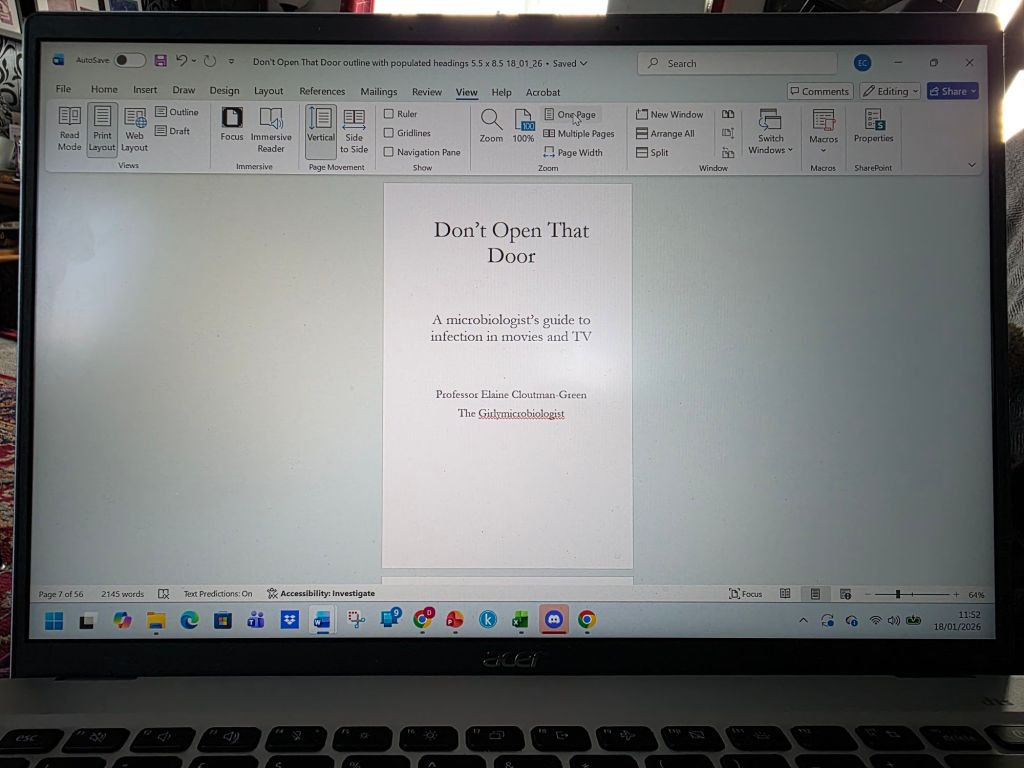
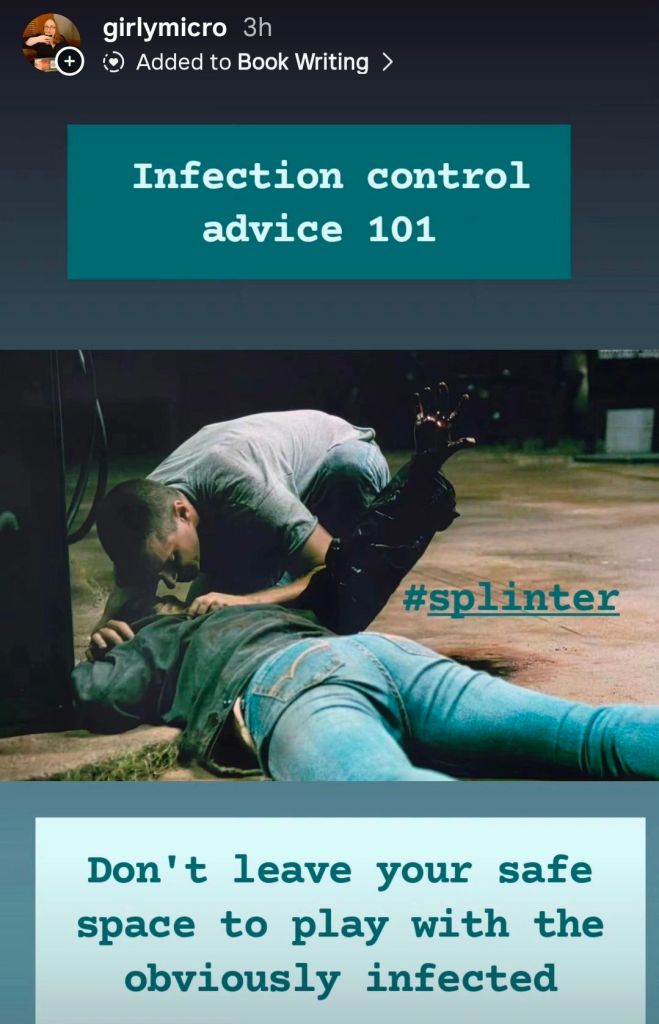
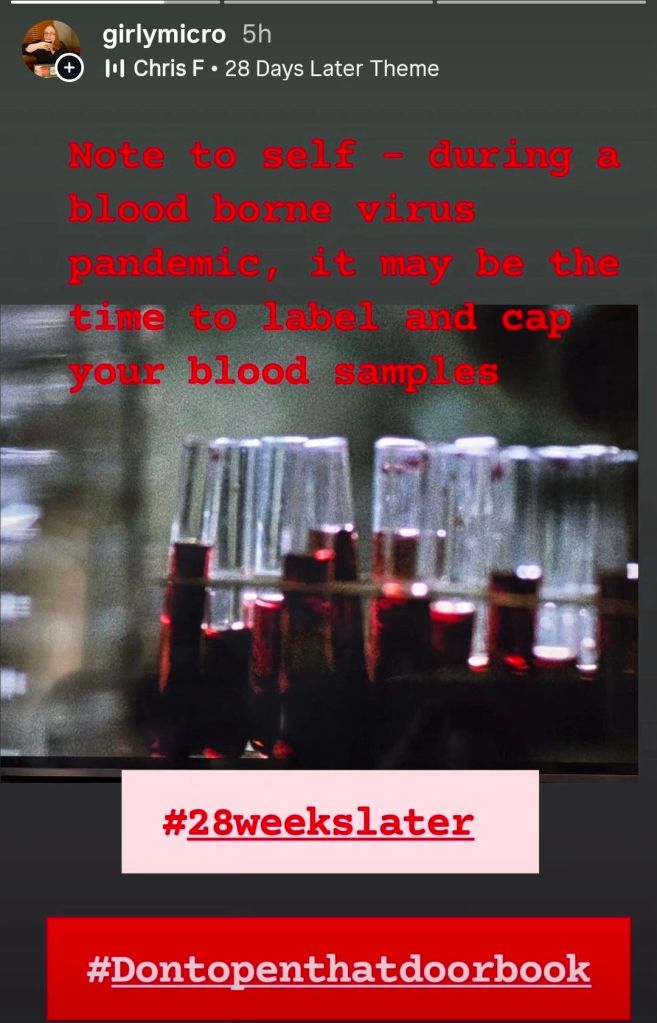
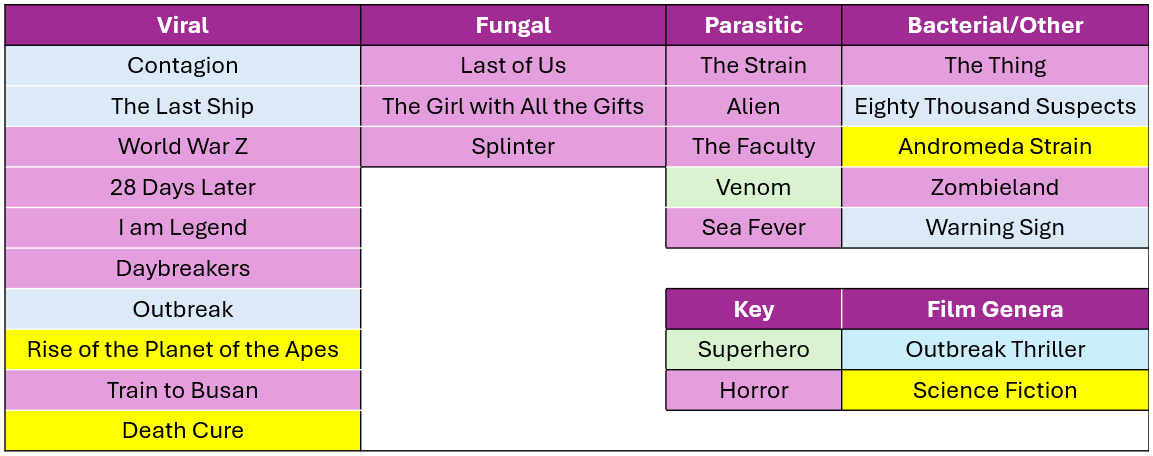
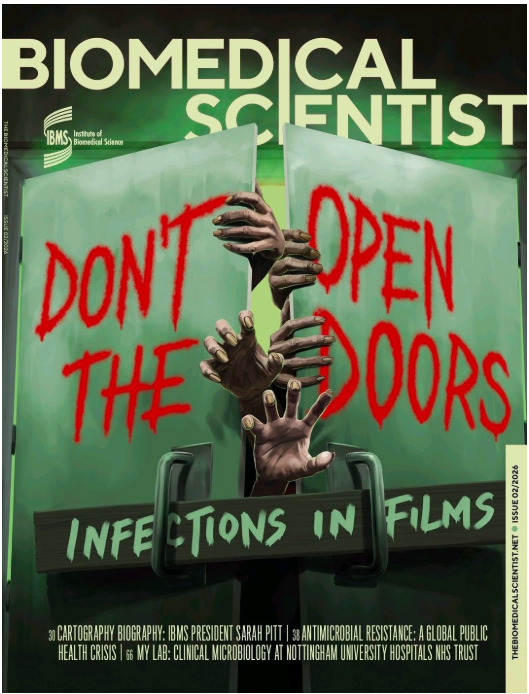
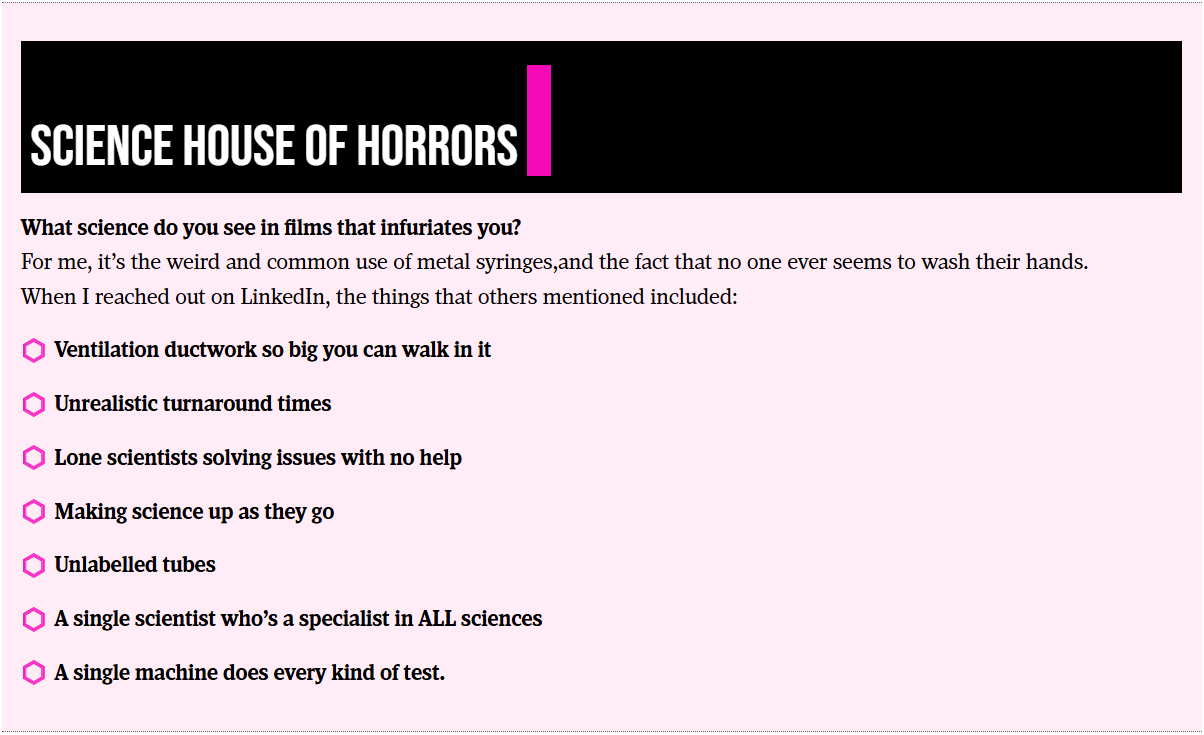
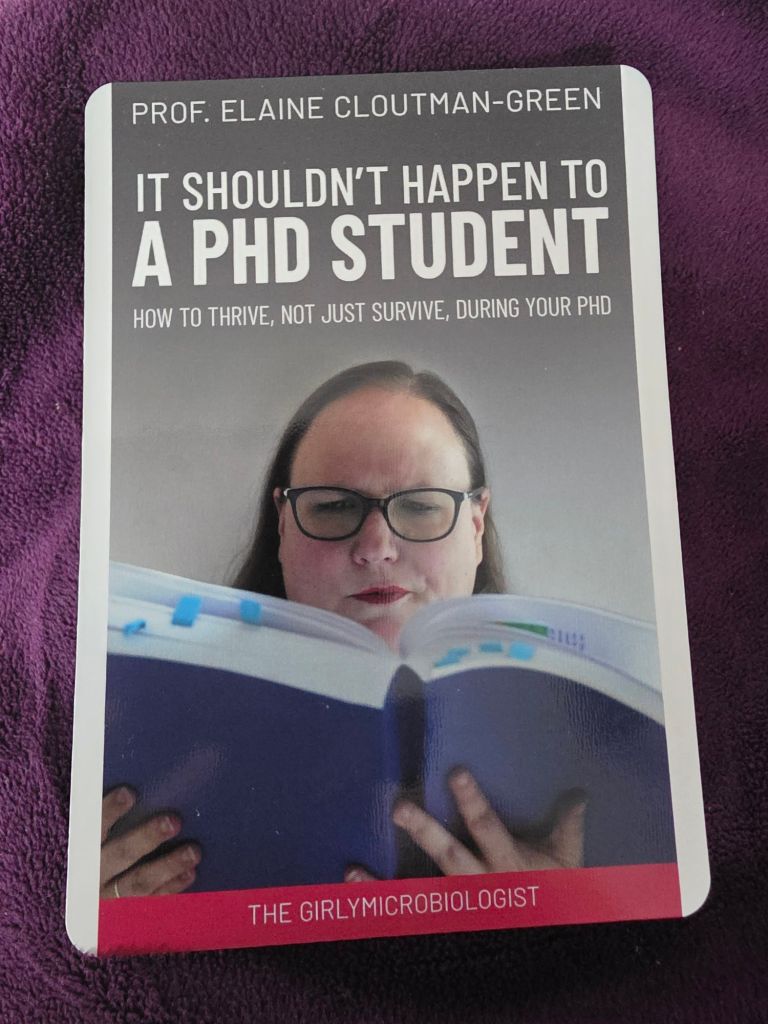




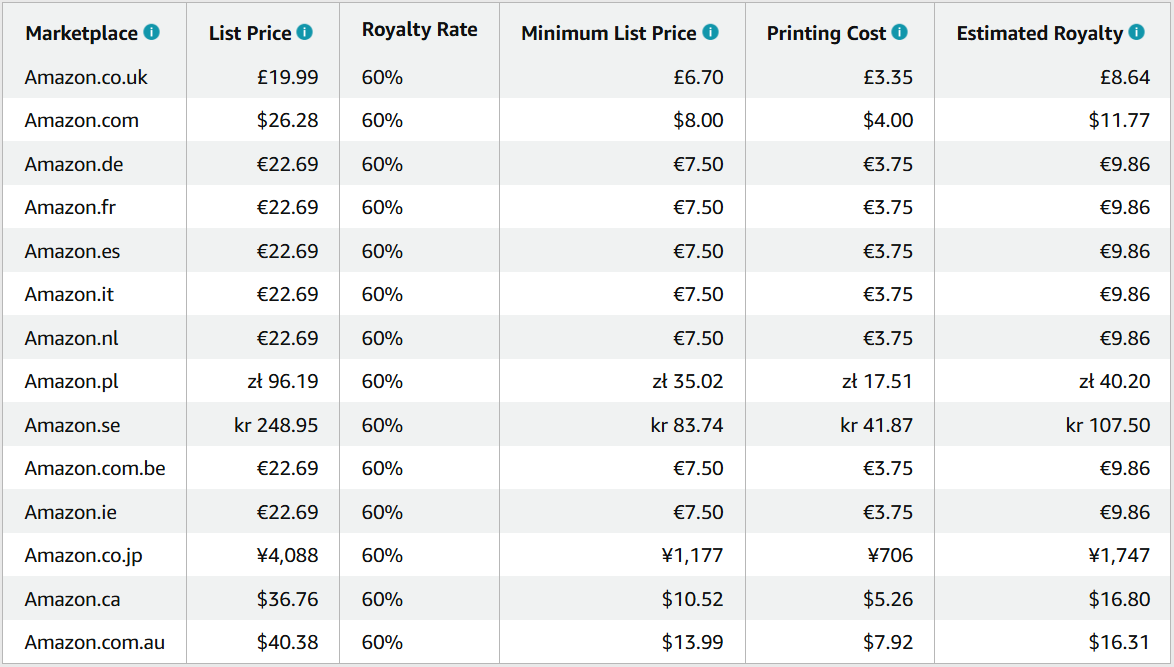

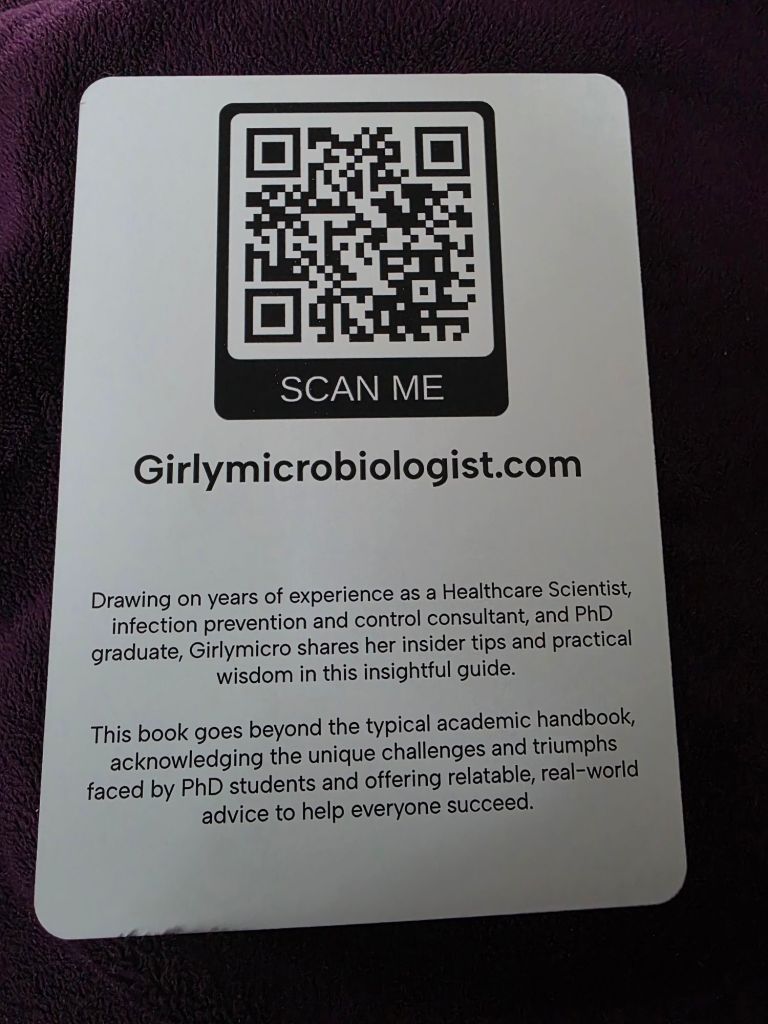

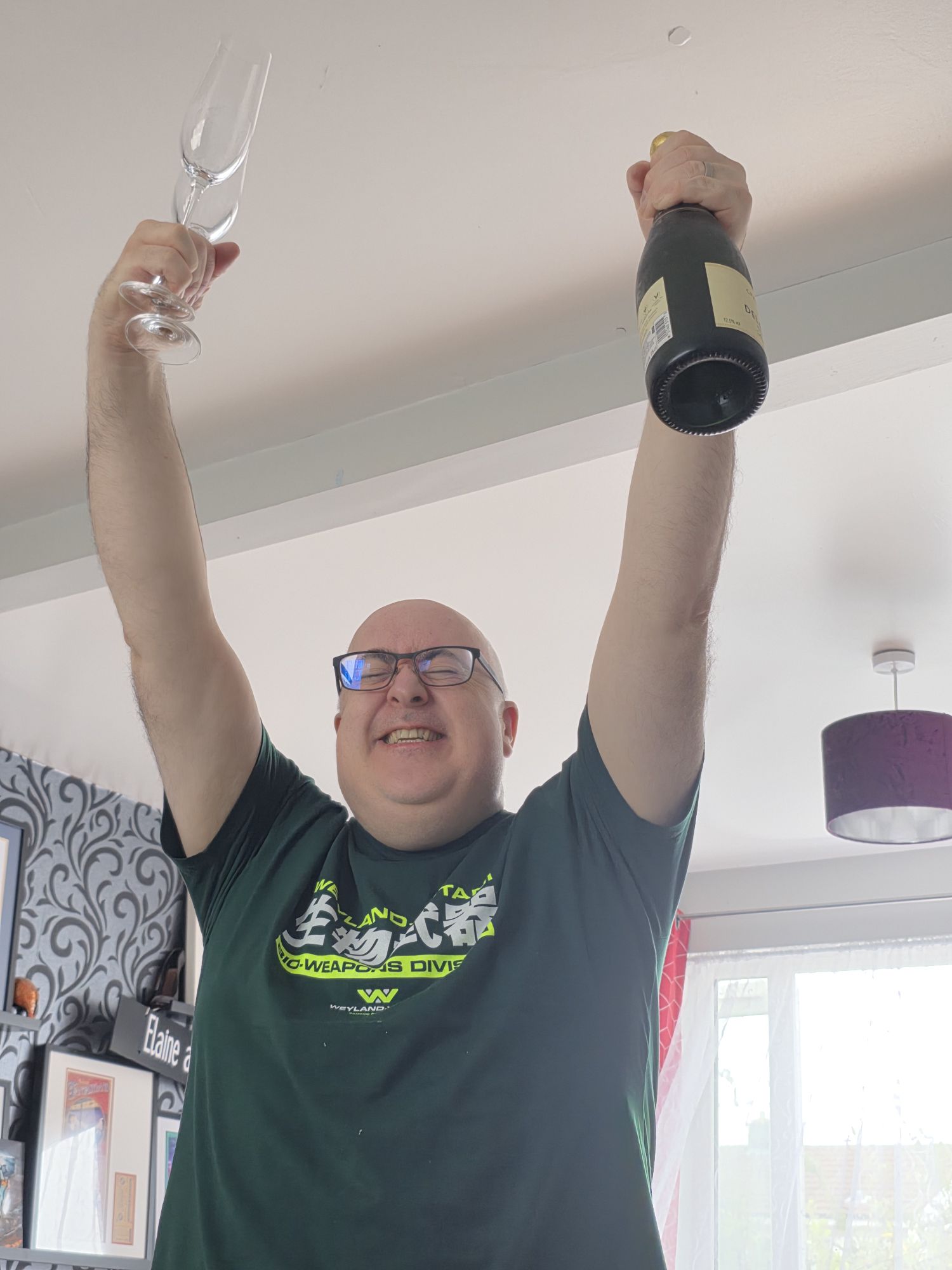


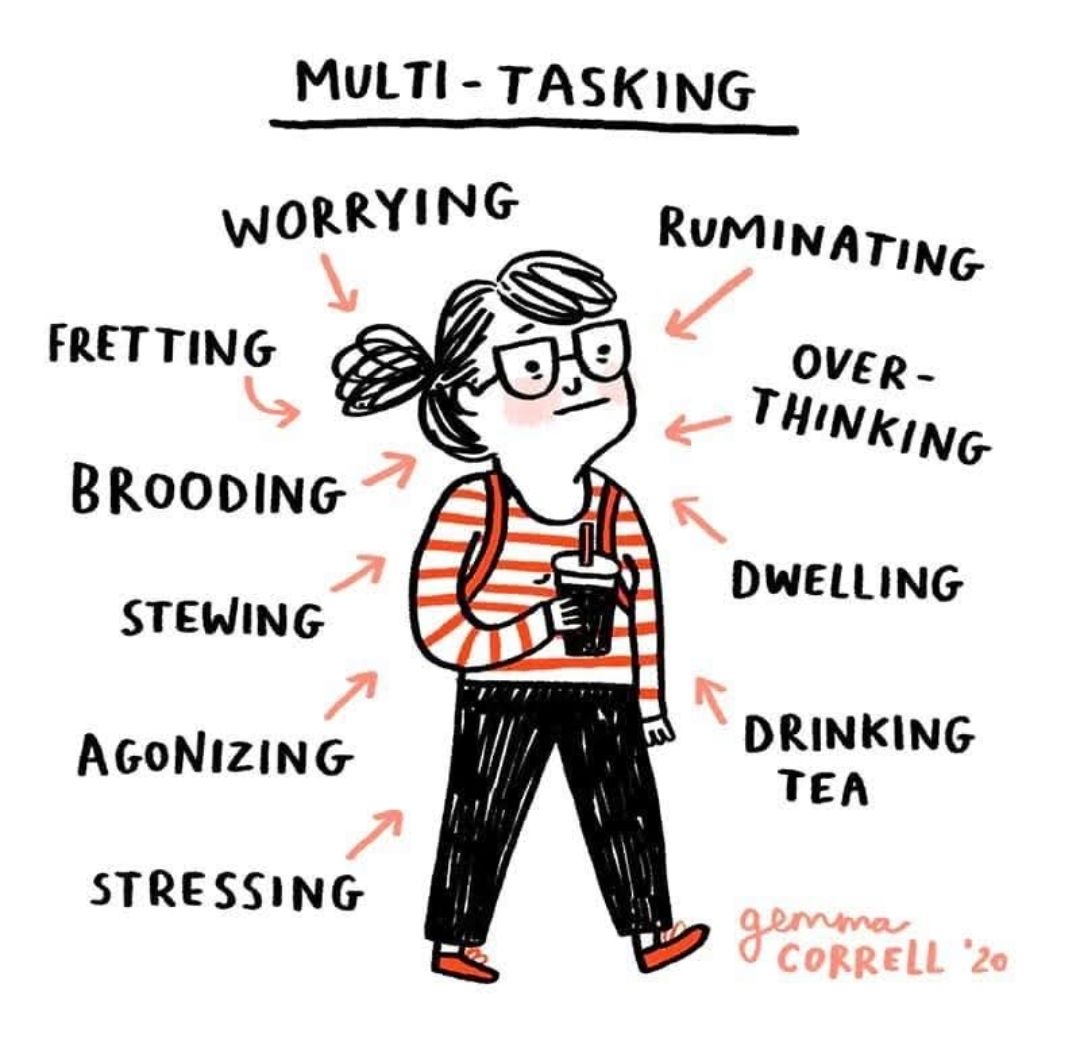
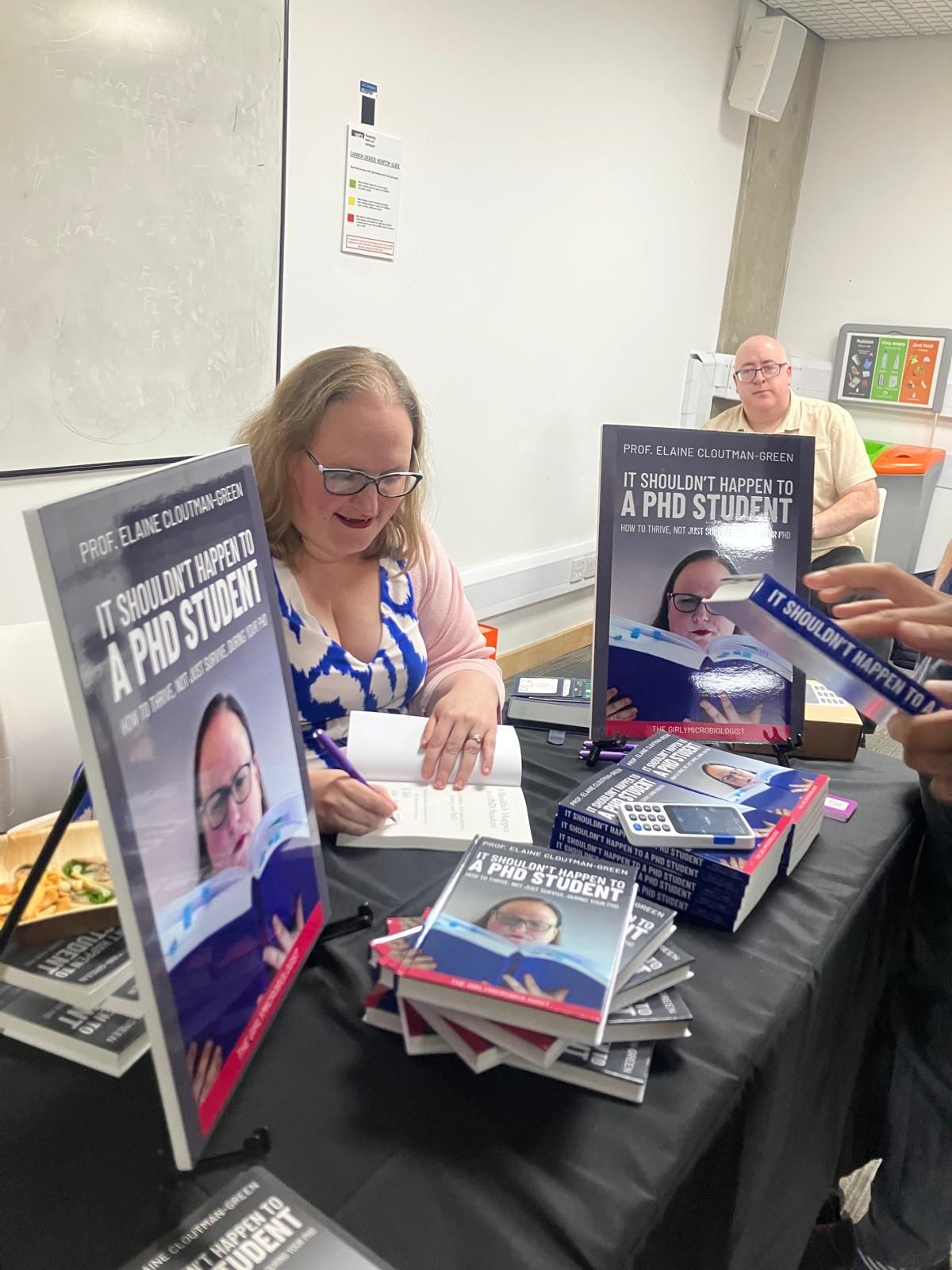
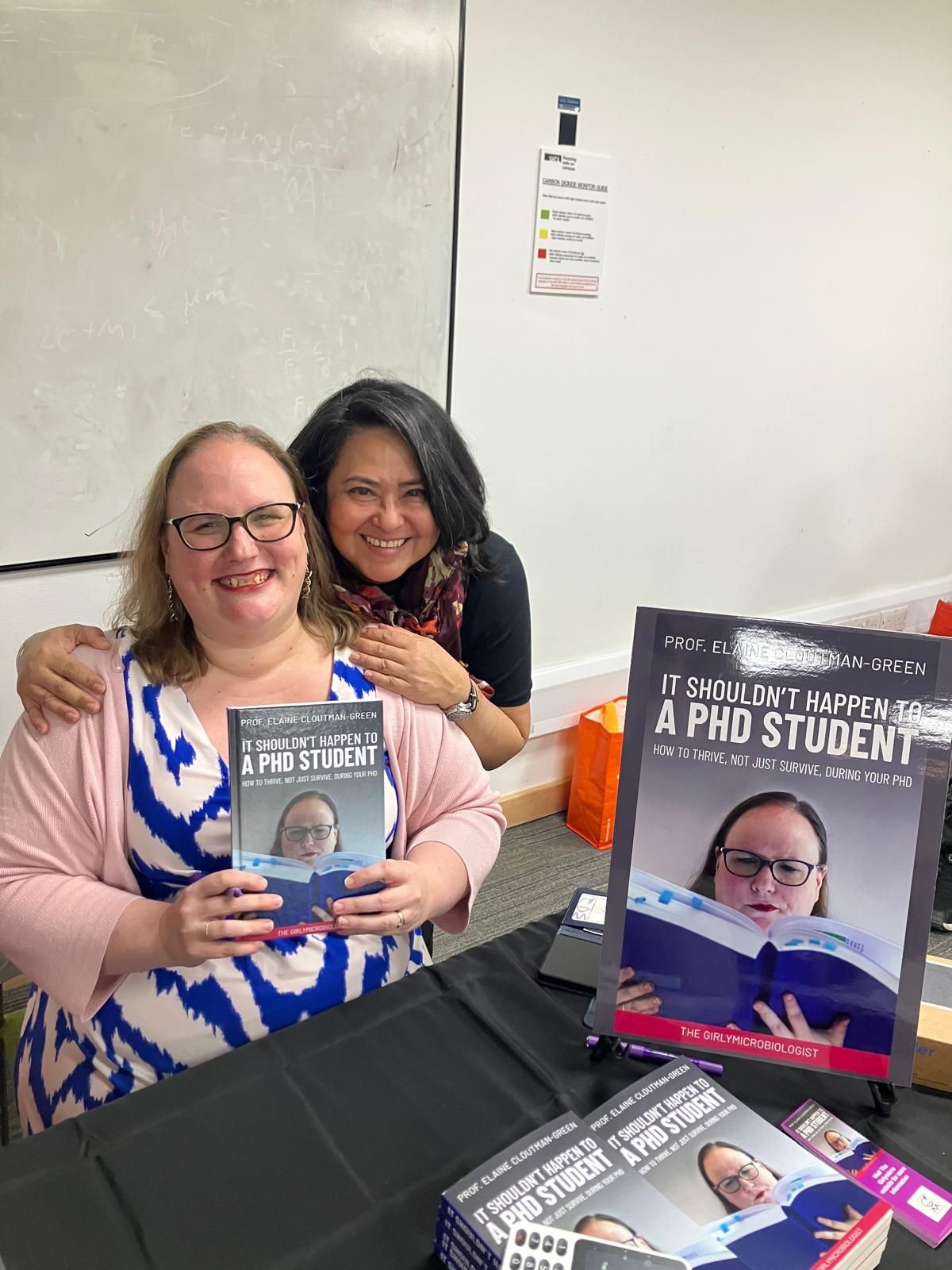
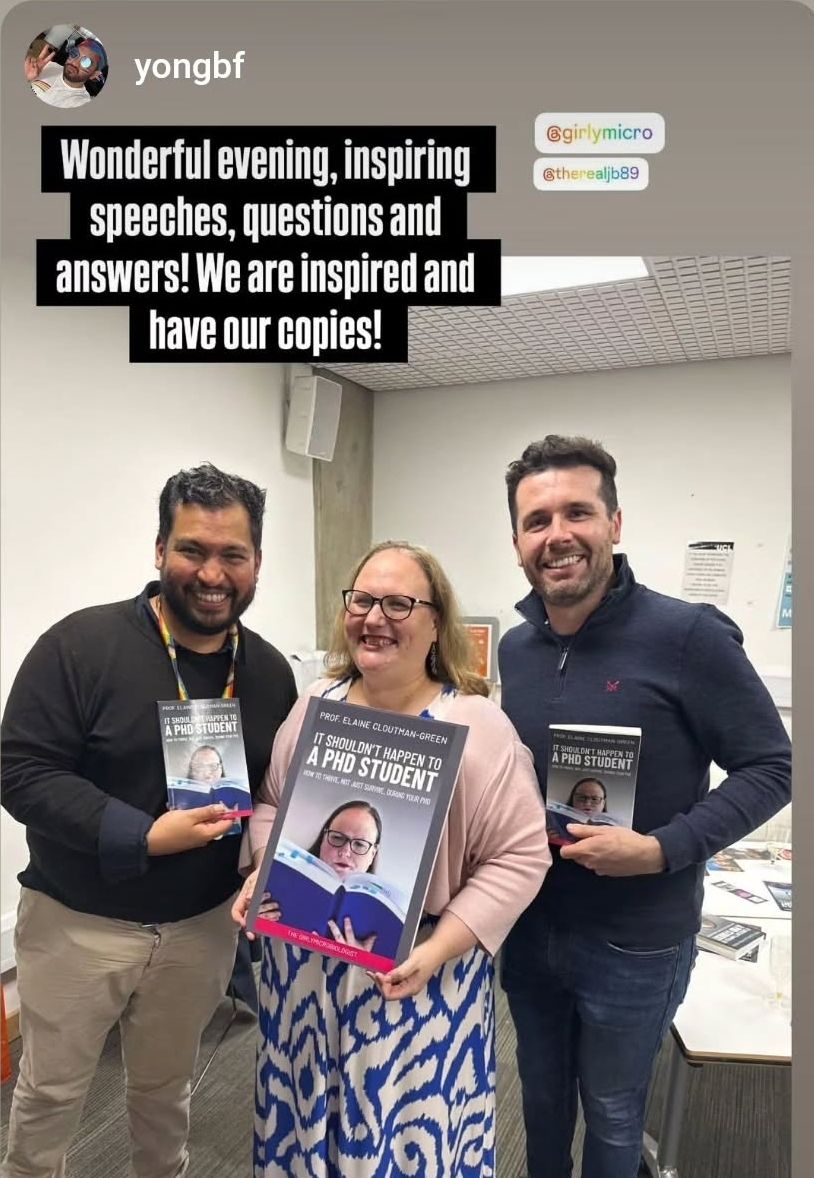




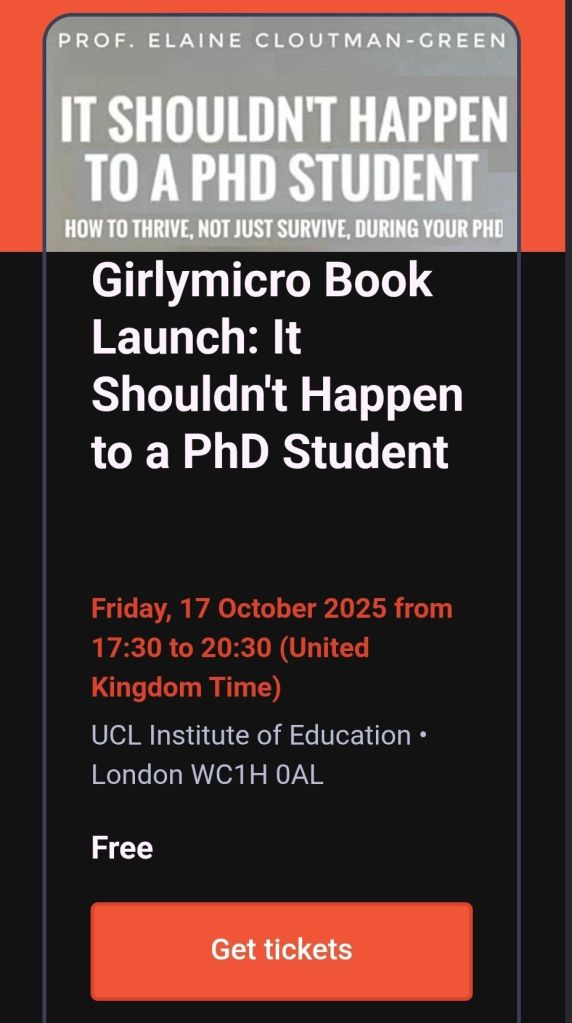




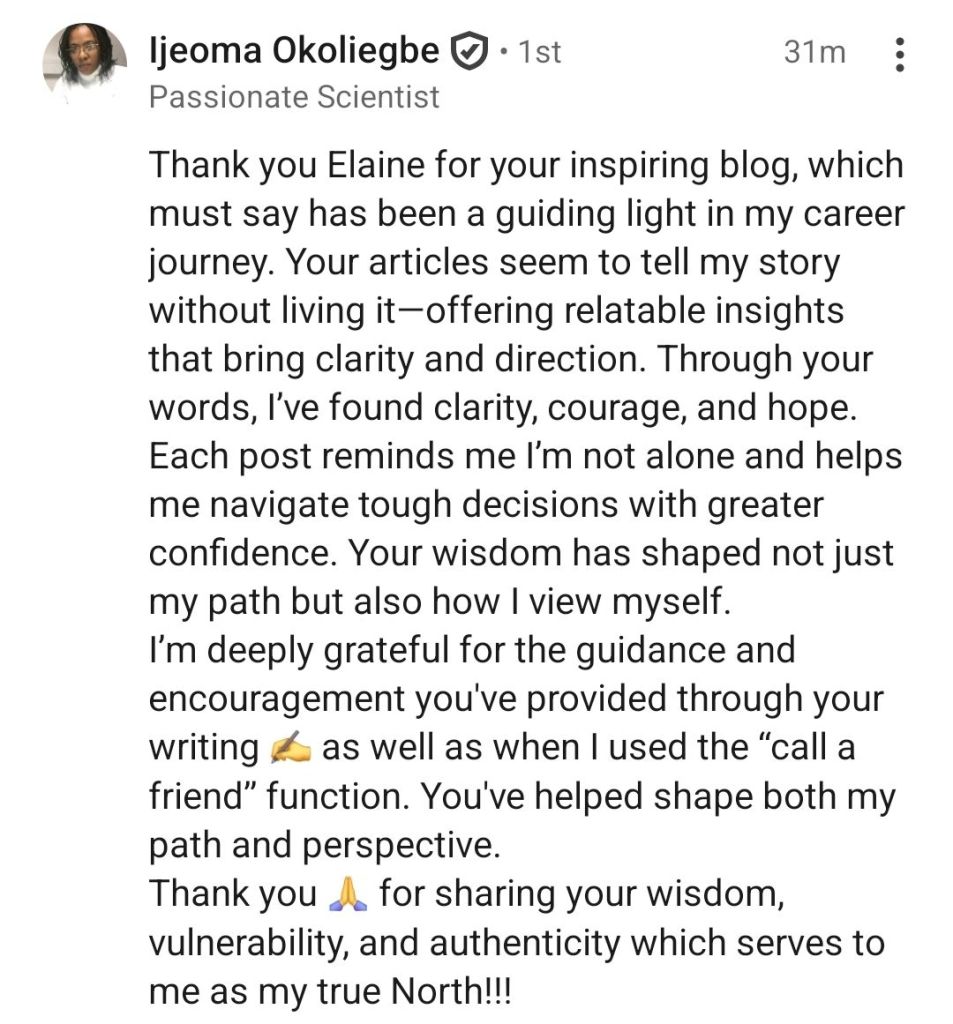
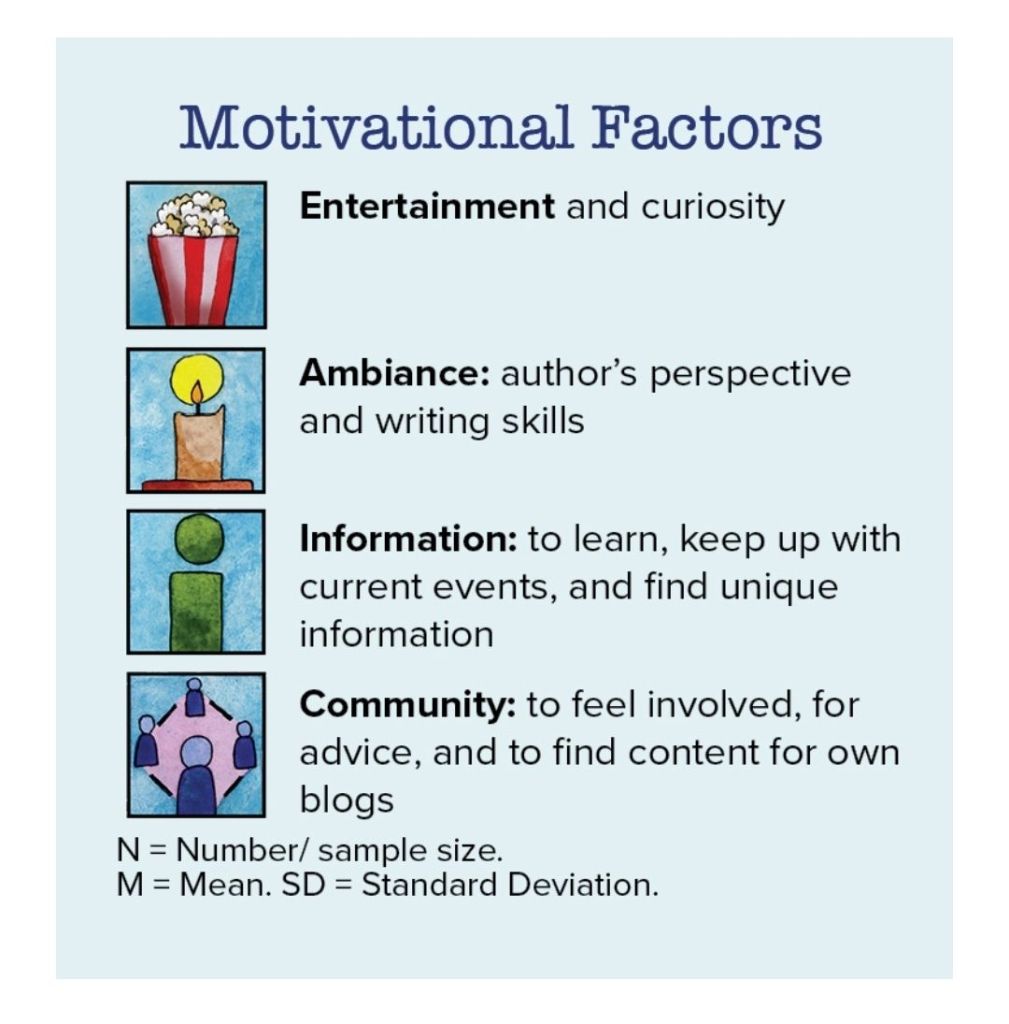













 Girlymicro