It’s OK to Mourn the Small Stuff Before You Move On: How riding the emotional wave has benefits in developing who you are

I suspect that many people opening this blog may be thinking that I’m going to write something about loss, and I am, but not necessarily about the loss of a person. So bear with me whilst I explain why I wanted to write this today, as it isn’t the post is I meant to write this evening.

This post was inspired by the re-emergence in my life of a giant Eeyore that my sister brought me when my mother in law sadly passed away. He’s almost the same size as me and gave me huge comfort on my first encounter with significant grief. Then my sister passed away unexpectedly and he came to represent a lot of loss I couldn’t process. That was over 15 years ago, and today he has finally come out of the attic to live under my desk, regaining his position of comforter. I’m not over what happened to my sister, but I’ve finally reached a place where the things that I associate most strongly with her are things I want in my life, rather than being a trigger for trauma. How does this connect to a post about wider emotional processing? It struck me when he gained his new position that we make time and allow for grief about the big things, but the need to go through similar, shorter, processes for other scenarios is seldom acknowledged.

I’ve posted before about how important it is to celebrate, both the big and the small things, and today has made me think about how the converse is probably true, do we need to acknowledge and make room for grief and mourning in response to less dramatic changes in our lives? Often we are told to ‘buck up’ or ‘pull it together’ but for specific, delineated time frames, should we actually just hand each other a box of tissues and some ice cream and accept the benefits of a good wallow?

I think there is a certain amount of social acceptance of loss related to people and the grief associated with it. It strikes me, however, there is much less acceptance of loss related to other things. Loss that occurs to all of us during our lives and can impact how we see ourselves or the world. Missing out on our dream job, drifting from a close friendship, or even the loss of a favourite pair of shoes. These things may  sound small, but variations of them will impact us all, and if we save permission to feel sad and grieve only for the big things we may not deal well with the impact of routine losses that end up hitting us just as hard because we’ve ignored processing them. So in contrast to celebration, I thought I would talk about the moments that I consider ‘wallow worthy’ and encourage us all to allow space for a little mourning.

Mourn a vision of the future that will no longer be

In my post about losing my sister I talk about the loss of the idea of being a mother and developing that new family unit. There are plenty of other ways this form of loss can hit however, all of which are still valid.

There are many things in life that we can sometimes take for granted when we are younger. The fact that we will find Mr/Mrs/They right and will have companionship. That we will have a permanent home that we enjoy. That we will have a sense of community and a way to express ourselves. Things that are just assumed will happen at some point, but in some cases, and for some people, never quite arrive. It doesn’t mean that not having those things will make you unhappy. I know many people who are content without some or all of those things. That doesn’t mean, howver, that there won’t be moments, days, or even weeks, where you don’t mourn the fact that some things that are just considered ‘a given’ haven’t been given to you. Contentment does not rule out a sense of loss at what might have been and it is OK to recognise that and mourn it for a while, despite acknowledging that you are still content with your lot. In fact, going through the acknowledgement and mourning process may be the only way that you truly come to terms with the reality of your life.
Mourn the loss of your sense of identity

There are numerous points in our lives when we change how we view ourselves. When you become parents and leave behind a phase when you can focus entirely on yourself. When you retire, and have to discover who you are when you no longer have the structure and identity of yourself as part of an organisation by which to define yourself. There are many reasons why your sense of identity could shift, and many of them are actually positive. The positive direction of travel may not however mean that you don’t mourn and miss who you were before. In fact, this is one where acknowledging the change may be a really important health and wellbeing piece to ensure success in your future identity.

We all know those people who cling tightly to who they were in their twenties, even though decades have passed, or the people that retire who can never really step away from their old place of work. Denying that our identities are rooted in both time and place, and that letting those go requires a level of emotional processing, can lead to less healthy long term outcomes. This one can be especially tricky as we are often expected to enter new phases of our lives with unconditional joy, and being sad or worried about what you are leaving behind is often taboo. It is essential to acknowledge the complex emotions linked to these transitions however, in order to make them well.

Mourn the loss of an aspiration unfulfilled

There is never enough time. Long and short, time is a limiting factor. You may not be able to get onto that PhD that spoke to you, write the book you’ve been talking about down the pub for years, or give a key note speech at a conference. Aspirations are tangible goals that are possible to achieve, and therefore it can sometimes hit even harder when you stop to reflect 20 years on and you haven’t managed to tick a box on your list that you’ve been hanging onto for years.

There are all kinds of reasons why an aspiration may not occur. Sometimes, life takes us in a different direction. Sometimes, you don’t manage to make the time or succeed in the steps that lead up to the final goal end point. The fact that it should be achievable can make the lack of fulfillment hurt even more. It can often feel within reach, and yet keep slipping away.

Without being able to reflect, and experience the emotion linked to the loss, it can be challenging to decide if the aspiration is still important enough that it is worth trying to achieve. Without looking into the face of it and mourning how the loss feels, you can’t decide how much you are invested in the outcome. Feeling the loss is crucial in determining fresh priorities for the future.

Mourn the loss of a dream

For me, the difference between a dream and an aspiration is the likelihood of it happening. Dreams are less based in reality. There is often not a tangible 10 step plan you are following to get from point A to point B. It doesn’t mean that you will be any less emotionally invested in them. In fact, we are often more invested because we are aware of the challenge that dream will face from others.

I’ve known multiple people who were exceptional dancers who had their dreams of dancing professionally taken away by injury. I’ve known wonderful writers, who have given up on their dreams because they had families to support and the jobs required to do so meant they let go of their dreams to focus on their reality.

Dreams also form a part of self identity, and letting go of a dream can, therefore, cause us to be confronted with the reality of who we are and what we can actually achieve. This process can be incredibly painful and letting go of that hope for the future requires going through a grief process. People will often say that you should just get a new dream, but to actually do that requires you to truly process the loss of the old. So, no matter how much the dream felt like a work of fiction, its removal is something that needs grounding in emotional processing in order to move forward.

Mourn the loss of an ideal

This one I find particular interesting at the moment. I work for an organisation I love, but because of system changes outside of any of our control, it no longer feels like the place that I have loved and been invested in for over 2 decades of my life. It is still there, but feels tarnished somehow. The same can happen with people you love and respect. There is, after all, the famous saying that you shouldn’t meet your idols, and that is often because they often won’t live up to the ideal we have set for them.

I still love the place I work, but I am seeing it through a lens right now where I am confronted with sides of it that don’t look the same now I have removed my rose tinted glasses. It doesn’t mean it’s bad, it just means that to be able to continue to work there and maintain my commitment, I need to acknowledge the difference and mourn the loss of the ideal I used to hold.

There are so many examples of this right now, from how I feel about the political scenario in the US, to the disappointment I experience at the reported behaviours of some of my favourite writers or directors. It does no one any good to pretend that the complexity of the world do not exist, but I sometimes mourn the loss of my naivety. It may that being more enlightened is a good thing, but a period of mourning to move on is still required to help me process and plan for my new reality.
Mourn the loss of an opportunity

This is one I’ve talked about before, in talking about my process for handling failure whether linked to papers, grants, or other things. It is not possible to be 100% successful, in fact within the failure is the learning that is so important to succeeding in your eventual outcomes. I’d be lying if I said that failure is fun though. Even with a growth mindset, where you embrace the positivity of failure, it can still get to you.

I allow myself a short defined period of mourning and wallowing when I am confronted with failure, in order to allow me to take the next step bravely. This kind of mourning of the loss of opportunity can link to everything from job applications, to trying to get tickets to Glastonbury. You may learn from the process to be able to increase your chances of future success, but if you don’t process the failure you may be too disappointed to try again or approach the next chance with the learning necessary to increase subsequent chances.

For me, a great example of this is when I need to respond to reviewers about a paper. If I haven’t stepped away from the reviewers comments in order to just mourn and be irritated in response to their criticism, when I come back I will respond from that emotional space instead of from one of balanced logic. This is likely to make the response less well balanced, and possibly lead to additional unnecessary failure. Allow myself 48 hours to step away and wallow however, and I’m good to go with the next step.
Mourn the loss of a connection

Someone recently said to me that friendships are for a season, and it’s really stuck with me. My life has diverted substantially from the lives that some of my close friends lead. They have gone on to have families, which are understandably a large focus of their time. There are parts of their lives and conversations linked to their day to day realities that I simply can’t partake in. When I have been surrounded by a group of friends who are all young mothers, I simply don’t have the context to discuss the best cream to deal with nappy rash or the latest school communication on head lice. You therefore become less and less present within their lives.

They also probably don’t understand my joy at getting 5000 words down for my book on a weekend, or how excited I’ve been to record a specific podcast. It’s not that I love them any less, or they me, we’ve just lost some of the grounds for connection that we previously had.

It’s OK to feel sad and mourn the change, but it is part of life, and so acknowledging the way you feel is important, otherwise it can actually get in the way of friendships and lead to them ending when they could otherwise continue, just in a different form.

I have to be honest here, and say I have been with the amazing Mr Girlymicro for over 20 years so I don’t have good experience, but I imagine the same is true with dating and other forms of connectivity. To develop a new type of connection, you need to acknowledge the loss/change of the old, in order to build new foundations.
Not all loss is big but it’s OK to recognise what it means and why before you move on

Many of the things I’ve talked about are big things, but I just want to throw in a call here for being able to grieve for the loss of the little things (in a proportionate little way). The loss of you favourite dress because it has finally fallen to pieces through excess use, or because someone down the pub spilled red wine all over it. In my case, often the loss of a favourite teapot or piece of china, that holds emotional meaning for me and I’ve dropped on the floor.

Not everything has to be big. Some days, it’s OK to acknowledge that something sucks, and spend the time it takes to watch a weepy movie to help you process it. I embrace the fact that we support each other by trying to cheer each other up, especially as these mourning periods should have a time limit, but we should also allow a certain amount of ‘wallow window’ to let people truly process in order to make the most out of their lives.

Mr Girlymicro and I call this visiting the pit of despair. The pit of despair is filled with cushions, tea, and chocolate, but not so comfortable that you can move in there. So allow yourself to visit the pit when you need to, but make sure you keep the rope ladder to hand for when you need to climb out. It is a place to visit and come out renewed, not to exist within.
All opinions in this blog are my own

Marking my 250th blog post: Taking some time to reflect on Girlymicro

There’s a lot going on right now, and life is busy for everyone. Despite the challenges, this lack of time can mean that reflection and taking a moment to catch your breath can be even more beneficial. I can’t believe this is the 250th post on this blog and so, if you’ll forgive the indulgence, I’m going to be taking my own advice and spending a little time celebrating this milestone by remembering why I started, what I wanted to achieve, whether that has worked out, and where I would like Girlymicro to go in the future.

Where did it start?

When I chose Girlymicro as my twitter handle back in 2012 I had no idea of the decision I was actually making. I didn’t set out to have a ‘brand’, I never imagined that it would exist outside of a platform that I had newly encountered and was trying to learn how to use. That said Girlymicro was chosen with purpose even back then. I wanted something that allowed me to represent, and consciously go against some of the advice that I had heard during my career. Advice that said that I could be good but I would be better if I tried to fit in and not bring my whole self to the table. To accept that fact that I should be a scientist first and a woman second, and that by putting my femineity and female perspective forward I would isolate myself and limit my ability to succeed. That scientists didn’t look like me. I also wanted to show that I can be Girly in a non-traditional way, I don’t wear lots of makeup, I don’t worry about my appearance, but I enjoy being feminine despite all of those things. I wanted to say I like wearing pinks and purples, and I can also still be good at science. So, Girlymicro was born.

Roll forward to the end of my PhD and I had discovered a love for science communication, and how education can be done differently. It didn’t all need to be lectures, where someone knowledgeable stood at the front of the room and gifted knowledge to those who sat passively within the space. That knowledge could be co-produced instead of given.

This inspired me to start thinking about how I could make a difference in this space. In 2015 I didn’t really know what it was that I wanted, I was still very much thinking about options but I hadn’t pinned anything down. For me, looking back, this shows that sometimes having a passion is the best place to start. You don’t have to have all the detail mapped out, and sometimes knowing what you don’t want to do is almost as important.

When I started to investigate the science blogging space, a lot of the blogs were very technical, highly referenced, and very science forward. These were all brilliant blogs, the trouble was I was pretty sure they weren’t what I wanted to write. This was for a couple of reasons, I’d just finished writing a PhD thesis and a whole bunch of papers. I knew that I could write that kind of work but I was aware that writing that every week would be incredibly time consuming, not necessarily teach me new skills, and not reach the audience I wanted to speak to. I also knew that I wanted to keep the Girlymicro mentality of bringing my whole self and so something that felt one dimensional didn’t tick my boxes for a project that I knew would require a big time investment. I knew that wasn’t right for me, but I had yet to work out what right looked like.

Where have I been?

In 2015 I registered the Girlymicrobiologist domain therefore, whilst not completely sure what it was that I wanted to do. Sometimes I knew you just have to get started. I put out my first, very short blog post, and then frankly kind of chickened out.

It wasn’t until the pandemic that I finally crystalised what it was I wanted to write and who it was I wanted to speak to. By the time my second blog post was launched I’d worked with Nicola Baldwin, as a playwright, on the Nosocomial project. I’d really started to find my feet in terms of knowing who I was as a communicator. I had also spent over 6 months doing various radio and comms linked to the pandemic, and I was getting really frustrated at the fact that all of it boiled down to sound bite communication. I didn’t have a space where I could speak without an intermediary, or where I could explore the complexity of what was happening. That dissatisfaction combined with the fact that I was increasingly aware of the fact that there may be people who were interested in engaging with this kind of content, due to questions across social media and from my friends, meant that I finally got over my fear and put out my first real blog post.

You’ll see that these early blogs are all pretty short. They are definitely Girlymicro blogs, but they fit into the expectations of the time when they will written.

We all know I love a bit of research, and when I started writing regularly I obeyed the rules of the time. That was that blogs should be 500 – 900 words and three pictures. I also really felt the need to demonstrate my credibility, to show that I had the right to be writing. I felt I had to prove to people that I was worthy of their time (not that I don’t now, but it feels different). All of this means that the early blogs feel a bit different to the ones I post today.

It took me longer than I would have thought to get to the point where I could finally do what I had set up my Girlymicro twitter handle for back in 2012, and that was bring my whole self, good, bad and sometimes mortifying, to my blogs. To share weakness as well as strength, and on occasion to write blog posts that are about things I’m exploring and don’t have any answers to. It took me quite a while to be brave and find the courage to throw it out there and deal with whatever reception happened.

It also took me a while to share the big moments, and to think that was OK, rather than being considered boastful. I clearly remember the anxiety of posting about receiving a New Years Honour, and even making consultant. Despite that anxiety I have chosen to live by ‘you can’t be what you can’t see’. It’s really important to show that someone as normal as me can achieve, and that those routes are open to everyone. It’s not about being special, or exceptional, it’s about bringing your whole self and continuing to show up, even on the bad days. Therefore being out there and visible is important both to show what can happen and options to get there.

It took me even longer to think of myself (and I’m not entirely sure I still do) as a writer, rather than someone who writes. I don’t think of myself as a particularly good writer, my knowledge of grammar is super weak. What I’ve learnt though is that, if you write from the heart, if you have something to say that is well intentioned and written to support others, then people forgive you for any lack of skill. You also won’t learn and get better if you don’t practice, so I’m practicing in a safe space with a load of supporters who are prepared to think the best of me.

Over the last 10 years, whether actively writing or not, I’ve learnt a lot about myself, how I want to communicate, and who I want to communicate and build a community with. It is that learning that has helped me develop and build. The feedback and support has been invaluable, and it’s help me to know that it is OK to learn and evolve as I go. It’s then so important to share that learning so that the next person looking to start a blog can build upon knowledge already gained and make something that works for them.

What has made me continue?

Life gets busy for all of us, and it can be challenging sometimes to get a blog out every week, plus we all know that sometimes I fail to deliver. Frequency is key though, both because I don’t want to let everyone down, and because it is all too easy to fall out of the habit of writing if you start skipping weeks. Those were the reasons for posting regularly at the start anyway. If you read any ‘how to start a blog’ page it will tell you about the importance of regular content updates.

I don’t think that’s the reason why I post regularly now and feel unsettled if I miss posts these days however. I think that I have come to find writing an invaluable way of sorting through my thoughts and processing my responses. I started writing a blog for the benefit of others, but I have discovered how much creating a regular space for reflection, as part of writing, has massive benefits for me and my well being. It’s become a habit that I absolutely don’t want to break, plus I have 350 plus posts in draft so it’ll take me time to get through them.

I also feel that as you build and develop you are able to see the vision more and more clearly, and so what you build naturally changes. I didn’t deliberately set out to post on key topics such as Infection Prevention and Control, Healthcare Science, Leadership, Academia/research and personal growth, but looking back now I can’t see that Girlymicro could have been anything but what it is. It started from a place of authenticity, and so what has developed is something that is uniquely me, and I couldn’t be happier.

What’s my current reality?

Talking about what Girlymicro is now, in the world of AI I thought it would be interesting to see what Gemini (Googles AI) thinks of the Girlymicro blog. So If you hit up Google and ask ‘what is the Girlymicrobiologist blog’ it comes up (as of the 22nd June 2025) with the below:

The Girlymicro blog is a science blog written by a Healthcare Scientist and Infection Prevention and Control Consultant named Professor Elaine Cloutman-Green. It focuses on various topics including leadership, academia, Healthcare Science, infection control, and personal experiences, with a strong emphasis on community and raising awareness within these fields. 

Here’s a more detailed breakdown:

  • Focus Areas:The blog covers a range of topics, including leadership, PhD tips, Healthcare Science, infection control and microbiology, personal experiences, and guest blogs/book reviews. 
  • Purpose:The blog aims to demystify science, make it accessible to everyone, and build a supportive community for those working in or interested in these fields. 
  • Community Engagement:The blog actively encourages interaction with the audience, featuring guest blogs to broaden perspectives and inviting feedback to improve content. 
  • Author’s Perspective:The author, Professor Cloutman-Green, shares her expertise as a scientist and consultant while also offering insights into her personal journey and experiences. 
  • Content Style:The blog features a mix of informative posts, personal reflections, and discussions on current issues related to science and healthcare. 

Now I know that AI will scrape a lot of what I wrote and therefore may be seen as just posting positive reinforcement, but I have to say that summary did not make me miserable. I’m pretty happy that it covers a lot of what I hope it would cover. When it is hard to write, it is sometimes nice to reflect and see if whether what you are doing still fits your purpose and the reason you started, so that alignment with my ‘why’ feels pretty good.

What am I proudest of?

Talking about evolution, when I first started I had never considered guest blogs or what they could look like. It took about a year for me to feel like I knew what I was doing enough to put out a call for people who would be willing to write guest blogs. Now, out of the posts published, ~13% are guest blogs, This is so important to me. I’ve always wanted Girlymicro to be a community, a community where we listen to and support each other. Guest blogs are an important component of that as they work to offer others a voice, and to be able to practice within what I hope is a safe and supportive space. Writing guest blogs enables others to feel supported in sharing their views, but also to try out a type of writing that authors may not have done before, and to build confidence. I’m especially happy that many of those who write guest blogs are undergraduates or early post graduates, where developing these skills and potentially raising their profile, might help them in their future.

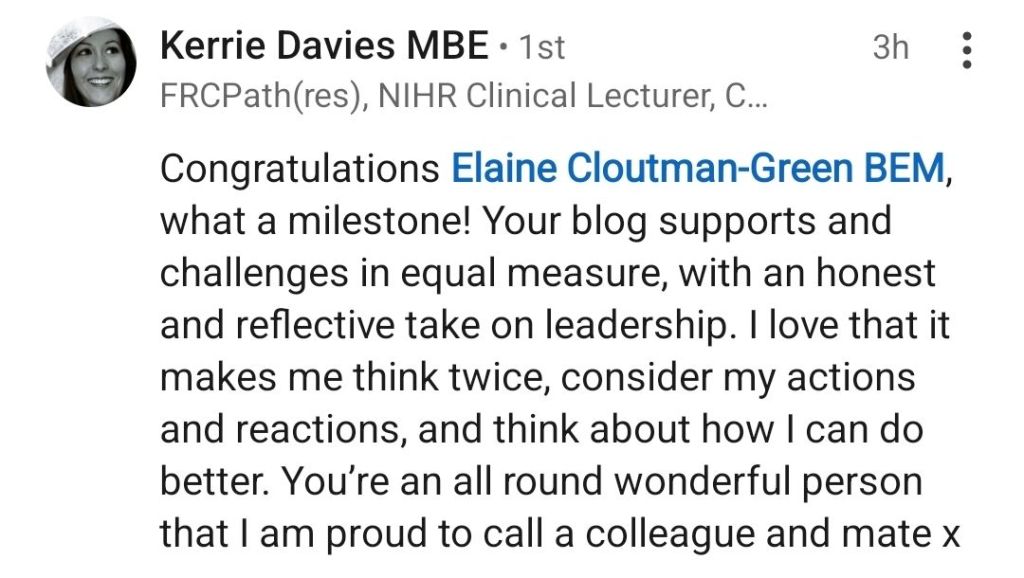
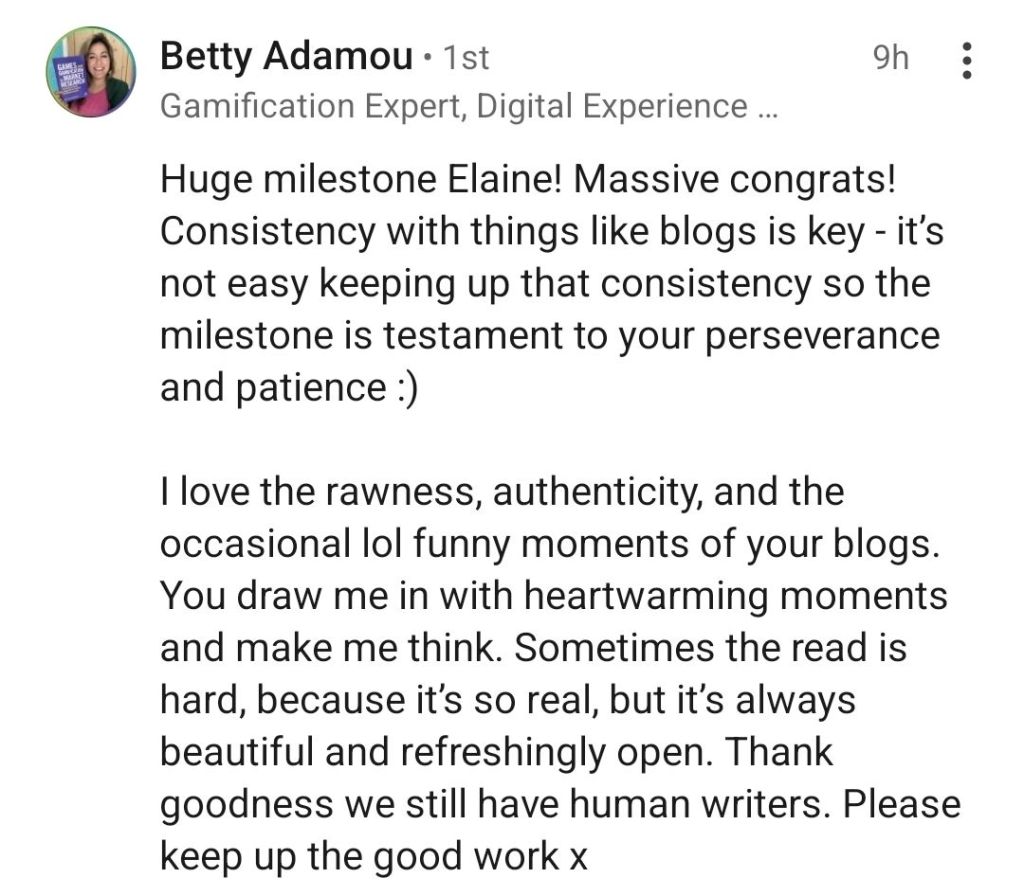
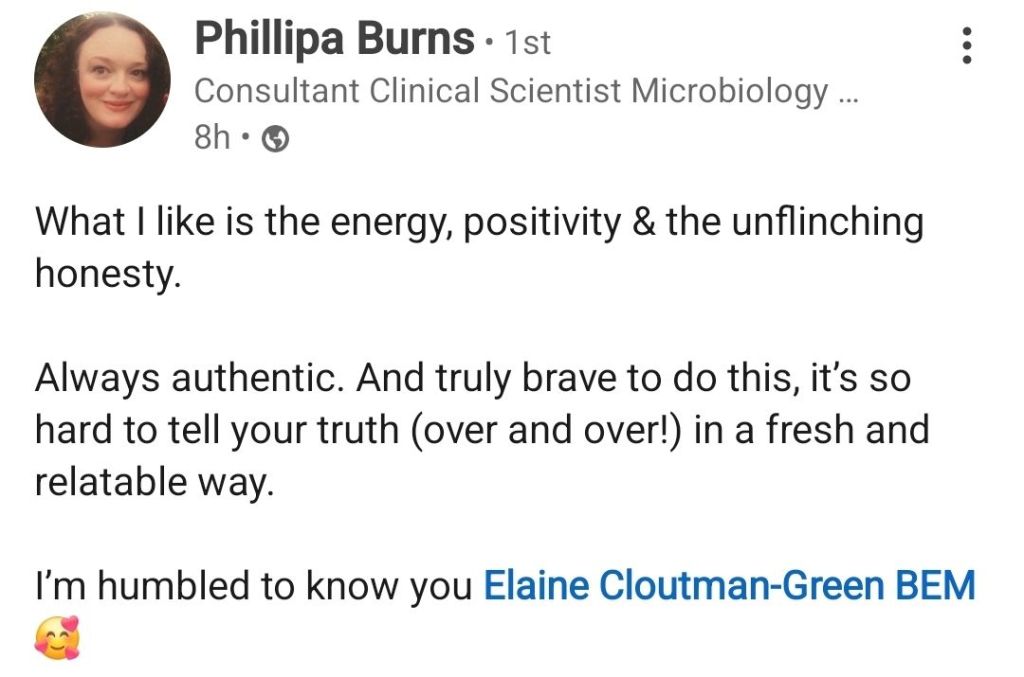
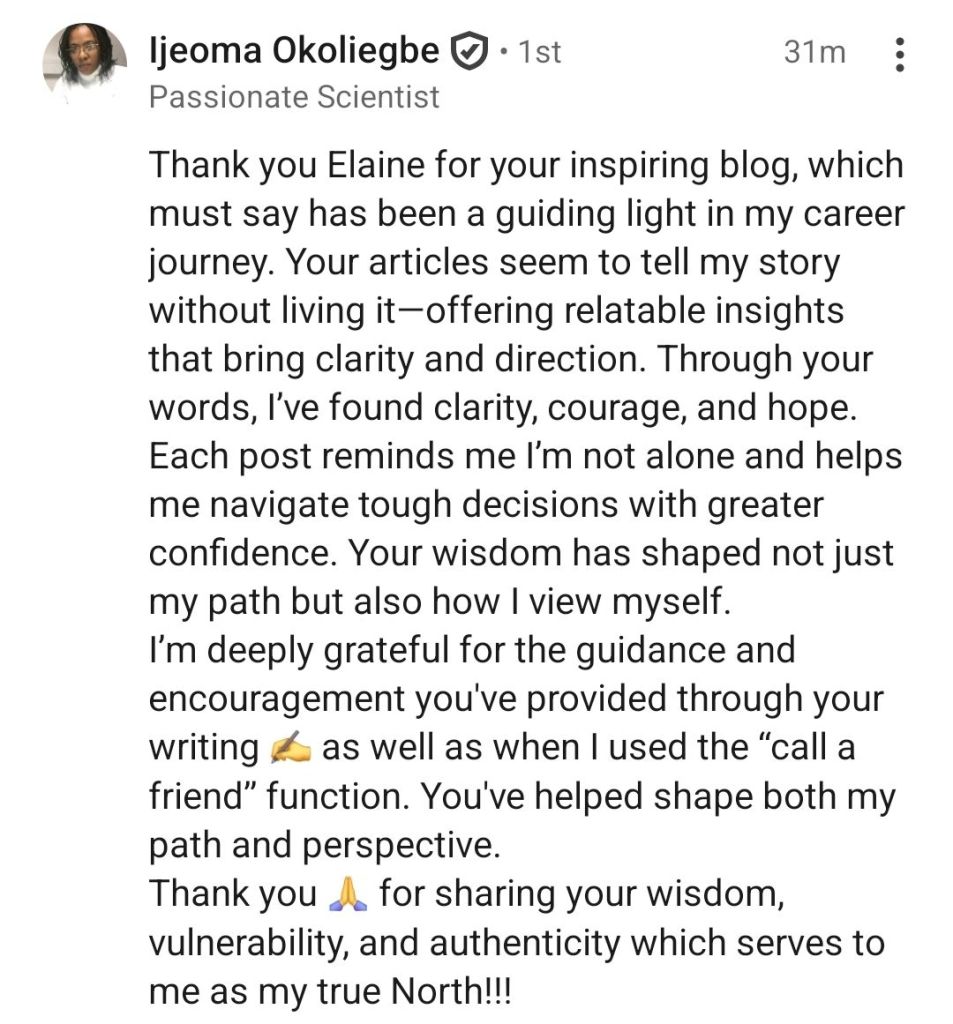
I know that I asked AI what they thought of the blog, but in order to be a little more thorough I also reached out across social media platforms in order to ask others what they thought. What they liked and found helpful, but also where it could get better. So whilst I’m talking about gratitude, I’m so proud and grateful for the responses received. When everyone is up against it, the fact that people took time to respond and give their thoughts means the world:

What are the lessons I’ve learnt?

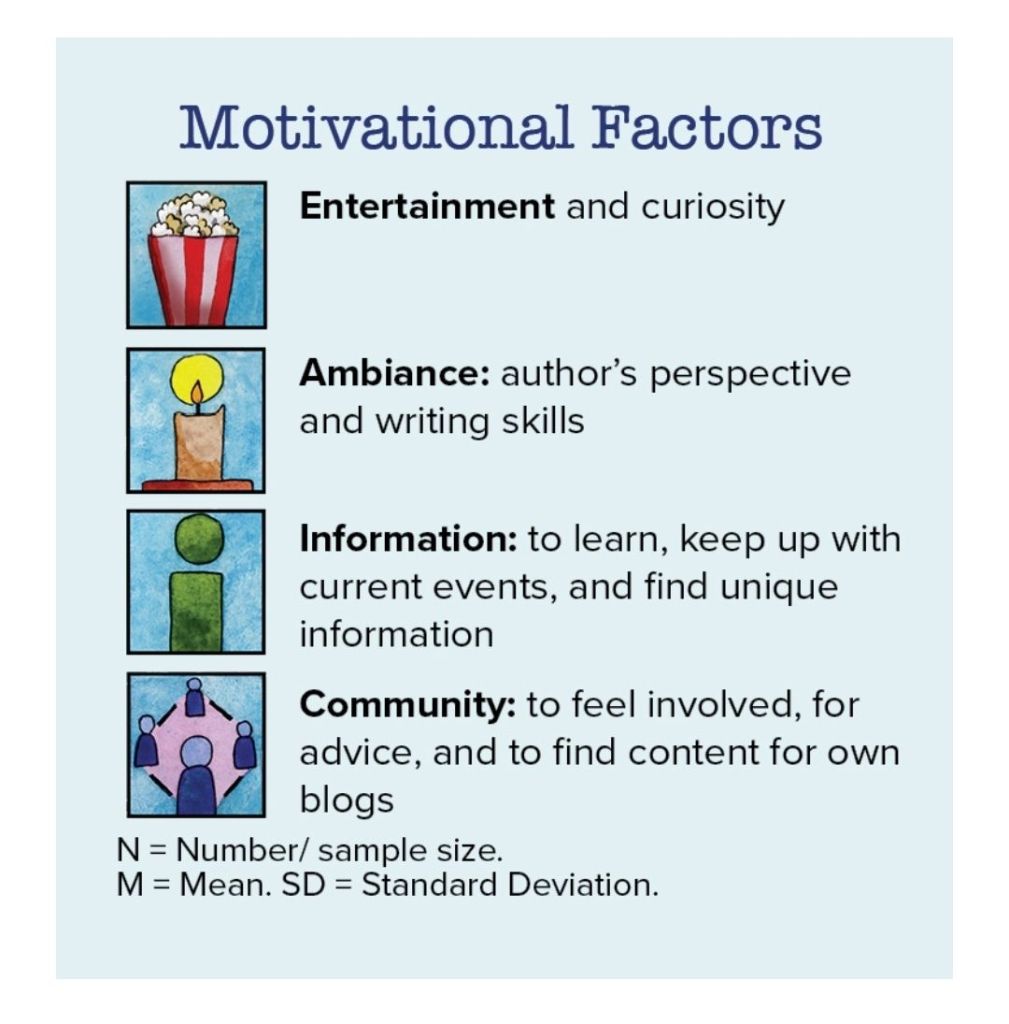
One of the thing I’ve discovered when speaking to people about this blog is that people read blogs for all kinds of reasons. Now, I know I said that I don’t write Girlymicro as a hard science blog, but I do always want to include interesting other pieces of reading where I can. Apparently, according to the article below, people read science blogs for a variety of reasons, and you can either try to double down on one of them, or do what I do, and hope to achieve all of the different aspects but at different moments and in different articles. This is probably quite obvious if you spend time thinking about it, but it was not something I had particularly realised. It is however one of the reasons why posting a variety of different types of content seems to work. Every day is a school day.

I knew none of those things when I started, and I will always continue to write the things that speak to me in the hope it is helpful to others, rather than trying to hit an algorithm or meet requirements laid out by others. That said, and as food for thought, I thought I would shared some of the lessons I’ve learnt over the last ten years, many of which could be applied to just life in general:

  • You don’t have to have it all figured out, but you need to have a direction of travel and a purpose
  • Things will change so don’t cling to where you started, be open to learning and evolution
  • Just keep showing up, even when you don’t want to, especially when it’s hard
  • Sometimes knowing what you don’t want to do is helpful and shouldn’t be dismissed
  • Take the risk, and make the jump. Nothing is perfect, failure will happen, but you will end up better for it
  • Have a little faith. Have faith in your gut. Have faith that others will be there to catch you and support you when you need it
  • Try to think about your community and building your networks. Focus on what serves them than what serves you only
  • Everything takes longer than you think and nothing is ever finished. Starting a project like this is a commitment of years with no end date. Make sure you have the passion to see you through
  • If you bring your whole self it will always be a success, as it will be truly and uniquely you

What are my hopes and aspirations for the future?

I still aspire to turning the blog into a book, I’m still working on it. I have big dreams and I’m not done yet. Most of my hopes are about continuing to build community though, that’s where my dreams are all seated. What can we do better to learn from each other? How can I do this better in order to help? How can I reach people who might find this useful? People who don’t read blogs in this way or exist on the platforms I use? This blog, like me, is a work in progress, and long may that continue.

The one thing that I am certain of is that I want to continue to be grateful, to see what we are building together and to continue to experience awe that I get to be a part of it. Girlymicro was never meant to be a brand but I’m beyond grateful for the fact that, with the support of all of you, it kind of is, and it’s a platform that I commit to using for the good of all of us. To support, to inform, and hopefully to enable positive change. Thank you so much for being part of this and here’s to the next 250!

All opinions in this blog are my own