I must admit I shed a bit of a happy tear when this arrived unsolicited in my inbox, it’s been a bit of a week. My next thought was that there is no way I could share it, as it would be the epitome of self promotion, and that’s never considered to be a good look. Then I sat and thought, what would I advise a friend to do if they were in the same situation and I decided something. I decided to be proud of what I’d achieved. To be proud of the hours spent to achieve the output earned, and to be proud to have someone so invested they would take the time to write an unsolicited review for this blog. I know that is what I would advise and hope that all of you would do, and so this is my moment I decided to model the advice I would give. We all have the right to own our achievements and not make ourselves small to avoid the commentary of others.
Dr Walker is a paid up member of the Dream Team since 2013, token immunologist and occasional defector from the Immunology Mafia. Registered Clinical Scientist in Immunology with a background in genetics (PhD), microbiology and immunology (MSc), biological sciences (mBiolSci), education (PgCert) and indecisiveness (everything else). Now a Senior Lecturer in Immunology at University of Lincoln. She has previously written many great guest blogs for The Girlymicrobiologist, including one on turning criticism into a catalyst for change.
Full disclosure: I wasn’t invited to write this review, I insisted. I also haven’t been paid for it; quite the opposite, in fact. I went out and bought two copies of Professor Elaine Cloutman-Green’s book with my own money: one for me and one for my PhD students to share (or squabble over). And yes, I did get her to sign them. What can I say? I’m a lifelong fangirl.
Professor Cloutman-Green’s It Shouldn’t Happen to a PhD Student is a rare gem in academic literature a compassionate, wise, and profoundly practical guide that feels like a conversation with the mentor every research student wishes they had. Written with warmth, humour, and candour, the book demystifies the PhD journey from start to finish, transforming what can often be an isolating experience into one filled with clarity, community, and hope.
Elaine, known affectionately as my favourite Professor or the GirlyMicrobiologist, draws upon two decades of experience as both scientist and supervisor to craft a guide that balances rigour with humanity. Structured in three accessible sections; getting onto a PhD programme, surviving and thriving during it, and using it as a springboard for the future. The book serves as both a roadmap and a reassuring companion. Each chapter blends actionable advice with reflections that acknowledge the emotional highs and lows of research life, creating a tone that is both authoritative and deeply empathetic.
From the very first chapter, “Knowing Your Why,” Elaine invites readers to pause and reflect on their motivations, an exercise that sets the tone for the entire book. Rather than treating doctoral study as a mechanical career step, she frames it as a personal journey of purpose and growth. As she writes, “A PhD should be a step towards delivering on your aspirations, not just a title to put in front of your name.” It’s a line that perfectly encapsulates her philosophy that research is not about prestige, but about purpose.
What truly elevates this book above other graduate-school guides is its inclusivity and warmth. Elaine writes as a mentor who has seen it all: the sleepless nights, the imposter syndrome, the joy of a successful experiment, and the power of perseverance. Her anecdotes and checklists are peppered with practical wisdom not the vague “work harder” platitudes found elsewhere, but concrete steps to manage deadlines, develop professional skills, and build meaningful academic networks. The inclusion of “Top Tips” sections at the end of each stage provides digestible summaries that make the book easy to dip in and out of throughout the PhD journey.
And it’s not just students who need this book. Supervisors – myself included – will find plenty here that resonates. Elaine reminds us, gently but firmly, that supervisors are people too: flawed, human, and still learning alongside our students. Her reflections on empathy, communication, and shared growth are as valuable for those guiding PhDs as for those undertaking them. Every research group could benefit from having this guide on their shelf, it’s as much a manual for mentorship as it is for PhD survival.
Of course I must acknowledge my own bias, Elaine was my mentor during my own PhD, and many of the insights in this book feel like familiar echoes of the advice that got me through my hardest days. She taught me so much about science but more importantly that research, like life, is all about surrounding yourself with people who lift you up when you falter. It Shouldn’t Happen to a PhD Student captures that same generous spirit, showing that the best kind of academic success is shared success: when mentors and students grow together, celebrate each other’s wins, and keep curiosity at the heart of everything they do. Everyone deserves a mentor like Elaine someone who reminds you that with compassion, courage, and community, the PhD journey can be one of the most transformative experiences of your life. Oh, and she provides the most excellent of snacks, the occasional much needed gin and tonic, and a rousing rendition of ‘Drop it like it’s hot!’… but that’s a story for another time.
This week marks the 5th anniversary of regular posting on Girlymicrobiologist.com. I can’t believe that time has flown by so quickly. I also can’t believe that something that started out with such small expectations has grown to play such an important part in my life, and in my sense of identity. This was all really cemented for me in something that also happened this week, the publication of my first ever book.
Now, it’s been no secret that I have been putting some time aside to try and write something for the last few months. You have all been very patient with me whilst I posted a little less frequently, and I cannot help but give a massive thank you shout out to Dr Claire Walker who has curated some wonderful guest blogs in order to keep the content flowing. It’s a world of different having an idea and starting to write it, to holding the real thing in your hand, and so my brain is still catching up to the reality. I plan to write a bit more of a step by step guide to what the experience has taught me about self publishing, and why I thought self publishing was the right choice for this particular book, but for today I wanted to focus on moving something from a vague wish to a reality you can hold in your hand.
So how did I get here?
Back in 2022 I wrote a post about the fact that I was playing with the idea of writing a book, although I wasn’t quite sure about the direction that book would take, and listing a number of steps:
Further formulate the concept i.e. what kind of book? I actually have 2 ideas. One is turning this blog into a book format. The second is that I also have an outline structure for a Pathology murder mystery. I’m excited by both, but right now I think option 1 is more achievable with my current resources
Review what I already have. If I go for a non fiction book I need to undertake a gap analysis of what I have, what can be modified and what new content is needed. For the fiction version I need to start getting my concepts down so that I know how viable they are
What good resources are available to me? This is an ambition of plenty of people and there is a wealth of information out there. I need to explore, quality assess and curate what there is so I don’t waste time and energy making unforced errors. There is no point in reinventing the wheel, modify it so it works for me, but let’s not start from square one.
Undertake some appreciative enquiry. Success is often about asking the right questions and making the right connections in order to increase your odds. I have some friends in this field but not in the area I’m thinking of working in. I need to be brave and put myself out there to gain insight into the ‘Known Unknowns’
Use the knowledge and information gained to put together a project plan. Establish some small steps that can make the project as a whole less overwhelming
Establish my success criteria. What does success look like? For right now it’s the process of creating that will feel like a success with a stretch goal of sharing what is produced, but that might change based on what I discover
Research your audience. If I decided to include sharing what is produced as part of my success criteria who would like to see such a book? If I were to share the content what would that look like and what would be needed?
You’ll notice that those early steps involved a lot of information gathering, and reflection before formulating a plan. Writing that blog post encouraged me to do just that, but more than that it meant that I had made a declaration to all of you and started talking about what the next steps would look like, so I could be held to account by others as well as myself.
One of the things that my research led me to understand with greater clarity, is that to get from where I was to publishing a book required both the formulation of a plan, but also the development and practicing of skills. To a certain extent, the project plan was the easy bit, as long as my research was effective. The skill development piece was harder. It seemed to me, that the best way to go about this was to support others by being involved with their work in order to learn and develop more.
This led to me being involved with everything from textbooks, to a book on the impact of waste on our society. Every encounter taught me something. Every encounter helped me to refine what I was interested in and how I was interested in working. It also supported me in developing an author page so that I had a place where I could sign post others to the work.
Fairly early on I realised that I didn’t have the time or bandwidth to develop my pathology murder mysteries right now, although I am still drafting plot on the side. The writing style is just too different for me to be able to dip in and out of , and I need to put in many hours of practice to get that style to a point where it would be acceptable.
That left me with content linked to this blog. Many of you will know that I started drafting, and am still working on a book called White Coat Syndrome (or similar). This is still in the works but a wise friend suggested that I keep working on getting it traditionally published, so I need to give it some focussed time. That left me with looking at the content I already have for trying out what the self publishing process could look like. Over 90% of non-fiction books are self published these days, and of the ones that are traditionally published still, most are linked to people in the public eye or with social media followers in the millions. It will be a surprise to no one that I do not fall into either of those categories, and so exploring the process of self publishing felt like the right move, not just for this book but to understand more moving forward.
So why this topic? In a moment of frustration about life, the universe, and everything, I was having a late evening rant and Mr Girlymicro and he said ‘Why don’t you write a book on how to do a PhD? You talk about it all the time. You spend lots of time supporting others through it, and you have already written thousands of words on your blog linked to it’. I just looked at him, went to bed, and woke up with a 40 chapter book outline. It just felt right. Something in my brain just clicked, and so the writing in the end was the easy part. After all, Mr Girlymicro is pretty much always right, and yet again he proved it.
Once the topic and method of publishing was chosen, then all that was left was pulling it together. It was so important for me that this book came from a place of authenticity, a place where I don’t pretend that things are easy, perfect or even equitable. In fact, it was that sense of inequity as I was writing that became a real motivator for finishing the book. As I reflected and wrote I became increasingly aware of how inequitable access to PhD programmes have become. How the way access routes are set up to be even more challenging if you have health or caring needs, but also if you don’t have access to someone who has done one to advise you on how to apply and what factors might be significant to talk about.
The next factor was to to decide on a time scale. Now, this part might be a little piece of madness but I know how busy IPC gets once we hit winter, and so allowing a 4 month time frame in order to get the book out before winter pressures and to align the release with the start of the academic year seemed like a good idea. I’m not saying that it was a good idea…just that it felt like one at the time. I think tasks take up the time that is allowed to them, however. I think if I’d allowed a year it would have spread to take that much time. It is sometimes better to set a tight timescale and stick to it, rather than allowing a window which could extend the project for longer than is really needed.
I also gradually became aware that providing some practical exercises would add value in a way that I could not include in a book format, and so decided early on that several of the chapters would have these hosted on the Girlymicro website so they would be free to access and download. Providing a holistic, interactive approach was key to my thinking, as was making sure that at its heart the book is about community and supporting each other, the same as this blog. I didn’t want to pretend to be someone else, or write in a way that was more academic, as I think there are enough of those styles of books out there. I wanted this book to support everyone to bring their whole selves to their PhD and their topic, and so it was important to me to write in a way that I also did the same.
Now the book is ready. Now that it is a real thing that I can hold in my hand. There are two main tasks taking up my thinking. The first is trying to work out how to get it to people that it might help, something that I would be grateful for any advice that you can give to me. The second is about how I can help others by sharing the knowledge I’ve picked up myself as part of going through the writing and self publishing process, to make it easier for others to get their voice out there. There are benefits to both ways of publishing, but there is something empowering about being able to feel like you can speak directly to your readers by maintaining more control over the content, rather than it being seen through a commercial lens. I’m not in this for the money after all.
There is still one thing that I talked about on my list of steps, way back when, and haven’t yet addressed, and that was success criteria and decided how to benchmark what success looks like. As I’ve said, I’m not doing this to make money, I’m doing this in the hope that it might assist others, and so for me it has never been about a commercial approach. I still need some way of judging progress however. On doing some reading I discovered that many books never sell more than 20 copies, and most others don’t sell more than 250 copies in their first year. My aspirations are pretty small therefore, as this is something I’m just beginning. I would consider the book a success if I sold more than 20 copies. I would be over the moon if I sold anywhere between 50 and 100 copies in the first year. The topic is fairly niche after all. Mostly I just want to mark the event and use it as my own benchmark for improving during future projects. We all have to start somewhere.
If however, you’d like to add to those 20 I’ve included the link for purchasing below:
Thinking about what’s next
Like everything is life, my first thought when I finish something is to think…what’s next? I have learnt so much and my plan is to take a little time to reflect on that learning and to enjoy focussing on blog writing for a while. That said, I am now going to return some of my focus to the book pitch for the Girlymicro general book, and I do have to admit I have the title of my next book in mind if I decide to try another self publishing exercise. Mostly I would like a few weekends off as it’s been a while since I could embrace the sofa and fully rot for a weekend. So while I cogitate, I intend to treat myself with some truly awful reality TV, and spending quality time with mummy and Mr Girlymicro.
Taking a moment to enjoy, celebrate, and mark the occasion
Before I slob off to the sofa though…you all know that I am a strong believer in celebrating and marking the moments that impact our lives, and this book is no different. To mark the moment I’m a having a small, low key book launch on Friday 17th October and there are just a couple of free tickets still available if you’d like to join.
Whether you can make it or not, I’d love to hear what you think as I’m all about improvement and learning. If you do get the book it would also be amazing if you could leave a review on Amazon with your honest thoughts. Apparently reviews really help increase visibility, whether good or bad, and so it would be wonderful to think that this book is finding its way to those who would need it.
I want to sign off with a thank you. I would never have gone through the process of thinking about writing a book if it wasn’t for all your support. I wouldn’t have had the content or undertaken the self reflection needed to know what to write if you hadn’t kept reading this blog. Finally, I wouldn’t have had the motivation to get through writing it and working out so very many templates and decisions if I didn’t know you would support me in the effort. So thank you. I appreciate every read, every interaction, and every conversation we have.
For my birthday in 2014, I celebrated by submitted by PhD thesis for printing. I ripped off the band aid and committed.
For this birthday, 11 years later, I’m taking another leap of faith, and once more rolling the dice on myself. This time it’s still PhD related, but rather different. This time it’s to let you all know that I have written a book, which will hopefully go live on Amazon on Friday the 17th October.
It feels like birthday launches could become a tradition.
I’ve been talking about a super secret project for a while now, and the wonderful Dr Claire Walker has been taking on some heavy lifting in terms of arranging some guest blogs, so that I could write a book on my weekends rather than writing a blog. But what is the book, and why did it come about?
The Book
The book is entitled ‘It Shouldn’t Happen to a PhD Student: How to thrive, not just survive, during your PhD’. It has 40 chapters that take you all the way through from deciding you want to do to PhD, and thinking about where and what type, to submitting your thesis, and what kind of skills you may need to develop during your PhD to maximise your career success after it is done.
Professor Elaine Cloutman-Green, otherwise known as “The Girlymicrobiologist”, is a clinical academic with over 2 decades of experience leading research projects and supporting students at all levels, including PhDs. She also runs the popular Girlymicrobiologist blog, which aims to de-mystify science and support those wanting to engage with academic careers from A-level all the way through to career enrichment.
In this book, Girlymicro talks about the reality of what it is like to study for a PhD, what gateways you may need to pass through, and how to manage key relationships in order to achieve success.
This book starts at the very beginning, with why you might want to do a PhD, how you might decide what route to PhD is right for you, and what a successful application might look like.
It then takes you through your PhD journey, year by year, with tips about how to approach and succeed during significant moments, such as attending your first conference, or writing your first academic paper.
Finally, you will discover what other skills you need to develop during your PhD to give you the best route to success after your viva. All of this supported by links to activities on the Girlymicrobiologist blog, to help you with practical exercises in order to apply what you have learned.
Whether you’re planning your PhD, a healthcare professional looking to develop, or simply curious to know about how the world of academia works, The Girlymicrobiologist offers a refreshing blend of knowledge and relatable experiences. Get ready to laugh, learn, and be inspired to find a way into, what she describes as the best job on the planet.
This is the book I wish that someone had given me when I started on my PhD. I was pretty clueless and spent a lot of time finding my way, and making heaps of mistakes. It seemed only fair to write all of my learning down so that I can share it, not just with my own students but more widely, so that everyone is free to make their own new mistakes, not just repeat ones I’ve already made.
The Why
I’ve been talking about writing a book for ages, and I still have the original Girlymicro book I’d planned going on in the background. I was prompted to do this book now though, after spending an afternoon at an awards event and realising that I could tell you every person who was going to win in every category before the dinner even started. It made me think a lot about access and privilege. That night I came home and I was really glum, and I couldn’t quite process why I was feeling that way.
I slept on it and spent some time speaking to Mr Girlymicro the next day to process my thoughts. I talked about how much access to healthcare professions and even academic training schemes are now based on who you know, to describe the best way to get through gateways like applications and interviews. How, even once you are in them, to feel like you understand how things work and the undisclosed boxes that need ticking, you need to have someone who will let you in and tell you the unwritten rules, and frankly not all supervisors see that as their role. This means that I really feel like we are missing out on some amazing talent. People who would make wonderful PhD students, or academics, because they can’t get across the threshold or see themselves in the role.
Not everyone has strong connections with a university. Still fewer people know someone who has a PhD. The way the system currently feels is that if you can access information you really have such an advantage over those that don’t. I therefore see a lot of my medical colleagues getting access to PhD funding, and yet fewer and fewer of my nursing and scientific colleagues. I increasingly encounter more and more undergraduates who are reaching out because they need help to know why they aren’t being successful, because they don’t know what is expected of them. It has always been hard to get onto PhD programmes, and it should be. What it shouldn’t be is hard because you don’t have access to the right people to give you the knowledge you need to level the playing field.
I realised that was why I was feeling upset and unsettled. I don’t like unfairness. I don’t like inequity. I don’t like realising that I’m part of the problem. Mr Girlymicro commented, as I was off loading, that I had plenty of blog posts that talk about how to apply for and do a PhD, and so why didn’t I take the way I was feeling and turn it into something positive. A book. So, this book concept was born. A book where I set out to play my role in fixing the disparities as I see them.
The Vision
That conversation happened right at the end of May. I gave myself 3 months to take some content form this blog, as well as creating new content, to come up with a book of ~80,000 words that captures the advice I give to my PhD students, and those approaching me floating the concept of applying for a PhD.
Why 3 months? Well, if I allowed myself a year, I would take a year, and remember that other book? I still want that to happen at some point. The other thing was that I wanted it finished as close to the start of the academic year as possible, so that it could start benefiting people right away. We all also know that I have no patience, and so using my birthday as a cut off always felt right.
The book was finished at the end of August, and I’m in final edits before upload at the end of the month. I want it to be the kind of resource that people can dip in and out of, whether they are doing a PhD or not. Chapters, such as developing goals, or on public speaking, should stand alone to benefit even those who are not in academic study. The activities that can be accessed alongside the book, to help things like developing your elevator pitch, should only grow in number over time, and hopefully will be a good general resource for anyone that finds them, not just for those who are studying for a PhD.
My main hope however, is that people who are on a PhD will find it not only helpful, but something that will help them feel a little less alone in the process. There were times, as I was doing my PhD outside of a standard academic department, that I felt really lonely, and sometimes even very lost. Not everyone has a super supportive supervisor, not everyone finds those peers that keep you going. I was lucky that I had great colleagues who picked me, not everyone has that. I hope that this book can act a little like the friend you need, who you can turn to for advice, and to know that others have been there before and found a way to succeed.
What to Expect
I don’t know what to expect to be honest. I’ve never written a book entirely alone before, with thanks to Dr Helen Rickard and Dr Sam Watkin who have contributed text. I know why I needed to write this book, and as I say in the first chapter, knowing your why is the most important thing. I don’t expect it to be perfect, nothing is, but as I say to my students, the main thing is that it is done.
The book should go live on Amazon (depending on their turn around time) on Friday 17th October. It should be purchasable in 3 forms:
Ebook for £2.99 or included in your ebook subscription if you have one and free to download
Paperback for £9.99
Hardback for £15.99
None of this is about making money for me, but Amazon have minimum costs, especially if you want it to be available widely, so there we go.
To mark the occasion, although it is terrifying me at the moment, I’m holding a small book launch event at UCL on the same night. If you fancy, come and join me. After all, we should all do a little something that scares us, and I’m hoping if I feed you wine you will forgive any deficiencies knowing the reasons why this book came into being in the first place.
If you like, I’m kinda hoping you might also tell your friends…
I am currently in the middle of secret project, which I hope to announce more about in late August/early September. I’m really excited about it but it’s taking a bunch of my time. I’m hoping that you will be just as excited when I can share more details. The wonderful Dr Claire Walker is helping me deliver my passion project by curating the Girlymicrobiologist blog for a few weeks. This means that I hope you all enjoy getting some great guest blogs from a range of topics. Girlymicrobiologist is a community, and all of the wonderful authors stepping up, sharing their thoughts and projects, to support me in mine means the world. I hope you enjoy this guest blog series. Drop me a line if you too would be interested in joining this community by writing a guest blog.
Dr Walker is a paid up member of the Dream Team since 2013, token immunologist and occasional defector from the Immunology Mafia. Registered Clinical Scientist in Immunology with a background in genetics (PhD), microbiology and immunology (MSc), biological sciences (mBiolSci), education (PgCert) and indecisiveness (everything else). Now a Senior Lecturer in Immunology at University of Lincoln. She has previously written many great guest blogs for the Girlymicrobiologist, including Simulating Success – Enhancing Biomedical Science Education through Clinical Simulation. This blog was written by a group of her final year students on their experiences of trying to teach differently.
Blog by Yvana, Nicole and Ellie
We were a small group of three final-year Biomedical students—Yvana, Nicole, and Ellie who were brought together by a shared goal to create something useful for other students by us students. In our final year at the University of Lincoln, we were offered the opportunity to work on a collaborative project focused on improving on how ELISA (enzyme-linked immunosorbent assay) is taught to students- a commonly used technique in the immunology department to quantify and detect biological molecules.
Meet the Team
Yvana
Hello, I’m Yvana – Three years ago, I began my journey as a Biomedical Science student at the University of Lincoln. Like many, I was unsure of the exact career path I wanted to follow, but I knew one thing for certain, I was deeply fascinated by diagnostics and disease. Over time, that interest developed into a love for laboratory work, especially when I had the opportunity to experience clinical simulation sessions led by Dr Claire Walker which stood out to me as they offered a taste of what a real-life clinical lab feels like beyond university.
One of the highlights of my third year was engaging in a unique series of laboratory-based activities known as Laboratory Skills, coordinated by Dr Andy Gilbert. These sessions were designed to strengthen our core technical abilities and confidence in the lab through a series of activities covering microbiology to biochemistry!. After completing 6 weeks of lab skills, Dr Andy Gilbert approached me with an exciting opportunity to collaborate with two other students, Nicole and Elle, also led by Dr Claire Walker on a co-creation lab skills project. Our task? To design a step-by-step resource that would deconstruct one of the most widely used techniques in immunology, ELISA – making it easier for students to understand and perform.
Ellie
Hi everyone, my name’s Ellie! I’m 1/3 of the amazing group that have carried out the ELISA workshop, led by students, for students. During my years at the University of Lincoln, I’ve grown to love the fascinating world of microbiology and I’m even going back this September to do a Microbiology Masters! I have really enjoyed my time at Lincoln and part of that is thanks to Andy Gilbert for putting on his extra lab skills sessions, which allowed me and other students to gain that vital extra laboratory knowledge and practice important techniques.
I’ve just finished the final year of my undergraduate Biomedical Science degree and throughout this year I was able to create something incredible. I, Yvana and Nicole, were given the opportunity to collaborate and develop a practical booklet as a building point of the skills needed to carry out an ELISA. The main reason I agreed to take part in this task is that we, as students, do not get many chances to have such a hands-on experience with many complex techniques, like an ELISA, during this degree. Because of this amazing opportunity, we were able to give students across all years at Lincoln the chance to gain more knowledge and extra practice in learning this crucial technique!
Nicole
Hi, I’m Nicole – one of the final-year Biomedical Science students behind this project. Starting at the University of Lincoln, I wasn’t entirely sure which direction I wanted to take within biomedical science. As the course progressed, I enjoyed the hands-on lab work, particularly how it transformed theoretical knowledge into practical application. This became evident in my second year during Laboratory Skills sessions led by Dr. Andy Gilbert. These weekly sessions focused on core techniques like centrifugation, microscopy, and microbiology.
Co-creating the ELISA workshop booklet felt like more than just a project; it was an opportunity to make lab-based learning more accessible and less intimidating. Since ELISA is a technique, we limited experience with as students, developing this protocol felt was crucial. Working with Ellie and Yvana to bring our ideas together was fulfilling. My favourite part was seeing the complete protocol, knowing it would support students to tackle the ELISA confidentially.
Figure depicting how ELISA works step-by-step
Building the booklet
This project was a collaborative effort and not something we did alone- we brought our own strengths together to create the now called ELISA Team (given by Claire Walker herself!). We spent countless hours in the lab, testing and refining each activity to make sure it worked as intended and delivered the essential skills students would need to confidently complete an ELISA in real time. We held regular meetings, worked on it during lectures (sorry Claire and Andy!), and genuinely had a lot of fun creating something meaningful that we hope will support future students just like us.
Under the guidance of Dr Claire Walker and Dr Andy Gilbert, we set out to create a resource that would feel practical, and genuinely useful for students. We didn’t want a booklet created from a lecturer’s perspective of what students might find helpful. We wanted to build something we would have found helpful when we first encountered ELISA, a step-by-step walkthrough from a student’s perspective.
Overview of ELISA (Enzyme-Linked Immunosorbent Assay) booklet use to educate students
The booklet breaks down ELISA into its fundamental components, from how to properly use a multichannel pipette (which was a nightmare to handle!) to interpreting results and avoiding common mistakes students might fall for. For instance, one key focus was on the washing stages, an often-overlooked step that if done incorrectly, can lead to high background noise and inaccurate results, which in a diagnostic lab can be the difference between a patient receiving an accurate diagnosis or potentially missing one altogether.
What made this project especially rewarding was the opportunity to run our session with real students from first year undergraduates in Biomedical Science to postgraduates in Biotechnology. The feedback we received was overwhelmingly positive. Many said the booklet helped them better understand ELISA both in theory and in practice. We focused heavily on visual learning using diagrams, photos, and annotated guides because we knew from our own experience that clarity and visual support were essential when learning complex lab techniques.
Initial plate setup demonstrating serial dilutions and pipette accuracy during the first activity, comparing multichannel versus single-channel pipetting.
Our final thoughts
Our co-creation project not only gave us a chance to give back to the large community of students, but we were able to bridge a gap that many lectures hadn’t quite managed before, true co-creation between students and lecturers. Together, we created something that students appreciated and benefited from which was entirely made by their peers through mutual experience.
Looking back, we are incredibly proud of what we achieved as a team. It showed us how impactful student-led projects can be when they’re supported by passionate educators and built around supporting the educational needs of the community.
I am currently in the middle of secret project, which I hope to announce more about in late August/early September. I’m really excited about it but it’s taking a bunch of my time. I’m hoping that you will be just as excited when I can share more details. The wonderful Dr Claire Walker is helping me deliver my passion project by curating the Girlymicrobiologist blog for a few weeks. This means that I hope you all enjoy getting some great guest blogs from a range of topics. Girlymicrobiologist is a community, and all of the wonderful authors stepping up, sharing their thoughts and projects, to support me in mine means the world. I hope you enjoy this guest blog series. Drop me a line if you too would be interested in joining this community by writing a guest blog.
Callum is a disciple of the biomedical sciences, current master’s student creating a more authentic lab experience for those after me, aspiring consultant microbiologist (the best discipline, sorry Claire – you see he understands, like me, that micro will always trump immunology).
Callum is supervised by Dr Walker who is a paid up member of the Dream Team since 2013, token immunologist and occasional defector from the Immunology Mafia. Registered Clinical Scientist in Immunology with a background in genetics (PhD), microbiology and immunology (MSc), biological sciences (mBiolSci), education (PgCert) and indecisiveness (everything else). Now a Senior Lecturer in Immunology at University of Lincoln. She has previously written many great guest blogs for the Girlymicrobiologist, including Exome Sequencing and the Hunt for New Genetic Diseases.
Blog by Callum Barnes
Hello again everyone! It certainly feels weird to be writing another one of these, but my supervisor the lovely Dr Claire Walker thought it would be a great idea considering the outcome of my research that I discussed here.
A small recap for those that don’t want to read two blogposts – I am an Mbio Biomedical Science student at the University of Lincoln and completed my portfolio on a placement year in a local microbiology lab. It was great and I became so much more confident in both my practical and theoretical work, which really showed me the value of clinical placements. The problem is that these placements are too few and too competitive nationwide, and only a fraction of those that want to join the biomedical workforce get to experience them despite their value. Long story short, we created a clinical simulation that was as authentic to a real pathology lab as possible, with patient request cards and a functioning (front-end) LIMS, both seen below:
Can you believe no one got the Star Trek references? Anyway. The results were honestly incredible, with basically everyone that participated getting value out of it. I can’t share too much as we are yet to publish, but here are some quotes that really highlight how the clinical simulation increased confidence and was effective as a learning tool.
“Getting hands on experience in the lab. It gave me the confidence to continue in the lab setting.”
“Overall, the lab practicals have been helpful. I think my lab skills have drastically improved, especially my microscopy skills and interpreting my lab results.”
“I like the opportunity we had to practice new skills and learn about it in the contrast of a case study.”
These results were really good, but during my background research I came to realise that other medical disciplines are ahead of us in utilising learning tools to teach university students – like really ahead. Trainee doctors have actors, manikins, and in the last decade have extensively integrated VR/AR/XR technologies into their teachings. We are left with a couple of practical sessions per discipline to cover the hundreds of different diagnostic processes that biomedical scientists go through. And this is almost entirely down to cost, practicals cost a fortune after all. They take setting up, and time, which staff don’t have enough of as is. Which brings us back to virtual reality…
Virtual reality (can be) cheap, accessible, and most importantly repeatable. Other medical disciplines have already identified this, and there is good data to back up the use of VR in those disciplines. But none in biomedical science, because clinical simulation is only just being recognised as a worthy endeavour.
And so, this is going to be my goal. I am going to develop software to train biomedical scientists in virtual reality. It’s going to be tough, but I do truly believe that this is a sorely neglected part of training the next generation of pathologists here in the UK, and honestly hopefully the world too. And if everything goes well (and even if it doesn’t), I’ll be back here in a year to let you all know how it went.
I got an alert of my phone last week that I set up this blog on WordPress 10 years ago! That was a bit of a shock I can tell you. That said, as I posted about in 2020, although I set up the blog and made my first post as I finished my PhD in 2015, I didn’t start posting regularly of another 5 years. I started it as I was looking for my next passion project but I didn’t really know what I wanted to say for quite a while. Despite the gap between starting and regular posting however, 10 years still feels like a gateway and something worth marking. I thought therefore that I would write something that reflects how I, my practice, and in someways the world, feels like it has changed in the last 10 years to mark the event. On the back of that, it also seemed fun to embed a few of the blog posts that have been put together since Girlymicrobiologist began in order to show how this blog too has changed and grown.
Apologies, this turned into a bit of a long one.
Microbes have changed
In 2015 I had finished my PhD in January, as well as a PGCert in Teaching and Learning in Higher and Professional Education. I had just taken my final clinical exams (Fellowship of the Royal College of Pathologists) in September and found out I’d passed them in November. After a decade of focus linked to completing what felt like an unachievable list of academic steps I was done. The question therefore was………what’s next? So, in December 2015 I started my first ever blog post, although I had been sitting on the web page for 6 months not knowing how to begin. This is how that Girlymicro blog began:
So, this is my first ever blog post. Bear with me as I don’t really know what I’m doing.
I’m what is know as a Clinical Scientist and I work in Infection Control.
Most people don’t know what a Clinical Scientist is so I thought I should briefly explain.
Most scientists that work within hospitals are involved with imaging (X-rays, CTs etc) or processing patient samples. We all work to support diagnosing patients. Did you know that scientists are involved with >80% of all diagnoses within the NHS? Their work is crucial to improving patient care, but the scientists are often unsung heroes as they often never meet the patients they help.
I do not work in the lab all the time like many scientists. I’m a clinical scientist, so half my time is spent working in a patient facing role within infection control and the other half involves bringing science to infection control to make it more efficient/evidence based. I work within a hospital with a team comprised of nurses, doctors and scientists. I have a PhD in infection control. I am also working towards my final clinical qualification (Fellowship of the Royal College of Pathologists) which is the same as my medical colleagues. My job is to help the translation of the science into a form that healthcare professionals can work with. Sometimes this means working with language so we are all on the same page. Other times this means working with the latest science and technology and developing new tests that will help.
I’m passionate about my job, but I’m also aware that many people don’t know that it exists and I’m hoping that this blog will help to change that. I plan to share a bit about what my day to day life is like as well as the science which I hope will inspire others to become healthcare scientists. After all, I have the greatest job in the world. And that is worth shouting about.
During the 10 years between setting up the website, with a world of good intentions, and writing today, many things have changed. Not least of all are the organisms people care about and the way transmission is understood. My PhD thesis was on the role of the environment in transmission of healthcare acquired infection. In many ways, getting papers published out of it was a struggle as very few journals were interested in the built environment and Infection Prevention and Control (IPC). Now organisations such as the Healthcare Infection Society run entire events linked to it, and I run something called the Environmental IPC Network, as the topics impacts so many of us. On a national level I’m now involved in writing guidelines to help support environmental IPC, all of which was a pipe dream when my thesis was being written. It felt like a very lonely area to be working in, but over the last 10 years it feels like the built environment is finally being recognised as an important component to how we keep patients safe in the world of IPC. I’ve now even had my own PhD students continue the work.
The other thing that has changed are the organisms that are perceived as being important. Even more though, there are organisms that were not even thought about in 2015, or didn’t exist, that can or are impacting so many lives, for instance Candida auris is a new kid on the block, and Mpox was called something completely different. Few people cared about Gram negative bacteria when I started my PhD, let alone Adeno. This was true even to a certain extent when I finished. I’ve worked on Adenovirus for over 2 decades, so it feels especially vindicating to see it make it onto the UKHSA priority pathogen list for research. All of this is to say, you don’t need to follow the crowd, if you find a problem that you believe is important enough, stick at it. Gather the evidence and put it out there. Eventually you’ll find others that join you in seeing the significance of your direction of travel.
Speaking of organisms, in 2015 we testing for the odd Coronavirus, and of course the severe acute respiratory syndrome (SARS) outbreak had happened, and the Middle Eastern Coronavirus (MERS) outbreak was ongoing. Many of us had been concerned with the potential of Coronaviruses to cause a pandemic, but most of the planning was still linked to Influenza based risks, as that was what had been seen historically. Awareness sadly does not necessarily link to preparedness, and as lived experience shows, the SARS CoV2 pandemic was both fast and devastating. We were unprepared, but I don’t know that we ever could have been.
Outbreaks with a worldwide distribution are not unusual and the table below shows just how many have happened or have been ongoing from 2015 onward. It also shows that not all outbreaks with world wide spread are considered to be pandemics, and not all pandemics have death tolls in the millions. In fact a pandemic is defined as “an epidemic occurring worldwide, or over a very wide area, crossing international boundaries and usually affecting a large number of people”. With this classical definition including nothing about population immunity, virology or disease severity. So, preparing for a pandemic is not as simple as it can initial appear.
NB for ease I grabbed this list from Wikipedia, please don’t judge me for it
The table also shows quite how hard life can be in the world of IPC as the organisms don’t stop because we are tired and need a break. In fact the world re-opening post pandemic, combined with some of the scientific distrust that the political handling of the pandemic created, and the fear people experienced, means that managing outbreaks since has been an ongoing struggle. Vaccine hesitancy is having a real impact on transmission and making a key line of defense less effective. Many experienced experts in this field and others related to infection and public health have now retired or moved away due to the ongoing personal impacts. This means it’s more important than ever to turn up, be seen and to have engaged conversations across boundaries and silo’s in order to develop trust and support patient safety. No matter how hard it feels, it is still worth it.
My clinical world has changed a lot, partly because of the changing organisms and the pandemic, but also because the patients and healthcare are changing. It can take quite a lot to keep up with all of these changes, and you have to be fully engaged with an approach that aligns with continuous learning to stay up to date. On top of this, when you start out as a trainee with over a decade of training ahead of you, you have also got a list of key education targets to prioritise. It can therefore feel very much like you are just working your way through a list of items that need to be ticked off so you can eventually get to the finish line. There is a lot of ‘onto the next thing’ as soon as you manage each key milestone because otherwise it can feel overwhelming. One of the key things I’ve realised since 2015 is the importance of cherishing the moment and recognising the importance of progress, rather than rushing from one thing to the next with my entire focus about keeping an eye on the prize.
Passing FRCPath first time is still one of the most challenging things I’ve done in over 2 decades in healthcare. To be honest, I’d rather do another PhD than take FRCPath again, any day of the week. I wish that I could have found a way forward where I didn’t let my ability to pass, or risk of failure of an exam define me, but for many years it did. I’m pretty sure that telling my younger self this would have achieved nothing, as it takes time and distance to be able to understand that the tick list isn’t everything, but just in case it helps anyone reading this……you are more than the sum of the exams you sit, the letters after your name or the achievements on your CV. You have value no matter where you are on the pathway, no matter how many diversions you have taken, and to be honest, it’s OK to also decide the end destination is no longer for you. Who you are matters more than any tick list.
Part of the way I’ve gained perspective on my own training is by supporting others now through theirs. Seeing PhD students go through their own trials and tribulations, and sharing in their eventual successes., has given me insight I couldn’t have gained any other way. Supporting Healthcare Science training, everywhere from writing curricula to mentoring individuals at all stages of their careers, has allowed me to see things from all kinds of different perspectives. It’s given me so much insight, as well as time to reflect on how I felt and what might have helped me along the way, in order to try to help others better.
I feel more seen as a Healthcare Scientist than I ever have. I feel that Healthcare Science as a discipline and a profession is more seen than it ever has been. There are so many more routes into Healthcare Science these days, with so many more options. This is a truly brilliant step forward from when I joined, when there really was only one route as a Clinical Scientist and having to really fight to show that you could do things differently if you wanted to go another way. As the same time however, all that choice can feel a bit overwhelming, and in some cases paralysing, as people just don’t know where to start. In order to reach more people and support them in navigating this changing landscape though does require a willingness to be visible, to bring ourselves and our stories, in order to show others what an amazing profession this is. To show the openness and diversity of the workforce, in order to make sure everyone knows this can be a profession that is welcoming and open to everyone. You can’t be what you can’t see, so let’s make sure we are seen!
I have been fortunate enough to have experienced opportunities that I never believed would be open to someone as normal as me. I don’t come from a privileged background. I didn’t go to private school or attend Oxbridge. I don’t have connections, or a rich family to bail me out and pay for my exams/conference fees/fancy memberships. So when I get invited or asked to do amazing things, I of course say yes, but I’d think to think I’m saying yes for more than just me. I’m going into spaces and having conversations with people so that I can represent. Represent my workforce. Represent my gender. Represent my background and represent my family. To do so is an immense honour and a privilege that I don’t ever lose sight of.
No one I knew, outside of work, had ever had a New Years Honour, so it never even occurred to me I would get one. Being able to undertake work in Africa which aims to reduce infant mortality by 20% in high mortality settings, is not work that I thought I would ever get involved with, it felt too big for someone like me. That’s just it though, ‘someone like me’. We put so many labels and restrictions on ourselves. We limit our own vision. If the last 10 years have taught me anything it’s that you probably can’t see where you will end up, there’s too much joyful chaos in life for that, but you can control saying yes. Saying yes to things that scare you. Saying yes to rooms that may intimidate. Saying yes to being open to opportunities and changes in direction, even when you have no idea where they might lead you. Half the joy is in the discovery, so put on that adventure outfit and head out the door.
I’ve talked about the tick list and why visibility matters, and not just for you as an individual. Now I want to talk a bit about glass ceilings and choosing to do things differently. I have, over the years, lost count of how many times I have been told that something wasn’t for me. Not for me because of my background, profession or gender, or maybe just because I didn’t fit in. I used to hear a lot of ‘no’ and I used to feel like others could define me. The thing I’ve learnt is, that the only person who can define you is you. You can give away your power to others and let them made those choices for you, or you can own your path, your career and your choices, in order to define yourself. I’m not saying any of this is easy. I’m not saying it is fast or straight forward. I am saying it is a choice.
I became the first non-medical Infection Control Doctor (that I know of), because I worked to create the path to get there, which hopefully others will now follow. I didn’t know that was possible when I started, and it came with a goodly number of fights along the way. There were days when I definitely believed the ‘no’s’ and didn’t think it would happen, but I kept trying, I kept showing up. It became clear that I would never make Professor at my original home within UCL, due to long standing bias for medical over scientific backgrounds. So I pivoted and found a new academic UCL home that welcomed me and supported me in my journey instead. Things that are worth fighting for take time and commitment, and nothing is guaranteed. Paths are often not well trodden, and so finding the right people to support you along the way is key. Don’t drift. Make your choices consciously. Know what you are willing to fight for. Know also what you are prepared to let go of. When things come together share the knowledge, share the path, and make it easier for others to follow. Drop that ladder down or prop the doorway open.
I had thought it was post pandemic blues but I think it’s just transitioning to another phase of life and career that got me thinking about this one. I’ve been working at GOSH for 21 years this year, pretty much my entire working life. During this time there have been two mentors that have pretty much introduced me to and gotten me through everything. In my clinical life it has been Dr John Hartley, and in my academic world it has been Professor Nigel Klein. Now, John retired part way through the pandemic, and he really is the reason I have my Consultant post, as I took his Infection Control Doctor role. Nigel sadly passed away last year, before he had the chance to retire. In my head, I’m still the new girl on the block, the new person in the department, the young upstart. It is a shock to look around and realise I am now one of the people who have been there longest and I have very large shoes to fill, knowing how unprepared I feel to fill them. The giants that have gone before have left, but I wasn’tt prepared for them to leave. I think the biggest shocker has been that there are some who now look at me in the same way that I looked at John and Nigel, when I don’t feel like I am even in the same league. I think they will always loom large in my mind, and I honour what they taught me by embedding it in my practice.
Your career can feel like such an open pathway ahead of you. Then you wake up one day and realise you, probably, have less than a decade left. It’s at moments like that you really need to think about what it is that you want to achieve, what you want to prioritise, in order to maximise the impact of the time you have left. Ten years feels like a long time, but its really just 2 cycles of PhD students, 2 large project grants and only 3 trainee Clinical Scientists. It’s no where near as long as it feels and so planning ahead takes on an all new perspective. If your a planner like me, now is the time to plan for this new phase of your career.
Learning that you can’t fix everyone or everything
Part of that planning for the future is also knowing what not take on. I am a simple soul, I like being liked. It’s taken me a long time to grow in my leadership to the point where I acknowledge that I not a god, and I don’t have a magic wand, therefore I can’t fix everything or everyone. Nor can I be liked by everyone. Part of being a leader is making tough decisions, part of being a leader is also about honesty and not saying the easy things, just to be liked. Sometimes, I have learned, putting off the difficult conversations and the difficult decisions does no one any favours and so it’s best to have them early. As a mentor, you are there to advise, but the decision are owned by the person making them. You are not people’s parents and they are not children, we should therefore be aiming for adult adult conversations. Acting like a White Knight can actually do more harm than good, as you are removing learning opportunities for those you swoop in and save. It is a difficult balance to know when to step in and when to maintain a pure supporting role. It is one that I will continue to get wrong. All I can do is learn, do my best, own the consequences, and aspire to be better.
The flip side of learning you can’t fix everything is being aware of your duty to try to make things that are in your remit of control or influence as good as they can be. As I’ve said, I have a decade left in all likelihood, and therefore my job is to ensure that I maximise the opportunities for others until the day I don’t have the ability to influence any more. My career is very much no longer about me, it’s about those who I will be leaving behind to carry on once I’m writing murder mysteries and drinking martinis at three in the afternoon. My job is to support as many people as possible to be in the best position possible when I walk out the door for the last time. I realise it’s now my job to keep the doors open and assist people through them. Whether it’s mentorship, nominations, or speaking peoples names in rooms they haven’t been invited into, I plan to do all I can to make sure that I pay it forward every opportunity I get.
I have the job I planned for and dreamt about for 2 decades. It is my dream job and I love it I wouldn’t change it or my decision to go for it for the world. There is no doubt however that post pandemic it has been hard. I don’t know if it’s because I’m getting older, because the job and the world right now feels pretty intense and hard core, or because my body still kind of hates me for what I put it through during the pandemic, but I definitely feel burnt out and recognise that even a dream job can be a lonely place to be.
The thing is, not every day is going to be a great day. Even in a dream job there will be bits that are harder or speak to you less. It’s also OK to not be OK. The world, and especially those of us in infection control, have been through a prolonged period of pretty significant stress and trauma. We are not going to be the same people we were going in. You don’t have to change the world every moment of every day, sometimes showing up and doing your best is enough, and what your best looks like will be different at different times. I have learnt the importance of asking myself, what would I say to a friend in this situation, and to show myself the kindness that I would show to others rather than acting as my own harshest critic. Try to take a step back and give yourself the prospective you need to find a route forward.
Just the act of writing this post has made me realise how far I’ve come. If you’d asked me in 2015, I would have said being a leader is about setting an example, about getting things right, about showing competence and keeping a cool head. I’m sure leadership is about some of those things, but what I have learnt, for me, is that leadership is about authenticity.
It’s about prioritising bringing my whole self to every encounter. It’s about saying sorry when I make mistakes, rather than pretending to always be right. It’s about sharing that I too am finding it hard, rather than pretending to be OK, but that success is about showing up anyway. It’s about the fact that some people will find this bringing of self about sharing of weakness and use it as a route to criticise, not everyone will like or even ‘get’ what you bring to the table. It is also about knowing that you don’t have to like or be liked to work with others, but that it is instead about developing shared goals, and that diversity of thought makes us stronger and not weaker. Finally, it’s about knowing that it can be scary to share who you truly are as the comments and the insults hit harder without having an armoured shell in the way. However, if you don’t show that you can bring your whole self to a space others will feel less able to do so. Creating safe spaces where people can truly be themselves is one of the greatest things we can do, and so we need to model the way forward so that others don’t have to take that risk instead of us.
Of all the posts I was most scared to share when I wrote it in April 2021 was the one where I talked about losing my sister and how it felt to know that I wouldn’t be able to have children on top of losing her. It was one of the first really personal and vulnerable posts that I put out and I was really scared of what the response might be, both from family and from strangers. Instead, it was shared more times than any other post, and people still come up and talk to me about it, my sister, and Morgan my niece, who we also lost. Something that terrified me, led me to being able to talk about something that impacts so many and is talked about so little. Sharing, was a bravery I don’t think I would have managed in any other way than on this blog, and having conversations with people who read it are so meaningful to me, even now.
More recently I shared a post about what it feels like now, over 10 years since losing my sister. I really wanted to post how something that feels so insurmountable, in terms of not having children when you wanted them, can actually turn into something where your life still has so much meaning and joy. A position I could not have even imagined in 2010 when I lost them. I truly, honestly, love my life. My life has meaning and I have achieved things that I’ve been forced to admit would not have been possible if my life had taken a different course. I hope that sharing this can help others who are not there yet to know that there is a future where they will smile, laugh and feel valued again, no matter how dark the moment feels.
I’ve always been a family girl, but I’ve not always prioritised them in the way that I should. I’ve missed funerals and weddings for work. I’ve cancelled dinners and missed trains home. The pandemic, and life in general, has made me decide that I need to put my family first, and thus myself. There needs to be balance to make it through the marathon of a healthcare career, and some of that balance requires that the job cannot always be the thing that defines who we are. Mummy and Mr Girlymicro are my world, and every moment spent with them makes me a better person and thus better at my job. Bringing my whole self to my job and my leadership requires me to nurture precisely that, my whole self. So credit where credit is due. My family support me in being able to do what I do. They make me martinis when I’ve had a bad day, give me water when I’ve forgotten to drink, and feed me when I’ve inevitably forgotten to eat. They love me for my flaws as well as my strengths, and put me back together when I break. They are my everything, and so they need to feel like my priority in life. I guess my learning is this, don’t become so focused that you forget to acknowledge the people that got you there, and don’t be so ‘eyes on the prize’ that you forget to enjoy the journey with those who care.
Last, but by no means least. I have learnt to embrace the unexpected. I’m a planner but when I started posting on this blog I didn’t really have a plan. I had no idea where I was going or what I was doing. I just knew that it felt like it was something that was needed and had been asked for as part of a challenging time when people were looking for information. It was something that was supposed to be a little hobby that unexpectedly became a central rhythm of my life. Something that is a focus of a little time every day. Something that feels mine when less and less of my working life feels that way. It’s a space where I really feel I can connect, in a way that is probably a little insane for something I throw onto a page and don’t see people read. None of this was planned, and yet it has changed my world. It has changed my plans for the future. It has given me a creative outlet, and some hope in pretty dark times. So, if I have a thought at all for you to take from this overly long blog post, it is this. Embrace the random moments that come your way. Embrace the actions that you roll a dice on and don’t think will lead you anywhere, because every once in a while, without you even being aware of the whys or the how, they may change your life for the better.
This time of year is always special to me. Not only do I adore all things Christmas, but 10 years ago on the 10th December, I passed my PhD viva, and so it holds some pretty significant memories.
The thing is, and what I did not fully realise in the moment when this awesome photo and meme were made by Mr Girlymicro, was that although it felt like the end of something, it was really just a brilliant beginning.
Now, I say a brilliant beginning, but since this picture was taken there has been my fair share of being lost in the wilderness. There has been a chunk of self-doubt. There’s been plenty of agonising about career decisions and next moves. When you are working towards a PhD, although challenging, the end point is clear and there’s plenty of sign posting along the way. When working towards a career, all of those things are much more amorphous, and it’s much harder to know whether the decisions you are making are either right or significant, in any given moment.
In light of all of us I thought, to celebrate being 10 years on, now might be a good time to share some of what I’ve found to be helpful in navigating the forest of decision-making that comes with entering your post doctoral era.
Take time to know yourself
When you finish any big piece of career development it is both joyous and, for me, confusing. You have been running head long towards a goal for years, laser focussed on crossing that finish line. If, like me, you focus so much on the target you forget to think about what comes next, the end can actually be quite jarring. So, I think it’s actually important to build in time to review throughout the process if possible, but definitely at the end. Which aspects did you really enjoy and would like to ensure you include as a priority in any future career planning? Which bits did you not enjoy? Can the bits you didn’t enjoy be avoided or reduced by making decisions linked to next steps? Bearing in mind we all have bits of any job we don’t adore…….If the bits you dislike are a feature of academia, then maybe also think more widely about where your science might fit.
Another thing that it is worth doing, is really taking some time to map and focus on your skill gaps. The great thing about entering a different career phase it that it is an opportunity to really re-invent yourself and re-set. The next thing you do, science wise, after a PhD might actually be pretty different. Choosing a post doc is an opportunity to take all you’ve experienced during your PhD and use it make a more informed decision about your future. It may be that you, for example, had never had the opportunity to undertake bioinformatics before your third year, and now it really interests and inspires you. What skills would you need to develop to have this as a more dominant feature in your career? What further experience do you need to make you competitive in the job market? Then use this reflection to make informed choices when you are developing your next steps.
The final thing to really take some time to review will be your personal priorities. I don’t want the same things now that I did in my twenties. To be honest I don’t really want the same things now that I wanted before the pandemic, my priorities have definitely changed. When you reach the end of a big career stage it is worth doing a piece of reflection, as you may have been working towards something for a period of years whilst life went on around you. I’ve had plenty of friends who were super career focussed and then reached a point, post 1st post doc, where their priorities changed and they wanted to focus more on their families for a while. Giving yourself some time to decide what work life balance looks like for you, and what your priorities are, will mean you maintain yourself as well as your career along the way.
Foster the old
It can be tempting, especially if you didn’t have the greatest experience, to walk away from everything linked to what you’ve just completed, like a PhD, into the sunset and never look back. Some people have great PhD experiences, some have awful ones, and most people have a time of both highs and lows. No matter how tempting it is to close the door on this chapter of your life this is my plea to you to consider maintaining those links. You will have spent years working in an environment where you will have invested in networks, relationships and learning. Utilising that foundation, even if not all of it, to support your next steps is one of the best things that can come out of your PhD. It doesn’t have to be via your supervisor, but through the peers you bonded with, or even other academics you encountered during the way. Invest a little in making sure that you don’t lose the things you have already put a lot of energy into when you start to move into something new.
Find your people
Now, having said about maintaining the old, we all know people who’ve clung so tightly to where they’ve come from that they never really move forward. This is also not great. You’re entering a new phase and you can’t truly maximise on the potential of that if you carry over too much of where you’ve been. If you want to continue to thrive, this is the time to expand and find your new tribe.
This can be an intimidating time but there are often routes out there within your organisation that really support you in doing this. I would advocate that, during any career transition phase, it is worth taking some time to see if you can find a mentor or get access to coaching, in order to help you through the reflection and to maximise the opportunity.
A key early focus should always be to get out there and start making your own connections, building your own relationships, and start stepping into that independent researcher space. Mentorship can really help with this, as its an intimidating thing to need to do, and it’s important to not shy away from. If you are not the best networker, like me, one of the things that I found really helpful for this was joining and becoming an active participant in professional bodies/societies or other opportunities that may exist within your organisation. This provides an organic way to meet people and build relationships, whilst also undertaking activities that interest you and service your CV. The people I met early on are not only my colleagues but many are now my friends. They are the people I call who keep me sane. So it’s time well spent.
Be prepared for the studying to continue
You reach the end of your PhD and most of us say that’s it, we are never studying again. Then, within a fairly short time, reality makes a liar of us all. If you want an academic career then the studying will continue. There will be a need to become a better educator, as well as researcher, with things like working towards Fellowship of the Higher Education Academy (FHEA) to support how well you teach, and ensure you remain competitive in the job market. There are always new techniques and specialist skills to pick up, and I would make a plea that we could all do with spending some time on developing our communication skills. I’m talking everything from grant writing skills, to media training and public engagement skills. No matter how little you think you need some of these things, you will always need them more than you predict. The added bonus is that they will also beneficially impact on other parts of your work, for instance things like public engagement skills make your general presentation skills better.
Throw your hat into the ring often
We all have moments of high and low confidence. One of the things that I’ve learnt is how important it is to notice and acknowledge whatever period I’m in, but not let it impact my activity, as how I’m feeling personally does not really alter my chances of success on any given thing as that it usually linked to external factors. It is also easy to not be applying for grants and other things if you are in a comfortable place, because you have funding etc. The thing is, the most important thing, for both your CV and your development is consistency. You won’t get better at writing grants, papers etc if you aren’t doing it, so even if you don’t ‘need’ to do it as you have funding that doesn’t mean that you shouldn’t. You may choose to apply for a public engagement or development grant instead, but you should still do it.
The same is true for throwing your hat into the ring for roles and other opportunities, you often don’t know where they will lead you, but if you don’t do it you’ll never know. Practice makes perfect, and you won’t always succeed in the moment, but the experience gained will always stand you in good stead.
Learn how to process failure
I’ve posted plenty about failure before, and why I actually think I’ve learnt more from my failures than my successes. The truth of it is that academic feels like it is 80% failure and rejection, and it is, if you only focus on the outcome instead of the process. The learning is in the experience. In producing the work. So yes, by throwing your hat into the ring you are opening yourself up to a lot of failure when it comes to outcomes, but there is a lot less uncertainty linked to the fact that you will develop as a consequence. Each of us has to come to terms, and find a way of thinking about and dealing with the outcome failures in a way that supports our personal thinking and processing. Yours is likely to be different to mine, but investing some time working out how best to manage yourself in these moments will be ones of the best investments in time you can make if you want to maintain an academic career.
Practice all forms of communication
I’ve mentioned this a little all the way through, but I’m going to re-state it here as it’s important. Take every opportunity you are offered to practice and improve your communication skills. Every chance to write a lay summary, or patient information leaflet. Every chance to present, small or large, no matter how terrified you are. Every opportunity to copy edit someone’s grant or paper. Every chance to be on an interview panel, or review committee. All of it will enable you to see how other people communicate and find new ideas for things you like, or get you to put your research dissemination in a new way to a different audience, and therefore be able to see it in a new light. The only way you get better at any of this stuff is by putting in the hours, there are no short cuts.
I’m not the best writer, but it’s not about skill, it’s about putting in the time and practicing. I write every week, and hope that I get better by doing so. Some people may have an initial talent, but even they need to do the work. So take every opportunity you can to develop your skills early so that you can maximise the benefit during your career.
Don’t be tempted by rabbit holes
Coming out of something, like a PhD, where the your focus has had to be on a single very defined goal, it can be tempting to approach the next phase of your career in the same way. I don’t think it hurts to have focus, to have your list of gaps to address, and the things you’ve identified that you want to include and prioritise. I also want to state here that unlike your PhD phase, you might want to consciously keep the next phase broad and ensure that you maximise your opportunities to try and experience a breadth of options. Not just to help inform future decision making, but also because, as I’ve posted linked to making professor, you can’t progress on the basis of one area of interest alone. You may be an amazing researcher, but you also need to know how to communicate your research. You may be a wonderful teacher, but you also need to develop your strategic awareness skills in order to understand how best to navigate the system you find yourself in. Be aware of your future career needs and make sure you don’t close doors without realising it by failing to maintain and grow across development areas, and know how much these areas cross support each other to make you the best scientist you can be.
Be prepared to be flexible
I’ve discovered that pathways are never as direct as I once believed them to be, and I have previously struggled to be kind to myself in understanding that the most direct path is not always the correct one for me. I failed to see the joy in the diversions for a long time. Looking back on it though, this diversions and deviations have frequently ended up in giving me the experiences and opportunities where I’ve learnt most about myself or gained most in terms of career progression. Being open to the less travelled path can reap unexpected rewards. Being open minded when presented with choices, and sometimes over looking short term gain, can have great career benefits in the long term.
Sometimes this flexibility is also about allowing yourself to choose to prioritise your personal priorities at times over career ones. It can feel like, if you are making a choice, it is a permanent closing of a door but more often than not it is a choice you are making for right now based on what works for you. Being mindful of when choices are permanent or for ‘right now’ can be really helpful in evaluating next moves. Also, knowing that your choices are about you and what’s right for your life, and not listening too much to outside distractions can be helpful. It may be right for you to move into industry, to step back from clinical, to move into strategy or policy, only you can judge. There can be perceived judgement linked to leaving a standard academic path, but career paths are so much more diverse and flexible than they used to be, and so we should not just accept but embrace the freedom that creates.
Define yourself, don’t let others do it for you
The truth is, if you don’t define yourself you will be defined by other people. It is natural for human beings to want to put each other into boxes, that’s how we process and see the world, but you need to step up and choose which boxes are right for you and not be scared if they are perceived as different or unusual. Knowing how to communicate who you are, your unique selling points, and almost developing your own brand, can also help others understand and support you.
If others start to define you it can be easy to become a passenger in the early stages of your career, and then once you’ve established yourself enough to know who you are you’ve travelled down a path that takes time to re-set. Being able to communicate your values, beliefs and core vision, is essential in so many different interactions, be they in your personal or professional life. Doing this well means you are less likely to swayed or worse mis-labelled, leading you to end up somewhere that is out of alignment with who you are and where you want to be. This path leads to unhappiness and real issues with career satisfaction and fulfilment. Don’t be a passenger in someone else’s story, or an imitation of someone else’s aspirations, work hard to ensure you are the leading character in your own life. That is the path to real satisfaction in your career and supports you finding the happiness you deserve in your day to day life.
All opinions in this blog are my own
If you would like more tips and advice linked to your PhD journey then the first every Girlymicrobiologist book is here to help!
This book goes beyond the typical academic handbook, acknowledging the unique challenges and triumphs faced by PhD students and offering relatable, real-world advice to help you:
Master the art of effective research and time management to stay organized and on track.
Build a supportive network of peers, mentors, and supervisors to overcome challenges and foster collaboration.
Maintain a healthy work-life balance by prioritizing self-care and avoiding burnout.
Embrace the unexpected and view setbacks as opportunities for growth and innovation.
Navigate the complexities of academia with confidence and build a strong professional network
This book starts at the very beginning, with why you might want to do a PhD, how you might decide what route to PhD is right for you, and what a successful application might look like.
It then takes you through your PhD journey, year by year, with tips about how to approach and succeed during significant moments, such as attending your first conference, or writing your first academic paper.
Finally, you will discover what other skills you need to develop during your PhD to give you the best route to success after your viva. All of this supported by links to activities on The Girlymicrobiologist blog, to help you with practical exercises in order to apply what you have learned.
Spring has sprung and that means academic application time has also begun. I’ve already had a number of queries about what it is that I look for when I receive PhD applications. Selfishly, I therefore thought I might write this post so that I can refer people here to read it. Don’t worry if you’re not applying for a PhD though. I’ve just interviewed for a senior role and had to go through a LOT of applications when shortlisting. It’s probably obvious, but worth stating, that a lot of these tips are also relevant to when you are pulling together any personal statement or piece where you need to sell yourself. So, good luck, and I hope these help.
Understand what’s being asked of you
The first thing is to really understand what is being asked of you. A PhD application, although in many ways a job application, is also much more than that. It’s less about where you are at right now and more about where you could be at the end. There’s a lot more in the assessment about being able to demonstrate the way you think, your aspirations, and your passion, therefore, than the box ticking against a job spec that is often required for other posts. Your cover letter is therefore critical in order to help you stand out from the crowd and a generic letter that you’ve sent to 20+ options just won’t cut it, if like me you’re are getting tens to hundreds of applications to shortlist. Your generic version just won’t pass the skim test. Below are the kinds of things I want to see if I’m glancing over your application in order to put it in the consider pile.
Be specific, details matter
Having looked at a LOT of applications over the years for PhDs and other roles, my first big tip is that details matter. Making statements like ‘I have good communication skills’ won’t tick any of my boxes. I need to have it followed up by a concrete example such as ‘this was shown by me winning X poster prize at X conference’ or ‘me being asked to lead our group presentation on X, where received a distinction’. Your examples don’t have to be revolutionary, but you do need to back up your statement with something concrete. You are applying for a science post after all, so evidence matters.
Show what got you here
It’s easy to think you have to be exceptional to succeed, but the truth is most of us aren’t exceptional. We just have a passion, interest, or tenacity that gets us somewhere. My father recently referred to me as ‘an academic late bloomer’, and I’ve written before that we are all more than the sum of our grades. Because of this, when I’m looking at applications, I’m most interested in the person behind the grades and the details. Some people will be exceptional undergraduates but will hit a ceiling when it comes to postgraduate study. Some of us dealt less well with the thought constrictions at that level and only really grew into our potential when the safety wheels were removed. I’m looking for your application to show me what makes you tick, how you think and approach challenges, and how you ended up sitting in front of a computer writing this application.
Be clear about where you want to go
I’ve talked in previous posts about the need for you to show me your why when discussing undertaking a PhD. There are lots of reasons why you might decide that a PhD is the right next move for you, and it doesn’t just have to be that you want a future career in academia. In some ways, the reason doesn’t matter as long as it’s thought out. What does matter is that you’ve taken the time to do that thinking and have the skills to be able to communicate it. PhDs are not a walk in the park. There will be hard days and challenging periods where you question whether this was the right move. Your motivation, whatever it is, has to be strong enough to get you through those dark days. It’s also important, that if you get the role, I understand how to support you in your future goals, and I can’t do that if you don’t know what they are.
Why this PhD
There are PhDs advertised all the time. One of the top things I want to have jump out of your letter is why you think this particular PhD is the one you want to do. What is it about the topic that interests you? How does this fit in as a logical next step from what you’ve been doing so far? Where is your passion or interest in this particular topic? PhDs with me will always have a clinical aspect, so what is it about this rather than primary science PhD that speaks to you. I want to know that you have considered, in my case, what it will be like to do research in healthcare and the benefits and challenges of the setting. I also want to know how it fits in with your goals as described above. This needs to be done in enough detail that I know you have thought about it and that it’s specific to the PhD I have advertised. Anything generic is a real turn-off at this point.
Why this supervisor
Supervisors make or break your PhD. It’s the honest truth. Demonstrating you have awareness of how important this relationship is to your PhD goes a long way to show that you understand the challenge you are choosing to take on. I would always recommend reaching out to the primary supervisor ahead of applying therefore. You can then make an informed choice about whether this person will be the right support for you. Every supervisor has different styles and you as a learner have different needs. Understanding whether those 2 things will mesh is so important. You can then address why the supervisory team on offer is the right choice for you in your application.
Why this university
The other thing that is worth including is why the university you’re applying for is the right choice for you. Each university has a slightly different ethos or feel, and so why does the one you are applying to match your requirements? Is is because it has an associated medical school or strong pre-existing links to local hospitals? Is it because you really like the structure of the PhD programme? Is that they have a doctoral school or other funding that links into a research council you are particularly interested in working with? It’s always worth looking up what the PhD structure is actually like, some will require you to submit regular essays, others will just have an ongoing log, each is likely to have different upgrade windows and structures. State why this university works for you and your learning style. This not only makes it clear that you’ve done additional reading to understand the programme, but that you’ve also done the reflective thinking to see how you would fit into what is being offered.
What skills do you have
Let me be clear, no one expects you to have all the skills to do a PhD when you apply, otherwise you wouldn’t be doing a PhD you’d be doing a post doc. That said, on the advert there will be some skill requirements that you will be expected to meet or be on the pathway to meeting. It’s key that you cover these off in your application, either in the covering letter or CV. One of the key errors I find people make when putting together their applications is that they think all of the skills and experience listed have to come from their scientific or academic backgrounds. This really isn’t true, especially for an early career post. Leadership skills can be demonstrated from volunteer or other work experience, such as helping out at Scouts, Guides or Duke of Edinburgh. Conflict resolution skills can include things like bar work on a Saturday night. Time management could include how you helped your parents manage your 6 younger siblings when it came to after school activities. As part of you bringing your entire self to the post you should feel free to include all of the skills developed as part of the route that brought you to making the application.
What experience do you have
It can be challenging to split out skills from experience, but if you have any, experiences can go a big way to demonstrating your commitment to the career you are hoping to embark upon. Have you attended seminars or other voluntary activities as part of your time at university? Have you arranged to shadow or undertake placements within a laboratory to gain extra experience? Did you engage in weekend or other field trips? These help demonstrate interest, but they can also help to round out some of the short listers’ understanding of what you may be bringing in terms of scientific experience, and how that might benefit the initial phases of your PhD. I also always appreciate the way that applicants introduce items like these into the application, as it also helps me start to get a feel for how they think and approach challenges, which is one of the things I’m looking for to help an application stand out from the rest.
Ensure you use the literature
Another way you can show what you thought process is and how you might develop as a scientist is by making sure you use the scientific literature in developing your application. I want applicants to reference a couple of key pieces of literature when they talk about why this PhD interests them. It also makes the application stand out if you reference published literature from the group or supervisors when you talk about why you are interested in working with them. Finally, if the PhD is funded by a particular funder, or through a particularly funded centre then I would also expect the application to reference what the funders remit is and what they aim to achieve. Demonstrating that you’ve taken the time to understand the context in which your research will be undertaken shows, to me, that you have the beginnings of the strategic awareness you will need to develop future funding applications during an academic career.
Demonstrate your added extra
I hate it sounding like I’m saying that everyone has to go above and beyond, because that’s not really what I’m saying. What I think you need to do is embed something that makes your application stand out. That can be by including a lot of reading and referencing in your application, if that’s the kind of thing you enjoy. It can also be about sharing a story about why you have always wanted to work in this kind of research. One application I recently reviewed, focussed on the applicant talking about how much they wanted to engage with dementia research as their grandmother had been in a care home linked to dementia, and they they had spent a lot of time therefore getting to know individuals with dementia and had personally witnessed the impacts on their families. They then followed it up with information linked to dementia UK, showing they had both the drive and ability to find information. There are many different ways to make an impression. Your application is a blank slate but making sure that it has enough detail to show that you have thought through what might help you stand out is key. How you do that is completely up to you. Think of it as getting a head start on developing your scientific elevator pitch!
Follow the rules
Having said that PhDs are different, in terms of not being so tightly tied to a person specification, there were still be boxes you need to tick that are listed on the advert details. Please please therefore make sure that you do maintain enough focus to be certain to cover off the stated requirements. You want to weave in the other aspects that will make you stand out linked into what is being asked for. One thing it is always worth asking, is for someone else to read your application against the requirements, preferably a none expert, to get a neutral assessment of whether you have clearly covered off everything that is needed.
I do have one personal plea linked to this though. Please do not send a 90 page attachment with all of the certificates you have ever achieved and every paper you have ever written in full. It is possible to go too far the other way and send too much. I will tell you honestly, if your combined letter and CV for a starting level post is more than 5 pages I will start to become less and less engaged with the application. If you send me more than 10 pages, I will not consider it for shortlisting. A key skill as a scientist is being able to engage with a question, shift information to identify what is relevant, and build an evidence based response. If you send more than 10 pages it signals, to me, that you are unable to manage at least one of these steps in an efficient manner, and therefore cannot meet the person specification.
Have a little faith in yourself
My final tip is this, have some faith in who you are and your ability to succeed. If you write your application from a position of confidence rather than imposter syndrome, you will use words like ‘will’ and ‘can’, rather than using works ‘like’ and ‘attempt’. It seems a small change but there is a subconscious difference that is detected by the reader when someone writes in a definitive style that inspires confidence. It will not be the only thing that gets you across the finishing line, but it can definitely help. You have achieved so much to get you to the point where you are qualified to apply for a PhD. You deserve to give yourself the same self belief and encouragement that you would offer friends and family if they were in same situation. Remember. You are braver than you know, and so much stronger and more able than you believe, so take that leap and fly.
All opinions in this blog are my own
If you would like more tips and advice linked to your PhD journey then the first every Girlymicrobiologist book is here to help!
This book goes beyond the typical academic handbook, acknowledging the unique challenges and triumphs faced by PhD students and offering relatable, real-world advice to help you:
Master the art of effective research and time management to stay organized and on track.
Build a supportive network of peers, mentors, and supervisors to overcome challenges and foster collaboration.
Maintain a healthy work-life balance by prioritizing self-care and avoiding burnout.
Embrace the unexpected and view setbacks as opportunities for growth and innovation.
Navigate the complexities of academia with confidence and build a strong professional network
This book starts at the very beginning, with why you might want to do a PhD, how you might decide what route to PhD is right for you, and what a successful application might look like.
It then takes you through your PhD journey, year by year, with tips about how to approach and succeed during significant moments, such as attending your first conference, or writing your first academic paper.
Finally, you will discover what other skills you need to develop during your PhD to give you the best route to success after your viva. All of this supported by links to activities on The Girlymicrobiologist blog, to help you with practical exercises in order to apply what you have learned.
It’s been just over a year since it was confirmed that I’d been made an Honourary Professor at UCL. It’s such an odd and yet brilliant thing to achieve the thing you never really believed would happen. Also, because I had dreamed but never thought it would be a reality, I don’t think I’d ever thought about what difference, if any, it would actually make. I thought I would, therefore, write this blog post to help all the dreamers, like me, who might benefit from some details about what it feels like after you’ve finally crossed the finish line.
Everything and nothing
I suppose the first thing to say is both that everything has changed, but in many ways nothing has. My job for all intents and purposes is exactly the same as it was, do clinical work and try to embed research along the way.
The biggest change is probably the level of respect you get from some people based on title alone. This happened to me when I made Consultant as well. You still get dismissed, or challenged (which isn’t a bad thing), but it happens less and somehow is generally done in a nicer way. This isn’t universally true of course, but the majority of interactions are smoother. In some ways this fascinates me, as I’m the same person. The social interplay linked to this hierarchy is something I’d love to go into more at some, but as much as it’s nice I’m not sure it’s how we should work.
The other thing has made my heart full on multiple occasions. I’ve had a number of people come up and tell me spontaneously how happy they are for me, which is lovely, but they’ve followed up with ‘you making professor makes me think it’s something that I can aspire for’, which is even better! I’ve had other people say I can’t be a professor because of my age, background, or gender, but not in a bad way, in a way where their eyes were opened as I didn’t fit the image they had in their mind. Frankly, I think this in itself is brilliant, being able to hold this space whilst being who I am and changing expectations is one of the reasons I fought so hard to get here. So thank you, thank you for helping me get here. In case you are fighting your own fight, and in case it helps, whatever happens next, the fight was worth it.
A world of unexpected opportunities
There are a few key ways that change has happened that I thought it would be worth talking about. Most of these are internal, but this first one is not. I do feel like I get offered more opportunities now. Now, I don’t know for definite that this is a consequence of me making professor, but the timing feels coincidental.
Within weeks of it being official, I received my first requests for commissioned articles from journals. I’ve never had these before, and it was so exciting I accepted the first three without realising that this wasn’t a one-off and that they’d all result in a heap of extra work. I’m glad I did. It’s been nice to spread the opportunity by picking awesome co-authors who haven’t had paper writing opportunities previously or where it benefits most, like my PhD students. The ones I’ve done have been brilliant learning and fun, but to be honest, are too much on top of an already full-on job. Writing them on top of this blog has been fairly challenging as I don’t get a lot of time at home as it is.
I also get a lot of invites to attend events and sit on committees, etc. These have always happened, but they happen much more frequently now. The same is also true with paper and grant reviews for organisations. The irony of some of this is that many of these opportunities are probably much more needed for those who are working to get established or still ticking the essential boxes rather than being wasted on me. I’m honoured, and I still get a lot out of them and feel I can contribute, but I’m not sure we should focus so much on defaulting to including the already embedded, maybe we should be opening those doors wider? That said, I’m frequently the only woman or scientist in those rooms, and so maybe these invites are just that? Still, I will try to pay it forward and spread the inclusion if I can by sending others and stepping back.
A certain kind of freedom
Most of the changes, as I said above, have been in how I feel and see myself. There is a freedom in feeling you’ve achieved something that felt out of reach. It validates the dream, and the sheer act of achieving one means that it inspires you to dream more and dream bigger. It also provides a level of freedom in terms of academic thought and process. I feel there is less justifying my research interests, removing some of the early hurdles you have to get over when starting any project.
There is also freedom to have a voice and express your opinions. Now, I’ve never been exactly meek about this. You read this blog after all. Being called a disrupter and boat rocker in the past is one of the reasons I didn’t think making professor would happen. Now I’m on the other side of the line, I feel even more empowered to stand tall as it would have been easier to not give it to me than it is to take it away. I think secretly everyone loves a little bit of disruption to the status quo.
A need to change my automatic yes
One of the things I still need to get better at and embrace more is the art of saying no. Interestingly, becoming a professor has really helped with this. All of the reasons why are touched on in the following sections, but this sits as an aspect within all of them. It’s changed my thinking about saying no as a negative thing, which I need to justify and flagelate myself over. Saying no to things I’ve come to realise can be an incredibly positive choice, both for myself and others. I’m embracing the power of no, and I would encourage you to do the same.
A need to change my mindset
One of the things that I wrote about in the original post when I made professor was about the fact that you have to demonstrate that you have achieved and ticked a fairly large number of boxes, from publications and grant funding to teaching and public engagement. In all honesty, some of these boxes will appeal to each person more than others. Many of them I love, and some of them are just key parts of the job. There are others however that I can now be more selective about.
I’ve always struggled with feeling like I have to cover all bases, as I didn’t have certainty about where I would end up. Career pathways in Healthcare Science were not very obvious when I started, and so you had to maintain and develop all aspects in case that’s where the job or opportunity would be. There is so much joy in knowing where that path has led, but also in having certainty about the fact that I have the power to now make informed choices about my next steps, as I know where I’ve ended up. Nothing in life is guaranteed, but being the master of your own destiny gives you the ability to choose steps that serve your purpose rather than trying to be everything to everyone. It provides freedom from the constant striving to please.
A redefinition of identity
Something that has been a challenge for me over the last few years has been linked to whether I’m still a scientist. This may sound odd, as of course, I still do a lot of scientific activities: writing papers, reviewing grants, sorting protocols etc, but I don’t DO science any more. I’m not in the lab wearing a lab coat processing specimens, I’m also not often there undertaking experiments. It’s taken me a while to come to terms with the fact that all of the activities that don’t take place in a lab are still part of what makes me a scientist. I find this one fascinating, as it took me ages to ‘feel’ like I was a scientist, and I went through a complete panic at the thought of no longer being considered one. The process of redefining my identity to include these new aspects has been been important, but not always straight forward.
A stronger sense of self
Titles shouldn’t change how you feel about yourself, they shouldn’t, your sense of self should not be dependent on labels. The thing is though, those labels sometimes make life easier. I’m still the same person I was before I became a consultant or a professor. I’ve not morphed overnight into someone different. It does however remove some of that constant need I have to prove myself and show to others I’m good enough, whatever that means. When I’m questioned and challenged, which of course does and should happen, it enables me to have slightly less self doubt. I’m not saying that questioning yourself is not a useful reflective tool, everything is good in moderation, but sometimes I can lean too far into that questioning. I feel like having gone through the external review process, by people who have never met me, and been assessed as reaching this level of knowledge and experience does give me a baseline level of confidence that I didn’t have before. This confidence translates itself into an improved sense of self assurance which is really helpful across my professional practice.
An increased sense of responsibility
Now, I’m not old and dead yet, but crossing this milestone has really made me think about what I want next, and what the next phase looks like. Over the last year I’ve come to realise that the crucial thing for me is about opening doors for others. I want others to be able to progress in a more defined way than I did, and to find some of the doors already ajar. They will face different obstacles, but I feel like that is how we move forward. I really feel that increased sense of responsibility to help those who will come after to me, and to pay forward the support that I have had along the way to others. Having ticked my boxes it’s time to help others tick theirs.
A new sense of direction
All of this has given me a sense of direction, one that involves not being afraid to be seen, and of embracing sticking my head above the parapet for the sake of change and for the sake of others. For the first time in my career I have a stable permanent post which means that I can afford to take risks in a way that I couldn’t have really contemplated before. I have privilege, that I recognise, own, and want to harness for the benefit of others.
I want to be in this position and still be me. I want to wave my geek flag, hold my head high as an obstinate head strong girl, and show that you don’t have to fit the mould in order to be successful. It’s one reason that this blog continues to be important to me. I want to show you can have self doubt and still progress. That you can make mistakes and learn from them, and that that’s OK. I want to stand tall and embrace being ‘Too Much’ to show you don’t have to compromise who you are to make things happen. That you can aspire and achieve more than you dreamed possible by being entirely, authentically you. I want to use the platform I’ve been given and hope that you will all join me along the way,
All opinions in this blog are my own
If you would like more tips and advice linked to your PhD journey then the first every Girlymicrobiologist book is here to help!
This book goes beyond the typical academic handbook, acknowledging the unique challenges and triumphs faced by PhD students and offering relatable, real-world advice to help you:
Master the art of effective research and time management to stay organized and on track.
Build a supportive network of peers, mentors, and supervisors to overcome challenges and foster collaboration.
Maintain a healthy work-life balance by prioritizing self-care and avoiding burnout.
Embrace the unexpected and view setbacks as opportunities for growth and innovation.
Navigate the complexities of academia with confidence and build a strong professional network
This book starts at the very beginning, with why you might want to do a PhD, how you might decide what route to PhD is right for you, and what a successful application might look like.
It then takes you through your PhD journey, year by year, with tips about how to approach and succeed during significant moments, such as attending your first conference, or writing your first academic paper.
Finally, you will discover what other skills you need to develop during your PhD to give you the best route to success after your viva. All of this supported by links to activities on The Girlymicrobiologist blog, to help you with practical exercises in order to apply what you have learned.


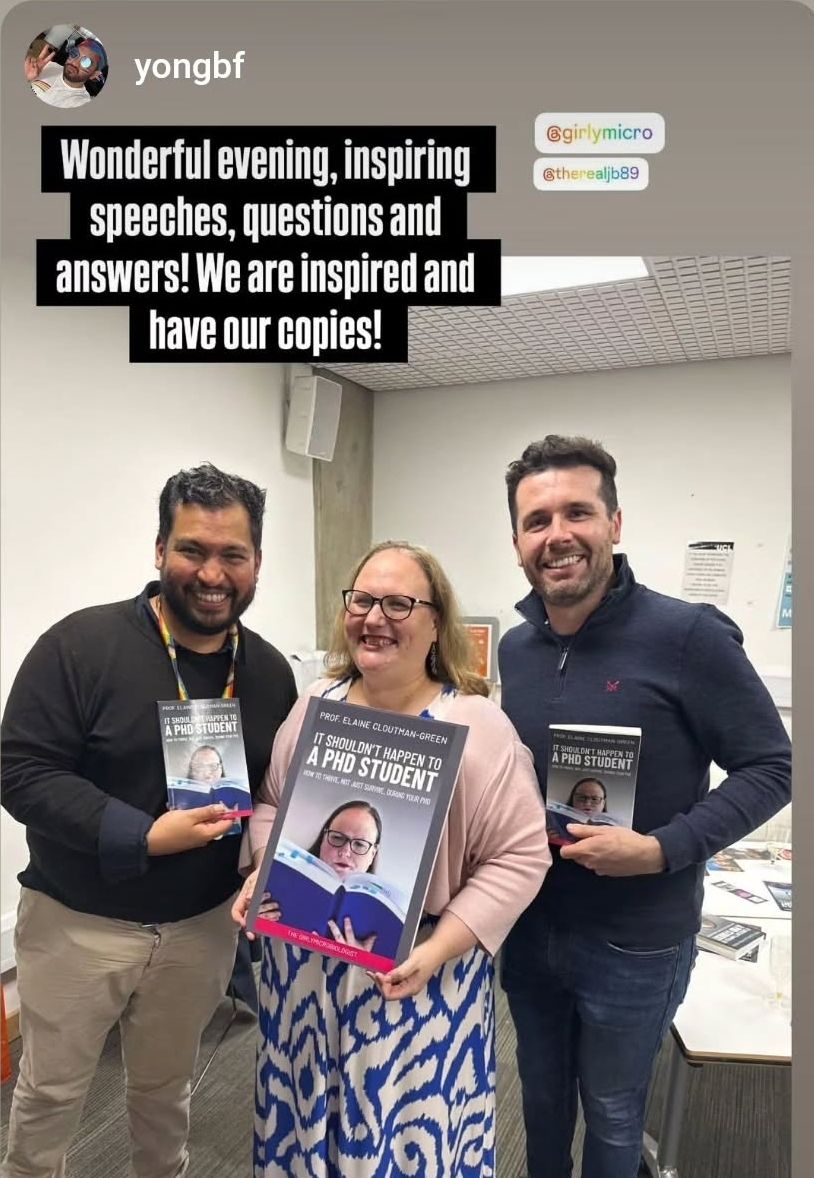



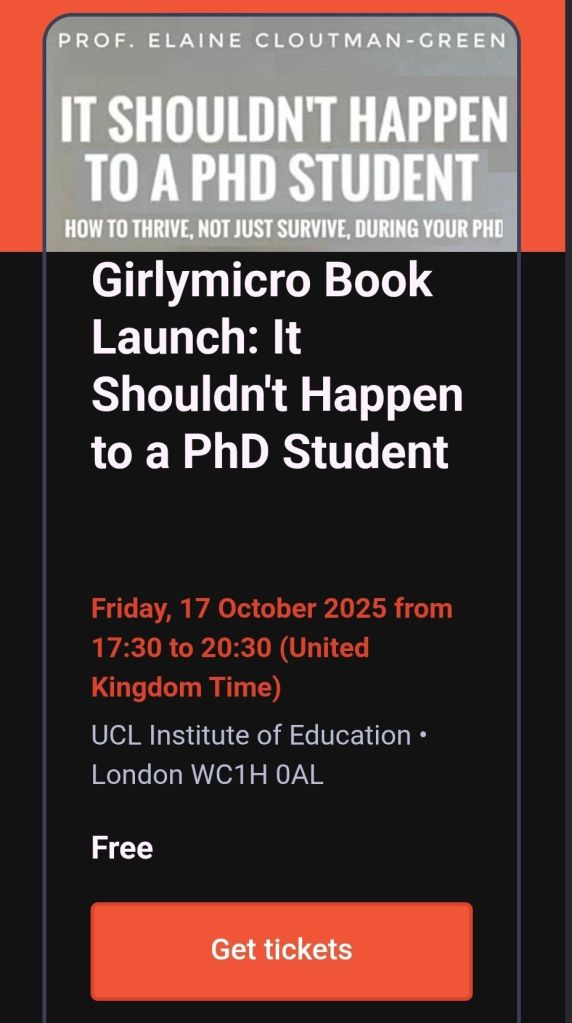


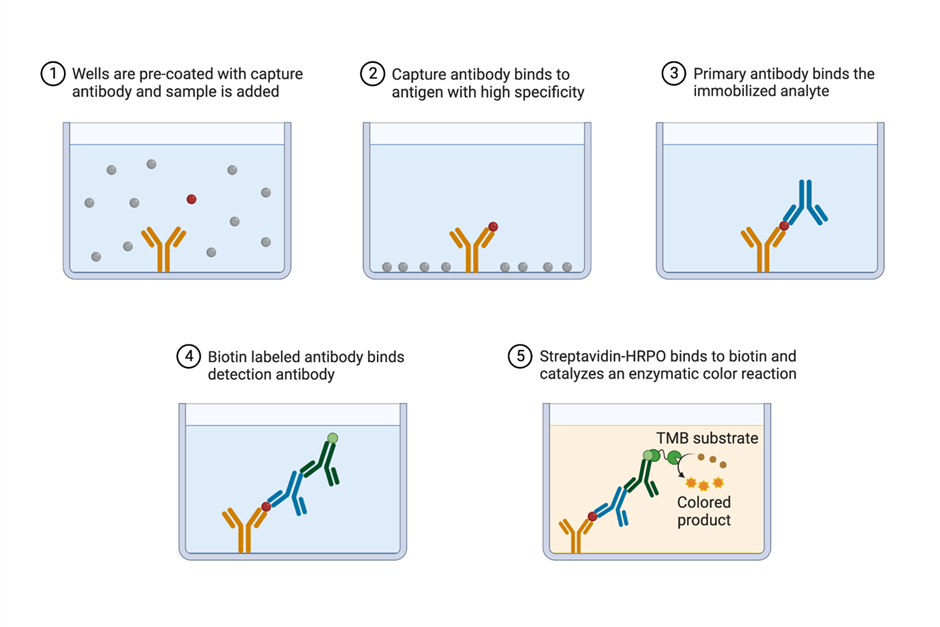
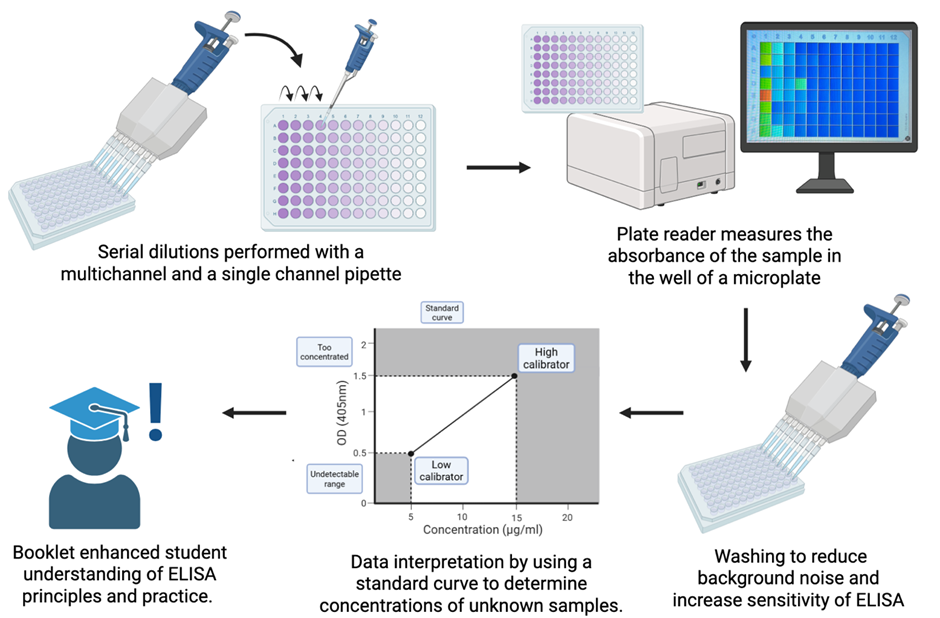

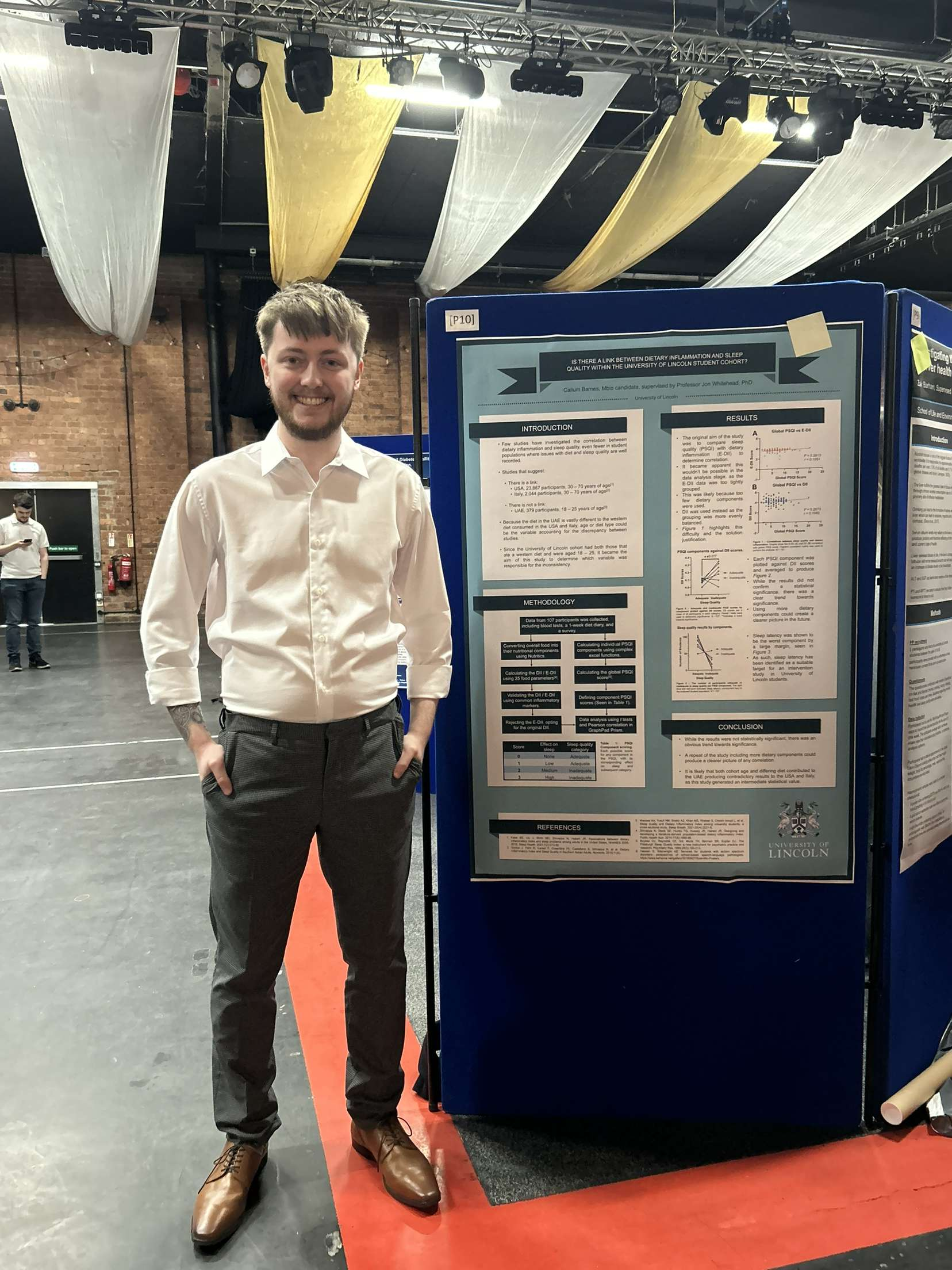

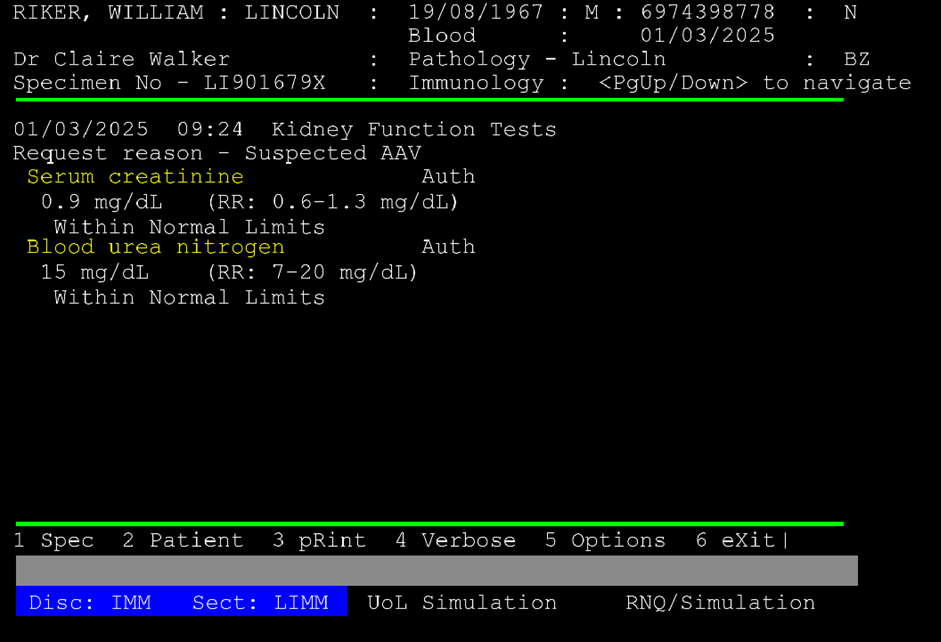


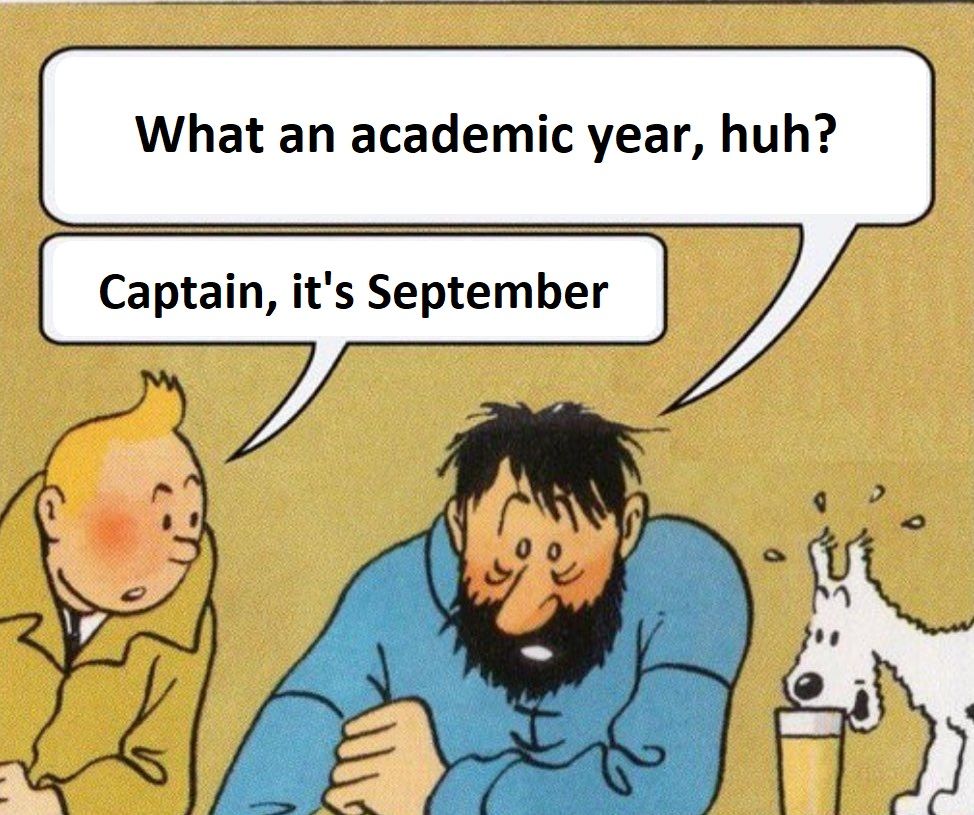


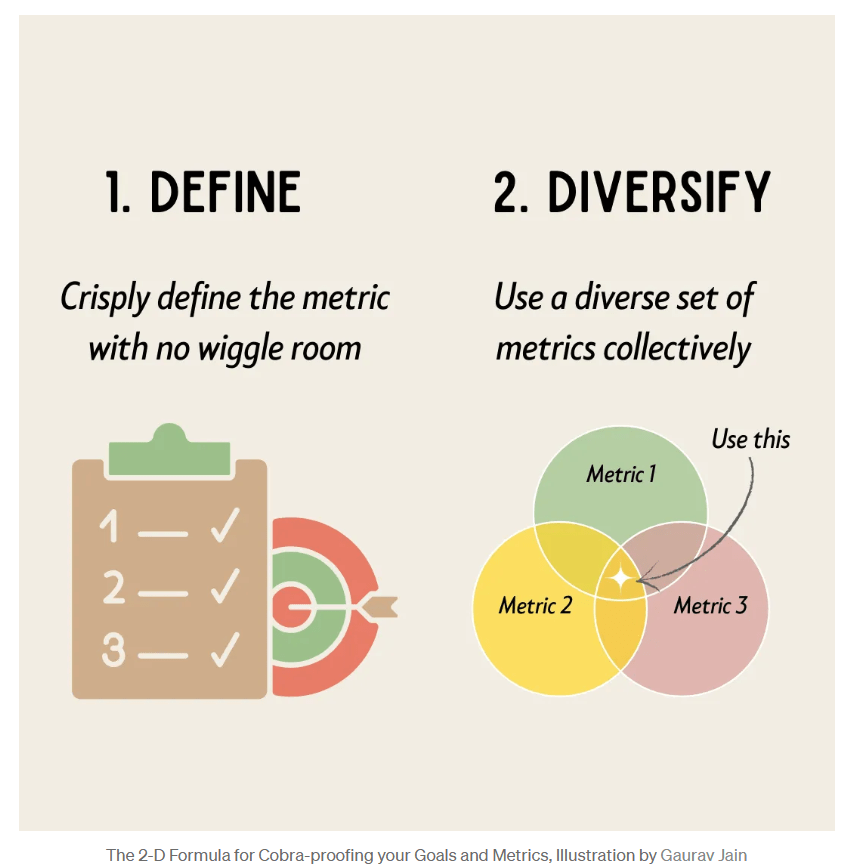






 Girlymicro