Guest Blog by Dr Sam Watkins: The wild world of mycotoxins, maybe not such a fun-gi

I’m so excited by this weeks guest blog post. I’m a massive murder mystery fan, and from Agatha Christie onwards there have been multiple books where mushrooms and mushroom toxins (mycotoxins) have been used, either deliberately or accidently, as a pivotal component of the plot. In recent months however, mycotoxins have been in the news in a real world sense, as the case of Erin Patterson has been heard and the jury are deliberating as I write. Erin Patterson is accused of 3 charges of murder, and one of attempted murder, linked to feeding guests a poisonous dish of Beef Wellington at a dinner party.

This led me to speak to my go to guy for mushroom (mycological) based questions. Sam is in love with all things shroom, and even has a mushroom foraging based Instagram. Who better to go to with a request to write a blog post on mycotoxins and to learn more about this intriguing topic?

Blog by Dr Sam Watkin

Hello Girlymicro blog readers! I’m Sam, a previous PhD student of Elaine’s with research focused on investigating trends in microbial dissemination in hospitals. I’m taking the blog astray from the world of IPC however with this post, and instead will focus in on one of my other interests. As people who know me have probably come to realise, I’m a big fan of mushroom foraging. There is something so rewarding to me about finding excellent edible mushrooms that you just can’t buy in shops and exploring the different flavours they can add to food. My partner had to put up with me having a Cauliflower fungus (Sparassis crispa) the size of a football in our freezer for well over a year. We would break bits off and make fantastic soups and stew bases with it – it has a really unique nutty flavour. More than just the pursuit of a free dinner though, I find it very enjoyable finding fungi that I haven’t seen before, or that are particularly rare. I imagine it is similar to the enjoyment a twitcher gets from sighting a rare bird, although mushrooms tend to stay put so there is less pressure on being constantly focussed. Having said that, searching for fungi does often devolve into a game of looking at the brown forest floor trying to spot the slightly-different-brown mushroom. More than once have I run over to a promising shade of brown or yellow, only to be disappointed by a frustratingly deceptive leaf. It is nevertheless a pursuit I thoroughly enjoy, despite the frequent soakings in rain showers and occasional run-ins with brambles.

One aspect of foraging (and indeed looking to identify fungi) is being aware of what ones you can eat and what ones are to be avoided. The old adage “All fungi are edible, some fungi are only edible once” absolutely holds true. While my professional life involves researching microbial transmission and how best to prevent infection, I am fascinated by the toxic nature of fungi. I did consider becoming a toxicologist in my teens, but rapidly realised that the amount of chemistry required was simply not my idea of joy. I do find it very interesting however how fungi are capable of producing some of the most unpleasant, and also strangest, toxins that can be found in the natural world (or at least I think so). So here I am going to run through a few of the fungi that I find most fascinating when it comes to their chemical makeup and the influence they have had on humans through history.

A fairytale classic – Amanita muscaria

Few fungi are more iconic than A. muscaria (known in English as the Fly Agaric). Their characteristic red caps and white flakes are often illustrated in children’s books and are probably what comes to mind when one pictures a ‘toadstool’. They are in every respect the archetypal fungus. This being said; however, you absolutely would not want to eat one. If someone were unfortunate enough to eat a specimen on A. muscaria, they would most likely experience a range of unpleasant neurological symptoms. Confusion, dizziness, ataxia, hallucinations, muscle twitching are often reported, as well as nausea and vomiting. In severe cases, a loss of consciousness and dangerous decreases in blood pressure can occur. These unpleasant effects are due to the makeup of alkaloids present in the fungus, with ibotenic acid and muscimol being predominantly responsible for these effects. Muscimol has a similar molecular structure to GABA-A – the most abundant inhibitory neurotransmitter in the human brain. Ingesting a chemical which mimics such an important neurotransmitter as part of your supper is unlikely to be good news. It acts as an agonist for GABA-A receptors, causing a reduction in the excitability of neurons, causing the range of neurological symptoms. Muscimol is by no means alone here however – A. muscaria also contains ibotenic acid which further acts as an agonist of a host of neurotransmitter receptors (for instance metabotropic glutamate receptors – another widespread neurotransmitter receptor class. Oh, and ibotenic acid is metabolically converted to muscimol in the body. More fun to go around!

It’s not only the alkaloid balance or popular culture appearance of A. muscaria that makes it interesting however – it has had significant historical and cultural influences. It has been traditionally consumed by shaman in northern Europe as a part of winter solstice celebrations. This is due to the intoxicating effects of consumption, where the experience was likened to flying. Part of the rituals would involve the fungi being collected while wearing ceremonial red robes. The fungi were also often fed to reindeer before ingestion to metabolise out some of the more toxic components, with the hallucinatory agents collected in the reindeer’s urine which was then consumed. I’ll pass. But, an association with winter and red robes, feelings of flying and reindeer… these rituals have indeed been credited as a potential origin of the popular imagery of Santa Claus. I guess everything must start somewhere!

An explosive pufferfish – Gyromitra esculenta

I find this to be one of the most fascinating fungi in existence. Partly fuelled by the fact that I still am yet to find this species growing wild (one day my persistence will pay off) and partly by how unique these fungi are both in shape, cultural perceptions and toxicity. Looking like mini brains, they can be found under pine trees on sandy soil in autumn (or so I’m told… maybe they are deliberately avoiding me). They are found in Europe and certain parts of North America, and are called False Morels due to their relation and similarity to the delicious Morels.

Despite being well known as a poisonous fungus their name would suggest otherwise, with “esculenta” being Latin for “edible”. And these fungi are indeed eaten in large quantities! When prepared correctly. As such, they have been likened to the pufferfish of the fungal world, which is quite the title! Appropriately prepared they are supposed to be a delicacy – I can’t speak from experience on this one, my adventures into free fungal food doesn’t quite stretch this far – however raw or improperly cooked they can be fatal. This toxicity is down to the presence of a volatile toxin called gyromitrin. When ingested, gyromitrin is metabolised to monomethyl hydrazine. This goes on to wreak havoc on a wide range of enzymes and processes, inhibiting cytochrome P450, amine oxidases and preventing the formation of pyridoxal 5-phosphate. This compound is a key cofactor in the synthesis of our old friend GABA. This causes a reduction of GABA present, preventing neuronal inhibition and causing to a prolonged excitatory state in the brain – almost the opposite of the effect seen in A. muscaria. This is still not good news however, with symptoms including severe gastrointestinal distress, kidney and liver damage and seizures and death in severe cases. Interestingly, the toxic metabolite produced here is used amongst other chemicals as a rocket propellant. I can’t but help imagine a future where we have spacecraft fuelled by fungi (albeit from a poisonous metabolite of a mycotoxin). Somehow, I doubt it.

Building up to it – Paxillus involutus

Following on from the theme of the last fungus, P. involutus is no stranger to gastronomic controversies. This very common, fairly non-descript fungus is a rather boring shade of brown (sorry if this is your favourite fungus!), although its cap does have a uniquely rolled-over rim (hence the imaginative English name – Brown Roll-Rim). It has historically been considered to be an edible mushroom, with many guidebooks simply stating that once cooked, it was safe to consume. Needless to say, these guidebooks are now firmly out of date and it is now recognised as a deadly poisonous fungus. Unlike the previous two fungi I’ve described here, this fungus does not contain any psychoactive alkaloids or toxic rocket fuel precursors. Instead, this species contains some rather unpleasant irritants which, upon consumption of raw specimens, result in severe gastroenteritis. These toxins however are degraded on heating, hence why it used to be considered edible after cooking. No, the real toxins are much more sinister in this fungus.

True to the weird nature of fungi, this species rebels against the “only edible once” saying quoted earlier. This fungus can actually be edible quite a few times before it poisons you. Unlike other toxins which you may expect to have a rapid onset after consumption (maybe a few days after ingestion at the most), the compounds responsible for the fatal poisonings attributed to P. involutus can take months to manifest. This is because the toxic effects often become apparent after repeated exposure, usually through the repeated consumption of the fungus. This is because the toxic compound here is in fact an antigen, which the body becomes sensitised to over time. Once enough meals of P. involutus have been eaten, the antigen present stimulates a rare autoimmune response where the body produces antibodies which attach to and disrupt red blood cells (autoimmune haemolytic anaemia). This causes life-threatening reductions in red blood cell counts, kidney damage and multi-organ failure. There is no antidote.
If in doubt…

So, there are three of the fungi that I find most interesting in terms of their toxicity. This only scratches the surface of the wild world that is mycotoxins – there are hundreds of others. From St Anthony’s Fire (a range of medieval diseases attributed to Ergot (Claviceps purpurea) to the near-certain fatality after consumption of Amanita phalloides or Amanita virosa (named the Death Cap and Destroying Angel respectively – foreboding!), mycotoxins are truly fascinating. These show the massive variety of toxins out there and how they influence both our health but our culture and relationship with wild foods. From a foraging perspective, the range of dangerous fungi out there clearly shows the importance of only foraging with an experienced guide and only collecting what you can identify with 100% confidence. If in doubt, leave it out!

NB from Girlymicro – Whilst we’re delving into some mycological (fungal) joy over a couple of blog posts I thought I would take the opportunity to re-share this four part article series on the fungi of The Last of Us, which was a real joy to be involved with, and a clinical article that may surprise you:
https://www.idtransmission.com/understanding/tlou-tales–episode-1-the-culprit-of-humanitys-downfall

https://www.idtransmission.com/understanding/tlou-tales–episode-2-the-devil-is-in-the-details

https://www.idtransmission.com/understanding/tlou-tales–episode-3-the-realities-of-the-last-of-us
https://www.idtransmission.com/understanding/tlou-tales–episode-4-living-with-the-living-dead

On a rather different note – sometimes people love their fungi just a little too much in other ways……….

All opinions in this blog are my own
Celebrating World DNA Day Part Two: The Power of DNA – Why we need to know more before sending ours away

Friday just gone, 25th April, was World DNA Day. I’ve had a series of blogs that I’ve been playing around with linked to both DNA in our everyday lives and two book reviews where the world changes because of genetic testing and genetic manipulation. I thought I would write these posts, because as much as artificial intelligence could change the way we live and is frequently discussed, we are all accessing DNA based testing more and more, with many of us not really thinking about how this too is changing the world in which we live. Depending on how you feel about science and needing to have a refresher on what DNA and how we look for it and interpret it, you may want to hit up part one of this blog series first.

In part one I also introduced the kind of testing that DNA and DNA sequencing can be utilised for, not just in a accredited healthcare laboratories, but also linked to private companies who offer information on things like ancestry. In today’s blog I wanted to go a bit more into what can be the less thought about results of sending away your DNA, and also what kinds of things you might want to think about, or have in place, before you do.

Thinking unexpected consequences?

In part one I used this quote from a recent article:

As stated in a recent Independent article:

As they’re based on estimates, I suggest treating home DNA tests as a fun investigation to get to know your family history a little better rather than a to-the-letter representation of everything that’s ever happened in your gene pool – Ella Duggan Friday 28 March 2025

https://www.independent.co.uk/extras/indybest/best-dna-test-uk-ancestry-b1944632.html

It describes sending away of your DNA as a fun investigation, and recommends not taking the results too seriously. This is definitely the right attitude in many ways, as you wouldn’t take key health guidance from a magazine quiz, you’d want to speak to a healthcare professional who can put your results in context. The problem with not taking the tests themselves too seriously is that we don’t really think about the consequences of taking them or where the results might lead. My family have been given these for Christmas, for instance, and it was seen as a fun piece of science that could be done after lunch. Taking and sending away your DNA, the thing that makes you you, however, should always be done with a little more consideration that that. So I thought it might be useful to use just a couple of examples of why.

Health services

Sending away DNA for health reasons to private companies has been controversial ever since it was introduced into the UK and there are a few reasons why this is the case.

Firstly, if you have health concerns, then really you should be accessing medical care through healthcare professionals who you’ll be able questions, and who can put your results into a risk context for you based on your own medical history, rather than just getting a list of genes in isolation.

One of the other reasons you should manage this form of testing through health providers is that you can then be linked into any medication or further testing that is required. The presence of a gene alone can be pretty meaningless, you need to then look for whether that gene is being expressed (see part one) in order to really understand it’s impact, and so there are likely to be follow up requirements to any results received.

If you are going through genetic testing, especially if it has impacts on decision such as reproduction, you would normally be supported through the process ahead of the testing, and when the testing is returned, through professionals such as genetic councillors. If you get your results by sending your DNA away you may get completely shocked and surprised by the results that you can get back, and may make some decisions based on the findings that may not be correct for you and require better input from someone more used to interpreting the results. It could feel like a really lonely way to hear bad news.

Finally, these tests are being sent off to laboratories that don’t require accreditation. They are acting as medical tests, without going through the rigor that is required for the equivalent tests in healthcare, and yet are interpreted, by some, in the same way, and therefore effectively out of context. They may also not have the required levels of validation linked to the information and interpretive guidance that is issued with a result, so that you know what being present or absent for gene X or Y actually means for you. It also means that there may be less processes in place to ensure that you get the result that is actually meant for you and not for Professor X down the road. If you are processing hundreds of samples this kind of error, without safety checks, can be easier than you’d think. Knowing the quality of the result you are receiving may be less than obvious.

Ancestry services

OK, OK, I can hear you say. I wouldn’t send my DNA off for medical testing, but surely sending it off for ancestry services is ‘no harm, no foul’ and just a bit of fun. My first caveat here is that not all ancestry services are the same and not all of them look at the same sections of your genome. Some will look at your mitochondrial DNA (which will always come from your mother and your maternal line) in order to give a view of where your ancestral DNA comes from over generations. This is often referred to ancestral origins, and is much less likely to hit you with real time life dilemmas. Many kits are also paired with items that look at wider genomic matches, or DNA matches, and so you may get back more than you bargained for if you didn’t look closely at what was going to be provided.

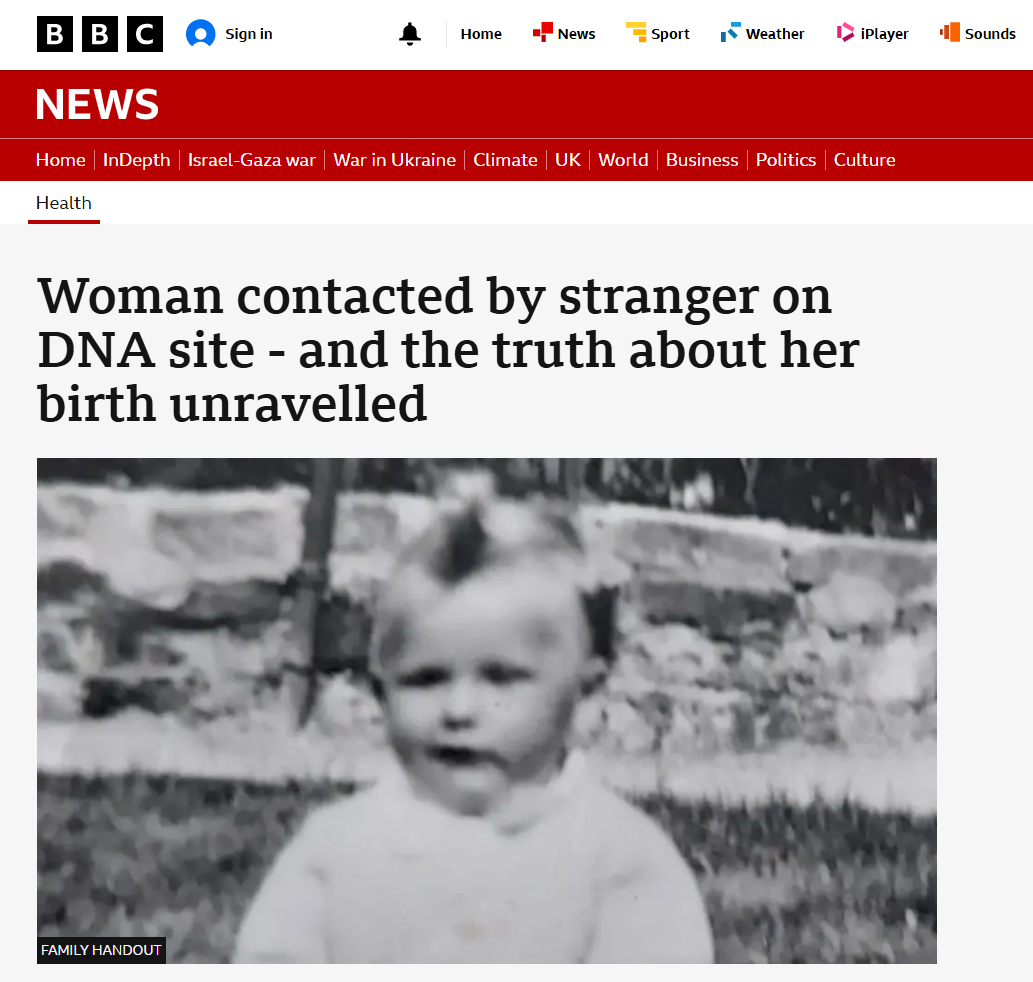
I’ve included just a couple of, extreme, examples of how these kinds of unexpected consequences can play out in real life. The first is a BBC News story that came about because a woman was contacted by a stranger after sending off her DNA via an ancestry site. From the results it eventually became apparent that she had been accidentally swapped as a baby in a hospital in her 50’s with another child. Thus having dramatic and rather unexpected consequences for her and her family.

The other example I’ve included links to a couple of documentaries where the use of DNA matching platforms has uncovered serious misdemeanors or crimes, including IVF undertaken using the sperm of medical professionals without the knowledge or consent of the parents involved, and sperm donors being involved in the insemination of more couples than disclosed, thus increasing the risk of their children potentially interacting/dating/mating in later life without knowledge of their genetic linkage. This is obviously not the fault of the DNA matching service, and is something that is beneficial to uncover and stop, but has hugely dramatic impacts on those involved without any prior warning or support in place. It certainly wasn’t what they expected when they sent away their swab.

Is it just human DNA that counts?

Finally, to follow up on the takes of the unexpected, and because infections are fascinating, I wanted to share a link to a video that I think is really great about the first time DNA testing of HIV was actually used to convict someone of a crime. This one isn’t a word of warning, as I suspect that none of us are going to decide to deliberately inject someone with HIV contaminated blood, but I wanted to end this section with something where the use of DNA testing in the hands of people who really know what they are doing is a powerful tool for good. Also, because I wanted to give a non-human example of where I think some of this may go in the future.


What do we need to know before we start to send our DNA away?

Having laid out my warning stall, I wanted to go through some things I think you should actively think about before sending your DNA away.

What is the legal situation?

First and foremost, the sending of DNA away for processing is covered under something called the Human Tissue Act or HTA (in England). I’m flagging this as the first thing as, unlike what you see on TV, you should not be taking DNA from other people and sending it off to see what it says, and especially not for any form of DNA match testing. In the UK, if you do take anyone’s DNA sample without them being aware of it, it is considered a violation and you are liable to prosecution which can result in up to 3 years imprisonment. It is not OK to steal someone else’s DNA without their consent! There’s a lot to this one and I’m not a legal expert, but it seems to be something that many people are not aware of and now you know.

What level of information will be gathered?

All of the different tests offered will do things, and companies interpret the results slightly differently. It’s incredibly important to know what you are sending your DNA away to be tested for, how it will be tested and what kind of information you can expect back.

The main types of DNA tests and the areas they analyse are:

  1. Autosomal DNA Tests = examine the 22 pairs of autosomes and the X chromosome.
    Commonly used for ancestry testing and can help determine ethnic origins, identify genetic predispositions, and find relatives. Utilise single nucleotide polymorphisms (SNPs), which are variations in a single DNA base pair
  2. Y-DNA Tests = analyze the Y chromosome, which is passed down from father to son.
    Used for tracing paternal lineage and can be helpful in genealogical research
  3. Mitochondrial DNA (mtDNA) Tests = use mitochondrial DNA, which is inherited maternally (from your mother) used for tracing maternal lineage and can be helpful in genealogical research
  4. Paternity Tests = examines specific regions (loci) on the chromosomes to look at parental relationships
  5. Health-Related Genetic Tests = looks for specific genes or regions of the genome that are associated with certain health conditions to try to identify genetic risks, diagnose genetic disorders, or assess treatment options

You may need to read the small print to really understand how the testing will be undertaken and to manage your expectations. If you can, make sure you look up examples of what the results you will receive will look like, and if there would be any follow up support given. Also, crucially see if there will be additional funding required to get access to the full data set you are expecting so you don’t get hit by any unexpected requirements.

How will data be used?

The next few sections are all linked to what happens to the results of your testing that you are sending away.

The first thing to check before you send off your test is how long will your data be stored for once. This is important for you in terms of being able to access reports, but also about how long your legacy data will be available. Will you have access to wider information if you request it to be passed to your healthcare provider? Is there any information on the data analysis tools used? Are you even allowed to ask questions or is all patented and under intellectual property rules, which is reasonable but you should know what the boundaries are. Most healthcare reports should be kept for at least 10 years, but as these are covered under different guidance, will you only have access to download your data for a set period of time? Will it be possible to get your own local back up of your data? Once you know the answers to these questions you can then make active choices and comparisons about which aspects are important for you.

Who will have access to the data?

The article below is a little old, as it’s from 2018, but many of the questions still stand. How carefully will your data be ring fenced? You may not think about it much, as your DNA may hold little financial value to you, but DNA databases are one of the main assets that companies who process your DNA have, and why the testing is actually relatively cheap. Having access to thousands of DNA sequences, along with medical histories sometimes, means that data is incredibly value for scientific and commercial development. This is OK, we need sequences to develop new testing. Pharmacy companies also need access to sequences to develop and model new medicine. Therefore, it is likely that your data monetised and used for other purposes, which may or may not be OK with you. The big question to ask is whether it will be anonymised and how it will be used. Knowing this information before you commit allows you make informed choices, as not all companies are likely to be identical in how they handle things.

https://www.cnbc.com/2018/06/16/5-biggest-risks-of-sharing-dna-with-consumer-genetic-testing-companies.html

Another aspect that you might not think about is data security. If your data is of value to the company, and therefore is a potential asset, then it may be of interest to others. This can make data security to prevent things, such as hacking, important. This could be especially true if your DNA reveals linkages of significance, or things that you might not wish disclosed, such as cancer risk. Doing some research to ensure the security of any data that is held is important, but not often high on the list of questions that people ask.

Who can data be released to without my knowledge?

I’ve talked above about who will have access to your data, but mostly I talked about your anonymised data. It may not just be anonymised data that you are concerned about by however. If you are sending off for testing that relates to cardiac, cancer, diabetes or other risks, than this can have much wider impacts if shared. The legal landscape in relation to this is very much changing and catching up with the concept of genetic information as a protected asset is slow. Also, warning, I’m no expert in this. However, when sending away for this kind of testing it is important to know that it is often not covered by medical confidentiality, as it’s not considered a medical test when conducted via private companies. Being aware of how this impacts the rules around your data and what the company will or will not release is key. Why is it key? Well, it can impact all kinds of insurance schemes, from requirements to declare for holiday insurance if you are seen as ‘knowing’ a risk, to life insurance changes in cost or profile if released directly to the company. Knowing whether your personal, non-anonymised data can or will be released is essential before choosing whether or to whom you’re prepared to send you swab away to.

I suspect that this last point will probably impact those of you reading this blog less, but for to complete this list…….your DNA can also be released to law enforcement, depending on the country, so if you’ve secretly been a mass murderer then maybe don’t send your swab away and get your DNA added to a mass database.

What will happen if the company is sold?

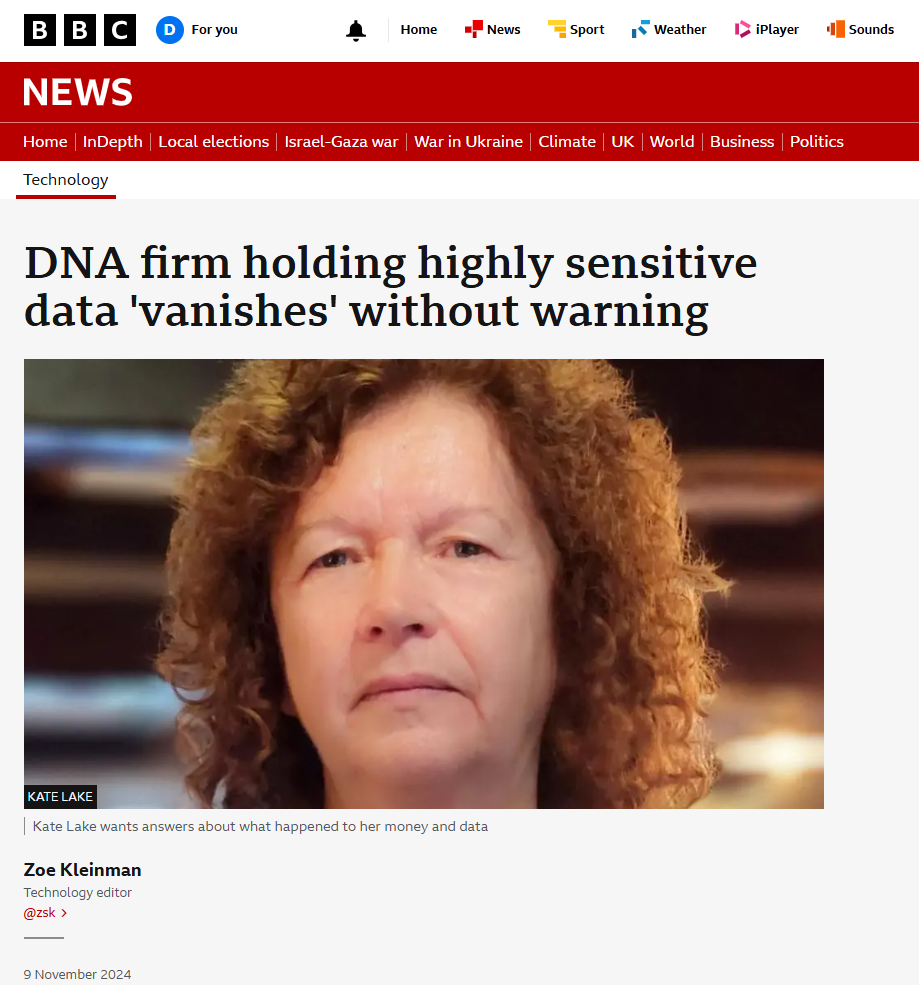
As I said earlier, one of the biggest assets these companies hold is the databases of DNA sequences which we provide them. When something happens to the company therefore, it is this asset that many of those interested in the company might be after, and they may have nothing to do with the purpose you sent your testing for. Reading the small print before you send away your sample may not be able to prepare you for what happens when those rules change and you are no longer dealing with your original commercial provider. The one thing you can do in these circumstances in understand what access and rights you have to request that your data is deleted, or to delete it yourself, in the case that circumstances change.

And now for something different

I’m aware that the section above on what you might need to think about is pretty heavy and so I wanted to finish part 2 on something a little more population level and upbeat in relation to why having access to this testing is a good thing for science in general. For instance, we know that the ability to undertake ancestral testing was a reason that the bones of Richard III were identified and confirmed, which had big impacts for history buffs. It show that the use of wider availability of testing has all kinds of benefits, and not just to science. In terms of wider science, being able to look at bones using DNA testing has supported identification of Mycobacterium tuberculosis as present in Egyptian mummies which has helped us understand the evolution of this infection over centuries. More recently, looking at the development of Homo sapiens and how we became the human beings we are today has been forever changed by wider applications of these methods. Use of these technologies can therefore impact all aspects of our lives moving forward, and it really is up to us, both as individuals and as a society, about where they work for us.

Parts three and four of this blog series will be linked to book reviews that explore what those futures could looks like if the use of DNA testing and genetic manipulation change how we look at ourselves and others. So join me in continuing to explore the power of DNA.

All opinions in this blog are my own
It’s the Most Wonderful Time of the Year: Why I love the festive season and all that comes with it

For regular readers of this blog, the fact that I adore Christmas probably comes as no surprise. It contains everything I love, time with people I care about, movies, heaps of romance, and an excuse to indulge in lots of lovely food and drink. I’m not religious. I embrace the shamelessly commercial, and I dive right in. I make Christmas puddings the week after Halloween. My Christmas tree gets delivered on the last weekend in November, and from that point on I’m full blown carols and Christmas cheer for as long as I can get away with. So, in this, my last post before Christmas, I wanted to share all of the reasons why I love it and explain, even as someone who won’t be at church on Christmas Eve, all of the benefits I think the season can provide!

Time for reflection

Number one on my list (that’s definitely not hierarchical) is the fact that this time of year encourages me to spend some time on active reflection. I spend so much of my working life in responsive mode and fire fighting, that it can feel like I achieve nothing and go no where. When looking at what I need to close off before the end of 2024, I am also trying to take some time to actively reflect. What did I actually achieve? What went well? What have I learnt, especially from the things that didn’t go so well? What do I want to take with me in terms of life lessons and priorities into 2025? Almost more important, what do I need to let go off? What baggage am I leaving in 2024 in order to leave me with room for grow moving forward? This is the time when I review what’s happened, take both the learning and the good, and leave the rest in the frozen tundra so it doesn’t start to define me or weigh me down.

Time to review progress

As the nights draw in, I, like most of us, desperately try to close off some of my outstanding work list. I am, therefore, almost forced to give some of my focus into what that list will look like going into the next year. The thing that I’ve tried to do is to review whether things that are going to roll into 2025 are a) still needed or b) still serve me in my direction of travel. There are always going to be jobs that are still needed and not optional (so many apologies for not getting these done in 2024), but there are other goals, such as writing an environmental IPC textbook, were worthy of review to see if they were still something I wanted. If you are wondering the answer is yes to both the textbook and the book of this blog, both of which fell by the wayside due to limitations in capacity in 2024. I refer to this period of activity as my Christmas mental cleansing, and I find it both a helpful and comforting process that can be undertaken under a blanket with a warm cup of tea. This is also the time where I make an active choice to celebrate my successes and forgive myself for everything else.

Time for joy

Another of my favourite things at this time of year is to give myself permission to make time for joy. It’s probably no surprise to anyone that my life is pretty work heavy and there isn’t a lot of space for downtime. At this time of year I have a list of things that bring me joy that I actively schedule in and am determined to find time for. Christmas movies make up a lot of this. Watching a Muppet Christmas Carol, either on Christmas Eve or when decorating the tree. Sobbing to Love Actually and Serendipity as I take a moment to remember happy times with my sister. Indulging in the delights of spending time with my husband whilst watching Die Hard, which is a Christmas movie, on Christmas Eve. Carols whilst cooking and sitting together to highlight the Christmas Radio Times. There is never enough time to do all that I would wish, but these stolen moments make my soul feel lighter and instil every day with an extra level of joy that means I value every single single hour in the run up to the main event.

Time to indulge

OK OK, I acknowledge we all need to be healthier. I’m aware that I do not ‘need’ another cocktail, piece of chocolate, or an extra roast potato, but I am a lover of all things food and sparkling, so what’s a girl to do. Don’t get me wrong, I don’t just indulge in edibles, I also indulge in Christmas experiences, like theatre shows and more shopping than is probably good for my bank balance. I usually don’t like crowds or areas with lots of people, Christmas is the exception. I love the buzz, the feel of the atmosphere and lights whilst carols play in the background. For me, even the provision of time to shop that isn’t time restricted and just has plenty of browsing time without any time pressure built in is an indulgence. It’s a time where I allow myself to prioritise enjoyment and experiences, not just tasks. For me it’s about, for a short while, experiencing the joy of living in the moment and what it feels like to live a life without a deadline.

Time for family

It shouldn’t count as an indulgence, but sadly sometimes I am aware that I can be so focused on work and task that I forget to make room for the most important thing in my world, my family. I’m aware that I am really fortunate to have such a great relationship with my family, but I also include here the family we have by choice, not just by blood. In general my family put up with a lot; lateness, lack of focus, even the odd missed event. At this time of the year, despite the fact that it should be all year, I really do try to ensure that my priorities are in order and that they come first. It’s one of the reasons that the indulgence part is important to me, as it also involves making room and time for those indulgences and experiences to be shared. To build new memories together and to celebrate both each other and each others company. I’ve lost too many people I love in recent years to not realise what a precious gift this is and would encourage us all to take the time to slow down and smell the poinsettia.

Time to remember

My sister and I felt the same way about Christmas. It was always important to us, as well as to mummy and Mr Girlymicro. So much so that when life at Christmas meant that we had too much on and couldn’t celebrate ‘Goosemas’ together we have been known to celebrate Christmas in September, or actually at many other times of year, when we could still get together and cook a goose in each others company. You see, fundamentally, it isn’t about the date for us, it’s about the company and the time spent together. Now she’s gone we keep my sisters memory alive by watching the movies we always used to watch together, like Serendipity. This one was so much a feature of our Christmas celebrations that when Mr Girlymicro and I got married, our wedding present from my sister was to spend 3 nights at the Waldorf Astoria in New York, purely so we could re-create the lift scene from the start of the film, and visit Serendipity 3. Unlike the couple in the movie, Mr Girlymicro and I both picked the same floor (our wedding date) and manage to move direct to our happy ever after. I cry buckets every time I watch these films, but making space to remember the loved ones we’ve lost along the way, and to remember the joy they brought, is an important part of my Christmas experience.

Time to take a break

One of the reasons that any of this is possible is because this is the time of year where I always prioritise taking a break. It feels easier to do as many people are doing the same, so the addition to the email mountain is never quite as much as when you are the only one fleeing with an out of office on. It is also important for me as I know that I am going to find the months from January to March really hard. I work in a windowless converted toilet cubicle as my office, I love it, but it means that in the darker months I barely see sunlight, and after a while it gets to influence my mood. Having this little bump of joy is the foundation I use to get me through till when the flowers start to bloom and my heart starts to lift again. It’s like I’m creating a festive battery to serve until that time.

Time to reconnect

The very act of having a period of days off, when other people are often more available, means that there is an opportunity to really reconnect with people. I have very patient friends and family. I am lucky to have people in my life who I may not see for months, or even years, and yet once we hear from each other it’s like no time has passed. These people are both precious and rare in life, and so I try to ensure that this is the time that I at least reach out, even if I can’t meet up as time is short and we are geographically far away. Time is the resource that I have least of, so using it at Christmas is actually the most valuable gift I can give.

Time to feel re-inspired

A side consequence of taking a break and doing some processing is that I genuinely always come out of this time so re-invigorated and inspired. I feel like I have permission to have conversations with others about what I still want to achieve, and these very conversations give my brain all kinds of ideas. It’s so nice to have time to bounce ideas around, and feel like you are truly having time to have dialogue, rather than the sometimes perfunctory task based thinking that is all there is normally time for. The excitement that comes from these conversations really does fuel me and these things can’t happen without space and connection, and so inspiration really is a gift I give myself at this time of year.

Time to show gratitude

It’s so easy to take people for granted. I do it all the time, even though I really don’t want to. Life is run at pace, and in that rush it is easy to believe we acknowledge and thank others more than we really do, and more than they may have time to hear. My life functions because of Mr Girlymicro. He makes untold sacrifices so that I have time to sit here on the sofa writing, rather than partaking in my share of chores. Mummy Girlymicro does not get the devoted daughter she deserves, as I’m always focusing on too many things at once. This is before you bring me onto colleagues, that cover so I can undertake teaching and research, or my other friends and family, who put up with cancellations either due to work or exhaustion. I owe so many thanks to so many people. They really do make my life a blessed existence. This time of year I hope that I shout my thank you’ s loud enough to be heard and recognised, and that I put down the laptop down for long enough that, for once, I am the one taking care of others, rather than the other way around. I also want to say thank you for reading this blog. It’s come to mean so much to me, and I know that everyone has so many other options about what to do with their time. So thank you. Thank you for reading. Thank you for commenting. Thank you for liking. Thank you for coming on this journey with me.

Time to look to the future

All of which brings me to my final point. The things this season provides enables me to lift myself up and look to the future. It enables me to do so free of the baggage that has built up in the previous 12 months. It lets me do so with a focus born of reflection as to what I want and what needs to be done. It grounds me in connection and means that I remember the core values that drive me. It supports me in entering 2025 in an inspired mindset, which acts as a spring board for everything else. So I will enter my future with optimism, a clear sense of direction and the certainty that I will not be travelling alone as I move forward.

Who doesn’t love a Christmas game!

Now, if as Mr Girlymicro has stated, that was a little motivational speaker, lets bring it back to the real spirit of Christmas, festive games!!! I, being a gamer, love a festive game and so here is a fun one to kick off your day.

All opinions in this blog are my own

I know that not everyone loves this time of year or finds it easy. Please don’t feel alone and reach out for any support you need to make it through the season.

Tales of a Recovering Workaholic: Talking about the darker side of success

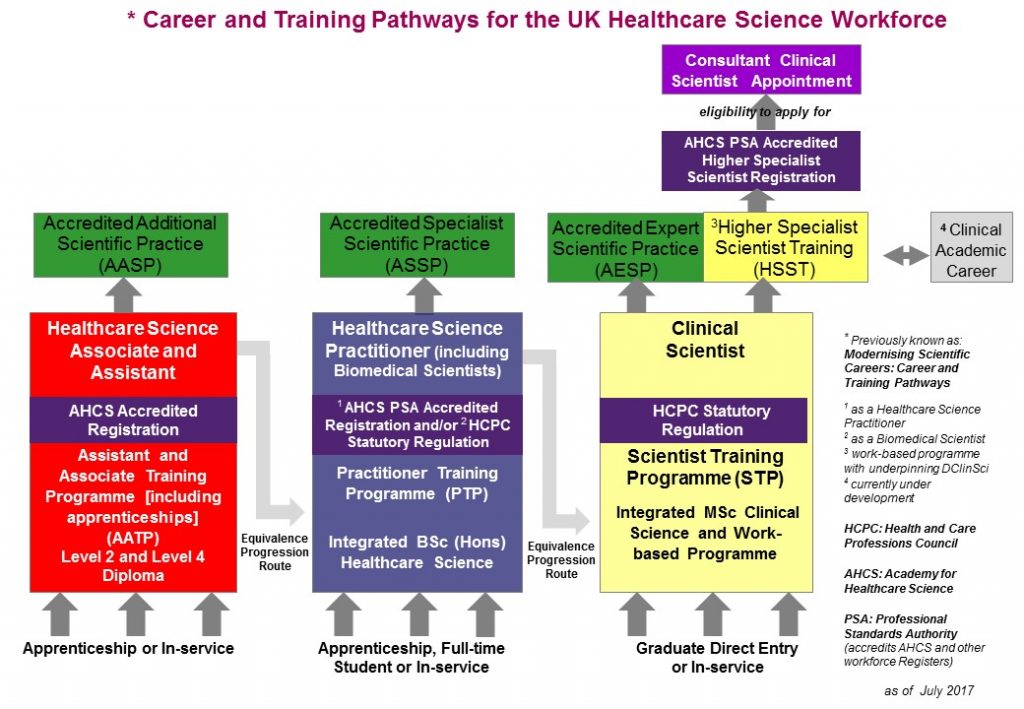
I’ve been thinking a lot about pathways in healthcare lately, from having conversations about T-levels and apprenticeships this week, to equivalence and Higher Specialist Scientific Training (HSST) posts. It’s made me reflect a lot on my own training pathways and the fact that the majority of the advice I received was that the only option, in terms of approach, was to work harder and do more. Now, don’t get me wrong, there is some merit to that, and there is also some truth, but I had it drilled into me that you can’t be successful if you do a 9 – 5. You must always do more. You must always over deliver. You must always be adding to and diversifying your CV.

This advice and approach has been key to me developing into the person I am now. I am objectively successful and so grateful for the support I’ve received along the way. I have the long dreamed of Consultant post, and my dream job. I was made a professor within 10 years of finishing my PhD. I’ve held multi-million pound grants and have over 50 publications. The other side of the coin is that, despite being exhausted, I can never sleep for the number of things I haven’t finished, and I constantly feel like I’m not doing or achieving enough. I’ve also written before about the impact of my anxiety levels when I’m tired or try to step away. So, as new starter season comes upon us, I wanted to take a moment to really talk about the messages we are giving our trainees, and ourselves, to think about how true they are for current training opportunities and what we can do better for those that follow us.

Let’s start with a bit of history and the messaging that we used to focus on as part of training

Goal orientated view of the world

During my first week as a trainee Clinical Scientist, I was sat down and told that it was an 11 year training scheme to Consultant, but it was up to me to put in the work and make it happen. Well, I worked pretty damn hard, including not having a weekend off at one point for 3 years, and it still took me 16 years. Does that make me a failure? I don’t think so. Does that mean that I should have worked hard to make it happen in 11? I’m not sure of how I could. In fact, I don’t know of anyone who made it happen in 11 years. Of the 4 of us who started, only 3 are now Consultants, and we were a pretty committed bunch. So were we all set up to fail?

The whole scheme was designed with that 11 year target in mind. I understand it from a strategic point of view. There are a lot of boxes to be ticked. Our situation was made even harder as there were only 3 years’ worth of funding for a scheme that required 4 years of professional practice to gain registration. That meant you also had to prove yourself worthy and useful enough that someone would decide to fund you for that extra year. Otherwise, everything had been a waste, and you would walk away unregistered and unlikely therefore to get a job.

My main problem with this approach is that it doesn’t really allow scope for exploration, and it really doesn’t allow time for creativity. It trains you into the ‘onto the next thing’ approach. I certainly had no time for celebration or reflection between stages. I was always trying to make sure that I was useful enough to remain employed, and in later stages, as it took me 13 years to be made permanent, I had to also ensure I was bringing in sufficient money to cover my salary so I would be kept in a job. It also means that when you finally do get all those boxes ticked and get your dream job, you are so trained into the tick box way of life that you are left searching for what the next box should be, rather than embedding and celebrating what you have achieved.

There is nothing that cannot be fixed if you work hard enough

When I started work, I used to read a book at my desk during my lunchtime, like I had when I worked at Birmingham City Council. It would always be some variety of fiction novel. I came into work one day during my first few months, and a pile of textbooks had been left on my desk with a post-it note suggesting that maybe I should read these instead. The implication, to me, was that it was not acceptable to have downtime, that any moment I had should be used to continuously work and improve myself. In short,’I must try harder’ ‘I must work more’ in order to justify the privileged position I was in. If I wasn’t going to lunchtime talks, the time should be used for other improving activities.

I also remember clearly listening to amazing female Healthcare Scientists talking at events about how, to achieve as a woman, you always had to work harder and do more than anyone around you. It was made very clear that it was required to constantly go above and beyond if you wanted to reach their position, if you wanted to succeed, if you wanted to make a difference.

The messaging has always been pretty clear. No matter how hard you are working, it probably isn’t enough, and you must work harder. Otherwise, you will fail and let everyone who had faith in you down, as well as yourself. If experiments fail, you don’t go home, rest and reflect, and come back tomorrow. You stay and set it up again. There were just too many midnight finishes to count during my journey to Consultant. If you want it, you will just work harder until it happens. I submitted my PhD a year early in order to achieve FRCPath whilst on my fellowship. At the same time, I took a PGCert in education because I recognised that it was important for my career path and my interests. Looking back, doing those three things simultaneously was foolish beyond measure. At the time, I thought I was just demonstrating that I had what it took.

Effort must be continuous

At the very start of training, I remember sitting over a bunsen burner crying. I was so ill, but no one around me ever took any time off sick, and it was just not considered to be OK. Eventually, I was sent home as I just couldn’t breathe, but it was very much ‘see you tomorrow’. Having an ‘off day’ was not something that happened. The hard earned truth I’ve learned to accept is that my best looks different from day to day. Some days, I could take on the world. Other days, I struggle to crawl across the line at the end of the day. Especially with a health condition made worse by stress, the idea that I can just ignore it, carry on, and always achieve amazing things every day is sheer madness. This was how I tried to work, however, and it took seniority and growing older to come to terms with the fact that this was just not achievable.

The thing about seniority is interesting. There is something about seniority and being able to give yourself permission to do things differently, which is worth mentioning. That’s not the real difference, though. I think the real difference is in the expectation setting. I try to be the person who gives others permission to acknowledge that some days are harder than others. Who checks why people are still there when they should have gone home. Doing this for others has the side benefit of reminding me that sometimes it’s OK to also do this for myself. It is not possible, nor is it necessary, to work at 100% all of the time. There will be days when you absolutely need to bring it, but there will be recovery days when what you should do is catch your breath, and if possible, do some reflection in order to make things better long term. A career is a marathon and not a sprint, after all.

There is no room for failure

This one isn’t just a work thing. It’s definitely a family thing too. My father is infamous for saying that no child of his has ever failed anything, and we weren’t about to start now when I was worried about FRCPath.

The Clinical Scientist training programme has always been competitive. Getting into the programme was competitive,  but even when you were in it, my experience was that the programme itself was pretty competitive. The people on it were used to being at the top of their class, and I experienced a fair amount of posturing throughout my first 4 years. Far from being tackled and a focus placed in peer support and collaboration, I feel like the rhetoric around the programme added to this. The focus on there not being enough places for us all to get posts when we finished, and the constant commentary on only the best of the best being able to get Consultant posts, placed us in direct competition with each other from day one. Therefore, you couldn’t talk about challenges for fear of disclosing weakness that would impact your future. That atmosphere is one of the reasons I’m so passionate about talking about the reality of the job on this blog, both the highs and the lows, as I didn’t have any way to normalise my experiences when I was training and in the midst of them. I hope posting will help others in finding a benchmark for ‘normal’ that I didn’t have.

Even on a day to day basis failure was not an acceptable part of training. To this day, I remember that one of my fellow trainees reported a NEQAS result (part of a quality control scheme), and she got it wrong. The result got reported, and the department lost a point on the national scheme. In reality, it should have been checked by someone else before it went out, but it happened. The virology consultant at the time never spoke to them again. We would sit in joint tutorials, and he would ask a question, he would then wait for my response even if I was just repeating what my colleague just said. He would respond to my answer but not theirs. There was never a review of what had happened and how the mistake had occurred. There was no acceptance of the fact that being part of a quality scheme is there to support learning and to identify where improvements can be made. There was just a long-term change in the way that trainee was seen and how they were then supported. It was a clear demonstration of what would happen if a mistake was made and that it would impact how your working life would be from that point on.

Quitting is not an option

The same trainee went through a hard time during her final year. She basically spent a lot of her time crying, and the response was that she was allowed to come in 30 minutes late. She started to see a therapist, and even though we never met, I owe that therapist a lot. Her therapist pointed out that in the three years she had been in post she had never been out for a cup of tea with a colleague, so she was given homework to ask someone out for tea, and she asked me. This was a real turning point for me. We went for tea, and we had a real conversation about the things that were both hard and good. It was the first time that I felt less alone. It was also the start of a conscious decision I made to take people off site for tea, to support better conversations, that I’ve continued to this day.

Later that year, she walked away. She made a decision to go a different way. It took enormous strength to do it, and even now, I have enormous admiration for her. Until that point, I hadn’t known anyone make a decision that prioritised their wellbeing rather than the CV tick boxing. The general attitude was that Healthcare Science is a small world, and you were incredibly fortunate to be a part of it. It was so hard to get into, and you had put in so much that you would be crazy to walk away. There was judgement linked to failed experiments, let alone walking away from the programme. Seeing someone break that mould was incredibly powerful.

The truth is none of these messages are entirely true, so how do we do a better job of messaging for current training programmes?

Training is just that, a learning programme, a time to explore, fail, and reflect on those failures in order to learn to do things better. If the messaging I experienced as a trainee now feel less than ideal, what messages should we be encouraging? I’ve been having a think and these are some that I would like us to have better conversations about:

We are more than the sum of our qualifications

Not everyone is going to become a Consultant.  Not everyone is going to get FRCPath and a PhD. You know what, that’s perfectly OK. It doesn’t stop you aspiring for those things if that’s what you want. However, our trainees are not in a Hunger Games style competition to be the last one standing. More than that, how good you are at your job is not dictated by how many qualifications you pick up along the way. Some of the most amazing Biomedical Scientists I know and have the privilege to work with don’t have a masters degree. It’s OK to be a brilliant band 7, and be satisfied and fulfilled by the role you have. Your qualifications don’t define your worth, and it’s OK to make choices that aren’t about playing CV bingo. It is also OK to decide that those things matter to you, you still aren’t defined by them. They have the value you choose to give them.

It’s OK to pause and reflect

No career is a straight path, no matter how it looks from the outside. There will be bumps along the way and the odd hill/mountain to climb. You will reach the destination better for it. You will be able to handle the journey a whole lot better if you allow yourself time to pause and reflect along the way. A big part of development is about making time to reflect on where you are and where you are going to, but also asking the big questions about whether those decisions and reflections you’ve made previously are valid for where you are now. You will be working for decades, and the decisions you make in your 20s are unlikely to reflect the decisions you might make in your 40s, so making time for active reflection isn’t a luxury, it’s an essential part of a professional career.

Knowing when to change direction requires courage

In many ways, I’ve been pretty fortunate, the things that I’ve wanted have aligned with my values and have stayed pretty consistent. This could easily have changed, however. I suspect that if I’d been able to have a family, my focus may have altered somewhat. Knowing when to change your focus or direction is important. This a balancing act between knowing when you just need to double down because things are getting difficult, or when you have truly shifted as a person and that you have to change direction to reflect this. Mentorship and coaching can really help with both this and the reflection that may get you to that moment. Acknowledging that continuing down a path ‘just because’ may not be the right thing and that it requires courage to sometimes jump off a cliff and make a big switch is a step that may require additional support.

Your value is not defined by your productivity

This is the one that I struggle with most and therefore know I probably fail to provide the best leadership around. I often feel that ‘I’m do what I say’ not ‘do what I do’ in this area. I often feel defined by my to-do list, and when that gets out of control, as it often does, I place a LOT of judgement on myself. The thing is, if I get hit by a car tomorrow, no one is talking about my to-do list failures at my funeral. I hope that they will talk about how I made them feel, and maybe even this blog. It is hard, but we can choose what defines us. You have that power. One of the reasons this blog is ‘Tales of a recovering workaholic’ is because I recognise I need to change, and I’m hoping to do a better job of playing this on forward and encouraging our trainees to be defined as well rounded individuals with interests outside of work. We need to encourage a holistic view of value in ourselves and others.

There is no prize for working the hardest

The biggest lie I felt that was embedded in my original training programme was that if you just worked hard enough and ticked the required boxes, the prize was there at the end of the race. The hard truth is working hardest does not get you the job. Ticking all the boxes makes the outcome more likely, but it doesn’t guarantee you anything. There is no prize for the most midnight finishes. Trust me, I’ve done enough of them to know. To a certain extent, the prize for working hard is more work. If you set the bar at working most weekends, then your work just expands, so you have to work most weekends in order to keep on top of everything. If you require external validation, like me, this can be a really dangerous game to get into. If we see this in our trainees or ourselves, I think it’s important to recognise and actively find other ways to find that validation before it becomes built in or results in negative consequences.

The next generation of trainees deserve to benefit from the experiences of those that came before, both in terms of knowledge and in learning how we could do it differently. The working environment has changed, as have our trainees and training pathways. By thinking more about our messaging we can make the work place right now more suited to where we want it to be, rather than relying on chance to make it better. Everyone has a role to play, but we, as leaders and educators, should be prepared to lead by example and own the change we wish to see.

All opinions in this blog are my own

Knowing Your Why: Why I’m passionate about how we talk with our paediatric patients

Some of the clearest memories of my childhood are about things that happened to me in hospital, and to be frank most of them are not of good experiences with healthcare and clinicians. Those experiences have shaped my current relationship with medicine, for both good and ill. Yet when we are having interactions with our paediatric patients we rarely think about (outside the paeds world) what the legacy of those interactions will be. For some reason I’ve been reflecting on that legacy for me recently and have begun to start unpicking why its a driver for much that I am passionate about as an clinician.

What experience led me here

I didn’t deliberately choose to work in a paediatric setting but over the years I’ve had plenty of opportunities to leave and work in a more general setting. I’ve never really been able to articulate why maintaining my work in paediatrics has been so important and aligned to my personal values. Over the last 6 months however I’ve been involved in designing our new children’s cancer centre and the conversations have triggered some realisations about why it matters so much to me.

When I was nine I was in primary school (about 5 years before the picture of myself, my brother and sister above). At lunch time I started to cough, by PE class at the end of the day I was coughing so much I sat out the class, and remember watching the others running in the sun from the classroom window. I walked home after school, at which point the coughing was continuous. My father took me to the GP who offered to call an ambulance but said it might be quicker for him to just drive me to A and E with a letter from him. The GP didn’t speak to me, I just listened to him talk to my father.

I arrived at A and E. It was late, I was tired and my chest was really hurting with coughing so much. I didn’t really know why I was there, after all it was only a cough. I was placed in (what I now know) is a side room and 15 doctors/medical staff came into the room. They looked at me, they prodded me, they talked about giving me an emergency tracheostomy, no one spoke to me. I couldn’t even see my father due to the number of people. The only person in the room who talked to me was a nurse I remember to this day called Maxine. I remember her as this was the start of many journeys to A and E over the coming years and Maxine was almost always there and without fail was the only one who spoke to me.

The next thing I know my father is no longer there. I’ve been rolled into (again what I now know) is a theatre suite. Someone has put a massive black mask on my face and the world is swirling, people are going in and out of focus. It felt like a horror movie. I woke up in a dark room on my own. I was unable to move, unable to speak (I now know I was intubated). The only thing I could see was that right in front of me was a window to another room. The curtains were open and there was an adult in the other bed. He must have crashed as they were attempting resuscitation. There was beeping all around him and me. He died and I watched unable to move or speak.

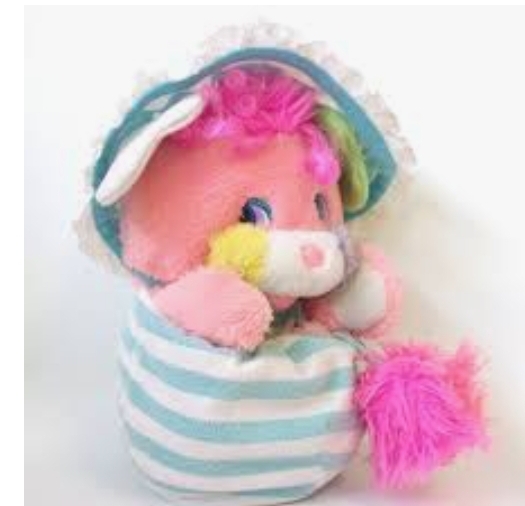
Over the next week I stayed in a cubicle on an adult intensive care until. Frequently on my own I had my toy popple and I would shake the tail to try and get attention. My mum was often there and I was mostly sedated but I don’t remember any member of the medical team apart from the odd nurse ever speaking to me. I was given a book to write in and on one night they brought in a TV so that I could watch Agatha Christie’s Poirot. I fell asleep as I was sedated. When I woke up the TV was still there and on. Hours has passed and a horror movie was on, I couldn’t turn it off and no one came. Again I just lay there scared.

So why am I telling you this? Afterall medicine must have changed a lot in the last 30 years and this wouldn’t happen now.

This was the start for me of years of being ignored in rooms and having procedures undertaken without being included in the decision. It was part of time spent in hospital without being able to get out of a bed or interact with anyone else, no access to school or even a space to play when feeling better. Although things have improved I’m not sure things have truly changed in many spaces. That’s the reason I’m writing this post. To raise awareness of the importance of not just seeing children as little adults in healthcare but as people with specific needs that need to be catered to.

How do we do things differently?

I recently posted about how I felt we needed to challenge ourselves more on delivering patient centred care. When children and families are involved however I think many people feel even less skilled to adapt what they are doing in order to engage the patient as well as their families in discussions and decision making.

There is a great course run out of GOSH called MeFirst which I try to encourage my Healthcare Science staff to engage with and which I strongly believe would beneficially to anyone working I healthcare. Even if you don’t work in paediatrics you are likely to need to communicate with children and young people at some point. It provides a communication model which will support us in putting children and young people first in any interaction. If you come through the standard medical and nursing training route you are likely to have much more embedded training in this than those of use who belong to other healthcare professions. It is especially important therefore for those of use who haven’t had this training as part of our standard curriculum to search out opportunities to upskill ourselves and improve our practice.

What tips do I try to use in my practice?

  • Speak to the patient as well as their families when you’re introducing who you are and starting your conversation:
  • Try using images and cue cards to support patients articulating how they feel about options, decisions and interventions – if appropriate for the patient
  • Spend time with the patient and family to try to understand their level of understanding in order to make them feel heard, not patronised or baffled by information
  • Avoid using technical terminology whilst not dumbing down what you are saying
  • Remember to use active listening to try to really hear what it is that patients and their families want. They will all have different prioritise and things that are really important to them. Plans should not be one size fits all

My interactions with healthcare as a child led to me being completely terrified of engaging with healthcare as an adult. I experience a really primal fear reaction which no amount of rationalisation can overcome. I think its why I got the job I have, now in hospital I am the person who feels able to make decisions and who is in control and listened to, rather than ignored and scared. Most importantly however I am also the person who can sit in a room and advocate for us to do it better. In my world I have the lowest skill level as I’m surrounded by brilliant paediatricians who are better at this than I will ever be. However if I can make a difference for one child to feel less scared then that is success for me!

All opinions on this blog are my own

My Sunday Afternoon Rage – The Mask Goes Over the Nose, People!

You may or may not know this about me, but I’m a pretty big sports fan. Not the kind that remembers statistics or can quote drivers/players, but a screaming-at-the-TV-or radio in-support-of-my-team kind of fan. When I lived at home in Birmingham, I had a season ticket for the Holte End at Villa Park to see my boys (Aston Villa); now the main live sport I get time to see close up are the London Games when the NFL comes to town (I’m a Green Bay Packers fan and they’ll never visit). Sport is a massive release for me: Watching Sunday night NFL football and F1 is something that my hubby and I really enjoy doing together as these are our shared passions (N.B. in our household, I’m the big general sports fan rather than him).

So imagine what my Sundays in 2020 have become. Imagine that at the end of every race you sat and watched images of Max Verstappen engaging in face-touching whilst wearing a mask that is barely positioned to cover his nose.

The content of the interview is not important, but he rubs the edge of his mask, then moves his finger to his eye, then messes with the vent, then re-positions it by touching the front. All in a video that lasts less than 55 seconds.

The NFL is even worse. At least in F1 drivers are – for the most part – wearing masks, even if they appear to not know how to control their face-touching impulses. Within the NFL, the numbers of coaches not wearing masks at all has led to fines for individuals and for clubs. The NFL is big money in the US. A number of teams have been shut down for SARS CoV2 outbreaks, and yet the behaviour has continued.

So, Why I am Writing this Post?

Every week I get on tube trains to travel to work. During the first lockdown there was ~90% compliance with appropriate mask wearing. In recent weeks, compliance was less than 50% and I’ve seen all the variations in the image below and more. All this whilst I’m having to live with increasing numbers of clinical cases and receiving daily reports of the same elsewhere. I’m writing this as, although some of it is because of a decision to be non-compliant, I think a lot of it is about the fact that we are not really getting the message out about why appropriate mask wearing is important: not just box-ticking to have one near your face. I don’t think we’ve taught people about which bits of masks are contaminated and that touching those areas is where a big portion of the risk lies. This is why I was pretty much against selective mask use when it was introduced. Universal mask use is much more scientifically valid, but it’s not a panacea and actually increases personal risk if not done appropriately.

I’ve seen all of these variations and more

Why Does it Matter That I Wear My Mask Like a Necklace?

We know respiratory pathogens on the outer surface of masks may result in self-contamination. In my PhD thesis back in 2015, I discussed this as a potential route for hand/face contamination. However, in the context of a respiratory pandemic, and mass mask-wearing without training, the implications are much more significant.

The T-zone includes the mucous membranes within the eyes, nose and mouth.  It has been noted that, even within a healthcare setting, members of staff engage in frequent face-touching, with one study noting that healthcare workers touched the T-zones a mean number of 19 times over a two-hour period, which may place healthcare workers at risk of organism acquisition/transfer.  Additionally, organisms could survive on the skin for minutes to hours and thus present a source of hand contamination when touched in the future, with a possible spread to patients and surfaces.(Journal of the American Board of Family Medicine. 2014;27(3):339-46)

My thesis (2015)
BMC Infectious Diseases volume 19, Article number: 491 (2019) 

Fabric masks can protect by filtering up to 50% of particles, reducing exposure. The risk from inhalation is not the only one, however: viruses can survive on skin, paper and fabric, for hours in the case of SARS CoV2. The virus can also infect by self-inoculation into the eyes and contact with other mucous membranes, for instance people rubbing their nose after removing the mask. The above paper used fluorescent particles to demonstrate how contamination of the external of a mask works, and to help visualise the risk of moving that contamination around the mask and skin. If masks are not put on and taken off appropriately, if they are not worn the right way, and if we don’t wash our hands and think about how we touch our faces, we put ourselves at risk. We make the problem worse.

Back to Sport

Role modelling is so important in raising awareness. Teams and individuals have a massive platform to get this message out. People will say that sportsmen and women are not medically trained, so why should they take responsibility to get this message out? I would say that sports like F1 and NFL have huge levels of access to the worlds best clinicians; they have huge levels of medical investment and there is no doubt that these individuals will have been trained and taught. So they need to lead by example and enable me to get back to using Sunday afternoon sport as an escape, rather than a lesson in IPC failures.

Top tips for safe mask wearing:

  • Wash your hands or use a minimum 70% alcohol gel before putting on (donning) and removing (doffing) a mask.
  • If using a fabric mask, ensure that you are washing between each use.
  • If you remove a disposable mask, throw it away: both sides will be contaminated and if you store it you just move that contamination around.
  • Make sure your mask covers your nose and mouth.
  • Be aware of face-touching and use hand hygiene if you accidently contaminate.
  • Know that the outside of your mask is NOT CLEAN!

All views on this blog are my own

A Week With Antimicrobial Resistance on my mind

This one gets a bit technical in places. Bear with me – the next one will be less so. Pinky swear.

This month has been a pretty one big for me. Last week, a clinical trial I’m involved with kicked off in Mali. 10% of Malian children die before their fifth birthday and this trial aims to reduce the level of infant mortality. The study is called the Lakana Trial and aims to recruit 100,000 infants born in Mali over the next three years.

In a separate post, at some point, I’ll tell you the ‘Mali not Bali’ story, but I’ll need a double G&T in front of me first. (Or register for free for Stand up for Healthcare Science on 6th November.)

At this point you’re probably thinking what on earth does this have to do with antimicrobial resistance (AMR)?

The thing is, to save all these lives, we’re giving antibiotics to every child (some will get a placebo). Nothing special about that, you might be saying, we give antibiotics to children all the time.

This is different because we aren’t treating symptoms of a known infection. We are giving antibiotics in order to reduce infection risk/inflammatory response in asymptomatic (symptom free) children under one.

The antibiotic we’re giving is a drug called azithromycin and it’s from a class of antibiotics called the macrolides (see my A Starter for 10 on Antimicrobials post).

The LAKANA study follows on from the MORDOR study (the best study name in the world, in my personal opinion!) which gave two doses of Azithromycin/placebo to >190,000 children born in Malawi, Niger and Tanzania. The difference between that study and ours: they always gave two doses and the infants recruited were up to 59 months.

Mortality in the MORDOR study was 13.5% lower overall in communities receiving azithromycin vs those that were given the placebo (paper link here if you’d like more detail). Interestingly, there were differences in the survival increase by both country and by age group, with the highest mortality reduction seen in Niger. The greatest effects were seen in the one-to-five month age group which is why the under ones were selected for the LAKANA study.

To decide how many doses of azithromycin are needed to reduce infant mortality, the LAKANA study will gather evidence to answer three specific research questions:

  1. Does biannual azithromycin MDA (Mass Dosing of Azithromycin) to 1-11 month old infants reduce their mortality?
  2. Does quarterly azithromycin MDA to 1-11 month old infants reduce their mortality?
  3. Does quarterly azithromycin MDA result in a greater reduction in mortality than biannual MDA?

What has this got to do with antimicrobial resistance?

The AMR component of this study is the part that is being lead by UCL and the Institute of Child Health and so is sitting with me as a co-applicant. As we are giving antibiotics to children (and not treating a specific infection), it is crucial to understand whether this will impact on the level of antimicrobial resistance detected in them, their families and their communities.

Questions that we’re looking to answer (and that are currently running around my brain:)

  • If we do detect antimicrobial resistance is it stable? (I’ll explain this in a future post.)
  • Does detectable resistance return to baseline after a period of weeks, or does it lead to a permanent shift in their colonising bacteria?
  • Does any resistance detected make a difference to clinical treatment options? Macrolide resistance is usually due to accumulation of single nucleotide changes (single letters in the DNA code changing). This doesn’t necessarily mean the antibiotic will stop working.
  • Is resistance detected only in the Macrolide class of antibiotics, or does it lead to selective pressure that causes other resistance changes?
  • (Not AMR, but fascinating to me) How does azithromycin work? What is the mechanism? You would have thought this is well understood but, despite being available for decades, how it works as an anti-inflammatory is really not understood. Is the reduction in mortality because of its use as an antibiotic or because of this anti-inflammatory action.

What is incredibly important when doing this kind of work is that the first priority is to maintain the safety of participants. To that end we are working closely with the The World Health Organization who have recommended consideration of azithromycin MDA to under-one-year old infants, in areas with high childhood mortality.

Reducing infant mortality is so important: not just to survival but to quality of life and prosperity within these communities. These kinds of studies also need to be aware of their legacy. We are all incredibly keen to build laboratory capacity and infrastructure, not just in terms of equipment but also in terms of skills and skill infrastructure.

It’s early days and we won’t have any results from the AMR section for at least a year. I mostly wanted to record that this work is going on and the questions I have at the start. I also have some questions about balancing clinical outcomes which are pretty philosophical in my mind right now. If we see development of AMR, especially if it’s non-stable, but mortality is decreasing, where is the balance between those two things? How do you perform the risk assessment for the individual about short-term vs long-term outcomes? These thoughts convince me that this study is just the next step on a journey and that (as always) we have a lot to learn and a long way to go.

LAKANA team – Paris December 2019

All opinions in this blog are my own
Remember, Remember! Step back in time to save the King

Join Us to Help Celebrate National Pathology Week 2020!

Remember, Remember!

Remember, remember the fifth of November.

Gunpowder, treason and plot.

We see no reason

Why gunpowder treason

Should ever be forgot……

What can you do to help our scientists who’ve been sucked back in time to 1605 to find the gunpowder plotters and help Princess Elizabeth?

Full play on YouTube, scripts and activity packs are available here

Join in our digital competition, watch the play and complete the activity packs to help the Healthcare Science Education Team celebrate the work of Healthcare Scientists and the work they do for patients and families!

2018 Cast Rehearsal Photos by Rabbit Hole Photography

Watch the great play by Nicola Baldwin (2018) Remember, Remember! on our YouTube Channel (available Friday 30th October)

See how your hard work can help our scientists by completing the activity packs that accompany the show (download links below)

Also

Take photos, record a video or create other content (blog, tik tok, artwork etc) linked to your completed activities OR answers one of the following questions for a chance to win a £50 Amazon voucher!

–           What do I think of when I hear the words microbiology / bug?

–           What does antimicrobial resistance mean to me?

–           What will antimicrobial resistance mean for my family?

–           Are bugs good or bad?

–           What do I think scientists do in hospitals?

Email: we transfer your entries to hcs.education@gosh.nhs.uk by Sunday 8th November

Lily, Rosa and Frank are Healthcare Scientists working in the laboratories. They work to help patients understand what is making them unwell, or to help with making them better.

It’s November and there is fog hanging in the air. The leaves have begun to fall and the street lights have started to come on by the time they leave work.

Scientists often work late into the night and Lily is waiting for Rosa and Frank to finish for the day.

Whilst waiting for them she decides to run one more test using her favourite piece of lab equipment, a MALDI-ToF she’s called Bonnie.  Bonnie is a pretty cool piece of equipment: it has a laser and can get a result for Lily in less than 5 minutes for something she used to have to wait 2 days for.

Just as she presses the big red button, Rosa and Frank walk through the door to the laboratory.  Suddenly a message appears on the screen, where no message should be saying ‘HELPE…’

Then the message changes and gives an address at the top of Lamb’s Conduit Street and what looks like a map.

Lily is so surprised she jumps back and tries to turn Bonnie off, but the machine doesn’t respond and the message just stays on the screen.

Not knowing what to do Lily, Rosa and Frank decide to leave the lab and find somewhere to sit and chat to work out what might have happened;, After all this is a piece of scientific equipment not a computer game.

As they leave the lab, they are suddenly surrounded by the fog they had seen outside the window until they can barely see what’s in front of them.

As they walk towards where they believe the tube to be, they suddenly realise they are on Lamb’s Conduit Street and the fog begins to clear.

A child is waiting. She has a Scottish accent and demands they call her Princess Elizabeth! They must all bow to her!

She tells them there is a plot to get rid of her father by blowing up the Houses of Parliament. The scientists are amazed – do you mean the Gunpowder Plot of 1605?

She says she will tell them later how she managed that.

Even then, they don’t believe she is a princess….

But she is 

Remember, Remember! by Nicola Baldwin 2018

The scientists must find a way to help Princess Elizabeth find the Gunpowder Plotters. Then maybe they’ll be able to find out how to get back to 2020!

The scientists have asked you to complete a number of activities in order to help them find the plotters.  You are the detectives, guiding the scientists so that they can get home.

Complete the following activities and we’ll find a way to get the results back in time to the scientists in 1605.

Science Communication: Reflections from an Ivory Tower

This week I was going to post about Antimicrobial Resistance (AMR) as, in many ways, it has been quite a momentous week in my professional life and it all ties into AMR. I may still… but I wanted to raise something that has been playing on my mind this week in light of the social media reactions I’ve seen to the new COVID-19 (don’t call it a lockdown) tiers.

Let me say now that this isn’t a political post, purely one linked to reflections that have been triggered for me that are linked to some of the pitfalls of traditional communication, medicine and dissemination.

On Wednesday, I saw this tweet. The scientist in me responded with, ‘well of course’ and ‘surely people understand the ramifications for everyone if we don’t find working containment measures’.

Twitter post related to the new YouGov poll

When I see posts like this, I usually scroll through the comments. I think it’s important to read what people are posting and see what the challenge is like, as it’s all too easy to see the world through the eyes of those in your bubble. Those people in similar situations to us, with similar views to us, who then use stats like this to reinforce the positions we already hold.

Then, as part of the comments, I saw this:

My first reaction to this post was to blow out my cheeks and sigh. “The needs of the many outweigh the needs of the few” and all that. That’s an economic problem that should be addressed, not an infection issue: think of the number of people who will die etc.

Then I stopped and realised there is truth to this

I do live in an Ivory Tower

Now that’s not to say that I am rich, and it’s not to say that my response to the the poll is wrong. It is to say that we must reflect and admit the truth to ourselves. I can pay my mortgage. My job is not at risk (although my husband’s may well be). I can buy food and cover my bills. That gives me a privileged position where I can engage with and make decisions about how I feel about the science, the justification, and the way they are implemented. I don’t have to react from a place of worry and fear. That privilege means that I can digest information from a place of logic and not emotion. That privilege also means that I can lose perspective about how others may receive the same information and I certainly have to be aware of that privilege when it comes to judgement.

However the key word in the above paragraph is “receive”. This is where I come to the real point of my post. One of the problems with the current situation is the feeling of disempowerment of being the recipient of information and not the co-creator of response. This has been a problem in the health setting for pretty much as long as it’s existed, but its only in recent years that it’s been recognised as such.

Too many times in medicine we implement from a position of expertise and authority without engaging the lived experience and knowledge of others. I’m a passionate believer in the power of true co-production, where we work in partnership to create something that neither group could deliver on their own. I work in a hospital where we see patients who may be one of only 20 in the world with their condition. It is naïve and arrogant of me to believe that I will understand more about their experience of living with their disease. I can input, support and advise on the basis of biology and my experience. It will never be truly effective without considering theirs.

So my thought on this Friday evening is actually more of a plea. We all have our Ivory Tower, our bubble, our version of the truth. If you work in healthcare it’s important to give yourself time to reflect on what that means for your practice. Are you doing everything you can to move from being the authority in the room to being the person who is prepared to truly listen and co-create the best possible outcome for the patient in front of you?

Are we ready to enter a new period in healthcare where it is much more about the patient in front of us than it is about our years of training and education?

Photo by Adrianna Calvo on Pexels.com

All opinions most definitely my own

Adventures in Science Communication – Stand-up comedy edition

I’m not funny. Well, I’m not “laugh out loud” funny. I’ve never been the kind of person who has told jokes and, unlike many in an American genre TV programme, I would never have won the ‘Class Clown’ award. So how on earth did I end up spending three hours this week in a stand-up comedy training session?

There’s obviously the answer that a lot of the 11 people on the call would give: i.e. we need continuous professional development (CPD) points and, as Healthcare Scientists in the time of COVID-19, that’s not as easy. For anyone that doesn’t work in our profession, we have to show that we engage in a set number of hours of active learning and updating our practice. This helps us stay safe but also encourages a growth mindset where we learn new skills.

Secondly, the funding for the sessions is from a public engagement grant that my brilliant deputy was awarded by the Society for Applied Microbiology (SfAM). My deputy is super brave and was invited to do a show last year, having never done any stand-up comedy. As part of my role as leader, I felt it was incredibly important to actively participate in something that she had put energy into and believed would make us better communicators. Also, I’m a Trustee for SfAM and they do great work in supporting scientists in stepping out of their boxes and trying something new to communicate differently. I really buy into this and so, despite being slightly terrified, it was the right thing to do.

Step out of your box and give it a go

The session was delivered by Dr Steve Cross who is a consultant in public engagement and education. He started off the session by saying that he enjoys teaching nerds to be funny. Well, as a self confessed mega-nerd, this was a good start from where I was sitting. The session was a real mix of scientific backgrounds: from social science, infection specialists, pathologists, physiologists, through to medical physicists. This is one of the great things about sessions like these: networking is a great and often unexpected benefit and you get to spend hours with scientists you would never encounter otherwise and learn about their worlds.

Never underestimate the power of stories

We started out by discussing what we thought was funny. I had failed to do my homework and so hadn’t brought a clip with me (I know, an automatic F!) But the better prepared participants showed YouTube clips that made them laugh and discussed why. In an attempt to raise my grade from an F to a D, the clip below (belatedly) is something that makes me chuckle.

From watching the different clips I began to reflect on the power of stories. One of the reasons that Nicola Baldwin (the playwright I work with) and I utilise drama is because we believe in the power of drama to communicate, break down barriers and alter behaviour. It was fascinating to think about how comedy can be used to:

  • See things from a new direction
  • Explore differing opinions in a confrontation-free way
  • To confront and explore upsetting/worrying topics avoiding direct triggers
  • Enable the voicing of secret thoughts that are very common but we fear discussing openly
  • Talk about common experiences as if they are new in order to gain fresh insight
  • Subvert expectations
  • Inspire or start conversations

A lot of these points can be extrapolated to the reason Nicola and I use drama. The power of comedy is the portability and equal access nature of it. It doesn’t require huge amounts of resources to prepare a set, it doesn’t require a lot of resources to deliver a set, and it can be delivered flexibly across zoom or in person.

Steve ran us through a bunch of very easy to access and non terrifying exercises. Many of these involved us taking a story or event and reflecting on it in order to delve deeper into emotions connected with it. We then discussed how these stories and linked emotions could be used to make people laugh. Obviously there’s way more to it, but Steve is the king and we are running more of these sessions if you’d like to give it a go and participate yourself.

My main reflections from the session were:

  • Undertaking this kind of training can enable you to see situations differently and explore ways of seeing them from another’s point of view
  • Learning to break situations down and actively think about how to communicate them is a transferrable skill which is really useful in your professional practice
  • Understanding how stories can be used to create empathy and engage audiences isn’t just important for comedy. This technique can be used to support you bringing your whole self to work and break down communication barriers

All opinions in this blog are my own
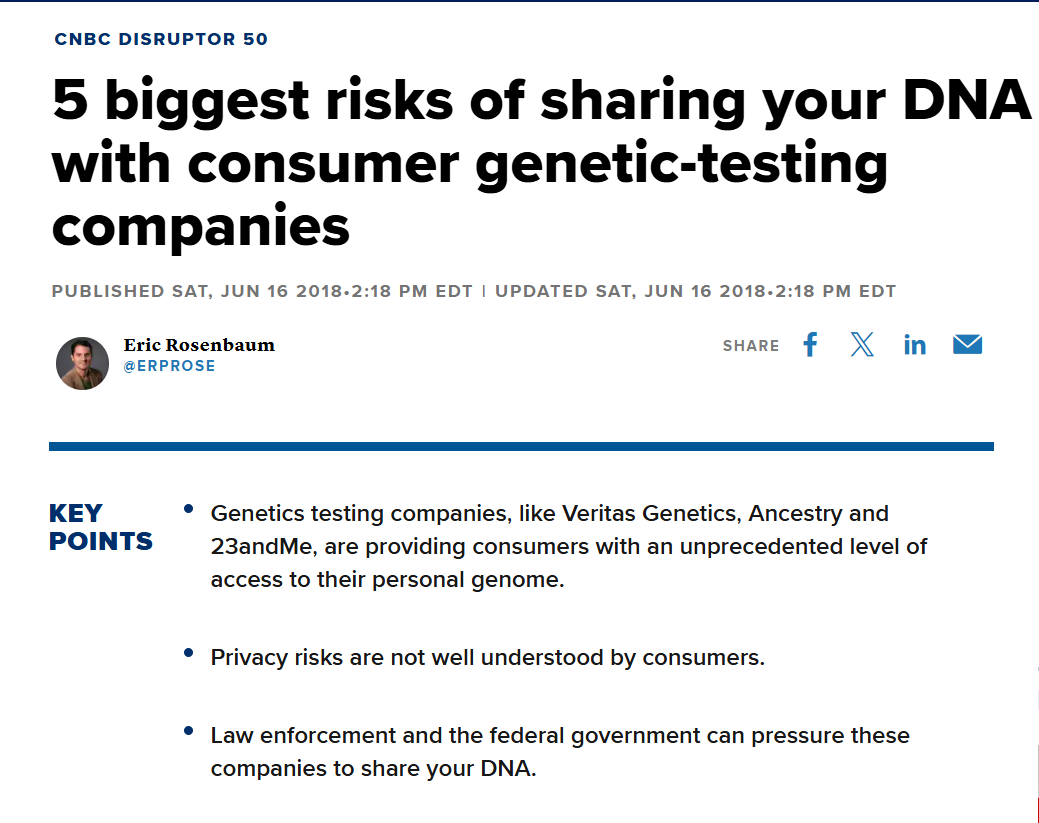
Why Have I Waited 5 Years?

It’s been five years since my last (and, embarrassingly, only) post on this blog. I started it when I’d just been awarded my PhD. After four years of focusing on my research and thesis, I thought that I would have the mental space and time to really invest in something that I’m personally passionate about – science communication.

Viva Day

I think when many of us finish a big project, like a PhD, there’s almost a grieving feeling at the end. What do I do now? This thing that has been a massive part of your every waking (and in my case also so sleeping) moment is now done. It makes sense to rest, recuperate and reflect. This is what I should have done. Sadly, as those of you who know me can attest, I’m not very good at any of those things. It’s a a skill set I’m working to develop.

So, instead of stopping, I decided to sit the exams to become a Fellow of the Royal College of Pathologists (FRCPath). This was a big deal for me. Not that many Healthcare Scientists in microbiology at the time has sat the Medical Microbiology exam, and no one who only worked in paediatrics. It was important to me though, as I see patients and felt the need to be as equally qualified as my medical colleagues. It was the final step to getting on the Higher Specialist Scientific register and being eligible for a Consultant Healthcare Scientist post.

Healthcare Scientist Progression Routes

I started to prepare for the ‘Great British Bake Off’ of professional exams but without the comfort of cake. Four days, 30 hours of exams with lab and written sections! If I thought the PhD was tricky, FRCPath was another level.

Five years ago I posted on Facebook:

Elaine Cloutman-Green is feeling drained.

30 September 2015  · Shared with Your friends

Friends

Day 3. It’s 6 am and I’m reading brain abscess guidelines. I’m exhausted, I feel sick, and I really want to go home. It’s been so much harder than I had dreamed and I have cocked up on so many things. I get to leave tomorrow and that is all I care about now, I no longer care if I pass – I just want it to stop. Whining over. Eyes on the finish line. When I leave here, let’s never mention these days again.

Sometimes you have to face the failure and the difficulties head on to come out stronger. Fortunately I came through the other side and was gobsmacked in 2015 to find out that I had passed.

The Face of Complete Relief at the Fellowship Ceremony (2016)

2016 you say, but that’s still years ago . So why nothing since then?

At the same time as recovering from FRCPath exams, I decided to apply for an NIHR Clinical Lectureship. I know! I’ve got a problem, right?

From 2016 to 2019, I’ve been beavering away on my clinical academic career as part of an NIHR ICA Fellowship (see the top right corner of the progression image). More on that and what a Clinical Academic is will be posted on a separate blog in a bit.

After an intense five years with a lot of highs, and some level of stress, I’m back! I promise to not make you wait five years for another post.

What have I learnt:

  • Learn to rest, regenerate and reflect. These skills are undervalued.
  • Sometimes you have to face your fears in order to thrive. In my case the fear of failure.
  • You are capable of anything you can dream of if you work hard enough. Dream big and aim high!

All opinions in this blog are my own

Hello world!

So, this is my first ever blog post. Bear with me as I don’t really know what I’m doing.

I’m what is know as a Clinical Scientist and I work in Infection Control.

https://nationalcareersservice.direct.gov.uk/advice/planning/jobprofiles/Pages/clinicalscientist.aspx

Most people don’t know what a Clinical Scientist is so I thought I should briefly explain.

Most scientists that work within hospitals are involved with imaging (X-rays, CTs etc) or processing patient samples.  We all work to support diagnosing patients.  Did you know that scientists are involved with >80% of all diagnoses within the NHS?  Their work is crucial to improving patient care, but the scientists are often unsung heroes as they often never meet the patients they help.

I do not work in the lab all the time like many scientists.  I’m a clinical scientist, so half my time is spent working in a patient facing role within infection control and the other half involves bringing science to infection control to make it more efficient/evidence based. I work within a hospital with a team comprised of nurses, doctors and scientists.  I have a PhD in infection control. I am also working towards my final clinical qualification (Fellowship of the Royal College of Pathologists) which is the same as my medical colleagues.  My job is to help the translation of the science into a form that healthcare professionals can work with.  Sometimes this means working with language so we are all on the same page. Other times this means working with the latest science and technology and developing new tests that will help.

I’m passionate about my job, but I’m also aware that many people don’t know that it exists and I’m hoping that this blog will help to change that.  I plan to share a bit about what my day to day life is like as well as the science which I hope will inspire others to become healthcare scientists. After all, I have the greatest job in the world. And that is worth shouting about.