When Heroes Fall: How the intersection between fandom and public health can change who you root for

Today is the day, we have reached Super Bowl 56 and for those of you who know me well you will know how much I love Super Bowl Sunday. This year its the LA Rams up against the Cincinnati Bengals. We will be a divided household as the Rams are one of my secondary teams and my husband is a lifelong Bengals fan. Now I’ve been a big NFL fan for many years, after my husband introduced me to the game – I describe it as chess with violence. For all of this time I have supported the Green Bay Packers. Unlike in the Premiership because of the divisionary structure you can have secondary teams, such as my liking of the Rams, but the Cheese Heads have always had my heart. One of the reasons for this is because of the ethos of the team, they are owned by the community and include community service in all of their contracts, why oh why therefore would I be secretly quite glad that my team have not made it to the Super Bowl this year?

Who is Aaron Rogers and What Did He Do?

Aaron Rogers is the Quarter Back for the Green Bay Packers, in effect he is the leader of the team. He is currently on a 4 year contract valued at $134 million (remember this number when we talk fines later). In November 2021 it emerged that Aaron Rodgers had COVID-19. These things happen I hear you say, you can get COVID-19 even if vaccinated. All true, what also emerged linked to this however was the Aaron Rodgers had lied/obfuscated about being vaccinated for SARS CoV2. He had also followed NFL guidance for vaccinated players when unvaccinated, leading the Green Bay Packers to also not be compliant with NFL COVID-19 guidance.

The NFL COVID-19 guidance is:

If a vaccinated person tests positive and is asymptomatic, he or she will be isolated and contact tracing will promptly occur. The positive individual will be permitted to return to duty after two negative tests at least 24-hours apart and will thereafter be tested every two weeks or as directed by the medical staffs. Vaccinated individuals will not be subject to quarantine as a result of close contact with an infected person.

If an unvaccinated person tests positive, the protocols from 2020 will remain in effect. The person will be isolated for a period of 10 days and will then be permitted to return to duty if asymptomatic. Unvaccinated individuals will continue to be subject to a five-day quarantine period if they have close contact with an infected individual.

https://operations.nfl.com/updates/football-ops/2021-covid-related-operating-principles/

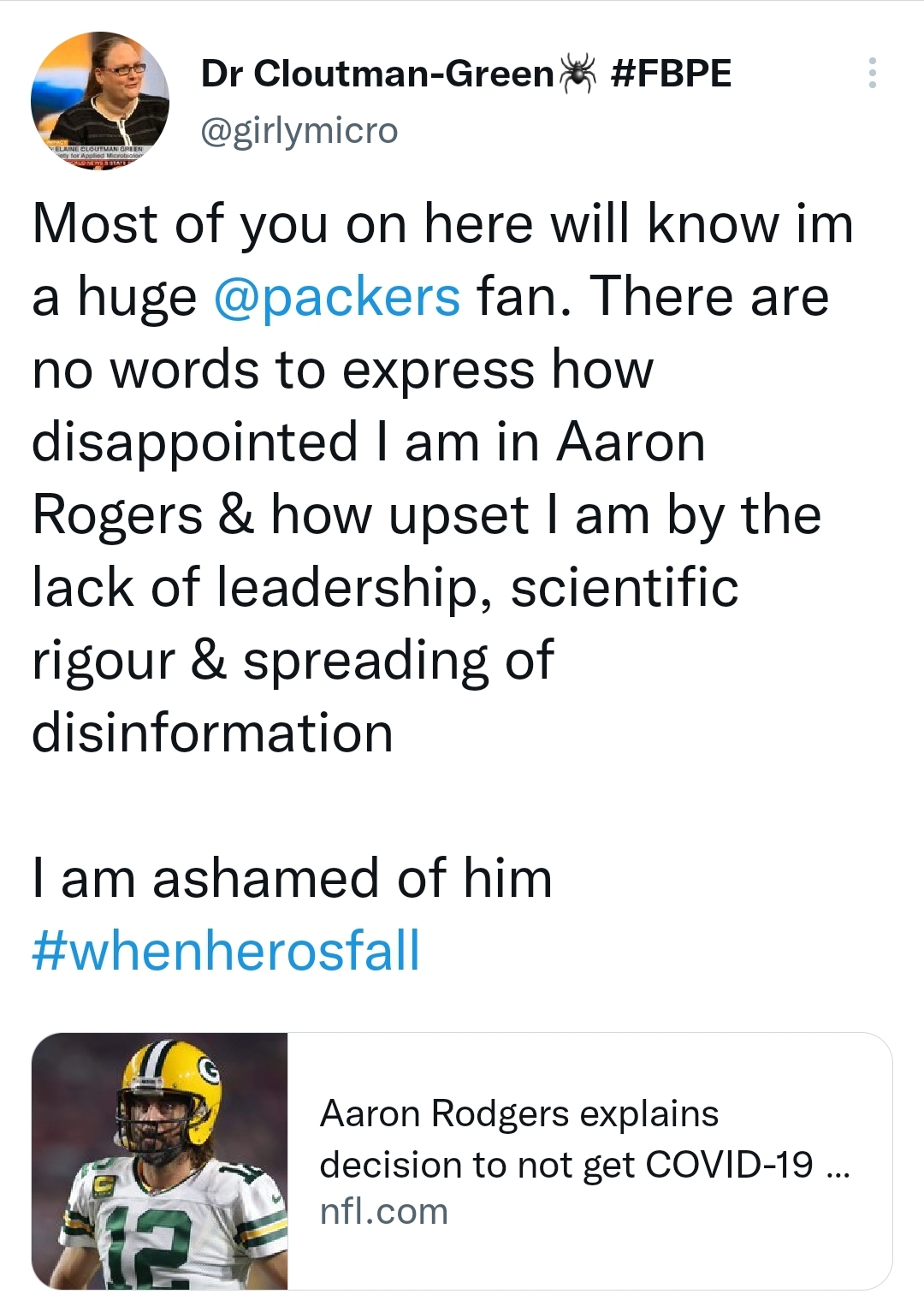
Everyone makes mistakes. It’s the learning from those mistakes that matters. However when it came out that Aaron Rogers had lied, instead of demonstrating learning he doubled down and used the coverage to talk about his scientific opinions and the research he had done. Again, I support people gathering information. When you gather that information from known discredited sources and use your platform to continue to spread that disinformation however I have an issue. So much so I tweeted about it and how it made me feel as both a scientist and a fan:
So What Did He Say?

Aaron Rogers admitted that he had misled others by avoiding or implying he was vaccinated when he had instead chosen to take a homeopathic approach to COVID-19. He appeared on a Friday night American talk show called The Pat McAfee Show in order to respond to the detail that had been released:

“I believe strongly in bodily autonomy and ability to make choices for your body: Not have to acquiesce to some woke culture or crazed group of individuals who say you have to do something. Health is not a one-size-fits-all for everybody.”

Aaron Rogers – The Pat McAfee Show

Rodgers then went on to say he had received monoclonal antibodies and taken ivermectin for his COVID-19 infection and went on to thank podcast host Joe Rogan – whose podcast has been criticised for spreading SARS CoV2 disinformation.

โ€œI consulted with a now good friend of mine Joe Rogan, after he got Covid, and Iโ€™ve been doing a lot of stuff that he recommended,”

Aaron Rogers – The Pat McAfee Show

If you’re not part of the solution you’re part of the problem

A lot of the science quoted by Rogers has been disproven time and time again and it wasn’t just me that was upset that he was spreading mis-information, even when challenged, under the guise of him ‘doing own research’:

When you are acting as a spokes person for information that has been shown to be incorrect then this isn’t a zero sum game. People who look up to you may not have the scientific knowledge or background to unpick what you are saying and challenge that information. Those same people may follow on and take up your advice and so your actions could actively result in harm. I feel this is especially true if you are an athlete and therefore you make money from sponsorship and other activities linked to your physical health, which could be viewed as being based in increased health knowledge/awareness.

It’s a matter of leadership

Quarter backs act as the leaders of their team, Rogers has been in the NFL for a long time and acts as one of it’s senior leaders. Whether you want it or not that position comes with a level of social responsibility. One of the reasons I fell in love with the Packers is that social responsibility is imbedded throughout the culture of the team. It is therefore even more jarring when the leader of such a team goes against that culture. During his interview Rogers even went on to state that his actions were themselves imbedded in his role as a leader:

Rogers claimed he had a “moral obligation to object to unjust rules and rules that make no sense.”

Aaron Rogers – The Pat McAfee Show

My issue with this statement is that if it was true then true leadership would have been standing up and owning your opinions and being open to challenge. He even went on to challenge the NFL and their medical team by saying he had been told that it was impossible to catch COVID-19 if you were vaccinated and it was this untruth that added to his lack of willingness to be vaccinated. The NFL however responded by saying:

โ€œNo doctor from the league or the joint NFL-NFLPA infectious disease consultants communicated with the player. If they had, they certainly would have never said anything like that.โ€

NFL statement on Aaron Rodgersโ€™ claims about a doctor saying COVID-19 canโ€™t be caught, transmitted by vaccinated players.

This interaction makes me question the response that states it was linked to leadership, as leadership to me does not lie well when linked to deceit.

This isn’t all about Rogers to me though. The Packers leadership has also been questionable. From statements made it is clear that they were aware of the way that Aaron was both feeling and behaving. When he came out with comments accusing the NFL or mis-leading scientific commentary the silence was deafening. Both Rogers and the Packers were fined linked to COVID compliance penalties: the Packers $300,000 and Rodgers was fined $14,650. Speaking of leadership however, how does that fine stand up as leadership? It is likely less than a weeks pay for Rogers and a drop in the ocean for the team. Leadership is linked to culture and if that culture allows the behaviour we’ve seen this year then I can’t help but be disappointed.

When you lie its not just you you put at risk, you remove the choice from others

Before the season started, Rodgers was asked if he had been vaccinated and he said he had been “immunized.” In the same answer, he said of unvaccinated players, “Iโ€™m not gonna judge those guys,” seeming to imply he had received the jab. Rodgers during his interview insisted he wasn’t lying in that answer, but conceded he didn’t want to answer more questions about vaccination.

“I wanted it to go away,” he admitted. “Everyone on the squad knew I was not vaccinated. Everyone in the organization knew I wasnโ€™t vaccinated. I wasnโ€™t hiding from anybody. I was trying to minimize and mitigate having this conversation going on and on.โ€

Aaron Rogers – The Pat McAfee Show

Medical information is personal and therefore it is not a matter that the public have the right to ‘know’, to be honest its none of my business as long as you keep it to yourself and don’t use it as a platform. There is a difference however between not getting drawn into a conversation about it and lying/misleading others. If he followed guidance for vaccinated individuals when he was unvaccinated that is deceit, and it is deceit that could have posed a risk to others. It is not the lie that matters as much as the actions that could have affected others. For instance he was filmed attending a party and other events and even on the side lines speaking to journalists where he breached guidelines for unvaccinated players. That means he knowingly put his team mates at risk, as well as risking the performance of the team as a whole if an outbreak had resulted. If the Packers leadership knew that makes it worse, but I remain to be convinced that everyone he exposed was actively consented into that exposure by knowing his status. I doubt he told the cleaners he interacted with, those who served him food in the canteen. Those people may have been at high risk of severe infection or truly unable to be vaccinated and were under the impression their risk was being controlled. When we assume consent we remove choice and that is not acceptable no matter how amazing your throwing arm. When you say you have the right to make a choice for your body that is correct, but not when by doing so you lie and remove that same choice from others.

Should we reward when off pitch behaviour hasn’t kept to the standard we proclaim to hold?

Last weekend Aaron Rogers was awarded the 2022 Most Valuable Player (MVP) award. I must admit to never having been more disappointed. NFL is one of the few sports that claims to care about off pitch conduct and in holding players to account in terms of behaviour. For a player to be awarded MVP in the same season that they were fined for the way they have behaved seems counter intuitive.

To me this whole situation has sent the wrong message. It says that if you are talented enough, rich enough, important enough the rules don’t apply to you. Even if you get caught out you get a minimal slap on the wrist and you will move on with no consequences. Rules are for the many and not for the few, especially public health rules which rely on us all coming together for the good of everyone. If you opt out the consequences are not just yours but ours. This isn’t just an issue for NFL, but for society as a whole. When those who are seen as ‘special’ are allowed to opt out it means that the rest of us are less likely to comply. In a world where compliance has never mattered more leadership is key.

Finally, I want to clear that this post isn’t about cancel culture. I’ve struggled with the way I feel over this. I’ve struggled with the fact that the behaviour of one individual and the lack of censor from the owners of the team has led me to feel less warmly about the other 52 players on that team. The rest of those players for the most part, won’t have the shield that Aaron Rogers is provided because of his talent, most of them will have obeyed the rules and done nothing wrong, even worse some of them will lose their jobs this year as well as the opportunity to get a Super Bowl ring and the opportunities that come with it. I don’t believe the rest of the team should suffer, but I do believe that when leaders in our communities break the rules they should at least learn from the experience. They should not be permitted to use the platform they have to then spread mis-information and pile on the harm and then be rewarded for it at the end of the season because they have talent. To me it gives out all the wrong messages. Leaders have responsibilities, talented people are not immune from the rules of society………be that beating up your girlfriend or putting others at risk of COVID-19. Until we are all held account to the same rules and the same law holds for us all there is no fairness and I for one will no longer count the likes of Aaron Rogers as one of my heroes, I’ll be sticking to the likes of Ruth Bader Ginsburg instead!

All opinions on this blog post are my own
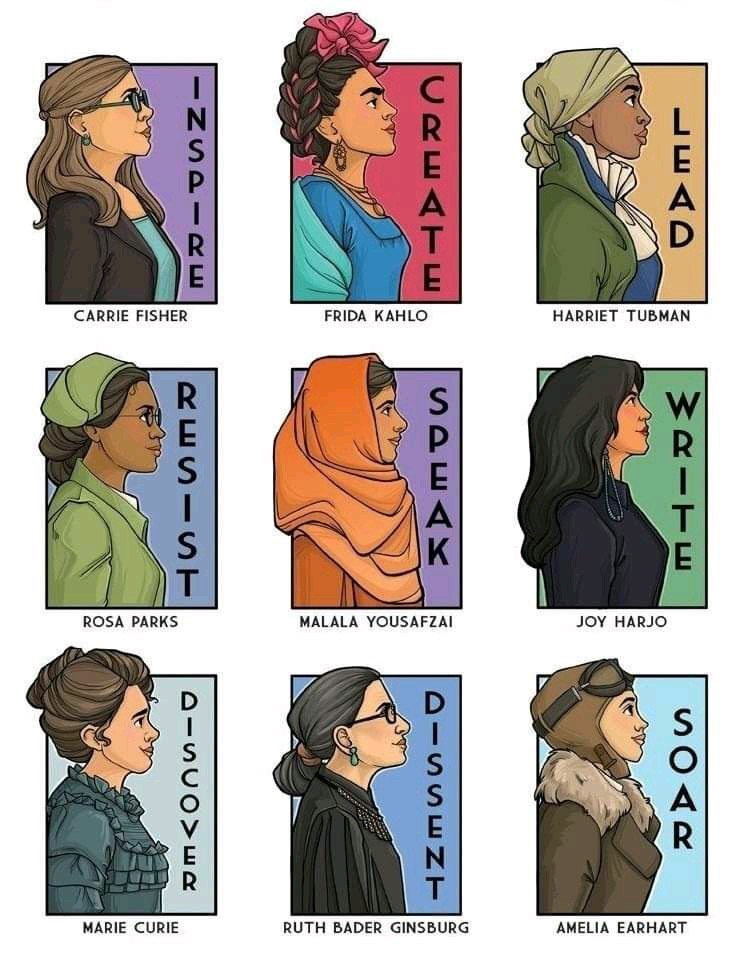
Celebrating International Day of Women and Girls in Science Day: A view from the Girly Side

This topic means a lot to me. It wasn’t by accident that when, in 2012, I chose my twitter handle: I chose Girlymicro/Girlymicrobiologist. It has felt to me, since I started as a working scientist in 2004, that it was considered unprofessional to bring my whole self to work: to like pink and purple, to bake, to talk about science fiction and gaming. It was the start of the journey that I am still on, to show that we are better scientists when we bring our whole selves to work. Anything that acts as a barrier to that not only harms us as individuals, but also harms what we can achieve as a collective.

The Road Is Long
With Many a Winding Turn
That Leads Us to Who Knows Where…

You may not know this, but I started out as a zoologist. I adored it, I loved it, but there were no jobs in it. My undergraduate dissertation was on the ‘Demographics of Witchcraft Accusations from 1625 to 1715’. You may think that has nothing to do with what I do now but you’d be wrong. Studying human and animal behaviour helps me all the time in understanding some of the group decision-making that occurs in healthcare. The hours of my life spent learning how to undertake statistical modelling was not wasted. What I didn’t study a lot of was microbiology: I did a single module of microbiology during my whole degree.

I then went on to study not microbiology but the physics of biological interactions at surfaces as an MRes. This was where I learnt some microbiology and developed a love of applied science. When I started as a trainee Clinical Scientist, I had so much less experience of microbiology than any of the other more traditional trainees. I once asked why they hired me and the wonderful Dr Margaret Sillis, who acted as my mentor, responded ‘We can teach you microbiology, it’s much harder to teach you how to think’. I still think about that and the transferable skills I picked up by studying other disciplines still come in use all the time.

This trend of not following the standard path has continued. It’s why I ended up in Infection Prevention and Control rather than microbiology. Although the traditional paths are in some ways easier, as you will be able to walk the path that others have walked before you, don’t be afraid to wander the path untrodden if you think that it will be a more satisfying journey for you as an individual. You will learn so much along the way and open up new roads for others to follow.

Making the Invisible Visible

During the last 10 years, one of the things I’ve consciously decided to do is to be visible. In 2015 I was asked if I would be filmed for a project that the Royal Society of Biology were organising called ‘Biology: Changing the World’. For some years I had been told, by my lovely (male) boss, that I shouldn’t do media and shouldn’t be seen as ‘courting attention’ as it a) detracted from the work, and b) people were looking to make a story out of you. Don’t get me wrong, there is some truth to this. It also results in a fair amount of negative feedback, often from female colleagues, about grandstanding and attention seeking. You know what it also does, however: it hopefully means that when a girl in 20 years time is asked the question I’m asked in this video about what female scientist inspired her, there is a chance she will have a name. Not that I think I’m going to be that person. I’m not going to win a Noble Prize or have a Wkipedia page. I do, even today, remember very clearly the male science undergraduate who came and spoke to my primary school class about his job, I can be THAT girl. The one that someone meets up close and personal and shows that normal everyday women can work in science. That the door is open to them. I can shine a light and make the career path visible to those who might follow. So, next time you are invited to do that piece of outreach, that radio interview, that blog and your mind questions your worth, ask: if not me, then who? I promise you that the next person will not be more qualified than you, more worthy than you, more appropriate than you. So please say yes.

The Importance of Valuing Difference

The above point brings me onto something a bit trickier. I’ve been fortunate enough to win a number of awards for myself and with my wonderful team and partners for undertaking STEM engagement. Doing this work requires energy and time, both of which are frequently given on weekends and evenings. Or, in the case of today’s blog, annual leave. I feel a moral obligation to do this work as well as it being an important part of maintaining my registration to practice. The interesting thing is that it is frequently not viewed this way in either my clinical or academic environments. It is not seen as ‘work’ and I have on more than one occasion been told that if I was serious about my career progression I needed to ‘do less of that nonsense’. Sadly this isn’t a unique situation for me, but is something that many women in science face, especially in academia. In these areas women spend a greater proportion of their time undertaking public engagement and utilising ‘soft skills’, which are not valued when it comes to promotion panels.

Over time I believe I have started to change perspectives, but it takes even more work and investment in time. I’ve taken on additional positions, such as Joint Trust Lead Healthcare Scientist. This position has enabled me to speak to senior leaders about the benefits of the work in order to raise awareness and to capture impact. By actively working with wonderful colleagues on projects nominated for awards, such as the Advancing Healthcare Award for Reach Out for Healthcare Science, with Dr Philippa May, and with Nicola Baldwin for the Antibiotic Guardian Awards and CSO Awards for Nosocomial, I have started to make inroads into changing the conversation. Awards aren’t everything, but they do support you in re-positioning what you are doing in a way that fits into the ‘traditional way’ success is captured.

Whilst I’m on this particular topic, I would also like to make one of the points I often respond with when talking to colleagues who aren’t so engaged in public engagement and outreach. The days of healthcare workers being considered to be ‘the authority’ are quite rightly coming to an end. Those of us working in healthcare need to be engaging and working collaboratively with patients and the public to co-create what the future of healthcare might be and should look like. We can’t begin this work until we get out there and start having conversations. Rather than being ‘nonsense’, this work is key to future of the NHS and, especially, Healthcare Science.

“Amplification” is Where It’s At

During the Obama administration, despite it’s progressive nature, women found it hard to get their voices heard.

We’ve all been there. The meetings in which you make a comment or a response and you’re ignored, only for a man in the room to repeat the comment and have everyone react as if it is the first time they’ve heard it. As women in science, we are often the only women in the room and so making ourselves heard can be difficult.

The women in the Obama administration came up with an โ€œamplificationโ€ strategy, where women in meetings repeated each otherโ€™s ideas as well as deliberately crediting the women who came up with them.

I work with some amazing women in Healthcare Science (Jane Freeman, Anna Barnes, Ruth Thomsen, Kerrie Davies and so many more) who do an excellent job of this amplification. I’d like to think that we all have a definite and deliberate attitude of amplifying each others voices and not falling into the trap (that happens way too often) of competing with each other. Be deliberate when you are in spaces with other women who may not be heard, actively listen and repeat. Focus on those moments that could make a difference and ensure that everyone in the room is heard. It requires active effort, but it definitely changes the course of conversations.

So how our male colleagues can help? This is definitely one of those areas. There are often not the women in the room to do this and so having allies who are happy to support in the same way is a definite help.

Change the View for One That is More Pleasing

One day the super-inspirational Dr Lena Ciric and I sat down over a cup of coffee and engaged in one of our regular consolation sessions. This was because, yet again, I had written a grant that had been successfully funded but it didn’t have my name on it. It had the name of one of my male professors. Lena had experienced similar things over the years and also the reviewers’ response of ‘not enough experience’ as a result of grant after grant that didn’t credit us. This cup of coffee was different: it was during this session we decided that, if we couldn’t change the playing field, we could change the view.

What do I mean by this? Academically, we were applying for funding within the clinical microbiology environment. A landscape that was already filled with vastly experienced and (mostly) older male medics. We were not going to succeed in breaking through the glass ceiling by applying within this space. Life lesson: we needed to find another space. So we very deliberately looked across the different funders to see where there was a landscape that wasn’t crowded with people like us and where we could constructively add something. We found it. We ended up putting in our first million pound grant to the EPSRC, an engineering research council who were looking to fund healthcare research and were not getting applications from researchers with enough clinical experience. We got the grant first time! Now we had a million pound grant AND we had the track record that means we can not only continue to apply in the new landscape but that also enables us to apply in the old arena.

Sometimes, if you continue to bang your fist against a closed door all you will get is a bloody fist. In these circumstances you need to take a step back and review whether there is another way to get to where you want to be. If there is, do it, you may not only succeed in your original goal but learn some other valuable skills along the way.

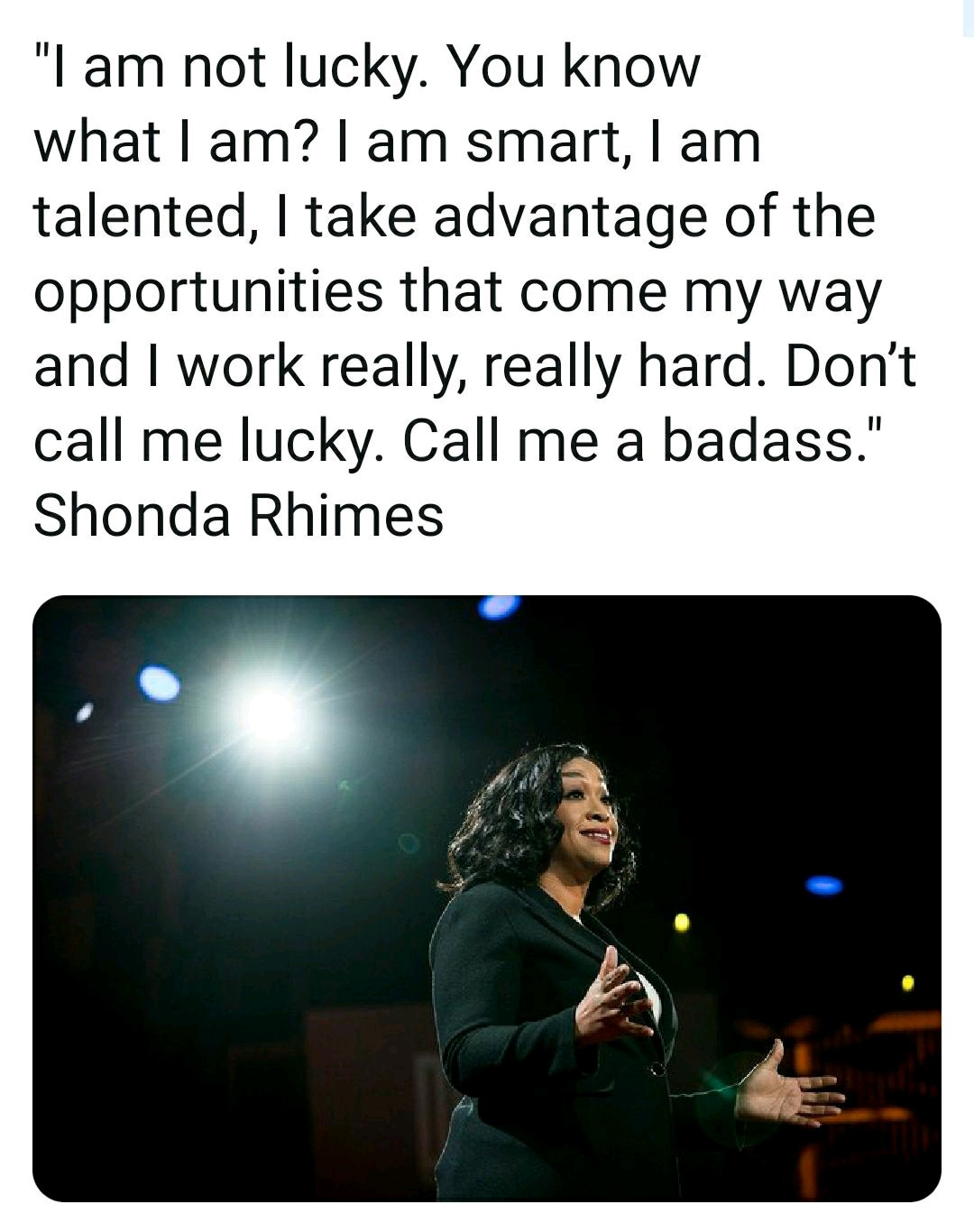
Finally, I wanted to finish with the above image of Shonda Rhimes. I am as guilty as the next person of talking about how lucky and fortunate I am, and it is true. That said, own your success: you’ve earned it, you’ve put in the hours, you’ve sacrificed, you’ve made it happen whilst balancing families, health issues and all kinds of other demands.

Be the badass I know you are!

All views in this blog are my own
Celebrating International Day of Women and Girls in Science Day: A view from the Girly Side

I’ve been asked to write a number of blog posts this year for International Day of Women and Girls in Science. I wanted to write an extra one that wasn’t so much a career guidance document, but more to celebrate some of the great approaches I have seen as a woman working in science. This post is based around some of the points that came out of a twitter conversation last week.

This topic means a lot to me. It wasn’t by accident that when, in 2012, I chose my twitter handle: I chose Girlymicro/Girlymicrobiologist. It has felt to me, since I started as a working scientist in 2004, that it was considered unprofessional to bring my whole self to work: to like pink and purple, to bake, to talk about science fiction and gaming. It was the start of the journey that I am still on, to show that we are better scientists when we bring our whole selves to work. Anything that acts as a barrier to that not only harms us as individuals, but also harms what we can achieve as a collective.

The Road Is Long
With Many a Winding Turn
That Leads Us to Who Knows Where…

You may not know this, but I started out as a zoologist. I adored it, I loved it, but there were no jobs in it. My undergraduate dissertation was on the ‘Demographics of Witchcraft Accusations from 1625 to 1715’. You may think that has nothing to do with what I do now but you’d be wrong. Studying human and animal behaviour helps me all the time in understanding some of the group decision-making that occurs in healthcare. The hours of my life spent learning how to undertake statistical modelling was not wasted. What I didn’t study a lot of was microbiology: I did a single module of microbiology during my whole degree.

I then went on to study not microbiology but the physics of biological interactions at surfaces as an MRes. This was where I learnt some microbiology and developed a love of applied science. When I started as a trainee Clinical Scientist, I had so much less experience of microbiology than any of the other more traditional trainees. I once asked why they hired me and the wonderful Dr Margaret Sillis, who acted as my mentor, responded ‘We can teach you microbiology, it’s much harder to teach you how to think’. I still think about that and the transferable skills I picked up by studying other disciplines still come in use all the time.

This trend of not following the standard path has continued. It’s why I ended up in Infection Prevention and Control rather than microbiology. Although the traditional paths are in some ways easier, as you will be able to walk the path that others have walked before you, don’t be afraid to wander the path untrodden if you think that it will be a more satisfying journey for you as an individual. You will learn so much along the way and open up new roads for others to follow.

Making the Invisible Visible

During the last 10 years, one of the things I’ve consciously decided to do is to be visible. In 2015 I was asked if I would be filmed for a project that the Royal Society of Biology were organising called ‘Biology: Changing the World’. For some years I had been told, by my lovely (male) boss, that I shouldn’t do media and shouldn’t be seen as ‘courting attention’ as it a) detracted from the work, and b) people were looking to make a story out of you. Don’t get me wrong, there is some truth to this. It also results in a fair amount of negative feedback, often from female colleagues, about grandstanding and attention seeking. You know what it also does, however: it hopefully means that when a girl in 20 years time is asked the question I’m asked in this video about what female scientist inspired her, there is a chance she will have a name. Not that I think I’m going to be that person. I’m not going to win a Noble Prize or have a Wkipedia page. I do, even today, remember very clearly the male science undergraduate who came and spoke to my primary school class about his job, I can be THAT girl. The one that someone meets up close and personal and shows that normal everyday women can work in science. That the door is open to them. I can shine a light and make the career path visible to those who might follow. So, next time you are invited to do that piece of outreach, that radio interview, that blog and your mind questions your worth, ask: if not me, then who? I promise you that the next person will not be more qualified than you, more worthy than you, more appropriate than you. So please say yes.

The Importance of Valuing Difference

The above point brings me onto something a bit trickier. I’ve been fortunate enough to win a number of awards for myself and with my wonderful team and partners for undertaking STEM engagement. Doing this work requires energy and time, both of which are frequently given on weekends and evenings. Or, in the case of today’s blog, annual leave. I feel a moral obligation to do this work as well as it being an important part of maintaining my registration to practice. The interesting thing is that it is frequently not viewed this way in either my clinical or academic environments. It is not seen as ‘work’ and I have on more than one occasion been told that if I was serious about my career progression I needed to ‘do less of that nonsense’. Sadly this isn’t a unique situation for me, but is something that many women in science face, especially in academia. In these areas women spend a greater proportion of their time undertaking public engagement and utilising ‘soft skills’, which are not valued when it comes to promotion panels.

Over time I believe I have started to change perspectives, but it takes even more work and investment in time. I’ve taken on additional positions, such as Joint Trust Lead Healthcare Scientist. This position has enabled me to speak to senior leaders about the benefits of the work in order to raise awareness and to capture impact. By actively working with wonderful colleagues to nominate work for awards, such as the Advancing Healthcare Award for Reach Out for Healthcare Science, with Dr Philippa May, and with Nicola Baldwin for the Antibiotic Guardian Awards and CSO Awards for Nosocomial, I have started to make inroads into changing the conversation. Awards aren’t everything, but they do support you in re-positioning what you are doing in a way that fits into the ‘traditional way’ success is captured.

Whilst I’m on this particular topic, I would also like to make one of the points I often respond with when talking to colleagues who aren’t so engaged in public engagement and outreach. The days of healthcare workers being considered to be ‘the authority’ are quite rightly coming to an end. Those of us working in healthcare need to be engaging and working collaboratively with patients and the public to co-create what the future of healthcare might be and should look like. We can’t begin this work until we get out there and start having conversations. Rather than being ‘nonsense’, this work is key to future of the NHS and, especially, Healthcare Science.

“Amplification” is Where It’s At

During the Obama administration, despite it’s progressive nature, women found it hard to get their voices heard.

We’ve all been there. The meetings in which you make a comment or a response and you’re ignored, only for a man in the room to repeat the comment and have everyone react as if it is the first time they’ve heard it. As women in science, we are often the only women in the room and so making ourselves heard can be difficult.

The women in the Obama administration came up with an โ€œamplificationโ€ strategy, where women in meetings repeated each otherโ€™s ideas as well as deliberately crediting the women who came up with them.

I work with some amazing women in Healthcare Science (Jane Freeman, Anna Barnes, Ruth Thomsen, Kerrie Davies and so many more) who do an excellent job of this amplification. I’d like to think that we all have a definite and deliberate attitude of amplifying each others voices and not falling into the trap (that happens way too often) of competing with each other. Be deliberate when you are in spaces with other women who may not be heard, actively listen and repeat. Focus on those moments that could make a difference and ensure that everyone in the room is heard. It requires active effort, but it definitely changes the course of conversations.

Some of the comments on my twitter feed were about how our male colleagues can help. This is definitely one of those areas. There are often not the women in the room to do this and so having allies who are happy to support in the same way is a definite help.

Change the View for One That is More Pleasing

One day the super-inspirational Dr Lena Ciric and I sat down over a cup of coffee and engaged in one of our regular consolation sessions. This was because, yet again, I had written a grant that had been successfully funded but it didn’t have my name on it. It had the name of one of my male professors. Lena had experienced similar things over the years and also the reviewers’ response of ‘not enough experience’ as a result of grant after grant that didn’t credit us. This cup of coffee was different: it was during this session we decided that, if we couldn’t change the playing field, we could change the view.

What do I mean by this? Academically, we were applying for funding within the clinical microbiology environment. A landscape that was already filled with vastly experienced and (mostly) older male medics. We were not going to succeed in breaking through the glass ceiling by applying within this space. Life lesson: we needed to find another space. So we very deliberately looked across the different funders to see where there was a landscape that wasn’t crowded with people like us and where we could constructively add something. We found it. We ended up putting in our first million pound grant to the EPSRC, an engineering research council who were looking to fund healthcare research and were not getting applications from researchers with enough clinical experience. We got the grant first time! Now we had a million pound grant AND we had the track record that means we can not only continue to apply in the new landscape but that also enables us to apply in the old arena.

Sometimes, if you continue to bang your fist against a closed door all you will get is a bloody fist. In these circumstances you need to take a step back and review whether there is another way to get to where you want to be. If there is, do it, you may not only succeed in your original goal but learn some other valuable skills along the way.

Finally, I wanted to finish with the above image of Shonda Rhimes. I am as guilty as the next person of talking about how lucky and fortunate I am, and it is true. That said, own your success: you’ve earned it, you’ve put in the hours, you’ve sacrificed, you’ve made it happen whilst balancing families, health issues and all kinds of other demands.

Be the badass I know you are!

All views in this blog are my own

Guest Blog by Katy Heaney: Pathology: hidden service or hiding? Lets stop being shy

This weeks guest blog is written by the ever talented Katy Heaney. The blog includes the first announcement of some super top secret work that Katy and #PathologyROAR have been undertaking linked to the #IValueLabStaff and #PathologyROAR recruitment videos. Keep your eyes peeled and followed the hashtags for me information from Wednesday 9th February. I for one (Girlymicro that is) cannot wait to finally find out what they’ve been working on.

Katy is a Consultant Clinical Scientist working for Frimley Health NHS Foundation Trust, part of the Berkshire and Surrey Pathology Services network. Currently part-time seconded to the UKHSA working as the Point of care workflow lead for Operational Supplies. She has a passion for science communication, patient focused pathology testing, baking and painting.

A cup of tea in bed on a Sunday was a rarity for me in 2020. It had been a hard year for my Point of care testing (POCT) pathology service and there didnโ€™t seem to be any let up ahead. Recruitment had been like a revolving door โ€“ as fast as we interviewed, people moved on and there didnโ€™t seem to be any HCPC registered pathology staff not already employed.

As I meandered through my social media on a Sunday morning I found posts advertising recruitment in other healthcare fields but with a significant lack of inclusion of pathology.

My burnt-out brain, reflected on my teams, and the monumental national pathology effort in maintaining current pathology services as well as implementing and ramping up Covid-19 testing. I reached out to the pathology Twitter community to sing our own praises; how could we have been forgotten?

But internally I wonder; Are we really the hidden service, are we hiding, or are we shy?

In my career I have enjoyed being involved in National Pathology Week events reaching out beyond our laboratory doors to sing our praises and explain our science. The Royal College of Pathologists have a fantastic web page now of day in a life for pathology, example career pathways and events that take place for all ages. I was also lucky enough to be part of the Lab Tests Online UK team when we released the free app of the website; we held an app launch event and invited anyone we could think of to join us in celebrating pathology. Channel 4โ€™s Embarrassing Bodiesโ€™ celebrity doctors joining us was a big highlight!

The Pathology Cake; designed and produced by scientist trainees at the LabTestsOnline UK App launch event. Note: all stock was expired and saved from bin for use on this โ€œartโ€

Being a POCT specialist โ€“ I donโ€™t spend a lot of time behind lab doors, far more walking the clinical floors to see how my kit is working or helping non-lab healthcare staff use the kit for their patients. I spend a lot of time explaining pathology to non-laboratory staff. I have always advocated that science communication is a skill in itself. It takes practice and thought; we cannot expect our most fabulous researchers or complex method specialists to also be able to explain to a member of the public what pathology is without working on how to translate our science jargon and considering understandable words.

We are under-resourced and small in comparison to many other healthcare staff groups. Finding the time to advocate and advertise pathology is hard to fit into the day job. The events organised by our professional bodies give us focus, but in recent years they have been stunted by service pressure.

We have jobs available; but seem to fail to reach the target audience

Recruitment for us is a long term process; when someone joins us we invest our time and energy in their learning and development. Finding the right individuals is important for us. Doing so at pace is even harder.

A real smack in the chops recognition last year for me was โ€“ I am no longer our target demographic! In a big birthday year myself, I recognise I am trying to recruit a younger generation who use different media. They have different career goals and the things that attracted me to pathology wonโ€™t necessarily be attractive to them.

Pathology in the media is VERY different from reality. The cringe worthy moments when medical drama surgeons decide to go run a pathology test to diagnose the rarest of diseases isnโ€™t reality! The timelines of a drama episode donโ€™t tolerate the timeline for a complex diagnostic pathology test and certainly not the staff that it takes to achieve it. Our real-life healthcare system regretfully doesnโ€™t either; my own GP tells me my routine pathology test will take 5 days, while I internally sigh knowing it will be done by the following morning, but my overworked/overwhelmed GP surgery wonโ€™t be able to review and report it back to me to match the service we provide in pathology.

Media portrayal of the lab; Nope, nope, nope.

The pandemic gave the smallest of glimpse into the world of pathology. PCR, lateral flow tests, and antibody levels being discussed in the news every night, but not enough spotlight was given to the 1000s of pathology staff it took to stand up NHS testing of patients. In my non-work social groups the jaw dropping shock of real life of pathology pressure on staff and service.

 If a blood transfusion laboratory stops running, an A&E will be closed to new patients: we are critical for so much more than Covid-19 testing. There is still a lot of public ignorance on pathology. I use the word here in this blog but know that for many it describes testing the dead or forensics. We are so much more.

So what is the reality of pathology?

A team of highly skilled, dedicated and evidence focused healthcare scientists. We employ those with degrees and those without, we train our own and do our own research and development. Most of our work is on the living; their blood, urine, poop, saliva; samples supplied for investigation. Some of our tests take seconds and some take weeks. IT and technology is a big part of our day. Every sample comes from a patient and everything we do is driven toward providing a better service that helps make better and quicker decisions. We are a fascinating workforce; the diversity of pathology is incredible. We are comprised of 17 different disciplines looking at every aspect of the human (and animal) body, and whether it is working and doing what it is meant to do. The tests you have heard of; glucose, urine pregnancy tests, iron, biopsies, smear tests, Covid-19 PCRsโ€ฆ..and 1000s more that you havenโ€™t.

We have so many different entry points from national training programmes like the Scientist Training Programme, local trainee Biomedical Scientist trainee positions and all the support roles we require for pathology services to run; administration, stores, transport and reception support. There is a role for so many; not just the young generation I refer to earlier, but those looking for a change, a swerve in career or even a few shifts working as part of a team.

There is no denying, we need to grow more healthcare scientists. Our numbers are small, it takes time to gain experience and knowledge, and our workloads expand year on year. 1000s of students do Biomedical science degrees but not enough of these come to pathology for their career. If you are a student considering a career in pathology; consider attending the IBMS Student congress event https://congress.ibms.org/student-congress.html for talks on careers, CV writing, placements and meet the staff working in our services.

What did I do about it?

Well that Sunday morning cuppa sparked a group of us working in pathology to recognise our common goal โ€“ the desire to roar about pathology and express how much we value lab staff. We wanted that message to get out there; to students, to influencers, to anyone looking for a career change. And we wanted to do so with real-life examples of those who work in pathology to showcase the passion for their work.

On Wednesday 9th February at 8pm we will be showcasing our #IValueLabStaff videos of real pathology staff; wearing their real-life lab coat or at their desk, talking about what they love about their jobs. Join us for the #PathologyROAR and celebrate with us.

All opinion on this blog are my own

Guest Blog by Nicola Baldwin: Where Is Everybody? Patient and public involvement in the time of pandemic

This week we are lucky enough to have a wonderful guest blog from Nicola Baldwin. Nicola is a playwright and scriptwriter, Royal Literary Fund fellow and a Visiting Fellow at UCL, and co-director of The Nosocomial Project with Dr Elaine Cloutman-Green.

https://www.nicolabaldwin.work/

https://www.nosocomial.online/

Where Is Everybody? Patient and Public Involvement (PPI) in the time of pandemic

As a regular reader and devoted fan of Girlymicroโ€™s excellent blog, writing a guest post is exciting and daunting. The project Iโ€™m going to consider was a collaboration with Girlymicro, Sue Lee, and โ€“ as youโ€™ll hear – many other people. But these reflections are my own.

In February 2020, I stood in front of assembled Healthcare Scientists and researchers at the Precision AMR launch as PPI Coordinator, and enthused over the workshops, discussions, and Festival of public events which would be available to the 25+ research teams participating in this initiative. Within a month, the UK entered lockdown, universities closed to all but Covid research, public buildings lay empty. PPE no longer represented โ€˜public and patient engagementโ€™ but preventing human contact and keeping yourself and your patients alive. But our projectโ€™s funding was time-limited, its purpose was important, and the genuine need to communicate and raise awareness of AMR central to its aims.

Thus began a two-year adventure in the strange new world of PPPI โ€“ Pandemic Public and Patient Involvement.

Defining the challenge

After a 4-month hiatus in which seed-funding application deadline and start date were paused, it was time to review our PPI strategy, factoring in the following changes:

  • No face to face workshops
  • No patient groups
  • No contact at all with patients
  • No science fairs, school visits, open days or usual channels for PPI
  • No public spaces or performance venues
  • Many research teams couldnโ€™t start their projects owing to labs, personnel or priorities being reallocated

On top of whichโ€ฆ

  • No one wants to hear about another looming global health crisis during a pandemic

During the delayed start, I began trialling our โ€˜messageโ€™ on AMR informally with friends and contacts who were – like me โ€“ non-scientists. I discovered that โ€“ like me โ€“ none of them understood what AMR was. Explaining antimicrobial resistance enough to discuss it, was a 2 or 3 stage process something like thisโ€ฆ.

Friend:               Iโ€™m pretty sure Iโ€™m not antibiotic resistant. I hardly ever take antibiotics

Me:                     Itโ€™s not that you become resistant, itโ€™s the bacteria themselves

Friend:               The bacteria? Are you sure?

Me (nodding):                The bugs that cause infection after you have a tooth out, or an operation, become resistant to the antimicrobials prescribed to treat them

Friend:               Ok, so from now on, I wonโ€™t take antimicrobials, just regular antibiotics

Me:                     Theyโ€™re the same. And bugs learn to resist them over time.

Friend:               So if I have a tooth out, or an operation in futureโ€ฆ?

Me:                     It might take a longer to find a treatment that works, or in a worst case –

Friend: (interrupting)                 THATโ€™S TERRIBLE! HOW COME NOBODY TOLD US!

Our PPI strategy needed to enable this conversation, over and over, for each new person to absorb what AMR is, and what it might mean for them before any other targeted messaging about antibiotic stewardship or behaviour change could happen.

This forced me to rethink what PPI means. Involving patients and public in research should be more than a tick-box exercise or add-on. Itโ€™s about encouraging public and patients to invest time understanding your processes and objectives. When scientists take part in public open days and fairs, they donโ€™t just demonstrate experiments, they demonstrate enthusiasm; talking about their work, inviting participation, sharing ideas โ€“ all of which engages patients and public to invest time in understanding.

Iโ€™m a playwright. When I began this PPI project, I was an inaugural Creative Fellow at UCL exploring how drama could build new audiences for academic research. Thereโ€™s a misconception that as a playwright, your medium is words; really, your medium is the audience. Someone once described it as โ€˜cooking the roomโ€™. Every action, every line of dialogue, every kiss, secret or betrayal, every silent pause or heartfelt song is there to raise or lower the emotional temperature in the room and effect a response in the audience; to involve them, make them care.

SOCK THE PUPPET

Designing a strategy

Given the obstacles outlined about, we needed a PPI strategy which could:

  • Be received remotely
  • Be engaging enough to spark conversations around AMR without us being present
  • Provide a PPI legacy that would have value after the project
  • Encourage and equip researchers to create their own digital PPI

We decided to focus on short films. We commissioned actors, writers and filmmakers with an interest in Healthcare Science and encouraged collaborations between scientists working on AMR with artists who could involve the public emotionally. Some of these artists were, or had been, patients potentially impacted by AMR.

And we discovered that, having been forced to micro-manage our overall PPI strategy, we could be more โ€ฆstrategic, by commissioning artists and film makers with knowledge and experience of areas such as migration and migrant health, homelessness, negotiating the health system as a mother without a UK support network, practical experience of working with puppets, or Under 5s. We started the artist films first to encourage researchers to make films, and to relieve the PPI pressure on Healthcare Scientists and researchers who were facing increased clinical or academic workloads during the pandemic.

Over time, another aim was added to the PPI strategy:

  • To actively support researchers, by offering regular contact time

The drop-ins were small, tending to attract only 1- 5 people, but the researchers who went on to not only make short thesis films but present work in person and/ or perform in the festival, all came through these sessions. In hindsight we should have started these sooner.

LA BIOTIQUE

Sue Lee and I ran a weekly lunchtime drop-in session on zoom for any Precision AMR researchers to discuss their PPI, their micro-thesis films, or talk about their projects. This reminded us that the benefits of conversation and involvement which PPI enables, work both ways. Taking part in a science fair or going on a school visit, reminds Healthcare Scientists why they loved this stuff in the first place. Enthusiasm is rekindled. PPI involves you more closely with your research.

Reviewing our results

Looking back almost 2 years, we did everything we promised, albeit in radically different ways. In fact, we did rather more than we originally intended.  We hosted a series of live public engagement events, screenings and discussions in not one, but two, festivals:

  • Rise of the Resistance 1, June 2021, online
  • Rise of the Resistance 2, September 2021, livestreamed from Bloomsbury Theatre
  • 4 Workshops for Seed Project Awardees on PPI training
  • 12 films by artists, 13 films by scientists, 4 zoom debates, three Q&As, a filmed tour and numerous zoom conversations and related video clips
  • 500 people engaged directly with festival events online or in person 
  • PPI participants reported significant changes in their understanding of AMR  
  • Requests for Rise of the Resistance links and AMR content received from Hospital Trusts, charities, schools and nurseries for staff, patients, and pupils, including timetabled activities for 2022 

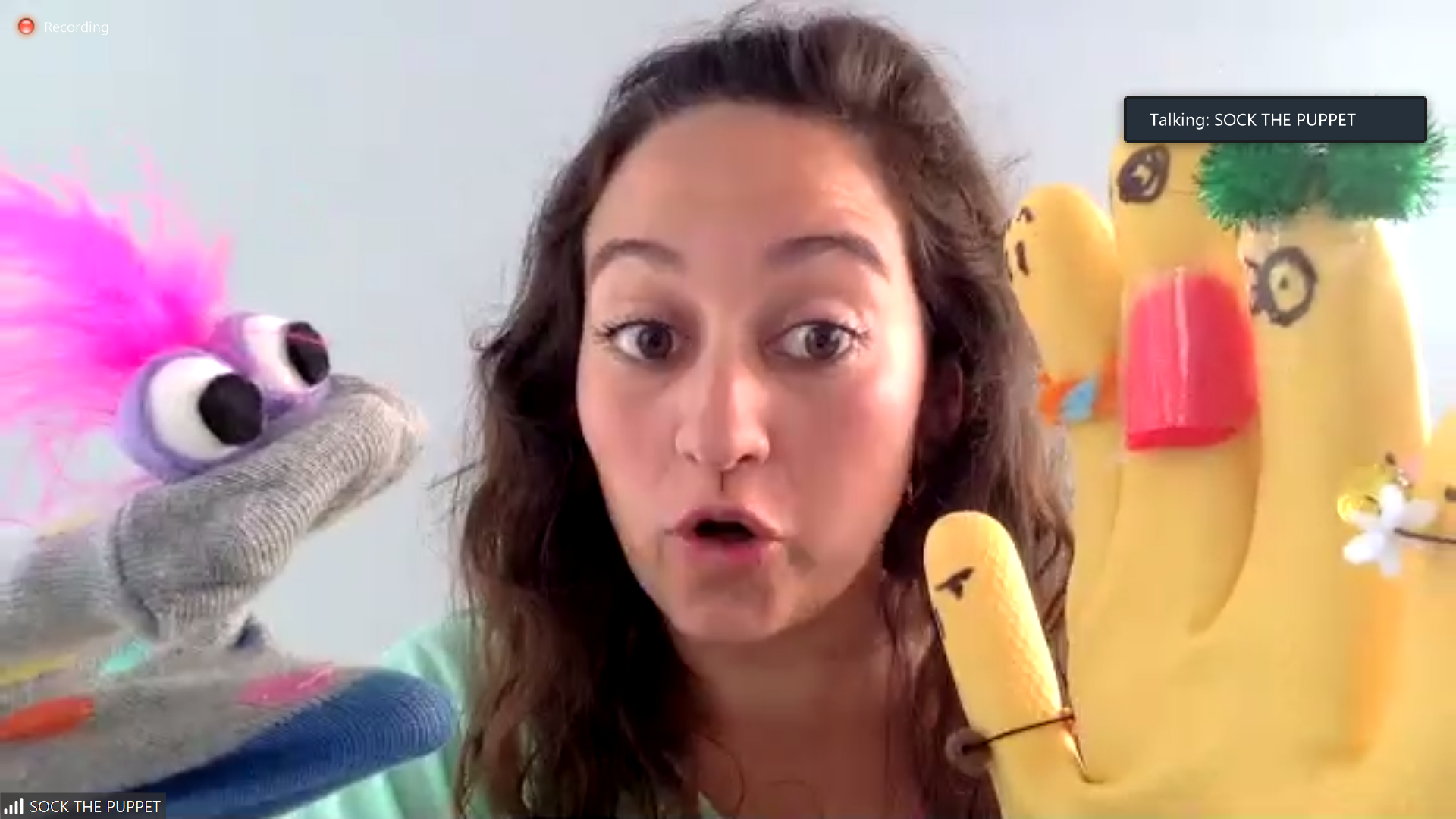
My personal highlights? Our interactive AMR puppet show for Under 5s, Sock The Puppet performed by Stephanie Houtman (โ€˜Peppaโ€™ from Peppa Pig Live) receiving videos and photos from children of their Sock puppets, or them explaining AMR; Peter Clementsโ€™ incredible drag creation / film Klebsiella – both hilarious and 100% scientifically accurate; Rahila Guptaโ€™s La Biotique, an aria from Pucciniโ€™s opera La Boheme which updated Mimi from a seamstress in 1830s Paris dying of incurable TB, to a migrant textile worker in the streets of Londonโ€™s East End in 2022. Each appealed to different audiences and drew them into the AMR conversation. What Is AMR and What Can We Do About It? a show interweaving dramatic scenes, monologues, and Precision AMR research presentations, performed by a combined company of scientists and actors, succeeded in both raising awareness of AMR, and involving audiences in understanding new research โ€“ using gold nano-particles, targeted testing, combatting bacteria in hospital showers โ€“ which Precision AMR was supporting.

KLEBSIELLA

In Conclusionโ€ฆ?

Having got to the end of the last two years, we are only at the beginning โ€“ of a longer conversation with public and patients on AMR, and a global research and stewardship response. Undertaking PPI during a pandemic has made me understand what PPI really is. And how it takes time, planning, effort and commitment on all sides to make involvement happen. It is hard work.

Healthcare Scientists wanting to add a PPI component to their project for the first time really benefit from individual support throughout the process. Public engagement and PPI employ a distinct set of skills for planning and delivery, but โ€˜cooking the roomโ€™ has many similarities with doing an experiment. PPI โ€“ especially in a pandemic โ€“ asks much of us, but in return offers new insights, new contacts, increased confidence, a sense of personal achievement, and occasionally, amazement at what everyone has achieved.

All opinions on this blog are my own

Guest Blog from Sam Watkin: Starting a PhD in a Pandemic

The wonderful Sam Watkin has volunteered to do a blog post for me this week. He has the dubious fortune of being one of my PhD students and has only known working for me during a global pandemic. He volunteered to share his experience of what this has meant for him and his learning.

I remember on the 4th of January 2021, sitting down at my desk in my bedroom, excited for the first day starting my PhD. I had got a new pad of paper and a fresh set of pens and highlighters. I turned on my laptop, opened my emails and pulled up a paper from the reading list I had been sent a few weeks prior. After about 6 hours of reading and making notes, I turned off my laptop and watched โ€˜A New Life in the Sunโ€™ on Channel 4.

I had known for a while before being accepted to do a PhD that this was the path I wanted to go down. What I didnโ€™t know was that I would start it remotely in my childhood bedroom. Overall, it felt rather anticlimactic. By this point though, I was pretty used to anticlimactic events. I had written and submitted my masterโ€™s thesis, done my masters viva and attended a virtual graduation all from this same desk, mostly wearing pajamas. So, starting my PhD had a similar feeling to it, a sense of โ€œwell, that was that I guessโ€.

From what I had heard from people already deep in their PhD journeys, the beginning few months were mostly spent reading and getting to grips with the subject area. I suppose, looking back on it, the lockdown that was in place at the beginning of 2021 helped with that a fair bit. All there really was to do was read around the subject areaโ€ฆ and watch daytime TV. Not that it was a chore to do this (the reading, not watching telly) โ€“ it is a subject area I am really interested in and passionate about.

As time went on though, there was a growing feeling of missing out on the โ€œPhD experienceโ€. It wasnโ€™t until around May 2021 that I actually met my supervisors face-to-face, and didnโ€™t meet everyone in the research group till a few weeks after that. It felt as though the social aspect of it had been in slow-motion, never mind the feeling I can only really sum up as โ€œOh my god Iโ€™m almost 6 months in and havenโ€™t picked up a pipette yet!โ€. Once I was able to start in the lab, the rules in place to make sure it was safe for us all to work in meant that work was, at times, painfully slow. All in all, while I was able to make progress, everything felt slower, more drawn out and more frustrating than I would have thought it would be.

If it isnโ€™t obvious, I sometimes feel pressure to be overly-productive. This is something that Iโ€™m fairly sure is common among PhD students โ€“ especially as there was a whole lecture series put on about how to manage PhD pressure and workload. Iโ€™m horribly paraphrasing it, but the gist of it all was โ€œyouโ€™re all good enough, stop stressing!โ€. Iโ€™ve got to give credit to my supervisors though โ€“ throughout all of this they have reassured me that this is all fairly normal to feel at the beginning of a PhD and, even with the challenges thrown up by the pandemic, I am making good progress.

While I think it is fair to say the pandemic has made starting a PhD veryโ€ฆ different, to how it would have been otherwise, it hasnโ€™t all been stress and doom. A few other people started PhDโ€™s in our research group a few months before me, meaning we all have been going through this โ€œPandemic PhDโ€ rollercoaster at more-or-less the same pace. Having this shared experience, with all its very unique challenges, has for certain made us closer as a group. At the very least, it has shown us all that we arenโ€™t alone in going through this process, with all the additional stresses and strains a pandemic brings to the first year of a doctorate.

Aside from the work itself, starting this PhD has had some amazingly positive aspects to it. It has afforded me the chance to learn so much more than I thought I could about a subject I am fascinated by, pick up new skills, speak in a theatre production and present my own work at conferences. I was also able to move to London, then move straight back out of London (not enough countryside for me) and meet some of the most interesting and clever people I have ever met. While starting a PhD in a pandemic has presented many challenges, most of which I never expected to come across, the experience has been overall a really rewarding and enjoyable one, and I am looking forward to the next few years of it. Famous last wordsโ€ฆ

All opinions on this blog are my own
50 Shades of Grey: The realities of working in Infection Prevention and Control

It’s another early start in the world of Infection Prevention and Control (IPC) following on from another rather restless night. The thing that has been playing on my mind a lot lately is the perception of vs the reality of IPC, and medicine in general.

Some of this has been sparked by seeing the discussion, opinions and commentary by medical colleagues on twitter linked to IPC response. I’ve been trying to read them as a member of the public would on this public forum. The thing that strikes me more than anything is that it is no wonder people are confused, we all post from a position of absolutes, often from very contrary stand points. What we do very poorly is communicate the nuance, discuss the technicalities and travel any middle ground. Possibly because its so hard in 240 characters, but also I think because we work with an implicit understanding that we know that nuance exists. On the face of it these conversations therefore come off as black and white positions, when in actuality IPC is very much 50 shades of grey, where there is accuracy in many of the positions in between.

So why is IPC not clear cut? Why might you get a different set if rules and experiences from one Trust to another or even one phone call to another? Well the fundamental tool of IPC is risk assessment. Every scenario includes slightly different exposures, different organisms and different patients, all of which will impact on that risk assessment. Just as no two scenarios are ever really the same therefore, no two risk assessments look identical. This also leads to disagreements on things like social media, as the experience, setting and drivers of those commenting are also just as varied.

What Do I Mean When I Talk About Risk Assessment?

Risk assessment is the process we go through to identify what risks are present to patients, and from patients to staff, visitors and carers. It also includes the things we do to control those risks, things called control measures. I want to start out by saying that I believe we are all aiming for the same goal i.e. providing safe high quality clinical care. Like many things there are often multiple options to deliver this goal and individuals may use slightly different processes in order to achieve it. The below is an example of the way that I structure my thinking.

There are 2 main aspects to risk assessment:

  • For the patient – if an organism is detected in a site on a patient what risk does that pose i.e. an E. coli urinary tract infection if not managed well in certain patients is a risk of progressing to E. coli blood stream infection
  • For other patients, staff and families – what does the detection of an organism mean for others, what counts as an exposure, what would the clinical consequences of acquisition mean for those exposed?

At some point I’ll do a fuller post on risk assessment in IPC and what different options there are for creating your risk assessment tool, but for now these are the kinds of things I consider when putting together risk assessments:

  • Routes of transmission – how do infections spread? Water/Surfaces/Contact/Air
  • Patient loads – when someone has an organism how much do they have, viruses usually higher numbers than bacteria
  • Environmental persistence – how long can an organism survive in water/air/on surfaces
  • Infectious dose – how many copies of an organism does it take to give an infection
  • Colonised/infectious state – can I carry an organism without harm or does it always make me unwell MRSA vs measles for instance
  • Patient susceptibility – is the patient immune i.e. vaccination/prior infection, are they more at risk if they get infected because they have no immune system?
  • Timing of infection (community vs hospital acquired)
  • Endogenous vs exogenous – is the infection spread from one site to another in the same patient i.e. from nose where doing no harm to a surgical wound? Or has the patient got it from outside?
  • Surveillance programmes in place – what kind of searching for organisms is being undertaken i.e. within the environment/based on symptoms, or as part of routine regular testing

When I’m talking about risk assessment for the rest of this blog I’m also going to be including what we call control measures which are linked to that risk assessment. These are things you do to prevent or reduce risk i.e. wearing personal protective equipment, putting patients isolation, prophylaxis etc.

I think we need to acknowledge that as well as different information, there is also an impact from the person handling that information and making the risk assessment. As a Healthcare Scientist I tend to feel much more comfortable focussing on the organism aspects and on control measures such as ventilation. Some of my colleagues will feel more comfortable in other aspects, especially in terms of scenarios such as surgical site infections and dressing management for instance. We all cover the same ground and should have the same core fundamentals, but we should acknowledge that different people will handle information in slightly different ways. This can be a strength, as long as it’s acknowledged.

So Why Do Risk Assessments Change?

As you can see from above, risk assessments are anything but straight forward. They include a lot of information, some of which you won’t always have at the start. There are some scenarios where we have quite a lot of information where responses are pretty much standardised and you would think everyone would do very similar things i.e. detection of MRSA in a surgical patient. Even for something like this that happens often and we have quite a lot of good information about what the risks and the control actions might be, there isn’t a one size fits all approach. In paediatrics we manage these patients differently to how they might be treated when they become adults. This is because their risk of continuing to carry MRSA as they interact more with people and the environment means that trying to remove it with antibiotics and chemicals (decolonisation) may be less effective and they may also have delicate skin which means using these chemicals may cause skin problems. So even in a straight forward situation, setting and scenario matters.

We often get asked why the way we manage something in my hospital may look different to how it might get managed somewhere else, even at another children’s hospital. This can be for a number of reasons. I may have access to resources in terms of cubicles or diagnostics that enable me the option of managing a scenario differently. My Trust is in England and the guidance in other parts of the devolved nations may be different i.e. Scotland and England don’t always do things the same way. Finally, my Trust also looks after children who have complicated conditions and who may have little to no immune system, so the consequences for patients if I get it wrong may be higher than somewhere seeing other types of patients. Setting, not just organism matters.

The other thing is bear in mind is that information and settings are not static. Often in medical dramas something is either X or Y, all of the information comes at the same time. This isn’t how things work in real life, information comes in pieces and the decisions you make about the next question you ask are actually as important as how you manage actions based on the data already in your possession. In some ways House was right…….it could be Lupus.

Although I don’t want this post to be about SARS CoV2, it is a good example of the fact the more information you have the more your decisions might change and you know more about where your risks are. Omicron has led to different risk being recognised when compared to Delta, because of impacts such as staff shortages, but also because of the amount of it that is currently circulating. This has impacted testing decisions and risk vs benefit discussions linked to patient harm. This is particularly challenging as these judgements about risk are actually being made with incomplete data sets as we don’t have the luxury of waiting it out. This makes at least this IPC professional uncomfortable, as lets be honest you are unlikely to love IPC if you aren’t in someway risk averse as a personality type. You don’t always have the luxury of time however and therefore we need to act, do the best we can with the information we have and make sure we also capture the learning as we go to enable improved decisions next time.

Who Pays?

So, resource matters. Everything about IPC comes with a cost. The thing is not all of those costs are financial.

Some examples of when even interventions, like putting patients in isolation can be challenging or have adverse consequences for everyone involved:

  • Its hard to know once you put someone into isolation when the right time is to take them out
  • Putting patients into isolation has been linked with decreases in staff time, increase in perceived concerns over care, and increase in prescribing errors
  • In paediatric patients isolation can affect inpatient developmental milestones. 
  • In adults isolation has been linked to increased levels of anxiety and depression 
  • Isolation can negatively impact on staff caring for patients due to isolation from colleagues and strain of dealing with sick patients single handed

Risk assessments therefore are influenced by who bears the cost. Individuals often pay the price of keeping others safe. This is a social contract that we see playing out on a much larger scale during the pandemic. Other methods to impact risk assessments, such as installation of mechanical ventilation, have a high financial cost that not all centres are able to afford. It is naรฏve therefore to say that any of these choices are easy, someone somewhere always bears the cost and the impacts of decisions.

After all of the above what is it that I want you take away?

  • Firstly IPC is anything but easy or straight forward, no matter what some of the reporting or social media commentary makes it appear. Decisions are complicated and every single one comes with impacts, be it for patients or budgets.
  • Secondly, the right decision for one centre may not therefore be the right decision for another. Comparison between one centre or one set of scenarios and another are not always valid, as the needs of the patient population or risks involved are unlikely to be identical.
  • Lastly, risk assessments change, they change as scenarios change, they change as more information becomes available. This isn’t a failing, this is responding to evolving situations and although difficult this is a strength

IPC is not black and white, it is 50 shades of grey and dealing with this is both the strength of the amazing people working in this field and the daily challenge they face, embrace and respond to!

All opinions on this blog are my own
Time for Some Real Talk: I have the best job in the world & even I don’t know how much more I can take

Let me start with the positive and please bear this is mind as you read this post. I adore my job, I can’t imagine doing anything else. In a way that is probably a little unhealthy, it is a lot of what defines me. I found my place and my calling and I’m not going anywhere. That said the last 2 years have been filled with extremely long days and unpaid weekends leading me to be more exhausted and broken than either a PhD or FRCPath exams achieved, partly because for both of those you knew when it would end. So I want to shine a light on how I feel in order for others to feel less alone if they are feeling the same way, and to remind us all that, despite how it feels right now, it has not always been like this and that this too shall pass.

Last night in a press conference our Prime Minster uttered the words ‘extraordinary effort’. It wasn’t in praise, it was a request for all of us in healthcare to make one more effort, to step up to the plate yet again and give it our all for the sake of the country. The thing is, phrasing a request like this doesn’t feel like a call to action to me anymore, it feels more like an insult. Although I acknowledge people’s experiences of the pandemic have been vastly variable, for most healthcare workers we’ve been making an ‘extraordinary effort’ for almost 2 years. Two years of changing guidance, 2 years of practically no down time and in recent times, experiencing both abuse and bad temper, alongside belittling of the things we are doing to find a way out of this i.e. requests to wear masks and to get vaccinated.

Given it is undoubtedly hard right now what can we do to get each other through this (other than make press conference statements – yes I may be a little bitter). This post isn’t based on evidence, I’m just going to talk here from personal experience. I know this is what I tell others off for as anecdotes aren’t facts. However as this is about feelings I can only truly tell it from my perspective.

Acknowledge all burdens are not equal and any single solution won’t fix everything

As a lot of people have pointed out, we may be in the same storm but we are all in very different boats, our experience and well as stressors throughout this aren’t the same. As leaders, colleagues and friends it therefore crucial that we take time to understand the things that are adding to stress levels and impacting our colleagues. For instance, because of my health it is easier for me if I can work from home a couple of days a week. It saves me a 3 hour return commute and gives me space to mentally focus on tasks without interruption. For someone else however, they might find working from home in itself a stressor, they may wish to have distinct work and home separation, they may have a lack of space or family reasons why this makes it harder for them not easier. We need to work on how to check in with our colleagues about what it is that they find difficult and then, where possible, customise our approaches to support them. It takes longer and requires more resource, but if we’re serious about helping each other through this than that is what it is going to take. I believe we should be finding equity rather than equality in our solutions, although fairness is important:

  • Equality is providing the same level of opportunity and assistance to all
  • Equity is providing various levels of support and assistance depending on specific needs

A little respect goes a long way

At times of stress and challenge it is really easy to close down in terms of empathy and compassion. I hold up my hands to raising my voice in a meeting last week. I did immediately apologise, but it is really difficult with the cognitive and emotional load everyone is experiencing, coupled with me being so tired to always remember to think of others. Every little moment like that if not addressed chips away at the others in the room and adds an unnecessary additional burden. At the moment, in those moments where we may not feel like it, it is even more important enough to be kind to each other.

Whether you are in a formal or informal leadership position, it is also really important right now to acknowledge the work of those around you. It’s easy to have tunnel vision and revert to task thinking when we are all so overwhelmed but people are doing A LOT based on good will. If we want people to go above and beyond then we need to acknowledge it and respect the fact that it is not a given that it will always happen. Saying thank you is still a powerful tool.

The system isn’t set up to support us so lets change it

Two years into the pandemic the system is still not set up to support the work demands that are being placed on the workforce. I have colleagues who have not had a full day off in two years. I do weekends on-call without any acknowledgement in terms of pay or returned time. From conversations I’ve had most IPC teams do not have systems in place to support on-call working, despite the fact that we have just about all had to do it over the last 2 years. We’ve all been doing this because we focus on the needs of the patient and the service, but at some point the service and the system that it sits within needs to be fixed. Services shouldn’t constantly rely on good will and changes need to me made so the system is empowered to support those who work within it. When emergencies and major incidents first happen it takes a while for the infrastructure and the system as a whole to respond, at this point however we need to be looking to the future and working to fix the system we work within. This won’t be the last time we have to face these kind of challenges, although hopefully not over such a protracted period, lets learn the lessons and get measures in place to make it better for everyone moving forward.

The workforce issues are going to get worse before they get better

As I said, I’m not going anywhere, but it would be naรฏve to say that this is the wider attitude amongst healthcare workers. A number of my colleagues who could retire have done so, more have moved either into non operational roles or out of healthcare all together. I don’t feel we have reached the peak of this yet. I think a lot of people will stay until they feel this aspect is over and then make decisions about what is best for them moving forward, burn out is a real thing right now. This will place even more pressure on those of us who remain. Its takes ~11 years to train a me, there aren’t a lot of people waiting in the wings to swoop in and support. My guess is also that a fair amount of trainees will be included in the numbers who are considering alternative choices. Those of us who remain need to know what the plan is? How are the exhausted workforce who remain going to be supported so they don’t have to then do the work of the 2 people who have left as well as their own? Are we, as we all predict, going to be hit my massive catch up targets when the pandemic is finally over which means there will be no respite to support recovery. The focus of the system seems to (understandably) be on right now but to give people hope for the future we need to know that there is a plan on how we will make it through not just today, but tomorrow and next year.

This isn’t a war, no matter how much our politicians language make it sound like it is

A lot of the language people have utilised linked to the pandemic has very deliberately utilised language reflective of going to war. In some ways this creates a nice psychological short cut in terms of significance and in peoples minds. The problem with it is that most healthcare professionals didn’t enlist to be part of a war, they are not obligated to stay and fight it out. The support systems are not part of the existing infrastructure to enable them to deal with the stress and emotional load we have put upon them. Most of them have given extra hours and supported extra job roles as part of good will, a gift if you like from them to wider society. However, like all gifts these can and should not be taken for granted, they are under no obligation to just keep on giving. We have moved from an emergency situation to a state of life, as much as we don’t want to acknowledge it. It’s a state of life that will not last forever but we cannot expect people to continuously act like they are in emergency response anymore. Plans and language aimed at healthcare workers need to acknowledge this otherwise we are not recognising the reality of most of their lives.

Wellness programmes are not going to fix this

I’ve already come out as not being the biggest fan of wellness programmes, although I know what they are trying to achieve. I’ve talked before about the fact that I think the NHS system has to address the issues and not continuously put the responsibility on individuals to fix. That said I don’t think the system is going to ‘White Knight’ for me anytime soon. I have come up with a strategy for me that means when I reach the point that all I want to do is walk out or walk away I have a bathroom disco. For those of you who don’t know I have a converted bathroom cubicle as my office, hence bathroom disco. I frequently fail to make time for food or even a couple of tea, back in the day I used to have a walk around the block or settle down for a cup of tea, I drink my tea black it takes 20 minutes to cool, when things became too much. There’s no time for any of that right now. When it becomes overwhelming I’ve decided I will allow myself a ~3minute bathroom disco break. I lock the door, put on an energising track and dance like a loon. It not only brings me joy but stops me spiralling and wakes me up enough to re-set myself for the challenge ahead. If we have going to survive this we all need to find a bathroom disco equivalent to get us through the next 5 minutes some days, let alone the next 5 months.

So there it is. I’m going to put on my big girl pants and prepare again for my ‘extraordinary effort’. Those making these requests however should remember that I am so fortunate to know that I will eventually get back to a job I love. Others were not so fortunate prior to this and so they are right now making different choices in response to your plea. Lets follow our words with actions that also enable them to stay!

All opinions on this blog are my own

Absence Makes the Heart Grow Fonder?: My month spent with shingles and the Varicella Zoster virus

Well my friends, it’s been an age. I think I have a reasonable excuse but I am sorry to have left everyone in the lurch by not being well enough to post. I’ve been laid up with Shingles. It was the first time I’ve had it, although as many as 1/3 of us (who have previously had Chickenpox) might have it at some point in our lives. My father pointed out that this whole event might be karma (I believe he was *mostly* joking) as he had Shingles for the first time earlier this year and I responded as a typical medical child in terms of management, without really acknowledging the pain and discomfort. I’m now 4 weeks in and functioning OK most of the time on pain killers but it has certainly been much more of an experience than I had accounted for when I saw the rash appear. Working in what I do I knew a lot about the Shingles experience on paper. Having now been through it however; I thought I would share not only some Shingles facts but also about the difference between ‘knowing’ and ‘Knowing’, as there are probably lessons to be reminded of for all of us when we see all our patients (or in my case supporting my father).

Shingles, otherwise known as Zoster, is caused by the Varicella Zoster virus or VZV. VZV is also the causative agent of Chickenpox, which is also known as Varicella. VZV looks like a fried egg under electron microscopy (a high powered way of viewing virus) and is part of the human herpes virus family, related to the same viruses that cause cold sores. Chickenpox and Shingles are intrinsically linked, with Varicella being the primary infection and Zoster being the reactivation of the virus.

See the source image
Herpes viruses have a fried egg appearance under electron microscopy

What do these terms actually mean? Well, to ever get Shingles you need to have had Chickenpox at some point in your life, you can’t get Shingles without ever having the other. Once you have been infected with the virus for the first time (primary infection) and develop Chickenpox the virus then goes dormant when you recover in the nervous system (trigeminal and dorsal root ganglia). The virus is held in check (held dormant) and stopped from replicating by the immune system. It is when this immune system fails to hold the virus in check that it begins replicating again (reactivation), leading to the development of Shingles.

Most people is temperate climates i.e. non tropical, tend to get Chickenpox in childhood, but the infection is much more severe if acquired in adulthood. When you get your first infection you are infectious by the respiratory route for 48 hours before the vesicular (pus filled) lesions appear. After this the main infectious route is via contact with the rash itself, although some groups are still an airborne risk. Those exposed to the virus have an incubation period of 8 days (10 till rash appearance) – 21 days, with up to 28 days if prophylactically treated as a contact. Groups such as the immunosuppressed and pregnant woman are at increased risk of complications, such as pneumonia if infected.

See the source image

Shingles presents in a similar way to Chickenpox, but is more localised. In my case I had sore and painful area on my back, which over the course of ~ 5 days spread around to my front, all on my right side. On Friday I went shopping with my mum and when I arrived home at 5pm I was so exhausted all I could do was sleep. I wasn’t feeling great the next day and by the evening the painful area of skin began to be itchy and I noticed a small red patch. I’m super allergic to just about everything under the sun so I assumed it was a local reaction. When i woke the next morning the rash had spread and I had a characteristic set of lesions, which meant I called 111 and got a referral for treatment. The pain then increased alongside the itching and 4 weeks later I am still suffering from radiating pain down my right arm, sensitive and painful skin where the rash has just about healed and tiredness.

How is it diagnosed?

The Shingles rash is fairly characteristic. It appears in a band along something called a dermatome (see image). The dermatome where the lesions are present are linked to the nerve where the virus has reactivated and is replicating, which leads to the virus travelling to the skin and forming lesions. The pictures of the rash below are some of my lesions on day 1 when I presented to the GP. Over the course of several days more lesions appeared and the rash continued to spread, in what we call cropping. It always stays on one side of the body and is highly localised.

Often, as the presentation is fairly clear, diagnosis can be made just by taking a history and examining the rash. Vesicular fluid can also be taken from the lesions themselves by removing the top of the lesion and using a swab to get at the fluid; which is then placed into viral transport medium (VTM) for further processing. Historically this was via tissue culture and visualisation of the virus, but more commonly now is by polymerase chain reaction (or PCR), so looking for the DNA of the virus itself. This is much more sensitive and rapid. These additional tests are usually only undertaken in cases where the presentation is less clear cut i.e. the immunosuppressed or to allow follow up in case of vaccine failure/response.

What is the treatment/management?

I hate going to any form of healthcare, I think I’ve mentioned this before. The fact that I called 111 was therefore a huge thing for me, so why did I? One of the biggest risks linked to Shingles is the risk of post herpetic neuralgia i.e. nerve pain. There has been data collected to show that treatment, in the form of aciclovir, can help reduce the risk of this, but only if commenced within the first 72 hours. A Cochrane Review in 2014 stated that oral aciclovir did not significantly reduce the risk of long term pain but helped in reducing it during the 1st 4 weeks. My rash was so classic that I knew either way that I needed to ensure I started treatment as soon as possible for either outcome to be impacted.

Interestingly when I said to my father that the pain could easily last 6 weeks + I didn’t know why he sounded so horrified, now I do. Although the pain hadn’t properly kicked in at the point where I got treatment, if it hadn’t started to reduce by the point I’m now writing this I wouldn’t have known what to do. One of the main delays in getting any blog out has been the significant pain when using my right arm, and I’ve only just been getting through work. This blog for instance even now has had to be written in small chunks across a day, whereas I would normally have just knocked it out. I am therefore super glad that I started treatment as soon as possible, even though the tablets were ENORMOUS!

How do I stop myself having a recurrence?

There are vaccines available to help prevent Shingles which are aimed at those aged 70 to 79. The vaccines should aid in prevention of shingles for ~5 years and there are 2 shingles vaccines used in the UK:

  • Zostavax, a live vaccine given as 1 dose (similar, but not identical to the Chickenpox vaccine)
  • Shingrix, a non-live vaccine given as 2 doses, 2 months apart (used for those people who can’t have the live vaccine)

I have spoken previously about having poor viral immunity and so it’s been recommended that I should consider having the Shingrix vaccine by my local immunologist; which may be a way forward. The main way to reduce the risk of this happening again however is to learn to take better care of myself so that I don’t get so run down. This is easier said than done, being an Infection Control Doctor during a global pandemic, but I need to make room to sleep and at least eat better when I’m not on service. I always worry that if I stop I may never get going again, but this recent experience has shown me that if I don’t make time for some rest and relaxation by body will take that choice away from me.

Top tips:

  • Beware of whom you come into contact with whilst you have Shingles, non Chickenpox immune people may be at transmission risk
  • Make sure you loosely cover the rash if you can to prevent risk of contact transmission to others
  • If you have a rash develop on your face ensure that you see medical support
  • If you suspect you have Shingles make sure you get it reviewed within 72 hours to support management
  • If eligible for the vaccine make sure you get it to reduce your risk of developing Shingles in the first place
  • The pain is substantial and if you are a daughter, probably don’t minimise it’s impact to your father ๐Ÿ™‚

Anyway, I’m back, even if not 100% and I’m so glad to be posting again. I may just need to take it a little slower for a while. If you are on the edge of exhaustion, learn the lesson I did not and take some time for you, you owe it to yourself!

All opinions in this blog are my own.

Changing Our Pathways: What are T-Levels and why should I care about them?

I’m still in the land of the shingles lesions and so not up to drafting some of the many ideas I have brewing for blog posts, but I thought I’d share something I recently wrote for the Association of Clinical Biochemistry and Laboratory Medicine (ACB) on T-Levels. The ACB are one of my professional bodies and they are doing a great job of trying to raise awareness of different routes into Healthcare Science, these routes won’t just feed into HCS however and so I think we should all know a little more about T-Levels.

What are T-Levels and Why Should I Care About Them?

In 2017 I saw an advert from the Department of Education looking for an employer representative to sit on a panel to develop a new vocational qualification, known as the Technical Level or T-Level, for Healthcare Science.ย  This came about as part of a wider educational review looking at how to change vocational qualifications so they aligned better with what employers were looking for, and to fit in better with other routes such as apprenticeships and A-Levels.ย  I was lucky enough to be selected and for the next year a panel of fellow Healthcare Scientists, Educators and Department for Education representatives met monthly to design a new qualification to help budding scientists access the Healthcare Science profession.ย  Since then we have been working with Further Education teams to roll out the qualification and the T-Level launching for early adopters in September 2021 is the result.ย 

So What is A T-Level?

T-Levels are equivalent to 3 A-Levels and offer an intermediate choice between traditional academic routes into Healthcare Science i.e. A-Levels followed by undergraduate study and Healthcare Science Apprenticeships, which are 80% workplace based and 20% further education based.  T-Levels are 80% based in a further education institution but have a 20% work placement.  They are broadly split into 3 components:

  1. Technical Qualification = the main, classroom-based element. Students will learn about different areas of Healthcare Science through a curriculum designed by employers and developed by an awarding organisation.
  2. Industry Placement = runs for a minimum of 315 hours (45 days) overall and will give students practical insights into their sector and an opportunity to embed the knowledge and skills learned in the classroom.
  3. English, maths and digital provision = built into the classroom-based element of the T Level, meaning students will be given a solid foundation of transferable skills.

As T-levels are also eligible for UKAS points, when a student completes the T-Level they can either choose to progress to further education, via an undergraduate degree, or can enter a degree level apprenticeship scheme and continue via work place based progression.

Why Should We Care?

One of the problems faced by the Healthcare Science profession is that routes into it are becoming much more structured than they were when I entered 17 years ago.  In many ways this is great and provides a much better quality of training and structured career progression.  The downside of it is that students need to be aware that Healthcare Science exists as an option in order to be choosing the right degree or entry point.  By providing a course like this early to students before university it will enable them to make more informed choices about the courses that are right for them, as well as raising awareness of the profession.  For those students who opt to continue onto the apprenticeship route, it provides employers with a growing pool of students who will be well placed to apply for these roles, who will have knowledge and experience of what it means to be a Healthcare Scientist.

What Does All This Require of Me?

In order to make the new T-Level work we will need to engage with it as a profession.ย  This will include linking in with further education establishments to offer expertise to support the launch, in order to ensure high quality delivery.ย  The main thing we need to think about however is whether we can provide sites for the work based placements.ย  T-Levels will help improve our candidate pool and ensure that we have access to improved recruitment in the long term.ย  To get that however will require us to ensure that students really do get a good idea of what we do and what a job in this great profession could look like.ย  We can only deliver on this if they get to meet us.

The ask therefore is to reach out to the communities our Trusts support and see if we can strengthen those ties by supporting not just in our remit of health, but also by supporting education via work placements.  The reward for this is not only financial (you will get a payment per student) but also in terms of staff development.  This is a great opportunity for junior members of staff to gain experience in supervision and managing small projects.  Itโ€™s a chance for them to get more experience with training, and especially those who are still in training to get their own competencies signed off.

By 2022 the Health and Science T Level will be available for delivery by all providers that want to and meet the criteria. By 2024 it is expected that the vast majority of providers will be delivering this T Level.ย  This is a great opportunity for our profession to rise to the challenge and help support the development of the next generation of Healthcare Scientists. More information about T-Levels across subjects can be found here.

All opinions on this blog are my own

Guest Book Review by Dr Julie Winnard: How Bad Are Bananas? by Mike Berners Lee

Dr Julie Winnard works flexibly with clients to identify and deliver their sustainability projects, from creating resilient strategies, business cases or innovation plans, to reporting and targets for transport energy and carbon. Finding practical and appropriate ways to deliver real-world improvements in carbon emissions, other environmental impacts or risk and opportunity management.

Profile photo of Julie Winnard

Dream has been poorly recently so appealed for science-related guest reviews. โ€œHow Bad Are Bananas? The Carbon Footprint of Everythingโ€ from 2009 I find very interesting and useful, and just post COP26 kinda topical.

Guest Book Review โ€“  Dr Julie Winnard

Iโ€™m a engineer-turned-sustainability consultant, and over the past ten years quite a lot of what I do has been encouraging all kinds of business people to educate themselves about carbon emissions; what matters, and what they neednโ€™t worry about too much. With the aim of getting them to focus on the bigger stuff that they can reduce. I mostly read fiction in my own time, but I do like a good readable bit of non-fiction, especially one that distils a whole bunch of new science in a way that lets me educate myself, and that I usefully might be able to direct other people towards. This is definitely one of those.

I was sold on this book in the original intro when Mike Berners Lee (yes, son of that guy who invented the internet) -also a sustainability professional- commented heโ€™d become fed up with CEOs angsting about how to dry their hands (the different methods of towel, paper towel and air-dryer arenโ€™t as far apart in CO2 terms as you might expect) yet getting on planes every few days- waaay worse. Like, 10g compared to 1 tonne worse. So, he wrote the book to help people develop โ€œcarbon literacyโ€; basically an instinct for what matters in terms of what to change. The memorable title comes from the fact that if youโ€™re green, you might worry about shipping bananas round the planet. Spoiler alert- not a huge issue, but having a blowout Christmas? Yes, big.

See the source image

The book is not so much a narrative story but a sort of directory, starting at the smallest stuff like bananas and working up to the biggies like flying. Berners-Lee doesnโ€™t go into lots of mathsy detail often, just gives you the main facts and a bit of explanation for each item, sometimes with an interesting anecdote about his own journey of change. Doing carbon footprints is complex, so all you really need to know is clever people did stuff with data and spreadsheets and science. If you want to know more, there are extensive notes at the back of the first edition, and doubtless the new one from 2020.

This book helped me calibrate my own greening efforts, and I use it to show clients that there are easy-to-use references out there, when they want to change for the better. Until recently I would explain that although the exact footprints change as, say, electricity grids get greener, the rough order of impacts doesnโ€™t move that much so the original book was still a good reference. And now I know thereโ€™s an updated one with new footprints and new things in, I canโ€™t wait to find out about Bitcoin and hopefully, avocados!

Image result for sustainability

All opinions on this blog are my own

Guest Book Review by Dr Claire Walker: Girl One by Sara Flannery Murphy

Girlymicro is currently laid up with shingles and despite having tried to negotiate with the virus, it appears they have not been able to come to terms in order for her to be able to be well enough to blog. The ever inspiring Dr Walker has leapt into the breach to ensure that you are not forced to spend a week without science based entertainment. She is, as ever, wonderful.

Guest Book Review –ย  Dr Claire Walker

Paid up member of the Dream Team since 2013, token immunologist and occasional defector from the Immunology Mafia. Registered clinical scientist in immunology with a background in genetics (PhD), microbiology and immunology (MSc), biological sciences (mBiolSci) and indecisiveness (everything else). Now a senior lecturer in immunology at University of Lincoln.

Girl One by Sara Flannery Murphy. A genre bending thriller about female power and a fun take on the premise of asexual reproduction.

Judging a book by its cover?

What draws you to pick up a new book? In my limited time post baby two, I look at a few one line reviews on my Amazon account and hope for the best. Girl One By Sara Flannery Murphy caught my attention for being described as โ€˜Orphan Black meets Margret Atwoodโ€™. One of my favourite pseudo-scientific TV shows and my favourite speculative fiction author? Sold.

The Story


In Girl One Murphy focuses on a group of women who are the subject of a fertility experiment in rural America. She tells the story of the nine โ€˜miracle babiesโ€™ born without male DNA, the result of โ€˜virgin birthโ€™, or to use the scientific term, parthenogenesis. The premise of the book is that a massive leap forward was made in reproductive science in the 1970s allowing human parthenogenesis. The actual process of human parthenogenesis is shrouded in mystery and lost with the untimely death of the rather shady scientist and would be father figure, Dr Joseph Bellinger. The progeny of the experiment scatter after this event and try to live normal lives away from zealots who target them for being against the natural order of things. The unexpected disappearance of her mother leads the first of these children, Girl One, on a road trip of discovery unlocking the secrets of their origins.

The Science

This is a science blog, so letโ€™s put the superpowers and 1970s feminist manifesto to one-side for a moment. In the natural world, parthenogenesis is business as usual for some species of plants, insects, lizards and, most recently documented, California Condors. But what about humans? Has Murphy taken speculative fiction a step too far?


Until relatively recently, it was believed that parthenogenesis in humans never produced viable embryos. Human parthenogenesis itself is not actually such a rare event. The spontaneous activation of a womanโ€™s egg without the presence of sperm is well documented. Unfortunately, this process results in the development of an ovarian teratoma. These tumours present as anatomically disorganised structures that have been documented to contain hair, limbs and even teeth.ย 

In his review On human parthenogenesis Dr Gabriel de Carli, discusses the serendipitous discovery of chimeric human parthenotes, or in plain English, children who have two cell lineages in their bodies โ€“ the closest thing to human parthenogenesis identified thus far. These children have cells that are the result of the normal fertilisation process, and cells that are the result of human parthenogenesis that have fused together. The first child, described in 1995, was a little boy whose white blood cells were shown to contain no Y chromosome whilst the other cells of his body were genetically male. The X chromosomes in the boyโ€™s white blood cells were shown to be identical to each other, and both were derived from his mother revealing their origin to be from a โ€˜virgin birthโ€™ event. So, whilst incredibly rare, we now know a form of parthenogenesis is possible, and more importantly, viable in humans.

Perhaps even more interestingly, Dr de Carli believes that rare cases of full human parthenogenesis occur and pass unnoticed. In fact, he thinks that as we enter the era of whole genome sequencing of all new babies, we are on the cusp of identifying these individuals. Only time will tell if they have the superpowers described in Girl One.

TLDR: A superhero take on 1970s feminism with a pinch of dystopian gender politics and smattering of not-quite-totally-fictional science. Not at all bad.

All opinions on this blog are my own

Celebrating National Pathology Week: What is a clinical microbiologist?

To celebrate this week being National Pathology Week , I thought I should take some time to post about what a clinical microbiologist is. I do this because, when I was at university, I really didn’t know that this career path existed. So here is a shout out to all those students who are trying to decide their next steps. You too will find your way.

When I googled microbiologist this is the first item that comes up

Microbiologists study microorganisms (microbes) in order to understand how they affect our lives and how we can exploit them

Prospects.ac.uk

This seems like a pretty good cover-all description. It goes on to discuss that there are microbiologists in many different areas:

  • medicine.
  • healthcare (I’m not sure how they differentiate this from medicine or visa versa).
  • research.
  • agriculture and food safety.
  • environment and climate change.

I must admit that when I was at university most of the options I encountered were linked to the food and drink industry or pure research. I think that their list missed things like Pharmaceuticals (although they may count that as medicine) and other forms of production, i.e. cosmetics.

At university I only did one module of microbiology (I was reading Zoology) and that module was about environmental bacteria and plating out bacteria onto agar plates to see what grew.

How did I go from Zoology to Microbiology?

I really wanted to work in an area of science where I could work to make a difference. I wanted to work somewhere that I could see that difference being made. Working in research felt too abstract to me. When I discovered, through a friend, that I could become a scientist in healthcare I knew it was what I wanted to be.

The National Careers service says you need to have two to three A-levels to become a microbiologist, plus a post-graduate degree. That is mostly true. However, in a world of apprenticeships and T-Levels, that is no longer the only route.

When I became a Healthcare Scientist I became a Clinical Microbiology trainee. So, what was the difference between that and what I’d done at University? The main difference with clinical microbiology is that I focus on organisms that cause infection: parasites, viruses, fungi and bacteria.

I also discovered that there was so much more to microbiology than agar plates. Although – don’t get me wrong – agar plates are still a mainstay of life within the bacteriology laboratory.

One of the techniques I learnt to love was polymerase chain reaction (PCR), which enables us to look for the DNA or RNA of a microorganism instead of growing it. Viruses and parasites don’t grow on agar plates and bacteria and fungi may not grow well if exposed to antibiotics or if present in low levels. PCR allows us to diagnose patients with infections that would not be diagnosed otherwise, or to speed up the process so patients get put on the right treatment faster.

Variable number tandem repeat typing of Klebsiella pneumoniae

PCR also enables us to do things that are harder to do using traditional bacterial techniques such as culture. The picture is of patterns that are like bacterial fingerprints so that they can be clustered into similar groups. This enables me, as a clinical microbiologist, to tell whether bacteria within the same species are the same or not. This is important when deciding whether a bacteria has spread from one patient to another. It helps in acting like a hospital detective, which is a lot of my work in Infection Prevention and Control.

As a trainee I spent four years rotating within laboratory settings. I spent one year in a molecular laboratory, diagnosing patients using PCR. I then spent six months rotating between benches (each sample type has its own laboratory bench) in bacteriology: wounds, respiratory samples, faecal samples, blood cultures, urines, fluids (cerebral spinal fluid etc.) and the primary bench where samples were put onto agar plates. Six months in virology, a year in research and time in food and water, parasitology and mycology (fungal) labs.

The diagnostic process is pretty similar in principle between the specialisms:

  • collect specimen from possible site of infection.
  • select the most appropriate test to detect any organisms (agar plate for bacteria, PCR primers for viruses, etc.)
  • evaluate whether the result (positive or negative) is accurate and whether there are other tests that should be done, i.e. further characterisation of positives such as antimicrobial sensitivity.
  • decide on treatment or management of the infectious cause, i.e. antimicrobials or non-antibiotic management such as surgery.
  • advise on infection control if actions are needed to investigate where the infection came from or to protect others from risk.

During my first four years I spent most of my time in the laboratory doing the first three bullet points.

Time goes on. I’ve been in the NHS for 17 years. Most of my time is spent at my desk in the on-call bathroom. Since 2010, most of my time has been spent either in Infection Prevention and Control undertaking the final bullet point or increasing my skills by gaining Fellowship of the Royal College of Pathologists to do bullet point four.

I still support the lab and, occasionally, get my lab coat on – but not as much as I’d like. It is, therefore, possible to be a clinical microbiologist and be anywhere on the spectrum. You can go as far as you’d like and do the type of work that makes you happy. It’s why being a clinical microbiologist is a great career!

Modernising Scientific Careers Framework

All opinions on this blog are my own

Saturday Morning Zombies: how infection is portrayed in the genre

As it’s Halloween and National Pathology Week 2021 is coming up I thought I’d re-share my love of zombie movies plus a little activity if anyone is looking for a fun outbreak to run with colleagues or as part of outreach.

It’s Saturday morning and I’m spending my day watching zombie movies. There is a reason that I watch in the morning… I’m a complete scaredy-cat and so I don’t want to watch these before I go to sleep. Also, I don’t really like horror movies. Correction: I only like horror movies with plot, i.e. Get Out.

So, why am I spending Saturday exploring the world of zombie horror?

Three reasons:

  • Despite not liking horror movies as such, I’m intellectually obsessed with how infection is portrayed in them and debating whether the infectious cause would result in different types of zombies.
  • Nicola Baldwin and I, because of our shared obsession with the genre (albeit for different reasons), are going to create a new piece of work on zombies and infection for the Rise of the Resistance Festival (online 7th and 8th May 2021). I therefore need to do some homework.
  • My husband really really likes zombie movies: he is super-stoked that this is my weekend homework, rather than writing papers or analysing data

My friends and I talk about this so much as part of our ‘pub conversations’ that we honestly do have a zombie survival plan. So much so that one of my best friends included saving her husband ‘during the zombie apocalypse’ as part of her wedding vows. This may sound silly and, believe me, it is; But there is some interesting and philosophical stuff in here:

  • Where is the best place to run to (cities vs country)?
  • What would you do in the 1st 24 hours, 1st week, 1st month?
  • Who would you get to join your party? Why? What skills do you need?
  • Do you take people along for the ride because you like them, or does everyone have to have purpose?
  • What rules of society might you abandon for the sake of saving the human race, i.e. monogamy, patriarchy?
  • How much aid would you offer to strangers ‘Good of the Many’?
  • Would you opt to die as you or turn if infected? ‘Survival at any cost and in any form?’
  • What would your ‘rules’ be?

These questions are all about how we, as humans, would react to a zombie outbreak. However, the thing that really fascinates me is how the zombie might change based on the cause of the zombie infection.

There are real life instances where infection can result in behaviour change. As part of my interest in this, I created the activity at the bottom of the page called ‘Zombie Island’. It was one of the first public engagement activities I designed and ended up being turned into a live action takeover event in the city centre of Toronto, where visitors had to solve different clues and challenges in order to cure themselves before they became zombies. The activity in Toronto was called Zombie Rendezvous and the link to the booklet is below:


Zombie Island – How Will You Save your Tropical Island Home?

The first thing you need to do is design your zombie. Will it be due to:

  • A virus?
  • A bacteria
  • A fungus?

This decision will affect not only how your zombie transmits infection, but also how fast and easy/hard to kill it is.

How do infectious causes affect zombie characteristics?

Slide taken from Design You Zombie Activity (see downloads below)

Once you have your zombies designed you can then play the scenario. Each different type of zombie requires different infection control and public health decisions/prioritisation. Make the wrong choices and the zombies will reach the port or airport and get off your island to infect the outside world. They can also infect your food supply, take down your military, or cause mass point-source outbreaks if you fail to shut down public events. All decisions aren’t equal, so make your choice…+

More on all of this later when I’ve watched some movies. Remember – aim for the head!

All opinions on this blog are my own.

Some Days All We Control Is Ourselves: How to respond when things don’t go to plan

Earlier this week I made a post about wellness programmes and the problems I have engaging with them. I did say however, that I don’t discount the fact that sometimes we need to take some personal action to manage the situation we are in, even if that is to just to survive to the next encounter.

What kind of situation am I talking about? Well this post was prompted by something that happened a couple of weeks ago. I gave a talk, it was supposed to be inspiring, but I felt it didn’t land. I followed a really amazing speaker who everyone really engaged with and so it felt really clear to me that I didn’t get a similar response. It was my second talk of the day, in the middle of a week where I was running conferences on the Monday and the Friday. Needless to say I was feeling more than a little tired.

Why is the fact that I was tired important? What kind of impact does that have on my perceptions? Was the outcome, in terms of talk impact, a real failure or just a perceived one? Also it was just a talk so does it really matter?

The truth is that maybe the circumstances in this case didn’t have significant outcomes. However I think this is just an example of how fatigue and tiredness can alter our perceptions of performance. In some cases this altered perception can lead to more consequences for us as individuals, in terms of stress etc, and also change the way we do our jobs, therefore impacting on others.

So, I was curious whether it is just me that feels this way. Are others more likely to feel like a failure, or that they have failed, when they are tired. So I ran a poll on twitter and I was pretty surprised by the results:

I’ve always felt really alone in this and that my response to tiredness, increasing levels of self criticism and feelings of failure, was a ‘me thing’ and probably a weakness/fault. I don’t know therefore whether I was pleased or saddened by the results. It seems like most of us feel this way at least some of the time, so why don’t we talk about it more? In a world where the focus is being placed on us to to find ways forward and when, I suspect, many of us are feeling broken, stressed and tired, what can we do to support ourselves and others through these periods where we are feeling like our own harshest critics?

So having said that wellness sessions don’t really work for me what can we do? Some of the lovely people who responded on twitter gave some great advice, which I’ve combined with some my random thoughts to try and help us all in finding a way through when everything feels too much. All things won’t work for all people but hopefully there is something that could work for everyone as a piece of support or way forward.

Try to be self aware and remind yourself of the cause

By identify the route cause you can start to distance yourself from it, you’ll also hopefully be able to find an intervention that might help. Tired, try and find a window to sleep. Stressed, try and be kind to yourself and find some time to do something you enjoy. Know that you can re-evaluate once you’ve given yourself some time/space/sleep. It’s worth considering what your interventions in different scenarios might be when you are in a good place so you have a plan for when you need it in order to alleviate how you feel.

Try to not make decisions and react when aware you are in a hyper reactive mind set

Leading on from being aware of how you are feeling, a key suggestion was knowing what not to do when you’re not feeling quite yourself. Don’t send emails, make decisions or react during a time when you’re judgement may not be truly reflective of your normal thought processes. In these periods I tend towards being overly apologetic, submissive etc, others I know will tend to be the opposite and come across as less collaborative. Wait until you can find your way back to the middle ground.

Try to change your inner dialogue

If you find yourself spiralling (see my previous shame spiral post) do something to put yourself in a different mindset, read a book, go for a run, make a to do list with some things that are easy to tick off. I find shame spiralling slightly different as it’s linked to a specific event rather than a general feeling (which my mind can sometimes hook onto things). Often when I shame spiral it’s because I’ve actually failed, rather than just perceiving I have, but the response is similar. For most things in life, tomorrow offers a re-do. If what has happened is non critical, or even if it is critical but is fixable then tomorrow will arrive and with it some level of distance to support reflection plus hopefully with the benefit of sleep and relaxation.

Reach out to trusted advisors and get a reality check

Try to be kind with yourself by thinking how you would respond to someone else in your situation and use that as a benchmark. I often find this impossible to do by myself and so that’s where checking in with my friends really helps. I’m lucky enough to have wonderful colleagues who I also count as friends, who are always willing to have tea, catch up via WhatsApp or provide support via twitter. Know who your trusted people are and be open and honest with where you are at. As the poll showed me you will be surprised at how many people have experience of what you’re going through and how they can support you through it.

Know tomorrow is another day

This doesn’t help everyone, but one thing helps me quite a lot. When the going gets tough, the tough get planning. To tide me over to the point where I can make actual decisions or feel more like me, I find daydreaming about plans for that future helpful. I start to plan holidays or pleasant experiences, anything that draws my mind from the present. I try to consciously be aware of the fact that the way I feel now won’t last and think about what could happen when I’m refreshed.

Remember the good times

Quite a few people have said that it is useful to keep a success/achievement list somewhere. It is all too easy when feeling this way to only focus on our failures, be they real or perceived, but keeping a list in a drawer/computer folder can be a useful prompt. This doesn’t have to be a work related list, it should cover the whole of your life and remind you that you are more than just a job/situation and of everything you have to offer. As Laura said ‘more roses, less thorns’

Do something you love

Sometimes it’s not about addressing the problem, sometimes it’s about treating yourself, or as my wellness colleagues would say ‘self care’. In my case I go back to movies/TV series as that bring me comfort or cook. I watched a Christmas movie a couple of weeks ago as they are a place of comfort and joy to me. Other people suggesting singing, going to the spa, reading a favourite book. My friends and I often talk about making our pit of despair comfortable if we’re going to be there for a while. This is what this is to me. I acknowledge that I may not just snap out of it, so how do I make myself feel better whilst I get through it.

Put your feelings into context

As stated at the start I tend to focus my feelings of failure, linked to tiredness, onto different scenarios. These are often for me perceived issues rather than actually knowing that something has happened i.e. thinking I gave a bad talk rather than receiving the evaluation that says I gave a bad talk. Similar I know, but I think the way out of it for me is different. If like me you start to obsess I sometimes try to make myself take a step back. If it didn’t go well, does it really matter. In my case this week the worst case scenario here is that I am not invited back to speak, and some people might feel slightly less of my skill set. Now this hurts as part of my sense of identity is that I’m not a bad public speaker and I quite enjoy it. That said, does it matter? I don’t believe I am the best public speaker in the world, so as part of that I have to acknowledge that there will be people who do a better job at it than I, it’s not going to cost me my career. If it is something that matters, then know that once you feel more yourself, that is the time to make plans about recovery. Definitely not whilst you are in the midst of it.

Stop fighting it

This may be the 90s goth in me but sometimes you just need to sit back, ride the wave and enjoy the rain:

One thing you have all taught me is that feeling this way is not a failure in itself, it’s not a weakness, it is life and so lets not beat ourselves up about it, lets watch a movie, bake a cake and know that it will end.

All opinions on this blog are my own

Lets Talk About Wellness: Is it just me whose struggling to engage with wellness programmes?

I’ve had a LOT of emails and messages this week linked to various Wellness Programmes and links and my emotional response to them has surprised me. I’m not normally a cynic, I’m usually someone who is keen to engage and see the benefit of things. I have, instead of wanting to engage with these items, been really irritated by them and so I wanted to explore why I feel this way and understand if I’m the only one.

Let me start by talking about what my currently day to day looks like, as I think my thoughts linked to this are very context specific. I’m just getting home at 19:30 after leaving the house at 6:30 this morning and working a 10hr day without lunch or tea break.  I have an hour and half to spend with my husband and eat before going to bed and starting the whole thing again tomorrow.  The sad thing is that this has actually been quite a reasonable day, 12+ hour days are frequent.

Last week I ran 2 conferences and so wasn’t tied to my desk, followed by a couple of days off sick post booster vaccine That meant going into last weekend I had over 2200 emails on my inbox and over 1100 unread. I needed to cover IPC over the weekend and so in order to try to get back on top of it I worked to get the email mountain down from 2200+ to 156 to action. As I’m also on clinical this week that action pile in one day is back up to 190.

What’s the point of me telling you this? I think my aim is show that I fight just to stand still. If I take my eye off the ball even for a day I sink into quick sand. No one covers my whole role if I’m off sick, there isn’t another Consultant Clinical Scientist in the department. My point is that I don’t get how wellness works when this is my life?

My Trust and the NHS has invested a lot in wellness programmes and resilience training. This post may sound like its having a go at the really lovely people who provide those programmes and put so much energy into getting them up and running, but it isn’t. This is a post that is expressing my tiredness and exhaustion at working in Infection Prevention and Control in a pandemic within a system that does not deliver the resource for lunchbreaks, let alone provision for me to be training up my successor so there would be cover.

So what is that doesn’t work for me about wellness and resilience programmes?

The programmes we’ve instituted are things like ‘Wellness Wednesdays’ which includes a lunch time seminar on a wellness topic. We’ve been given access to the headspace app to support meditation and promote sleeping and healthy eating. There are also things like yoga sessions run in the Trust and GOSH supported 5k Park runs to encourage an active life style. There’s also access to counselling.

All of this looks amazing when written down and don’t get me wrong I think its great. However it only works if you’ve addressed the system issues that are driving some of the problems.

For example, I have never managed to attend a wellness seminar, despite having them in my diary, because I don’t have time to have lunch and usually spend my life in back to back ‘urgent’ work zooms. The biggest system change for me would be to enable me to have a lunch break and then I could choose whether to spend it on a wellness seminar OR I could step outside my windowless office and see sunlight!

The activity stuff is great. I used to run pre-pandemic. Now I work mostly 12 hours days with a 3 hour round trip commute. On a good day I get 2 hours at home in the evening during which time I might, for instance, have time to wash my hair and eat. On weekends I am either working or too broken to make food and catch up with all of the household tasks, such as food shopping, that are needed to get me through the next week. In terms of wellness, the better fix for me would be to enable me to actually have a homelife so I could choose what to do with it, if I don’t have time to eat I’m not going to be able to join in yoga.

One of the final things that I find really tricky about all the wellness stuff is that it seems to go on and on about being present in the moment. I have a meeting in a Tuesday where the first 5 minutes is a wellness meditation. I will give an honest confession here, if I have time I use that 5 minutes to actually make a cup of tea so I can have a drink. This doesn’t normally happen as I’m always running late from previous zooms, but that is the intervention that works for me. I find being in the present hard. I’m exhausted and physically pretty broken, spending 5 minutes noticing that is not helpful to me. I’m surviving this by planning and focusing on the future, which is how I always manage my stress and survive.

So where is the system letting me down?

Some of the problem with this is the way that Healthcare Science functions. We’re not like some other specialists, who effectively do the same job with different specialisms and therefore cover each other for sickness and holiday. We’re not like some other colleagues who work in a team of multiple similar roles and, although may not always truly cross cover, have someone to pick up their responsive role. We are usually lone individuals, as there’s never considered to be enough work to have more than one of us. That causes issues in terms of career progression and training up someone to eventually take over (as it can take 10+ years) but it also means that no one actually covers your work load. They may pick up the screaming urgent stuff that has to be managed but the rest just builds and builds.

All of this means taking holiday becomes a trial that becomes inherently stressful. You spend so much time trying to pin everything down before you go that you pull double hours and when I return I frequently have up to 3000 – 4000 emails and my diary is back to back as I’ve been unavailable for a week or 2.

It also means that when that workload becomes too much it very hard to get someone to help carry the load. Don’t get me wrong, I have great teams and we work really well together but I don’t have someone I’m training up to be the new me that I can hand bits off to, in the way my medical colleagues do with their registrars. It also means we’re not planning for the future

It’s not just Healthcare Scientists that are struggling however, so it’s not unique to us as a group. It is physically not possible to be on 8 hours of zoom calls, deal with 300 – 600 emails and a day and then actually do productive work that requires thinking on top of this. So how do we change the system to improve the way that we communicate? To determine whether the meetings we have are productive? To change expectations in terms of being available for 8am meetings and 6pm meetings when we only supposedly work 9 – 5? This is something we can start to tackle as individuals but requires changes in culture, which is in my opinion is something that organisations should be investing in as much as free yoga.

Instead the response is usually that we should find things that we can drop to create time and space. The sad thing about this response is that it means all drivers for work become focussed on core work and reduces both time and acceptance for tasks that require creativity and innovation, the kind of tasks that will actually permit changes to the system in which we are existing. For me it is these tasks that energise rather than drain me, these tasks that give me hope that I will make it out the other end and permit planning for a future where we do things better for both ourselves and our patients. I feel especially infuriated when I’m told I should discard the only things that are enabling me to continue, to do even more of all the things that are leaving me hollow and tired, even when these things are done on top of everything else. I know to many it seems like an easy fix but to me it would be the straw that broke my back.

So here’s my plea. Instead of placing the burden to fix burn out on individuals, lets also work with the systems that led us here. The pandemic is a once in a lifetime challenge, but what it’s done is expose problems that were already present in the system, not ones that only exist because of the pandemic. Personal responsibility is important, but making people feel responsible for their burnout as if its another of their failures is not the way forward. Support them, offer individual help, but also acknowledge the system wide issues that led them there.

Apologies for the rant, but I for one feel waaaaaaaaaaaay better for getting that off my chest. Now I’m off to watch a YouTube video on the importance of laughter yoga.

All opinions on this blog are my own.

Laboratory Testing for SARS CoV2 (COVID-19): Is all testing the same and why should I care?

Why Am I Posting This Now?

In light of the news that came out yesterday linked to the withdrawal of the testing service in Wolverhampton, I think that this post from April still has relevance so I have decided to re-post.

Every tube is a person

This week Panorama aired an episode about how testing is undertaken in some community testing laboratories. They didn’t really cover the differences in testing between hospital and community testing streams.and I’m concerned, as others are, that this programme will create the impression that all testing is done in the way it was portrayed in this episode.

BBC iPlayer – Panorama – Undercover: Inside the Covid Testing Lab

Mention is made in passing to the high quality NHS system that existed prior to the COVID-19 pandemic and is still providing world class care. It doesn’t go into the difference between the 2 parallel lab systems in any way that would be clear to the audience, or reassuring to those not being treated by the so called ‘mega labs’. They also only really refer to academics vs the recent science graduates running laboratories. No mention is made of the army of highly trained, highly qualified Healthcare Scientists who have spent years providing high quality, rapid, advanced testing who have been the backbone of scientific testing in healthcare for decades. No Healthcare Scientists were even featured to comment on the practice.This is such an upsetting oversight that it I felt like I needed to put something out there in order to raise awareness of how all of this works in practice.

This hidden profession deserves to be seen and recognised for the amazing work they do, and not conflated with the bad practice seen in this programme

Before I go any further, I need to be clear that this post isn’t talking about point of care testing (POCT) i.e. the lateral flow testing which I am going to cover in another post; nor is it looking at the technical aspects such as how PCR works as I’ve already covered this in another post. This post is about the different testing streams and why the service and quality they offer may not be the same in all circumstances. This is clearly only my view of the situation and others may see it differently.

How Did We Get Here and How Does the Testing System Work?

When the pandemic started, the government released a document called Coronavirus (COVID-19): scaling up our testing programmes. This document was last updated in April 2020, basically setting out how we were going to enable the country to go from testing a few hundred virus samples a day in each local hospital for patient management to 700,000 plus swabs per day: from both hospitals and the community for: patient management (pillar 1) and epidemiology and surveillance (pillar 2).

The decision was made not to scale up the local hospital and public health networks that already existed (pillar 1), but to bring on line a second parallel system for community testing which would be called pillar 2.

English Government Testing

Tests in the UK are carried out through a number of different routes:

  • pillar 1: swab testing in Public Health England (PHE) labs and NHS hospitals for those with a clinical need, and health and care workers.
  • pillar 2: swab testing for the wider population, as set out in government guidance.
  • pillar 3: serology testing to show if people have antibodies from having had COVID-19.
  • pillar 4: blood and swab testing for national surveillance supported by PHE, the Office for National Statistics (ONS), and research, academic, and scientific partners to learn more about the prevalence and spread of the virus and for other testing research purposes, such as the accuracy and ease of use of home testing.
The 5 pillars of testing shown as a building

The decision to scale up using multiple pillars was made to improve capacity and was supposed to be designed with the following in mind:

  • Accuracy and reliability of tests.
  • Getting the right supply of people, lab space, equipment and chemicals.
  • Logistics.

What Points Did the Panorama Programme Make?

The Panorama programme asked the question, ‘Can we trust testing to keep people safe’. As mentioned , it focussed on pillar 2 testing in one of the ‘mega labs’, a not for profit lab in Milton Keynes set up to process 70,000 samples a day. The 7 lighthouse labs should between them be able to process 700,000 tests a day. To put this in context my lab in pillar 1 processes up to 600 SARS CoV2 tests a day at maximum capacity, but it is a comparatively small lab. I know other centres are running 10,000 tests, but still the numbers are smaller: mostly due to the context in which we are running, i.e. patient management and staff testing.

The woman who investigated worked 18 shifts over the course of the programme and was a life science graduate given 4 and 1/2 days of training before she started on the job (bear this in mind when we talk staffing and training later).

The programme showed a large number of quality and technical issues (I needed a glass of gin afterwards), such as failing to check sample details so samples needed to be discarded, safety failings in the way they were using hoods and dealing with leaking samples and substantial issues with quality controlling results prior to release. This last point meant that the reliability of the result given could be questioned, with a number of potentially false positives being sent out.

Many of these issues are linked to what we call quality assurance, so here’s the CDC definition:

Laboratory Quality Assurance (QA) encompasses a range of activities that enable laboratories to achieve and maintain high levels of accuracy and proficiency despite changes in test methods and the volume of specimens tested. A good QA system does these four things:

  • establishes standard operating procedures (SOPs) for each step of the laboratory testing process, ranging from specimen handling to instrument performance validation.
  • defines administrative requirements, such as mandatory recordkeeping, data evaluation, and internal audits to monitor adherence to SOPs.
  • specifies corrective actions, documentation, and the persons responsible for carrying out corrective actions when problems are identified.
  • sustains high-quality employee performance.

In summary, it’s how we feel sure that the result we give you is the right one, is accurate, and is given within an acceptable time frame that means it is useful to you.

The issues shown were mostly therefore linked with the pillar 2 lab failing at being able to undertake the quality assurance that meant that you got the right result on the right person at the right time. This links back to the stated aims in the government document linked to the need for ‘Accuracy and reliability of tests‘. So why did this happen and why is this quality assurance different in pillar 1 testing?

Why are There Differences Between the Labs in Pillar 1 Testing and the Labs in Pillar 2?

It is worth stating here that (my understanding) the aims of pillar 1 and pillar 2 testing are different. I am in no way excusing the poor practice as discussed in the episode but it is worth remembering that. Pillar 1 testing requires highly accurate repeatable results on an individual level as we are using it to monitor and make clinical decisions such as treatment options for the individual. The level of accuracy and repeatability required is therefore extremely high. Pillar 2 testing feels, to me, to have different aims. Although individual results are processed through the community system, in many ways it feels like it is there to get national and regional data to inform policy decision making on a large scale, such as containment choices. This is much more of an epidemiological approach where individual results matter less, as the data input into the system reaches hundreds of thousands. The focus on each tube being a patient therefore feels like it gets lost.

Staffing and Training

Pillar 1 testing is run and managed by Healthcare Scientists. To become a Healthcare Scientist requires at least degree level qualification and most of my staff have masters degrees. Healthcare Scientists in laboratories also need to be registered in a similar way to nurses and doctors on a professional register where their fitness to practice is monitored. This register is called the Health and Care Professionals Council (HCPC) register and you can either be on it as a Biomedical Scientist or a Clinical Scientist, depending on how much clinical advice you give, but both groups are Healthcare Scientists. Registration take a minimum of a year post degree (and for some routes 6 years plus) with completion of training competencies. Then as part of this professional registration you have to maintain your training, but also fulfil scientific and professional standards. This would mean that some of the things seen in the programme could result in professional sanction and possibly loss of license to practice.

Pillar 2 testing was initially mainly run by academics who were able to be seconded over or volunteer due to university closures. As a Clinical Academic I live in both worlds and my academic colleagues are amazing. However, they are used to working in very different environments without the same standardization and quality assurance checks that are utilised in a clinical laboratories. Most of these highly-skilled academics have now returned to working at their universities as courses have re-opened and so it appears much less experienced graduates have taken their place. This means that despite best intentions and good will they are unlikely to have the experience and training required to fulfil the complex and high standards of laboratory practice required in clinical settings.

This is why the ‘getting the right supply of people‘ piece in the document is so key. Healthcare Scientists like medical staff, however, require years of training prior to independent practice and so I acknowledge that within the timescales we have faced this has been a challenge and is a strategic issue that needs addressing in the years to come.

Quality Monitoring

In theory there should be no difference in the quality monitoring or quality assurance between pillar 1 and pillar 2 testing. It was stated in the documentary that the lab featured has been recommended for accreditation, but what does this mean?

Within England labs are assessed against a set of standards known as ISO 15189 Medical laboratories. These standards set out a list of requirements for quality and competence and were developed by the International Organisation for Standardization’s Technical Committee. If a lab demonstrates they meet these standards they are known as accredited labs, meaning that they are able to provide high quality accurate results. The accreditation body is called UKAS and it works in a similar way to the CQC for hospitals and OFSTED for schools.

All pillar 1 clinical laboratories are required to have UKAS accreditation to run. The process of getting accreditation is highly time-consuming, requires specialist knowledge, and a LOT of paperwork. Most labs have at least one full-time quality lead in order to keep on top of it, and to undertake crucial monitoring like auditing to provide the assurance part of quality assurance.

To set up the monitoring systems and get accreditation, even for one test, is not fast and it seemed to me that this is where the lab featured was failing. It is almost impossible to do high quality work when it is undertaken in a factory setting with hourly targets and when the staff present aren’t trained to a high enough level (4 and 1/2 days). Obviously, this is just a view from a set of data given through the lens of a specific piece of reporting. Having been through the accreditation process numerous times myself, it is of no surprise to me that centres set up so quickly with limited staff training are struggling to comply or even to truly understand the issues.

So Where Does that Leave Us?

Firstly I want to clearly state that this post is not an attack on the people working in the mega labs, they are doing their best under tremendous strain with what they have available.It isn’t even an attack on the mega labs themselves as I understand how we have gotten to where we are with them. This is a post to explain what we already had in place and how we might in the immediate and longer term look to do things differently.

These labs have been created at pace and utilising what resource could be sourced to set up a completely separate stream. In many ways I understand this, as just the logistics of getting 70,000 specimens a day into a building in terms of vehicle access are huge. Healthcare Scientists also cannot be magicked out of thin air. The problem is that this is being treated as a factory, without (it feels) acknowledging that the work we do is highly-skilled and technical: that this needs to be acknowledged in order to achieve high quality outputs.

As stated in the programme:
‘If we’d spent the money supporting the existing system we would have been better off’

That may not have been possible for reasons of speed and logistics at the start, but it is certainly possible now. The answer to the question in the programme ‘Can we trust testing to keep people safe?’ is yes, but maybe not in the situation we’re in right now. So let’s acknowledge the workforce that have the expertise in this, who can deliver the quality required and build the infrastructure to ensure that no matter where you are tested, for whatever reason a sample is taken, you are acknowledged as the patient behind the tube!

As to whether you should care about testing and where your sample is processed. We should all care: results and quality should not depend upon testing site. We should also care about the plans for how this is done in the future, as this will be a key legacy that the pandemic leaves behind.

All opinions in this blog are my own.

Happy Birthday Girlymicrobiologist Blog: One year on what I have learnt about writing a blog?

The Girlymicrobiologist blog is one year old today, well in actual fact it’s 6 but we’re not talking about the wilderness years when it lingered unused. It started out as a way to help deal with some of the madness of the pandemic and in order to feel like I had a direct route to talk about science and being a scientist, that was unfiltered through anyone else. I thought it would be read by a handful of people and would be highly niche, but in the last year I’ve published 73 posts, and had over 16,000 views from ~11,000 visitors. Numbers I could never have dreamed of. I know there will be many blogs out there with much higher numbers but for someone who is basically putting her thoughts on electronic paper once a week I am constantly shocked and delighted by the response. So as someone who came into this a complete novice I wanted to share a few things I’ve learnt and thoughts that I’ve had.

It’s OK to break the rules

When I first started writing blogs for other people I was told to obey the following rules:

  • 500 – 800 words
  • 2 – 3 pictures
  • use sub-headings
  • post at the same time regularly

Now that I write one for myself you may have noticed that I have pretty much abandoned the word limit, if not the sub-headings. I try to post on a Friday, as writing my blog is what I do on a Friday night. You can however see that I also frequently don’t succeed at this. Mostly because I’m a real person managing this on top of a fairly stressful job and doing the best I can.

In terms of article length, apparently more the modern thinking is that the longer the length the more reads something will get and people are investing time and so like more for that investment. That’s not the reason my posts are longer however, my posts are longer because I don’t really over edit myself. I want to write as if you and are sitting and chatting over a nice G and T. This is probably not considered an acceptable ‘style’ but its mine and I’m OK with that. So my advice now is to write what you’re passionate about in a way that works for you and, in the nicest possible way, screw the rules.

Numbers only have meaning if you give it to them

I’ve quoted some numbers in terms of posts and viewership to you, but actually one of the main things I’ve learnt is that those don’t really matter. When people started to read the blog I tried to find benchmarks by which I could measure success, I am a scientist after all, What I found was that most of the benchmarks out there are for people who are doing this professionally or want to make money. I am neither of these things and so I found it hard to judge what I should be aiming for. What I’ve landed on, because I personally needed something, is a readership of ~1000 views a month. Mostly because I was looking for consistency, rather than any kind of massive growth.

Reads are obviously closely linked to numbers of posts. I try to post every week, in order to keep things regular and for people to get into a rhythm of knowing when things are going to come out. If you post more you will get more reads. Therefore you need to decide early on how much metrics matter to you. Some people find metrics are a good way of motivating them and giving them structure. I am a somewhat obsessive individual and if I focussed too much on numbers I would end up writing blogs at midnight in order to make sure I hit that weeks count and feeling like a failure if I didn’t hit quota. Because of this I tend to use metrics as a light touch to look at trends rather than using them to judge success.

I don’t really know what will land and generate a lot of reads

We’ve talked about everything from tea to childlessness on Girlymicro and what I’ve learnt is that I don’t ever know which posts will really resonate with people and get a lot of reads and which won’t. For instance my post about being childless in my 40 got over 2500 views, for a post that I thought would be read by and resonate with a small number of people. Other posts that I thought would have wide appeal have been read by a few hundred. Some of this is probably based on the timing of the post and who picks something up and shares it on. I try not to get too worried about this because, as I’ve said, I’ve decided not to be too concerned about numbers. I want to sit on a Friday night and write honestly from me to you, if that post has meaning for one other person that’s good enough for me.

I did think at the start that I would write a lot more about technical science, but as time has gone on that’s really not what I write about. There are a few reasons for this. One, there are many great technical science blogs out there that review the literature and sign post to good papers. I do some of this but mostly if I’m writing about science it also has a narrative element linked to it. I think that’s because what I’ve decided I most like to talk about is de-mystifying science and who scientists are. I want to talk about the highs and lows, the things that I’ve learnt and the things we can do better. These topics are the ones I haven’t found covered so well by other sources and also have the most meaning to me. I’ve come to the conclusion that what resonates most well are the posts that are authentically me, and that the topic is almost secondary. That’s serendipitous as those are also the posts that are easiest to write and so I just go with writing about things I care about.

Once you start it’s hard to stop

On the subject of writing about things that I care about. I had thought when I started, that writing a blog once a week would be a chore and that I would find it difficult to find things to talk about. The opposite has been true, I have a lot more ideas than I thought possible. For instance, I currently have 93 blog posts in some level of draft. I’m inspired to write by seeing what everyone tweets, by time taken with friends and colleagues to have cups of tea, and by corridor conversations. Ideas are sparked by reading news articles, by watching programmes and movies, by people sharing their science and by unexpected events that elicit an emotional response of some kind.

On a Friday night I will often sit down and words just happen, I have planned to write about something but then something will happen or I will have a thought and the words come almost fully formed. I don’t fight it and, for those of you who read this regularly, you’ll notice there are plenty of spelling and other mistakes. I write in a stream of consciousness and don’t worry about editing myself too much. I don’t aim for perfection, I aim for honestly.

We’re on this journey together and I don’t know where we will go

I have a had a number of people comment on how brave my blog is, but I don’t really think it’s brave. What I hope it is, is an honest space where I trust you to read what I write with the intention of that writing in mind, and that you trust me to not glamourize or pull punches with what I share. I hope that you know that I write in order to help us learn and develop together, to raise awareness and to help us rise to our challenges and everyday be a little more courageous together.

So where do we go from here? I’m not someone who can function without a plan, but I’m kind of trying. I’m really enjoying this, the dialogue and the conversations writing has prompted. I feel so much less alone in the challenges I face, and so something that I started in order to help others has ended up helping me so much more than I had believed possible.

Some lovely people have said I could try and get an agent interested in the blog, to be honest I wouldn’t even know where to start, although I will happily take suggestions if anyone has any. For now the most important thing for me, is that you and I keep our regular catch ups, that we spend 10 minutes together over virtual tea and cake, and continue to learn and grow in each others company. To every one of you who has invested some of your precious time in reading the blog over the last year I am grateful beyond having words to express. In what has been the most challenging of times you have been kind, generous and supportive, and I don’t know I would have made it through as intact as I have without you. Thank you!

All opinions on this blog are my own.