Marking my 250th blog post: Taking some time to reflect on Girlymicro

There’s a lot going on right now, and life is busy for everyone. Despite the challenges, this lack of time can mean that reflection and taking a moment to catch your breath can be even more beneficial. I can’t believe this is the 250th post on this blog and so, if you’ll forgive the indulgence, I’m going to be taking my own advice and spending a little time celebrating this milestone by remembering why I started, what I wanted to achieve, whether that has worked out, and where I would like Girlymicro to go in the future.

Where did it start?

When I chose Girlymicro as my twitter handle back in 2012 I had no idea of the decision I was actually making. I didn’t set out to have a ‘brand’, I never imagined that it would exist outside of a platform that I had newly encountered and was trying to learn how to use. That said Girlymicro was chosen with purpose even back then. I wanted something that allowed me to represent, and consciously go against some of the advice that I had heard during my career. Advice that said that I could be good but I would be better if I tried to fit in and not bring my whole self to the table. To accept that fact that I should be a scientist first and a woman second, and that by putting my femineity and female perspective forward I would isolate myself and limit my ability to succeed. That scientists didn’t look like me. I also wanted to show that I can be Girly in a non-traditional way, I don’t wear lots of makeup, I don’t worry about my appearance, but I enjoy being feminine despite all of those things. I wanted to say I like wearing pinks and purples, and I can also still be good at science. So, Girlymicro was born.

Roll forward to the end of my PhD and I had discovered a love for science communication, and how education can be done differently. It didn’t all need to be lectures, where someone knowledgeable stood at the front of the room and gifted knowledge to those who sat passively within the space. That knowledge could be co-produced instead of given.

This inspired me to start thinking about how I could make a difference in this space. In 2015 I didn’t really know what it was that I wanted, I was still very much thinking about options but I hadn’t pinned anything down. For me, looking back, this shows that sometimes having a passion is the best place to start. You don’t have to have all the detail mapped out, and sometimes knowing what you don’t want to do is almost as important.

When I started to investigate the science blogging space, a lot of the blogs were very technical, highly referenced, and very science forward. These were all brilliant blogs, the trouble was I was pretty sure they weren’t what I wanted to write. This was for a couple of reasons, I’d just finished writing a PhD thesis and a whole bunch of papers. I knew that I could write that kind of work but I was aware that writing that every week would be incredibly time consuming, not necessarily teach me new skills, and not reach the audience I wanted to speak to. I also knew that I wanted to keep the Girlymicro mentality of bringing my whole self and so something that felt one dimensional didn’t tick my boxes for a project that I knew would require a big time investment. I knew that wasn’t right for me, but I had yet to work out what right looked like.

Where have I been?

In 2015 I registered the Girlymicrobiologist domain therefore, whilst not completely sure what it was that I wanted to do. Sometimes I knew you just have to get started. I put out my first, very short blog post, and then frankly kind of chickened out.

It wasn’t until the pandemic that I finally crystalised what it was I wanted to write and who it was I wanted to speak to. By the time my second blog post was launched I’d worked with Nicola Baldwin, as a playwright, on the Nosocomial project. I’d really started to find my feet in terms of knowing who I was as a communicator. I had also spent over 6 months doing various radio and comms linked to the pandemic, and I was getting really frustrated at the fact that all of it boiled down to sound bite communication. I didn’t have a space where I could speak without an intermediary, or where I could explore the complexity of what was happening. That dissatisfaction combined with the fact that I was increasingly aware of the fact that there may be people who were interested in engaging with this kind of content, due to questions across social media and from my friends, meant that I finally got over my fear and put out my first real blog post.

You’ll see that these early blogs are all pretty short. They are definitely Girlymicro blogs, but they fit into the expectations of the time when they will written.

We all know I love a bit of research, and when I started writing regularly I obeyed the rules of the time. That was that blogs should be 500 – 900 words and three pictures. I also really felt the need to demonstrate my credibility, to show that I had the right to be writing. I felt I had to prove to people that I was worthy of their time (not that I don’t now, but it feels different). All of this means that the early blogs feel a bit different to the ones I post today.

It took me longer than I would have thought to get to the point where I could finally do what I had set up my Girlymicro twitter handle for back in 2012, and that was bring my whole self, good, bad and sometimes mortifying, to my blogs. To share weakness as well as strength, and on occasion to write blog posts that are about things I’m exploring and don’t have any answers to. It took me quite a while to be brave and find the courage to throw it out there and deal with whatever reception happened.

It also took me a while to share the big moments, and to think that was OK, rather than being considered boastful. I clearly remember the anxiety of posting about receiving a New Years Honour, and even making consultant. Despite that anxiety I have chosen to live by ‘you can’t be what you can’t see’. It’s really important to show that someone as normal as me can achieve, and that those routes are open to everyone. It’s not about being special, or exceptional, it’s about bringing your whole self and continuing to show up, even on the bad days. Therefore being out there and visible is important both to show what can happen and options to get there.

It took me even longer to think of myself (and I’m not entirely sure I still do) as a writer, rather than someone who writes. I don’t think of myself as a particularly good writer, my knowledge of grammar is super weak. What I’ve learnt though is that, if you write from the heart, if you have something to say that is well intentioned and written to support others, then people forgive you for any lack of skill. You also won’t learn and get better if you don’t practice, so I’m practicing in a safe space with a load of supporters who are prepared to think the best of me.

Over the last 10 years, whether actively writing or not, I’ve learnt a lot about myself, how I want to communicate, and who I want to communicate and build a community with. It is that learning that has helped me develop and build. The feedback and support has been invaluable, and it’s help me to know that it is OK to learn and evolve as I go. It’s then so important to share that learning so that the next person looking to start a blog can build upon knowledge already gained and make something that works for them.

What has made me continue?

Life gets busy for all of us, and it can be challenging sometimes to get a blog out every week, plus we all know that sometimes I fail to deliver. Frequency is key though, both because I don’t want to let everyone down, and because it is all too easy to fall out of the habit of writing if you start skipping weeks. Those were the reasons for posting regularly at the start anyway. If you read any ‘how to start a blog’ page it will tell you about the importance of regular content updates.

I don’t think that’s the reason why I post regularly now and feel unsettled if I miss posts these days however. I think that I have come to find writing an invaluable way of sorting through my thoughts and processing my responses. I started writing a blog for the benefit of others, but I have discovered how much creating a regular space for reflection, as part of writing, has massive benefits for me and my well being. It’s become a habit that I absolutely don’t want to break, plus I have 350 plus posts in draft so it’ll take me time to get through them.

I also feel that as you build and develop you are able to see the vision more and more clearly, and so what you build naturally changes. I didn’t deliberately set out to post on key topics such as Infection Prevention and Control, Healthcare Science, Leadership, Academia/research and personal growth, but looking back now I can’t see that Girlymicro could have been anything but what it is. It started from a place of authenticity, and so what has developed is something that is uniquely me, and I couldn’t be happier.

What’s my current reality?

Talking about what Girlymicro is now, in the world of AI I thought it would be interesting to see what Gemini (Googles AI) thinks of the Girlymicro blog. So If you hit up Google and ask ‘what is the Girlymicrobiologist blog’ it comes up (as of the 22nd June 2025) with the below:

The Girlymicro blog is a science blog written by a Healthcare Scientist and Infection Prevention and Control Consultant named Professor Elaine Cloutman-Green. It focuses on various topics including leadership, academia, Healthcare Science, infection control, and personal experiences, with a strong emphasis on community and raising awareness within these fields. 

Here’s a more detailed breakdown:

  • Focus Areas:The blog covers a range of topics, including leadership, PhD tips, Healthcare Science, infection control and microbiology, personal experiences, and guest blogs/book reviews. 
  • Purpose:The blog aims to demystify science, make it accessible to everyone, and build a supportive community for those working in or interested in these fields. 
  • Community Engagement:The blog actively encourages interaction with the audience, featuring guest blogs to broaden perspectives and inviting feedback to improve content. 
  • Author’s Perspective:The author, Professor Cloutman-Green, shares her expertise as a scientist and consultant while also offering insights into her personal journey and experiences. 
  • Content Style:The blog features a mix of informative posts, personal reflections, and discussions on current issues related to science and healthcare. 

Now I know that AI will scrape a lot of what I wrote and therefore may be seen as just posting positive reinforcement, but I have to say that summary did not make me miserable. I’m pretty happy that it covers a lot of what I hope it would cover. When it is hard to write, it is sometimes nice to reflect and see if whether what you are doing still fits your purpose and the reason you started, so that alignment with my ‘why’ feels pretty good.

What am I proudest of?

Talking about evolution, when I first started I had never considered guest blogs or what they could look like. It took about a year for me to feel like I knew what I was doing enough to put out a call for people who would be willing to write guest blogs. Now, out of the posts published, ~13% are guest blogs, This is so important to me. I’ve always wanted Girlymicro to be a community, a community where we listen to and support each other. Guest blogs are an important component of that as they work to offer others a voice, and to be able to practice within what I hope is a safe and supportive space. Writing guest blogs enables others to feel supported in sharing their views, but also to try out a type of writing that authors may not have done before, and to build confidence. I’m especially happy that many of those who write guest blogs are undergraduates or early post graduates, where developing these skills and potentially raising their profile, might help them in their future.

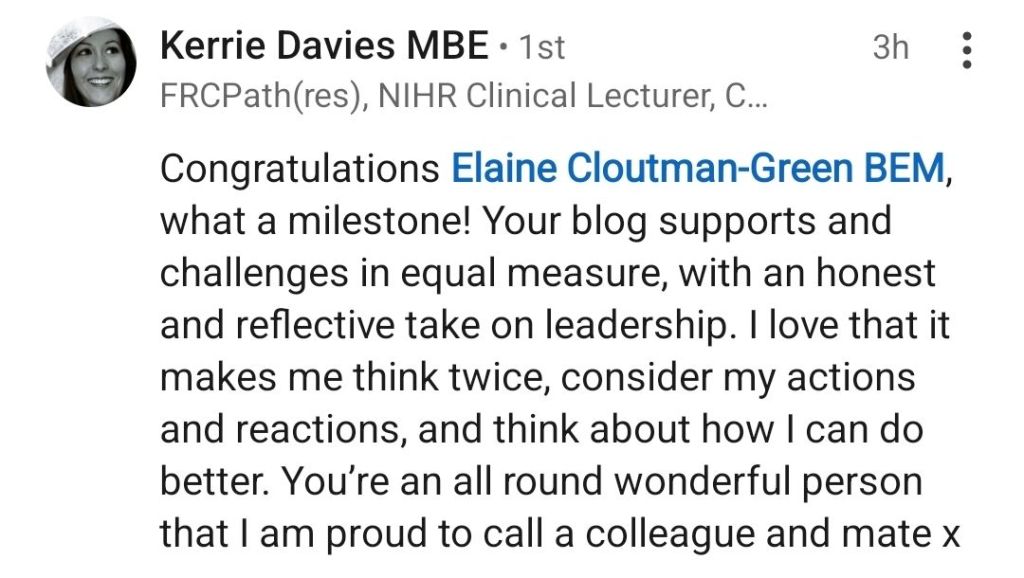
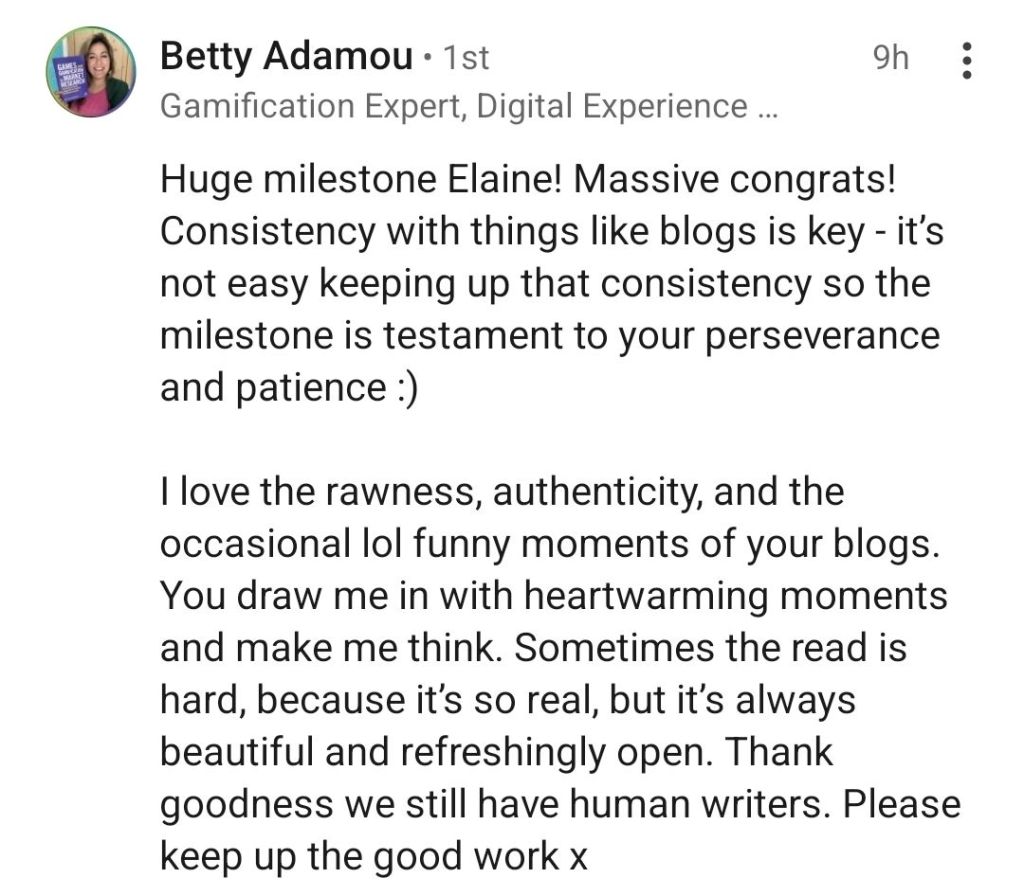
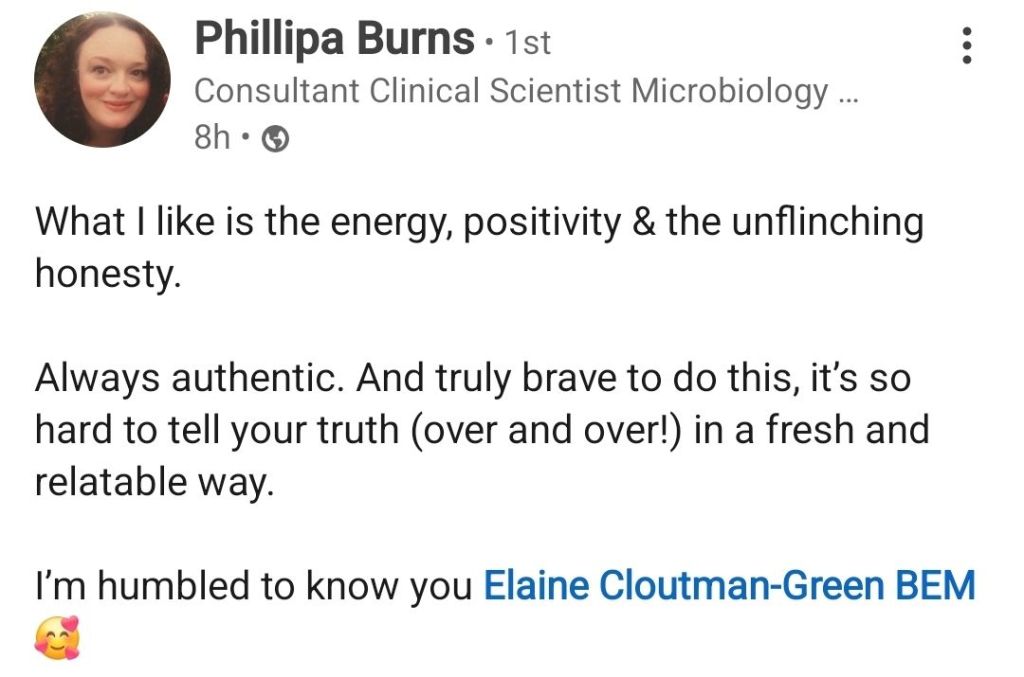
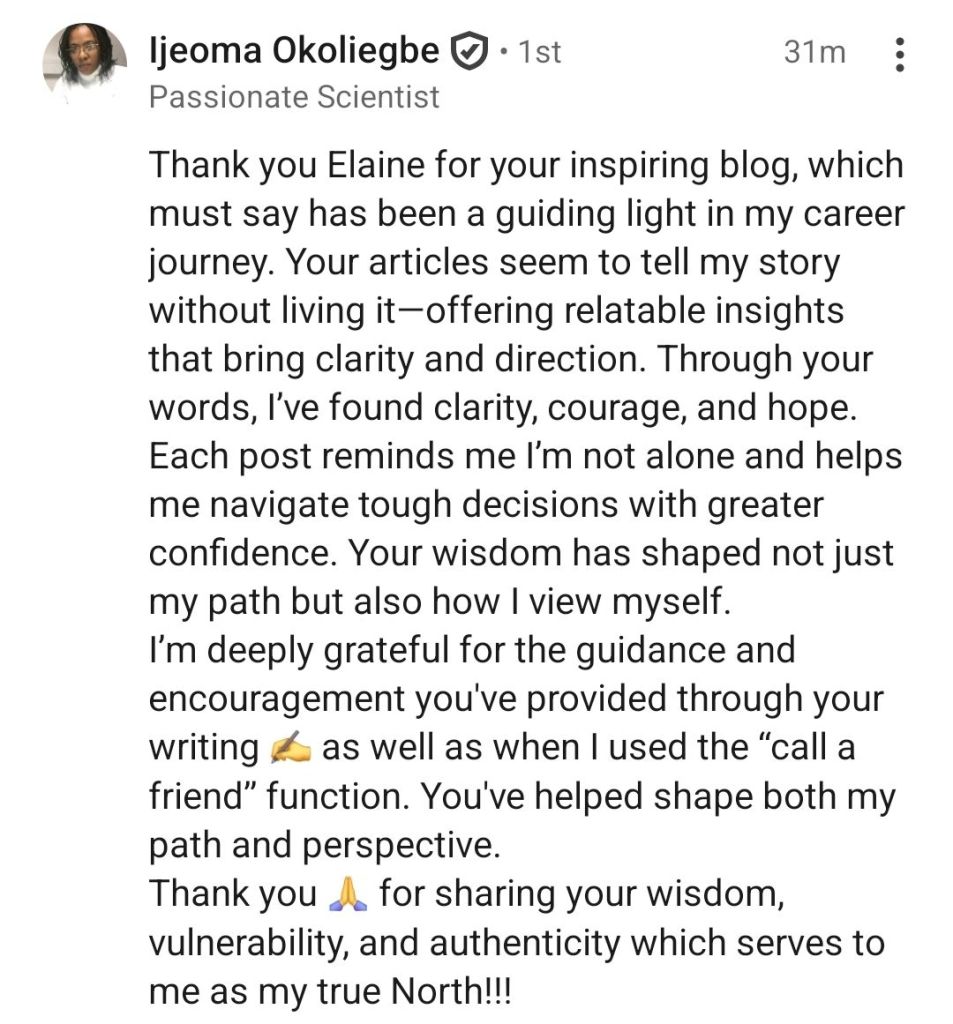
I know that I asked AI what they thought of the blog, but in order to be a little more thorough I also reached out across social media platforms in order to ask others what they thought. What they liked and found helpful, but also where it could get better. So whilst I’m talking about gratitude, I’m so proud and grateful for the responses received. When everyone is up against it, the fact that people took time to respond and give their thoughts means the world:

What are the lessons I’ve learnt?

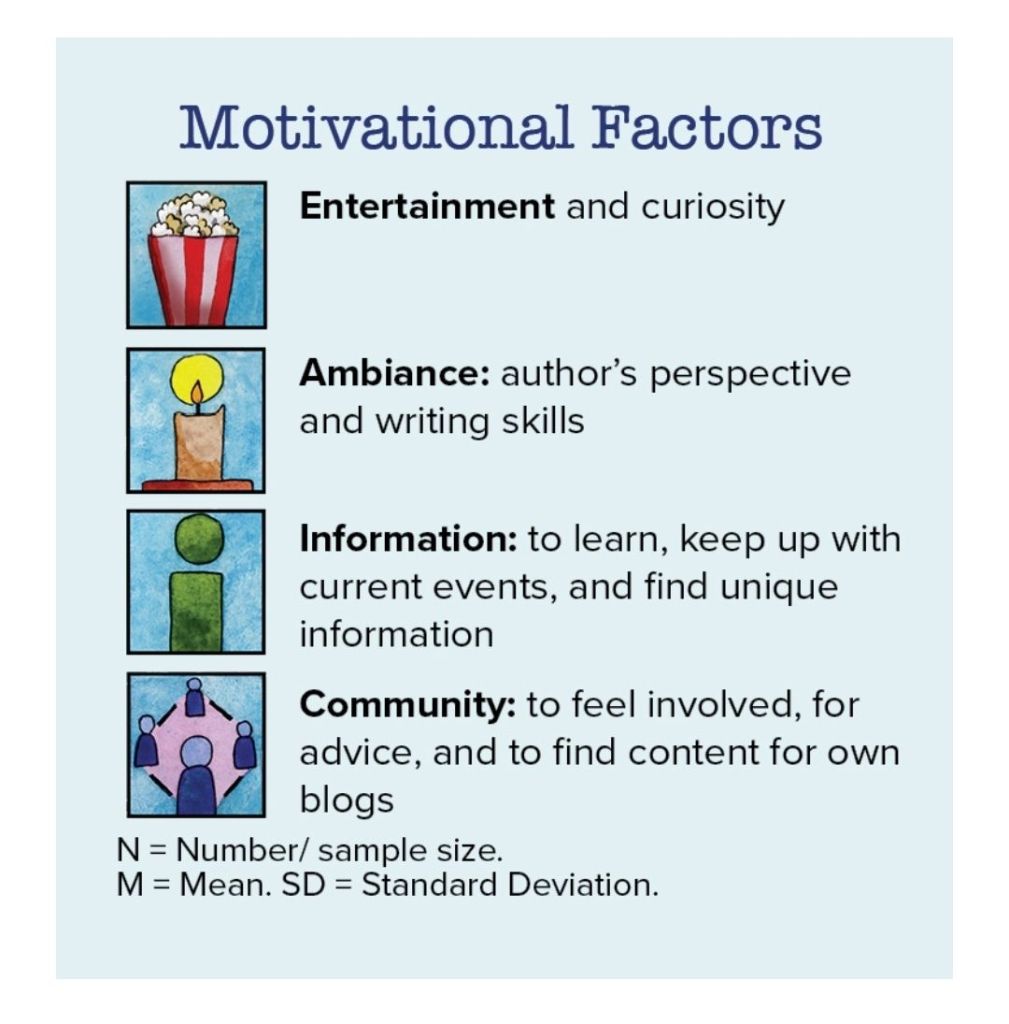
One of the thing I’ve discovered when speaking to people about this blog is that people read blogs for all kinds of reasons. Now, I know I said that I don’t write Girlymicro as a hard science blog, but I do always want to include interesting other pieces of reading where I can. Apparently, according to the article below, people read science blogs for a variety of reasons, and you can either try to double down on one of them, or do what I do, and hope to achieve all of the different aspects but at different moments and in different articles. This is probably quite obvious if you spend time thinking about it, but it was not something I had particularly realised. It is however one of the reasons why posting a variety of different types of content seems to work. Every day is a school day.

I knew none of those things when I started, and I will always continue to write the things that speak to me in the hope it is helpful to others, rather than trying to hit an algorithm or meet requirements laid out by others. That said, and as food for thought, I thought I would shared some of the lessons I’ve learnt over the last ten years, many of which could be applied to just life in general:

  • You don’t have to have it all figured out, but you need to have a direction of travel and a purpose
  • Things will change so don’t cling to where you started, be open to learning and evolution
  • Just keep showing up, even when you don’t want to, especially when it’s hard
  • Sometimes knowing what you don’t want to do is helpful and shouldn’t be dismissed
  • Take the risk, and make the jump. Nothing is perfect, failure will happen, but you will end up better for it
  • Have a little faith. Have faith in your gut. Have faith that others will be there to catch you and support you when you need it
  • Try to think about your community and building your networks. Focus on what serves them than what serves you only
  • Everything takes longer than you think and nothing is ever finished. Starting a project like this is a commitment of years with no end date. Make sure you have the passion to see you through
  • If you bring your whole self it will always be a success, as it will be truly and uniquely you

What are my hopes and aspirations for the future?

I still aspire to turning the blog into a book, I’m still working on it. I have big dreams and I’m not done yet. Most of my hopes are about continuing to build community though, that’s where my dreams are all seated. What can we do better to learn from each other? How can I do this better in order to help? How can I reach people who might find this useful? People who don’t read blogs in this way or exist on the platforms I use? This blog, like me, is a work in progress, and long may that continue.

The one thing that I am certain of is that I want to continue to be grateful, to see what we are building together and to continue to experience awe that I get to be a part of it. Girlymicro was never meant to be a brand but I’m beyond grateful for the fact that, with the support of all of you, it kind of is, and it’s a platform that I commit to using for the good of all of us. To support, to inform, and hopefully to enable positive change. Thank you so much for being part of this and here’s to the next 250!

All opinions in this blog are my own
Practicing My ‘It’s Lovely to be Considered Face’: Why we should celebrate all the moments, not just the successes

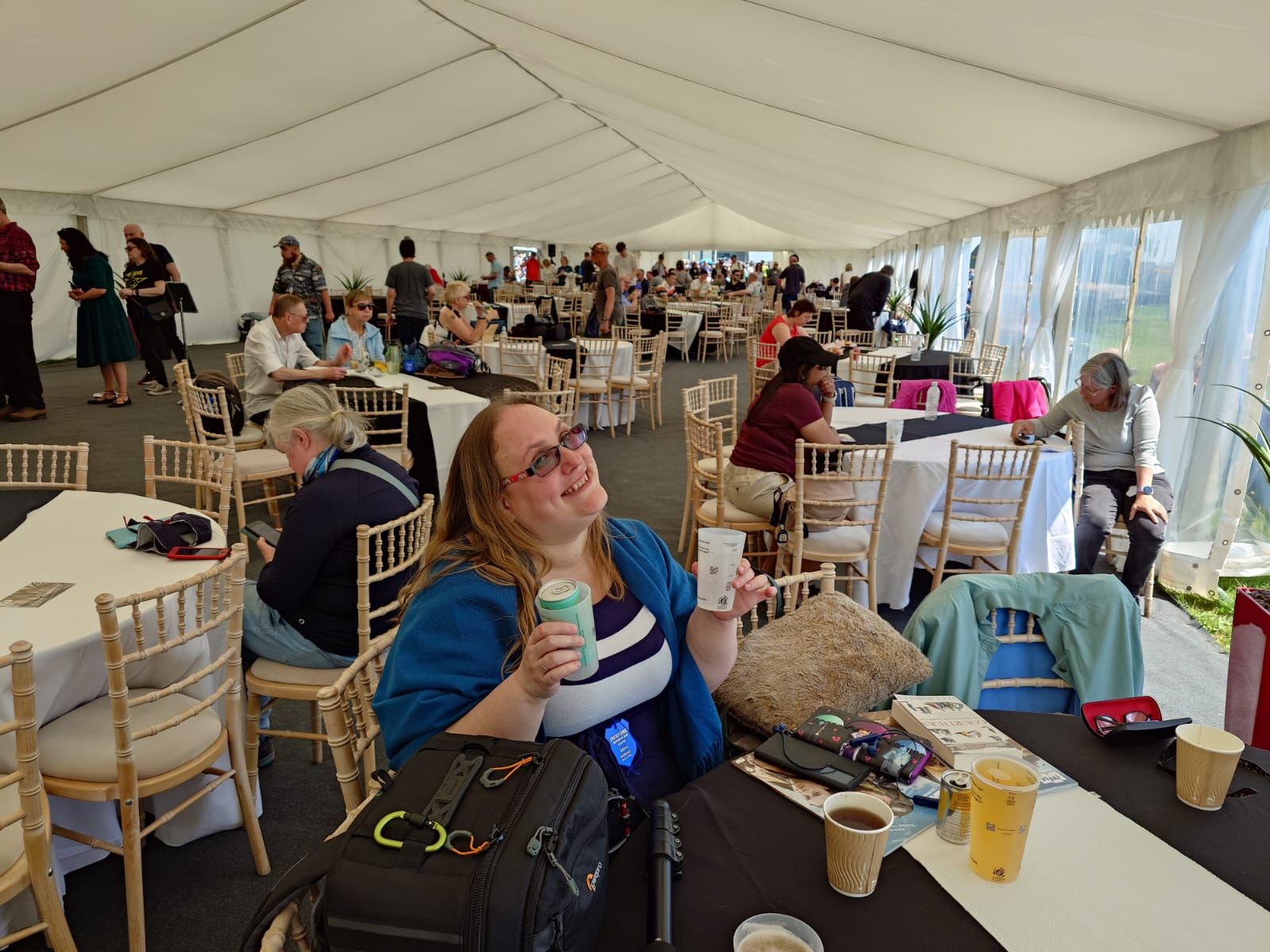
Today, I’m at the Advancing Healthcare Awards, as I’ve been shortlisted for an award from the Academy of Healthcare Science. It’s so lovely to be considered, especially as this nomination was linked to this blog, and it’s the first time I’ve ever been considered for something linked to Girlymicro. That obviously means an awful lot. In all honesty I’m highly unlikely to win, and that is nothing to do with modesty. If you don’t know the other people listed below, they are all pretty epic, and I think are much more aligned with the judging category.

The thing is for me, it’s not about the winning, it’s about sharing in the success of others, and that’s what I’m really looking forward to. Now, you may roll your eyes at me, and say that I am just saying that as everyone wants to win. I acknowledge that I won’t refuse the award if offered, but I can genuinely say that I’m OK to be the person that cheers loudly for others. I’m lucky enough to have won a number of awards in my time, and I’m even more fortunate to have been considered for many more.

At the start, I really did think it was about the winning, but over the years my appreciation of just being in the room has grown. Now, I consider the fact that someone has given their precious time to nominate me the real win. Time is the thing that no one has a lot of, and for someone to use it on something for me means the absolute world. This isn’t just true for awards, however, my point of view and how I celebrate has changed for most things, from grant writing and papers, to goals in my personal life. Doing my PhD, and writing my PhD thesis, really caused me to actively think about what works for me. So, I thought on a day like today I would share my thinking in case it helps others.

What success looks like feels different at different times

As I’ve said above, I haven’t always had the same attitude to marking progress and success as I have now. I think undertaking a PhD, and trying to make my way as a clinical academic, where so much of what happens results in failure, really caused me to actively think about how I maintained my motivation and marked progress. This is especially true for long terms goals, including those career milestones which occur over years rather than months, and where there are likely to be a lot of peaks and troughs along the way.

It’s important to also know that success feels different at different moments in life. There have certainly been times in recent years where the successes I’ve marked have not been about the big things. They haven’t been about winning large amounts of grant funding or awards. My successes have been about getting through the week, and to be honest, sometimes they have been about getting through the day. The pandemic hit me hard and I think I’m still in recovery mode. At these times, for me, it’s about finding and celebrating the small wins and setting myself small targets, in order to feel like I’m still moving forward.

If you only celebrate the successes you miss out

I wish I’d learn to change my attitude to success earlier. I feel like, in hindsight, I missed out on enjoying some of the journey of my career by being so target focused, and only appreciated the big mile stones. I’ve always been the same though. When I was at uni or doing my A-levels, I was so focused on getting through the exams, I never had the energy to go out and celebrate afterwards with everyone else. I would just go home and crash out. Making the shift to celebrating the steps along the way has made such a change to my perfectionism by making me appreciate the building blocks it takes to achieve. I also think it has made me a better mentor, supervisor and leader, as I now encourage others to do the same. Don’t just celebrate when you get a paper accepted. Celebrate when you have finished writing it and you are ready to submit. Celebrate getting a first draft of your thesis written, not just the day that you pass. Celebrate completing a section of your training portfolio, not just the day you get the completion certificate. Celebrate the fact that you have done the work, shown up and made the effort. Not just the outcome, about which you may have little control.

Acknowledge the work done

There are days when you will not achieve. That is just the reality. There will be days when you stare at the screen and manage to eek out 300 words, rather than finding your rhythm and getting down 2000 plus. To try to persuade yourself otherwise will just set you up for failure. It’s important to work out where the benchmark for celebration is, and also to match the reward to the benchmark. For me, some days that’s rewarding myself with a bubble bath if I finish a blog post early enough to make the time. Some days, it’s saying if I can make it through the next 30 minutes of meetings I’ll reward myself with a biscuit and a cup of tea. Other days, it will be that I can buy myself the dress I want if I can get back to running a continuous 5K. Not everything is worthy of a reward, in my world, I still have to set and meet a target. It’s just that target gets flexed these days based on the reality I find myself in. I still have to do the work, there is no free pass.

Marking progress in any form is worthwhile

The reason I now adjust my benchmarks is that I’ve learnt the value of movement, and not being paralysed by the size of the task ahead or the pressure I’ve placed upon myself. If you only celebrate the big moments, the end points, then in the times in-between it can be easy to feel like this movement doesn’t exist, as it’s harder to realise the progress you are making. This could just be me, but there is so much value to psychologically feeling like you have momentum. That even if the way up the hill is slow and painful, you are still getting closer to the summit. There’s a figure banded around that only 20% of grant submissions are successful. Most of the essays that get submitted will not get A’s, and for every successful interview candidate there will be multiple people that don’t get the job. If you don’t acknowledge and notice the progress it is easy to get overwhelmed by the failures. So mark progress where it happens so that you don’t just see the ‘no’s’.

There is always value in feeling seen

I’ve written before about all the reasons I think it is important to nominate others for awards. A lot of the reasons why you should nominate for awards also hold true for putting people forward for other opportunities, such as membership of committees, or inclusion on grants and papers. It can feel very lonely when you are carving out a path for yourself, especially if you are not following a well trodden path. Nominating and putting others forward can help them feel recognised, but the same is also true for you. Opening ourselves up to risk of failure, of not being chosen, or receiving feedback that may not be glowing can be hard. The thing is, this is how you build networks and get seen. This is how your name gets known. You may not get that opportunity, but it may be that the panel remember you for a future one where you may be more suited. This one comes back to celebrating the things that are in your power to control. You have control over the submission, over the putting yourself out there. You don’t have control over how your attempt lands (other than making sure you put in the work), or who you are competing against. So the success to celebrate here is the courage it took to take a chance, and step out of your comfort zone. Celebrate rolling the dice on yourself.

Feedback can be the greatest gift

I’ve received some pretty hard core feedback in my time, everything from ‘you contribute negligibly to infection prevention and control’ to ‘there does not appear to be anything that demonstrates this applicant has anything exceptional or above average for their future career trajectory’. I’ve had documents returned covered in red, comments about the fact that I can’t write, and grant rejections where I’m pretty sure they didn’t even open the form, despite the fact I’d sacrificed 6 months of my life to complete it. Needless to say, it is these comments I remember rather than any of the ones that said anything positive or nice about my submissions.

Now, I’m not saying that I celebrate the harsh ones right away, I permit myself a period of processing. This period of processing is easier and shorter if I’ve allowed myself to celebrate the work it took to get the submission in. After this period of processing/mourning, however, I make an active choice to go through and find the learning. I find the commentary that is based in fact, no matter how uncomfortable. The commentary that is actionable, and I reflect on how to make the change/improvement. I try to learn how to be better for next time. I then celebrate my engagement with the process. It may not be a party. It may be a ‘thank god that’s done’ drink, but I mark it. I mark the learning and I mark the fact that I had the courage to do the work that was hard/unpleasant. Celebration shouldn’t just be about joy. For me, it’s about acknowledgement of significant moments, and that includes failure as long as there’s learning.

Any journey worth taking is filled with moments of tantalising closeness

Traditionally, success is often seen as moving from point A to point B. In reality, in my experience, success is more like a series of concentric circles where improvement is cumulative, and often based on iterative improvement. Therefore any journey actually has a lot of near misses with success before success actually occurs. It’s actually important to notice when these near misses occur, rather than just discounting them as failures. These near misses represent huge steps of progress in themselves, and therefore deserve to be acknowledge as an important part of the journey. Not least because, by celebrating them, it can make it easier to take on and include the learning they provide, rather than discounting them as just another failure. The lens through which we see these moments can have a direct impact on how quickly we move from near miss to direct strike. Attitude is everything, and so make sure you embrace these as the opportunities they really are.

Sometimes the moments between successes can be protracted

There are things in life and professional practice that are the work of years, rather than weeks or months. Even if a project is over months, there can be moments when it is hard going. Writing a big report can feel soul destroying when you are on draft 54 and everyone has given conflicting feedback. Undertaking a professional portfolio can just be draining when you can’t get anyone to give you the time needed to sign off competencies or review sections. Then there are things like a PhD which run over years and are comprised of numerous stages, all of which are likely to rely on other people at various points, or to practice skills you are only just learning. All of this means the time from commencement to completion can be long, causing relying on internal motivation alone to be pretty hard going. By acknowledging that these bigger pieces of work are comprised of segments, and celebrating completion of these parts instead, can enable you to visualise progress made as well as to celebrate the learning gained along the way. It can also help you to regain momentum when you lose it.

The real learning occurs long before the end point

Talking about celebrating learning, this is an important point for me. It’s taken me a while to really stop and reflect on what ‘success’ really means. For a long time if you’d asked me I would have said it was the completion of something, but I’m not sure I would any more. The certificate at the end, or the gateway is symbolic of that completion, but for me now it’s more symbolic of the learning and change that occurred within me as part of the process. It’s the hard won changes, in either knowledge or outlook, that have been gained that are the real marker of change linked to the activity. This learning happens as you are involved in the process, and there is normally a fairly steep learning curve at the start. It therefore makes less and less sense to me to just celebrate at the end. Celebrating during the toughest moments, where the maximum learning is being gained, no matter where along the process that occurs, now makes the most sense. For me, success is getting to the point where I feel I do something better than I did before, be that decision making, leadership, or a practical skill, and so I celebrate when these breakthroughs occur, rather than relying entirely on an external evaluation of my progress.

Share the moments

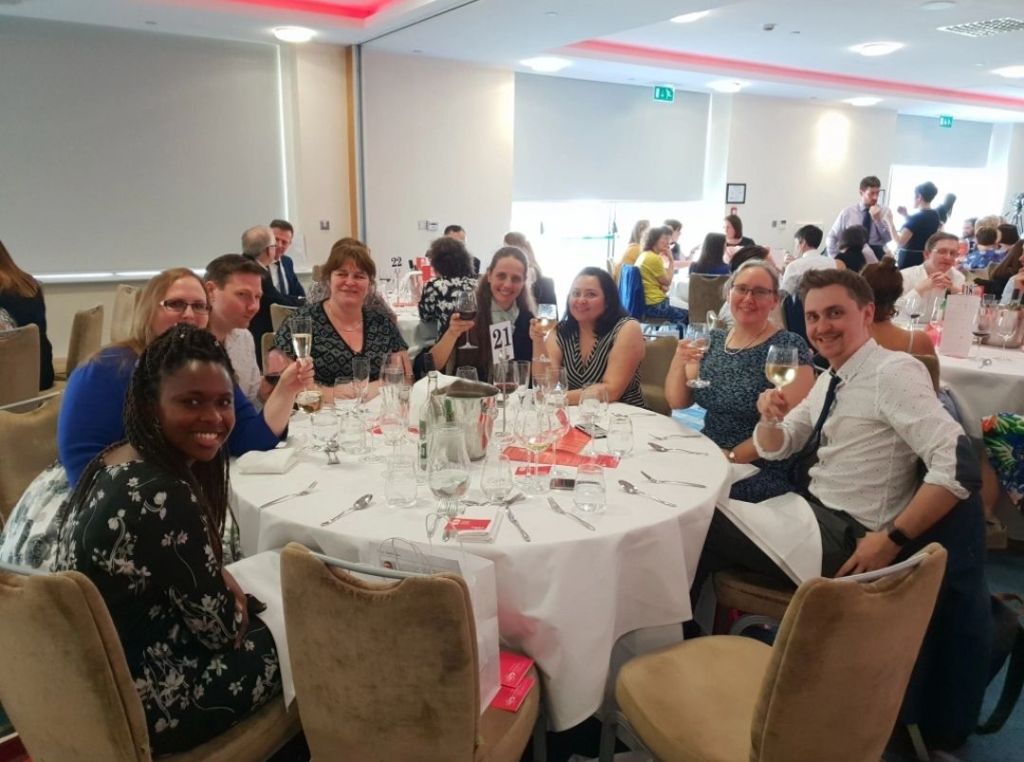
This photo was taken at another Advancing Healthcare Awards lunch, many years ago. You can see all the smiling faces of people still involved in my life even now. The thing is, I didn’t win, but that is not what I remember about the day. I remember a glorious afternoon and evening with people that I admire and care about. I remember laughing so hard that one of us fell over. I know that we still talk about that day even now. I don’t even remember what I was nominated for, because it is the people I remember, not the lack of a win.

All of this is to say, it is the people in our lives that make life worth it. It is the people who pick us up and put us back together. It is the people that celebrate our successes and cheer us on. So why would I want to have less of that, and restrict my access to these moments. Share the joy, share the progress, and share the moments that matter in making us who we are. Life is short, so seize it.

All opinions in this blog are my own

Celebrating The People That Make It Worthwhile: Taking a moment to appreciate the positive people in our lives

Being present on social media or even listening to the news right now can be hard and take me into a pretty dark head space. It’s easy to write negative posts as a result of this head space and to give energy to the people or situations that make life challenging, or who make us feel badly about ourselves. Those people get to spend enough free time in my mind, however, without me giving them more air time or more of my energy than they already have. So, in the spirit of active rebellion, let’s turn the world around and talk about the people who do deserve the energy and recognition. The ones who give liberally, support unconditionally, and act as the cheer leaders that we all need in our daily lives to just get through the week. Let’s focus on the good rather than being drawn into the dark.

Thank you to the people who catch us when we spiral

We all know that I have a strong tendency to spiral, especially linked to event triggered anxiety. I’ve written about it before. I wanted to take a moment to thank those people out there who recognise and actually help flag to me when I’m spiralling, as sometimes it can take me some time to even notice the deterioration in my thinking. Just recognising that you have fallen into that head space can be challenging, but recognition is the first step in managing and exiting the spiral.

The second reason having ‘spiral friends’ is super helpful is that I have a very very small list of friends who I can call (and they can call me) and say ‘I’m in a spiral’. We then support each other by talking through the source of the anxiety, the validity of the anxiety, and if there are any actions that are valid/required. People who take time out to talk through and validate responses when needed and dispel irrational thinking as required, give the greatest gift in terms of time and support.

To the people who listen to the repetitive statements until we’ve worked through our process

I not only have a tendency to spiral, but to sometimes get stuck in my thinking. When I’m fixated on something, I can be one of the most annoying people in the world to be around. Becoming hyper focussed is one of my greatest gifts, as it means that I can just sit down and write 5000 words or focus for hours at a time. It’s also one of my greatest curses, as when that fixation falls onto something that I have no control over or is more of an emotional block, it can be really challenging to stop that focus becoming an unhelpful fixation.

When I fixate on something I just can’t let it go. I have to process my way through it. Sadly for those around me that processing tends to take the form of a very repetitive conversation cycle, whilst I try to talk my way through the weeds I have gotten caught up by. This means, for Mr and mummy Girlymicro, and my besties, they get stuck also having to have these conversations with me. On repeat. I do eventually get to the point where I come out the other end, but I know it would be easier for everyone around me if I could just put it in a box and move on without the thorough exploration this process requires. So thank you for your patience and generosity with your time, I know you all have other things to do and I owe you a lot of champagne in return.

To those who love us, not grudgingly, but because they truly accept our imperfections

Having just read the last two paragraphs it should come as no shock at all that I am far from perfect. I annoy myself sometimes, let alone anyone else. The thing is, I have some people in my world that truly love me. They don’t love me despite my flaws. They love me because of them. They love all I am, despite how challenging that person can be. Knowing that is the most empowering thing I can wish for someone. It makes me feel safe enough to express and face my fears. It empowers me to share my failures, challenges and learning, through things like this blog. It is my greatest hope for all of you that you also find your people who make you feel this way, whether they are your family by blood or by choice. These people enable us to be the best versions of ourselves, and I couldn’t be more grateful.

Shout out to those who truly embrace difference as a positive

Humanity is tribal. Most primates are. That means that we can have a tendency to like people who act like us and hold similar values. The thing is, our diversity and difference is what makes us stronger, and should be something that is embraced rather than suffered. As someone who holds a rather weird and wonderful mind, that may not process and see the world in the same way as others, I sometimes really feel how I am seen at ‘other’. I often just don’t fit in and, even more than that, I frequently want to walk a path that is not valued or trodden by others. There are people out there, who rather than being baffled or thrown by this approach, fully embrace it and what this difference offers. Instead of trying to make me fit into a box that doesn’t feel comfortable, they support and encourage the risk taking that is required to walk my own path. They do not find my difference a challenge or a threat, but an inspiration and a positive trait. They see value in me as me, and that is not so common. These people are the ones that have the ability to change the world by expanding acceptance and re-defining normal. We need to find them, honour them and celebrate their vision.

Thank you to those who remind of our strengths rather than focusing on our flaws

Part of learning and growing as an individual is having the self reflection to understand our flaws as well as our strengths. It’s easy to lose perspective, as our area of change is often linked to the things we want to fix, to the extent that out flaws loom large and we forget about the strength side of the equation. Many of us are perfectionists who struggle to come to terms with the fact that we are, and always will be, a work in progress. It is also easy, therefore, to lose sight of how far we’ve come and to just see how far we have yet to go. So, this one is a shout out to the people who help us re-focus, and bring back into perspective all that is positive about ourselves. The ones who help us bench mark that, actually, we’re doing OK.

To those people who will hold us while we cry it out

I wear my heart on my sleeve, I always have. I’ve lost count of the number of times I’ve felt judged for this and when I’ve received comments such as ‘you’re too emotional to be a leader’ or other judgements that indicate you cannot be emotionally expressive and be good at your job. Comments that indicate empathy or emotional intelligence may actually be a risk rather than something to be developed. For a long time this meant that I tried not to fully engage or bring that part of myself to my working life, to try to be more remote and not express how I was feeling. Now, I’m not saying we should scream and shout, but I do think that I am a rounded individual who is not a robot, and neither are the people I work with. Therefore, to be my authentic self I need to acknowledge that I come with feelings, beliefs and biases, which need to be noted and managed, but also make me a better human being if handled appropriately.

Outside of work especially, I’m such a crier. I weep at movies, I cry with both sadness and joy, and don’t get me started on my behaviour at weddings. I am so grateful to have friends and family who allow me to safely experience all the peaks and troughs of these emotions, and know that a box of tissues or three may be required if we are going to Les Misérables.

I am beyond grateful to those who give us courage to be the true versions of ourselves

Speaking of my emotional side brings me onto authenticity. When I started my job I wouldn’t talk about being a gamer. I wouldn’t talk about movies, or other things that interested me, as people would comment ‘geek’ and roll their eyes. Over the years since I’ve realised how important it is to fully show up, and to bring my whole self to spaces, especially when in a leadership role. If I don’t lead the way, how can I expect others to. It’s not always easy however. Sometimes the comments cut deeper when they are made at our authentic selves rather than at a protective shell. It can be easier for others to try and bring us down when we offer so much of ourselves as a target. There are definitely times when I just want to retreat into my shell and take the easy road.

Even when writing these blog posts, there are times when it would be easier to hide from some of the challenges, especially when there are comments made linked to my choices. I stand by those choices however, I stand by sharing the highs and the lows, and by showing my flaws as well as my strengths. It takes courage some days. Some days more than I have available. So I want to say how grateful I am to those of you who lend me courage on days when I lack it. I look back on the many of the positive comments on this blog when I start to doubt myself, and use them to give me clarity and strength to move forward when it might be easier not to.

No matter how hard it gets, if you can find these people in your life it’s worth fighting for

It took me a long time to feel (mostly) comfortable in my own skin, and so much of that progress has been due to me finding the people in my life who told me that it was OK to be me. I’m fortunate to have a great family by blood, but I also have key members who are my family by choice. No matter where you find them, treasure them. In these difficult times, when the world can feel like you could be swallowed by quick sand any second, use them to anchor you. Use them to reflect. Ask, will this matter in 6 days, 6 weeks, 6 months or 6 years? Use them to help gain the perspective you need to pull yourself up and get out there to fight the good fight and stand up for what’s right. Just don’t forget to also thank them for the amazing role they have in your world and pay it forward so you can be that same person for others. The world is always darkest before the dawn, so lets get through this time together.

All opinions in this blog are my own
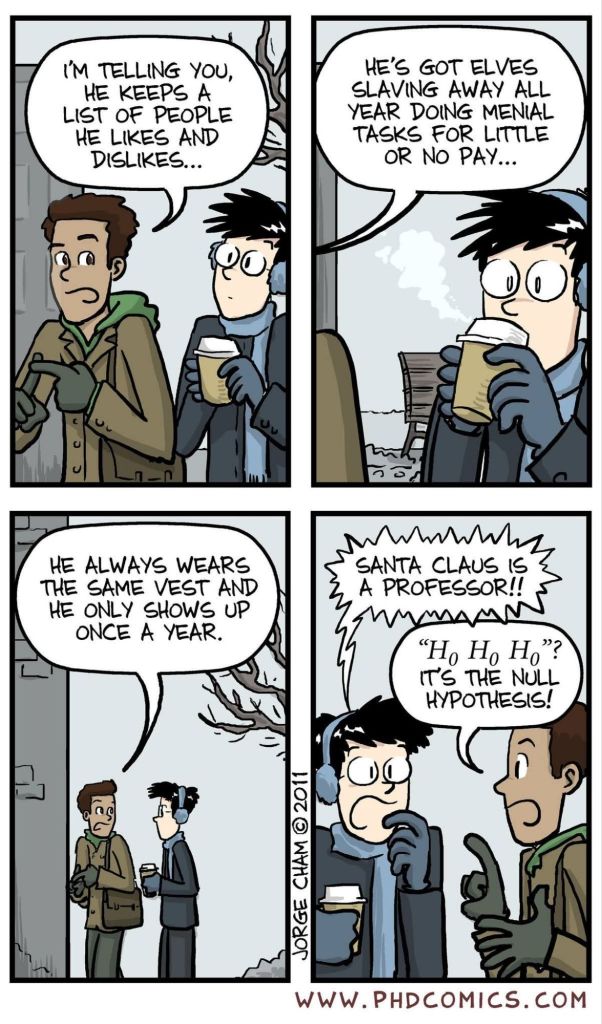
Talking About The Traitors: What can watching tell us about group think/game theory/prisoners dilemma/group decision making?

Buckle up, this is a long one, but I hope you’ll enjoy reading it as much as I enjoyed writing it.

Many moons ago, I did an A-level in psychology. I enjoyed it so much that I even took some modules during my degree. During my A-levels, I still remember how much I enjoyed the section on group decision making and the different roles that both exist and can influence. During my degree, some of my favourite parts were linked to evolutionary psychology but also game theory and how mathematics and behaviour combine to impact how we should make decisions.

Now, many of you will know that I am a gamer and love all things from board and computer games through to tabletop role playing and free forming.

N.B. Some of you might not know what free forming is, so a quick description is that it is like the murder mystery games you can play, unscripted, but generally much more in depth. I like to think writing them is like writing a novel, but each character only gets their bit

Over the years I’ve had plenty of time to both write and play around within the free forming space using influencing/manipulations linked to group decision making but low and behold watching The Traitors is like all my experiments rolled into one and I LOVE IT!

What is The Traitors anyway?

For those who have managed to avoid getting hooked, first of all, congratulations, as I watch not just the British but also the overseas versions and just can’t help but get sucked in. But what is it? Launched in 2022 and is presented by Claudia Winkleman, it is a TV series where the aim of the game is to find the murderous Traitors in your group before they kill you all. Have any of you played the game Werewolf, either old school or the newer card game? At its very core, The Traitors is like werewolf with the option of extra wolves and the addition of afternoon tea.

There have now been three UK seasons, and for context, I’ve included the trailer for season one below:

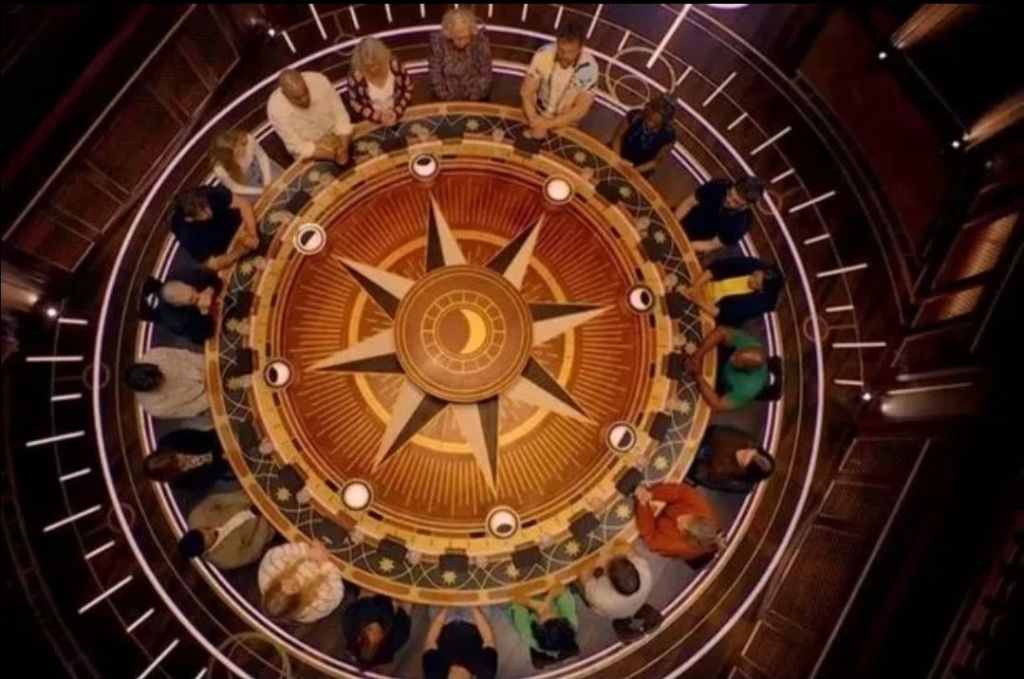
The structure goes something like this. Between 20 and 25 people arrive at a pretty glorious castle in the Highlands. On arrival they spend a day getting to know each other. That evening, they meet for a gathering around a ’round table’. Whilst blind folded, at that meeting, the Traitors (usually three) are chosen, and the game then begins. The rest of the players become what is known as Faithfuls. During the days, the group then as a whole compete to add money to the prize fund which will be won at the end of the game, and at night, the Faithfuls try to find the traitors by banishing a person they believe is part of the Traitors group. If there are any traitors left after the banishment phase, the traitors choose one person to murder. Everyone meets for breakfast the next day and finds out who is left, and the cycle begins again.

Over the next few weeks, the numbers are whittled down until there are a handful (5 ish) left. The game ends at the point the group banishes all the people they believe are traitors until there are only those perceived as Faithfuls left. They can choose to end the game at any point once down to these last few, but if, when they choose to end the game, there are any traitors left in the group, the Faithfuls leave with nothing and any Traitors split the remaining money between them.

There are only two ways to leave the show

  • Banishment
  • Murder

Both are based on some form of group decision making. Over the course of the game, banishment starts with a large group of poorly linked individuals and progresses to a small group of highly linked individuals in a competitive space. Whilst decisions about murder are made in a small group based on trust and risk based decision making. The dynamics of both can, therefore, change over time. To understand the challenges behind these decisions, it is key to understand that group decision making can be more nuanced and complex than it may initially appears.

Let’s talk group decision making

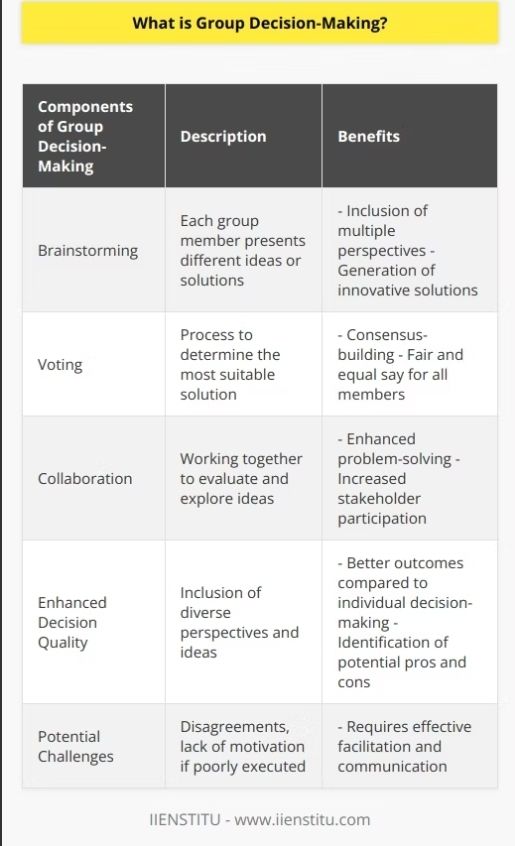
Two heads are better than one…..right? The basic principle of why we should use groups to make decisions is that a group will make better decisions over time than an individual alone, especially during complex decision making.

There are a number of steps that can be used to support sharing and evaluating of ideas, to support improvement in the decision making process over that available to single individuals. There are also a number of possible ways that the ‘decision’ part can be undertaken, consensus, majority, unanimity, etc. The thinking behind using these processes is that each person comprising part of the group then becomes additive, and therefore, more is better. 

These aspects to group decision making can, if used consciously, really help bring about the most positive aspects of any decision making process. However, they all require certain things to be in place for them to actually work in the way that permits the best possible outcome, and so group decision making is predicated on how individuals work within the group to actually support its success.

What are the particular challenges of group decision making?

We all like to think that we are smart, independent thinkers who can bring something unique to the table. Partly because, as individuals, we tend to believe that we will accept and weigh all of the different perspectives that will be brought to the table equally and therefore act inclusively and positively contribute. Is this true however?

In 1981 Meredith Belbin came up with a view of how team roles. the roles that we may default into in a team, can impact how teams work and relate to each other. People generally have a preferred role that they will fall into, but roles may change based on the needs of the group and the relationships that exist, especially as these can be dictated by how the group is working.

The truth is, as demonstrated within The Traitors, we don’t necessarily value all of these roles equally. Within The Traitors, often the people centred roles are valued more highly, especially early on, and so people who are ‘different’ such as plants or ‘challenging’ such as shapers may be prone to banishment early in the process rather than being valued due to the different perspective they bring. Other roles, such as the implementer or monitor evaluator, may become isolated as too focused on task and therefore ignore the social niceties required to build social capital, which is important to be able to call on when you inevitably come under suspicion.

We see those not like us as being a source of risk or difference that can lead to distrust, which makes those that could be highly valuable, linked to their differences in perspective or approach, actually to be seen as individuals to remove from the group early. Thus making the whole task of finding the Traitors to actually become more inefficient early in the process. These challenges aren’t just present in The Traitors decision making though, and so Belbin encourages self reflection to understand the roles we take and what benefits and disadvantages they hold.

How does voting impact and a lack of facilitation impact?

We often like to think that we are useful and can actively contribute. In the case of The Traitors, participants like to believe that they know, or can spot things that others cannot, and therefore can make themselves valuable members of the group. For the Traitors, all scenarios will feel like a risk as we like to believe that others are as obsessed with us as much as we are focused on ourselves, something called the Spotlight Effect. In recent seasons, there has also been a focus from the Faithfuls on obsessing about why they have been kept in and not murdered, hence placing increased focus on themselves and the importance they play within the group. All of this plays out around the round table linked to the fact that a single round of majority voting is utilised in order to enable the group to make a decision.

Other types of voting would have different impacts on the group and how they made decisions, but may not be as dramatic, and in most cases would take longer. The issue with many of these other types of voting is how dissent and intransigence is managed in order to move discussions forward and ensure that the beneficial aspects of group decision making are actually realised.

One of the reasons that these alternate methods would be challenging, even if included, is that they really rely on facilitation in order to work. In The Traitors, there is no external group facilitation, all roles are held by people in group who are driven by both group and individual needs and have an embedded interest in the selected outcome. The host acts merely as a neutral observer to the process. If setting up your own group, evaluating the success of groups you are part of, or thinking about processes, it is worth being aware of how decision making tools influence both group behaviour and group effectiveness, and ensure that the right structures are put in place to support both.

Why can the voting shift so rapidly?

As the Faithfuls become more developed as a group, or at any point where they feels like there is a dominant voice/person demonstrating confidence in their opinion, it can be surprising how quickly the conversations and prior decisions made before going into the round table can change. There is usually plenty of hanging around and talking during the day, where people get to know each other, voice suspicions, and try to capture evidence, which is usually in limited supply. The number of times this happens, and someone sounds like they are doomed to be banished, then everyone sits around the round table and suddenly everyone is voting for someone else entirely may appear surprising, but how often is group decision making truly group decision making? How often does it become the echoing of a dominant voice?

What is group think?

Groupthink was first coined as a term in 1952 but the first real published book investigating it was published by Janis in 1972.

Groupthink is a phenomenon that occurs when a group of well-intentioned people makes irrational or non-optimal decisions spurred by the urge to conform or the belief that dissent is impossible

The need to be part of the majority when voting, the need to be seen to be part of the consensus, makes the voting process and group decision making in The Traitors particularly at risk of Groupthink. This is where the desire for group consensus and harmony leads to poor decision-making. Within the round table at the traitors, especially at the start, no one wants to draw attention to themselves. You want to be middle of the road initially, as you neither want to draw the attention of the Faithfuls, thus standing out and being at risk of banishment, or of the Traitors, putting yourself at risk of murder. No one wants to be an outlier.

As time goes on, and the numbers decrease, individuals need to be seen to have a voice as not having an opinion increasingly raises suspicious. At the same time, there always seems to be a couple of players who become dominant, often due to the random luck of having found a Traitor previously, and are seen as being somehow more competent to find Traitors than others. Groupthink therefore definitely starts to play a more significant role in the middle stages of the game due to the changes group dynamics. How this Groupthink plays out can happen in a number of ways from collective rationalisation during discussions that one person is definitely a Traitor, normally based on fairly flimsy evidence, to some people being almost immune to accusations as they have come to be seen as such good Faithfuls, for equivalent light levels of data. It is often only when players reveal whether they are actually Faithful or Traitor, when banishment decisions have been made, that some members will then voice the fact that they didn’t support the wider decision or that they wish they had had the capacity to speak up.

The other interesting thing that comes into play during round table discussions, is that there are obviously traitors who are deliberately muddying the waters or throwing in dissent in order to disrupt the group decision making process. These members act like ‘mindguards’ who are group members that limit information and control dissent to influence the decision-making process. It is interestingly not only the Traitors who do this however, in varying seasons there have also been cliques that develop who have also acted in a similar way, but claim it is to protect themselves and improve the ability to identify those they perceive as untrustworthy. This tends to benefit the individuals but does not necessarily act to benefit the group as a whole, in terms of decision making quality.

Let’s talk treachery

The show wears its truth on its sleeve, it is called The Traitors after all. Trust plays a fundamental role in both individual relationships and on group dynamics. Therefore the role of trust and how this level of trust varies across the period of the show is an essential part of the entertainment factor and impacts on how successfully the group complete the given task of trying to find the Traitors in their midst. In a normal setting, trust is built over time as the group establishes itself. In the case of The Traitors, this process deliberately erodes trust, as the more the group establishes the smaller it becomes, and it becomes more likely that the person you are left talking to is actually a traitor whose considering your death. All of this leads to an ever building sense of paranoia.

The other reason that paranoia can be rife is that the role of Faithful is not static. You could therefore be sure that you had a relationships with someone based on the fact that they were ‘clearly’ Faithful, but it is possible that something could happen which means that they changed from being a Faithful to a Traitor during the course of the game. There are also moments when new group members are added later on, which means that members, and the group as a whole, lose their equilibrium and then need to re-establish. This also means that those players who are introduced later can also struggle to ever be seen as part of the group in the same way as the original players.

The reasons that players can change to become Traitors are three fold:

  • Original selection as a Traitor on day 1 (change from unassigned to Traitor)
  • Seduction – if a Traitor is banished, the Traitors can choose to recruit from the remaining Faithfuls. The Faithful can choose to join or refuse, but often even admitting that someone has tried to recruit you can lead to an increased risk of banishment
  • Ultimatum – if at any time there is only one Traitor left in the game, the remaining Traitor selects on member of the Faithful and they are given an ultimatum. They can either join the Traitor or they will be murdered. Needless to say, under these circumstances players almost always choose to join rather than die. This can impact dynamics later however and mean that the ‘forced’ Traitor may be more likely to turn on their fellow Traitors

The Traitors therefore have their own group dynamics that are playing out in secret amongst all of the dynamics of the wider group. All of which can impact how wider decision making processes occur, as some individuals may choose to sacrifice a Traitor to the wider group in order to establish themselves as more trusted or to change group dynamics.

So what is game theory and how does it apply here?

All of this brings us to game theory, and more specifically to the Prisoner’s Dilemma

Game theory is the branch of mathematics concerned with the analysis of strategies for dealing with competitive situations where the outcome of a participant’s choice of action depends critically on the actions of other participants.

When The Traitors is described as a game, it very much is, both as a whole and with every single decision made. The Traitors within the group are playing something called the Prisoner’s Dilemma, pretty much throughout as they decide every round table whether to support each other or sell each other out. At the end game, however, everyone ends up playing this particular example of game theory, whether they are a Traitor or a Faithful, as banishment’s continue until everyone believes there are only Faithfuls left.

The Prisoner’s Dilemma is described like this:

The classic prisoner’s dilemma goes like this:

  • Two bank robbers, Elizabeth and Henry, have been arrested and are being interrogated in separate rooms.
  • The authorities have no other witnesses, and can only prove the case against them if they can convince at least one of the robbers to betray their accomplice and testify to the crime.
  • Each bank robber is faced with the choice to cooperate with their accomplice and remain silent or to defect from the gang and testify for the prosecution.
  • If they both co-operate and remain silent, then the authorities will only be able to convict them on a lesser charge resulting in one year in jail for each (1 year for Elizabeth + 1 year for Henry = 2 years total jail time).
  • If one testifies and the other does not, then the one who testifies will go free and the other will get five years (0 years for the one who defects + 5 for the one convicted = 5 years total).
  • However, if both testify against the other, each will get three years in jail for being partly responsible for the robbery (3 years for Elizabeth + 3 years for Henry = 6 years total jail time).

Therefore the best move, for either Elizabeth or Henry is to defect, as this is the move with highest payoff, either because they both defect, in which case they only serve a year in jail, or because the other person doesn’t, in which case they walk away completely free and the other person pays the entire cost. This is what is known as the Nash equilibrium, where both parties should defect in order to maximise their individual benefit.

Within the context of The Traitors, this means that at some point, when the heat is on your fellow Traitors too much, you should join the rest of the group in order to banish them as a Traitor in order to validate yourself as a Faithful. It also means that during the end game phase, when players can continue to banish down until they reach the final 2, as long as you are sure that you are not one of the ones at risk of banishment, you should always continue to decrease the group to the smallest numbers possible in order to try to ensure that no Traitors are left. It is the balancing that with your individual banishment risk that is the biggest challenge however. When there is money at stake, when there is an actual individual cost to decision making, then the maths is clear about what you should do next.

What does all of this teach us, and how can we apply some of what we’ve learnt?

Apart from being a cracking piece of entertainment, I hope that this post about The Traitors has made us think that group decision making may not be as simple and issue free as we sometimes like to believe. There are a number of actions required of us as individuals in order to make it an group decision making the improved option, and a lot of individual responsibility that must not be forgotten as part of becoming a collective. When undertaking your role as a decision maker within a group setting it is worth being aware of the need to:

  • Self reflect on the roles you take when in groups, especially how these change depending on stress levels and how comfortable you are with other members
  • Actively evaluate how well your group decision making processes are supporting or impeding the effectiveness of the decisions
  • Not just default to majority voting because it is a) what you are most familiar with or b) quickest and perceived as easiest
  • Think about when to use facilitation to improve the quality of any group actions
  • Be aware of groupthink and attempt to have measures in place in order to reduce its impact
  • Know that, if the individual costs and consequences are high enough, the best mathematical choice is to defect (I say this tongue in cheek in terms of the maths, please also remember the human cost in any decision making)

Anyway, season 3 of the US version of The Traitors is just dropping now on BBC iPlayer, and so I’m off to see whether my thinking holds even if there are cultural differences. Just to finish though, I’d also like to end with flagging one of the best film examples of group decision making and how group dynamics can be utilised to impact outcomes. If you’ve never seen 12 Angry Men, it’s a masterclass, and I’d highly recommend you take some time out of your life to check it out and to think how you might respond if placed in a similar situation.

All opinions in this blog are my own
I’m Still Learning After All These Years: My focus in 2025 is to continue my personal development journey

It’s that time of year. The time when New Years resolutions get shared and we all try to persuade ourselves that overnight, if we just put in a bit more effort, we can change big facets of our lives. I’m becoming increasingly aware that the big gesture and external stuff is not really the space I want to be in, however. I’m fortunate to have ticked a lot of the external boxes at this point in my career, and so, in 2025, I want to focus on me and my development as a person rather than ticking another box linked to how people see me.

One of the reasons for this shift is the nature of the job, as it feels, in a post pandemic world, like I spend a lot of time in responsive mode. This becomes a habit and a way of being. Instead of running to keep up and fire fighting, however, I want to have time to experience the joy I feel when I’m learning and developing.  This is especially important as I think many of us who went through the pandemic as healthcare workers are still very much in recovery mode, and there’s a lot to still be worked through and resolved with little time to actually do so. So, rather than create a list of tasks to be measured against, my list this year is about aspirations linked to becoming. Becoming a better version of me, becoming more joyful, and re-finding some of that pre-pandemic me.

I want to have time to catch my breath

As I sit here on a Sunday afternoon, I realise how much I need time to chill and unwind at the moment. 2024 was full on, and there wasn’t a lot of respite. It feels, therefore, that I’m hitting 2025 already pretty wound up and in need of prioritising some time off the treadmill. Even at work, having just managed to get down from just under 18,000 emails to ~200 over the Christmas break, I realise I need to stop being in responsive mode and guard my time more efficiently. I need to carve out planning time, and in a more basic way, time to make tea, have lunch, or god forbid – leave on time. I’m aware of how much better I will be at my job if I can catch my breath, see through the fog and take time to develop a plan or creative approach to the problem, rather than jumping in or going for the most obvious approach. All in all, a different strategy will have all-around benefits, so I need to work better at finding a new way to manage my time.

I want to live in a positive space

I have a tendency to swing from optimism to ostriching, and whilst most of the time I’m a ‘glass is half full’ kind of girl, it sometimes takes more energy than I have at present to live in that positive space. In 2025, however, I want to have enough energy to expend to make it happen. I want to listen to the noise, criticism, and the negative inner voices less. I want to focus less on what I lack and more on what I have. It’s easy to constantly focus on our areas of required improvements instead of celebrating how far we’ve come and where our strengths lie. There is always a space to focus on improvement, but it shouldn’t come at the cost of recognising the work we’ve already done. This year, I don’t want to benchmark myself and my progress. I want to live in a space where I accept and celebrate the place I am at. For once in my professional life, I want to be satisfied with the boxes I have already ticked and live in the moment.

I want to see my ride or dies

One of the reasons I am keen to find additional spare time and not take on more is that I want to carve out more time for me. Selfishly, this is nothing to do with work, but for me as a person outside of my professional life. The main driver for this is that I spent most of 2024 in work mode, and I didn’t spend enough of it in life mode. I’ve written about how fortunate I am with some of my friends, but in 2024, I just didn’t carve out the time to spend with them. They are super cool, and would never hold it against me, but for the sake of my soul I want to spend time with the people who see me, flaws and all, and love me any way. The people who are my ‘stick by you no matter what’ friends inspire me and drive me to do better, and I will be better for prioritising spending time with them.

I want to re-find my confidence

To be honest, I don’t know if it’s being peri-menopausal, post pandemic burn out, or just work over load in general, but my confidence has definitely taken a hit. Don’t get my wrong. I’m still the same bolshie girl, but the tendency to spiral after the moment is hitting me hard. The creeping self doubt is present in a much more apparent way than it was before the pandemic. Part of me thinks it’s because I’ve been living in ‘Professor Cloutman-Green’ mode for so long rather than having enough time in my own skin as Elaine/Dream. Whatever the reason, I want to find that confident girl again. The girl who had plenty of self doubt but didn’t let that doubt overwhelm her or take over who she was. She’s still in there, but I suspect a break and a significant amount of napping will be required to persuade her to put in a more consistent appearance.

I want to create and be inspired

Some of the things I want to make time for are pretty straight forward. I want to have time to cook when I get home and enjoy doing so with Mr Girlymicro. Cooking is something we love to do together, but time restrictions in recent years have made everything a functional task rather than an enjoyable endeavour. I want to spend the weekend drinking pots of the many different types of tea we have and languidly enjoying each others company, rather than having anxiety about the list of tasks I should be undertaking just to keep up distracting me from the moment.

A very specific thing I want to do with Mr and mummy Girlymicro in 2025 is to spend time visiting museums. Great museums, weird museums, museums that no one else visits. In 2023, we visited the Met in New York, and the joy and inspiration that filled my soul has stayed with me. In 2024, we managed a few stolen moments at the V&A, British Museum, and Natural History Museum, but I have to say I want more. London is filled with niche places to visit, and I want to wander with an open mind and just take in what speaks to me in the moment. This kind of activity is food for my soul, and I’m greedy for more. Also, if you have any recommendations, hit me up in the comments or DM/email me.

I want to invest in this blog

Being inspired helps me in many aspects of my life, but one of the biggest ones is the number of ideas I get for this blog when I’m just out and about experiencing life, and not just in scientific contexts. Focusing that inspiration into a creative endeavour like this blog then leads to even more fulfilment and joy. I know I’ve been talking for a couple of years now about developing a book out of this blog, and I’m not promising it will happen in 2025, but I want to take some serious steps in moving it forward if I can. At its most basic, I want to feel like I have time to enjoy sitting down and writing rather than squeezing in stolen moments on the tube when already exhausted.

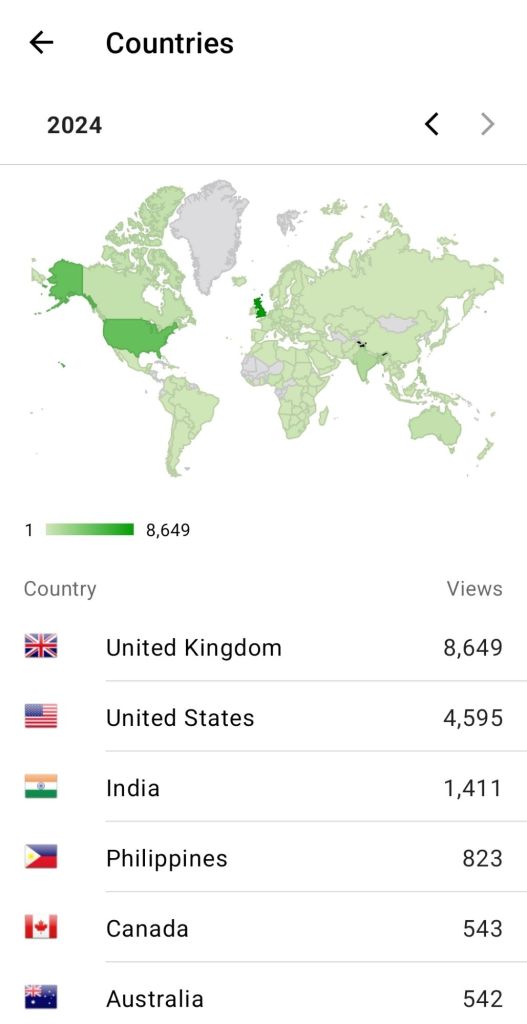
2024 delivered more reads than I could have dreamt possible, finishing the year with over 21,000 reads from over 120 countries. I can’t believe that something I thought would be seen by a handful of people is now read by so many. I want to build on that momentum. I know professional blog writers get those numbers in a month, but I’m returning here to my pledge to not bench marking against others and just to focus on measuring myself against myself to capture growth. So here is to improving year on year and to doing more of what brings us joy!

I just want more

I know it sounds greedy, but I’m not embarrassed to say it, I want more. I want to sleep, and drink tea. I want cocktails and time spent with friends. I want more cozy rainy afternoons under a blanket and getting back to reading real books, rather than only having the focus to listen to audio books. I want Sunday afternoon walks with Mr Girlymicro, talking about nothing and feeding the ducks. I want to laugh so much my chest hurts and smile so much my face aches. I want to make time for the parts of myself that aren’t linked to work and outputs and re-train my brain to not measure myself against the ‘busyness scale’. I am not the sum of what I produce and I must learn not to measure myself as such. I am so much more, and in 2025, I am OK for it to be the year of greedily wanting more and giving myself permission to need.

I need to catastrophise less

At times of high stress, and let’s be honest I feel like it’s been high stress since 2020, my brain manages that stress by running scenarios. In many ways, it is not a bad way of managing my existence. Good, bad, disaster outcomes, all run wild in my brain. The main challenge over the last few years is that that scenario running has tended more and more to the disaster scenarios taking up my bandwidth. This can make the world feel darker and more challenging than it probably is, especially if it is compared with a more objective mindset. In 2025, it’s time to put on my positive pants and try to utilise the tools I have in a more balanced way in order to not create stress and drama where no such situation exists.

I need to step off the carousel

Catastrophising means that, by it’s very nature, I’m not living in the positive space I’d like to habit. Worse than that though, it can lead to spiralling, leading to negative rabbit holes that aren’t even linked to the original trigger. I’ve posted before on what this can look like for me. This isn’t good in the moment, but it also tends to result in a lack of sleep, as this is a frequent 3am affair, and thus impact on my general well-being. Everything becomes a self-fulfilling prophecy, as the tireder I get, the less perspective I have, the more likely I am to spiral, and therefore, get less sleep. In 2025, I want to step off both the carousel that leaves me so tired that the spirals happen in the first place, and also to step off the spirals earlier when they hit. For me, it’s focusing on using what serves me rather than being a passenger in the moment.

I need to take better physical care of myself

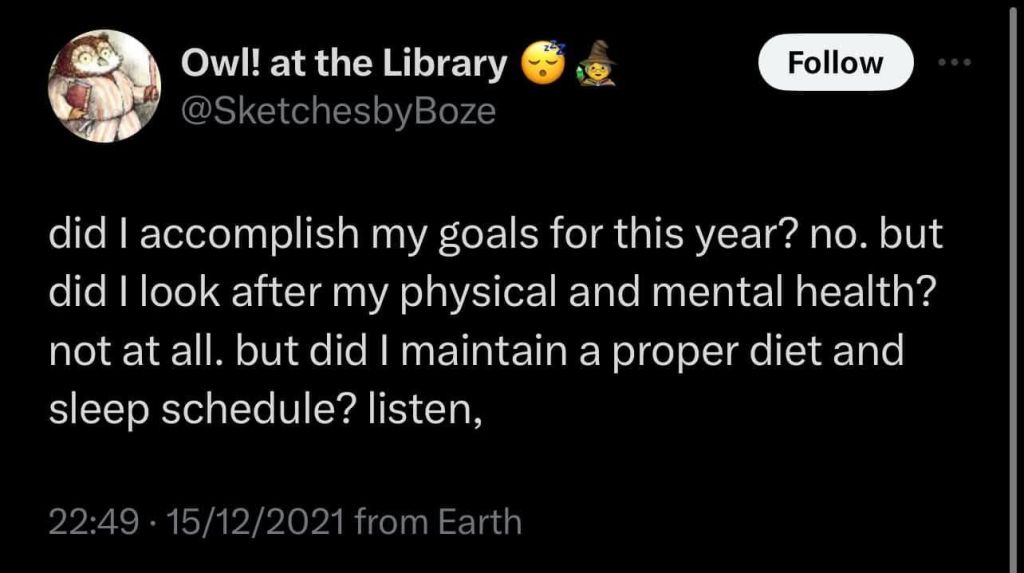
All of this brings me onto the fact that I just need to take better care of myself physically, as well as mentally. So much of my underlying health has suffered since the pandemic, and I have not allowed myself the recovery time that is required to really fix that. In 2025, I need more of option three in the pic below and way less of 4. I need to be more than intellectually active. I also need to find time to eat and drink in my work day. I often fail to help myself by forgetting or getting too busy to do the simple things, like taking meds. The reality is, I don’t have anyone to blame but myself, and I need to look after myself in the way that I would expect of others. It’s a simple thing, and I need to stop making life so complicated that it doesn’t happen.

I need to not make New Years Resolutions

Finally, and this is a big one for me. None of these things are New Years Resolutions. At best, I am saying that these are aspirations. I refuse to make a list that just adds yet more pressure to my every day life. I am a work in progress, and it is more than naive of me to think that I will wake up in a New Year and change who I am. I feel my habits make me more like the Titanic than a super yacht, and so any change in direction to avoid the icebergs takes time. 2025 is about self-love based on acceptance post self reflection and understanding that changing the dial is a choice that will need to be made daily. Starting the year by ignoring the noise of everyone elses’ proclamations and purely staying in my lane, whilst focused on what serves me, I think is a great way to kick off the year. I know some people find the resolution bit helpful, but I, for one, feel like celebrating the freedom I give myself by deciding not to comply with this particular tradition. Which ever way you decide works for you, I hope that 2025 brings you all of the joy and that you get what you need out of the next 12 months, and find the time to celebrate all that makes you you!

All opinions in this blog are my own
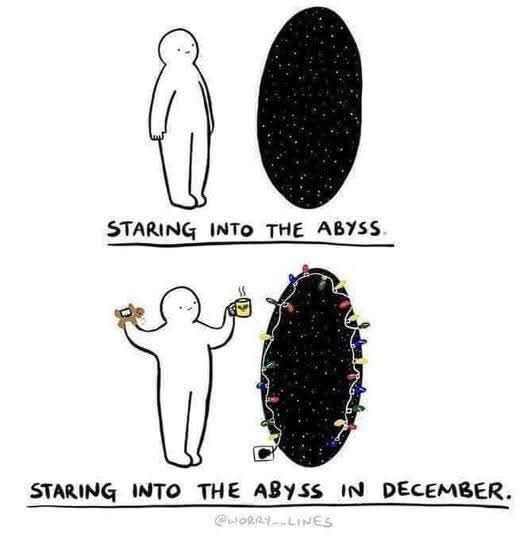
A Thank You to All the Cheerleaders: At the end of a tough 2024 my gratitude for all the support

2024 was always going to be tough. Wonderful colleagues were facing challenges on all fronts. Close family members were going through significant change. Things that were going to impact not just my ability to balance life and work but also how that life was lived were very obviously coming down the line. I don’t know about you, but as a planner, I sometimes find the anticipation of the bad ‘stuff’ almost worse than its arrival, and 2024 kicked off with plenty of anticipation.

Now the end of 2024 is so close I can almost taste it, and much of the ‘stuff’ has both come and gone, I find myself still standing and grateful for all of you that have supported in enabling this to be the reality.

As a result of this year, I have spent a lot of time thinking about what keeps me going, what I need, and what I’m grateful for. None of the answers to these questions were linked to productivity or achievement. The answers, as it turned out, were all linked to people and relationships. These people, connections, and relationships were the answer to all my questions and remain the foundation of my everything. So, for my last post in 2024, I wanted to put something in writing that says thank you and talks about all the reasons why you are my team and my cheerleaders. You guys are the best!

I don’t need to see you to know that you are there

When times are hard, or adversity strikes, it is easy to end up feeling isolated and alone. It can be tempting to disconnect and enter protective mode, where you share less of who you are in order to limit your exposure. One of the things this year has shown me is how fortunate I am to never really feel that way. I know that whatever the world throws at me I am not alone. I am so lucky to have Mr and Mummy Girlymicro in my life, but it’s not just them. I posted this time last year about the amazing close friendships I have with some of my girls. These people, who I may not have even managed to see in person this year, are still there supporting me, even if I haven’t had a lot of time to connect. I still know that they are there and are backing me. I know if I reached out and I needed them, they would be there in a heartbeat. I’m aware of the privilege of this, and I am thankful for it every day.

We don’t need to always agree

One of the greatest signs of trust in any relationship is feeling safe enough to disagree, whether it be in work, romantic, family or friend based relationships. In travelling uncharted territory, there is no rule book and often no guide for how to make decisions or choices. This uncertainty can therefore inevitably lead to differences of opinion about what is the right approach in any given moment. Being able to disagree and yet still feel supported whilst working through the disagreement, in an attempt to reach consensus or just accept difference, is a real blessing. Even more so if it can happen without triggering preexisting insecurities or feeling exposed to judgement. I am trying to make conscious decisions to value moments where I learn more about myself and others by going through these disagreements, whilst also knowing how fortunate I am to have people in my life who are a safe space for these moments to occur with.

You forgive me for making mistakes

The process of learning and growing is not an easy one, and sometimes we have to face difficulty truths about ourselves and our flaws. I am flawed. I make mistakes, like ALL the time. I’d like to think that I grow each time and try not to make the same mistake twice, but even that is not 100%. One of the benefits of learning from disagreements is that it helps to garner enough understanding from any negative outcome that results to help make better choices in the future. I am grateful to my wonderful colleagues, friends, family and readers of this blog, for not only forgiving me for making those mistakes but also supporting me in sharing my journey in learning from them, not only face to face but also in this blog. My hope is always, that by being open, I support others in making more informed choices as we are all learning together.

You lift me when I am low

This year has had some significant lows. It has has included the deaths of some significant figures in my life, such as Professor Nigel Klein, who had been a key part of my working life for almost 20 years. He was the person who supported me in my first steps in academia, who supported and supervised me during my PhD, and has continued to be a key figure in my clinical academic career ever since. Significant health challenges have been present for colleagues and family and this has hit me hard at times, even if I am not the person unwell. I’ve been feeling pretty mortal, and also powerless to help in any meaningful way. So many of you have been so kind and lifted my spirits, from sending memes or commenting on the blog, to unexpected treats from friends and family that have made me feel seen and loved. Having a safety net of people who are prepared to pick up the slack when I’ve struggled or to remind me that everything will be OK has been an invaluable asset in 2024.

You drive me to be the best version of myself

When the world is overwhelming, when everything feels too much, it can be so tempting to want to throw in the towel and just ride the wave. Having to try (and sometimes fail) to get this blog out every week and to continue to show up has been crucial to just keeping me going whatever my mood. There have been weeks when this blog hasn’t happened. There have been days when I haven’t delivered in the way that I would wish. I have certainly been too tired to step up and see people or do things on the weekends or in my free time. Knowing that there is an expectation of levels of engagement, be it from my PhD students, colleagues, readers of this blog, or family, has kept me going and kept me present. You support me in trying to be the best version of myself and to keep showing up in the best way I can in the moment. You support me in not just accepting but seeking out things that challenge me and keep me on my learning pathway. Hopefully, I then get to feed that back via this blog, and therefore the loop continues.

I know you would always straighten my crown without telling me it was crooked

We’ve all been there, we’ve sent an email or written a slide, and it’s not quite right. There are people who reply to you and give you a heads up so you can issue a no drama correction, and there are people who reply all or stand up at the end of the talk to point out your error. I count myself so fortunate to have so many people who sit in the former rather than the latter bracket in my life. This is a pretty basic example, but I’m hoping you see what I’m trying to say. I have so many people in my corner who will steer me back on course when I’m beginning to drift, or who will gently escort me from a conversation that I’m not in the right head space to have. People who know when I need saving from myself, from reminding me that having that dairy filled cake is not wise, to pointing out that I can’t physically manage to book myself into speaking at three conferences in different cities in a week. I know my well-being is at the centre of their actions, and having that safety net is of incalculable value to me.

We are in this journey together

When I made my first blog post in 2015 I didn’t even know what this blog was going to be. When I started posting regularly in 2020, I knew my why but I didn’t really know my how. Now, looking back on the last 200+ posts I feel like I’m more comfortable with some of the how. My next challenge is the where. I feel very much like I want to continue to grow and that this blog is a medium through which I can do that. I’ve learnt so much from the journey so far, but I am certain there is so much further I want to go. This year the blog broke 20,000 reads for the first time, and that makes me feel like we are in this journey together, wherever it might lead. I love seeing the interactions when I post. I love hearing your thoughts and feedback. I love feeling like this is something we are doing together and that I learn from you as much as you, hopefully, learn from my experiences. I don’t know where this road ends, but I know that I am determined to keep following it.

You understand that performance is not consistent

This post has been really hard to write for some reason. It’s taken me hours of staring at the screen, and I don’t know how well it will be received. Some posts spring to life, almost fully formed, and take no time at all to write. Some just make themselves harder work. I am pretty sure, therefore, that not all of them knock it out of the park. There are certainly ones that speak to some people more than others. Having spent some time thinking about it, I’ve decided that this is OK. As long as my intention is to communicate something, and I never post for the sake of posting, then how it lands is out of my control. The main thing is that I always try to do my best.

The same is true with posting frequency. I will always try to post weekly, but this year has shown me that sometimes I just can’t manage that. I used to obsess and spiral about it, and now I’ve decided that if I am not in the head space to write something worthwhile, I am better waiting until that resolves. I’ve been so grateful with the patience shown to me on this front in 2024 and that you have stuck with both me and this blog through all the random trains of thought and erratic posting frequencies.

You don’t judge me when I bear my soul

I try to always be honest in this blog. I try to share both the good and the bad, in a balanced but honest way. The concept of authentic leadership is important to me, and to fulfill it I think I need to show all sides of myself. I can only do this because I feel that I have built up a trust and feeling of safety in writing this blog over the years.

I remember when I first started to post things that were more personal, I used to brace myself for the comeback. I almost expected my confessions of inadequacy or failures to be weaponised against me. In all the 200+ posts that have been written, I’ve only had a single comment that could be considered to be less than supportive of my sharing, and even this was written (I believe) from a place that the author thought it would be helpful. As a result of this building of trust, I write from a space where I am comfortable sharing my lived experience without revision or overlay. I genuinely believe that this means that the sharing has much more value because of it. So, thank you for supporting me in getting to this place of confidence and comfort and always encouraging me to bring my full self to our interactions.

I hear you when you tell me this is valued

In my darker moments this year, when I was questioning a lot of the things that required focus or time, I reflected on whether writing this blog was something that was valued by anyone but me. Whether it was a good use of several hours of my time every week, when I didn’t have time for a bubble bath or other self care. Then every time I went to a conference I would have lovely conversations with people about the blog, and all of them were so positive, and inspired me so much.

Over the last year, I’ve even had people spontaneously mention it in meetings or 1:1 interactions. It’s hard to communicate how much this means. When I sit on my sofa and need to choose between pulling out the laptop to write or watching some trashy TV to unwind, it is these interactions that keep me reaching for my laptop. When I’m on the tube and I need to choose between closing my eyes and escaping into an audio book or doing some blog writing on my phone. It is the memory of these moments that keep me plugging away. Knowing that others value reading this blog, hearing stories in response to putting my experiences out there, make every minute spent worthwhile. So thank you, thank you for giving this blog meaning, thank you for showing the time invested has value, and thank you for taking time out of your lives to join me in this endeavour that means so much to me.

All opinions in this blog are my own

It’s the Most Wonderful Time of the Year: Why I love the festive season and all that comes with it

For regular readers of this blog, the fact that I adore Christmas probably comes as no surprise. It contains everything I love, time with people I care about, movies, heaps of romance, and an excuse to indulge in lots of lovely food and drink. I’m not religious. I embrace the shamelessly commercial, and I dive right in. I make Christmas puddings the week after Halloween. My Christmas tree gets delivered on the last weekend in November, and from that point on I’m full blown carols and Christmas cheer for as long as I can get away with. So, in this, my last post before Christmas, I wanted to share all of the reasons why I love it and explain, even as someone who won’t be at church on Christmas Eve, all of the benefits I think the season can provide!

Time for reflection

Number one on my list (that’s definitely not hierarchical) is the fact that this time of year encourages me to spend some time on active reflection. I spend so much of my working life in responsive mode and fire fighting, that it can feel like I achieve nothing and go no where. When looking at what I need to close off before the end of 2024, I am also trying to take some time to actively reflect. What did I actually achieve? What went well? What have I learnt, especially from the things that didn’t go so well? What do I want to take with me in terms of life lessons and priorities into 2025? Almost more important, what do I need to let go off? What baggage am I leaving in 2024 in order to leave me with room for grow moving forward? This is the time when I review what’s happened, take both the learning and the good, and leave the rest in the frozen tundra so it doesn’t start to define me or weigh me down.

Time to review progress

As the nights draw in, I, like most of us, desperately try to close off some of my outstanding work list. I am, therefore, almost forced to give some of my focus into what that list will look like going into the next year. The thing that I’ve tried to do is to review whether things that are going to roll into 2025 are a) still needed or b) still serve me in my direction of travel. There are always going to be jobs that are still needed and not optional (so many apologies for not getting these done in 2024), but there are other goals, such as writing an environmental IPC textbook, were worthy of review to see if they were still something I wanted. If you are wondering the answer is yes to both the textbook and the book of this blog, both of which fell by the wayside due to limitations in capacity in 2024. I refer to this period of activity as my Christmas mental cleansing, and I find it both a helpful and comforting process that can be undertaken under a blanket with a warm cup of tea. This is also the time where I make an active choice to celebrate my successes and forgive myself for everything else.

Time for joy

Another of my favourite things at this time of year is to give myself permission to make time for joy. It’s probably no surprise to anyone that my life is pretty work heavy and there isn’t a lot of space for downtime. At this time of year I have a list of things that bring me joy that I actively schedule in and am determined to find time for. Christmas movies make up a lot of this. Watching a Muppet Christmas Carol, either on Christmas Eve or when decorating the tree. Sobbing to Love Actually and Serendipity as I take a moment to remember happy times with my sister. Indulging in the delights of spending time with my husband whilst watching Die Hard, which is a Christmas movie, on Christmas Eve. Carols whilst cooking and sitting together to highlight the Christmas Radio Times. There is never enough time to do all that I would wish, but these stolen moments make my soul feel lighter and instil every day with an extra level of joy that means I value every single single hour in the run up to the main event.

Time to indulge

OK OK, I acknowledge we all need to be healthier. I’m aware that I do not ‘need’ another cocktail, piece of chocolate, or an extra roast potato, but I am a lover of all things food and sparkling, so what’s a girl to do. Don’t get me wrong, I don’t just indulge in edibles, I also indulge in Christmas experiences, like theatre shows and more shopping than is probably good for my bank balance. I usually don’t like crowds or areas with lots of people, Christmas is the exception. I love the buzz, the feel of the atmosphere and lights whilst carols play in the background. For me, even the provision of time to shop that isn’t time restricted and just has plenty of browsing time without any time pressure built in is an indulgence. It’s a time where I allow myself to prioritise enjoyment and experiences, not just tasks. For me it’s about, for a short while, experiencing the joy of living in the moment and what it feels like to live a life without a deadline.

Time for family

It shouldn’t count as an indulgence, but sadly sometimes I am aware that I can be so focused on work and task that I forget to make room for the most important thing in my world, my family. I’m aware that I am really fortunate to have such a great relationship with my family, but I also include here the family we have by choice, not just by blood. In general my family put up with a lot; lateness, lack of focus, even the odd missed event. At this time of the year, despite the fact that it should be all year, I really do try to ensure that my priorities are in order and that they come first. It’s one of the reasons that the indulgence part is important to me, as it also involves making room and time for those indulgences and experiences to be shared. To build new memories together and to celebrate both each other and each others company. I’ve lost too many people I love in recent years to not realise what a precious gift this is and would encourage us all to take the time to slow down and smell the poinsettia.

Time to remember

My sister and I felt the same way about Christmas. It was always important to us, as well as to mummy and Mr Girlymicro. So much so that when life at Christmas meant that we had too much on and couldn’t celebrate ‘Goosemas’ together we have been known to celebrate Christmas in September, or actually at many other times of year, when we could still get together and cook a goose in each others company. You see, fundamentally, it isn’t about the date for us, it’s about the company and the time spent together. Now she’s gone we keep my sisters memory alive by watching the movies we always used to watch together, like Serendipity. This one was so much a feature of our Christmas celebrations that when Mr Girlymicro and I got married, our wedding present from my sister was to spend 3 nights at the Waldorf Astoria in New York, purely so we could re-create the lift scene from the start of the film, and visit Serendipity 3. Unlike the couple in the movie, Mr Girlymicro and I both picked the same floor (our wedding date) and manage to move direct to our happy ever after. I cry buckets every time I watch these films, but making space to remember the loved ones we’ve lost along the way, and to remember the joy they brought, is an important part of my Christmas experience.

Time to take a break

One of the reasons that any of this is possible is because this is the time of year where I always prioritise taking a break. It feels easier to do as many people are doing the same, so the addition to the email mountain is never quite as much as when you are the only one fleeing with an out of office on. It is also important for me as I know that I am going to find the months from January to March really hard. I work in a windowless converted toilet cubicle as my office, I love it, but it means that in the darker months I barely see sunlight, and after a while it gets to influence my mood. Having this little bump of joy is the foundation I use to get me through till when the flowers start to bloom and my heart starts to lift again. It’s like I’m creating a festive battery to serve until that time.

Time to reconnect

The very act of having a period of days off, when other people are often more available, means that there is an opportunity to really reconnect with people. I have very patient friends and family. I am lucky to have people in my life who I may not see for months, or even years, and yet once we hear from each other it’s like no time has passed. These people are both precious and rare in life, and so I try to ensure that this is the time that I at least reach out, even if I can’t meet up as time is short and we are geographically far away. Time is the resource that I have least of, so using it at Christmas is actually the most valuable gift I can give.

Time to feel re-inspired

A side consequence of taking a break and doing some processing is that I genuinely always come out of this time so re-invigorated and inspired. I feel like I have permission to have conversations with others about what I still want to achieve, and these very conversations give my brain all kinds of ideas. It’s so nice to have time to bounce ideas around, and feel like you are truly having time to have dialogue, rather than the sometimes perfunctory task based thinking that is all there is normally time for. The excitement that comes from these conversations really does fuel me and these things can’t happen without space and connection, and so inspiration really is a gift I give myself at this time of year.

Time to show gratitude

It’s so easy to take people for granted. I do it all the time, even though I really don’t want to. Life is run at pace, and in that rush it is easy to believe we acknowledge and thank others more than we really do, and more than they may have time to hear. My life functions because of Mr Girlymicro. He makes untold sacrifices so that I have time to sit here on the sofa writing, rather than partaking in my share of chores. Mummy Girlymicro does not get the devoted daughter she deserves, as I’m always focusing on too many things at once. This is before you bring me onto colleagues, that cover so I can undertake teaching and research, or my other friends and family, who put up with cancellations either due to work or exhaustion. I owe so many thanks to so many people. They really do make my life a blessed existence. This time of year I hope that I shout my thank you’ s loud enough to be heard and recognised, and that I put down the laptop down for long enough that, for once, I am the one taking care of others, rather than the other way around. I also want to say thank you for reading this blog. It’s come to mean so much to me, and I know that everyone has so many other options about what to do with their time. So thank you. Thank you for reading. Thank you for commenting. Thank you for liking. Thank you for coming on this journey with me.

Time to look to the future

All of which brings me to my final point. The things this season provides enables me to lift myself up and look to the future. It enables me to do so free of the baggage that has built up in the previous 12 months. It lets me do so with a focus born of reflection as to what I want and what needs to be done. It grounds me in connection and means that I remember the core values that drive me. It supports me in entering 2025 in an inspired mindset, which acts as a spring board for everything else. So I will enter my future with optimism, a clear sense of direction and the certainty that I will not be travelling alone as I move forward.

Who doesn’t love a Christmas game!

Now, if as Mr Girlymicro has stated, that was a little motivational speaker, lets bring it back to the real spirit of Christmas, festive games!!! I, being a gamer, love a festive game and so here is a fun one to kick off your day.

All opinions in this blog are my own
I know that not everyone loves this time of year or finds it easy. Please don’t feel alone and reach out for any support you need to make it through the season.