Halloween 2025: Let’s talk all things vampirism and infection

I am not a big Halloween girly, to be honest I can take it or leave it because I’m mostly excited about the build up to Christmas. That said, what I do love are movies and TV, and despite never being someone who can tolerate a lot of slasher or gore based horror movies, I love a good vampire movie.

A lot of this may be because I enjoy the world building and lore that seems to be more integral to vampire movies and series. This is because, although they share some of the same rules, depending on how the world is built they always need to explain which of the nuance comes into play in that particular setting. It felt fun this Halloween therefore, to write a blog post that talks about some of those tropes when vampirism is linked to infection, and how those rules compare to the real world.

Common vampire tropes to be aware of and to bear in mind as you read on:

  • Experiencing pain or physical damage in relation to sunlight
  • Needing to consume blood as a protein source
  • Inability to eat or digest food other than blood
  • Avoidance of animals
  • Ability to influence humans to undertake acts that may be against their will
  • Violent reactions to garlic
  • Inability to see themselves in mirrors or via cameras
  • Death only by beheading
  • Death by wooden stakes
  • Damage linked to holy water
  • Aversion to signs of faith
  • Aversion to alcohol or drug use

Not all of these are present in every piece of world building, hence why I find the variety of vampire mythos so interesting. The choice of which ones go together combined with different origin stories and creation processes enable a pretty large tapestry to be created from some similar thematic components.

Mystical, infections or something else?

The place to start I guess is by discussing whether all vampire world building includes infectious transmission? And the answer is a definitive no. Sometimes the way that the creation of new vampires works isn’t discussed. Sometimes the rules about the underlying process is unclear. That said, the fear of becoming something new is a frequently used trope for dramatic purposes and so the process by which a human is turned into or by which vampires exist is discussed pretty frequently as part of world building, and from what I can see there are three main routes:

  • Mystical – some form of occult/magic/cause not routed in science
  • Genetic – vampires are born and exist as a stand alone species
  • Infection – transmission via blood or other infectious transfer, even if the agent is unclear or unspecified

Now, I’m not going to cover the mystical/magically as that’s not anything based in science and the science is what I’m here for. The other two, however, are often based (sometimes loosely) in science as they are often inspired by things that actually exist and so I’m going to talk about both of those in a bit more details.

Genetic

I’m going to kick off by talking all things genetics. There are an increasingly large number of vampire movies and TV series where the vampires that featured were born vampires. This includes movies like Abigail, Perfect Creatures, the finale of the Twilight series, but also TV series such as A Discovery of Witches, First Kill and Vampire Academy. Sometimes within these there are vampires that are made through other means (discussed below) in the same world. Often these genetic vampires exist as a separate species to their Homo sapien neighbours either openly or in hiding.

There is often much discussion about where the vampire myth comes from, and in many way these stories of genetic vampires who are birthed through a similar route to standard human deliveries, links in most with what is considered to be a real world inspiration for many vampire myths. The origin is thought to be linked to a rare inherited condition known as Porphyria, the presentation for which may account for for some of the common components of vampire portrayals.

Porphyria is a rare, inherited blood disorder that occurs when the body can’t convert porphyrins into haeme, a vital component of haemoglobin. The resulting symptoms vary depending on the type of porphyria. Acute porphyria presentations include symptoms such as gastro intestinal pain and symptoms like nausea and vomiting – symptoms that are often portrayed linked to vampires attempting to eat normal food. Whilst cutaneous porphyria symptoms include pain, burning and swelling in response to sunlight, skin fragility and a tendency towards skin blistering – all of which are frequently included as vampire responses to exposure to sunlight.

Porphyria
D. Montgomery Bissell, M.D., Karl E. Anderson, M.D., and Herbert L. Bonkovsky,
N Engl J Med 2017;377:862-872
VOL. 377 NO. 9

Interestingly, in some of the genetic origin vampire stories, the impact of some of the limitations of the lifestyle limitation of traditional vampires are not so extreme. In some of these cases they can be seen in daylight, although not for long and don’t enjoy it, and they may be able to tolerate some, if not all, of human food. They are possibly therefore most aligned to their real world inspirations. I could write pages and pages on this, but infection is where my heart lies so I’m going to crack on.

Virus, parasitic, others?

Now we’ve covered off those born vampires, let’s move onto the most common version of vampirism outside of the traditional Dracula more mystical inspiration, that is vampires who are created linked to transfer of infection by blood or other means.

There are three main ways that this commonly comes into play:

  • Viral causes
  • Parasitic routes
  • Bacteria intoxication

I’m still trying to find a vampire movie where the main infectious agent is fungal, but it seems that most of the movies based on fungi are linked to zombie outbreaks. That makes a lot of sense, due to the fact that fungi are eukaryotes (like us) rather than prokaryotes (like bacteria), and so fungi tend to be linked to changing behaviour linked to interfering with the human nervous system. If you’ve seen a vampire version though please do let me know as I’m collating a list of where different organisms might come into play.

By far the most common route depicted is where the causative agent is a virus. Viruses are featured in movies such as Blade and Daybreakers and TV series such as Ultraviolet. This is because viral transmission in general is associated with transfer of bodily fluids, be that faecal-oral, respiratory via saliva, bodily fluids such as breast milk, or in the case of vampire movies via blood.

The most uncommon causative agent I’ve discovered is the parasitic cause of vampirism as shown in The Strain TV series. During the series transmission of the virus to create a full vampire is via something known as ‘The White’ that contains parasitic worms. These then lead to anatomical changes, including the growth of a proboscis that enables the biting and transmission of the parasite to others.

Bacterial coverage is mostly linked to potential methods of intoxication that supports the control over humans by vampires. Rather than being a direct cause of the vampirism, this seems to be about how transfer of the bacteria releases, or causes anatomical change, which then changes behaviour via things like hormonal or neurological changes. I’ve talked before about why bacteria may feature less in horror movies than other causes, but this can mostly be summed up by the fact that audiences tend to know more about bacteria and therefore it is less tempting for writers, but also horror tends to sit better in ‘the possible but not too close to us’.

Transmission

Obviously it’s not just the infectious agent that is important, but the mode of transmission for that agent. This being all about vampires the biggest mode of transmission is by bite, but it’s not always so straight forward. In mystical vampire movies, there’s usually a whole lot of removing of the original human blood and then transfer of the vampire blood, leading to a mystical baptism and rebirth. Infectious causes are much more one way, any bite could lead to someone turning into a vampire and the most important thing is load related. If someone is in contact for longer, if more blood is drunk and therefore more saliva and fluids exchanged, then the chances of conversion are much higher.

It’s not just blood as a bodily fluid that features in conversion during vampire movies. There are also films, such as Requiem for a Vampire and Trouble Every Day, where vampirism is treated more like a sexually transmitted disease, rather than transfer occurring during feeding on the blood of their victims. It seems that these films have increased since the 1980s, maybe as a result of fear processing linked to the HIV/AIDS pandemic during that time period or maybe because our knowledge about and ability to detect infections has increased and therefore there are a larger part of the collective public awareness. It will be interesting to see how the SAR CoV2 pandemic will impact this further.

The most unusual transmission, and one that aligns most highly with blood borne transmission is the presence of congenital transmission as featured in Blade. Where the main character Blade becomes a vampire hybrid by acquiring the vampire virus at birth, due to his mother being bitten and placental crossing of the virus into his blood stream. As a result, he exhibits some of the characteristics of a vampire due to the virus, but the effects are attenuated linked to his exposure route. It can often be that congenital infection presents differently to primary infection via other causes, and it appears vampirism is no different.

The other variable is linked to the time to turning once the infection has been introduced. I would speculate that this too is load related, as well as the infectious agent behind the symptoms. Viruses, for instance, are likely to reproduce and induce change at a much higher rate than anything linked to bacteria or parasites. This is partly due to their reproductive rate, but also linked to the level of dose that tends to be available. The exception to viruses resulting in the fastest change is likely to be bacterial intoxication and influencing. As the toxin acts immediately, when this is present in media and TV the change is almost instantaneous, but also time limited and therefore requires top up or re-application. Not all impacts are until beheading, some require a more time boundaried set of interventions.

Interventions

Once your characters are aware that vampires exist within their mist, then they will want to look for actions in order to protect themselves. One of the classic ones as featured in many movies, including the classic Lost Boys, is garlic.

In some ways the impact of garlic makes even more sense if you think of vampirism through an infectious transmission route, as garlic has been considered to have anti-infective properties for a long time, although warning you may have to ingest a LOT of it!

Another common feature in vampire movies is the roles that animals play as protectors. For instance, in 30 Days of Night, the vampires kill all of the dogs before they launch their main attack. This kind of thing also often happens in films and TV where vampires are hiding in plain sight. It could be that they are taking out animals as they don’t want to be found, and animals are easier than humans, but I have another proposition. There are a number of infections where animals can be used to sniff out and identify infected individuals. Therefore, if animals could detect vampires they are much more likely to be a risk and warrant removal. Animals could therefore act as a front line of diagnostic defence to enable you to tell friend from foe.
Volume 26, Issue 4, April 2020, Pages 431-435

Having determine that a common weakness of vampires is their damage response to ultraviolet light (UV), films such as Underworld weaponise light against the vampire protagonists. Light, and especially UV-C (200 – 280nm), has been known to impact viruses and bacteria for well over 100 years. When light is in this frequency is can damage both RNA and DNA, resulting in cell death, and it is possible that if the infectious agent is the only thing that is keeping your body moving the damage would be more pronounced. We’ve also discussed how the lack of some biochemical pathways can lead to UV-C causing much larger amounts of pain an damage.

Normally, penetration of the light to cause damage might be an issue, but if you are using bullets or other means this may not impact. The most important thing I have to say here is, that despite what is shown in Blade 2, light does not bend around corners. This is also important for when you are considering using UV-C in hospitals to support cleaning, it doesn’t have good penetration and doesn’t go around corners of work in shadows. Using UV-C may work against your vampires but you are going to need to think carefully about where you use it so it does what you think it can.
Vampire movies have amazing world building and are often my favourite genera in terms of their string internal logic. I love the fact that so many types of infection and route of transmission that reflect real world cases are present as part of these pieces of entertainment. They can actually teach us a lot, even when we don’t realise it, and so much of it has origins in real world knowledge, even if only loosely. So, this Halloween evening find one you haven’t seen before and let me know which intervention you would use to stop your town being turned into creatures of the night!

Before I go, I thought I would share a few of the previous years Halloween blog posts in case you are looking for some more spooky season and infection reading:

Let me know your favourite vampire movies and if there are any other infection related Halloween topics I should cover.

All opinions in this blog are my own

Candidozyma auris the New Kid on the Fungal Block: What is it and why should we care?

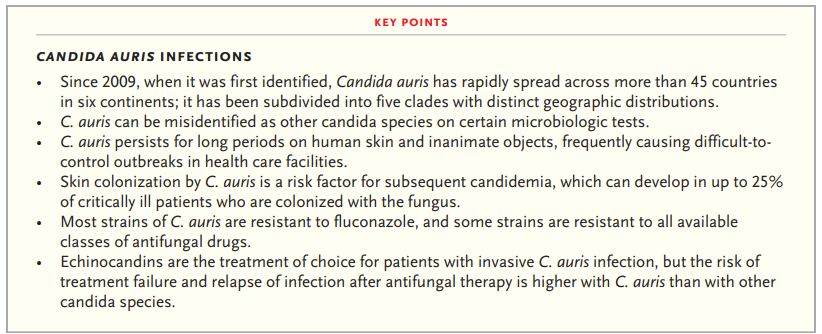
Following on from the wonderful fungal post on fungal toxins (mycotoxins) last week from Dr Sam Watkin, I wanted to follow up with a post on the latest fungi of interest from a clinical perspective, Candidozyma auris. This fungi is getting more and more coverage, as well as becoming more important in healthcare, so I thought I would take a moment to talk about what it is, what it does, how to find it, and what to do when you do.

In a pre-pandemic world, which feels like a long time ago, Professor Lena Ciric was working at a media fellowship, and as part of that work wrote an article for the BBC on Candida auris, which has subsequently been renamed to Candidozyma auris.

This article came out in 2019, so maybe C. auris is not so new but in terms of the numbers of cases we are seeing within the NHS, and the changing prevalence out in healthcare systems more widely, it is definitely more of a feature and a concern than it was back then. Reflecting this change the UKHSA guidance Candidozyma auris (formerly Candida auris): guidance for acute healthcare settings which was originally published in 2016, has been updated recently (19th March 2025). It feels timely therefore to put something out  in order to raise awareness of this organism and the unique challenges it presents.

NB I can neither spell nor pronounce Candidozyma auris and so we’re sticking to C. auris from this point out.

What is it?

Yeast are a type of fungus, and Candida species are often associated with colonisation (present without causing infection or symptoms) on skin, in the mouth or within the vagina. If they grow up to high levels they can cause an infection called candidiasis, which often causes symptoms like itching or discharge. Common infections include Thrush and nappy rash. Candida albicans is one of the most common yeast infections seen within the healthcare setting, and in this kind of environment more serious infections can be seen, especially those linked to the blood stream, and occasionally serious organ infections.

C. auris was originally believed to be a relatively new species of genus Candida, as it often behaves in a similar way to the other Candida species. The reason for the name change to Candidozyma auris, was because, although in many ways it behaves similarly to its Candida cousins, it does have some differences in the way it behaves. These include features such as intrinsic antifungal resistance and growth conditions, that make it useful to characterise in a way that acknowledges it as a novel genus in its own right.

What is the difference between C. auris and the other Candida species that you know?

Many Candida species can cause severe infections within specific settings, however C. auris has been known to not only cause a wide variety of infections (bloodstream, intra-abdominal, bone and cerebrospinal fluid (CSF) infections), but ones which lead to significant mortality rates, with an estimated rate of 30 – 72% in severe infection reported in the literature.

Infections can occur in any patient group, although UK outbreaks have been most frequent associated with adult settings. Augmented care settings (such as intensive care and transplant settings) are at highest risk due to the vulnerable, long stay nature of many of their patients. Management of any infection occurring is complicated by the fact that C. auris has developed resistance to many available classes of antifungals, with emergence of pan-resistant strains, which add to the mortality risk.

C. auris also appears able to both easily transmit and colonise the skin of patients, with most patients being colonised before they go on to develop any subsequent infection. These colonised patients can then contaminate their healthcare environments, and unlike other yeast species, C. auris is able to survive and represent a continued risk within the environment for prolonged periods, all of which contributes to outbreak risk.

Geographic distribution

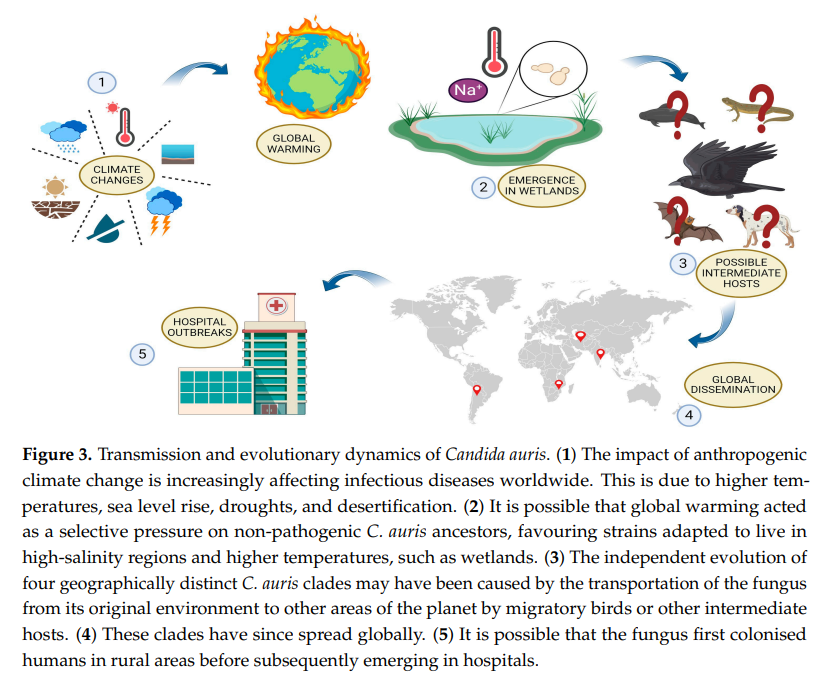
It was first identified in the ear canal of a patient in Japan in 2009, but has since been found globally, and is now separated into six genetically distinct clades:

  • Clade I = the South Asian clade, first detected in India and Pakistan
  • Clade II = the East Asian clade, first detected in Japan
  • Clade III = the South African clade, first detected in South Africa
  • Clade IV = the South American clade, first detected in Venezuela
  • Clade V = Iran (recent)
  • Clade VI = Singapore (recent)

Within the UK from January 2013 – December 2024, 637 C. auris isolates were reported through laboratory surveillance in England, with 59 (9.3%) isolated from blood culture specimens. It should be noted that not all labs report, and for some time many labs could not accurately identify C. auris, or actively screened for it, and so this may represent under reporting. A routine whole genome sequencing service is not currently available for typing, although it can be undertaken linked to specific outbreaks. Hopefully this will be up and running soon to better understand how the different clades discussed above are represented in the UK, and whether any of them are linked to more challenging outcomes than others.

Where do we find it?

Due to its global distribution, overseas patients may also be at increased risk of introducing C. auris into UK healthcare settings, with one centre reported 1.6% of their overseas admission detected as colonised, with patients coming from the Middle East, India and Pakistan, showing higher levels of recovery.

UKHSA guidance suggests we should screen any patient who has had an overnight stay in a healthcare facility outside of the UK in the previous year, as well as patients patients coming from affected units in the UK. This sounds relatively straight forward, but it can be challenging to identify patients who have had an overnight stay overseas on admission if they are not being admitted from overseas. It also relies on clear communication from other centres that they have an issue, if we are to screen patients from impacted units. Many centres have therefore decided to screen all patients on high-risk wards, such as intensive care, to address some of this unknown risk.

Risk factors for developing C. auris colonisation or infection should be considered when deciding on screening strategies and the list within the UKHSA guidance includes patients who have experience:

  • healthcare abroad, including repatriations or international patient transfers to UK hospitals for medical care, especially from countries with ongoing transmissions
  • recent surgery, including vascular surgery within 30 days
  • prolonged stay in critical care
  • severe underlying disease with immunosuppression, such as HIV and bone marrow transplantation
  • corticosteroid therapy
  • neutropenia
  • malignancy
  • chronic kidney disease or diabetes mellitus
  • mechanical ventilation
  • presence of a central-venous catheter or urinary catheter
  • extra-ventricular CSF drainage device
  • prolonged exposure to broad-spectrum antibiotic or antifungal use
  • underlying respiratory illness

How do we find it?

Screening is undertaken by taking swabs from the axilla (armpit), groin and nose, although different patient groups may require additional screening. Patient surveillance is important for two reasons:

  • 1) to understand which patients are colonised in order to introduce additional precautions to limit risk of transmission to other patients or the environment
  • 2) to support improved patient management but allowing patients to be put on the most effective antifungal if they go on to develop any signs of yeast infection, in order to improve outcomes

If a patient is detected as positive, other screening sites can help manage individual patients and so UKHSA say additional site screening should be considered:

  • urine (especially if there is a urinary catheter in-situ, including intermittent self-catheterisation)
  • throat swab
  • perineal swab
  • rectal swab (in paediatrics we would consider a stool sample instead)
  • low vaginal swab
  • sputum or endotracheal secretions
  • drain fluid (abdominal, pelvic or mediastinal)
  • vascular access sites
  • wounds or broken skin
  • ear
  • umbilical area (neonates)

Swabs should ideally be processed on chromogenic media (colour changing agar plates) and fungal colonies confirmed using MALDI ToF or a validated PCR (my previous post on PCR may help with this). It can also be helpful to incubate plates at 40oC, as C. auris can grow as much higher temperatures than its Candida cousins, which can help with identification. If grown then the yeast should be stored in case you need them for future typing to help in understanding transmissions or outbreaks.

Why should we care about it?

Due to the high mortality rates for patients who develop infections, and the issues with choosing antifungals that work, it is really important that we know when we have patients who are colonised with C. auris. Controlling spread, even if patients don’t become infected, is incredibly important for the individual. This is because if a patient is detected as positive they won’t be de-alerted (have IPC precautions stopped) at any point and so it will impact them for months, if not years. These IPC precautions include isolation (keeping separate from other patients), and sometimes only being nursed by specific members of staff. These patient and staff impacts are so significant they’ve even been acknowledged in popular media, with a three episode arch covering C. auris in The Resident on Netflix (season three, episodes 18, 19 and 20).

Are there differences in how you might treat?

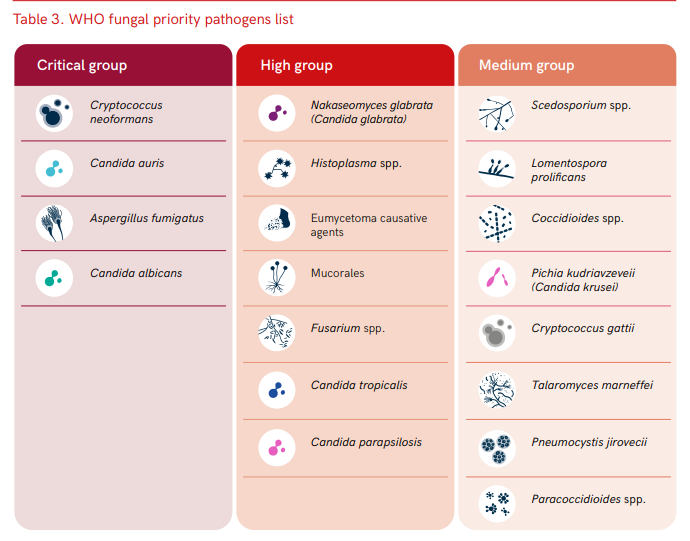
As I’ve already said, C. auris is pretty resistant to treatment compared to its Candida cousins. UK data indicates that isolates are resistant (don’t respond to) to the normal first line treatment of fluconazole, and often to other antifungals within the azole class. Some isolates have been resistant to other commonly used antifungals, such as amphotericin B (20%) and echinocandins (10%). Resistance to other antifungals can also occur whilst infections are being treated, and so it is important to monitor sensitivities (whether the drug works) and send to reference labs in order to understand the most appropriate therapy. Its resistance profile is one of the reasons the WHO have highlighted C. auris as a priority fungal pathogen for further research and to highlight clinical risk.

Its not just antifungals that are important however, antimicrobial stewardship is important in general, as prolonged exposure to broad-spectrum antibiotics and antifungal agents are risk factors for both C. auris colonisation and infection (again this links back to the high risk patient groups impacted). Therefore, doing a better job of monitoring and controlling antimicrobials in general is likely to have a beneficial impact on C. auris risk.

Challenges with environmental control

One of the many things I love about the new C. auris guidance is its focus on multidisciplinary input ‘Healthcare workers are encouraged to work in multi-disciplinary teams, including Clinical Infection Specialists and IPC teams, to risk assess and support the management of patients infected or colonised with C. auris‘. I think this is so important, especially with an organism that is so challenging and can present such a high risk.

Environmental control is a particular issue for C. auris as we know it’s ability to survive and can grow at higher temperatures than many other fungi, means that it is likely to survive well in the environment. It also has the ability to form environmental biofilms, which can mean it is difficult to impact effectively using standard cleaning techniques, and once within the environment has been been detected for 4 weeks.

Within the UKHSA documentation, environmental contamination for C. auris has been found on the following surfaces during outbreaks:

  • beds, bedside equipment, bedding materials including mattresses, bed sheets and pillows
  • ventilation grilles and air conditioning units
  • radiators
  • windowsills and other horizontal surfaces
  • hand wash basins, sink drains and taps
  • floors
  • bathrooms doors and walls
  • disposable and reusable equipment such as ventilators, skin-surface temperature probes, blood pressure cuffs, electrocardiogram leads, stethoscopes, pulse oximeters and cloth lanyards

Basically most of your healthcare environment, whether fixed or movable features. In order to help stop the transfer from patients to the environment, via staff, the use of personal protective equipment is really important. Therefore the use of gowns and gloves is suggested. Single use and disposable equipment should also be used whenever possible, and patients should be kept in single, ensuite rooms, to minimise the risk of C. auris escaping from within the bed space to adjacent clinical environments. Any items within the space should either be cleanable with a disinfectant, or disposed of after a patient leaves. One thousand ppm of available chlorine should be used for cleaning, but needs to be used in concert with an appropriate contact time if it is to be effective.

WHO fungal priority pathogens list to guide research, development and public health action 2022

Outbreaks

Most detections of C. auris cases detected are colonisation rather than infection (though colonisations can lead to subsequent infections). Within the UK there have been 5 significant outbreak of C. auris, each with over 50 cases, in addition to many sporadic introductions of single cases, frequently from overseas. Many of these have been in London or the South of England, and have resulted in considerable disruption to services over a prolonged period of time. This disruption can, in itself, be a risk to patients as it can result in delayed access to care. Outbreaks are also financially significant, with outbreaks reported as costing over £1 million for a service impacted for 7 months.

Although outbreak numbers are currently small, they are becoming more frequent, and even if infrequent have significant impacts. The need to control this risk before it becomes endemic within the UK health system is therefore significant. It is crucial therefore to collect more data and understand transmission routes of C. auris better.

Despite probable under reporting, it is clear that C. auris is becoming more common within UK healthcare settings, and has the ability to both cause significant issues for both individual patients and for services, due to outbreak impacts. Although fairly new on the scene there is increasing recognition of how C. auris could change fungal risks within healthcare, and even long stay residential settings. If we are going to adjust approaches in order to react to the new risks C. auris represents we need to both update our current practices, and invest in research, in order to learn how to do things even better. This is the reason that it feels important to share a post that is a little more technical than normal, both to help myself by learning more, but also to ensure that we are having conversations about an organism that has the ability to impact us all.

All opinions in this blog are my own

Guest Blog by Dr Sam Watkins: The wild world of mycotoxins, maybe not such a fun-gi

I’m so excited by this weeks guest blog post. I’m a massive murder mystery fan, and from Agatha Christie onwards there have been multiple books where mushrooms and mushroom toxins (mycotoxins) have been used, either deliberately or accidently, as a pivotal component of the plot. In recent months however, mycotoxins have been in the news in a real world sense, as the case of Erin Patterson has been heard and the jury are deliberating as I write. Erin Patterson is accused of 3 charges of murder, and one of attempted murder, linked to feeding guests a poisonous dish of Beef Wellington at a dinner party.

This led me to speak to my go to guy for mushroom (mycological) based questions. Sam is in love with all things shroom, and even has a mushroom foraging based Instagram. Who better to go to with a request to write a blog post on mycotoxins and to learn more about this intriguing topic?

Blog by Dr Sam Watkin

Hello Girlymicro blog readers! I’m Sam, a previous PhD student of Elaine’s with research focused on investigating trends in microbial dissemination in hospitals. I’m taking the blog astray from the world of IPC however with this post, and instead will focus in on one of my other interests. As people who know me have probably come to realise, I’m a big fan of mushroom foraging. There is something so rewarding to me about finding excellent edible mushrooms that you just can’t buy in shops and exploring the different flavours they can add to food. My partner had to put up with me having a Cauliflower fungus (Sparassis crispa) the size of a football in our freezer for well over a year. We would break bits off and make fantastic soups and stew bases with it – it has a really unique nutty flavour. More than just the pursuit of a free dinner though, I find it very enjoyable finding fungi that I haven’t seen before, or that are particularly rare. I imagine it is similar to the enjoyment a twitcher gets from sighting a rare bird, although mushrooms tend to stay put so there is less pressure on being constantly focussed. Having said that, searching for fungi does often devolve into a game of looking at the brown forest floor trying to spot the slightly-different-brown mushroom. More than once have I run over to a promising shade of brown or yellow, only to be disappointed by a frustratingly deceptive leaf. It is nevertheless a pursuit I thoroughly enjoy, despite the frequent soakings in rain showers and occasional run-ins with brambles.

One aspect of foraging (and indeed looking to identify fungi) is being aware of what ones you can eat and what ones are to be avoided. The old adage “All fungi are edible, some fungi are only edible once” absolutely holds true. While my professional life involves researching microbial transmission and how best to prevent infection, I am fascinated by the toxic nature of fungi. I did consider becoming a toxicologist in my teens, but rapidly realised that the amount of chemistry required was simply not my idea of joy. I do find it very interesting however how fungi are capable of producing some of the most unpleasant, and also strangest, toxins that can be found in the natural world (or at least I think so). So here I am going to run through a few of the fungi that I find most fascinating when it comes to their chemical makeup and the influence they have had on humans through history.

A fairytale classic – Amanita muscaria

Few fungi are more iconic than A. muscaria (known in English as the Fly Agaric). Their characteristic red caps and white flakes are often illustrated in children’s books and are probably what comes to mind when one pictures a ‘toadstool’. They are in every respect the archetypal fungus. This being said; however, you absolutely would not want to eat one. If someone were unfortunate enough to eat a specimen on A. muscaria, they would most likely experience a range of unpleasant neurological symptoms. Confusion, dizziness, ataxia, hallucinations, muscle twitching are often reported, as well as nausea and vomiting. In severe cases, a loss of consciousness and dangerous decreases in blood pressure can occur. These unpleasant effects are due to the makeup of alkaloids present in the fungus, with ibotenic acid and muscimol being predominantly responsible for these effects. Muscimol has a similar molecular structure to GABA-A – the most abundant inhibitory neurotransmitter in the human brain. Ingesting a chemical which mimics such an important neurotransmitter as part of your supper is unlikely to be good news. It acts as an agonist for GABA-A receptors, causing a reduction in the excitability of neurons, causing the range of neurological symptoms. Muscimol is by no means alone here however – A. muscaria also contains ibotenic acid which further acts as an agonist of a host of neurotransmitter receptors (for instance metabotropic glutamate receptors – another widespread neurotransmitter receptor class. Oh, and ibotenic acid is metabolically converted to muscimol in the body. More fun to go around!

It’s not only the alkaloid balance or popular culture appearance of A. muscaria that makes it interesting however – it has had significant historical and cultural influences. It has been traditionally consumed by shaman in northern Europe as a part of winter solstice celebrations. This is due to the intoxicating effects of consumption, where the experience was likened to flying. Part of the rituals would involve the fungi being collected while wearing ceremonial red robes. The fungi were also often fed to reindeer before ingestion to metabolise out some of the more toxic components, with the hallucinatory agents collected in the reindeer’s urine which was then consumed. I’ll pass. But, an association with winter and red robes, feelings of flying and reindeer… these rituals have indeed been credited as a potential origin of the popular imagery of Santa Claus. I guess everything must start somewhere!

An explosive pufferfish – Gyromitra esculenta

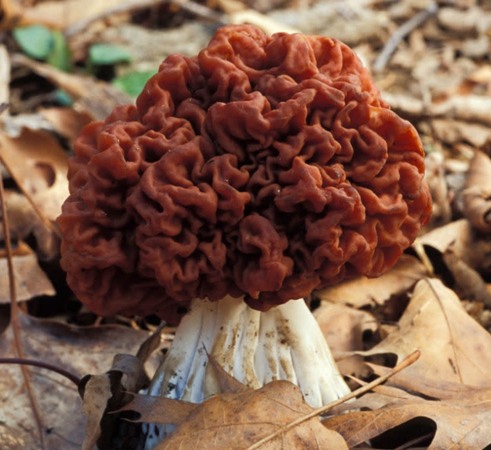
I find this to be one of the most fascinating fungi in existence. Partly fuelled by the fact that I still am yet to find this species growing wild (one day my persistence will pay off) and partly by how unique these fungi are both in shape, cultural perceptions and toxicity. Looking like mini brains, they can be found under pine trees on sandy soil in autumn (or so I’m told… maybe they are deliberately avoiding me). They are found in Europe and certain parts of North America, and are called False Morels due to their relation and similarity to the delicious Morels.

Despite being well known as a poisonous fungus their name would suggest otherwise, with “esculenta” being Latin for “edible”. And these fungi are indeed eaten in large quantities! When prepared correctly. As such, they have been likened to the pufferfish of the fungal world, which is quite the title! Appropriately prepared they are supposed to be a delicacy – I can’t speak from experience on this one, my adventures into free fungal food doesn’t quite stretch this far – however raw or improperly cooked they can be fatal. This toxicity is down to the presence of a volatile toxin called gyromitrin. When ingested, gyromitrin is metabolised to monomethyl hydrazine. This goes on to wreak havoc on a wide range of enzymes and processes, inhibiting cytochrome P450, amine oxidases and preventing the formation of pyridoxal 5-phosphate. This compound is a key cofactor in the synthesis of our old friend GABA. This causes a reduction of GABA present, preventing neuronal inhibition and causing to a prolonged excitatory state in the brain – almost the opposite of the effect seen in A. muscaria. This is still not good news however, with symptoms including severe gastrointestinal distress, kidney and liver damage and seizures and death in severe cases. Interestingly, the toxic metabolite produced here is used amongst other chemicals as a rocket propellant. I can’t but help imagine a future where we have spacecraft fuelled by fungi (albeit from a poisonous metabolite of a mycotoxin). Somehow, I doubt it.

Building up to it – Paxillus involutus

Following on from the theme of the last fungus, P. involutus is no stranger to gastronomic controversies. This very common, fairly non-descript fungus is a rather boring shade of brown (sorry if this is your favourite fungus!), although its cap does have a uniquely rolled-over rim (hence the imaginative English name – Brown Roll-Rim). It has historically been considered to be an edible mushroom, with many guidebooks simply stating that once cooked, it was safe to consume. Needless to say, these guidebooks are now firmly out of date and it is now recognised as a deadly poisonous fungus. Unlike the previous two fungi I’ve described here, this fungus does not contain any psychoactive alkaloids or toxic rocket fuel precursors. Instead, this species contains some rather unpleasant irritants which, upon consumption of raw specimens, result in severe gastroenteritis. These toxins however are degraded on heating, hence why it used to be considered edible after cooking. No, the real toxins are much more sinister in this fungus.

True to the weird nature of fungi, this species rebels against the “only edible once” saying quoted earlier. This fungus can actually be edible quite a few times before it poisons you. Unlike other toxins which you may expect to have a rapid onset after consumption (maybe a few days after ingestion at the most), the compounds responsible for the fatal poisonings attributed to P. involutus can take months to manifest. This is because the toxic effects often become apparent after repeated exposure, usually through the repeated consumption of the fungus. This is because the toxic compound here is in fact an antigen, which the body becomes sensitised to over time. Once enough meals of P. involutus have been eaten, the antigen present stimulates a rare autoimmune response where the body produces antibodies which attach to and disrupt red blood cells (autoimmune haemolytic anaemia). This causes life-threatening reductions in red blood cell counts, kidney damage and multi-organ failure. There is no antidote.
If in doubt…

So, there are three of the fungi that I find most interesting in terms of their toxicity. This only scratches the surface of the wild world that is mycotoxins – there are hundreds of others. From St Anthony’s Fire (a range of medieval diseases attributed to Ergot (Claviceps purpurea) to the near-certain fatality after consumption of Amanita phalloides or Amanita virosa (named the Death Cap and Destroying Angel respectively – foreboding!), mycotoxins are truly fascinating. These show the massive variety of toxins out there and how they influence both our health but our culture and relationship with wild foods. From a foraging perspective, the range of dangerous fungi out there clearly shows the importance of only foraging with an experienced guide and only collecting what you can identify with 100% confidence. If in doubt, leave it out!

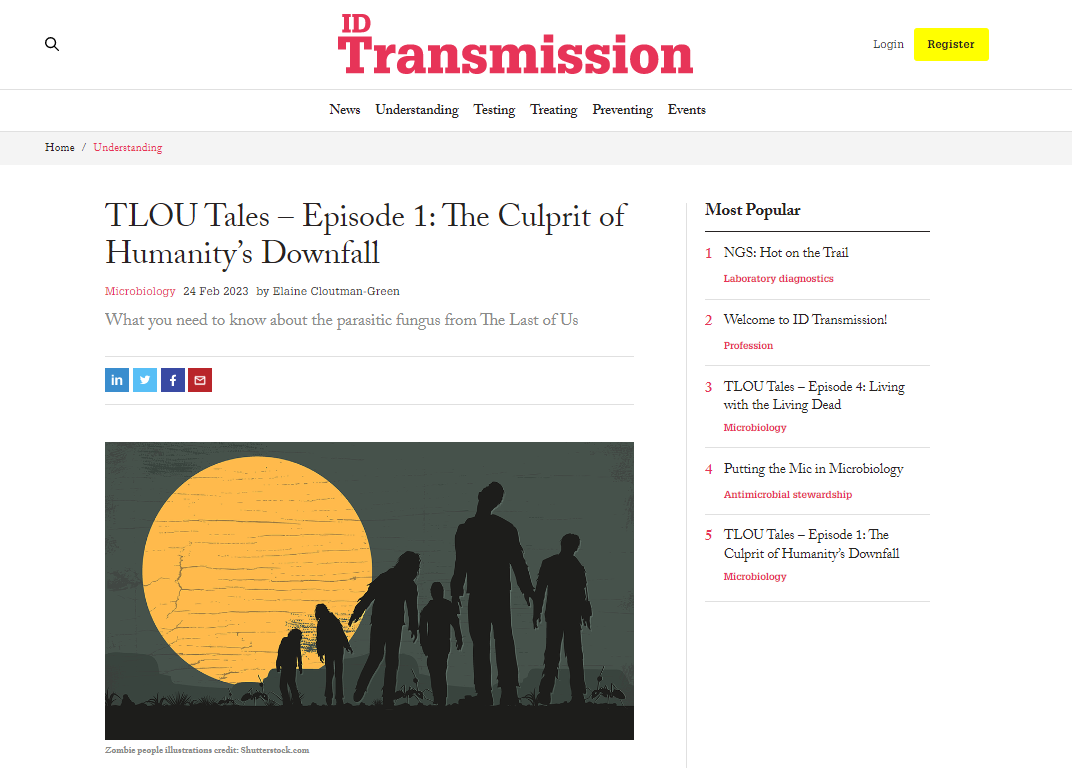
NB from Girlymicro – Whilst we’re delving into some mycological (fungal) joy over a couple of blog posts I thought I would take the opportunity to re-share this four part article series on the fungi of The Last of Us, which was a real joy to be involved with, and a clinical article that may surprise you:

https://www.idtransmission.com/understanding/tlou-tales–episode-1-the-culprit-of-humanitys-downfall

https://www.idtransmission.com/understanding/tlou-tales–episode-2-the-devil-is-in-the-details

https://www.idtransmission.com/understanding/tlou-tales–episode-3-the-realities-of-the-last-of-us

https://www.idtransmission.com/understanding/tlou-tales–episode-4-living-with-the-living-dead

On a rather different note – sometimes people love their fungi just a little too much in other ways……….

All opinions in this blog are my own