You may have noticed that I’ve been a little poor at keeping up with the Girlymicrobiologist site admin, and missing the odd weekly blog post. This isn’t because I’ve been slacking, honest, it’s more because I may have become a little distracted by a new project. I promise to get back on top of things soon, but in the meantime I thought I owed you an update.
Many of you have been kind enough to support last years project, which was a book aimed at supporting people to engage with research and research degrees, and I couldn’t be more grateful for your cheer leading. This new project, however, in the words of Monty Python could be described as ‘and now for something completely different’. It couldn’t be further from a book about academic study. This one is all about something else I love passionately, movies and TV.
I finished and launched the last book last October, and to be honest it hadn’t occurred to me, prior to letting it go into the wild, that I would write anything else till my retirement – when I’m planning to write some pathology based murder mysteries. It was never the plan to do something again, at least so soon. Frankly though, my brain tends to disrupt all my best laid plans, and ideas come meaning I just can’t help myself but get swept up. I’m blaming Ian McKellen inspiring me to ‘practice any art’.
Despite having no plans to do more, I have to say that I really enjoyed writing the first book, and I found the process of being able to write in a different way very fulfilling. I love writing this blog, and the first book is based on a lot of the pieces I have written for here, but it was nice to see them come together and take on a new and different life of their own. I also enjoyed mixing up the writing of something on a single theme with writing blogs on different topics for here, although I did rely a lot on Dr Claire Walker bringing together many guest blogs to allow me some writing time. It was lovely to see what those guest blogs brought to the site, and I really enjoyed seeing how including those voices really makes this feel even more like a community space. Without realising it, I think I caught ‘the bug’. Now, I’ve always enjoyed writing, this is my happy space, but I had never seen myself as an author, having held a book I’d written in my hands though, I can see how it could become a little addictive.
As I was sitting watching horror movies as part of my post release recovery, and researching for my 2025 Halloween post, I suddenly realised what I’d like to do next. I really wanted to write about some duel loves of mine, movies and TV plus infection.
Without any expectation of writing another book, all of a sudden I had a structure in my mind, and Don’t Open That Door had began…
You all know how much I am a movie and TV buff, everything from guilty pleasure reality TV, like The Secret Lives of Mormon Wives, to documentaries, and all genre of film (with the exception of torture porn horror movies, I’m a Blumhouse girlie). Whilst enjoying some down time with Mr Girlymicro, I realised how widely infection is featured in all kinds of different genera settings, some of it was actually pretty good, whilst some of it was really poor. So the first step was to do a whole bunch of research about what kind of examples were out there, by hitting up a bunch of different lists that have been collated by others, internet searches, and sourcing opinions from my movie loving friends. All of which led to the creation of a list of 138 options that needed a review to see if if they were actually linked to infection, and if they were infection based….was the infection content any good.
If you follow me (Girlymicro) on Instagram, you will have probably seen a number of stories that I’ve posted recently linked to movies I’ve been watching with some Infection Prevention and Control/micro commentary:
These have come about whilst I’ve been watching the 138 films/series with Mr Girlymicro to decide which ones make the cut to be included. I’ve watched some awesome films, some like Sinners, weren’t based on infection so couldn’t be included. I have also watched some truly bad movies, I even gave Resident Evil another go, and have spared you all by making sure that it is not included on the list. One of the considerations was that, even if the science wasn’t dreadful, I haven’t included anything that I or Rotten Tomatoes include as being truly horrible. I’m not just saving you on this, but also myself, as I’m having to watch included examples many times as part of the writing. I also felt it was really important to cover infections linked to viral, fungal, parasitic, and bacterial causes, just because they behave so differently and the interventions needed are so different. So the final list for inclusion involves movies and TV series that sit across infectious agents, although viruses are more represented than any other cause.
There are plenty of horror movies on the list, purely because they represent A LOT of the infection genera, but I was surprised at how many options there were outside of horror movies. I also tried to mix up certifications where I could, so that there are some options that everyone might enjoy.
Not everything could be included however, and there were also some exclusion criteria that impacted what I could include. Exclusion criteria included factors such as availability – no point including things that people can’t access, language options – I sadly only speak English so it needed at least English subtitles, and most importantly not based on real life events – this is about fiction.
For inclusion examples also needed to have infection as a central theme. This meant that health dramas could not be included as they only feature infection in some episodes, but at some point I do really want to write something that compares different medical dramas (House, New Amsterdam, Holby City etc) and maybe do a ranking scale….let me know if you think that would be a fun blog post.
Image credit The Red Dress
The reason it felt timely to talk about this today, is that the Biomedical Scientist magazine has been kind enough to do a whole feature on what the new book will look like, with a bit more detail, and some examples of what chapters will look like. It dropped on the 27th March and you can check it out the link here: https://thebiomedicalscientist.net/2026/03/24/infections-films. Also, how awesome is the art work they’ve done, can’t say enough how awesome The Red Dress are.
Whilst writing the article for the Biomedical Scientist and watching the example movies, I couldn’t happen but note how many weird and wonderful things are included as part of the science representation. Things that in my scientific career I rarely if ever encounter, but seem to crop up time and time again in Hollywood depictions of scientific life. I’m collating these for one of the final chapters in the book called ‘Science House of Horrors’ as I find them a bit fascinating. I’ve included some of the ones in the Biomedical Scientist article that I noticed, as well as those sent through as responses from social media, but I’d love to know if you have any others that I should include.
There are other opportunities to get involved though, I have 23 films and series examples, but there is room in the book to cover 25. I’m really keen to get other examples that include fungi, but if there is just something brilliant I haven’t included please let me know. There will also be a chapter called ‘Hall of Fame’ that covers both amazing movies that just don’t have enough infection in them to be included, or ones that were great but not quite as good an example of an infection characteristic as the ones already included. There is also the ‘Hall of Shame’ for examples, such as the TV series The Rain and Resident Evil, where the science is so bad that it is note worthy in itself.
Anyone who drops me an email to elaine@girlymicrobiologist.com and inputs into the House of Horrors, volunteers film examples I’ve missed, or suggests contenders for the ‘Hall of Fame’ or ‘Hall of Shame’, will get their name included in the list of contributors at the back of the book. Science takes a village, so does pulling together a book, and I’m really keen that this feels like it comes from our community. I hope you enjoy the article and I can’t wait to hear from you about your suggestions.
I’ve just dipped my toe into the world of self publishing, so I am far from an expert. That said, one of the reasons it took me a while to move from ‘that is something I’m interested in knowing more about’ to ‘screw it, let’s just give it a go’ is because there is a lot to think about, and there are a lot of options. I thought it might be useful therefore to pull together some of the components that came up for me in an effort to pay it forward, so anyone else thinking about taking a leap can start a little further ahead than I did.
Fair warning, this is a long one as there’s a lot to cover.
The first thing to say, and this now sounds horribly naive, is that I thought that the writing would be the hard part, or the bit that took up most time. How wrong I was.
Before I properly kick off though, one quick word of warning. These are tips and reflections on the steps I took for the type and method of publishing that worked for me and the book I wanted to get out into the world. You will, of course, have your own aims, aspirations, and content type, so you will need to do research that links to the type of book that is in your mind. I found that there is all kinds of great content out there, but it is a bit like a jigsaw puzzle you need to put together to match your own personal needs. I would start by working out what personal resources you already have available to you, then go on an active search for the rest.
Places to consider accessing information include:
YouTube
Blogs
Websites
Books
Social media
Phone a friend
I am really fortunate to have a number of friends who have either written and published books, or who work in/with the publishing industry, and so the phone a friend option was particularly useful for me. I’m hoping that by writing this blog I am helping to pass that good fortune forward to support others.
Even without the assistance of someone who has greater knowledge than you in your friendship circle, I found places like YouTube a great way of learning some of the key phrases and structural terms that then enabled me to move onto more targeted research via other sources.
Writing is the easy part
I don’t know if I’m fortunate or cursed to live with a mind that constantly requires distraction or something challenging to process, but one advantage of it is that I will often arrive at an idea pretty fully formed as I’ve been putting it together in the back of my mind. That means that one day I just woke with a 40 chapter structure for a book that remained pretty much unchanged, even as the word count developed.
Even with this though, in my project plan most of my time was allocated to word count and far far too little of it was allocated to the other tasks. Partly this was because I just had no idea how long they would take in practice until I came to do them. In hindsight though, I think there was a fair amount of denial and ostriching as it was these other parts that triggered my anxiety and fear linked to not really being comfortable with the process. This denial got me to the finish line, but I think the whole book preparation would have gone more smoothly if I had focussed on my discomfort rather than the comfort zone that was the writing process.
What are you planning to publish?
Talking of your project plan. There are some components that it is really helpful if you make decisions about early, as they will impact not only your workload and structure, but also whether self publishing is the right route for you.
The first of these decisions is whether you are working towards a fiction or non-fiction book. I don’t think I’d ever sat down and made a list of the differences between the two until I started to plan both types of content. The first obvious difference is in the type of the content itself, but beyond the actual words, which may have legal and other impacts for non-fiction, there are differences in everything from word count expectations, to paper type, and book size, if you are thinking of including print versions.
This then brings you onto deciding what kinds of formats you are planning to publish in:
Ebook
Print:
paperback
hardback
Audiobook
Now, I haven’t done an audiobook so I’m not going to talk too much about that here. For the other format types it’s key to know what formats you are aiming for as this will dictate all of the formatting, cover and costing decisions you will make moving forward. That said, just because you decide to aim for more than one format it doesn’t mean that they all have to come out simultaneously. You could decide to aim for an Ebook first, with a plan to bring print editions later on.
It is worth doing some bench marking with similar book topics at this stage, not because you have to do what everyone else does, but because it can give you some parameters to work with and mean you feel less overwhelmed by the number of decisions you need to make. I ended up launching all content type pretty simultaneously, as that’s what worked for me, you may choose to take a route that is kinder to yourself and launch them in stages. For instance you may launch your Ebook first so you can incorporate feedback before you move to print editions.
What are your success criteria?
The other key thing to do at this point is to decide what does success look like for you? Almost all of your next steps and decision making will depend on what success looks like and what it is that you are wanting to achieve.
No one can tell you what the answer to this is as there are many different reasons people decide to write books, all of which can be valid:
To educate and inform
To raise awareness of an issue/topic
For financial reasons
To improve the authors profile
To entertain
To process experiences
To tell a story
To connect with others
For career development
To inspire/empower
Once determined your success criteria should play a big part in determining your approach. If you want to make money or sell thousands of books then you probably need to aim for a traditional publishing approach, and this will then impact the kind of topic that you might choose. If your aim is to get something out there for low cost or in a relatively niche topic, the self publishing is probably a way forward.
You need to be realistic with what you are aiming for. For instance, my book topic is relatively niche as it’s linked to post graduate study, and when I did my research it looked like I could expect to sell 2 copies a month based on amazon purchasing number (I used Book Bolt on free trial to run the numbers). My goals and expectations were therefore based on those figures. My initial goal was to sell 20 books in a year, with stretch goal of selling 60. My success criteria have never been about selling huge numbers or making money, but about finding a different way to support the Girlymicro community, and therefore my goals match that. What’s happened in practice in that I’m over the moon to have reached my stretch goal in the first six weeks since publication, but I am also aware that those numbers are likely to drop off and I can’t use them to continue to judge how well the book has landed. If you don’t want to be disappointed it’s important to choose the right success criteria to match your driver for publishing in the first place.
Traditional vs self publishing
Once you’ve decided what it is you want to write, why you want to write it, and what success looks like, then you need to choose your next steps. The biggest of which is to decide whether to pursue traditional publishing or go for self publishing. Now, don’t get me wrong, both are a lot of work and require a lot of prep, but the steps are very different.
For traditional publishing you will need to start to put together a proposal, which for a fiction book will include the entire manuscript of your book plus some additional information. For a non-fiction book it will usually include at least 2 chapters and chapter outlines with descriptors for the rest of your content, plus information on other things you have written, target audience, and other books on the market taht could be used as benchmarks. The aim is to get an agent who will then pitch your book to a publisher, although for some markets you can approach a publisher directly, who will then take care of onward processes such as editing, formatting, cover production. A lot of the non-writing work is therefore forward loaded. There’s lot of advice out there on how to put together a book pitch and there are websites such as Query Tracker that can help you in finding agents to send your pitch to. For fiction this is still a mainstay of publishing, especially as you are wanting to reach wider audiences and have your book available in book stores and libraries.
In terms of self publishing, a lot of my reading indicates that up to 90% of non-fiction books now go down the self publishing and print on demand routes. Non-fiction book deals either tend to be books that have wide audience appeal, such as general popular science books, or have authors with a pre-established audience, think influencers with a million+ followers. So, although it may be worth your while pursuing a traditional publishing approach, it is well worth considering exploring the self publishing route. The down side of this route is that there a lot of tasks that you will need to organise yourself, which would have been taken care of if you’d traditionally published, so be prepared for a steep learning curve.
One extra thing to think of is how strong is your vision is. If you go down a traditional publishing route there will be co-development of your concept with a number of stakeholders. This will make the idea better, but you need to be prepared to hold onto your concept loosely, especially as a new author, and so it is worth considering this aspect of development as part of your decision making. If you go down the self publishing route you will have to fight harder for the credibility that is given to traditionally published authors however, so both routes have pros and cons to consider.
What kind of content are you planning to include?
OK you’ve decided to go down the self publishing route but what does this mean for your content? Content restrictions weren’t something I had considered when I started drafting It Shouldn’t Happen to a PhD Student, and so I included a load of exercises to support the word count that included tables and other non-text formatting. When I then started to format however, I discovered that the templates are set up for text alone, as novels only include text content. This seems obvious in hindsight I guess. That meant that when I undertook my final formatting I ended up removing this content and setting up a new web page on the girlymicrobiologist.com blog in order to host it, as it felt that it was still important to have. This was a lesson for me in how important it is to consider what type of formats are needed to support your content and embed these considerations from the start, rather than finding an eleventh hour fix.
Having discovered the format restrictions of book based content I’ve been thinking of maybe putting together an academic journal set of content that can sit alongside the book in order to host some of these exercises, but that requires finding a whole different set of templates or learning waaay more in order to set ones up myself. Honestly I’m not sure I have the mental energy for that right now. One of the things this experience has taught me is to think hard about the payoff for any energy you will need to expend in order to make something happen and be conscious in your decision making and energy allocations.
Choose your budget
Another thing to consider is that there are many ways to accomplish the tasks you will need to tick off in order to self publish, and the decisions may be more complicated than you think. There are a number of steps, each with a number of component parts, all of which could be outsourced, semi-outsourced, or managed by you:
Editing
Cover
Formatting
Marketing
Printing
Publishing
Book coaching
If you decide to outsource all of these stages, the process of self publishing could, in fact, cost you thousands of pounds. If, like me, you don’t have thousands of pounds just lying around you may need to think carefully about what you can spend, and on what you are prepared to prioritise spending money on.
I didn’t really have a budget for publishing It Shouldn’t Happen to a PhD student, as I didn’t have the disposable income, even so publishing the book ended up costing me several hundred pounds. Costs included things like buying ISBN numbers as I didn’t want to be completely tied into Amazon as a platform. In addition to direct book costs, you need to think about how you will get the word out there or build your community. For instance, many people aren’t aware that running this blog costs rather providing income, with a few hundred pounds a year in outlay to cover hosting costs, email address etc*, which although not directly book related is the reason the my book came into existence. This can all be important to bear in mind when looking at costing your book, and thinking about marketing exercises such as book launches, as you will have to buy in copies of your book, spend money on food etc, all of which adds to your initial outlay.
If you do have personal budget that you are prepared to invest then it is still worth being discerning with how you invest, and especially being aware of predatory publishers. There are plenty of people out there who will take your money, but spending time to look at freelancers who will undertake components is probably better than paying someone £5000 who offers to do it all, especially if there is limited evidence of what the output would look like. Just like in scientific research, predatory publishers exist, and it is important to have undertaken sufficient research to invest your money well.
*NB a good friend mentioned to me that I don’t advertise the fact that you can help with the costs associated with running this blog through a variety of options, from supporting the annual fees (mentioned on the top of the homepage where is says gift the author a wordpress.com plan), buying me a cup of tea as mentioned on the bottom of the blogs by theme page, or even engaging with my new Patreon page. There you have it, I shall swallow my pride and share the details with no expectations or requirement for anyone who might be interested in offering a helping hand.
Where are you planning to sell?
A number of your outlay and pricing decisions will be linked to how and where you wish to sell your books. Obviously, if you are traditionally publishing, all of these options are somewhat easier as they will try to make sure your book is widely available. If you are self publishing you need to decide yourself where it is that you are prepared to sell. Some simple choices, like whether to use a free Amazon ISBN or buy your own, will have significant impacts on subsequent onward options. If you use a free print ISBN from Amazon, then it limits you to only selling on Amazon. Deciding to invest <£100 on ISBN numbers for each of your print editions means that you can choose to sell on different platforms in addition, but also has requirements about providing editions to the British Library, meaning you have to buy the print copies to send off and pay for postage. If you want your book to be in libraries you also need to select these options on your print on demand platform, but they are much less likely to be taken up than if you were going down a traditional publishing route. There are no right or wrong decisions here, only the decision that is right for your success criteria and the audience you are trying to reach.
If you are happy to go down the print on demand route, there a number of different free options available to you:
The best option will depend on what you are publishing and the countries that you are hoping to publish in. It is worth bearing in mind that some platforms (such as KDP) require you to give exclusive rights for you to be involved in certain marketing options, such as signing up to Kindle Unlimited. This may expand your reader market but will tie you into a specific platform. There are also paid for distributions platforms that you could utilise if you have decided to allocate budget in that direction. Of note, there are some interesting YouTube videos out there where authors compare how much they sell across different platforms which can help you make decisions. Utilising multiple platforms requires you to invest energy across multiple formats, and so it is also worth being honest with yourself about what your energy budget is before committing to more than one, even if that might restrict your sales.
Finding your templates
I’ve talked about deciding on your content, and that’s because formatting is time consuming and essential. You may be a wiz at this, in a way that I am not, but if it doesn’t lie in your skill set then being able to access and utilise pre-existing templates is key. Even this can be a mine field though as there are both free and paid for versions available to you. You also need to know a number of things before choosing your template i.e. is it for print or Ebook, as the templates are very different, but also what size of book are you aiming for, as your paperback version will be a different size to your hardback. I did a bunch of research into what are the most common book sizes for non-fiction hardback and paperback versions, but even this changes by country, so you will need to look into what works best for you. I ended up going for 6 x 9 inches for hardback and 5.5 x 8.5 for paperback.
Having tried a few different options, these happen to be the best templates that worked for me and my brain, you may find others work better for you:
Even with the best templates there is a good deal of fiddling once you’ve imported your content, so make sure you leave plenty of time for this part of the process. I didn’t and it meant a number of 14 hour days whilst on leave trying to ensure I could keep to my self imposed deadline.
Choosing your pricing
I, misguidedly, thought I could price my book at whatever price point I fancied, but rapidly learnt that this wasn’t the case. All of the free self publishing platforms take a cut of any print on demand book, which is how they cover their costs. Everything from number of pages to paper type will impact on what your minimum cost point will be. For Ebooks, if you want your book included in schemes, like Kindle Unlimited to maximise your reach, you will also need to have minimum pricing levels. This is one reason why you need to have decided on where you want to sell and some of the book details before you start to think about pricing. Think about the fact that certain paper types are used more commonly for certain book types, and that choosing between them will impact on cost.
Helpfully, you can use things like the https://kdp.amazon.com/en_US/royalty-calculator in order to play around with likely book parameters to start to think about what your pricing range might be, even before you have fully completed the templates, to know what the final page counts look like. I have included a random example below so you can see the type of information required:
Once you have entered the information, the royalty calculator will tell you what the minimum price point will be, and from that you can think about what price you may need to charge to cover your costs.
If, like me, you are publishing not to make money but merely to cover costs, you should think about charging minimal amounts in order to maximise accessibility for those who may benefit from your book. If you have spent more on bringing your book to market, you are also likely to need to charge more in order to make your accounts balance. This is another reason why I invested my resources in terms of time rather than financial, as I didn’t want to have to charge more which could limit the book reaching those who would benefit most. This aspect may be less relevant to you, depending on your reason for publishing in the first place and so costing is a personal choice.
The book blurb
Once you have your book written, one of the final steps is thinking about what you are going to write on the back cover in order to help it reach its target market. I found this part, well to be honest the cover in its entirety, a bit of a nightmare. So these are the points I thought about when deciding what to write:
Keep it 150–200 words — short enough to hold attention, long enough to inform
Write in the third person to help you connect directly with the reader
Test different versions — your blurb is a sales tool, not just a summary, no matter how uncomfortable that feels
Think about your structure:
Start with a hook
Open with a single sentence that speaks directly to your reader’s problem
Identify the reader’s goal
Show you understand their challenge or aspiration. Use empathetic, relatable language and speak to how you will address it
Give your unique selling point
Briefly explain what your book delivers and why it’s different
Be specific
Build credibility
Mention relevant credentials, or experience
Give a taste of what’s inside
List 3–5 bullet points of key takeaways
Finish with an invitation or call to action
You can then also use this to help write the wording you will need for the websites you are selling on as an expanded version, and even use shortened versions of it as part of your marketing tools, such as on postcards.
Recognise the skills you have and the skill you don’t
The biggest aid in all of this planning was to be very honest with myself about the skills I have and the skills I don’t have. I am not artistic in any way, and so I knew that I would struggle with not only cover formatting, but with cover design. I know that I am able to utilise a word template, but that I don’t have the skills to make a word template. I know that editing is not my thing. All of the components that I recognised as weaknesses I actively sought out support in order to help me address. I roped in a number of people to help with copy editing, including Mummy Girlymicro. I roped in Mr Girlymicro, who is a keen photographer with an artistic eye, who worked with our good friend who works in book design and publishing Alice Wallace, to help with the cover. I found templates that made up for my lack of formatting and design skills for the internal contents. I was prepared to be honest with myself about where I fell short, and I invested time in learning what options were available to compensate. All of these weaknesses could be countered by outsourcing, but that wasn’t a financial option for me, and I feel that I’ve learnt so much in going through the process and the discussions. Something I would have missed out on if I’d paid a third party. That said, the learning feels worth it for me as I have plans to get more books out, if you have budget and you are only doing this once the decision making is likely to be different.
Find your cheer squad and support team
All of this brings me onto the importance of finding your cheer squad. I spent a lot of hours and a lot of leave on turning an idea into reality, and you can never do it alone. I used my ‘phone a friend’ system, my network, and my family, all of which helped with getting this project across the line. They helped me not only with the technical aspects, but also in managing the emotional aspects. There were a lot of highs and lows. To be honest there still are. Putting yourself out there always requires a certain level of bravery. It is always easy for people to find a way to criticise, or use this as a way to comment or target what you’ve tried to achieve. The other side of this coin though is how wonderful it is when people get behind you, cheer you on, and take the time to invest in you and your concept. When people came out for my book launch it meant the world. No one has a lot of time or money right now, so anyone investing in something I care about has such meaning, and makes the whole thing worth it. When I hear negativity, it is that which I focus on to aid in processing my responses.
The nightmare of a cover
Now, I’m just going to use this section to give the biggest ever thank you shout outs to Mr Girlymicro and Alice Wallace. I genuinely believe that there is one part of this process that I couldn’t manage, even if you gave me a month of full time capacity to play with it. I’m talking about The Cover! I’ve attached the guide link below, but even with this I don’t think I could have achieved it. It is the one part that I just couldn’t get my head around.
There is so much maths involved, let alone the actual design process. That maths changes based on the precise number of pages, but also what those pages are. Can you believe that cream paper is a different thickness to white. I had no idea.
I mention this in order to be transparent that you too may hit certain components that you just can’t get your head around. That’s OK, you can’t be good at everything. More than that, it’s OK to have things that just fill you with so much anxiety that you can’t face them. For me that was the cover, for you it may be something else. The main thing is to have a plan in order to counter these obstacles before you get to the point where it will impact on your delivery.
The submission process
Once all this is done, it is time to submit. I had thought this process would be much faster than it was, and so now I’ve done it I would recommend allowing at least a month window between submission and having any marketing or other components planned. Nothing is immediate. Once uploaded, and this in itself took a number of attempts, all versions need to be checked out by the platform you upload to. For print versions you will also want to build in time to order proof copies (which will need paying for) in order to check you are happy and that your formatting has worked before you release them out into the wild.
My top tip for this stage is to have pre-completed the boxes and info where possible in order to allow you to focus on just the upload when the time comes. This means that fairly early on in the process you want to have set up accounts, provided registration information, undergone identity checks, so that you can start you populate the appropriate pages. I would do the account setting up as part of the research phase of your book development.
Bits I hadn’t thought about
There were several things I had not even thought about before I started this process. For instance, I didn’t know that you had to buy ISBN numbers, let alone that you need one per format and one per edition, and so you can end up needing to buy quite a few. You don’t need an ISBN for Ebooks but if you don’t want to be tied to Amazon (who will give you a free one for use on the Amazon platform) then you will need to buy them for your print versions from here (if UK based) https://www.nielsenisbnstore.com/.
This brings me onto another thing I didn’t realise. If you have a print book you will need to submit a copy to the British Library within a month of it going live for sale. This will require you to have a copy to send and to pay for postage. They may also request that you send 5 copies to a separate address which means they can then be considered for purchase by libraries. All of which is great, but will require you to have brought enough books to post and has cost implications.
Other outlays I hadn’t thought about were the fact that you need technology to sell books, by this I mean the ability to take card payments. This one completely passed me by until Mr Girlymicro mentioned it, and then thankfully he spent a bunch of time looking at how to make it happen before recommending something. He ended up recommending Zettle, which has worked really well. Again, there was no point in spending a lot of money on this as I wasn’t planning on going to book fairs and selling thousands of copies, however it did mean I could sell copies of my book at the book launch, which made the expenditure worth it.
Finally, I was so focussed on getting the book out there that I don’t think I’d prepared myself for some of the commentary. Now, I’ve been really fortunate so far that almost all of the comments have been positive, but there have been some people who I felt were less happy about me a) getting a book out there and b) it being well received. To be honest the same has been true about this blog on occasion. Questions such as why you? Why should anyone care what you have to say? Don’t you have better things to do with your time? Nothing is going to be universally well received, and at some point someone will no doubt put up a review that breaks my heart. That doesn’t make the endeavor any less worth while. It is better to have something real out there that can support people than wait until it reaches a point of perfection and not putting something out for years. Nothing will please everyone, and so being prepared to cope with critique thrown your way is something to be prepared for.
The discomfort of marketing
Once the book is live is to a certain extent when the real work actually starts. There is no getting around the fact that if you want your book to reach the people it could help or who will find it interesting then you are going to have to tell people about it. It is not comfortable but you have to channel why you decided to do this in the first place and focus on that to overcome the discomfort.
This is one of those things that if you have gone down a traditional publishing route may have been more supported but you would still be expected to drive sales on your own. Make sure that you have an idea of where to show content on social media, make accounts if you don’t have them. Think about using stores like Vistaprint to print postcards, book marks, and in my case giant foam boards of my own head, to help with advertising. Again, this is an initial outlay to be aware of. You will also need to buy a number of copies of your own book so you will have some to sell, and that requires thought as you don’t want a hundred copies that will just sit around and do nothing, so how many is enough?
Think about having an event to kick off and celebrate that you have turned a concept into a reality. I was so worried about having a book launch, but it was actually just a wonderful event. It felt so lovely to see people hold physical copies of the book in their hands for the first time and see their reactions. You can also see the people who are really there to show up for you, and it’s a great way of giving back and thanking the cheer leaders who’ve supported you along the way. Note of caution, this is another one of those things that is lovely but will also cost you money, so be prepared to outlay a few hundred pounds if you are going to do it, as you will need to pay for everything from books to catering.
If you have budget, this is another area where you can choose to invest. There are places on the Kindle Direct Publishing page for your book where you can choose to pay money to have your book featured, social media pages will let you run adverts, and you can even pay companies specifically that do this kind of work. I don’t have the budget to go down that kind of route but if you choose to give it a try let me know what your learning and advice is and I can share in a future post, or better yet write me a guest blog.
The long and short of it is that your book won’t reach the people you’ve written it for if they don’t know about it, so suck it up buttercup and get your marketing hat on. No matter how uncomfortable it makes you, and it makes me very uncomfortable, there is no getting around it. If you can find friends and/or champions who will talk about it on your behalf that is a life saver, but you will not be able to avoid putting yourself out there. You wrote a book for a reason, this is the time to remember that reason and step out bravely in order to make your success criteria happen.
In that vein, if you want to check out the final version of my labour of love, you can find the link below:
I am not a big Halloween girly, to be honest I can take it or leave it because I’m mostly excited about the build up to Christmas. That said, what I do love are movies and TV, and despite never being someone who can tolerate a lot of slasher or gore based horror movies, I love a good vampire movie.
A lot of this may be because I enjoy the world building and lore that seems to be more integral to vampire movies and series. This is because, although they share some of the same rules, depending on how the world is built they always need to explain which of the nuance comes into play in that particular setting. It felt fun this Halloween therefore, to write a blog post that talks about some of those tropes when vampirism is linked to infection, and how those rules compare to the real world.
Common vampire tropes to be aware of and to bear in mind as you read on:
Experiencing pain or physical damage in relation to sunlight
Needing to consume blood as a protein source
Inability to eat or digest food other than blood
Avoidance of animals
Ability to influence humans to undertake acts that may be against their will
Violent reactions to garlic
Inability to see themselves in mirrors or via cameras
Death only by beheading
Death by wooden stakes
Damage linked to holy water
Aversion to signs of faith
Aversion to alcohol or drug use
Not all of these are present in every piece of world building, hence why I find the variety of vampire mythos so interesting. The choice of which ones go together combined with different origin stories and creation processes enable a pretty large tapestry to be created from some similar thematic components.
Mystical, infections or something else?
The place to start I guess is by discussing whether all vampire world building includes infectious transmission? And the answer is a definitive no. Sometimes the way that the creation of new vampires works isn’t discussed. Sometimes the rules about the underlying process is unclear. That said, the fear of becoming something new is a frequently used trope for dramatic purposes and so the process by which a human is turned into or by which vampires exist is discussed pretty frequently as part of world building, and from what I can see there are three main routes:
Mystical – some form of occult/magic/cause not routed in science
Genetic – vampires are born and exist as a stand alone species
Infection – transmission via blood or other infectious transfer, even if the agent is unclear or unspecified
Now, I’m not going to cover the mystical/magically as that’s not anything based in science and the science is what I’m here for. The other two, however, are often based (sometimes loosely) in science as they are often inspired by things that actually exist and so I’m going to talk about both of those in a bit more details.
Genetic
I’m going to kick off by talking all things genetics. There are an increasingly large number of vampire movies and TV series where the vampires that featured were born vampires. This includes movies like Abigail, Perfect Creatures, the finale of the Twilight series, but also TV series such as A Discovery of Witches, First Kill and Vampire Academy. Sometimes within these there are vampires that are made through other means (discussed below) in the same world. Often these genetic vampires exist as a separate species to their Homo sapien neighbours either openly or in hiding.
There is often much discussion about where the vampire myth comes from, and in many way these stories of genetic vampires who are birthed through a similar route to standard human deliveries, links in most with what is considered to be a real world inspiration for many vampire myths. The origin is thought to be linked to a rare inherited condition known as Porphyria, the presentation for which may account for for some of the common components of vampire portrayals.
Porphyria is a rare, inherited blood disorder that occurs when the body can’t convert porphyrins into haeme, a vital component of haemoglobin. The resulting symptoms vary depending on the type of porphyria. Acute porphyria presentations include symptoms such as gastro intestinal pain and symptoms like nausea and vomiting – symptoms that are often portrayed linked to vampires attempting to eat normal food. Whilst cutaneous porphyria symptoms include pain, burning and swelling in response to sunlight, skin fragility and a tendency towards skin blistering – all of which are frequently included as vampire responses to exposure to sunlight.
Porphyria D. Montgomery Bissell, M.D., Karl E. Anderson, M.D., and Herbert L. Bonkovsky, N Engl J Med 2017;377:862-872 VOL. 377 NO. 9
Interestingly, in some of the genetic origin vampire stories, the impact of some of the limitations of the lifestyle limitation of traditional vampires are not so extreme. In some of these cases they can be seen in daylight, although not for long and don’t enjoy it, and they may be able to tolerate some, if not all, of human food. They are possibly therefore most aligned to their real world inspirations. I could write pages and pages on this, but infection is where my heart lies so I’m going to crack on.
Virus, parasitic, others?
Now we’ve covered off those born vampires, let’s move onto the most common version of vampirism outside of the traditional Dracula more mystical inspiration, that is vampires who are created linked to transfer of infection by blood or other means.
There are three main ways that this commonly comes into play:
Viral causes
Parasitic routes
Bacteria intoxication
I’m still trying to find a vampire movie where the main infectious agent is fungal, but it seems that most of the movies based on fungi are linked to zombie outbreaks. That makes a lot of sense, due to the fact that fungi are eukaryotes (like us) rather than prokaryotes (like bacteria), and so fungi tend to be linked to changing behaviour linked to interfering with the human nervous system. If you’ve seen a vampire version though please do let me know as I’m collating a list of where different organisms might come into play.
By far the most common route depicted is where the causative agent is a virus. Viruses are featured in movies such as Blade and Daybreakers and TV series such as Ultraviolet. This is because viral transmission in general is associated with transfer of bodily fluids, be that faecal-oral, respiratory via saliva, bodily fluids such as breast milk, or in the case of vampire movies via blood.
The most uncommon causative agent I’ve discovered is the parasitic cause of vampirism as shown in The Strain TV series. During the series transmission of the virus to create a full vampire is via something known as ‘The White’ that contains parasitic worms. These then lead to anatomical changes, including the growth of a proboscis that enables the biting and transmission of the parasite to others.
Bacterial coverage is mostly linked to potential methods of intoxication that supports the control over humans by vampires. Rather than being a direct cause of the vampirism, this seems to be about how transfer of the bacteria releases, or causes anatomical change, which then changes behaviour via things like hormonal or neurological changes. I’ve talked before about why bacteria may feature less in horror movies than other causes, but this can mostly be summed up by the fact that audiences tend to know more about bacteria and therefore it is less tempting for writers, but also horror tends to sit better in ‘the possible but not too close to us’.
Transmission
Obviously it’s not just the infectious agent that is important, but the mode of transmission for that agent. This being all about vampires the biggest mode of transmission is by bite, but it’s not always so straight forward. In mystical vampire movies, there’s usually a whole lot of removing of the original human blood and then transfer of the vampire blood, leading to a mystical baptism and rebirth. Infectious causes are much more one way, any bite could lead to someone turning into a vampire and the most important thing is load related. If someone is in contact for longer, if more blood is drunk and therefore more saliva and fluids exchanged, then the chances of conversion are much higher.
It’s not just blood as a bodily fluid that features in conversion during vampire movies. There are also films, such as Requiem for a Vampire and Trouble Every Day, where vampirism is treated more like a sexually transmitted disease, rather than transfer occurring during feeding on the blood of their victims. It seems that these films have increased since the 1980s, maybe as a result of fear processing linked to the HIV/AIDS pandemic during that time period or maybe because our knowledge about and ability to detect infections has increased and therefore there are a larger part of the collective public awareness. It will be interesting to see how the SAR CoV2 pandemic will impact this further.
The most unusual transmission, and one that aligns most highly with blood borne transmission is the presence of congenital transmission as featured in Blade. Where the main character Blade becomes a vampire hybrid by acquiring the vampire virus at birth, due to his mother being bitten and placental crossing of the virus into his blood stream. As a result, he exhibits some of the characteristics of a vampire due to the virus, but the effects are attenuated linked to his exposure route. It can often be that congenital infection presents differently to primary infection via other causes, and it appears vampirism is no different.
The other variable is linked to the time to turning once the infection has been introduced. I would speculate that this too is load related, as well as the infectious agent behind the symptoms. Viruses, for instance, are likely to reproduce and induce change at a much higher rate than anything linked to bacteria or parasites. This is partly due to their reproductive rate, but also linked to the level of dose that tends to be available. The exception to viruses resulting in the fastest change is likely to be bacterial intoxication and influencing. As the toxin acts immediately, when this is present in media and TV the change is almost instantaneous, but also time limited and therefore requires top up or re-application. Not all impacts are until beheading, some require a more time boundaried set of interventions.
Interventions
Once your characters are aware that vampires exist within their mist, then they will want to look for actions in order to protect themselves. One of the classic ones as featured in many movies, including the classic Lost Boys, is garlic.
In some ways the impact of garlic makes even more sense if you think of vampirism through an infectious transmission route, as garlic has been considered to have anti-infective properties for a long time, although warning you may have to ingest a LOT of it!
Another common feature in vampire movies is the roles that animals play as protectors. For instance, in 30 Days of Night, the vampires kill all of the dogs before they launch their main attack. This kind of thing also often happens in films and TV where vampires are hiding in plain sight. It could be that they are taking out animals as they don’t want to be found, and animals are easier than humans, but I have another proposition. There are a number of infections where animals can be used to sniff out and identify infected individuals. Therefore, if animals could detect vampires they are much more likely to be a risk and warrant removal. Animals could therefore act as a front line of diagnostic defence to enable you to tell friend from foe.
Having determine that a common weakness of vampires is their damage response to ultraviolet light (UV), films such as Underworld weaponise light against the vampire protagonists. Light, and especially UV-C (200 – 280nm), has been known to impact viruses and bacteria for well over 100 years. When light is in this frequency is can damage both RNA and DNA, resulting in cell death, and it is possible that if the infectious agent is the only thing that is keeping your body moving the damage would be more pronounced. We’ve also discussed how the lack of some biochemical pathways can lead to UV-C causing much larger amounts of pain an damage.
Normally, penetration of the light to cause damage might be an issue, but if you are using bullets or other means this may not impact. The most important thing I have to say here is, that despite what is shown in Blade 2, light does not bend around corners. This is also important for when you are considering using UV-C in hospitals to support cleaning, it doesn’t have good penetration and doesn’t go around corners of work in shadows. Using UV-C may work against your vampires but you are going to need to think carefully about where you use it so it does what you think it can.
Vampire movies have amazing world building and are often my favourite genera in terms of their string internal logic. I love the fact that so many types of infection and route of transmission that reflect real world cases are present as part of these pieces of entertainment. They can actually teach us a lot, even when we don’t realise it, and so much of it has origins in real world knowledge, even if only loosely. So, this Halloween evening find one you haven’t seen before and let me know which intervention you would use to stop your town being turned into creatures of the night!
Before I go, I thought I would share a few of the previous years Halloween blog posts in case you are looking for some more spooky season and infection reading:
I am currently in the middle of secret project, which I hope to announce more about in late August/early September. I’m really excited about it but it’s taking a bunch of my time. I’m hoping that you will be just as excited when I can share more details. The wonderful Dr Claire Walker is helping me deliver my passion project by curating the Girlymicrobiologist blog for a few weeks. This means that I hope you all enjoy getting some great guest blogs from a range of topics. Girlymicrobiologist is a community, and all of the wonderful authors stepping up, sharing their thoughts and projects, to support me in mine means the world. I hope you enjoy this guest blog series. Drop me a line if you too would be interested in joining this community by writing a guest blog.
Dr Walker who is a paid up member of the Dream Team since 2013, token immunologist and occasional defector from the Immunology Mafia. Registered Clinical Scientist in Immunology with a background in genetics (PhD), microbiology and immunology (MSc), biological sciences (mBiolSci), education (PgCert) and indecisiveness (everything else). Now a Senior Lecturer in Immunology at University of Lincoln. She has previously written many great guest blogs for the Girlymicrobiologist, including The Clinical Academic Path – From the Lab to the Lectern.
This weeks blog post is from Dr Shayda Karimi, who is a medical doctor and self published author, discussing how important creativity is in science.
Blog by Shayda Karimi
Hello! My name is Shayda.
I’m a medical doctor, specialising in anaesthesia and pre-hospital emergency care. Medicine has always been considered one of the ‘softer’ sciences, but never the less is more of a science than a humanity, and the subject takes pride in adhering to evidence based practice. Creativity lies at the heart of problem solving, and problem solving is key to providing high quality, innovative medical care, especially in dynamic specialities like emergency care. For example, I was recently faced with the dilemma of a man impaled on a large segment of aluminium ladder. The metal couldn’t be removed without a CT scan to determine which structures it had damaged, and due to the angle of penetration, the patient couldn’t fit through the scanner with it in place. The creative solution was to put a 999 call out to the fire service, who with specialist cutting equipment were able to reduce the size on the metal segment. The patient safely had his scan.
Creativity in science should be encouraged. Through my time at medical school, opportunities to be creative were very limited- most lectures were on never changing topics- anatomy and physiology. I took a student component module called ‘medicine in literature’- even that was factual. To resolve this gap in my undergraduate education, in my F3 year (a common point for junior doctors to take a year out of training, having completed two foundation years and before commencing higher specialist training) I decided to complete a masters degree in creative writing. I was the only person on my course with a ‘science’ background.
The dissertation for this course was a long piece of writing. Which for the first time in my post primary school life, could be completely and utterly false. This dissertation turned into my first novel. Writing fiction develops problem solving skills- characters must resolve the obstacles put into their path, and this must be believable with the rules they are living in. I learned about how language can be used to invoke emotions and atmosphere- this is of vital importance when speaking to patients and colleagues. Or even when writing emails! I developed an appreciation that though creativity is not fact- it can also be to a certain degree taught and developed.
The dissertation turned into my first published novel ‘Heirs’, set in a future dystopian London, conjoined twins are born next in line to the throne. They end up separated and in a fight for power. This was fun experience; taking the science I knew as fact, and adding a whole load of fiction to turn it into a familiar but bizarre future.
Creativity and science go hand in hand. We should all endeavour to leave the cold hard world of facts every once in a while and dive into something purely imaginative; an art class or high fantasy novel.
“The true sign of intelligence is not knowledge, but imagination” – Albert Einstein
There’s a lot going on right now, and life is busy for everyone. Despite the challenges, this lack of time can mean that reflection and taking a moment to catch your breath can be even more beneficial. I can’t believe this is the 250th post on this blog and so, if you’ll forgive the indulgence, I’m going to be taking my own advice and spending a little time celebrating this milestone by remembering why I started, what I wanted to achieve, whether that has worked out, and where I would like Girlymicro to go in the future.
Where did it start?
When I chose Girlymicro as my twitter handle back in 2012 I had no idea of the decision I was actually making. I didn’t set out to have a ‘brand’, I never imagined that it would exist outside of a platform that I had newly encountered and was trying to learn how to use. That said Girlymicro was chosen with purpose even back then. I wanted something that allowed me to represent, and consciously go against some of the advice that I had heard during my career. Advice that said that I could be good but I would be better if I tried to fit in and not bring my whole self to the table. To accept that fact that I should be a scientist first and a woman second, and that by putting my femineity and female perspective forward I would isolate myself and limit my ability to succeed. That scientists didn’t look like me. I also wanted to show that I can be Girly in a non-traditional way, I don’t wear lots of makeup, I don’t worry about my appearance, but I enjoy being feminine despite all of those things. I wanted to say I like wearing pinks and purples, and I can also still be good at science. So, Girlymicro was born.
Roll forward to the end of my PhD and I had discovered a love for science communication, and how education can be done differently. It didn’t all need to be lectures, where someone knowledgeable stood at the front of the room and gifted knowledge to those who sat passively within the space. That knowledge could be co-produced instead of given.
This inspired me to start thinking about how I could make a difference in this space. In 2015 I didn’t really know what it was that I wanted, I was still very much thinking about options but I hadn’t pinned anything down. For me, looking back, this shows that sometimes having a passion is the best place to start. You don’t have to have all the detail mapped out, and sometimes knowing what you don’t want to do is almost as important.
When I started to investigate the science blogging space, a lot of the blogs were very technical, highly referenced, and very science forward. These were all brilliant blogs, the trouble was I was pretty sure they weren’t what I wanted to write. This was for a couple of reasons, I’d just finished writing a PhD thesis and a whole bunch of papers. I knew that I could write that kind of work but I was aware that writing that every week would be incredibly time consuming, not necessarily teach me new skills, and not reach the audience I wanted to speak to. I also knew that I wanted to keep the Girlymicro mentality of bringing my whole self and so something that felt one dimensional didn’t tick my boxes for a project that I knew would require a big time investment. I knew that wasn’t right for me, but I had yet to work out what right looked like.
Where have I been?
In 2015 I registered the Girlymicrobiologist domain therefore, whilst not completely sure what it was that I wanted to do. Sometimes I knew you just have to get started. I put out my first, very short blog post, and then frankly kind of chickened out.
It wasn’t until the pandemic that I finally crystalised what it was I wanted to write and who it was I wanted to speak to. By the time my second blog post was launched I’d worked with Nicola Baldwin, as a playwright, on the Nosocomial project. I’d really started to find my feet in terms of knowing who I was as a communicator. I had also spent over 6 months doing various radio and comms linked to the pandemic, and I was getting really frustrated at the fact that all of it boiled down to sound bite communication. I didn’t have a space where I could speak without an intermediary, or where I could explore the complexity of what was happening. That dissatisfaction combined with the fact that I was increasingly aware of the fact that there may be people who were interested in engaging with this kind of content, due to questions across social media and from my friends, meant that I finally got over my fear and put out my first real blog post.
You’ll see that these early blogs are all pretty short. They are definitely Girlymicro blogs, but they fit into the expectations of the time when they will written.
We all know I love a bit of research, and when I started writing regularly I obeyed the rules of the time. That was that blogs should be 500 – 900 words and three pictures. I also really felt the need to demonstrate my credibility, to show that I had the right to be writing. I felt I had to prove to people that I was worthy of their time (not that I don’t now, but it feels different). All of this means that the early blogs feel a bit different to the ones I post today.
It took me longer than I would have thought to get to the point where I could finally do what I had set up my Girlymicro twitter handle for back in 2012, and that was bring my whole self, good, bad and sometimes mortifying, to my blogs. To share weakness as well as strength, and on occasion to write blog posts that are about things I’m exploring and don’t have any answers to. It took me quite a while to be brave and find the courage to throw it out there and deal with whatever reception happened.
It also took me a while to share the big moments, and to think that was OK, rather than being considered boastful. I clearly remember the anxiety of posting about receiving a New Years Honour, and even making consultant. Despite that anxiety I have chosen to live by ‘you can’t be what you can’t see’. It’s really important to show that someone as normal as me can achieve, and that those routes are open to everyone. It’s not about being special, or exceptional, it’s about bringing your whole self and continuing to show up, even on the bad days. Therefore being out there and visible is important both to show what can happen and options to get there.
It took me even longer to think of myself (and I’m not entirely sure I still do) as a writer, rather than someone who writes. I don’t think of myself as a particularly good writer, my knowledge of grammar is super weak. What I’ve learnt though is that, if you write from the heart, if you have something to say that is well intentioned and written to support others, then people forgive you for any lack of skill. You also won’t learn and get better if you don’t practice, so I’m practicing in a safe space with a load of supporters who are prepared to think the best of me.
Over the last 10 years, whether actively writing or not, I’ve learnt a lot about myself, how I want to communicate, and who I want to communicate and build a community with. It is that learning that has helped me develop and build. The feedback and support has been invaluable, and it’s help me to know that it is OK to learn and evolve as I go. It’s then so important to share that learning so that the next person looking to start a blog can build upon knowledge already gained and make something that works for them.
Life gets busy for all of us, and it can be challenging sometimes to get a blog out every week, plus we all know that sometimes I fail to deliver. Frequency is key though, both because I don’t want to let everyone down, and because it is all too easy to fall out of the habit of writing if you start skipping weeks. Those were the reasons for posting regularly at the start anyway. If you read any ‘how to start a blog’ page it will tell you about the importance of regular content updates.
I don’t think that’s the reason why I post regularly now and feel unsettled if I miss posts these days however. I think that I have come to find writing an invaluable way of sorting through my thoughts and processing my responses. I started writing a blog for the benefit of others, but I have discovered how much creating a regular space for reflection, as part of writing, has massive benefits for me and my well being. It’s become a habit that I absolutely don’t want to break, plus I have 350 plus posts in draft so it’ll take me time to get through them.
I also feel that as you build and develop you are able to see the vision more and more clearly, and so what you build naturally changes. I didn’t deliberately set out to post on key topics such as Infection Prevention and Control, Healthcare Science, Leadership, Academia/research and personal growth, but looking back now I can’t see that Girlymicro could have been anything but what it is. It started from a place of authenticity, and so what has developed is something that is uniquely me, and I couldn’t be happier.
What’s my current reality?
Talking about what Girlymicro is now, in the world of AI I thought it would be interesting to see what Gemini (Googles AI) thinks of the Girlymicro blog. So If you hit up Google and ask ‘what is the Girlymicrobiologist blog’ it comes up (as of the 22nd June 2025) with the below:
The Girlymicro blog is a science blog written by a Healthcare Scientist and Infection Prevention and Control Consultant named Professor Elaine Cloutman-Green. It focuses on various topics including leadership, academia, Healthcare Science, infection control, and personal experiences, with a strong emphasis on community and raising awareness within these fields.
Here’s a more detailed breakdown:
Focus Areas:The blog covers a range of topics, including leadership, PhD tips, Healthcare Science, infection control and microbiology, personal experiences, and guest blogs/book reviews.
Purpose:The blog aims to demystify science, make it accessible to everyone, and build a supportive community for those working in or interested in these fields.
Community Engagement:The blog actively encourages interaction with the audience, featuring guest blogs to broaden perspectives and inviting feedback to improve content.
Author’s Perspective:The author, Professor Cloutman-Green, shares her expertise as a scientist and consultant while also offering insights into her personal journey and experiences.
Content Style:The blog features a mix of informative posts, personal reflections, and discussions on current issues related to science and healthcare.
Now I know that AI will scrape a lot of what I wrote and therefore may be seen as just posting positive reinforcement, but I have to say that summary did not make me miserable. I’m pretty happy that it covers a lot of what I hope it would cover. When it is hard to write, it is sometimes nice to reflect and see if whether what you are doing still fits your purpose and the reason you started, so that alignment with my ‘why’ feels pretty good.
What am I proudest of?
Talking about evolution, when I first started I had never considered guest blogs or what they could look like. It took about a year for me to feel like I knew what I was doing enough to put out a call for people who would be willing to write guest blogs. Now, out of the posts published, ~13% are guest blogs, This is so important to me. I’ve always wanted Girlymicro to be a community, a community where we listen to and support each other. Guest blogs are an important component of that as they work to offer others a voice, and to be able to practice within what I hope is a safe and supportive space. Writing guest blogs enables others to feel supported in sharing their views, but also to try out a type of writing that authors may not have done before, and to build confidence. I’m especially happy that many of those who write guest blogs are undergraduates or early post graduates, where developing these skills and potentially raising their profile, might help them in their future.
I know that I asked AI what they thought of the blog, but in order to be a little more thorough I also reached out across social media platforms in order to ask others what they thought. What they liked and found helpful, but also where it could get better. So whilst I’m talking about gratitude, I’m so proud and grateful for the responses received. When everyone is up against it, the fact that people took time to respond and give their thoughts means the world:
What are the lessons I’ve learnt?
One of the thing I’ve discovered when speaking to people about this blog is that people read blogs for all kinds of reasons. Now, I know I said that I don’t write Girlymicro as a hard science blog, but I do always want to include interesting other pieces of reading where I can. Apparently, according to the article below, people read science blogs for a variety of reasons, and you can either try to double down on one of them, or do what I do, and hope to achieve all of the different aspects but at different moments and in different articles. This is probably quite obvious if you spend time thinking about it, but it was not something I had particularly realised. It is however one of the reasons why posting a variety of different types of content seems to work. Every day is a school day.
I knew none of those things when I started, and I will always continue to write the things that speak to me in the hope it is helpful to others, rather than trying to hit an algorithm or meet requirements laid out by others. That said, and as food for thought, I thought I would shared some of the lessons I’ve learnt over the last ten years, many of which could be applied to just life in general:
You don’t have to have it all figured out, but you need to have a direction of travel and a purpose
Things will change so don’t cling to where you started, be open to learning and evolution
Just keep showing up, even when you don’t want to, especially when it’s hard
Sometimes knowing what you don’t want to do is helpful and shouldn’t be dismissed
Take the risk, and make the jump. Nothing is perfect, failure will happen, but you will end up better for it
Have a little faith. Have faith in your gut. Have faith that others will be there to catch you and support you when you need it
Try to think about your community and building your networks. Focus on what serves them than what serves you only
Everything takes longer than you think and nothing is ever finished. Starting a project like this is a commitment of years with no end date. Make sure you have the passion to see you through
If you bring your whole self it will always be a success, as it will be truly and uniquely you
What are my hopes and aspirations for the future?
I still aspire to turning the blog into a book, I’m still working on it. I have big dreams and I’m not done yet. Most of my hopes are about continuing to build community though, that’s where my dreams are all seated. What can we do better to learn from each other? How can I do this better in order to help? How can I reach people who might find this useful? People who don’t read blogs in this way or exist on the platforms I use? This blog, like me, is a work in progress, and long may that continue.
The one thing that I am certain of is that I want to continue to be grateful, to see what we are building together and to continue to experience awe that I get to be a part of it. Girlymicro was never meant to be a brand but I’m beyond grateful for the fact that, with the support of all of you, it kind of is, and it’s a platform that I commit to using for the good of all of us. To support, to inform, and hopefully to enable positive change. Thank you so much for being part of this and here’s to the next 250!
I woke up at 5 this morning, the alarm wasn’t set to go off until 6:15. I am desperately tired and in need of more sleep. Instead of allowing me this simple luxury my brain decided to a) run through an experimental protocol, b) draft a paper I need to write, and c) plan a conference presentation. Sadly, my body wasn’t in alignment with this and so none of it has been written down or recorded anywhere. I am therefore exhausted still and have no concrete outputs to balance it out. I’d like to state this was a one off, but it is in fact my life and daily existence.
People often ask me how I manage to ‘do’ so much. The sad fact is that I really don’t think I manage to ‘do’ very much at all. I’m always a chapter behind on my ‘to do’ list. That combined with the fact that I only manage to get as much done as I do because Mr Girlymicro keeps our lives together by making everything happen at home, means that I thought I’d write something that talks openly about what the reality of having a mind that just doesn’t stop looks like.
I only have 2 speeds
I think those people who think I achieve a lot only see me in ‘doing’ phase. Running around spinning multiple plates at the same time and being totally ‘eyes on the prize’ focused. The other side to this is that when this Duracell bunny phase is over, I become the sloth girl who inhabits the sofa and doesn’t contribute to house work or the want to leave the house. The challenge is that work generally gets the Duracell bunny which means there is very little left over for real life. Hence Mr Girlymicro deserving the husband of the year award 15 years running, and the fact that I need to find a way to split my energy better.
My mind can’t switch off
One of the reasons for the enormous to do list, is that although my body switches off, my mind really doesn’t. I would really love it if it did. Today is Easter Monday, it’s before 9am, and I would really love to be able to sit and chill out. Instead I’m writing this blog as my mind is so full of stuff that this is my equivalent of relaxing as it enables me to focus, and thus relax a little. I don’t know if this is how everyone lives? I really don’t. I have so many thoughts, I remember so many things I should have done, things I should be doing. My mind can make my life a less than relaxing existence. Lovely Mr Girlymicro has brought me some Lego for later though so that I can use it to help, as the process of doing something whilst watching a movie or listening to an audio book, is basically my relaxed happy place. It’s important to have a strategy when my head is spinning out of control.
I find it very uncomfortable to only do 1 thing at a time
This leads me onto another thing. I need to be doing at least 2 things at once to feel comfortable. I’m writing this blog whilst watching CSI on Netflix, later I’ll be putting together Lego whilst enjoying a movie, I even need an audio book to sleep. One of the reasons I’m so happy to have my little bathroom office is that I find it really challenging to work in silence and so it means I can have music or a book running as background audio. I really find it helps me focus. The advantage to this way of living life is that does it enable me to plan talks in my head whilst doing other things, or to plan a text book or blog outline whilst writing a policy. This adds to my ‘to do’ list but also helps keep my head above water when I’ve made too many commitments.
I’m physically lazy and don’t pull my weight
For all that my mind is active I am physically lazy. I always joke that I was born to lounge on a chaise lounge with a book in my hand surrounded by my library with someone to bring me Darjeeling on request. I know that I must be challenging to live with. I get so focused on things, that without adult supervision, I have a tendency to forget to eat or drink, one reason that I am much healthier when I work from home. When I work on-site I tend to come home in a ball of flames, exhausted by my working life and physically broken, and therefore contribute negligibly to doing any form of physical chores. I’m working on it, but saying that, whilst Mr Girlymicro is working upstairs here I am writing this blog instead of tidying the kitchen. I did say he deserves awards, and I am a work in progress.
My mind doesn’t let me rest
One of the other factors that contributes to my physical laziness is that I am so tired all the time. I rarely get a decent nights sleep. If I wake up between one and three to go to the bathroom, my brain kicks in as I’ve had just enough sleep. It’s then fully engaged, whilst my body remains sleepy, with things I should be doing or random thoughts. The same is true even if I get back to sleep, I rarely if ever manage to sleep to the alarm. I do all the tips that everyone talks about, I keep a notebook by the side of my bed, I make notes into this blog so get things out of my mind, but I find switching off really hard. Some of this is because I should probably just take some painkillers/antihistamines, to manage other things, but some of it is definitely the fact that my brain just doesn’t want to play normal.
I am a starter not a finisher
Another side effect of having a mind that is constantly full of ideas, is that it can be challenging to bring any of them to completion. I am very much a starter not a finisher. Finishing anything requires a lot of active effort, otherwise I have a tendency to get distracted by the next good idea that comes along. I think it’s one of the reasons that over the years I’ve become slightly obsessed about keeping my promises and deadlines if I’m given them, even if it means I work weekends and evenings, as I’m hyper aware of my natural tendency to drift. If I make a commitment I can be pretty over the top and harsh with myself about delivering on time. As a people pleaser, this has gotten me into trouble in the past due to over committing to too many things. There have been a lot of very late nights and lost weekends. These days I’m trying to not over commit, whilst using this particular fear of failure to ensure that I still finish things on occasion.
I find focusing on being in the moment incredibly challenging
I am aware that some people are able to really ‘be’ in the moment. When they achieve something, when they have successes, they are able to really be fully present in the moment and enjoy the depth of emotions that that presence achieves. Don’t get me wrong, I enjoy the moment, but my brain is always onto the next thing. I’m always planning and looking forward. In many ways this is a really useful trait, but it means that I’m pretty rubbish at stopping and smelling the roses. I think this is another contributor to why I find it so hard to relax, as even when I’m having a lovely time I’m planning for the next thing. When I’m on holiday, I find it hard not to be planning for how I need to address work when I get back. When I’m at work, it’s always about how to keep us moving forward, and what needs to happen next. I need to make more run for tea 🙂
I spend my day being reactive when I would love to be visionary
My tendency to plan is one of the reasons that I find the current state of the NHS and my role within it so stressful. I want to be planning how to make us better, but because we are still recovering from the pandemic, even if the outside world has moved on, I spend a lot of my time still in reaction mode. It’s one of the reasons that research is so very important to me. In that aspect of my role, as well as in education, I feel like I can be focused on how to make things better and move things forward, whereas that can be more challenging clinically. It is why I love and value the different aspects of my role, education, research and clinical, as they balance each other off for the different needs that I have personality wise. It’s why my role is perfect for me and I’m so grateful that I have been able to develop it the way I have.
I feel I should be doing so so much more
All of this leaves me with a continuous general underlying feeling that I should be doing so much more, that there is so much more to do, and that I need to be better. There’s a lot about this which is good, especially when I was training and it could be channeled into ticking off the necessary boxes. Frankly, it was also easier to work full force and recover when I was in my 20’s and 30’s. I don’t think I had the self awareness, or self reflection skills I have now to understand my drivers in the same way back then. I also don’t think I had the self forgiveness to handle my lack of perfection and therefore be open to change. Now, although looking in the mirror and seeing my flaws can be challenging, it also inspires me to be better and I try to treat myself with the kindness I would offer to others. All traits have a light side and a dark side. My brain means that I am more physically broken and can make the lives of those around me harder by not contributing as much as I should. It also enables me to create change and make the lives of others better. It has been the enabler and the driver to allow me to reach where I am today, and to do things like start this blog. Although peculiar, it is of more benefit than it is harm, and after 44 years in each others company, we have finally reached an en tant cordial, where we still strive for improvement but also live in acceptance of the reality of what the day to day looks like. So my advice, learn to love yourself for who you, whilst striving to be better.

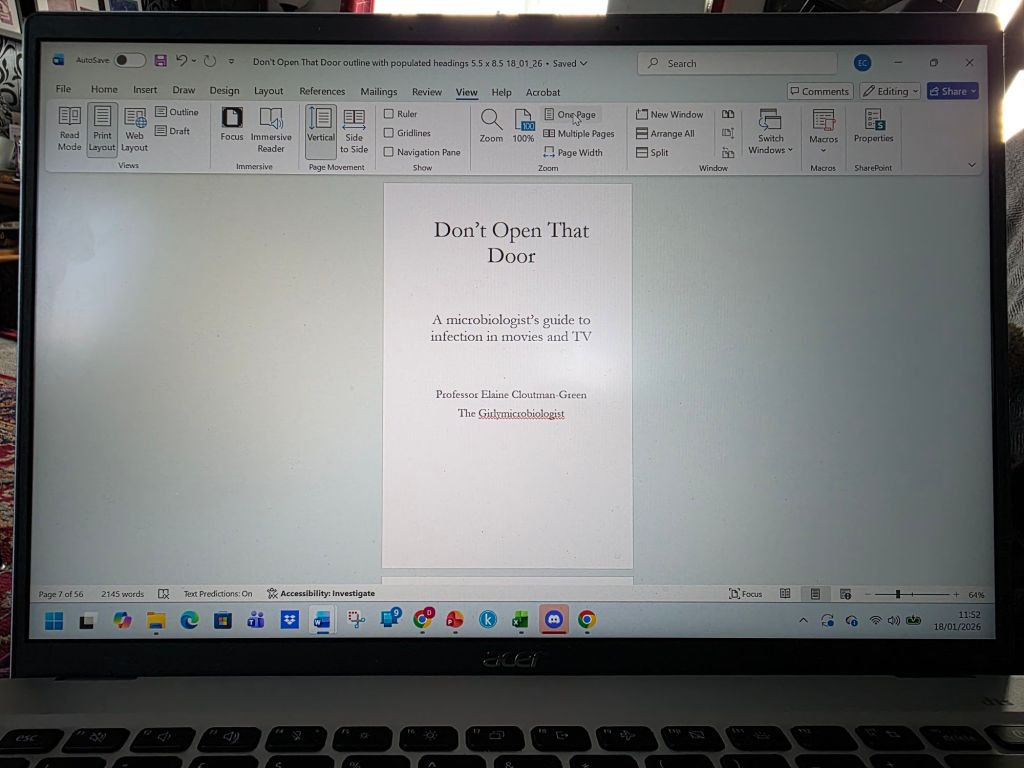
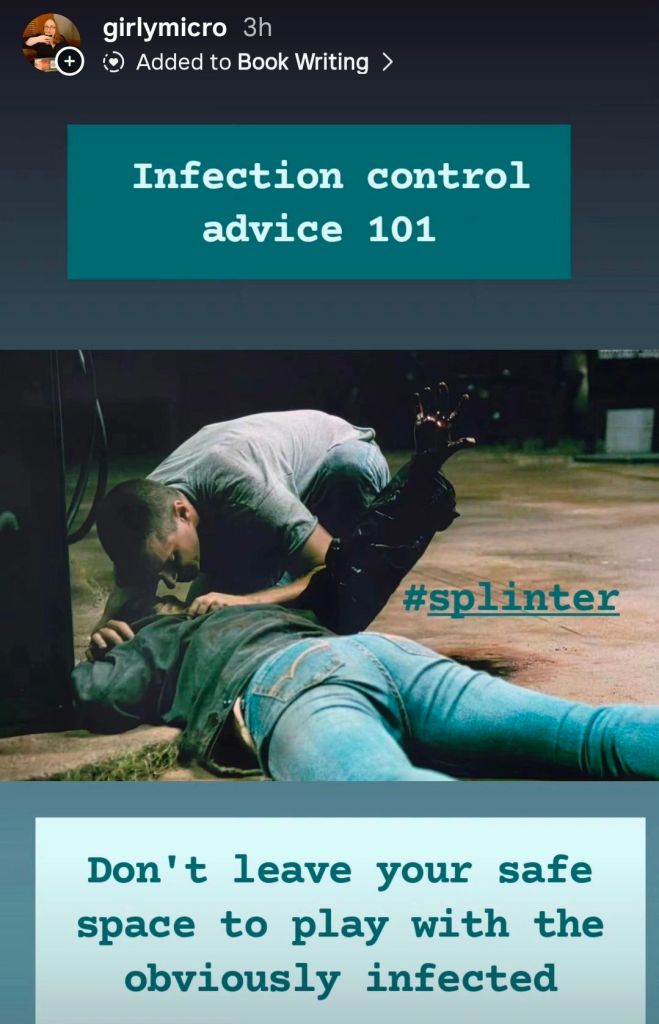
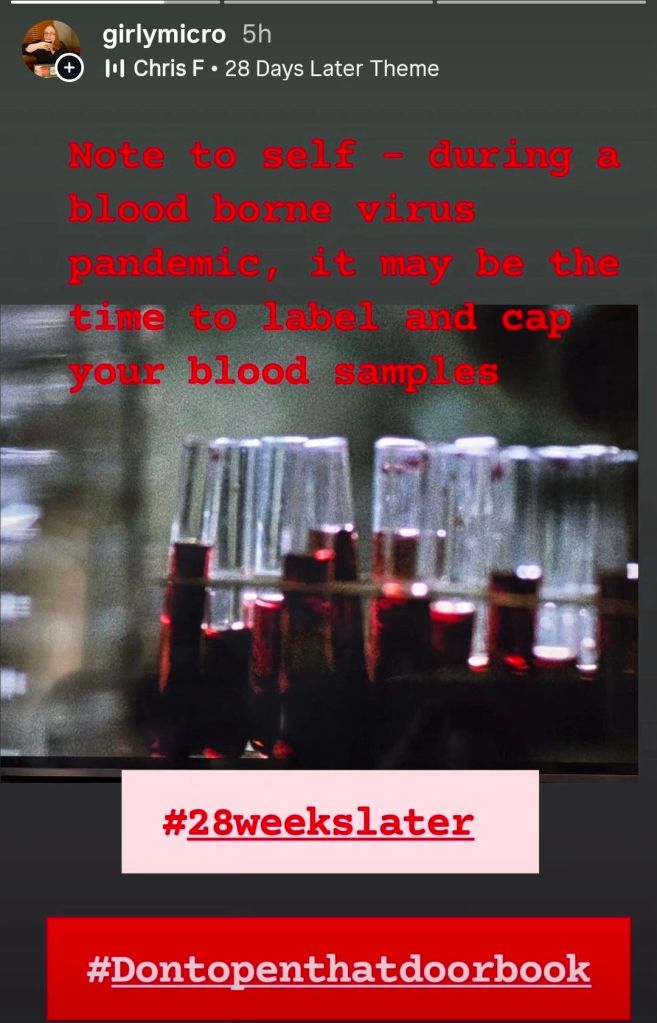
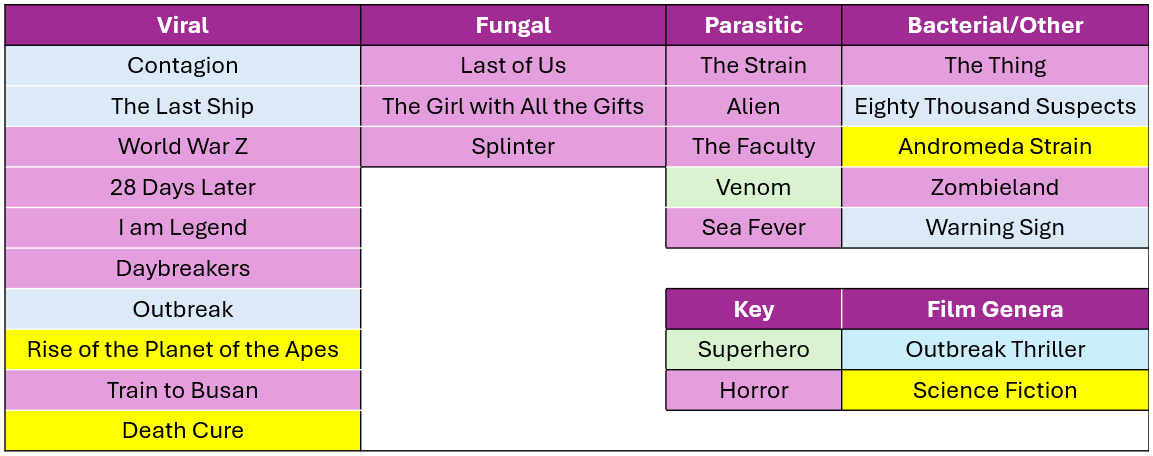
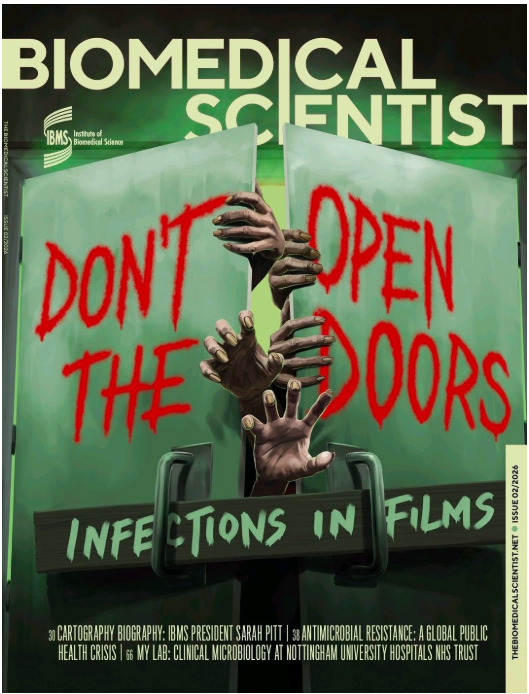
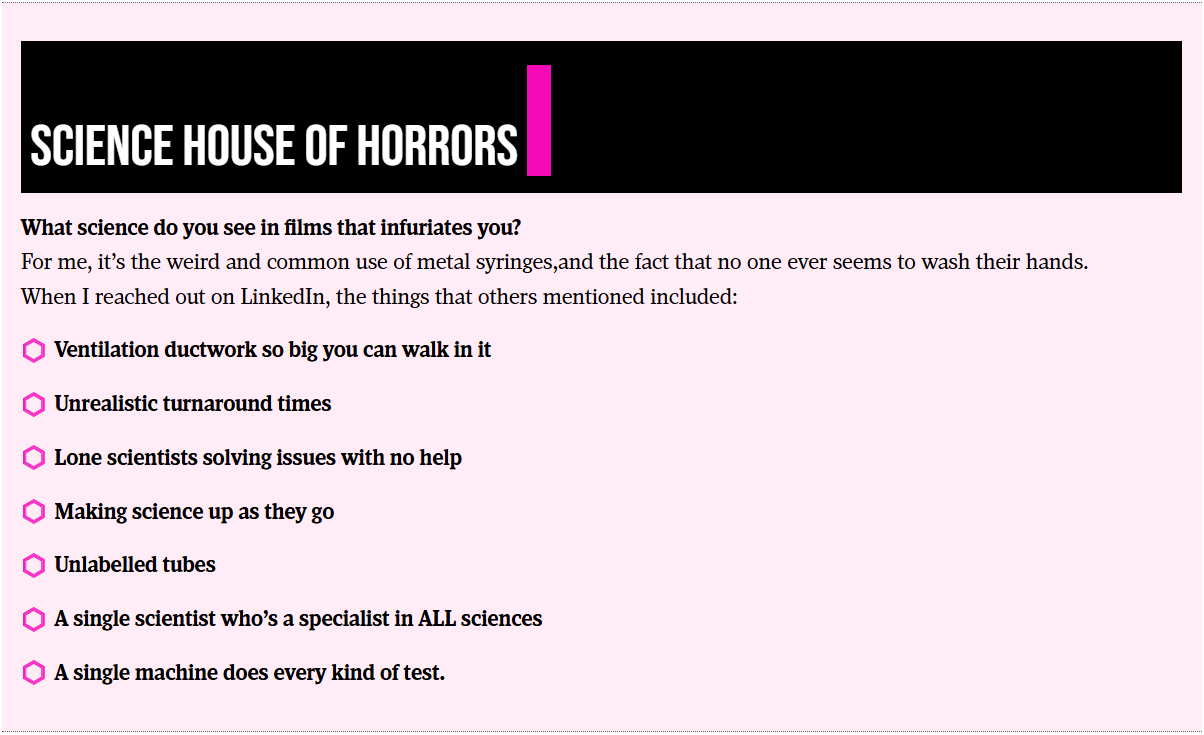
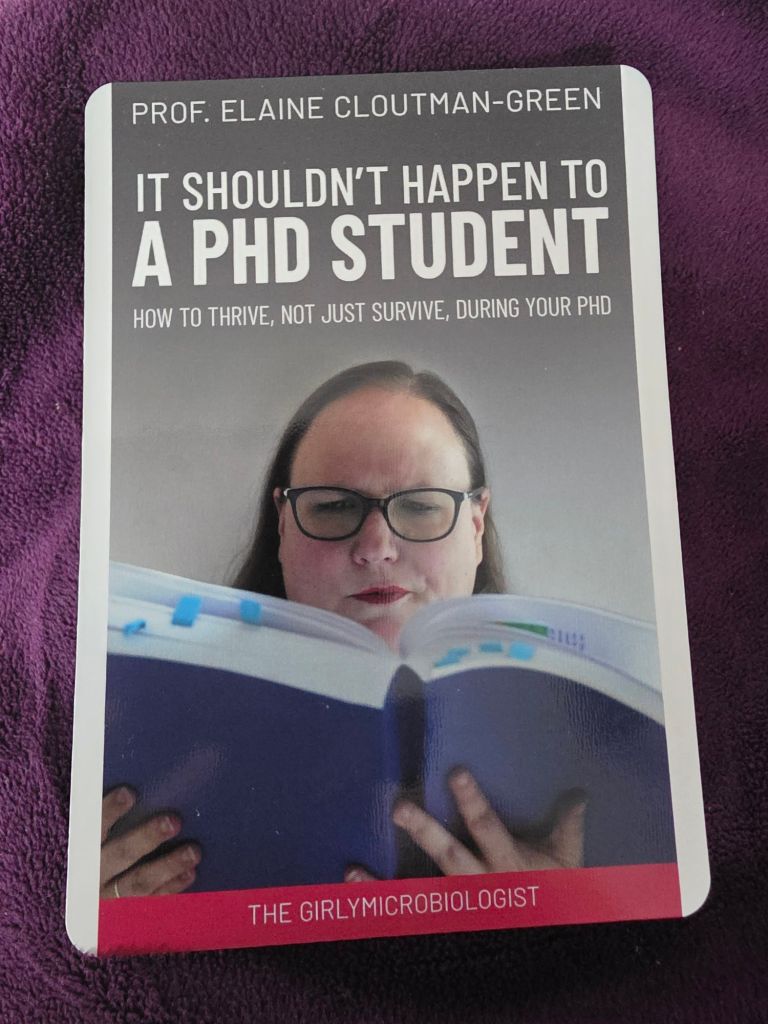




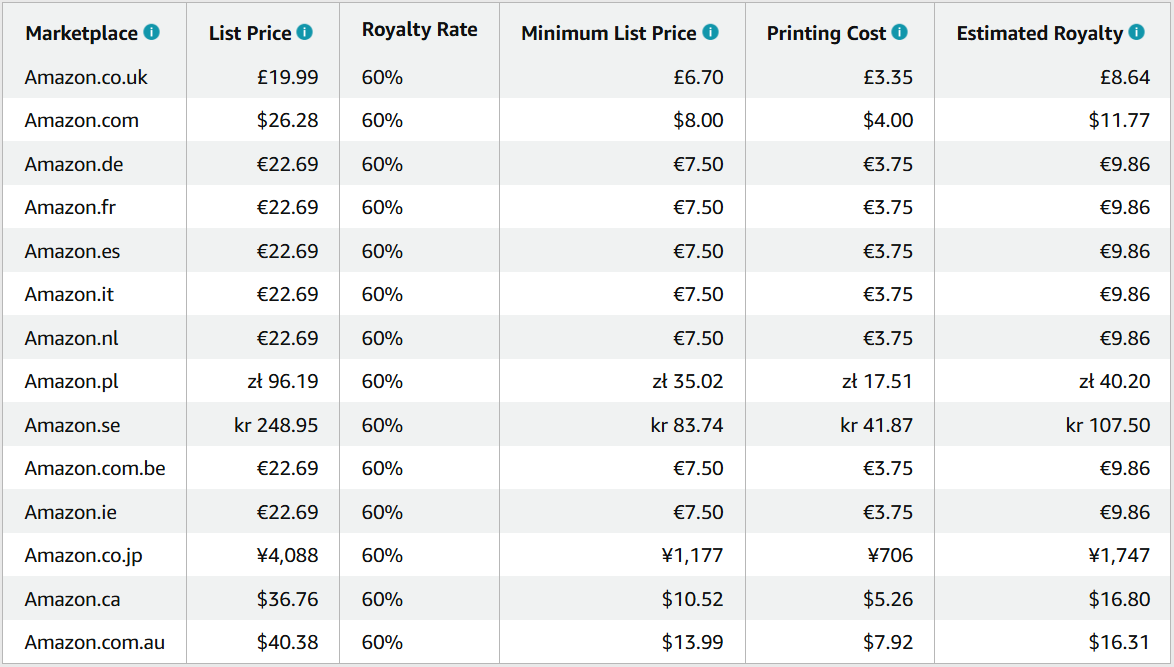

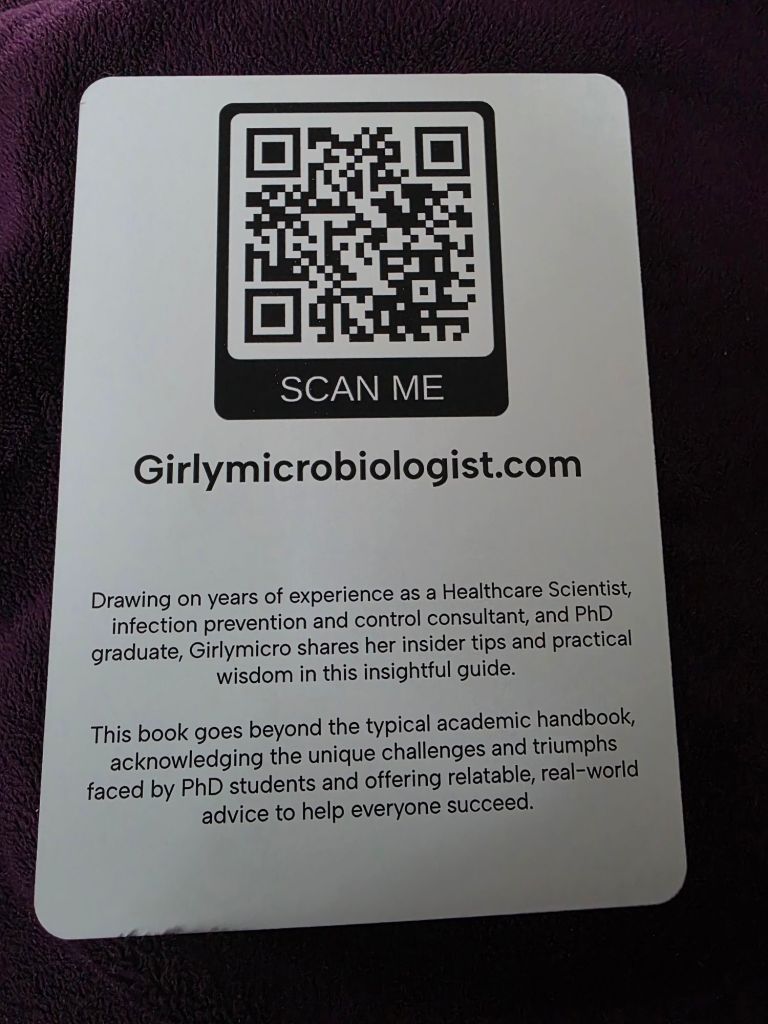

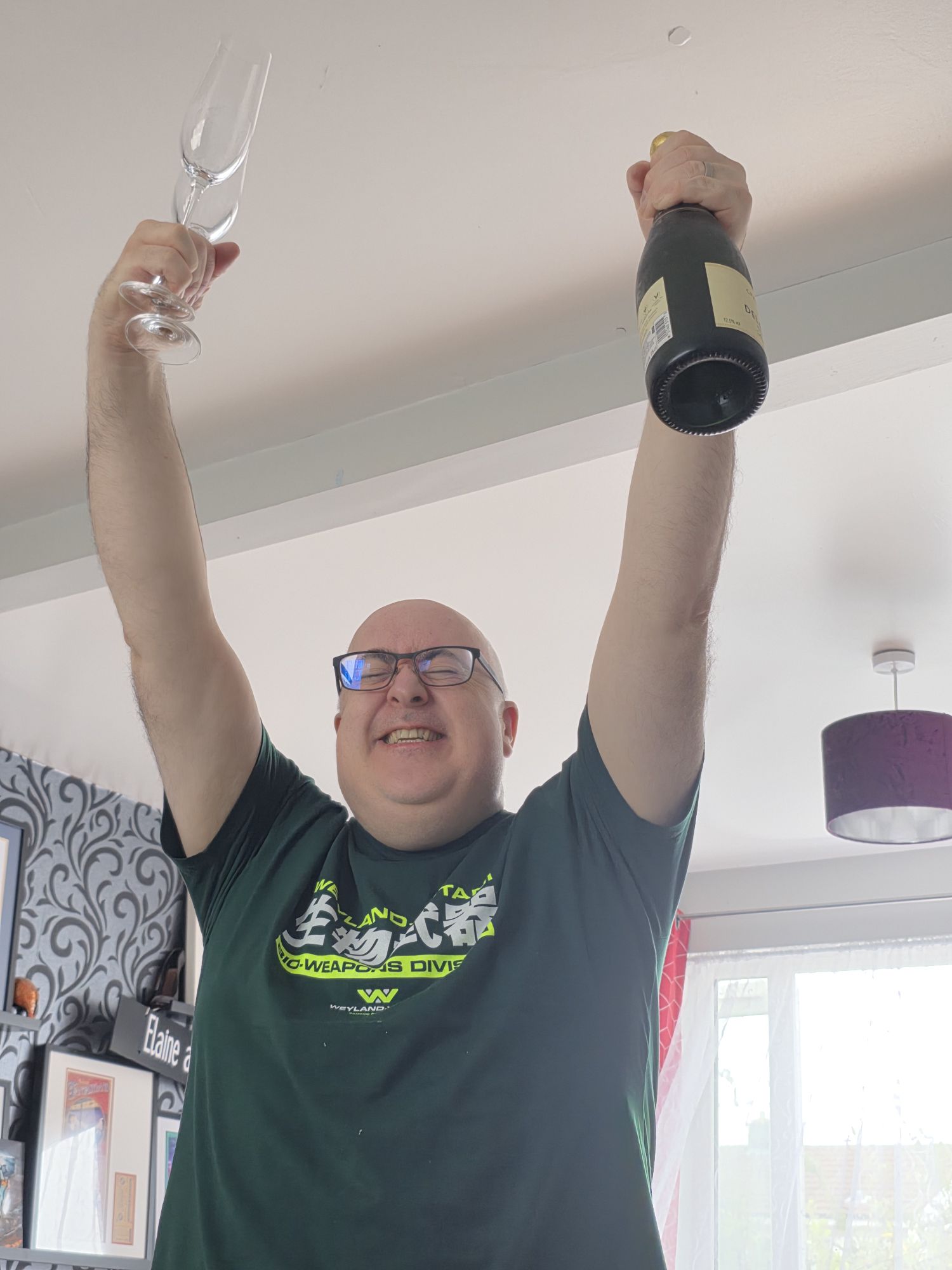


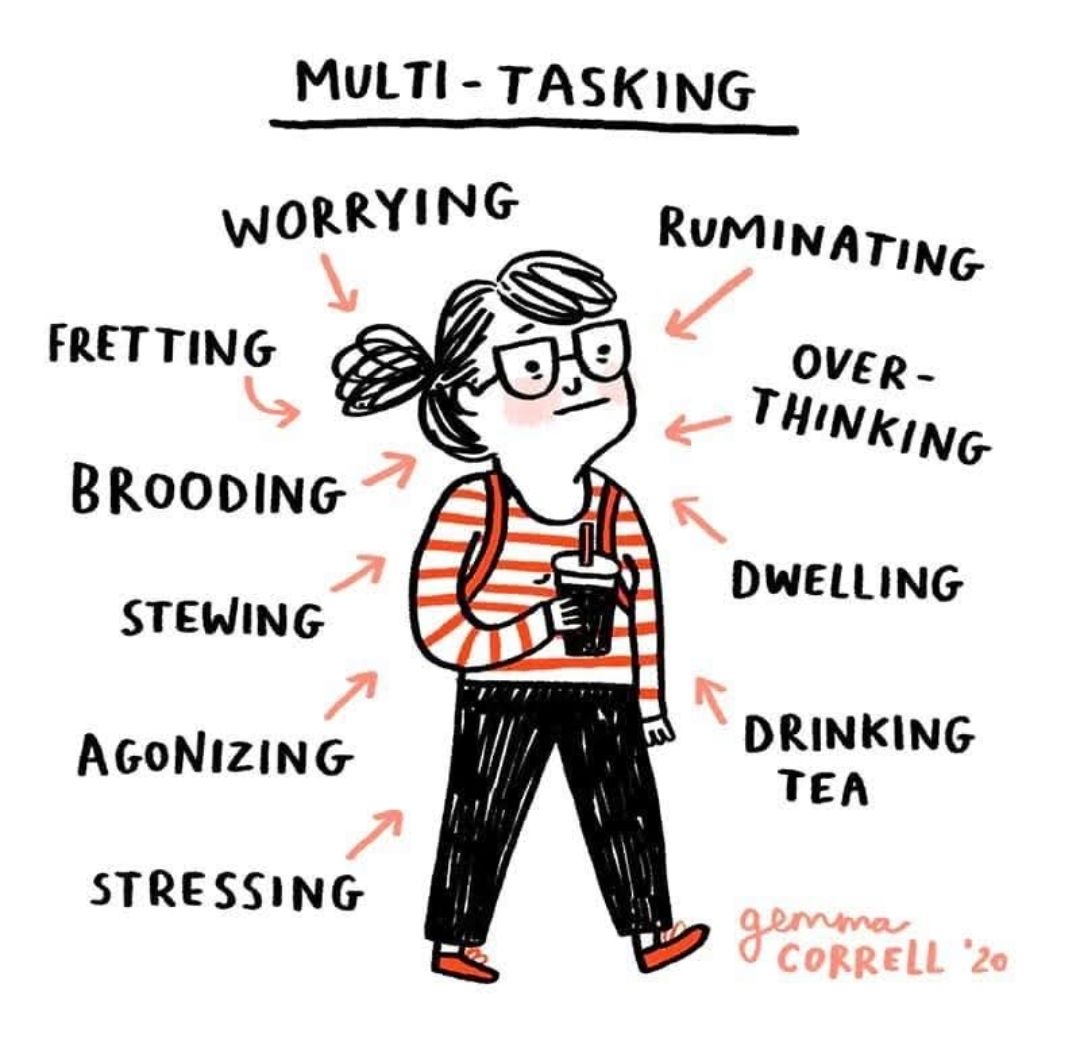
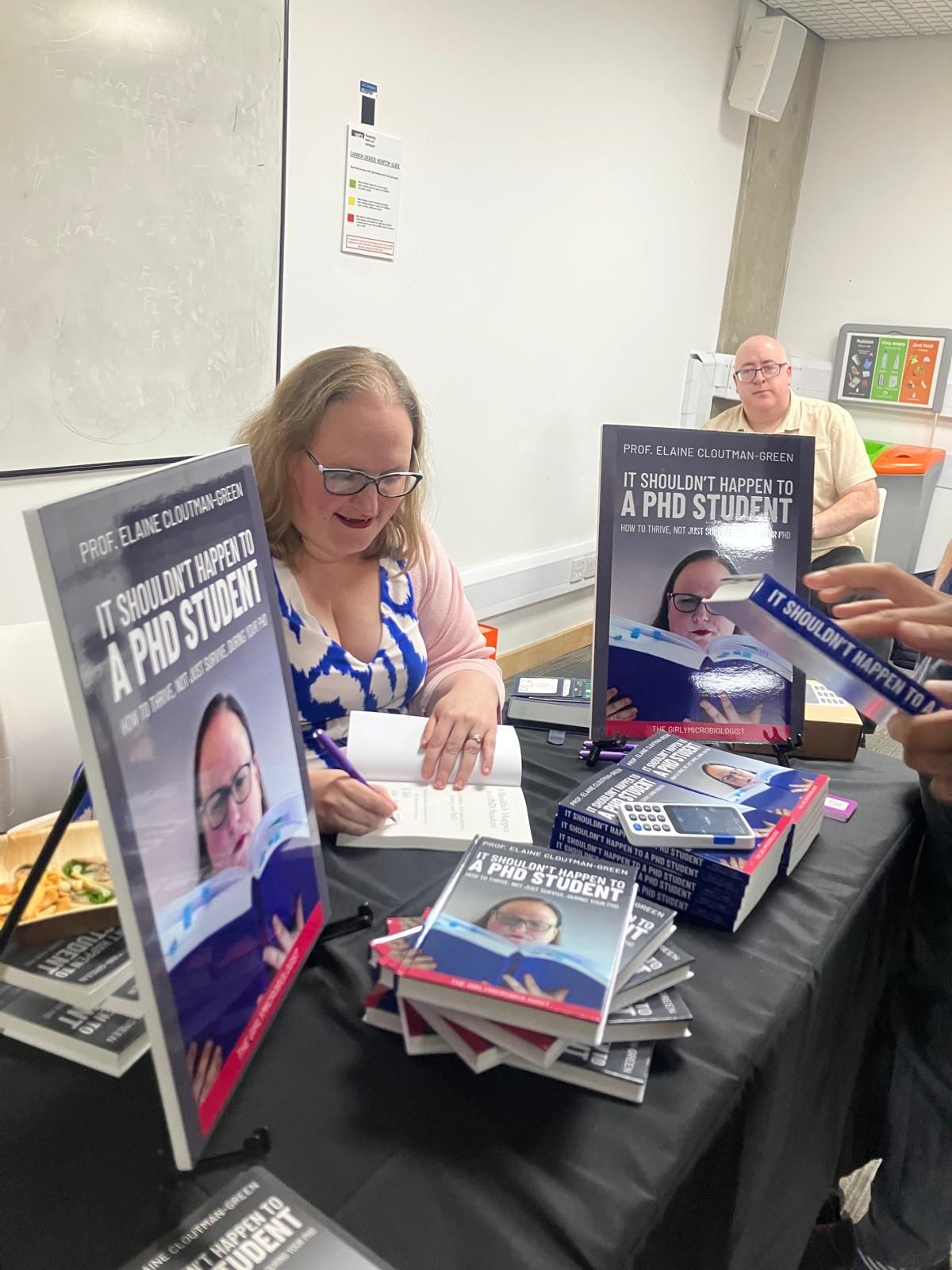
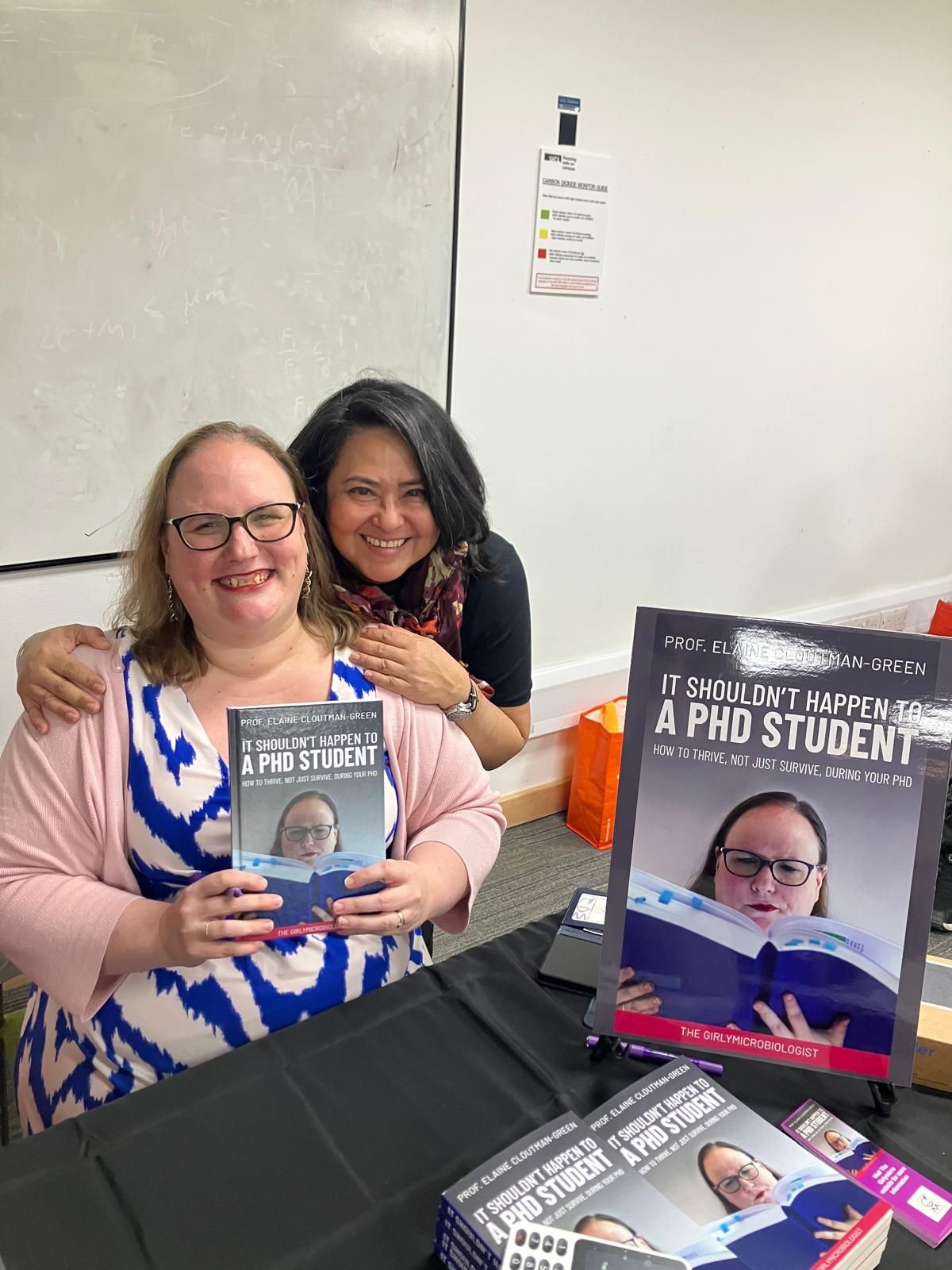
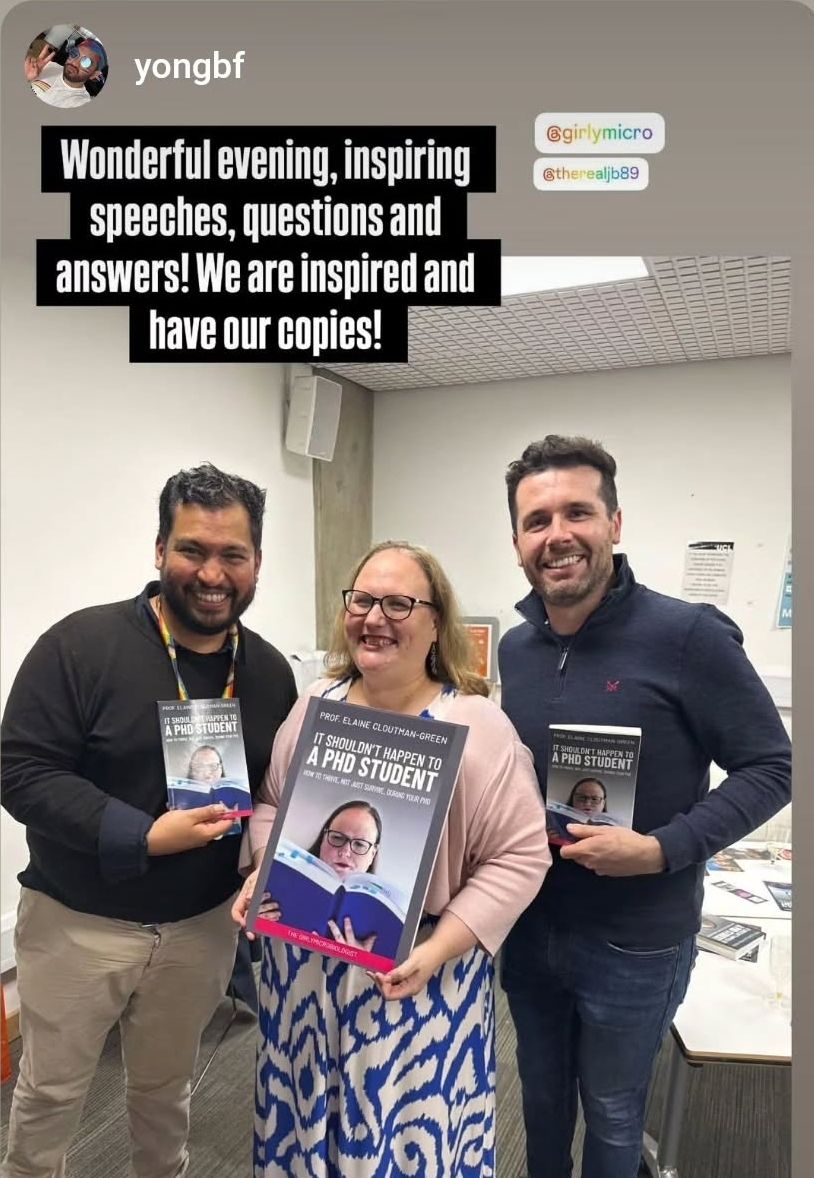


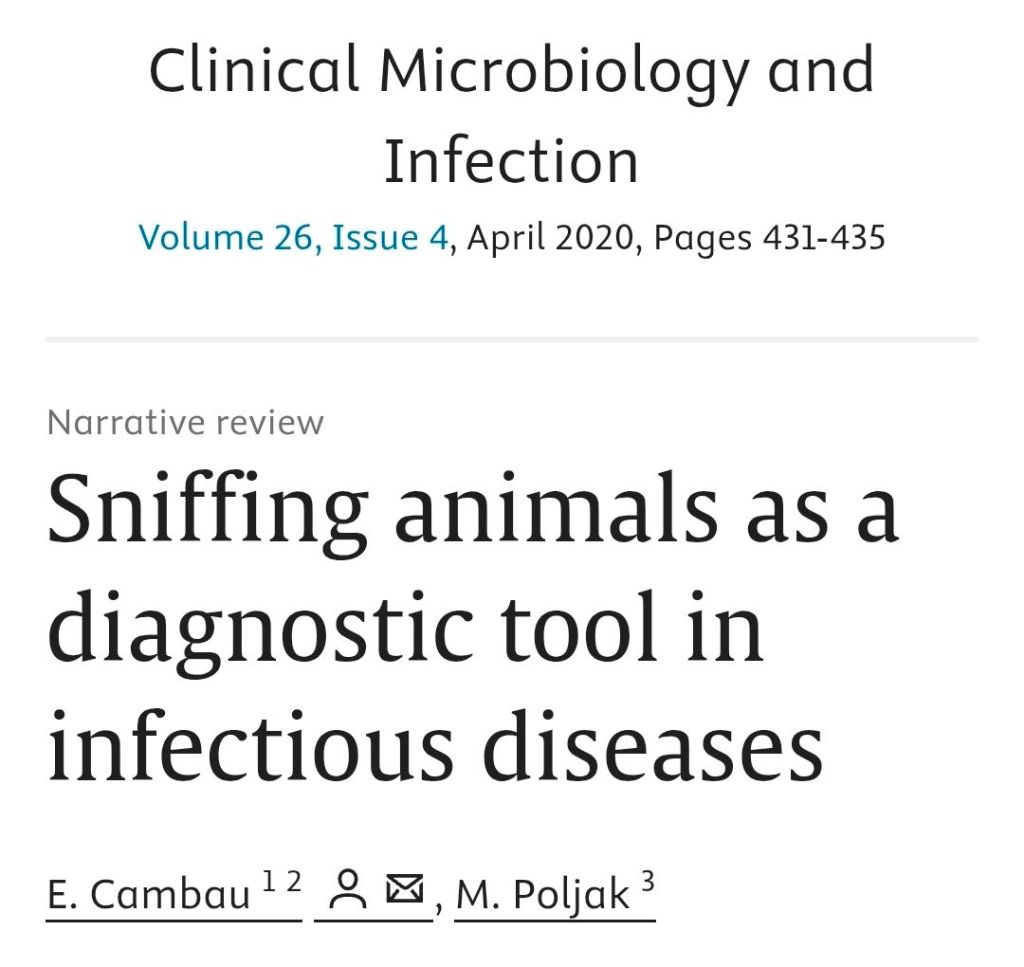


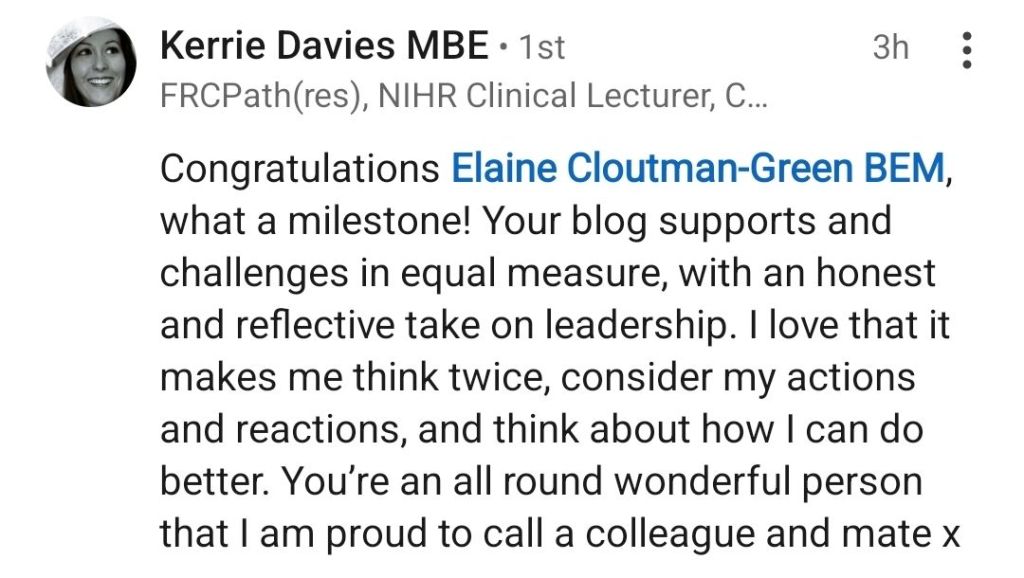
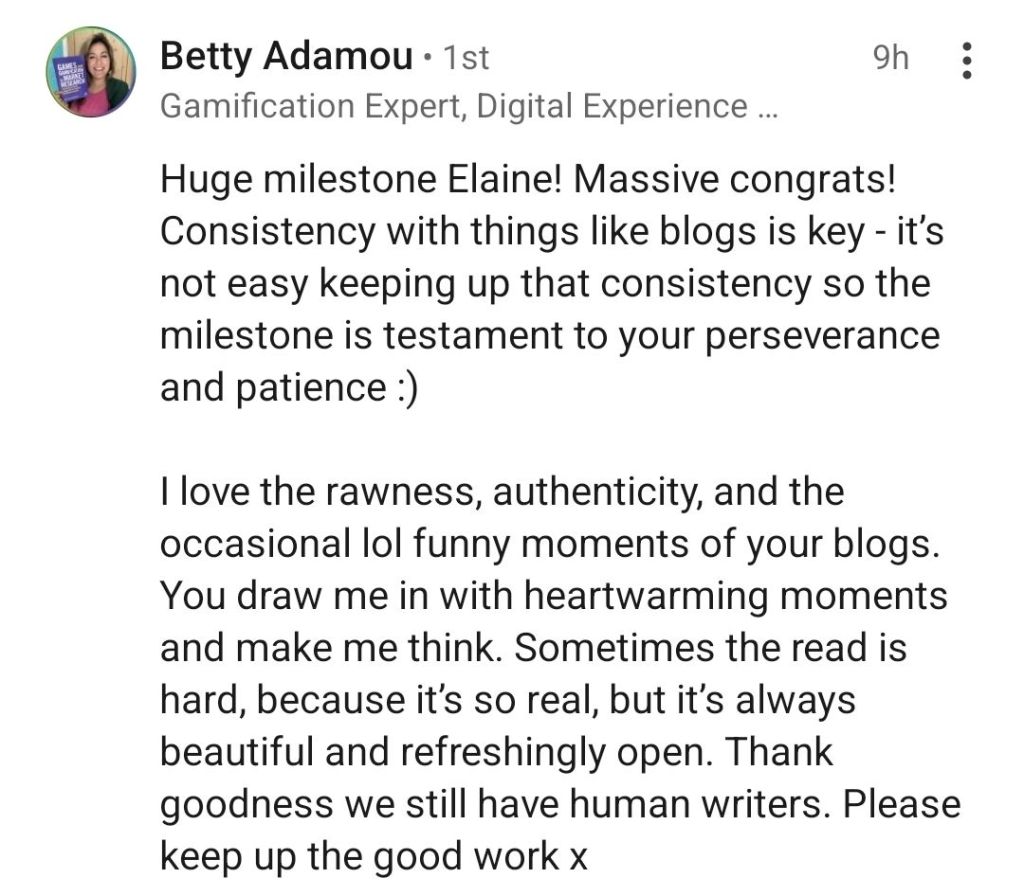

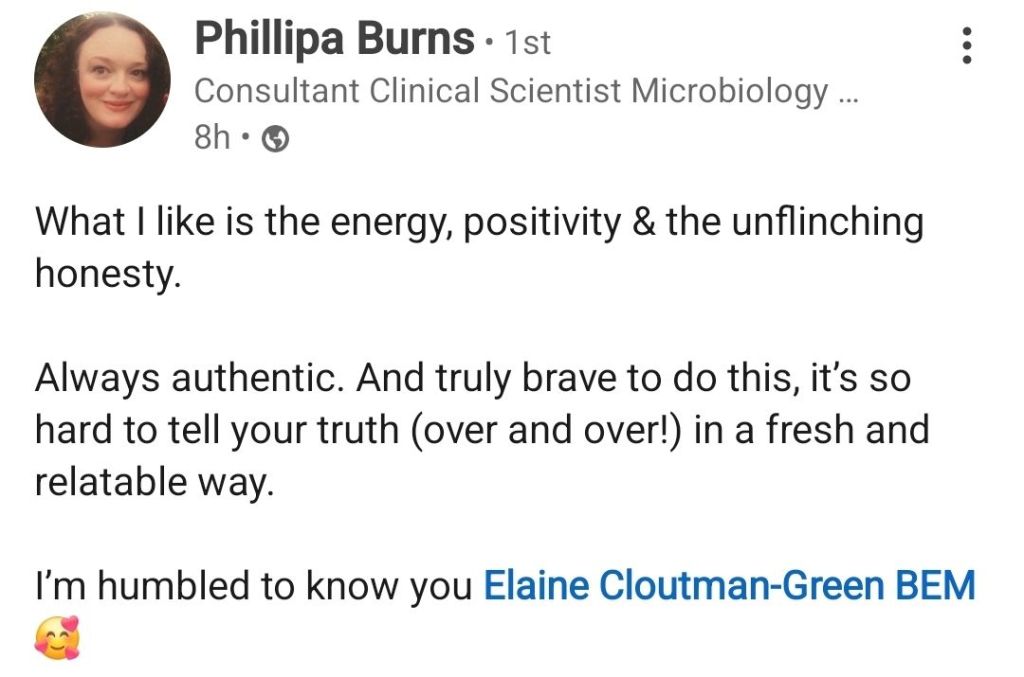

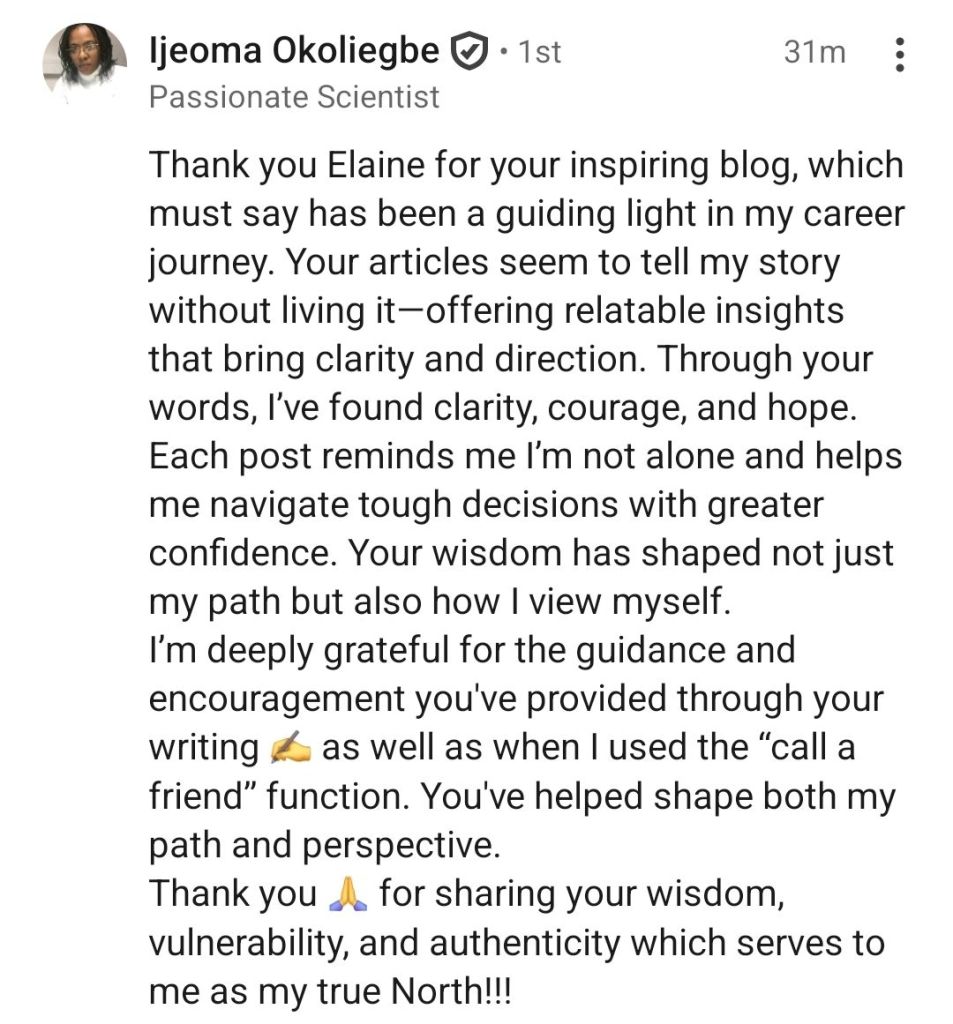
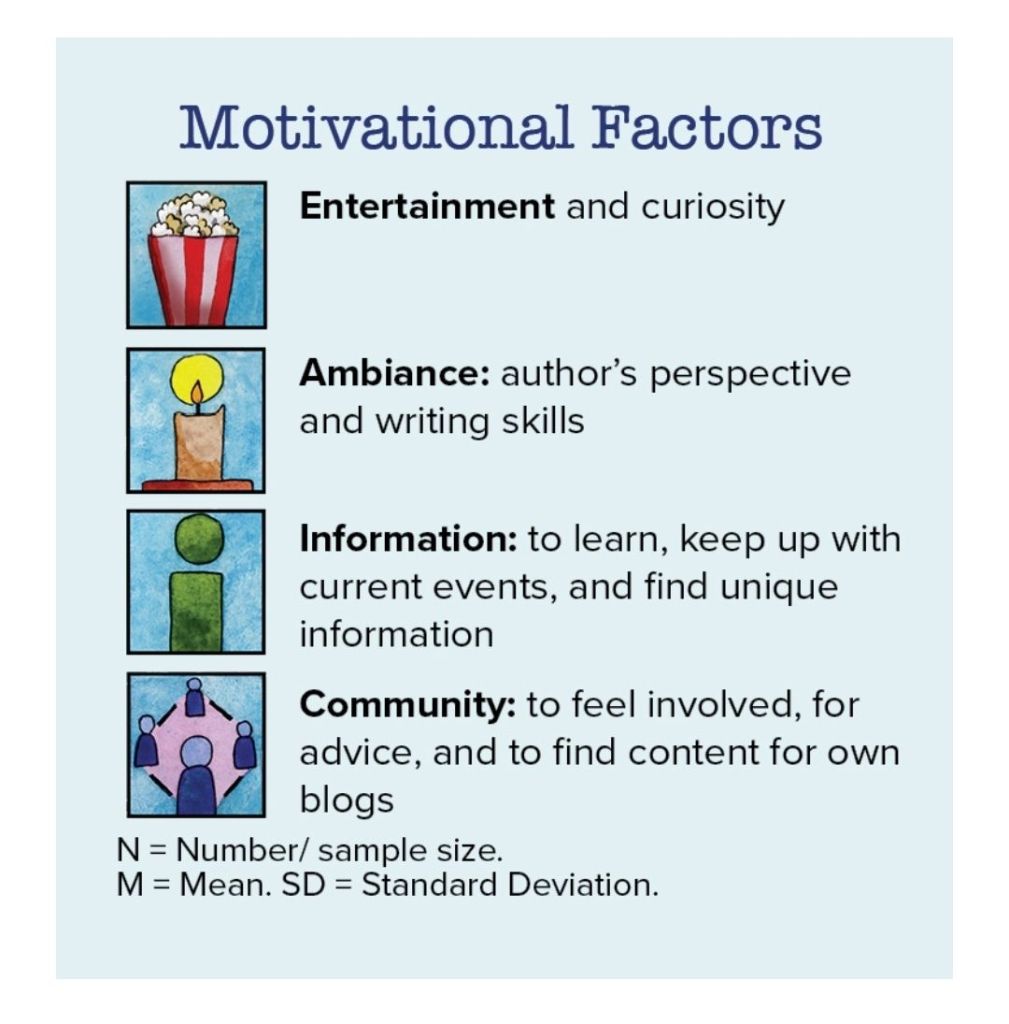


 Girlymicro