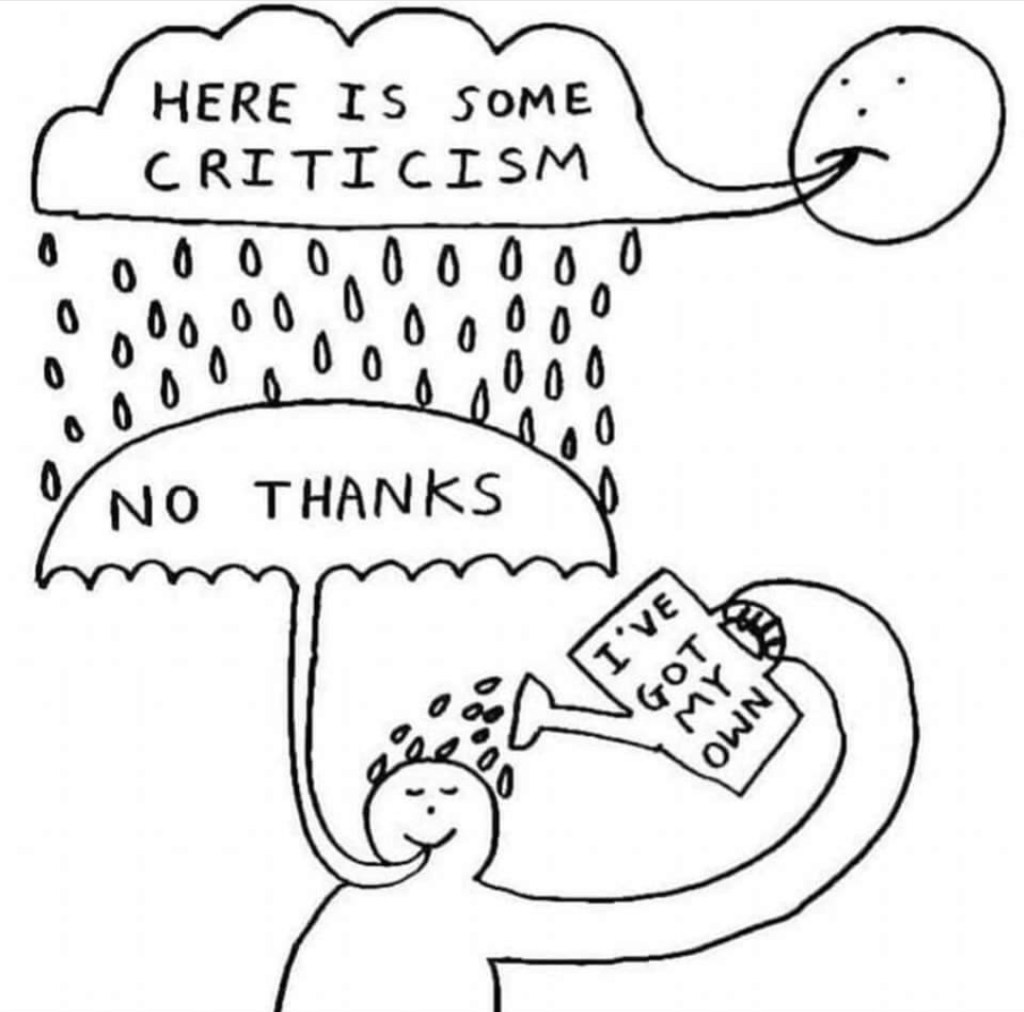
Handling Criticism with Grace: Top tips for responding to reviewers’ comments

One of my brilliant PhD students had his first experience of responding to reviewers comments last week, and as we sat and talked it through I thought that it might actually be a useful topic to write a blog about. Now, Sam was responding to reviewers comments on a review, but I think a lot of the principles stand no matter the response is linked to. I feel the same way about responding to comments and reviews on any piece of work I’ve poured my heart and soul into, be that manuscripts, grants, a piece of guidance, a policy or a business case, or my current horror – book submission. It might be that I need to remind myself of this advice as much as I wanted to share it with you 🤣.

Getting the opportunity to respond to reviewers is a success in itself

No matter how rough it feels in the moment when you first open the email/attachment and read all those comments where the reviewers have blatantly failed to read your carefully crafted wording in the way it was intended remember this. Being able to respond to reviewers is itself worthy of celebration. It means you haven’t got a full on NO. It means that the people see there is value in what you have done, even if they believe that it could be improved with some tweaking. Anything that isn’t a rejection is worthy of allowing yourself a mini celebration, chocolate bar, glass of wine, cup of tea, before you tackle the trauma of starting to make the changes.

Put on your positive specs

Whilst I drink my celebratory cup of tea I always take a moment to remind myself that this is actually an opportunity, an opportunity to make something I care about better than it would be without this process, that it’s an opportunity for improvement, and that this opportunity is something to be seized and embraced. Who doesn’t want to deliver the best thing they possibly can?

Always be polite

Now, it can also be said that sometimes recognising that opportunity for improvement can be challenging. Sometimes, those responding can have missed something that you clearly stated in both paragraphs X and Y. The thing is, they won’t have spent hours and hours reading your writing, and they are unlikely to have come to know it in the exquisite detail that you do. I tell you this as the person who blocks out only an hour to review your precious creation as that is all my diary allows. The thing is, most reviewers are doing it for the good of the community/trust/committee. They are, in essence, doing us all a favour. Therefore, when responding to what they have said its important to recognise that, and always always be polite in your response that you write. You are a professional after all.

The moral high ground gives combat bonuses

I have, on occasion, seen reviewers’ comments that shouldn’t have gotten by the editor or panel. Comments that could be considered racist or sexist, or to be honest, blatantly are. I’ve also seen responses where editors return those comments and just added a comment of their own to say ignore them and don’t respond in the review. This later one is interesting to me, I feel editors shouldn’t return these comments and should really respond to the submitter to say they are not acceptable.  When responding to these, I think it’s even more important to respond with grace. I separate out the science and deliberately respond to these with my science head. I then flag and escalate the rest of it, as if it’s a completely separate incident.

Don’t respond immediately

This is my top tip, my one thing if you only take one thing from this blog post. Never ever respond immediately. Open the email, read it once, maybe twice, to really ascertain what’s been said and see the response deadline, then close it and walk away. Nothing good ever comes from responding in the moment. I personally have a 48 hour rule. I will leave that email closed for at least 48 hours before I open it again, during which time I will drink that celebratory cup of tea and try not to dwell. After 48 hours, I’m allowed to re-open and read it again. If at that point I can read it without an overt emotional response I’m ready to respond. If not, I will give it another 48 hours. Almost always, after 48 hours, I open it and it’s nowhere near as bad as I had originally perceived with my emotional goggles on and I can just get on with a response.

Bite the bullet and get on with it

I know, I know. I just told you you need space to switch from emotional to logical response and to read what’s there in an analytical way, but you also can’t wait too long to respond. This is for a number of reasons. One, there will be a deadline for you to accept or reject what you’ve been asked to do, and you have already invested a LOT of time to get to this point. Two, you want to draft your response when the original submission is still relatively fresh in your mind as it helps with rebuttals and references. Finally, if you need more than two 48 hour breaks to get your head in the right space it’s likely that this is feeding into something bigger and you probably need to find a coping mechanism and to start processing what that is, and responding is a good way to start unpicking and reflecting on what’s driving how you feel.

Decide on the structure of your response

You’ve finally got to the point where you are going to sit down and start drafting your response.  There are lots of ways that you can do this, everyone is different, but in case you haven’t had the opportunity before, I thought I’d share how I do it in case it helps.

There are two main pieces that I would work on in parallel, the response to reviewers document and the in-text changes.

Response to reviewers:

  • I do this in Word and always have my paper title as the header.
  • I open with a paragraph where I thank my reviewers for their helpful comments (whether you truly feel it or not, this goes back to always being polite, but in all honesty there’s usually a lot of good to be thankful for)
  • I then break my responses down by reviewer, so I will have a section headed reviewer 1, another headed reviewer 2 etc, also a general one for the editors comments if there are any
  • Within each section for each reviewer, I will copy and paste over the comments I have received. I then break down these comments. Some reviewers give you a lovely bullet pointed list, sometimes with line numbers, and so this is easy. Some will give you paragraphs of text where you then have to extract each point and effectively make a bullet pointed list out of it.
    • At this stage, I tend to remove commentary, things where they is no change requested. This gives me a working list to work from, and I will colour code this text so it stands out from my responses, which I will write under each bullet point. I tend to make the reviewers comments red, I don’t know why I just do. Then, when I start writing my responses, I do these in black.
    • You can also, at this point, identify whether several reviewers have given similar comments, and then you can cluster those changes.

It’s only really at this point that I can see the wood for the trees, and generally, it’s much less bad than I had initially thought.

In-text changes:

This one is pretty straight forward. You may not have this if you are responding to a business case or grant review as they will want all the information contained in the response document. This additional document is mainly for manuscripts and contains the changes that you make in response to the review in your original paper. I tend to highlight changes to the text in yellow and then make sure I cross reference back in my response to reviewers with line numbers, as well as any commentary, so they are easy to find. The main thing to remember here is, once you’ve completed your response, save off a ‘clean’ copy without the highlights as well as the highlighted version as some places will want you to upload both.

Read what is there not what you think is there

So, the above information is about how you prepare to respond, but how do you actually respond? The first thing, and I think this is key, is to read what they have actually said, not what you think they have said. This is where I find splitting the points to be addressed up really helps, as it enables you to read them in a different way.

Common features that reviewers want added/addressed include:

  • addition of references
  • spelling mistakes
  • improvements in unclear sentence structure
  • other nuance changes

For all of these the action is fairly straight forward, you just make the changes within the original document and write a comment in your response to reviewers stating ‘changed in text – line XX and YY’. If you get similar comments from more than one reviewer, I would address them in the order in which they occur. So reviewer 1 has a similar comment to reviewer 3, I’d respond in the reviewer 1 section and in the reviewer 3 section state, for instance, ‘already addressed under reviewer 1 in line XX’.

Decide where you line is

It’s actually quite lovely if you just get quick responses as described above, sometimes however the comments require a little more. Sometimes the reviewers will want new points addressed, or occasionally fresh data included. At this point you need to decide how much the paper in it’s current format is important to you to maintain. This has happened to me a few times. Normally the additional points made actually really strengthen the paper and I am more than happy to spend the few extra hours to add in, especially as they tend to be points I already had in drafts but was forced to lose due to word count. There have however been occasions where I disagreed with the reviewer on either the fact that certain points should be included or the way they had suggested that they be done. On these occasions you are entitled, and I have done, to include commentary under the reviewers’ comment where you state why you don’t feel that it would be a suitable edit. You will need to be polite and clear, and ideally evidence, why you don’t agree. The decision will then lie with the editor as to whether they agree or not.

Get a second opinion

Once you’ve completed your response, or earlier if you are deciding to rebut points, it’s valuable to get a second opinion. You should send your response documents to your other authors for sign off, but if you are a sole author you should still find someone to sense check. This process is important, both to help ensure that you have actually addressed all the points raised, but also to help ensure that your arguments are robust where needed. I have been on papers where the first author has returned the response to reviewers without showing it to the other authors, and on reading it I have seen the response hasn’t fully addressed the reviewers which has then led to another round delaying paper submission. Some papers have loads of authors and you, with their support, may not need all of them to comment, but they should have sight prior to submission and at least the 1st and senior authors should have fully reviewed.

Learn lessons for when you are reviewing in the future

My final point is that this is a great learning opportunity, not just on the subject matter, but on what and what not to do when you are reviewing papers, grants etc. I always try to review and write comments in a way that is clear and actionable for those receiving the comments, in a way that I would like to receive them if the submission was mine. I also think it is so important to consider what should and should not be included in your review. Most journals, for instance, want to know whether the level of writing is good enough for publication but I would never cross the line into making comments about the English skills of the authors, I personally don’t feel that’s appropriate, for me, I’m there to comment on the science. It’s crucial to consider what it constructive and what is not as part of this process. When writing a review it is so important to think ‘is it helpful?’ ‘is it kind?’.

I hope all of this helps you when you are thinking about the best way to take onboard comments as they come in. I would also plea that you aim to see them as an opportunity to improve and learn rather than something that puts you into a spiral and causes you distress. Just getting the opportunity to respond is a success after all!

All opinions in this blog are my own

If you would like more tips and advice linked to your PhD journey then the first every Girlymicrobiologist book is here to help!

This book goes beyond the typical academic handbook, acknowledging the unique challenges and triumphs faced by PhD students and offering relatable, real-world advice to help you:

  • Master the art of effective research and time management to stay organized and on track.
  • Build a supportive network of peers, mentors, and supervisors to overcome challenges and foster collaboration.
  • Maintain a healthy work-life balance by prioritizing self-care and avoiding burnout.
  • Embrace the unexpected and view setbacks as opportunities for growth and innovation.
  • Navigate the complexities of academia with confidence and build a strong professional network

This book starts at the very beginning, with why you might want to do a PhD, how you might decide what route to PhD is right for you, and what a successful application might look like.

It then takes you through your PhD journey, year by year, with tips about how to approach and succeed during significant moments, such as attending your first conference, or writing your first academic paper.

Finally, you will discover what other skills you need to develop during your PhD to give you the best route to success after your viva. All of this supported by links to activities on The Girlymicrobiologist blog, to help you with practical exercises in order to apply what you have learned.

Take a look on Amazon to find out more

One Year On: What has making professor actually meant for my day to day

It’s been just over a year since it was confirmed that I’d been made an Honourary Professor at UCL. It’s such an odd and yet brilliant thing to achieve the thing you never really believed would happen. Also, because I had dreamed but never thought it would be a reality, I don’t think I’d ever thought about what difference, if any, it would actually make. I thought I would, therefore, write this blog post to help all the dreamers, like me, who might benefit from some details about what it feels like after you’ve finally crossed the finish line.

Everything and nothing

I suppose the first thing to say is both that everything has changed, but in many ways nothing has. My job for all intents and purposes is exactly the same as it was, do clinical work and try to embed research along the way.

The biggest change is probably the level of respect you get from some people based on title alone. This happened to me when I made Consultant as well. You still get dismissed, or challenged (which isn’t a bad thing), but it happens less and somehow is generally done in a nicer way. This isn’t universally true of course, but the majority of interactions are smoother. In some ways this fascinates me, as I’m the same person. The social interplay linked to this hierarchy is something I’d love to go into more at some, but as much as it’s nice I’m not sure it’s how we should work.

The other thing has made my heart full on multiple occasions. I’ve had a number of people come up and tell me spontaneously how happy they are for me, which is lovely, but they’ve followed up with ‘you making professor makes me think it’s something that I can aspire for’, which is even better! I’ve had other people say I can’t be a professor because of my age, background, or gender, but not in a bad way, in a way where their eyes were opened as I didn’t fit the image they had in their mind. Frankly, I think this in itself is brilliant, being able to hold this space whilst being who I am and changing expectations is one of the reasons I fought so hard to get here. So thank you, thank you for helping me get here. In case you are fighting your own fight, and in case it helps, whatever happens next, the fight was worth it.

A world of unexpected opportunities

There are a few key ways that change has happened that I thought it would be worth talking about. Most of these are internal, but this first one is not. I do feel like I get offered more opportunities now. Now, I don’t know for definite that this is a consequence of me making professor, but the timing feels coincidental.

Within weeks of it being official, I received my first requests for commissioned articles from journals. I’ve never had these before, and it was so exciting I accepted the first three without realising that this wasn’t a one-off and that they’d all result in a heap of extra work. I’m glad I did. It’s been nice to spread the opportunity by picking awesome co-authors who haven’t had paper writing opportunities previously or where it benefits most, like my PhD students. The ones I’ve done have been brilliant learning and fun, but to be honest, are too much on top of an already full-on job. Writing them on top of this blog has been fairly challenging as I don’t get a lot of time at home as it is.

I also get a lot of invites to attend events and sit on committees, etc. These have always happened, but they happen much more frequently now. The same is also true with paper and grant reviews for organisations. The irony of some of this is that many of these opportunities are probably much more needed for those who are working to get established or still ticking the essential boxes rather than being wasted on me. I’m honoured, and I still get a lot out of them and feel I can contribute, but I’m not sure we should focus so much on defaulting to including the already embedded, maybe we should be opening those doors wider? That said, I’m frequently the only woman or scientist in those rooms, and so maybe these invites are just that? Still, I will try to pay it forward and spread the inclusion if I can by sending others and stepping back.

A certain kind of freedom

Most of the changes, as I said above, have been in how I feel and see myself. There is a freedom in feeling you’ve achieved something that felt out of reach. It validates the dream, and the sheer act of achieving one means that it inspires you to dream more and dream bigger. It also provides a level of freedom in terms of academic thought and process. I feel there is less justifying my research interests, removing some of the early hurdles you have to get over when starting any project.

There is also freedom to have a voice and express your opinions. Now, I’ve never been exactly meek about this. You read this blog after all. Being called a disrupter and boat rocker in the past is one of the reasons I didn’t think making professor would happen. Now I’m on the other side of the line, I feel even more empowered to stand tall as it would have been easier to not give it to me than it is to take it away. I think secretly everyone loves a little bit of disruption to the status quo.

A need to change my automatic yes

One of the things I still need to get better at and embrace more is the art of saying no. Interestingly, becoming a professor has really helped with this. All of the reasons why are touched on in the following sections, but this sits as an aspect within all of them. It’s changed my thinking about saying no as a negative thing, which I need to justify and flagelate myself over. Saying no to things I’ve come to realise can be an incredibly positive choice, both for myself and others. I’m embracing the power of no, and I would encourage you to do the same.

A need to change my mindset

One of the things that I wrote about in the original post when I made professor was about the fact that you have to demonstrate that you have achieved and ticked a fairly large number of boxes, from publications and grant funding to teaching and public engagement. In all honesty, some of these boxes will appeal to each person more than others. Many of them I love, and some of them are just key parts of the job. There are others however that I can now be more selective about.

I’ve always struggled with feeling like I have to cover all bases, as I didn’t have certainty about where I would end up. Career pathways in Healthcare Science were not very obvious when I started, and so you had to maintain and develop all aspects in case that’s where the job or opportunity would be. There is so much joy in knowing where that path has led, but also in having certainty about the fact that I have the power to now make informed choices about my next steps, as I know where I’ve ended up. Nothing in life is guaranteed, but being the master of your own destiny gives you the ability to choose steps that serve your purpose rather than trying to be everything to everyone. It provides freedom from the constant striving to please.

A redefinition of identity

Something that has been a challenge for me over the last few years has been linked to whether I’m still a scientist. This may sound odd, as of course, I still do a lot of scientific activities: writing papers, reviewing grants, sorting protocols etc, but I don’t DO science any more. I’m not in the lab wearing a lab coat processing specimens, I’m also not often there undertaking experiments. It’s taken me a while to come to terms with the fact that all of the activities that don’t take place in a lab are still part of what makes me a scientist. I find this one fascinating, as it took me ages to ‘feel’ like I was a scientist, and I went through a complete panic at the thought of no longer being considered one. The process of redefining my identity to include these new aspects has been been important, but not always straight forward.

A stronger sense of self

Titles shouldn’t change how you feel about yourself, they shouldn’t, your sense of self should not be dependent on labels. The thing is though, those labels sometimes make life easier. I’m still the same person I was before I became a consultant or a professor. I’ve not morphed overnight into someone different. It does however remove some of that constant need I have to prove myself and show to others I’m good enough, whatever that means. When I’m questioned and challenged, which of course does and should happen, it enables me to have slightly less self doubt. I’m not saying that questioning yourself is not a useful reflective tool, everything is good in moderation, but sometimes I can lean too far into that questioning. I feel like having gone through the external review process, by people who have never met me, and been assessed as reaching this level of knowledge and experience does give me a baseline level of confidence that I didn’t have before. This confidence translates itself into an improved sense of self assurance which is really helpful across my professional practice.

An increased sense of responsibility

Now, I’m not old and dead yet, but crossing this milestone has really made me think about what I want next, and what the next phase looks like. Over the last year I’ve come to realise that the crucial thing for me is about opening doors for others. I want others to be able to progress in a more defined way than I did, and to find some of the doors already ajar. They will face different obstacles, but I feel like that is how we move forward. I really feel that increased sense of responsibility to help those who will come after to me, and to pay forward the support that I have had along the way to others. Having ticked my boxes it’s time to help others tick theirs.

A new sense of direction

All of this has given me a sense of direction, one that involves not being afraid to be seen, and of embracing sticking my head above the parapet for the sake of change and for the sake of others. For the first time in my career I have a stable permanent post which means that I can afford to take risks in a way that I couldn’t have really contemplated before. I have privilege, that I recognise, own, and want to harness for the benefit of others.

I want to be in this position and still be me. I want to wave my geek flag, hold my head high as an obstinate head strong girl, and show that you don’t have to fit the mould in order to be successful. It’s one reason that this blog continues to be important to me. I want to show you can have self doubt and still progress. That you can make mistakes and learn from them, and that that’s OK. I want to stand tall and embrace being ‘Too Much’ to show you don’t have to compromise who you are to make things happen. That you can aspire and achieve more than you dreamed possible by being entirely, authentically you. I want to use the platform I’ve been given and hope that you will all join me along the way,

All opinions in this blog are my own

If you would like more tips and advice linked to your PhD journey then the first every Girlymicrobiologist book is here to help!

This book goes beyond the typical academic handbook, acknowledging the unique challenges and triumphs faced by PhD students and offering relatable, real-world advice to help you:

  • Master the art of effective research and time management to stay organized and on track.
  • Build a supportive network of peers, mentors, and supervisors to overcome challenges and foster collaboration.
  • Maintain a healthy work-life balance by prioritizing self-care and avoiding burnout.
  • Embrace the unexpected and view setbacks as opportunities for growth and innovation.
  • Navigate the complexities of academia with confidence and build a strong professional network

This book starts at the very beginning, with why you might want to do a PhD, how you might decide what route to PhD is right for you, and what a successful application might look like.

It then takes you through your PhD journey, year by year, with tips about how to approach and succeed during significant moments, such as attending your first conference, or writing your first academic paper.

Finally, you will discover what other skills you need to develop during your PhD to give you the best route to success after your viva. All of this supported by links to activities on The Girlymicrobiologist blog, to help you with practical exercises in order to apply what you have learned.

Take a look on Amazon to find out more

It’s All in the Preparation: My top ten tips to help prepare for your conference presentation

I was presenting at my first conference of the year last week, which is a sign that conference season is soon to well and truly kick off. I know that this often puts many of us in a state of anxiety. We know that conference presentations are important for both getting our work out there and also for personal and career development. Presenting however, can feel like quite a high stakes manoeuvre, especially if you are not comfortable with public speaking. With this in mind I thought it might be useful to share some tips that I have learnt, in the hopes that it might help with your next upcoming session.

1 – Know your audience

The first thing to realise is that we often make presentations about us, when actually they aren’t really about us at all, they are about the audience and what we are trying to achieve on their behalf. We are often given a fairly generic topic to speak on, or have submitted an abstract of what we wish to present. That’s great but actually probably doesn’t have enough clarity to start putting together the session. My first step whenever I’m asked to speak is to think about the learning objectives for the session. What might benefit the audience most? What are they expecting? Learning objectives act as a guidepost, and I will usually include them with the blurb I’m asked to write for the agenda. This means that people selecting their sessions will be able to make an informed decision about whether your session will work for them. Are you pitching an introduction level session or an update on the latest research that assumes pre-existing knowledge? You want to match your pitch to the audience that you are expecting.

It is also worth thinking about what kind of atmosphere is likely to be present? Is it a fairly informal setting where the session will be more discursive or is it a formal conference session where you may need to prepare for possible confrontational questions? Prepare for questions and queries whilst you’re preparing your session, try to think about the rabbit holes that the audience might want to go down and for any potential pitfalls where you will need to have a pre-prepared strategic response. If you’ve been clear about what the session covers and audience pitch this should be less of an issue, but it’s always worth being prepared.

2 – Be prepared to bring your authentic self

One of the things I’ve come to truly believe is that, no matter how formal the session, you should bring your whole self to it. I’ve written previously about how we should feel free to wear clothes that empower us, and conference sessions are no different. This can be something as simple as wearing your favourite colour, but whatever it is, delivering talks is easier when you feel good and empowered so do whatever you need to feel that way. My top tip is that whatever you decide to wear, ensure that it’s comfortable. I used to wear heels to speak but now I always wear flats, as I’ve decided that the pain isn’t worth it for me, especially when you consider how long you will be networking after your session.

The other place were I try to ensure that I also include something that is a little bit me, is within the presentation itself. Again, this can be levelled dependent on setting, sometimes I just choose a colour scheme or icon that speaks to me. Other things you can include are quotes or images that are meaningful to you. Again, it doesn’t have to be something big or in the face of your audience, but something that centres you and makes you feel more like you own the space you are presenting in. Sometimes however going big is the way forward, sometimes making something memorable is the right approach, it all depends on your confidence level and the setting.

3 – Judge your session

I’ve talked up above about thinking about how informal/formal the setting you are presenting in and how this can impact on your content. There are however other things that are beneficial to think about in terms of expectations for your setting. The type of session will dictate a number of things, as will time slot and room allocation. If you know the venue you are going to you may be able to predict numbers of attendees for instance, if you are allocated a room you may be able to find out whether its for 15 people versus 1500. High numbers of attendees will limit your options for interactions, as will being given a 15 minute time slot.

Common types of sessions include:

  • Debates
  • Research presentations
  • Topic presentations
  • Workshop
  • Plenary or keynote
  • Speed presenting
  • Poster presentation
  • Careers presentations
  • Panel sessions

There are obviously others but these are the main ones that spring to mind. Just from looking at the list you’ll be able to see how different ones will attract people with different levels of pre-existing knowledge or interest. There are some key questions that are worth asking to help you support judging your session when the email comes in. First, always confirm length of session and whether or not this will include time for questions. Second, ask about number and types of attendees both for your session and the target audience for the conference/meeting itself. Finally, as this will impact your options for engagement with large audiences, will there be free Wi-Fi available for attendees so they can access voting apps? Don’t feel like this information should confine your creativity and what you want to undertake but build any limitations into your thinking in order find solutions ahead of time. Finally, please please please never be the person that delivers a 40+ minute talk despite being given a 30 minute slot.

4 – Use the agenda to guide you

Once the agenda is released and you’ve starting to build the content of your session you can also use it to help in your preparation. Your timing and position on the agenda can influence the build of your talk. If you are directly after lunch, you might want to think harder about the engagement side to wake everyone up and get them back into the flow. If you are just pre lunch, you might want to stack some of your more exciting parts towards the end and build towards them to ensure you keep the audiences attention. If you are going first or last you probably need to start and finish with a bang. 

The other area where the agenda can really help you is to see what others are covering, especially if they’ve listed any focuses or learning objectives in their descriptions. This may mean you can get valuable slides back if someone is talking on a similar topic ahead of you, and will therefore have given a lot of similar introductory slides, thus giving you more time to build on the subject in your slot. It can also give you ideas of areas to avoid, so that you don’t give too much overlap. One of the things to not do is be intimidated by anyone else on the agenda. If you are speaking/presenting you have earned the right to do so, it doesn’t matter if the person before you is Dame X or Professor Y, acknowledge what that might do to the atmosphere in the room (i.e. may mean you have a larger audience) and then plan as if they were any other speaker.

5 – Have a plan on how to engage attendees

Engagement can start before the event even begins. If you have a poster session for instance, you might want to share a picture of your poster and it’s location on social media. Sometimes I also find running polls can help with working out pitching your session, and also in building engagement so that you are more likely to get an audience. This can be especially important if your session is at an event where there are multiple sessions running at the same time and therefore you almost need to sell why someone should comes to yours when there is so much choice available. Taking some time to raise awareness via social media using the event # can be really beneficial under these circumstances.

Depending on the availability of Wi-Fi and session details you may also want to consider using tools or apps to support interaction with the audience during your session. You can use tools such as Mentimeter and Slido to build voting or other forms of interaction into your session. This approach is especially important if you are asked to do a workshop session. It’s also worth asking additional questions during the prep phase, such as the type of seating, to see whether it would support group discussions.

Even if you are giving a standard presentation without interactive tools you still need to think about how to engage your audience. There obviously many different ways of doing this, starting from basics like pitching correctly so you bring your audience with you. If you can bringing yourself to your session by using framing such as story telling it can really help, alongside the use of humour. You can even think if there are props that would be appropriate to support what you’re talking about, although you also don’t want to make it gimmicky. Whatever tool you feel comfortable with, practice using it as it will make sure your session is more memorable.

6 – Make sure you have a plan B

Things go wrong, they do, despite your very best endeavours. Having a plan B in your pocket never hurts. This can be as simple as having a USB with your slides on it with you in case they haven’t managed to load it before you arrive. If I’ve included videos or anything else ‘fancy’ in my presentation I will always have a plan B and C. Plan B is an extra copy of my talk without the ‘fancy’ bit in it in case it doesn’t work when I test with the AV tech ahead of my talk. Plan C is a script in my head that I can use to describe the video in case it worked on test and suddenly fails during the real thing. If I’m doing a smaller session, I will also sometimes arrive with print outs of my slides so that I can approach it old school if needed.

Having a plan B is especially important if you are using voting or something tech related. If your entire session is going to be based on audience participation you need to have a plan if no one there can get signal or access to Wi-Fi. It’s worth building this flexibility in when you are developing the session so you will not need to entirely wing it if the unexpected happens to you.

7 – Be prepared to push yourself

I’m just throwing this out there. You should be prepared to push yourself into a space where you feel uncomfortable. Growing your skills is a never ending task, even if you feel like you are a pretty good public speaker, there are always things to learn, improve and do better. Sometimes the very act of speaking is a sufficient push because it’s not an area in which you feel comfortable. If you are comfortable talking ‘science’ maybe also stretch yourself by bringing more of yourself into the session. Embrace the creative possibilities and strive to have more impact, build better engagement, be more memorable. Read and research on the topic of how to present better in the same way that you would read and research your content and find inspiration about the next thing you could try.

8 – Facilitate a relaxed state of mind

Having just encouraged you to step out of your comfort zone by planning your presentation I also now want to encourage you to remove the stress that can be present outside of the speaking component itself. I speak from experience. I once agreed to speak at 2 conferences on the same day, on different topics and in different cities. This was beyond foolish. There simply wasn’t enough time to get from point A to point B and I arrived to land on stage for the second session with 1 minute to spare. I’ve also learnt that travelling up on the day of a session doesn’t work for me, it just makes me too stressed. I now will always travel up the night before, even if I arrive really late, because then I can go to sleep knowing that I’m where I need to be rather than lying awake all night stressing about whether an act of god will stop me making it to my session.

I also comfort myself by reading up on the areas that I have identified during my gap analysis that I might get questions linked to, or to reassure myself – even if it’s a topic I know really well – that I have up to date information and references. Feeling like you are walking up to a podium prepared is the best way I have to remove any of my stress linked to presenting.

9 – Plan to do your own timing

This is one I have learnt the hard way. I don’t like clocks present in the corner of a screen when I’m presenting as I want to be looking out at the audience and connecting when I’m speaking not constantly looking down at a monitor, probably slightly influenced by the fact that I don’t use notes as it enables me to feel more organic. I know some of you will feel differently. I’ve learnt to manage this by having a phone with a big clock (on silent) with me when I present so I can see it as I move around. I know that there will often be Chairs or speakers who will signal when you have 5 minutes left. I personally find that I need to pace my session throughout, as otherwise at 5 minutes I could be left with waaaay too much to cover, and so I like to time check myself. The final reason I do this is that I have been caught out. I’ve turned up and started a presentation and realised there was no clock or timing device visible anywhere. The panic, for me, at that point is real people, it’s a real stressor for me. You may have a different thing that triggers you, but once you identify what it is, do your best to have a plan to redress it so it doesn’t distract you from the moment you are in.

10 – Use the opportunity to build your networks

This last one I think is really important, if you are given the opportunity to have a platform use it! No matter how nerve racking it is, no matter how much you may not like presenting. In fact, if this is not your naturally comfort zone all the better, go out and seek opportunities that enable you to do it more. With practice comes familiarity and skill development. Don’t feel alone in your discomfort, but do know that there will be something in you that can inspire and give confidence to others. The world needs to see more people like you, whomever you are, especially if you have the courage to bring some of yourself to the podium. There is not enough diversity present on agendas and that is something that needs to change, and we need to have the courage to do that together as a collective.

The other thing to bear in mind is that so much within health and science is dependent on who you know. It’s probably not fair but it is true. Connections and networks are where you gain invites and opportunities, and presenting and meeting people is a big way to build these relationships. Whether you do this by following the hashtags for the event on social media, by speaking to those presenting or partaking in networking and social events at the meeting, networking is key. For those of you, who like me, find networking challenging I’ve previously written a post which I hope might help, but presenting is often an easy way to do it as people will come to you and you already have a shared interest through the topic. Whatever your level of networking comfort it’s worth putting in some time ahead of the event to think what your strategy might be, and who you might want to catch up with.

I really hope that this post will help support you, no matter how many presentations you’ve done, to bring a little bit more of who you are to the room you are presenting in and to be a little bit braver in some of the choices you make when developing sessions. I also hope that by sharing some of the learning I’ve gained by making mistakes, or making life harder for myself, that you won’t make the same ones. If you have any other top tips that you’ve gained to support presentation preparation then please do add them in the comments. See you at the podium!

All opinions in this blog are my own

If you would like more tips and advice linked to your PhD journey then the first every Girlymicrobiologist book is here to help!

This book goes beyond the typical academic handbook, acknowledging the unique challenges and triumphs faced by PhD students and offering relatable, real-world advice to help you:

  • Master the art of effective research and time management to stay organized and on track.
  • Build a supportive network of peers, mentors, and supervisors to overcome challenges and foster collaboration.
  • Maintain a healthy work-life balance by prioritizing self-care and avoiding burnout.
  • Embrace the unexpected and view setbacks as opportunities for growth and innovation.
  • Navigate the complexities of academia with confidence and build a strong professional network

This book starts at the very beginning, with why you might want to do a PhD, how you might decide what route to PhD is right for you, and what a successful application might look like.

It then takes you through your PhD journey, year by year, with tips about how to approach and succeed during significant moments, such as attending your first conference, or writing your first academic paper.

Finally, you will discover what other skills you need to develop during your PhD to give you the best route to success after your viva. All of this supported by links to activities on The Girlymicrobiologist blog, to help you with practical exercises in order to apply what you have learned.

Take a look on Amazon to find out more

My (possible) Mid-Life Crisis and Me 2023 Edition: Entering 2024 has left me questioning….have I peaked at 44?

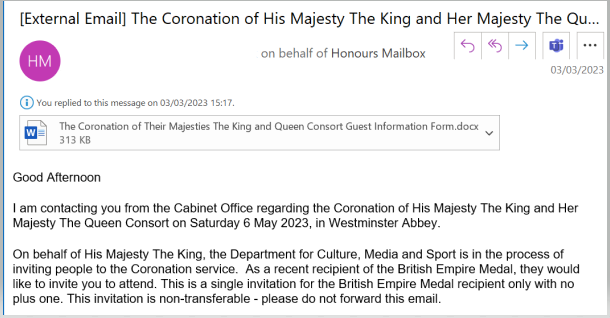
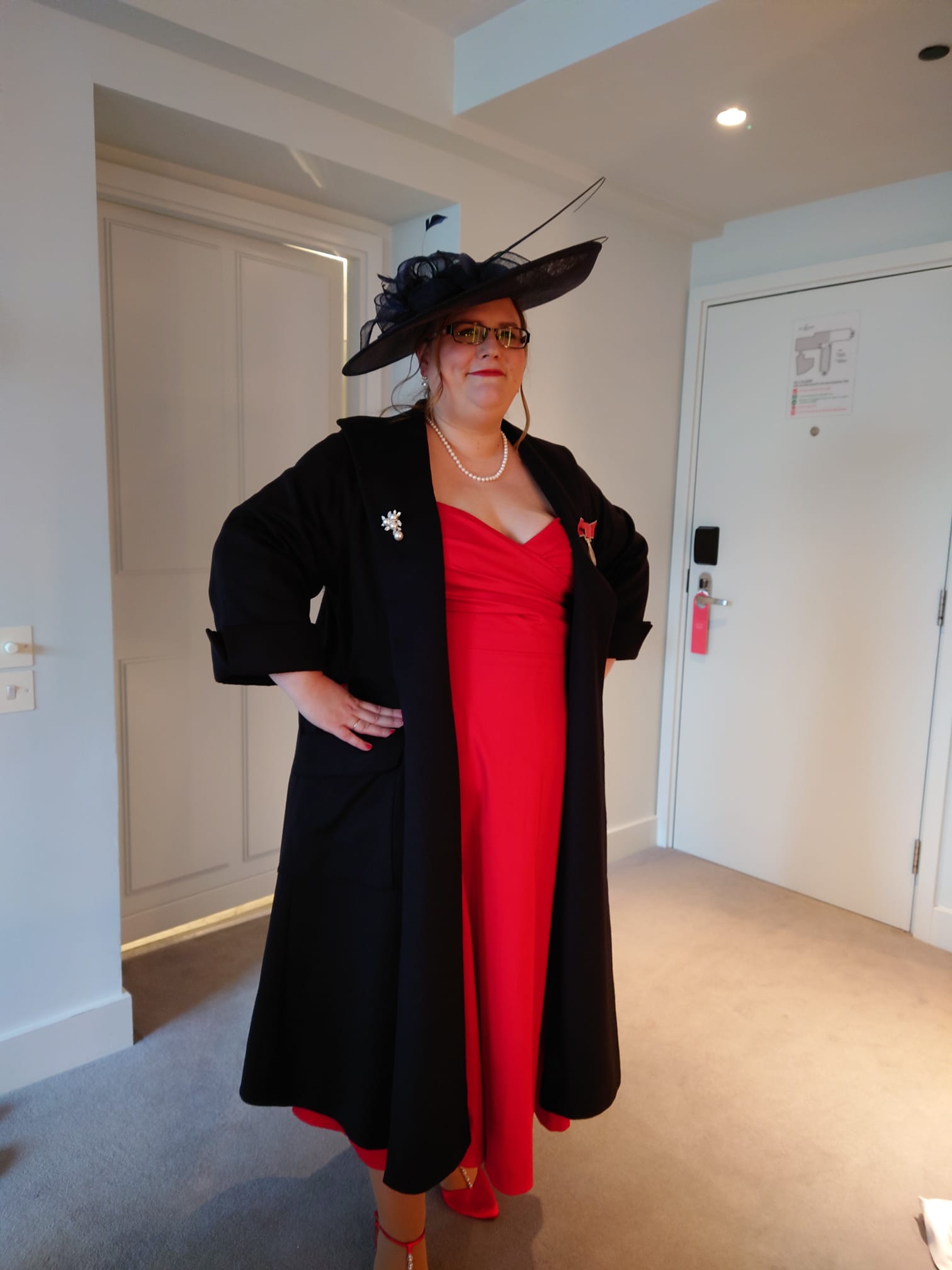
Heading into 2024 is a slightly odd event for me. Let me tell me why. 2023 ticked boxes for me I had never imagined existed, let alone had on my list. I attended the King’s Coronation. I got to fulfil a lifelong dream and go to Eurovision. I even managed to tick off the last remaining thing on my professional wish list and made professor.

Coming hard on the back of 2022 and 2021, I just don’t really have words for how privileged I feel to have had the experiences I’ve had. This is all amazing and mind-blowing. When you take a moment to breathe and reflect on all of this, however, it leaves me with one over whelming thought. What next?

I’m 44 years old. This year will be my 20th as a Healthcare Scientist, my 20th year working in the NHS. I have at least another 10 years of service in me. But what does that look like? I could never imagine where I am now, so how do I envision what’s to come? How do I therefore make it happen? I, like many others, have always kind of joked about people having a mid-life crisis, but for the first time ever, I can see how people get there. I’m super fortunate that I love my job, and I don’t want a change. At the same point, I also don’t want to stagnate. I want to keep on pushing. I want to keep getting better as a person and moving things forward for others.

Recently, though I have to admit, I am recognising how much I also need to get some rest and recognise how far I’ve come. I went from finishing my PhD to making professor in 8 years. Things have happened at pace. Part of my brain screams its time to sit back and smell the roses for a while and mentally catch up with all thats happened. The other part is saying that I need a plan to climb the next mountain, whatever that might be. I enter 2024 therefore in somewhat of a no man’s land, trying to work out who I want to be as I turn 45 and enter the next phase of my career. I don’t have much of this figured out yet, but I thought I would start by talking about the few things I do know.

It’s about giving back

For me, tunnel vision was very much a thing during the early stages of my career. I knew where I was going and what I wanted to achieve. In the last year or so I’ve very much had a change of perspective. I’m lucky enough to be offered a lot of opportunities, previously when I would have said yes or thrown my hat into the ring I’ve had a change of heart. When these opportunities come up, quite a lot of the time, I actively decide to not take them up, or to pass them on. It’s hard to gain experience and make connections when you are early in your career. I never really had that person in my career who would push me into the limelight, or pass things my way. I am aware, from seeing this happen with medical colleagues, quite what a difference it can make to someone’s career progression. I want to be the person who makes conscious decisions to do that now, and to pay things forward. I also want to still be open to mentorship and coaching opportunities where I can support others to take these steps. I feel like it’s not about me anymore, it’s about growing the people who will replace me, and do the job I’m doing even better, who will grow the change even further.

It’s about inspiring others

It’s so much harder to become something if you don’t know it exists. How do you follow a road map to a destination that you don’t have a location for. Everyone has their own pathway, but it’s so much harder if you can’t make informed choices about what your options could be. I struggled with this so much for a very long time. I was lucky, in that I could picture what I wanted, but as there was no one I could find in that space I just didn’t know how to get there. It must be even harder if you dont have that strong sense of where you want to be. Now, I don’t know that I’m particularly inspirational, but what I can be is visible and work to be even more so. Visible enough so that people feel they can reach out and ask questions, visible enough that I can show possibility for those thinking about future destinations.

I still remember the scientist who came into my primary school classroom. I have so much love for all the people, like Ruth Thomsen and others, who are living embodiments of the possibilities that are available for scientific careers. I want to continue to ring fence time so that I can live up to those examples. Although I took a while to realise it, I think that visibility is another reason why this blog is so important to me and why I hope that it will continue to grow and be useful to others. So, every day I want to consciously be trying to do better and inspire more.

It’s about opening doors

I have been blessed to have a career that both challenges me and fulfils me. I have also been fairly successful and managed to tick my personal tick boxes, becoming a Consultant Clinical Scientist, maintaining a clinical academic career, and making Professor. That’s great for me, but I think that if I don’t make it so that others can achieve those things or make the pathway easier, I will actually have fundamentally failed in my goals. Now I’ve finally managed to get over the line I’ve realised that the goal was never just about me. It was about making sure that anyone who had those aspirations had a pathway that they could follow, rather than wandering in the darkness and making it up as they went alone, like I did. So that’s the job, sharing my mistakes and learning so others don’t have to repeat them and can start a bit further along the pathway. 

It’s also my job to put a wedge in the door so that others don’t have to push anywhere near as hard to get it open as I did, and by using what level of influence and privilege I have to serve those who will follow. I am fortunate enough to have access to some resources that mean I can make practical contributions to this, not just work as a mentor or from an individual standpoint. I sit on national groups and run national meetings, which I really hope means that we can build networks and change things together. We are always stronger as a group. This is something that is really important to me, and a priority I want to continue to pursue.

It’s about trying new things

Now, when I say I’m passing on opportunities, it’s not that I don’t want to be challenged or to stagnate. I still want to take on new challenges, develop skills and take on new things. I’m just aware that there are experiences I’ve already had that could benefit others more. Some of the things I want to do are work adjacent, rather than purely work based skills. I’d like to get better at doing things like this, writing my blog, structuring it into something new, but also other things like science communication. I’d also like to be a better leader and communicator in general. I think, for me, it’s about moving from pure knowledge acquisition to pass exams etc, to skill/tool acquisition and application to help me implement change. I’m still passionate about my job and excited for the scope it gives me, I just want to gain the skills to do it better in the broadest possible sense.

It’s about knowing myself

All of this change has come from feeling like I’m growing into my own skin and learning to be unapologetically me. That doesn’t mean I’m a saint, I have so so many flaws, but it’s a growing acceptance that I’m a work in progress and that that is OK. Being open to that knowledge and that improvement is something I want to embrace. The more I get to know me, flaws and all, the more I can understand my drivers and responses. The more I do that the more I can reduce the noise, the more clarity I can have to embrace where I want to move towards. In my 20s and 30s I think I was scared to look and really see myself as I was clinging to ideas of perfection. Now in my 40s I just want to be the best authentic version of myself, and that’s the journey I’m on now.

It’s about finding time and balance

Part of that knowing myself is acknowledging that I use work as a way of feeling worthy and marking progression. There is so much more to me, and my sense of self worth cannot rely on numbers of papers published, or my professional reputation. Finding value in myself through work drives a fairly unhealthy relationship, where it’s difficult to step away and leads to working an excessive amount of hours. At one point prior to the pandemic I didn’t have a weekend off for 3 years, Weirdly I was OK with this, but now I have staff and students, I’m aware of how toxic an example this is to set. Also, as my health gets more challenging, I just can’t maintain it. I need rest and relaxation. I need to have periods where I completely step away, for both my physical and mental health. I want to learn to read books for fun again and take long bubble baths. To move away from my work being quite so core to my identity for the good of everybody, especially Mr Girlymicro.

It’s about allowing time for celebration and joy

The other part of allowing space to relax and enjoy life is finding time to celebrate. I’ve been very much ‘onto the next thing’ for so long that I’ve forgotten what it’s like to really sit back and smell the roses. I’ve always been the same. I never managed to celebrate GCSE results, degree results etc. By the time I finished the exam I was so burnt out and broken all I could do was crawl into my bed to recover. Having posted last year about the importance of celebration, I want to try to learn a new healthier habit where I do celebrate things, both large and small.

Again, this is something having students and teams has taught me. I want them to embrace their successes and take time to really recognise what they have achieved. It’s not therefore just about taking time to recognise my own progress but really ensure I put a focus on celebrating the progress of others. It’s so easy to put it off and say we will do it another time, then nothing ever happens, it’s time to prioritise joy.

It’s about staying brave

Finally, I want to make sure that I stay open to failure. I don’t want to avoid trying things or embracing experiences just because I fear I will fail or what others will think of me. I want to stay brave, I want to be fierce. Being fortunate enough to have reached a position of some privilege I want to also ensure I own that position and continue to speak my truth, even if that comes with risk or discomfort, for the benefit of others. I want, when needed, to know that I will always stick my head above the parapet, be seen, be part of the conversation, and use what voice I have for the benefit of people other than myself.

I may not know where this next phase will lead me, but there is joy in the not knowing as well as fear. I genuinely think that as long as I keep to the list of the things that I do know as a cornerstone of my decision making, it will all work out. I want to strive to be kind, I want to know myself better, and I want to leave this world a better place than I found it. I hope whatever part of the journey you are on you are able to find your own signposts to the life you want to lead. Welcome to the mid-life, it’s not so scary as it seemed!

All opinions in this blog are my own

Do Or Do Not, There Is No Try: Why seeking external validation will never be enough

This has been a pretty amazing week, I was fortunate enough to receive the HIS Early Career Award from the Healthcare Infection Society. As the first woman and the first Healthcare Scientist to receive it, it was pretty wonderful. As part of receiving the award I was also given a 30 minute speaking slot. Now, unlike normal, the brief was pretty open which resulted in 2 things. First, a sense of overwhelming panic about what I should talk about. Two, a gradual realisation of what a privilege it is to be given the opportunity for 30 minutes as yourself and how invaluable such an opportunity is to represent yourself and others.

The other thing that happened was I spent some time thinking about how amazingly fortunate I have been in terms of external recognition in general. The thing is though, at its heart, it’s unsustainable. My husband is always telling me (tongue in cheek) that I have to stop winning things so that others can. No matter how much this is said in jest, there’s a lot of truth in this statement. When do we get out of the way so that recognition can be given to others? And what happens when that external recognition has become a benchmark in how you assess your own standing or success? This blog is the result of some of my musings on reliance on external markers of success, and what work we might need to do on ourselves whilst enjoying the recognition.

Recognition is amazing

In all honesty, I was never someone who won awards, not at school, not at university. It wasn’t really part of my psyche or something that I realised could happen to someone like me. After all, I’m a pretty normal run of the mill kind of girl. I work hard, but that’s my main feature. Then waaaay back in 2015 I was nominated for rising star award at the CSO awards by a kind Consultant Healthcare Scientist. I didn’t win, but it made me aware that such things exist. As Trust Lead Healthcare Scientist, I’ve always remembered that kindness and what it meant to me, and as a team we try to always ensure that we nominate as widely as possible for any external awards that come up. We even started the Healthcare Science Awards at GOSH in order to provide a similar kind of internal recognition.

Recognition is great. It’s a real confidence boost. It can also open doors (like to the Coronation) that you never thought would be open to you. Increasingly, awards and recognition are increasingly important for things like career progression and grant funding, so they are no longer just a nice to have. Now, sitting on/chairing a number award judging panels, I see how it impacts those in the running and how important those decisions are.

Recognition is also sometimes the only thing that gets you through. For a long time, there was not much acknowledgement of my value as a Healthcare Scientist internally. There have been some very challenging times. The external recognition I received was the thing that told me it was worth persisting, that I was doing something right when I spent a lot of time questioning myself, my value and my vision. The problem with this as a coping strategy is that recognition can become addictive, and as a people pleaser, you can come to believe that unless you receive it, you don’t have intrinsic value.

Acknowledge that we are trained into a certain way of viewing the world

Whether you’re a people pleaser, a gifted child, or someone who was just raised to strive, we are taught to see the world through a specific lens and to judge our success by it. There’s an always ‘onto the next thing’ mentality combined with a need to know we are good enough, as we secretly suspect that we aren’t. That specific lens can engender large amounts of success, but it can also make it hard to have a true appreciation of the facts, making external validation take on an increasingly significant role. But what happens when it stops?

I hate to break it to you, but there are only so many awards and qualifications out there, IPC and Healthcare Science are small worlds after all. What do you do when you have ticked the qualification boxes, and other forms of recognition are few and far between. This is especially true when you become a senior leader, and to be honest, no one is interested in tapping you on the back and telling you you’ve done a good job anymore. Doing a good job is assumed. Everyone will be quick enough to tell you you’ve messed up, but silence is where positive feedback used to be. If you are someone who needs external reinforcement, this is a lonely place to be, and it’s better to recognise it before you get there so you can have already begun work on your coping strategies.

There are benefits to the ‘onto the next thing’ mentality

One of the traps we can find ourselves in is that the ‘onto the next thing’ mentality can reap huge rewards. In competitive fields, such as academia and medicine, it can be an important driver to success. It allows you to dig that little bit deeper and be that little bit more focused. To tick the boxes that need ticking, and to sometimes tick them faster or more efficiently than would have been possible otherwise. This means that both the good and bad aspects of this personality trait get enforced, and whilst there are training competencies to be ticked and qualifications to be had, the negative side of this particular coin don’t feel so bad.

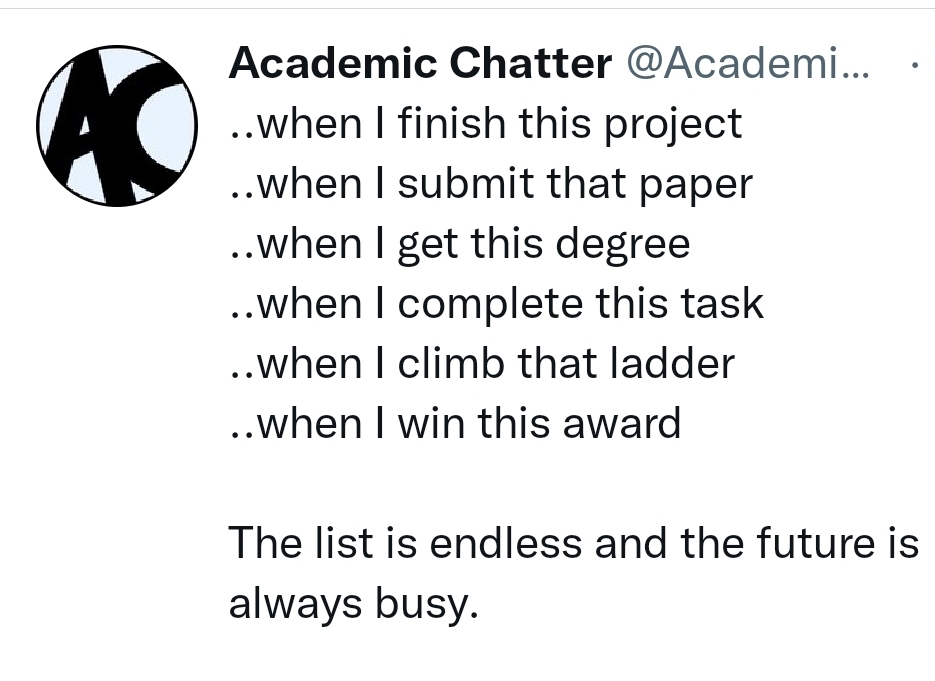
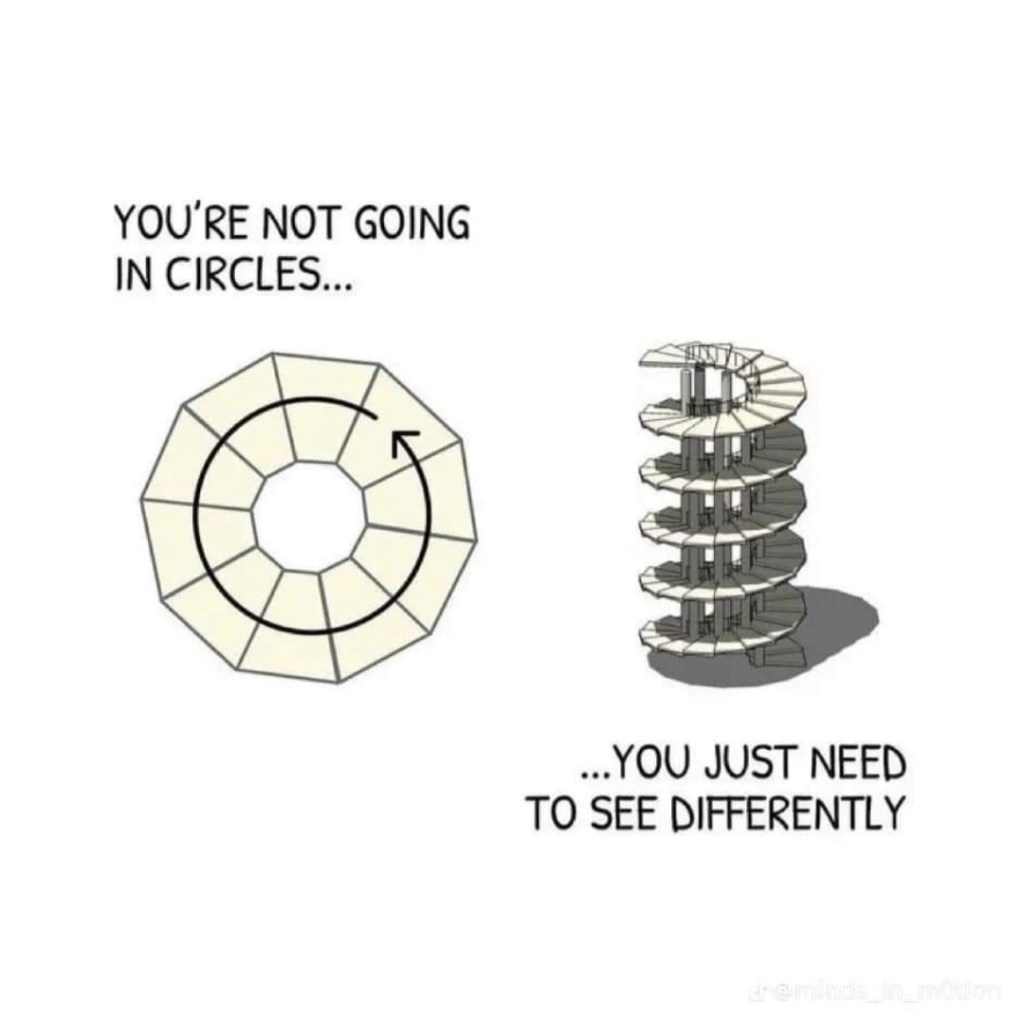
As time goes on however, and careers change, the boxes that need ticking are no longer so clearly defined, and the list of things to do has no end. The positive reinforcement produced from this way of dealing with the world therefore turns into a sense of failure and inability to see progress. The list of jobs never ends, and so a sense that it is because of a failure in ourselves, rather than the system we are working in, persists. We run faster on the hamster wheel in order to try to reach the finish line without realising we’re going in circles, and the line will always be just out of reach.

It will never be enough

One of the dangers when on the hamster wheel, therefore, becomes that we further lose sight of how to benchmark progress. This means we turn even more to others to guide us as to whether we are doing OK. Whatever OK is. And that’s a problem, isn’t it. No one really knows what we are seeking, especially when we don’t know what it is ourselves. Progress when early career may be challenging, but it is often fairly straightforward to define. As we develop, both ourselves and our careers progress and how we need others to feed back to us is frequently becomes less clear.

The other thing to note is that if you listen to the positive comments and hold them to be so significant, you will also listen to the negatives, and probably even more intensely. As the saying goes, ‘you have to take the good with the bad’. Now, listening to constructive negative feedback is an important part of developing. The sad thing is that sometimes it’s not so constructive, and that can lead to some pretty destructive self-talk, spiralling, and challenges with processing of the feedback you are getting. So, how do we move ourselves from the position where we hold the opinions of others in such high account, to where we can evaluate and add our own self reflection into the mix, in order to achieve a stable equilibrium?

Know that what success looks like changes

As I’ve said, what success looks like changes, and it may not look the same from day to day, let alone year to year. One of the things I’ve become increasingly aware of in recent times is that I want to achieve across my life. I’ve spent a long time focusing on achieving at work, but this means that my long-suffering husband has lacked support, and any non work achievements have very much been on the back burner. I want to regain some balance in my life. It won’t happen overnight, and progress is being made by inches, but that is what success for me would currently look like. Everyone is different and your idea of success may look very different to my current one, but unless you take the time to identify what it looks like for you you will continue to be driven by how others define it for you.

Beware of your self talk

I’m so guilty of staring at myself in the mirror and telling myself how stupid I’ve been or asking why the fuck I said that. I suspect that no one else talks to me as badly as I talk to myself, and when I do screw up part of me wishes people realised there’s no need to make me feel bad about as I’m already waaaaay ahead of anything they could say. The thing is, this is not a healthy way to treat myself. I am now putting in active effort to become a better cheer leader for myself. Before my talk at HIS, I took 2 minutes to tell myself that I could ‘do this’. I could appear like a grown-up and give a good talk. I tried to speak to myself the same way I would speak to my students and/or colleagues before they were due to do something they were nervous about. I gave myself the same compassionate time that I would give to someone else. This isn’t something that is an embedded behaviour for me yet, but I’m hoping if I continue to work at it it eventually will be.

Miss out on the best bits of yourself

If you live in a spiral of self critism or an echo chamber where you only value the opinions of others, you will miss out on the best bits of yourself. I’m a pretty weird person, but I think at heart we probably all are. I think I’m also pretty compassionate and loyal, as well as occasionally funny. It’s super cliche, but as I get older I do think that our relationship with ourselves is one of the best ones we can ever develop. It takes courage to stand and know your flaws and love yourself anyway. It takes time to see past that long list of flaws to see that many of them have flip sides that represent strengths. To honestly work on them whilst not constantly chastising yourself because they exist. If asked, I could immediately give you a list of the best qualities about just about everyone in my work and personal life. It shouldn’t therefore have taken me to my 40s to be able to produce an equivalent list for myself, but I’m a work in progress afterall.

Start by giving some conscious time to your thought processes

I made the shift (am making the shift?) by giving myself the gift of time and self reflection. When I react strongly, when I feel certain ways, I’m trying to just take a few moments to understand what drove me to behave or feel that way. My poor husband also spends a lot of time with me talking through just about everything. I personally need that verbalisation as part of the process to support my thinking. I should probably just get a coach and relieve my hubby of the process, but I trust him so much to call me on my bullshit when I’m trying to avoid seeing things I don’t like about myself.

I’m also allowing myself to care a little less about others think of me. There are certainly people out there who are not my biggest fans. The thing is that is their process, their decision. I used to try and bend myself into knots to change those opinions, but at its essence, I can’t control what others think of me. I can only control how much weight I give to those opinions. I’ve been described as marmite in the past, and just like you will never persuade me to like marmite, I suppose I cannot persuade those who find me jarring to like me.

Give yourself the pep talk you would give to others

I’ve talked about being aware of the way I talk to myself, and the occasional reassuring pick me up chat before high consequence moments. I’m stuck though by how much we don’t service our own needs in the same way that we respond and service those of others. At least once a day I will have a pep talk conversation with my colleagues or trainees. I may also have virtual ones in order to support my professional communities or friendship groups. Yet we don’t invest the same care, or energy into ourselves. More and more recently I’ve been prioritising the fact that if I feel certain ways that it’s OK to step away, get some alone time and give myself the same kind of pep talk that I give others. Now, in all honesty I don’t always believe the words I say to myself yet, hearing it from yourself is not the same as hearing it from someone else. That said, if we are setting benchmarks of kindness then those should extend to ourselves, not just others. I believe, like most positive change and habit formation, it will become easier the more I do it, and slightly less cringe inducing.

Give yourself permission

One of the biggest changes I’ve consciously made it to also give myself permission to feel the way I feel. Instead of telling myself to ‘get over it’ or telling myself how stupid I am for feeling a specific way, I allow myself to feel it and then to follow up with a question about why I feel that why. Asking why, with the aim to move towards resolution or at least greater understanding, rather than festering in denial. I think it’s important to acknowledge that we don’t live in this idealised space where we all feel good and confident all the time. If we wait on someone else ‘fixing’ us when we feel anything less than perfect then in some ways I’ve come to believe we’re not putting in the work. That’s not to say that I am not over the moon when someone recognises what I’ve been up to, it’s highly validating and makes so much of the extra hours and effort worthwhile. If we wait to be noticed and to receive that recognition however, and don’t strive to have internal validation that stands alone, we may not be able to receive it when we need it most.

If you are fortunate enough to be given a stage you are obligated to use it

Finally, from a recognition junkie, it is so important that if that recognition results in opening doors or giving you a platform that you choose to consciously use it. It is lovely to sit in the warm glow of someone telling you you are doing something right, but recognition offers more than that. It gives you a voice, a voice that you can use to shine a spotlight or to raise awareness. It is one of the reasons that I still strive for recognition, even having acknowledged some of my not so positive personality traits that it can amplify. If someone gives you a stage, stand on it and use it for the good of everyone who hasn’t been given one and who may not yet have a voice of their own.

All opinions in this blog are my own

The Power of Celebration: Why we should see celebration as essential and not a selfish act

I’m still laid up with COVID, and so today I’m missing out on a pretty great event. The London Healthcare Science Collaborative is running an event on the power of celebration (led by Betty Adamou) and women in leadership (led by Claire Walker and Ant De Souza). Whilst I’ve not been able to attend, it has caused me to reflect on the topic and some of the different thoughts and experiences I’ve had linked to opportunities for celebration.

I’ve gone through periods of my career where I’ve definitely not felt like I’ve been allowed to celebrate my successes. I’ve also gone through periods where the barrier to celebration has definitely been me rather than anyone else. Some days, I feel like I’m not allowed to even discuss or mention successes as it will be seen as ungracious or egotistical. In contrast, there have definitely been times, and other situations, where I’ve felt not only empowered to celebrate but that others fully engaged and amplified those celebrations. I’ve been thinking, therefore, why celebration is important and what factors can impact whether we choose to undertake it or not.

Marking your progress

One of the first reasons I think celebration is important and powerful is that it can be used to mark big transitions in life, whether work related or not. The challenge comes in deciding whether the event is ‘sufficient’ and worthy of celebration. It can be easy, at least work wise, to be so focused on an end goal or big picture that nothing is considered to be worthy of celebration along the way. The problem with this is that there is always another step, another target, and so if celebration is not prioritised, it may just never happen. My plea on this one is that we all support each other to celebrate the little things as well as the big things. Sometimes in life, merely getting out of bed is worth a celebratory cup of tea. At least that’s true right now in my COVID world.

Celebrating the journey, not just the destination

But why should celebration be prioritised anyway? One of the key reasons is that it is easy to forget how far you’ve come and to not sufficiently recognise your true progress if individual moments are not recognised. Ensuring that you take the time to celebrate is actually a key part of you recognising your progress and investing in some self care.

Recognising individual stages of progress can also help with the big stages. Sometimes, completing a task, such as writing a PhD thesis, can just seem unattainable. Breaking down the massive task into sections that feel more achievable and allowing yourself to recognise that progress can, mean the entire task feels more managble. It can also help maintain momentum and positive attitude during tasks that are particularly challenging or where it can be easy to become bogged down. After all, most of the learning, and therefore the reason to celebrate, occurs as part of the journey rather than just at the destination.

Owning your progress

We often talk about owning our failures and the learning that results from them. We don’t talk so much about owning our successes. Now, I suspect that some of this is down to imposter syndrome, and the stories we tell ourselves that our successes are down to luck and is ephemeral, whereas our failures are somehow much more real rooted in truth.

The thing is, if we are going to ‘own it’ we need to own ALL of it, the good and the bad. Your progress is yours alone, you are responsible for the things that don’t go well, but the flip side of that is that you also get to claim responsibility for the times when they do. Own it, celebrate it, for once let taking responsibility not be a burden but an act of celebration and joy. Otherwise, you may find that there are plenty of people out there who may take ownership of the good on your behalf.

Enjoy the moment

The other thing about taking ownership is that you should use it to buy you time to reflect and enjoy the moment. Trust me, if you rush through it, always onto the next thing, you’ll reach your destination, only to be aware that the journey has been a blur, and wishing you’d savoured it more. I was in such a rush to ‘get things done’ that I never stopped after one thing before leaping head first into another. In hindsight, that meant it took me longer to learn key lessons. It took me longer to see where I sat within the big picture. It meant I missed out on sharing my successes with those who had contributed or given up a lot to enable them to happen.

Celebrations are not just about you. They are an opportunity for you to give back and acknowledge the input and impact of others. By choosing not to celebrate, we also steal an opportunity away that could be used to thank and recognise colleagues, friends, and family, without whom none of this stuff would happen.

Extrinsic vs intrinsic recognition of success

One of the reasons I’ve written about owning my success is because this is a real work in progress area for me. Success and reasons to celebrate come in all shapes and sizes. I have gotten into the habit of needing external validation, prizes and the like, in order to measure how well I’m doing. These are lovely, but there are some problems with using this as a yardstick. Firstly, how many prizes and awards can you realistically actually win across your career, and are you suddenly worthless when they become unavailable? The other issue is that if we need others to tell us our value, rather than being able to see it in ourselves, you are are constantly in a vulnerable position, especially with people who would use that requirement against you. It is a necessary step in growth to be able to see that we have intrinsic value and to celebrate that, rather than relying on others to see our worth.

Integrate all the versions of yourself

One of the other big challenges I wrestle with is whether it is OK to be seen to celebrate. Is it boastful? Is it narcissistic? Does it end in arrogance? Here is where I have landed in my thinking. It is not a bad thing to share and celebrate your successes, as long as you also share and discuss the learning from your failures. Those people who only shout about the triumphs are within their rights to do so, but I think those shouts are much more meaningful if you’ve also journeyed with them through the failures it took to get to that success.

The other thing I’ve decided is that it is important to celebrate throughout all the aspects of who I am. I am a scientist, IPC professional, and academic, but I am also a wife, a daughter, an aspiring creative, and sister. Therefore, I want to show the depth of all of that when I celebrate and acknowledge the roles and importance of people across those aspects when the good things happen. It takes a village after all.

Understand the power of being seen

Having struggled with the whole celebration thing for some time, I have also come to realise something else. I celebrate not only to share success and say thank you to those who have helped but also to be visible to others that those attainments are possible. I know I say this a lot, but you can’t be what you can’t see. If you don’t know that a route is open to you, it is much harder to aspire to achieve it. If you only see medical colleagues winning a certain award, you may not think that you could get there as a scientist. We break new ground to make it easier for those who follow, but if no one knows about it, we are not fully completing the job. You never know who may see that tweet, read that blog post, or listen to a podcast. You may never meet or know the people you inspire, but by sharing and being visible, you will be inspiring someone, so don’t be afraid to be seen.

Let no one steal your joy

You will encounter people who will try to mute your celebrations, who attempt to steal your joy. I have been told my success makes other people feel uncomfortable. I know there is sometimes eye rolling at my social media presence. The thing is, that aspect will always be there, whether you celebrate or not. Whether you talk about it or not. Those comments and those people don’t go away. You do, however, have the power to decide how much they influence your decision-making. To decide how much power they have over you. How much right they have to stop the work you are doing or to dampen all the reasons I’ve written about that you should celebrate and be seen to do so. You can’t control the reactions of others, but you can control how they affect you.

Share and amplify the celebrations of others

Finally, celebration is not just about you. To really embrace the art of celebration, we need to see it as the gift it is. We need to amplify the celebration of others! When you hear of good things happening, buy that card or bottle of fizz to support the person who may be struggling to feel they can celebrate. When you see a social media post, share it and comment on it. Let the person know how happy you are for them and help to get the word out. Be genuinely happy, rather than challenged, by the success you see all around you. People are showing you what can be achieved, and you are inspiring others. Let’s truly be a community that values and celebrates success, not just our own but of everyone.

All opinions in this blog are my own

A Thank You Shout Out to the Enablers: The people who help get things done but are often invisible

The Environment Network ran its 7th annual event last week, and it got me thinking. Thinking about all the people it takes to make such a thing happen. All the people that give of their time freely to enable a concept come to fruition. We all know these people. They are often not the ones who stand at the front of the room opening the day, being ‘the face’. They are the cheerleaders, the ones who print and stuff name badges. The ones who, outside of events, see what’s proposed and jump on board to help break down barriers. The ones who say ‘We can’ instead of of ‘We can’t’. Also, having shared the first chapter of my book earlier this week, I really wanted to write a post dedicated to thanking those who always get on board my crazy idea train to help it reach its destination, not for the glory or the visibility, but because they see the value in the journey.

It’s also my birthday week and here is the birthday present of all my favourite things my fabulous team gave me – Isn’t it awesome!

Thank you to those that inspire

I think there are so many people out there who inspire me and inspire others and don’t really even know it. People who just think they are doing their jobs, or their ‘thing’, who don’t see it as special. I really want to start naming people throughout this post, but if I did, I think it would be thousands of names, and most of you won’t know who they are. Instead, I’m going to make a vow to tell people instead of just thinking it.

These people inspire me to do better, to think outside the box, to keep going when things are tough, and remind me of my values and my why. Creativity of approach needs inspiration, and there are so many of you that I am grateful to.

Thank you to those that facilitate

Big ideas come often come with big price tags, be that in time or money. I don’t have either of those things in abundance and so this is a big one for me. So many people come together to make these big ideas come about by giving of their time freely, or much cheaper than they would charge otherwise, just so that those ideas can turn into a reality. You won’t know these people who spend hours printing and prepping, booking train tickets, hotels, or chasing consumables or organising actors, but none of this would happen without them. They are the people who really make stuff happen but don’t get the spotlight. These people deserve it all and rarely get any recognition. I see you all, and I am so thankful. I know how much I get to realise my dreams because of the work you do.

Thank you to those who keep the rest of the world turning

Whilst I am off ‘swanning about’ teaching or at meetings, trying to change the way we do things now, I want to give a thank you shout out to those who keep ‘the now’ working. I recognise my ‘head in the clouds’ thinking can be challenging to the people invested in the day to day. So I want to recognise everyone whose hard work means that I can do what I do and thank you for your patience. Especially those who are so open in their support of why I do it and give me permission to keep being me. I’m not sure gratitude is enough, but it’s a place to start.

Thank you to those who don’t come with a price

So much comes with a price, fact of life. This thank you goes out to all those whose view of life is not transactional, the people who don’t say ‘I will do X for you if you do Y for me’. There’s nothing wrong with that transactional life view. It’s often the price of getting things done. I do have a special place in my heart though for people who build relationships and know that all things come right in the end and therefore aren’t interested in the quid pro quo. The people who grow over time to feel more like friends and family than colleagues. You guys are always there, I hope you will always get more than you give, and I can’t wait to get to spend decades in your company and shout your praises.

Thank you to those who believe

Big dreams require leaps of faith. Now, the process is often a lonely one, but it is made less so when you are surrounded by those who buy into those dreams, not because they have evidence that you can achieve them, but purely on the basis that they have faith in you. It is easy to see the barriers. It is so easy to criticise and say that some dreams are unattainable. I want to say thank you to all those people who see that supporting one another’s dreams comes at no cost to the individual. To those who see the vision, even before it’s well enough developed to be articulated elegantly. To those who share the joy of exploring the possible. Thank you.

Thank you to those who defend

As I’ve said following a dream, sharing a vision, can be a really vulnerable place to be, as you are sharing a piece of who you truly are. Criticism or minimising of that vision can therefore really hurt and feel super personal. That said, it’s probably a key part of refining what that dream actually is. It may be that crucible is in fact necessary. That said, this one goes out to those who defend the dreamers, who defend their right to aspire, to live with their heads in the clouds. These wonderful people often go unseen, as defending often happens when the dreamer isn’t present, but we all know it happens. I may not hear the words, but I know you exist, and I have so much gratitude to all of the shielding that goes on behind closed doors.

Thank you to those who put me back together

Finally, and this is a big one, I want to thank those who put my broken pieces back together when the criticism lands, when the failures occur, when reality hits. Those who persuade me that being me is valuable, that the dream is still worth the cost, that no matter what it feels like in the moment I still have value and it’s worth perseverance. I am a drama queen with few equals, and a fragility to match. The patience with which you put up with me is beyond measure and my gratitude struggles to match your generosity. True friendship is seeing someone broken and managing the sight of it without judgement, only love, and I have so much love for you all in return. You are the best of us, thank you.

All opinions in this blog are my own

Clarity of Role and Its Impact: Why knowing and being clear about your professional boundaries matters

This one’s been on my mind for a while, and by posting it the aim is to explore my thinking, not to target anyone or any group. I’ve been seeing a lot of posts on twitter and having a lot of conversations about identity, especially in relation to professional identity, and so wanted to take this opportunity to reflect and process.

I’m going to start with myself based around a non-clinical example of what I’m talking about. I am a scientist who communicates. I am not a science communicator. It took me an age to really get the difference, but the difference is this………it’s about where my expertise lies. I hope that I happen to be a scientist who has some decent communication skills, and it is a subject that I am pretty passionate about. My qualifications and expertise, however, are in the science, that’s where I sat my exams, that’s where I have almost 20 years of practice.  My expertise is in science, not just that, but my real expertise is actually in quite a small subset of science. I took a zoology degree 20 years ago, but I am not a zoologist, that knowledge is old and only at undergraduate level. My expertise is probably in Infection Prevention and Control.

Now, if I were a science communicator, my expertise would be somewhere else. My skills would be around communicating science in general. Many science communicators haven’t worked in science for some time and some may only have undergraduate levels of science specific expertise. What they have, and I don’t, are qualifications and vast levels of experience in communication and pedagogy. These skills enable them to break down highly complex topics and also pitch in a way that I can only aspire to. They have significant levels of pedagogical skills that I can’t pick up by attending a couple of courses, just like they can’t pick up mine by attending a week long course on whole genome sequencing.

So, to me, the difference is where my expertise and knowledge lies. This doesn’t mean that I couldn’t transition from one to the other, but I have to acknowledge that I’d be moving from my area of expertise and therefore would need to rebuild both it and my qualifications to demonstrate skills within a different area. It would be a growth area rather than a straight transition.

OK but why does this matter?

I’ve been reflecting that we are definitely in a period of substantial change within the NHS and one that isn’t likely to stop any time soon. This means a lot of our pathways and traditional professional boundaries are changing with it. I think, in the end, that this can only be a really good thing. (Although I think if it is going to work it needs to be implemented across staff groups with no ivory tower protections). With this change comes fluidity and, because our pathways are embedded, change can occur before we have the processes to keep up.

During this period of change and recognition of different skills and pathways, for instance, the HSST, more Healthcare Scientists working in education, IPC becoming more interdisciplinary and the development of Clinical Academic pathways outside of medicine, clarity is key. I’ve been number one in a field of one when I didn’t know anyone else working as I did in IPC and it was a balancing act. I’ve been through people asking ‘are you one of the nurses’ and hanging up if you said no, but also I can’t claim to be a nurse. If we don’t understand our boundaries, it can be hard to be clear about them with others. If we can’t be clear about them with others, assumptions can occur about knowledge and skills that can lead to potentially dangerous practice or misleading those we’re interacting with. To me, it’s about owning your difference and being open to talking about the benefits it brings, whilst being very aware of when you should defer to someone else.

Labels not hierarchy

I guess what I’m talking about is actually the importance of labels. Now, this may seem a little ironic as I’m not a labels and silos kind of girl, but bear with me. The reason we use labels as human beings is that they enable a cognitive shortcut. One of the reasons that they can be bad is that they come with a bunch of assumed information that is not nuanced, and may in fact not be true. In the case of knowledge and professional roles, they come with an expectation that if you say you’re a virologist, you have a significant amount of knowledge about virology and virological processes. If you say you’re a consultant, you will be assumed to be practising at a certain level with certain qualifications behind you. These labels mean that when we interact, assumptions are made about our scope of practice based on an assumed level of knowledge or experience.

The problem with some of the developing pathways is that the information behind those labels is not yet established and embedded widely across the NHS or for the public we’re interacting with. The assumptions made linked to those labels may, therefore, be incorrect. Due to this it is really important to be clear about who we are, our experience, knowledge and boundaries, not because one label is better than the other, but to ensure that all involved have clarity in order to not increase risk. If you are in a new or developing area/role, the onus is therefore on you, to clearly communicate about you practice boundaries in the absence of a default label.

Asking, where is my expertise now?

Everyone wants to feel like they know what they are doing. Everyone likes it when someone comes to them and asks them to engage in events or answer questions due to perceived expertise. The problem comes when we respond to the request based on the pleasant feeling it creates without self-checking if we are the right people to undertake the task.

Obviously, the risks are not always the same and occur on a continuum. I’ve been asked to give talks on antimicrobial stewardship and have referred on to someone else as it was for a conference, and that’s not my area of study. If that request was to teach an undergraduate class, however, I have the knowledge base and experience to do so if there was no one better available. I would however be very open with the organiser that I might be better placed to speak on a different topic. Being clear about your boundaries in a clinical environment obviously holds much greater importance. I have FRCPath and used to regularly do ward rounds. Since the pandemic and moving entirely into IPC, I haven’t given clinical microbiology advice in the same way. This doesn’t mean I couldn’t run a round, but I would want to re-up my skills before I did so, there is a difference between what I could do on paper and what I would feel comfortable to do in practice.

When I interact with others or get requests, I always run a quick internal check with myself about whether I’m the best placed person to respond. There are tasks that are always best served by having input from multiple viewpoints and backgrounds, and these I will bring back so we can discuss them as a team. There are other things where I will refer to someone else specifically, as I know they have a greater understanding of that clinical practice. I’m aware that this all tied into our professional registration, but I am often slightly struck by how, when people are trying to define a new identity, they try to own the label they want before they have fully developed enough to go it solo. I think this is often the moment of greatest risk in any development pathway.

None of this is about restricting access

I want to be clear that I am truly excited by the change towards more dynamic progression in healthcare and recognition of the skills different professions bring to the mix. I do think that when you are already established within a profession, it can be challenging to go back to actively undertaking that gap analysis and flagging your difference all the time, especially when others don’t necessarily know what your role is or react negatively, as we are used to being the ones in the know. The thing is, the only way that you can establish the new pathway or role is to start the work but be mindful to continue to flag your scope/difference as needed. No one hangs up on me anymore when I say I’m not a nurse or a doctor. People have gotten used to it. They wouldn’t, however, if I’d not been open about it in order to engage with the conversation and just defaulted to their expectations.

It is easy to get drawn into the conversations with some conservative colleagues about whether this is the right direction for the NHS to go in and to feel defensive about it. I think that being willing to engage calmly in those conversations is part and parcel of being a pioneer. To see each conversation as a learning opportunity, both for yourself to communicate your role better and for the other person in terms of knowledge exchange. Change is unsettling, especially when it goes against traditional structures and hierarchies, and it will take time for people to adjust.

You can be passionate about something without being an expert in it

Finally, and just one side thought that is not related to clinical work as such. It is OK to have an interest in something and not be an expert in it. It is OK to say for me to say that I’m interested in science communication but not to claim expertise in it. It is OK to be an interested participant and to want to engage in an area because of the growth that engagement offers. You don’t have to enter every space wearing your expertise as a shield. It’s just worth being honest and open with yourself and others when you do it. Not claiming expertise will open doors to shared learning that you might not otherwise be able to access. We don’t always have to be the smartest person in the room. We should just should aim to be the most able to communicate our purpose and vision for being there.

All opinions in this blog are my own

Holding the Line: What it feels like to be seen as the ‘Big Bad I Said NO!’

When I was a kid there was a cartoon called Stoppit and Tidyup. It was a kids world where the baddy was the Big Bad I Said NO! This particular post was started during the pandemic when I was thinking about perceptions of the word NO but has kind of lingered as one of those things I wasn’t quite ready to get my head around. The last few weeks have kind of shown me it was still relevant outside of the pandemic however, and so this week I thought I would post about what it feels like to be seen as the gate keeper or to be the person who feels like they are holding the line. In essence, what it feels like to be the person who likes to be liked but who has, as an adult, turned into the villainous Big Bad I Said NO!

I have previously posted about the inevitability of not being liked by everyone, and the challenges of speaking truth to power. The thing that’s unique about becoming the Big Bad I Said No is that it can be a mask/hat/role that is needed in all kinds of settings, and the stakes can vary widely – anything from 1:1 relationships to impacting Trust or wider level decision making. It can therefore feel very stressful to manage, and that stress can be protracted when discussions and scenarios go on for months or longer. Having now spent some time thinking about this though, here are some of my thoughts on the how, whys, and inevitable consequences of saying NO.

Sometimes, it’s all in how you say the words

The word NO can feel pretty loaded. The very use of it often brings a feeling of judgement. Worst still, in a world where as leaders we should be trying to bring people with us, it is the ultimate reminder of hierarchy. As a leader, if I have to go there I will just saying NO can make me feel like a failure, as I feel I should have been able to find an alternate solution or compromise. Also, as a previous recipient of NO, it can make you feel powerless and lead to you questioning your understanding of your relationship or the organisational values.

It is crucial therefore, on both sides, to communicate more than just the NO. NO, without an understanding of the values and drivers that led to it can be pretty destructive. So it is important, although the temptation may be to drop the NO and get out of the room, that it comes with context to support the why.

Sometimes, you need to be direct

Sometimes, being a gatekeeper can be pretty uncomfortable. Interestingly, I find it easy with an infection control hat on versus with a Lead Healthcare Scientist hat, probably because patient safety trumps personal feelings. It can be tempting when you are in a position where the NO is going to be hard or challenging to try to say NO without saying NO. The problem with this approach is that although you may leave the encounter feeling less scarred or exposed, it is likely you are also leaving it with less clarity. Worst than this, not only have you said NO, but you also have taken away the recipients’ opportunity to question and gain a clear understanding for their own processing. It may feel easier in the moment, but you are probably just kicking the problem down the line rather than working towards a resolution.

Please note that this sketch has an 18 age certificate

Sometimes, it’s about being clear that you are living your values

I think one of the reasons that a NO and holding the line is easier (although still hard due to the stakes) in infection control is because it so clearly aligns with my core values, and ones that I hope are represented more widely within the NHS. We should all put patient safety first. Therefore, you can respond in a way that you feel enables you to speak to someone else’s shared values. I hope that the same is also true when I speak to people about equity of access, but in truth this one can be more challenging, as sometimes you are asking people to give up something for someone else, this can occasionally overrule this personal value for the recipient.

Sometimes, it’s harder to make that shared value assumption, and so it becomes especially important to share clearly why you are doing something, both from a factual, but also value perspective. This can include things like wanting someone to be in a better prepared position before they undertake training course X so they can get more out of it by starting with a better grounding. It can also be that a change would be better placed after we’ve set it up using pre steps. It’s important, though, that if it is a true NO, not to fall into negotiation, as that can result in confusion.

Sometimes, it’s about showing someone the big picture

Frequently, when I have to say NO, it’s because I have access to information that the other person doesn’t. This may be information that enables me to have a more holistic view of risk or success. When saying NO in these cases it’s crucial to talk someone through that wider picture, not only because it helps them contextualise the NO, but it may enable them to come up with an alternate approach that might result in a YES. I hope that by taking the time to do this it may result in the recipient being empowered when they leave the conversation rather than deflated. Obviously, that’s not always the case, and sometimes, individuals will need time to process the information. At least by investing the time it offers an alternative perspective and hopefully demonstrates that I value both the person and the dialogue.

Sometimes, it’s about showing your thought process

This one is a little bit of an extension of sharing your values and the big picture. In my case, as a scientist however, it also includes sharing data and evidence and using that to explain how I came to my conclusions. I sometimes go too far down this particular rabbit hole, as it’s my comfort zone, and it does not always work.

Some people will respond better to different things. Some people like me respond to evidence, some will respond to patient led and other values, some are pushing a vision, and others will respond if you share the big picture stuff. Knowing who your audience is helps you pitch, but including a bit of everything in your prep and being able to pivot to what is landing best for greater focus is a skill worth developing.

Sometimes, it’s about being prepared to defend whilst maintaining being open

Despite your best efforts to explain and justify, you like me, may end up being pulled into rooms of people who don’t particularly like your conclusion or what you have to say. This is leadership, and particularly in infection control, it’s kind of what we get paid for. Drawing a safety line and holding it is key. Now, that doesn’t mean you shouldn’t be able to re-evaluate in the face of further information. It also means you should be prepared to defend it. You will need to defend your thought process, your evidence and your conclusions.

I have to be honest, sometimes this is the one I find most challenging. Not because I don’t feel able to justify my process, but when the evidence is clear, I can struggle to understand why others don’t see it. It can also be easy to feel like you’re being personally attacked when it is actually just the scenario. As I wear my heart on my sleeve, I can find it hard though. Trying to take yourself out of the process and focus on the role and the reason you are in the room is something that I’ve found can help.

Sometimes, it’s about finding support

One of the other things I’ve found really helpful is to know where your support lies. In my case, that may be Mr Girlymicro offering me a martini as I walk through the door and telling me it will all be OK. It can be having some trusted colleagues that you talk and walk through your rationale with before meetings. Colleagues that you know may be comfortable challenging you in order to help you see gaps or assumptions in your thought process. Sometimes, it’s about knowing who’s going to be in a particularly difficult room and being aware of where their support may lie, so you know who you may count to support your rationale.

A lot of this is about the work that you need to do ahead of time to build your networks, to get to know other people and their values so you can understand their drivers when you are thrust into a gatekeeping scenario. It can be as simple as moving the dial so you know your unknowns and can therefore better prepare for the unexpected.

Sometimes, a no is actually a not yet

The other thing that’s worth addressing is knowing when a NO is a not now, or not this way. If you can work your way through a scenario so that you can see different routes or avenues to the same destination, it may open a different type of conversation. I’ve mentioned some of these things above, but again, it’s about having put in the time to think things through prior to your response. Often, in infection control, it is tempting to take the path of least resistance, when with extra resource or input, a YES may be possible. Checking ourselves to ensure our motivations are correct is always worth doing and making sure that we are open to the presentation of new ideas or new information that might impact our risk assessment or evaluation is key.

Sometimes, it’s just about sucking it up

Recent years have convinced me that you don’t join infection control to win popularity awards, hardly anyone gives us chocolates at Christmas. The job is hard. Leadership is hard. Saying NO and gatekeeping is hard. The thing is, we do it because it needs to be done. Sometimes, it needs to be done in order to not set someone up to fail. Sometimes, it needs to be done for safety. Sometimes, it needs to be done for equity across your workforce or because of resource limitations. Every now again, it has to be done because the request is just not that reasonable, and the person making it either hasn’t considered or doesn’t have access to the big picture. Denying it’s hard doesn’t get you anywhere. Denying it’s hard can lead you to avoid the hard moments and therefore dilute your impact. Someone has to be the gatekeeper, especially when it comes to patient safety. Someone has to be the Big Bad I Said NO! Some days, that person is me, and despite it being hard I think that the world is just a little safer for it. So know you are not alone, but when your moment comes, be prepared to put on your big girl pants and own the importance of being the person who both says and owns the fact that they said NO!

All opinions in this blog are my own
Would You Like That Explained in Words of One Syllable? Thriving in the world of a mansplainer

This post is in honour of international women’s day, I hope by talking about this and sharing some thoughts it will make us all more able to stand up for ourselves and support others in moments like the one below, when we encounter the mansplainer in their natural habitat.

I was at a conference last week, and I was struck yet again by the number of questions that were asked that were commentary and not indeed questions. I paid attention, and, in this case, 100% of those undertaking this behaviour were older men. The reason I started to pay attention was because the first session I attended was filled with a panel of young female scientists. The Chair of the panel, however, was an older man, and when this commentary occurred from one of the attendees, instead of shutting it down, he actively participated and even exacerbated the issue. Not only that, but the commentary was also inherently incorrect and was not even helpful. I must admit I found myself becoming pretty infuriated and later found other women who’d been in the room who found it equally maddening. So this week I thought I would channel some of that science rage into a productive place and talk about survival in the world of the mansplainer.

NB please note I recognise that there are also some women that exhibit these behaviours routinely (and we probably all do periodically). In this post I talk about mansplaining as the behaviour and not linked to gender, unless I’m recounting specific personal experiences.

In the interests of full disclosure, I’ve also had a fair amount of men recently lecturing me about what it is I do and do not know, as well as some ‘interesting’ comments on my blog. I therefore may not be feeling as balanced about this topic as I would otherwise. The thing is, it’s not like it is as unusual as it should be, and you would think, therefore, that I should be less bothered by it. In fact, the opposite is true. Now I’m aware and see it happen to others. I’m even less tolerant. I’m pretty fortunate that it only happens to me 3 or 4 times a year to a level that irritates me. It happened less when I became a Consultant, and I suspect that it will happen less (to my face) now I’m a Professor. Even so, with all of these benchmarks of knowledge and experience, it still happens. So here are my thoughts on living in the world of the mansplainer and how we might all work together to make it more tolerable.

Don’t worry little lady

Let’s start with talking about some classic mansplaining that has happened to me. I’m partly starting out with this because I had a really lovely male boss who just didn’t believe that these things happened as no one had talked to him about it. By putting it down here prior to talking about what we can do in response, I hope to contextualise some of what it’s like for any allies out there who have experienced it less as individuals.

My all-time ‘favourite’ example of mansplaining that has happened to me was an email sent to myself and a female colleague that actually started with the words ‘don’t worry little ladies’. The email in question was sent in response to a query about engineering standards. Now, these days I would respond with ‘that’s Professor Little Lady and I am worried so please explain………and what you are going to do about it’. At the time, though, I was completely thrown by how 4 words could effectively minimise my years of experience, my authority to ask the question, and impact my feelings about my ability to follow up. In my defence, I did follow up and insist on further information and a review, but something so small could actually have impacted my ability to do my job and would never have been undertaken with my male consultant boss. These comments, therefore, are not insignificant when, especially in healthcare, they could lead to a reduction in safety. That said, did I escalate? No, did I forward the email to his boss and explain? Also, no. It’s so normal that it never even occured to me. I suspect if I had, it would have just been called ‘banter’ and waved off.

One of my other favourite things (not really) is when I’m called into a room to have a technical discussion, and when it becomes apparent I’m not convinced by the argument, the room full of men call in yet more men, not to enhance or bring more information to the discussion, but because they somehow believe that having more men in the space repeating each others words will somehow intimidate me or force me into conceding that their science is suddenly correct. I do not enjoy conflict and I generally believe it’s bad form to point out the flaws in someone’s argument in front of others, in a way that could be seen as aggressive or embarrassing for the individual. However, if you pull >20 men into a room to lecture me on, for instance how HPV works, when you are neither a microbiologist or have any experience with viral loading or kill, and think that calling in a further 10 will change the underlying fact that I have just finished writing about it for my thesis, my argument is unlikely to change. All that will happen is that I will cease trying to cover up my level of knowledge in order to play nice and I will quote papers and research at you until you let me leave.

Have you thought about?

One of the other scenarios I’ve found where some interesting male commentary occurs is on some of my blog posts. Now, don’t get me wrong a) most of the commentary I receive on my blogs is super supportive and is what gives me the impetuous to continue to write them and b) I acknowledge that by writing and (over)sharing the way I do I also invite engagement and discussion of the content I put out. Every now and again I get a comment that I don’t approve for public sharing and just leave in the archives as I’m not sure that they are part of the discussion I want to have.

When I posted earlier this year about being overwhelmed and shared some tips that have helped me to get through I received some comments from various male subscribers. These comments were very different from those of my female subscribers, who shared how grateful they were that we were talking about the fact that everyone has days when they struggle and that coping mechanisms are key. These comments all came from a place which I assume was kind and supportive, but ran along the lines of ‘if you feel overwhelmed maybe you should have spent the extra time working and clearing your emails rather than writing this blog’.

On the surface I kind of get it, but also a) it is my right to choose how I spend what free time I manage to have for myself, without commentary from others as long as I’m breaking no laws and hurting no one b) blog writing, for me, has become a method of processing my work load and stress levels and therefore suggesting I abandon it would be removing a key coping strategy I utilise c) the blog post was about sharing experiences and methods to move through feeling over whelmed, not a pity party post about how it sucks, therefore the suggestion that I focus my time on not supporting my community is against the ethos of what this blog is about and frankly kind of sucks and finally d) the assumption that I wouldn’t have considered doing less and not over stretching myself probably doesn’t give me very much credit in terms of self reflection or self awareness. So, I suppose my point is this, sometimes by stating the obvious and your opinion about it, it can come over as pretty patronising, as if it wouldn’t have occured to me and I haven’t done the thinking myself. That said, intent matters, and I don’t believe that these are often meant with any ill intent, so I leave them as unapproved and a source of future consideration and move on.

If you look for it, you will see it

Frankly, some of this is insidious, as I discussed in the intro, I only really started paying attention at the conference because there was such an extreme version of it that it drew my attention and I became deliberately aware of it. Sadly, when I posted about it on twitter the almost universal response was ‘only one’ to my retelling of the male commentator. It’s so universal as a stereotype that we laugh about it, but my thinking is also what can we do to challenge it or support others when we see it.

Summary.   

Role incredulity is a form of gender bias where women are mistakenly assumed to be in a support or stereotypically female role — an administrative assistant, nurse, wife, or girlfriend, for instance — rather than a leadership or stereotypically male role, such as CEO, professor, lawyer, doctor, or engineer. While this slight or mistake might seem innocuous, it can have real ramifications for women. Women must expend extra energy and time to assert and prove their role. Their words may lack the credibility and authority inherent in their position. And when women are not seen as a leader, they may be less likely to be hired into male-dominated roles or to be considered for promotions.

While the real issue of role incredulity is systemic, there are steps organizational leaders, workplace allies, and women themselves can take to prevent and correct it., including setting organizational norms, being an ally, owning your mistakes, and, if you’re a woman, proactively identifying your role.

https://hbr.org/2021/12/when-people-assume-youre-not-in-charge-because-youre-a-woman

I suspect there are few women amongst us who haven’t been asked to ‘sort the coffee’ despite being one of the most senior people in the room, or who haven’t had their bank card saying Dr handed back to their partner. These are little things, and I for one am completely OK with getting coffee, but not because I’m a woman, but because I think we should all take our turn and hierarchy shouldn’t remove us from that. I find it hard therefore to know when to draw the lines over such things, I’m a team player and want to do my part, but I also don’t want to sustain a stereotype that might negatively impact others. Honestly, even thinking about these things in the moment and having that constant dialogue with yourself can be pretty exhausting when it happens over years or decades.

Do these things actually matter?

Even though I feel that I own my place and have so much more strength than I did when I was younger, these comments, decisions, and moments still take up cognitive space. I may rebound more quickly but I still go through the ‘experience-self recrimination spiral-replay’ cycle in order to process it and decide where fault may lie with me or where the learning is.

“What we found was that women largely had negative outcomes as a result of being mansplained to, whereas it didn’t affect men as much,” said Briggs, whose research was published in the Journal of Business and Psychology. “They tended to register that their competence was being questioned more than men did, and to attribute this to a gender bias – so, maybe this person doesn’t think highly of me or doesn’t like me because of my gender.”

This feeling wasn’t shared by male volunteers who were given a condescending explanation by a woman. “Maybe they perceived it as ‘this person is being rude to me’, but they didn’t perceive it any differently if it came from a man or woman, and they didn’t attribute it to a gender bias,” Briggs said.

https://www.theguardian.com/science/2023/feb/03/let-me-mansplain-studies-reveal-negative-impacts-of-behaviour?CMP=Share_iOSApp_Other

It may be therefore that we have to acknowledge the role we play in how we receive the information and the fact that some of the behaviour we experience really does not have any ill intent. However, that also doesn’t mean that those undertaking such behaviours don’t equally have a responsibility to understand how their behaviour impacts others, and in some cases leads to the active detriment of the women who are the recipients. Especially if this behaviour is endemic in institutions/settings or originates from the same individual over protracted periods of time.

So, how do we handle it?

I’ve previously posted about how I learnt to own the place I found myself in with some tips on managing this as individuals. I do think that dealing with direct interactions rather than our own imposter syndrome needs a different set of skills, ones that may indeed help with how we see the world over all. It all starts with being conscious of ourselves in the moment, where do we sit, what do we say when we introduce ourselves, how do we respond in the moment and how do we let our view of ourselves drive these dialogues?

Below are some areas of thinking that have helped me and I hope might also help you in traversing the particular challenge.

Decide which truths to believe

I am often considered over emotional because I wear my heart and values on my sleeve. It’s a running joke within my team that I have absolutely no poker face, and the time to be concerned when in a room with me is when I stop being expressive, as it probably means I have become coldly annoyed.

For a long time, I thought that this was the biggest weakness. I had many a person (male and female) explain to me that I couldn’t be successful as I was and that to proceed I really needed to change and fit the stereotype of what a boss/consultant/professor should be. Well, frankly, screw that. Hiding who we are and pretending to be someone else should not be the only path to success. Being open and honest about my values and who I am is not a weakness. It requires integrity and fairly often bravery to function openly as who you are. We are supposed to be assertive but not too assertive, smart but modest about it, passionate but not emotional. I, for one, don’t want to play that game and, in many ways, just opted out and found ways around it. I strongly believe that we no longer need to play by the rules of those who came before us, let’s set our own rules, let’s choose our own truths and empower the future to be different and better for those who will follow on behind us. Choose your own path and let that be your truth.

Practice makes perfect

Now, I’m not sure I would be comfortable saying any of the below as they are written, I think I would be too scared of coming off as aggressive. For all you women out there who could and own being that assertive, I am not worthy. That said, I have used many of these responses, if not these exact words, in order to manage conversations.

The thing for me is you need to know what language you are comfortable with and practice it before you need it. In the moment I am often surprised and lose my mental footing, therefore if I haven’t practiced how to hold my ground and be assertive I lose it to hesitancy and upset. Practicing enables it to almost be a reflexive approach that you can draw on, so that you don’t have the cognitive additional load of making those nuanced word choices in the moment. So the sentences above may not fit you, but find ones that do and try them on for size well before you need them.

One of the things that also helps me is wearing a different head space when I go into rooms where this is likely to be an issue. ‘Dream’ would never hold up in these spaces, and when I leave them, she often crumbles in the replaying of the moment. Professor Cloutman-Green, however, is much more able to hold her own. It’s almost like my science shield enables me to suffer less from impact in the moment and so allows me to maintain or re-establish myself in that moment much more readily. This is different from not being my authentic self in a space, I am still me, but it gives me the emotional distance to process things later rather than being overwhelmed in the moment.

Self-awareness is key

Ever walk into a room, and there’s a single chair left and you offer it to everyone else who comes in after you? I do this all the time. It’s just polite, right? Absolutely. However, if you are in a room that internalises hierarchy and everyone sitting is a Consultant like you and everyone else standing is more junior, by undertaking this action you are unconsciously giving away your seniority in the room. You are signally you’re difference to your other consultant colleagues. Being aware of your surroundings and what cues you are sending out is important.

Ever sat listening whilst a colleague towered above you? The person who deliberately chooses to lean against your door frame whilst you sit in order to explain X or Y to you. Dominance positioning is a thing, we are primates after all. If we have small and closed body language it says a lot more than our verbal responses in the conversation. Sometimes, when you find yourself in a mansplaining situation the mere act of repositioning yourself can impact the conversation. Stand up, gesticulate using wide body language when speaking. It may be that this merely changes the way you receive the exact same dialogue, but sometimes that is half of the battle. If it also supports you in using some of your practiced dialogue, all the better!

How do we help others?

When sat in the conference room mentioned at the start of this article, I had so much rage at the way these young scientists were being treated. My PhD student who saw and understood my response asked ‘are you going to say something?’. I responded ‘no, these girls are going to handle it’, and they did. They did so perfectly. I think one of my biggest pieces of learning over recent years is not to run in like an amazon warrior to save people, as this can in actual fact be diminishing and takes away their opportunity to act. My response now is to be there as a back up if they signal they need help and to offer support and reinforcement with ‘you were amazing in how you handled that’ afterwards to let them know how successful they were from an independent observer view. By rushing into save we can be as bad as the mansplainer as it indicates we don’t have faith in their ability to handle the moment. That said, if I’d had an official role, such as Chair, I feel it would have been my responsibility to stop the situation from happening in the first place. My take home is this, how you respond has to depend on your role and the situation.

I still love the females from the Obama administration who used their voices to amplify those of other women in the room. Not all actions need to be direct or confrontational, sometimes just being there to repeat the voices of others is enough. I wish that I had been able to breath through my rage and find an amazing follow up question to allow that panel to shine even more in that moment, but I didn’t and that’s my learning. That moment wasn’t about me, it was about them and next time I will have practiced how I can then act to amplify them better in the moment, rather than worry so much about the mansplainer in the room and giving him my energy. Every day I learn a little more.

Right, I’m off to the growlery until I find myself in a better mood. See you on the other side.

All opinions in this blog are my own

Guest Blog from Dr Claire Walker: Turning criticism into a catalyst for change, or how I learned to stop worrying and to love negative feedback

I am currently away enduring the heat of Houston, Texas, at the American Society of Microbiology annual conference. Hopefully, I will find lots of lovely inspiration whilst I’m here to share with you all. In the meantime, and whilst jet lag is kicking my ass, the wonderful Dr Claire Walker has swooped in and saved me by writing another awesome guest blog.

Dr Walker is a paid up member of the Dream Team since 2013, token immunologist and occasional defector from the Immunology Mafia. Registered Clinical Scientist in Immunology with a background in genetics (PhD), microbiology and immunology (MSc), biological sciences (mBiolSci), education (PgCert) and indecisiveness (everything else). Now a Senior Lecturer in Immunology at University of Lincoln. She has previously written many great guest blogs for The Girlymicrobiologist, including one on the transition from lab to academia.

So, the other night before a conference @girlymicro and I were sat in a hotel bar, drinking martinis and listening to me bemoan some fairly harsh feedback I recently received anonymously from a student in the form of the oft dreaded ‘Module evaluation feedback form’. The conversation went a little like the Deep Space 9 meme of Julian and Garek that’s doing the rounds – you know the one….

I love the internet. Meme generators entertain me no end.

Back to the story, I was complaining and @girlymicro, quite rightly, reminded me of two important facts. One, all constructive feedback is always useful even if we don’t particularly like hearing it. And two, not everyone is going to love us even if we really, really want them to.

I went to bed reflecting on this conversation and my poor feedback. Constructive critical feedback is a powerful tool for growth, yes it stings a little at the time, but when we take time to reflect can we see why we received it? This particular individual found me to be blunt and rude, and in honesty, in this specific instance I would say they aren’t totally wrong. This year, my decision to support University College Union strike action prevented me from giving the first lecture of my module. I use this lecture not only to introduce myself and describe the content of the module, but to set the expectations for behaviour in my classroom. I’m what has been described by my friends and colleagues as ‘old school’, and this makes me something of a marmite individual for students. I want to provide a safe space for discussions, and I cover a lot of triggering subjects. I have no time for disruptive behaviour that detracts from the groups collective learning experiences, and I have a low threshold for calling students out on this. Am I blunt? Probably. Could it be perceived as rude? Absolutely. Without these early conversations the students this year weren’t aware of my expectations and thus my behaviour had no context. Does this make the feedback fair? Possibly. In my honest opinion when you come to a place of learning you put your phone down and respect the teacher as well as your fellow students, and at University level teaching you shouldn’t need to be reminded of this. However, what I’ve learnt is just how important those conversations are, and I will be having them come hell or high water next year.

Girlymicro’s second point also gave me pause for thought. Not everyone is going to adore me. My teaching style isn’t guaranteed to work for everyone. So after finishing my martinis I returned to my feedback and applied the Pareto Principle. The Pareto principle asserts that 80% of outcomes result from 20% of causes. When I view negative feedback through the lens of the Pareto principle, I see that a significant proportion of this feedback comes from a small percentage of students. And the same is true of the positive feedback. Understanding this principle lets me focus on how I can direct my efforts to addressing their concerns specifically and prioritise improvements across my teaching to make meaningful change. However, it’s also crucial to recognise the silent majority the 80% who are, apparently, content enough not to provide an evaluation of the module. A major overhaul probably isn’t necessary, but there are tweaks to be made to make the content work for everyone.

Finally, I reflect on the words of wisdom from the great Obi Wan Kenobi himself:

“ You’re going to find that many of the truths we cling to depend greatly on our own point of view.” / “The truth is often what we make of it; you heard what you wanted to hear, believed what you wanted to believe.”

My ‘truth’, my point of view has been that my teaching style is interactive and engaging, and certainly some of my students share this opinion. But this isn’t everyone’s point of view and through receiving feedback I am able to see the opinions of those individuals that differ from my own. I often say that teaching is an iterative process, dependent on a cycle of reflection and growth. I may enjoy a particular style of lecture but if it’s not working for the majority, I have to put it down and build something new. Based on both the negative and positive comments, I have been able to introduce more lab sessions, simulated clinical experiences and data analysis workshops to my modules, and move away from traditional didactic teaching. Yes, it’s more work over the summer but hopefully this will lead to a significant improvement in the learning experience of my students. Who knows? Hopefully that quiet 80% like the changes. Either way I’ll await my next critique and take it from there.

TLDR: You can’t win ‘em all. But you can have a lot of fun with meme generators.

All opinions in this blog are my own

Learning to Take Your Place: The path to owning the space you find yourself in

I remember my first attendance at the CSO Healthcare Science awards incredibly clearly. It was probably around 2015, and I had been nominated for the Rising Star award (I didn’t win, the amazing Lisa Ayres rightfully rocked it). It was my first dinner event, and I didn’t really know anyone. Everyone was in their finest evening wear, they’d all done their make up, they all knew each other. I remember sitting there on my own and feeling how much I just didn’t fit into this world. When the Lead Healthcare Scientist award was given out (we didn’t even have one at that point) I remember the banter on stage about where the winner had brought their dress from. I wouldn’t even know where my dress was from, at best M and S, not something that would be discussion worthy for over 100 people. I was so aware on that night that this was a world where I didn’t fit in, or have the tools to navigate.

Despite being Girlymicro, I’m not actually particularly good at the getting dressed up thing. I’m not one of those girls who has ‘wardrobe choices’ and saints help me if I have to paint my nails. It’s just outside of my wheel house. I’ve also posted before about how bad I am at networking and how I’ve had to develop coping strategies to be able to feel comfortable in rooms at conferences. I have friends and colleagues who are naturally gifted in this regard, but I am not one of them. I am not ashamed of who I am, or where I come from, I’m a proud brummy girl who has worked hard, but that doesn’t change the fact that in 2015 I stared at out at a room full of people from my profession, supposedly from my world, and just felt as other as it was possible to be.

Roll on eight years, and through some twist of fate I don’t think I will ever truly understand, I find myself standing outside of Westminster Abbey, waiting to go in to witness the Coronation of King Charles III. I have gone through a lot of emotions in the journey to this spot, but when standing here I didn’t feel like the girl who didn’t fit in. I arrived through those doors comfortable in my own skin, proud to be representing my profession and not scared to represent all that I am in the process. So how did I get from there to here? How I did I change and grow to feel like I could (most days) own the space I find myself in?

Honour the reason you’re here

The first thing for me was the realisation of how many people, woman in particular, have fought and sacrificed so that I could have the opportunity to even feel like an imposter in a space. I’ve posted about my mum and her journey to support science before, but there are so many woman who have faced so many challenges just so I would have the opportunity, or the door opened. Over time I’ve realised how important it is to seize those opportunities in order to honour those that came before. To move the dialogue on and to ensure that I leave things more open and equal requires me to do my bit, to make my sacrifices for those who will come after, to go through that open door and wedge it open so that others can follow behind and then take even bigger strides than I will. The cost of my feeling uncomfortable and experiencing self doubt is nothing compared to what those who went before experienced. If I think of myself as part of a wider picture, of just another brick on the yellow brick road, then it becomes less about me and more about the journey, and what I do to support others. That doesn’t require me to know anything about hats, false lashes or designers, that only requires me to be passionate about why I’m doing what I am doing. Suddenly everything else feels slightly less intimidating, after all, I know my why.

Be decisive: decide who you want to be in that space

So, you are not like everyone else, congratulations! I think that may just be a very good thing. When you enter a new world, a new network, a new experience, you have an opportunity to be deliberate in deciding who you want to be. You aren’t carrying the baggage of being know as ‘the new girl’ even though you’ve been there 20 years now. You aren’t that girl who spilled adenovirus tissue culture. You are shiny and new. You therefore have the opportunity to tell your tale, to share your why and really focus on the impact you want to have. Most of the time you have been invited into that space, so try to reflect on why that is and what you want to achieve. If, like me, you want to move the dialogue forward than it is OK not to be like the other people in the room, you have probably been invited into that space for just that reason. Don’t lose sight of who you are because of the newness, see it as opportunity to be the essence of what you want to bring into that space. If you can focus on why you have chosen to be there, rather than being overwhelmed by the choices of others, then I find it very grounding. For me, that reason can be anything from, I came to have 1 conversations with X that I couldn’t have other wise, to I came because I want to raise awareness of Y. Sometimes, for me, that can just be me actively introducing myself as a Healthcare Scientist and opening the door for people to ask me what one of those is, so I can discuss how awesome this work force are.

Acknowledge your fears

One of the things that has helped me most is to not just ignore my fears and pretend they don’t exist, but to spend time in reflecting on why they exist and what triggers lead to them overwhelm me. For me, it’s often about letting people down, or standing out in the wrong way – thus diluting my message and meaning I lose my voice. For the Coronation, because I knew not feeling like I was fitting in appearance wise would be a trigger for me and therefore not achieving the representation I wanted to achieve, I took steps before I went. I researched what to wear, I learnt to understand the dress code. This meant on the day I didn’t worry about that part at all, I could just focus on representing IPC and the Healthcare Scientist profession, this isn’t hard, because I have the best job in the world and love my profession. Suddenly I’m freed up to focus on joy and not fear. In 2015, I hadn’t done this work and it’s not something that happened over night. I had to take the time to learn more about me so I could then manage my responses. The work is worth it though. Obviously, this doesn’t always mean you won’t be taken from left field, but most of the time if you’ve put in the work you can free yourself up to be present and enjoy the moment.

Understand that the world is not you centric

The other things is, and I don’t want to ruin anyone’s egos here, you’re just not that important. The BBC did not care what I was wearing at the Coronation, in 2015 I was probably hardly noticed at that event, let alone anyone bothering to think enough about me to judge my outfit or elevator pitch. Frankly, we are mostly just not that important to other people. Therefore a lot of the fears we have about being judged are really not that relevant, we’re just not that seen. Also, even if the worst happens, and you spill that red wine all over the carpet at the House of Commons drinks reception (yep, I did that) the likelihood is that no one will remember. In my case the only person who remembers is Professor Mark Fielder, mostly because I almost spilled it on him too, and we just laugh about it now. I have been to some truly awful conference presentations, but I remember the topics, I don’t remember the speaker. Even if the worst happens, when you get over the mortification, you will be the one that remembers it, it is unlikely that anyone else will. So be braver, the worst is probably not that bad, spend less time worrying over it and embrace the good that could happen instead.

Have the bravery to keep being you

Finally, and this may be because I’m just growing old disreputably, but be brave enough to be you. You find yourself in this moment, and no matter the reason you arrived at it you are the master of your own destiny. Be brave enough to bring all of you into that moment and be who you want to be. It’s not always easy in the moment but I promise you, you will regret the moments when you wuss out and toe the party line or try to be someone else so much more then any moment when you were truly yourself, no matter what the reception. For me, I guess its always about having honesty with myself, and building relationships with others based on the trust that I will be seen. Relationships and moments built without that honest and courageous authenticity will never be really real, you’ll always question them and yourself within them. By being who you are then, good or bad, what you create with others is the truth and has real meaning. I feel it is only by being bravely who we are that we can have the impact that we want for our lives and for changing the world for those who will come after. So lets raise a glass, to being authentically and completely us, and celebrate all that we are, both the good and the work in progress!

All opinions in this blog are my own
An Unexpected Invitation: Representing the Healthcare Science & IPC workforce at the Coronation of King Charles III

Please note, this is a rather self indulgent post written to help me remember in future years what was a truly spectacular day and set of events.  Please forgive me and feel free to skip.

Let me start off by saying what an incredibly normal person I am.  I have a job I am passionate about, friends and family I love, but apart from quite how fortunate I count myself to be, I am incredibly normal.  I don’t have ‘connections’, I didn’t go to private school, and neither I nor my family are part of any clubs or other exclusive societies.  So imagine my outright shock when in March this email dropped into my inbox on a Friday afternoon:

This is a joke………right?

On the 31st January 2020, I was fortunate to be awarded the British Empire Medal for services to healthcare and I wrote a little about how I didn’t believe it in a blog post.  That was a fascinating process in itself, especially as I couldn’t tell anyone. When this email dropped into my inbox however, frankly it felt like someone was playing a bit of a joke.  I opened and returned the form, almost on auto pilot because it felt like the kind of thing you should do, but as soon as I hit send I phoned my mum and Mr Girlymicro and had a bit of a breakdown after I calmly got the words out.  Just saying the words ‘I think I’ve just been invited to the Coronation’ put me into a complete spin.  You see, I’m the girl that snuggles down with a cup of tea and Agatha Christie when I manage to get time off, or to be completely honest, some truly awful reality TV (hated by my husband 🙂 like Love is Blind.  I am not the girl that gets invited to fancy dinners or big events, let alone something to be seen on the international stage.  Writing the Girlymicro blog is often the most down time I get on a weekend.  So after sending my reply I sat back and just assumed that they would at some point realise their mistake and life would carry on.

Costume drama

As time went on and more emails went back and forth it gradually hit me that I may, in actual fact, need to attend the Coronation.  I went through a period of properly freaking out about how I wouldn’t fit in, and how I’d have nothing sensible to say, my family pointed out it was too late for that, I’d accepted the invitation.  I was locked in.

Then I proceeded to have, what a dear friend, referred to as a ‘Costume Drama’. Now, I get up in the morning and dress in the clothes in front of me.  I am guaranteed to have covered myself in food/tea/detritus within an hour of dressing.  I don’t wear makeup, and when I do I am lucky to not poke my own eye out with my eye liner.  As the reality dawned on me, it also occured to me that I was going to need to have something to wear.  Bear in mind that when I went to the Garden Party at Buckingham Palace I had a tail spin because I had never brought a hat and I just didn’t know what to expect. It took me 6 months to find something to wear and I had a little less than 6 weeks to get this sorted.  This also felt like a complete level above what I had needed to achieve for afternoon tea.

I have previously posted about how I feel about clothing expectations.  In this case, I began to increasingly feel like clothing would have a role as armour, as a way to step into a space where you felt like you needed to put your best foot forward.  I needed to find something to wear that would help me feel like I deserved to be there and could occupy the space I had been given.  At the same time, I wanted to balance the costume with who I am, I wanted to feel both like I belonged and still feel like me.  So, being a scientist, I hit research mode and pulled together as many sources as I could to find the ‘uniform’ that was likely to be worn at such an event, and then to find ways to modify it so I could ‘fit in’ and still be me.  I know some of you will be reading this and feel disappointed that I was not prepared to stand out. To make a statement.  Sometimes, I feel that the freedom to make a statement comes from a position of privilege.  Not always, sometimes it’s merely bravery and not worrying about the consequences.  In this case, I didn’t feel I wanted to make a statement, I don’t feel like I come from a place where I have enough privilege to go against the tide. You may think it shows a lack of bravery, but the last thing I wanted was to stick out in anything but a ‘that’s a nice dress’ way.  I was nervous enough, and a lot of those nerves stemmed from knowing that I was representing not just myself but all of you, my family, my profession, and my friends.  What I wanted most was to make everyone proud, and so standing out needed to be done in the best possible way by rocking a look that acknowledged the event and still felt like me.

Feeling the weight of representation

You see, as time went on, I became more and more aware that the invitation I’d received wasn’t really about me, it was about us.  I didn’t get a BEM for my work in isolation, it was for the work we had done as a community, I was just lucky enough to be the one who got a medal pinned to her chest.  As the event drew nearer, I was so aware that I was representing both Healthcare Scientists and Infection Prevention and Control on an enormous stage.  I am so proud to be part of both of those groups.  I am prouder than I can state about my profession, a profession that is so often hidden and doesn’t get mentioned at the big events.  I knew that the one thing I would be able to do on the day was talk about it and shine a spot light, if even just to a few people, on the amazing work my colleagues do and the sacrifices that they all made during the pandemic.  I was aware that even though it was my name on the invite, in point of fact, in many ways, it wasn’t about me at all.  I needed to use this unique opportunity to shine that spotlight on the people who deserve to be seen.

Coming, ready or not

Knowing it wasn’t really about me didn’t stop me from feeling nervous, however. I often get in my own head about big moments or events, especially things like this that feel too big and outside of the normal, for someone as normal as me.  At times like this, I like to remember a quote of one of my favourite TV series:

Bottom line is even if you see ’em coming, you’re not ready for the big moments. No one asks for their life to change, not really. But it does. So what, are we helpless? Puppets? No. The big moments are gonna come, can’t help that. It’s what you do afterwards that counts. That’s when you find out who you are. You’ll see what I mean.

Whistler – Angel Season One

My family, friends and colleagues did a great job of helping me get out of my own way.  I really struggled at first with people asking me why I’d been invited.  I didn’t know, I didn’t have an answer, but with the help of those around me I practiced an answer I could use on the day, ‘I got invited because of the great work that IPC and Healthcare Scientists did during the pandemic, coming together to really make a difference for children and young people, in terms of not only testing but also in keeping them safe in healthcare.  I’m representing a great group of people who all go above and beyond every day, and I’m really honoured to be invited.’ I was as prepared as I was going to be.

A fairy tale day

So, the day arrived.  I continued to be nervous, but I had all the lists and instructions to make me feel prepared.  In the end, everyone I have to say was simply wonderful.  I had been prepared for the formality, but I don’t think I had been prepared for the nice bits, the bits where we laughed and the bits where the event was in some ways just like every other event, just bigger and shinier, and with some of my hero’s present.

The day started at 5:15 am.  I knew that there wouldn’t be many bathroom opportunities and so I could only have one (yes, that’s right, one!) cup of tea.  Because I also knew that doing my hair and make up would stress me out and I wanted to enjoy the day, and because London has people who will do this for a very reasonable price at 6am, a wonderful lady arrived to make me feel pretty.  I was made up, hat on and in a taxi by 7:45.  All the time, with the news running in the background saying people were arriving and making me feel like I was already late.

I had that strange anxiety, like getting to an airport, where you just want to get through security and take your seat.  I have to say that from the minute I showed my invite and started walking from Victoria Gardens down towards the Abbey, everyone was just so lovely and the nerves started to fade.  Security was easy, and the atmosphere just felt really special.  I felt like I do when running a half marathon, when everyone on the side of the road cheers you on, with less running and more hat.  This part was made even nicer by running into another IPC legend Clare Johnstone as I was nearing the Abbey.  This was great because not only did I have someone to experience it with, but we could also take a photo of each other to record the occasion. 

Clare and I weren’t sitting in the same area, so I made my way to find my seat, just behind the North Quire.  I was in some way saddened to realise that I wouldn’t have a good view of the procession, although to be honest, I’d not been expecting one.  What I hadn’t expected was that everyone from Rishi Sunak to Ant and Dec would have to walk right by me both before and during the ceremony, as the Quire was mostly blocked with performers.  This meant I got to do some grade A up close people watching in the 2 hours plus you had to be seated prior to the arrival of King Charles III, including Lionel Richie being a complete gentleman as he went by, asking how I was doing and saying he like my dress.  The other thing that was interesting to note was that everyone had to scrum for seats.  Now, as a pleb I’d expected this to be the case for me, but no, it was also the case for those much more famous than I.  Those entering through the West Door had reserved seats, but everyone else was very much equitable in terms of finding your own within the section you had been allocated to.  I found this somewhat pleasing.

We all knew the toilets were going to be locked down at 10am, and having been sitting since 8am it seemed sensible to try to get a visit out of the way as there would be no further opportunity until after 13:30.  I state this here because, although the event was spectacular, the fact that toilets are always an issue somewhat amused me.  There were 3 female toilets for the entire of the Abbey, for everyone from Hollywood celebrity to little old me, it made no difference.  My colleagues have often heard me swear I will never use a portaloo, as I hate them from an IPC perspective.  The available toilets were a step up, but they were still just temporary toilets.  Of the 3 cubicles available, 1 did not have a working lock on the door, and 1 was blocked, only leaving 1 toilet in reality for everyone to use.  Also, the cubicles were small.  Normally, this would be less of an issue, but as I’m not someone who has often tried to negotiate such things with a rather large hat, it was challenging.  Toilets are an issue, even if you are a King.

When the ceremony started I was fortunate enough to have found a seat next door to the seating reserved for the Heralds.  This was very cool as I got to see them process, but also got to sit and get an up close view of all their regalia and to see a lot more of their roles.  The advantage to being off to one side and therefore not quite on camera was that although the event was still very formal, I got to enjoy some informal moments that made us all laugh.  Some parts of the order of service did not quite go as planned, such as the Prince and Princess of Wales entering iut of order. Because we were in quite close quarters together there was a real sense of comradery, which I hadn’t expected, as we all got up at incorrect points or couldn’t work out when to sit down when things were not quite as stated.

There was also some slight drama, when during the first hymn, the older lady next to me tried to drink some water, choked and then vomited water all down her, me and quite a chunk of the floor.  Trying to silently signal and collect tissues, check she was OK and clean her up was significantly easier given where we were seated, but again our whole section silently pulled together to try and help.  This is the disadvantage of telling people that bathroom access is limited, as over 5 hours is a long time for some people to not feel like they can drink.

There was never really a dull moment during the service, and it felt like the congregation were constantly involved in small ways during the service.  The moment when the enormity really struck me however, of where I was and what was happening, was during the singing of the national anthem, it made me choke up a little, it just felt truly historic, it really felt like I was living through a never to be repeated moment, and I felt so lucky to be there to witness it.

And then it was over, and yet somehow the time after the Coronation itself felt like the nicest bit.  You could almost feel the collective sigh of relief, and the atmosphere suddenly became much more informal, with people taking selfies with each other, talking and introducing themselves and mingling much more freely.  At this point I could really talk to people about the amazing work my colleagues do and what an honour it was to be there.  It also meant I could get a couple of pics of the Abbey in a way you weren’t permitted before the ceremony.

Then, as I was leaving the Abbey something happened that really made my day.  I got to leave the Abbey and walk with Dame Judy Dench and Sir Kenneth Branagh.  I mean, I didn’t have the courage to say anything, especially as they were just talking to each other in a really normal way, but I got to wander down the road with 2 complete legends, and then say hi to Stephen Fry.  The only way I could have been  more excited was if I’d gotten to meet Michelle Obama, but it appears she didn’t get an invite.

It was a truly magical day that exceeded all my expectations, I got to talk to people about the work we do, I got to feel part of history, and I got to visit a world, however briefly, which I never believed would welcome someone like me, and yet it did with open arms.  I felt like I was welcome, I felt like I was seen and unexpectedly I felt like I deserved to be there.

My 7 seconds of fame on the BBC, plus the legend that is Dame Judy Dench again!!

Carrying your family with you

My friends and family mean so much to me, and they properly stepped up to the occasion, from sending gin minis for after the service that I could use to celebrate, to sending me pieces of jewellery that I could wear on the day and therefore carry them with me to help me deal with the nerves, and to help me feel like I belonged.  They helped me move from feeling worried about the need to represent people and a profession who mean so much to me, to feeling the joy of doing the same.  They helped me stay in the moment and understand that rather than fearing letting people down, I should celebrate making them feel seen.

Seeing their excitement, feeling their support for me stepping onto this enormous stage and celebrating me embracing all of who I am and where I’ve come from made all the difference, and no amount of drizzle could dampen the day.

I was collected by my husband Jon after the ceremony, and not only did he bring me an umbrella, but he also brought me comfortable shoes to switch into. I’ve rarely loved him more. Sharing the build-up and the day with people I love, as well as seeing the responses on social media, really did make it a day I will never forget. Thank you for sharing it with me.

All opinions in this blog are my own

Just One More Block: Sometimes, the Only Way is Through

Many years ago, before Mr Girlymicro walked me down the aisle, we went on a trip. This was rather a special trip and involved him, mummy Girlymicro and me taking the trans siberian express from Moscow to Beijing. As a way to meet my mother, it could be said to be a rather extreme introduction! At one point, in Ekaterinburg, we had gone shopping and brought a LOT of food to last us the next train leg. It was hot, and to be honest, I wither in anything above 23 degrees. Our collective Russian was pretty poor, and so there was no choice but to walk from the supermarket back to the hotel. It quickly became apparent that we were unprepared for carrying so much stuff in the rather excessive heat. Mr Girlymicro was in charge of directions. Every block he  would turn to us and say ‘nearly there, just one more block’. Every time we believed him until after 17 blocks we made it back. Thus, the phrase ‘just one more block’ was born in our household as a way to tackle a challenge that feels truly insurmountable.

The last few weeks have been pretty hard, and this phrase has been used quite a lot. I’ve not been feeling great post COVID, and when I don’t feel great physically, I also struggle mentally. I tend to spiral about interactions and struggle to find the perspective to determine if anything I’ve done is any good. At the same point, I am aware that this is a transient state, and I’m cognisant that I am in it. It’s just, weirdly, sometimes knowing that doesn’t make it feel that much better. The thing is though, life doesn’t stop when you’re not at your best, when you’re not having your best day. Life continues, and sometimes you just have to put on your big girl pants and deliver anyway.  Sometimes, the only way is through. So, here are some of my thoughts on just making it through the day when the world gets tough.

Take one step (or block), one action at a time

Sometimes, when I’m finding things very challenging, I have to focus on super short term goals. Sometimes that can be getting through the week, sometimes that can be getting through the day and frankly sometimes that can mean I take the world 10 minutes at a time and focus my world down to a pin point. This may seem a little crazy, but it’s the way I trick my mind and stop being either physically or mentally overwhelmed by the big picture. I may not know how I’m going to survive running a week long course when ill, but I can picture myself surviving the next 10 minutes. All I have to then do is rinse and repeat.

If it’s workload that is overwhelming me, I do the same thing, just with tasks. Instead of focussing on all the things I have to achieve and feeling panicked, I make a commitment to myself that I will complete a single thing. That single thing can then flex depending on my capacity, it could be as simple as making a single call or sending a single email, it could be as complex as reading through a PhD thesis. It’s not the complexity that matters, it’s the commitment to a single act. Doing enough of these then means that without worrying about the whole, I’m still making headway. Now, obviously, in an ideal world you would do this in order of priority, but frankly some days that just doesn’t work for me. Sometimes, I’m just in too deep. Something is better than nothing.

Progress is not always visible, find/make what markers you can

The more senior I become, the less able I seem to be to be able to see progress. So much of what I do now can feel really amorphous. Sometimes, I really miss the days when I would spend a Friday Sanger sequencing, with the radio on. I would start the day with nothing and end it with results that I would phone out to support patient care. The achievements were visible. They felt tangible. The world I live in now is more strategic and tasks run for months, if not years often. It’s harder, therefore, to KNOW you’ve achieved or made a difference. This is the nature of the work, but I’ve learnt that I need some form of progress markers, just to maintain momentum. I therefore try to make sure that I make some milestones, even if the project as a whole doesn’t require them for reporting.

This sounds easier than it is sometimes, and to be honest, I’m still a work in progress on how to do it well. Mostly it’s challenging as this takes time and space to reflect in order to determine what these milestones should be, and this is not something I always grant myself until necessity hits. If you make the time investment in the planning phase it does make it easier in the long term to see the wood for the trees. These milestones may need to be a little inventive as not all long term tasks lend themselves to this process easily. Mine can be anything getting X to produce document Y (or even seeing a draft), to managing to pin A down for a meeting that’s been cancelled for the last 3 years. Whatever it is, it’s about acknowledging that just managing to get that small piece of the puzzle in place is progress.

Acknowledge that you don’t have to spend every day changing the world

I’m super guilty of this one, I have delusions of superhero status, but I am not wonder woman, and neither are you. Some days, everything comes together, and we make massive leaps forward. What we often don’t acknowledge in these moments of great success is the the number of days it took to get us there where it felt like zero progress was occurring. Any big change is not a single moment. It’s many much smaller, less visible moments that suddenly come together in a way that is apparent. In the words of Hamilton, ‘I’m not standing still, I’m lying in wait’. It can be hard to recognise and value those ‘waiting’ moments however.

Not just that, though. We can’t function at 100% all the time, we’ll at least I can’t.  If you try, it means that you end up with huge peaks and troughs as you drain your battery. I’m rubbish at doing this in practice, but I acknowledge that what is needed is consistency in order to create impact. Small steps often get you further than single huge leaps. If we set all of our energy on trying to leap tall buildings rather than putting one foot in front of the other, we may actually be making life both harder for ourselves and be less effective. We have to know when to look at the sky and when to look at our feet.

Don’t treat yourself in a way you wouldn’t treat a friend

My inner critic is not kind. Right now, for instance, I’m having a real ‘you don’t really achieve or do anything’ inner dialogue. The thing is, I would never treat someone else the way I treat myself. I would remind someone else of all the progress they’ve made, I would remind them of their benchmarks, I would give them a reality check on their expectations of both themselves and the environment they are in. I would remind them that mistakes and failure are human and, in fact, a crucial part of learning and having a growth mindset. I would do all these things for others, but I struggle to do them for myself. I guess writing this blog is often my way of having kinder conversations with myself.

The way we speak to ourselves matters. Our self-talk, our inner monologue really does impact on how we see the world and how we respond to challenges. I’m trying to be cognisant of this and (between blog writing) actively pep talk myself when trying to manage challenges, or sometimes just get through the day. I’m also super lucky to be able to reach out to Mr Girlymicro for a ‘just one more block’ conversation when I can’t get there myself.

Know who you can show your real face to

Sometimes, as I mentioned above, our inner critic is just too strong, or the external forces are too overwhelming. In this case, you may not be able to get there on your own. You may have to reach out and have that moment of vulnerability with someone else to get through. I love a good sounding board, I think they add so much value, and I’m fortunate to have a number of people who I can show the true unpolished version of myself to who will take the appropriate cues of what I need in the moment. I also have you guys who give your time to read my rambling thought processes and always support my thinking and discussion around it.

Reaching out can be a double-edged sword however, you need to know who you can go through this process with. If you are at point where you are already slightly crushed by your inner dialogue, the last thing you need is someone who will escalate that voice. At the same point, you need to have someone who you trust to call you out if that’s what’s needed. There are times when you just tea and sympathy, there are times when you want coaching, there are times when you want advice, there are times when you need someone to call bullshit on your excuses and push you over the hump you’ve created. You need to know that you are with someone who can pivot to what is actually needed in the conversation, and who knows you well enough to be able to read what you need. Either that or you need to be able to reflect enough and go to the right person for the right things. There’s nothing worse than really needing a sympathetic ear and ending up with a lecture on how to do it better that echoes all the criticism you’ve already been giving yourself. Support is invaluable, but choose your route wisely.

Bribery works, for me anyway

I’ve already talked about breaking the world down into manageable chunks of time, or tasks, in order to be able to move forward by inches if needed. If you are strong of mind and have will power this approach on it’s own may be enough, I however still feel like I have the mind of somewhat upset toddler, and so sometimes will power enough doesn’t cut it for me. Sometimes I need to bribe myself. This shouldn’t work as I know as an adult that I can just decide to get these things anyway, and yet for me it still does. I bribe myself with anything from a biscuit and a cup of tea if I manage the next 1000 words to if I make myself run a half marathon I can buy myself that dress I’ve been lusting after. Sometimes completion of the task in itself is enough reward, especially if getting it off my list leads to a decrease in stress level, but honestly right now I just move from one immovable deadline to the next and something more is needed.

There is also something to be said for celebrating some of the milestones, for celebrating progress rather than waiting for the pay off or success. This means that you are more aware of those milestones happening and value them, instead of using an end point to determine how you feel about a task or yourself. Sometimes you might not succeed at the end goal, but you will have learnt a lot along the way, by celebrating the milestones you can therefore remember progress made rather than focussing on the failure.

Some days, it’s merely the act of showing up that counts

If all of the tips and tricks don’t work, if all the chocolate on the globe still wouldn’t cut it, sometimes you have to remember that you are still showing up. You are still working on being present. You may not make the progress that day you wished to make, that deadline may have flown past with you barely able to engage with it, but there is always tomorrow and the hope that it will be better than today. It may not be the perfection that you wanted, but that doesn’t mean that what you’ve produced doesn’t have value. Finally, and I mean this with every ounce of my being, your value as a human being is not tied to what you produce. You have value irrespective of your successes and failures. You have value in just being you, and there is no deadline on that.

All opinions in this blog are my own

The Paths that Made Us: Learning to be grateful for the moments that made us who we are

April is always a time of heightened emotion for me, and as time progresses, it is also increasingly a time for reflection. April was the month where the life I had planned for myself vanished over a period of 48 hours and when I lost one of the only constants I’d ever had, my sister, as well as my unborn niece. I’ve written about what happened before, and this post isn’t really about that. This post is about what came after and how I have come in recent years to appreciate the person that those experiences made me. I’m not saying I’m not sometimes sad for the person I may have been if those 48 hours hadn’t happened, I’m saying that I am grateful for where this alternative path has led me. The result is miles away from anything I could have pictured, but I have still found myself in a place of joy and love. So this post is to acknowledge that sometimes we have to accept the paths that made us.

As a result of this thinking I thought I would share some of the places my path has led that I didn’t expect, and share some of the lessons I’ve learnt that I am grateful for, in case it helps you also see things through a slightly different lens.

Be scared, but do it anyway

I often talk about how blessed I am. The truth is that I am always a little scared. There’s a part of my brain that always fears when the good happens, what the cost will be. I do have a blessed life, but I have also experienced some pretty significant trauma. I am very aware at all points in my life how quickly everything could just go away. I am also still painfully aware of the memory of how that made me feel. At first, this made me scared of the good things because I just then waited for the bad to follow. I still have spirals when this is the case, but for the most part, it means I try to value every single moment. Every compliment, every moment of joy, every step on the path. It also means that I know I have survived. I have survived days that I thought would be unsurvivable, so on my worst days I still know I will survive what’s to come.

This learning to live with fear has had some other benefits. It’s so easy to let fear limit us in other aspects of our life, fear of failure, fear of humiliation, and fear of being seen. All of these things can stop us from grabbing opportunities when they come our way. The thing is, my biggest fear is that linked to my own mortality and those of the people I love, and I am still forced to face that every day. It makes the other fears I hold feel a little smaller. They have a little less control. They have a little less impact. I say yes to things I wouldn’t have dreamed of if I had been on a different path, and saying yes has opened doors I could not have imagined existed. So bring on the fear, I’ve walked through it and survived, and so will you.

A child free life still has value and meaning

I’ve posted before and included a plea before about the fact that childless individuals still have lives with meaning, and asking that we are not the people who are always defaulted to working late or moving our leave, as we still have commitments to family and people that love us.

In recent years (and I still stand by the original plea) I have come to appreciate the flexibility that my child free status has given me and how that has enabled me to seize opportunities I would not have been able to otherwise. I don’t know if I had children that I would have been able to gain my PhD in the way I did, as it involved a fair few nights when I worked to midnight. I don’t know that I would have been able to balance achieving FRCPath if I had children, as I was studying at 5am before work and again when I got home. I’ve been able to build a research career because I can travel overseas to conferences and at weekends, and I am regularly the person who leaves work at 7 pm. All of these things would have been harder if not impossible if I needed to be home for pick up or take my child to football on the weekend.

I don’t know that my eyes would have been so firmly fixed on the horizon and thinking what’s next if I was focussed a raising another human being (and if I didn’t have a husband with the patience of a saint). All of these freedoms have led to me being able to attain things I’d never dreamed of, I became a Consultant, a Professor, I got a New Year’s Honour and an invite to the Coronation. I don’t for one minute think I would have felt that I’d missed out on anything by having children, as I really don’t think I would have realised many of these things are possible. I do, however, feel truly blessed by the wealth of the life that I live and the time I get to spend with my wonderful husband partaking in some once in a lifetime events. My life is rich. Perhaps rich is a different way to the way I’d planned, but rich non the less.

Sometimes you need to hear no enough to realise that yes, you can

For a chunk of my life I was told certain things might not happen for me. When I was unwell in my teens I’ve talked about how I was told university might not be for me. As a trainee I was often told that it would be unlikely that someone like me would achieve FRCPath working in a paediatric setting and I would therefore not make consultant, and I was told for years that someone like me wouldn’t make professor.

The thing is, from my position now, I am grateful for every single one of those no’s. Those no’s made me really focus on what was important to me and brought clarity to my thinking. Those no’s taught me about the barriers and attitudes that weren’t openly discussed and the occasional prejudice than hearing a yeses ever could. Those no’s made me smarter by teaching me how to work around barriers and to be a more strategic thinker, which has benefits elsewhere. Those no’s were sometimes what I needed to light a fire under me and make me decide to prove others wrong in order to really achieve change, not just for myself but for those following me.

The other thing that those no’s taught me is to differentiate when a no is really a ‘not yet’. This has been a crucial life skill for me, sometimes my enthusiasm drives me forward at pace, and there are some times in life when actually slowing down means that you will get more benefit from the process/experience. Sometimes, a ‘not yet’ means that you will be better able to do the task when you reach your destination. Being able to know when no means no is sometimes the most useful skill in any interaction.

Instability can sometimes help you thrive

I was at GOSH for over 13 years before my temporary contract became a permanent job, and even then it only occured because of a HR error when I transitioned from my PhD contract back onto a GOSH one. That instability caused me huge levels of stress the uncertainty of whether I would have a job from one year to the next, or where I would end up if something I loved so much just disappeared. It meant that I seized every opportunity that came to me, as I didn’t know which networks would be important for my future or if I would ever have an opportunity presented to me again. I took exams early or in a very planned way in order to ensure that future pathways and options were not closed off to me, as I could never know when I might need them.

Now, don’t get me wrong, all of this meant that I overcommitted and worked waaaaay harder than I might otherwise have. It meant that, at one point, I didn’t have a weekend off for three years. It has also meant that I have the career that I have now. Sitting on my laurels and becoming comfortable was never an option. Saying no to others was never really an option, as you never knew if you would need their support in the future. This has meant that the breadth of experiences I’ve been able to access has been wonderful. It also means that I know find myself as a Consultant, having maintained an interest in research and in education, both of which mean so much to me. I have gone above and beyond to ensure I could maintain all three.

I sometimes think that if I had had a permanent band 7 or even band 6 post, then that is where I might have stayed, instead I have a job that challenges me every day to be better and I continue to have access to a diverse portfolio of things that inspire me and bring me joy. And finally, a job that is permanent and in a field that I love. So that instability may have been worth it and the driver I needed to get to my dream job.

Some days the only way is through

I’m writing this whilst feeling pretty dire, I’m still post COVID and struggling with the day to day. I am however still working and still functioning. I have posted before about some of the health challenges I live with on a day to day basis, none of them are massively severe but they do impact how easy I sometimes find life. It’s sometimes easy when it takes me this long to recover from something to feel down about it. Instead I’d like to say that there is an upside. I spend a lot of time focussing on the end goal and pushing through when I feel tired or unwell, it’s a regular life event for me. This means that I have developed the skill of being able to become incredibly focussed in order to get something done. If I say I will deliver, I will deliver, come hell or high water, short of incapacitation I will deliver on my word. Without it, I wouldn’t have managed to sit my GCSE’s, I wouldn’t have been able to manage at university, and I certainly wouldn’t have completed my Clinical Scientist training.

Now, sometimes I admit that I take this too far, and sometimes it means that I don’t take the rest I need or tap out when I should. It does mean, however, that if push comes to shove, I am able to just push through and make things happen. This is something that has been invaluable in delivering in a world where I have a tendency to over commit, and it’s led to me being able to deliver on things like this blog, which means so much to me. So, although it may not always be the healthiest trait, it is a trait that I see the value in and am grateful to have developed.

There are so many times in life when all we can see is the gloom and the dark clouds on the horizon. It is often difficult to find the distance emptionally or the time to really put some of our challenges into context and to see all that they bring to us as individuals, the good and the bad. We may sometimes be broken, but that does not make us less beautiful. In fact, sometimes, the fires that forge us enable us to emerge as truer versions of ourselves than we may otherwise have been.

So if you are still surrounded by the flames hang in there, there will be a time when you too can look at your past and see it as the source of your strength rather than the thing that was trying to break your spirit.

All opinions in this blog are my own
Should I Stay or Should I Go Now? Why decision-making linked to projects and roles requires us to flex as we grow

Let me start by saying that I am not for one second thinking about moving on from my job, I love it, even on the hard days. It’s not just jobs that we need to think about however, the same review process is true of positions (like committees) and also things like projects. Sometimes, when you are in all of these things, it can be hard to have the distance to reflect on whether carrying on is the right choice, not only for us but also for others. As I get older and slightly more established as a Consultant, I’ve been doing some thinking about which things to maintain and which it’s time to move on from to enable the development of others. I thought therefore that now is as good a time as any to talk about what that review process looks like.

Know what you are trying to achieve

I’m a default to yes kind of girl, unless I have a clear reason to decline I will always agree to give advice, help your project, join your committee, become a Governor etc. There are so many reasons why this is actually great. It opens doors to opportunities, experiences, and networks I just wouldn’t have otherwise. The problem with it is that in the moment you might not truly consider the purpose of the request, and whether it aligns with your values and aspirations.

Now, I’m not saying that everything has to have a why. What I am saying is that if you don’t take the time to think about the purpose and what added value you bring to the role, it can be difficult to judge further down the line whether those things have changed and whether you want to continue.

There are times when this is easier than others. If you are in a position where you are no longer being heard and you question what you are bringing to the table because it is not being considered, you have the choice to step away or rectify the situation, as others may be feeling the same.

Things like mission creep can be harder to manage. When you gradually find yourself taking on more and more, beyond the original terms of your commitment. The key word here is creep. It happens gradually, and you may take some time to realise it. If you don’t have regular points where you review your commitments, you may not even know that it’s happening. This is often a mark that you are valued, but it can also be a marker that others aren’t respecting your time and boundaries. If you don’t have clarity about what it is you wanted to achieve by saying yes, it can be hard to determine whether this enhanced role is still fulfilling your objectives, or whether you need to cut back or walk away.

Even if you are also a default to yes person, doing it with clarity of purpose enables you to review along the way. Also, know that if you say yes to everything, you will by default say no to other things, even if not actively. If you don’t know what your aspirations and objectives are, you can end up signing up to many things that actually draw your focus from the place you wanted to end up.

Know when something still serves you

If there is one thing in life that is inescapable, it is that we live in flux, everything changes, some things for the good, and some less so. Work based commitments are no different. Sometimes, scenarios change, or your end point changes and the current project/post/role no longer provides what you require. For instance, the terms of reference on a committee may change and no longer reflect the purpose for which you joined it, or you have started a research project but the findings suggest you should focus on a new area of research that does not really appeal. There is little to no point in getting upset about this. It happens, and sometimes you have to acknowledge that you can’t change the situation to serve you. At the point that you recognise this, you may need to make some decisions about your future or the future of a project, no matter what the prior investment may have been.

Awareness of both yourself and your situation is key when changes are happening or projects are evolving, so you can actively engage in decision-making linked to those changes, rather than getting swept up as a passenger in events. This has happened to me at numerous points in my career, and it is especially likely at transition points. The shift from trainee to qualified, qualified to senior, senior to consultant, but also at points where you are deciding what that individual career route looks like. Within projects, you can become so focussed on the original goal that some of the surrounding details pass you by. If you are not actively engaging with the hard conversations with yourself, you may find you end up in a career/project cul de sac that leaves you unhappy or requires you to make a horizontal move to get you back on the right track.

Once you are in the cul de sac it can be may be possible to change where you are at, but not always – a training post for example cannot always become a registered post as there are so many external factors involved. It is much better to avoid the cul de sac if you can, by being open and honest with yourself early on, but also working to be aware of those external factors to better understand where they are leading you and if you can influence them. Sadly, if you find yourself in one, there’s nothing to be done but to plan your exit strategy.

It is possible that if this happens and you haven’t seen it coming, the first response is to feel trapped and to experience all the emotions that come with that. Sometimes, those emotions can make it tempting to double down and try to force change rather than to step back and take a rationale look at both the external situation and why you feel the way you do. Both of these are required, however, for you to find your way out. Flogging a dead horse is not going to get it to win the race. Your only choice at that point is to find a new horse. Sometimes, work based choices can be the same, and it requires you to have the reflective insight to understand when to step away.

Know when you are still serving the purpose

I’m in my 40s and fortunate enough to be fairly well established in my career. I’m super happy with where I’m at, but in recent years I’ve had to sit myself down and have a serious talk with myself about whether I am still the right person to undertake some of the things that give me quite a lot of joy. I’m talking about some of the school outreach I do and even some of the committees I’ve been on for years. Just because I still enjoy something doesn’t mean that I am the best person to do it. In fact, if the project is good and matters to you, it is even more important to be aware of whether you are serving it or if it is now only serving you.

Some forms of outreach are a perfect example of this. I really enjoy going into schools and speaking to students. There are still occasions where I think I am the best person to do this, when showing can raise awareness of roles etc, but there are plenty of occasions when I would not be the right person any more. I am probably not the best person to go in and talk about university choices or to talk about A-levels. I’ve been out of the system for waaaaaaay too long. I am also, probably, not the best person to do a standard career visit. For one, I am now probably too old for the students to connect who I am with their life choices, for another I am showing a career after 20 years in the job and what they most want is someone whose recently graduated and moved into the role. Someone who resonates with them and shows where they could be in 5 years rather than 20. This was a really hard discussion to have with myself, but this kind of activity isn’t about me, it’s about the individuals whom I’m there to serve, therefore being open about the fact that what I bring to the table has changed is important. Knowing this and taking the opportunity to pay it forward to someone who can do it better can improve the experience of all those involved.

The other part of this self dialogue is about whether I am being selfish. I’ve reached a point in my career where I am privileged to be offered all kinds of opportunities rather than having to go looking for them. This is, let me be honest, amazing, and a real confidence boost. It does however mean that I have to have some conversations with myself questioning whether it is always appropriate for me to take them, or keep them, or whether the time has come to pay it forward and hand over some of those opportunities to others. One example of this is that I have now stepped down from a number of committees that I used to sit on. I really enjoyed sitting on them, personally I got a lot out of it. At the same point however, I would never have had the opportunity to gain the skills and build the networks I have, if someone hadn’t stepped aside in order for me to be able to join. These conversations generally involve me asking myself: Am I still learning? Am I still being challenged? If the answer is no, I’m just enjoying it, then I’m probably blocking a learning experience that could be beneficial to others and I should consider stepping aside for them to benefit.

I also have to be honest with myself that as I progress I gain new commitments, if I don’t let some of the previous commitments go I am actually not serving anyone well. I have to ask myself: Do I have the time/resources/interest in order to continue? Time is my most limited resource, and if I can’t give something the time it requires it is better that I let someone else take over who can.

So here are my two questions I regularly ask myself in order to help support decision making:

What is my motivation for being involved/continuing (guilt or obligation is not a reason to stay)?

Would passing on this opportunity to others benefit them and the objective, or would walking away cause actual harm?

If you can honestly ask these questions of yourself and reflect on the results it can really help guide your thinking of whether you should stay or go for any project or role/position.

All opinions in this blog are my own

Developing the Courage to Stand Tall: Time to ignore the fear and realise it’s OK to stand out

January so far, although always hard as it’s so dark, has held some really good news, and February has knocked it out of the park in terms of nice events, with celebrating both a Professorship and Freedom of the City of London. One of the interesting things that has struck me about both of these though, is how reticent I’ve been feeling about shouting about them, especially in the lead up. Almost as if I fear that once I talk about them, they could be taken away.  This is slightly ridiculous as they aren’t the kind of things that will disappear. They are however the kinds of things that feel really important to me and I don’t want to risk them being tarnished or diminished by others. We all know the people out there who will be: ‘well, you only got X because of Y’ or ‘that kind of thing isn’t really that important these days, is it?’ or even ‘I would have gone for that too, but we both know it’s just playing into the system, and I’m not about that’. The kinds of things that get said to your face, let alone the kinds of things that get said behind your back.

Now, I’m a grown-up (most of the time), and I tend to let these things wash over me, but it can certainly take the shine off things. Worst than that, sometimes I allow it to take the shine off things merely because I predict it will happen rather than waiting for the reality. Sometimes, I am my own worst enemy.

After all of these years, I’ve just accepted the reality of this, but I didn’t realise until very recently that in Australia and New Zealand they have a term for it = To Cut Down Tall Poppies. I think I’m probably late to the table, but in case anyone else is in the same boat (to mix metaphors), the term refers to:

People who criticise others who stand out from the crowd

Or

The idea is that we, as human beings, do not like outliers. We do not like different or people who stick their head above the parapet and dare to be seen. This really hit a cord with me. There have been numerous times over the last few years where, as I’ve been fortunate enough to succeed, the reaction has not been particularly positive. Even from some colleagues that I trusted to support me, especially as I started to forge my own path, which was different to the one they perhaps expected.

The end result has been that sometimes, instead of embracing the joy of the moment, I’ve spent too much time worrying about others’ reactions. Sometimes, I haven’t even mentioned to colleagues and others the end results of things I’ve worked long and hard for, as I’ve been too concerned about making situations harder for myself. I’m super fortunate now to have a great team that always exhibit genuine joy or amusement for some of these moments, but it’s taken me time to get here, and habits can be difficult to unlearn.

So how do we move from a space where we feel like we need to limit ourselves, limit our futures, in order to feel safe in the space we occupy. How do we move from the person who cowers to the person who has the courage to stand tall and occupy the space they rightfully possess. The below are a few lessons I’ve learnt, sometimes the hard way, and some things I’m trying to embody in order to be a bit braver every day, especially when it comes to owning my success and supporting that of others.

Know when and how to apply your boundaries

I once was awarded a grant for over £600,000.00. When I mentioned it to my colleagues at the time I was made to stand up in a meeting and apologise for not including any medical colleagues on my application, to explain why I had not reached out to add them to my grant. I patiently explained it was a Healthcare Science fellowship, that I was on supporting another Healthcare Scientist. I was thrown by the reaction. I apologised before I had time to think whether I should. My immediate reaction was to say sorry for overstepping my bounds, for being outside of my box.

In reality, the opposite was true. It was them who were breaching my boundaries. I was just so taken aback by it that I was unprepared. I’m still a natural apologiser. My default is still to say sorry and run from the situation. I don’t like conflict. What I try to remember now, though, is this. Every time I am in that situation and I take the easy route out, I make it harder for the person that follows. I reinforce the thinking that asking me ‘why’ and forcing me into a scenario where I needed to say ‘sorry’ was the right response, instead of simply saying ‘congratulations’. I also make it OK for them to do it to me again in the future.

Sure enough, I don’t discuss my grant funding very often in-house anymore. I don’t tell people when I succeed. I’ve even gone so far as not to host most of my research in my department. It’s been shown too many times to me how it could be weaponised against me on a whim when I stepped out of my box too much or when I didn’t play the game. As something that is super important to me, I removed the risk by removing the opportunity for it to be limited. I’m aware that hasn’t helped break down those very silo’s I’ve avoided, though.  All I’ve done is leave the same traps for others. So now my job is to be braver and to try and change things rather than hide from them. Now, I need to not only know my boundaries but stand by them to support others.

Know how we impact others by our choices

The problem with being too set in these boundaries however, is that you may not allow room for growth and change. We can get so caught up in protecting ourselves that we go too far the other way and isolate ourselves, closing off both ourselves and the setting. This is the difficult balancing act. The thing is, nothing stays the same. People change, both in how they interact and whether they are still decision makers. Personnel in general change, so we also need to be aware that boundaries may need to shift and flex rather than staying the same. In the example used about boundaries above, many of those people don’t work with me anymore, and so imposing the same rules now as then, may no longer serve the same purpose. We do ourselves and others no favours in being immovable in our responses. Instead we need to try to remain agile enough that we are aware of potential challenges without losing opportunities.

One of the biggest lessons I’ve learnt is that to remain open requires you to be brave enough to be vulnerable and to potentially face disappointment. If we don’t and just assume others won’t have your back, you have thereby remove their opportunity to support you and therefore you won’t ever have their support. In addition, let’s be honest here, some of the fear of telling others is definitely linked to imposter syndrome and the fear of being ‘found out’. In the end I think it comes down to being aware enough to set boundaries when they need to be set, but also spending enough time reflecting and trying to live your values. That despite the risks, you decide to be seen anyway, because that is what will help and support others. It is what will ultimately lead to change for all.

Own your own path

During the first workshop for the Nosocomial Project, a mentor who I admired greatly said to me, ‘Don’t you understand that you are taking an enormous risk? What if it goes wrong?’ The thing is, by avoiding risk and listening to people who, often kindly, warn us about the possibility of failure, we ensure that the best we will ever be is average. We will never truly reach our potential if we fear what it is to be seen or to fail. You won’t always succeed. It won’t always work out. You will however always learn and it will bring you one step closer to succeeding next time.

In moments like the one above, you have to be able to look inside yourself and have the strength and the determination to carry on seeing the vision or the end point. I’m not saying you won’t have self doubt, I’m not saying to not have fear. I have all of those things in spades. What I’m saying is that you need to make the conscious decision not to let them stop you. Have fear, but do it anyway. Don’t let others make you listen to those inner voices more than they deserve to be heard.

Often, we say to ourselves in these moments, ‘Who am I to…….’. The way I respond in these moments to myself (and don’t laugh – or do because it sounds ridiculous) is by saying ‘I am Dream Fucking Cloutman-Green and I am because I can’. It’s my mantra and combined with my ‘Get Psyched’ mix it has got me through a LOT of days and moments of self doubt. Find the thing that works for you, and don’t let others pressure you to be less, and sure as hell don’t pressure yourself to be average.

Let’s change the conversation

The change starts with us, every interaction we have, every moment when we choose jealously or fear of failure over joy for someone else. I am not a saint, I sometimes have that moment when someone declares great news where my brain flashes the ‘what about me’ message to my eyes.  The things is that response isn’t based upon reality because a) there are more than enough opportunities for everyone to succeed, therefore someone else’s success doesn’t come at a cost to you and b) even if it did cost you just because we are trained into thinking everything is a competition does not make it so. Therefore, I hope that despite what my initial reaction in my head might be, I would know that it was built on false thinking and that joy was always the correct response. This isn’t Highlander. There can be more than one (lovely 80s reference for those of you who are old like me – to the rest of you, YouTube it).

We change the conversation by being aware of the way we have been trained to think and behave towards each other. Not by denying that that taught behaviour exists, but by acknowledging it and actively dealing with it each time it rears its ugly head. Every time we respond initially in the moment, in our minds, with less than joy we need to course correct. Ensure that words out of our mouths and our body language demonstrate that joy, but also take some time afterwards to understand why it triggered us in the way it did. Being open with ourselves opens the door to reflection and learning in order to improve who we are. Nothing changes by accident, each and every one of us needs to put in the work.

So my final thoughts are:

  • Let’s actively welcome in the good rather than looking for the bad
  • Let’s choose to celebrate with the four people that see us and raise us up rather than focus on the one person who can’t
  • Let’s acknowledge our journey, our progress and not get distracted by the stumbles along the way
  • Let’s fertilise the soil rather than beheading the outliers so we all grow healthier and better to achieve our potential

All opinions in this blog are my own
The Sound of Deadlines Rushing Past: Surviving in a world where deadlines are constant and there’s never enough time

I was fairly unwell before Christmas and was off sick and then struggling for a while. This was particularly traumatic as there were all the inevitable end of year deadlines that just wouldn’t stop coming, and frankly, I was in no position to be able to meet them. The thing is, it is now January, and I didn’t meet those deadlines, many of them I still haven’t delivered on. The other thing to note is that I am both a) still alive, and b) still employed. As someone who has a fairly visceral fear of the deadline, this is pretty shocking to me. So I wanted to kick off the year with what this experience has taught me and what I’m taking from this moving forward. Many of these things the rest of the universe probably already know, but sometimes I take a while to catch up.

Know when a deadline is a deadline and when it is more of a suggestion

The first thing to say is that I have never really taken the time to explore whether the dates or other information given to me are even true deadlines. Give me a date and a time and I will agonise and feel guilt if I fail to deliver.  I work on the assumption that if you give me a cut-off then it really is a task that has one. Reflecting on my Christmas experience however, I have learnt there are probably three scenarios where I will be given deadlines:

  • True deadlines – papers for committee meetings, grant deadlines etc. This is where a number of subsequent actions are riding on yours and if you don’t deliver, the domino effect is both real and important in the wider scheme of things
  • Gate keeping deadlines – manuscript review deadlines for other authors, 1st draft deadlines for policies, etc. This is where the task needs to happen, and in a timely fashion. The exact date itself, however, is arbitrary and so as long as communication is good and the time period doesn’t substantially extend the process itself is unharmed
  • Courtesy deadlines – submitting a conference presentation 3 days ahead (normally), arranging planning meetings etc. These often get given dates to ensure that they happen, but in reality as long as they get done before they evolve into a true deadline i.e. before presenting at the conference, then the timescale is actually flexible

It is really important to understand what kind of deadline you’re dealing with, otherwise you will treat everything as a true deadline (exhibit no. 1 = me) and that means you may deliver on a courtesy deadline over a true deadline, with the associated consequences. Without understanding what type of deadline you have you can also not really be truly aware of all of the possible options you can take when you are truly over whelmed and unable to deliver on everything.

Did you know you can just ask for an extension?

I’m just throwing this out there because it’s something I’ve only recently discovered. Did you know you can ask for an extension? This seems like a really bizarre statement I know, but I knew this was a theoretical possibility when a student but I had no idea it translated to real life. I really didn’t.  When I talk about understanding what your options might be if you can’t manage all of your deadlines, this is what I’m talking about. I didn’t even know this was an option that I could action.

During the pandemic I was forced to write to people on a number of occasions as I kept getting pulled into various last minute urgent events, and thus had no choice. The first few times I emailed to say I wouldn’t make X deadline but I can get it to you at Y, I came close to panic. Every single time I got an email back saying ‘thanks for letting us know, we’re looking forward to getting it on Y’. Not a single angry response. Not a single ‘we’ll find someone better/more available’. Nope. Every time, a chilled out ‘that’s fine’. Now this is just me being me, but why didn’t I know this? Why didn’t someone tell me years ago? All those nights working till midnight as I promised something that day!

The other thing that my husband has been telling me for years and I didn’t believe. Friday deadlines aren’t real (unless it’s an automatic form that could close or a grant deadline where they really mean it). Again, this is something I just didn’t believe, but I now realise. No one is going to go into their inbox to check at 8am on a Saturday morning. The number of midnight’s when I could have been sat on the sofa doing it on Saturday afternoon instead. Friday deadlines, I now realise, are purely there so the info is in someone’s inbox at 9am on Monday morning. Unless the situation is one of the exceptions, no one is impacted. This has even led to a few occasions recently where, because I’m trying not to work on weekends, I’ve just done something at 8am on Monday morning and sent before 9. Shocker, no one has cared.

Prioritise, and sometimes that includes your wellbeing

The other aspect of this is being aware of when sometimes the deadlines are for other people not for you. Courtesy deadlines are often there to make other peoples lives or processes run more smoothly, and I would always support being a good colleague. That said if meeting a courtesy deadline means that you will incur a substantial personal cost, then this is a time to put your communication skills to the test and think about re-framing the deadline.

Once you know which deadlines are really deadlines and which are deadlines can be negotiated, you are then in a position to be able to prioritise. Now, this isn’t just about juggling all those deadline balls, it’s also about when you have to prioritise yourself. It’s important to take ownership, it’s important to be accountable, but not at the expense of your health and mental well being. This can often be challenging, as working out where we are on the list of prioritise is frequently hard to determine when you are in it. This is why checking in with others, and finding helpful critical friends who can give context and perspective may help. I’m reading this out whilst my husband looks at me and roll his eyes – apparently you must also listen to the advice not just seek it.

Failing to meet deadlines is not the end of the world

I don’t really think of myself as being senior, it’s just not really important to me or part of my identity as long as I have a voice. That means it has only been a recent thing that I’ve reflected on my experience over the years with the mentors, Consultants, professors etc in my life. None of them every managed to turn the things I needed around to any deadline I ever set. I sat there and reminded them, sent diary invites to discuss and frequently in the end wrote things for them or submitted anyway. This wasn’t because they didn’t care, it’s just they had so much on their plate and they couldn’t manage it all. Now I don’t want to be that person but we don’t get everything we want in this life, there are only so many hours in a day. Sometimes, therefore, I feel like I am this girl. Why did I think I was special enough to be able to achieve what all those ahead of me could not. Context is key and denial is not always helpful. I can only aim to do better but beating myself up if I fail is not helpful. As my wise DIPC says to me ‘did anyone die?’ If the answer is no, if what actually happened was I disappointed myself, then I have to have perspective and we have to be kinder to ourselves.

There were a few times over the past three years when I had to unexpectedly put my work laptop and phone in a cupboard and step away completely to deal with other life stuff. I missed deadlines, I missed emails, but nothing that I missed still haunts me. Things just didn’t get done. People weren’t angry, people were super understanding, and my teams were wonderful and helped so much. The world continued to turn. Sometimes, it’s easy to forget, as humans are so ego centric, that the world does not stop if we are not in it, the void gets filled. I failed, I survived and so will you.

Tips that I’ve learnt to manage a world filled with deadline pot holes

  • Share the load – be clear that you will need email or calendar reminders – if it is important others will help you get there
  • Aim for clear communication to support prioritisation – if they only email you about it once it probably isn’t that key. Be clear about the fact that you will need prompts or chasers
  • Clear diary time and include it as a specific hold to do the task, rather than just having it on a to do list
  • Ask about deadlines up front before you take on something and be prepared to negotiate your involvement.  Do you still want to be involved? Can you meet their deadlines? Can you adjust their deadlines so they work for you too?
  • Know when deadlines are part of your agenda or part of someone else’s 

All opinions in this blog are my own

Mouth Open Should Be Shut: My challenges with openly contributing to meetings and the fear of oversharing

It’s 7:30 on a Tuesday night, and I’ve just come off a Clinical Senate meeting. It’s late and I’m tired and I’m having quite the shame spiral. Let me explain why. I talked. Sounds a bit silly when you write it down, but it’s the truth. The problem is that no one else did very much, and I’m never sure that I either have the right to speak or that I make any sense when I do. This means whenever I go to these things and contribute, I never really know whether my actual job in the room is really to be seen and not heard. As a person, I know I should talk less and listen more, and so when I do speak I have a tendency to destroy myself with guilt when it’s over. So, as I sit here writing this on the tube on the way home it seems to be a good time to work through some of these processes ahead of a week full of, what will likely be, situations that could result in the same self recrimination.

Trained into a way of thinking

I don’t know about you, but when I was growing up the ‘be seen and not heard’ response was pretty much embedded. Good girls, good children do not make waves or draw attention to themselves. We are often trained into a certain way of thinking about how our presence in those rooms should be. As we become more senior or spend increasing amounts of time in meeting rooms, especially in meeting rooms where we don’t really have relationships with people, this can cause a certain amount of cognitive conflict. Our presence in the room is to contribute, but we don’t necessarily understand the unwritten rules associated with that contribution. How will we be judged? What measures will be used to benchmark our contribution? Will we be judged if we speak too much or too little? Who are the key decision makers in the room? In the absence of this knowledge, at least in my case, I default back to those childhood rules. Thus uncertainty of the rules can lead to me starting to shame spiral when the meeting is over. I don’t find this such an issue when I’ve developed relationships with the people in the meeting, or when I better understand the relationships and my role. I also find it less of an issue during in person meetings, it may just be that it’s easier to read some of the body language in the space when face to face. When I leave the room, and I feel like I do tonight, I try to tell myself to focus on looking forward to what I can contribute rather than looking back to behaviours of the past, but sometimes that is harder than it should be.

My mind is always so full of stuff

Where do some of these insecurities come from? I am horribly aware of the fact that I talk too much, that I talk over people and can be seen to not be paying attention or really listening. There are a couple of underlying reasons for this. The first is that my hearing isn’t that great, as I spend about 6 months of the year with varying levels of ear infection. This means that I spend quite a lot of the time completing sections of dialogue based on social cues, lip reading or extrapolation. The downside to this is that I often finish off sections of dialogue or meaning from other people before they finish fully articulating, or I think they have finished when they have only actually paused for emphasis or breath. This can mean that I end up responding before other peoples thoughts are truly finished. I really don’t mean it as rude, it drives my husband crazy, and most of the time I don’t even realise I’ve done it. Because I have an awareness of how rude this is, even if without intent, I therefore feel a lot of guilt in response – especially if it’s pointed out to me.

The second thing is that I’m not very good at doing one thing at a time, even in my head. I tend to have a LOT of thoughts flying around my mind at any one time. Sometimes that means I feel the need to get thoughts out of brain before I lose track and move onto the next thing. There are lots of things that I’m trying to do to get better about this, active note taking for example so that I don’t fear losing my train of thought. I do find that this is even harder these days though as I’m not only having multiple trains of thought at the same time, but I’m also trying to manage multiple work demands at the same time. This means my focus on being a good listening is often split between other tasks which I know is none ideal. I’m a work in progress. One of the things that enables me to be a success is that I can manage to spin a lot of plates, the down side to that is that I’m actually very poor at doing one thing at a time, and sometimes that makes me a less good listener than I’d like. Knowing these things about myself means that I tend to run action replays of all of the moments in meetings when I have succeeded less well and struggle, initially at least, to take the learning from the moments rather than the guilt.

Owning the invite

One of the things I try to remember when I feel like this is that I was invited into the room. For the Clinical Senate I had to go through an application and interview process to even be there. I was invited into the room because, no matter how I feel in the moment, someone felt like I had something to contribute otherwise I wouldn’t have been asked. The thing I have to remind myself is that there is no point in being in the room if you don’t participate, otherwise your chair could be better used by someone else. In many ways it’s not for you (or in this case me) to question your purpose. If I am no longer required, if I don’t perform up to expectations, if I don’t adhere to those unwritten rules, then there are people who can rescind that invite and mean I’m no longer included. This may be something that subconsciously adds to my fear, as the humiliation would sting, but it also something that has never (knowingly) happened to me and so I need to put it into that context.

Part of the other scenario where I really feel the pressure is when I’m in a multidisciplinary space, especially one that is not frequently occupied by Healthcare Scientists/women/Clinical Academics. I feel the pressure to represent all of those groups well and to not let others down. What I don’t want is for the others around the table to engage less with these super important groups because they’ve extrapolated from any failures of mine in the room, and thus impact wider engagement. At the same point I am a proud member of all those those less prominent groups and I have the opportunity to raise awareness and have been given a voice. It would therefore be a waste to get in my own way and not use it. This is the part where, if you put your rationale brain on, you realise that no one is likely to discredit a whole group because you talk over someone or asked a stupid question in a meeting, perspective and understanding that you are probably just not that important can sometimes help.

Who the hell am I

My imposter syndrome tends to kick in prior to me being in the room, I’m frequently to be found hiding in toilets ahead of face to face meetings psyching myself up. I tend to hit the shame spiral hard after I leave the room. When I’m in the room however I tend to be OK and pretty task focussed. Sometimes I’m so focussed on the intellectual question or balancing the evidence that I have been called ‘The Destroyer’ by a dear academic colleague – I’m hoping in jest, but from the look of my PhD students faces perhaps not entirely. I think this means that in the moment I can mostly hold my own, whoever else is the room. Once I’m in the room I worry less about how I got there, than what the discussion is before me. It also means that I sometimes ask the questions that people may not want me to ask, because I’m interested in understanding more and getting the answers. Most of the time I hope my curiosity comes across as just that, I am aware that when I’m puzzling over thoughts in my mind or putting pieces together I can have a face that looks intimidating rather than welcoming. Perhaps the scientific version of resting bitch face? I can therefore come over as an interrogator rather than a supportive enquirer which may impact how people respond to the query.

One of the other reasons I ask a lot of questions is that I spend a lot of time in mixed discipline, mixed professional rooms. I therefore have to be OK with asking the stupid question as I may not have the understanding of the others around the table. In these meetings people often use the same words. but in different contexts. I’ve learnt therefore that I have to be brave and ask the questions so that I understand enough to be able to contribute. I also sometimes feel that I have to contribute in order to justify the fact that I’m there, something that I know is not necessarily needed and may be driven by a need to prove that I should be there. Contributions however shouldn’t be driven by uncertainty about worth but linked to gaining clarity around task, in order to move things forward. Again, I’m working on it.

The importance of connection

The other thing, for me, about feeling uncertain and off kilter is that I will often try to deal with this by forming connections. As I said earlier, feeling more connected with the others in the room can reduce feelings of risk as you can get feedback and will be better placed to understand the unwritten rules. The problem with this is that I have a habit of oversharing when trying to connect. This probably surprises none of you, I’ve been writing a blog that lays bare my soul for over 2 years now after all. The other times that I tend to over share is when I read cues that make me think that the other person is not gelling with me, be that a different value set or just not pleased with what I have to say. This is a dangerous game, in searching for that connection, that shared experience, or shared journey, you can open yourself up to all kinds of responses and take a big risk in terms of your emotional wellbeing. Interestingly, when I’m in the moment and responding to the body language, or signals, of others I often feel comfortable. Again, it’s when I walk away from the moment and lose that reinforcement of connection that the self doubt creeps in and the action replays start.

Always the weird one

Let’s be honest. On top of everything else, my brain is a bit weird. I’ve gradually become aware over the years that I just see the world in a slightly odd way and therefore have a tendency to think a bit differently. This means that the comments and questions that strike me listening to a room full of people can come off as a little strange or out there when I vocalise them. It feels like there are two main responses to this, depending on the room. You have rooms where those who hear my oddness respond with equal curiosity and I get to walk out of the room feeling like I’ve made a difference. There are other rooms are not always so receptive to being engaged in what can be seen as a distracting train of thought. In these rooms it means I have a tendency to ask questions and see a sea of slightly baffled faces and then feel bad for asking the question or making the point. The response to such a moments is often to dismiss the comment actively by minimising it, or passively by just not acknowledging it happened. These are the meetings that I struggle most with. I feel like I’m there because I can contribute, because I think differently or have a different set of experiences, but that contribution is unacknowledged. I also think that despite this I need to continue to input and find my voice, even if it is hard, as if I’m not going to I should give up my space to someone else who might be braver in the moment. I’d be lying if I didn’t say I find it hard however.

Putting it out there

The long and short of these reflections is that, like so many things, you have to take a risk in order to achieve. You have to be in the room and take the risk of being seen in order to create change. Putting yourself out there by being in spaces that you feel less comfortable in, where you may not know the people or the rules well, opens you up to conflict and criticism. It also means that you have to face the fact that you are not going to be everyone’s cup of tea, rather than living in the fluffy land of denial (I rather like it there BTW). You have to have strategies that will allow you to deal with the consequences of that risk, or to allow you to come to terms with that the fact that some people will just not like/gel with you. We have to walk the walk, and know that sometimes disagreements and being in rooms with people who are not like us is required for us to get the best outcomes. Sometimes, it is only by being uncomfortable that we can find clarity of thought and/or purpose.

If life becomes too much it is always possible to remove yourself from the space, from the place, people or meeting that you are struggling to deal with. The thing is that by doing that you may not achieve all you could achieve, you may not grow and learn the most you can as a person. It’s always worth coming back to why you are in the room to start with. I’m not saying you can never walk away, just that walking away from something purely because it feels uncomfortable may not always be serving you or the room in the best way. I’m sure there are healthier ways of doing this than shame spiralling and writing a blog to process the thoughts that it triggers, but I don’t have any easy answers. What I do have is the faith that if you are invited into the room it’s because you have something to offer that room which is needed, and that by being honest about the challenges that we sometimes face maybe we can remove some of that uncertainty/risk that makes the room feel like it’s not for people like us.

All opinions on this blog are my own

Changing of the Guard: When your mentor leaves and you have very large shoes to fill

This week is pretty momentous for me.  My boss and mentor of over 18 years officially retires.  His name is Dr John Hartley and to be honest he’s a bit of a microbiology legend, so much so we are talking about having a sign up in the IPC office that says ‘what would John do?’.  He is a completely different personality type to me, he’s an efficient, detail orientated perfectionist and most of all completely calm.  When John is in a meeting he sits there in calm contemplation and then swoops in to ask the one question that cuts right through all the noise, right to the heart of the matter.

John has been my boss from my first day as a trainee Clinical Scientist 18 years ago, when i didn’t even know what S. aureus was, right through till last year when I got my Consultant post and became his replacement as Infection Control Doctor.  He has been with me through marriage, deaths, PhD, FRCPath and every other significant career moment and so to say that I’m affected by his going is somewhat of an understatement.  So how do we cope when these moments of big change come around and we have to find a new way forward?

Trying to remember I am enough

John is loved by so many people and I have looked up to him for most of my adult life. It is normal therefore that everyone is mourning his moving on, it is almost like we are all grieving the loss of the familiar.  I definitely feel this.  I also find it hard in another regard, as we all grieve as part of the change there is a lot of understandable discussion about how amazing he is both as a person and in his job.  I feel this keenly.  I also feel very exposed by it as the person who is stepping into the space he occupied. It plays into all of those aspects of imposter syndrome where you ask ‘am I good enough?’.  As I said, we are very different people, John has an eye for details that I just don’t, he is calm and measured whilst I have a tendency to jump first and process everything of the fly.  This means that I will never live up to ‘what would John do?’ and still be authentically me.  There is therefore the inevitable chain of thought that if John is amazing at his job and I can’t be like John, does that mean that I will never be able to be equally amazing at that job?  Am I doomed to mediocrity before I even start?  It’s not like I’m a little bit ‘not like John’, the way we interact with the world is quite obviously different and so I’m very obviously not like him in every meeting I have and every interaction I’m involved with.  It’s easy therefore to let the self doubt and panic set in.

So how am I managing it?  I’m trying to not get too sucked into the John conversations. Not because I don’t think he is truly one of the most inspirational people I’ve ever met, but because for the sake of my sanity I can’t get drawn into comparisons.   I’m trying to remember that despite the fact that he has occupied that role for my entire career that his way isn’t the only way of doing things, and that I have to try and play to my own strengths rather than attempting to imitate someone elses.  I am also trying to hold onto the fact that at no point in the last year where I have had the role instead of him has anyone questioned my right to be in it, or has he disagreed with any of my decisions when I’ve sat down and chatted them through with him.  He has been nothing but supportive of me being in post, and therefore if I’m going to emulate anything it should be the faith that he has in me that I struggle to have in myself.

I don’t have to have all the answers…….yet

John was Infection Control Doctor at my Trust for over 20 years, I have been ICD for 18 months, so what I need to ask myself is ‘am I comparing like with like?’.  It’s tempting to benchmark in the moment, it’s tempting to compare how well respected and how established he is against how I feel I’m perceived.  The thing is I’m benchmarking in completely the wrong way, I need to be benchmarking against how he was 20+ years ago.  Otherwise I’m setting myself an impossible task; I can’t benchmark against him now as I’m setting myself up to fail, and I can’t benchmark against him all that time ago as I don’t have the data.  That said, I suspect that Dr Hartley was probably born amazing and so it would be a challenging thing either way.  So, should I be benchmarking against him at all?  Should I instead be taking the time to reach out to my contemporaries to see how they are feeling and how they are dealing with similar changes?

The other thing that occurs to me whilst I write this post is whether anything has in fact changed, and whether benchmarking is actually the way to go at all.  You see, the thing is, I’m not really comparing like with like. John is a Consultant Microbiologist from a traditional medical background, I’m a Healthcare Scientist.  I’ve spent my entire career being the only person who was doing quite what I was doing and carving my own path.  Why suddenly now that John is leaving am I abandoning the approach that has stood me in good stead and trying to be the same as everyone else, instead of embracing that difference in a way I always have?  Why am I so tempting to discard everything that has previously made me, me?  The more I question, the more I doubt and so I need to return to embracing my gut and knowing that I am exactly where I always wanted to end up, and stop being so scared that it will all be somehow taken away from me.

Take a leaf out of his book

If I’m not going to benchmark against him, what am I going to do?  Well, first things first I’m going to reflect on what it is about him as a boss, a clinician and a leader that makes me and others respect him so much.  I want to do this not in order to copy him or compare myself to him, but in order to be inspired by him to be better. 

One of the things that John has done for me be, ever since I joined, is that he has championed me in rooms where I wasn’t present or wasn’t invited into.  He has never let our difference in professional backgrounds stand as an obstacle to what he thought I could achieve and, when I’ve needed him, he’s fought tooth and nail to guard my corner.  He has also sometimes been more honest with me than I could handle in the moment, and never stopped pushing and challenging me to be better than I believed I could be.

No matter what room he has been in John has always been his honest and authentic self, he’s not tried to curry favours, he’s not tried to manipulate or play power games.  He has always gone into every room with both his staff and his patients at the centre of his decision making.  The ability he has therefore demonstrated to handle conflict and disagreement is something that I can but admire.  He’s not scared of being the lone voice in a room if he believes that he is doing it to give a voice to others.

All of these things are things that I want to do, want to be better at and strive towards every day.  There will be times when I don’t achieve them, but by using him as a continued source of inspiration, rather than a benchmarking tool I use to beat myself up, I hope to become a better version of myself rather than a shadow of John.

Find my new allies

One of the other actions I’ve realised will be important for me in moving forward is be proactive in identifying new mentors and allies. People who will push and support me in being brave, and in standing up for both myself and others.  Losing a keystone of your network and support mechanisms is always jarring, but it is also an opportunity to evaluate what your needs are now, and where you need to develop your networks further for the fresh challenges ahead of you.  Finding mentors is often a fortunate accident, but there are also times when you need to actively seek out those people who will be able to help in any new phase of your career.

I’m also beginning to realise that I need to maximise my horizontal networks as well as looking upward for improved learning and guidance from those ahead of me.  I’ve always found peer support like this organically, but I think the time has come to undertake deliberate action and to actively invest resources into it.  This has been of great benefit in my role as Lead Healthcare Scientist but isn’t something I’ve attempted so much in my clinical role, partly because I suspect I’ve been too comfortable and had such great existing support.  I have plenty of connections in this area, but turning those connections into something more requires time and the building up of trust and shared experiences.

I will have different battles and different challenges

Firming up networks and identifying new sources of support is important as well because I think the challenges ahead of me are going to be different to the challenges I’ve already faced.  John has done an amazing job of leading the way and has built excellent foundations for me to stand upon, but the world of healthcare has changed so much in the 20+ years he’s been in post, and it would be naive of me to think it won’t continue to fluctuate.  All of this means that if I am going to be able to tackle these new challenges and prepare for a dynamic future, I can’t just rely on what has been before.  I need to have my toolbox ready to enable me to deal with what lies ahead, and a really important part of that is making sure that I have people around me who will challenge my thinking and inspire new ideas.  If we want to create real change and improvement we have to be prepared to take a leap into the unknown.  Sometimes this is helped if you have people around you who are both supportive but who can als give you a little push to get over any hesitancy. Although, in my case, it’s more likely they may need to stop me gambolling down the road with too much alacrity.   Finding your tribe has always and will continue to be important to me.
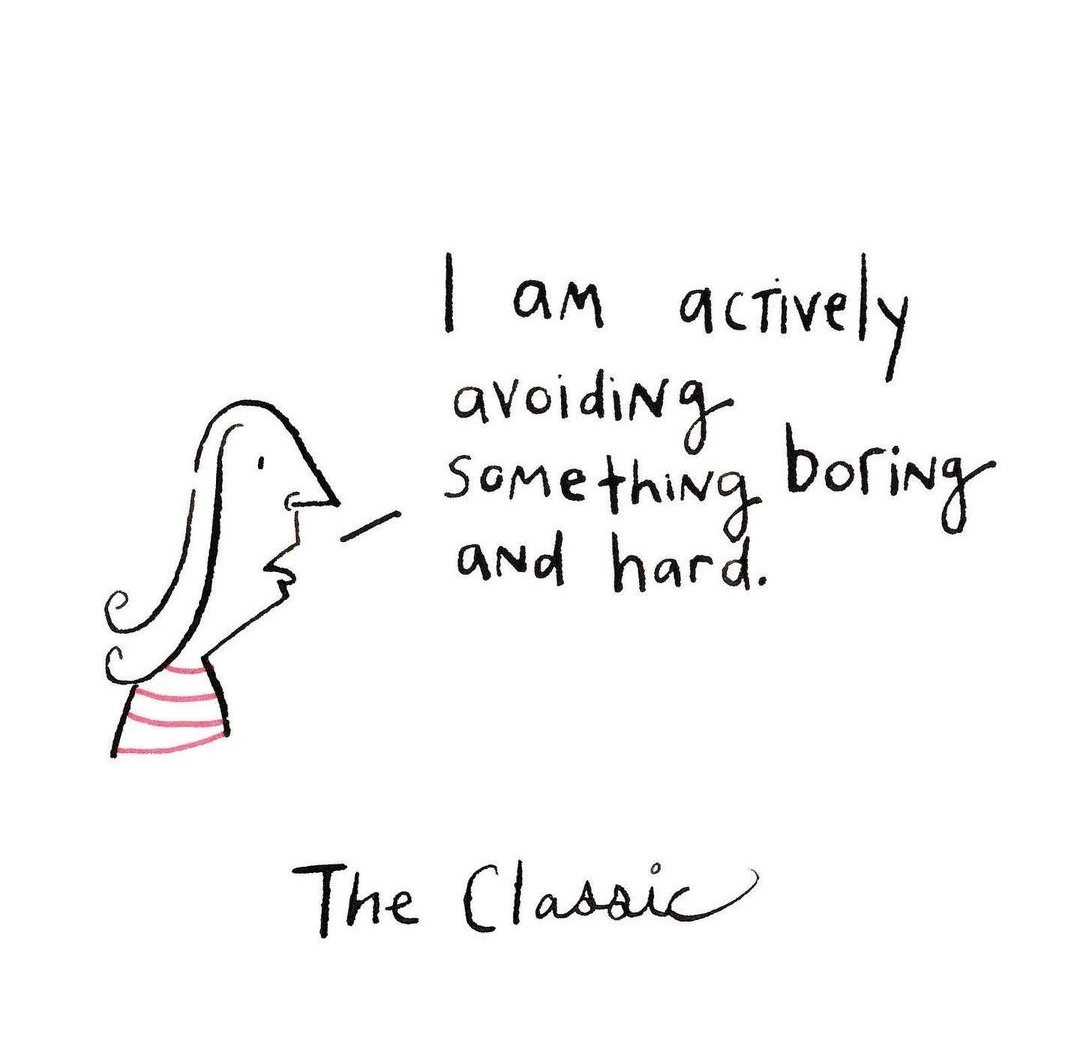
Perhaps one of the reasons I find this all so hard is that the reality is hitting me that I’m no longer the new kid on the block. I’m no longer the young whippersnapper who is coming in and seeing the world in a completely different way.  I myself am becoming the old guard, I’m becoming the person who has been somewhere long enough to harken back to different times when things weren’t the same.  This presents a lot of cognitive dissonance when at the same point you still feel like you are new and haven’t quite got a handle on things.  Just merely realising this helps, it helps to see the strength in where I’m at.  I am still young, I am still new, and the position is novel enough to me that I can see 101 ways where I would like to grow it and me for (fingers crossed) the better.  I have also been in the Trust for long enough that I know how things work, I know who to speak to, I know where the barriers and opportunities might be.  If you look at it in this light, I am in the best possible position to embrace what is to come.  So, although I am still grieving the loss of the past, I am beginning to be excited about the future.

All opinions in this blog are my own