Tis the Season to Talk Noro: What is norovirus and why does it cause such issues?

Norovirus is estimated to cause more than 21 million cases every year worldwide and to cost the NHS over £100 million every year. Because of its impacts, there’s been a fair amount in the news related to Norovirus recently as the numbers have been up this year. I thought the timing might be good, therefore, to talk about this clever and tricky virus, and why we should care about it even if it is not likely to result in significant harm to most people.

https://www.nwlondonicb.nhs.uk/news/news/why-norovirus-reporting-england-so-high-moment

In their recent blog post the UK Health Security Agency (UKHSA) have listed a number of reasons why levels might be higher at the end of 2024 than in recent years:

  • Post-pandemic changes in population immunity
  • Changes in diagnostic testing capabilities
  • Changes in reporting to national surveillance
  • A true rise in norovirus transmission due to the emergence of GII.17

I’ve written a post before about food poisoning and food borne outbreaks, but as Noro (Norovirus) is the queen of this particular court, I thought it was high time I gave her the recognition she deserves and explain some of the reasons they’ve listed in more detail so that the reasons might become clearer.

What is Norovirus?

So, let’s start by talking some virology. Feel free to skip this section if the technical stuff doesn’t really appeal to you, I’ll try to include plenty of context in the other sections so they still make sense.

Norovirus is a single-stranded positive sense non-enveloped RNA virus, but what is that, and what does it mean?

  • RNA (ribonucleic acid) – We talk about DNA being the building blocks of life but viruses act a little different as they are able to take over the mechanics of the cell/host they invade. This means they dont have to have DNA to function. Their genomes (the code for what they are) can be made from RNA alone.
    • RNA molecules range widely in length and are often less stable than DNA. RNA carries information that can then be used to help cells build proteins using the machinery in the host, which are essential for replication and other steps
  • Single stranded – RNA is frequently single stranded, versus DNA, which is normally double stranded (there are however examples of single stranded DNA viruses,  such as Parvovirus)
  • Positive sense – Noroviruses use their own genome as messenger RNA (mRNA). This means the virus can be directly translated (tell the cell what to do) into viral proteins by the host cell’s ribosomes (cell machinery) without an intermediate step
  • Non-enveloped – This refers to a virus that lacks the lipid bilayer that surrounds enveloped viruses, meaning that they are sometimes called ‘naked’. These viruses are more resistant to heat, dryness, extreme pH, harsh treatment conditions, detergents, and simple disinfectants than enveloped viruses.

Noro is part of the family Caliciviridae, and human Norovirus used to be commonly referred to as Norwalk virus. As genetic information has become more available, it is now known that there are 7 common genogroups or G types of norovirus (GI – GVII), only some of which can infect humans (GI, GII and GIV).

Representative virus strains and their known carbohydrate ligands are shown in orange. Data are adapted from PLoS ONE 2009, 4, e5058. 

Within these main genogroups, GI and GII contain a number of different genotypes, which will circulate at different amounts across different years and cause most of the infection we see in the population. You can also probably see that, although we use numbers to talk circulating strains, they also commonly have names, often based on the city or area where they were found. This can make everything a bit confusing, so I’ll mainly just use numbers here. This year, as talked about by UKHSA, the primary culprit is a rise in GII.17.

Symptoms/presentation

Noro is interesting as it frequently presents as something known as ‘Gastric flu’. This means that initial symptoms are often linked to a headache and feeling generally unwell, potentially with a fever. So, not just the diarrhoea and vomiting that people often think of associated with this virus.

That said, you also get the perfectly well to sudden projectile vomiting type of presentation, which is what people think of. Norovirus is the reason I once sat at a train station and vomited on my own shoes, as it just came out of nowhere. There is often a very short, intense spike in temperature, and then it is upon you. This form of intense and sudden presentation is just one of the reasons for the transmissibility of this particular virus. The lack of warning means that it is almost impossible to get away from others, and you won’t have ‘taken to your bed’ before the acute symptoms start.

It is worth noting that as well as these differences in adult presentations, presentations in young children are often also different, with more diarrhoea rather than vomiting. This means that Noro in young children can slide under the radar until adults caring for them then start to feel unwell.

The incubation period is pretty short (a couple of days), and so transmission windows in close quarters can be pretty intense. The duration of illness in most people is also pretty short, although symptoms tend to come in waves, and so it can be difficult for individuals to predict in some cases when it will finally be over. All of this is true for your standard healthy immunocompetent adult, but it is worth remembering that in both children and immunosuppressed adults, presentations, severity of illness, and length of infectivity can be very different.

Diagnosis

Most diagnoses of Norovirus within the community are going to be based on symptoms and presentation, as in most cases, any management is going to be symptom relief by maintaining fluid balance, etc. More specific diagnostics therefore only tend to be undertaken within healthcare environments, where it is important to know viral details to help inform risk assessment linked to transmission, as well as to monitor recover and inform epidemiology (what strains are spreading and if any of them are cause more severe disease).

There are many possible ways to diagnose Norovirus in the lab, from routine diagnostics using molecular methods and immunoassays, to how people are looking to diagnose using Norovirus in areas like care homes in the future using smart phones and other novel methods.
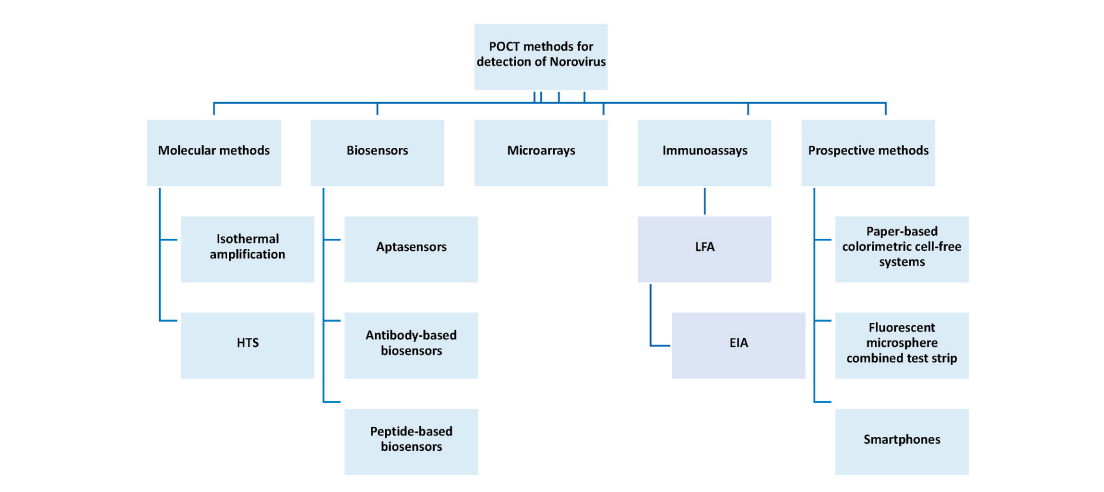
Maja A. Zaczek-Moczydlowska, Azadeh Beizaei, Michael Dillon, Katrina Campbell. Current state-of-the-art diagnostics for Norovirus detection: Model approaches for point-of-care analysis. Trends in Food Science & Technology, Volume 114, 2021, Pages 684-695

In terms of immunoassays, there are a couple of commonly used tests. The first are lateral flow assays (LFA), which most of us will be familiar with in terms of the lateral flow assays used for SARS CoV2, and the principles are similar. Enzyme immunoassays (EIAs) follow similar principles but are usually undertaken in the lab with many samples being processed at the same time, allowing much more widespread testing to be undertaken.

Which diagnostic test is most appropriate depends on how frequent cases are. In outbreak or high prevalence settings, then EIA has sufficient sensitivity to detect most cases. If circulating levels are not very high, i.e. outside of the standard season or outbreaks, or in high risk settings where missing cases could have severe patient impacts, such as some healthcare settings, then most publications suggest molecular methods are the most appropriate way to test.

The molecular methods listed include isothermal amplification, with Loop-mediated isothermal amplification (LAMP) being a common method that was recognised during the pandemic for detecting SARS CoV2, and can be used outside of the traditional lab environment. I, in fact, validated a LAMP test for Noro when I was a trainee, so it’s been around for a while. The other listed is high throughput sequencing (HTS), which is a much more demanding technique requiring specialist skills and equipment, but also gains you all kinds of info, including that linked to strain and transmission data.

The most common molecular diagnostic test for Norovirus in high-risk settings is actually via polymerase chain reaction (PCR). This will usually target roughly a 130 base pair section of the Norovirus RNA genome out of the (on average) total 7500 base pairs of the virus, roughly 1.7% of the genome. This target area will usually enable differentiation between the common GI and GII species, which helps with monitoring and is chosen based on being present in all of those types in order to maximise sensitivity. Further differentiation into genogroups requires HTS but is often not needed outside of outbreaks and public health level epidemiology.

PCR example (IPC = internal positive control)

Spread

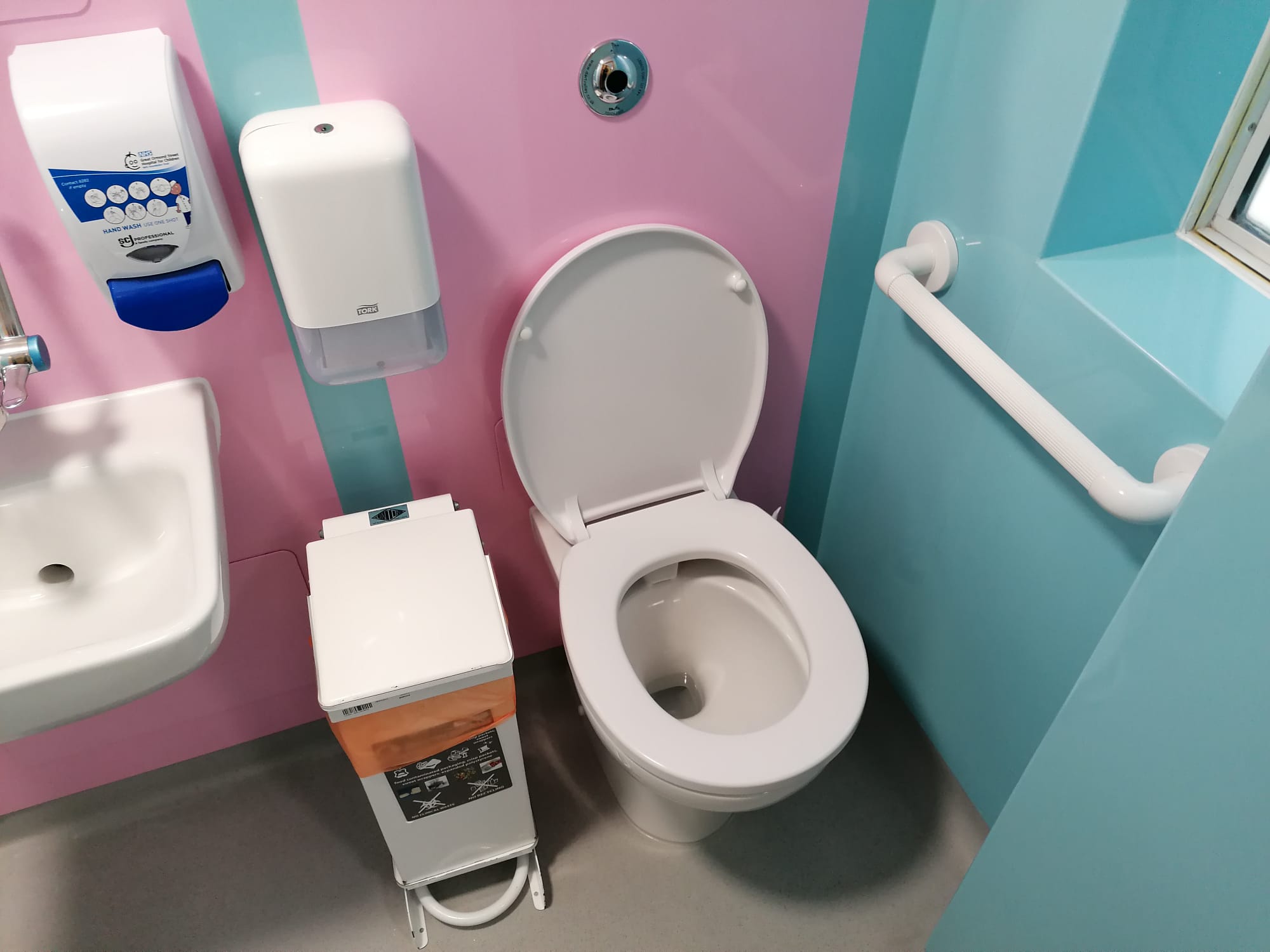
Norovirus is traditionally thought to be spread via what is known as the ‘faecal-oral’ route. That means that bits of poo and diarrhoea end up being swallowed by the person who then gets infected. This is because if someone has diarrhoea and goes to the bathroom, they will have up to 100,000,000 copies of the virus. This can then land in the area of the toilet, especially if the toilet seat isn’t closed on flushing, contaminating the surrounding area for anyone who goes into the bathroom and uses it afterwards. If someone then enters that bathroom and is susceptible to the virus, it is thought you then only need to swallow 10 – 100 copies of those 100,000,000 to become infected, and so only a very little is needed to spread the virus onward.

This isn’t the only route however. One of the issues with the acute vomiting phase of Noro is that someone vomiting can also vomit 30,000,000 copies of Noro. As the vomiting can be projectile, and come with a lot of force, this is ejected at high speed and can form what is known as an aerosol. This means the invisible vomit ‘cloud’ can hang around in the air for some time after the original vomit, meaning that anyone walking into the room where the vomit occurred for some time afterwards, or is present when it happens, can breath in the virus, and thus get infected that way.

As people can be infectious for some time after they’ve had acute infection (at least 48 hours) or when they have initial gastric virus symptoms before becoming acutely unwell, spread can commonly occur due to contamination of food products prepared by those infected. The common example is self catered events, such as weddings and birthday parties, where someone made a load of food on the morning and didn’t start to feel unwell until later in the day. 24 – 48 hours later a lot of the guests then suddenly start to feel unwell. This is a route via which lots of people can get sick from a single event and is known as a point source. Hand hygiene is always key, especially so when dealing with food, but the viral loading of people who are unwell with Norovirus means that avoiding being involved with food may be the only option, as there may just be too much virus present on hands etc to remove all of it easily.

The final route to consider is indirect spread. All of the circulating virus that’s in the air or in water droplets from the toilet flush, then will eventually come down and land on surfaces. Therefore those surfaces end up having a lot of virus upon them, and the virus, as non-enveloped, can survive on surfaces for some days. This means that then interacting with those surfaces can be a transmission risk, and so cleaning, and again hand hygiene, is really key to stopping ongoin spread.

Outbreaks

As those infected can be become unwell suddenly and spread lots of virus in a short period of time, Norovirus can be difficult to contain. Once an event occurs, all of the various transmission routes mean that Norovirus outbreaks can be difficult to control, and management is based upon rapid identification of cases and, if in hospital or even on a cruise ship, restricting contact to other people in order to reduce risk of spread.

The biggest issues occur in the kind of areas where lots of people get together, high densities of people in physically confined areas. Everywhere from military training camps to schools and nurseries can be affected. As mentioned before, centres where people may present in atypical ways due to age or underlying condition can also make it more complex to contain infections and prevent spread. Hospitals have high population densities with restricted space for movement, combined with patients that are high risk as they already have conditions that impact immune function or make them more vulnerable.

Outside of traditional health and residential areas, such as care homes, cruise ships are at high risk as passengers can feel fine when they get on board and then experience symptoms in a confined space, with little room to spread out.

Even once recovered from symptoms, some of the passengers are also likely to continue to shed the virus (one adult study suggested for 182 days) and therefore some of those who get sick early on and recover may continue to be a silent source and risk for other passengers if they don’t have good general hygiene practices.

It can also be a challenge to decontaminate some of the surfaces, as they are often predominated by soft furnishing where it can be difficult to use cleaning agents with sufficient activity as Noro can be resistant to disinfection and present in such high loads it can be hard to remove. This has led to the surfaces in cruise ships being a continued risk even when all of the original passengers have departed and a completed fresh set has boarded.

Seasonality

Norovirus outbreaks are seasonal, with the peak occurring in the winter months. This is partly because, as humans, we tend to spend more time indoors in close quarters with each other during the colder months. We get together for the festive season, and because the nights draw in earlier. This means that we tend to spend more time in higher density interactions than in the summer, where we might be out eating alfresco or going for evening walks, or in my case, cocktails. We also tend to travel to other households and cook for each other as part of the seasonal festivities, which means the food borne route definitely comes into play. Finally, as temperature and humidity impact on the indirect surface route, environmental conditions mean that the viruses survival on surfaces at this time of year is probably more prolonged. Norovirus never really goes away, but the number of cases definitely spikes during the winter.

Strain variance/immunity

The UKHSA mentioned that one of the reasons that there may be more Norovirus cases around now is because one of the current predominant strains is GII.17. The chart below is linked to circulating Norovirus in China, so not the UK, but you can see, even over a few years, how the levels of different circulating strains changes, and that within years there are normally a few strains that co-circulate with a predominate strain type.

Cao, R., Ma, X. & Pan, M. Molecular characteristics of norovirus in sporadic and outbreak cases of acute gastroenteritis and in sewage in Sichuan, China. Virol J 19, 180 (2022)

GII.17 is a less common strain and so many people will not have experienced it recently, if at all. If you haven’t had GII.17 before you won’t have immunity and therefore are susceptible to infection. Even if you have had GII.17 before, one of the reasons control of Norovirus is hard is that immunity is short lived. Even if you have experiences GII.17 before, therefore, the data shows that immunity lasts for anywhere from 6 months to 4 years, and therefore only relatively recent infection is protective. Finally, there is no cross strain immunity, so if there are three circulating strains of Norovirus in a season, unless you have experienced each of them in the relatively recent timeframe, it is possible to get multiple episodes, 1 from each strain, in a short period of time.

Prevention/Actions

Norovirus particles retain infectivity on surfaces and are resistant to a variety of disinfectants. This means that not only direct transmission routes (such as person to person) but indirect transmission via surfaces can be important. Interventions therefore need to take into account all of these different routes.  Some common recommendations include:

  • Hand hygiene with soap and water (alcohol gel is less effective as Noro is a non-enveloped virus)
  • Staying away from other people until 48 hours after symptoms have ceased (as you often get a second wave of symptoms which increases risk of spread)
  • Avoid cooking or preparing meals for other people until at least 48 hours after symptoms have ceased, and ensure good hand hygiene when you re-commence
  • Cleaning with disinfectants (bleach etc at home) may be required, and multiple cleans may be needed due to the amount of virus present
  • Time cleaning so there is enough time for any virus in the air to settle on the surface, so a re-cleaning after 2 hours will probably be needed
  • Avoid going into a space where someone has vomited for 2 hours if possible to reduce the risk of inhaling virus
  • Ensure you are aware that Noro can present with gastric flu type symptoms, headache and temperature, before gastric symptoms start, and so be weary of seeing high risk individuals if you have any symptoms present (especially those in hospitals or immunocompromised)

Due to the challenges with short lived immunity and high viral loading, you won’t be able to avoid getting Norovirus into confined areas and high risk settings, so rapidly identifying when you have cases and making sure that your interventions enable you to stop secondary spread is key. If you get sick, stay home, ensure you keep hydrated, and don’t let the virus fool you into thinking it’s done when you are feeling that little bit better on day 2, it’s Noro’s way of tricking you into going back out into the world an spreading it further. The queen of the gastric viruses is super clever and so we need to be even smarter to prevent her spread.

All opinions in this blog are my own

Let’s Talk Antimicrobial Resistance for World Antimicrobial Awareness Week (WAAW) 2024

I’ve posted in previous years about what antimicrobials are, what antimicrobial resistance may mean for individuals, as well as some thoughts about how we might communicate around some of the challenges linked to antimicrobial resistance in a difference way, or plan our outreach differently. This year I wanted to sign post to some resources that I have either been involved with or found useful in order to help support both our own learning and planning responses to some of the common misconceptions about AMR  I hear when I’m out and about talking to people.

What is antimicrobial resistance?

The World Health Organisation (WHO) talks about it like this:

Antimicrobial Resistance (AMR) occurs when bacteria, viruses, fungi and parasites no longer respond to antimicrobial medicines. As a result of drug resistance, antibiotics and other antimicrobial medicines become ineffective and infections become difficult or impossible to treat, increasing the risk of disease spread, severe illness, disability and death.

I think it’s easy to forget that although AMR is a big part of the professional life of most Infection Control and microbiology professionals, even for other healthcare professionals it features less often, let alone for members of the public. It can be surprising therefore when you do go out and about, or even just talk to friends and family, to hear some of the ways that non infection professionals think about how AMR works and who it impacts.

Common misconceptions I hear when talking to people about AMR:

  • It’s the body that becomes resistant to antibiotics
  • I have never taken antibiotics so I cannot get a resistant infection
  • Antibiotics treat all types of infection
  • Antibiotics can be stopped when the symptoms stop
  • Only infected patients can transmit antimicrobial resistance

If you reflect on some of these myths, it’s actually pretty easy to understand how they come about. Most people are focused on themselves and act from a human centric point of view. Many people give little, if any, thought to the multitudes of living bacteria that co-exist in their bodies. Once you accept this as the starting point, most of these myths are actually based on pretty small mental leaps. If, however, you don’t switch your point of view before you start having conversations about AMR, you can unwittingly end up reinforcing the very misconceptions you were aiming to address.

One of the reasons that I think this post is timely right now, is that I am already seeing more posts linked to how we should not be putting artificial medications into our bodies, alongside the back lash against vaccines, and so it seems to me a good time to remember what a difference these, now common, medical interventions have made to the lives of individuals and public health in general.

Let’s start with a little bit of context

Hardly any of us will have living memory of life without access to antibiotics and what life was like in a world without vaccination. One way to really get a feel for the impact these common interventions have made is to look at the impact in the last 30 years on reducing child mortality (death). Even in this recent time period, massive progress has been made due to advances such as the rota virus vaccine, but also in getting more global access to antimicrobial therapy where it is most needed.

Public health is multi factorial, with impacts being cumulative and made by more than just one thing, so not all of these impacts are made by antibiotic and vaccine availability. Other steps to reduce death linked to infectious disease include everything from clean water and sewer systems to pasteurisation and other means of food safety controls. The impact of these combined approaches is massive, but as the UN sustainable development goals show us, those of us who are access to clean water are not actually in the majority and more is yet to be done to ensure equality of access.

To aim to undo some if not all of this century plus of progress is something I find pretty hard to process. If you’ll forgive the momentary indulgence, I have to state that I think the current anti-vaccine and general anti medical stance that is being seen within some groups and communities is ultimately an act of extreme privilege It’s a privilege to be able to choose not to access something that is readily available to you and not available to others.  It is a privilege not to have to live first hand the consequences of what the alternative might hold. It’s also a privilege to be able to change your mind and choose to access something later. Thinking of things in this light doesn’t necessarily help with having conversations in a supportive and open way when some of the underlying thinking may be so different, but it may mean we can flip the dialogue from one of imposition to one about the power of choice, and supporting evidenced based decision making for all.

Where does AMR come into this?

There’s a big stat that everyone quotes about more people dying from AMR than cancer by 2050, with an estimated 10 million deaths. As a scientist, I get the need to quantify and use numbers, as a human being however, I find that numbers that are so big can just be off-putting. They are so large it can make us, as individuals, feel powerless to impact them.

For me, the reason this conversation is so important to have in the right way, and pitched to the right communities, is because if we are going through a period of global push back against the common interventions, such as vaccination, that have successfully reduced mortality and provided first line protection, then our final line of defence in terms of treatment is now even more vital. 2050 isn’t that far away, and we are already seeing consequences linked to more resistant organisms being identified in severe infections. Therefore, the time to be having conversations and really raising awareness to impact decision-making is now. Sadly, this is coinciding with a period of time when trust in healthcare professionals and science in general feels very low. Instead of being defeated by this, however, we need to use it a driver to really focus on how we can do it better.

One of the other reasons that AMR is both important and challenging to communicate is that it is always in constant flux. You can’t just learn about it and move on. The mechanisms change, the diagnostics change, and the interplay of all of these factors within the bacterial host interactions can make it even more complex and hard to engage with. To exemplify this, the figure below was something I saw posted on Bluesky and fell in love with, as I adore the fact that it lists all kinds of routes to AMR in a single image, thus capturing the complexity of what we’re dealing with.

That said, you don’t have to understand all or any of this image to understand the core of why AMR is going to be a problem moving forward. The main thing to take away from it is that AMR is complicated, and as a result you will hear many different messages linked to it, and those messages will continue to change as we learn more and the impacts are felt differently. As a result, it can then sound like we don’t know what we’re doing, or just end up really off putting, as there isn’t one clear message we are getting out there for people to cling onto. We, therefore, need to build this flexibility into messages and link around core themes rather than trying to talk in absolutes. Otherwise, we risk losing more of the public confidence than has already occurred.

What is being done nationally?

This year, a new version of the UKs National Action Plan for confronting AMR has been released and within it there is a strong focus on the acknowledged need to educate both members of the public and healthcare professionals on AMR.

There is also plenty in there about increasing equitable access to antimicrobials, the need to improve diagnostics to help support both diagnostic and antimicrobial stewardship, and something that pleased me greatly, a special mention of the role of the built environment in managing AMR.

The thing is, top-down approaches will only ever get us so far. At some point, those of us involved in all things infection also need to be consciously including some of these drivers in our own every day practice.

No one can do everything, but whether you are collaborating with industry, undertaking research, or working in clinical practice, we have to embed AMR based action into our encounters. Do you include an AMR slide into all of your teaching? No matter the audience? Do you take the moment when it comes up with friends and family to just talk about the fact that this issue exists? Can you free up some capacity and undertake some public engagement?

Recognising there is a need is not the same thing as addressing that need, and we also have to be there to hold strategic partners and organisations to account in order to make sure action happens. So, let’s consciously match that top-down approach with a bottom-up drive for change.

What resources are there to help talk about AMR to other professionals

Having talked a lot about the need to talk to other healthcare professionals and seeing so much about #WAAW this year, it does really feel progress is being made to support us all to do this better.

Those of you who are UK based have probably heard of and support the Antibiotic Guardian programme (https://antibioticguardian.com/). This programme has lots of resources and supports personal action by asking you make a specific pledge about what you will undertake linked to addressing AMR.

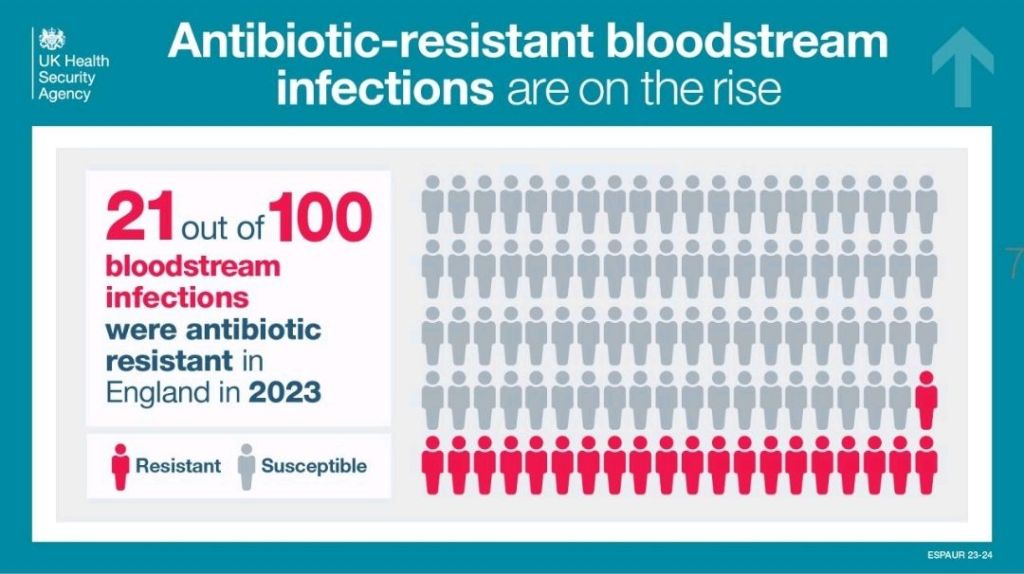
Every year, new infographics come out that talk about different aspects of AMR. Some of these, like the one above, link AMR into commonly known components of healthcare practice, such as hand hygiene, in order to support individuals to feel empowered to act. Others focus more on messaging about antibiotic courses, or as we heard a lot about at the FIS/HIS conference last week, things like IV to oral switches, and sending the right samples to enable a switch from broad to narrow spectrum antibiotics. There’s plenty of ones out there now that can be really useful to embed in talks or laminate and put up on walls. The UKHSA especially have recently released a lot for WAAW, and because there are so many, you can keep them on rotation so that they don’t just become invisible as people see them too frequently.

I’ve also been involved in creating various content this year, as have many others, including webinars and podcasts to explore some of the issues linked to AMR and provide different routes via which healthcare professionals can engage with information and CPD on this topic. I’ve included a link to just one of these below in case it’s of interest, but a quick internet search will provide you with all kinds of others.

https://www.selectscience.net/webinar/resistance-on-the-rise

The main thing to remember is that we all like to receive our learning in different ways, and so ensuring that we remember that when we’re designing our education strategies is one of the best ways to be impactful.

What resources are there to help talk about AMR to members of the public

The resources you might want to use linked to AMR will vary greatly based on your target audience. It’s important to remember that even if someone is a healthcare worker they are also a member of the public, and depending on their personal background or setting they work in, utilising content created for the general public may serve both purposes.

There is some really great video, podcast, infographic, blog, and other content aimed at public outreach on AMR. There’s even a musical called The Mold that Changed the World, about Fleming and Penicillin, as the first antibiotic.

There are lots of different entry points when you are thinking about content that might be appropriate, and you’re likely to go to different depths depending on whether you are doing a one off encounter or a more prolonged piece of relationship building.

The post that is linked to at the start of this article on AMR as a Super Wicked Problem may help with choosing your content. You may also want to consciously address some of the myths mentioned at the start or even start your conversation with the fact that many antibiotics actually started as products identified in nature, and so are not as far from natural compounds as may be frequently thought.

Some of you who have been reading this blog for a while will know how proud and passionate I am about The Nosocomial Project, which aims to use a science, technology, engineering, arts and mathematics (STEAM) approach to talk about infection and infection risks.

As part of this work, we organised a two part festival linked to AMR entitled Rise of the Resistance Festival. All of the content is split across YouTube and the website. I’ve included linked here in case any of it is useful in your own settings when you are looking for inspiration or planning content. The content covered in the festival included everything from a play aimed at pre-school aged children entitled Sock the Puppet, who is a hand puppet who is scared of germs, expert panels, comedy sets, and Klebsiella as a drag queen. I still have so much fun rediscovering this content, and I hope you’ll feel the same way.

I would make a plea that we all work together on this one to do some myth busting and get messages about AMR out there, but also find a way to get messages across that are entertaining/joyous and filled with hope for what we can achieve, rather than focusing on the horrors of what happens if we don’t get our act sorted. I think all of us, including healthcare professionals, have had our fill of trauma in the last few years. So, let’s focus on empowerment and positivity to make this change happen, rather than following in the footsteps of those who want a world of decisions driven by fear.

All opinions in this blog are my own

Me and My Bathroom: Being an adult scientist has way more to do with bathrooms than I’d expected

Last week, I was lucky enough to be the Lord Mayor’s Colloquies (an academic conference or seminar) on water and sanitation, where the wonderful Dr Susanne Surman-Lee was speaking. It was an event sponsored by the Lord Mayor and supported by the Worshipful Company of Plumbers.

What has this got to do with bathrooms I hear you ask? Is it because it was on water and sanitation? Is it because these things impact healthcare design? Or are linked with infectious diseases? Is it because of the LAKANA Mali study? You’d like to think, but actually the trigger for this post was none of these things. It was triggered because I have a habit of hiding in bathrooms.

Hiding in bathrooms

I have posted before about networking, and that I’m not a natural in this regard. I have over time developed tools and approaches to aid me, but I still don’t love it. Now for a confession, and to be honest I genuinely don’t know if this is just a me thing as I haven’t really talked about it. Sometimes when I just can’t face networking, I hide in the bathroom of wherever the event is taking place so I don’t have to be in the room until just before the event start so I don’t even have to try. I’ve hidden in some pretty Class A bathrooms in my time, at the Houses of Parliament, at fancy hotels and most recently at Mansion House.

Some days, I just can’t face the sea of people and trying to come up with something interesting that I can bring to the conversation. It is especially bad when entering rooms when I just don’t know anyone or at least anyone well. Occasionally, my game face just fails me and so I find myself locked in a toilet cubicle negotiating with myself about what point I will leave in order to still look like I’m arriving in a timely fashion and with a window to grab some tea.

The negotiation is also about convincing myself to not a) hide at the back of the room, b) just call it quits and go home, and c) look confident and like I haven’t been hiding in a bathroom when I enter the room.

The negotiating doesn’t end here. Many years ago I made a deal with myself. I am allowed to hide in the bathroom, but only pre-event. Once I make it to the room I am not allowed to leave without speaking to at least one person I don’t know. It doesn’t have to be extensive, but it has to be a deliberate act of networking. One of the reasons I find this bit easier is because post event, at least, the one thing I have in common with the other attendees is that we’ve just engaged in the same activity. So that’s the rule, one person, one conversation before I’m allowed to leave. I don’t know if I’m the only one that has these types of rules, but now you all know if you see me hiding out in a bathroom, there is a reason why.

Developing a more than normal interest in bathrooms and water

You won’t just find me in bathrooms at events, however. Working in IPC has waaaaay more to do with bathrooms than I could ever have imagined before I came into post. From overflowing toilets to drain flies, we deal with it all. We often joke that we don’t know which members of the team are Mario and which are Luigi, as even when it isn’t an IPC issue, we still get all the plumbing calls.

As time has progressed, I’ve developed strong opinions on a wealth of topics that I never thought would hold meaning for me, from sink design to tap choice. I’ve also learnt a lot more about IPS panels (the panels at the back of your sink) and TMVs (thermostatic mixer valves) and how both can impact on other areas, such as my need to revalidate my specialist mechanically ventilated rooms.

One of the key things I’ve learnt, as well as being open to continuously learning, is that relationships in this area are key. This is an area where you need to be able to ‘phone a friend’. Friends aren’t just other people in IPC. You need to build relationships with engineers and designers, as well as those people in the lab who can talk you through your water-based results. You simply can’t do this one alone. There are too many factors. Collaboration is key, and the sooner we recognise we can’t do it alone, the more impactful we will be.

Promoted to a bathroom

I don’t know if there’s any meaning behind it, or whether it is just an amusing coincidence, but when I finally got to a point in my career where I was allowed my own office it turned out it was a converted toilet cubicle. My office still says on-call bathroom on the door, alongside one of my favourite things the team have ever given me, my Dame Elaine sign (they always joke it will happen one day). It is a rather compact space, but I love it, and at least they remembered to take the actual toilet out.

The irony of a blog post that starts with how much I hide in bathroom cubicles then discussing how my office is now one is not lost on me. Quite a lot of people don’t like it as a space, as it has no natural light or any ventilation. I don’t know if it’s because I’ve been hiding in bathrooms for way longer than I had a bathroom office, but I find it a really comforting space. I like the lack of distractions. I like being able to spin my chair and reach for anything I need. I like being able to listen to peppy music whilst I work, as I hate working in silence, and not having to worry about bothering others. To me, it’s sanctuary.

Being considered a bathroom expert

One of the things I didn’t realise when I started out as a Healthcare Scientist is how organically interests grow and end up turning into something more. I started involving myself in all things built environment and IPC, because I wanted to understand it better. I wanted to learn more. As time went on that wanting to learn led me to develop more and more questions, as I found gaps in the literature and questions I couldn’t find the answers to. Maybe because I am a scientist, those questions led me to create studies and collaborate with others to gain knowledge that not only solved some things but also created more questions. I’ve also had the painful experience of making bad decisions based on a lack of evidence to enable me to make better ones. Therefore, I think this area (water and water safety) is one that is often overlooked and yet is critical to all healthcare and healthcare environments.

One of the reasons it’s so easy to make less than ideal judgements and decisions in this area is that IPC teams get so little training on this. Most will know something about Legionella pneumophila and Pseudomonas aeruginosa, but very few will know much about other key organisms, such as atypical mycobacteria or Elizabethkingae. What can feel like fairly low consequence decisions based on aesthetic appeal, such as which tap you prefer, can have significant consequences down the line which might not be seen for years. This can make it hard to tie up cause and effect in order to lead to improved learning without external support.

I never aspired to, or meant to be considered an expert in this area, but somehow I have accrued some level of knowledge by being in a Trust that is always building, and having stayed in one place for 20 years to see the cause and effect in real time. For the same reasons, I’ve also published a few papers linked to ways to improve water hygiene, although only a handful.

The main thing I’ve done is establish the Environment Network as a way to share learning and talk through challenges, and more recently, a course that sits alongside it to help support those who are interested and don’t want to make the same trial and error mistakes that I did. I am far from an expert in reality. There’s too much to learn, and the landscape alters too quickly. What I am is intellectually curious and determined to try to learn enough that every decision I make it better than the last one.

Bathroom based recognition

I started this post talking about a Worshipful Company of Plumbers sponsored event at Mansion House and my bathroom based adventures. I thought I should finish it by telling you why I was there and how this transpired in case any of you would be interested in joining me at future versions.

As I said, there don’t seem to be that many people who work clinically who are interested in water safety, although I’m pleased to say the number is increasing. There are, however, amazing women working in this area from the microbiology perspective, women like Dr Susanne Surman-Lee and Elise Maynard. The brilliant thing about these women is that they are truly interested in engaging with others and also raising up other women. I first met Susanne 17 years ago as a trainee when she was working at UKHSA, she won’t remember the event but she made a definite impression on me, and I’ve known Elise for over a decade. They are my ‘phone a friends’ when I need expert advice. They also lead on a bunch of different guideline writing groups in relation to water, and over the years have been kind enough to include me so that these groups, which are usually fairly heavily engineering led, include a clinical perspective.

Over the years, we have written a few BSI guidelines together, and the one that I think is most useful to those of you out there in IPC is this one, BS 8580-2:2022 Water quality. Risk assessments for Pseudomonas aeruginosa and other waterborne pathogens. It has a wonderful table at the back from Elise that contains all of the kinds of organisms you are aiming to control and if there are any specific areas to be considered, such as Klebsiella pneumoniae and sinks. We’re currently writing a new one to help people make sampling based decisions, and one on atypical mycobacteria should hopefully start later in the year. Susanne also organises the Royal Society of Public Health water webinar series, and I’ve been fortunate enough to deliver a couple.

All of which ended up with me being here:

Worshipful Company of Plumbers Livery Ceremony May 2023

In 2022, I was asked if I’d consider becoming a Liveryman for the Worshipful Company of Plumbers, linked to my work on water and women in leadership. It’s been a fascinating process, and at some point I might do a blog post on it. Needless to say, I agreed and in May 2023 I was clothed in the Livery. One of the great things about joining has been to meet so many people who are also really interested in how we manage water better and differently. There are also so many different perspectives. At the Mansion House event, my one conversion ended up being the leader of a sustainability nonprofit who was interested in using STEAM (science, technology, engineering, arts and mathematics) approaches to change how people think about water. This strikes a bell with me, as some of the challenges in the healthcare setting are around people thinking of sink areas being ‘clean’, whereas they are frequently highly loaded with bacteria and therefore potential risk.

Members of my team now jokingly refer to me as Her Plumbship, and all plumbing queries are light heartedly directed my way. The thing is, in this area, none of us can do it alone. I’m not a plumber (despite what my CV says). Nor am I an engineer, an environmental microbiologist or sustainability expert. If we are to make things better, make thing safer and deliver on key goals like those listed by the UN, we have to come together. We have to embrace the fact that there is no such thing as a stupid question, be prepared to stick our heads above the parapet and be uncomfortable in our lack of knowledge in order to work towards a better shared understanding.

All opinions in this blog are my own