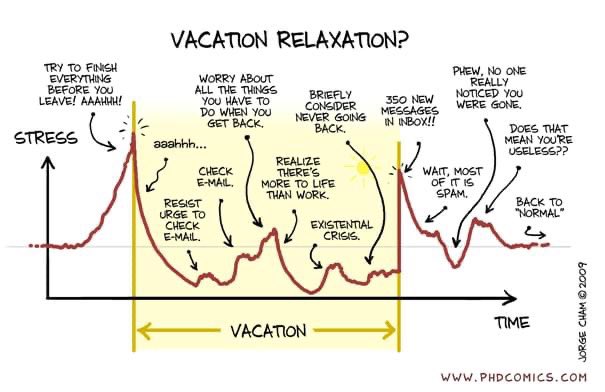
It’s Thursday night and I’ve been working for over 12 hours already in a desperate attempt to see the bottom of my inbox before I go. I have 45 left in my action folder and have reduced the inbox itself from 1250+ to 0. Sounds great, right? It definitely is but the act of getting to this point has left me so wound up about what I might have missed that I’m in a bit of a panic that I’ve forgotten something crucial. I’m thinking from the graph below that I’m not the only one who finds the build up to stepping away super stressful. So in an attempt to persuade myself of the benefits of a break and to lull my brain into some form of relaxation I’m going to focus on why holidays and taking time away from the inbox is so important.
As I write this my out of office is on. It says that I am away and will not be accessing emails whilst I’m away. More than that it states that I will delete any emails that arrive before I return from holiday, with a request that if it is still going to be relevant the sender should re-send after my return date. For many years I took laptops and phones away with me, in recent years I’ve decided that I will no longer do that. I can’t trust myself to not take it out and just ‘take a quick look’ or ‘do one quick thing’. Before I knew it I had always spent every day of my leave working and came back more frazzled then before I went. If the opportunity presents itself I will also become the person who is a walking version of the tweet below.
The ‘I will delete’ section comes from the fact that I will return to over 1000 new emails. My diary for when I get back is already full to bursting, from all the meetings I have to squeeze into less time because I’ve been on leave. This means that I will have A LOT of emails and no actual time to read them. I may or may not delete the intervening ones, but this message means that if anything is important it isn’t up to me to email dive to find it, it’s up to the sender to re-send. This means that when I come back I will panic less about the amount of time it will take me to catch up with having been away.
So given that even the process of going away drives me to a special level of stressed out, why am I doing it?
I think everyone in healthcare is run down and tired. When I’m this tired I lose the capacity to put things into perspective, everything is a disaster, my anxiety levels go up and I find it hard to see the wood for the trees. Going away and spending some quality time with my family enables me to recharge. It helps ground me and reminds me of what’s important. It enables me to become something other than Dr Cloutman-Green and spend time laughing, reading books, indulging in bubble baths and possibly even managing to have a lie in past 6am.
Letting my brain experience other things and stepping away from the day job also allows me to recharge my creative batteries. I come back able to look at problems from a different perspective, increasing my chance of solving issues. It also enables me to get inspired and remember why I have the best in the world, in order to help me plan and engage with change with a re-energised passion. Within 48 hours of being away I always have so many thoughts and plans that bubble up due to having a change of scenery. It’s another reason why I have to leave the laptop behind, as otherwise the urge to act on them immediately is too great. I keep a notebook to write them down so I don’t fear forgetting them but then can move onto the next book. It makes me better at my job when I return.
Not only is it good for me but it’s good for my team
It’s really easy to fall into a trap where you feel like if you aren’t there things fall apart. To be honest for me it’s less about this but my imposter syndrome telling me that if I’m not there to catch and double check myself people will find that I’ve made some huge mistake (let me be clear I’ve never found this to be the case – it’s why it’s irrational). It’s really important for me to go away and find that this doesn’t happen. It’s a little bonkers I know, but the more tired I am the more this fear grows, and the harder it is to step away and become less tired. It is quite the cycle, but knowing that it exists is 50% of the battle of controlling it.
Although I fear stepping away it’s easy to ignore the opportunity that this gives to my team(s) to try things out, to take on tasks or sit on meetings that they don’t always have access to. It gives them experience of a slightly different role to decide whether they enjoy it and supports their career development and networking. We are a team and I am not a one woman army, so it’s important to acknowledge that.
Not only is stepping away a development opportunity for teams, it is also a needed piece of leadership by example. I would hate anyone I work with to feel they can’t take breaks and recharge. I don’t want them working stupid long hours and fearing what happens if they are not ‘always on’. I need to lead by example and therefore give implicit permission that others also fully step away. For example I took the ‘I will delete’ message from my Clinical Lead. She led by example and I therefore feel able to adopt her practice. I want to make sure I also lead by example.
Finally, it makes me a less grouchy human being! When I’m tired, like many people, I get tetchy, read more than is meant into communication and frankly don’t communicate as well. My patience and tolerance become stretched wafer thin. I think that everyone around me has a much better experience of working with/living with/being friends with me when I’m refreshed, recharged and ready to go.
On that note this is my final job of the day, apart from packing and all that jazz, so I’m outta here.
It’s been a long 18+ months in the world of Healthcare Science and Infection Prevention and Control. I’ve posted quite a lot about the pandemic here and how hard it’s been, especially coming into winter and the challenges that will bring. Challenges now acknowledged, it’s a Friday night, I have music playing and so I also wanted to reflect on what the pandemic has brought us that isn’t all negative.
Raised the profile of my profession
For many years I have had to try to explain what my job involved to the public, explain what polymerase chain reaction (PCR), and I’ve frequently been met with slightly glazed expressions. This is no ones fault, it’s just that those terms haven’t really meant anything for most peoples day to day life until the last couple of years. Suddenly public interest and awareness in not only testing and infection control, but also in the science behind these processes, has really been increased. Now I can hardly ever get a cab without being asked about how things work and what the current clinical situation is. If we engage well with this interest and awareness we will be able to have conversations about science and its impact on individuals and society for years to come, in a way we haven’t been able to before.
We’ve been invited into the room
Despite my love for my subject, microbiology has never been a sexy discipline. It’s never a topic that gets you into many strategic meetings where key decisions are being made, pathology as a whole is often left out in the cold when big decisions happen. Suddenly pathology, and microbiology in particular, have become a focus for decision makers. Healthcare Scientists as a professional group have often struggled to be invited to meetings, or even know that they were occurring. There has been a definite pivot over the last 18 months, with consideration of the importance of diagnostics in patient management. 80% of patient pathways rely on diagnostic impact at some point, it’s logical therefore that pathways can’t truly be optimised without considering diagnostics. So I for one am happy about the fact that by having a seat at the table we can work together to make this better, not just for SARS CoV2 but across all patient pathways.
The scientific and infrastructure legacy
Implementation of research techniques into clinical settings is always challenging, it requires access to space, finances and expert knowledge. We’ve always been very fortunate in the NHS, in that we have a lot of wonderful scientists who are really well placed to respond to scientific and clinical challenges by not just improving what they have, but by bringing in the latest research approaches. The things we have always struggled with are access to financial support to develop services and space in which to locate the new platforms required. One thing that has really struck me over the last 18 months is that the conversations in this regard have changed. Instead of flat out no, the discussion is about which is the best way forward and how can we make it work. This doesn’t mean that the answer is always yes, but it means that many of us have access to the infrastructure we need to really maximise patient care. The big question for us all now is how we maximise the legacy of that infrastructure to improve across challenges when this particular one is less enormous. This is a great problem to have and we need to ensure we actually spend some time thinking about the answer, rather than drifting into a solution.
Developed networks across boundaries and silos
It’s too easy in times of challenge and stress to react by becoming insular and regressing into known comfortable places, reinforcing silos and boundary based working. One of the things I’m proudest of for my profession and clinical colleagues is that instead of regressing into the known during the pandemic, they have instead reached across divides in order to form networks and learn from each other. This can’t have been easy to manage and yet the impact this has made has been really clear to me. At no time before as a scientist have I have been at a table with so many different professions, all with their own expertise, discussing, listening and learning from each other. I really hope that those networks and relationships that have been forged under such pressure will continue when we move back to a more standard healthcare model, as being part of those discussions has given me real pleasure.
I’ve got to know my colleagues much better
I am fortunate enough to be part of some exceptional teams (research, HCS education, IPC and microbiology). I’m not saying that the pandemic hasn’t on occasions challenged us and relationships within those teams, how can it not. The gift of those challenges has been however that we have come to know and understand each other in a way that would never have occured in a more standard situation. I spend more time with my teams than my family, I’ve known many of them for over 10 years, in many ways they are parts of my family. I’m super grateful therefore for the way we have bonded and deepened those relationships over the last 18 months, and it will only make us stronger to face whatever challenge happens next.
I’ve learnt so much about myself and my preferences/drives
Not only have I learnt more about my colleagues, but I feel I’ve learnt an awful lot about myself. The things that really matter to me, the things that drive me, the things that energise me and the things that drain me. For instance I have learnt that for me planning for the future is energising, whilst existing in constant responsive mode is draining. I miss sitting and planning research events, outreach events, teaching and developing the service. All of those things fuel my need for creativity and change. Living every working day in responsive mode where non of those things can happen I find incredibly draining, which is why my battery feels constantly empty. It’s why this blog has been a lifeline, even though it time consuming and yet another thing on my to do list.
The other thing I’ve learnt about myself is that despite appearances I’m more of an introvert than I knew. I’ve loved just spending time at home with my husband and not having the demands of a social life. I always knew that I could turn on ‘extrovert me’ for a given number of hours but then would reach a point where I needed to stop. Now I’ve discovered how happy and comfortable I am without the need to deal with those social demands in my world. I think I may try to keep my limited social circle up for some time to come as I feel happier and less anxious in small groups.
I’ve learnt so much and upskilled in so many areas
I didn’t realise until I came to sit down and write this blog how many new experiences I’ve had as a result of the pandemic that I would never have experienced otherwise. I’ve been involved with a life drawing class posing (fully clothed) as part of their pandemic professionals series. I’ve has my COVID-19 dreams painted as part of the Dream Appreciation process by DreamsID, the product of which I not only have for my office as an amazing piece of art, but has also been exhibited at the Freud Museum in London as well as other places. I’ve even been persuaded to take part in a stand up comedy show after training for National Pathology Week. These experiences have all developed skills and left me with memories that will last far longer than the pandemic. Many of them would never have happened if it wasn’t for the pandemic pushing creativity and causing people to work and develop projects in new ways. Even this blog was started as a way of being able to still channel creativity and sharing in the pandemic. So I guess I’ve learnt a lot, and not just about viruses.
Enjoying the genius of responses from companies and professional bodies
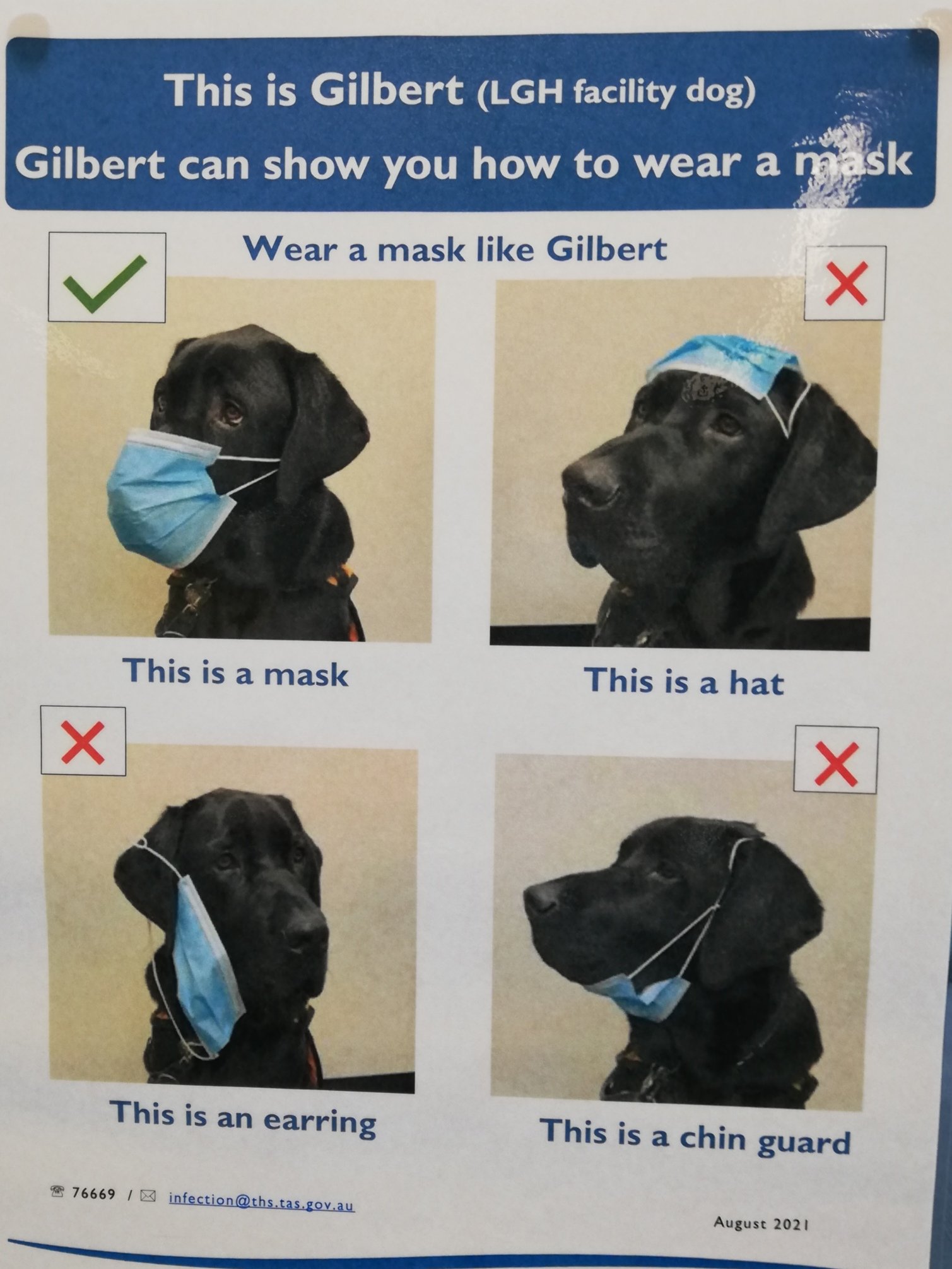
This may be a weird one but I have rather enjoyed seeing companies and other professional groups trying to come to terms with the pandemic. It’s been really interesting and enjoyable for me to see people tackle difficult and sometimes repetitive messaging in a way that brings humour or innovation into the mix. I’ve also found it pleasing when big business or big names have channelled some of their resources into learning and other messaging to support the pandemic approach. It has often renewed my faith in mankind when other sections of the population have been busy destroying it.
Leicester General Hospital Genius Signage
If we can survive this we can deal with anything that’s thrown at us
Finally, I think it’s easy to forget how much we’ve achieved and how far we’ve come. No matter what your job, or the reason you’ve spent a few moments of your valuable time reading this blog – know that you have come far, that you have achieved much and that you are making a difference and having an impact. Sometimes you just need to step far enough back that you can see it. So thank you, all of you.
Some of the clearest memories of my childhood are about things that happened to me in hospital, and to be frank most of them are not of good experiences with healthcare and clinicians. Those experiences have shaped my current relationship with medicine, for both good and ill. Yet when we are having interactions with our paediatric patients we rarely think about (outside the paeds world) what the legacy of those interactions will be. For some reason I’ve been reflecting on that legacy for me recently and have begun to start unpicking why its a driver for much that I am passionate about as an clinician.
What experience led me here
I didn’t deliberately choose to work in a paediatric setting but over the years I’ve had plenty of opportunities to leave and work in a more general setting. I’ve never really been able to articulate why maintaining my work in paediatrics has been so important and aligned to my personal values. Over the last 6 months however I’ve been involved in designing our new children’s cancer centre and the conversations have triggered some realisations about why it matters so much to me.
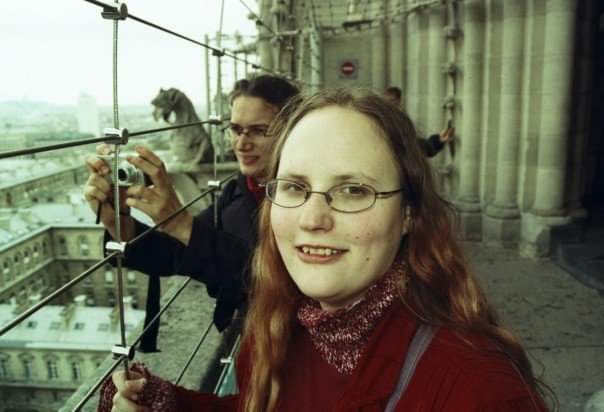
When I was nine I was in primary school (about 5 years before the picture of myself, my brother and sister above). At lunch time I started to cough, by PE class at the end of the day I was coughing so much I sat out the class, and remember watching the others running in the sun from the classroom window. I walked home after school, at which point the coughing was continuous. My father took me to the GP who offered to call an ambulance but said it might be quicker for him to just drive me to A and E with a letter from him. The GP didn’t speak to me, I just listened to him talk to my father.
I arrived at A and E. It was late, I was tired and my chest was really hurting with coughing so much. I didn’t really know why I was there, after all it was only a cough. I was placed in (what I now know) is a side room and 15 doctors/medical staff came into the room. They looked at me, they prodded me, they talked about giving me an emergency tracheostomy, no one spoke to me. I couldn’t even see my father due to the number of people. The only person in the room who talked to me was a nurse I remember to this day called Maxine. I remember her as this was the start of many journeys to A and E over the coming years and Maxine was almost always there and without fail was the only one who spoke to me.
The next thing I know my father is no longer there. I’ve been rolled into (again what I now know) is a theatre suite. Someone has put a massive black mask on my face and the world is swirling, people are going in and out of focus. It felt like a horror movie. I woke up in a dark room on my own. I was unable to move, unable to speak (I now know I was intubated). The only thing I could see was that right in front of me was a window to another room. The curtains were open and there was an adult in the other bed. He must have crashed as they were attempting resuscitation. There was beeping all around him and me. He died and I watched unable to move or speak.
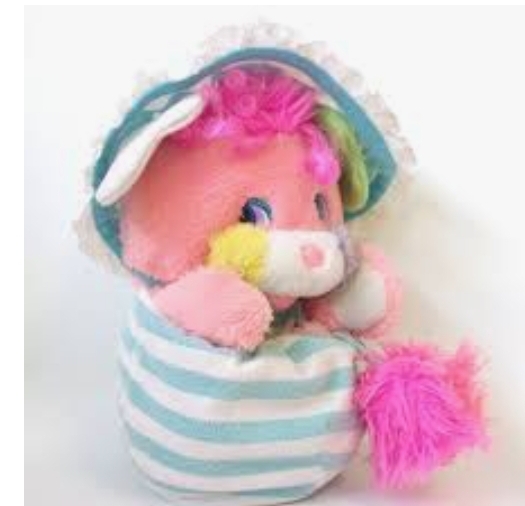
Over the next week I stayed in a cubicle on an adult intensive care until. Frequently on my own I had my toy popple and I would shake the tail to try and get attention. My mum was often there and I was mostly sedated but I don’t remember any member of the medical team apart from the odd nurse ever speaking to me. I was given a book to write in and on one night they brought in a TV so that I could watch Agatha Christie’s Poirot. I fell asleep as I was sedated. When I woke up the TV was still there and on. Hours has passed and a horror movie was on, I couldn’t turn it off and no one came. Again I just lay there scared.
So why am I telling you this? Afterall medicine must have changed a lot in the last 30 years and this wouldn’t happen now.
This was the start for me of years of being ignored in rooms and having procedures undertaken without being included in the decision. It was part of time spent in hospital without being able to get out of a bed or interact with anyone else, no access to school or even a space to play when feeling better. Although things have improved I’m not sure things have truly changed in many spaces. That’s the reason I’m writing this post. To raise awareness of the importance of not just seeing children as little adults in healthcare but as people with specific needs that need to be catered to.
How do we do things differently?
I recently posted about how I felt we needed to challenge ourselves more on delivering patient centred care. When children and families are involved however I think many people feel even less skilled to adapt what they are doing in order to engage the patient as well as their families in discussions and decision making.
There is a great course run out of GOSH called MeFirst which I try to encourage my Healthcare Science staff to engage with and which I strongly believe would beneficially to anyone working I healthcare. Even if you don’t work in paediatrics you are likely to need to communicate with children and young people at some point. It provides a communication model which will support us in putting children and young people first in any interaction. If you come through the standard medical and nursing training route you are likely to have much more embedded training in this than those of use who belong to other healthcare professions. It is especially important therefore for those of use who haven’t had this training as part of our standard curriculum to search out opportunities to upskill ourselves and improve our practice.
What tips do I try to use in my practice?
Speak to the patient as well as their families when you’re introducing who you are and starting your conversation:
Try using images and cue cards to support patients articulating how they feel about options, decisions and interventions – if appropriate for the patient
Spend time with the patient and family to try to understand their level of understanding in order to make them feel heard, not patronised or baffled by information
Avoid using technical terminology whilst not dumbing down what you are saying
Remember to use active listening to try to really hear what it is that patients and their families want. They will all have different prioritise and things that are really important to them. Plans should not be one size fits all
My interactions with healthcare as a child led to me being completely terrified of engaging with healthcare as an adult. I experience a really primal fear reaction which no amount of rationalisation can overcome. I think its why I got the job I have, now in hospital I am the person who feels able to make decisions and who is in control and listened to, rather than ignored and scared. Most importantly however I am also the person who can sit in a room and advocate for us to do it better. In my world I have the lowest skill level as I’m surrounded by brilliant paediatricians who are better at this than I will ever be. However if I can make a difference for one child to feel less scared then that is success for me!
It’s an exciting time for a lot of people right now, a lot of people are planning new phases of study starting in September/October. In the world of Healthcare Science we have people starting PhDs as part of HSST (people training towards becoming Consultants) and new STPs (people training to be become Healthcare Scientists) all beginning their new journeys. It feels like a really good time to talk about all the things I wish I’d known when I started out in order to make people feel less alone, as well as encouraging them to make the most of every part of this next stage.
It’s never about being the smartest person in the room
When I first started in my role as a trainee Clinical Scientist, and then as a PhD student, I just remember being over awed by everyone is the room. Everyone had amazing titles, years of experience and just an aura that suggested competence and knowledge. Even all these years later I sometimes feel that way, especially in rooms I haven’t been in before. It took me a long time to understand that my contribution wasn’t about being smarter than anyone else, I’ve never been the smartest person in any room. Your contribution will be about offering a new perspective that is unique to you. Sometimes that’s from a technical scientific point of view. Sometimes that will be by who you can connect the people in the room with. Sometimes that will be by offering a different lens through which the situation can be seen, being new to an environment means you will be able to review things without historical bias.
Manage your training officer/supervisor
I’ve been on both sides of the fence. I’ve been the PhD student who couldn’t get time with their supervisor and the Clinical Scientist trainee who just wanted to be included. I am now the PhD supervisor/training officer whose diary looks like a train wreck and who feels constantly guilty about not having enough time to devote to those who she’s training. One of the key skills that I had to develop as a trainee, and now encourage in those I supervise, is to develop skills in supervisor management. This includes things like understanding what your own needs are: do you like micromanagement/close support, or are you more interested in a light touch. Ask how your supervisor works: are they someone who likes drop ins, or are they like me i.e. if it isn’t in the diary it won’t happen. Learn how to support the process by keeping notes of the meetings and emailing them for record keeping/prompts. Finally, spend the time to think about what you want from each face to face to make sure you maximise your time. Also, don’t repeatedly stand them up – it sends out ALL the wrong signals and if you don’t value my time I will value our meetings less.
We all fail, frequently
No one really talks about it but we all fail, I fail all the time. Now sometimes those failures are big and sometimes they are small and minor, like not having a conversation well. I wasted a lot of time at the start of my training by trying to be perfect and as a consequence I feel I didn’t maximise the learning in those first few years. If I discovered an error I quickly (and safely) corrected it, but I had such anxiety over it I didn’t really reflect on it, I wanted to fix it and move on. I also (apart from safety reporting) didn’t really talk about it with my supervisor. This meant that the team as a whole missed out on learning from system based failures. If mistakes happen, especially serious errors, they tend to be compound events linked to multiple failures along a pathway. The best way to avoid these errors to identify the weak points in the system when minor issues occur singly, so it reduces the chance of a compound failure later on. Long and short, don’t be afraid of failure, focus on learning from it and know we are all in this together.
There are no stupid questions
I love people that ask questions, it makes me think, it makes me remember why I’ve made decisions and assess if they are still relevant. When I started out I was worried that asking questions would just demonstrate my ignorance, and at the start of my training I was concerned about what people thought about me coming in as a non microbiologist and being behind everyone else. It takes courage to ask questions and be part of the discussion. As a trainer it is very difficult to evaluate whether you are covering knowledge gaps or pitching what you are doing correctly if the dialogue is one way. As your confidence grows it is also good to question and challenge, there are many different ways of doing things and only by having dialogue can you really understand why certain decisions get made under some circumstances and not in others. If you are an introvert and not comfortable asking questions openly, make notes, email and discuss your findings, find a way that works for you and work for your mentor.
Make copious notes
You will be given a LOT of information when you start, well to be honest all the way through your training, but the start can present information overload. When I look back at my notes from the first week of my training I obviously didn’t know what some of the words meant, let alone the context. By taking copious notes throughout however it meant that once I had found my feet I could review those notes and gain new information I was unable to take in the first time. By reviewing notes when you come back to something, after a break or rotation else where, you will be able to make connections which may not have been obvious to you the first time around. It will also enable you to ask questions better (see above) and have more enriched meetings with you mentor/trainer/supervisor as you will have access to specifics. Not only that but it will mean that you demonstrate attention and will enable you to ask questions that add to your experience. Plus when you look back at your notes from 10 years ago it will make your realise how far you’ve come and how much you have achieved!
Be the master of your own destiny
Every trainee/student is different. Hopefully you will get a supervisor who will have the time to help you reflect on your learning needs, but you need to also be able to develop the skills to do this yourself as you won’t always have access to someone to do it with you. Most training programmes are quite structured but there are always many different ways to deliver on the same learning outcomes. This is a career and every career journey is personal, so the sooner you can get into the habit of thinking about what your strengths and weaknesses are, and what your specialist areas of interest could be, the more you will get out of any opportunities you are offered. Within academia and the NHS you will often not be offered opportunities on a plate, but if you know what you want and find the opportunity out, you will very rarely get blocked from accessing them. Start thinking early about what could enrich your training and find ways to access those experiences.
Sadly this is not a 9-5 but you can do this and have a life
I’ve sat in a lot of lectures from very senior people who talk to trainees about clinical and academic work not being 9 – 5, it’s true but in many ways this saddens me. It gets spoken about as if you can’t have a life, you either choose devotion to this vocation or it isn’t for you. There will definitely be points where you have to commit more than the standard hours, exam revision, dissertation writing etc, but this shouldn’t be all the time. I encourage my guys to take on extra curricula activities such as STEM engagement, which often happen on the weekend, but this is a few times a year. Training shouldn’t be about burn out. To fully learn and develop it is crucial to have mental space to reflect and recovery time. You need to early on find strategies that work for you to manage your time. Do you want to block out every Friday afternoon for paper reading? If you do need to put in some extra hours would you rather do it at your desk to maintain work home separation, or work on the sofa. Be aware early of working to manage stress rather than to manage task and develop strategies to enable yourself to walk away and unwind (my trainees and students will be laughing at the hypocrisy of me writing this line, but do as I say not do as I do, I too am constantly learning).
Have a plan for what’s next
3 years feels like a long time when you start but it’s not really. Before you know, it will be 18 months in and you will need to start thinking about what the next stage of your career may look like. As part of your progress it is therefore important to make sure you regularly check in with yourself about what you’ve enjoyed and you’re aspirations to make sure you’re on track for the career you want. The more you do this, the more you will be able to mould your training around the experiences and networks you will need to help you succeed. A lot of us fall into career choices, but if you can be deliberate it will help you find happiness as well as success.
Reach out and connect
It’s not what you know but who you know. This isn’t entirely correct, but finding opportunities often depends on knowing the people who are making them or have access to them. This is often difficult when you are starting out in a new field or career as you don’t know who people are in order to hear about things. This goes for job posts as well as learning and accessing skills. There are now some ways where you can do this on your own, such as social media, which are less reliant on introductions – join us on Twitter. However this is where extra curricula’s can really help. Join your professional body, find a trainee network, engage in patient and public engagement, go for coffee with your fellow trainees and PhD students. Relationships and connections forged now will pay dividends later and are worth the investment, even if you are busy with other things.
Enjoy the ride
I was so focused on the end goal that I didn’t enjoy the journey as much as I should have. I spent 17 years focussed on making consultant, ticking boxes along the way like PhD and FRCPath, that I didn’t live in the moment. I was always focussed on the next step, the next target and so I didn’t enjoy the freedom that my training presented me with. Being supernumerary only occurs early in your career and gives you a freedom to make decisions and enjoy experiences you just won’t get later on. Learning is your focus right now, free of the demands of the inbox, meetings and other peoples agendas. Make sure you relish every moment as you will have less and less time to just enjoy learning as your career progresses.
All opinions on this blog are my own
If you would like more tips and advice linked to your PhD journey then the first every Girlymicrobiologist book is here to help!
This book goes beyond the typical academic handbook, acknowledging the unique challenges and triumphs faced by PhD students and offering relatable, real-world advice to help you:
Master the art of effective research and time management to stay organized and on track.
Build a supportive network of peers, mentors, and supervisors to overcome challenges and foster collaboration.
Maintain a healthy work-life balance by prioritizing self-care and avoiding burnout.
Embrace the unexpected and view setbacks as opportunities for growth and innovation.
Navigate the complexities of academia with confidence and build a strong professional network
This book starts at the very beginning, with why you might want to do a PhD, how you might decide what route to PhD is right for you, and what a successful application might look like.
It then takes you through your PhD journey, year by year, with tips about how to approach and succeed during significant moments, such as attending your first conference, or writing your first academic paper.
Finally, you will discover what other skills you need to develop during your PhD to give you the best route to success after your viva. All of this supported by links to activities on The Girlymicrobiologist blog, to help you with practical exercises in order to apply what you have learned.
Warning – This is a long one and I’m not even a little bit sorry as I think we need to talk about this
Lets get this bit but out of the way first. I don’t believe that any of us for one second mean to provide anything less than the best care we are empowered to give. I do however believe that there are a couple of key components that may mean that we don’t always provide the care we aspire to. In my head there are three key reasons behind this:
Empowered to give is the key phrase here. Are we supported in delivering the best care? Do we have the right staff, equipment, training etc?
Does the organisational culture support delivery of patient centred care, in terms of high level decision making, expectation setting and provision to challenge?
Are we as individuals aware of the behavioural patterns we fall into during times of stress i.e. if we trained during a hierarchical medical era is this where we shift to in our practice in times of psychological challenge, such as a pandemic?
This post isn’t a criticism of individuals or centres, but it is a challenge to ensure we are thinking and questioning as part of our everyday practice. An encouragement to question whether we are providing the best in patient care, or at least actively identifying areas where the system has fallen down. We can only improve if we question, question ourselves, the situation and the system.
So why am I posting this now?
I’ve had more to do with being on the other side of healthcare than I’d like over the last three weeks. The outcome was pretty dire and I made a promise to the amazing person who was the patient that I would use whatever influence I have to remind people that we get the principles of person centred care wrong it is the patient that suffers. In my case it meant that the patient suffered loss of dignity and the final weeks of their life without the support of family and friends.
I work in paediatrics and I must admit I had fallen into the trap myself of thinking that every world was like my world, not that I’m claiming my world is perfect. Paediatrics is however more family focussed by it’s very nature as we need families to support us in providing care. We also need to listen differently as many of our patients can’t articulate their clinical condition and so the input of non verbals and families into their care is especially important. My sojourn in the world of adult healthcare was therefore a considerable shock to my system and has left me both reeling and questioning my own practice.
Impacts on dignity and right to choose
The NHS Constitution clearly sets out key principles that we should be using in all of out interactions, with each other and with our patients. These include clear statements on respect and dignity. For us really to fulfil this pledge though we need to hear what patients are saying to us.
For example, if as part of a patients’ care they are experiencing loose stools and they are not supported to access the bathroom, and instead left lying in a contaminated bed, they will not only be at increased risk of infection (from the femoral line they have in), but they are also likely to become less compliant with their care in general. Are we under these circumstances really demonstrating through our actions that we care for the patient in front of us?
As healthcare professionals we are often a bit non-plussed about faecal contamination, for those not in our world however we need to remember that to many individuals this is a humiliating event. If we compound scenarios like this with not explaining why medically we are making it worse by adding in medication, such as laxatives, which make the situation more likely to reoccur, then are we really thinking about how we are impacting on patients psychological health, or undertaking holistic healthcare?
Is this really seeing patients as equal participants in their care choices if we aren’t giving them the information to inform those judgements?
Too often we make decisions based on our knowledge and do not engage with the patients and families in front of us in order to support their engagement with their own care. How often do we ask them what matters to them? Only by asking this question can we establish what dignity and the right to choose really means for the patient impacted.
Importance of communication assumptions about levels of understanding
Communication is especially important right now. Due to the pandemic patients are frequently isolated from support mechanisms. This lack of support may mean they don’t challenge their care, it also means if that challenge is unheard that they don’t necessarily have access to escalation procedures, or even worse access to sign posting about what to do next. They are effectively in a very lonely bubble, with the only people to support them a bunch of strangers who may or may not have the time to develop connections or truly support.
When I was finally allowed to visit the healthcare centre (a story for the next section) not a single person, apart from the palliative care team, introduced themselves until the last day when to be honest it all felt too late. Not one ‘hello my name is’, not one explanation to the person before them or us their family as to why they were there and what they were doing. Because of my job I felt like I could explain things and to ask the questions that needed asking, but most people do not have a healthcare professional as part of their family. This was apparently the way the whole episode of care had occurred. I thought we had come so far in terms of not just seeing patients as anatomy and conditions, but this just showed me how wrong I was. On the day of his death everyone was brilliant, supportive and demonstrated amazing communication skills (apart from the medics who didn’t even come in) but the impact of those skills would have been so much greater if used when someone was able to respond and participate.
The Palliative Care and Support team came to visit on the day before he died. They said ‘hello my name is’, they didn’t however explain what palliative care was or even really check my family knew what the reality of that visit meant. When I spoke to my family after they had gone they were shocked when I explained. We have to remember that not everyone lives in a world where those words have meaning, we need to stop hiding between titles as barriers and truly check that what we believe has been heard is actually what was received. The other extreme is the ‘infantilising nature of healthcare’ where we assume that people don’t have the knowledge and capacity to be involved in their care or decision making. It takes time to get a feel for the level of a patients engagement/understanding and pitch your content appropriately. Some patients have a considerable amount of knowledge about their own condition, but whatever their level of knowledge we should be talking to people at the level that is appropriate for them, not what is appropriate for us.
Long and short is that I’m saying how we communicate matters, not just what we communicate, and that we should all spend time (me included) reflecting on how we do this in practice. I’m as guilty as anyone for rushing in, delivering the information in my head and then rushing onto the next task, but is that what is actually needed of me? Take the time to get patients names right, learn who they are not just the reason for admission, and make sure we communicate in a way that works for them.
Who are we making COVID-19 decisions for?
The hospital in which all this occurred has banned all visiting because of COVID-19. Not only that, they had removed all entertainment centres, and thus a big means of distraction, for all patients. This may seem really trivial, what does it matter if someone can’t watch TV. It matters because England got to the European final and football, as trivial as it may seem, is super significant in some peoples identities. Dying without being able to engage in one of the few seminal moments you are still able to experience is significant. It matters because if you have unexpectedly found out you have only weeks to live and you have no visitation to provide support then distraction is probably one of the few things that may aid you processing that information.
The same hospital that banned visiting had less than 20% of the staff on the ward wearing masks. If a patient is in a cubicle I can see no barrier to visitation from an IPC perspective, just get them to wear a mask. If we are insisting on banning visitation in order to prevent in-patient acquisition then staff need to be also protecting their patients. If staff are not wearing masks and protecting their patients then I question what is the point in banning visitation? Who are we protecting? What is the purpose of this policy that leaves someone at the worst time of their lives alone without support?
Visitation was allowed during end of life care. Sadly end of life care wasn’t from the moment they said you were going to face a life limiting condition, it was for the hours/days where death could be imminent. Sadly it is during these times when the patient themselves becomes less cognisant of their surroundings. It is beyond the time when you can have conversations about wills, final wishes, funeral arrangements. It is passed the time you can have most impact in terms of psychological support. Visitation also involved battling every day at reception for the password to be permitted to visit. Battling because no one had ever put the name in the book that allowed them to issue it. Delaying by 15 to 30 minutes when you would get to the ward. Extending a period of incredible stress as you wouldn’t know what you might find. All because no one had filled in a form. I of all people understand how busy everyone is and that it seems like a minor thing, but I can tell you as the person who uncharacteristically could have screamed at a stranger in those moments, a minor thing for us can have significant consequences for others.
So after this outpouring which I’m hoping will make us all think, what do I believe that we should be doing differently, myself included:
Make every conversation and encounter matter. Think about what you are delivering and how it has been received, has it been understood? Have we really listened to the response rather than just delivered information?
Even during a pandemic patients are more than their conditions. Against their will they are living in our world. A world that they don’t necessarily understand the rules or the language of. We are their translators, a key role that we need to understand we fulfil. Simple things like explaining our roles can make all the difference.
Challenge where needed systems and processes that don’t feel like they are supporting patient centred care. Sometimes the people making the rule/policy will not understand the true impact of it unless they get the feedback about it’s impact. We all need to be part of the change.
Take the time. Understand how you react to stress and how that response impacts on your practice. It’s hard to reflect on our practice right now but it’s rarely been needed more.
A couple of weeks ago I came off a virtual meeting. There was a delay and the sound dropped in and out. I should have raised awareness of this or sat back and kept quiet, instead I kept trying to contribute and ended up talking over everyone. This is rude and a trait of mine that I’m super aware of at the best of times. Sometimes I have so many thoughts I just have to articulate them to process and this comes across as super domineering and is especially not good for the introverts around the table. I struggle with it and I try every day to be better, it’s just I fail more frequently than I’d like.
This post isn’t actually about that though. It’s about the fact that I hung up on the call, sat on my sofa and cried. I then engaged in panicked reaching out for reassurance, which just makes everything worse. When I hit this point its usually a warning sign that I’m a) not well or b) so tired I’m not functioning well. It results in me wanting to ostrich and run away from interactions with anyone but my most trusted. Crucially it also stops me being able to self reflect, take the learning and move on in a balanced way.
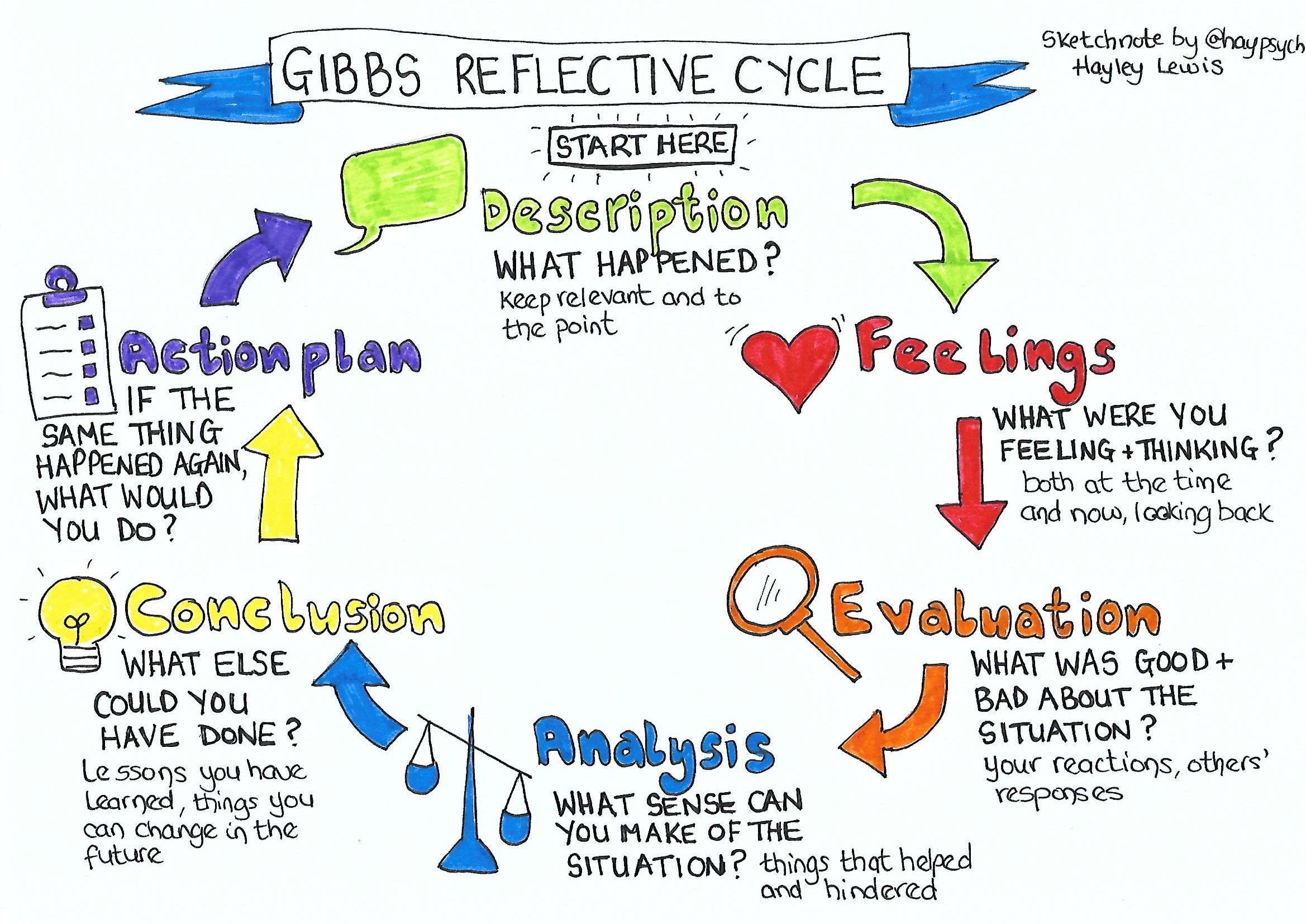
When I am strung out like this I get stuck on feelings and can’t process enough to really engage with unbiased evaluation. To me that’s what a shame spiral is, the inability to evaluate and therefore move onto the other sections of the reflective cycle. Therefore preventing real learning from the scenario to take place.
Its taken me a long time to see these warning signs in myself. To know when I’m wallowing in self recrimination rather than self reflection.
I sometimes wonder if it’s just me that does this, goes through this, reacts in this way? I don’t wish this on anyone else but in many ways I’m hoping I’m not alone. On the off chance that the Shame Club isn’t a party of one I thought I would talk about it and share some of the things that I’ve learnt to help me deal.
Break the Cycle
The first thing I need to do is to find a way to stop the spiral. Part of the reason for me writing this post is that the writing of it will support the processing. It will help me to move past feeling to evaluation and to put the incident into context. I need to stop relieving the moment and get to the point where I have distance to evaluate and learn.
Now sometimes I need more of a break than others to let this happen. For me as my spirals are often triggered by tiredness, just the process of getting some sleep can enable me to look on things with fresh eyes. If I can concentrate enough a good book can transport me enough, so can a complete change of scene such as a walk/bubble bath/run. Shame spirals were one of the reasons I took up running, I’m so bad at it all I can do is focus on taking one step after another and it breaks the thought process.
Get a Reality Check
Once I’ve broken my descent it’s key for me to really undertake an evaluation step. Was it really as bad as I felt? Was anyone hurt by what I did? What are the ramifications? Is it just my imposter syndrome screaming at me that I should be seen and not heard? This is where checking in with others is more useful. If I do it too early I can only hear the response through the lens of shame. If I get feedback at this point I am able to put it in context and therefore it’s more useful in terms of evaluating what my next steps should be. This process is the start of me regaining some balance.
Own it and Embrace the Learning
No one is perfect! I know we all know this but for me there’s is a gaping chasm between knowing this and feeling/accepting it. I am super aware of my flaws (I mean I bet there are ones I don’t know about, but the ones I’m aware of loom big in my mind). When I mess up, especially linked to a flaw I know I have, I feel the failure of it strongly. There’s no point in ignoring it however, the main thing is for me to acknowledge the failure or ‘not being my best self’ and try to learn from it.
The big thing for me is to try to work with the incident and take learning from that, separating out my emotions. For instance: I talked over someone in a meeting, I should apologise for it, try to be even more aware of that tendency and do it less in the future. The key thing here for me is to commit to reduction rather than setting myself up for future failure. I will do X less, I will do Y better. I acknowledge this is an interative process and that development takes time and continuous improvement.
I also try to work out the triggers for whatever the incident was and therefore consider if there’s anything I can do to support it not reoccurring in future. For instance I’m more likely to fail when I’m tired or unwell. I’m more likely to spiral as a result of that failure if I’m, you’ve guessed it, tired or unwell. The key learning therefore is that I need to take better care of myself, or identify earlier before the failure that I’m not in the best place.
I’m hoping that by hooking my responses and thought process onto the Gibbs reflective cycle that it will support visualisation of the steps I find helpful and might give you a framework if you ever have similar issues to use as a framework to help you through.
I’m writing this blog post on a tube on the way to work. I try not to work on the tube these days, I try to use it as time to get me into and out of the right head space for work. Right now my brain is whirling too much to focus and in circumstances like this I’ve learnt the best thing I can do is get some of those thoughts down into something productive.
I’m an all or nothing kind of girl. I’m not good at doing things in moderation. I’m not good with hierarchy, barriers and boundaries. Sometimes I like to think its why I’ve (to some extent) achieved. It’s my inner voice that moves me on rather than external drivers. The flip side to this is I also don’t know when and how to stop. The same urge that makes me want to cross artificial barriers imposed upon me mean that I struggle to impose them on myself.
This means that I find work life balance a difficult thing to identify sometimes, let alone to achieve.
Learning the hard way
During my PhD I didn’t have a full weekend off for three years. By the time I submitted my PhD and was preparing for FRCPath I had developed a discreet bald patch where I’d lost my hair and was doing a regular battle with angio oedema, where my face would swell when I tried to eat. I submitted my PhD one year early so I could successfully pass FRCPath first time, however the legacy of that time lives on in my deteriorated health.
I grew up thinking that success was about hard work. If you worked hard enough then you would be rewarded. If you got the qualifications then you would get the job. It was a really simplistic view of the world that I think I only woke up to not being true over the last couple of years. The fight doesn’t stop just because you are qualified to step into the role, that is when the fight actually begins. If you use all your energy and will power to cross the line to get the qualifications it will leave you depleted when you have to step into the arena for the true battle.
Succeeding and being good at my job is something that has always been important to me. Lately however I’ve begun to realise that giving it my all, all the time, isn’t in itself enough. I can’t work for the next 25 years until I’m due to retire with the intensity that I have worked for the last 10 + years. I need time away to really be successful. I need time to refresh my mind to enable me to bring the best version of myself to the challenges I face. Creativity needs energy not exhaustion. I don’t really feel yet that I have mastered or even begun to be able to prioritise stepping away in order to achieve this, but at least having the realisation is taking an important step along the way.
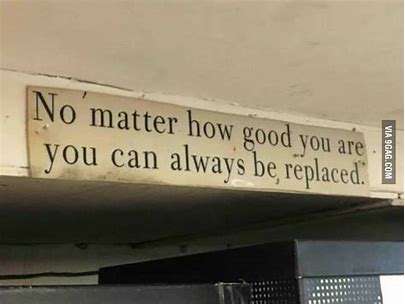
Facing the hard truth. We are all replaceable
I used to run, I was awful at it, but never the less I persisted. I haven’t been running since the pandemic started. I arrive home in a ball of flames at the end of the week and my husband spends the weekend putting me back together so that I go out and do it all again. This isn’t sustainable, and as time goes on I feel less and less than me and more and more like an infection prevention automaton. I have given up most of what makes me me to try and deliver for my job because I believe in it. This isn’t a long term strategy however. It is the bits that make me me that also make me good at my job. The other thing is that if something happened to me tomorrow, it is my friends and family that would mourn me. Another infection control doctor would be found. My stuff would be packed up and handed over and at most I would occasionally be brought up in conversation. I know this because I’ve already seen it happen to a colleague.
I worked with an amazing admin guy in my department. He’d been there for 15 years. A few years ago he went home one night, sat in his favourite chair and died. I’d worked with him for 10 years, he pulled my pony tail every time he went past my desk. He left chocolate on that same desk when I was having a bad day to cheer me up. He talked to me about his dogs, his music and his wife. After 15 years working in the department I was one of 3 people who went from work to his funeral. No one from the lab he supported went. My wonderful consultant boss went with me and our clinical lead went to represent the department. 3 people out of 40.
That day was a real revelation to me. The people who I spend more time with than my family may not feel the same way about me as I do about them. If the same thing happened to me would I even get three? Would I be replaced and never discussed in the same way after all those years of service? Sometimes I think my knowledge matters but I’m not convinced that I do. Then I think should it? After all this is a job, its not a family. The problem is as someone who is ‘all in’ sometimes I can find it hard to remember the difference.
Family is everything
Given all the above I’ve spent a lot of time thinking about how I balance the person that I am, the environment I work in and the need to re-energise and be the best version of myself. This has involved coming to the realisation that the thing that matters most to me and what I need above all else is my family. They mean everything to me. They have been my cheer leaders to get me to where I am, but they are also the ones who have suffered from me having my focus elsewhere. I have missed so many birthdays and special events due to being ‘all in’ elsewhere. Life is not a movie. Life isn’t a 3 part story arch about the workaholic who final finds love, moves to the country and raises sheep. It is however about constant learning and re-evaluation. So here is what I have learnt:
I don’t have the capacity sometimes to set boundaries for myself, but if I’m ‘all in’ for them that that is the start for me of being able to find a way to balance the demands of a job I love with the need to be ‘all in’ with those that matter most.
The top things I’ve learnt:
Spend time reflecting on who you are and what drives you
Know which things refresh you and which thing drain you
If like me you find it difficult to set boundaries find something/someone who can support you in doing so
I am far from having cracked this one but having done the thinking I feel I’ve at least taken some steps in the right direction. Like all things I’ll be taking it one day and one step at a time.
All opinions on this blog are my own
If you would like more tips and advice linked to your PhD journey then the first every Girlymicrobiologist book is here to help!
This book goes beyond the typical academic handbook, acknowledging the unique challenges and triumphs faced by PhD students and offering relatable, real-world advice to help you:
Master the art of effective research and time management to stay organized and on track.
Build a supportive network of peers, mentors, and supervisors to overcome challenges and foster collaboration.
Maintain a healthy work-life balance by prioritizing self-care and avoiding burnout.
Embrace the unexpected and view setbacks as opportunities for growth and innovation.
Navigate the complexities of academia with confidence and build a strong professional network
This book starts at the very beginning, with why you might want to do a PhD, how you might decide what route to PhD is right for you, and what a successful application might look like.
It then takes you through your PhD journey, year by year, with tips about how to approach and succeed during significant moments, such as attending your first conference, or writing your first academic paper.
Finally, you will discover what other skills you need to develop during your PhD to give you the best route to success after your viva. All of this supported by links to activities on The Girlymicrobiologist blog, to help you with practical exercises in order to apply what you have learned.
Working in Infection Prevention and Control is basically about assessing risk. It’s pretty much what I do, what I eat and breath. So today I wanted to post (with that in mind) why I’m tired to the core of my being when I hear the joyful proclamations about the 19th July and so called Freedom Day, and it’s not just me others are definitely feeling it too.
This doesn’t mean that I don’t understand the strong urge to ‘get back to normal’. This is a very human trait. We all like to feel in control and this has been a prolonged period of high stress and uncertainty. I suppose my frustration is with the failure to really communicate that normality comes with a cost. It will likely bring economic benefits but it will cost some people their lives and NHS workers just a little bit more of their sanity. If as a society we agreed that the economics were worth it I would grudgingly keep my mouth shut but we’re not even having the conversation. There is no such thing as a free lunch and at the moment society is passing me the bill when I’m not sure I’ve brought my wallet.
It’s All About the Shades of Grey
For cognitive comfort we tend to feel comfortable seeing the world in black and white. The reality is (as with most things) that the world and decisions are made up of shades of grey. It is possible to live in a world where we are neither in complete lock down nor where everything is effectively considered back to normal and presenting increased risk.
When I’m dealing with an outbreak in a hospital setting (I acknowledge the situations aren’t identical) I bring in a series of measures to find the source and stop transmission. Often because of the risk to patients and staff you do all these things at the same time, in order to maximise your risk reduction. Then once you have identified the source and stopped further cases being identified you gradually reduce your measures.
You do your intervention reductions in this way for a number of reasons:
You often don’t know what is having the greatest impact so a step wise reduction enables you to learn more about how you might control a similar outbreak better in the future. You will know which interventions are most important.
Reducing your measures one at a time enables you to continue to monitor your cases. If they come back you know you need to maintain that intervention for longer and maybe step down others with a lesser impact first.
It tells you more about whether you have effectively dealt with your source without putting large amounts of people at risk again.
It stops you going all the way back to square one if you aren’t where you thought you were. You’ve worked hard to get things under control, so you don’t want to return to where you have an escalating scenario.
Stopping basically all of your public health measures in one go, masking, social distancing, most contact isolation etc without taking a staggered approach means that not only are you rolling the dice on your main intervention (vaccination) working in isolation, but also you are failing to gather the information you need to support staggered reintroduction of key control measures moving forward if it doesn’t.
Risk Assessment and Personal Choice
One of the things that has really struck me is that we are moving from a place where that risk assessment and risk reduction is guided at national level to personal assessment.
In many ways there is nothing fundamentally wrong with personal risk assessment. We ask healthcare staff to do this in clinical situations on a daily basis. What do I mean when I’m talking about personal risk assessment. In healthcare it could be something like: You are going in to take blood from a 4 year old child. Before you go into the room you might gather the following information in order to assess the risk and take steps to reduce it:
Is the child on its own?
Do they react badly to needles – are they scared?
Do you know the child? Do you have a relationship where they are more likely to trust you?
Do you have safety needles available to reduce the risk of a sharps injury?
The difference with the government approach to risk assessment and personal responsibility is that we are asking people to do this who are:
not necessarily used to undertaking this kind of assessment in relation to infection
not necessarily accessing the information/evidence to enable them to make such an assessment
It is hard enough working your way through the information and evidence that is related to SARS CoV2 even if it is your job. We are asking the entire of England to be able to do this with little or no support. The quality of information out there is highly variable and often not context specific to make it particularly usable. There is plenty of misinformation out there which could lead to individuals with the best of intentions making bad decisions.
Mixed Messages
This then brings me onto the mixed messages. The government is telling people to use the evidence to make their own risk assessments and then supporting events that are contrary to a lot of the information we are saying is important in making those risk assessments.
The evidence still shows that masks will be important in confined spaces or in areas with high people density. We are at the same time encourage events where people in their thousands meet without those measures included. You can say that the research events are there so you could obtain data to improve future measures and risk assessments, although when only 15% of those attending complete the post event testing the outcomes become dubious. Outside of the research events however, large numbers of people are gathering in public settings, such as Trafalgar and Leicester Square, with no testing or monitoring. These events cannot be said to support the same goal.
It is not rocket science that combining alcohol and emotion can lead to the abandonment of key sections of the risk assessment process.
One of the other things we need to talk about is that personal risk assessments are fine, but in this particular circumstance your risk assessment and behaviour directly also impacts my risk. Mask wearing is about protecting others, so if you opt out of wearing a mask and I wear mine, I bear the brunt of your decision.
We are also not talking enough about how the knowledge linked to vaccination may impact on risk assessment. I know a lot of people who feel like SARS CoV2 doesn’t impact on them any more because they are double vaccinated. In healthcare we are seeing a lot of people who are still getting pretty unwell despite their vaccination status. They are not hospital unwell, but they are still pretty unwell, can’t get off the sofa unwell. They are also still able to pass on the virus to others in their household, at work, or elsewhere. Some of the people then exposed will not be able to have the vaccine, such as children or those with certain underlying conditions. They can therefore still get very sick. Again, the transmitter may not experience such extreme personal consequences but they can cause them for others.
The government messaging doesn’t strongly support prevention of harm to others. Personal choice makes it sound all about the person. A pandemic response however is about as much of a group effort as you can imagine mounting. Personal choice undermines all of what we have been trying to message and removes that shared responsibility.
If we are truly serious about supporting individuals to make their own risk assessments then we need to do a much better job of giving them a framework and high quality information in order to make it. We also need them to understand the consequences of making an incorrect risk assessment. I have no answers on this one, just anxiety and fear about where the current approach is leading us.
I’ve been a football fan for almost my entire life. I’m an Aston Villa fan so I know quite a lot about loss, quite a lot about hope, followed by broken dreams. So Sunday’s England game is not my first road show. I have also faced a fair number of road blocks on the road to success. Most people look at my career path and see success and progress. I look at it and see all the people who told me I wasn’t good enough, that I couldn’t make it, and that I didn’t have what it takes. I see the fire and determination that built up in me to show them they were wrong. It’s one of the reasons I’m so passionate about lifting others up. I’m no stranger to failure, but my experiences have taught me to believe that failure is actually critical to success. We come back from it stronger. We also (if we take the time) come back wiser, having learnt the lessons it offers us.
My bad relationship with failure started early
When I was at secondary school I took a history exam, I got 96%, my father jokingly asked what happened to the other 4%. I took it to heart and was crushed by my ‘failure’.
No member of my family has ever failed an exam, not a driving test, not an academic test, nothing. It was just not done or considered a possibility.
So imagine my horror when I became sick whilst doing my GCSE’s. I went from planning to sit 11 GCSE’s to only being able to go to school for an hour a day and being allowed to sit only Maths, Duel Science and English. I was well enough in the build up to revise for a single weekend. I had been told that all plans to attend university needed to be revised and that I would be lucky to attend Sixth Form. I was a failure. People were planning for my complete academic crash and burn. This was super hard for the girl who had never considered anything else but an academic future.
So I took a beat, or, in reality, quite a few, and decided screw it. I would not be defined by being ill, I would not be defined by being a failure. I got my 5 GCSE’s and found a Sixth Form that would take me. The first year of Sixth Form I still couldn’t attend normally. I did 2 A-levels, Biology and Drama. I also did General Studies, mostly as I didn’t need to turn up for class. My Drama classes were end of day, so I could crash out. It was only the Biology that was the stretch. In my second year I realised I needed a third subject to go to uni. I found a Psychology teacher who allowed me to attend classes at evening school as well as during the day. I covered the minimum amount of topics to be able to pass the exam. I crossed my fingers and hoped that I would overcome. I got my 4 A-levels, I came second in my year and I got into Uni. I took a year off in between as I still was not well so that I could maximise my chances. Needless to say this journey left me a fair number of hang ups about not only failing, but not being able to keep up and whether I was ever going to be good enough again to be accepted by my peers.
My rocky journey to learning to, if not love, then at least to appreciate failure
Since our rocky start, failure and I have gradually come to an uneasy dรฉtente. I try to avoid it at all costs and it reminds me that it is an ever-present part of life. Rather like that relative/friend who always turns up at parties, even if they haven’t actually been invited. In recent years, we’ve spent an increasing amount of time in each other’s company and, although it surprises no one more than I, I actually have some good things to say about about the F word thatcan make you better in the long run.
Sometimes you need to feel the fear
Let’s start with the easier things to like. I often talk to my students and mentees about the benefits of feeling the fear. Fear of failure can be overwhelming, leading to paralysis. However, if you can manage the fear it can be used to motivate and focus the mind. This is especially true with high-stakes assessments, such as exams or dissertations. There are different ways that can be used in order to harness the fear of failure to your advantage: from being prepared far enough ahead that the fear is spread over time, to working with peers to support bench marking and fear control. Different strokes for different folks. The main thing is to not hide from it, but acknowledge it and manage it to your advantage.Failure, however, comes in all shapes and forms, not just as high-stakes encounters. It happens in leadership conversations, data analysis and day to day life. When the inevitable happens, and it is inevitable, you need a plan for how to address it. Below are some of my tips about how I face, process, and learn from failure.
Separating the failure from the person
I often shock people when I say I fail all the time, but it’s true. I fail to have conversations in the way I want, I fail to always be there for my team in the way I want to and I most certainly fail to keep on top of my workload. That’s before I even begin to talk about failing to have any work life balance or to give my husband the attention he deserves.
One of the things that has really helped me to manage some of the guilt and fear linked with these failures is understanding that most of them are linked to roles that I play. That doesn’t make them any less significant, but it does enable me to box them and learn from them without them creeping into everything I do and impacting on how I feel about myself as a person. Dr Cloutman-Green often needs to do better and learn from failure in terms of how that outbreak phone call went. That doesn’t mean that Dream is a failure at all she does. It’s about placing sufficient boundaries on the failure to give me distance to permit reflection and learning.
Allowing time to grieve and emotionally process
Now, you may all be better people than I and leap straight into the ‘learning’ post-failure. I’m afraid I don’t have that much mental strength. I need ‘wallow time’. Time to process the emotions linked to what’s happened, so I can move forward and reach a point where I have the cognitive space to reflect. Reflection for me needs to have the emotional response removed. I don’t believe in bottling up my emotions for a later melt down so I allow myself a grieving period. This is normally 48 hours-(it can be a week if it’s something big) where I allow myself guilt-free to feel. To express (in an appropriate way) my frustration/anger/disappointment targeted at the failure. This helps me understand the level to which the activity linked to the failure mattered to me. Is it worth repeating, do I care enough to end up potentially back in this place? I usually do this in the company of my two coping mechanisms: cake and gin. They’ve been my companions in failure for over 10 years, so they are experts in handling me and getting me back to a balanced viewpoint.
Devoting time to reflection to support learning once the grieving us done
So we’ve acknowledge that the failure sucks. We’ve learnt that we care enough about whatever it was linked to that we are prepared to put on the Big Girl Pants and get back into the foray. Now is the time to sit down and learn the lessons in order to reduce our chance of ending up back with cake and gin.
If the failure is linked to things like paper or grant failure, now is the time to open that dreaded feedback and spend some time with it now your emotions are under control. Which parts of it are the things you secretly knew were true? Which parts, despite feeling harsh, can be used to make what you’ve done better for the second time around? If it’s for an exam, which parts didn’t go well? How will your planning and preparation address these next time? If it’s that you sucked when having that conversation or argument, then now is the time to reflect on why and be prepared to dive back in there and try it again. Hopefully the next time will be better.
It’s rarely as bad as it feels in the moment
Some of the time I take when reflecting and learning lessons is to think: if this had happened to my best friend, what would I say to her? We are often our own worst critics. As well as the learning, and sometimes to help with this, thinking of how you would handle this as a friend means that you can review it from a different viewpoint. This can not only help your learning but also put it in a context that may enable you to be just a little kinder to yourself.
Failure is context specific, so find the right people to support your thinking
If you can’t manage distancing during reflection, this is the time to call on your champions in order to get them to help you. My husband, who is a great fan of telling me that experiencing a little failure would be good for me, fulfils this for me. I will arrive home in floods of tears because I haven’t met X deadline. He will ask “did anyone die?” No. “Did anyone get fired?” No. “Was anyone hurt in anyway?” No. “Then either let it go or put it in late, there will always be another X.”
Sometimes we all get so bogged in the weeds of what we should be doing that we find it difficult to put our failures in the context that they deserve. Can you try again? Almost always. So why are you still here? Learn the lessons and go try again. Good luck with that. If you fail I’ll be here with my good friends gin and cake to help you recover, reflect and learn.
All opinions on this blog are my own
If you would like more tips and advice linked to your PhD journey then the first every Girlymicrobiologist book is here to help!
This book goes beyond the typical academic handbook, acknowledging the unique challenges and triumphs faced by PhD students and offering relatable, real-world advice to help you:
Master the art of effective research and time management to stay organized and on track.
Build a supportive network of peers, mentors, and supervisors to overcome challenges and foster collaboration.
Maintain a healthy work-life balance by prioritizing self-care and avoiding burnout.
Embrace the unexpected and view setbacks as opportunities for growth and innovation.
Navigate the complexities of academia with confidence and build a strong professional network
This book starts at the very beginning, with why you might want to do a PhD, how you might decide what route to PhD is right for you, and what a successful application might look like.
It then takes you through your PhD journey, year by year, with tips about how to approach and succeed during significant moments, such as attending your first conference, or writing your first academic paper.
Finally, you will discover what other skills you need to develop during your PhD to give you the best route to success after your viva. All of this supported by links to activities on The Girlymicrobiologist blog, to help you with practical exercises in order to apply what you have learned.
Music has always been an important part of my life, from singing with the Birmingham Royal Ballet for eight years before Uni, to the freedom I find dancing (badly) whether it be in my kitchen or the lab. I’m not knowledgeable, but few things hold memories and modulate my emotions is the same way as listening to music, be that classical, alternative or pop. The key moments and people in my life all have music linked to them: from the Blue Danube for my sister to Dean Martins’ Somewhere Beyond the Sea as the first dance at my wedding.
I have written dissertations, produced my PhD thesis and undertaken specific experiments, all linked to specific pieces. In fact I really struggle to do much in silence. I’m not very good at only doing one thing at once. For me,, despite it being counter-intuitive to some, music helps me focus rather than acting as a distraction. The only time I can work comfortably in silence is when I’m verbalising to support memory, i.e. revising or learning lines.
In an episode of ‘How I met your mother’ Barney (one of the main characters) introduced the idea of a ‘Get Psyched’ mix. I found this idea really useful and have since produced my own ‘Get Psyched’ playlist which I use to address particular challenges I face in work. For today’s post I thought I would share how I use them and give some example tracks for each. Warning – I enjoy cheese and angry girl music so my taste will not suit everyone. I make no apologise for the smell of fromage coming from this post.
Music to Boost my Confidence
We all have days when imposter syndrome hits. As Healthcare Scientists, we also have high stress key assessments, such as FRCPath, that need to be faced. One of the key times I have used a playlist was during my 4 days of FRCPath examinations. I listened to a set of 10 songs to train my brain to get into the right headspace. I would listen to them whilst walking to the examination centre. I would listen to them at lunchtime. I would listen to them in breaks if I felt that I was starting to go into an anxiety loop. All of them took me back to a space where I could focus on why I was doing this high-stakes exam. They helped me focus on the finish line rather than being distracted by the steps along the way. They brought me back to be able to see the big picture. In a space where I felt out of control they gave me routine. It was the same 10 songs. I didn’t need to add to my cognitive load of thinking about what I wanted to play. They freed me and, by the time I reached the end, I had my game face on and I was ready to face anything.
One Off High-Stakes Events
Music for me in this context is when I need to hit my ‘movie moment’. You can picture it: It’s that moment in a movie where it is reaching its denouement. They are about to face that crucial encounter/combat/story moment. The music comes on and (as my husband says) it’s all about the slow walk into the camera.
These are usually one or two songs that I will play in the lead up to a difficult/high-stakes moment: sometimes a meeting that I’m worried about, sometimes a presentation that’s making me nervous. It has to hit my soul fast and hard. It has to make me want to sing out loud. It needs to make me want to strut. If you ever see me walking up and down a corridor mouthing to myself, this is usually during one of these moments. So much of how individual events turn out are based on the mood and the mental space you are in when you walk through a door. I like to make sure I do it in slow-mo with presence!
Music to Reflect and/or to Boost Your Mood
Sometimes music for me is a way of allowing me to express negative as well as positive feelings. No one is up beat all the time. Working within Healthcare Science, and especially as a clinical academic, there’s a lot of failure: grant failure, paper rejection, barriers based on professional background. That’s before we even talk about being a woman in science. When I get grant rejections etc. I always say to my students that I allow myself to mourn for 48 hours. I then get myself together and get back on that horse. Music is key to this. I play my angry girl music and process my disappointment in a focussed way that allows it to be to put in a separate box from the rest of my working and home life.
Once I have spent my allotted 48 hours, I put on music that brings me back to myself. Fighting music to get my head back in the fight. It draws a line under the wallowing and brings me back to a place where I can draw on0 learning from the failure I’ve just experienced without it being tied to negative emotions. I challenge the world to ‘bring it on’. I’m ready!
We’ve all been there. It’s late and you’re still in the lab. You’re tired and you have just one more thing that you need to do before you go home: You need something with a beat to energise you, something you can sing to in order to help you keep awake as caffeine requires leaving the lab. For this I generally have my girls: Beyoncรฉ, Lady Gaga and Taylor Swift. I have been caught by my old consultant dancing with tubes across the lab to Single Ladies and I make no apologies for it.
The other times I use this kind of music with a really defined beat is when I’m writing. It helps me keep the tempo up and my production level high. When I have a deadline the music definitely goes on. As time goes on, if needed, I tune out the words and I just type or pipette to the beat and get into a zone that means I can work for hours. Without music getting into this particular head space can take hours. By using the right music I can get there in a couple of tracks.
I’m writing this as I’ve found music such a helpful tool in terms of getting me into the head space I need to occupy in order to succeed. I also thought it might be helpful to explain to those people who don’t use music in this way and think that it’s just a distraction tool from getting things done, that the opposite may be true. We all work and focus differently. I’m at my least productive in silence. If I put my headphones in, understand that it’s not that I’m ignoring you. It’s because I’m getting into the headspace where I do my best work. Also, if you hear Freak on a Leash by Korn or Head Like a Hole by Nine Inch Nails through my office door, approach with chocolate or caffeine in hand as some significant rejection is likely to have occurred.
One final thing. This post is in honour of the fantastic She’miah. She’miah is our team PA. She’s truly amazing and she’s leaving in 2 weeks. I will miss our bathroom office disco pick me ups more than I can say This last one is for you girl!
This week’s post is about some of the challenges of having healthcare conversations when not in a work context. With increasing frequency I get asked to give medical advice and guidance in social settings, often indirectly: i.e. being asked not by the affected individual. When I’m talking about conversations today I’m not talking about the ‘I’ve been prescribed X antibiotic what does it do?’ queries. These kind of queries are about giving information and signposting, rather than diagnosis or critical review. The conversations I’m talking about here are the, ‘my aunt has just been diagnosed with pancreatic cancer, can I send you her biopsy picture?’ type of dialogue. I’m writing this because sometimes, when I back out of these more significant conversations, I worry that it can come across as showing a lack of interest or as being callous and uncaring. The opposite is true, but there are constraints as to how much I can become involved. And some very good reasons why it might be inappropriate… I thought it might be good to share.
First things first. I’m not a medical doctor, I’m a Healthcare Scientist with a PhD and the same post-graduate qualifications as my medical microbiology colleagues. This means that I am qualified to give advice within specific confines linked to infection and infection control. I do not, however, have their broad breadth of experience or – therefore – associated expertise outside of this area. I think it’s really important to be aware of professional boundaries. That said, compared to many members of the public and due to working in infection control (which sits across subject areas), I have an awareness of healthcare linked to a number of disciplines. I thought it was important to write this here because I think if you work in healthcare this delineation is taken for granted. We often forget it’s not as clear to those who don’t.
Are You Talking to Dream or Dr Cloutman-Green?
Many of you who read this blog regularly will know I go by four main names. My friends have called me Dream since I was a teenager, as I was always day-dreaming and walking into things. I get called Elaine by work colleagues and, when I’m in trouble, by my family. My brother and sister have always called me Laney when they are not mad at me. Then there is Dr Cloutman-Green, who you’ll meet in a professional context.
Now I’m no Beyonce/Sasha Fierce, but I do think that there is some context-specific nature to the way I engage with the outside world. I try to be authentically me no matter what context you engage me in, but Dream isn’t the same as Dr Cloutman-Green. Dream drinks shots, enjoys trashy TV and has been known to dance on the odd table. Dr Cloutman-Green deals with making significant and serious decisions all day, everyday, and so has to deal with a fair amount of pressure and stress. As Dream, I do my best to leave that at the door when I come home. It is always quite jarring when Dream gets asked questions and is involved in conversations that are in Dr Cloutman-Green territory.
How Much do You Really Want to Know?
The main issue with Dream having conversations that would normally be had by Dr Cloutman-Green is that Dr Cloutman-Green has access to all kinds of information and resources that Dream doesn’t. Examples of these are when you get called up by a friend or relative asking if they can send you photos/tell you about a friends medical condition. One of the cornerstones of professional practice is understanding when you don’t have all the information and when you are stepping outside the scope of your experience. If I have those encounters in my day job, I have access to medical records, expert colleagues, test results and the ability to recommend follow up investigations. As Dream I have access to none of those things, as well as second hand information given by someone else without knowledge of individual consent.
The other reason that these conversations can be challenging is that you may be aware of the potential serious outcomes of the information you are being given for the individual without the information to determine likelihood. For instance, I am aware of poor outcomes associated with certain cancers. If the person involved has not been prepared for that conversation by their medical professional, or if the conversation has happened and they have not been able to process. Is it appropriate for me to wade in, unaware of the complete story, in what is the professional remit of another healthcare professional?
Finally, if the news is not good there is a reason that these conversations are undertaken by a healthcare professional with some distance from the situation, rather than your friend/relative. Emotions can be targeted, whether justified or not, at the person delivering the news. There is a reason we talk about ‘don’t shoot the messenger’ and ‘being the bearer of bad tidings’. Being involved in these conversations, whilst not being so involved as to have all the information, can result in permanently changed relationships on both sides. It strikes me that in these circumstances I should mostly be there to signpost and support as a friend, not acting as their medical professional.
Having laid out my rationale you would have thought it would be fairly simple to keep these worlds siloed, but it isn’t. These conversations are often sudden or sprung in unusual situations where you’re not expecting them and, therefore, take time to adapt and respond to. Hence the fear of coming across as distant.
But I Thought I Was Just Here to Party?
Stepping away from the more serious conversations, there is just one more setting where I find this topic difficult:
The Art OfParties.
Now I work in a paediatric setting and so, understandably, many people want to talk to me about paediatric infections. That sits well within my ball park of expertise. There have been occasions, however, that despite this, and the situation not requiring serious conversations, I’ve not wanted to engage. I was once invited to a party (it was supposed to be child free) and when I arrived, apart from my husband and I, everyone there was a family unit with kids in tow. That’s fine – I’m OK with that. As the afternoon/evening progressed, however, I became progressively less happy. I was basically on a conversation carousel of parents who wanted to talk about herbal remedies for their kids cold, whether the fact that their child had had three colds that year warranted paediatric referral, or whether vaccination X should wait because of their trip to Y. After 6 hours I had managed not a single Dream conversation. Nothing on a non-healthcare subject. Not one conversation about movies, books, geekery or the things I enjoy talking about outside of work. Not only that, but because I kept being pulled into these conversations, I felt less and less like I was at a party and more and more like I was work.
When all is said and done, I expect to talk and love talking about science, medicine and my day job. After all, I have the best job in the world. There are just also times when I need to talk about things that aren’t linked to these. I struggle with small talk and therefore really don’t help myself as sometimes (well quite often) my work is all-encompassing. It is therefore frequently my own fault and actually just a way that people use to try and connect with me. It’s something I need to work on. If we do meet in a social setting though, please talk to me about tea, cake, your favourite novel/film/TV show and help me be Dream/Elaine rather than Dr Cloutman-Green. I’m keen to know more about you.
Also, if we meet and you do want a serious health-based conversation, understand that, if I don’t fully engage, it’s not because I don’t care about you. It’s because I care about you enough that I want you to have medical advice from the person who has access to all the information and resources to take the best care of you, your healthcare professional. Also know its because I value you and our relationship enough that I don’t want to risk it being damaged by changing the context of that relationship to something that should be more distant and professionally limited. I’m still here for you, and I still want to support and signpost, but let me be your friend rather than your Dr.
I’ve had a few encounters recently that have led me to write this blog. I’m not writing it as an expert; This isn’t anywhere near my field. I’m writing to share my experiences and learning in case it helps others. Apologies, as it’s not a short read.
I’m challenged by some people I that I’m too worried about raising the profile of women in science, of talking too much about ‘female’ issues, and of challenging my colleagues too frequently. A really respected mentor once said to me that he didn’t think actions against women in the workplace still happened. I shared some stories and pointed out that they still did, they just didn’t happen to him, where he could see them or when he was paying attention to them. I count myself lucky that nothing really serious has ever happened to me at work, but I shouldn’t have to count myself as lucky: they just shouldn’t happen.
I have another post brewing about everyday sexism in the workplace, but this one is different. This one is about why I set out becoming the ‘obstinate head strong girl’ that I aspire to be!
I finished my undergraduate degree in 2002 and spent a year working before returning to undertake an MRes. This was my first experience of full-time ‘proper’ work. I took a six month temp contract for a council, working in their business development office. It was a mostly male floor, supported by myself, two other part time admin staff (both female students) and a lovely older lady who managed the team. My job was to support the officers in tasks such as typing up letters. Yes, they wrote by hand as some of them still didn’t know how to use a computer; I also ran reception, took minutes, that kind of thing.
The Problem is that You are Too Friendly
I’d been there about a month when I was in the post/stationary room stamping that day’s mail. One of my older male colleagues came up behind me and stuck his erection in my back and grabbed my breasts. I stood there, stock still, in complete shock. I didn’t know what to do. These things didn’t happen to me: I was the nerdy girl not the pretty girl, I had no experience of how to handle this kind of breach (I am not implying that pretty girls should know, or have to put up with this either). After what felt like hours (but was more likely a few minutes) where he spoke to me about what we should do next, I shoved him away and ran out of the room.
I went to my boss, the person responsible for me, and told her what had happened. She said she would speak to her boss, who also happened to be the boss of everyone on the floor. I recovered from my shock and got angry whilst I waited, but I was sure there would be censure and we could all put this behind us. She came back and we talked. She explained to me that I was overtly-smiley and chatty with my colleagues. This could be misconstrued and, in future, I should probably just take steps to not be alone with the man that had done it. That was it. The married man with multiple children could do what he wished as it was my friendly demeanour that was the issue.
I spent the next four months being hyper-aware of when I could go into rooms on my own, to be friendly, but not too friendly. As my contract end-date rolled up, I experienced a similar repeat performance from the same individual. It wasn’t as bad this time as I had learned from the first event, but I just couldn’t let it go. What if he went further with someone else, what if he did it to someone else who wasn’t in the privileged position I was in to ‘let it go’. On my last week with the council I emailed HR directly to express my sadness over the way the situation had been handled. They told me to get a cab down and speak to them. I did. I recounted the event, the way it had been handled, the way I felt. The guy got suspended on full pay whilst an investigation was undertaken. I was called back in to repeatedly account for the event and my actions. It was determined that as it was my word against his nothing could be done. I learnt early that even when people listen, accountability is not always the result. No policy was changed. At least the guy had a note on his record in case he did it again so that it was no longer the ‘future girls’ word against his.
I’m ‘lucky’: that was the worse thing in a workplace that has ever happened to me. We all the know of the labs where you wouldn’t apply to work at because of the way the PI behaves, or the ‘expectations’ placed on the post docs if they want to advance. It didn’t interfere with my progression. It did, however, teach me an important lesson about the importance of bystanders. However annoying the bad behaviour of the individual was, the worse thing for me was that the people I trusted and who held responsibility for my safety at work chose to make it about me being too smiley, rather than address the action of the person who had breached barriers and made me feel unsafe. I swore that I would never be that bystander and I would support others so they would not feel as alone as I did in that workplace.
The Problem is that You Are Not Friendly Enough
Roll on some years and I’m now working as a scientist with a part-time academic contract. I’ve learnt the lesson taught to me about not being too friendly, about boundaries at work, about always keeping it professional so my actions couldn’t be used against me. I’m working as the only microbiologist on a research project. The PI on the grant begins to spend a lot of time with the other female researcher. Late night drinks, wine in the office, that kind of thing. I stick to my guns about being valued for what I can add to a project: that doesn’t require me to be available to have drinks with the boss at 9pm. Suddenly, protocols are written that are not technically appropriate, papers are written without a standard authorship order, and presentations and conference trips are handed on the basis of time spent with the PI. When queries and issues are raised, I’m now told that I’m not committed enough, not friendly enough, I’ve not invested enough in building relationships outside of work structures. Unlike before, my future is impacted because I have not walked the tightrope of being approachable well enough. The difference this time is that, although I cried, I simultaneously empowered myself to leave by looking for funding to support an exit. Again, I was fortunate enough to have a way out, to be a clinical academic rather than academia being my only option. I had also started to learn the power of finding my tribe, and making sure that I always had support from other embedded around me. This enabled constructive challenge of my perceptions, but also assurance when things went awry.
Why are you Reacting to Such Little Things? It’s only people being friendly/joking
I’ve now been working as a scientist for 17 years. Issues crop up less frequently the higher you climb up the ladder. However, when they do they always feel like high stakes. I’m no longer in a position where I could easily find another post, co-applicants on grants are harder to switch around as the world we inhabit is small, and relationship building is a key part of my role. So do things still happen?
Sadly, the answer is yes. The thing that makes the incidents happening now worse, in many ways, is that they get laughed off as being linked to me being overly sensitive. I still try to embody the friendly girl I was at 22 without opening myself up to unwelcome physical acts at work. I have, however, on 3 occasions being kissed full on on the mouth in unsolicited encounters with male members of staff. None of it threatening, like when I was in my first job, but still unwelcome. Blocked doorways that, as you’ve tried to go through, have resulted in a facial assault because ‘its Christmas’ or because it’s someone’s ‘last day and they just want to say thank you’. I’m by no means prudish but the only person who gets to kiss me on the mouth is my husband! Uninvited physical intimacy is just not OK. It always comes as a shock and it always takes me back to being a 20 year old with no coping mechanisms standing in a post room.
What happens most frequently however are the comments. Just before the pandemic I was in Paris at an academic meeting. The organiser forgot to book my second night in the hotel. I’m sitting there in a room full of senior male academics at the dinner when the organiser came through and said I had no room. The most senior man in the room responded by saying ‘don’t worry about booking her in the extra night, we’re in Paris, there are more than enough brothels where she could go and work in’. Every man in that room laughed. No one called him out, no one indicated that the comment was humiliating and inappropriate. I didn’t know what to say and so sat there in silence as they laughed away. This isn’t a one-off event. The ‘little ladies’, ‘sweethearts’ etc. may feel innocuous enough but are too frequently used in conversations to undermine women in the room. That’s not to say I’m anti-endearment. I have plenty of colleagues where we have built up relationships over the time where I welcome this reinforcement of our relationship. It is different to do it when your relationship capital doesn’t justify it, or when you are doing it in order to enforce power or hierarchy.
So why have I written this post? I want to let people know that these behaviours happen. It’s unwelcome and it’s not up to the women involved to modify who they are in order to not tempt others to behave badly.
Here, therefore, are a few of my thoughts about how we can all act differently:
Don’t be a bystander! Know that if you are in the room you have a duty to act as the impacted individual may not be in a position to do so.
Find your tribe so you have support for when (and hopefully if) these events occur.
Talk about your experiences so that we can raise awareness, share learning, lead improvements and, most importantly, so others don’t feel alone.
Know that you have more power than you feel like you do. There are people out there who are ready, willing, and able to support you.
If someone comes to you with their story remember that you have a duty of care. Don’t brush things under the carpet because it is easier to do nothing than deal with a situation.
Finally, to all my obstinate headstrong women out there who are standing up and challenging, I applaud you. I appreciate all you are doing now, I appreciate the fact that you are leading the way and that you are members of my tribe. To all those who consider me difficult for calling out these situations when I see them, I understand why I make you uncomfortable, but I have no plans to change. In fact I plan to grow into this role more. In my opinion we could all do with a channelling a little Elizabeth Bennett from time to time.
All opinions in this blog are my own
If you would like more tips and advice linked to your PhD journey then the first every Girlymicrobiologist book is here to help!
This book goes beyond the typical academic handbook, acknowledging the unique challenges and triumphs faced by PhD students and offering relatable, real-world advice to help you:
Master the art of effective research and time management to stay organized and on track.
Build a supportive network of peers, mentors, and supervisors to overcome challenges and foster collaboration.
Maintain a healthy work-life balance by prioritizing self-care and avoiding burnout.
Embrace the unexpected and view setbacks as opportunities for growth and innovation.
Navigate the complexities of academia with confidence and build a strong professional network
This book starts at the very beginning, with why you might want to do a PhD, how you might decide what route to PhD is right for you, and what a successful application might look like.
It then takes you through your PhD journey, year by year, with tips about how to approach and succeed during significant moments, such as attending your first conference, or writing your first academic paper.
Finally, you will discover what other skills you need to develop during your PhD to give you the best route to success after your viva. All of this supported by links to activities on The Girlymicrobiologist blog, to help you with practical exercises in order to apply what you have learned.
Itโs the end of Pride Month 2021, but that doesnโt mean that the fight for equality has ended. Healthcare scientists that are part of the LGBT+ community talk about why representation is important to them.
Francis Yongblah, Microbiology Laboratory Manager and HSST Trainee.
As a Gay, Asian Healthcare Scientist, representation of the LGBTQ+ community in Healthcare science is crucial to me. I have been a Healthcare Scientist for just over 12 years and in that time I have experienced and been exposed to homophobia and prejudice in the laboratory workplace. Although these incidents were very early in my career, these scenarios have always stayed in my mind and something that I have never forgotten. Early on in my career, I felt that I had to hide who I was as an individual and could not actually be me for fear of being judged or treated unfairly. These scenarios made me worry that, because of my characteristics of being a gay man, my professional development and career would have been hindered. No healthcare scientist should feel like this, and itโs important for everyone to recognise the attributes and contribution that a diverse workforce can bring to a service, team and the positive impact it can have on patient outcomes.
I have worked hard as an LGBTQ+ Scientist in order to ensure that my career has been able to develop and I can go as far as I am able to and not to be held back by my sexuality. I feel it key to have representation for the healthcare scientist workforce in order to be able to recognise how key it is to have a diverse workforce, as well as recognising that there are LGBTQ+ Healthcare Scientists within the workforce. Weโve now come a long way from when my career had just started out and I feel proud to have my organisation and the NHS represent and support LGBTQ+ Healthcare Scientists. There has also recently been a lot of support from the Institute of Biomedical Sciences (IBMS) to promote the LGBTQ+ Healthcare Scientists in our workforce.,
Kip Heath, Healthcare Scientist and Science Communicator
For me, it’s essential that we foster a workplace environment (and, indeed, a society) in which people are accepted regardless of their gender or sexuality. Iโm a queer woman married to a cis heterosexual man. Heโs a wonderful and supportive individual and the only person I could imagine taking on the world with. But, to that outside world, we are a standard heterosexual couple. On the one hand, that can be an advantage as I can hide my sexuality fairly easily. However, there have been workplaces that Iโve not felt comfortable or accepted as myself. But I have found that my identity can be easily erased, even by other members of the LGBT+ community.
Now I work in leadership positions where I need to provide support across the healthcare science workforce. My boss talks about the importance of bringing your authentic self to work and leading by example. Our workforce is hugely diverse and itโs important that we demonstrate that. I want to make sure that LGBT+ healthcare scientists in our Trust never feel like they need to hide themselves at work and that there are people that they can open up to if they have any issues. In my role as a science communicator, I raise awareness of healthcare science careers to students and show them that the profession is open to LGBT+ scientists, and that their sexuality is not a barrier to progression.
Anthony De Souza, Practice educator for HCS, HEI lecturer & LGBT+ Forum co-chair
Representation is important to me because, when I grew up, there was no one in my life or on TV that was like me. This added to a feeling of invisibility and isolation, making me feel like I didnโt matter and that there was no place for me in society. Iโve been lucky enough to feel safe enough at work to be myself these days, but everyoneโs situation within an organisation will differ.
We know that diversity equates to strength but what are we doing to create an inclusive space for scientists? Science is a diverse and ever changing space where a variety of perspectives yields better conversations, we need an environment that actively supports that. We also need to recognise that much of the discrimination individuals may face happens before theyโve even accepted a job offer, this could be binary choices on demographic questions or uniformity of interview panels.
To be our best at work we have to commit our energy and focus for the good of patientsโ. We can only do this if we donโt have to constantly edit how we act to fit a pre-defined notion of โnormalโ, react in real time to how weโre perceived or routinely have to deflect micro-aggressions.
Shining a light on excellence throughout the workforce of scientists from different gender identities, sexual orientation, disability, age or race is important for visibility. We need role models that we can relate to and learn from. This also challenges the wider communitiesโ pre conceived notions of what a professional usually looks, sounds and acts like.
Whilst Girlymicro is away, trying to desperately find some of this work life balance people keep talking about, the charming and wonderful Claire has stepped into the breach to keep you informed and amused. Isn’t she lovely!?
BlogBy Dr Claire Walker
Paid-up member of the Dream Team since 2013 (as discussed in a previous post, in her personal life most people call Girlymicro Dream), token immunologist and occasional defector from the Immunology Mafia. Registered Clinical Scientist in Immunology with a background in genetics (PhD), microbiology and immunology (MSc), biological sciences (mBiolSci) and indecisiveness (everything else). Now a Senior Lecturer in Immunology at University of Lincoln.
Followers of this blog will have seen the wonderful Dream and Kip performing stand-up comedy and encountered the light-hearted hashtag #immunologysucks, typical microbiologist thinking! As the Dream Teamโs token immunologist, I feel there has to be some defence of my chosen specialism. So here I weigh in on why I chose immunology, and why you might like to consider it too.
My Top Three Reasons for picking Immunology โ the King of Science
Itโs New, New things are Cool.
Immunology is the new kid on the block of pathology disciplines. Throughout my career, Iโve been able to collaborate with all sorts of people. From geneticists and genetic counsellors during my PhD looking for new immunological diseases, to major clinical cancer trials companies and gene therapy scientists during my sojourn at a major children’s hospital, and even with the occasional microbiologist who wants some obscure cytokine readout for a study (Iโm looking at you Dream!). Everyone loves collaborating with immunologists because we get the really good machines, and we arenโt afraid to use them.
2. Itโs an Adventure, Adventures are Exciting.
If youโre interested in reading a science blog, youโll have a fairly clear idea that the immune system are the cells of the body that protect us from disease. Immunologists develop our knowledge of how this works. But think about it for a moment. It is a hugely complex system that needs to understand what to kill, and when, and when to turn itself off. Humans need to be able to eat food without attacking it, and leave friendly bacteria and our own cells well alone. When the immune system falls out of balance the immunologist needs to understand how, why and what we can do to treat people. As the wonderful Dr Daniel Davis describes it, building our understanding of the immune system as โa painstaking, game changing scientific adventureโ.
3. Weโre the Future, and the Future is Awesome.
Antibiotics are in trouble. Cancer isnโt always treatable. Viral disease can shut down the whole of society. Scientists are turning to clinical immunologists for the answer. We can create artificial antibodies to treat previously untreatable diseases, we can re-program the immune system to attack and kill cancerous cells and vaccines can be rapidly produced to save millions of lives. Manipulating the immune system to treat and prevent disease not only saves lives of patients today, but has revolutionised how we approach problems in medicine.
The Bottom Line
There are so many fascinating specialisms within the world of pathology that making a decision early in your career can feel overwhelming. Immunology has just got so much to offer – who wouldnโt want a piece of that action?
Whilst Girlymicro is away trying to find some of this work life balance people keep talking about, the charming and wonderful Claire has stepped into the breach to keep you informed and amused. Isn’t she lovely!?
Blog By Dr Claire Walker
Paid-up member of the Dream Team since 2013 (as discussed in a previous post, in her personal life most people call Girlymicro Dream), token immunologist and occasional defector from the Immunology Mafia. Registered Clinical Scientist in Immunology with a background in genetics (PhD), microbiology and immunology (MSc), biological sciences (mBiolSci) and indecisiveness (everything else). Now a Senior Lecturer in Immunology at University of Lincoln.
Did you hear the one about the Consultant Microbiologist who Hosted a Digital Festival
of Science collaborating with Artists, Musicians and even Comedians?
She was a Woman of Many Cultures
Thatโs right! I am, of course, talking about The Rise of the Resistance festival, the greatest scientific communications event since Jonathon Van Tamโs daily Covid briefing. Someone please buy that man a clicker (JVT, if you’re reading this, hit me up I have a spare for you).
More seriously, if the constant stream of scientific content in the media over the last 15 months has taught me anything it is that scientists are not always the best communicators. We have to ask ourselves why this essential skill is being overlooked by our profession. Is it because our subject matter is so complex? Or is it because we’ve never taken the time to learn, practice and apply these skills?
I’ve spent more than a decade developing a detailed understanding of how clinical testing works but only shared my findings with other healthcare professionals, and rarely outside my own discipline. The importance of clinical testing is now taking centre stage and, because of the pandemic, I am finding myself butting heads with every armchair expert who believes they know more about my specialty than me. I’ve been frustrated by this, but now I think it’s my own fault. I’ve spent too much time hiding in the lab and not enough time shouting from the rooftops about just how vital, influential and downright amazing our healthcare scientists are. Itโs time for me to put down the pipette and pick up a microphone.
Pathologists as Comedians โ are we Having A Laugh?
I decided to jump on the first opportunity to come my way. And that was the offer to participate in Stand-up for Science, a live comedy gig as the closing act of the Rise of the Resistance festival. My first thought was that stand-up comedy is about a million miles from my comfort zone. However, I was fortunate to receive the excellent training of professional scientific comedian Dr Steve X Cross. With this new knowledge and the support of my fellow scientific comedians, Dr Cloutman-Green and Kip Heath, I wrote my set.
The training taught me that worlds of science and comedy are not so far removed as you might think. My job as both a scientist and an educator is to find the best method of communicating complex ideas to a varied audience, and I spend much of my time giving presentations to large, mostly awake, crowds.
Fortunately, the gig itself was all delivered from the comfort of my home office. For those of you who didn’t manage to watch live (including my lovely husband who was juggling the children) I’ve attached the link here. I felt that the gig itself was brilliant, a wonderful experience to meet funny and passionate individuals from across the pathology disciplines. We covered everything; from classic urologist finger up the bum humour, to carefully constructed gags about our doctorates, to fishing samples out of a bin at the Brit Awards.
There are a lot of great stories for healthcare scientists to tell, and rarely have I had a day in the clinical lab without finding something to laugh about. Much like learning how to design an experiment, or program the flow cytometer, communication is an essential skill for healthcare scientists. And why should it be dry and boring? Why not throw in a joke or two? We aren’t going to win friends or influence people by mansplaining our work or dismissing it as too complex for the lay person to understand.
Now, more than ever, we have a responsibility as scientists to get out of the lab and make ourselves heard. Getting the right test for the right person at the right time, the mantra of the clinical scientist, is essential. Spreading understanding of clinical testing and of vaccination will save lives. Today.
TLDR: Scientists, even microbiologists, are people too. And some of us are downright hilarious.
Well the first set of events for Rise of the Resistance brought has just finished. There are already plans for part two of the Festival to run on the 3rd and 4th July, but before that happens come look at what took place over the last 72 hours!
Some adult content to do with comedy, music and drag! (warning: there is swearing in these.)
ย KLEBSIELLA by Peter Clements: “A portrait of Klebsiella through a psychoanalytic session”.
Never Explain
A Comedy panel show about Antimicrobial Resistance hosted by Steve Cross
Stand-Up for Healthcare Science
Comedy and Cabaret from the โbest minds in scienceโโฆ. A partnership with the popular Science Showoff comedy night hosted by Steve Cross.
Now onto the panels! Where science and creativity meet
Panel 1 SPIRALLING – How To Begin the AMR Conversation
Panel 2. INTO THE BREACH – Bugs and Behaviour
Panel 3 NOSOCOMIAL – The Value of Collaboration
Panel 4. ME AND HER – Human and Animal Impact of AMR
Finally, here are the dramatic and creative pieces for kids and families, with no adult content
Nosocomial by Nicola Baldwin
A digital version of the play that started it all. Verbatim drama premiere. There is nothing weird or wonderful you can imagine in human experience I havenโt seen. Iโm a Researcher in Humans.
Sock the Puppet by Nicola Baldwin
A story for children about Socks, Science, Superbugs and Making Friends, narrated by Stephanie Houtman
Remember, Remember by Nicola Baldwin
Join our time-travelling Zoom Healthcare Science in a detective drama about the *True* story of the Gunpowder Plot.
INHALE Poem by the INHALE Research Group
What’s Next?
This project started at a collaboration between myself and playwright Nicola Baldwin and has grown so much since then to include so many people, both scientists and artists.
For those of you who are interested in learning more about how this project came about, check out the blog post I wrote about it last year here.
Find out more about the NIHR Precision AMR grant that funded this work here and the pilot projects that have been funded by it here.
More events will be launched prior to our new event showcase on the 3rd and 4th July
Keep an eye out on the website for updates and booking details.
If you’ve watched any of the content please take the time (it will only take a few minutes) to complete the evaluation form below and return it to the email address on the form. It will help us do things even better in future!
Finally. A massive thank you to everyone who has given their time to contribute, watch, and make this happen: Thank you also to the wonderful bodies that have supported us: we couldn’t have done it without you.
As the Rise of the Resistance Festival is happening this week, I’ve been talking to quite a lot of people about antimicrobial resistance. What has struck me is that something that has such a massive day-to-day impact on my working life hasn’t really made its way into the public consciousness just yet.
I thought I should take the opportunity to repost a blog I wrote in 2020 to talk about antimicrobial resistance, and why I think we should be working hard to talk about it more: in the pub with our friends, with our families over the summer, and with our patients and students.
Photo courtesy of Anthony De Souza
What Is Antimicrobial Resistance?
When I go into classrooms and speak to members of the public they sometimes think that antimicrobial resistance is when our bodies become ‘immune’ to antibiotics. This isn’t the case. When we talk about antimicrobial resistance or, for the rest of this blog post, antibiotic resistance (as I’m talking about bacteria) is when the individual bacteria are not affected by the antibiotic or it works less well (see my introduction to antibiotics post for a bit of background).
Antibiotics work in two main ways. They are either:
Bacteriostatic = inhibits the growth of bacteria.
Bactericidal = kills bacteria.
The way the antibiotic works against the bacteria can be linked to the way that the bacteria become resistant to the antibiotic. I’m going to do another blog post with some of the technical details of how this works and how we detect it, so bear with me for a couple of weeks. For this post, the main thing is to know that it is the bacteria that become resistant, not us, and that there are a number of different ways that this can happen:
Intrinsic resistance = the antibiotic will never work against that particular bacterial species because of the characteristics that species has. This includes things like Vancomycin not working against Gram negative bacteria as the molecule is so large.
Selective resistance = where a mixed population of resistant and sensitive bacteria are impacted by antibiotic use and the resistant ones survive and therefore become dominant.
Acquired resistance = where previously sensitive bacteria acquire the ability to resist the effect of an antibiotic, often through acquiring genes, which allow them to change the way they function or replicate.
Levels of antibiotic resistant bacteria are being detected in increasing numbers in food (linked to farming), in the environment, and within humans: both in hospitals and in the community. It’s for these reasons (and others) that it has been modelled that more people will die linked to antimicrobial resistance than cancer by 2050. If, as a population, we have more resistant bacteria onboard as part of our normal flora, it is increasingly more difficult to treat us when we need it. It will also become increasingly more difficult to do ‘standard’ surgeries such as hip replacements, tonsillectomies etc. as these require us to give prophylactic antibiotics when in surgery in order to reduce infection risk. This means we may have to live with long-term conditions that currently we would surgically correct.
Most of us think about antibiotics as being something that we either give to really sick people in hospitals or a fairly harmless way to get back to our every day lives when we’re feeling unwell at home. In many ways that is true. Most of us will have had multiple courses of antibiotics during our life and have never given it much thought. Some women may have had the odd bout of thrush when they’ve taken antibiotics for a urinary tract infection and that is the closest they’ve seen to side effects. The case of a woman getting a fungal infection (thrush) because they’ve taken antibiotics that have wiped out the non-harmful colonising bacteria in their vagina is a pretty good example of exactly what can happen in less obvious sites when we take antibiotics. For example, there’s plenty of data that the use of antibiotics can impact on the bacteria in your gut, providing selective pressure and changing what the population of bacteria looks like. Usually this returns to normal over time. However, in a world where the bacteria we encounter are increasingly resistant, that return to normal could take longer; if they got out of the gut to another location due to surgery during that time they could be more difficult to treat.
Colonisation vs Infection
Most of the time, if we have resistant bacteria onboard we would never know. They are colonising us, just like our normal bacteria, and not causing us any harm. There’s good data to show now that when we travel abroad to countries with a high prevalence of antibiotic resistant bacteria in food or the environment, that we may exchange some of our sensitive bacteria for resistant ones. You’d never know, especially as when we get home they will usually be replaced again with sensitive versions. However, if you happen to get an infection whilst you have them onboard because you’ve had an accident on holiday, or you’ve travelled for medical care overseas, then the infection may be more difficult to treat.
It’s not just the antibiotics we use in humans that can make this situation worse. Antibiotics are used as growth promoters in farming. We use antibiotics to treat our pets. Because of how expensive and difficult antibiotics are to develop, we are not really developing new ones and so the pool of available antibiotics is getting smaller.
Because antibiotics are used in so many different ways in solving the issue of how to impact levels of antibiotics, resistance is complicated. It requires us to be able to diagnose and detect resistance faster, to work with drug companies in order to tackle the drug development pipeline, and to take a ‘One Health’ approach, looking at farming and veterinary approaches as well human.
So, what can I do?
Be aware that not all mild respiratory and other conditions require antibiotics. Many are viral and will improve with rest and hydration. Therefore, consider waiting before requesting a prescription for antibiotics.
If given a prescription, make sure you complete the course. Do not just stop because you start to feel better. Stopping early might mean that you have not completely treated the infection and the remaining bacteria can grow back and sometimes develop resistance.
Do not buy antibiotics when you are abroad in a country that permits an over-the-counter purchase.
Do not store antibiotics and use them at a later date. Neither should you use antibiotics that were prescribed for a family member or (and I know of people who have done this) a pet.
Think carefully about whether travelling abroad for healthcare is the right choice; make a risk assessment about where you are planning to travel.
If we want to continue to experience healthcare in it’s pre-COVID-19 form, we all need to work together to change the way we use antibiotics so that the modelling predictions do not come true
It all started with a conversation Help us keep that conversation going and enjoy some great events along the way!
Rise Of The Resistance is a digital festival of creative responses to Antimicrobial Resistance (AMR), on 3 – 5 June 2021.. Curated by NOSOCOMIAL, an award-winning collaboration of Healthcare Scientists and theatre makers which hosts performances, panels and events.
We have events designed for:
Children and families.
Those interested mainly in the science.
Those mainly interested in the creative pieces.
A grown up audience (due to language content i.e. swearing).
Healthcare Scientists are 5% of the NHS workforce in the UK, responsible for 80% of diagnoses. Rise Of The Resistance celebrates the impact of Healthcare Science. It seeks to reinforce relationships between Healthcare Scientists, patients, families and the public, believing that better communication and understanding are vital for managing future threats to global health such as AMR.
NOSOCOMIAL comprises around 25 scientists and artists. We won the 2019 CSO Partnering Patients and Citizens Award, and 2020 Antibiotic Guardian award for Public Engagement. Rise Of The Resistance is our first festival.
Events For Children and Families
SOCK THE PUPPET – aimed at families and children aged 7 and under
Fri, 4 June 2021 – 10:30 โ 11:30
A story for children about Socks, Science, Superbugs and Making Friends, narrated by Stephanie Houtman
Meet Sock the Puppet. Sock is excited to go and sing for the children in Hospital with Ms Clown. Sock loves the Hospital. It is always clean and tidy.
The children love Sockโs singing. All the children hug Sock.
When Sock catches all the bugs that make the children poorly, Sock has an adventure to the cleanest, tidiest place in the whole Hospital: The Laboratory.
Can you help Sock find a way back to Ms Clown and the children?
Join us at Rise Of The Resistance for the story of Sock, narrated by Stephanie Houtman (Peppa Pig Live), directed by Saskia Marland, with a special appearance by Sock.
After you book tickets, you will receive a worksheet to make your own Sock at home, designed by artist and maker Abi Bown.
Created by the team behind Nosocomial and Remember, Remember! – playwright Nicola Baldwin, and Healthcare Scientists Vicki Heath and Dr Elaine Cloutman-Green BEM, of Great Ormond Street Hospital.
Sock The Puppet will also be available as a podcast.
With thanks to Eibhlin Jones, Laura Walsh, Amy Sutton and Tara Kearney.
REMEMBER, REMEMBER – aimed at families and children up to GCSE age
Sat, 5 June 2021 – 11:00 โ 12:00
Join our time-travelling zoom Healthcare Science in a detective drama about the “True” story of the Gunpowder Plot. For ages 5+ to 105+
A Zoom storytelling science drama.
REMEMBER, REMEMBER!ย is a pre-recorded Zoom drama. You will receive a link to watch the online premiere.
Activity books, and script, will also be sent out so people can take part at home.
London, 2021. Healthcare Scientists Lily, Rosa, and Frank receive a mysterious message for ‘HELPE’ on one of the machines in their hospital laboratory.
London, 1605. Plague stalks the land, leading to unrest… and a plot to blow up the King and Parliament. Guy Fawkes is arrested and the race begins to track the rest of Gunpowder Plotters.
Remember, Remember tells the amazing story of how three Healthcare scientists set out to foil the Gunpowder Plot, with the help of nine year old Princess Elizabeth, a malfunctioning MALDI-TOF machine and the weird and wonderful mysteries of Microbiology, Haematology, Biochemistry, Immunology, hand-washing, andโฆ time travel.
And they need your help.
with
LILY / SIR JASPER – Jennifer Daley
ROSA / TOWER GUARD – Becky Simon
FRANK / GUY FAWKES – Jonny Wright
PRINCESS ELIZABETH – Tara Kearney
Produced by NOSOCOMIAL
By playwright Nicola Baldwin and Dr Elaine Cloutman-Green, Lead Healthcare Scientist at GOSH. Activity Packs created with Anthony Manuel DeSouza, with input from Fionnuala Wilkins at GOSH school, and Amy Sutton of GOSH Youth Forum.
Thanks to Hannah Jones, Peter Hamilton Dyer, Abi Bown.
Originally produced for Pathology Week 2019, supported by HSEWG and The Royal College of Pathologists (RCPath) as an online drama for children and families in hospital isolation due to illness, revived in 2020, and made available thanks to the Society for Applied Microbiology, as the whole country went into isolation..
We hope it will provide an informative and entertaining way to learn about viruses and bacteria, and that you enjoy watching it at home.
IF I DON’T PLAY I WON’T UNDERSTAND. Plus PPI panel -an interactive drama experience for the whole family
Sat, 5 June 2021 – 14:00 โ 15:00
Welcome to the โBacterial Leisure Centreโ! We are the best fitness centre for bacteria in the microbiome to train for bacterial success!
Our Leisure Centre is located in the heart of the breathtaking Microbiome Resort, set in a 2,700 square feet of the Gut. The Centre is provided with anatomy room, gym, quorum sensing zone, reproduction area, and many other 1st class facilities.
Our team of experienced trainers will coach and guide you in this adventure of becoming bacteria, and they will make sure you will have an unforgettable experience.
What do you need to do?
Sign up to a free virtual taster session on Saturday the 5th of June @2pm.
Be prepared to renounce your humanity for the duration of the taster session.
As part of our fitness activity, we will ask you to play games and move your body.
No previous fitness experience is required, but be ready for a lot of fun and games activity.
โIf I donโt play I wonโt understandโ is an interactive digital game performance, combining transmedia storytelling and fictional reality with games and movement activities.
Inspired by choose-your-own-adventure books, audiences are invited to sign up to a virtual โBacterial Leisure Centre” where they renounce their humanity to train to become bacterias.
After a welcoming virtual tour of the Centre, the audience can choose their own adventure by deciding which training room they want to enter. Once in the room, the audience will meet a specialized trainer that will train them to become bacterias by using games and participatory activities.
โIf I donโt play I wonโt understandโ is designed and directed by Monika Gravagno, the AD of Facciocose Physical Theatre company.
This will be a participatory physical theatre/workshop to explore communication and expression from a microbial perspective.
Followed by a panel discussion: How To Engage An Audience With ‘Difficult’ Science
After the workshop, stay for a panel discussion and Q&A with the makers and invited guests, to explore the outer limits of public engagement; the mutual benefits of PPI to artists and scientists in framing research questions, and creating new forms of work.
For Those Interested in Talking Science Supported by Drama
SPIRALLING & How Do We Begin The Conversation?
Fri, 4 June 2021, 14:00 โ 15:00
In a time when views are drastically polarised, could questions potentially bring us together and not drive us further apart?
Screening of SPIRALLING by Jimena Larraguivel, followed by a panel discussion with Dr James Hatcher, Dr Melisa Canales, Professor Brendan Gilmore, Sue Lee: on PPI, clinical trials, and how do we begin the conversation on AMR?
“The idea behind this short film emerged in response to the overwhelming amount of information available on social media, which has undoubtedly had an impact in the way I navigate motherhood and take decisions in the best interest of my children. In a time where cancel culture seems to be the norm, itโs daunting asking questions. However, in a time where views are drastically polarised, arenโt questions what could potentially bring us together and not further apart?”
The doctors want to be sure that Iโm not using. Fair play, I get it, course, I do. But Iโve been with heroin since I was 17. Itโs up here.
Screening of INTO THE BREACH by David Milner, followed by a panel discussion with Dr Jane Freeman, Angela Mwape, Ruth Thomsen and Francis Yongblah on bugs, behaviour, their impact on on AMR, and what we really mean by ‘hard to reach patients’.
“Hostel dweller COLIN reflects on his past life and uncertain future while negotiating the reality of Londonโs streets. Colinโs in limbo, awaiting an operation; his body must be drug-free for surgery, but addiction has been the one constant in his life.”
How do we cope with the total disruption of infection? Whatโs the prognosis for the things we take for granted in our lives?
Screening of ME AND HER by Rebecca Simon, followed by a panel discussion with Professor Mark Fielder, Dr Elaine Cloutman-Green and Professor Nicola Williams, on the impact on, and of, human and animal behaviour in AMR, and the need to focus on One Health.
Home is where the heart is, where we feel most like ourselves. After almost seven months living in a ten by twelve foot hospital room with her sick daughter, Zoe escapes to home. To feel like herself again and that she still exists outside of that hospital room, outside of being a mum. But home doesnโt feel like home anymore, thereโs been a shift, things are not as she would have them. She feels displaced and lost.
ME AND HER is a short film exploring the experiences of parents, carers and their families whose lives are profoundly altered by long term hospital stays. When suffering through a difficult and challenging time in their life, how do parents who are carers cope with the total disruption of their lives? Whatโs the prognosis for their careers, relationships and sense of identity?
The Piece That Started It All – NOSOCOMIAL & Collaboration within Public Engagement
Fri, 4 June 2021 – 20:00 โ 21:00
Verbatim drama premiere. There is nothing weird or wonderful you can imagine in human experience I havenโt seen. Iโm a Researcher in Humans
When I say Iโm a healthcare scientist, they ask โdo you work with animals?โWhen I tell them I work in a hospital, they say โare you a nurse?โThere is nothing weird or wonderful you can imagine in human experience I havenโt seen. Iโm a Researcher in Humans.
Screening of NOSOCOMIAL followed by panel discussion on Collaboration within Public Engagement with Dr Lena Ciric, Saskia Marland and Monika Gravagno.
Jo is not well. Something strange is happening. As a scientist, she can resolve this. Unless the world is infected. Unless itโs everywhereโฆ.
Kitty, Helena and Paul work through the night. An hour can make all the difference. Part thriller, part puzzle, the science of life and death.
Join us for the online premiere of our short film.
JO – Jimena Larraguivel
HELENA – Becky Simon
KITTY – Nicola Sanderson
PAUL – Peter Clements
Healthcare Scientists are 5% of the NHS workforce, responsible for 80% of diagnoses.
Forensic pathologists are a staple of TV crime drama and Healthcare Science has dominated news headlines during months of pandemic, yet the role of Healthcare Scientists themselves remains largely unknown. You donโt see us onย Holby. Science is too โdifficultโ without explanation. Yet working in basement labs,working with patients, working with families over years, the HCS experience is varied, vital, and their personal stories are remarkable.
Nosocomial began as a collaboration between playwright Nicola Baldwin and Dr Elaine Cloutman-Green, Lead Healthcare Scientist at Great Ormond Street Hospital. In summer 2018, over 30 Healthcare Scientists from various hospitals took time out of their schedules to join writing workshops, which later grew to involve artists and actors, to tell their stories.
Performed at Camden Peoples’ Theatre and site-specific events in NHS buildings, museums, and other public spaces. Winner of 2019 CSO Partnering Patients and Citizens award, and 2020 Antibiotic Guardian award for Public Engagement, this is the online premiere of our new short film, updated for 2021.
The Nosocomial project has been made possible thanks to SfAM and HIS public engagement grants.
Inspired by classic 1963 thriller by Val Guest (from book by Elleston Trevor) about scientists battling a smallpox outbreak
A Healthcare Scientist’s already-shaky marriage is tested to an even greater extent when he has to contend with a smallpox epidemic.
Inspired by the classic 1963 British black and white medical thriller adapted and directed by Val Guest (from the book Pillars Of Midnight by Elleston Trevor) about Healthcare Scientists battling a smallpox outbreak
For one night only, this live zoom script reading will pay homage to the iconic black and white movie experience.
Please dress appropriately, and return with us to a bygone era of Saturday night cinema-going, reimagined for the digital age, via the medium of Zoom in your own sitting room.
A unique experiment in co-creation involving a virtual company of actors, artists, scientists, researchers, and you, the audience.
It’s New Year’s eve. You get a call to go into the lab.
Microbial shapeshifter. Compulsive stealer of DNA. Who is she? Why does she do it? In a crisis of identity Klebsiella seeks psychotherapy…
Screening of KLEBSIELLA by Peter Clements, a new performance in development, followed by a panel discussion with costume designer Pam Tait and Healthcare Scientist Dr Elaine Cloutman-Green: on performance, playfulness and the need for novel approaches to engaging with AMR.
“A portrait of Klebsiella through a psychoanalytic session.
Klebsiella is the shapeshifter of the microbial world. A compulsive stealer of DNA. Who is she? Why does she do these things? In a crisis of identity , Klebsiella seeks psychotherapy to get to the bottom of whatโs bugging her.
Klebsiella and Analyst meet to determine if Klebsiella is suitable for in depth psychoanalysis. Klebsiella resolves that sheโs impossible to cure. Sheโs determined to find the love of her life, even if it means leaving a trail of destruction behind her.”
Comedy and Cabaret from the โbest minds in scienceโโฆ. A partnership with the popular Science Showoff comedy night hosted by Steve Cross.
Healthcare Scientists become comedians for one night only.
Tonight theyโll put aside their microscopes, computers, samples and equipment for one night to tell you jokes about their work.
The show will be hosted by comedy veteran Steve Cross, who has MCed hundreds of comedy shows of all kinds across the world, and who has trained these brave brainiacs to take to the stage. I say stage, theyโll be on a videolink from their own homes.
The gig will be made available to to ticket holders via a live stream from all of the performersโ houses. Ticket holders will be emailed details of the stream on the day of the show.
The show is on 5th of June and starts at 6pm prompt.
This blog is late. I make no apologies for that as last night was Eurovision, one of the highlights of my year. It’s been one hell of a week and so, in an attempt to find some work life balance, I had the evening off. Malta and Iceland were robbed (in my personal opinion), and I now firmly believe that all teams should have jumpers with the faces of the team upon them #bonding. Well, now that’s over with, onto the other thing that was on my mind this week.
I recorded a podcast with the wonderful Martin Kiernan for the Infection Matters podcast just over a week ago. The podcast series is on Spotify and definitely worth checking out if you have a moment (link below to the 1st episode). We had a chat about the role of Healthcare Scientists within Infection Prevention and Control (IPC) teams: a subject you may have noticed I’m pretty passionate about. Just being asked to have that conversation felt like an enormous step forward, in terms of recognition of the role and the benefits we can bring.
So, imagine my disappointment when last week I received a grant review which reminded me of just how far we have left to go…
The grant was about the detection of bioaerosols in hospitals to support rapid IPC interventions and changes to patient management in regard to their infection/colonisation. The reviewer, a respiratory consultant, responded to the proposal to say that, as there was no medic on the proposal, the team could not possibly have an understanding of the risks associated with respiratory infection, and that one was needed for the grant to be funded. I must admit to being more than a little peeved by the response.
For context about what Healthcare Scientist career pathways look like in IPC, I have previously written a blog for the Healthcare Infection Society which might be useful. The main take away points for me are these:
I have the same post graduate qualifications as my medical colleagues (MSc Clinical Microbiology, Medical Microbiology part 1 and Medical Microbiology Part 2 by examination leading to Fellowship of the Royal College of Pathologists)..
In addition to the qualification required for my medical colleagues, Healthcare Scientists require a PhD (usually) to attain a consultant post. Mine is in the ‘Role of the Environment in Transmission of Healthcare Associated Infection.’
Healthcare Scientists are required to be engaged in research as part of their state registration (needed to practice within the role). I currently hold ยฃ21 million+ of grant funding.
My point, therefore, is this. I am not a wannabe medic who became a scientist because she couldn’t get into medical school. Neither I am a second class medic, where the Trust hired a scientist because they didn’t have the money to hire a doctor instead. I am a proud scientist who chose this career path, knowing what being a scientist can bring to the conversation. I add to the team, not subtract from it. I bring something different, and that something different is not only important for where we are now, but crucial for what we can achieve moving forward.
Infection control is a highly complex discipline requiring complex thinking in order to address the problems we face. The strength of a multidisciplinary approach is that we bring all of the advantages of our different approaches to the table, whist compensating for each other’s weaknesses. As a scientist I can be focussed on standardisation, consistency and evidence evaluation. This is useful, but can sometimes be limiting. My colleagues push me to be more flexible in my thinking, thus helping me innovate. They ask questions and then push me to see what solutions could be used. I can also sometimes be too engaged in the ‘vision piece’, which enables us to acquire grant funding to support changes in practice. My team ground me and keep me focussed on impact by asking ‘so what’. We learn from each other and crucially appreciate what one another add to the mix.
I feel we’ve made headway in achieving this recognition within individual teams and, more recently, across the IPC professional landscape. What the reviewer’s response has shown me is that we have a hell of a lot to do to get the same recognition for our contribution across the healthcare system. Moving away from the traditional structure is going to be key, however, if we are going to make the changes that need to happen to ensure the quality of NHS care.
I normally finish my blogs with advice or actions. This time I feel its more of a call to action, along with some questions:
What can we do together to change this?
How do we reach out more widely to show the improvements and the impact made by this approach?
I’d really value any thoughts. I would also value us all challenging opinions, when we hear them, that suggest we are not all equal within our teams. Maybe the main thing is to start the conversation. By doing so, we may bring these attitudes into the open, engage with discussion about them, and talk about how they impact individuals, teams and systems. This may, perhaps, stop them being voiced in anonymous reviews where the reader cannot engage with the source, in order for us to learn and move forward.
It’s just gone 6am on a Saturday morning and I need to get some writing done this weekend for a project that is overdue and has a final final deadline on Monday. It’s been a really long week and I don’t have much in the tank. To be honest, all I want to do is sit on the sofa with a pot of tea and spend the weekend watching Netflix with my hubby. I think we all have moments like this, and, to get me into the right head space, I’m starting my morning by writing this blog. I hope this might help some of you who are in the same place.
Know When Procrastination is Part of the Process and When You Are Just Wasting Time
When I was writing papers and my PhD thesis, I used to get really angry at myself for wasting time.I would spend the first three days wandering around and doing anything but putting words to paper. When I did sit down, I would just get words out. In general it takes me about two days to write a paper. I would then be even madder at myself for not getting to it earlier as I felt that I could achieve so much more if I just focussed.
Over the years I’ve discovered that the reason the words come easily when I sit down at a laptop is precisely because I’ve spent three days prevaricating. During that period of wandering around I’m thinking. Thinking about the story I want to tell with my results. Thinking about my top points. Finally, thinking about structure. It is all of this thinking, not all of it active, that enables me to hit the ground running when I come to actually write.
This isn’t to say that I’m not guilty of procrastination. There’s a reason this book chapter is late. I’m tired and finding it difficult to concentrate, which means that everything just makes my mind wander. It is really important to know yourself enough to know when you are in ‘preparation phase’ vs ‘procrastination’: one is useful to you and the other isn’t.
The Fear of a Blank Page
I find blank pages intimidating. I do. I know that I should see them as full of possibility and exciting, but I see them as a physical representation of how far I have to go. One of the first things I have to do, therefore, is get stuff onto that page in the least stressful way possible. How to do this depends on what the project is. For papers, I often just start by getting headers down. If I’m lucky enough to have some previous text on the subject I will copy and paste bits in as reminders. Usually I keep these highlighted so I know they are old text that needs re-working/replacing. If it’s something completely new, I will populate with lines from papers that I’m going to build reference structure around.
When I was writing my thesis, I wouldn’t even start chapter writing until I’d done a reading phase to help avoid the ‘blank page fear’. I would spend a week reading all the papers linked to the chapter I was about to write. During that reading phase, I would write the key points and linked references down in a Word document. I’d then shuffle them by topic. When I got to the week allocated for writing I would then have lots of text to import into my structure so I could avoid the blank page terror.
Structure is King
I’ve spent quite a lot of time writing different types of documents and I’ve discovered that there are only so many types of underlying structure, even though they often look different. Papers are a great example of this. One main advantage to them is that you can clearly see what that structure is, and you have access to all the information you need to help you.
When writing papers (and I’ve blogged about this before) you can look and see how many paragraphs that journal tends to have under discussion vs methods vs results. This helps you know where you need to focus the majority of your words. The same is true for grant applications: if you look at a section’s word count, it gives you a clue about what the readers will want to see. For less formal writing, I still tend to look at other pieces of content that have come out and decide if any of them fit what I want to write. It saves re-drafting and focusses the mind.
Structure will help you write. I will use bullet points under headers to show what my structure is, i.e. a bullet point per paragraph. If there are three paragraphs (such as tends to be used for an introduction) I will use them as follows:
Paragraph 1 – What’s the setting/problem?
Paragraph 2 – What are the knowns and what are the unknowns?
Paragraph 3 – What am I going to do? what’s the plan of action?
By planning my paragraph structure I try to avoid falling down too many rabbit holes and maintain the story of what I’m telling. I am then able to do the same with each of the paragraphs:
Line 1 – State what I’m going to tell you.
Line 2 – Tell you what I’m telling you with all the detail.
Line 3 – Reinforce my key point and link to the paragraph that will follow.
Doing this means that I’m not worrying about what comes next when I’m writing. I’m just hanging words off a structure that helps me as well as leading the reader.
Sometimes The Only Way Is Through
There are times that, no matter how much research I’ve done, no matter how prepped I am, I just can’t make the writing work. I’m lucky. it doesn’t happen to me very often but the pandemic has made it a more frequent event. Normally I hate working in silence. I’m not good at doing one thing at a time. I need music or TV when I work to actually help me focus. I know this may sound odd to many people. When I hit a particular wall, however, I’ve learnt that I have to shift from the way working normally works for me. In these circumstances I call upon my husband, Jon. I tell him what I need, i.e. I must work for 3 hours to break the back of this document. I tell him the night before and let him know the timeline. The next day he banishes me to the office, frequently supplying me with tea. On these occasions I work in silence and need enough dedicated time to get into ‘the zone’. Because I don’t want to do it, anything that can make me distracted, will make me distracted. I therefore retreat to a space where all the things that usually help me aren’t present. This shift allows me to trick my brain enough to make progress. Finding your Jon to push you when you can’t push yourself is super helpful.
The other thing I do is make deals with myself and – most importantly – stick to them ,i.e. I am allowed to go and bake that cake I want to if I’ve done three hours. I am not allowed to do it if I do less than that. There’s no letting me off for good behaviour. This is a Yoda moment ‘Do or do not, there is no try!’. Being honest with yourself is key: after all, there is a good chance you’ll know when you’re lying. Make the reward proportional to the effort, i.e. when I run a half marathon successfully I buy myself a nice dress, for 3 hours work I get a new pot of tea.
Know When to Walk Away
Some days, be aware that writing is just not going to happen. This can happen for a bunch of reasons: tiredness, illness, last minute invitations to a cocktail bar. It is only possible to enjoy the freedom of walking away if it’s a) not a project that has to happen or b) you’ve left yourself enough deadline time so that you can come back to it later. If either a or b are true then sometimes it is better to just not punish yourself and return to it later. That’s completely OK. You may need more thinking time; you may be having a super bad day. Lets not punish ourselves more than we already do. Embrace the fact that you have project-managed well enough to let it go for a bit. Also, be aware that you only have so many free passes before you are sitting here early on a Saturday morning and there are no more to take. Use them wisely!
Top Tips:
Let the frustration with yourself go as it doesn’t get you anywhere. Work out the source and find a way through or around.
If you do the research on structures beforehand you may find the writing process easier and more efficient.
Know when you have time to defer and when you need to push through. Make an active choice rather than defaulting to the last minute.
All opinions on this blog are my own
If you would like more tips and advice linked to your PhD journey then the first every Girlymicrobiologist book is here to help!
This book goes beyond the typical academic handbook, acknowledging the unique challenges and triumphs faced by PhD students and offering relatable, real-world advice to help you:
Master the art of effective research and time management to stay organized and on track.
Build a supportive network of peers, mentors, and supervisors to overcome challenges and foster collaboration.
Maintain a healthy work-life balance by prioritizing self-care and avoiding burnout.
Embrace the unexpected and view setbacks as opportunities for growth and innovation.
Navigate the complexities of academia with confidence and build a strong professional network
This book starts at the very beginning, with why you might want to do a PhD, how you might decide what route to PhD is right for you, and what a successful application might look like.
It then takes you through your PhD journey, year by year, with tips about how to approach and succeed during significant moments, such as attending your first conference, or writing your first academic paper.
Finally, you will discover what other skills you need to develop during your PhD to give you the best route to success after your viva. All of this supported by links to activities on The Girlymicrobiologist blog, to help you with practical exercises in order to apply what you have learned.