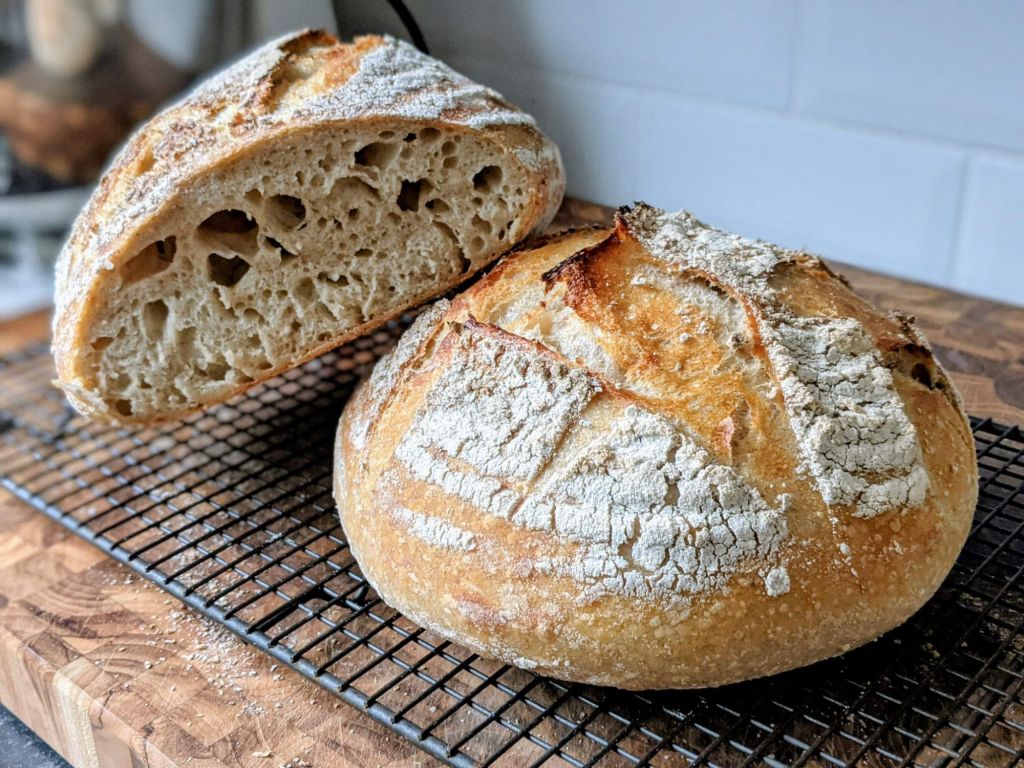
Guest Blog by Kate Rennie: What am I growing in my kitchen… a gluten free sourdough journey through the eyes of an IPC nurse

I am currently in the middle of secret project, which I hope to announce more about in late August/early September. I’m really excited about it but it’s taking a bunch of my time. I’m hoping that you will be just as excited when I can share more details. The wonderful Dr Claire Walker is helping me deliver my passion project by curating the Girlymicrobiologist blog for a few weeks. This means that I hope you all enjoy getting some great guest blogs from a range of topics. Girlymicrobiologist is a community, and all of the wonderful authors stepping up, sharing their thoughts and projects, to support me in mine means the world. I hope you enjoy this guest blog series. Drop me a line if you too would be interested in joining this community by writing a guest blog.

Dr Walker who is a paid up member of the Dream Team since 2013, token immunologist and occasional defector from the Immunology Mafia. Registered Clinical Scientist in Immunology with a background in genetics (PhD), microbiology and immunology (MSc), biological sciences (mBiolSci), education (PgCert) and indecisiveness (everything else). Now a Senior Lecturer in Immunology at University of Lincoln. She has previously written many great guest blogs for the Girlymicrobiologist, including Microbial Culture: An Immunologist’s Side Project Gone Wild.

This weeks blog post continues this months fungal theme (all things yeast) and is from the absolutely amazing Kate Rennie. Kate is a born microbiologist, even if she was diverted by the world of nursing and has gone on to become a cracking Infection Prevention and Control nurse. Her curiosity and willingness to learn and expand her skill sets, makes it no surprise to me that when she decided to expand her hobbies, she decided to go down a route that touches on all things micro.

Before we get into the sour dough however, let’s start by talking what coeliac disease (the condition that leads to the requirement for gluten free bread) as written for us by Dr Claire Walker, our in-house immunologist:

Coeliac disease is a serious autoimmune condition where eating gluten, a protein in wheat, barley, and rye, triggers the immune system to attack an enzyme in the gut called tissue transglutaminase. This damages the villi, tiny structures in the small intestine that absorb nutrients. The result? Symptoms like bloating, diarrhoea, fatigue, and iron deficiency. But it doesn’t stop at the gut. Some people develop dermatitis herpetiformis, an intensely itchy, blistering skin rash. Others experience neurological symptoms such as brain fog, headaches, and numbness or tingling in the limbs. It’s often misdiagnosed or missed entirely.

Around 1 in 100 people in the UK have coeliac disease, but most remain undiagnosed. Diagnosis usually starts with blood tests (like the tTG-IgA), followed by a small bowel biopsy to confirm intestinal damage. These tests only work if you’re currently eating gluten. So if someone’s already gone gluten-free and are feeling better, they need to reintroduce it for several weeks which can cause symptoms to reappear and puts many people off testing.

There’s no cure and the only treatment is a strict, lifelong gluten-free diet. That means no “cheat days” as even tiny amounts can cause damage. It takes serious commitment: careful label reading, avoiding cross-contamination, and asking awkward questions when eating out. But for most, removing gluten thankfully leads to major improvements in symptoms and overall wellbeing.

Blog by Kate Rennie

What am I growing in my kitchen… a gluten free sourdough journey through the eyes of an IPC nurse

I’m Kate, I’m an infection control nurse at GOSH. I’ve worked in infection control since 2020 (1.5 years in primary care, 9 months in community/mental health and I’ve been at GOSH since April 2022). I was diagnosed with Coeliac disease in 2013 and decided 2025 would be the year of new hobbies and I am bored of gluten free bread that resembles cardboard.

I decided to embark on my sourdough journey (albeit slightly late to the party as I know this was a lockdown thing). I didn’t actually know what I was getting into with making sourdough, I read the first few steps and thought it sounded pretty simple, flour and water in a jar.

My flour and water sat on my kitchen side in a jar for 2 weeks (gross), and I named it Marilyn (Mondough)… I nurtured her and fed her daily, for those who may remember Tamagotchi’s, this is how I can describe it and as a previous Tamagotchi owner, I loved it.

Part of me was obsessed with what have created and look forward to waking up each morning to see how it’s looking (highlight of your late 20s) but the infection control nurse in me is slightly grossed out by it. I’ve read a bit more and learnt a lot, she just needed a little bit of extra love and care (troubleshooting) at a few days old.

HOOCH – I’ve only ever known hooch as this from my late teens/early 20s.

Fast forward to my late 20s, this is a sign that your sourdough starter is hungry, it’s eaten all its nutrients, and you must feed it more frequently. I was reluctant to throw her away and start fresh so I added teff flour in the hope she would perk up and SHE DID.
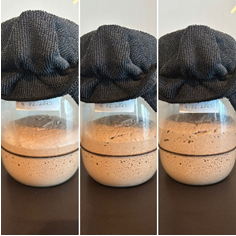
But she smelt disgusting… A familiar reminder of my 16 year old, pre-nurse self, having my long acrylic nails removed in the salon. ACETONE?? Apparently, it’s a byproduct of fermentation…

So, I wondered if this was actually safe to have something fermenting in my kitchen with absolutely 0 knowledge and thinking I’m probably going to poison myself. After a bit of research, I learnt this is normal and how to fix it, yet again, she’s hungry and I’m a rubbish mother.

Whatever is happening inside that jar is creating its own yeast to make it grow which is quite cool! I’m not sure how many people have actually gone this deep into the thought of a sourdough starter, but my IPC brain is fascinated yet disgusted and I want to know more. Do I want to culture it in the lab? Probably not. Am I going to eat it? Most definitely.

Fast forward 2 weeks… My sourdough journey ended abruptly after my first loaf. I felt disheartened that it didn’t turn out like the GF loaves I’d spent too much time obsessing over on Tik Tok.
The perfectionist I am wanted the perfect loaf to happen first time, so I abandoned sourdough and ventured into making non-sourdough gluten free bread. I popped Marilyn in the fridge for when I decided to revisit sourdough making and there she stayed for a good 3 months. Apparently, this puts it to sleep, and you can later revive it… but after pulling it out the fridge and seeing a layer of black liquid on top of the starter, my IPC brain got the better of me and I decided with my limited knowledge of sourdough and fermentation at home, it probably was best that I didn’t consume this and decided to throw it in the bin and I spared a brief thought for what Marilyn was and could have been if I had more patience.

I’d hoped this would be a success story about my gluten free sourdough rather than a failure but basically, sourdough isn’t easy and gluten free sourdough, really isn’t easy. It truly is a science.

Gluten free bread making in general is a delicate science because it lacks the key protein—gluten—that gives traditional bread its structure, elasticity, and chew. In wheat-based breads, gluten forms a stretchy network that traps gas bubbles from yeast, allowing the dough to rise and hold its shape. Without gluten, you have to rely on a blend of alternative flours—like rice, sorghum, or buckwheat—each contributing unique properties such as starch, protein, or flavour. Binding agents like psyllium husk are also essential to mimic gluten’s elasticity. No single gluten-free flour can replicate all the functions of wheat flour, which is why crafting a successful gluten-free loaf requires a carefully balanced mix rather than just throwing in a single substitute flour and hoping for the best.

I have been successful on a few occasions in making non-sourdough gluten free bread which has still been a real insight into science in everyday life.

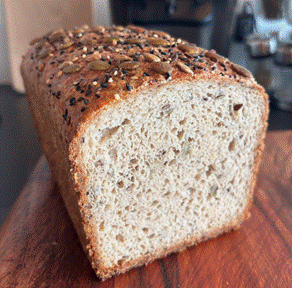
To all life’s problems there are solutions if only we are curious and passionate enough to see them and change direction in order to maximise our successes. It appears Kates’ experience with sour dough as part of her coeliac journey is no different.

All opinions in this blog are my own

Guest Blog by Dr Claire Walker: Microbial Culture – An Immunologist’s Side Project Gone Wild

I am currently in the middle of secret project, which I hope to announce more about in late August/early September. I’m really excited about it but it’s taking a bunch of my time. I’m hoping that you will be just as excited when I can share more details. The wonderful Dr Claire Walker is helping me deliver my passion project by curating the Girlymicrobiologist blog for a few weeks. This means that I hope you all enjoy getting some great guest blogs from a range of topics. Girlymicrobiologist is a community, and all of the wonderful authors stepping up, sharing their thoughts and projects, to support me in mine means the world. I hope you enjoy this guest blog series. Drop me a line if you too would be interested in joining this community by writing a guest blog.

Previous mycology posts have covered how fungal mycotoxins can cause us harm, and how the new yeast on the block, C. auris, is causing problems in healthcare, but the next two posts will talk about how beneficial fungi can be in our every day lives.

The blog posts will look at how certain yeasts can be used in something that brings me a lot of joy, bread. Many of you will know I’m dairy free, and although I know I should cut down on carbs, you can take my bread from my cold dead hands. It’s one of the few things I can eat without fear and makes me happy. In celebration of this oft overlooked area of microbiology we shall be talking all things baking over the next two weeks.

The first of these posts is written by Dr Walker who is a paid up member of the Dream Team since 2013, token immunologist and occasional defector from the Immunology Mafia. Registered Clinical Scientist in Immunology with a background in genetics (PhD), microbiology and immunology (MSc), biological sciences (mBiolSci), education (PgCert) and indecisiveness (everything else). Now a Senior Lecturer in Immunology at University of Lincoln. She has previously written many great guest blogs for the Girlymicrobiologist, including Exome Sequencing and the Hunt for New Genetic Diseases.

Before I hand over to Claire though, I thought I would talk a little about baking and fermentation. About 50% of all the PhD students I speak to have dreamt at some point of throwing their research out the window, running away and starting a bakery. This may be because baking has a surprising amount of science within it when compared to some other forms of cooking, hence the need to closely align to a recipe. A lot of this is actually because you are working with yeast, a living organism, hence the fact that we are talking about this on the Girlymicro blog, as micro is just cool in so many ways

Fermentation is an anaerobic (occurs without the presence of oxygen) process where microorganisms, like bacteria and yeast, convert sugars into energy and various byproducts, like acids, gases, or alcohol. In baking, it causes yeast and bacteria to convert sugars into carbon dioxide, among other things. This is what causes the dough to rise, as well as adding flavour, and is therefore essential to all things yummy and bread related. The most commonly used yeast is Saccharomyces cerevisiae, and this is one of the reason baking can behave so variably on times of the day or seasons, as both temperature and pH can impact on how well the fermentation process works. It can also mean, if you are impatient like me, you add water at far too high a temperature and effectively kill off your yeast so it doesn’t work at all. Fermentation, and its use in food production, is one of the many examples of how microbiology and microbes impact our every day lives, and of how much poorer our lives would be without them. So I hope you’ll enjoy the next couple of blogs about how baking has both microbiological and immunological links.

Blog by Dr Claire Walker

As I’ve confessed on this blog before,I am, what I like to call, a ‘failed microbiologist’. Many moons ago I completed a master’s qualification in environmental microbiology and dreamed of a career tracking pathogens through our water systems guaranteeing safe water for all. However, I graduated during a recession and started applying for any job that would have me. As luck would have it, I ended up on the immunology clinical scientist training scheme (the story of that fateful application I will save for a later date), and the rest is history. However, I’ve always loved a bit of microbiology and my fascination with all things fermented has taken me on many adventures. Including baking afternoon tea for a GirlyMicro special event!

My treat for finishing my marking this year was a fermentation course at the Welbeck School of Artisanal food learning all about the transformation of food by microorganisms. The word fermentation comes from the Latin fervere meaning ‘to boil’ after Romans watched the bubbles forming when they fermented grapes into wine. Name a scientist who doesn’t love a bit of Latin?  There are several biological processes occurring when we ferment foods like grapes, but essentially it is a process by which large chains of molecules are broken down by enzymes into their smaller, tastier, more nutritious, and more easily digestible parts.

The area of fermentation about which I am really passionate is sourdough. Yes, I lived in East London for many years, and yes, I owned a banneton before it was cool. Sourdough doesn’t just indulge my microbiology side project; it became unexpectedly personal. After picking up a particularly unpleasant microbe while travelling in India, I developed amoebic dysentery, and my gut never fully bounced back. I couldn’t tolerate shop-bought bread or much of anything, really. It wasn’t until I began incorporating fermented foods, especially sourdough, into my diet that I noticed slow but steady improvement. (Though let me be clear: this is my experience, not medical advice – if you’re unwell, definitely speak to your clinician!)

For the uninitiated, a sourdough mother, or starter, is a living culture of wild yeast and lactic acid bacteria that needs regular feeding with flour and water to stay active. As a failed microbiologist, I found something oddly fulfilling about sustaining a microbial ecosystem especially one that produces bread with real health benefits. What’s not to love about a culture that feeds you back?

Of course, I’m a dyed in the wool clinical immunologist so I can’t finish up this post without waxing lyrical about the immunology of sourdough. What makes sourdough really special, from an immunologists perspective, is how it supports our gut, which is home to about 70% of our immune cells. By encouraging a healthy mix of gut bacteria, sourdough helps produce bioactive compounds that keep our immune system balanced, strengthening our defenses without overreacting. This means it can help protect us from infections while calming down low-grade chronic inflammation that might otherwise cause problems. So, sourdough isn’t just tasty, it’s a simple, natural way to support a well-regulated immune response. Of course, sourdough isn’t for everyone, especially not for coeliacs. After all, even the most dedicated immunologist moonlighting as a microbiologist hasn’t yet figured out how to turn gluten into something completely safe. Guess some mysteries are still off the menu!

All opinions in this blog are my own

Candidozyma auris the New Kid on the Fungal Block: What is it and why should we care?

Following on from the wonderful fungal post on fungal toxins (mycotoxins) last week from Dr Sam Watkin, I wanted to follow up with a post on the latest fungi of interest from a clinical perspective, Candidozyma auris. This fungi is getting more and more coverage, as well as becoming more important in healthcare, so I thought I would take a moment to talk about what it is, what it does, how to find it, and what to do when you do.

In a pre-pandemic world, which feels like a long time ago, Professor Lena Ciric was working at a media fellowship, and as part of that work wrote an article for the BBC on Candida auris, which has subsequently been renamed to Candidozyma auris.

This article came out in 2019, so maybe C. auris is not so new but in terms of the numbers of cases we are seeing within the NHS, and the changing prevalence out in healthcare systems more widely, it is definitely more of a feature and a concern than it was back then. Reflecting this change the UKHSA guidance Candidozyma auris (formerly Candida auris): guidance for acute healthcare settings which was originally published in 2016, has been updated recently (19th March 2025). It feels timely therefore to put something out  in order to raise awareness of this organism and the unique challenges it presents.

NB I can neither spell nor pronounce Candidozyma auris and so we’re sticking to C. auris from this point out.

What is it?

Yeast are a type of fungus, and Candida species are often associated with colonisation (present without causing infection or symptoms) on skin, in the mouth or within the vagina. If they grow up to high levels they can cause an infection called candidiasis, which often causes symptoms like itching or discharge. Common infections include Thrush and nappy rash. Candida albicans is one of the most common yeast infections seen within the healthcare setting, and in this kind of environment more serious infections can be seen, especially those linked to the blood stream, and occasionally serious organ infections.

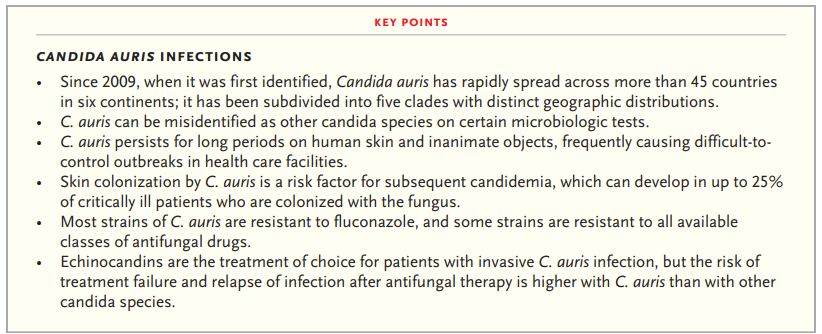
C. auris was originally believed to be a relatively new species of genus Candida, as it often behaves in a similar way to the other Candida species. The reason for the name change to Candidozyma auris, was because, although in many ways it behaves similarly to its Candida cousins, it does have some differences in the way it behaves. These include features such as intrinsic antifungal resistance and growth conditions, that make it useful to characterise in a way that acknowledges it as a novel genus in its own right.

What is the difference between C. auris and the other Candida species that you know?

Many Candida species can cause severe infections within specific settings, however C. auris has been known to not only cause a wide variety of infections (bloodstream, intra-abdominal, bone and cerebrospinal fluid (CSF) infections), but ones which lead to significant mortality rates, with an estimated rate of 30 – 72% in severe infection reported in the literature.

Infections can occur in any patient group, although UK outbreaks have been most frequent associated with adult settings. Augmented care settings (such as intensive care and transplant settings) are at highest risk due to the vulnerable, long stay nature of many of their patients. Management of any infection occurring is complicated by the fact that C. auris has developed resistance to many available classes of antifungals, with emergence of pan-resistant strains, which add to the mortality risk.

C. auris also appears able to both easily transmit and colonise the skin of patients, with most patients being colonised before they go on to develop any subsequent infection. These colonised patients can then contaminate their healthcare environments, and unlike other yeast species, C. auris is able to survive and represent a continued risk within the environment for prolonged periods, all of which contributes to outbreak risk.

Geographic distribution

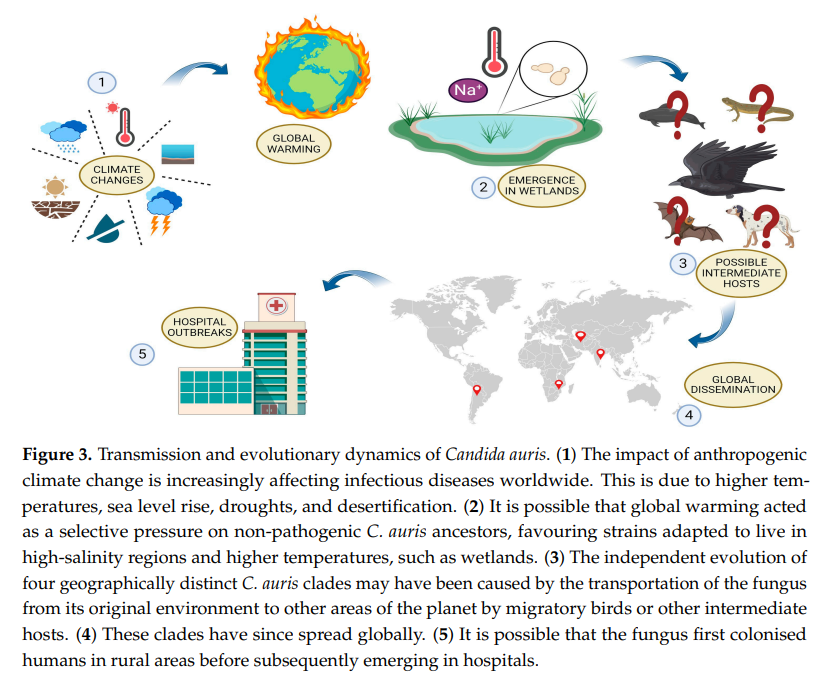
It was first identified in the ear canal of a patient in Japan in 2009, but has since been found globally, and is now separated into six genetically distinct clades:

  • Clade I = the South Asian clade, first detected in India and Pakistan
  • Clade II = the East Asian clade, first detected in Japan
  • Clade III = the South African clade, first detected in South Africa
  • Clade IV = the South American clade, first detected in Venezuela
  • Clade V = Iran (recent)
  • Clade VI = Singapore (recent)

Within the UK from January 2013 – December 2024, 637 C. auris isolates were reported through laboratory surveillance in England, with 59 (9.3%) isolated from blood culture specimens. It should be noted that not all labs report, and for some time many labs could not accurately identify C. auris, or actively screened for it, and so this may represent under reporting. A routine whole genome sequencing service is not currently available for typing, although it can be undertaken linked to specific outbreaks. Hopefully this will be up and running soon to better understand how the different clades discussed above are represented in the UK, and whether any of them are linked to more challenging outcomes than others.

Where do we find it?

Due to its global distribution, overseas patients may also be at increased risk of introducing C. auris into UK healthcare settings, with one centre reported 1.6% of their overseas admission detected as colonised, with patients coming from the Middle East, India and Pakistan, showing higher levels of recovery.

UKHSA guidance suggests we should screen any patient who has had an overnight stay in a healthcare facility outside of the UK in the previous year, as well as patients patients coming from affected units in the UK. This sounds relatively straight forward, but it can be challenging to identify patients who have had an overnight stay overseas on admission if they are not being admitted from overseas. It also relies on clear communication from other centres that they have an issue, if we are to screen patients from impacted units. Many centres have therefore decided to screen all patients on high-risk wards, such as intensive care, to address some of this unknown risk.

Risk factors for developing C. auris colonisation or infection should be considered when deciding on screening strategies and the list within the UKHSA guidance includes patients who have experience:

  • healthcare abroad, including repatriations or international patient transfers to UK hospitals for medical care, especially from countries with ongoing transmissions
  • recent surgery, including vascular surgery within 30 days
  • prolonged stay in critical care
  • severe underlying disease with immunosuppression, such as HIV and bone marrow transplantation
  • corticosteroid therapy
  • neutropenia
  • malignancy
  • chronic kidney disease or diabetes mellitus
  • mechanical ventilation
  • presence of a central-venous catheter or urinary catheter
  • extra-ventricular CSF drainage device
  • prolonged exposure to broad-spectrum antibiotic or antifungal use
  • underlying respiratory illness

How do we find it?

Screening is undertaken by taking swabs from the axilla (armpit), groin and nose, although different patient groups may require additional screening. Patient surveillance is important for two reasons:

  • 1) to understand which patients are colonised in order to introduce additional precautions to limit risk of transmission to other patients or the environment
  • 2) to support improved patient management but allowing patients to be put on the most effective antifungal if they go on to develop any signs of yeast infection, in order to improve outcomes

If a patient is detected as positive, other screening sites can help manage individual patients and so UKHSA say additional site screening should be considered:

  • urine (especially if there is a urinary catheter in-situ, including intermittent self-catheterisation)
  • throat swab
  • perineal swab
  • rectal swab (in paediatrics we would consider a stool sample instead)
  • low vaginal swab
  • sputum or endotracheal secretions
  • drain fluid (abdominal, pelvic or mediastinal)
  • vascular access sites
  • wounds or broken skin
  • ear
  • umbilical area (neonates)

Swabs should ideally be processed on chromogenic media (colour changing agar plates) and fungal colonies confirmed using MALDI ToF or a validated PCR (my previous post on PCR may help with this). It can also be helpful to incubate plates at 40oC, as C. auris can grow as much higher temperatures than its Candida cousins, which can help with identification. If grown then the yeast should be stored in case you need them for future typing to help in understanding transmissions or outbreaks.

Why should we care about it?

Due to the high mortality rates for patients who develop infections, and the issues with choosing antifungals that work, it is really important that we know when we have patients who are colonised with C. auris. Controlling spread, even if patients don’t become infected, is incredibly important for the individual. This is because if a patient is detected as positive they won’t be de-alerted (have IPC precautions stopped) at any point and so it will impact them for months, if not years. These IPC precautions include isolation (keeping separate from other patients), and sometimes only being nursed by specific members of staff. These patient and staff impacts are so significant they’ve even been acknowledged in popular media, with a three episode arch covering C. auris in The Resident on Netflix (season three, episodes 18, 19 and 20).

Are there differences in how you might treat?

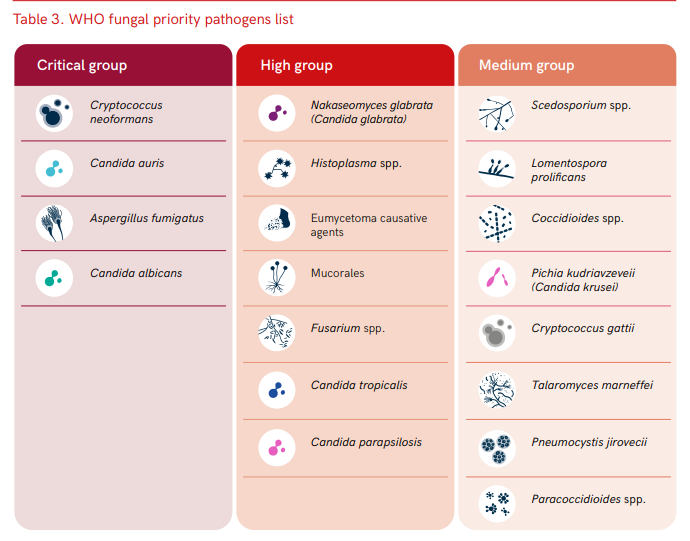
As I’ve already said, C. auris is pretty resistant to treatment compared to its Candida cousins. UK data indicates that isolates are resistant (don’t respond to) to the normal first line treatment of fluconazole, and often to other antifungals within the azole class. Some isolates have been resistant to other commonly used antifungals, such as amphotericin B (20%) and echinocandins (10%). Resistance to other antifungals can also occur whilst infections are being treated, and so it is important to monitor sensitivities (whether the drug works) and send to reference labs in order to understand the most appropriate therapy. Its resistance profile is one of the reasons the WHO have highlighted C. auris as a priority fungal pathogen for further research and to highlight clinical risk.

Its not just antifungals that are important however, antimicrobial stewardship is important in general, as prolonged exposure to broad-spectrum antibiotics and antifungal agents are risk factors for both C. auris colonisation and infection (again this links back to the high risk patient groups impacted). Therefore, doing a better job of monitoring and controlling antimicrobials in general is likely to have a beneficial impact on C. auris risk.

Challenges with environmental control

One of the many things I love about the new C. auris guidance is its focus on multidisciplinary input ‘Healthcare workers are encouraged to work in multi-disciplinary teams, including Clinical Infection Specialists and IPC teams, to risk assess and support the management of patients infected or colonised with C. auris‘. I think this is so important, especially with an organism that is so challenging and can present such a high risk.

Environmental control is a particular issue for C. auris as we know it’s ability to survive and can grow at higher temperatures than many other fungi, means that it is likely to survive well in the environment. It also has the ability to form environmental biofilms, which can mean it is difficult to impact effectively using standard cleaning techniques, and once within the environment has been been detected for 4 weeks.

Within the UKHSA documentation, environmental contamination for C. auris has been found on the following surfaces during outbreaks:

  • beds, bedside equipment, bedding materials including mattresses, bed sheets and pillows
  • ventilation grilles and air conditioning units
  • radiators
  • windowsills and other horizontal surfaces
  • hand wash basins, sink drains and taps
  • floors
  • bathrooms doors and walls
  • disposable and reusable equipment such as ventilators, skin-surface temperature probes, blood pressure cuffs, electrocardiogram leads, stethoscopes, pulse oximeters and cloth lanyards

Basically most of your healthcare environment, whether fixed or movable features. In order to help stop the transfer from patients to the environment, via staff, the use of personal protective equipment is really important. Therefore the use of gowns and gloves is suggested. Single use and disposable equipment should also be used whenever possible, and patients should be kept in single, ensuite rooms, to minimise the risk of C. auris escaping from within the bed space to adjacent clinical environments. Any items within the space should either be cleanable with a disinfectant, or disposed of after a patient leaves. One thousand ppm of available chlorine should be used for cleaning, but needs to be used in concert with an appropriate contact time if it is to be effective.

WHO fungal priority pathogens list to guide research, development and public health action 2022

Outbreaks

Most detections of C. auris cases detected are colonisation rather than infection (though colonisations can lead to subsequent infections). Within the UK there have been 5 significant outbreak of C. auris, each with over 50 cases, in addition to many sporadic introductions of single cases, frequently from overseas. Many of these have been in London or the South of England, and have resulted in considerable disruption to services over a prolonged period of time. This disruption can, in itself, be a risk to patients as it can result in delayed access to care. Outbreaks are also financially significant, with outbreaks reported as costing over £1 million for a service impacted for 7 months.

Although outbreak numbers are currently small, they are becoming more frequent, and even if infrequent have significant impacts. The need to control this risk before it becomes endemic within the UK health system is therefore significant. It is crucial therefore to collect more data and understand transmission routes of C. auris better.

Despite probable under reporting, it is clear that C. auris is becoming more common within UK healthcare settings, and has the ability to both cause significant issues for both individual patients and for services, due to outbreak impacts. Although fairly new on the scene there is increasing recognition of how C. auris could change fungal risks within healthcare, and even long stay residential settings. If we are going to adjust approaches in order to react to the new risks C. auris represents we need to both update our current practices, and invest in research, in order to learn how to do things even better. This is the reason that it feels important to share a post that is a little more technical than normal, both to help myself by learning more, but also to ensure that we are having conversations about an organism that has the ability to impact us all.

All opinions in this blog are my own

Guest Blog by Dr Sam Watkins: The wild world of mycotoxins, maybe not such a fun-gi

I’m so excited by this weeks guest blog post. I’m a massive murder mystery fan, and from Agatha Christie onwards there have been multiple books where mushrooms and mushroom toxins (mycotoxins) have been used, either deliberately or accidently, as a pivotal component of the plot. In recent months however, mycotoxins have been in the news in a real world sense, as the case of Erin Patterson has been heard and the jury are deliberating as I write. Erin Patterson is accused of 3 charges of murder, and one of attempted murder, linked to feeding guests a poisonous dish of Beef Wellington at a dinner party.

This led me to speak to my go to guy for mushroom (mycological) based questions. Sam is in love with all things shroom, and even has a mushroom foraging based Instagram. Who better to go to with a request to write a blog post on mycotoxins and to learn more about this intriguing topic?

Blog by Dr Sam Watkin

Hello Girlymicro blog readers! I’m Sam, a previous PhD student of Elaine’s with research focused on investigating trends in microbial dissemination in hospitals. I’m taking the blog astray from the world of IPC however with this post, and instead will focus in on one of my other interests. As people who know me have probably come to realise, I’m a big fan of mushroom foraging. There is something so rewarding to me about finding excellent edible mushrooms that you just can’t buy in shops and exploring the different flavours they can add to food. My partner had to put up with me having a Cauliflower fungus (Sparassis crispa) the size of a football in our freezer for well over a year. We would break bits off and make fantastic soups and stew bases with it – it has a really unique nutty flavour. More than just the pursuit of a free dinner though, I find it very enjoyable finding fungi that I haven’t seen before, or that are particularly rare. I imagine it is similar to the enjoyment a twitcher gets from sighting a rare bird, although mushrooms tend to stay put so there is less pressure on being constantly focussed. Having said that, searching for fungi does often devolve into a game of looking at the brown forest floor trying to spot the slightly-different-brown mushroom. More than once have I run over to a promising shade of brown or yellow, only to be disappointed by a frustratingly deceptive leaf. It is nevertheless a pursuit I thoroughly enjoy, despite the frequent soakings in rain showers and occasional run-ins with brambles.

One aspect of foraging (and indeed looking to identify fungi) is being aware of what ones you can eat and what ones are to be avoided. The old adage “All fungi are edible, some fungi are only edible once” absolutely holds true. While my professional life involves researching microbial transmission and how best to prevent infection, I am fascinated by the toxic nature of fungi. I did consider becoming a toxicologist in my teens, but rapidly realised that the amount of chemistry required was simply not my idea of joy. I do find it very interesting however how fungi are capable of producing some of the most unpleasant, and also strangest, toxins that can be found in the natural world (or at least I think so). So here I am going to run through a few of the fungi that I find most fascinating when it comes to their chemical makeup and the influence they have had on humans through history.

A fairytale classic – Amanita muscaria

Few fungi are more iconic than A. muscaria (known in English as the Fly Agaric). Their characteristic red caps and white flakes are often illustrated in children’s books and are probably what comes to mind when one pictures a ‘toadstool’. They are in every respect the archetypal fungus. This being said; however, you absolutely would not want to eat one. If someone were unfortunate enough to eat a specimen on A. muscaria, they would most likely experience a range of unpleasant neurological symptoms. Confusion, dizziness, ataxia, hallucinations, muscle twitching are often reported, as well as nausea and vomiting. In severe cases, a loss of consciousness and dangerous decreases in blood pressure can occur. These unpleasant effects are due to the makeup of alkaloids present in the fungus, with ibotenic acid and muscimol being predominantly responsible for these effects. Muscimol has a similar molecular structure to GABA-A – the most abundant inhibitory neurotransmitter in the human brain. Ingesting a chemical which mimics such an important neurotransmitter as part of your supper is unlikely to be good news. It acts as an agonist for GABA-A receptors, causing a reduction in the excitability of neurons, causing the range of neurological symptoms. Muscimol is by no means alone here however – A. muscaria also contains ibotenic acid which further acts as an agonist of a host of neurotransmitter receptors (for instance metabotropic glutamate receptors – another widespread neurotransmitter receptor class. Oh, and ibotenic acid is metabolically converted to muscimol in the body. More fun to go around!

It’s not only the alkaloid balance or popular culture appearance of A. muscaria that makes it interesting however – it has had significant historical and cultural influences. It has been traditionally consumed by shaman in northern Europe as a part of winter solstice celebrations. This is due to the intoxicating effects of consumption, where the experience was likened to flying. Part of the rituals would involve the fungi being collected while wearing ceremonial red robes. The fungi were also often fed to reindeer before ingestion to metabolise out some of the more toxic components, with the hallucinatory agents collected in the reindeer’s urine which was then consumed. I’ll pass. But, an association with winter and red robes, feelings of flying and reindeer… these rituals have indeed been credited as a potential origin of the popular imagery of Santa Claus. I guess everything must start somewhere!

An explosive pufferfish – Gyromitra esculenta

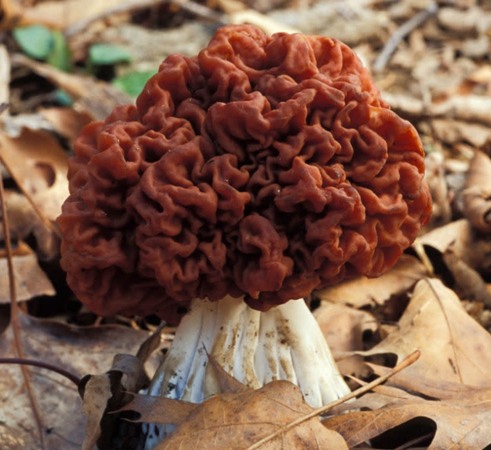
I find this to be one of the most fascinating fungi in existence. Partly fuelled by the fact that I still am yet to find this species growing wild (one day my persistence will pay off) and partly by how unique these fungi are both in shape, cultural perceptions and toxicity. Looking like mini brains, they can be found under pine trees on sandy soil in autumn (or so I’m told… maybe they are deliberately avoiding me). They are found in Europe and certain parts of North America, and are called False Morels due to their relation and similarity to the delicious Morels.

Despite being well known as a poisonous fungus their name would suggest otherwise, with “esculenta” being Latin for “edible”. And these fungi are indeed eaten in large quantities! When prepared correctly. As such, they have been likened to the pufferfish of the fungal world, which is quite the title! Appropriately prepared they are supposed to be a delicacy – I can’t speak from experience on this one, my adventures into free fungal food doesn’t quite stretch this far – however raw or improperly cooked they can be fatal. This toxicity is down to the presence of a volatile toxin called gyromitrin. When ingested, gyromitrin is metabolised to monomethyl hydrazine. This goes on to wreak havoc on a wide range of enzymes and processes, inhibiting cytochrome P450, amine oxidases and preventing the formation of pyridoxal 5-phosphate. This compound is a key cofactor in the synthesis of our old friend GABA. This causes a reduction of GABA present, preventing neuronal inhibition and causing to a prolonged excitatory state in the brain – almost the opposite of the effect seen in A. muscaria. This is still not good news however, with symptoms including severe gastrointestinal distress, kidney and liver damage and seizures and death in severe cases. Interestingly, the toxic metabolite produced here is used amongst other chemicals as a rocket propellant. I can’t but help imagine a future where we have spacecraft fuelled by fungi (albeit from a poisonous metabolite of a mycotoxin). Somehow, I doubt it.

Building up to it – Paxillus involutus

Following on from the theme of the last fungus, P. involutus is no stranger to gastronomic controversies. This very common, fairly non-descript fungus is a rather boring shade of brown (sorry if this is your favourite fungus!), although its cap does have a uniquely rolled-over rim (hence the imaginative English name – Brown Roll-Rim). It has historically been considered to be an edible mushroom, with many guidebooks simply stating that once cooked, it was safe to consume. Needless to say, these guidebooks are now firmly out of date and it is now recognised as a deadly poisonous fungus. Unlike the previous two fungi I’ve described here, this fungus does not contain any psychoactive alkaloids or toxic rocket fuel precursors. Instead, this species contains some rather unpleasant irritants which, upon consumption of raw specimens, result in severe gastroenteritis. These toxins however are degraded on heating, hence why it used to be considered edible after cooking. No, the real toxins are much more sinister in this fungus.

True to the weird nature of fungi, this species rebels against the “only edible once” saying quoted earlier. This fungus can actually be edible quite a few times before it poisons you. Unlike other toxins which you may expect to have a rapid onset after consumption (maybe a few days after ingestion at the most), the compounds responsible for the fatal poisonings attributed to P. involutus can take months to manifest. This is because the toxic effects often become apparent after repeated exposure, usually through the repeated consumption of the fungus. This is because the toxic compound here is in fact an antigen, which the body becomes sensitised to over time. Once enough meals of P. involutus have been eaten, the antigen present stimulates a rare autoimmune response where the body produces antibodies which attach to and disrupt red blood cells (autoimmune haemolytic anaemia). This causes life-threatening reductions in red blood cell counts, kidney damage and multi-organ failure. There is no antidote.
If in doubt…

So, there are three of the fungi that I find most interesting in terms of their toxicity. This only scratches the surface of the wild world that is mycotoxins – there are hundreds of others. From St Anthony’s Fire (a range of medieval diseases attributed to Ergot (Claviceps purpurea) to the near-certain fatality after consumption of Amanita phalloides or Amanita virosa (named the Death Cap and Destroying Angel respectively – foreboding!), mycotoxins are truly fascinating. These show the massive variety of toxins out there and how they influence both our health but our culture and relationship with wild foods. From a foraging perspective, the range of dangerous fungi out there clearly shows the importance of only foraging with an experienced guide and only collecting what you can identify with 100% confidence. If in doubt, leave it out!

NB from Girlymicro – Whilst we’re delving into some mycological (fungal) joy over a couple of blog posts I thought I would take the opportunity to re-share this four part article series on the fungi of The Last of Us, which was a real joy to be involved with, and a clinical article that may surprise you:

https://www.idtransmission.com/understanding/tlou-tales–episode-1-the-culprit-of-humanitys-downfall

https://www.idtransmission.com/understanding/tlou-tales–episode-2-the-devil-is-in-the-details

https://www.idtransmission.com/understanding/tlou-tales–episode-3-the-realities-of-the-last-of-us

https://www.idtransmission.com/understanding/tlou-tales–episode-4-living-with-the-living-dead

On a rather different note – sometimes people love their fungi just a little too much in other ways……….

All opinions in this blog are my own