I’m Still Learning After All These Years: My focus in 2025 is to continue my personal development journey

It’s that time of year. The time when New Years resolutions get shared and we all try to persuade ourselves that overnight, if we just put in a bit more effort, we can change big facets of our lives. I’m becoming increasingly aware that the big gesture and external stuff is not really the space I want to be in, however. I’m fortunate to have ticked a lot of the external boxes at this point in my career, and so, in 2025, I want to focus on me and my development as a person rather than ticking another box linked to how people see me.

One of the reasons for this shift is the nature of the job, as it feels, in a post pandemic world, like I spend a lot of time in responsive mode. This becomes a habit and a way of being. Instead of running to keep up and fire fighting, however, I want to have time to experience the joy I feel when I’m learning and developing.  This is especially important as I think many of us who went through the pandemic as healthcare workers are still very much in recovery mode, and there’s a lot to still be worked through and resolved with little time to actually do so. So, rather than create a list of tasks to be measured against, my list this year is about aspirations linked to becoming. Becoming a better version of me, becoming more joyful, and re-finding some of that pre-pandemic me.

I want to have time to catch my breath

As I sit here on a Sunday afternoon, I realise how much I need time to chill and unwind at the moment. 2024 was full on, and there wasn’t a lot of respite. It feels, therefore, that I’m hitting 2025 already pretty wound up and in need of prioritising some time off the treadmill. Even at work, having just managed to get down from just under 18,000 emails to ~200 over the Christmas break, I realise I need to stop being in responsive mode and guard my time more efficiently. I need to carve out planning time, and in a more basic way, time to make tea, have lunch, or god forbid – leave on time. I’m aware of how much better I will be at my job if I can catch my breath, see through the fog and take time to develop a plan or creative approach to the problem, rather than jumping in or going for the most obvious approach. All in all, a different strategy will have all-around benefits, so I need to work better at finding a new way to manage my time.

I want to live in a positive space

I have a tendency to swing from optimism to ostriching, and whilst most of the time I’m a ‘glass is half full’ kind of girl, it sometimes takes more energy than I have at present to live in that positive space. In 2025, however, I want to have enough energy to expend to make it happen. I want to listen to the noise, criticism, and the negative inner voices less. I want to focus less on what I lack and more on what I have. It’s easy to constantly focus on our areas of required improvements instead of celebrating how far we’ve come and where our strengths lie. There is always a space to focus on improvement, but it shouldn’t come at the cost of recognising the work we’ve already done. This year, I don’t want to benchmark myself and my progress. I want to live in a space where I accept and celebrate the place I am at. For once in my professional life, I want to be satisfied with the boxes I have already ticked and live in the moment.

I want to see my ride or dies

One of the reasons I am keen to find additional spare time and not take on more is that I want to carve out more time for me. Selfishly, this is nothing to do with work, but for me as a person outside of my professional life. The main driver for this is that I spent most of 2024 in work mode, and I didn’t spend enough of it in life mode. I’ve written about how fortunate I am with some of my friends, but in 2024, I just didn’t carve out the time to spend with them. They are super cool, and would never hold it against me, but for the sake of my soul I want to spend time with the people who see me, flaws and all, and love me any way. The people who are my ‘stick by you no matter what’ friends inspire me and drive me to do better, and I will be better for prioritising spending time with them.

I want to re-find my confidence

To be honest, I don’t know if it’s being peri-menopausal, post pandemic burn out, or just work over load in general, but my confidence has definitely taken a hit. Don’t get my wrong. I’m still the same bolshie girl, but the tendency to spiral after the moment is hitting me hard. The creeping self doubt is present in a much more apparent way than it was before the pandemic. Part of me thinks it’s because I’ve been living in ‘Professor Cloutman-Green’ mode for so long rather than having enough time in my own skin as Elaine/Dream. Whatever the reason, I want to find that confident girl again. The girl who had plenty of self doubt but didn’t let that doubt overwhelm her or take over who she was. She’s still in there, but I suspect a break and a significant amount of napping will be required to persuade her to put in a more consistent appearance.

I want to create and be inspired

Some of the things I want to make time for are pretty straight forward. I want to have time to cook when I get home and enjoy doing so with Mr Girlymicro. Cooking is something we love to do together, but time restrictions in recent years have made everything a functional task rather than an enjoyable endeavour. I want to spend the weekend drinking pots of the many different types of tea we have and languidly enjoying each others company, rather than having anxiety about the list of tasks I should be undertaking just to keep up distracting me from the moment.

A very specific thing I want to do with Mr and mummy Girlymicro in 2025 is to spend time visiting museums. Great museums, weird museums, museums that no one else visits. In 2023, we visited the Met in New York, and the joy and inspiration that filled my soul has stayed with me. In 2024, we managed a few stolen moments at the V&A, British Museum, and Natural History Museum, but I have to say I want more. London is filled with niche places to visit, and I want to wander with an open mind and just take in what speaks to me in the moment. This kind of activity is food for my soul, and I’m greedy for more. Also, if you have any recommendations, hit me up in the comments or DM/email me.

I want to invest in this blog

Being inspired helps me in many aspects of my life, but one of the biggest ones is the number of ideas I get for this blog when I’m just out and about experiencing life, and not just in scientific contexts. Focusing that inspiration into a creative endeavour like this blog then leads to even more fulfilment and joy. I know I’ve been talking for a couple of years now about developing a book out of this blog, and I’m not promising it will happen in 2025, but I want to take some serious steps in moving it forward if I can. At its most basic, I want to feel like I have time to enjoy sitting down and writing rather than squeezing in stolen moments on the tube when already exhausted.

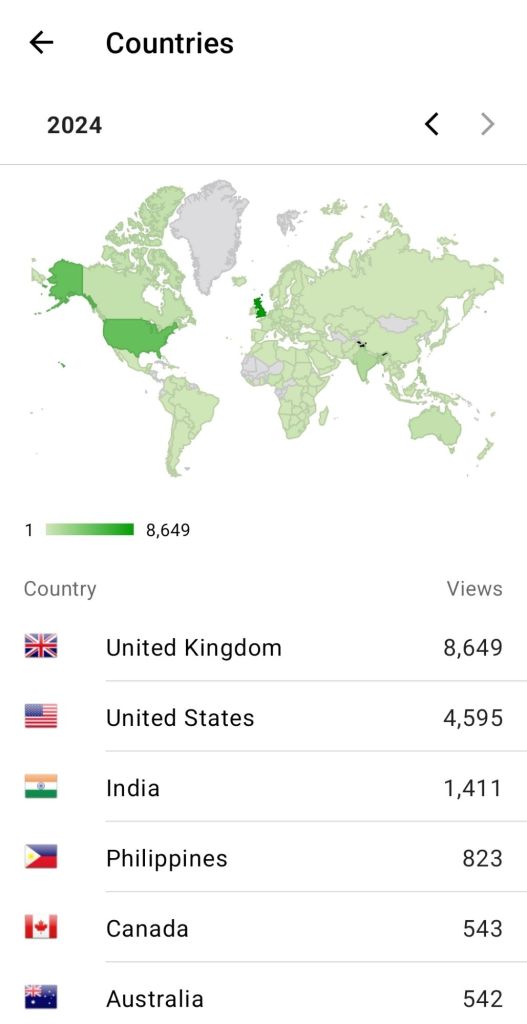
2024 delivered more reads than I could have dreamt possible, finishing the year with over 21,000 reads from over 120 countries. I can’t believe that something I thought would be seen by a handful of people is now read by so many. I want to build on that momentum. I know professional blog writers get those numbers in a month, but I’m returning here to my pledge to not bench marking against others and just to focus on measuring myself against myself to capture growth. So here is to improving year on year and to doing more of what brings us joy!

I just want more

I know it sounds greedy, but I’m not embarrassed to say it, I want more. I want to sleep, and drink tea. I want cocktails and time spent with friends. I want more cozy rainy afternoons under a blanket and getting back to reading real books, rather than only having the focus to listen to audio books. I want Sunday afternoon walks with Mr Girlymicro, talking about nothing and feeding the ducks. I want to laugh so much my chest hurts and smile so much my face aches. I want to make time for the parts of myself that aren’t linked to work and outputs and re-train my brain to not measure myself against the ‘busyness scale’. I am not the sum of what I produce and I must learn not to measure myself as such. I am so much more, and in 2025, I am OK for it to be the year of greedily wanting more and giving myself permission to need.

I need to catastrophise less

At times of high stress, and let’s be honest I feel like it’s been high stress since 2020, my brain manages that stress by running scenarios. In many ways, it is not a bad way of managing my existence. Good, bad, disaster outcomes, all run wild in my brain. The main challenge over the last few years is that that scenario running has tended more and more to the disaster scenarios taking up my bandwidth. This can make the world feel darker and more challenging than it probably is, especially if it is compared with a more objective mindset. In 2025, it’s time to put on my positive pants and try to utilise the tools I have in a more balanced way in order to not create stress and drama where no such situation exists.

I need to step off the carousel

Catastrophising means that, by it’s very nature, I’m not living in the positive space I’d like to habit. Worse than that though, it can lead to spiralling, leading to negative rabbit holes that aren’t even linked to the original trigger. I’ve posted before on what this can look like for me. This isn’t good in the moment, but it also tends to result in a lack of sleep, as this is a frequent 3am affair, and thus impact on my general well-being. Everything becomes a self-fulfilling prophecy, as the tireder I get, the less perspective I have, the more likely I am to spiral, and therefore, get less sleep. In 2025, I want to step off both the carousel that leaves me so tired that the spirals happen in the first place, and also to step off the spirals earlier when they hit. For me, it’s focusing on using what serves me rather than being a passenger in the moment.

I need to take better physical care of myself

All of this brings me onto the fact that I just need to take better care of myself physically, as well as mentally. So much of my underlying health has suffered since the pandemic, and I have not allowed myself the recovery time that is required to really fix that. In 2025, I need more of option three in the pic below and way less of 4. I need to be more than intellectually active. I also need to find time to eat and drink in my work day. I often fail to help myself by forgetting or getting too busy to do the simple things, like taking meds. The reality is, I don’t have anyone to blame but myself, and I need to look after myself in the way that I would expect of others. It’s a simple thing, and I need to stop making life so complicated that it doesn’t happen.

I need to not make New Years Resolutions

Finally, and this is a big one for me. None of these things are New Years Resolutions. At best, I am saying that these are aspirations. I refuse to make a list that just adds yet more pressure to my every day life. I am a work in progress, and it is more than naive of me to think that I will wake up in a New Year and change who I am. I feel my habits make me more like the Titanic than a super yacht, and so any change in direction to avoid the icebergs takes time. 2025 is about self-love based on acceptance post self reflection and understanding that changing the dial is a choice that will need to be made daily. Starting the year by ignoring the noise of everyone elses’ proclamations and purely staying in my lane, whilst focused on what serves me, I think is a great way to kick off the year. I know some people find the resolution bit helpful, but I, for one, feel like celebrating the freedom I give myself by deciding not to comply with this particular tradition. Which ever way you decide works for you, I hope that 2025 brings you all of the joy and that you get what you need out of the next 12 months, and find the time to celebrate all that makes you you!

All opinions in this blog are my own

A Thank You to All the Cheerleaders: At the end of a tough 2024 my gratitude for all the support

2024 was always going to be tough. Wonderful colleagues were facing challenges on all fronts. Close family members were going through significant change. Things that were going to impact not just my ability to balance life and work but also how that life was lived were very obviously coming down the line. I don’t know about you, but as a planner, I sometimes find the anticipation of the bad ‘stuff’ almost worse than its arrival, and 2024 kicked off with plenty of anticipation.

Now the end of 2024 is so close I can almost taste it, and much of the ‘stuff’ has both come and gone, I find myself still standing and grateful for all of you that have supported in enabling this to be the reality.

As a result of this year, I have spent a lot of time thinking about what keeps me going, what I need, and what I’m grateful for. None of the answers to these questions were linked to productivity or achievement. The answers, as it turned out, were all linked to people and relationships. These people, connections, and relationships were the answer to all my questions and remain the foundation of my everything. So, for my last post in 2024, I wanted to put something in writing that says thank you and talks about all the reasons why you are my team and my cheerleaders. You guys are the best!

I don’t need to see you to know that you are there

When times are hard, or adversity strikes, it is easy to end up feeling isolated and alone. It can be tempting to disconnect and enter protective mode, where you share less of who you are in order to limit your exposure. One of the things this year has shown me is how fortunate I am to never really feel that way. I know that whatever the world throws at me I am not alone. I am so lucky to have Mr and Mummy Girlymicro in my life, but it’s not just them. I posted this time last year about the amazing close friendships I have with some of my girls. These people, who I may not have even managed to see in person this year, are still there supporting me, even if I haven’t had a lot of time to connect. I still know that they are there and are backing me. I know if I reached out and I needed them, they would be there in a heartbeat. I’m aware of the privilege of this, and I am thankful for it every day.

We don’t need to always agree

One of the greatest signs of trust in any relationship is feeling safe enough to disagree, whether it be in work, romantic, family or friend based relationships. In travelling uncharted territory, there is no rule book and often no guide for how to make decisions or choices. This uncertainty can therefore inevitably lead to differences of opinion about what is the right approach in any given moment. Being able to disagree and yet still feel supported whilst working through the disagreement, in an attempt to reach consensus or just accept difference, is a real blessing. Even more so if it can happen without triggering preexisting insecurities or feeling exposed to judgement. I am trying to make conscious decisions to value moments where I learn more about myself and others by going through these disagreements, whilst also knowing how fortunate I am to have people in my life who are a safe space for these moments to occur with.

You forgive me for making mistakes

The process of learning and growing is not an easy one, and sometimes we have to face difficulty truths about ourselves and our flaws. I am flawed. I make mistakes, like ALL the time. I’d like to think that I grow each time and try not to make the same mistake twice, but even that is not 100%. One of the benefits of learning from disagreements is that it helps to garner enough understanding from any negative outcome that results to help make better choices in the future. I am grateful to my wonderful colleagues, friends, family and readers of this blog, for not only forgiving me for making those mistakes but also supporting me in sharing my journey in learning from them, not only face to face but also in this blog. My hope is always, that by being open, I support others in making more informed choices as we are all learning together.

You lift me when I am low

This year has had some significant lows. It has has included the deaths of some significant figures in my life, such as Professor Nigel Klein, who had been a key part of my working life for almost 20 years. He was the person who supported me in my first steps in academia, who supported and supervised me during my PhD, and has continued to be a key figure in my clinical academic career ever since. Significant health challenges have been present for colleagues and family and this has hit me hard at times, even if I am not the person unwell. I’ve been feeling pretty mortal, and also powerless to help in any meaningful way. So many of you have been so kind and lifted my spirits, from sending memes or commenting on the blog, to unexpected treats from friends and family that have made me feel seen and loved. Having a safety net of people who are prepared to pick up the slack when I’ve struggled or to remind me that everything will be OK has been an invaluable asset in 2024.

You drive me to be the best version of myself

When the world is overwhelming, when everything feels too much, it can be so tempting to want to throw in the towel and just ride the wave. Having to try (and sometimes fail) to get this blog out every week and to continue to show up has been crucial to just keeping me going whatever my mood. There have been weeks when this blog hasn’t happened. There have been days when I haven’t delivered in the way that I would wish. I have certainly been too tired to step up and see people or do things on the weekends or in my free time. Knowing that there is an expectation of levels of engagement, be it from my PhD students, colleagues, readers of this blog, or family, has kept me going and kept me present. You support me in trying to be the best version of myself and to keep showing up in the best way I can in the moment. You support me in not just accepting but seeking out things that challenge me and keep me on my learning pathway. Hopefully, I then get to feed that back via this blog, and therefore the loop continues.

I know you would always straighten my crown without telling me it was crooked

We’ve all been there, we’ve sent an email or written a slide, and it’s not quite right. There are people who reply to you and give you a heads up so you can issue a no drama correction, and there are people who reply all or stand up at the end of the talk to point out your error. I count myself so fortunate to have so many people who sit in the former rather than the latter bracket in my life. This is a pretty basic example, but I’m hoping you see what I’m trying to say. I have so many people in my corner who will steer me back on course when I’m beginning to drift, or who will gently escort me from a conversation that I’m not in the right head space to have. People who know when I need saving from myself, from reminding me that having that dairy filled cake is not wise, to pointing out that I can’t physically manage to book myself into speaking at three conferences in different cities in a week. I know my well-being is at the centre of their actions, and having that safety net is of incalculable value to me.

We are in this journey together

When I made my first blog post in 2015 I didn’t even know what this blog was going to be. When I started posting regularly in 2020, I knew my why but I didn’t really know my how. Now, looking back on the last 200+ posts I feel like I’m more comfortable with some of the how. My next challenge is the where. I feel very much like I want to continue to grow and that this blog is a medium through which I can do that. I’ve learnt so much from the journey so far, but I am certain there is so much further I want to go. This year the blog broke 20,000 reads for the first time, and that makes me feel like we are in this journey together, wherever it might lead. I love seeing the interactions when I post. I love hearing your thoughts and feedback. I love feeling like this is something we are doing together and that I learn from you as much as you, hopefully, learn from my experiences. I don’t know where this road ends, but I know that I am determined to keep following it.

You understand that performance is not consistent

This post has been really hard to write for some reason. It’s taken me hours of staring at the screen, and I don’t know how well it will be received. Some posts spring to life, almost fully formed, and take no time at all to write. Some just make themselves harder work. I am pretty sure, therefore, that not all of them knock it out of the park. There are certainly ones that speak to some people more than others. Having spent some time thinking about it, I’ve decided that this is OK. As long as my intention is to communicate something, and I never post for the sake of posting, then how it lands is out of my control. The main thing is that I always try to do my best.

The same is true with posting frequency. I will always try to post weekly, but this year has shown me that sometimes I just can’t manage that. I used to obsess and spiral about it, and now I’ve decided that if I am not in the head space to write something worthwhile, I am better waiting until that resolves. I’ve been so grateful with the patience shown to me on this front in 2024 and that you have stuck with both me and this blog through all the random trains of thought and erratic posting frequencies.

You don’t judge me when I bear my soul

I try to always be honest in this blog. I try to share both the good and the bad, in a balanced but honest way. The concept of authentic leadership is important to me, and to fulfill it I think I need to show all sides of myself. I can only do this because I feel that I have built up a trust and feeling of safety in writing this blog over the years.

I remember when I first started to post things that were more personal, I used to brace myself for the comeback. I almost expected my confessions of inadequacy or failures to be weaponised against me. In all the 200+ posts that have been written, I’ve only had a single comment that could be considered to be less than supportive of my sharing, and even this was written (I believe) from a place that the author thought it would be helpful. As a result of this building of trust, I write from a space where I am comfortable sharing my lived experience without revision or overlay. I genuinely believe that this means that the sharing has much more value because of it. So, thank you for supporting me in getting to this place of confidence and comfort and always encouraging me to bring my full self to our interactions.

I hear you when you tell me this is valued

In my darker moments this year, when I was questioning a lot of the things that required focus or time, I reflected on whether writing this blog was something that was valued by anyone but me. Whether it was a good use of several hours of my time every week, when I didn’t have time for a bubble bath or other self care. Then every time I went to a conference I would have lovely conversations with people about the blog, and all of them were so positive, and inspired me so much.

Over the last year, I’ve even had people spontaneously mention it in meetings or 1:1 interactions. It’s hard to communicate how much this means. When I sit on my sofa and need to choose between pulling out the laptop to write or watching some trashy TV to unwind, it is these interactions that keep me reaching for my laptop. When I’m on the tube and I need to choose between closing my eyes and escaping into an audio book or doing some blog writing on my phone. It is the memory of these moments that keep me plugging away. Knowing that others value reading this blog, hearing stories in response to putting my experiences out there, make every minute spent worthwhile. So thank you, thank you for giving this blog meaning, thank you for showing the time invested has value, and thank you for taking time out of your lives to join me in this endeavour that means so much to me.

All opinions in this blog are my own

Healthcare Science Education 2024: Embracing Your Authenticity

Today is a bit different, today is about celebrating all of who we are and what we bring to everything we do. Friday was also the day for Healthcare Science Education 2024 (#HCSEd24) which was conveniently titled ‘Embracing your authenticity’. As I know that not everyone could make it I thought it might be useful to share what the sessions contained. To do this, the organising team have come together to each blog about their key take aways from each session. So grab yourself a cup of tea and have a read, and hopefully you will finish reading this post as inspired and as happy as the day made me.

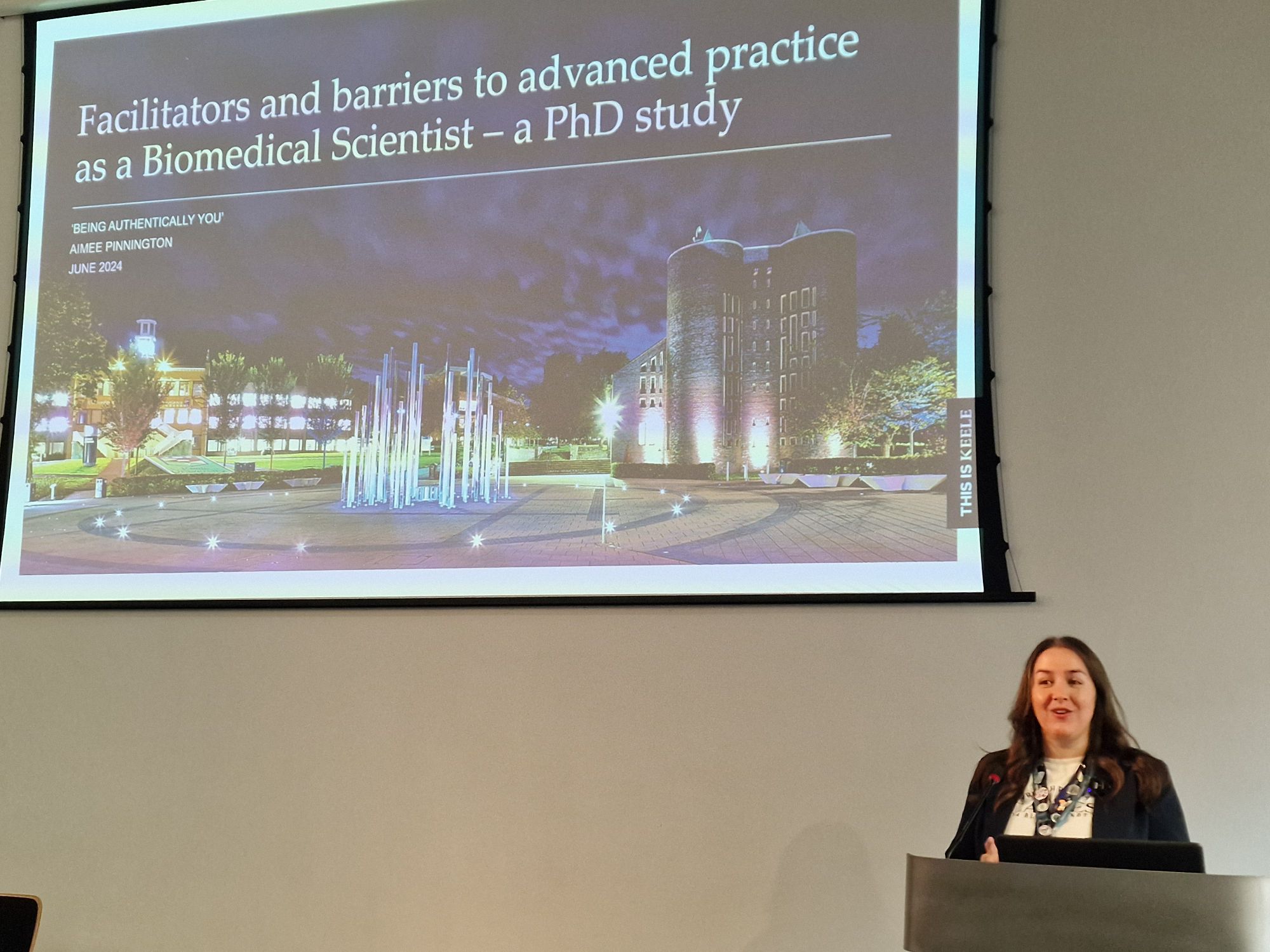
Barriers and facilitators in Healthcare Science careers – Aimee Pinnington (Keele University)

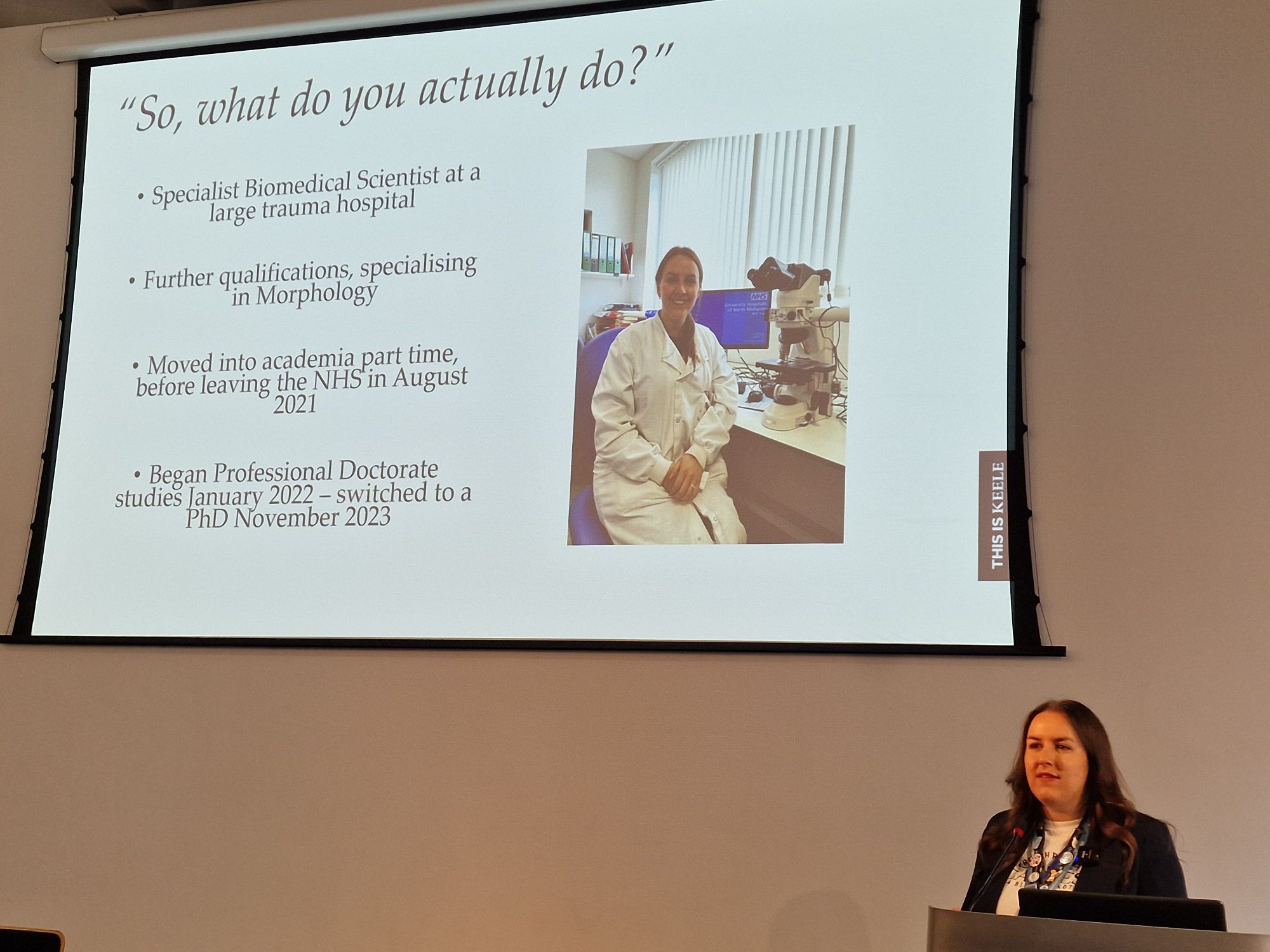
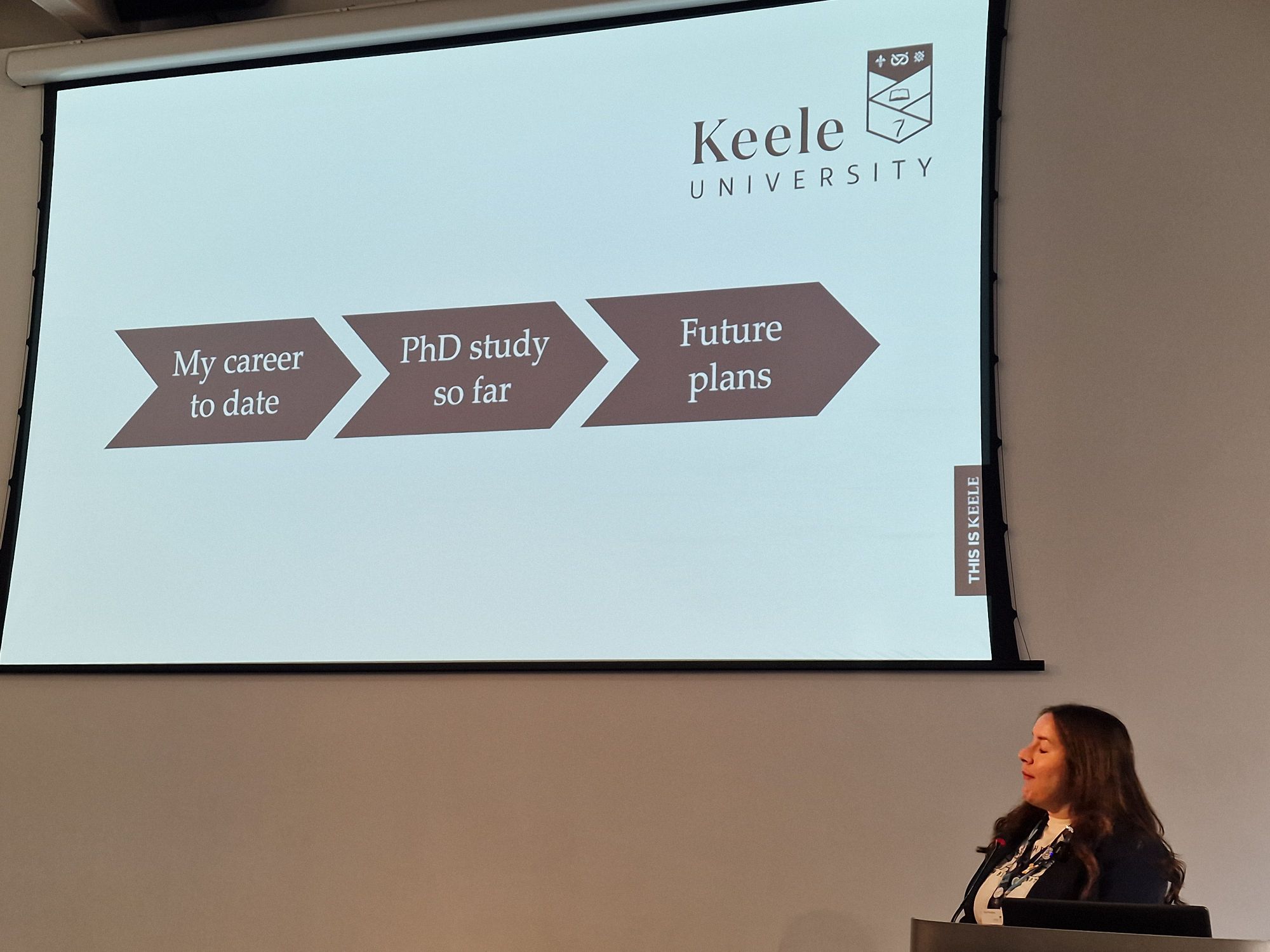
Aimee gave a superb talk covering her diverse career pathway, from her experience as a Biomedical Scientist to transferring to a professional doctorate. Despite a long list of achievements, unfortunately there was a lack of support from the department, building in barriers. After a move to a teaching fellowship, this lack of support continued, with additional barriers becoming apparent. This prompted a further move to a full time lectureship, Aimee began her PhD looking at how to improve biomedical science as a profession and empower the workforce.

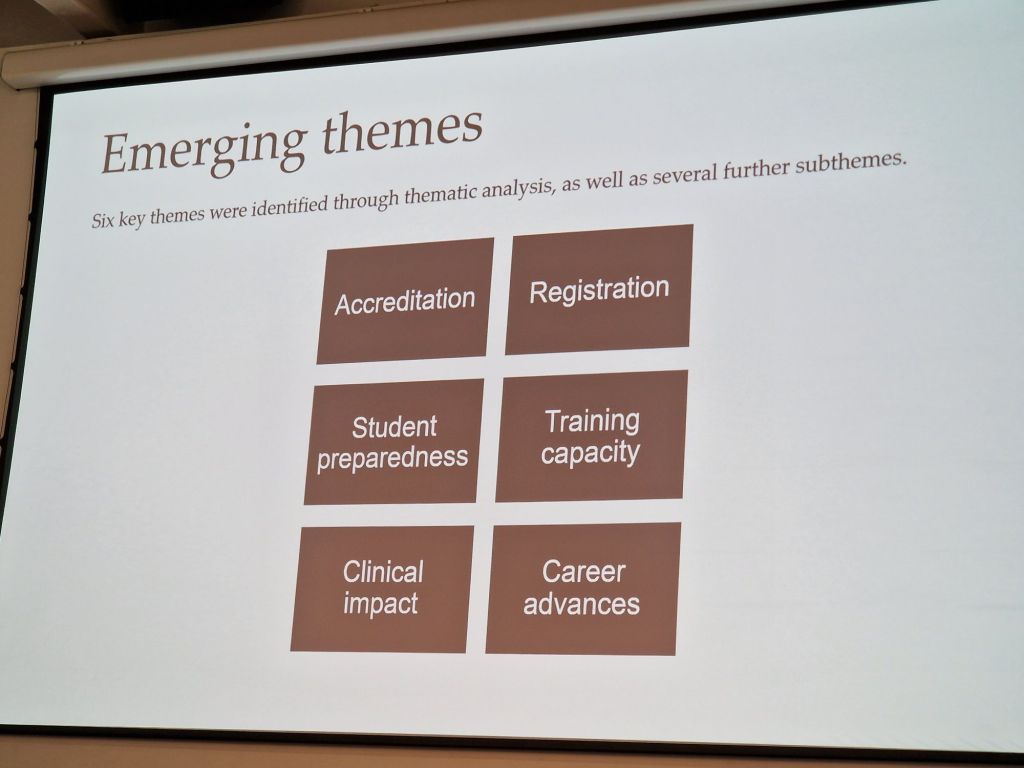
Her PhD research focuses on the impact Biomedical Scientists have on the patient, with there being a lack of direct evidence on the quantifiable impact on diagnostic pathways on patient outcomes. Furthermore, a lack of training posts and placement opportunities can hamper progression. There is further ambiguity of how to progress through the Biomedical Scientist profession to advanced roles. Her research has so far highlighted accreditation, registration, student preparedness, training capacity, clinical impact and career advances as key area of importance to the profession as part of focus groups.

Her research has focused on career advances in the biomedical science profession, which when done well and encouraged, can benefit all areas of the profession and support students entering clinical laboratories. To address this, the project is looking deeper into investigating behavioural traits that impact career progression. Are the opportunities clearly available? Do staff members feel empowered within their departments to take on opportunities for progression? It is also important to consider how barriers to progression change as someone moves through the profession, looking at how a trainee may feel compared to a more senior staff member.

Getting the room actively engaged in the session, a poll identified management support as a key barrier when done poorly, and excellent facilitator for progression when done well. One comment stated how there can be an expectation from managers for staff to progress, without actively facilitating this progression.

Blogged by Sam Watkin

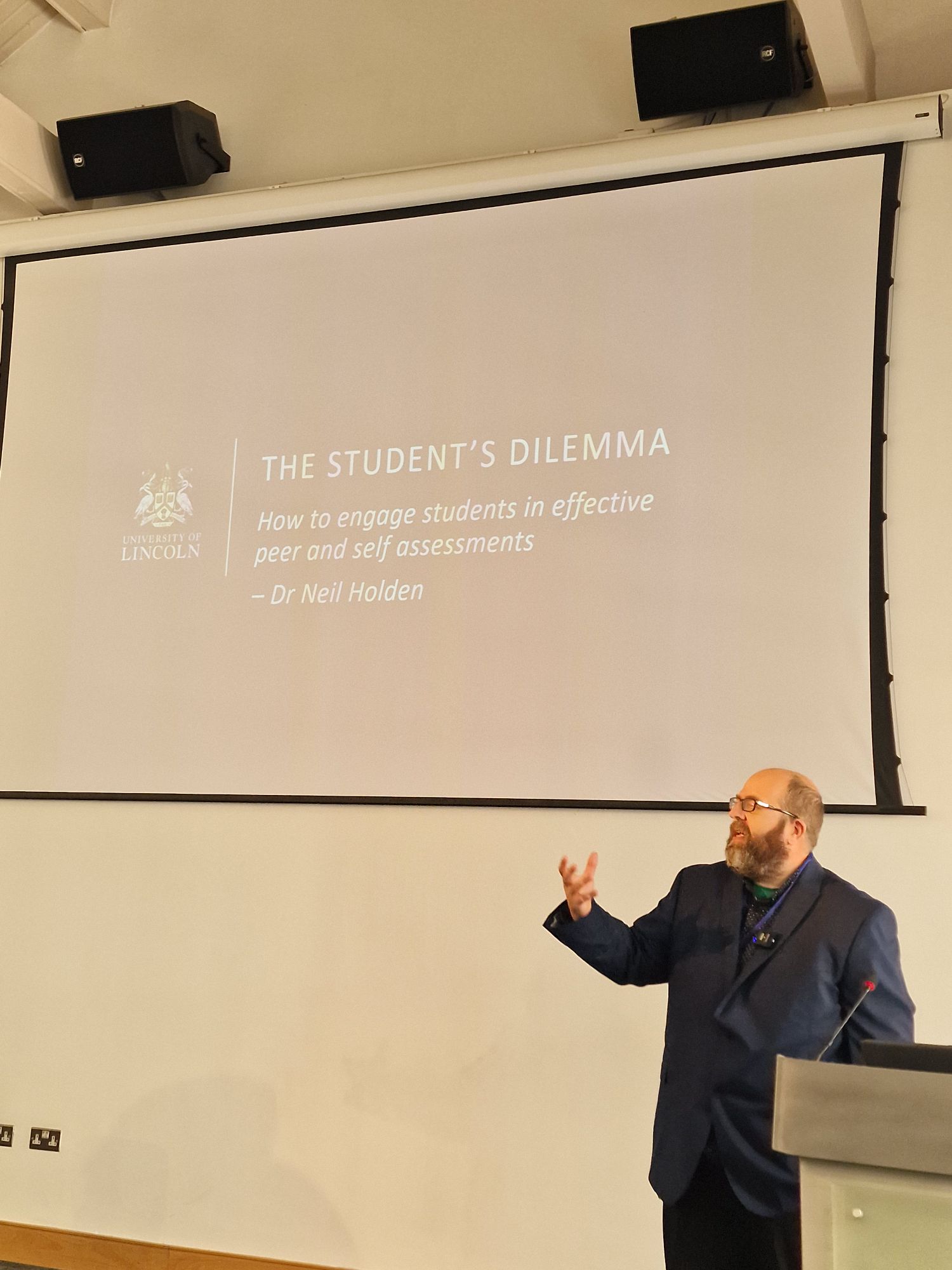
The students dilemma: how to reduce bias in student peer and self-assessments – Dr Neil Holden (University of Lincoln)

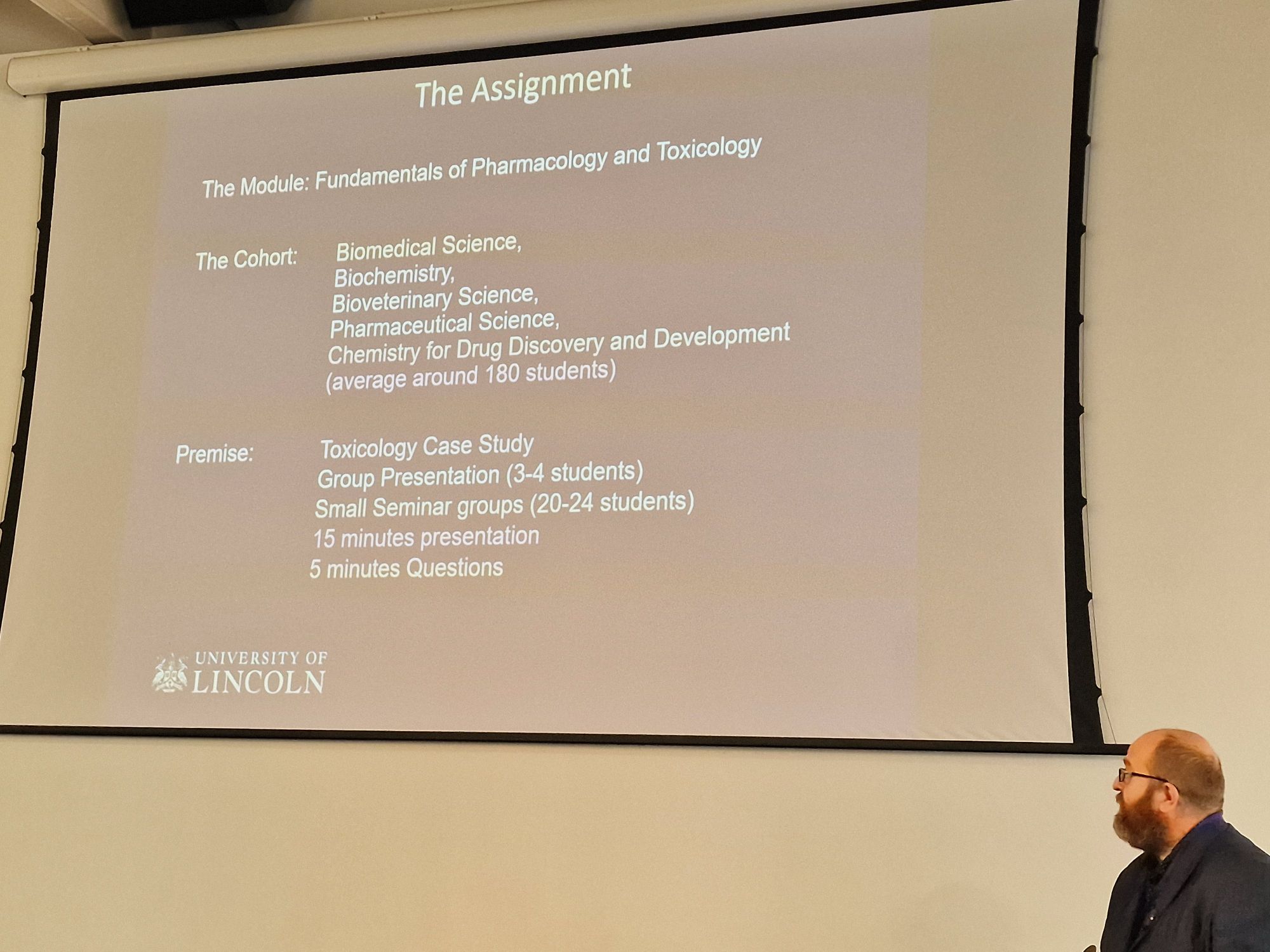
Neil brings a fresh perspective to the conference with a background of academia and international pharmaceutical industry experience. He’s passionate about what placements can bring to the academic journey. A key theme developing through our talks this morning is finding our barriers and how we can overcome them. Neil has been asked to talk today about authentic assessment and how to engage our students in this work. How we might bring them into the fold of University culture. We need to acknowledge how education is changing and how we can keep up. Neil feels an essential part of this is bringing the students into the process, and learning how they might assess themselves. The view inwards is becoming more important in this modern AI generated world.

Neil has instigated a peer review assessment in his popular Pharmacology and Toxicology module. Peer review is hugely beneficial – it has enhanced performance, and it massively helps with social skills and ownership. It can have greater impacts than even the lecturers feedback, when it is done well. But how can we ensure that it is done well? How do we identify and overcome bias to create an authentic assessment?

Neil’s approach to this covers around 180 students per year from a really wide range of disciplines – Bioveterinary through to Chemistry students. He makes use of real-world toxicology case studies and asks students to work on a group presentation in small seminar groups. Neil walks us through an arsenic poisoning case as an example of the materials the students engage with – it’s surprising just how funny the odd case of poisoning can be (!)

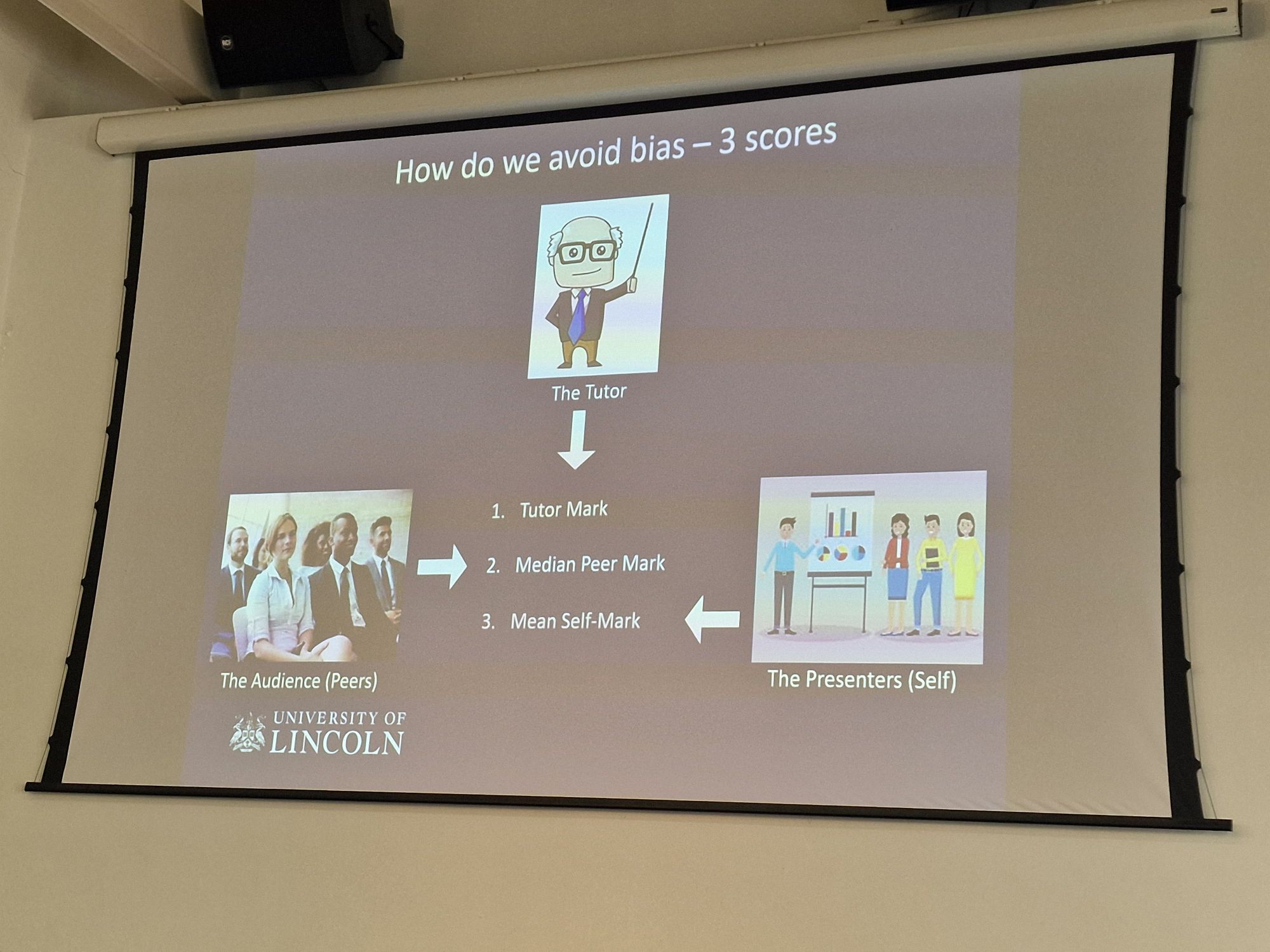
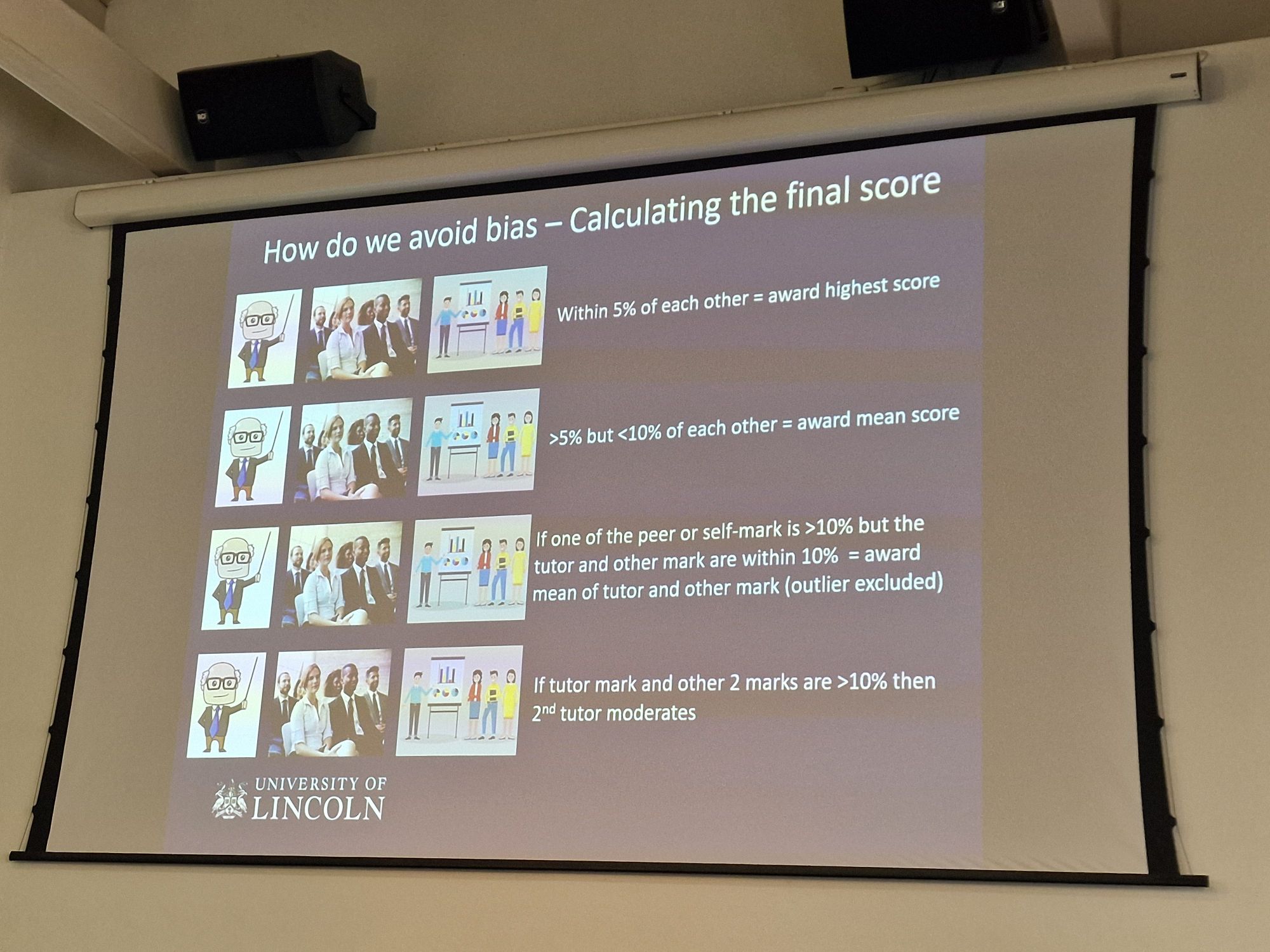
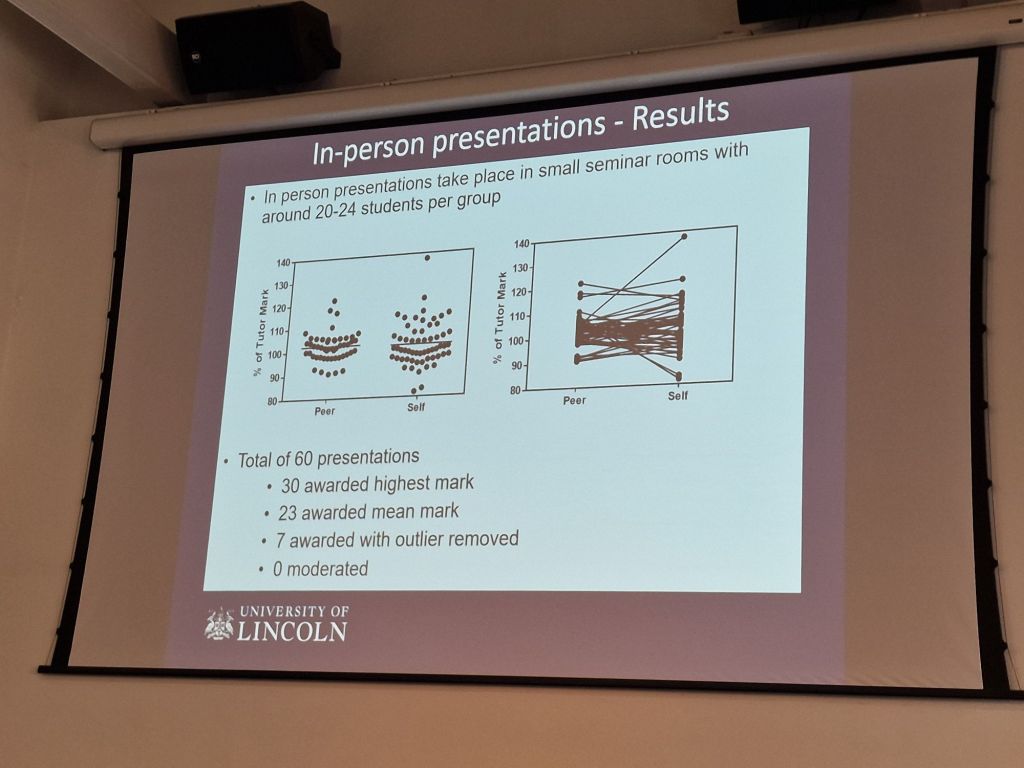
In this approach three different assessors are used; the tutor, their peers and self assessment. They all mark on a number of criteria, with the opportunity to add in constructive peer comments to justify their responses. To avoid bias in the marks the tutor mark, the median peer mark and the student’s self mark are all recorded. Calculation of the final mark is a fairly complex process! If all three marks are within 5% of each other, they get the highest of the three marks. But if they are >5% but lower than 10% they get the average of the three marks. Furthermore, if the self mark is >10% but the tutor and peer marker are within 10%, the mean of the tutor and the peer is awarded. This inventive process really encourages self reflection, and an understanding of the students skills in the difficult area of group presentation. and it works! Last year half the students were within 5% of Neil’s mark, whilst only 7 were awarded with the outlier removed. It’s amazing to see how rarely students are inclined to massively over or under estimate themselves.

Student feedback – they feel engaged, and just about all of them come out of it with a net positive experience. This is a second year module which really helps develop the students skill prior to their third year work. What a nice note to end the final session of the morning on! Authentic assessment leading to such positive benefits to our next generation of pathologists.

Blogged by Dr Claire Walker

Navigating educational comfort zones for impactful teaching – Dr Claire Walker (University of Lincoln)

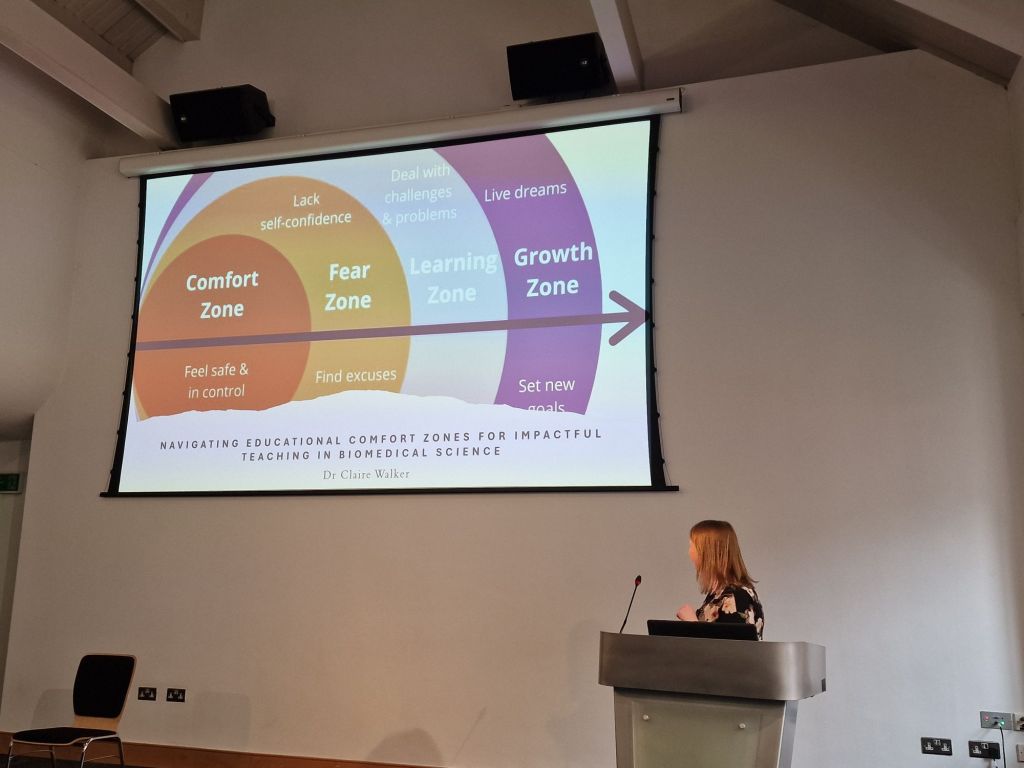
We are all being asked to do more with less, but that means we may need to acknowledge that this will require us to step out of our comfort zone. Comfort zones are about delivery teaching in areas where we feel relaxed and at ease – either linked to topic or style. Many of us who are of a Healthcare Science background feel comfortable delivering 1:1 training or teaching within the lab, this is less possible however if you end up teaching tens or hundreds of students. Claire is a paediatric immunologist, but acknowledges that in her current lecturing role she will only get to give teaching on that topic once a year, all of the rest requires her to become comfortable with stepping out of her preferred teaching area.

Although stepping out of your comfort zone has many benefits, as it expands and supports your learning, that doesn’t stop it being challenging. So how do you create an authentic learning experience? How does this relate to the education and learning that most of us experienced during our training, where most of us learnt from a didactic teaching i.e. standard lecture style, but that often doesn’t work for the topics or students of the day. Claire’s comfort zone is narrative style teaching where she uses stories to communicate, weird wonderful and gross stories, although memorable however it could still be considered didactic. Students love it, but sometimes they find it difficult to tie the stories they remember to the facts that they will need to be able to answer assessments and therefore apply it in practice.

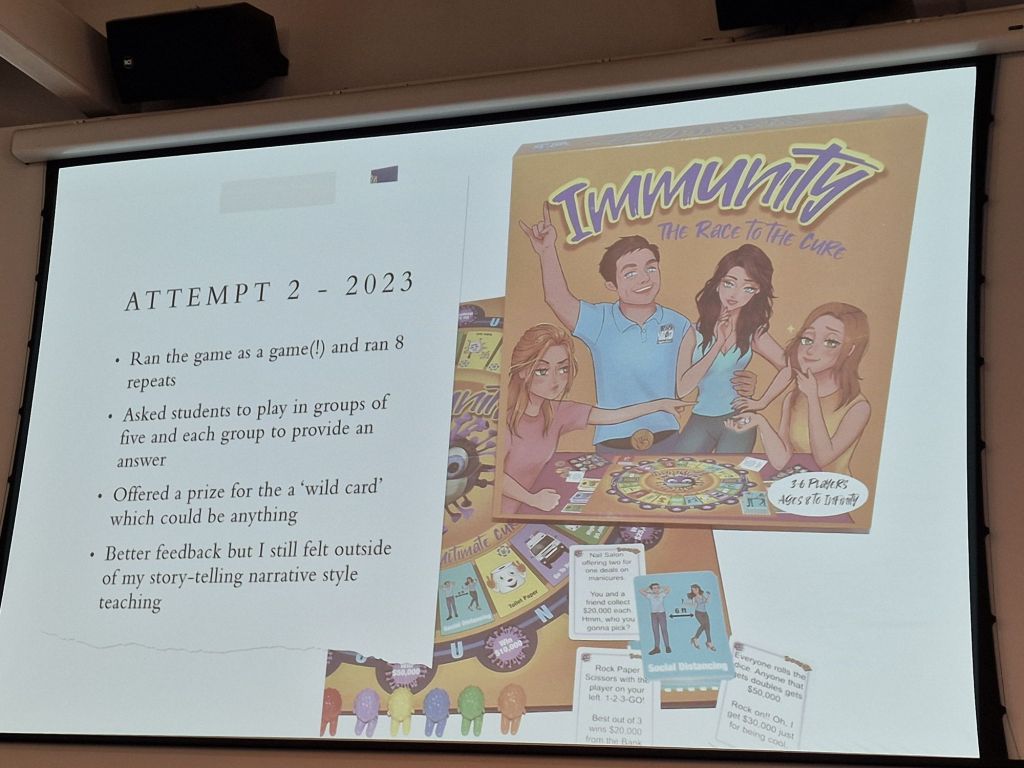
It was suggested by Neil (previous speaker) that it might be worth using an interactive learning approach based on a top trumps style gaming method. It was so out of her comfort zone that when it was first run she ran the game as effectively a lecture, that sat within her comfort zone, delivering for eight hours with limited engagement. It made her reflect that her comfort was actually impacting on what students’ experience of the session actually was. Some of the student feedback was positive, but some of it included that watching someone passively playing a game was not engaging, or that they felt uncomfortable interacting in big groups, which limited their participation. So, for the same session the next year she acknowledged that it did need to truly change. Therefore Immunity: the race to the cure was born. She made it really clear to students that this was an experiment and tried again. Students fed back that they really like the engagement but also gave extra feedback about how it could improve.

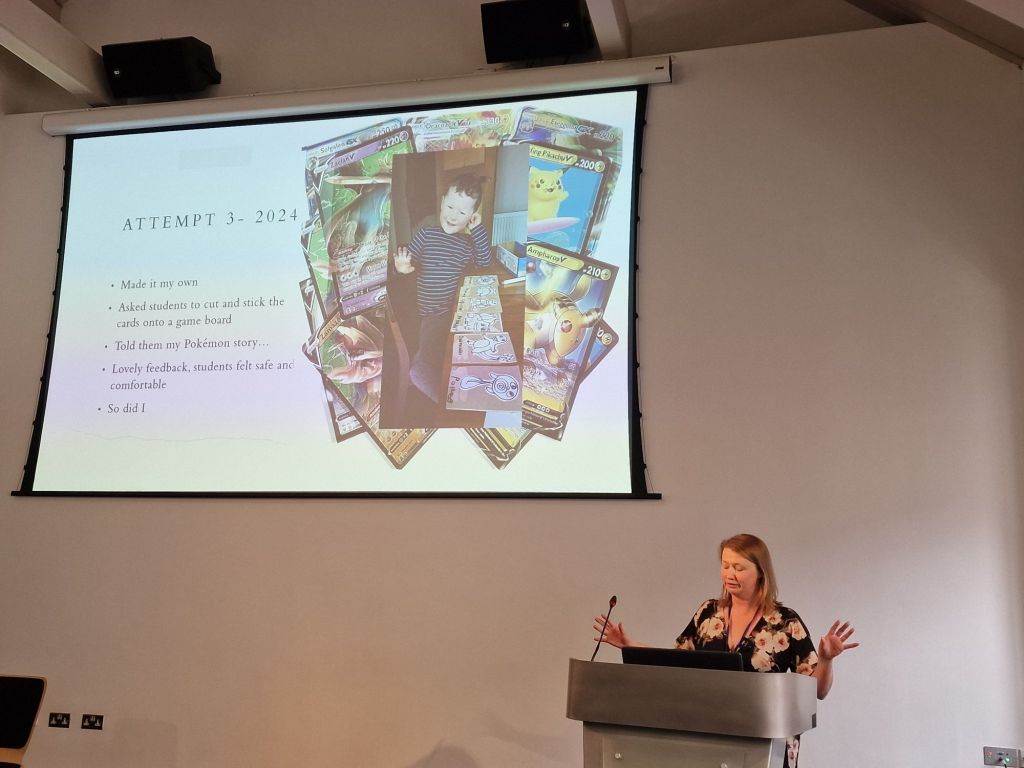
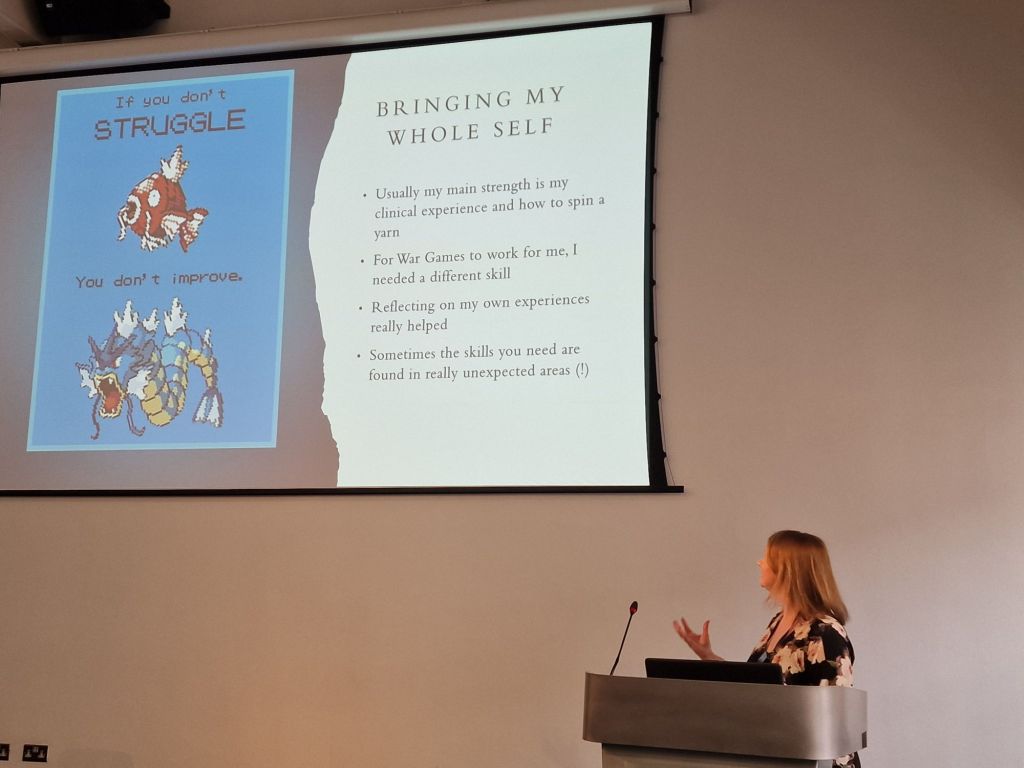
Version 3, Claire changed the way the session was constructed again, and put students much more in control of the session and the game. It vastly improved the student feedback, it improved their comfort and feeling of safety. The students now play the game in order to revise in small groups where they full interact with each other. Although, it still feels out of her comfort zone, the feedback makes it worth it. There is also a shared understanding that this is an iterative process where both Claire and her students need to reflect on the session and improving it, with Claire also focusing on why it felt so uncomfortable in the first place. It’s about expanding your comfort zone, but also about understanding yourself. As part of this process it’s really important to take on the feedback. Growing with that feedback, even if it’s bad, and even if it isn’t pleasant to hear. It is an essential part of any process. Learning to take on what serves you and using it to develop is the best possible approach for both yourself and for those you teach/train.

Blogged by Girlymicro

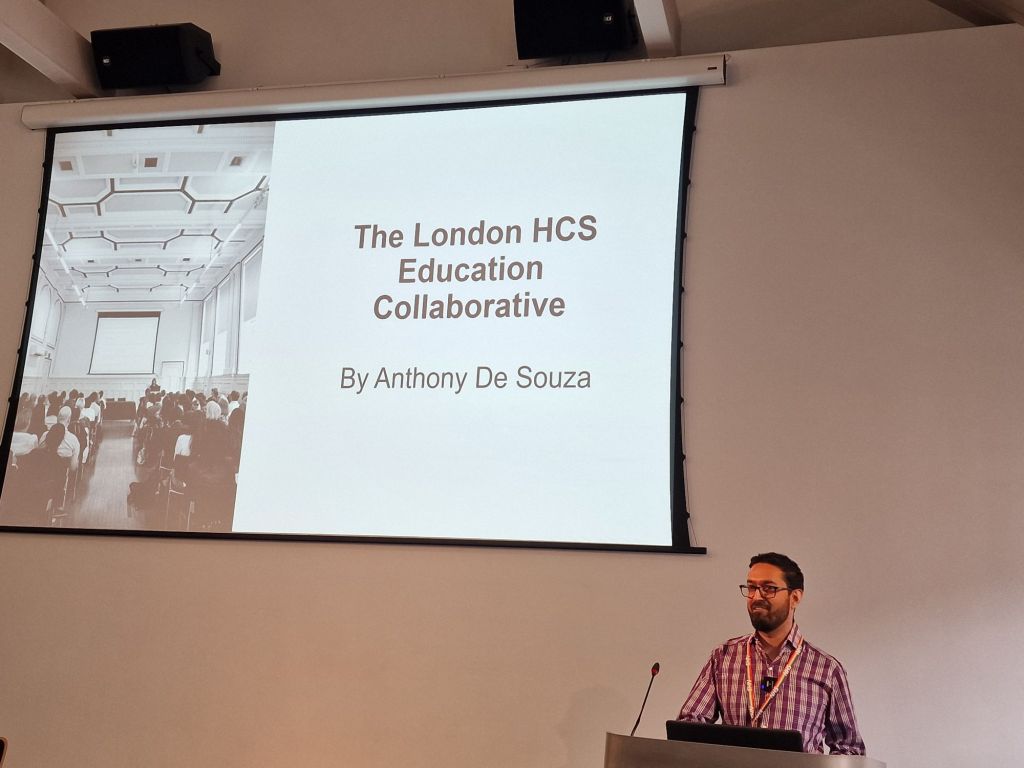
The London Healthcare Science (HCS) collaborative project – Ant De Souza (Great Ormond Street Hospital)

Anthony De Sousa (Lead Educator for HCS at GOSH) gave a wonderful presentation updating us around the work of London Healthcare Science Education Collaborative Project. This is a consortium of HCS at various London NHS Trusts who have secured funding to provide opportunities for HCS workforce education across NHS sites, with a focus on bringing people together to develop networks and to actively form collaborations. Ant illustrated the impact and reach this approach has had for London HCS.

Ant told us that the collaborative formed in 2018 as a result of a Healthcare Science Education event. Post pandemic it is has provided opportunity to re-engage with each other. He showed how, when viewed through the lends of authenticity, there were four key pillars of authenticity: Self Awareness, Unbiased processing, behaviour, rational orientation.

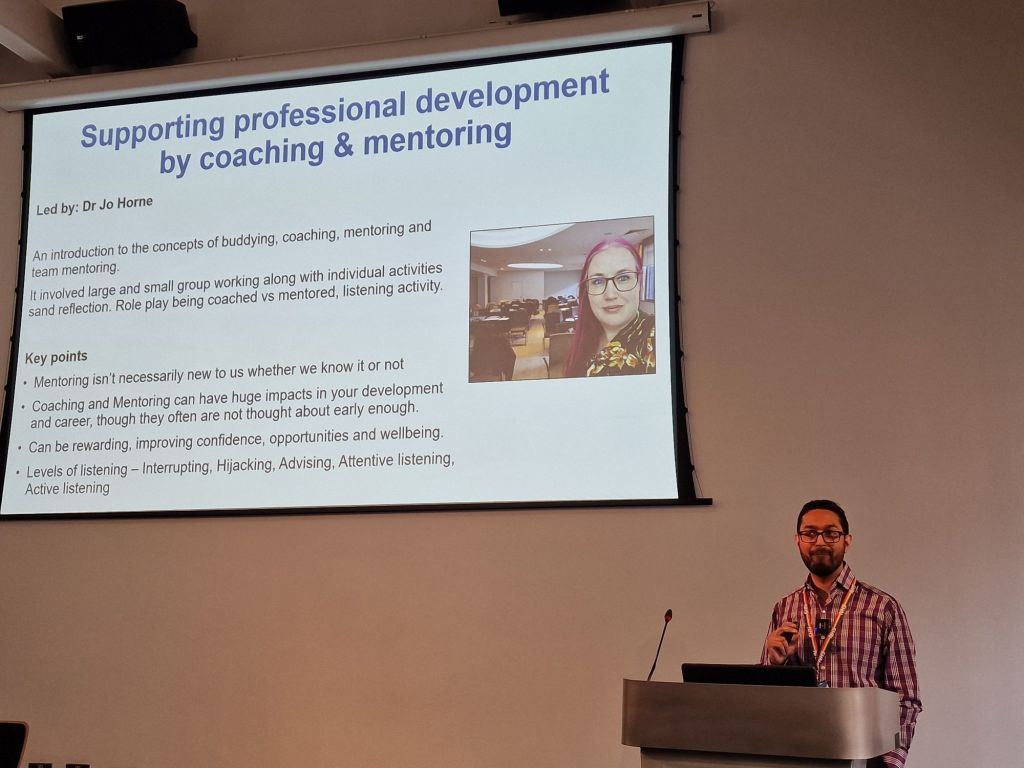
The first event was led by Dr Jo Horne where the concepts of buddying, coaching and mentoring (team mentoring) were introduced. There was small and large group working, alongside individual activities and reflection and listening activities. Ant showed that the learners feedback was overwhelmingly positive. He also discussed how many HCS have never been exposed to mentoring or coaching.

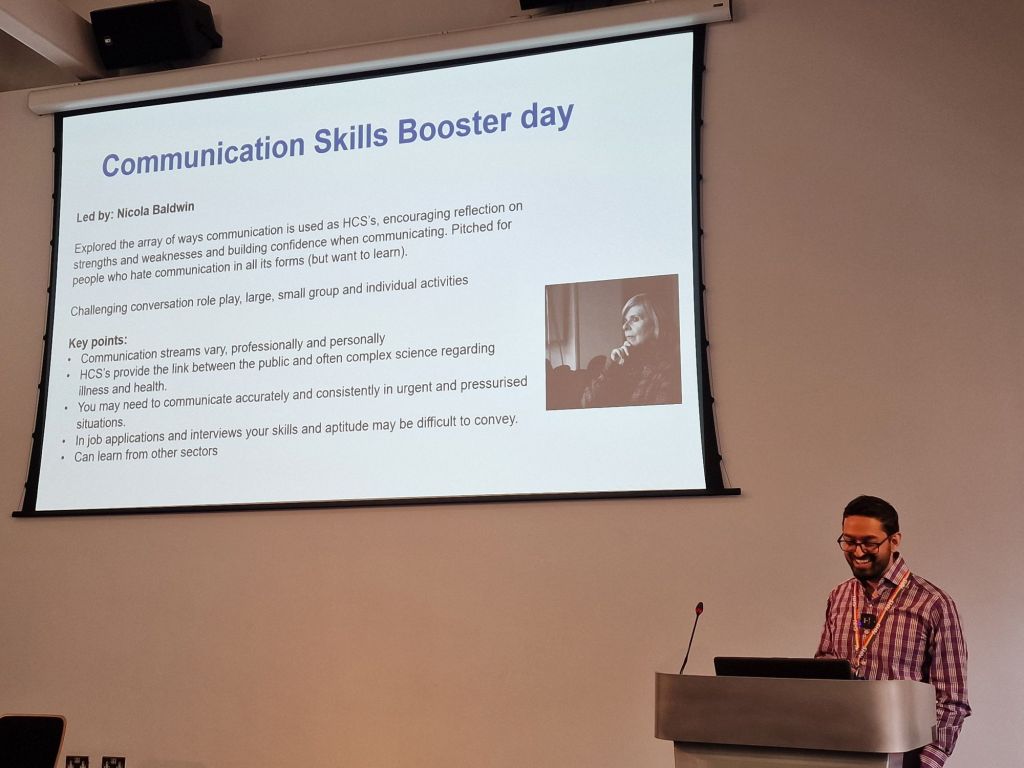
Event two was led by a playwrite called Nicola Baldwin. Nicola explored ways of communicating, encouraging reflection on strengths and weaknesses, and building confidence when communicating in all its forms. Challenging role play was utilised alongside small/large group and individual activities. The key points from learner feedback was that HCS already communicate in different ways in different situations but had never reflected on this and understanding how those decisions were made. Overwhelmingly, learners felt reassured that others were in similar situations with in difficult communicative arenas.

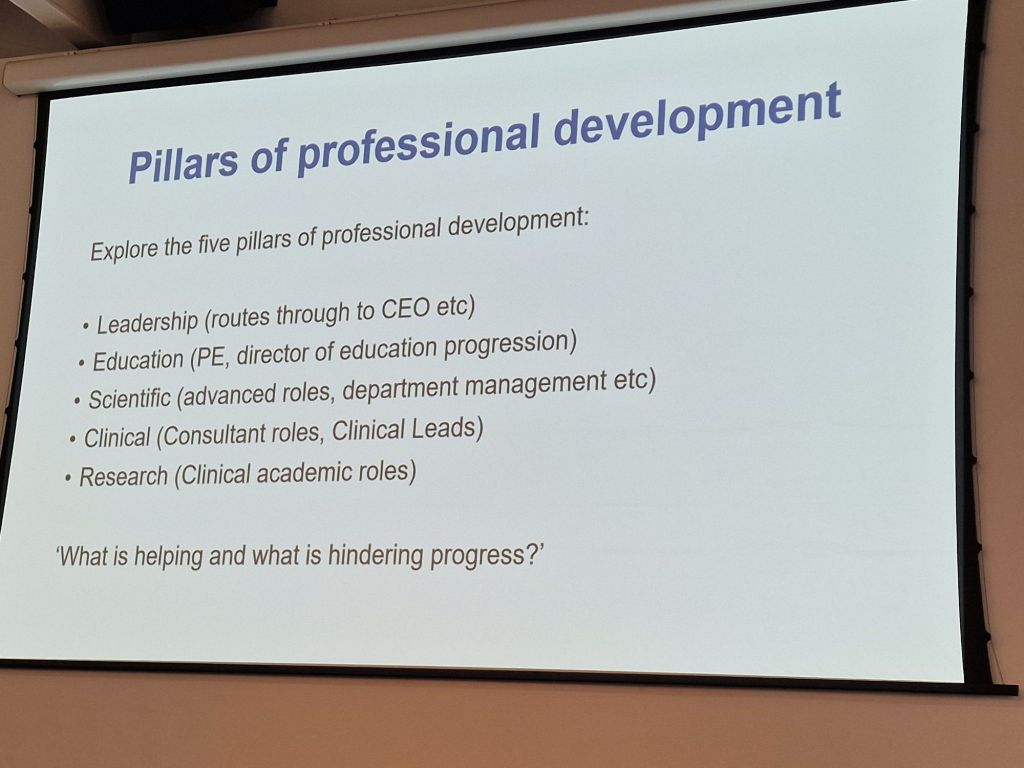
Event three focused on the pillars of professional development:

  • Leadership
  • Education
  • Scientific
  • Clinical
  • Research

Key points included:

  • Senior staff wanted more strategic leadership, educational development and inter-professional education
  • Juniors wanted sessions on career pathway progression, technical and digital skills, resulting and analytical skills

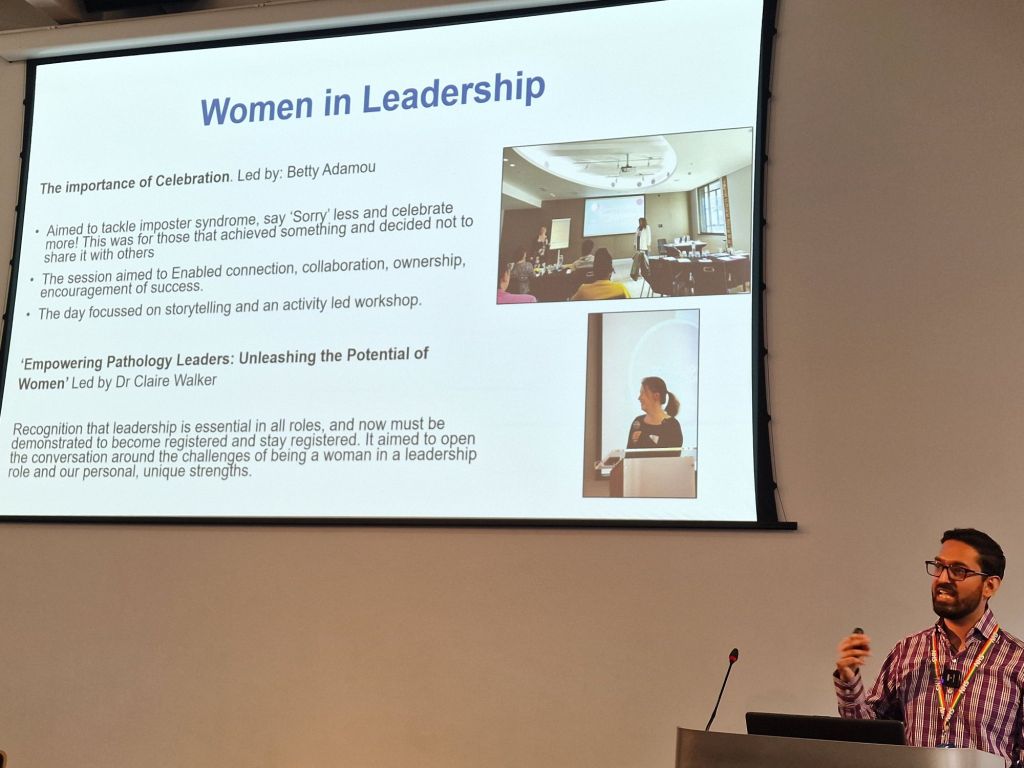
Event 4 on women in leadership was led by Betty Adamou and Dr Claire Walker. This session aimed to tackle impostor syndrome, encouraging women to say sorry less and to celebrate more. Sessions aimed to enable connection, collaboration, ownership, and encouragement of success. Ant shared that learners at this event felt empowered and had never encountered a celebratory event like this before.

Ant summarised the benefits felt by HCS learners who attended all the events:

  • Self-awareness – learners worked out how they react, what their values are, and how not to work against themselves (Johari Window)
  • Unbiased processing – learners were able to objectively self-assess without blame or denial. He showed how attendees learned to hold themselves to accountability and to not to get in their own way and filter out noise
  • Behaviour – Learners explored their values and if they were crossed how they would react. They learned how to be aware of the way they are reacting
  • Rational Orientation – attendees learned how to develop close relationships & have difficult conversations.

Ant summarised that learner feedback during these sessions indicated that they:

  • Wanted to feel seen and heard
  • Valued a sense of belonging
  • Were seeking connections
  • Valued time for self reflection
  • Thrived in a supportive space.

Blogged by Dr Stuart Adams

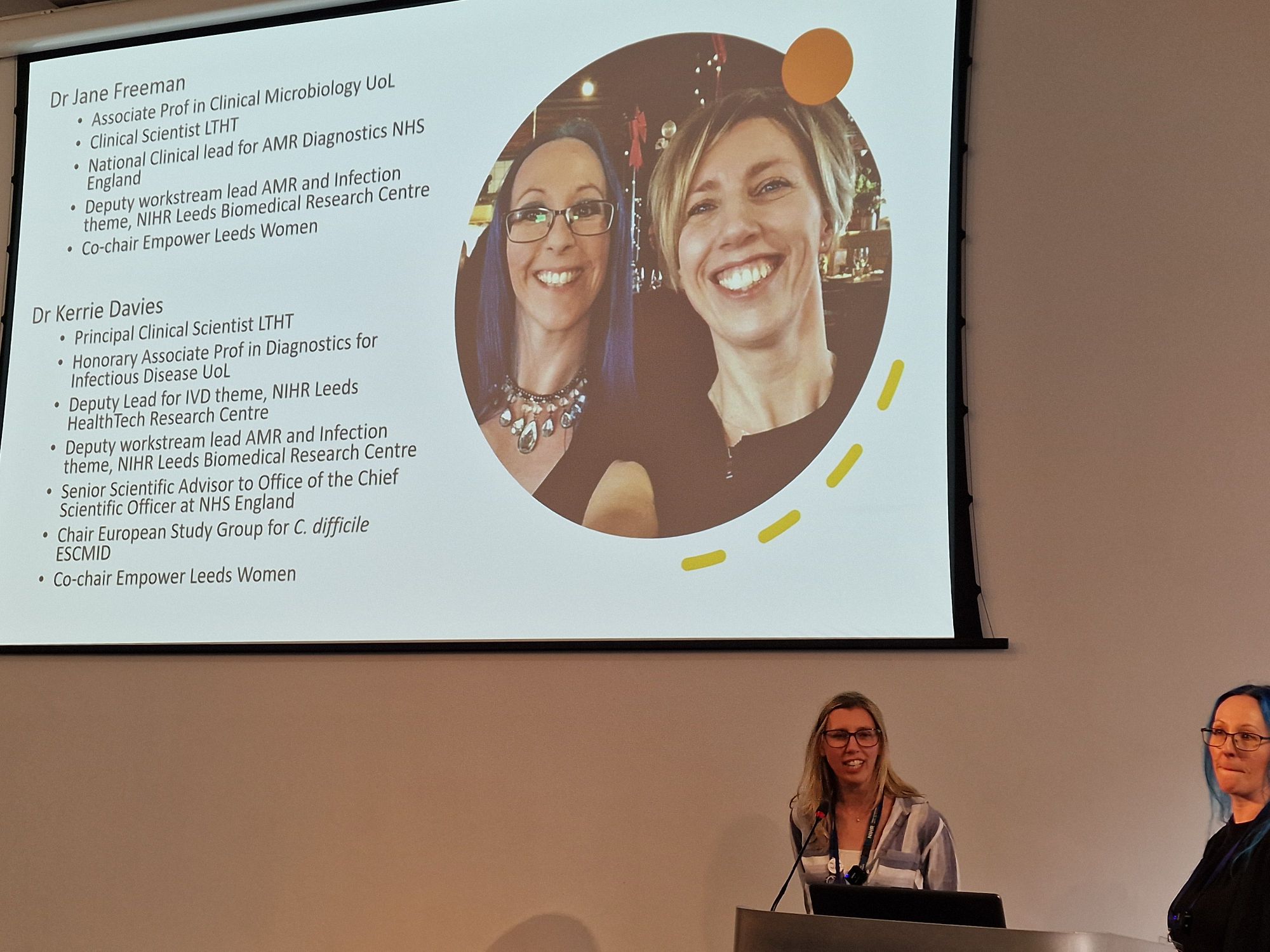
Being authentically us – Dr Jane Freeman and Dr Kerrie Davies (Leeds University)

To close the day we had the incredibly inspiring duo of Jane and Kerrie talking about how we are more than the sum of the professional hats we wear, and why it’s important to acknowledge who we are as people, not just professionals. They also emphasised the importance of giving yourself time and the use of tools to reflect on who you are, both as individuals and leaders. Not just because this is important in allowing you to find your place, but also in order to understand how it might impact how we interact with others. It’s also important to appreciate how much strength there is in diversity and bringing all sorts of different approaches together for the best possible outcomes.

This was such a brilliant way to end the day and to encourage us to think more, strive more and be more. Thank you to everyone who contributed to the day, but also to those who guest blogged today. You guys are the best! We hope you can join us next year for #HCSEd25!

All opinions in this blog are my own

It’s All in the Preparation: My top ten tips to help prepare for your conference presentation

I was presenting at my first conference of the year last week, which is a sign that conference season is soon to well and truly kick off. I know that this often puts many of us in a state of anxiety. We know that conference presentations are important for both getting our work out there and also for personal and career development. Presenting however, can feel like quite a high stakes manoeuvre, especially if you are not comfortable with public speaking. With this in mind I thought it might be useful to share some tips that I have learnt, in the hopes that it might help with your next upcoming session.

1 – Know your audience

The first thing to realise is that we often make presentations about us, when actually they aren’t really about us at all, they are about the audience and what we are trying to achieve on their behalf. We are often given a fairly generic topic to speak on, or have submitted an abstract of what we wish to present. That’s great but actually probably doesn’t have enough clarity to start putting together the session. My first step whenever I’m asked to speak is to think about the learning objectives for the session. What might benefit the audience most? What are they expecting? Learning objectives act as a guidepost, and I will usually include them with the blurb I’m asked to write for the agenda. This means that people selecting their sessions will be able to make an informed decision about whether your session will work for them. Are you pitching an introduction level session or an update on the latest research that assumes pre-existing knowledge? You want to match your pitch to the audience that you are expecting.

It is also worth thinking about what kind of atmosphere is likely to be present? Is it a fairly informal setting where the session will be more discursive or is it a formal conference session where you may need to prepare for possible confrontational questions? Prepare for questions and queries whilst you’re preparing your session, try to think about the rabbit holes that the audience might want to go down and for any potential pitfalls where you will need to have a pre-prepared strategic response. If you’ve been clear about what the session covers and audience pitch this should be less of an issue, but it’s always worth being prepared.

2 – Be prepared to bring your authentic self

One of the things I’ve come to truly believe is that, no matter how formal the session, you should bring your whole self to it. I’ve written previously about how we should feel free to wear clothes that empower us, and conference sessions are no different. This can be something as simple as wearing your favourite colour, but whatever it is, delivering talks is easier when you feel good and empowered so do whatever you need to feel that way. My top tip is that whatever you decide to wear, ensure that it’s comfortable. I used to wear heels to speak but now I always wear flats, as I’ve decided that the pain isn’t worth it for me, especially when you consider how long you will be networking after your session.

The other place were I try to ensure that I also include something that is a little bit me, is within the presentation itself. Again, this can be levelled dependent on setting, sometimes I just choose a colour scheme or icon that speaks to me. Other things you can include are quotes or images that are meaningful to you. Again, it doesn’t have to be something big or in the face of your audience, but something that centres you and makes you feel more like you own the space you are presenting in. Sometimes however going big is the way forward, sometimes making something memorable is the right approach, it all depends on your confidence level and the setting.

3 – Judge your session

I’ve talked up above about thinking about how informal/formal the setting you are presenting in and how this can impact on your content. There are however other things that are beneficial to think about in terms of expectations for your setting. The type of session will dictate a number of things, as will time slot and room allocation. If you know the venue you are going to you may be able to predict numbers of attendees for instance, if you are allocated a room you may be able to find out whether its for 15 people versus 1500. High numbers of attendees will limit your options for interactions, as will being given a 15 minute time slot.

Common types of sessions include:

  • Debates
  • Research presentations
  • Topic presentations
  • Workshop
  • Plenary or keynote
  • Speed presenting
  • Poster presentation
  • Careers presentations
  • Panel sessions

There are obviously others but these are the main ones that spring to mind. Just from looking at the list you’ll be able to see how different ones will attract people with different levels of pre-existing knowledge or interest. There are some key questions that are worth asking to help you support judging your session when the email comes in. First, always confirm length of session and whether or not this will include time for questions. Second, ask about number and types of attendees both for your session and the target audience for the conference/meeting itself. Finally, as this will impact your options for engagement with large audiences, will there be free Wi-Fi available for attendees so they can access voting apps? Don’t feel like this information should confine your creativity and what you want to undertake but build any limitations into your thinking in order find solutions ahead of time. Finally, please please please never be the person that delivers a 40+ minute talk despite being given a 30 minute slot.

4 – Use the agenda to guide you

Once the agenda is released and you’ve starting to build the content of your session you can also use it to help in your preparation. Your timing and position on the agenda can influence the build of your talk. If you are directly after lunch, you might want to think harder about the engagement side to wake everyone up and get them back into the flow. If you are just pre lunch, you might want to stack some of your more exciting parts towards the end and build towards them to ensure you keep the audiences attention. If you are going first or last you probably need to start and finish with a bang. 

The other area where the agenda can really help you is to see what others are covering, especially if they’ve listed any focuses or learning objectives in their descriptions. This may mean you can get valuable slides back if someone is talking on a similar topic ahead of you, and will therefore have given a lot of similar introductory slides, thus giving you more time to build on the subject in your slot. It can also give you ideas of areas to avoid, so that you don’t give too much overlap. One of the things to not do is be intimidated by anyone else on the agenda. If you are speaking/presenting you have earned the right to do so, it doesn’t matter if the person before you is Dame X or Professor Y, acknowledge what that might do to the atmosphere in the room (i.e. may mean you have a larger audience) and then plan as if they were any other speaker.

5 – Have a plan on how to engage attendees

Engagement can start before the event even begins. If you have a poster session for instance, you might want to share a picture of your poster and it’s location on social media. Sometimes I also find running polls can help with working out pitching your session, and also in building engagement so that you are more likely to get an audience. This can be especially important if your session is at an event where there are multiple sessions running at the same time and therefore you almost need to sell why someone should comes to yours when there is so much choice available. Taking some time to raise awareness via social media using the event # can be really beneficial under these circumstances.

Depending on the availability of Wi-Fi and session details you may also want to consider using tools or apps to support interaction with the audience during your session. You can use tools such as Mentimeter and Slido to build voting or other forms of interaction into your session. This approach is especially important if you are asked to do a workshop session. It’s also worth asking additional questions during the prep phase, such as the type of seating, to see whether it would support group discussions.

Even if you are giving a standard presentation without interactive tools you still need to think about how to engage your audience. There obviously many different ways of doing this, starting from basics like pitching correctly so you bring your audience with you. If you can bringing yourself to your session by using framing such as story telling it can really help, alongside the use of humour. You can even think if there are props that would be appropriate to support what you’re talking about, although you also don’t want to make it gimmicky. Whatever tool you feel comfortable with, practice using it as it will make sure your session is more memorable.

6 – Make sure you have a plan B

Things go wrong, they do, despite your very best endeavours. Having a plan B in your pocket never hurts. This can be as simple as having a USB with your slides on it with you in case they haven’t managed to load it before you arrive. If I’ve included videos or anything else ‘fancy’ in my presentation I will always have a plan B and C. Plan B is an extra copy of my talk without the ‘fancy’ bit in it in case it doesn’t work when I test with the AV tech ahead of my talk. Plan C is a script in my head that I can use to describe the video in case it worked on test and suddenly fails during the real thing. If I’m doing a smaller session, I will also sometimes arrive with print outs of my slides so that I can approach it old school if needed.

Having a plan B is especially important if you are using voting or something tech related. If your entire session is going to be based on audience participation you need to have a plan if no one there can get signal or access to Wi-Fi. It’s worth building this flexibility in when you are developing the session so you will not need to entirely wing it if the unexpected happens to you.

7 – Be prepared to push yourself

I’m just throwing this out there. You should be prepared to push yourself into a space where you feel uncomfortable. Growing your skills is a never ending task, even if you feel like you are a pretty good public speaker, there are always things to learn, improve and do better. Sometimes the very act of speaking is a sufficient push because it’s not an area in which you feel comfortable. If you are comfortable talking ‘science’ maybe also stretch yourself by bringing more of yourself into the session. Embrace the creative possibilities and strive to have more impact, build better engagement, be more memorable. Read and research on the topic of how to present better in the same way that you would read and research your content and find inspiration about the next thing you could try.

8 – Facilitate a relaxed state of mind

Having just encouraged you to step out of your comfort zone by planning your presentation I also now want to encourage you to remove the stress that can be present outside of the speaking component itself. I speak from experience. I once agreed to speak at 2 conferences on the same day, on different topics and in different cities. This was beyond foolish. There simply wasn’t enough time to get from point A to point B and I arrived to land on stage for the second session with 1 minute to spare. I’ve also learnt that travelling up on the day of a session doesn’t work for me, it just makes me too stressed. I now will always travel up the night before, even if I arrive really late, because then I can go to sleep knowing that I’m where I need to be rather than lying awake all night stressing about whether an act of god will stop me making it to my session.

I also comfort myself by reading up on the areas that I have identified during my gap analysis that I might get questions linked to, or to reassure myself – even if it’s a topic I know really well – that I have up to date information and references. Feeling like you are walking up to a podium prepared is the best way I have to remove any of my stress linked to presenting.

9 – Plan to do your own timing

This is one I have learnt the hard way. I don’t like clocks present in the corner of a screen when I’m presenting as I want to be looking out at the audience and connecting when I’m speaking not constantly looking down at a monitor, probably slightly influenced by the fact that I don’t use notes as it enables me to feel more organic. I know some of you will feel differently. I’ve learnt to manage this by having a phone with a big clock (on silent) with me when I present so I can see it as I move around. I know that there will often be Chairs or speakers who will signal when you have 5 minutes left. I personally find that I need to pace my session throughout, as otherwise at 5 minutes I could be left with waaaay too much to cover, and so I like to time check myself. The final reason I do this is that I have been caught out. I’ve turned up and started a presentation and realised there was no clock or timing device visible anywhere. The panic, for me, at that point is real people, it’s a real stressor for me. You may have a different thing that triggers you, but once you identify what it is, do your best to have a plan to redress it so it doesn’t distract you from the moment you are in.

10 – Use the opportunity to build your networks

This last one I think is really important, if you are given the opportunity to have a platform use it! No matter how nerve racking it is, no matter how much you may not like presenting. In fact, if this is not your naturally comfort zone all the better, go out and seek opportunities that enable you to do it more. With practice comes familiarity and skill development. Don’t feel alone in your discomfort, but do know that there will be something in you that can inspire and give confidence to others. The world needs to see more people like you, whomever you are, especially if you have the courage to bring some of yourself to the podium. There is not enough diversity present on agendas and that is something that needs to change, and we need to have the courage to do that together as a collective.

The other thing to bear in mind is that so much within health and science is dependent on who you know. It’s probably not fair but it is true. Connections and networks are where you gain invites and opportunities, and presenting and meeting people is a big way to build these relationships. Whether you do this by following the hashtags for the event on social media, by speaking to those presenting or partaking in networking and social events at the meeting, networking is key. For those of you, who like me, find networking challenging I’ve previously written a post which I hope might help, but presenting is often an easy way to do it as people will come to you and you already have a shared interest through the topic. Whatever your level of networking comfort it’s worth putting in some time ahead of the event to think what your strategy might be, and who you might want to catch up with.

I really hope that this post will help support you, no matter how many presentations you’ve done, to bring a little bit more of who you are to the room you are presenting in and to be a little bit braver in some of the choices you make when developing sessions. I also hope that by sharing some of the learning I’ve gained by making mistakes, or making life harder for myself, that you won’t make the same ones. If you have any other top tips that you’ve gained to support presentation preparation then please do add them in the comments. See you at the podium!

All opinions in this blog are my own

If you would like more tips and advice linked to your PhD journey then the first every Girlymicrobiologist book is here to help!

This book goes beyond the typical academic handbook, acknowledging the unique challenges and triumphs faced by PhD students and offering relatable, real-world advice to help you:

  • Master the art of effective research and time management to stay organized and on track.
  • Build a supportive network of peers, mentors, and supervisors to overcome challenges and foster collaboration.
  • Maintain a healthy work-life balance by prioritizing self-care and avoiding burnout.
  • Embrace the unexpected and view setbacks as opportunities for growth and innovation.
  • Navigate the complexities of academia with confidence and build a strong professional network

This book starts at the very beginning, with why you might want to do a PhD, how you might decide what route to PhD is right for you, and what a successful application might look like.

It then takes you through your PhD journey, year by year, with tips about how to approach and succeed during significant moments, such as attending your first conference, or writing your first academic paper.

Finally, you will discover what other skills you need to develop during your PhD to give you the best route to success after your viva. All of this supported by links to activities on The Girlymicrobiologist blog, to help you with practical exercises in order to apply what you have learned.

Take a look on Amazon to find out more