Remember, Remember! Step back in time to save the King

Join Us to Help Celebrate National Pathology Week 2020!

Remember, Remember!

Remember, remember the fifth of November.

Gunpowder, treason and plot.

We see no reason

Why gunpowder treason

Should ever be forgot……

What can you do to help our scientists who’ve been sucked back in time to 1605 to find the gunpowder plotters and help Princess Elizabeth?

Full play on YouTube, scripts and activity packs are available here

Join in our digital competition, watch the play and complete the activity packs to help the Healthcare Science Education Team celebrate the work of Healthcare Scientists and the work they do for patients and families!

2018 Cast Rehearsal Photos by Rabbit Hole Photography

Watch the great play by Nicola Baldwin (2018) Remember, Remember! on our YouTube Channel (available Friday 30th October)

See how your hard work can help our scientists by completing the activity packs that accompany the show (download links below)

Also

Take photos, record a video or create other content (blog, tik tok, artwork etc) linked to your completed activities OR answers one of the following questions for a chance to win a £50 Amazon voucher!

–           What do I think of when I hear the words microbiology / bug?

–           What does antimicrobial resistance mean to me?

–           What will antimicrobial resistance mean for my family?

–           Are bugs good or bad?

–           What do I think scientists do in hospitals?

Email: we transfer your entries to hcs.education@gosh.nhs.uk by Sunday 8th November

Lily, Rosa and Frank are Healthcare Scientists working in the laboratories. They work to help patients understand what is making them unwell, or to help with making them better.

It’s November and there is fog hanging in the air. The leaves have begun to fall and the street lights have started to come on by the time they leave work.

Scientists often work late into the night and Lily is waiting for Rosa and Frank to finish for the day.

Whilst waiting for them she decides to run one more test using her favourite piece of lab equipment, a MALDI-ToF she’s called Bonnie.  Bonnie is a pretty cool piece of equipment: it has a laser and can get a result for Lily in less than 5 minutes for something she used to have to wait 2 days for.

Just as she presses the big red button, Rosa and Frank walk through the door to the laboratory.  Suddenly a message appears on the screen, where no message should be saying ‘HELPE…’

Then the message changes and gives an address at the top of Lamb’s Conduit Street and what looks like a map.

Lily is so surprised she jumps back and tries to turn Bonnie off, but the machine doesn’t respond and the message just stays on the screen.

Not knowing what to do Lily, Rosa and Frank decide to leave the lab and find somewhere to sit and chat to work out what might have happened;, After all this is a piece of scientific equipment not a computer game.

As they leave the lab, they are suddenly surrounded by the fog they had seen outside the window until they can barely see what’s in front of them.

As they walk towards where they believe the tube to be, they suddenly realise they are on Lamb’s Conduit Street and the fog begins to clear.

A child is waiting. She has a Scottish accent and demands they call her Princess Elizabeth! They must all bow to her!

She tells them there is a plot to get rid of her father by blowing up the Houses of Parliament. The scientists are amazed – do you mean the Gunpowder Plot of 1605?

She says she will tell them later how she managed that.

Even then, they don’t believe she is a princess….

But she is 

Remember, Remember! by Nicola Baldwin 2018

The scientists must find a way to help Princess Elizabeth find the Gunpowder Plotters. Then maybe they’ll be able to find out how to get back to 2020!

The scientists have asked you to complete a number of activities in order to help them find the plotters.  You are the detectives, guiding the scientists so that they can get home.

Complete the following activities and we’ll find a way to get the results back in time to the scientists in 1605.


Your Starter for 10: Antimicrobials

After my sojourn in my Ivory Tower on Friday, I wanted to get back to posting about antibiotics this week. Although I only really intend to post once a week, I thought it might be useful, if I’m going to be posting about antimicrobial resistance (AMR), to post a little bit about what an antimicrobial is.

What is a microbe?

My husband reminds me I use a lot of words interchangeably; That can make it hard to follow. First of all, I should explain that microbiology and microbe are ‘cover-all’ terms, including viruses, bacteria, parasites and fungi. You can then sub-group within that and talk about parasitology, virology, bacteriology and mycology (study of fungi).

What is an antimicrobial?

Antimicrobial = a medicine that inhibits the growth of or destroys microorganisms  

Antimicrobials don’t just work against bacterial, they work against microbes (hence the name). That said, one antimicrobial won’t work against all sorts of microbes – it’s just a generic cover-all name. Specific groups work against specific types of microbe:

  • Antiviral = works against viruses
  • Antibacterial (often called antibiotic) = works against bacteria
  • Antifungal = works against fungi
  • Antiparasitic = works against parasites

That said, most of the time when people are talking about antimicrobial resistance they are actually talking about antibacterial resistance, so that is what this post is going to focus on.

Antibiotics work in two main ways. They are either:

  • Bacteriostatic = inhibits the growth of bacteria
  • Bactericidal = kills bacteria

Whether an antibiotic kills a bacteria or just stops it reproducing is important when we are deciding which one to choose clinically. For example, if I have a patient who has no immune system, or whose immune system isn’t working, I can’t use an antibiotic that just stops the bacteria growing, as their own immune system won’t be able to attack the remaining bacteria. In this case I need to use an antibiotic that kills the bacteria.

Below is a diagram of some of the different groups or classes of antibiotics, colour coded with whether they KILL (dark green) or STOP GROWTH (light green).

Whether an antibiotic kills or stops growth really depends on what part of the bacteria it targets. It is very hard for a bacteria to survive if it has a hole in it’s cell wall (like us having a massive hole in our skin), and so antibiotics that target the cell wall, like penicillin (B-lactam), are usually bactericidal. Antibiotics that target protein synthesis, which is what bacteria need to reproduce and grow, are usually bacteriostatic, like erythromycin (Macrolide).

One of the other considerations when deciding which antibiotic to use is whether we are using it to treat an infection (treatment) or to prevent an infection occurring (prophylaxis). We use prophylaxis if you are undergoing certain types of surgery or when we know you’ve been exposed to certain bacteria or other microbes. This is aimed at reducing any small numbers you may have on board to prevent infection/symptoms. These doses are often different to treatment doses and we will usually try to give the medicine orally (i.e. pills) rather than by injection or by IV, if possible.

As antibiotics usually accumulate in the system or the area of the body we’re trying to target that is infected, it is really important that you complete the course (total number of days and doses) that are given to you. If you don’t do this and stop when you’re feeling better, the small number of bacteria that are left can then grow and multiply again, causing you to need another course. Worse than this, potentially, is that the bacteria may then become resistant to the first antibiotic.

Antibiotic resistant means that the bacteria is no longer affected by the antibiotic (i.e. doesn’t work at all or works less well).

This means that you may need to be given other antibiotics which are not as ideal, i.e. more side effects or not taken orally. Antibiotic resistant doesn’t mean that your body is resistant to the antibiotic, it merely describes the bacteria no longer being impacted.

As well as some bacteria developing resistance to an antibiotic due to exposure, some bacteria are intrinsically (naturally) resistant to certain antibiotics. In some cases this is because of the features certain bacteria have. One example of this is that bacteria are divided into Gram-positive and Gram-negative (plus some oddities like mycobacteria) based on their cell wall. Antibiotics like Vancomycin don’t work on Gram-negative bacteria as the molecule is too big to pass through the cell wall.

If you’d like more details about different antibiotic classes, the antibiotics within them, how they are used and mechanisms of resistance, feel free to download the PDF below which I prepared as part of FRCPath revision:

Some points to reflect on:

  • Antimicrobial is a term used to cover drugs for parasites, fungi, bacteria and viruses
  • Antibiotics can be either bacteriostatic or bactericidal
  • Antibiotics target different parts of the bacteria and that is what makes them either kill or inhibit growth
  • Antimicrobial resistance can be acquired or intrinsic due to the features of the bacteria

All opinions in this blog are my own

Science Communication: Reflections from an Ivory Tower

This week I was going to post about Antimicrobial Resistance (AMR) as, in many ways, it has been quite a momentous week in my professional life and it all ties into AMR. I may still… but I wanted to raise something that has been playing on my mind this week in light of the social media reactions I’ve seen to the new COVID-19 (don’t call it a lockdown) tiers.

Let me say now that this isn’t a political post, purely one linked to reflections that have been triggered for me that are linked to some of the pitfalls of traditional communication, medicine and dissemination.

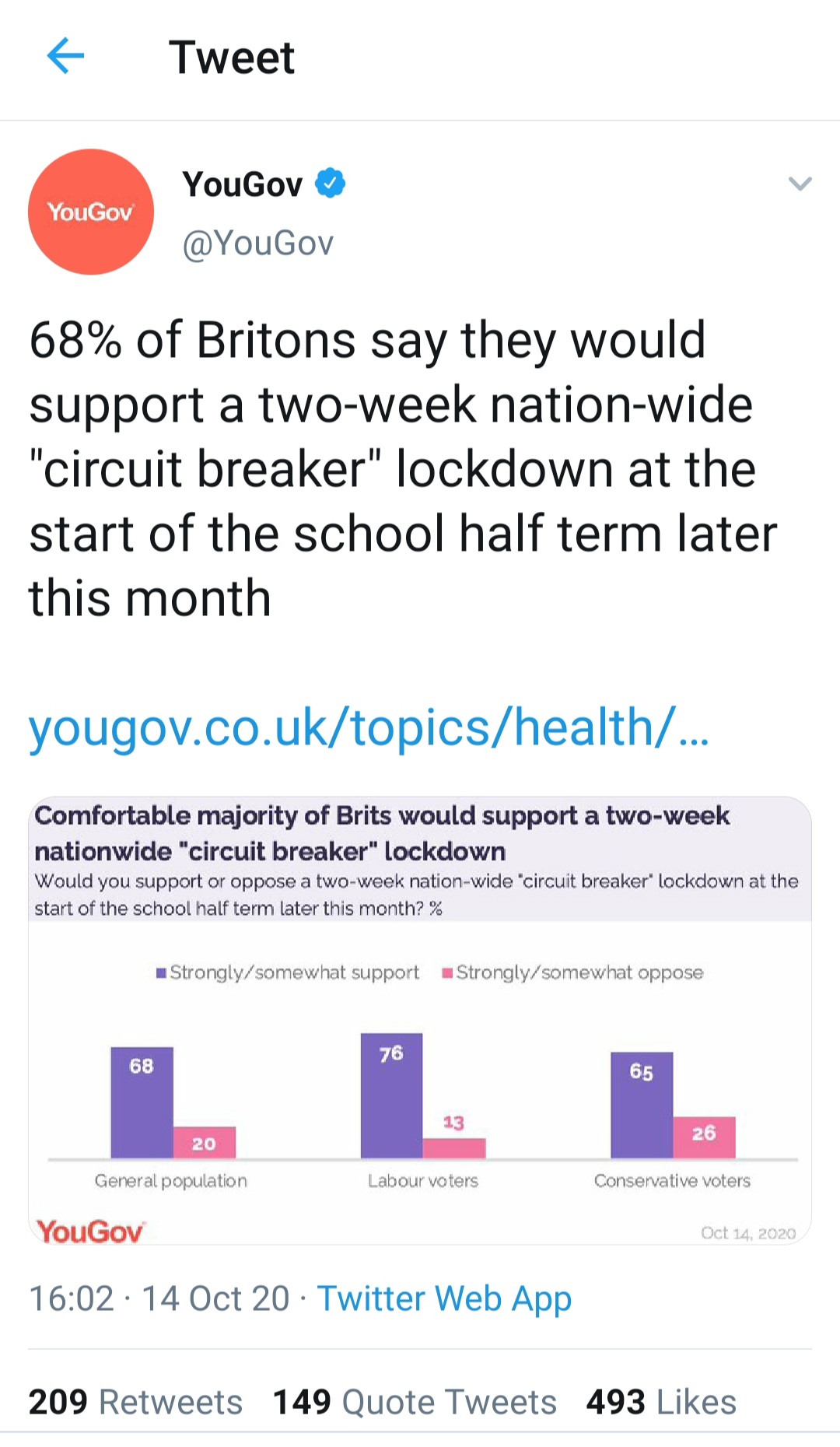
On Wednesday, I saw this tweet. The scientist in me responded with, ‘well of course’ and ‘surely people understand the ramifications for everyone if we don’t find working containment measures’.

Twitter post related to the new YouGov poll

When I see posts like this, I usually scroll through the comments. I think it’s important to read what people are posting and see what the challenge is like, as it’s all too easy to see the world through the eyes of those in your bubble. Those people in similar situations to us, with similar views to us, who then use stats like this to reinforce the positions we already hold.

Then, as part of the comments, I saw this:

My first reaction to this post was to blow out my cheeks and sigh. “The needs of the many outweigh the needs of the few” and all that. That’s an economic problem that should be addressed, not an infection issue: think of the number of people who will die etc.

Then I stopped and realised there is truth to this

I do live in an Ivory Tower

Now that’s not to say that I am rich, and it’s not to say that my response to the the poll is wrong. It is to say that we must reflect and admit the truth to ourselves. I can pay my mortgage. My job is not at risk (although my husband’s may well be). I can buy food and cover my bills. That gives me a privileged position where I can engage with and make decisions about how I feel about the science, the justification, and the way they are implemented. I don’t have to react from a place of worry and fear. That privilege means that I can digest information from a place of logic and not emotion. That privilege also means that I can lose perspective about how others may receive the same information and I certainly have to be aware of that privilege when it comes to judgement.

However the key word in the above paragraph is “receive”. This is where I come to the real point of my post. One of the problems with the current situation is the feeling of disempowerment of being the recipient of information and not the co-creator of response. This has been a problem in the health setting for pretty much as long as it’s existed, but its only in recent years that it’s been recognised as such.

Too many times in medicine we implement from a position of expertise and authority without engaging the lived experience and knowledge of others. I’m a passionate believer in the power of true co-production, where we work in partnership to create something that neither group could deliver on their own. I work in a hospital where we see patients who may be one of only 20 in the world with their condition. It is naïve and arrogant of me to believe that I will understand more about their experience of living with their disease. I can input, support and advise on the basis of biology and my experience. It will never be truly effective without considering theirs.

So my thought on this Friday evening is actually more of a plea. We all have our Ivory Tower, our bubble, our version of the truth. If you work in healthcare it’s important to give yourself time to reflect on what that means for your practice. Are you doing everything you can to move from being the authority in the room to being the person who is prepared to truly listen and co-create the best possible outcome for the patient in front of you?

Are we ready to enter a new period in healthcare where it is much more about the patient in front of us than it is about our years of training and education?

Photo by Adrianna Calvo on Pexels.com

All opinions most definitely my own

Adventures in Science Communication – Stand-up comedy edition

I’m not funny. Well, I’m not “laugh out loud” funny. I’ve never been the kind of person who has told jokes and, unlike many in an American genre TV programme, I would never have won the ‘Class Clown’ award. So how on earth did I end up spending three hours this week in a stand-up comedy training session?

There’s obviously the answer that a lot of the 11 people on the call would give: i.e. we need continuous professional development (CPD) points and, as Healthcare Scientists in the time of COVID-19, that’s not as easy. For anyone that doesn’t work in our profession, we have to show that we engage in a set number of hours of active learning and updating our practice. This helps us stay safe but also encourages a growth mindset where we learn new skills.

Secondly, the funding for the sessions is from a public engagement grant that my brilliant deputy was awarded by the Society for Applied Microbiology (SfAM). My deputy is super brave and was invited to do a show last year, having never done any stand-up comedy. As part of my role as leader, I felt it was incredibly important to actively participate in something that she had put energy into and believed would make us better communicators. Also, I’m a Trustee for SfAM and they do great work in supporting scientists in stepping out of their boxes and trying something new to communicate differently. I really buy into this and so, despite being slightly terrified, it was the right thing to do.

Step out of your box and give it a go

The session was delivered by Dr Steve Cross who is a consultant in public engagement and education. He started off the session by saying that he enjoys teaching nerds to be funny. Well, as a self confessed mega-nerd, this was a good start from where I was sitting. The session was a real mix of scientific backgrounds: from social science, infection specialists, pathologists, physiologists, through to medical physicists. This is one of the great things about sessions like these: networking is a great and often unexpected benefit and you get to spend hours with scientists you would never encounter otherwise and learn about their worlds.

Never underestimate the power of stories

We started out by discussing what we thought was funny. I had failed to do my homework and so hadn’t brought a clip with me (I know, an automatic F!) But the better prepared participants showed YouTube clips that made them laugh and discussed why. In an attempt to raise my grade from an F to a D, the clip below (belatedly) is something that makes me chuckle.

From watching the different clips I began to reflect on the power of stories. One of the reasons that Nicola Baldwin (the playwright I work with) and I utilise drama is because we believe in the power of drama to communicate, break down barriers and alter behaviour. It was fascinating to think about how comedy can be used to:

  • See things from a new direction
  • Explore differing opinions in a confrontation-free way
  • To confront and explore upsetting/worrying topics avoiding direct triggers
  • Enable the voicing of secret thoughts that are very common but we fear discussing openly
  • Talk about common experiences as if they are new in order to gain fresh insight
  • Subvert expectations
  • Inspire or start conversations

A lot of these points can be extrapolated to the reason Nicola and I use drama. The power of comedy is the portability and equal access nature of it. It doesn’t require huge amounts of resources to prepare a set, it doesn’t require a lot of resources to deliver a set, and it can be delivered flexibly across zoom or in person.

Steve ran us through a bunch of very easy to access and non terrifying exercises. Many of these involved us taking a story or event and reflecting on it in order to delve deeper into emotions connected with it. We then discussed how these stories and linked emotions could be used to make people laugh. Obviously there’s way more to it, but Steve is the king and we are running more of these sessions if you’d like to give it a go and participate yourself.

My main reflections from the session were:

  • Undertaking this kind of training can enable you to see situations differently and explore ways of seeing them from another’s point of view
  • Learning to break situations down and actively think about how to communicate them is a transferrable skill which is really useful in your professional practice
  • Understanding how stories can be used to create empathy and engage audiences isn’t just important for comedy. This technique can be used to support you bringing your whole self to work and break down communication barriers

All opinions in this blog are my own

Writing and Publishing Scientific Papers – Is it as hard as it seems?

Before I start. In the interest of full disclosure, I’m a published academic but I have fewer than 30 papers, not the 200+ some of my colleagues have. See my publications page if you’re interested. There are reasons for this. One, I’ve only had my PhD since 2015. But the main reason is that I’m not your traditional academic. I have a clinical post which is >50% of my time and so my work is about moving research from the research (academic) setting into clinical practice to improve patient care.

Why I Research

I still really clearly remember the stress that writing and submitting my first 1st author scientific paper caused me. It’s difficult to describe the transition from being a good student to being an academic. As students, we fear failure. I, like most academics, have never failed an exam and have what can only be called a visceral dread of what it would mean. You then move into a world where 80% of grants will be rejected and failure becomes part of everyday life. When I submitted my first paper, I hadn’t come to terms with that yet. I was still worried about what rejection would mean for me and how people see me. Now it’s just a fact of life.

Some misconceptions about publishing.

A lot of my friends mistakenly believe that scientists get paid for publishing their work. The opposite is true. If I want my work to reach the maximum number of people, I have to pay (usually several thousand pounds) for my article to be open access (i.e. free to access). Therefore, dissemination of your work can be really expensive and not necessarily reach the right people, as most clinicians and patients won’t be able to read articles requiring payment. It’s one of the reasons why science communication is key.

One of the other common beliefs is that the collection of data is most of the work in getting a scientific publication. This may be personal to me, but I have never found this to be the case. I always have way more data than I have time to publish; I currently have over 18 papers in draft, as I struggle to find solid blocks of writing time. This could be because I find the planning of experiments and data collection an adventure. The writing is stressful as I’m always trying to fit something that requires focus and blocks of time around a dozen other tasks. I often don’t have the mental space to enjoy it.

What about the publishing process?

There are some main stages to paper drafting and submission which are worth bearing in mind:

  • Journal and editor selection
  • Drafting
  • Co-author edits
  • Submission
  • Revision
  • Hopefully publication (if not, back to the beginning)

Many authors jump straight into drafting without really spending enough (or any) time on journal selection. Many PhD students don’t do this as they see their supervisors just jumping straight in. That’s normally because supervisors know a lot more about the publishing landscape and so already know the background.

Why is journal selection important?

Manuscript publishing is like any other form of publishing. You need to choose the right journal for your content. Every journal will have specific topic areas they are interested in. They will also have specific formats they will want you to follow in terms of length, numbers of figures and tables, as well as referencing style. If you start drafting without having an idea of where you are going to submit you will often not put the correct emphasis on your writing to get it into your journal of choice. You will also waste time you could spend on other things restructuring what you have already written.

Hint 1: Even title choice is linked to your journal of choice. Do they like long titles? Do they appreciate a witty title to draw readers in?

Hint 2: Go through similar articles to the one you are planning to write and look at the length of different sections in order to understand where the emphasis lies. Do they have a long methods section? Do they focus on discussion?

If you get the research right you will save yourself a tonne of time later on with re-writes and rejections.

What about co-authors?

It is obviously crucial to include your co-authors but I have also learnt that it can be helpful to pick the point at which you circulate to them. If you include everyone during drafting, you can end up with too many different points of view that mean you end up with a manuscript that is unclear or meandering. I’ve learnt to include a few key people, get it to a publishable stage and then circulate. Pick your key people carefully if you are working in a multidisciplinary team so that you get the benefit of their perspective, but don’t get too distracted from the agreed paper themes.

Finally. Don’t get disheartened.

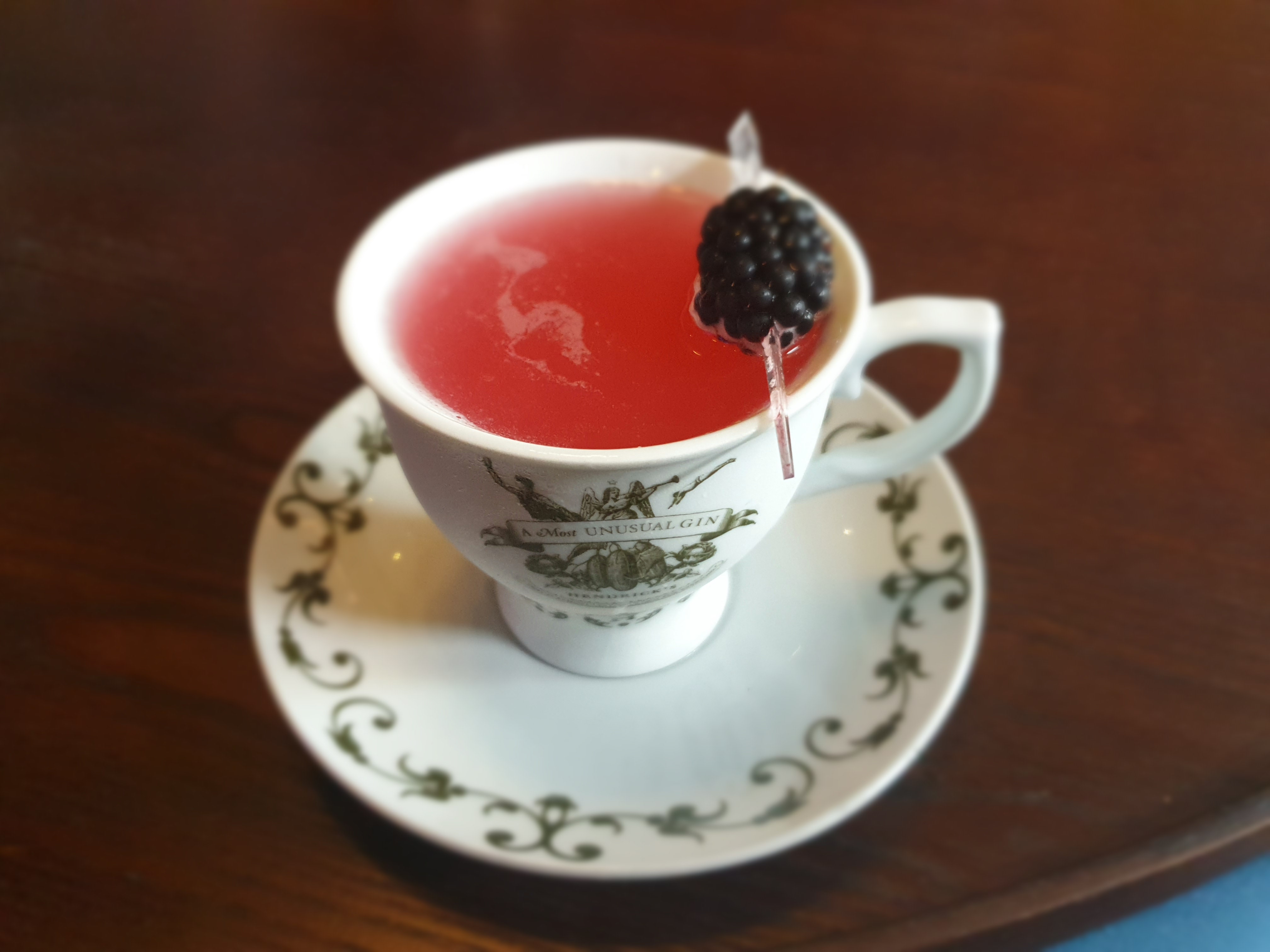
Rejection is just part of the process. Papers will become stronger for revisions and contribute more, thus having more impact. Remember that the criticisms are of the manuscript. They are not criticisms of you. My method for dealing with reviews is to open the email and read the comments. I then close the email down, go and make a double gin and tonic and wait 48 hours before responding. The memory of the comments is never as bad as I thought and once you take the emotion out of it you can just crack on.

All opinions in this blog are my own

If you would like more tips and advice linked to your PhD journey then the first every Girlymicrobiologist book is here to help!

This book goes beyond the typical academic handbook, acknowledging the unique challenges and triumphs faced by PhD students and offering relatable, real-world advice to help you:

  • Master the art of effective research and time management to stay organized and on track.
  • Build a supportive network of peers, mentors, and supervisors to overcome challenges and foster collaboration.
  • Maintain a healthy work-life balance by prioritizing self-care and avoiding burnout.
  • Embrace the unexpected and view setbacks as opportunities for growth and innovation.
  • Navigate the complexities of academia with confidence and build a strong professional network

This book starts at the very beginning, with why you might want to do a PhD, how you might decide what route to PhD is right for you, and what a successful application might look like.

It then takes you through your PhD journey, year by year, with tips about how to approach and succeed during significant moments, such as attending your first conference, or writing your first academic paper.

Finally, you will discover what other skills you need to develop during your PhD to give you the best route to success after your viva. All of this supported by links to activities on The Girlymicrobiologist blog, to help you with practical exercises in order to apply what you have learned.

Take a look on Amazon to find out more

Why Have I Waited 5 Years?

It’s been five years since my last (and, embarrassingly, only) post on this blog. I started it when I’d just been awarded my PhD. After four years of focusing on my research and thesis, I thought that I would have the mental space and time to really invest in something that I’m personally passionate about – science communication.

Viva Day

I think when many of us finish a big project, like a PhD, there’s almost a grieving feeling at the end. What do I do now? This thing that has been a massive part of your every waking (and in my case also so sleeping) moment is now done. It makes sense to rest, recuperate and reflect. This is what I should have done. Sadly, as those of you who know me can attest, I’m not very good at any of those things. It’s a a skill set I’m working to develop.

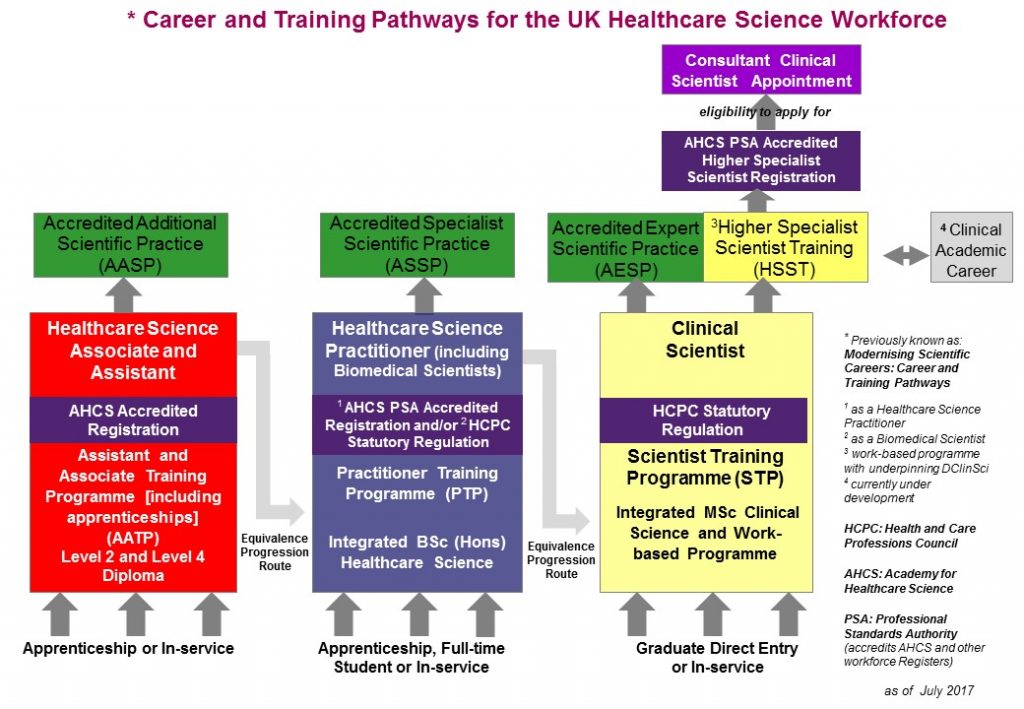
So, instead of stopping, I decided to sit the exams to become a Fellow of the Royal College of Pathologists (FRCPath). This was a big deal for me. Not that many Healthcare Scientists in microbiology at the time has sat the Medical Microbiology exam, and no one who only worked in paediatrics. It was important to me though, as I see patients and felt the need to be as equally qualified as my medical colleagues. It was the final step to getting on the Higher Specialist Scientific register and being eligible for a Consultant Healthcare Scientist post.

Healthcare Scientist Progression Routes

I started to prepare for the ‘Great British Bake Off’ of professional exams but without the comfort of cake. Four days, 30 hours of exams with lab and written sections! If I thought the PhD was tricky, FRCPath was another level.

Five years ago I posted on Facebook:

Elaine Cloutman-Green is feeling drained.

30 September 2015  · Shared with Your friends

Friends

Day 3. It’s 6 am and I’m reading brain abscess guidelines. I’m exhausted, I feel sick, and I really want to go home. It’s been so much harder than I had dreamed and I have cocked up on so many things. I get to leave tomorrow and that is all I care about now, I no longer care if I pass – I just want it to stop. Whining over. Eyes on the finish line. When I leave here, let’s never mention these days again.

Sometimes you have to face the failure and the difficulties head on to come out stronger. Fortunately I came through the other side and was gobsmacked in 2015 to find out that I had passed.

The Face of Complete Relief at the Fellowship Ceremony (2016)

2016 you say, but that’s still years ago . So why nothing since then?

At the same time as recovering from FRCPath exams, I decided to apply for an NIHR Clinical Lectureship. I know! I’ve got a problem, right?

From 2016 to 2019, I’ve been beavering away on my clinical academic career as part of an NIHR ICA Fellowship (see the top right corner of the progression image). More on that and what a Clinical Academic is will be posted on a separate blog in a bit.

After an intense five years with a lot of highs, and some level of stress, I’m back! I promise to not make you wait five years for another post.

What have I learnt:

  • Learn to rest, regenerate and reflect. These skills are undervalued.
  • Sometimes you have to face your fears in order to thrive. In my case the fear of failure.
  • You are capable of anything you can dream of if you work hard enough. Dream big and aim high!

All opinions in this blog are my own

Hello world!

So, this is my first ever blog post. Bear with me as I don’t really know what I’m doing.

I’m what is know as a Clinical Scientist and I work in Infection Control.

https://nationalcareersservice.direct.gov.uk/advice/planning/jobprofiles/Pages/clinicalscientist.aspx

Most people don’t know what a Clinical Scientist is so I thought I should briefly explain.

Most scientists that work within hospitals are involved with imaging (X-rays, CTs etc) or processing patient samples.  We all work to support diagnosing patients.  Did you know that scientists are involved with >80% of all diagnoses within the NHS?  Their work is crucial to improving patient care, but the scientists are often unsung heroes as they often never meet the patients they help.

I do not work in the lab all the time like many scientists.  I’m a clinical scientist, so half my time is spent working in a patient facing role within infection control and the other half involves bringing science to infection control to make it more efficient/evidence based. I work within a hospital with a team comprised of nurses, doctors and scientists.  I have a PhD in infection control. I am also working towards my final clinical qualification (Fellowship of the Royal College of Pathologists) which is the same as my medical colleagues.  My job is to help the translation of the science into a form that healthcare professionals can work with.  Sometimes this means working with language so we are all on the same page. Other times this means working with the latest science and technology and developing new tests that will help.

I’m passionate about my job, but I’m also aware that many people don’t know that it exists and I’m hoping that this blog will help to change that.  I plan to share a bit about what my day to day life is like as well as the science which I hope will inspire others to become healthcare scientists. After all, I have the greatest job in the world. And that is worth shouting about.