Celebrating National Pathology Week: What is a clinical microbiologist?

To celebrate this week being National Pathology Week , I thought I should take some time to post about what a clinical microbiologist is. I do this because, when I was at university, I really didn’t know that this career path existed. So here is a shout out to all those students who are trying to decide their next steps. You too will find your way.

When I googled microbiologist this is the first item that comes up

Microbiologists study microorganisms (microbes) in order to understand how they affect our lives and how we can exploit them

Prospects.ac.uk

This seems like a pretty good cover-all description. It goes on to discuss that there are microbiologists in many different areas:

  • medicine.
  • healthcare (I’m not sure how they differentiate this from medicine or visa versa).
  • research.
  • agriculture and food safety.
  • environment and climate change.

I must admit that when I was at university most of the options I encountered were linked to the food and drink industry or pure research. I think that their list missed things like Pharmaceuticals (although they may count that as medicine) and other forms of production, i.e. cosmetics.

At university I only did one module of microbiology (I was reading Zoology) and that module was about environmental bacteria and plating out bacteria onto agar plates to see what grew.

How did I go from Zoology to Microbiology?

I really wanted to work in an area of science where I could work to make a difference. I wanted to work somewhere that I could see that difference being made. Working in research felt too abstract to me. When I discovered, through a friend, that I could become a scientist in healthcare I knew it was what I wanted to be.

The National Careers service says you need to have two to three A-levels to become a microbiologist, plus a post-graduate degree. That is mostly true. However, in a world of apprenticeships and T-Levels, that is no longer the only route.

When I became a Healthcare Scientist I became a Clinical Microbiology trainee. So, what was the difference between that and what I’d done at University? The main difference with clinical microbiology is that I focus on organisms that cause infection: parasites, viruses, fungi and bacteria.

I also discovered that there was so much more to microbiology than agar plates. Although – don’t get me wrong – agar plates are still a mainstay of life within the bacteriology laboratory.

One of the techniques I learnt to love was polymerase chain reaction (PCR), which enables us to look for the DNA or RNA of a microorganism instead of growing it. Viruses and parasites don’t grow on agar plates and bacteria and fungi may not grow well if exposed to antibiotics or if present in low levels. PCR allows us to diagnose patients with infections that would not be diagnosed otherwise, or to speed up the process so patients get put on the right treatment faster.

Variable number tandem repeat typing of Klebsiella pneumoniae

PCR also enables us to do things that are harder to do using traditional bacterial techniques such as culture. The picture is of patterns that are like bacterial fingerprints so that they can be clustered into similar groups. This enables me, as a clinical microbiologist, to tell whether bacteria within the same species are the same or not. This is important when deciding whether a bacteria has spread from one patient to another. It helps in acting like a hospital detective, which is a lot of my work in Infection Prevention and Control.

As a trainee I spent four years rotating within laboratory settings. I spent one year in a molecular laboratory, diagnosing patients using PCR. I then spent six months rotating between benches (each sample type has its own laboratory bench) in bacteriology: wounds, respiratory samples, faecal samples, blood cultures, urines, fluids (cerebral spinal fluid etc.) and the primary bench where samples were put onto agar plates. Six months in virology, a year in research and time in food and water, parasitology and mycology (fungal) labs.

The diagnostic process is pretty similar in principle between the specialisms:

  • collect specimen from possible site of infection.
  • select the most appropriate test to detect any organisms (agar plate for bacteria, PCR primers for viruses, etc.)
  • evaluate whether the result (positive or negative) is accurate and whether there are other tests that should be done, i.e. further characterisation of positives such as antimicrobial sensitivity.
  • decide on treatment or management of the infectious cause, i.e. antimicrobials or non-antibiotic management such as surgery.
  • advise on infection control if actions are needed to investigate where the infection came from or to protect others from risk.

During my first four years I spent most of my time in the laboratory doing the first three bullet points.

Time goes on. I’ve been in the NHS for 16 years. Most of my time is spent at my desk in the on-call bathroom. Not so much at the moment, due to the pandemic, because I’m working from home more.

Since 2010, most of my time has been spent either in Infection Prevention and Control undertaking the final bullet point or increasing my skills by gaining Fellowship of the Royal College of Pathologists to do bullet point four.

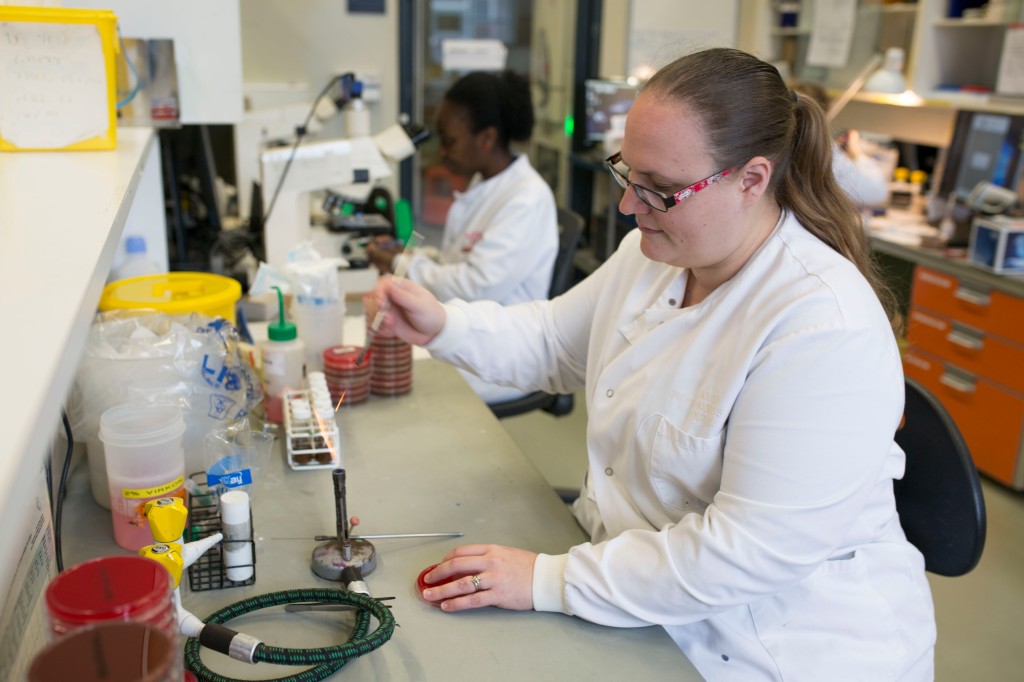
I still support the lab and, occasionally, get my lab coat on – but not as much as I’d like. It is, therefore, possible to be a clinical microbiologist and be anywhere on the spectrum. You can go as far as you’d like and do the type of work that makes you happy. It’s why being a clinical microbiologist is a great career!

Modernising Scientific Careers Framework

A Week With Antimicrobial Resistance on my mind

This one gets a bit technical in places. Bear with me – the next one will be less so. Pinky swear.

This month has been a pretty one big for me. Last week, a clinical trial I’m involved with kicked off in Mali. 10% of Malian children die before their fifth birthday and this trial aims to reduce the level of infant mortality. The study is called the Lakana Trial and aims to recruit 100,000 infants born in Mali over the next three years.

In a separate post, at some point, I’ll tell you the ‘Mali not Bali’ story, but I’ll need a double G&T in front of me first. (Or register for free for Stand up for Healthcare Science on 6th November.)

At this point you’re probably thinking what on earth does this have to do with antimicrobial resistance (AMR)?

The thing is, to save all these lives, we’re giving antibiotics to every child (some will get a placebo). Nothing special about that, you might be saying, we give antibiotics to children all the time.

This is different because we aren’t treating symptoms of a known infection. We are giving antibiotics in order to reduce infection risk/inflammatory response in asymptomatic (symptom free) children under one.

The antibiotic we’re giving is a drug called azithromycin and it’s from a class of antibiotics called the macrolides (see my A Starter for 10 on Antimicrobials post).

The LAKANA study follows on from the MORDOR study (the best study name in the world, in my personal opinion!) which gave two doses of Azithromycin/placebo to >190,000 children born in Malawi, Niger and Tanzania. The difference between that study and ours: they always gave two doses and the infants recruited were up to 59 months.

Mortality in the MORDOR study was 13.5% lower overall in communities receiving azithromycin vs those that were given the placebo (paper link here if you’d like more detail). Interestingly, there were differences in the survival increase by both country and by age group, with the highest mortality reduction seen in Niger. The greatest effects were seen in the one-to-five month age group which is why the under ones were selected for the LAKANA study.

To decide how many doses of azithromycin are needed to reduce infant mortality, the LAKANA study will gather evidence to answer three specific research questions:

  1. Does biannual azithromycin MDA (Mass Dosing of Azithromycin) to 1-11 month old infants reduce their mortality?
  2. Does quarterly azithromycin MDA to 1-11 month old infants reduce their mortality?
  3. Does quarterly azithromycin MDA result in a greater reduction in mortality than biannual MDA?

What has this got to do with antimicrobial resistance?

The AMR component of this study is the part that is being lead by UCL and the Institute of Child Health and so is sitting with me as a co-applicant. As we are giving antibiotics to children (and not treating a specific infection), it is crucial to understand whether this will impact on the level of antimicrobial resistance detected in them, their families and their communities.

Questions that we’re looking to answer (and that are currently running around my brain:)

  • If we do detect antimicrobial resistance is it stable? (I’ll explain this in a future post.)
  • Does detectable resistance return to baseline after a period of weeks, or does it lead to a permanent shift in their colonising bacteria?
  • Does any resistance detected make a difference to clinical treatment options? Macrolide resistance is usually due to accumulation of single nucleotide changes (single letters in the DNA code changing). This doesn’t necessarily mean the antibiotic will stop working.
  • Is resistance detected only in the Macrolide class of antibiotics, or does it lead to selective pressure that causes other resistance changes?
  • (Not AMR, but fascinating to me) How does azithromycin work? What is the mechanism? You would have thought this is well understood but, despite being available for decades, how it works as an anti-inflammatory is really not understood. Is the reduction in mortality because of its use as an antibiotic or because of this anti-inflammatory action.

What is incredibly important when doing this kind of work is that the first priority is to maintain the safety of participants. To that end we are working closely with the The World Health Organization who have recommended consideration of azithromycin MDA to under-one-year old infants, in areas with high childhood mortality.

Reducing infant mortality is so important: not just to survival but to quality of life and prosperity within these communities. These kinds of studies also need to be aware of their legacy. We are all incredibly keen to build laboratory capacity and infrastructure, not just in terms of equipment but also in terms of skills and skill infrastructure.

It’s early days and we won’t have any results from the AMR section for at least a year. I mostly wanted to record that this work is going on and the questions I have at the start. I also have some questions about balancing clinical outcomes which are pretty philosophical in my mind right now. If we see development of AMR, especially if it’s non-stable, but mortality is decreasing, where is the balance between those two things? How do you perform the risk assessment for the individual about short-term vs long-term outcomes? These thoughts convince me that this study is just the next step on a journey and that (as always) we have a lot to learn and a long way to go.

LAKANA team – Paris December 2019

All opinions in this blog are my own

Your Starter for 10: Antimicrobials

After my sojourn in my Ivory Tower on Friday, I wanted to get back to posting about antibiotics this week. Although I only really intend to post once a week, I thought it might be useful, if I’m going to be posting about antimicrobial resistance (AMR), to post a little bit about what an antimicrobial is.

What is a microbe?

My husband reminds me I use a lot of words interchangeably; That can make it hard to follow. First of all, I should explain that microbiology and microbe are ‘cover-all’ terms, including viruses, bacteria, parasites and fungi. You can then sub-group within that and talk about parasitology, virology, bacteriology and mycology (study of fungi).

What is an antimicrobial?

Antimicrobial = a medicine that inhibits the growth of or destroys microorganisms  

Antimicrobials don’t just work against bacterial, they work against microbes (hence the name). That said, one antimicrobial won’t work against all sorts of microbes – it’s just a generic cover-all name. Specific groups work against specific types of microbe:

  • Antiviral = works against viruses
  • Antibacterial (often called antibiotic) = works against bacteria
  • Antifungal = works against fungi
  • Antiparasitic = works against parasites

That said, most of the time when people are talking about antimicrobial resistance they are actually talking about antibacterial resistance, so that is what this post is going to focus on.

Antibiotics work in two main ways. They are either:

  • Bacteriostatic = inhibits the growth of bacteria
  • Bactericidal = kills bacteria

Whether an antibiotic kills a bacteria or just stops it reproducing is important when we are deciding which one to choose clinically. For example, if I have a patient who has no immune system, or whose immune system isn’t working, I can’t use an antibiotic that just stops the bacteria growing, as their own immune system won’t be able to attack the remaining bacteria. In this case I need to use an antibiotic that kills the bacteria.

Below is a diagram of some of the different groups or classes of antibiotics, colour coded with whether they KILL (dark green) or STOP GROWTH (light green).

Whether an antibiotic kills or stops growth really depends on what part of the bacteria it targets. It is very hard for a bacteria to survive if it has a hole in it’s cell wall (like us having a massive hole in our skin), and so antibiotics that target the cell wall, like penicillin (B-lactam), are usually bactericidal. Antibiotics that target protein synthesis, which is what bacteria need to reproduce and grow, are usually bacteriostatic, like erythromycin (Macrolide).

One of the other considerations when deciding which antibiotic to use is whether we are using it to treat an infection (treatment) or to prevent an infection occurring (prophylaxis). We use prophylaxis if you are undergoing certain types of surgery or when we know you’ve been exposed to certain bacteria or other microbes. This is aimed at reducing any small numbers you may have on board to prevent infection/symptoms. These doses are often different to treatment doses and we will usually try to give the medicine orally (i.e. pills) rather than by injection or by IV, if possible.

As antibiotics usually accumulate in the system or the area of the body we’re trying to target that is infected, it is really important that you complete the course (total number of days and doses) that are given to you. If you don’t do this and stop when you’re feeling better, the small number of bacteria that are left can then grow and multiply again, causing you to need another course. Worse than this, potentially, is that the bacteria may then become resistant to the first antibiotic.

Antibiotic resistant means that the bacteria is no longer affected by the antibiotic (i.e. doesn’t work at all or works less well).

This means that you may need to be given other antibiotics which are not as ideal, i.e. more side effects or not taken orally. Antibiotic resistant doesn’t mean that your body is resistant to the antibiotic, it merely describes the bacteria no longer being impacted.

As well as some bacteria developing resistance to an antibiotic due to exposure, some bacteria are intrinsically (naturally) resistant to certain antibiotics. In some cases this is because of the features certain bacteria have. One example of this is that bacteria are divided into Gram-positive and Gram-negative (plus some oddities like mycobacteria) based on their cell wall. Antibiotics like Vancomycin don’t work on Gram-negative bacteria as the molecule is too big to pass through the cell wall.

If you’d like more details about different antibiotic classes, the antibiotics within them, how they are used and mechanisms of resistance, feel free to download the PDF below which I prepared as part of FRCPath revision:

Some points to reflect on:

  • Antimicrobial is a term used to cover drugs for parasites, fungi, bacteria and viruses
  • Antibiotics can be either bacteriostatic or bactericidal
  • Antibiotics target different parts of the bacteria and that is what makes them either kill or inhibit growth
  • Antimicrobial resistance can be acquired or intrinsic due to the features of the bacteria

All opinions in this blog are my own

Science Communication: Reflections from an Ivory Tower

This week I was going to post about Antimicrobial Resistance (AMR) as, in many ways, it has been quite a momentous week in my professional life and it all ties into AMR. I may still… but I wanted to raise something that has been playing on my mind this week in light of the social media reactions I’ve seen to the new COVID-19 (don’t call it a lockdown) tiers.

Let me say now that this isn’t a political post, purely one linked to reflections that have been triggered for me that are linked to some of the pitfalls of traditional communication, medicine and dissemination.

On Wednesday, I saw this tweet. The scientist in me responded with, ‘well of course’ and ‘surely people understand the ramifications for everyone if we don’t find working containment measures’.

Twitter post related to the new YouGov poll

When I see posts like this, I usually scroll through the comments. I think it’s important to read what people are posting and see what the challenge is like, as it’s all too easy to see the world through the eyes of those in your bubble. Those people in similar situations to us, with similar views to us, who then use stats like this to reinforce the positions we already hold.

Then, as part of the comments, I saw this:

My first reaction to this post was to blow out my cheeks and sigh. “The needs of the many outweigh the needs of the few” and all that. That’s an economic problem that should be addressed, not an infection issue: think of the number of people who will die etc.

Then I stopped and realised there is truth to this

I do live in an Ivory Tower

Now that’s not to say that I am rich, and it’s not to say that my response to the the poll is wrong. It is to say that we must reflect and admit the truth to ourselves. I can pay my mortgage. My job is not at risk (although my husband’s may well be). I can buy food and cover my bills. That gives me a privileged position where I can engage with and make decisions about how I feel about the science, the justification, and the way they are implemented. I don’t have to react from a place of worry and fear. That privilege means that I can digest information from a place of logic and not emotion. That privilege also means that I can lose perspective about how others may receive the same information and I certainly have to be aware of that privilege when it comes to judgement.

However the key word in the above paragraph is “receive”. This is where I come to the real point of my post. One of the problems with the current situation is the feeling of disempowerment of being the recipient of information and not the co-creator of response. This has been a problem in the health setting for pretty much as long as it’s existed, but its only in recent years that it’s been recognised as such.

Too many times in medicine we implement from a position of expertise and authority without engaging the lived experience and knowledge of others. I’m a passionate believer in the power of true co-production, where we work in partnership to create something that neither group could deliver on their own. I work in a hospital where we see patients who may be one of only 20 in the world with their condition. It is naรฏve and arrogant of me to believe that I will understand more about their experience of living with their disease. I can input, support and advise on the basis of biology and my experience. It will never be truly effective without considering theirs.

So my thought on this Friday evening is actually more of a plea. We all have our Ivory Tower, our bubble, our version of the truth. If you work in healthcare it’s important to give yourself time to reflect on what that means for your practice. Are you doing everything you can to move from being the authority in the room to being the person who is prepared to truly listen and co-create the best possible outcome for the patient in front of you?

Are we ready to enter a new period in healthcare where it is much more about the patient in front of us than it is about our years of training and education?

Photo by Adrianna Calvo on Pexels.com

All opinions most definitely my own