

Sadly, I’m not well. There’s no blog post this week. I’m rough but alright. Hopefully the test will be back soon and will be negative.
Normal service should resume next week.
Sadly, I’m not well. There’s no blog post this week. I’m rough but alright. Hopefully the test will be back soon and will be negative.
Normal service should resume next week.

This week I was going to post about Antimicrobial Resistance (AMR) as, in many ways, it has been quite a momentous week in my professional life and it all ties into AMR. I may still… but I wanted to raise something that has been playing on my mind this week in light of the social media reactions I’ve seen to the new COVID-19 (don’t call it a lockdown) tiers.
Let me say now that this isn’t a political post, purely one linked to reflections that have been triggered for me that are linked to some of the pitfalls of traditional communication, medicine and dissemination.
On Wednesday, I saw this tweet. The scientist in me responded with, ‘well of course’ and ‘surely people understand the ramifications for everyone if we don’t find working containment measures’.
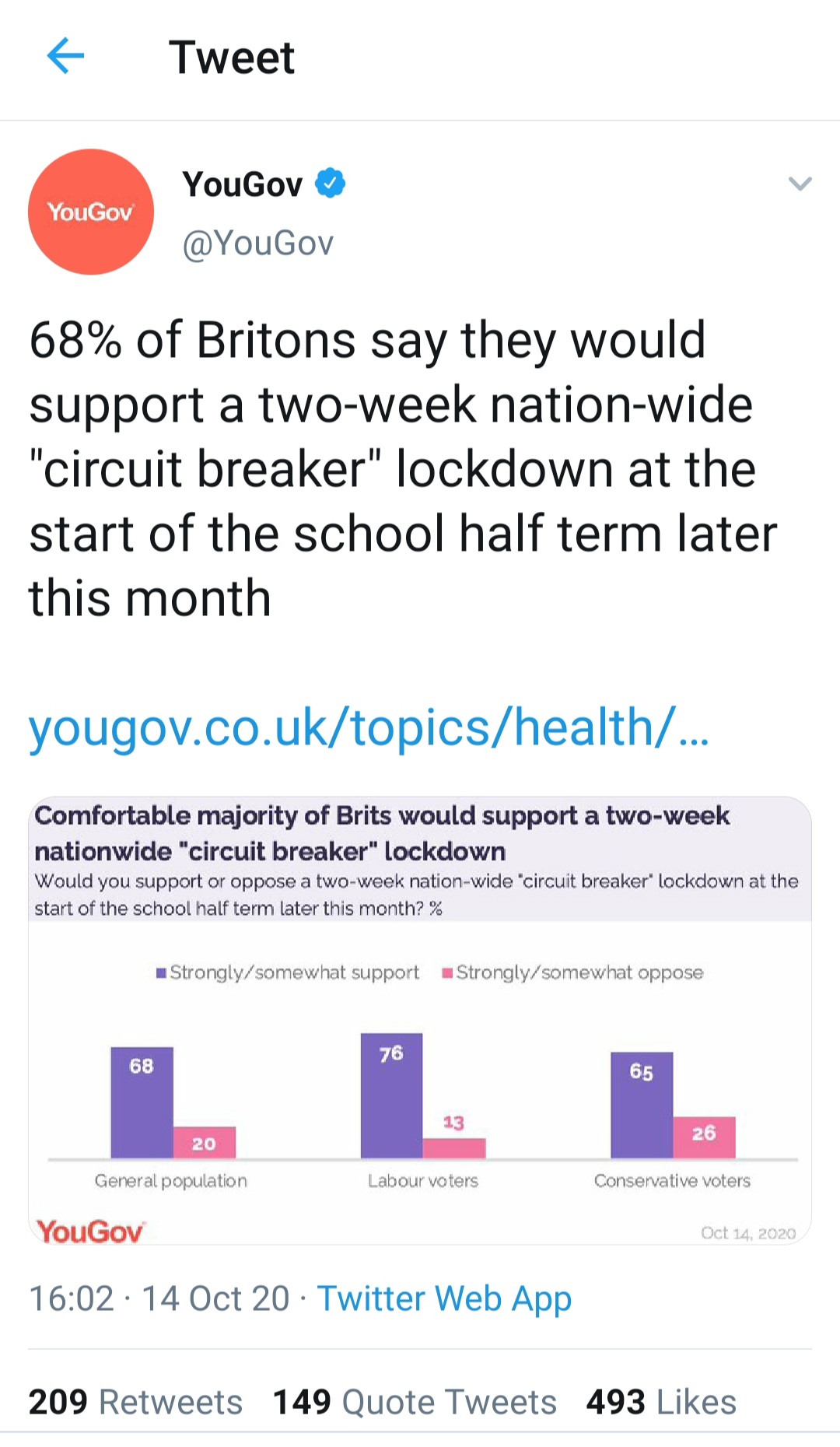
When I see posts like this, I usually scroll through the comments. I think it’s important to read what people are posting and see what the challenge is like, as it’s all too easy to see the world through the eyes of those in your bubble. Those people in similar situations to us, with similar views to us, who then use stats like this to reinforce the positions we already hold.
Then, as part of the comments, I saw this:

My first reaction to this post was to blow out my cheeks and sigh. “The needs of the many outweigh the needs of the few” and all that. That’s an economic problem that should be addressed, not an infection issue: think of the number of people who will die etc.
Then I stopped and realised there is truth to this
I do live in an Ivory Tower
Now that’s not to say that I am rich, and it’s not to say that my response to the the poll is wrong. It is to say that we must reflect and admit the truth to ourselves. I can pay my mortgage. My job is not at risk (although my husband’s may well be). I can buy food and cover my bills. That gives me a privileged position where I can engage with and make decisions about how I feel about the science, the justification, and the way they are implemented. I don’t have to react from a place of worry and fear. That privilege means that I can digest information from a place of logic and not emotion. That privilege also means that I can lose perspective about how others may receive the same information and I certainly have to be aware of that privilege when it comes to judgement.
However the key word in the above paragraph is “receive”. This is where I come to the real point of my post. One of the problems with the current situation is the feeling of disempowerment of being the recipient of information and not the co-creator of response. This has been a problem in the health setting for pretty much as long as it’s existed, but its only in recent years that it’s been recognised as such.
Too many times in medicine we implement from a position of expertise and authority without engaging the lived experience and knowledge of others. I’m a passionate believer in the power of true co-production, where we work in partnership to create something that neither group could deliver on their own. I work in a hospital where we see patients who may be one of only 20 in the world with their condition. It is naïve and arrogant of me to believe that I will understand more about their experience of living with their disease. I can input, support and advise on the basis of biology and my experience. It will never be truly effective without considering theirs.
So my thought on this Friday evening is actually more of a plea. We all have our Ivory Tower, our bubble, our version of the truth. If you work in healthcare it’s important to give yourself time to reflect on what that means for your practice. Are you doing everything you can to move from being the authority in the room to being the person who is prepared to truly listen and co-create the best possible outcome for the patient in front of you?
Are we ready to enter a new period in healthcare where it is much more about the patient in front of us than it is about our years of training and education?

All opinions most definitely my own
It’s been five years since my last (and, embarrassingly, only) post on this blog. I started it when I’d just been awarded my PhD. After four years of focusing on my research and thesis, I thought that I would have the mental space and time to really invest in something that I’m personally passionate about – science communication.

I think when many of us finish a big project, like a PhD, there’s almost a grieving feeling at the end. What do I do now? This thing that has been a massive part of your every waking (and in my case also so sleeping) moment is now done. It makes sense to rest, recuperate and reflect. This is what I should have done. Sadly, as those of you who know me can attest, I’m not very good at any of those things. It’s a a skill set I’m working to develop.
So, instead of stopping, I decided to sit the exams to become a Fellow of the Royal College of Pathologists (FRCPath). This was a big deal for me. Not that many Healthcare Scientists in microbiology at the time has sat the Medical Microbiology exam, and no one who only worked in paediatrics. It was important to me though, as I see patients and felt the need to be as equally qualified as my medical colleagues. It was the final step to getting on the Higher Specialist Scientific register and being eligible for a Consultant Healthcare Scientist post.
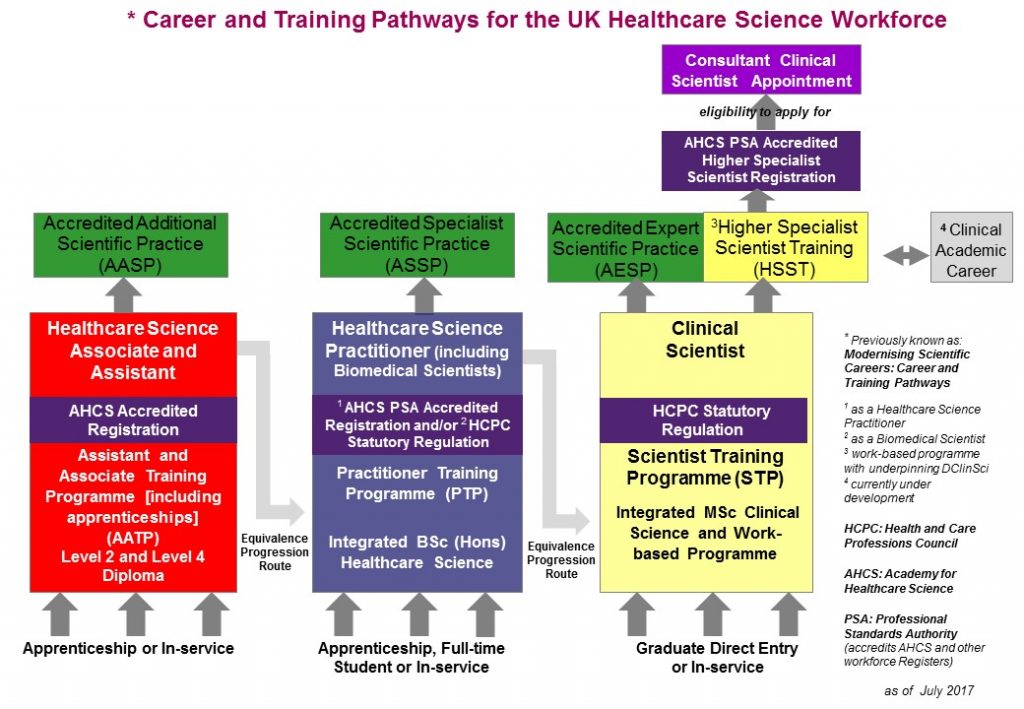
I started to prepare for the ‘Great British Bake Off’ of professional exams but without the comfort of cake. Four days, 30 hours of exams with lab and written sections! If I thought the PhD was tricky, FRCPath was another level.
Five years ago I posted on Facebook:
30 September 2015 · Shared with Your friends

Day 3. It’s 6 am and I’m reading brain abscess guidelines. I’m exhausted, I feel sick, and I really want to go home. It’s been so much harder than I had dreamed and I have cocked up on so many things. I get to leave tomorrow and that is all I care about now, I no longer care if I pass – I just want it to stop. Whining over. Eyes on the finish line. When I leave here, let’s never mention these days again.
Sometimes you have to face the failure and the difficulties head on to come out stronger. Fortunately I came through the other side and was gobsmacked in 2015 to find out that I had passed.

2016 you say, but that’s still years ago . So why nothing since then?
At the same time as recovering from FRCPath exams, I decided to apply for an NIHR Clinical Lectureship. I know! I’ve got a problem, right?
From 2016 to 2019, I’ve been beavering away on my clinical academic career as part of an NIHR ICA Fellowship (see the top right corner of the progression image). More on that and what a Clinical Academic is will be posted on a separate blog in a bit.
After an intense five years with a lot of highs, and some level of stress, I’m back! I promise to not make you wait five years for another post.
What have I learnt:
All opinions in this blog are my own
So, this is my first ever blog post. Bear with me as I don’t really know what I’m doing.
I’m what is know as a Clinical Scientist and I work in Infection Control.
Most people don’t know what a Clinical Scientist is so I thought I should briefly explain.
Most scientists that work within hospitals are involved with imaging (X-rays, CTs etc) or processing patient samples. We all work to support diagnosing patients. Did you know that scientists are involved with >80% of all diagnoses within the NHS? Their work is crucial to improving patient care, but the scientists are often unsung heroes as they often never meet the patients they help.
I do not work in the lab all the time like many scientists. I’m a clinical scientist, so half my time is spent working in a patient facing role within infection control and the other half involves bringing science to infection control to make it more efficient/evidence based. I work within a hospital with a team comprised of nurses, doctors and scientists. I have a PhD in infection control. I am also working towards my final clinical qualification (Fellowship of the Royal College of Pathologists) which is the same as my medical colleagues. My job is to help the translation of the science into a form that healthcare professionals can work with. Sometimes this means working with language so we are all on the same page. Other times this means working with the latest science and technology and developing new tests that will help.
I’m passionate about my job, but I’m also aware that many people don’t know that it exists and I’m hoping that this blog will help to change that. I plan to share a bit about what my day to day life is like as well as the science which I hope will inspire others to become healthcare scientists. After all, I have the greatest job in the world. And that is worth shouting about.

