Roll Up Roll Up: Join us for a host of events running on the 3/4/5 June as part of the Rise of the Resistance Festival

It all started with a conversation Help us keep that conversation going and enjoy some great events along the way!

Rise Of The Resistance is a digital festival of creative responses to Antimicrobial Resistance (AMR), on 3 – 5 June 2021.. Curated by NOSOCOMIAL, an award-winning collaboration of Healthcare Scientists and theatre makers which hosts performances, panels and events.

We have events designed for:

  • Children and families.
  • Those interested mainly in the science.
  • Those mainly interested in the creative pieces.
  • A grown up audience (due to language content i.e. swearing).

A link to the Eventbrite for all bookings is here

Healthcare Scientists are 5% of the NHS workforce in the UK, responsible for 80% of diagnoses. Rise Of The Resistance celebrates the impact of Healthcare Science. It seeks to reinforce relationships between Healthcare Scientists, patients, families and the public, believing that better communication and understanding are vital for managing future threats to global health such as AMR.

NOSOCOMIAL comprises around 25 scientists and artists. We won the 2019 CSO Partnering Patients and Citizens Award, and 2020 Antibiotic Guardian award for Public Engagement. Rise Of The Resistance is our first festival.

Events For Children and Families

SOCK THE PUPPET – aimed at families and children aged 7 and under

Fri, 4 June 2021 – 10:30 – 11:30

A story for children about Socks, Science, Superbugs and Making Friends, narrated by Stephanie Houtman

Meet Sock the Puppet. Sock is excited to go and sing for the children in Hospital with Ms Clown. Sock loves the Hospital. It is always clean and tidy.

The children love Sock’s singing. All the children hug Sock.

When Sock catches all the bugs that make the children poorly, Sock has an adventure to the cleanest, tidiest place in the whole Hospital: The Laboratory.

Can you help Sock find a way back to Ms Clown and the children?

Join us at Rise Of The Resistance for the story of Sock, narrated by Stephanie Houtman (Peppa Pig Live), directed by Saskia Marland, with a special appearance by Sock.

After you book tickets, you will receive a worksheet to make your own Sock at home, designed by artist and maker Abi Bown.

Created by the team behind Nosocomial and Remember, Remember! – playwright Nicola Baldwin, and Healthcare Scientists Vicki Heath and Dr Elaine Cloutman-Green BEM, of Great Ormond Street Hospital.

Sock The Puppet will also be available as a podcast.

With thanks to Eibhlin Jones, Laura Walsh, Amy Sutton and Tara Kearney.

Book here


REMEMBER, REMEMBER – aimed at families and children up to GCSE age

Sat, 5 June 2021 – 11:00 – 12:00

Join our time-travelling zoom Healthcare Science in a detective drama about the “True” story of the Gunpowder Plot. For ages 5+ to 105+

A Zoom storytelling science drama.

REMEMBER, REMEMBER! is a pre-recorded Zoom drama. You will receive a link to watch the online premiere.

Activity books, and script, will also be sent out so people can take part at home.

London, 2021. Healthcare Scientists Lily, Rosa, and Frank receive a mysterious message for ‘HELPE’ on one of the machines in their hospital laboratory.

London, 1605. Plague stalks the land, leading to unrest… and a plot to blow up the King and Parliament. Guy Fawkes is arrested and the race begins to track the rest of Gunpowder Plotters.

Remember, Remember tells the amazing story of how three Healthcare scientists set out to foil the Gunpowder Plot, with the help of nine year old Princess Elizabeth, a malfunctioning MALDI-TOF machine and the weird and wonderful mysteries of Microbiology, Haematology, Biochemistry, Immunology, hand-washing, and… time travel.

And they need your help.

with

LILY / SIR JASPER – Jennifer Daley

ROSA / TOWER GUARD – Becky Simon

FRANK / GUY FAWKES – Jonny Wright

PRINCESS ELIZABETH – Tara Kearney

Produced by NOSOCOMIAL

By playwright Nicola Baldwin and Dr Elaine Cloutman-Green, Lead Healthcare Scientist at GOSH. Activity Packs created with Anthony Manuel DeSouza, with input from Fionnuala Wilkins at GOSH school, and Amy Sutton of GOSH Youth Forum.

Thanks to Hannah Jones, Peter Hamilton Dyer, Abi Bown.

Originally produced for Pathology Week 2019, supported by HSEWG and The Royal College of Pathologists (RCPath) as an online drama for children and families in hospital isolation due to illness, revived in 2020, and made available thanks to the Society for Applied Microbiology, as the whole country went into isolation..

We hope it will provide an informative and entertaining way to learn about viruses and bacteria, and that you enjoy watching it at home.

Book here


IF I DON’T PLAY I WON’T UNDERSTAND. Plus PPI panel -an interactive drama experience for the whole family

Sat, 5 June 2021 – 14:00 – 15:00

Welcome to the “Bacterial Leisure Centre”! We are the best fitness centre for bacteria in the microbiome to train for bacterial success!

Our Leisure Centre is located in the heart of the breathtaking Microbiome Resort, set in a 2,700 square feet of the Gut. The Centre is provided with anatomy room, gym, quorum sensing zone, reproduction area, and many other 1st class facilities.

Our team of experienced trainers will coach and guide you in this adventure of becoming bacteria, and they will make sure you will have an unforgettable experience.

What do you need to do?

Sign up to a free virtual taster session on Saturday the 5th of June @2pm.

Be prepared to renounce your humanity for the duration of the taster session.

As part of our fitness activity, we will ask you to play games and move your body.

No previous fitness experience is required, but be ready for a lot of fun and games activity.

“If I don’t play I won’t understand” is an interactive digital game performance, combining transmedia storytelling and fictional reality with games and movement activities.

Inspired by choose-your-own-adventure books, audiences are invited to sign up to a virtual “Bacterial Leisure Centre” where they renounce their humanity to train to become bacterias.

After a welcoming virtual tour of the Centre, the audience can choose their own adventure by deciding which training room they want to enter. Once in the room, the audience will meet a specialized trainer that will train them to become bacterias by using games and participatory activities.

“If I don’t play I won’t understand” is designed and directed by Monika Gravagno, the AD of Facciocose Physical Theatre company.

This will be a participatory physical theatre/workshop to explore communication and expression from a microbial perspective.

Followed by a panel discussion: How To Engage An Audience With ‘Difficult’ Science

After the workshop, stay for a panel discussion and Q&A with the makers and invited guests, to explore the outer limits of public engagement; the mutual benefits of PPI to artists and scientists in framing research questions, and creating new forms of work.

Book here

For Those Interested in Talking Science Supported by Drama

SPIRALLING & How Do We Begin The Conversation?

Fri, 4 June 2021, 14:00 – 15:00

In a time when views are drastically polarised, could questions potentially bring us together and not drive us further apart?

Screening of SPIRALLING by Jimena Larraguivel, followed by a panel discussion with Dr James Hatcher, Dr Melisa Canales, Professor Brendan Gilmore, Sue Lee: on PPI, clinical trials, and how do we begin the conversation on AMR?

“The idea behind this short film emerged in response to the overwhelming amount of information available on social media, which has undoubtedly had an impact in the way I navigate motherhood and take decisions in the best interest of my children. In a time where cancel culture seems to be the norm, it’s daunting asking questions. However, in a time where views are drastically polarised, aren’t questions what could potentially bring us together and not further apart?”

Book here


INTO THE BREACH & Bugs v. Behaviour

Fri, 4 June 2021 – 16:00 – 17:00

The doctors want to be sure that I’m not using. Fair play, I get it, course, I do. But I’ve been with heroin since I was 17. It’s up here.

Screening of INTO THE BREACH by David Milner, followed by a panel discussion with Dr Jane Freeman, Angela Mwape, Ruth Thomsen and Francis Yongblah on bugs, behaviour, their impact on on AMR, and what we really mean by ‘hard to reach patients’.

“Hostel dweller COLIN reflects on his past life and uncertain future while negotiating the reality of London’s streets. Colin’s in limbo, awaiting an operation; his body must be drug-free for surgery, but addiction has been the one constant in his life.”

Adapted from a short story by David Milner.

Book here


ME AND HER & Human and Animal Impact of Infection

Sat, 5 June 2021 – 15:30 – 16:30

How do we cope with the total disruption of infection? What’s the prognosis for the things we take for granted in our lives?

Screening of ME AND HER by Rebecca Simon, followed by a panel discussion with Professor Mark Fielder, Dr Elaine Cloutman-Green and Professor Nicola Williams, on the impact on, and of, human and animal behaviour in AMR, and the need to focus on One Health.

Home is where the heart is, where we feel most like ourselves. After almost seven months living in a ten by twelve foot hospital room with her sick daughter, Zoe escapes to home. To feel like herself again and that she still exists outside of that hospital room, outside of being a mum. But home doesn’t feel like home anymore, there’s been a shift, things are not as she would have them. She feels displaced and lost.

ME AND HER is a short film exploring the experiences of parents, carers and their families whose lives are profoundly altered by long term hospital stays. When suffering through a difficult and challenging time in their life, how do parents who are carers cope with the total disruption of their lives? What’s the prognosis for their careers, relationships and sense of identity?

Created and performed by Rebecca Simon

Produced by NOSOCOMIAL

Book here

For Those Who Want Some Drama About Science

The Piece That Started It All – NOSOCOMIAL & Collaboration within Public Engagement

Fri, 4 June 2021 – 20:00 – 21:00

Verbatim drama premiere. There is nothing weird or wonderful you can imagine in human experience I haven’t seen. I’m a Researcher in Humans

When I say I’m a healthcare scientist, they ask “do you work with animals?”When I tell them I work in a hospital, they say “are you a nurse?”There is nothing weird or wonderful you can imagine in human experience I haven’t seen. I’m a Researcher in Humans.

Screening of NOSOCOMIAL followed by panel discussion on Collaboration within Public Engagement with Dr Lena Ciric, Saskia Marland and Monika Gravagno.

Jo is not well. Something strange is happening. As a scientist, she can resolve this. Unless the world is infected. Unless it’s everywhere….

Kitty, Helena and Paul work through the night. An hour can make all the difference. Part thriller, part puzzle, the science of life and death.

Join us for the online premiere of our short film.

JO – Jimena Larraguivel

HELENA – Becky Simon

KITTY – Nicola Sanderson

PAUL – Peter Clements

Healthcare Scientists are 5% of the NHS workforce, responsible for 80% of diagnoses.

Forensic pathologists are a staple of TV crime drama and Healthcare Science has dominated news headlines during months of pandemic, yet the role of Healthcare Scientists themselves remains largely unknown. You don’t see us on Holby. Science is too ‘difficult’ without explanation. Yet working in basement labs,working with patients, working with families over years, the HCS experience is varied, vital, and their personal stories are remarkable.

Nosocomial began as a collaboration between playwright Nicola Baldwin and Dr Elaine Cloutman-Green, Lead Healthcare Scientist at Great Ormond Street Hospital. In summer 2018, over 30 Healthcare Scientists from various hospitals took time out of their schedules to join writing workshops, which later grew to involve artists and actors, to tell their stories.

Performed at Camden Peoples’ Theatre and site-specific events in NHS buildings, museums, and other public spaces. Winner of 2019 CSO Partnering Patients and Citizens award, and 2020 Antibiotic Guardian award for Public Engagement, this is the online premiere of our new short film, updated for 2021.

The Nosocomial project has been made possible thanks to SfAM and HIS public engagement grants.

Book here


PANDEMIC PLAYHOUSE PRESENTS – 80,000 SUSPECTS!

Sat, 5 June 2021 – 20:00 – 21:30

Inspired by classic 1963 thriller by Val Guest (from book by Elleston Trevor) about scientists battling a smallpox outbreak

A Healthcare Scientist’s already-shaky marriage is tested to an even greater extent when he has to contend with a smallpox epidemic.

Inspired by the classic 1963 British black and white medical thriller adapted and directed by Val Guest (from the book Pillars Of Midnight by Elleston Trevor) about Healthcare Scientists battling a smallpox outbreak

For one night only, this live zoom script reading will pay homage to the iconic black and white movie experience.

Please dress appropriately, and return with us to a bygone era of Saturday night cinema-going, reimagined for the digital age, via the medium of Zoom in your own sitting room.

A unique experiment in co-creation involving a virtual company of actors, artists, scientists, researchers, and you, the audience.

It’s New Year’s eve. You get a call to go into the lab.

A patient is showing signs of a mystery illness

They just want you to run a few tests….

What could possibly go wrong?

Book here

And Now Something for the Adults

KLEBSIELLA showcase plus Q&A with creative team

Fri, 4 June 2021 – 19:00 – 20:00

Microbial shapeshifter. Compulsive stealer of DNA. Who is she? Why does she do it? In a crisis of identity Klebsiella seeks psychotherapy…

Screening of KLEBSIELLA by Peter Clements, a new performance in development, followed by a panel discussion with costume designer Pam Tait and Healthcare Scientist Dr Elaine Cloutman-Green: on performance, playfulness and the need for novel approaches to engaging with AMR.

“A portrait of Klebsiella through a psychoanalytic session.

Klebsiella is the shapeshifter of the microbial world. A compulsive stealer of DNA. Who is she? Why does she do these things? In a crisis of identity , Klebsiella seeks psychotherapy to get to the bottom of what’s bugging her.

Vivienne Westwood meets Diana Vreeland meets Bouffant clown meets Riot Grrrrrrl meets Pat Butcher.

Klebsiella and Analyst meet to determine if Klebsiella is suitable for in depth psychoanalysis. Klebsiella resolves that she’s impossible to cure. She’s determined to find the love of her life, even if it means leaving a trail of destruction behind her.”

Book here


Science Showoff’s STAND-UP FOR SCIENCE

Sat, 5 June 2021. 18:00 – 19:30

Comedy and Cabaret from the ‘best minds in science’…. A partnership with the popular Science Showoff comedy night hosted by Steve Cross.

Healthcare Scientists become comedians for one night only.

Tonight they’ll put aside their microscopes, computers, samples and equipment for one night to tell you jokes about their work.

The show will be hosted by comedy veteran Steve Cross, who has MCed hundreds of comedy shows of all kinds across the world, and who has trained these brave brainiacs to take to the stage. I say stage, they’ll be on a videolink from their own homes.

The gig will be made available to to ticket holders via a live stream from all of the performers’ houses. Ticket holders will be emailed details of the stream on the day of the show.

The show is on 5th of June and starts at 6pm prompt.

Book here


NEVER EXPLAIN take on THE RESISTANCE

Thursday 3 June 20.00 – No booking needed, live on the YouTube link below

To kick off Rise of the Resistance Festival in style, join us for a live panel show combining comedy and science
Live stream here

Why I Went Through the Equivalence Process and Why I think it’s Important as a Lead Healthcare Scientist to Lead By Example

Yesterday I posted for Healthcare Science Week 2021 with some tips about applying to start your career as a scientist. Today I wanted to post something linked to career progression as a Healthcare Scientist. So todays post is about going through the equivalence process with the Academy of Healthcare Science (AHCS). I know that this one may be a bit contentious, I know this because when I announced I’d been through the process on Twitter I got some push back and interesting discussion. That said I still think it’s important and so I want to take you through not only how I went about it but my thought process as to why.

The equivalence process enables individuals who have gone through different progression routes to achieve progression similar to the end points reached by the structured routes offered by the National School of Healthcare Science (Scientific Training Programme (STP) and Higher Specialist Scientific Training Programme (HSST)). Equivalence can be undertaken for either programme and requires you to demonstrate that you have covered both the breadth of scope and qualifications contained in the curriculum that is involved in the structured centrally delivered programme. Once you’ve gone through the equivalence process you can then register on the AHCS register, in the same way as a programme graduate.

For people like myself who attained a PhD and FRCPath by examination prior to the introduction to these structured programmes there is no requirement for us to demonstrate equivalence to the HSST. For many people in a similar position to myself they are also already in Consultant posts, and so the participation in this process is perceived as costly, with little added value.

So why do I think it is important for me as a senior leader and Lead Healthcare Scientist to go through this process and put my money where my mouth is:

  • I want to understand the process so that I can support my workforce when they are submitting for the equivalence process themselves.
  • I want to lead by example. These structured programmes are what my future workforce are going to be going through. I owe it them to understand the breadth requirements of the curriculum so that I can be a better advisor.
  • I want to demonstrate the value of the register. Although HSST equivalence is not currently required it is likely to become an increasing requirement in posts that are being created (I’ve seen one recently). In order to maximise flexibility for my workforce to apply for posts in the future I think it’s important to get on the register early and show why it might be important for their futures.
  • STP equivalence is much more embedded and within my workforce I’m working hard with the team to raise awareness and support for this route. It would feel hypocritical of me (as Lead Healthcare Scientist) to be pushing the importance of considering undertaking this process and not have been prepared to engage with it myself.
  • As well as being a Lead Healthcare Scientist I am also a Healthcare Scientist Training Advocate for National Institute of Health Research. As part of the development of training plans for doctoral and clinical lectureship fellowships then the role of equivalence plays an important part for those who will go through the non-standard route that I undertook. By having been through the process I can help in guiding applicants in what items their clinical training programme will need to contain.
  • Finally, I did this for me. I wanted to show that I am competitive for posts, that I have the skills required. I am not in a consultant post and will therefore potentially be competing for posts against people now exiting the training programme. I found the process of putting together the information and reflecting about my career against a set of standardised benchmarks incredibly useful. It is so useful to identify gaps that you may not have recognised, or reassuring that you have covered everything and you are good to go.

So What Is the Process for Applying for Equivalence

My experience is of putting together the Stage 1 application pack, which consists of the following:

 A completed Stage 1 Summary Mapping Template – this is basically linking your structure CV to the standards to show that you have met them all
 Job description and person specification
 A structured curriculum vitae (CV) – this is 1500 words that outlines your qualifications, job role, experience and anything else you need to demonstrate you meet the standards
 Two appropriate professional references
 Qualification certificates
 I also added some additional information to the end of my structured CV that included: a publication list and grant funding received, as well as a list of committee and guidance groups I am a member of

It took me a while to look at the standards and reflect on content, but I have to admit the bit that took me longest was finding all the documentation (certificates, driving license etc) in order to scan them in and submit them. The other bit that took time was getting the references as we all know how busy everyone is.

The whole application is online and you upload each part and you have it. It gives you a progress bar so you know how close you are to completion. I didn’t know anyone else who had completed it and at that point there were in fact no microbiologists on the HSS register to talk to about it, so I just put things together based on intuition and what I would like to see if I were assessing. Mostly this was about leading the reader and making the information easy to find, as well as making sure that in the mapping document it was clear that all the competencies had been covered. I’ve included mine below, not because I’m claiming it is the most amazing document ever, but so that you don’t have to start from scratch like I did in terms of your thinking.

Once I had submitted I waited. I was fortunate enough to get an Outcome 1 (see above) feedback as shown below:

After which I paid my £50 and became the first microbiologist on the ACHS HSS register.

Overall the process was pretty simple and straight forward. The thing that took the longest was the thinking ahead of putting it together. I found it useful to have a list of the competencies and then listed all the different things that I could use as evidence against them. I could then focus my thinking and my CPD review on areas where I didn’t have so many items mapped.

Equivalence will not be for everyone, but as the profession of Healthcare Science enters a much needed phase where training and careers become more structured then it will be needed. I hope that by having gone through this process I have gained the skills and knowledge to support others, as well demonstrating leadership in an area that I feel is important. So I would encourage you to review: Is its right for you? Is it right for your workforce? and What’s stopping you?

All opinions on this blog are my own

Planned Events for Healthcare Science Week 2021: Join us if you’re three or ninety three

girlymicro's avatarGirlymicro

Healthcarescienceweekis an annual celebration to raise awareness of the many careers inhealthcarescience. It provideshealthcarescienceprofessionals with an opportunity to promote their profession and inspire the scientific workforce of the future.

More than that however, it provides us with the opportunity to talk about what we do or issues that matter to us with members of the public, our friends, colleagues in other healthcare professions and our families.

This year Healthcare Science Week runs from March 6th until 14th March. The Healthcare Science Education team at GOSH and our collaborators Nicola Baldwin and Dr Steve Cross have three awesome events planned across the week, with something for all ages and backgrounds.

Pub-Less Healthcare Science Pub Quiz! (Wednesday 10th March – 19:00 – 21:00)

The Pub-Less Healthcare Science Pub Quiz! Join professional silly science personSteve Crossfor a special quiz full of jokes…

View original post 386 more words

My Best Science Comes from a Cup of Tea: My top tip for Healthcare Science Week

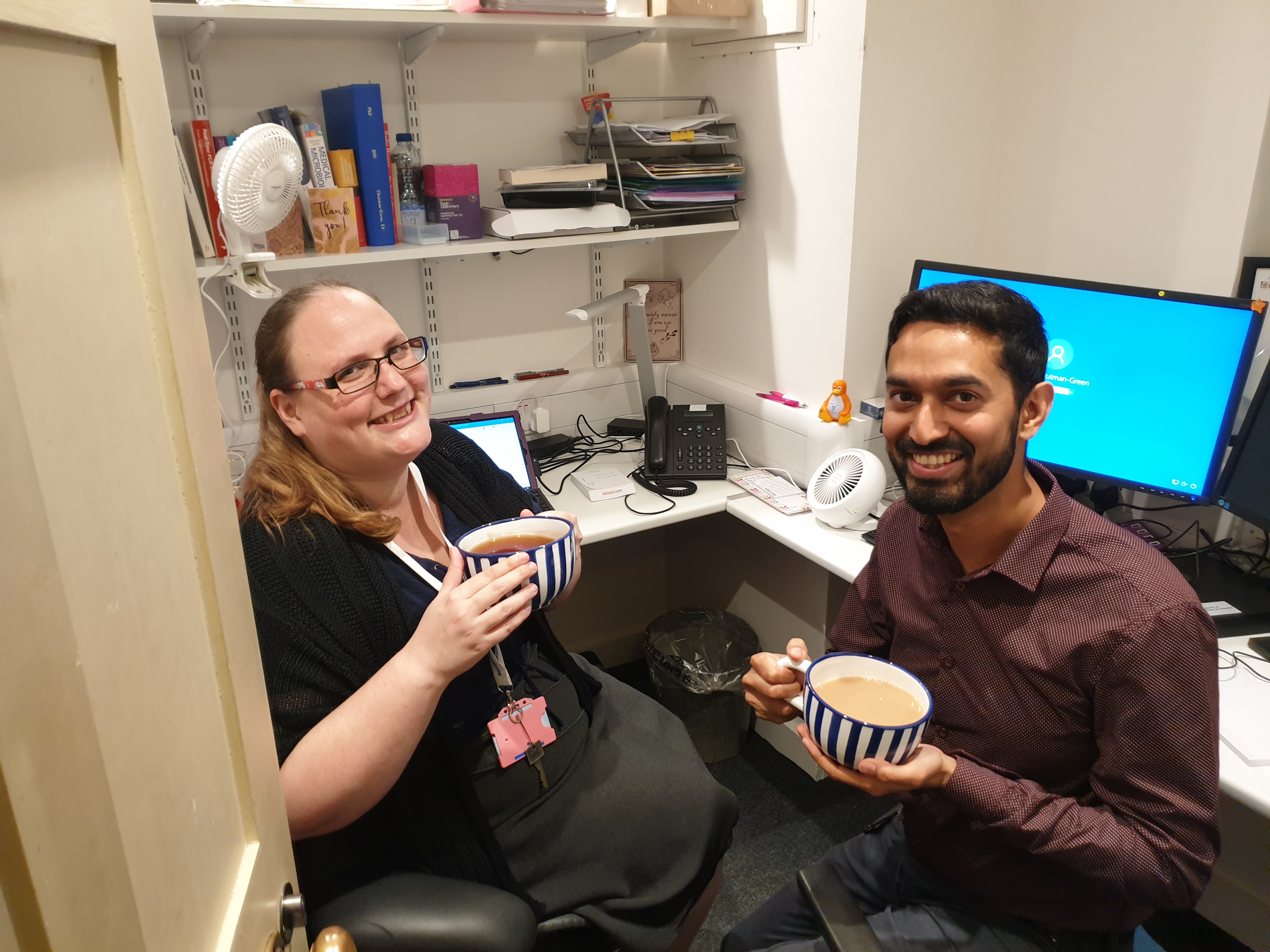
Welcome to Healthcare Science Week 2021! Depending on how I feel and how busy this week is I’m hoping to post a few times and to make up for not posting much recently as I’ve been unwell. Also, as I’ve been not well I’ve had plenty of time to reflect on the importance tea has in my life. My husband is a sweet heart who makes me many a cup and it is my place of comfort and salvation when the world gets too much. It is also a place of reflection and helps me do my best thinking. So this post is devoted to one of my favourite things in the world and something that helps me be the best scientist I can be…………..a lovely cup of tea. (NB for me this is ideally a cup of Darjeeling or Lady Grey served black. You can I am sure substitute it with your favourite, or blasphemy, even exchange it for coffee).

Tea and Planning

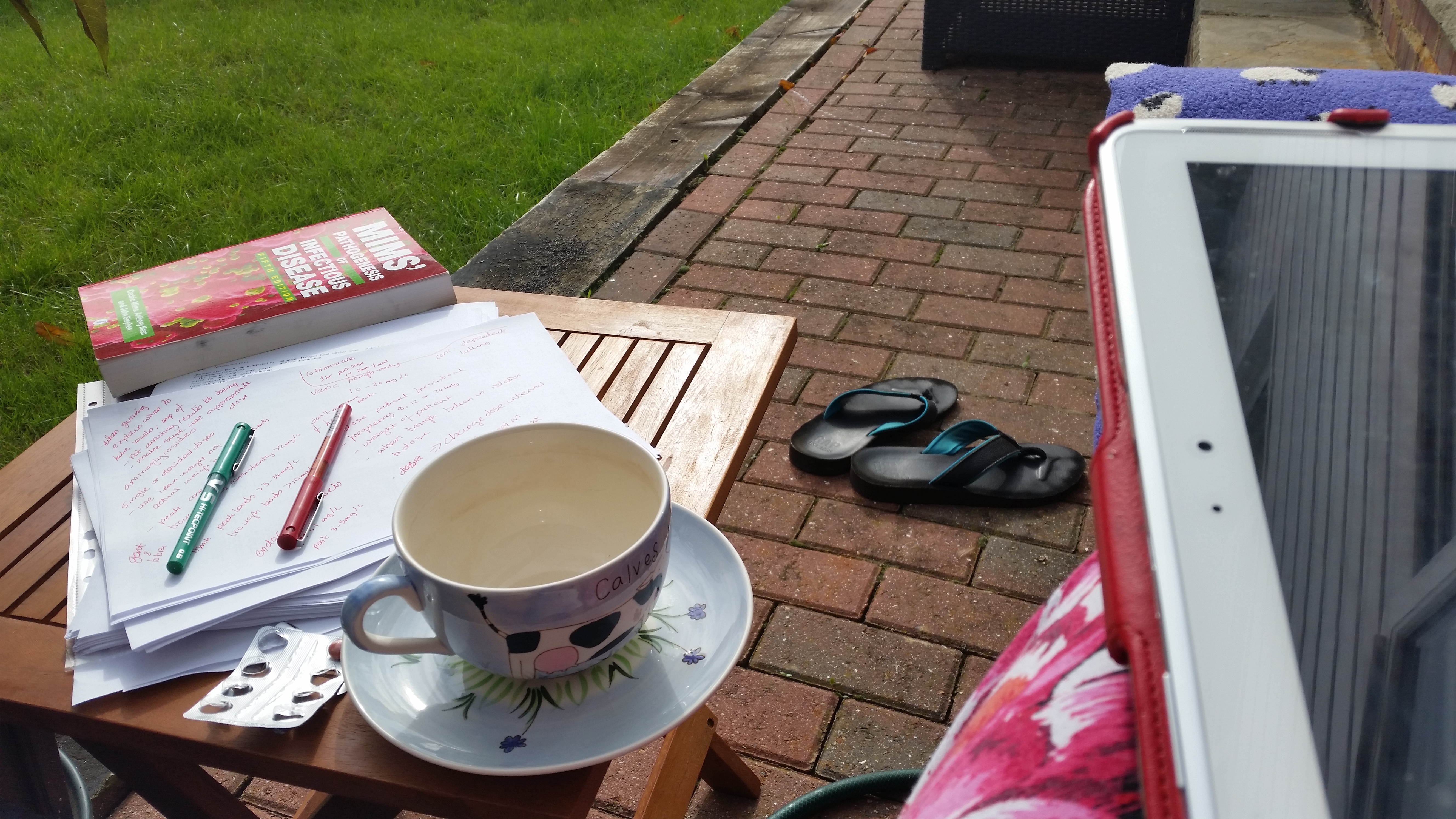
Most of science is not actually in the doing, most of the best of science is actually in the planning. If you get that right then everything else will follow. If not you can spend a lot of money getting a lot of data that is in fact not much good to anyone and definitely doesn’t answer the questions you were asking. When I was starting out, and sometimes even now when a deadline overwhelms me, I thought it was better to be doing. To be in lab getting ‘somewhere’. Needless to say I spent a lot of time getting ‘somewhere’ but that wasn’t where I needed to end up. Tea cannot be drunk in the lab. Sometimes making a cup of tea therefore is a really good way to break the cycle of doing and force yourself to have time to step back and plan. It is one of the reasons I have exceptionally large cups as they give me the time to get into the right headspace and adjust my thinking before I reach the end. It also helps that I drink my tea black so that it also has cooling time. By the time I’ve cooled and finished my mind is usually in the place it needs to be and I’m in planning mode not panicked doing mode.

Tea and Networking

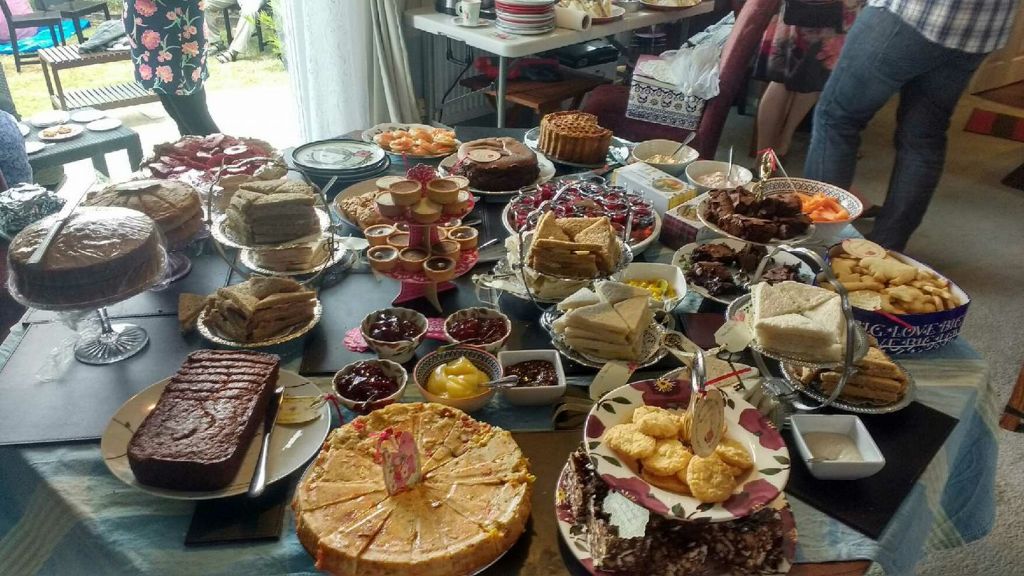
I believe it is no secret to anyone that reads this blog that I appreciate a piece of tea and cake. This is partly because I like to host as it gives me a structured way to talk to other people. It is also because I believe that when we are sitting and eating/drinking with other people it removes hierarchy, especially if that can be done outside of the usually work environment.

This next but may shock you, but I HATE networking. I’m pretty good in 1:1 situations where I know the other person, but I’m rubbish at faces and I’m even worse at remembering prior conversations. It’s definitely not the fault of the person I’m speaking too, it’s just my memory doesn’t work that way. My memory is super context specific. I therefore find the horror of speaking to people who know who I am, who I have spoken to before and me not remembering, one that I regularly encounter. I also hate networking as I actually have no small talk. I spend a LOT of my time working and my geeky hobbies are not ones that many people will engage with on first meeting and so I struggle. It’s one of the reasons I started on Twitter almost 20 years ago. Twitter meet ups at conference meant I had already done the small talk and we already had shared context and so I didn’t have that panic inducing moment where I tried to find something sensible to stay (NB this is still a top tip of mine if you’re starting out going to meetings).

Tea makes me relax. At conferences I can always talk about the food and the tea. It also means that I worry less if I’m talking to a Noble prize winner or someone of international renown. They need to eat and drink just like I do. Also, if you find someone hanging around the tea area with no one to talk to they are probably in the same boat as you and will be super relieved that you are the one that made the conversation opener so that they didn’t have to.

Tea and Sympathy

For all you amazing young scientists starting out please don’t take this one too much to heart, but use it a short cut to help your mental well being. Science is 80% failure. You will fail at grants, you will fail when you submit papers, you will have bad supervisor meetings and elevator pitches and most of all you will have failed experiments. Sometimes in the case of lab work these failures can go on for months or years and be super costly, both in terms of money but also in terms of your mental health. What you need to know now is that this is normal. The most amazing scientists you meet will have sat there in a puddle of tears with mountains of self doubts and fear that nothing would ever succeed again. No one ever sat me down and told me this. For a long time I felt I was alone in the failure. Then over time my colleagues became friends and we finely got to the point where we could voice our fears and disappointments. Only then did I realise that I wasn’t alone. That these failures were crucial points where I learnt and developed and that instead of fearing them I should embrace them.

So my advice now, for all those I supervise and support, is to spend time early developing a few key relationships. Then when you are experiencing the failures you too can have someone who will listen and tell you that it’s normal and support your mental wellbeing as well as helping you get back on track. You will also learn from being the person who supports others when it’s your time to pull out the tea, biscuits and box of tissues.

Tea and Reflection

Moving on from tea with others I wanted to reinforce the importance of tea with yourself. This touches on the Tea and Planning section above but is wider than that. As scientists with are often process driven and tend to be rather task orientated. That means we are great at getting things done but poor at working out why we are doing them. Working as a scientist these days is super complex. Not only are you dealing with regular failure, but you are dealing with complex political environments and career pathways that are anything but clear. When we fail to give ourselves time to reflect and check in with ourselves we can end up going down rabbit holes that don’t get us where we want to go. It also means that our relationships suffer. As you gain students, direct reports and more leadership responsibility it it really important to think about why certain conversations went the way they did. To reflect on things like your leadership style and which situations it’s working in and which it isn’t. As trainees it’s worth taking time to think about why you didn’t get the supervision support you were looking for, did you pick a bad time, did you not manage to articulate what was needed etc. Only by working on ourselves can we really move forward, and this is the one thing we often don’t take the time to consciously do.

Tea and a Pep Talk

So you might say to me ‘what is the different between tea and a pep talk and tea and sympathy’. I would respond that they are actually very different things and both have their place. Tea and sympathy isn’t about trying to ‘fix’ things, it’s about centering yourself when things are going wrong and not feeling along. Tea and a pep talk is more like a coaching experience, It’s about someone giving you constructive support to help you navigate a challenge. It requires a bit of work from both parties in order to try and progress the issue and although it should also enable you to come out feeling better, it should also enable you to come out with a plan of action. You may not be needing a pep talk because you’re upset but because you have a barrier to traverse, a conversation to have, or a direct to pick. You may also want your pep talk to be from someone different to your tea and sympathy as it may be that you want to access knowledge or experience. It is often a conversation that is not so reliant on trust as your tea and sympathy chat may be and you will want to bear that in mind when picking who to have these conversations with. Having tea in these conversations often means you can change their location to outside the working environment (if needed) but also set them up to not be rushed and have the time needed to reach the destination required.

Tea and The Late Night Session

I’d like to say that I have this work life balance thing cracked, but I suspect that my family, friends and colleagues would say that probably isn’t the case. Even if I has I think there is no way of getting around the fact that if you work in science there are going to be some late nights. Sometimes that’s because you are doing a growth curve that is going going to take you 20 hours, sometimes it’s because you have a full working day and then need to do some work for a dissertation and sometimes it’s because of some form of urgent need that means you need to start something for a patient at 6 when you were due to leave at 5.

I used to try and just push through these sessions. I used to think that finishing as early as possible was the best way to balance it with everything else. What I learnt is that when I pushed through I made mistakes. I learnt that for me even when pushing to get things done I need to schedule short ‘walk away’ periods where I could have a cup if tea and move in order to think, especially if I was at work beyond 8 o’clock. Otherwise I made silly mistakes, For the sake of transparency sometimes these wake up ‘walk away’ sessions involved me dancing across the lab with tubes in hand to Lady Gaga, but mostly they involved a cup of tea and ideally a biscuit as I wouldn’t have eaten. My practice is to give myself a 5 minute break to make the tea, go back and do another 20 minutes whilst it cools and then to have a 15 minute zen moment whilst I drink it. I’m sure you will have your own method, but developing one with save you errors and stop you having to repeat these late night efforts.

Now, with this written I’m off to have a cup of tea. Remember my top tea related tips:

  • Find your tea and sympathy peer
  • Take time to reflect
  • Planning will save you time
  • Know how to push yourself and strategies to avoid mistakes
  • Don’t be afraid of networking but think how to make it work for you

All opinions on this blog are my own

If you would like more tips and advice linked to your PhD journey then the first every Girlymicrobiologist book is here to help!

This book goes beyond the typical academic handbook, acknowledging the unique challenges and triumphs faced by PhD students and offering relatable, real-world advice to help you:

  • Master the art of effective research and time management to stay organized and on track.
  • Build a supportive network of peers, mentors, and supervisors to overcome challenges and foster collaboration.
  • Maintain a healthy work-life balance by prioritizing self-care and avoiding burnout.
  • Embrace the unexpected and view setbacks as opportunities for growth and innovation.
  • Navigate the complexities of academia with confidence and build a strong professional network

This book starts at the very beginning, with why you might want to do a PhD, how you might decide what route to PhD is right for you, and what a successful application might look like.

It then takes you through your PhD journey, year by year, with tips about how to approach and succeed during significant moments, such as attending your first conference, or writing your first academic paper.

Finally, you will discover what other skills you need to develop during your PhD to give you the best route to success after your viva. All of this supported by links to activities on The Girlymicrobiologist blog, to help you with practical exercises in order to apply what you have learned.

Take a look on Amazon to find out more

I Passed my PhD 6 Years Ago This Week: What Tips do I Have for Those Who Are in the Process?

On my Facebook page, it popped up that I had passed my PhD viva 6 years ago this week. I undertook my PhD in a slightly unusual way, as I did it as part of the National Institute for Health Research Doctoral Fellowship scheme. This meant that I undertook a PhD 50% of the time as part of my day job in Infection Prevention and Control. It also meant that I didn’t start my PhD until I was 30 and, although I was linked to an academic department, I was not really embedded within one. I was pretty much in a team of one. This has its advantages but it also meant that I didn’t really have the peer support of being in a department with lots of PhD students. It also meant that it was hard to benchmark whether I was doing OK. For people who are also undertaking a PhD without lots of peer support, or are thinking of doing one, I thought I would use this blog post to talk about some of the things I wish I had known.

Project Manage Yourself

A PhD is the biggest single project that most people will ever manage on their own as a continuous piece of work. It feels like a huge undertaking and it can often feel overwhelming. Like any project, therefore, it benefits from being split into more manageably-sized chunks. This can feel difficult when you don’t yet have a feel for where you need to end up. It’s often helpful to think of it in three main themes and to set targets for each of them:

  • Project milestones i.e. literature review, initial data collection, key project themes.
  • Personal objectives i.e. developing communication skills, developing teaching skills, adapting to academic and scientific culture.
  • Professional objectives i.e. building networks, learning techniques.

Use these objectives and milestones to create a working document. Know that it is a working document and that everything will shift and change. This shouldn’t be a millstone: it should be something where you tick off the components you’ve achieved so that in the dark days, when you forget what progress you have made, you have something that reminds you of how far you have come. It can also be a really useful tool to help you re-focus when you have a lot of options or things available to you. Use it to prioritise and to decide whether your choices are moving you towards your goals.

Actively Manage Your Relationship with Your Supervisor

Not everyone has a great relationship with their supervisor: some people have supervisors who will take them for cake and a pick-me-up, others have a supervisor who they don’t see for months at a time or who may appear overly critical. Whatever your relationship with your supervisor, there are some things worth considering early on in your PhD:

  • Understand the context – Unfortunately for you, most PhD supervisors do not have supervision as their main job. In healthcare, this is mostly their clinical work; even in academia it’s often the need to apply for funding for their group and publications for their progression. If you can understand the drivers on your supervisor’s time then you will be better able to work with them.
  • Be clear about your needs – I would always advise developing a learning agreement with your supervisor very early on in your relationship/project. Everyone learns in different ways and your supervisor is not a mind reader. By developing a learning agreement, you and your supervisor can work out what works best for you both. Do you want regular contact, or does micromanagement drive you mad? What’s the best way to communicate? Email? Face to face? Phone? How often will you sit down and have a project review meeting? What information will they expect you to have? Do their aims for you align with your goals?
  • Don’t be afraid to ask for help – Understand that a PhD is an apprenticeship in research: you don’t need all the answers. It may turn our that your supervisor may not be the best person to answer all of your questions, some of them may be too technical, or they may not be available enough to assist. Despite that, they should still be your first port of call and should be able to signpost you to assistance if they can’t provide it themselves.

Find Your Tribe and Learn to Speak their Language

The last bullet point brings me onto this point. For many many reasons you will need more than your supervisor to get you through a PhD. You may be like I was and pretty much alone, or you may be surrounded by other PhDs. Whatever your circumstances you will need to find support. You won’t be able to ask your supervisor every time you need to order lab books or where the pipette tips are stored – sadly, they are unlikely to know.

Getting out and attending lab meetings, or other teaching, can be a great way to not only meet people but also to develop the subject specific language you’ll need to succeed. If, like I was, you’re alone, then your funders will hopefully be able to signpost you to other people on similar schemes, and don’t forget about your postgraduate tutor (you should have one) who may be able to make connections for you across departments/buildings. If you are doing a PhD and are part of a professional group (or even if not), social media is often your friend. There are lots of good twitter accounts that can be a valuable source of information.

Do Your Homework

Every University has different processes and management expectations. It is worth understanding early on what these are and what you need to do about them. Is there an electronic log? How many lectures etc. outside of your PhD do you need to attend? What evidence do you need to collate? Do you need supervisors to sign off for specific things? My supervisors didn’t know any of these things and it proved crucial for me to not only be aware of them but to understand how to traverse them. This is especially true if you also have an external funder to satisfy and returns that are expected.

Take the time to learn your cultural norms and consider what authorship order is normal for the subject area. How often are you expected to present? How can you involve public engagement in your work? Are you expected to apply for further funding and to whom?

Learn Your Process

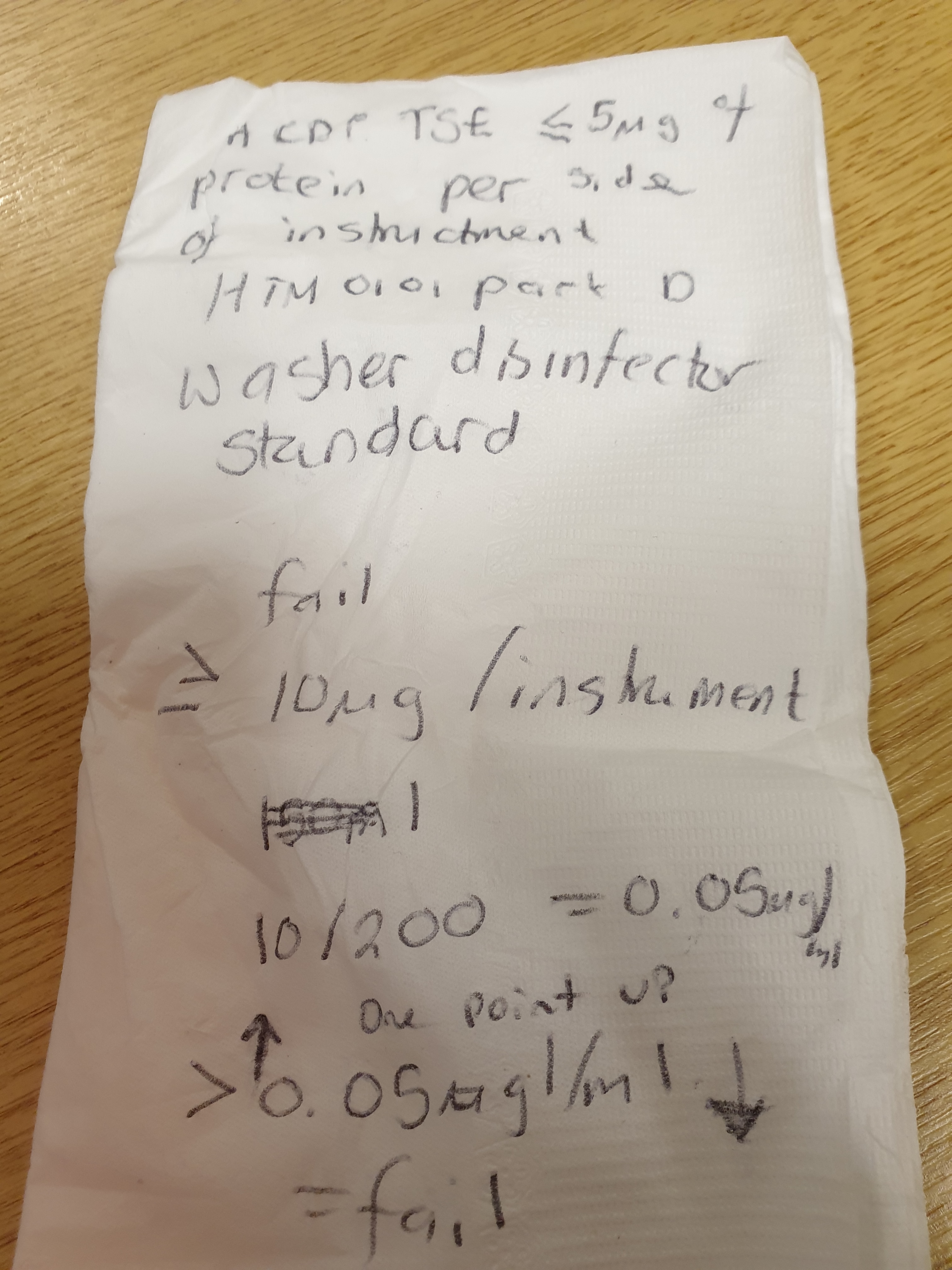
Not everyone works the same way. My amazing colleague, Melisa, will tell you that we often do our best work when just talking through ideas over lunch. This means that my lab book often has many serviettes stuck into it, waiting to be written up. Many people carry notebooks (Mel does) but, for me, this has just ended up the way it works: I can then write it up neatly and in a structured way – that additional process helps me.

Talking of lab books, make sure you have them and that you keep them. Have a structured way of recording information so that you make sure you have everything down and don’t miss crucial details which were blatantly obvious at the time. I can promise you that when you come to look at them three years down the line you will have no idea what that obvious information was. I also colour code mine for different types of work (viruses = purple headers, bacteria = green etc.) because it helps when you’re flicking through years of books towards the end.

It’s also worth knowing what your writing process involves. For a long time I beat myself up for not being able to get on and write straight away. I would berate myself for prevarication as I would tend to cook, run or even, god forbid, clean rather than start to type. Then, after about three days, I would sit down and I would write something like a paper in full. It took me forever to realise this was my process. I would spend time percolating things over, deciding my story, thinking about structure, even if I wasn’t specifically thinking I was processing in the back of my mind. It was all still work and made my writing more efficient and so I have learned to accept that writing is not JUST sitting in front of a computer screen. It’s everything that leads up to those words.

I also want to quickly note here that my process is not going to be the same as yours. You will find your own, but be aware of it and learn to be comfortable with it.

Finally, Give Yourself a Break

All projects are different, and not all subjects are the same. Although I talked earlier about benchmarking you really do need to bear this in mind. Use benchmarking to help you, not break you. You are on your own journey and it will be different from everyone else’s. Also be aware that there are some things that seem to happen to everyone, like the second year slump. No one told me about this and I struggled for ages thinking it was really abnormal. I finally confessed and was told that it happens to just about everyone. The second year slump is where you are far enough into your PhD to have a good feeling for where you need to end up and of the work involved, but you are too far from the end to have really started ticking off the achievement boxes and it all stills feels far away and overwhelming. The second year slump can happen at different times to different people, especially if you’re part-time, but this is just one example of knowing that this is a learning process and sometimes you just have to go with it.

All opinions in this blog are my own

If you would like more tips and advice linked to your PhD journey then the first every Girlymicrobiologist book is here to help!

This book goes beyond the typical academic handbook, acknowledging the unique challenges and triumphs faced by PhD students and offering relatable, real-world advice to help you:

  • Master the art of effective research and time management to stay organized and on track.
  • Build a supportive network of peers, mentors, and supervisors to overcome challenges and foster collaboration.
  • Maintain a healthy work-life balance by prioritizing self-care and avoiding burnout.
  • Embrace the unexpected and view setbacks as opportunities for growth and innovation.
  • Navigate the complexities of academia with confidence and build a strong professional network

This book starts at the very beginning, with why you might want to do a PhD, how you might decide what route to PhD is right for you, and what a successful application might look like.

It then takes you through your PhD journey, year by year, with tips about how to approach and succeed during significant moments, such as attending your first conference, or writing your first academic paper.

Finally, you will discover what other skills you need to develop during your PhD to give you the best route to success after your viva. All of this supported by links to activities on The Girlymicrobiologist blog, to help you with practical exercises in order to apply what you have learned.

Take a look on Amazon to find out more

Science Communication: Reflections from an Ivory Tower

This week I was going to post about Antimicrobial Resistance (AMR) as, in many ways, it has been quite a momentous week in my professional life and it all ties into AMR. I may still… but I wanted to raise something that has been playing on my mind this week in light of the social media reactions I’ve seen to the new COVID-19 (don’t call it a lockdown) tiers.

Let me say now that this isn’t a political post, purely one linked to reflections that have been triggered for me that are linked to some of the pitfalls of traditional communication, medicine and dissemination.

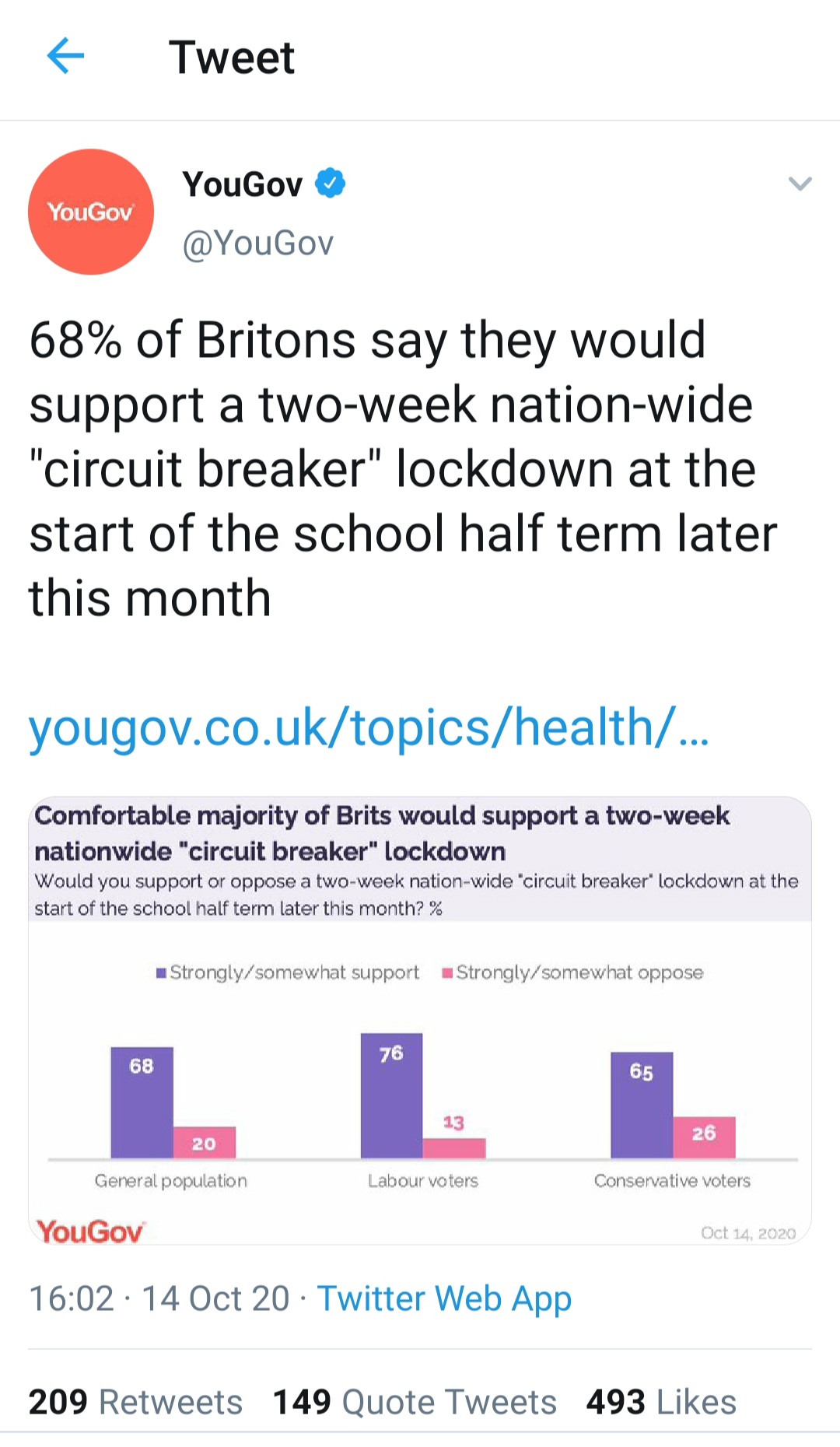
On Wednesday, I saw this tweet. The scientist in me responded with, ‘well of course’ and ‘surely people understand the ramifications for everyone if we don’t find working containment measures’.

Twitter post related to the new YouGov poll

When I see posts like this, I usually scroll through the comments. I think it’s important to read what people are posting and see what the challenge is like, as it’s all too easy to see the world through the eyes of those in your bubble. Those people in similar situations to us, with similar views to us, who then use stats like this to reinforce the positions we already hold.

Then, as part of the comments, I saw this:

My first reaction to this post was to blow out my cheeks and sigh. “The needs of the many outweigh the needs of the few” and all that. That’s an economic problem that should be addressed, not an infection issue: think of the number of people who will die etc.

Then I stopped and realised there is truth to this

I do live in an Ivory Tower

Now that’s not to say that I am rich, and it’s not to say that my response to the the poll is wrong. It is to say that we must reflect and admit the truth to ourselves. I can pay my mortgage. My job is not at risk (although my husband’s may well be). I can buy food and cover my bills. That gives me a privileged position where I can engage with and make decisions about how I feel about the science, the justification, and the way they are implemented. I don’t have to react from a place of worry and fear. That privilege means that I can digest information from a place of logic and not emotion. That privilege also means that I can lose perspective about how others may receive the same information and I certainly have to be aware of that privilege when it comes to judgement.

However the key word in the above paragraph is “receive”. This is where I come to the real point of my post. One of the problems with the current situation is the feeling of disempowerment of being the recipient of information and not the co-creator of response. This has been a problem in the health setting for pretty much as long as it’s existed, but its only in recent years that it’s been recognised as such.

Too many times in medicine we implement from a position of expertise and authority without engaging the lived experience and knowledge of others. I’m a passionate believer in the power of true co-production, where we work in partnership to create something that neither group could deliver on their own. I work in a hospital where we see patients who may be one of only 20 in the world with their condition. It is naïve and arrogant of me to believe that I will understand more about their experience of living with their disease. I can input, support and advise on the basis of biology and my experience. It will never be truly effective without considering theirs.

So my thought on this Friday evening is actually more of a plea. We all have our Ivory Tower, our bubble, our version of the truth. If you work in healthcare it’s important to give yourself time to reflect on what that means for your practice. Are you doing everything you can to move from being the authority in the room to being the person who is prepared to truly listen and co-create the best possible outcome for the patient in front of you?

Are we ready to enter a new period in healthcare where it is much more about the patient in front of us than it is about our years of training and education?

Photo by Adrianna Calvo on Pexels.com

All opinions most definitely my own

Adventures in Science Communication – Stand-up comedy edition

I’m not funny. Well, I’m not “laugh out loud” funny. I’ve never been the kind of person who has told jokes and, unlike many in an American genre TV programme, I would never have won the ‘Class Clown’ award. So how on earth did I end up spending three hours this week in a stand-up comedy training session?

There’s obviously the answer that a lot of the 11 people on the call would give: i.e. we need continuous professional development (CPD) points and, as Healthcare Scientists in the time of COVID-19, that’s not as easy. For anyone that doesn’t work in our profession, we have to show that we engage in a set number of hours of active learning and updating our practice. This helps us stay safe but also encourages a growth mindset where we learn new skills.

Secondly, the funding for the sessions is from a public engagement grant that my brilliant deputy was awarded by the Society for Applied Microbiology (SfAM). My deputy is super brave and was invited to do a show last year, having never done any stand-up comedy. As part of my role as leader, I felt it was incredibly important to actively participate in something that she had put energy into and believed would make us better communicators. Also, I’m a Trustee for SfAM and they do great work in supporting scientists in stepping out of their boxes and trying something new to communicate differently. I really buy into this and so, despite being slightly terrified, it was the right thing to do.

Step out of your box and give it a go

The session was delivered by Dr Steve Cross who is a consultant in public engagement and education. He started off the session by saying that he enjoys teaching nerds to be funny. Well, as a self confessed mega-nerd, this was a good start from where I was sitting. The session was a real mix of scientific backgrounds: from social science, infection specialists, pathologists, physiologists, through to medical physicists. This is one of the great things about sessions like these: networking is a great and often unexpected benefit and you get to spend hours with scientists you would never encounter otherwise and learn about their worlds.

Never underestimate the power of stories

We started out by discussing what we thought was funny. I had failed to do my homework and so hadn’t brought a clip with me (I know, an automatic F!) But the better prepared participants showed YouTube clips that made them laugh and discussed why. In an attempt to raise my grade from an F to a D, the clip below (belatedly) is something that makes me chuckle.

From watching the different clips I began to reflect on the power of stories. One of the reasons that Nicola Baldwin (the playwright I work with) and I utilise drama is because we believe in the power of drama to communicate, break down barriers and alter behaviour. It was fascinating to think about how comedy can be used to:

  • See things from a new direction
  • Explore differing opinions in a confrontation-free way
  • To confront and explore upsetting/worrying topics avoiding direct triggers
  • Enable the voicing of secret thoughts that are very common but we fear discussing openly
  • Talk about common experiences as if they are new in order to gain fresh insight
  • Subvert expectations
  • Inspire or start conversations

A lot of these points can be extrapolated to the reason Nicola and I use drama. The power of comedy is the portability and equal access nature of it. It doesn’t require huge amounts of resources to prepare a set, it doesn’t require a lot of resources to deliver a set, and it can be delivered flexibly across zoom or in person.

Steve ran us through a bunch of very easy to access and non terrifying exercises. Many of these involved us taking a story or event and reflecting on it in order to delve deeper into emotions connected with it. We then discussed how these stories and linked emotions could be used to make people laugh. Obviously there’s way more to it, but Steve is the king and we are running more of these sessions if you’d like to give it a go and participate yourself.

My main reflections from the session were:

  • Undertaking this kind of training can enable you to see situations differently and explore ways of seeing them from another’s point of view
  • Learning to break situations down and actively think about how to communicate them is a transferrable skill which is really useful in your professional practice
  • Understanding how stories can be used to create empathy and engage audiences isn’t just important for comedy. This technique can be used to support you bringing your whole self to work and break down communication barriers

All opinions in this blog are my own