Celebrating The People That Make It Worthwhile: Taking a moment to appreciate the positive people in our lives

Being present on social media or even listening to the news right now can be hard and take me into a pretty dark head space. It’s easy to write negative posts as a result of this head space and to give energy to the people or situations that make life challenging, or who make us feel badly about ourselves. Those people get to spend enough free time in my mind, however, without me giving them more air time or more of my energy than they already have. So, in the spirit of active rebellion, let’s turn the world around and talk about the people who do deserve the energy and recognition. The ones who give liberally, support unconditionally, and act as the cheer leaders that we all need in our daily lives to just get through the week. Let’s focus on the good rather than being drawn into the dark.

Thank you to the people who catch us when we spiral

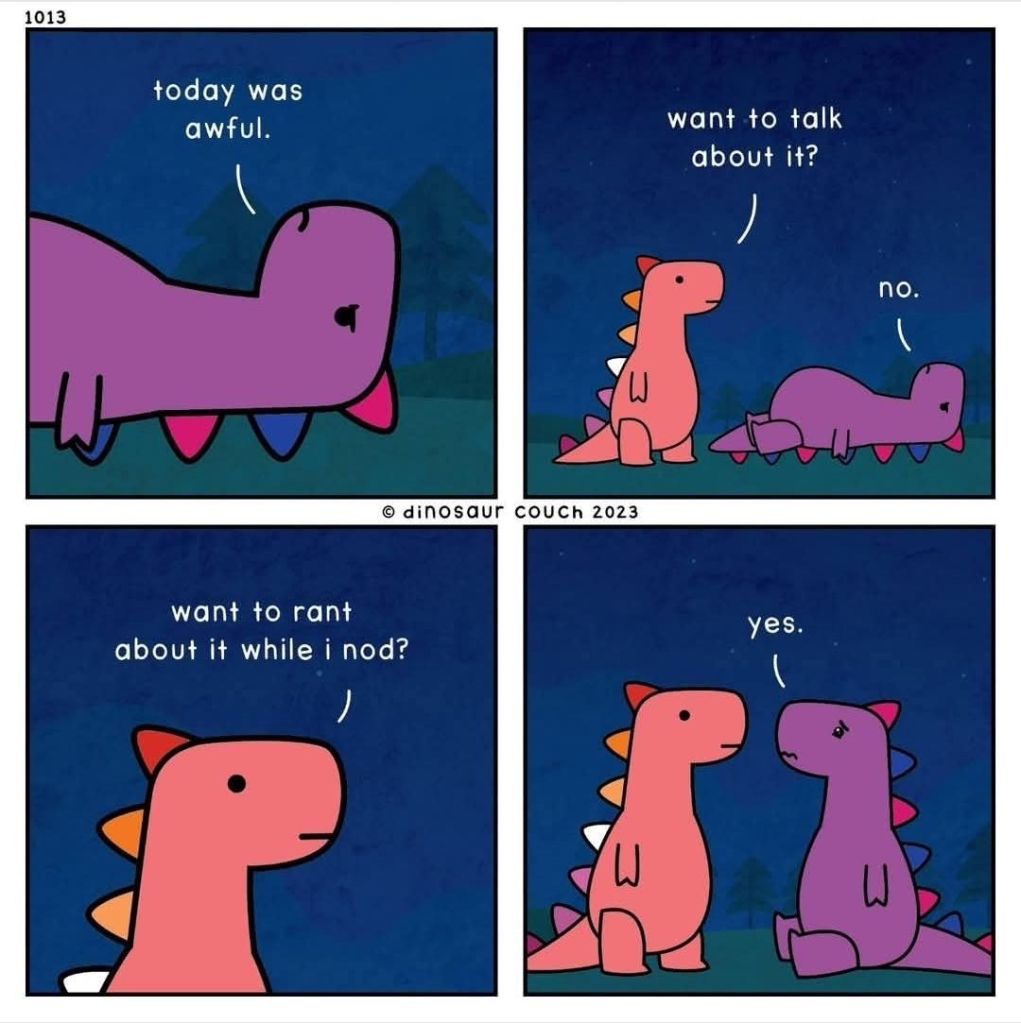
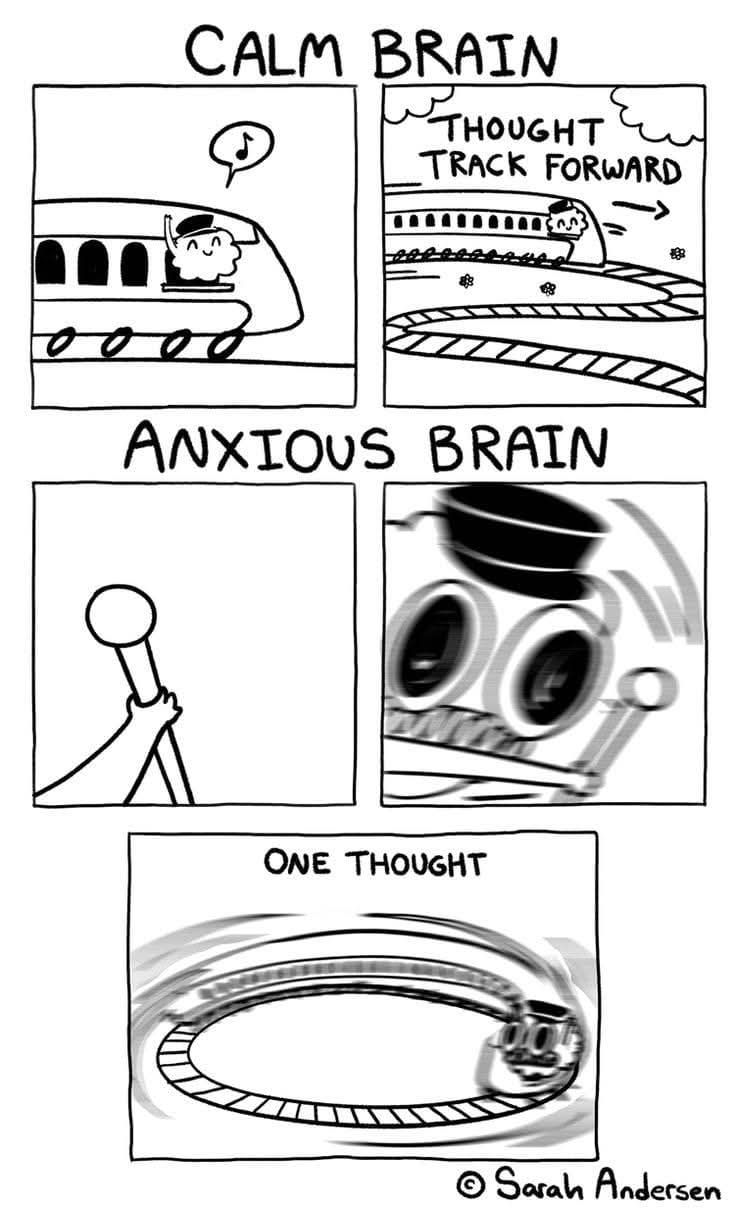
We all know that I have a strong tendency to spiral, especially linked to event triggered anxiety. I’ve written about it before. I wanted to take a moment to thank those people out there who recognise and actually help flag to me when I’m spiralling, as sometimes it can take me some time to even notice the deterioration in my thinking. Just recognising that you have fallen into that head space can be challenging, but recognition is the first step in managing and exiting the spiral.

The second reason having ‘spiral friends’ is super helpful is that I have a very very small list of friends who I can call (and they can call me) and say ‘I’m in a spiral’. We then support each other by talking through the source of the anxiety, the validity of the anxiety, and if there are any actions that are valid/required. People who take time out to talk through and validate responses when needed and dispel irrational thinking as required, give the greatest gift in terms of time and support.

To the people who listen to the repetitive statements until we’ve worked through our process

I not only have a tendency to spiral, but to sometimes get stuck in my thinking. When I’m fixated on something, I can be one of the most annoying people in the world to be around. Becoming hyper focussed is one of my greatest gifts, as it means that I can just sit down and write 5000 words or focus for hours at a time. It’s also one of my greatest curses, as when that fixation falls onto something that I have no control over or is more of an emotional block, it can be really challenging to stop that focus becoming an unhelpful fixation.

When I fixate on something I just can’t let it go. I have to process my way through it. Sadly for those around me that processing tends to take the form of a very repetitive conversation cycle, whilst I try to talk my way through the weeds I have gotten caught up by. This means, for Mr and mummy Girlymicro, and my besties, they get stuck also having to have these conversations with me. On repeat. I do eventually get to the point where I come out the other end, but I know it would be easier for everyone around me if I could just put it in a box and move on without the thorough exploration this process requires. So thank you for your patience and generosity with your time, I know you all have other things to do and I owe you a lot of champagne in return.

To those who love us, not grudgingly, but because they truly accept our imperfections

Having just read the last two paragraphs it should come as no shock at all that I am far from perfect. I annoy myself sometimes, let alone anyone else. The thing is, I have some people in my world that truly love me. They don’t love me despite my flaws. They love me because of them. They love all I am, despite how challenging that person can be. Knowing that is the most empowering thing I can wish for someone. It makes me feel safe enough to express and face my fears. It empowers me to share my failures, challenges and learning, through things like this blog. It is my greatest hope for all of you that you also find your people who make you feel this way, whether they are your family by blood or by choice. These people enable us to be the best versions of ourselves, and I couldn’t be more grateful.

Shout out to those who truly embrace difference as a positive

Humanity is tribal. Most primates are. That means that we can have a tendency to like people who act like us and hold similar values. The thing is, our diversity and difference is what makes us stronger, and should be something that is embraced rather than suffered. As someone who holds a rather weird and wonderful mind, that may not process and see the world in the same way as others, I sometimes really feel how I am seen at ‘other’. I often just don’t fit in and, even more than that, I frequently want to walk a path that is not valued or trodden by others. There are people out there, who rather than being baffled or thrown by this approach, fully embrace it and what this difference offers. Instead of trying to make me fit into a box that doesn’t feel comfortable, they support and encourage the risk taking that is required to walk my own path. They do not find my difference a challenge or a threat, but an inspiration and a positive trait. They see value in me as me, and that is not so common. These people are the ones that have the ability to change the world by expanding acceptance and re-defining normal. We need to find them, honour them and celebrate their vision.
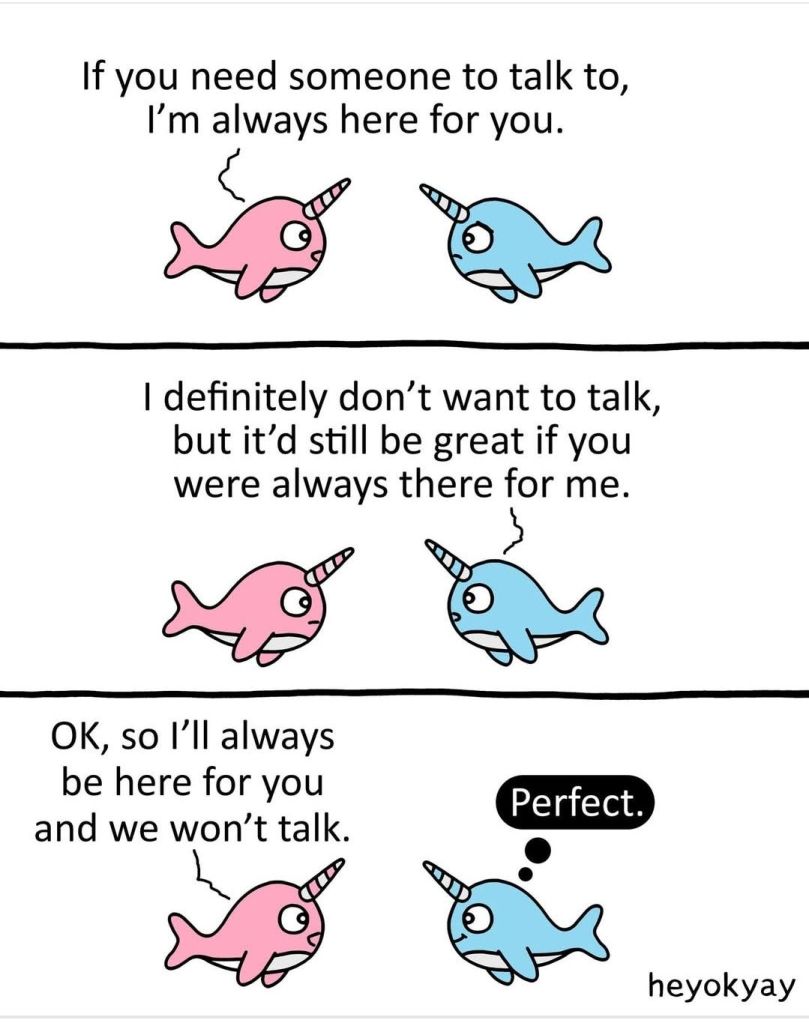
Thank you to those who remind of our strengths rather than focusing on our flaws

Part of learning and growing as an individual is having the self reflection to understand our flaws as well as our strengths. It’s easy to lose perspective, as our area of change is often linked to the things we want to fix, to the extent that out flaws loom large and we forget about the strength side of the equation. Many of us are perfectionists who struggle to come to terms with the fact that we are, and always will be, a work in progress. It is also easy, therefore, to lose sight of how far we’ve come and to just see how far we have yet to go. So, this one is a shout out to the people who help us re-focus, and bring back into perspective all that is positive about ourselves. The ones who help us bench mark that, actually, we’re doing OK.

To those people who will hold us while we cry it out

I wear my heart on my sleeve, I always have. I’ve lost count of the number of times I’ve felt judged for this and when I’ve received comments such as ‘you’re too emotional to be a leader’ or other judgements that indicate you cannot be emotionally expressive and be good at your job. Comments that indicate empathy or emotional intelligence may actually be a risk rather than something to be developed. For a long time this meant that I tried not to fully engage or bring that part of myself to my working life, to try to be more remote and not express how I was feeling. Now, I’m not saying we should scream and shout, but I do think that I am a rounded individual who is not a robot, and neither are the people I work with. Therefore, to be my authentic self I need to acknowledge that I come with feelings, beliefs and biases, which need to be noted and managed, but also make me a better human being if handled appropriately.

Outside of work especially, I’m such a crier. I weep at movies, I cry with both sadness and joy, and don’t get me started on my behaviour at weddings. I am so grateful to have friends and family who allow me to safely experience all the peaks and troughs of these emotions, and know that a box of tissues or three may be required if we are going to Les Misรฉrables.

I am beyond grateful to those who give us courage to be the true versions of ourselves

Speaking of my emotional side brings me onto authenticity. When I started my job I wouldn’t talk about being a gamer. I wouldn’t talk about movies, or other things that interested me, as people would comment ‘geek’ and roll their eyes. Over the years since I’ve realised how important it is to fully show up, and to bring my whole self to spaces, especially when in a leadership role. If I don’t lead the way, how can I expect others to. It’s not always easy however. Sometimes the comments cut deeper when they are made at our authentic selves rather than at a protective shell. It can be easier for others to try and bring us down when we offer so much of ourselves as a target. There are definitely times when I just want to retreat into my shell and take the easy road.

Even when writing these blog posts, there are times when it would be easier to hide from some of the challenges, especially when there are comments made linked to my choices. I stand by those choices however, I stand by sharing the highs and the lows, and by showing my flaws as well as my strengths. It takes courage some days. Some days more than I have available. So I want to say how grateful I am to those of you who lend me courage on days when I lack it. I look back on the many of the positive comments on this blog when I start to doubt myself, and use them to give me clarity and strength to move forward when it might be easier not to.

No matter how hard it gets, if you can find these people in your life it’s worth fighting for

It took me a long time to feel (mostly) comfortable in my own skin, and so much of that progress has been due to me finding the people in my life who told me that it was OK to be me. I’m fortunate to have a great family by blood, but I also have key members who are my family by choice. No matter where you find them, treasure them. In these difficult times, when the world can feel like you could be swallowed by quick sand any second, use them to anchor you. Use them to reflect. Ask, will this matter in 6 days, 6 weeks, 6 months or 6 years? Use them to help gain the perspective you need to pull yourself up and get out there to fight the good fight and stand up for what’s right. Just don’t forget to also thank them for the amazing role they have in your world and pay it forward so you can be that same person for others. The world is always darkest before the dawn, so lets get through this time together.

All opinions in this blog are my own
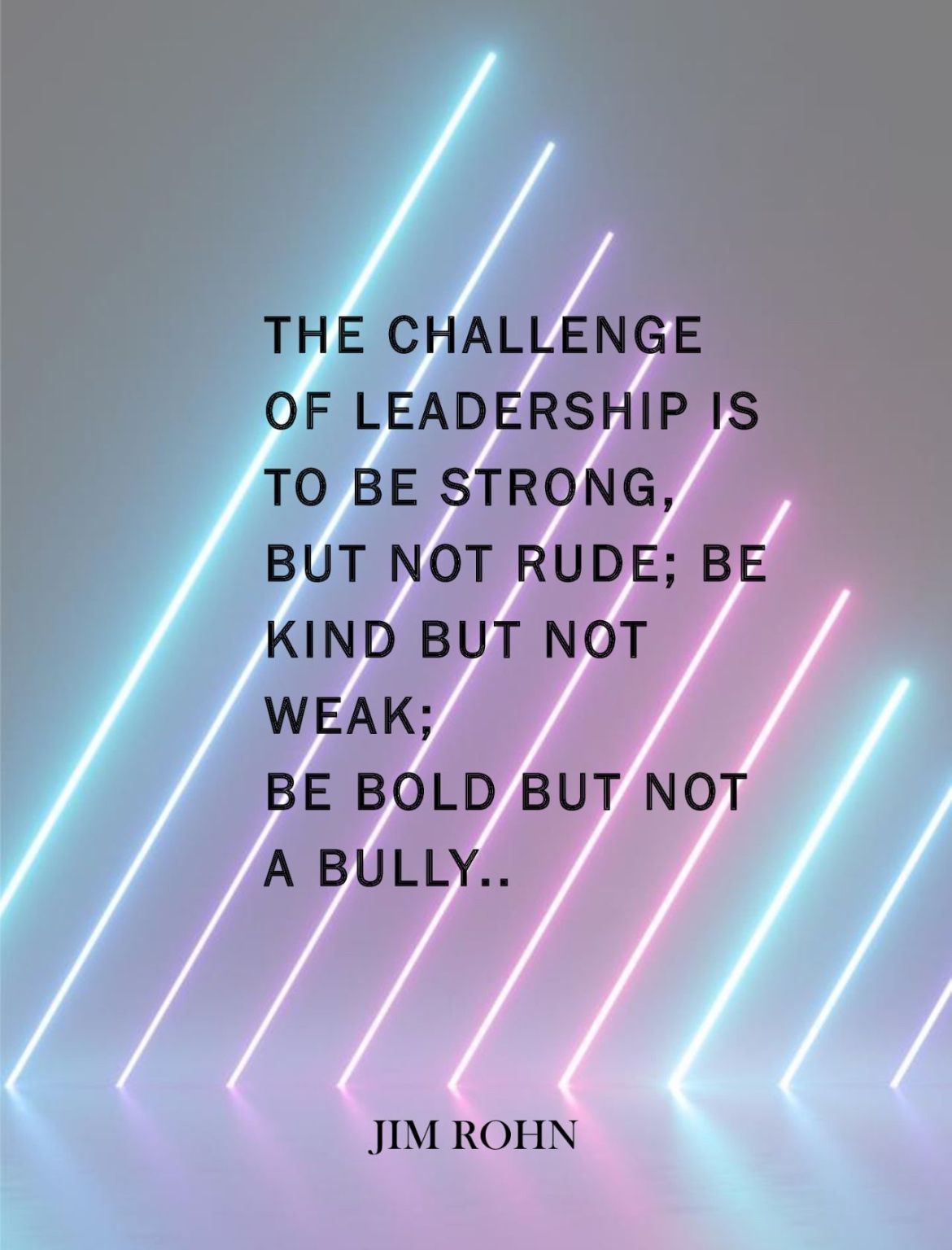
Sorry, Not Sorry: The challenges of being an anxious apologiser

I’ve been finding myself in a bit of a hole recently where my first response to anything, and the first words out of my mouth, are always an instinctive ‘I’m sorry’. Whether I have done something wrong or not, whether someone is accusing me of something or not, I just can’t get the words ‘I’m sorry’ not to be the first ones that immediately leap to my lips. Now, owning when you need to apologise is a really important thing. The thing is, that there are a lot of consequences to unnecessary and anxious apologising that I don’t think we necessarily recognise. After all, what does it matter if we say sorry too much? No one is hurt by the words ‘I’m sorry’. Is that true though? After a particularly anxious weekend last week I spent some time thinking about how apologising too much can actually be a leadership issue, and what steps you can take to reduce the downsides if this is something you are impacted by, like me.

It can make you come across as weak

Leadership can be challenging at the best of times, but in a resource limited setting with competing pressures, it can feel more challenging than ever. Those you are leading need to feel secure in your direction of travel and protected in your leadership.

Despite authenticity being important, being an anxious apologiser can come over as weakness and something that can be exploited by others.  It can come over as not owning your time, boundaries, responsibilities, or actions.  Worse than that, it can also make those you lead feel more uncertain, depending on the context of the apology. Owning up to mistakes and proportionate apologies are great, inappropriate ones, very much less so.

Makes setting boundaries more challenging

One of the things that I am super aware of is that my anxious apologies make boundary setting less easy. I am allowed to take time off sick or to be on holiday, I should not feel the need to apologise for it. Doing so makes others feel less able to also take the time they are owed. I am an emotional person. I wear my heart on my sleeve. In many ways, I believe that makes me a better leader. I, therefore, need to stop apologising for trying to be myself rather than attempting to fit some predetermined mould. If I don’t feel I can be authentic, it makes me a lesser leader and means others will also feel like they need to hide who they are.

You may accept culpability even when you don’t

Another thing about anxious apologise is that your immediate response can end up making it look like you are taking responsibility for something which you actually aren’t. A recurrent example of this one, for me, is when someone takes action and ignores advice/guidance, and I end up apologising for not providing sufficient clarity. In reality, it was up to the individual to seek additional clarity if required, not for me to be psychic and try to predict their actions. Just one example of an easy trap to fall into.

It can make genuine apologies feel less authentic

This is a big one for me. If you apologise all the time, as an auto response, it can make those moments when you choose to do so consciously feel like it has less impact for the person receiving it. Making sure those moments where you need to own your actions and learning are undertaken with sufficient thoroughness helps, but avoidingย using apologies as punctuation is a longer-term change.

You may end being annoying to be around

Speaking as someone who does this a lot, I hear from many of my friends just how annoying it is. A favourite quote of Mr Girlymicro to me when I get in a particular space where I constantly need to be told it’s OK is ‘stop apologising, it’s a sign of weakness’ from the film Little Miss Sunshine. It makes me laugh every time and reminds me of how much the required back and forth is an energy drain on everyone involved. Take a deep breath and step away from the spiral, and acknowledge the costs you are placing in others.

May make your leadership confusing

Another way that anxious apologies can make your leadership confusing it that they can work to actively derail trains of thought. They can end up de-railing conversations, so they become all about a single thing rather than the original focus of the discussion. They can make your communication less clear and end up meaning that key points are obscured, or worst of all, forgotten by all involved. As clear communication is a key foundation of good leadership, this is good for no one.

Conversations that are not about you can pivot

I had a moment last week when I got hit from out of the blue with an emotional response to a conversation.ย  This meant that a conversation that should have been about me offering support, guidance, and clarity, became all about the people involved comforting me. This is a disastrous thing to have happen. My immediate response is then to apologise more for letting it occur, but this then drives the cycle. Stepping away from it. Knowing you should do better and reflecting with yourself why it occurred is the only real remedy you can offer.


So, how can we do things differently?

Acknowledging that this is not a healthy habit or coping strategy is a start, but what we actually do about it in order to do it less or limit the impacts on our leadership?

Listen to your frequency

One of the primary actions is to be aware of the frequency of your anxious apologies. For me, at least, this isn’t an always-on/always-off thing. It comes in waves depending on other things that are happening and my general levels of anxiety or confidence dips. Knowing when you are going through a bad patch enables you to focus some resource on reduction, especially in risky or high stakes moments. Doing the constant apologising at home may be annoying. Doing it in the wrong situation at work could have much bigger consequences.

Be aware, especially during high stakes moments

There are moments, for both you and your leadership, where being perceived as weak or accepting ownership when you don’t, can have significant impacts. In these moments it’s crucial to be aware of where your head is at and your tendency to undertake this behaviour. These high stakes moments tend to also be high risk moments, so if you apologise as a stress response, you are even more likely to fall into an apology during these encounters.

In order to help with this, one of the main things I try to do is just take a beat before I open my mouth. Those of you who know me probably know this isn’t my strongest skill. Mouth open, should be shut. At times like these, though, it is so important. That breath allows me to sense check my response and remove the work ‘sorry’ from my automatic vocabulary. It allows me a moment to try and re-phrase my immediate thoughts or dialogue to make it more in line with my core meaning. It helps me avoid throwing myself and others into an unnecessary bear pit.

Don’t let others take advantage

It is also worth remembering that it is not just you that notices this behaviour. In the past I had a colleague, who was perhaps not my biggest fan, who I realise in hind sight would almost set me up in scenarios to take advantage of my tendency to accept responsibility readily. If your apologies do come across as a sign of weakness, and you work in a high competition environment, then this is a risk. Taking time to understand how others respond to your anxiety trait (irritated, sympathetic, exploitative, etc) is an important part of learning how to manage your own behaviour. Know when to bite your tongue and stay silent despite all of your instincts telling you otherwise.

Try to embed change

One of the easiest ways (although still far from easy) to manage this tendency is to try to find other ways to respond. Ways that still allow you to feel you have responded but that are less likely to be interpreted as you taking ownership all the time. Embedding these changes consistently, even if you are going through a particularly bad spell, can make it easier. Language is a learnt response, and much of it is based on habit. Getting into a space where you only apologise consciously for things that actually require it is a habit worth gaining.

I’m still not good at this. I think it’s an area of constant improvement. I have found it is easier to try and embed this shift in written communication first, and then it comes a little easier with verbal reinforcement later. Just take it one conversation at a time and see what works best for you.

Find trusted friends

For me, one of the best ways I have to manage this is to find my people, my trusted friends. There are two main reasons for this. One, Mr Girlymicro loves me enough to cope with me apologising, me talking about apologising, and me agonising about whether I need to apologise, for the hours it sometimes takes to get me to work through what is going on, and to then move past it. I also have some key people in my life who I know I can text and be ‘this happened, do I need to worry’, and who I 100% trust in their response to guide my actions. The second area where I find these people really useful in my life is that they will flag to me, when I lack the self awareness to notice, when I’m starting to increase my anxious apologising, so that I can be more aware of my own emotional state and the impact it is having. Knowing that others have your back, and can support you, even when you are not aware that you need support, is a real gift in this life and if you have access to those people make sure you hear what they have to say.

Be OK with not always getting it right

You are not going to get this right all the time. There are times in my life when I don’t manage to get it right even most of the time. Treat yourself with the grace that you would give to others. Anxious apologising is driven by, guess what, anxiety. Don’t drive your anxiety further by diving deeper into the rabbit hole and stressing about things you can’t control. It happened. You may be able to fix it, you may not. Nothing is to be gained by stressing about it, and the best cure for some of that anxiety is to take action if you calmly decide there is an action to be taken. The irony of me writing these words is in no way lost on me, as I can never stop the resulting panic, that doesn’t mean that the logical part of my brain does not acknowledge that it is the right move however. Try choosing grace over guilt whenever possible, as you will be a better person as a result.

Invest your energy based on circumstance

Having acknowledged that you won’t get it right all the time, a key thing is to know when you MUST get it right, or when to invest energy in order to bring your best self. We’ve talked about being aware of your high risk moments, and if you only have a certain level of energy resource to invest, then this is where to choose to spend what you have. When I’m working through a significant anxious period I can’t keep it together at all times, I just don’t have that level of cognitive resource. I have to have my safe people who I can spend time with, so I have periods where I can just let myself be and work through how I’m feeling. I also tend to stay away from people or situations who I don’t need to interact with at that time and tend to make me feel less safe/triggered, in order to not fuel the situation I find myself in. No matter what is going on, trying to be self aware enough that you make good decisions to help yourself through is definitely worth the resource requirement.

Don’t forget to deal with the underlying drivers

At the end of the day, however, it’s important to remember that anxious apologising is a symptom and not the cause. It’s really easy to focus on the symptom that is taking up you energy and cognitive space, when really we need to be stepping back and seeing what is driving the current situation. In my case, it’s often when I’ve not recognised that my health is not great and anxiety is often secondary to flares, lack of sleep and generalised discomfort. That said, I am also of an age where being peri-menopausal is definitely a thing, and my hormones are definitely writing their own story right now, with little input from me. Whatever the reason, making sure that you try to understand what is driving you means that you can start to focus on the root cause of the problem, not just react to the moment, giving you both actionable intel and hopefully a way out of the way you are feeling. None of this stuff is easy, but know that you are not alone in managing it or finding a way forward. If you need one, I’m always happy to be your safe space.

All opinions in this blog are my own

Leadership: In the words of Wicked ‘It’s All About Popular’, or is it?

With the news of the Oscar nominations for Wicked Part 1 coming out, I thoughtย  it was finally time to dust off this post that has been languishing in draft for over a year. I guess it will surprise none of you dear readers, that I am something of a musicals fan and Wicked is one of my favourites. I saw it for the first time on honeymoon in New York with Mr Girlymicro and knew very little about it going in. Whilst watching it, the song Popular rapidly became one of mine and Mr Girlymicro’s favourite tunes (alongside What Is This Feeling?).

The words have always triggered something in me in terms of thinking about leadership, especially the line ‘It’s not about aptitude, it’s the way you’re viewed’. With everything going on in the world right now, it feels like a really important concept to explore. Is leadership all just really all about being popular? And what does that actually mean?

When I see depressing creatures
With unprepossessing features
I remind them on their own behalf
To think of
Celebrated heads of state
Or specially great communicators!
Did they have brains or knowledge?
Don’t make me laugh!
They were popular!
Please!
It’s all about popular
It’s not about aptitude
It’s the way you’re viewed

So it’s very shrewd to be
Very very popular
Like me!

What’s makes someone popular?

I’d like to start this by saying that I don’t really think I would know what makes someone popular from first principles. If I was in a 90s school based movie, like Mean Girls or Clueless, I would definitely be the girl who hides out in the library rather than being an IT girl or one of the popular kids. So, I’m probably not coming from a position of expertise on this one. I have however put those library skills to use and come up with this from those with greater expertise:

This popularity doesn’t just impact how we interact with others, it also impacts how we are treated, opportunities that we are offered, and helps reduce negative emotions linked to social rejection. This may seem self evident but it is also backed up by research with one study defining popularity as ‘generally accepted by oneโ€™s peers’.

How we are perceived by others can, therefore, definitely impact on our working lives and likability, or popularity. Whilst how we are liked one on one is referred to as inter-personality, popularity is determined at the group, rather than the individual level, and is related to a personโ€™s ability to make others feel valued, included, and happy on a more general level. The question is………is all popularity therefore about making others happy, and is leadership therefore all about attempting to make the most people happy in the widest possible way? Does getting ahead professionally mean that you need to be part of the ‘in crowd’ in order to succeed.

Is it all about people pleasing?

If you’ve seen Wicked, there is a great scene where The Wizard talks about how he wants to be seen. A lot of the plot across the entire musical is about superficial appearances rather than the ‘truth’. A lot of sub-par decision making within the plot is hidden behind the mask of popularity, and poor leadership is permitted because of the wide spread popularity of those making the choices.

I’ve written previously about the challenges of being a people pleaser and how it is impossible to please everyone. One of the challenges, in terms of leadership, is that if popularity is considered to be the way forward, in terms of being a good leader, you will be forced to chase good opinion rather than focusing on strategic or other vision. It also inevitably leads to your leadership being less and less authentic as you try to follow, not your central ethos, but a diluted version based on the perceived views of others.

What are the advantages of being civil?

So am I saying that it is not necessary to be nice? Just being ‘nice’ is often considered to actually be a disadvantage within work place settings, it is often good for making friends in a 1:1 setting, but as I’ve said popularity is determined on the group rather than the individual level. Within this context being nice or perceived as ‘warm’ can actually have a negative impact on careers, as warmth is often considered to be inversely associated with competence i.e. you can’t be nice and good at your job. According to Porath (2015), being seen as considerate may actually be hazardous to your self-esteem, goal achievement, influence, career, and income. So being nice alone is not enough. What does allow the switch from nice to being popular?

According to the same paper by Porath, it is about not being considered nice, but is actually linked to respect, and in this context civility, which comprises of both warmth and perceived competence:

“Civility is uniqueโ€“โ€”it leads people to evaluate you as both warm and competent. Typically, people tend to infer that a strength in one implies a weakness of the other. Many people are seen as competent but cold: Heโ€™s really smart . . . but employees will hate working for him. Or as warm but incompetent: Sheโ€™s friendly . . . but probably is not smart. Being respectful ushers in admirationโ€“โ€”you make another person
feel valued and cared for (warm), but also signal that you are capable (competent) to assist them in the future.”

Civility, in this professional context, demonstrates benefits that being nice alone does not, especially in the context of leadership, where those who reported feeling respected by their leader reported 89% greater enjoyment in their work and 92% more focus. So maybe less about pop…u…lar and more about civ…..ili….ty? Or maybe they are one and the same thing?

Being able to be civil is itself a privilege

I do have quite a significant word of warning linked to this linking however and that is, is the ability to be civil linked to privilege? If being considered civil, and gaining the associated advantages, linked to not having to fight or voice unpopular opinions? Anything that requires warmth as part of the algorithm risks benefiting those who are in a position where they can court popular support, rather than feeling like they need to make a stand. Having the energy and resources to be able to invest in being seen as civil is in-itself linked to privilege. If you are working part time or under resourced, you are unlikely to have the time resource to invest in some of the relationship building needed to be identified as both warm and competent. There are also people who believe that they cannot invest because of the risks to their careers in coming off as warm without the associated benefits of being seen as competent. The costs in terms of income or self esteem are not ones that everyone can risk in case it goes wrong.

Is civility just another way of benefiting those already in positions of seniority?

Is it therefore that civility, and it’s associated popularity, are just another route that benefits those that are already in a position of privilege. Is popularity linked to status? Traditionally status is based on attention, power, influence, and visibility, rather than acceptance from peers, and so popularity may be more significant in informal vs formal leadership settings. This isn’t saying that senior leaders shouldn’t be civil, and that they shouldn’t come across as warm. It does mean that they are probably at lesser risk from the disadvantages and risks once they are in a formal leadership position, where they are able to draw upon different markers of power and visibility to gain influence. This can give the false impression that you need to be popular in order to be a senior leader, whereas the reality may be that you can afford to be popular as a senior leader as you are less at risk of any of the negative consequences of you only being viewed as part of the equation.

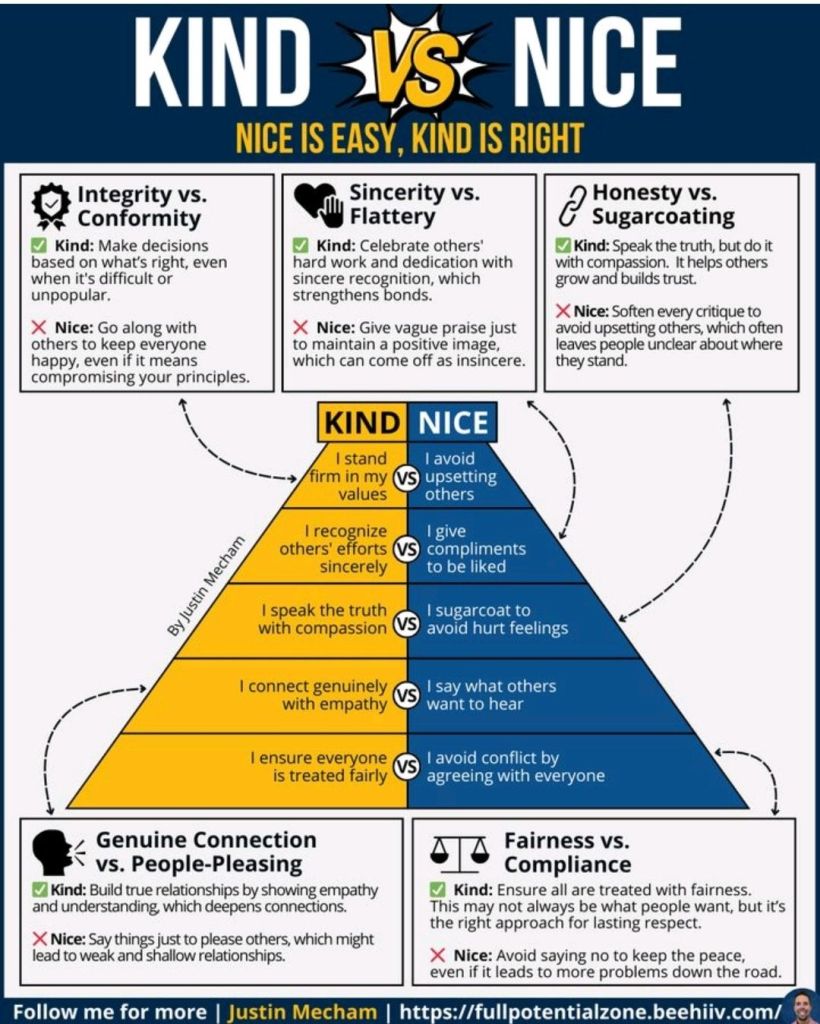
What is the difference between being nice and being kind?

So, I’ve talked about being nice as not always a risk free move in terms of career progression, but what about kindness? I’m a massive advocate of kindness, but sometimes I wonder if people have the same understanding of the term as I do or whether they use it as a proxy marker for other things. For instance, we often talk about kindness and niceness as if they are interchangeable, but I’ve been wondering if the difference between the 2 is where the perception of warmth vs civility (combined warmth plus competence) actually sits.

I have certainly met people who believe that being kind and supportive means always being in agreement or always saying yes, whereas I believe that this is more acting from a position of people pleasing and being nice. In contrast I believe that sometimes the kindest thing that you can do is to say no, either because you’re not in a position to deliver what they want or that saying yes would put the other person in a challenging position. Nice can often feel right in the moment, whereas kind considers the wider, and sometimes longer term, implications.

How do we manage kindness in a way that is authentic?

Being kind can be challenging as it is not always about taking the easy route, sometimes it’s about making hard choices in order to help yourself, others or the organisation, to be the best version of itself. It can challenge some of the behaviours linked to people pleasing in order to move towards authenticity in terms of interactions and leadership. For me, kindness is very much about doing the right thing instead of the easy thing, but to really deliver on your values, you need to invest the time to understand what those values are first. What do we stand for? What three words would we assign to our core descriptors of self? Knowing what your core values are enables you to have a self check benchmark to help identify when we are being nice over kind.

Where does social capital fit in here?

Obviously, civility and kindness are not the only factors that come into play in the ‘popular’ discussion.ย  There are all kinds of other forms of social capital that can impact on how successful we are at network building, influencing and leadership. Especially in the world of science and healthcare, expertise comes into play quite significantly, and access to funding can never be under estimated, in terms of providing leverage and empowerment.

It is always worth being aware of, and investing in, all of these different strands for long term success. Having said that, all of these also require you to have the capacity to invest. As someone who can’t have children, and therefore have greater freedom to balance my work and home life, I’m aware that I probably wouldn’t have been able to build a clinical academic career if my life had been different. If I’d had to leave on time for school pick up or had to be lead carer on the weekends, I wouldn’t have been able to publish the papers or apply for the grants required. There is inbuilt privilege in my being able to prioritise my career at times. This blog requires hours every week. Hours that I enjoy investing and which I reap the benefits of in terms of networks and connections. These are things that I wouldn’t be able to do if I needed to pick up a second job or was caring for a parent. When we ask people to have these additional pieces of capital to progress, we need to be aware that we are putting barriers in place so that not everyone can make the most opportunities. We need to make the most of the tools we have available to us, but as leaders, we also need to understand how to support people to access opportunities in a way that doesn’t disadvantage them in relation to others.

Let’s not forget that leadership is hard

I think that one of the things that it is often easy to forget is that leadership is hard, in some ways, if it’s easy you probably aren’t doing it right or stretching yourself enough. Part of leadership is making the unpopular and challenging decisions, and sometimes there are no win wins. Being popular, being considered empathetic is always a nice thing but it is not the only thing that makes your leadership successful. So is it, in the end, actually all about popular? If you were to ask me it is instead all about authenticity. The key thing, from my perspective, is to let people know who you are, connect with people as much as possible and share/co-create the vision. Then they can make informed decisions about whether to get on board the Girlymicro train or not! On this one, I may be with Elphaba.

All opinions in this blog are my own
A Thank You to All the Cheerleaders: At the end of a tough 2024 my gratitude for all the support

2024 was always going to be tough. Wonderful colleagues were facing challenges on all fronts. Close family members were going through significant change. Things that were going to impact not just my ability to balance life and work but also how that life was lived were very obviously coming down the line. I don’t know about you, but as a planner, I sometimes find the anticipation of the bad ‘stuff’ almost worse than its arrival, and 2024 kicked off with plenty of anticipation.

Now the end of 2024 is so close I can almost taste it, and much of the ‘stuff’ has both come and gone, I find myself still standing and grateful for all of you that have supported in enabling this to be the reality.

As a result of this year, I have spent a lot of time thinking about what keeps me going, what I need, and what I’m grateful for. None of the answers to these questions were linked to productivity or achievement. The answers, as it turned out, were all linked to people and relationships. These people, connections, and relationships were the answer to all my questions and remain the foundation of my everything. So, for my last post in 2024, I wanted to put something in writing that says thank you and talks about all the reasons why you are my team and my cheerleaders. You guys are the best!

I don’t need to see you to know that you are there

When times are hard, or adversity strikes, it is easy to end up feeling isolated and alone. It can be tempting to disconnect and enter protective mode, where you share less of who you are in order to limit your exposure. One of the things this year has shown me is how fortunate I am to never really feel that way. I know that whatever the world throws at me I am not alone. I am so lucky to have Mr and Mummy Girlymicro in my life, but it’s not just them. I posted this time last year about the amazing close friendships I have with some of my girls. These people, who I may not have even managed to see in person this year, are still there supporting me, even if I haven’t had a lot of time to connect. I still know that they are there and are backing me. I know if I reached out and I needed them, they would be there in a heartbeat. I’m aware of the privilege of this, and I am thankful for it every day.

We don’t need to always agree

One of the greatest signs of trust in any relationship is feeling safe enough to disagree, whether it be in work, romantic, family or friend based relationships. In travelling uncharted territory, there is no rule book and often no guide for how to make decisions or choices. This uncertainty can therefore inevitably lead to differences of opinion about what is the right approach in any given moment. Being able to disagree and yet still feel supported whilst working through the disagreement, in an attempt to reach consensus or just accept difference, is a real blessing. Even more so if it can happen without triggering preexisting insecurities or feeling exposed to judgement. I am trying to make conscious decisions to value moments where I learn more about myself and others by going through these disagreements, whilst also knowing how fortunate I am to have people in my life who are a safe space for these moments to occur with.

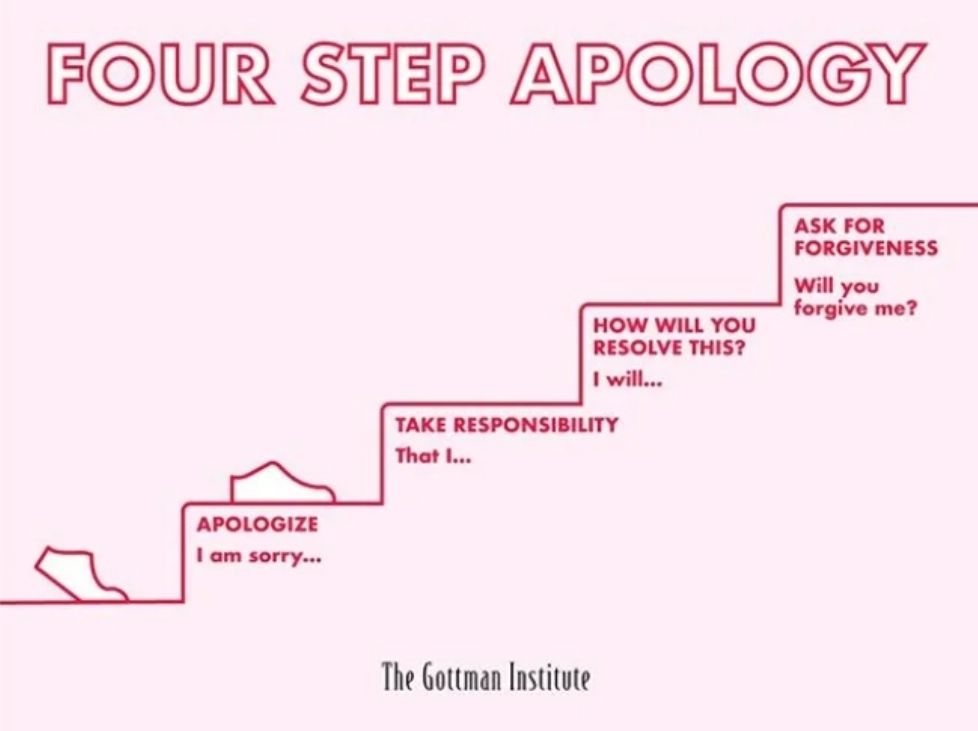
You forgive me for making mistakes

The process of learning and growing is not an easy one, and sometimes we have to face difficulty truths about ourselves and our flaws. I am flawed. I make mistakes, like ALL the time. I’d like to think that I grow each time and try not to make the same mistake twice, but even that is not 100%. One of the benefits of learning from disagreements is that it helps to garner enough understanding from any negative outcome that results to help make better choices in the future. I am grateful to my wonderful colleagues, friends, family and readers of this blog, for not only forgiving me for making those mistakes but also supporting me in sharing my journey in learning from them, not only face to face but also in this blog. My hope is always, that by being open, I support others in making more informed choices as we are all learning together.

You lift me when I am low

This year has had some significant lows. It has has included the deaths of some significant figures in my life, such as Professor Nigel Klein, who had been a key part of my working life for almost 20 years. He was the person who supported me in my first steps in academia, who supported and supervised me during my PhD, and has continued to be a key figure in my clinical academic career ever since. Significant health challenges have been present for colleagues and family and this has hit me hard at times, even if I am not the person unwell. I’ve been feeling pretty mortal, and also powerless to help in any meaningful way. So many of you have been so kind and lifted my spirits, from sending memes or commenting on the blog, to unexpected treats from friends and family that have made me feel seen and loved. Having a safety net of people who are prepared to pick up the slack when I’ve struggled or to remind me that everything will be OK has been an invaluable asset in 2024.

You drive me to be the best version of myself

When the world is overwhelming, when everything feels too much, it can be so tempting to want to throw in the towel and just ride the wave. Having to try (and sometimes fail) to get this blog out every week and to continue to show up has been crucial to just keeping me going whatever my mood. There have been weeks when this blog hasn’t happened. There have been days when I haven’t delivered in the way that I would wish. I have certainly been too tired to step up and see people or do things on the weekends or in my free time. Knowing that there is an expectation of levels of engagement, be it from my PhD students, colleagues, readers of this blog, or family, has kept me going and kept me present. You support me in trying to be the best version of myself and to keep showing up in the best way I can in the moment. You support me in not just accepting but seeking out things that challenge me and keep me on my learning pathway. Hopefully, I then get to feed that back via this blog, and therefore the loop continues.

I know you would always straighten my crown without telling me it was crooked

We’ve all been there, we’ve sent an email or written a slide, and it’s not quite right. There are people who reply to you and give you a heads up so you can issue a no drama correction, and there are people who reply all or stand up at the end of the talk to point out your error. I count myself so fortunate to have so many people who sit in the former rather than the latter bracket in my life. This is a pretty basic example, but I’m hoping you see what I’m trying to say. I have so many people in my corner who will steer me back on course when I’m beginning to drift, or who will gently escort me from a conversation that I’m not in the right head space to have. People who know when I need saving from myself, from reminding me that having that dairy filled cake is not wise, to pointing out that I can’t physically manage to book myself into speaking at three conferences in different cities in a week. I know my well-being is at the centre of their actions, and having that safety net is of incalculable value to me.

We are in this journey together

When I made my first blog post in 2015 I didn’t even know what this blog was going to be. When I started posting regularly in 2020, I knew my why but I didn’t really know my how. Now, looking back on the last 200+ posts I feel like I’m more comfortable with some of the how. My next challenge is the where. I feel very much like I want to continue to grow and that this blog is a medium through which I can do that. I’ve learnt so much from the journey so far, but I am certain there is so much further I want to go. This year the blog broke 20,000 reads for the first time, and that makes me feel like we are in this journey together, wherever it might lead. I love seeing the interactions when I post. I love hearing your thoughts and feedback. I love feeling like this is something we are doing together and that I learn from you as much as you, hopefully, learn from my experiences. I don’t know where this road ends, but I know that I am determined to keep following it.

You understand that performance is not consistent

This post has been really hard to write for some reason. It’s taken me hours of staring at the screen, and I don’t know how well it will be received. Some posts spring to life, almost fully formed, and take no time at all to write. Some just make themselves harder work. I am pretty sure, therefore, that not all of them knock it out of the park. There are certainly ones that speak to some people more than others. Having spent some time thinking about it, I’ve decided that this is OK. As long as my intention is to communicate something, and I never post for the sake of posting, then how it lands is out of my control. The main thing is that I always try to do my best.

The same is true with posting frequency. I will always try to post weekly, but this year has shown me that sometimes I just can’t manage that. I used to obsess and spiral about it, and now I’ve decided that if I am not in the head space to write something worthwhile, I am better waiting until that resolves. I’ve been so grateful with the patience shown to me on this front in 2024 and that you have stuck with both me and this blog through all the random trains of thought and erratic posting frequencies.

You don’t judge me when I bear my soul

I try to always be honest in this blog. I try to share both the good and the bad, in a balanced but honest way. The concept of authentic leadership is important to me, and to fulfill it I think I need to show all sides of myself. I can only do this because I feel that I have built up a trust and feeling of safety in writing this blog over the years.

I remember when I first started to post things that were more personal, I used to brace myself for the comeback. I almost expected my confessions of inadequacy or failures to be weaponised against me. In all the 200+ posts that have been written, I’ve only had a single comment that could be considered to be less than supportive of my sharing, and even this was written (I believe) from a place that the author thought it would be helpful. As a result of this building of trust, I write from a space where I am comfortable sharing my lived experience without revision or overlay. I genuinely believe that this means that the sharing has much more value because of it. So, thank you for supporting me in getting to this place of confidence and comfort and always encouraging me to bring my full self to our interactions.

I hear you when you tell me this is valued

In my darker moments this year, when I was questioning a lot of the things that required focus or time, I reflected on whether writing this blog was something that was valued by anyone but me. Whether it was a good use of several hours of my time every week, when I didn’t have time for a bubble bath or other self care. Then every time I went to a conference I would have lovely conversations with people about the blog, and all of them were so positive, and inspired me so much.

Over the last year, I’ve even had people spontaneously mention it in meetings or 1:1 interactions. It’s hard to communicate how much this means. When I sit on my sofa and need to choose between pulling out the laptop to write or watching some trashy TV to unwind, it is these interactions that keep me reaching for my laptop. When I’m on the tube and I need to choose between closing my eyes and escaping into an audio book or doing some blog writing on my phone. It is the memory of these moments that keep me plugging away. Knowing that others value reading this blog, hearing stories in response to putting my experiences out there, make every minute spent worthwhile. So thank you, thank you for giving this blog meaning, thank you for showing the time invested has value, and thank you for taking time out of your lives to join me in this endeavour that means so much to me.

All opinions in this blog are my own

Understanding the Scope of Our Influence: Why we have to stop trying to ‘fix’ everything

I was having a retro moment recently, and I happened to hear The Mending Song from Bagpuss. It landed with me in a way that it hadn’t before. Many of us are ‘fixers’, that’s probably the reason we ended up working in healthcare. We are focussed on trying to make everything better, be that people, organisations, cultures or situations. There is no challenge that many of our ‘fix it’ nature’s won’t try to tackle.

This seemed especially poignant, as I posted last month about approaches when work life becomes challenging. A key aspect that struck me when I was writing that post was about really understanding what sits within our scope to impact and what doesn’t. There’s a really clear reason why it is important to understand this. If the thing you are trying to impact or ‘fix’ is outside your scope of impact or control, no matter how much you want it to be otherwise, you are setting yourself up for failure if your success criteria include change. You are setting yourself up for disappointment, stress, and frustration before you even start. This doesn’t mean that you can’t work to change your scope of influence or set a different set of success criteria, but that is really a different thing. If just just dive right in there, without first addressing this fundamental barrier, all you will impact is your blood pressure.

We will find it, we will bind it We will stick it with glue, glue, glue We will stickle it, every little bit of it We will fix it like new, new, new.

So, how do we understand what is in and out of our scope to impact or control. Well, there are layers to this, and it does truly depend on whether you are trying to influence or whether you are going as far as trying to control.

In terms of true control, the only person is we can exert that on is ourselves. Trying to control anything else sets us up for failure. So why did we try?

Impact and influence are a bit different. I think deep down we know the piece about control, but we are less good at having the conversation with ourselves about impact and influence. We start trying to ‘fix’ things and then see ourselves as failures when it doesn’t happen. The years during and since the pandemic have been a real life lesson in this area for me. So, in this post I’m going to talk about 6 areas where I’ve sought to undertake ‘the fix’, failed, and learnt why I’d set myself up with expectations that could not be achieved.

You can’t always ‘fix’ people

Throughout my life, I have been a somewhat collector of lost souls. From early boyfriends to PhD students who have had supervision issues, I’m a real believer that we should always be there for others and take situations as we find them, rather than judging based on hearsay or prior scenarios. Before I get started here, I’d like to say that I still strongly believe in this. What I have learnt the hard way though is that a certain percentage of time, the prior experiences of the person are so strong that patterns cannot be altered. If you take the open door approach, there will, therefore, be times when you can’t change the outcomes in the way you’d like.

When this happened to me recently, I wasted a lot of time agonising about what I should have done differently, where my flaws were in terms of response, where I had failed. I have come to realise that that time was wasted emotional energy that removed my focus from other important things. Don’t get me wrong, I think active reflection is always important, but there is a difference between that and entering into a self flagellation pity party. One is essential and productive, and the other leads to spirals and self recrimination.

Once I exited the spiral I realised I had fallen into thinking I had control rather than understanding my influence on another person, especially a person who is not a close friend or family, is always going to be highly limited. You can offer support, and you can change environments within your influence, but the person who actually has the control is the individual you are aiming to support. The work has to be done by them and not you. You can’t work harder as a surrogate for them.

As a result of this, I’m trying to be much more self-aware of where my control actually sits and using this to support my thinking in terms of boundaries and expectation setting. I’m giving myself permission to avoid entering into relationships that extend beyond support into ‘fixing’ territory. I’m also learning that this is important in maintaining my mental health and well-being. It is hard to see how badly those can be impacted until the situation is resolved, but I can’t help anyone else if I am not in a good space, and so sacrificing my mental well being is actually a short sighted response that leads to no one getting a good outcome in the end. It feels selfish, but sometimes you have to put yourself first.

You can’t always ‘fix’ situations

There are plenty of times when people come to you as someone in a leadership position and want you to ‘fix’ something. Sometimes, this is possible, often, more often than I’d hoped, you can make or help someone to make a step, but the ‘fix’ is out of your control.

On a large scale, I have previously written about some of the decision-makingย  during the pandemic. It was a really humbling and eye opening experience to discover how quickly scope of influence can expand and contract, and how much that scope of influence changes based on whether you are currently acting in the role of decision maker or not. Having people come to you and advocate for vastly different positions, combined with actually having a time limited ability to influence, made me realise how important it is to face up to the reality of where your scope lies. It also made me realise how much you may need to review where those zones lie in rapidly changing situations. Relationships and scopes of influence are never static and so always require periodic review, but this is even more important in changing or high stakes situations.

On a one to one level, I often experience this, not about organisational but about individual situations. A common one is the ‘I want to do a PhD’ approach. This happens multiple times each year. Sometimes, people just want more information about the pathway or what the options are. I’ve written a blog about this as I get asked the question a lot. Other times, it’s framed more like ‘what can you do to get me a PhD?’. In these circumstances, I give the information, but I often get stared at towards the end as if I’m not delivering. I then have to enter the discussion that acquiring a PhD is a self driven process and needs the individual to drive it. The same is true with a lot of postgraduate training pathways or career opportunities.ย  I can help and support, but I can’t do it for them. I can’t ‘fix’ the holes on CVs that need filling. Only they can do that. I can open doors, but they are the ones that need to choose to walk through them.

You can’t always ‘fix’ injustice

Sometimes, when I’m approached, it is about a situation, but just on the surface. When you dig deeper, it’s not about someone not stepping up and doing the work. It’s about a whole bunch of barriers they didn’t know about or haven’t been able to fix. Individuals either then reach out or I become aware, and of course, what I want to do is ride into those barriers, sledge hammer swinging, and break them down to bring equity and justice to the situation. This is definitely one where I thought, and do, have more influence over as I get more senior. The sad news is that although I can do more, I’m discovering I still can’t ‘fix’ everything.

I have a great number of examples on this one, anything from male colleagues not having to apply for or be interviewed for roles when female colleagues are made to jump through hoops, to scientists getting paid a third less to do the same jobs as medical colleagues. I wish I didn’t have so many, but if I started listing, I would be here all day.

So if I can’t fix it, what are my other routes of action. Well, firstly, writing things like this blog enables me to shine a light and at least raise awareness of the injustices I can’t ‘fix’. Then there are a whole bunch of active positions I can take with my leadership, even if the issue is too big for me to ‘fix’ alone. Actions such as advocacy and saying people names in rooms where they are absent in order to increase access. Being brave enough to call things out as they happen, challenging that misogynistic, racist or homophobic comment in the moment, and taking a stand. Being accountable and actively demonstrating my values, and by doing so, hopefully offering a safe space to those who might need it. Being there to support, whilst acknowledging that no sledgehammer wielded by a single person is going to be enough, so you have to lift up others so you can hammer those walls together.

You can’t always ‘fix’ cultures

Organisational cultures bring with them different values and different aims. They are complex and act almost like living beings, in that they develop and change over time. If ‘fixing’ individuals is difficult, then ‘fixing’ cultures can come with mind-boggling complexity.

One of the things I’ve found challenging is when I’ve been part of a group or organisation which started off with values that were completely aligned with my personal value set, which is the reason I joined, and then morphed into something where those two things were far from the same. It is also complicated even further when the espoused values do match, but the values demonstrated by the group decision making tell a different story.

There are a few different choices I’ve made at various points in my life and career, depending on how much continued participation mattered to me. The big one is always do you stay or do you go. Do you stay and try to influence internally, or do you call it quits and move on to something that is better aligned. The right decision, for me, is based on a) how committed you are to the purpose of said group and b) how much influence do you have to affect the change you want to make?

Large-scale organisations are even more complex as they not only have an overall culture,ย  but they will also consist of a number of smaller subcultures, which may be easier to change or influence. I count myself fortunate to be part of a team that I feel is super aligned with my values and beliefs. It hasn’t always been that way however. I’ve been part of other teams that haven’t been the same. On one occasion, many moons ago, my then team mates and I even had to escalate that we would leave if a change in leadership did not occur as the disconnect was so pronounced.ย  This was one of the most powerful examples of collective action I’ve been involved with, and it succeeded because our point of escalation was also aligned to our values and purpose. Knowing your scope of influence and the landscape you are navigating can therefore be incredibly powerful,ย  but understanding that scope is key to success.

You can’t always ‘fix’ the way others see the world

Firstly, and I cannot say this strongly enough, just because someone holds a different opinion, view, or vision of the world to you does not automatically make them wrong. There is room for diversity of thought in this world, and the very presence of that diversity makes us stronger as a whole. This is especially true when that diversity of thought is not causing anyone harm and drives us to better evolve our thinking in response.

The ‘not causing harm’ component of this one is key for me. If that world view is harming others by restricting access to care or opportunities, for example, I will always endeavour to challenge, as already discussed. What I’m having to learn, though, is that that challenge does not necessarily lead to changes in behaviour, no matter how many facts you put behind the discussion. Human beings are complex, and they have both intrinsic and extrinsic beliefs. Sometimes, it’s not even those that are proclaiming their beliefs that are the ones who are most firmly set in their world view and then it can be difficult to even identify where to start your discussions.

I think accepting our scope of influence in these cases is crucial to understand in order to not get disheartened.ย  In a world of spiralling conspiracy theories and loss of faith in science, it is important to know that it is not just a case of sitting someone down with a bunch of evidence and having a single good discussion. Changing someone’s beliefs or understanding of the world requires you to understand where the origin of those beliefs lies, and it may be no where near as obvious as we’d like to think. Additionally, long-term change is usually not seated in facts but in emotion, and that’s a whole different ball game that we may not be equipped to play.

Interestingly, for me, this ‘not causing harm’ component also extends to harm to self and links nicely back to not being able to change individuals. I’ve had people I’ve thought of as friends, who were so locked into self-destructive patterns of behaviour, based on their view that the grass was always greener elsewhere, that they couldn’t stay in any one situation long enough to start to ‘fix’ those patterns. I discovered the hard way that no matter the presented evidence you couldn’t get them to see the world in a different way. Sometimes, an external lens is just what someone needs to see themselves enough to spark change. Sometimes, that view is just so alien that discover you are not even speaking the same language.

You can’t always ‘fix’ yourself

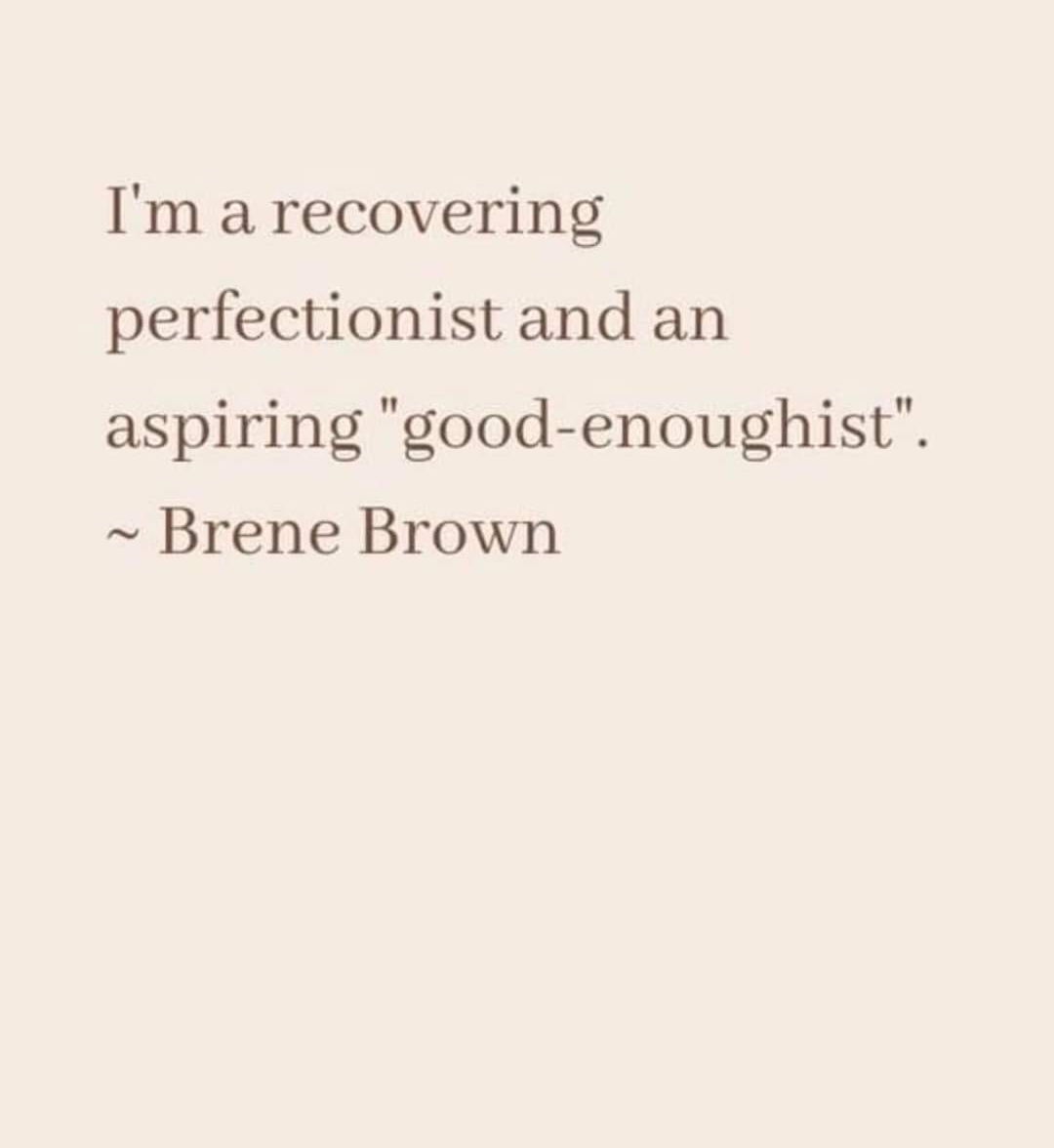
Talking about changing people, we are not ourselves above having the same light cast upon us, and in theory, this is the one area where our scope should include control and not just variable levels of influence. The problem with discussion about ‘fixing’ ourselves is the mistaken assumption that some form of perfection can or will be able to exist. I have to tell you, as a recovering perfectionist, there is no such thing, and this is one of the biggest lies we tell ourselves. Worse than that, by aiming for such a lie, we set ourselves up to fail, over and over again.

None of us are, or can be perfect, we are constant works in progress. Perfection indicates some form of static existence,  whereas that cannot be the reality. Life is change, and we need to change and adapt with it. We learn and grow, and with that comes failure and the ability to do better next time. So my view on this has become: accept your flaws, and own your areas for improvement. After all, we are humans, not machines. The most powerful thought that I’m striving to embed is that I need to acknowledge there is sometimes beauty in both the flawed and the broken. If it is necessary for me to ‘fix’ parts of myself, as part of striving for improvement and healing, it is because I am better for it rather than because of punishing myself with the myth of perfection.

The one thing I hope we all take away from this blog is to not confuse the reality that change is outside of our area of influence with powerlessness. We always have the power to change. To change ourselves, to change our scope of influence, and eventually, if it matters enough, to work towards collective bigger change. Until then, treat yourself with the compassion that you would offer others and learn to not set yourself up for failure and distress by understanding where your current boundaries and influence lie. Stop trying to ‘fix’ what cannot be fixed, and try learning to love the flawed and different when it is right to do so.

All opinions in this blog are my own
Reputation is Everything: Why reputation matters & how reputational attacks can create shock waves

It’s not something that comes up in conversation on this blog very often, but I’m a bit of a swifty. Watching the Taylor Swift in the Reputation concert video is a happy place for me, I often watch it on my commute when I’ve had a challenging day, and the music forms a staple of my ‘get psyched’ mixes, along with a fair share of rock and big band music.

Now, for those of you who have yet to discover this particular joy, there is a speech she makes linked to why we worry about how we are perceived and the impact of having a ‘bad’ reputation that really lands with me:

“For example, having a bad reputation in our mind could get in the way of finding real friendship, real love, real acceptance, people you really fit in with because you think what if they have heard something about me that isn’t true, what if they’ve got these preconceived notions about me that they heard from gossip and then they never want to meet me and then we’ll never know what could’ve happened,” she continued. “And I think that’s why some of usโ€ฆmeaning if not most or all of us are sort of afraid of having a bad reputation because we’re so scared of something fake, like gossip, or a rumor about you or a name you got called getting in the way of you finding something real.  And so, when it comes down to that fear and that anxiety, it’s just all really delicate,”

Taylor Swift – Reputation Tour 2018

There are many forms of reputation:

  • Personal
  • Professional
  • Organisational

I think there are a couple of reasons why anything that impacts reputation is so powerful. The first one is that both trust and reputations take a long time to build and can be destroyed in the blink of an eye, depending on the scenario. Another is that, I believe, at the core of our being most of us want to be liked, and having someone affecting how we are perceived can directly impact on that. Finally, it is difficult to know how to respond to situations that influence our reputations.ย  We say ‘stick and stones may break my bones, but words shall never hurt me’, implying we should rise above it, but we also say ‘no smoke without fire’, implying there is a burden of proof upon us to correct what is being said.

I think, depending on who you are and the circumstances, the impacts on different types of reputation may not feel equal. Now, I went to a girls school, and one of the reasons I’m glad to no longer be a teen or in my twenties is because I’ve learnt and grown so that personal reputational attacks in general have a lesser impact on me. I would love for everyone to like me, but I know the reality is that this will never be the case. Although often highly impactful, personal reputation attacks can often be dealt with by removing the individual from your social circle. You often have the choice to interact or not, and the other members of your circle often know you well enough to not listen too closely.

What I have found more challenging are circumstances that impact my professional reputation. For a self declared people pleaser, like me, the thought that someone could lead you to be a scenario where you were perceived to be difficult, mean, or destructive, is particularly stressful. This is doubly so when you have a very particular set of values, about being collaborative, supporting others, opening doors, and being patient focused, and the commentary indicates you are anything but.

There’s a movie I love called Gossip, most people have never heard of it. It starts with a group of college students running an experiment where they create some untrue gossip and then track how far it spreads, how it evolves, and the impact. Needless to say,ย  it doesn’t end well. Now, I’m as guilty of gossip as the next person. We all want to feel in the know and to almost feel special by knowing something others do not. There’s a bunch of research about why this is. Gossip in real life, just as in fiction, isn’t harmless however.

Although gossip is bad enough, I feel there is also a significant difference between gossip and the escalation to deliberate character assassination or attempts to damage the reputation of another person. The weaponisation of reputational attacks, or even the threat of them to gain leverage, can be one of the most stressful things I’ve encountered in my professional career. Partly because they tend to come as a complete surprise to those targeted, but also because it’s difficult to know how to respond whilst in the midst of it. I’ve seen this happen to others and been a (somewhat) minor victim myself. Having hopefully come out the other side, I wanted to capture my thoughts for anyone caught in a similar situation in the future.

You may not escape the fallout

The first thing to say is that I am always a fan of taking the high ground and not engaging. Engagement can just end up adding energy to the situation rather than letting it burn out. It is important to note that taking this sensible higher ground approach may not mean you escape reputational damage, however, at least in the short term. You need to be aware of the fact that a time may come when you do have to address what is happening, and you may need to have a plan for how you will do so. Hopefully, it will never get to that point, but like with many things in life, preparation is key.

You have to remember the long game

One of the reasons to start out with a policy of none engagement is that most of the time, this will just turn out to be a blip and nothing more. Something you will look back on in a few years, possibly sigh, but see as a learning experience and nothing more. Professional careers span decades. Sometimes, it’s very easy to be caught up in the now rather than seeing it in that context. No matter how bad it feels in the moment, you need to ask yourself: how will this feel in 6 weeks, 6 months or 6 years? Very often, with the distance of time, it won’t feel anywhere near as bad, and that is the context you need to hang onto.

You have to faith in those that know you

It can be pretty shocking when you first hear reports of things being said that could impact how you are seen by others. It can be easy to feel like you should rush in and respond, but as I’ve said, for many reasons that is unlikely to be the best option. During what can be an unsettling time, it is important to remember that nothing really has changed. You have had professional relationships with many people ahead of this moment, relationships built on mutual trust and respect. These relationships haven’t changed, and you have to have faith in those people who know you and know the value you hold. Never let a single moment devalue everything you have already built.

You have to believe in the system

We work within systems, systems that provide individuals with routes for escalation and complaint. It’s incredibly important that everyone has the opportunity to feel heard. Everyone has their own perception that is unique to them, and those perceptions are real, even if they don’t match our own. This can be hard to accept when that variance in perception means that we feel attacked, or worse than that, if it feels that there are other drivers behind the responses that mean they are less genuine. The harsh truth is that it doesn’t matter. The system is set up, crucially, so that individuals can pursue making complaints, and this is an essential part of parity and fairness. If actions are taken that are erroneous, you have to believe that the requirement for evidence and facts count. That truth will out. Even if it takes a little time.

You have to try and not get sucked into the whirlpool

Whilst rumours/gossip/complaints are swirling it can be easy to get sucked into the drama and the emotions of it. It can be easy for those voices to be the voices that you carry with you and for you to only hear them in your head, not the ones of those that support you. To focus on the negative, the stress and the fear that comes from a lack of control. It’s hard, but none of this is useful to you. If you can’t find a way to put it in a box and distance yourself from it, it will be all you see and experience. This can really start to impact how your interact with the rest of your working life, or even how you feel outside of work. You need to make a deliberate effort to not engage with the whirlpool and to maintain your sense of self.

You have to control your own responses

Part of not engaging is making sure you retain what control of the situation you can. In the end, the only thing we can ever truly control is how we respond. You have no control over how others perceive you, you have no control over their actions, or what they say. You can absolutely decide how you react to that stimuli. It is all too easy to let the fear associated with being unsettled lead to responses that are seated within that fear, or to appear angry and let that drive our interactions. Those kinds of responses aren’t helpful however, in fact they just add fuel to the fire. You have to be aware, that if not careful, you can end up with a self fulfilling prophecy if you lose control, becoming what you are accused of.

You have to keep being authentic

For me, some of the worst reputational attacks, are those that attack us around those values that we use to define ourselves. Calling us self interested, when our focus is on parity and fairness, calling us unsupportive, when we believe in lifting others. These may not seem so significant in the scheme of things, but when those things you prioritise and use to define yourself, are the things that are under attack, it can feel incredibly personal. From what I’ve seen, responses to this tend to go one of two ways. First, people stop undertaking some of the associated activities, as they fear further attacks or putting their head above the parapet. Or, second, they change the way they do it, through anxiety or fear. Now, I’m not saying changing is bad, but I think it needs to be based on genuine reflection, rather than in response to negative emotions. I think stopping, in some circumstances as a temporary measure, is a wise choice, but it shouldn’t be the long term solution. It’s important to not allow circumstances to change who you are and your values.

You have to find your support systems

All of these aspects can be highly challenging, and to be honest you are not going to be able to navigate this on your own. You will need support, you will need help to undertake reflection, you will need an external view point to aid you to sense check and evaluate responses. Feeling personally attacked can really throw off your sense of inner balance, and you will need other people to help you find and retain the sense of self that you need to traverse what is happening. I think you need to find people from your professional context, as well as your personal, so that you have people who know you, all of you, as well as people who know the players and the landscape in which this is all playing out. It can be easy to want to ostrich, whereas, in reality, what you need to do is use those connections and networks you have to be able to understand what is really going on. Word of warning here, I am not suggesting you go out and start talking to everyone about what is happening, or the person who is doing the talking, that would be as bad as the initial reputational attack. I’m talking about having a few key supports where you can safely and openly talk about how you feel and what’s going on.

You have to make the sensible choices

I’ve said to not engage, but I’m not saying to be foolish and ignore what it happening. I’ve already talked about the fact that you function within a system, with processes and requirements. The first thing you should do is really learn about what those processes look like. What are the requirements upon you, what kind of evidence may be required. Have you encouraged reporting/escalation? Have you referred to occupational health? Have you offered alternative lines of reporting/management? Have you spoken to your line management or HR to confidentially gain advice? You may not need to do anything complex, it could be as simple as recording meeting content in emails, or not meeting 1:1. Seeking advice however is key, as these scenarios can also be complex, dependent on whether the person is in your organisation, a direct report, a peer, all of which impacts the information you need. You need to know enough to make sure you are making sensible choices to protect yourself and that you are acting proportionately and appropriately.

You have to check what is perception and what is reality

It can be easy, when you feel like the rug has been pulled from under you, to lose your sense of what is real. The resulting self doubt can make you question every interaction you have. Paranoia can set in and it can colour the way that you see the world. It can also colour your perceptions of your interactions with those associated with the commentary that is currently ongoing. You can’t let this happen. You need to find strategies to manage this, otherwise you will read negativity into everything. This is another reason why being sensible and not having 1:1s, or having email confirmation of any discussions, can be helpful. You can get a neutral opinion that gives context to interactions, and written communication can be helpful to ensuring shared understanding. As the emotions can spill over into other spaces, you also have to check yourself more widely. If you are like me, you can be sent into a spiral of being hyper critical about yourself, and this can colour your perceptions. Awareness is part of the challenge, and if you can become aware of how you are responding, and how that might impact on the lens through which you are seeing your interactions, you can start making proactive steps to adjust appropriately.

When it is over you have to let it go

You will get through this situation, you will come out the other side. No matter what the outcome, this isn’t forever. It can leave you with a certain amount of trauma, or a changed view of the world, or level of trust. That’s understandable, I get it, depending on what has happened the personal cost can be significant, even in just emotional impact. The thing is, despite recognising this, you have to let it go. You need to take the learning, and grow, without letting it fundamentally change who you are. You can’t become less trusting, or have less faith in people, there wasn’t enough of both of those to start off with and the world can’t afford for us to have less. You have to move on, wiser, but fundamentally unchanged. So deep breaths, take one day, one hour, or if needed one minute at a time. Keep the faith, and the world will turn out OK.

All opinions in this blog are my own