Environment Network 2025: Investigating Environmental Outbreaks

It’s the most wonderful time of the year! It’s time for the annual Environment Network meeting, where we get together to talk all things environmental microbiology; sharing new research and experience to improve practice. And your guide for the conference this year, live blogging the morning session, is the token immunologist in the group, Dr Claire Walker.
What is the environment network?

Before we get onto todays’ content, a little introduction to what the Environment Network is.

The Environment Network works to support people in clinical, engineering and scientific roles who are interested in environmental infection prevention and control (IPC) and/or the built environment

Do you want to know more about what to do with your water screening and air sampling results?  Are you keen to understand the evidence behind equipment cleaning and the role of the environment in healthcare associated infection?

Then welcome to the Environment Network! 

This is a network for people in clinical/scientific/engineering roles within the NHS and other associated organisations who are interested in the role of environmental infection prevention and control in preventing infection. 

The aim of the network is to support infection prevention and control professionals involved in commissioning, environmental audit, water, air and surface testing within their Trusts.  By working together we can share best practice between Trusts; as well as circulating the latest evidence and discussing personal experiences. 

What are the aims of the network?

  • To support the development of member networks
  • To provide events where shared learning can be supported
  • To permit sharing of experiences and best practice to improve clinical interventions
  • To support and share research in order to achieve improvements in evidence based practice

What is our remit?

  • Environmental testing and monitoring within healthcare environments
  • Environmental audit and risk assessment
  • Surface decontamination
  • Ventilation within healthcare environments
  • Water management within healthcare environments
  • Environmental outbreak monitoring and control

Check out the website for more details: https://environment-network.com/

On to today. First up we have Gavin Wood, an authorising engineer for water who acts as an independent advisor to Trusts. He is covering the fascinating topic of water associate outbreaks and what we can ask of our water safety groups during an outbreak. There should always be a policy which covers how to organise the estates teams and the water safety groups – covering who is responsible for each area during the outbreak. Regular outbreaks are caused by organisms like Legionella and Pseudomonas, but might include non-tuberculosis causing mycobacteria. Detection of these organisms during routine screening is reported to the water safety group to assess potential risk. Most pathogens that we look at will grow within a certain temperature range, so maintaining cold water as cold, and hot water as hot is essential. What we really don’t want is warm water stagnating in the system as the pathogens can thrive in it. On top of this, we need chemical control of organisms – mostly silver and copper ion systems. Stagnant areas of warm water are pockets where the pathogens might thrive so flushing the system and chemical controls are key in maintaining a healthy water supply in hospitals. Controls that are effective for indicator organisms that we routinely test for, like legionella, tend to be effective for any other outbreak organisms. In an outbreak situation the first port of call is the Legionella risk assessment which considers the efficacy of temperature and chemical control. After this, in line with guidance, all trusts should refer to their Water Safety Plan which is contains the detail on actions to take when results are outside the expected limits. Most of the time the authorised engineer already has the answers because the system is repeatedly routinely tested.

Like any system in a hospital, it is vital that the risk assessment and training is up to date. As Gavin says if we haven’t covered everything in the risk assessment, and if the water policy hasn’t been recently reviewed then the whole system is vulnerable. External audit by authorise engineers ensures the system remains optimal. Investigation of an outbreak focuses on the patient pathway – where has the visitor or patient been on their journey through the hospital. This process finds the clues to identify the source of the environmental outbreak. Surprisingly one of the main pieces of evidence comes from review of training and competence records, is everyone appropriately trained and acting in accordance with policy. If in doubt, going an witnessing monitoring and maintenance tasks can provide essential information in a high pressure outbreak situation. Gavin drives home how important practice is in this – we need this information as much on a random rainy Tuesday as much as we need it during a Legionella outbreak!

Our next talk comes from Karren Staniforth from UKHSA. She is a clinical scientist and UKHSA IPC specialist adviser, and is talking to us about the pros and cons of different outbreak investigation techniques. Karren invites us to imagine painting a busy ward in different colour 10cm squares, every single surface with a cotton tip swab. Imagine how long that could take and just how many squares you would end up with! Even if you took 200 samples, how many squares have you failed to test? Usually we can only take 20-40 samples…. So even if they all come back negative, it doesn’t necessarily mean there isn’t an organism there – its just that the sampling didn’t find it. The chances of going in and finding nothing is quite high, but if you put a patient in that room for a week, they will almost certainly find that organism (not that we recommend that as a testing method!).

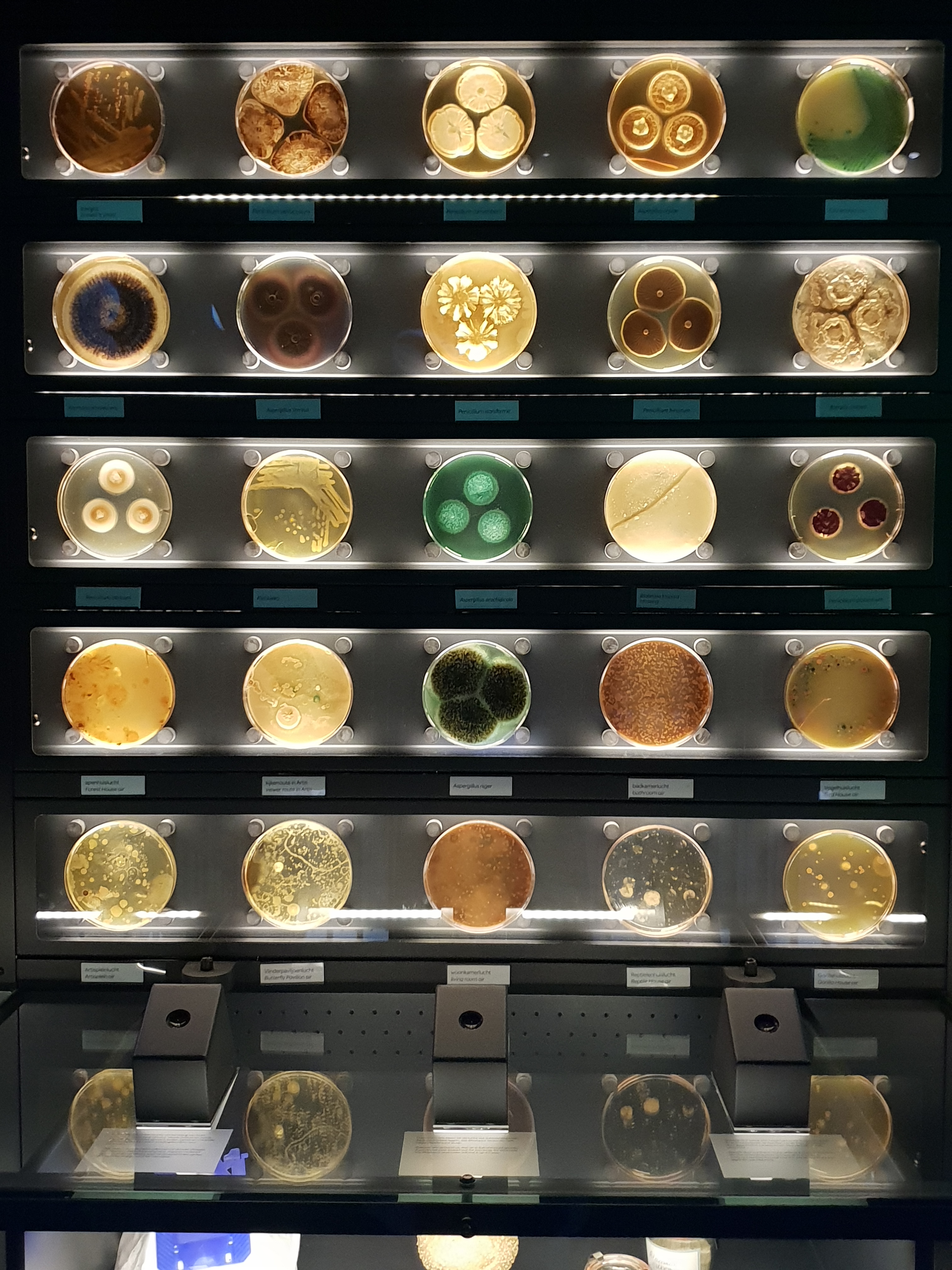
Karren reminds us that reading environmental plates is quite an art and different from clinical samples, it’s a different skill and guidance from experts is essential. Clinical diagnostic laboratories aren’t accredited to process environmental samples and the staff aren’t trained to process and analyse this work. Commercial companies can come and do testing for you, and they are extremely good at routine work. Bespoke work is harder to commission, and that’s where knowing the network can really help! So if you have an outbreak of something unusual, it’s hard to find the information on what level of environmental organisms – like aspergillus – are ok, and what constitutes a danger to patients.

The questions becomes, what type of samples do we want to take and why? We need to understand basal levels of indicator organisms to work out when to act. Building on what Gavin has shared this morning, you need to look – really look- at what is happening in your environment. Karren reflects on how useful an audit can be but we don’t go into an outbreak with the information already in front of you, so your audit probably won’t ask exactly the right questions. Epidemiology provides the answers – which organisms and then which patients are affected, where and when? Identifying common exposures can be easy when infections match case distribution e.g. sequential patients with the same infection in the same room. However some are less obvious like laundry delivered to multiple sites causing infection clusters which are miles apart or commercial products that might only impact high risk patients in very low numbers, but at multiple sites across countries. This can be exceptionally difficult to trace. Though remember not every exposure results in colonisation and infection, and even if exposure is universal some patient groups are more likely to develop infections than others.

Knowing what kind of sample to take is essential, especially when sample numbers are limited. Negative results can be just as useful as positive results – and identifying the source of the outbreak is as much detective work as it is learning to read plates! Karren reminds us – ‘You don’t always need sampling, somethings are just WRONG!’.

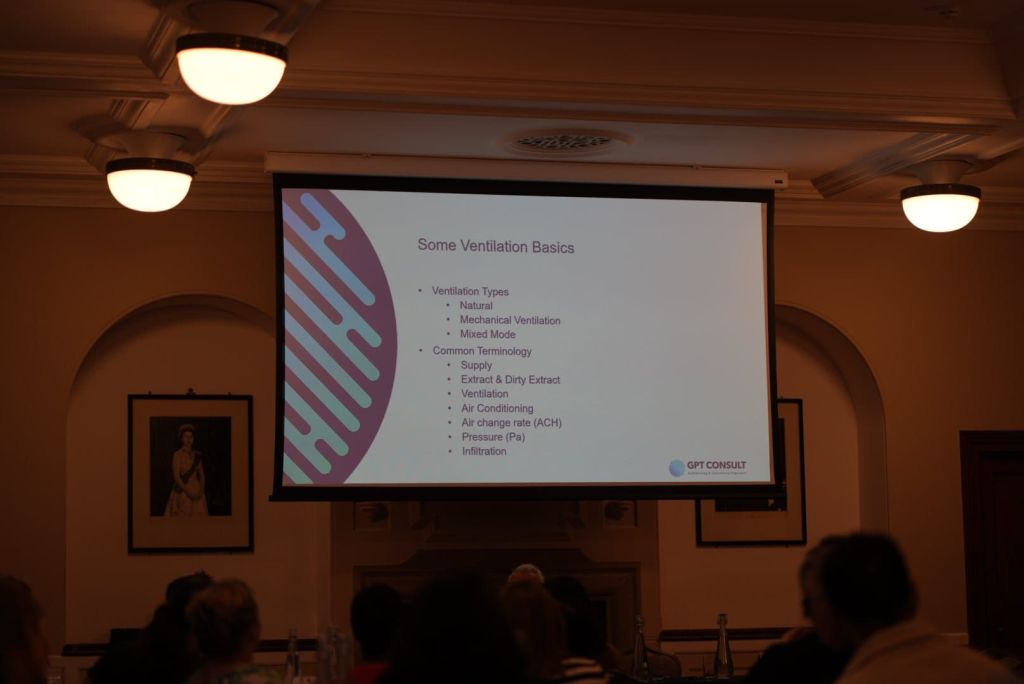
To close the first session, we have Louise Clarke who knows everything there is to know about proper ventilation. Ventilation is essential the movement of air within a system. The law tells us we must provide ventilation under the Healthy and Safety at Work Act, and building regulations set a minimum standard for ventilation. The main reason for good ventilation is to have a safe and comfortable environment; to remove odours, to control temperature and importantly to protect from harmful organisms and toxic substances. We have natural ventilation (like opening a window!), mechanical ventilation which pushes air around the building and a mixed mode – a combination of the two. The preferred method for ventilating a hospital remains natural ventilation, something which really shocked the group. It might work well on a windy day but it certainly doesn’t cover all areas and some times of year, like winter, it’s really no good at all.

Like Lou says, simple is best. When we talk about ventilation, we need to ask what is the issue we are looking at? Human elements are usually a key element to understanding problems in ventilation – you need to think about when the issue arose and who was involved? Often there is a significant time lag between the problem starting and it’s detection in real time. You can be left scrabbling around for details long after the issue began. Lou walked us through the potential information sources to considering during an outbreak, including design records. Which tend to be a little less useful than you would imagine, considering they often tell you the purpose the room was designed for 30 years ago – perhaps not so relevant now! Echoing the sentiments of Karren earlier, one of the most important things you can do is go physically and take a look – not an audit, just turn up and use all your senses!
To kick off the session after a much needed cup of tea (Earl Grey, hot!) we have Dr Mariyam Mirfenderesky who is talking about the challenges of managing fungal outbreaks. Candidozyma auris (note the new name!) is probably one of the most difficult outbreak causing organism to manage. To help with this a Clinical Expert Reference Group was established in March 2025. Candida species are the dominating fungal pathogens of invasive fungal disease and account for >85% of fungaemia in Europe and the United States. Candidozyma auris was first identified in 2009 from a Japanese patient with ear discharge, and is a critical WHO priority fungal pathogen. It is fluconazole resistant and has a propensity to cause healthcare associated infection outbreaks. There are 6 independent clades, with clade 1 dominating in England. Mariyam walked us through the identification of the first neonatal case of C.auris from an eye swab – it was found in two infants, five weeks apart with no direct contact between the children. Fortunately both were colonisation with the fungus only. She then discussed the safety measures that should be in place to manage this difficult pathogen – particularly focusing on why the current cleaning protocols are insufficient to manage this threat. Her final points considered how to act when you detect C.auris – you must be decisive and act!

If you’d like to know more about C. auris, check out this blog post from earlier this year:

Next we have Dr John Hartley who is talking to us about investigating environmental surface mediated outbreaks – what you can’t see may still hurt you. Using the classic movie ‘the fiend without a face’ as a metaphor for IPC, John introduced the idea of modes of transmission between individuals. It feels like a simple problem, its just cleaning and handwashing after all! But we see there is a complex person-organism-environment dynamic system, and as John says, there is always a well known solution to every human problem – neat, plausible and wrong! John highlights the importance of continual surveillance and knowing ‘where the fiend is’. The controls are based on a four pronged approach – clean, replace, destroy or rebuild.

By way of a case study, John told us about his experience of managing adenovirus outbreaks in a paediatric BMT ward. This is a very common virus causing 5-10% of febrile illness in early childhood. Almost everyone has had it, and it can establish latency which can reactivate during BMT. More often it causes severe morbidity and mortality in these patients who can develop hepatitis. What you can’t tell is if the child caught adenovirus from the environment or if it has reactivated post latency. However, whole genome sequencing (WGS) can resolve 1-3 SNPs across genomes – its not like looking for a needle in a haystack, its rather like looking for a needle in the whole of Texas. But WGS can be used to confirm or refute cross infection events.

Of course the next question is, what can be done? Visual assessment is not a reliable indicator of surface cleanliness, John described the varied methods which can be used to detect adenovirus. Then we need to develop the right tools to manage it – including development of environmental PCR as a measure of cleaning efficacy by GirlyMicro herself! Finishing on a Dr Who reference to delight a crowd of scientists is always a win – even if it is comparing adenovirus to the scariest episode, the weeping angels! Of course, when monitoring adenovirus, the most important advice is ‘Don’t Blink’.
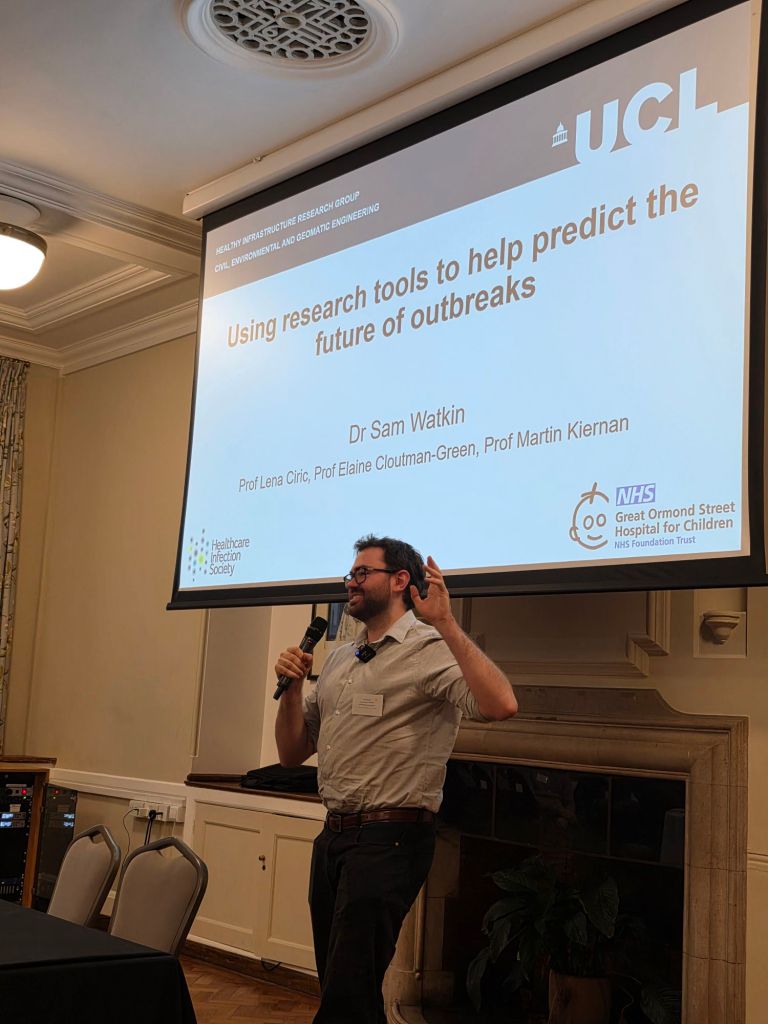
To close the morning session we have Dr Sam Watkin discussing research tools to help predict the future of outbreaks. Sam began acknowledging the current challenges facing preventing transmission of environmental organisms. In his PhD he aimed to identify how microbes disseminate through the clinical space, if the starting contamination site determined how is was disseminated and if the usage of space influenced microbial transmission risk. IPC is often retrospective to the aim was to develop research tools to allow the development of prospective knowledge. Sam used cauliflower mosaic virus DNA markers as a surrogate for pathogens, and followed its movement around two different units. It was shocking to see how far this benign organism could spread in such a short time.
I think if we take away anything this morning it’s that nobody likes the new name for C.auris, and death, death to recirculating air conditioning units!

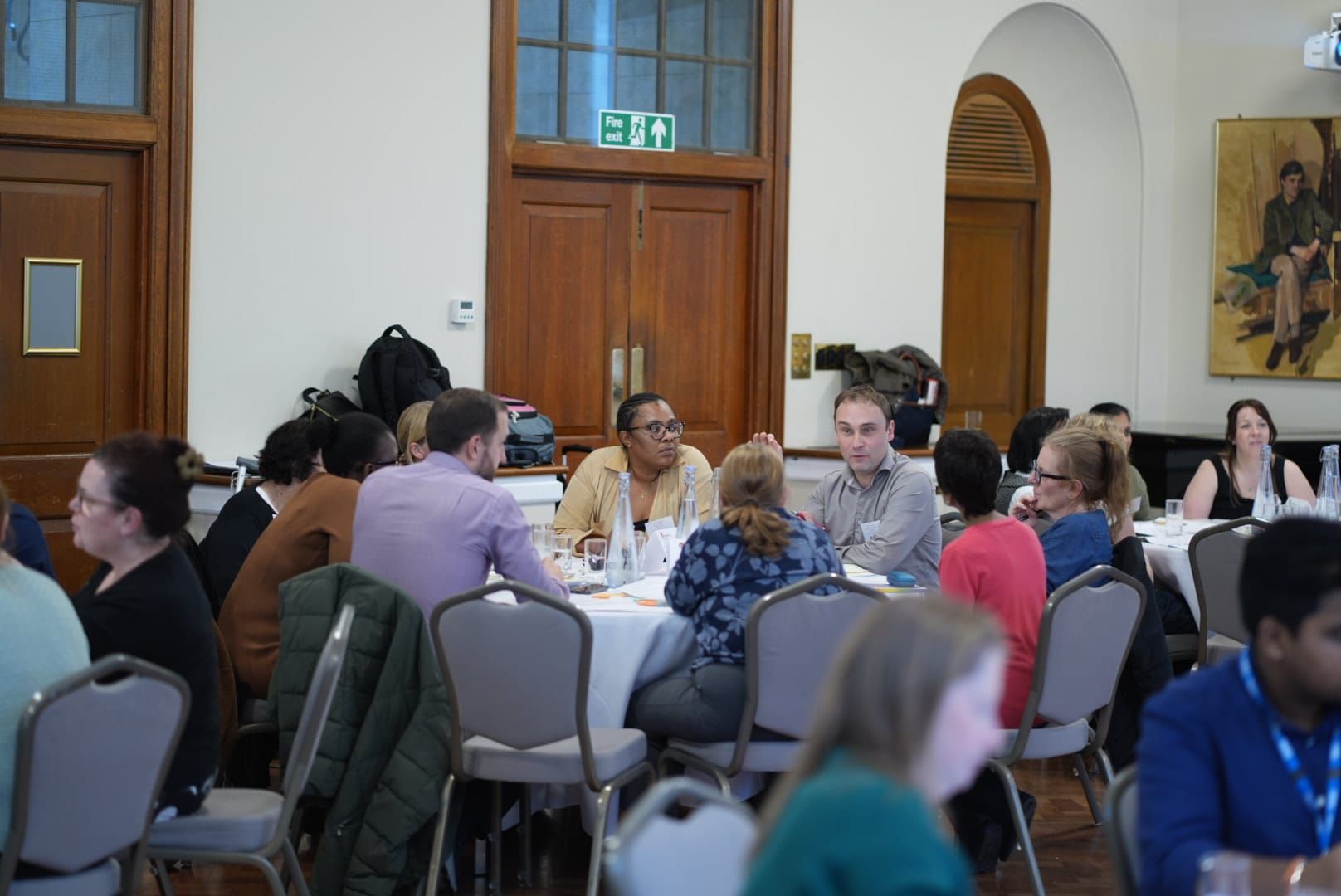
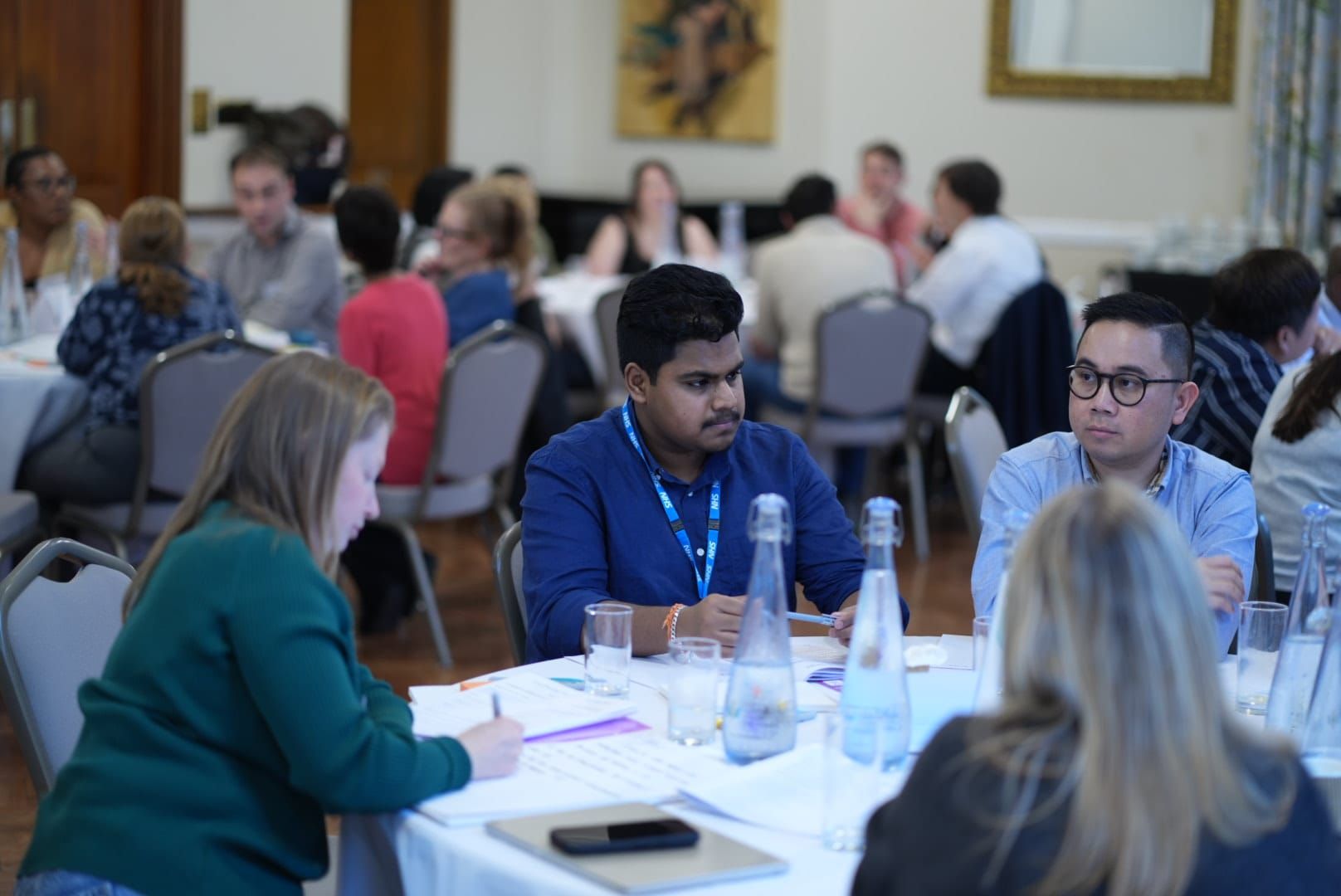
The morning was followed in the afternoon by a series of case discussions in order to help implement the learning from the morning, help everyone get to know each other, and support the sharing of peer to peer learning. The case discussions this year included:

  • Case discussion one (Facilitated by Dr John Hartley):
    • Seek and remove: approaches to source control for environmental surface mediated outbreaks
  • Case discussion two (Facilitated by Professor Elaine Cloutman-Green):
    • How to implement a multi-disciplinary approach to investigation of water borne outbreaks
  • Case discussion three (Facilitated by Louise Clarke):
    • Interpretation of ventilation data and applying it to ventilation risk assessments
  • Case discussion four (Facilitated by Dr Sam Watkin):
    • Determining the role of equipment in outbreaks: how do you investigate?
  • Case discussion five (Facilitated by Karren Staniforth):
    • Introducing new cleaning process: what should you consider?
  • Case discussion six (Facilitated by Dr Claire Walker):
    • Choosing new equipment and furnishings: what questions should you ask?

It was truly inspiring to hear the buzz in the room that all of the discussion created. Thank you to Mr Girlymicro (Jon Cloutman-Green) for being in charge of photography, and to all of our speakers and facilitators for making the day happen. Also, massive shout out to Ant De Souza for pulling the day together, Angela McGee for making sure we all turned up to the right place at the right time, Mummy Girlymicro for running the reception desk, and to Richard Axell for supporting all of the tech on the day.

Now it is all over, the only thing to do is to tap our feet until we all get to meet again in 2026, although the presentations and discussion sheets should go up some time during 2025. Until then however, if you want to know more either head to the Environment Network website to look at info from previous years, or read some of the other blog posts linked to environmental IPC down below.

All opinions in this blog are my own
Celebrating the Hospital Detectives: Why I describe Infection Prevention and Control as the detectives within our healthcare drama

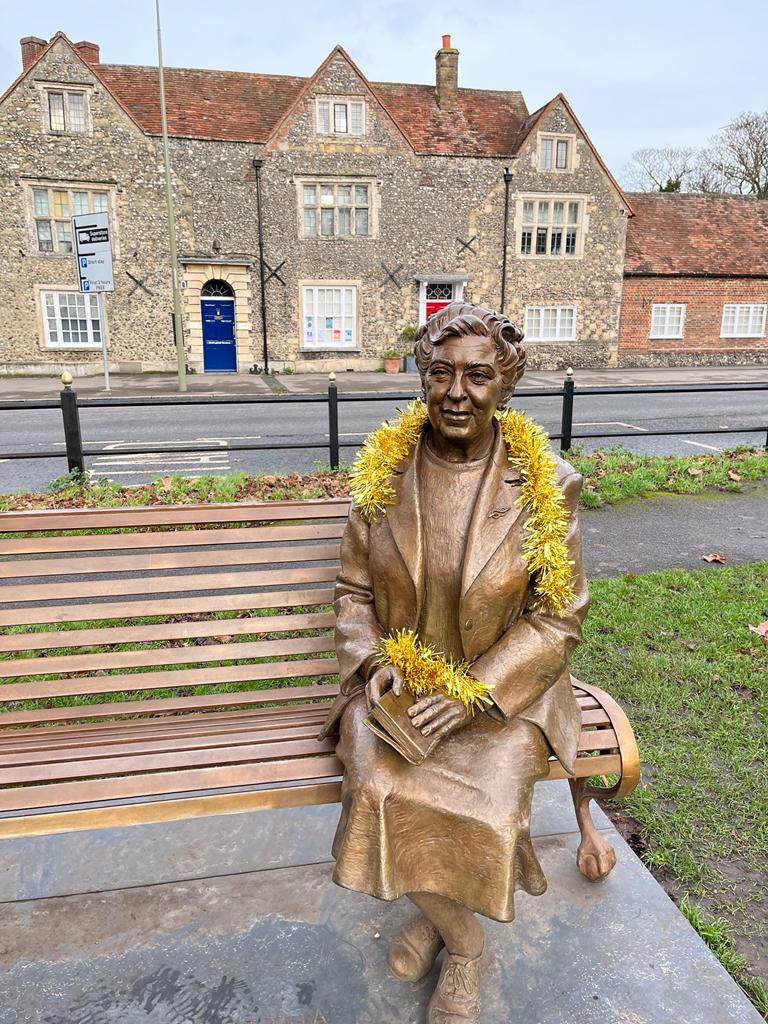
This weekend I’m off to Torquay for the Agatha Christie Spring Literary Festival. It will involve talks, a statue unveiling and even a ball! Some of you will know that I’m a massive Agatha Christie fan and love a good murder mystery. It’s part of the reason my ambition for when I retire is to finally have time to write some of the pathology murder mysteries that I have drafted out. I’m planning a three book series called The Murder Manuals. Anyway, that’s some way off but I still love to indulge in a bit of Agatha joy.

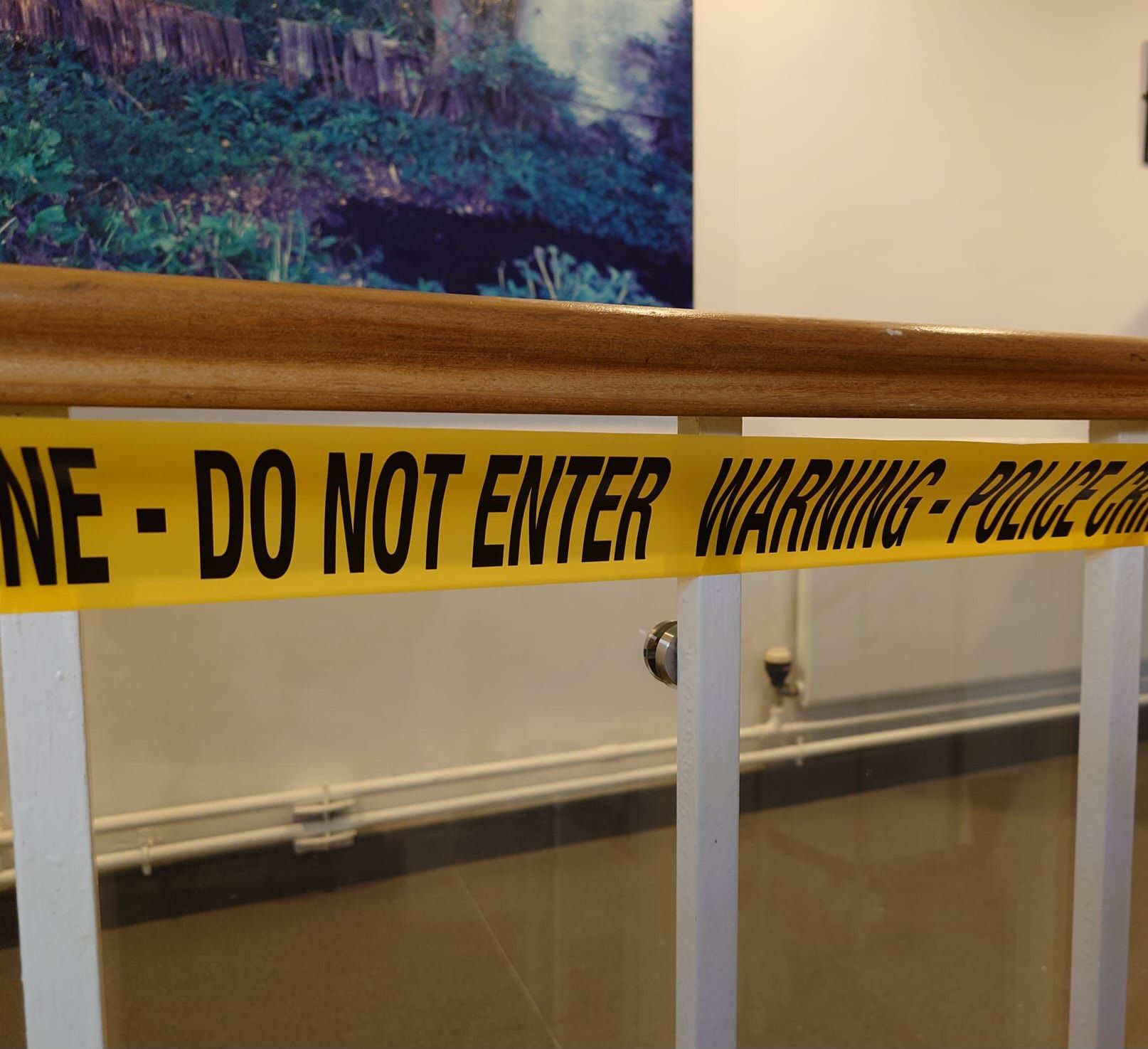
Whilst thinking about it this weekend, when I should have really been packing instead, it occurred to me that maybe one of the reasons that I love my job so much is because, in many ways, working in Infection Prevention and Control (IPC) is like working to solve real life mysteries and challenges on a daily basis. You come into work every day not really knowing what the future will hold and spend your days trying to uncover who the criminals (microorganisms) are and how to prevent future ‘crimes’, in the form of infections. This feels even more true having recently posted about how a forensic science lecture I went to looked at solving crimes. So, whilst my head is all linked to the detective process (I suspect I’m more Miss Marple than Hercule Poirot, although really I’d love Mr Girlymicro and I to be Tommy and Tuppence) I thought I would write about why I believe IPC professionals make the best healthcare detectives.

Beginning at the end

Like most good crime dramas, we in IPC, often make our entrance towards the end of a story when we things have already happened. We then have to work backwards to understand what’s happened as well as working forward to prevent any future risk (‘crimes’). Now, the point we get involved can range a bit. Just like in detective dramas, if the crime is obvious the police get involved early. Sometimes however, Miss Marple suspects a crime has occurred (think Sleeping Murder) but everyone else can be slow to get onboard.

In the world of IPC sometimes there are very clear events that need to be looked into. An outbreak for instance is traditionally described as 2 cases linked in person, place and time, or a single case of a significant infection, such as Ebola. This works pretty well most of the time but there are circumstances where using this definition can mean it takes you longer to identify an outbreak, or ‘crime’, has occurred. An example of this is when outbreaks are linked to an intermediate environmental source. This means that you may have low level numbers of cases which don’t appear to be linked in time, or even person, but are just linked to location. I’ve written about the importance of environmental IPC before, but this is one of the reasons it can be particularly tricky.

Need to understand the rules

In every detective story there are rules. If you’re in a Christie novel there will be a denouement, if you’re watching Columbo you will always see the murder at the start, and if the murderer is a female she will always be the person Morse tries to flirt with badly at least once. Infection Prevention and Control is no different. There are unwritten rules that you need to learn and which will help guide you on your way. Vancomycin Resistant Enterococci outbreaks will often have an environmental component. Norovirus outbreaks within staff often have a secret staff member who vomited in the toilet and told nobody. Pseudomonas aeruginosa outbreaks make people ask ‘have you checked your water?’ All of these things give you a way to start investigating and a set of questions to begin with.

Now, here comes the word of warning. Just like The Murder of Roger Ackroyd broke the rules, so do bacteria and other outbreak causes not always behave the way they are supposed to. Just like any good police drama with a rebellious detective, you need to know the rules but also know when to ignore them. Know when to switch tack and think that your MRSA outbreak may actually be linked to your ventilation system, not direct hand to patient transmission. Be neutral enough when looking at your data to not ignore the clues that are there. Red herrings will be present and distract you, so know when to call a fish a fish.

Start broad and narrow down

One of the best ways, with any investigation, is to start broad and narrow down. This enables you to avoid diving down rabbit holes and missing other pathways that should be investigated. Very rarely can you turn up to a country house murder and exclude most of those present, and as Hercule Poirot famously states “it is always wise to suspect everybody”, and the same is true with IPC investigations.

Ask yourself, why do I think that there’s something happening? How do I know that cases occurring at the same time are actually linked? How are my surveillance systems set up to support identification of low levels of cases over prolonged periods? How sure am I then that a ‘crime’ has actually been committed? Once the body as been found, in terms of looking for sources, where do I get my information from? Do I consider just other patients, or patients and families, or patients, families and the environment, or even patients, families, environment and staff. This, all before you even start to consider how different organisms behave in different types of patients. In a country house murder you need to consider those above stairs as well as those below, and in stories like the A.B.C. Murders, you even need to consider those who came and rang your doorbell.

There are so many moving parts within healthcare and we need to ensure that we are capturing as much of that landscape as possible when we start our investigations. Starting broad supports this, but you also then need to know the key moments to start excluding options so that you can eventually get to the depth needed to support interventions and change. Eventually you have to have the scene where you commit and name the murderer. Within IPC, events such as outbreak meetings can really help with this, as unlike our favourite detectives, we can’t keep all the information to ourselves right to the very end. These meetings bring people together to both help gathering information but also to decide on how to focus next steps.

A plethora of unreliable witnesses

In A Murder is Announced Miss Marple states, ‘Please don’t be too prejudiced against the poor thing because she’s a liar. I do really believe that, like so many liars, there is a real substratum of truth behind her lies’. One of the things that is often quite difficult to pin down during IPC investigations is….what is the truth? Truth is often seen as definitive but in reality truth relates back to the lens through which the individual sees the world. For instance, if you asked me what I was doing at 7am last Wednesday I wouldn’t lie, but I would have to offer some form supposition as I can’t actually remember precisely. The other complication is that those directly involved may be even less able to recall their own roles. If I’m sick in hospital days can merge into one and I’m focussed on my physical reality rather than taking in my environment. This is all before we take into consideration the fact that we may be providing sedatives and other medications that could impact recall. Would I remember that one of my visitors mentioned my niece had diarrhoea……..probably not.

Within IPC investigations no one is likely to remember every physical action, which is why audit can be a helpful addition, in order to have an external person capture trends. In other scenarios the actual witnesses to the event can’t speak, for instance ventilation gauges that may have fluctuated or alarmed (is that a voice?) to an event that no one wrote down or reported. This is especially challenging when you are trying to get to the bottom of grumbling outbreaks that have been going for some time, but also is a particular challenge linked to infections with organisms that may not become apparent for months, such as some surgical site infections or infections with pathogens like Aspergillus. Memory can make individuals particularly poor witnesses in these scenarios and good record keeping and notes are essential to support look back investigations (investigations where you are looking back to capture risks and event detail).

Need to know which tools to use

If you only interview half of the witnesses in your case, you’ll be lucky to get even half of the story, as it will all depend on which people hold the information. On some occasions you will luck onto all the answers with the first witness, but is this a risk you want to take? The same can be true in IPC investigations if you don’t think about the tools or sampling methods you want to access from your toolkit. Is your main focus on using bacterial culture? Do you have a method that will work even if the patient is on antibiotics? If you are looking for a viral cause, what method is best? PCR is not PCR is not PCR. You can look for RNA, or DNA, you can extract from different volumes and different types of samples. The pros and cons of all of which need to be considered. Putting together a sampling strategy in response to an investigation is like choosing the pieces of a jigsaw puzzle whilst knowing that you are not going to have all of the bits. You want to choose pieces that give you the best chance of accurately guessing what the picture is.

In IPC there are various pieces of documentation that will help with thinking in this area. Documents like the UK Standards for Microbiology Investigations (UK SMIs) can help guide thinking linked to which samples might be useful to take. UKHSA also has various documentation linked to outbreak investigation with specific organisms and interpretation criteria, such as measles, C auris, and TB. At the end of the day however, just like your detective walking into a murder scene, you will need to work out how to apply that guidance to what you see in front of you.

It’s all about the clues

Once you have investigated and questioned your witnesses then you need to be able to work out from your clues which pieces are useful and which are your red herrings and may lead you astray. Like all investigations the most important thing is to be methodical but you then need to make time to be able to think and reflect. Poirot famously once solved a case without leaving his front room, just by being able to sit and question those involved. I’m not saying that this is something we should try in terms of IPC, but I do think it holds some lessons for us about the power of thinking time. Especially when you are in the midst of an outbreak there is often a real drive to be seen to be doing something, responding to everything, and constantly doing more. After 20 odd years in micro/IPC I think I’m beginning to think that Poirot may have been onto something.

If you are constantly changing or adding in responses it can be really difficult, even if you reach resolution, to know which thing you did made the difference. Early on in an outbreak it can be easy to rush into making recommendations prior to having gathered all the information you need. It sometimes feels good to call an exposure meeting the minute you get the information that an event has happened. For instance, you may have days to respond in the case of something like a chickenpox (incubation period 8 – 21 days), before those patients become a risk to anyone else. Therefore waiting to call a meeting until you have gathered all the clues, until you know everyone’s immune status, levels of exposure etc, can mean that your meeting is so much more effective in managing any risk. Waiting until you have a decent action plan for where you might search for clues, i.e. sample, may mean you find the answer so much more quickly then having to go in for multiple attempts. Taking a breath and putting thought before action may mean you get to the final result so much faster. So utilise those Little Grey Cells!

Not everyone takes kindly to be investigated

IPC should not be about blame, but just like the house guests in a country house murder may not take kindly to a visit from Inspector Japp, some occupants of your ward may be less than happy to see IPC walking up to the nurses station. Although I talk about the similarities between IPC and detectives, we should not be feared and act like police,  or worse than that judiciary. Often the reason why Jessica Fletcher gets further faster in finding the murder than the police at the scene is because she is seen as just another friendly visitor rather than someone looking to find fault. Her focus is on building and utilising relationships in order to gather information. She is often seen by the other witnesses involved as being part of their team, and the outputs of her investigations are often linked to co-production of outcomes by sharing information, rather than going it alone.

In general, as in many areas of working life, relationship building is key. You see Jessica all the time in Cabot Cove, not just when there’s been a murder. That means that by the time she finds the body she already knows most of the players and has built up relationship capital with those involved. This enables her to sometimes ask the challenging questions. I believe the same needs to be true for IPC. If clinical teams only see us when things go wrong, they are automatically going to be somewhat defensive. If they see and work with us when times are going well, as well as less well, they are more likely to feel we’re in it together with shared ownership. All of which means we may also get to the source that much faster when we need to.

Sometimes there’s a twist in the tail

There are a number of famous Agatha Christie stories where the murder victim turns out to not actually be dead, I won’t spoil them here. The same can be true for IPC cases. There are certain organisms, of which Adenovirus is my personal favourite, that can both cause primary infection and then go latent and reactivate later. Often this reactivation is linked to immune status, and of course many patients in hospital have immune systems that are doing less well. These present challenges as you can look like you have a cluster of cases but, due to the type of patient, they can all be independent findings that happen to cluster together. So, without the right investigations you can call ‘murder’ when actually there is no corpse. Being happy to hold your hands up and step down when you have new information is an important trait, but knowing to get the testing done to enable you to do so is even more so.

The other scenario that can happen is, as Sherlock Holmes famously said, When you have eliminated the impossible, whatever remains, however improbable, must be the truth. There will be things that have been done, behaviour that has occured, that you would never imagine or predict. Over the years I’ve found a lizard in a bathtub, olive oil used as skin care by parents, and all kinds of things in fridges and freezers, just as the tip of this iceberg. Things that out in the real world would probably not be a risk, but in the healthcare world can lead to all kinds of issues, none of which would be on my primary list of questions when trying to identify a source. The world continues to surprise me, and therefore in the world of IPC keeping enough of an open mind to to respond to the unexpected is essential.

It’s a team sport

Poirot has Hastings. Morse has Lewis. Sherlock has Watson. Tuppence has Tommy, and Jessica has most of the population of Cabot Cove. Solving crimes benefits from teamwork and IPC is no different. I’ve spoken about the importance of relationship building but doing IPC investigations well benefits from more than even that. One of the key ways these partnerships work is by creating the space where the discussion and reflection we’ve already talked about can happen. In healthcare, which is far from a contained setting with only a handful of key players, being part of a team can also provide vastly more eyes and insight into what happens in reality.

The Hawthorne effect is a type of human behaviour reactivity in which individuals modify an aspect of their behaviour in response to their awareness of being observed

One of the reasons that it’s important to undertake a team response within IPC is that if I turn up, a stranger or less frequent visitor on the ward, then those on the unit may behave differently because I’m there. If you see IPC hanging around a sink, for instance, then you may suddenly focus way more on your hand hygiene efficacy then you would otherwise. If I go to speak to a family, they may say different things to me than they would to the bed space nurse they see everyday. In order to get the full picture I may not always be the right person to ask the questions. Being fully integrated, being seen as part of the team, or having relationships with people that are, can make all the difference in terms of the success of your activity. Everyone benefits from having a Hastings to send in to ask questions from time to time.

No greater satisfaction than being part of the denouement

I don’t know about you but I just love the moment that everyone gathers at the end of a Christie novel and detective starts the process of walking everyone through all of the different clues, red herrings, and witness statements. The moment when you discover if you’ve picked up on everything that was on offer to you, and even more than that, the anticipating of waiting to hear if you’ve put it all together in a way that a) works and was b) actually correct.

I feel the same way when I finally have that moment when I crack the case, when I find the source, or even just get to the point where I understand a tricky result. The hallelujah moment when you look down at the jigsaw pieces you have and you can finally see the full picture. It’s the reason that some of our favourite investigative successes live on for years in  teaching and case studies. I will talk about the case of the Norovirus and Biscuit Tin to anyone who will listen even now. The settings may be different but every detective, whether in a novel or in healthcare, loves to regale others with their exploits. We just can’t help ourselves. My excuse is that sharing the learning helps is all. That said I’m off to attend a talk called ‘How to kill people for profit’. I’m assuming it will give me all the tips I need to be the next cozy murder success and maybe even weave in the odd IPC detective drama moment into the mix. 

All opinions in this blog are my own