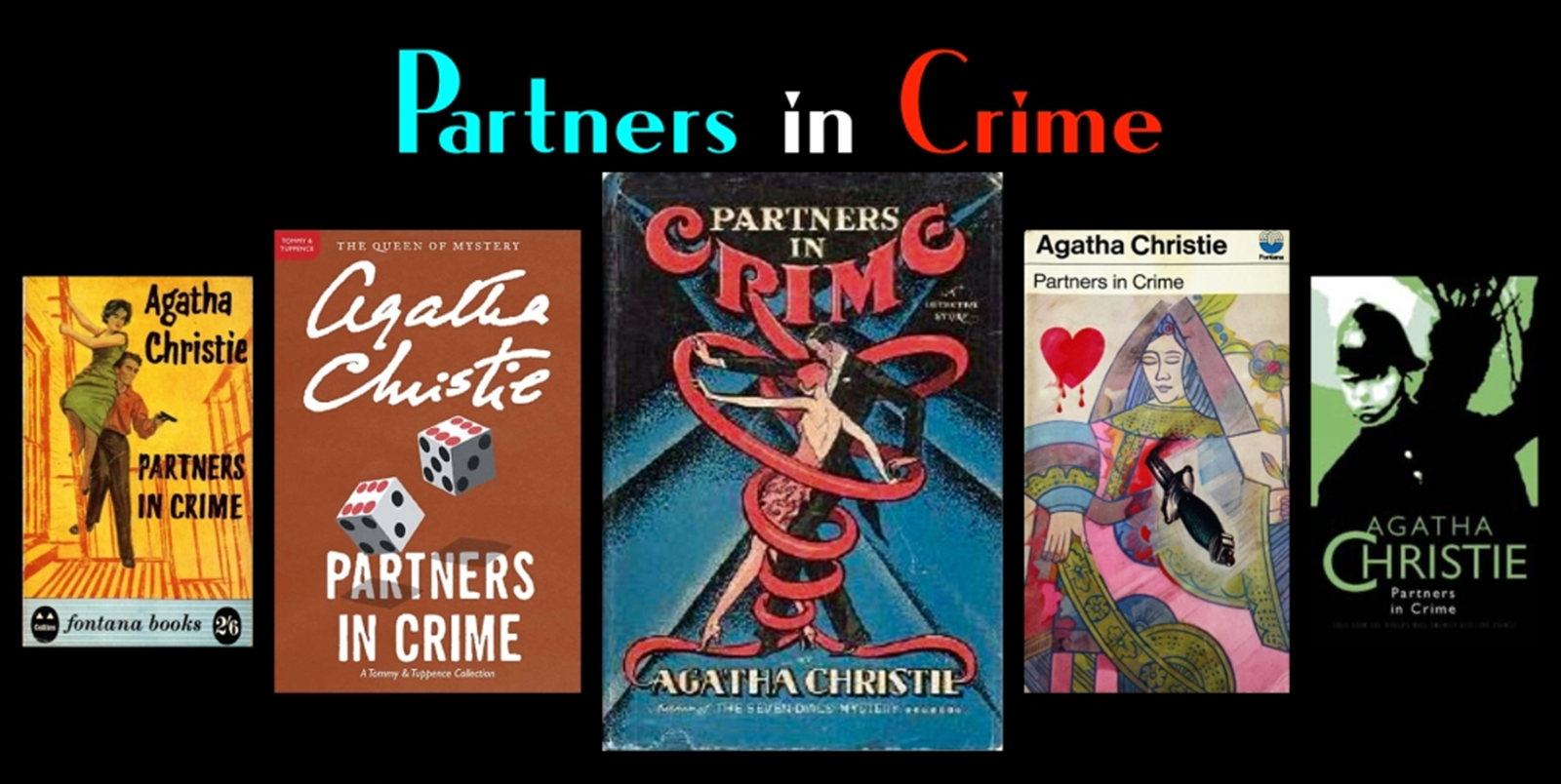
I don’t think this is a surprise to any of the regular readers of this blog, but I adore Agatha Christie novels. Reading them has seen me through many a difficult period. They are a source of comfort, escape, and inspiration. I even wrote a previous blog about how there are parallels between solving her ‘who done its’ and my day job, as a hospital detective. What could be more Halloween than a little bit of murder, however, and so today I wanted to talk about how she uses microbes to kill in her books and why the science behind their use brings me so much joy.
When many people think of Agatha Christie murders, however, they think of her as the Queen of Poisons. They are even a number of books written about her experience as a apothecary’s assistant (pharmacy technician) during the Great War (First World War) and others breaking down her use of toxins. Most readers probably don’t necessarily think of her books having much to do with microbiology, even I hadn’t really made the link despite having listened to, read, and watched, all of her content multiple times.

I’ve been going through a difficult period at work, that combined with the hormonal chaos of the perimenopause, has led to a lot of being awake from 2 – 5am. In order to manage the anxiety I’ve been hitting the audiobooks pretty hard, and of course that has meant listening to a LOT of Christie. Imagine my surprise, therefore, that I finally clocked that although many of the deaths include death by poison, there also a few where the death featured is not by toxin, but by microbe! The excitement of this revelation probably didn’t help with the sleeping or resulting sleep deprivation, but it has inspired me to write this blog. So, not all bad then.
WARNING – THERE WILL BE SPOILERS AHEAD!
Who was Agatha Christie?
Dame Agatha Christie wrote 66 detective novels between 1916 and 1976. Her first novel, The Mysterious Affair at Styles, was written in 1916 and published in 1920. Her final work was published after her death in 1976 at the age of 85 and is one of my favourites, Sleeping Murder. Her work features so many wonderful characters, including detective characters that most people will have heard of, Hercule Poirot and Miss Jane Marple. There are many more however, including two of my favourites Tommy and Tuppence, and a girl who will forever hold a piece of my heart, Miss Ariadne Oliver, who is a novelist with some parallels to Christie herself.
Today we’re going to be talking about three main books, published over almost 30 years and featuring three different detective characters:
- Cards on the Table, 2 November 1936, featuring Hercule Poirot (and my girl Ariadne Oliver)
- Murder is Easy (originally Easy to Kill), 5 June 1939, featuring a one off appearance by Luke Fitzwilliam as the detective character
- The Mirror Crack’d from Side to Side, 12 November 1962, featuring Miss Jane Marple

Cards on the Table
This book is based around a dinner party organised by Mr. Shaitana. He is an interesting chap, with an interest in collecting and also murder. He organises a dinner party with a pretty varied guest list, four detective or crime solving characters (Poirot, Oliver, Superintendent Battle, and Colonel Race), alongside four characters who may or may not have been involved with death under suspicious circumstances (Mrs. Lorrimer, Major John Despard, Dr. Geoffrey Roberts, Anne Meredith).
Shaitana is murdered after dinner, in plain sight, whilst sitting in an arm chair, as our suspects play bridge in the same room, and our detectives play bridge in another. The solving of the crime, in the most British way possible, comes down to an investigation of the Bridge hands played. On a side note as a Bridge player in my youth, albeit a very bad one, I kind of love this.
So where do the microbes come in? Not in the murder in the room, but the deaths by suspicious circumstances that one of suspects is trying to cover up.
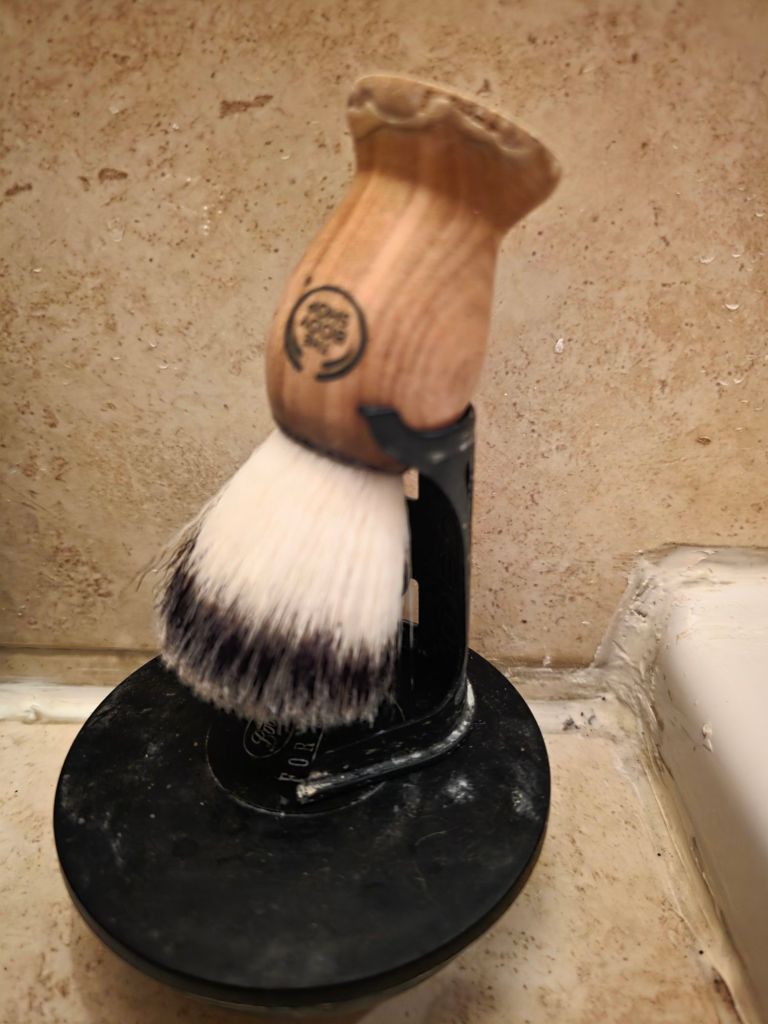
The first murder by microbe is linked to an affair and the associated cover up, and the way it is done is pretty cool. One of our suspects has an affair with a married woman, and when he realises her husband has discovered what has happened by over hearing a conversation he takes a trip to the bathroom on the pretext of washing his hands. Whilst there he takes the opportunity to contaminate the bristles of a shaving brush with Bacillus anthracis spores, so that next time the gentleman shaves, and ideally has a few shaving cuts, the anthrax will be inoculated into the wounds.
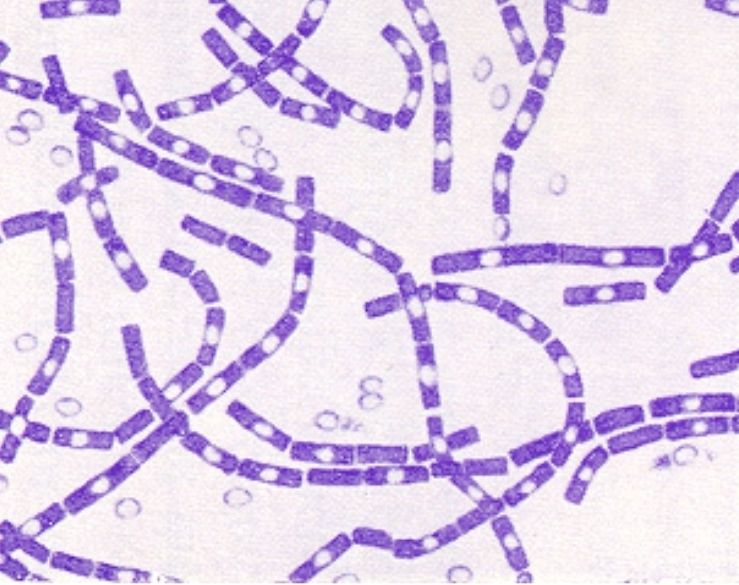
So what would the anthrax do? The association with wounds is key, ideally a deeper cut, as there are 2 likely infectious outcomes from this. The most likely would be Cutaneous Anthrax, resulting in a surface lesion that gradually progresses to turn into a very characteristic, painless, coal-black necrotic eschar. The bacteria then release toxins that cause localised swelling. If the bacteria then enter the blood stream they then can lead to a 5% to 20% mortality rate if untreated, which of course they would be in 1936. Penicillin, which is the main treatment and fortunately the first antibiotic developed, didn’t become widely available until 1945/1946.
Even if penicillin was around it may not have helped if the bacteria entered the blood stream, as you would usually like to use either ciprofloxacin or doxycycline plus one or two additional active antibiotics like vancomycin, imipenem, or meropenem – none of which would be available for some time.
If the inoculation had been deeper, he may have developed Subcutaneous Anthrax, which could result in deep tissue infection and even anthrax meningitis. So the death of his target is not unexpected, especially given the consideration that the victim is likely to have multiple daily exposures every time they shaved.
Why is the shaving brush a clever idea? Well, firstly it’s an object that is likely to be used very regularly, and the spores will survive a very long time upon it. Secondly, not only will it be used often, the likelihood is that it will come into contact with broken skin sooner or later, increasing the chances that severe infection will occur. Third, the inoculation event will be temporarily distinct from the infection, with days to weeks separating the contamination of the brush and the presentation of the infection, making it very hard to trace back to an individual or time point. Finally, and probably most cleverly, these kinds of shaving brushes were often made of badger or boar bristles. During the Great War, however, there was a large scale cutaneous anthrax outbreak linked to shaving brushes that were made of untreated horsehair, some of which were mocked up to look like more expensive badger. This means even if someone identified the shaving brush as the cause, they would have reason to believe that it was an unintentional exposure and there would be even less likelihood of connecting it to our suspect.
Having succeeded once, like many murderers, our suspect decided to try again. The wife of his first victim, yes the one he was having an affair with, appears to become a little too much now her husband is no longer in the picture. He uses the cover of a routine typhoid injection (which had been available as required since the 1897) prior to a trip abroad to inject her with an infectious agent that resulted in her death. It doesn’t list what but if direct injection is an option, and no antibiotic exist, the world is your oyster in terms of bacterial choice.
This may feel a little far fetched, but the video below includes information about the way genetic evidence was collected to show that a doctor within the US injected his ex girlfriend with HIV under the cover of it being a vitamin B injection in order to infect her. Sometimes reality is even stranger than fiction.
Murder is Easy
This is one of my favourite Christie books, and I think it is one that is less known to many. It also has one of my favourite microbial deaths, this time of a main character. Under interrogation it would not be possible for me to deny that all these facts are connected. Luke Fitzwilliam, our detective character and a retired colonial police officer, meets Miss Lavinia Pinkerton on a train to London who is planning on visiting Scotland Yard. She confides in him that a serial killer is operating in her quiet English village, Wychwood-under-Ashe, and that the deaths have been disguised as ordinary accidents. She names a number of deaths that have already occurred (Amy Gibbs, Tommy Pierce, and Harry Carter) and says that the local doctor, Dr. John Humbleby, will be next. I do think this is why I don’t speak to strangers on trains.
Luke mostly thinks that Lavinia just has an over active imagination, until he sees in the newspaper the next day that Miss Pinkerton has been killed in a hit-and-run accident in London. As a result he travels to Wychwood-under-Ashe to investigate further.
He finds that the 3 deaths he’s been told about have occurred in a wide number of ways:
- Amy Gibbs: Died after drinking hat paint swapped with her cough mixture bottle
- Tommy Pierce: Pushed from a high windowsill (while cleaning) to his death
- Harry Carter: Pushed off a footbridge into the river, where he drowned
Dr. Humbleby then dies under suspicious circumstances of sudden onset septicaemia (blood stream infection), but how does it happen? Although anthrax is cool, this method is even cooler. So let’s talk pus.
Dr Humbleby dies as a result of our killer accidentally-on purpose injuring him with scissors whilst he visits their home. When dressing the injured hand our killer uses a bandage that they have deliberately contaminated with pus discharging from the ear of an infected cat, named Wonky Pooh.
Pus is not just fluid; it is a dense mixture of dead white blood cells, cellular debris, and often billions of microorganisms, frequently from different species, combined in one sample. The act of introducing pus (even a small amount) has an infection rate of close to 100% (although obviously no trials on this) as it will overwhelm local tissue defenses, frequently leading to localised tissue damage, and delayed healing. As we are talking about the pre-antibiotic era here, systemic infection (i.e. infection impacting blood or organs) is very likely to occur as the local wound infection cannot be treated. It means our killer has a very high chance of fulfilling their deadly objective. I personally love a pus sample as they are such great specimens to work with…I don’t know what that says about me.

The Mirror Crack’d From Side to Side
Although I have only found three deaths directly linked to microbes, Agatha Christie didn’t just use microbes for murder, she also used them as the motivation for murder.
There is no avoiding spoiling this one I’m afraid, so skip this section if you don’t want to know the core of the plot
The story starts out with film star Marina Gregg and her husband, film producer Jason Rudd, moving into Gossington Hall (the same Hall that features in the Body in the Library) in the village home of Miss Jane Marple, St Mary Mead. The stylish couple host the local village fête where a deadly encounter occurs.
One of the local villagers, Heather Badcock, meets Marina and as part of their discussion talks about how many years before in Barbados she had left her sick bed in order to get an autograph from her. Heather later dies of poisoning at the same event. Miss Jane Marple is not well and so is at home and misses both the conversation and the death, but when more people start to die she decides to investigate and find the reason behind Heather’s death.
As she speaks to people she gets many different explanations as to the reason that Heather was sick when she went to collect the autograph, everything from Chickenpox to Flu. Miss Marple works as an infection detective as the causative organism is what the entire motive hangs on. Eventually, she manages to get an accurate recounting of the conversation from the Vicar, who tell her that Heather says she had German Measles. This fits with what others have said, in that she covered her face with powder in order to hide her rash.

First, let’s talk about what German Measles is, as it is not actually a name in common scientific use, and hasn’t been the approved name since 1881. The virus in question is rubella, but when the presentation was originally discovered it was known as German Measles because it was first described as being distinct from measles by German physicians. Prior to this presentation recognition, rubella was considered to be a variant of either measles or scarlet fever. In 1740, the German physician and chemist Friedrich Hoffmann recognised that it was, in fact, a separate infection. The name rubella was given by surgeon Henry Veale in 1866, meaning little red, as a way to more accurately describe the rash and was widely adopted in 1881.
Why does it matter that Miss Marple identified rubella as the cause? In healthy adults rubella presents as a rash with small flat spots and a high temperature, with or without joint pain and cold like symptoms. You are infectious for ~1 week before the rash starts and 1 week afterwards. Infection is usually mild and self resolves in a week to 10 days. So why would this conversation with Marina result in Heather’s death?
Well, it turns out that Marina had been desperate to have children, so desperate she had adopted. She finally found herself pregnant, but in a way she had never understood, she discovered she had caught rubella when she was 4 months pregnant. As a result, her child was born with a severe congenital learning disability and was placed in a special care facility from birth. Marina suffered a nervous breakdown and became reliant on medication as a result. When Heather approaches her, for the first time ever Marina knows precisely where she was infected and by whom.

Far from being a mild disease in pregnant women, infection, especially early in pregnancy can have devastating consequences for the foetus. For this reason in the 1970s the rubella vaccination programme was introduced. I remember all the girls in my class being walked into a room separate from the boys when I was in primary school to get vaccinated. The aim of this selective program was specifically to target pre-pubertal schoolgirls and non-immune women of childbearing age in order to protect future pregnancies from the risk of Congenital Rubella Syndrome (CRS).
You may have noticed, however, that the virus infects all individuals, and so by only vaccinating those physiologically capable of bearing children the transmission chain is not interrupted, only the consequences of infection. For this reason the vaccine, within the UK, was extended to everyone in 1988 in order to support better transmission control.
Global vaccine introduction was driven by an outbreak across Europe and the US between 1962 – 1965 that impacted over 12.5 million people in the US alone, and resulted in 11,000 miscarriages and stillbirths. The Mirror Cracked came out in 1962, and so the audience would have been very sensitive to the plot lines within, especially as there was no way to protect pregnancies at the time. Heather deciding to ignore her symptoms and deliberately risk exposing others would have been a particularly heinous act, I image, and there is a powerful quote associated with it as the end of the book:
Heather Badcock meant no harm. She never did mean harm, but there is no doubt that people like Heather Badcock (and like my old friend Alison Wilde), are capable of doing a lot of harm because they lack – not kindness, they have kindness – but any real consideration for the way their actions may affect other people. She thought always of what an action meant to her, never sparing a thought to what it might mean to somebody else.
Agatha Christie, The Mirror Crack’d From Side to Side
I feel that is a strong reflection on some of the more modern behaviours that we see in response to infectious disease, especially post pandemic, and the way vaccine related behaviours are starting to impact wider society. Not only are vaccines beneficial to individuals, but they protect the wider community, not all of whom can get vaccinated. By protecting ourselves we protect others, an option that wasn’t available for Marina, but is available to all of us.
The every present impact of infectious disease
Infectious diseases were part of every day life for most of the time that Christie was writing, and for most of it responding with antibiotics was also not an option. In The Mirror Crack’d, Doctor Haydock says he has to continue his rounds as he has 8 cases of German Measles, Whooping Cough, and Scarlet Fever that he needs to see. Numbers that would be shocking today in a small English village, two thirds of which are now vaccine preventable, and the other readily treated with antibiotics. I think because we don’t see the negative consequences of these types of infection in our every day life, outside of healthcare, we don’t realise how fortunate we are to live in an age where we have such options.
As well as being background, some infectious diseases, especially polio, even provided an alibi…as well as a setting up scenarios for becoming a target for murder in her books.
Christie wrote books at the height of the global polio epidemics and the resulting disease is used as a realistic backdrop to shape the characters’ temperaments, physical mobility, or alibis. Polio is a virus that causes everything from asymptomatic infections to life-threatening paralysis, and nowadays is another vaccine preventable infection.
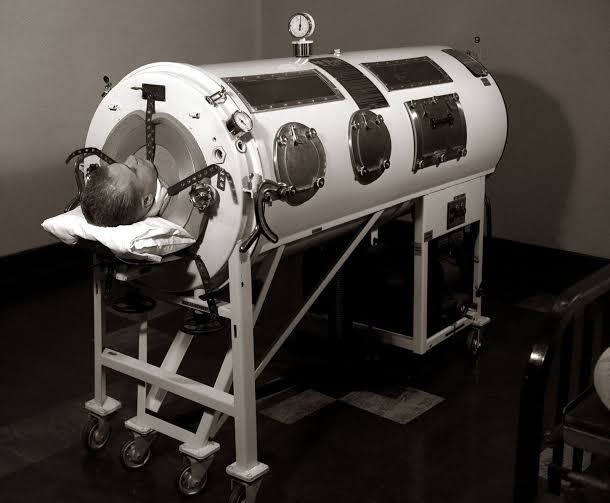
Before modern ventilators became available, patients who experienced muscle weakness due to polio infection were sometimes managed within iron lung machines, that were used to mechanically assist or if needed take over the work of breathing for a patient who has lost control of their respiratory muscles. Having seen historic examples of these when I worked at Boston Children’s Hospital, I can testify to how terrifying they must have been if your child ended up in one.
Within the book, the Crooked House, which came out in 1949, one the main characters is a boy of 16 who is recovering from a mild case of polio. He has a lot of residual stiffness that causes his grandfather to pull him out of school and provide him with a private tutor instead. He becomes isolated by being at home, and the presence of the tutor is also a big driver in the plot after his grandfather is found dead. Polio, therefore, drives a number of the circumstances that result in the subsequent deaths.
Another book that some people may be less familiar with is called Ordeal by Innocence that was published in 1958. The matriarch of the Argyle family is found murdered and one of her adopted children is found guilty, is sent to jail, and subsequently dies.
Dr. Arthur Calgary is a geophysicist who returns from a two year expedition to the antarctic. He sees coverage of the case and realises he is the alibi for the son Jacko who was convicted, but he could not testify as he was away. He turns up to inform the family of the son’s innocence and sets in motion a series of events that reveal the real killer, but also results in many more deaths.
It also causes Philip Durrant, who is married to one of the other Argyle children, to begin his own investigation. Philip has recently contracted a case of severe polio that has left him paralysed and confined to a wheelchair. He hates being dependent and commences his own investigation as a way of asserting his independence. It may not end well for him.
Finally, and I’ve saved one of the best for last. I’m talking about The Pale Horse released in 1961. Some people don’t love this one, but I have to tell you I find it brilliant and clever, and so atmospheric I adore it. I won’t talk about how the deaths are achieved in this one as it is too fun to spoil, but I will mention that one of the main suspects is known as Mr Venables, who requires the use of wheelchair after severe polio infection. An eye witness identifies him close to a crime scene, but his legs are entirely atrophied, making it physically impossible for him to stand or walk. A lot of the discussion therefore centers around whether his has a genuine polio disability or is it a long in the planning elaborate alibi. I’ll leave discovering the answer to you.
Agatha Christie used the times in which she lived, not just as the backdrop for her novels, but as the driver for the plots within them. It is no surprise, therefore, that infectious diseases featured heavily. Living in a pre-antimicrobial, mostly pre-vaccination world must have been terrifying, especially if a loved one fell ill. Using that fear of the unknown, fear of the less understood, makes a lot of sense when setting the scene for murder and mayhem. The inclusion of a detective character, whose job it is to reduce the chaos and make the world make more sense, also explains why it may have struck a cord with those reading who also were experiencing disease within their own daily lives. This deep dive has just made me extra grateful for all the progress we have made in making these organisms much more present in books than they are in my reality, and if possible love Christie even more than I did before.
All opinions in this blog are my own
And now…for a shameless plug
If you love Halloween, or a nice outbreak thriller/zombie film, keep an eye out for my new book ‘Don’t Open That Door: A microbiologist’s guide to infection in movies and TV’ is out in early December, and available for kindle pre order now:
Have you ever wondered whether The Last of Us TV series could actually happen?
Have you ever considered what you would do if you were the one standing at the air lock door in Alien?
Would you open it or leave your crew outside in order to save humanity?
If you’ve ever watched a blockbuster and thought, “Wait, is that how infections actually work?”
Then this book was written for you.
In Don’t Open That Door! A Microbiologist’s Guide to Infection in Movies and TV, Professor Elaine Cloutman-Green (affectionately known to her fans as ‘The Girlymicrobiologist’) bridges the gap between Hollywood fiction and real-world science. Drawing on over two decades of experience as an NHS Consultant Clinical Scientist and infection control expert, she takes you on a fascinating, approachable journey through your favourite movies and TV shows to reveal where the storytelling ends and the real science begins, helping you find the fact within the fiction.
What’s Inside:
- The Survival Basics: Master the fundamentals of microbiology and infection control, including how pathogens spread from airborne droplets to zoonotic transmission.
- The Intervention Arsenal: Learn the truth behind pandemic interventions, exploring everything from real-world isolation protocols to the mechanics of vaccines.
- The Rogue’s Gallery of Pathogens: Dive into dedicated sections exploring the distinct worlds of viruses, fungi, parasites, and bacteria.
- Hollywood vs. The Lab: Deep-dive into chapters exploring both your favourite cult films and TV series, as well as ones you may be less familiar with. Discover how fictional world-building and cinematic outbreaks stack up against actual scientific investigations.
Whether you are a die-hard sci-fi geek, a horror movie buff, or simply curious about the microscopic partners that share our world, this book will completely change the way you watch television.
Happy Halloween