Let’s Talk Con Fear: Talking about social anxiety at conferences and events

I’m off to the Federation of Infection Societies (FIS) conference this week. I’m involved in 3 sessions over 2 days, and in many ways, these types of events are a complete highlight for me.  I get to be inspired by hearing new science, I get to catch up with wonderful colleagues who I don’t get time to see very often, and I get to immerse myself in all things microbiology without the distraction.

There is another side to this coin, however, and that is both the anxiety that builds before I go, and that can last throughout the whole event. The ever-present spirals of ‘do I know anything?’, ‘will I say something stupid?’, ‘will I know anyone?’, and the classic ‘do any of these people actually like me?’.

The combination of this social anxiety with the, sometimes long, very peopley days, can mean that I hit spirals pretty easily and the lack of solo recovery time means that I can find it pretty exhausting by the end. 

Now, I’m obviously not talking about extreme cases of social anxiety that may require informed medical or long-term support. I’m talking about situational anxiety that most of us may find ourselves in from time to time.

Just in case there is anyone out there in a similar boat, I thought I might put together some things I’ve learnt along the way that help manage some of my anxiety traits and enable me to actually enjoy the experience rather than dreading it.

Do your prep work ahead of time

The first thing I’ve had to learn is that I can’t just pretend that doesn’t happen. I can’t wish it away. What I can do is be prepared and make sure that I have made the process as trigger free as possible.

For me, this is about simple things, like getting a hotel as close to the venue as possible. It means that if I just need a 30-minute alone break, I can take one. It removes anxiety about getting lost or forgetting something crucial and not having time to go back for it, which, although minor, can be the final straw. It’s also about making sure that I have pre-found all the rooms I need to locate ahead of time, so I know where I’m going, and that ahead of multi-day meetings I have a plan for which sessions I’m going to before  I even travel to the event.
Know your triggers

I know that I have a few things that really lead to anxiety, but perhaps more unique to me, is the fear that I was have an auto immune attack and won’t be with people who understand what is needed. I learnt early that the best way to cover this one off is that I very rarely travel alone, especially over seas. I often travel with my mum or one of a very small list of truly trusted people, who I know would understand how to get me help if required.

Something that is more likely to strike a cord with others, is that I am also the girl who has walked into conference rooms, spent 15 minutes and walked out, as I knew no one and was just overwhelmed. I’m not proud of these moments, but I think it’s important to acknowledge that they have occurred. Although, to be honest, when they’ve happened, I mostly felt invisible, so I doubt anyone noticed.

I have discovered that I need to know that the space is one where I feel welcome for me to perform at my best. This sense of welcome can be either intellectual, because of the topics covered, or because of feeling a sense of community, as the room contains people within my field or in strong alignment with my values. I’ve found the overwhelming feeling hits most strongly when I’ve been in very large political or strategic sessions, where I felt out of my comfort zone on both intellectual and community counts.

That said, I’m not too bad in the sessions themselves, I’m there to learn something new, and learning excites me even now. It’s the breaks that are my nemesis, especially when large groups all surge into a space at the same time, and the weight of expectation that you must now network lands. The seconds that feel like hours of desperately searching for faces you recognise and being forced to face the fact that yes, you really should go up and speak to that absolute stranger, as it’s the right thing to do. It’s these moments that can cause me to bolt for the nearest bathroom.

Carve out time for yourself

One of the key mechanisms I’ve identified to help with my triggers is that I make sure I have enough time to myself, be that eating food away from the venue so I feel more certain what it contains and less at risk, to making sure I have evenings to myself to process and unwind.

I usually come over as really social, and really into spending time with people, and I am both of those things. I also only have a limited amount of social battery, and so in order to maintain that extrovert part of myself I have to have recharge time. I love talking to people about this blog, I love hearing about and responding to other peoples work, but at a certain point I need to sit down with an audio book and a cup of tea in order to do it well. This means that when I go through the brochure ahead of time, and plan my sessions, I make sure that I have enough blocks of time to enable me to be my best self when I’m in the space with others. Sometimes all you need is a walk to a local coffee shop and back to give you the perspective you need.

Pre establish a safe space or person

Just in case it does all become too much, I always have a plan. I posted a while ago about how spending time in bathrooms may feature way too much in my career, but part of that is that they can sometimes present a safe bolt hole.

The wonderful thing about having hit my 20th year as a Healthcare Scientist, is that I now also know quite a few people, some of whom I’ve known for well over a decade. This means that at most events, there are also people who I count not only as colleagues but as friends. People that I can just go and spend time with that doesn’t include social commitment. Those friends you have that you can just be in the same space without any demands being made. If I’m at an event where these people are also attending, then I know that I have someone I can just excuse myself to catch up with if I’m having a moment. It’s also the great thing about ensuring that you have a hotel room nearby. Your safe bolt hole is only minutes away.

Make an agreement with yourself about how much is enough

The fact that you have social anxiety does not provide a free pass to escape one of the fundamental purposes of attending conferences, networking. It’s key to your career, it’s key to your development, it needs to happen. The thing is that there are varying degrees of what networking can be, and before you’re in the space, you need to decide what level you are aiming for and will therefore achieve. For me, my deal is that I will, on each day, speak to one person I don’t know. I am not allowed to finish my day without this happening, but once I have had that one daily interaction, then any further moments are a bonus. Once that one challenging moment is over with the pressure is off, and then I almost always over achieve on my goal.

Be realistic about how much you can expect of yourself

The key thing I’ve learnt is that I have to realistic when I’m making that deal with myself and deciding on achievable targets. For me, there is not point is saying I will speak to five people I haven’t met before, as I’ll just be setting myself up for failure. You will also find that I rarely sign up for conference dinners, as I have over the years found that if I’m in a space with other people from 08:00 – 18:00 I will really struggle to then spend yet more time with other people, no matter how lovely or interesting those people are. All I will want at that point is room service, tea, and a movie in my room.

Everyone will have their own tolerances and lines. The important thing is to have enough self reflection to know what yours are. Otherwise, you just add guilt into the anxiety mix, which is not much fun for anyone.

Learn how to work a room using tools you are comfortable with

One of the other things that I’ve learnt about myself, is that although I get super anxious standing in a room trying to approach someone at the coffee table, I am much much more comfortable moving around the exhibitor stands. The guys at the exhibitor stands are motivated to speak to those who approach, and there are usually science based discussions that I am eager to have. This, for me, is a match made in heaven, as it breaks me into the speaking to people I don’t know in a very gentle way. If I’m lucky, I will also meet others when I’m wandering around, which will allow me to tick my ‘speak to one stranger box’ as exhibitors do not count on that front. The added bonus is that I also often manage to find cool new stuff I’m interested in or develop collaborations whilst this is happening, so it’s a no lose scenario for me.

The other thing that having worked for 20 years has given me is the opportunity to be asked to be involved with sessions. For this girl with social anxiety, this is actually a great thing, despite the fact that it sounds like it should be stressful. I’ve never minded public speaking in the same way as I worry about 1:1 interactions. When I speak, all I can do is put my best foot forward and hope that others will be interested in what I have to say. For the most part, if people don’t engage they will just leave and not give it another thought. On the positive side though, if people find what you say interesting enough to want to speak to you afterwards, this a great way to tick the ‘speak to one person you don’t know box’ and as they are approaching you all you have to do is respond. I find this so rewarding, but I also appreciate how fortunate I am to have this type of opportunity and how much it helps me manage to get the most out of events.

Prepare your exit strategy

One of the important things to bear in mind, and which I often forget, is that others do not necessarily feel the same way about social requirements. I struggle when people arrange evening meals at meetings when you’re already booked to spend a full day together. I understand the purpose, it’s lovely to build bonds and memories, and logistically it’s easier. I rarely, if ever, hit the end of the meeting day and wish to spend the few hours downtime I have with others, over reading in the bath however. There are frequently times I can’t opt out of these moments, but where I can, I will often have a pre planned reason to excuse myself. Often, this is work related, as I will always genuinely need to do some email catch up, and doing this after dinner means working till midnight. I don’t lie but I may pre-plan my rationale for not being available to support both my work load and my mental well being. I will never not pre-inform, as that is rude. People will have budgeted and made arrangements, so I will never last minute drop, but if the option arises I may flag unavailability at the planning stage.

Don’t succumb to expectations and pressure

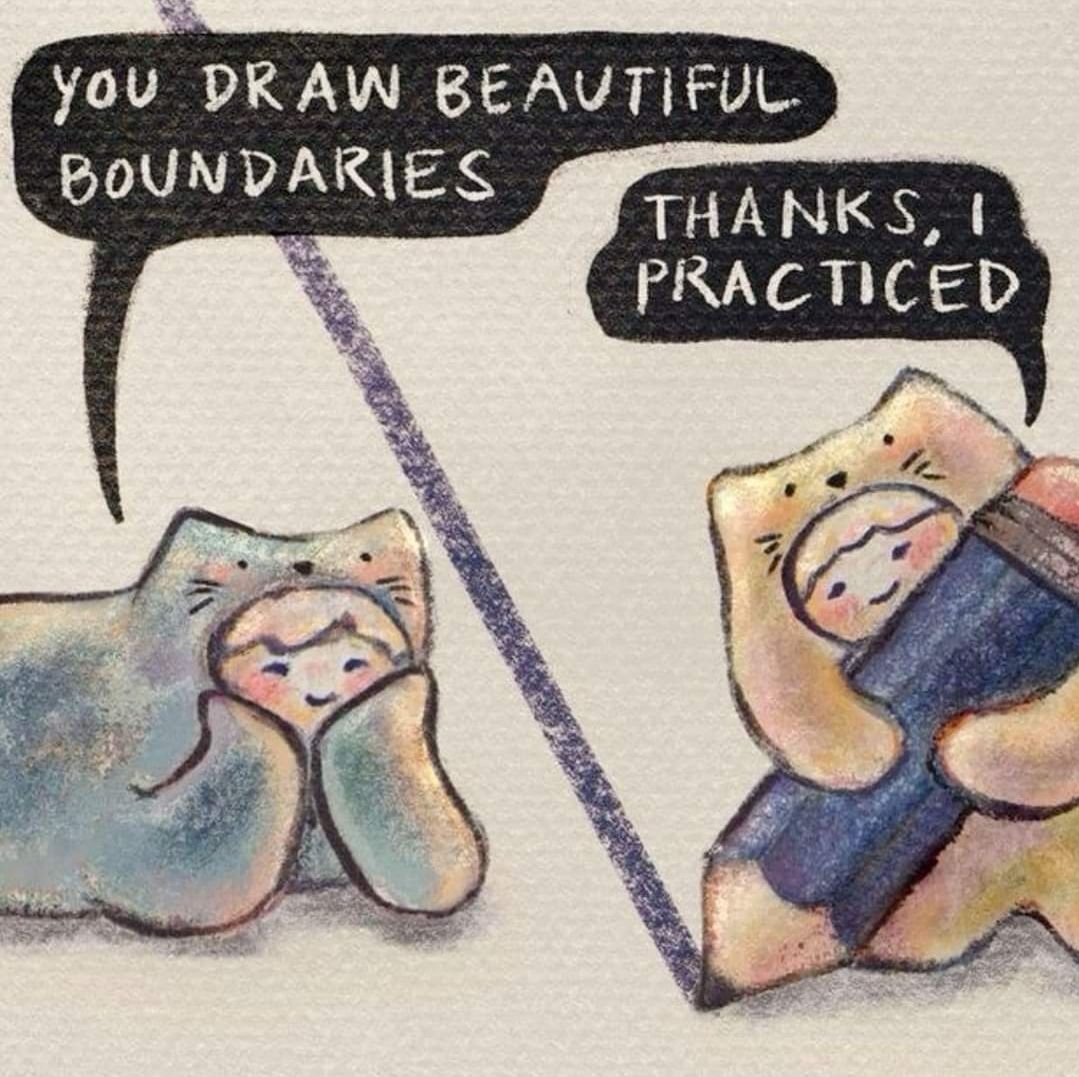
People are amazing and much more welcoming than you expect. I’m always counting myself as so fortunate is be asked to unexpected drinks, meals and catch ups at conferences. I have learnt that I need to not get caught up in the moment and end up crossing the carefully curated boundaries I have put together, in order to ensure that I can last the social distance of the conference. I’m a planner for a reason and I don’t riff off the plan well. I also struggle with saying no. This means that there have been multiple times when I’ve said yes to that dinner, or those drinks, and have then suffered the consequences afterwards. Now, I work hard to keep to my boundaries so that I don’t make life harder for myself. This can be surprisingly difficult as all these invites are inclusive and well intended, I just have to remind myself to make the sensible choice to enjoy the entire event, rather than burning out after a single evening.
Know that this is an essential part of the job, so invest in coping strategies early in your career

The truth is that networking and attending these kinds of events is essential. They are a fundamental way of hearing the latest science and expanding your knowledge.  They are also key for collaboration and building your networks, as well as dissemination of your work. No matter what anyone says, I have found that science fields tend not to be meritocracies, there’s plenty of ‘who you know’ involved, and the only way to address that is to get yourself out there. So you will need to learn how to navigate these settings, and the earlier in your career you manage that, the more rewards you will reap.

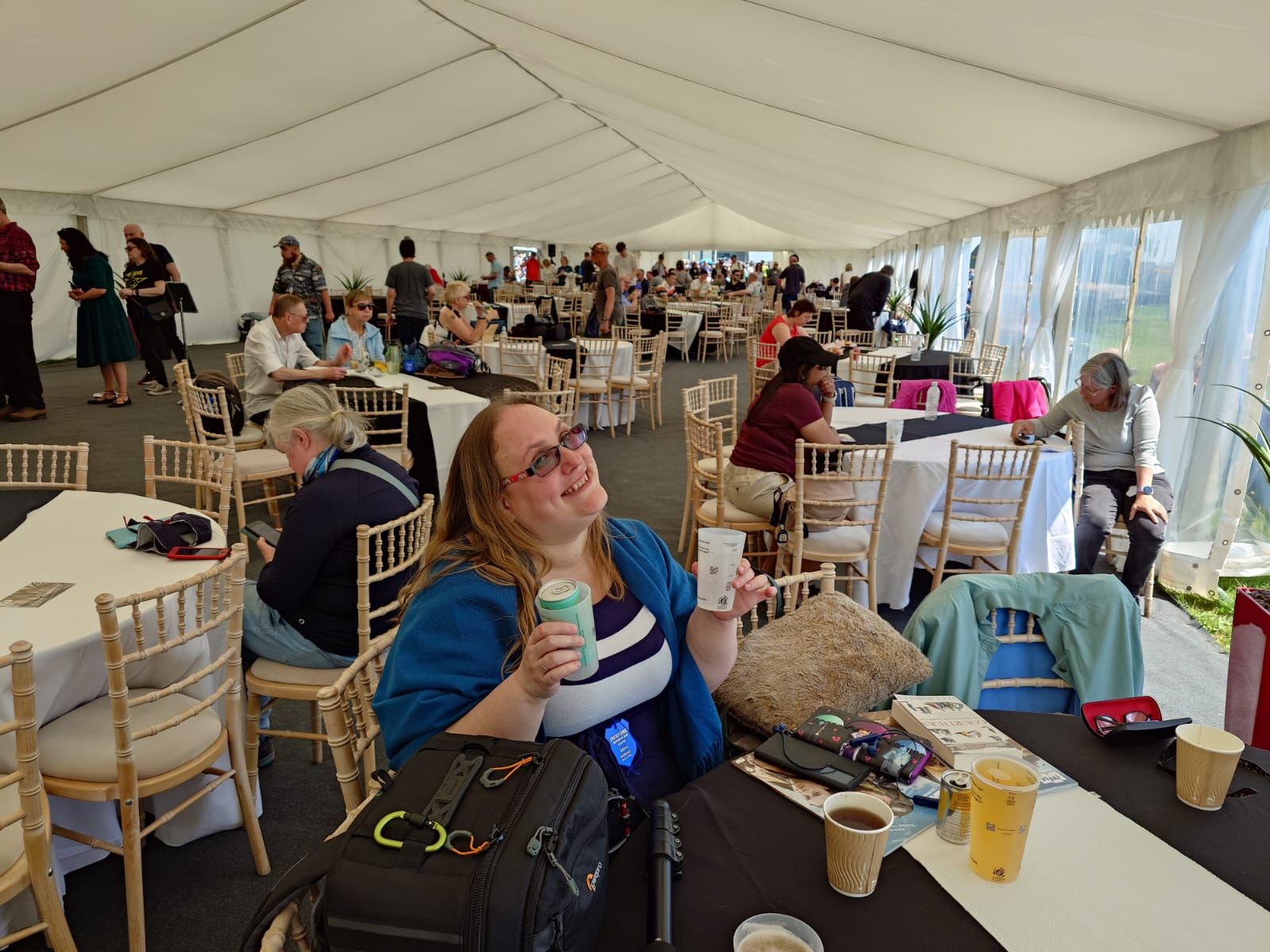
I’ve talked about some of my own pitfalls and things that I’ve implemented to help me, but you will have your own triggers, and each response will need to be customised to yoi and your needs. What is true for all of us is that you are not alone, and if you are in need of someone to speak to during the horror of a break, then I am always happy to be your person. This is what I look like and I will never turn you away.
Know that it gets easier

The longer you hang on in there, the easier it gets, honestly.  I haven’t walked out on an event in a decade, although the toilet hiding is still a little more frequent 🤣

Until you are at a point where the dread diminishes from paralysing to merely present, here are some top tips (on top of some of the networking tips I’ve previously blogged about):

  • Pre manage your expectations of yourself and make sure they are reasonable
  • Book with a group or a friend if you can to take the edge of socialising with strangers
  • Join a social network, as you can use it to find like-minded people, and it can give you a virtual introduction rather than the cold approach
  • Similarly, join a society. Societies often have small meet-ups either before events or at meetings, and so you can make connections in a smaller, less intimidating space
  • Submit work. It’s much less intimidating if people come and speak to you rather than the other way around
  • Know it’s absolutely OK to need to tap out and have your own space, but make sure this is pre-planned so you don’t miss the reason you came to the event

Right, well, having talked about the need to be prepared. I haven’t even packed yet, so I’d better get on that. If any of you are Liverpool bound, make sure you come and say hi. I’m there Wednesday and Thursday.

All opinions in this blog are my own

If you would like more tips and advice linked to your PhD journey then the first every Girlymicrobiologist book is here to help!

This book goes beyond the typical academic handbook, acknowledging the unique challenges and triumphs faced by PhD students and offering relatable, real-world advice to help you:

  • Master the art of effective research and time management to stay organized and on track.
  • Build a supportive network of peers, mentors, and supervisors to overcome challenges and foster collaboration.
  • Maintain a healthy work-life balance by prioritizing self-care and avoiding burnout.
  • Embrace the unexpected and view setbacks as opportunities for growth and innovation.
  • Navigate the complexities of academia with confidence and build a strong professional network


This book starts at the very beginning, with why you might want to do a PhD, how you might decide what route to PhD is right for you, and what a successful application might look like.

It then takes you through your PhD journey, year by year, with tips about how to approach and succeed during significant moments, such as attending your first conference, or writing your first academic paper.

Finally, you will discover what other skills you need to develop during your PhD to give you the best route to success after your viva. All of this supported by links to activities on The Girlymicrobiologist blog, to help you with practical exercises in order to apply what you have learned.

Take a look on Amazon to find out more
It’s All in the Preparation: My top ten tips to help prepare for your conference presentation

I was presenting at my first conference of the year last week, which is a sign that conference season is soon to well and truly kick off. I know that this often puts many of us in a state of anxiety. We know that conference presentations are important for both getting our work out there and also for personal and career development. Presenting however, can feel like quite a high stakes manoeuvre, especially if you are not comfortable with public speaking. With this in mind I thought it might be useful to share some tips that I have learnt, in the hopes that it might help with your next upcoming session.

1 – Know your audience

The first thing to realise is that we often make presentations about us, when actually they aren’t really about us at all, they are about the audience and what we are trying to achieve on their behalf. We are often given a fairly generic topic to speak on, or have submitted an abstract of what we wish to present. That’s great but actually probably doesn’t have enough clarity to start putting together the session. My first step whenever I’m asked to speak is to think about the learning objectives for the session. What might benefit the audience most? What are they expecting? Learning objectives act as a guidepost, and I will usually include them with the blurb I’m asked to write for the agenda. This means that people selecting their sessions will be able to make an informed decision about whether your session will work for them. Are you pitching an introduction level session or an update on the latest research that assumes pre-existing knowledge? You want to match your pitch to the audience that you are expecting.

It is also worth thinking about what kind of atmosphere is likely to be present? Is it a fairly informal setting where the session will be more discursive or is it a formal conference session where you may need to prepare for possible confrontational questions? Prepare for questions and queries whilst you’re preparing your session, try to think about the rabbit holes that the audience might want to go down and for any potential pitfalls where you will need to have a pre-prepared strategic response. If you’ve been clear about what the session covers and audience pitch this should be less of an issue, but it’s always worth being prepared.

2 – Be prepared to bring your authentic self

One of the things I’ve come to truly believe is that, no matter how formal the session, you should bring your whole self to it. I’ve written previously about how we should feel free to wear clothes that empower us, and conference sessions are no different. This can be something as simple as wearing your favourite colour, but whatever it is, delivering talks is easier when you feel good and empowered so do whatever you need to feel that way. My top tip is that whatever you decide to wear, ensure that it’s comfortable. I used to wear heels to speak but now I always wear flats, as I’ve decided that the pain isn’t worth it for me, especially when you consider how long you will be networking after your session.

The other place were I try to ensure that I also include something that is a little bit me, is within the presentation itself. Again, this can be levelled dependent on setting, sometimes I just choose a colour scheme or icon that speaks to me. Other things you can include are quotes or images that are meaningful to you. Again, it doesn’t have to be something big or in the face of your audience, but something that centres you and makes you feel more like you own the space you are presenting in. Sometimes however going big is the way forward, sometimes making something memorable is the right approach, it all depends on your confidence level and the setting.

3 – Judge your session

I’ve talked up above about thinking about how informal/formal the setting you are presenting in and how this can impact on your content. There are however other things that are beneficial to think about in terms of expectations for your setting. The type of session will dictate a number of things, as will time slot and room allocation. If you know the venue you are going to you may be able to predict numbers of attendees for instance, if you are allocated a room you may be able to find out whether its for 15 people versus 1500. High numbers of attendees will limit your options for interactions, as will being given a 15 minute time slot.

Common types of sessions include:

  • Debates
  • Research presentations
  • Topic presentations
  • Workshop
  • Plenary or keynote
  • Speed presenting
  • Poster presentation
  • Careers presentations
  • Panel sessions

There are obviously others but these are the main ones that spring to mind. Just from looking at the list you’ll be able to see how different ones will attract people with different levels of pre-existing knowledge or interest. There are some key questions that are worth asking to help you support judging your session when the email comes in. First, always confirm length of session and whether or not this will include time for questions. Second, ask about number and types of attendees both for your session and the target audience for the conference/meeting itself. Finally, as this will impact your options for engagement with large audiences, will there be free Wi-Fi available for attendees so they can access voting apps? Don’t feel like this information should confine your creativity and what you want to undertake but build any limitations into your thinking in order find solutions ahead of time. Finally, please please please never be the person that delivers a 40+ minute talk despite being given a 30 minute slot.

4 – Use the agenda to guide you

Once the agenda is released and you’ve starting to build the content of your session you can also use it to help in your preparation. Your timing and position on the agenda can influence the build of your talk. If you are directly after lunch, you might want to think harder about the engagement side to wake everyone up and get them back into the flow. If you are just pre lunch, you might want to stack some of your more exciting parts towards the end and build towards them to ensure you keep the audiences attention. If you are going first or last you probably need to start and finish with a bang. 

The other area where the agenda can really help you is to see what others are covering, especially if they’ve listed any focuses or learning objectives in their descriptions. This may mean you can get valuable slides back if someone is talking on a similar topic ahead of you, and will therefore have given a lot of similar introductory slides, thus giving you more time to build on the subject in your slot. It can also give you ideas of areas to avoid, so that you don’t give too much overlap. One of the things to not do is be intimidated by anyone else on the agenda. If you are speaking/presenting you have earned the right to do so, it doesn’t matter if the person before you is Dame X or Professor Y, acknowledge what that might do to the atmosphere in the room (i.e. may mean you have a larger audience) and then plan as if they were any other speaker.

5 – Have a plan on how to engage attendees

Engagement can start before the event even begins. If you have a poster session for instance, you might want to share a picture of your poster and it’s location on social media. Sometimes I also find running polls can help with working out pitching your session, and also in building engagement so that you are more likely to get an audience. This can be especially important if your session is at an event where there are multiple sessions running at the same time and therefore you almost need to sell why someone should comes to yours when there is so much choice available. Taking some time to raise awareness via social media using the event # can be really beneficial under these circumstances.

Depending on the availability of Wi-Fi and session details you may also want to consider using tools or apps to support interaction with the audience during your session. You can use tools such as Mentimeter and Slido to build voting or other forms of interaction into your session. This approach is especially important if you are asked to do a workshop session. It’s also worth asking additional questions during the prep phase, such as the type of seating, to see whether it would support group discussions.

Even if you are giving a standard presentation without interactive tools you still need to think about how to engage your audience. There obviously many different ways of doing this, starting from basics like pitching correctly so you bring your audience with you. If you can bringing yourself to your session by using framing such as story telling it can really help, alongside the use of humour. You can even think if there are props that would be appropriate to support what you’re talking about, although you also don’t want to make it gimmicky. Whatever tool you feel comfortable with, practice using it as it will make sure your session is more memorable.

6 – Make sure you have a plan B

Things go wrong, they do, despite your very best endeavours. Having a plan B in your pocket never hurts. This can be as simple as having a USB with your slides on it with you in case they haven’t managed to load it before you arrive. If I’ve included videos or anything else ‘fancy’ in my presentation I will always have a plan B and C. Plan B is an extra copy of my talk without the ‘fancy’ bit in it in case it doesn’t work when I test with the AV tech ahead of my talk. Plan C is a script in my head that I can use to describe the video in case it worked on test and suddenly fails during the real thing. If I’m doing a smaller session, I will also sometimes arrive with print outs of my slides so that I can approach it old school if needed.

Having a plan B is especially important if you are using voting or something tech related. If your entire session is going to be based on audience participation you need to have a plan if no one there can get signal or access to Wi-Fi. It’s worth building this flexibility in when you are developing the session so you will not need to entirely wing it if the unexpected happens to you.

7 – Be prepared to push yourself

I’m just throwing this out there. You should be prepared to push yourself into a space where you feel uncomfortable. Growing your skills is a never ending task, even if you feel like you are a pretty good public speaker, there are always things to learn, improve and do better. Sometimes the very act of speaking is a sufficient push because it’s not an area in which you feel comfortable. If you are comfortable talking ‘science’ maybe also stretch yourself by bringing more of yourself into the session. Embrace the creative possibilities and strive to have more impact, build better engagement, be more memorable. Read and research on the topic of how to present better in the same way that you would read and research your content and find inspiration about the next thing you could try.

8 – Facilitate a relaxed state of mind

Having just encouraged you to step out of your comfort zone by planning your presentation I also now want to encourage you to remove the stress that can be present outside of the speaking component itself. I speak from experience. I once agreed to speak at 2 conferences on the same day, on different topics and in different cities. This was beyond foolish. There simply wasn’t enough time to get from point A to point B and I arrived to land on stage for the second session with 1 minute to spare. I’ve also learnt that travelling up on the day of a session doesn’t work for me, it just makes me too stressed. I now will always travel up the night before, even if I arrive really late, because then I can go to sleep knowing that I’m where I need to be rather than lying awake all night stressing about whether an act of god will stop me making it to my session.

I also comfort myself by reading up on the areas that I have identified during my gap analysis that I might get questions linked to, or to reassure myself – even if it’s a topic I know really well – that I have up to date information and references. Feeling like you are walking up to a podium prepared is the best way I have to remove any of my stress linked to presenting.

9 – Plan to do your own timing

This is one I have learnt the hard way. I don’t like clocks present in the corner of a screen when I’m presenting as I want to be looking out at the audience and connecting when I’m speaking not constantly looking down at a monitor, probably slightly influenced by the fact that I don’t use notes as it enables me to feel more organic. I know some of you will feel differently. I’ve learnt to manage this by having a phone with a big clock (on silent) with me when I present so I can see it as I move around. I know that there will often be Chairs or speakers who will signal when you have 5 minutes left. I personally find that I need to pace my session throughout, as otherwise at 5 minutes I could be left with waaaay too much to cover, and so I like to time check myself. The final reason I do this is that I have been caught out. I’ve turned up and started a presentation and realised there was no clock or timing device visible anywhere. The panic, for me, at that point is real people, it’s a real stressor for me. You may have a different thing that triggers you, but once you identify what it is, do your best to have a plan to redress it so it doesn’t distract you from the moment you are in.

10 – Use the opportunity to build your networks

This last one I think is really important, if you are given the opportunity to have a platform use it! No matter how nerve racking it is, no matter how much you may not like presenting. In fact, if this is not your naturally comfort zone all the better, go out and seek opportunities that enable you to do it more. With practice comes familiarity and skill development. Don’t feel alone in your discomfort, but do know that there will be something in you that can inspire and give confidence to others. The world needs to see more people like you, whomever you are, especially if you have the courage to bring some of yourself to the podium. There is not enough diversity present on agendas and that is something that needs to change, and we need to have the courage to do that together as a collective.

The other thing to bear in mind is that so much within health and science is dependent on who you know. It’s probably not fair but it is true. Connections and networks are where you gain invites and opportunities, and presenting and meeting people is a big way to build these relationships. Whether you do this by following the hashtags for the event on social media, by speaking to those presenting or partaking in networking and social events at the meeting, networking is key. For those of you, who like me, find networking challenging I’ve previously written a post which I hope might help, but presenting is often an easy way to do it as people will come to you and you already have a shared interest through the topic. Whatever your level of networking comfort it’s worth putting in some time ahead of the event to think what your strategy might be, and who you might want to catch up with.

I really hope that this post will help support you, no matter how many presentations you’ve done, to bring a little bit more of who you are to the room you are presenting in and to be a little bit braver in some of the choices you make when developing sessions. I also hope that by sharing some of the learning I’ve gained by making mistakes, or making life harder for myself, that you won’t make the same ones. If you have any other top tips that you’ve gained to support presentation preparation then please do add them in the comments. See you at the podium!

All opinions in this blog are my own

If you would like more tips and advice linked to your PhD journey then the first every Girlymicrobiologist book is here to help!

This book goes beyond the typical academic handbook, acknowledging the unique challenges and triumphs faced by PhD students and offering relatable, real-world advice to help you:

  • Master the art of effective research and time management to stay organized and on track.
  • Build a supportive network of peers, mentors, and supervisors to overcome challenges and foster collaboration.
  • Maintain a healthy work-life balance by prioritizing self-care and avoiding burnout.
  • Embrace the unexpected and view setbacks as opportunities for growth and innovation.
  • Navigate the complexities of academia with confidence and build a strong professional network

This book starts at the very beginning, with why you might want to do a PhD, how you might decide what route to PhD is right for you, and what a successful application might look like.

It then takes you through your PhD journey, year by year, with tips about how to approach and succeed during significant moments, such as attending your first conference, or writing your first academic paper.

Finally, you will discover what other skills you need to develop during your PhD to give you the best route to success after your viva. All of this supported by links to activities on The Girlymicrobiologist blog, to help you with practical exercises in order to apply what you have learned.

Take a look on Amazon to find out more