Walking Laps for Mental Health: How choosing to step away from your desk may be a great way to safeguard your well-being

I’ve been putting some work into trying to purposefully regain some work life balance, to re-find who I am outside of my work roles. It sounds easy but actually I’ve been so work focussed for so long I’ve been finding it pretty stressful. Trying to be at peace with not working every weekend, and therefore not being responsive or on top of my inbox, makes me feel an ongoing sense of panic. Nothing will change if I don’t however, so I’m making conscious steps to be aware of the anxiety but to carry on regardless.

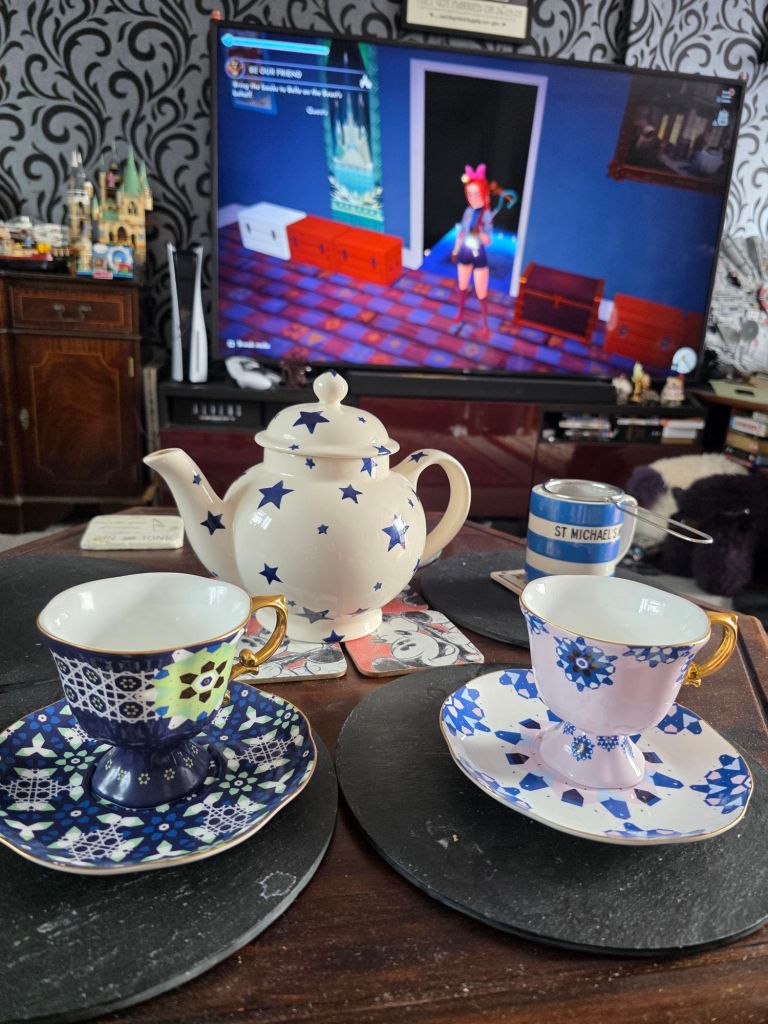
Some of this had been about finding time for something as simple as having Sunday Tea Time with Mr Girlymicro, where we have a pot of tea and just spend some time together, enjoying each others company.

The other thing we’ve been trying to do is get out for a walk to also spend time together without the distraction of technology, as I’m a monster for always being on my phone or a laptop. Fully stepping away, removing the temptation to have ‘just one quick look’, helps me try to be fully in the moment with the man I love more than anything.

It has also, completely coincidentally, allowed me to discover a children’s book series called Brambly Hedge. On our walking route the council have commissioned wooden carvings of the characters, that then greet you as you walk around the lake, as the author was local to our home. Learning who all these woodland creatures are has also brought me great joy, and has reminded me how much we can learn and be inspired by, just by stepping out of our homes. In honour of this thought process on the benefit of taking a wander, I’ve included pictures of them in the hope they will bring a little of that joy to you when reading this post.

Counting to 10

When I was first a trainee, life was pretty tough. I wasn’t exactly welcomed in my department. I’d just moved down to London, and the learning curve was steep. My fellow trainee was also having a pretty hard time. There was no space we could go if were just having a moment, and there are only so many times a day you can cry in the toilets before someone notices. Thus the lap count was born.

The lap count was a numerical shortcut to being able to describe how your day was going. The lap in question was a full lap of the outside of hospital, and the count referred to how many of these full laps were required to enable you to pull yourself back together in order to carry on. In general, a one lap day was pretty good, and a four lap day was terrible.

Hopefully none of you need a lap count in your working lives, but the principle stands. Sometimes, walking away from a situation, and the act of being in motion, can enable you to remove yourself from a reactive space. Ideally before you react and say something that might not be pitched as well as you’d like.

Re-centering

There is something about being in motion that can also help to shake off the cobwebs or allow you to recentre yourself and decide whether things actually matter. It could just be me, but I find that I calm much more quickly if I am moving. It’s like the act itself enables me to shed unnecessary emotions and leave them behind as I walk. I don’t know if its because, when I walk to centre myself and my thinking, it’s a deliberate choice that means I’m ready to move on? Or whether it is the walking that helps, but the results are the same either way.

I suspect that part of it is because I’m removing myself from any of the external drivers of the emotion and am deliberately moving into a space that allows me to feel and process, rather than trying to ‘keep it together’ or ‘be on top of things’. The aim of the moment is to ride the wave and move through it so I can get to a logical rather than emotional place. Somehow doing this on the move, uninterrupted, feels better than trying to do it where someone could find and try to pep you up half way through. On occasion I just need to guilt free sit in my feelings, and ironically this happens best, for me, when I’m on the move.

Space for creativity

I don’t know about you, but I think for a long time I forgot the benefits of being aimless. If I do something it’s always linked to an outcome, as I’m so time limited and balancing more spinning plates than is physically possible to keep in the air. I’d forgotten that I’m pretty creative, intellectually that is, I have no capacity for practical acts. I had forgotten that if I just walk and let my mind drift the interesting spaces it will take me to. I think I have been a lesser me by not making room for that to happen.

Creating space for creativity helps me think about problems differently and gives me new insights when it comes to work, but it also enables me to be open to inspirations in my personal life, be that for this blog, cooking, or plotting a new murder for my future murder mystery writing ambitions. It may sound odd but it is in these moments that I feel fully myself and I am a happier better person for it. I guess I’m saying I need to be more purposeful about creating space for me to be aimless.

Removal of distractions

I’m a great prevaricator. If there is a way to be distracted I will find it. Sometimes, that distraction can actually help my thought process, as I continue to work through a problem without it being at the centre of my thinking. Sometimes, that’s just not an approach that will work. If I have a tricky problem that I am avoiding as I’m not sure I’ll be able to find a solution , and yet I really need to, I will find any route I can to avoid facing that possible issue as it triggers all of my fear of failure, however invalid. This can happen for work issues, like an experiment that just keeps failing, or for personal stuff where I’m trying to work out what the outcome I want actually is. In these settings sitting and staring is not helpful, as I have a tendency to create my spaces full of distractions as they please me. The best thing is to go to a new space where those things just don’t exist.

Don’t get me wrong, I think I could be distracted in a white empty box, but going to a space that isn’t mine and moving so that I don’t have time to focus on my surroundings enough to be distracted, is a great way of tricking my brain into being able to tackle the thing that needs to be resolved. It’s not that there aren’t distractions, it’s just that they aren’t ones that I’ve custom made to work for me.

Time to eat, drink and exercise

I spend so much of my time sitting and working at a laptop. I do so at work, and then when I’m at home, I’m usually writing this blog or working on other projects, such as papers, all of which include much sitting and very minimal movement. One of the things I love about walking this particular walk is that It makes me feel so much healthier, whilst enjoying myself so much feeding the ducks and other birds, sometimes even with tea. It’s many of my favourite things all rolled into one, especially when you throw Mr Girlymicro into the mix.

It’s so easy to forget that we have to find time to also look after ourselves, to move and get some steps in, as well as to look after the work stuff, or the house stuff. It’s easy to only make space in our lives for the box ticking. I know that exercise can also be considered box ticking, but if I can do it in a way that also brings me pleasure, it stops being the thing that I put off and can become something that I feel motivated to make time for, and embed in my every day approach. The more I have land on my plate the harder I find to make the time, and so making it easier and joyful is key.

Feeling the sun on your face

I work, when I’m on-site, in a windowless unventilated converted toilet as my office. I love it. I’ve written before about how much pleasure my space brings me. It does mean, however, that if I don’t find a reason to leave my office I will spend months of the year in darkness or away from natural light, as I arrive in the dark, sit in my delightful safe space, and then leave in the dark. There is always a moment in ~March where I step outside and I feel the sun, and I can quite literally feel the internal change in my mood. I always find January and February such hard going, and all of a sudden I feel energised and as if I can really tackle those changes I want to make. The sun just makes me feel like a different person.

This probably seems nonsense, but I only ever have the ‘aha’ moment in March that it is the lack of sun that has been driving my low spirits. I never seem to be able to remember when I’m in it that January and February are always grim. Knowing the difference this makes to me, and despite not really being an outdoor girlie, I am trying to remember the lesson. I am trying to remember to go out for lunch. To go for short walks if I can find a gap between meetings. I’m pretty sure that this impact probably happens all year, it’s just I recognise it more during the change from darker to lighter months. So, I’m trying to keep the sun on my face for a little every day to help cling to that feeling of being able to change the world.

Creates space for focus

I used to run, badly, and one of the things about it was that I hated the start so much that all I could focus on was putting one foot in front of the other. All other thoughts left my mind. It was like a mental stop gap, and when I got over the start, one of the things I loved about running was the mental freedom that intercept from spiralling and other thoughts gave me.  I thought until recently that I’d lost that route to focus alongside losing my running confidence, but I think I’ve kind of got it back through walking.

Now, some of this will be down to the removal of distractions I’ve already talked about, but some of it is because that I find a place where the rhythm of walking can get me to the same mental headspace. Especially if I’m walking somewhere where I don’t have to worry too much about my surroundings and safety.  It let’s me find a head space where I can locate the mental thread I want to pull on, and just keep pulling. I can walk until I’ve gone as far down the rabbit hole as I need to go. The only person placing limits is me, and that is tremendously freeing.

Dedicated time

I am a great one for doing multiple things at once. For instance, this blog gets written during the commute, or whilst Mr Girlymicro and I catch on movies/games/TV. That means I’m pretty appalling at spending focused one on one time with the people I love. My mind is always running 100 miles per hour or having a random debate with itself.ย  One of the reasons we’re trying to get out for walks together is to allow that rare and precious one on one time with people we care about.ย  Time without the distraction of devices (that would be me), or feeling like we should be doing chores rather than chilling out ( way more Mr Girlymicro).

Walking together and just valuing being in each others company, even after over 20 years together, really brings me a joy I find hard to describe. It is also a joy that is easy to miss out on if you don’t priorise and make time for it. The world screams and loads priorities upon us, and some days we just have to deliberately choose ourselves and each other, over all that noise.

Room for discovery

I like to walk in interesting places, places that have signs about wild life, places like museums, or interesting streets with Blue Plaques. Places where I will see things that make me think, remember old knowledge, or learn something new.  I would never be writing a post centred around Brambly Hedge if I hadn’t stepped out for a walk. I like making space in my life for discovery and learning. I am a curious girl at my core. Walking in this way feeds into the core of who I am as a person. I’m sure many people walk outside because they like the outside. I am not an outdoor girly. I’m allergic to most of the outside world. Love of the outdoors is never going to be my motivation to get up and go for a walk, although I acknowledge that works for many people. For me, the motivation to step foot outside is that I can engage with a different kind of learning. The accidental kind, where I never know what I’ll discover. That speaks to me and who I am at my core.

Cortisol reduction

Speaking of walking in interesting places, I thought I would also share some of the evidence base, I am a scientist afterall.

Evidence for the effects of viewing visual artworks on stress outcomes: a scoping review

There are some really nice studies out there that demonstrate the impact on cortisol, the stress hornone, from going to places like museums and art galleries, and just looking at the exhibits. I’m sure the same is likely to be true for looking at the real world exhibits outside if you go and take a walk somewhere interesting or beautiful. In the rather stressful world we live in currently,  now of all times, it’s probably time to get our walk on, lower our stress and get back to the real us.

All opinions in this blog are my own
Sorry, Not Sorry: The challenges of being an anxious apologiser

I’ve been finding myself in a bit of a hole recently where my first response to anything, and the first words out of my mouth, are always an instinctive ‘I’m sorry’. Whether I have done something wrong or not, whether someone is accusing me of something or not, I just can’t get the words ‘I’m sorry’ not to be the first ones that immediately leap to my lips. Now, owning when you need to apologise is a really important thing. The thing is, that there are a lot of consequences to unnecessary and anxious apologising that I don’t think we necessarily recognise. After all, what does it matter if we say sorry too much? No one is hurt by the words ‘I’m sorry’. Is that true though? After a particularly anxious weekend last week I spent some time thinking about how apologising too much can actually be a leadership issue, and what steps you can take to reduce the downsides if this is something you are impacted by, like me.

It can make you come across as weak

Leadership can be challenging at the best of times, but in a resource limited setting with competing pressures, it can feel more challenging than ever. Those you are leading need to feel secure in your direction of travel and protected in your leadership.

Despite authenticity being important, being an anxious apologiser can come over as weakness and something that can be exploited by others.  It can come over as not owning your time, boundaries, responsibilities, or actions.  Worse than that, it can also make those you lead feel more uncertain, depending on the context of the apology. Owning up to mistakes and proportionate apologies are great, inappropriate ones, very much less so.

Makes setting boundaries more challenging

One of the things that I am super aware of is that my anxious apologies make boundary setting less easy. I am allowed to take time off sick or to be on holiday, I should not feel the need to apologise for it. Doing so makes others feel less able to also take the time they are owed. I am an emotional person. I wear my heart on my sleeve. In many ways, I believe that makes me a better leader. I, therefore, need to stop apologising for trying to be myself rather than attempting to fit some predetermined mould. If I don’t feel I can be authentic, it makes me a lesser leader and means others will also feel like they need to hide who they are.

You may accept culpability even when you don’t

Another thing about anxious apologise is that your immediate response can end up making it look like you are taking responsibility for something which you actually aren’t. A recurrent example of this one, for me, is when someone takes action and ignores advice/guidance, and I end up apologising for not providing sufficient clarity. In reality, it was up to the individual to seek additional clarity if required, not for me to be psychic and try to predict their actions. Just one example of an easy trap to fall into.

It can make genuine apologies feel less authentic

This is a big one for me. If you apologise all the time, as an auto response, it can make those moments when you choose to do so consciously feel like it has less impact for the person receiving it. Making sure those moments where you need to own your actions and learning are undertaken with sufficient thoroughness helps, but avoidingย using apologies as punctuation is a longer-term change.

You may end being annoying to be around

Speaking as someone who does this a lot, I hear from many of my friends just how annoying it is. A favourite quote of Mr Girlymicro to me when I get in a particular space where I constantly need to be told it’s OK is ‘stop apologising, it’s a sign of weakness’ from the film Little Miss Sunshine. It makes me laugh every time and reminds me of how much the required back and forth is an energy drain on everyone involved. Take a deep breath and step away from the spiral, and acknowledge the costs you are placing in others.

May make your leadership confusing

Another way that anxious apologies can make your leadership confusing it that they can work to actively derail trains of thought. They can end up de-railing conversations, so they become all about a single thing rather than the original focus of the discussion. They can make your communication less clear and end up meaning that key points are obscured, or worst of all, forgotten by all involved. As clear communication is a key foundation of good leadership, this is good for no one.

Conversations that are not about you can pivot

I had a moment last week when I got hit from out of the blue with an emotional response to a conversation.ย  This meant that a conversation that should have been about me offering support, guidance, and clarity, became all about the people involved comforting me. This is a disastrous thing to have happen. My immediate response is then to apologise more for letting it occur, but this then drives the cycle. Stepping away from it. Knowing you should do better and reflecting with yourself why it occurred is the only real remedy you can offer.


So, how can we do things differently?

Acknowledging that this is not a healthy habit or coping strategy is a start, but what we actually do about it in order to do it less or limit the impacts on our leadership?

Listen to your frequency

One of the primary actions is to be aware of the frequency of your anxious apologies. For me, at least, this isn’t an always-on/always-off thing. It comes in waves depending on other things that are happening and my general levels of anxiety or confidence dips. Knowing when you are going through a bad patch enables you to focus some resource on reduction, especially in risky or high stakes moments. Doing the constant apologising at home may be annoying. Doing it in the wrong situation at work could have much bigger consequences.

Be aware, especially during high stakes moments

There are moments, for both you and your leadership, where being perceived as weak or accepting ownership when you don’t, can have significant impacts. In these moments it’s crucial to be aware of where your head is at and your tendency to undertake this behaviour. These high stakes moments tend to also be high risk moments, so if you apologise as a stress response, you are even more likely to fall into an apology during these encounters.

In order to help with this, one of the main things I try to do is just take a beat before I open my mouth. Those of you who know me probably know this isn’t my strongest skill. Mouth open, should be shut. At times like these, though, it is so important. That breath allows me to sense check my response and remove the work ‘sorry’ from my automatic vocabulary. It allows me a moment to try and re-phrase my immediate thoughts or dialogue to make it more in line with my core meaning. It helps me avoid throwing myself and others into an unnecessary bear pit.

Don’t let others take advantage

It is also worth remembering that it is not just you that notices this behaviour. In the past I had a colleague, who was perhaps not my biggest fan, who I realise in hind sight would almost set me up in scenarios to take advantage of my tendency to accept responsibility readily. If your apologies do come across as a sign of weakness, and you work in a high competition environment, then this is a risk. Taking time to understand how others respond to your anxiety trait (irritated, sympathetic, exploitative, etc) is an important part of learning how to manage your own behaviour. Know when to bite your tongue and stay silent despite all of your instincts telling you otherwise.

Try to embed change

One of the easiest ways (although still far from easy) to manage this tendency is to try to find other ways to respond. Ways that still allow you to feel you have responded but that are less likely to be interpreted as you taking ownership all the time. Embedding these changes consistently, even if you are going through a particularly bad spell, can make it easier. Language is a learnt response, and much of it is based on habit. Getting into a space where you only apologise consciously for things that actually require it is a habit worth gaining.

I’m still not good at this. I think it’s an area of constant improvement. I have found it is easier to try and embed this shift in written communication first, and then it comes a little easier with verbal reinforcement later. Just take it one conversation at a time and see what works best for you.

Find trusted friends

For me, one of the best ways I have to manage this is to find my people, my trusted friends. There are two main reasons for this. One, Mr Girlymicro loves me enough to cope with me apologising, me talking about apologising, and me agonising about whether I need to apologise, for the hours it sometimes takes to get me to work through what is going on, and to then move past it. I also have some key people in my life who I know I can text and be ‘this happened, do I need to worry’, and who I 100% trust in their response to guide my actions. The second area where I find these people really useful in my life is that they will flag to me, when I lack the self awareness to notice, when I’m starting to increase my anxious apologising, so that I can be more aware of my own emotional state and the impact it is having. Knowing that others have your back, and can support you, even when you are not aware that you need support, is a real gift in this life and if you have access to those people make sure you hear what they have to say.

Be OK with not always getting it right

You are not going to get this right all the time. There are times in my life when I don’t manage to get it right even most of the time. Treat yourself with the grace that you would give to others. Anxious apologising is driven by, guess what, anxiety. Don’t drive your anxiety further by diving deeper into the rabbit hole and stressing about things you can’t control. It happened. You may be able to fix it, you may not. Nothing is to be gained by stressing about it, and the best cure for some of that anxiety is to take action if you calmly decide there is an action to be taken. The irony of me writing these words is in no way lost on me, as I can never stop the resulting panic, that doesn’t mean that the logical part of my brain does not acknowledge that it is the right move however. Try choosing grace over guilt whenever possible, as you will be a better person as a result.

Invest your energy based on circumstance

Having acknowledged that you won’t get it right all the time, a key thing is to know when you MUST get it right, or when to invest energy in order to bring your best self. We’ve talked about being aware of your high risk moments, and if you only have a certain level of energy resource to invest, then this is where to choose to spend what you have. When I’m working through a significant anxious period I can’t keep it together at all times, I just don’t have that level of cognitive resource. I have to have my safe people who I can spend time with, so I have periods where I can just let myself be and work through how I’m feeling. I also tend to stay away from people or situations who I don’t need to interact with at that time and tend to make me feel less safe/triggered, in order to not fuel the situation I find myself in. No matter what is going on, trying to be self aware enough that you make good decisions to help yourself through is definitely worth the resource requirement.

Don’t forget to deal with the underlying drivers

At the end of the day, however, it’s important to remember that anxious apologising is a symptom and not the cause. It’s really easy to focus on the symptom that is taking up you energy and cognitive space, when really we need to be stepping back and seeing what is driving the current situation. In my case, it’s often when I’ve not recognised that my health is not great and anxiety is often secondary to flares, lack of sleep and generalised discomfort. That said, I am also of an age where being peri-menopausal is definitely a thing, and my hormones are definitely writing their own story right now, with little input from me. Whatever the reason, making sure that you try to understand what is driving you means that you can start to focus on the root cause of the problem, not just react to the moment, giving you both actionable intel and hopefully a way out of the way you are feeling. None of this stuff is easy, but know that you are not alone in managing it or finding a way forward. If you need one, I’m always happy to be your safe space.

All opinions in this blog are my own

Let’s Talk Con Fear: Talking about social anxiety at conferences and events

I’m off to the Federation of Infection Societies (FIS) conference this week. I’m involved in 3 sessions over 2 days, and in many ways, these types of events are a complete highlight for me.  I get to be inspired by hearing new science, I get to catch up with wonderful colleagues who I don’t get time to see very often, and I get to immerse myself in all things microbiology without the distraction.

There is another side to this coin, however, and that is both the anxiety that builds before I go, and that can last throughout the whole event. The ever-present spirals of ‘do I know anything?’, ‘will I say something stupid?’, ‘will I know anyone?’, and the classic ‘do any of these people actually like me?’.

The combination of this social anxiety with the, sometimes long, very peopley days, can mean that I hit spirals pretty easily and the lack of solo recovery time means that I can find it pretty exhausting by the end. 

Now, I’m obviously not talking about extreme cases of social anxiety that may require informed medical or long-term support. I’m talking about situational anxiety that most of us may find ourselves in from time to time.

Just in case there is anyone out there in a similar boat, I thought I might put together some things I’ve learnt along the way that help manage some of my anxiety traits and enable me to actually enjoy the experience rather than dreading it.

Do your prep work ahead of time

The first thing I’ve had to learn is that I can’t just pretend that doesn’t happen. I can’t wish it away. What I can do is be prepared and make sure that I have made the process as trigger free as possible.

For me, this is about simple things, like getting a hotel as close to the venue as possible. It means that if I just need a 30-minute alone break, I can take one. It removes anxiety about getting lost or forgetting something crucial and not having time to go back for it, which, although minor, can be the final straw. It’s also about making sure that I have pre-found all the rooms I need to locate ahead of time, so I know where I’m going, and that ahead of multi-day meetings I have a plan for which sessions I’m going to before  I even travel to the event.

Know your triggers

I know that I have a few things that really lead to anxiety, but perhaps more unique to me, is the fear that I was have an auto immune attack and won’t be with people who understand what is needed. I learnt early that the best way to cover this one off is that I very rarely travel alone, especially over seas. I often travel with my mum or one of a very small list of truly trusted people, who I know would understand how to get me help if required.

Something that is more likely to strike a cord with others, is that I am also the girl who has walked into conference rooms, spent 15 minutes and walked out, as I knew no one and was just overwhelmed. I’m not proud of these moments, but I think it’s important to acknowledge that they have occurred. Although, to be honest, when they’ve happened, I mostly felt invisible, so I doubt anyone noticed.

I have discovered that I need to know that the space is one where I feel welcome for me to perform at my best. This sense of welcome can be either intellectual, because of the topics covered, or because of feeling a sense of community, as the room contains people within my field or in strong alignment with my values. I’ve found the overwhelming feeling hits most strongly when I’ve been in very large political or strategic sessions, where I felt out of my comfort zone on both intellectual and community counts.

That said, I’m not too bad in the sessions themselves, I’m there to learn something new, and learning excites me even now. It’s the breaks that are my nemesis, especially when large groups all surge into a space at the same time, and the weight of expectation that you must now network lands. The seconds that feel like hours of desperately searching for faces you recognise and being forced to face the fact that yes, you really should go up and speak to that absolute stranger, as it’s the right thing to do. It’s these moments that can cause me to bolt for the nearest bathroom.

Carve out time for yourself

One of the key mechanisms I’ve identified to help with my triggers is that I make sure I have enough time to myself, be that eating food away from the venue so I feel more certain what it contains and less at risk, to making sure I have evenings to myself to process and unwind.

I usually come over as really social, and really into spending time with people, and I am both of those things. I also only have a limited amount of social battery, and so in order to maintain that extrovert part of myself I have to have recharge time. I love talking to people about this blog, I love hearing about and responding to other peoples work, but at a certain point I need to sit down with an audio book and a cup of tea in order to do it well. This means that when I go through the brochure ahead of time, and plan my sessions, I make sure that I have enough blocks of time to enable me to be my best self when I’m in the space with others. Sometimes all you need is a walk to a local coffee shop and back to give you the perspective you need.

Pre establish a safe space or person

Just in case it does all become too much, I always have a plan. I posted a while ago about how spending time in bathrooms may feature way too much in my career, but part of that is that they can sometimes present a safe bolt hole.

The wonderful thing about having hit my 20th year as a Healthcare Scientist, is that I now also know quite a few people, some of whom I’ve known for well over a decade. This means that at most events, there are also people who I count not only as colleagues but as friends. People that I can just go and spend time with that doesn’t include social commitment. Those friends you have that you can just be in the same space without any demands being made. If I’m at an event where these people are also attending, then I know that I have someone I can just excuse myself to catch up with if I’m having a moment. It’s also the great thing about ensuring that you have a hotel room nearby. Your safe bolt hole is only minutes away.

Make an agreement with yourself about how much is enough

The fact that you have social anxiety does not provide a free pass to escape one of the fundamental purposes of attending conferences, networking. It’s key to your career, it’s key to your development, it needs to happen. The thing is that there are varying degrees of what networking can be, and before you’re in the space, you need to decide what level you are aiming for and will therefore achieve. For me, my deal is that I will, on each day, speak to one person I don’t know. I am not allowed to finish my day without this happening, but once I have had that one daily interaction, then any further moments are a bonus. Once that one challenging moment is over with the pressure is off, and then I almost always over achieve on my goal.

Be realistic about how much you can expect of yourself

The key thing I’ve learnt is that I have to realistic when I’m making that deal with myself and deciding on achievable targets. For me, there is not point is saying I will speak to five people I haven’t met before, as I’ll just be setting myself up for failure. You will also find that I rarely sign up for conference dinners, as I have over the years found that if I’m in a space with other people from 08:00 – 18:00 I will really struggle to then spend yet more time with other people, no matter how lovely or interesting those people are. All I will want at that point is room service, tea, and a movie in my room.

Everyone will have their own tolerances and lines. The important thing is to have enough self reflection to know what yours are. Otherwise, you just add guilt into the anxiety mix, which is not much fun for anyone.

Learn how to work a room using tools you are comfortable with

One of the other things that I’ve learnt about myself, is that although I get super anxious standing in a room trying to approach someone at the coffee table, I am much much more comfortable moving around the exhibitor stands. The guys at the exhibitor stands are motivated to speak to those who approach, and there are usually science based discussions that I am eager to have. This, for me, is a match made in heaven, as it breaks me into the speaking to people I don’t know in a very gentle way. If I’m lucky, I will also meet others when I’m wandering around, which will allow me to tick my ‘speak to one stranger box’ as exhibitors do not count on that front. The added bonus is that I also often manage to find cool new stuff I’m interested in or develop collaborations whilst this is happening, so it’s a no lose scenario for me.

The other thing that having worked for 20 years has given me is the opportunity to be asked to be involved with sessions. For this girl with social anxiety, this is actually a great thing, despite the fact that it sounds like it should be stressful. I’ve never minded public speaking in the same way as I worry about 1:1 interactions. When I speak, all I can do is put my best foot forward and hope that others will be interested in what I have to say. For the most part, if people don’t engage they will just leave and not give it another thought. On the positive side though, if people find what you say interesting enough to want to speak to you afterwards, this a great way to tick the ‘speak to one person you don’t know box’ and as they are approaching you all you have to do is respond. I find this so rewarding, but I also appreciate how fortunate I am to have this type of opportunity and how much it helps me manage to get the most out of events.

Prepare your exit strategy

One of the important things to bear in mind, and which I often forget, is that others do not necessarily feel the same way about social requirements. I struggle when people arrange evening meals at meetings when you’re already booked to spend a full day together. I understand the purpose, it’s lovely to build bonds and memories, and logistically it’s easier. I rarely, if ever, hit the end of the meeting day and wish to spend the few hours downtime I have with others, over reading in the bath however. There are frequently times I can’t opt out of these moments, but where I can, I will often have a pre planned reason to excuse myself. Often, this is work related, as I will always genuinely need to do some email catch up, and doing this after dinner means working till midnight. I don’t lie but I may pre-plan my rationale for not being available to support both my work load and my mental well being. I will never not pre-inform, as that is rude. People will have budgeted and made arrangements, so I will never last minute drop, but if the option arises I may flag unavailability at the planning stage.

Don’t succumb to expectations and pressure

People are amazing and much more welcoming than you expect. I’m always counting myself as so fortunate is be asked to unexpected drinks, meals and catch ups at conferences. I have learnt that I need to not get caught up in the moment and end up crossing the carefully curated boundaries I have put together, in order to ensure that I can last the social distance of the conference. I’m a planner for a reason and I don’t riff off the plan well. I also struggle with saying no. This means that there have been multiple times when I’ve said yes to that dinner, or those drinks, and have then suffered the consequences afterwards. Now, I work hard to keep to my boundaries so that I don’t make life harder for myself. This can be surprisingly difficult as all these invites are inclusive and well intended, I just have to remind myself to make the sensible choice to enjoy the entire event, rather than burning out after a single evening.

Know that this is an essential part of the job, so invest in coping strategies early in your career

The truth is that networking and attending these kinds of events is essential. They are a fundamental way of hearing the latest science and expanding your knowledge.  They are also key for collaboration and building your networks, as well as dissemination of your work. No matter what anyone says, I have found that science fields tend not to be meritocracies, there’s plenty of ‘who you know’ involved, and the only way to address that is to get yourself out there. So you will need to learn how to navigate these settings, and the earlier in your career you manage that, the more rewards you will reap.

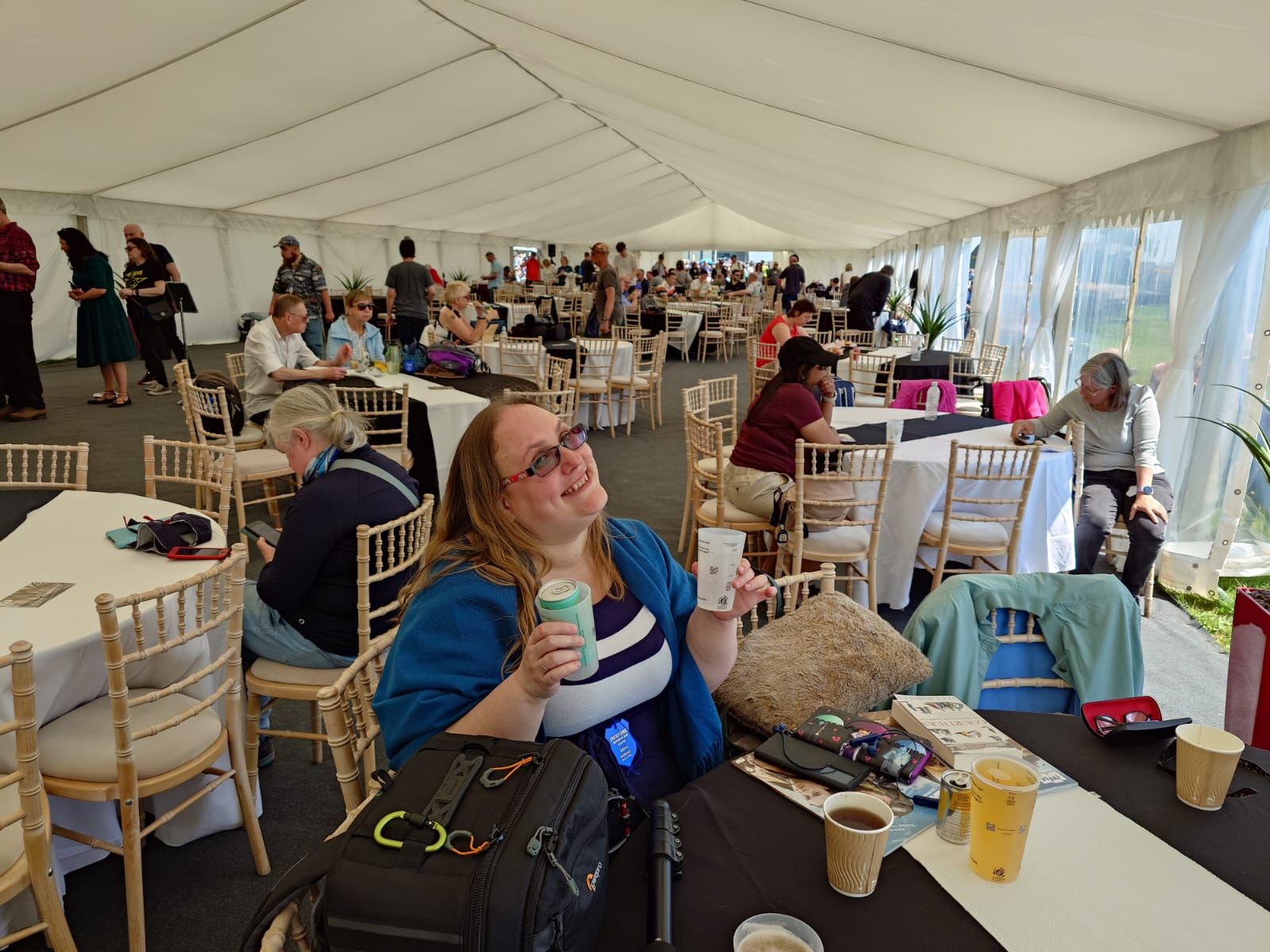
I’ve talked about some of my own pitfalls and things that I’ve implemented to help me, but you will have your own triggers, and each response will need to be customised to yoi and your needs. What is true for all of us is that you are not alone, and if you are in need of someone to speak to during the horror of a break, then I am always happy to be your person. This is what I look like and I will never turn you away.

Know that it gets easier

The longer you hang on in there, the easier it gets, honestly.  I haven’t walked out on an event in a decade, although the toilet hiding is still a little more frequent ๐Ÿคฃ

Until you are at a point where the dread diminishes from paralysing to merely present, here are some top tips (on top of some of the networking tips I’ve previously blogged about):

  • Pre manage your expectations of yourself and make sure they are reasonable
  • Book with a group or a friend if you can to take the edge of socialising with strangers
  • Join a social network, as you can use it to find like-minded people, and it can give you a virtual introduction rather than the cold approach
  • Similarly, join a society. Societies often have small meet-ups either before events or at meetings, and so you can make connections in a smaller, less intimidating space
  • Submit work. It’s much less intimidating if people come and speak to you rather than the other way around
  • Know it’s absolutely OK to need to tap out and have your own space, but make sure this is pre-planned so you don’t miss the reason you came to the event

Right, well, having talked about the need to be prepared. I haven’t even packed yet, so I’d better get on that. If any of you are Liverpool bound, make sure you come and say hi. I’m there Wednesday and Thursday.

All opinions in this blog are my own

If you would like more tips and advice linked to your PhD journey then the first every Girlymicrobiologist book is here to help!

This book goes beyond the typical academic handbook, acknowledging the unique challenges and triumphs faced by PhD students and offering relatable, real-world advice to help you:

  • Master the art of effective research and time management to stay organized and on track.
  • Build a supportive network of peers, mentors, and supervisors to overcome challenges and foster collaboration.
  • Maintain a healthy work-life balance by prioritizing self-care and avoiding burnout.
  • Embrace the unexpected and view setbacks as opportunities for growth and innovation.
  • Navigate the complexities of academia with confidence and build a strong professional network


This book starts at the very beginning, with why you might want to do a PhD, how you might decide what route to PhD is right for you, and what a successful application might look like.

It then takes you through your PhD journey, year by year, with tips about how to approach and succeed during significant moments, such as attending your first conference, or writing your first academic paper.

Finally, you will discover what other skills you need to develop during your PhD to give you the best route to success after your viva. All of this supported by links to activities on The Girlymicrobiologist blog, to help you with practical exercises in order to apply what you have learned.

Take a look on Amazon to find out more

One Step. One Day. One Moment at a Time: My top ten tips for carrying on when life feels a bit too much

This blog post is late, which seems to be a bit of a theme recently. The truth is there’s a lot going on, from a colleague passing away and auto immune flares, to mummy Girlymicro being about to re-locate. All of which have meant that I’ve been struggling to get out of bed and do the day job, let alone find the time and head space needed to get words down on this blog.

2024 was always going to be hard going. There is a lot of change. There is a whole heap of challenge. There is not enough time, people, or resource to make any of those things easier. The reality is that there is little I can do about any of these things. There is only one way, and that way is forward, but knowing that and getting there are not always the same thing. So today’s post is about how to just keep going when all you really want to do it stop.

Decide what is important

I had to cancel meetings last week as, to be honest, I was so unwell I could barely manage emails, let alone speak. It amazed me when push came to shove how many meetings I could cancel and it not have any catastrophic effect. Many of them could easily be moved by a week, and some others could just be straight out cancelled. The world did not end. It struck me then that I need to be so much better at curating my diary so that I don’t spend 8 hours a day in meetings, meaning that all my other work has to be done on evenings and weekends.

The other thing I’ve had to think quite hard about in recent months is what things am I doing because they are important to me and which things I’m doing because I’ve a) always done them, or b) they are important to other people and I’ve just passively agreed. You’d be amazed at how much a and b there is. My career has progressed at a fair amount of pace, and I have failed to do any of the spring cleaning that should probably come with that. The things I need and want to do now that I’m a professor are understandably different to what was required as an early career scientist, and yet I have carried on bringing all of that workload with me into my current post. It’s frankly unsustainable and so a re-evaluation of task list was much needed.

Become a quitter

All of which brings me to spring cleaning. I hate to break it to you, but if you are like me, you need to learn to quit. You need to quit regularly and firmly. What I mean by that is, in order to keep your sanity, you need to review the things you do and decide what purpose they still serve. I’ve failed to do this. I’ve failed to do this over a period of years. I suspect partly due to a failure to recognise that I have changed and my needs are different. Partly just because I failed to recognise that my needs were even part of the equation.ย  I feel very strongly about giving back to my profession and the community, and so, in general, I haven’t really included myself in any evaluation.ย  This is how I’ve ended up working every weekend and 14-hour days, and sadly, my body just can’t sustain it. My mind is writing checks my body cannot cash. I’ve had to quit things that I never thought I would quit, committees I’ve sat over for over a decade, just to keep my head above water. The thing is, quitting will open up that opportunity to someone else. Someone who will benefit more than I was and open me up to new opportunities when life calms down. I’m convincing myself that it is a win-win.

Confront your FOMO

I’m a fear of missing out (FOMO) addict. I’m terrified when I say no to anything that it might be the wrong decision. That it might impact my career, or my future. Partly, this is because I spent the first 13 years of my career on temporary contracts, and that lack of security means you are always needing to have multiple plans in order to stay employed and pay the bills. Partly, this is because I’m too greedy to choose a single interest and stick to it.ย  I want to maintain interests in my clinical work, research, and education. You can’t do everything in all areas, however. I couldn’t do that when things were going well, let alone now. Now, I’m having to ask myself ‘what’s the worst that can happen?’.ย  If I don’t go to that event, if I don’t manage that networking, if I don’t manage to post that blog, what’s the worst that can happen? Most of the time, the answer is nothing permanent or, more frequently,ย nothing at all. I may miss out on the odd opportunity,ย  but at the moment, I’m havingย  to turn down a lot of those anyway. So hard conversations are being had with my brain where I have to challenge both my FOMO and associated anxiety.

Try to live in the moment

One of the reasons that I think I experience FOMO so badly is because I’m always looking to the future. I always have a plan. It’s how I’ve managed to survive the uncertainty of the Healthcare Science progression pathway. It’s how I’ve managed to end up in my dream job, that didn’t really previously exist. The problem with this is that when you remove things and impact the ability to plan then my stress levels go through the roof. Uncertainty and a lack of control, or ability to impact can make everything feel overwhelming, leading to me spiralling. It also means that I struggle to feel peace or achievement in the moment. Right now though, I need to deliberately move from staring at the horizon to spending more time looking at my feet. Getting through each day, each moment, for what it is, be that good or bad. Knowing that the next moment will be different and I will deal with it as it arrives. Accepting that the future is uncertain and concentrating on the concrete of the now.

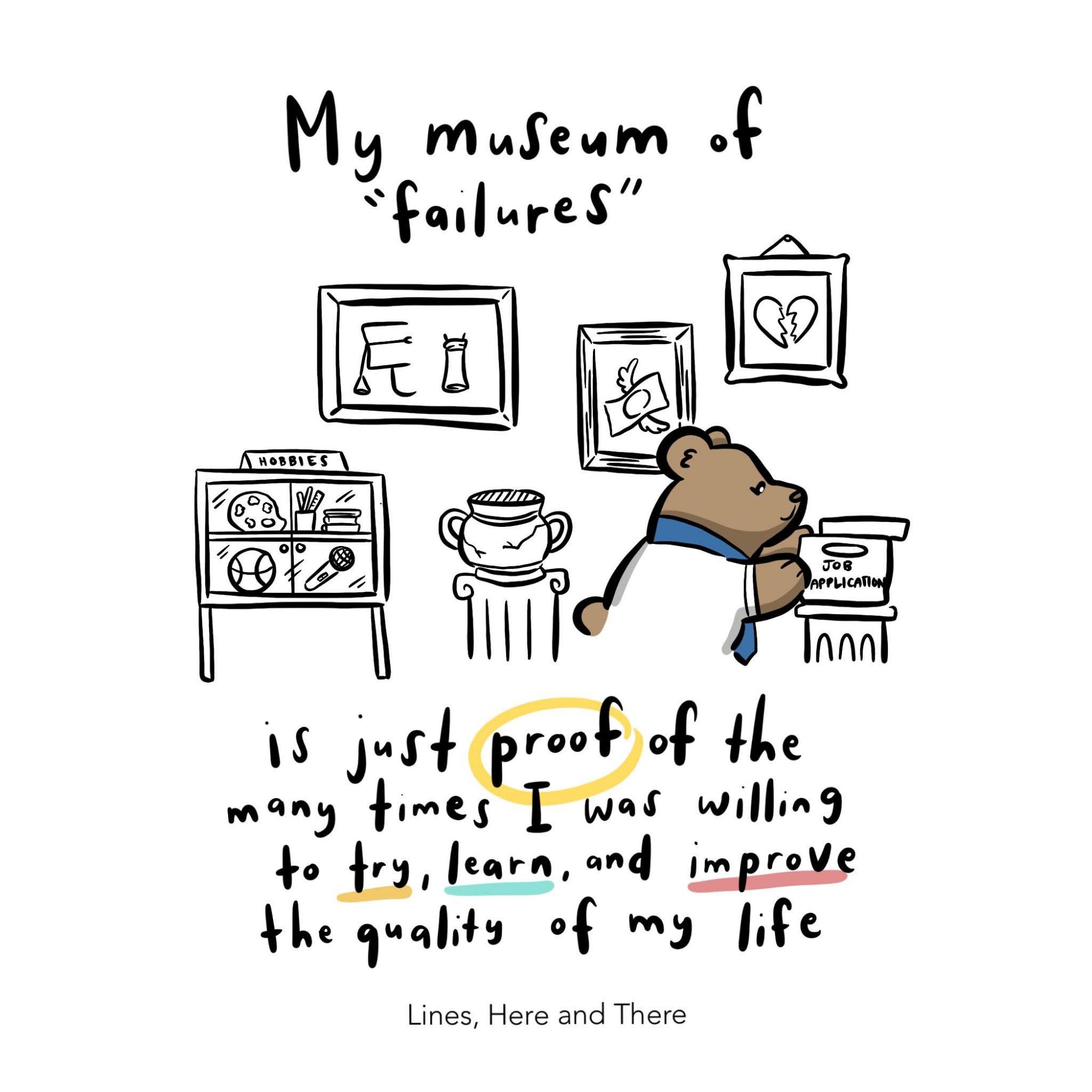
Accept failure

A wise Consultant once told me that the best advice he was given when he got his first post was to become comfortable with failure.ย  I cannot express how true I find this statement. Right now, keeping on top of everything is quite literally impossible. There are not enough hours in the day, even if I was in a position to just push through and work 20 hours a day. Failure is, in fact, my only option. This is an important realisation as it empowers you to make decisions about where those failures are going to occur, rather than letting them happen naturally by living in denial. After all, not all failures are equal. Needing to write and request a review extension on a paper is not the same as missing a clinical action. Failing to get a blog out on a Friday, and instead getting it out on a Wednesday, is not the same as missing a board report deadline. It feels horrible. I reproach myself for not being able to be more efficient and do more, but I accept it because in acceptance I regain a modicum of control and ability to manage risk.

Try being kinder to yourself

The acceptance of failure and the internal disdain for the fact that this is where I’ve landed brings me to the fact that the self judgement is not a helpful additional load to bear. I hold myself to pretty high standards and the fact that I’m not meeting those is pretty difficult to process.ย  I keep coming back to what I would expect of a member of my team or a friend if they were going through the same set of circumstances. I would never tell them to ‘buck up and get on with it’ which is the self-talk I use. I would tell them that’s it’s OK, that they will be OK. I would tell them to give themselves a break and to deal with the things directly in front of them and ask if there was anything I could do. I would have a judgement free conversationย focusing on ways forward. Those are the conversations I’m trying to learn to have with myself. Followed by some honesty about what is actually achievable and what it is that I actually need in order to keep going.

Learn to ask for help

One of the things I would immediately ask someone else if my conversations were external, rather than internal, would be ‘what can I do to help?’. Well, I’m learning to ask for help. I’m learning to use the amazing support I have around me to get meetings sorted and to remind me of what I have going on. I’m trying to ask people to cover some of those meetings that don’t specifically need me. I’m asking for some task related help or taking it up when offered. I am not a one woman army, and I need to stop acting like I am. There is no shame in asking others for support.

Forgive yourself for bad days

When I’m in a bad space, I become more demonstrably emotional, my fuse is shorter, my bandwidth is smaller, and my memory becomes pretty poor. All of these can combine to impact my performance and handling of individual scenarios. All in all, I probably become just less efficient at a time when I need to do more and be more efficient than I normally am. The combo is not great. It means the frequency with which I walk away from a day feeling like I’ve messed up increases, just what you need when struggling. Some days are just bad, whether it’s all self perception or not. This is a key point though. A lot of this is my perception and me measuring myself against my mental benchmarks. I don’t even know how much others see it. So, I’m giving myself some self-talk about putting the bad days behind me. Trying to use the ‘living in the moment’ approach and reminding myself that each new day is just that, new. It’s a fresh chance to try and do it better than the day before, and if some days work out better than others, that’s OK. I am doing what I can, and that needs to be enough.

Acknowledge there may be no alternative

The reason I have to be more forgiving of myself is that there is no alternative or better way forward right now. It takes years to train staff. You can’t just pluck them off a shelf. The built environment and its challenges take months or years to fix. A period of tight deadlines is just that, a period of time, which needs to be got through. My grief at losing a valued colleague will stabilise. All things will pass. Until they do this, this is the reality, and everything needs to continue moving forward. Acceptance of this reality is the first step in finding a way to just get through it. We all have periods in our lives and careers where there is no ‘fixing it’. It’s just about getting through it. That’s the real world, and it’s OK.

Plan for a better future

I’ve talked about being a planner, and that one of the things I’ve needed to realise is that broadly planning doesn’t help me right now. The one area in which it still does however, is planning for when life returns to normal. Planning for what I will be able to use my annual leave for. Planning for what fun things Mr Girlymicro and I will do with mummy Girlymicro whilst she’s living with us. Planning for nice things when I have the mental space to enjoy them. Non work things that have nothing to do with pressure or deadlines. Engaging in frivolous daydreaming. When the moment becomes too much, I give my brain permission to dream of a better future. My nickname is Dream after all.

I’m painfully aware that this post is all about me rather than tips and tricks, which was the original intention. I guess it was the post I needed to write right now. I hope that despite the rather ‘me’ focus, it is still useful.ย  I also hope that if there is anyone out there who is having a hard time right now, you will read this and feel less alone. I hope you will read this and know that’s it’s OK to have hard days. I hope that you will read this and know that good times are coming and that we just need to hang on in there. Finally, I hope that we remember, when those good times arrive, to shed our fears, stress and worries, and fully deep dive in and embrace them for all the joy they will bring. Until then, be kind to yourself and dream!

All opinions in this blog are my own

Beware the Lure of the Anxiety Rabbit Hole: Having the self-awareness to recognise when your thinking lacks clarity

April is always an interesting time for me and my mental health and well being. I’ve written a couple of posts as to why, but the main thing to know is that due to bereavement, I am probably not the most resilient version of myself at this time of year. In addition to this, I have a tendency to be pretty self-critical, which probably doesn’t help.

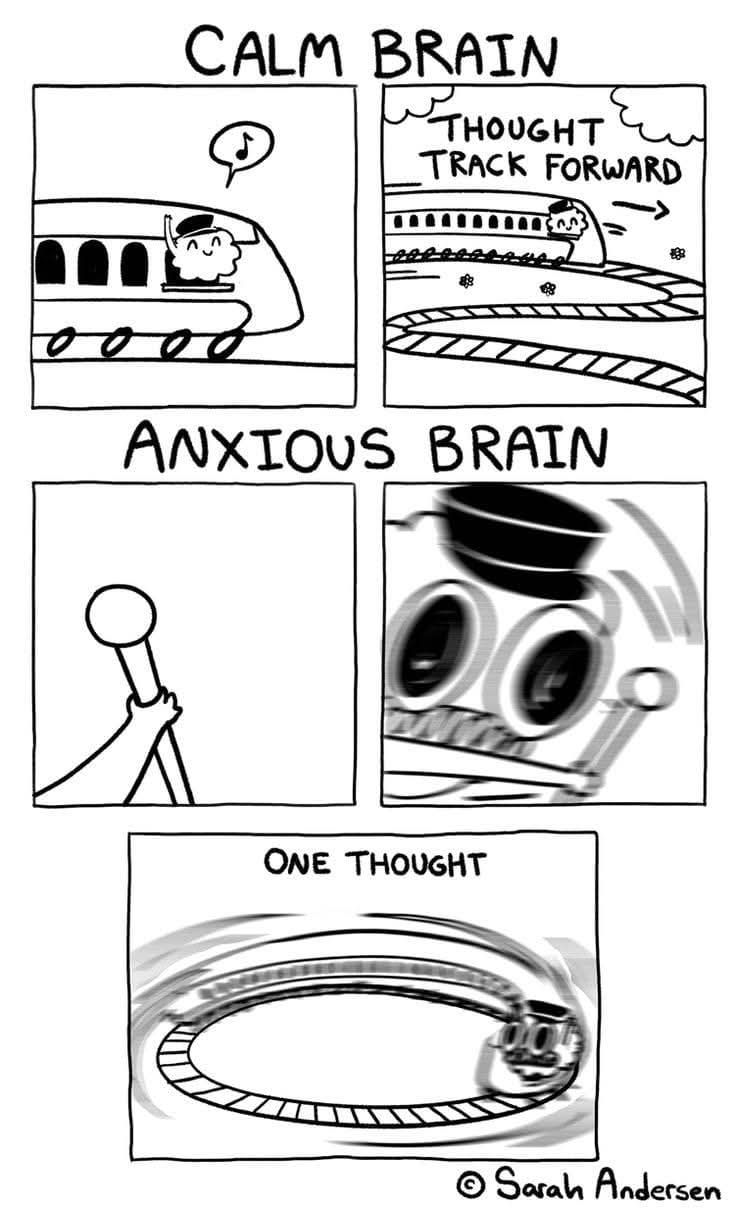
I’ve written before about shame spirals and how these play out for me. Shame spirals, for me, tend to be discreet events linked to a stimuli. In contrast, anxiety rabbit holes tend to be protracted. They build over time and tend to come to a bit of climax. They are driven internally by my state of being, although external stimuli can often pile onto what is already a pretty hard time. If I get into full-on ‘rabbit hole’ mode, it’s not pretty, not for me, but also for those around me. My husband refers toย  these periods as me ‘developing bunny ears’, and it’s a pretty accurate description. I’m like a rabbit in the headlights, and every action, or lack of it, makes the anxiety worse. I’ve never really talked about this outside my family, but in the hope that others find it yourself I thought I should talk about what it looks like, for me, and how I’m learning to manage it better.

Know what your rabbit hole looks like

Everyone’s anxiety response looks different, feels different, and impacts differently. Mine hits with a massive decrease in confidence accompanied by an unhealthy dose of paranoia about how I’m perceived by others. Do I work hard enough? Am I committed enough? Am I good enough?

These particular drivers mean that I start to try to manage them by working harder, agreeing to more to justify my existence and holding myself to an even higher levelย of account. Sounds like it’s not a problem, right?ย  The problem is that the more I do the less I’m managing the cause, which is usually linked to tiredness or physical symptoms in my case. Pushing harder, driving harder, makes these symptoms worse until before I know it, I haven’t had an evening or weekend off for weeks and I’m on the verge of both physical and emotional collapse, as I still feel bad at my job and I have nothing else to give and yet I can no longer ‘push through’. At this point it really is a no win situation. The very thought of not working creates panic attack levels of response, but I also can’t work any harder or anymore. Just stepping away may mean I can be found crying over a laptop. It’s not pretty.

Become familiar with your warning signs

The ideal is obviously to recognise early in the process that the descent into the rabbit hole has begun. Sometimes, this is easier than others. Sometimes, the descent is slow and steady with a fair amount of warning signs.ย  Sometimes, it happens so rapidly that I’m at the bottom of the pit before I’ve even recognised I was falling. Some of that variability is linked to triggers and things that put me in a more vulnerable position, either physically or mentally. I sometimes find it hard to work out why the pattern of longer days and weekends occurs, whether it is the lack of rest that drives the anxiety, or the anxiety is what comes first, either way I need to recognise it’s happening. I think the other big sign for me is that I start to lose the ability to have a good nights sleep due to waking up and being faced by waves of anxiety linked to lists of things that I haven’t done, or reflections on conversations. None of which can be dealt with at 3am, and are therefore an unproductive use of time and emotional capital. Exhaustion then becomes a state of being, and any form of clarity or rational thought process becomes increasingly difficult to achieve and performing an intervention becomes required.

Identify your triggers

I’ve said that some things can get me into the hole faster than normal, knowing what those triggers are, for me, has been key to managing my approach. Specific triggers for me can be linked to:

  • Anything bad going on with my family, as this a direct short cut back to unresolved trauma linked to my sister
  • Health spirals, sometimes the auto immune responses I experience make sleeping harder and can generally make life uncomfortable
  • Mistakes or anything that makes me come up against my perfectionist tendencies
  • Attacking critiques, we’ve all been there, sometimes criticism is constructive, sometimes less so

All of these things can make it more likely that I’m going to respond in a less robust way to the general pressures of life than I would normally hope to. I therefore find being aware of these triggers a useful way of being self-aware linked to my anxiety levels and my responses. Everyone will have their own, I suspect there are some similarities, but these are mine.

Beware of poking the bear or rabbit in this case

There are always people out there who can help or hinder. I am super aware that when I’m in an anxious place there are definitely people who can accelerate my descent. Those people who take some joy in pointing out your flaws, who talk about how they don’t have ‘these issues’, or who take advantage of your anxiety driven need to agree to stuff to give you as much work as they possibly can. There are also those who will try to help by encouraging you to talk through what’s going on, but whilst doing so just draw focus onto the thing that is the source of your anxiety, whether it’s actionable or not. I personally need to step away from these high risk encounters when it’s not going well in order to have a little self preservation.

Be aware of how your behaviour impacts others

Having said that others can make the scenario worse, it’s also important to own the way that your behaviour may also impact others. I can get pretty short with people not responding in, what I have determined to be, a timely manner – as I can feel that everything is time critical even if it’s not. I can struggle to disengage and let others own their tasks, or properly delegate, which can muddy the waters or lead others to believe that I don’t have faith in them, which is definitely not the case. I can also make things worse for my colleagues by setting an example, or standard, of being constantly available, which is neither good nor sustainable. It can then appear that I expect others to do the same, and worse than that, it can mean that when I return to a more normal rhythm or routine, they get expected by others to pick up the slack. None of these things are intentional, but they are true none the less, and so being aware of how our responses impact others is key.

Have mechanisms to help you cope

So, having talked about how I end up in the anxiety rabbit hole and the less pretty consequences of it, how do I cope and manage myself? The first thing is, I have a couple of solid go to members of friends and family, and I have a very low bar for asking for help. This may mean that I need a bench marking phone call with the amazing Captain Claire about whether my responses are appropriate. I also have a wonderful team who I will sometimes message and ask for a second opinion on how an interaction went that I am replaying. I will also go to Mr Girlymicro and confess that I need a weekend completely off with no work and ask him to support me in being able to do so. To check in with me when he sees me opening my work laptop, or opening a blog post to write, to help me in stepping away. I also have a world of bad reality TV lined up which is sufficiently distracting but doesn’t require me to actively care, that enables some of the more challenging parts of my mind to be occupied doing something else.

Try to set yourself some rules

The hard bit comes when I’m in such a bad place that I have to set rules. Rules like, I will log off at 5pm, or that I won’t work at all over the weekend, that I will book leave and step away entirely. Sounds easy right? When I’m in the depths of the hole it’s anything but. If I could just get to the end of the inbox I would feel better. If I could just complete this task the anxiety would go away. It’s false, it doesn’t actually work that way. It just leads to the next thing and then the next thing, as it’s actually making the situation worse. It’s like when I have a skin flare, the scratching helps for the period I’m scratching, but the situation once I stop is oh so much worse. The only solution is to stop scratching and let it heal. The same is true for using work to manage my anxiety, it doesn’t fix it, only dealing with the root cause does that.

Understand that it will be uncomfortable

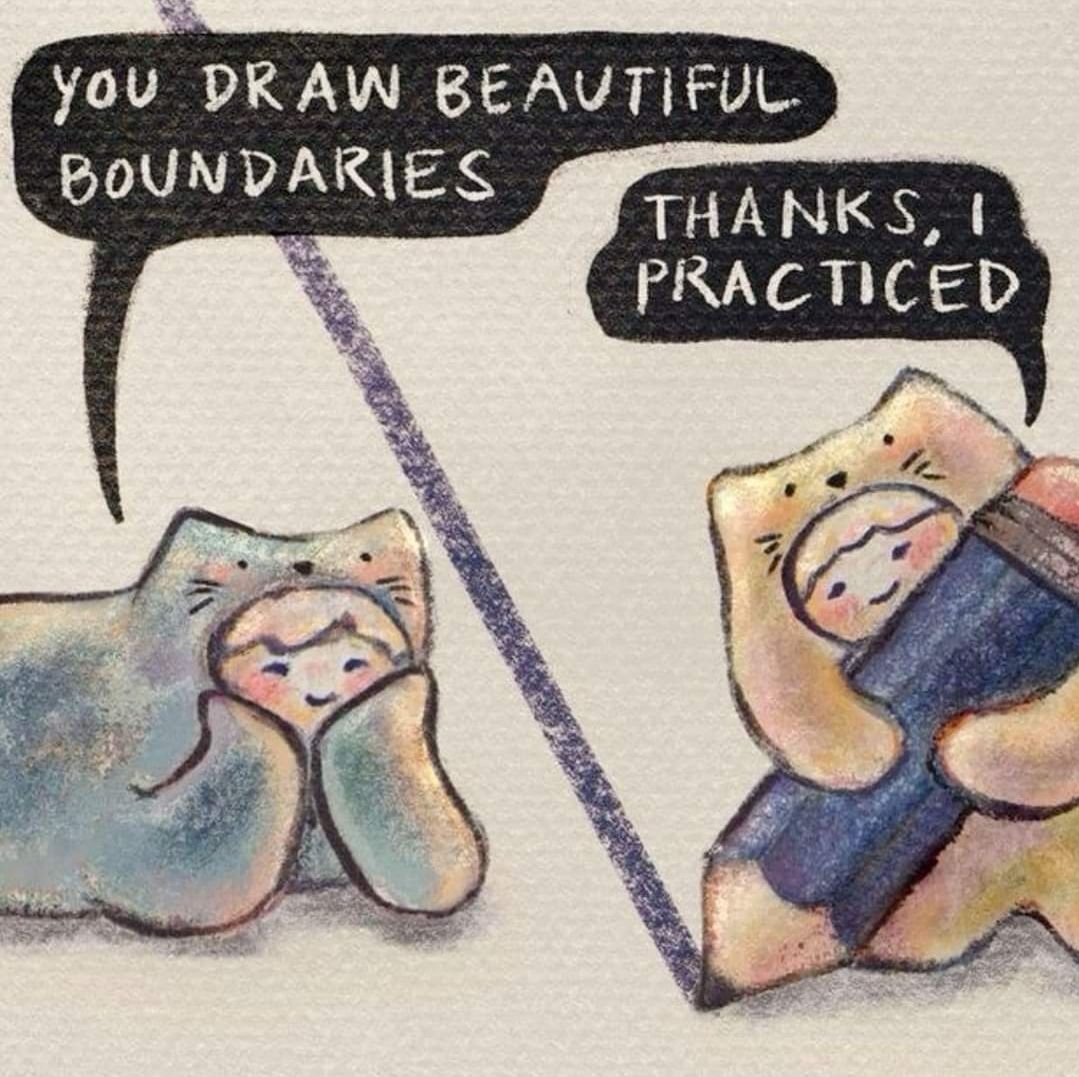
The long and short is that the crawling out of the hole is just incredibly hard and uncomfortable. A couple of week ago, as 5pm on a Friday, I knew I was in such a bad place that I had to stop as I was exhausted and needed some proper rest to be in a better place. At the same point closing that laptop screen was an act of willpower. The anxiety spike caused by walking away, when your brain says that everyone will be let down because you are failing to be on top of things when you do, is so hard. Even when the rational part of your brain knows that a) none of the way you are seeing the world is currently real, b) that everyone else is logging off and there is actually nothing to be accomplished by persisting and c) by working every weekend you are setting yourself up to never be able to have a weekend off as everyone will assume you are always around. It is uncomfortable to step away. It feels like you are making it worse, not better, but it is the only way out of the hole and the only way is through.
Know that you will get through it

The one thing that always helps me more than anything else is that I know that I have been here before and I know that I have come out the other side. It is not fun, it is not something that I like about how my brain works, but it is the reality of living with the mind I have. I have the best family, friends and colleagues who are supportive and understand that I am not always a bunch of roses to work/live with. I think they all know however that I strive to be better. Part of that striving is reflecting and building self awareness so that you are better able to cope in your own skin. Learning to love ourselves for the reality of who we are, warts and all, is a key part of life and happiness, and the sooner we accept the need to be as kind to ourselves as we are to others, the better our lives will be. So make sure you have a sign above the entrance to your rabbit hole so you know where it is, build in a ladder to help you climb out when you fall in, and importantly, if you find yourself there, more than anything else be kind.

Image credit Kate Rennie

All opinions in this blog are my own