It’s the end of Pride Month 2021, but that doesn’t mean that the fight for equality has ended. Healthcare scientists that are part of the LGBT+ community talk about why representation is important to them.
Francis Yongblah, Microbiology Laboratory Manager and HSST Trainee.
As a Gay, Asian Healthcare Scientist, representation of the LGBTQ+ community in Healthcare science is crucial to me. I have been a Healthcare Scientist for just over 12 years and in that time I have experienced and been exposed to homophobia and prejudice in the laboratory workplace. Although these incidents were very early in my career, these scenarios have always stayed in my mind and something that I have never forgotten. Early on in my career, I felt that I had to hide who I was as an individual and could not actually be me for fear of being judged or treated unfairly. These scenarios made me worry that, because of my characteristics of being a gay man, my professional development and career would have been hindered. No healthcare scientist should feel like this, and it’s important for everyone to recognise the attributes and contribution that a diverse workforce can bring to a service, team and the positive impact it can have on patient outcomes.
I have worked hard as an LGBTQ+ Scientist in order to ensure that my career has been able to develop and I can go as far as I am able to and not to be held back by my sexuality. I feel it key to have representation for the healthcare scientist workforce in order to be able to recognise how key it is to have a diverse workforce, as well as recognising that there are LGBTQ+ Healthcare Scientists within the workforce. We’ve now come a long way from when my career had just started out and I feel proud to have my organisation and the NHS represent and support LGBTQ+ Healthcare Scientists. There has also recently been a lot of support from the Institute of Biomedical Sciences (IBMS) to promote the LGBTQ+ Healthcare Scientists in our workforce.,
Kip Heath, Healthcare Scientist and Science Communicator
For me, it’s essential that we foster a workplace environment (and, indeed, a society) in which people are accepted regardless of their gender or sexuality. I’m a queer woman married to a cis heterosexual man. He’s a wonderful and supportive individual and the only person I could imagine taking on the world with. But, to that outside world, we are a standard heterosexual couple. On the one hand, that can be an advantage as I can hide my sexuality fairly easily. However, there have been workplaces that I’ve not felt comfortable or accepted as myself. But I have found that my identity can be easily erased, even by other members of the LGBT+ community.
Now I work in leadership positions where I need to provide support across the healthcare science workforce. My boss talks about the importance of bringing your authentic self to work and leading by example. Our workforce is hugely diverse and it’s important that we demonstrate that. I want to make sure that LGBT+ healthcare scientists in our Trust never feel like they need to hide themselves at work and that there are people that they can open up to if they have any issues. In my role as a science communicator, I raise awareness of healthcare science careers to students and show them that the profession is open to LGBT+ scientists, and that their sexuality is not a barrier to progression.
Anthony De Souza, Practice educator for HCS, HEI lecturer & LGBT+ Forum co-chair
Representation is important to me because, when I grew up, there was no one in my life or on TV that was like me. This added to a feeling of invisibility and isolation, making me feel like I didn’t matter and that there was no place for me in society. I’ve been lucky enough to feel safe enough at work to be myself these days, but everyone’s situation within an organisation will differ.
We know that diversity equates to strength but what are we doing to create an inclusive space for scientists? Science is a diverse and ever changing space where a variety of perspectives yields better conversations, we need an environment that actively supports that. We also need to recognise that much of the discrimination individuals may face happens before they’ve even accepted a job offer, this could be binary choices on demographic questions or uniformity of interview panels.
To be our best at work we have to commit our energy and focus for the good of patients’. We can only do this if we don’t have to constantly edit how we act to fit a pre-defined notion of ‘normal’, react in real time to how we’re perceived or routinely have to deflect micro-aggressions.
Shining a light on excellence throughout the workforce of scientists from different gender identities, sexual orientation, disability, age or race is important for visibility. We need role models that we can relate to and learn from. This also challenges the wider communities’ pre conceived notions of what a professional usually looks, sounds and acts like.
It all started with a conversation Help us keep that conversation going and enjoy some great events along the way!
Rise Of The Resistance is a digital festival of creative responses to Antimicrobial Resistance (AMR), on 3 – 5 June 2021.. Curated by NOSOCOMIAL, an award-winning collaboration of Healthcare Scientists and theatre makers which hosts performances, panels and events.
We have events designed for:
Children and families.
Those interested mainly in the science.
Those mainly interested in the creative pieces.
A grown up audience (due to language content i.e. swearing).
Healthcare Scientists are 5% of the NHS workforce in the UK, responsible for 80% of diagnoses. Rise Of The Resistance celebrates the impact of Healthcare Science. It seeks to reinforce relationships between Healthcare Scientists, patients, families and the public, believing that better communication and understanding are vital for managing future threats to global health such as AMR.
NOSOCOMIAL comprises around 25 scientists and artists. We won the 2019 CSO Partnering Patients and Citizens Award, and 2020 Antibiotic Guardian award for Public Engagement. Rise Of The Resistance is our first festival.
Events For Children and Families
SOCK THE PUPPET – aimed at families and children aged 7 and under
Fri, 4 June 2021 – 10:30 – 11:30
A story for children about Socks, Science, Superbugs and Making Friends, narrated by Stephanie Houtman
Meet Sock the Puppet. Sock is excited to go and sing for the children in Hospital with Ms Clown. Sock loves the Hospital. It is always clean and tidy.
The children love Sock’s singing. All the children hug Sock.
When Sock catches all the bugs that make the children poorly, Sock has an adventure to the cleanest, tidiest place in the whole Hospital: The Laboratory.
Can you help Sock find a way back to Ms Clown and the children?
Join us at Rise Of The Resistance for the story of Sock, narrated by Stephanie Houtman (Peppa Pig Live), directed by Saskia Marland, with a special appearance by Sock.
After you book tickets, you will receive a worksheet to make your own Sock at home, designed by artist and maker Abi Bown.
Created by the team behind Nosocomial and Remember, Remember! – playwright Nicola Baldwin, and Healthcare Scientists Vicki Heath and Dr Elaine Cloutman-Green BEM, of Great Ormond Street Hospital.
Sock The Puppet will also be available as a podcast.
With thanks to Eibhlin Jones, Laura Walsh, Amy Sutton and Tara Kearney.
REMEMBER, REMEMBER – aimed at families and children up to GCSE age
Sat, 5 June 2021 – 11:00 – 12:00
Join our time-travelling zoom Healthcare Science in a detective drama about the “True” story of the Gunpowder Plot. For ages 5+ to 105+
A Zoom storytelling science drama.
REMEMBER, REMEMBER! is a pre-recorded Zoom drama. You will receive a link to watch the online premiere.
Activity books, and script, will also be sent out so people can take part at home.
London, 2021. Healthcare Scientists Lily, Rosa, and Frank receive a mysterious message for ‘HELPE’ on one of the machines in their hospital laboratory.
London, 1605. Plague stalks the land, leading to unrest… and a plot to blow up the King and Parliament. Guy Fawkes is arrested and the race begins to track the rest of Gunpowder Plotters.
Remember, Remember tells the amazing story of how three Healthcare scientists set out to foil the Gunpowder Plot, with the help of nine year old Princess Elizabeth, a malfunctioning MALDI-TOF machine and the weird and wonderful mysteries of Microbiology, Haematology, Biochemistry, Immunology, hand-washing, and… time travel.
And they need your help.
with
LILY / SIR JASPER – Jennifer Daley
ROSA / TOWER GUARD – Becky Simon
FRANK / GUY FAWKES – Jonny Wright
PRINCESS ELIZABETH – Tara Kearney
Produced by NOSOCOMIAL
By playwright Nicola Baldwin and Dr Elaine Cloutman-Green, Lead Healthcare Scientist at GOSH. Activity Packs created with Anthony Manuel DeSouza, with input from Fionnuala Wilkins at GOSH school, and Amy Sutton of GOSH Youth Forum.
Thanks to Hannah Jones, Peter Hamilton Dyer, Abi Bown.
Originally produced for Pathology Week 2019, supported by HSEWG and The Royal College of Pathologists (RCPath) as an online drama for children and families in hospital isolation due to illness, revived in 2020, and made available thanks to the Society for Applied Microbiology, as the whole country went into isolation..
We hope it will provide an informative and entertaining way to learn about viruses and bacteria, and that you enjoy watching it at home.
IF I DON’T PLAY I WON’T UNDERSTAND. Plus PPI panel -an interactive drama experience for the whole family
Sat, 5 June 2021 – 14:00 – 15:00
Welcome to the “Bacterial Leisure Centre”! We are the best fitness centre for bacteria in the microbiome to train for bacterial success!
Our Leisure Centre is located in the heart of the breathtaking Microbiome Resort, set in a 2,700 square feet of the Gut. The Centre is provided with anatomy room, gym, quorum sensing zone, reproduction area, and many other 1st class facilities.
Our team of experienced trainers will coach and guide you in this adventure of becoming bacteria, and they will make sure you will have an unforgettable experience.
What do you need to do?
Sign up to a free virtual taster session on Saturday the 5th of June @2pm.
Be prepared to renounce your humanity for the duration of the taster session.
As part of our fitness activity, we will ask you to play games and move your body.
No previous fitness experience is required, but be ready for a lot of fun and games activity.
“If I don’t play I won’t understand” is an interactive digital game performance, combining transmedia storytelling and fictional reality with games and movement activities.
Inspired by choose-your-own-adventure books, audiences are invited to sign up to a virtual “Bacterial Leisure Centre” where they renounce their humanity to train to become bacterias.
After a welcoming virtual tour of the Centre, the audience can choose their own adventure by deciding which training room they want to enter. Once in the room, the audience will meet a specialized trainer that will train them to become bacterias by using games and participatory activities.
“If I don’t play I won’t understand” is designed and directed by Monika Gravagno, the AD of Facciocose Physical Theatre company.
This will be a participatory physical theatre/workshop to explore communication and expression from a microbial perspective.
Followed by a panel discussion: How To Engage An Audience With ‘Difficult’ Science
After the workshop, stay for a panel discussion and Q&A with the makers and invited guests, to explore the outer limits of public engagement; the mutual benefits of PPI to artists and scientists in framing research questions, and creating new forms of work.
For Those Interested in Talking Science Supported by Drama
SPIRALLING & How Do We Begin The Conversation?
Fri, 4 June 2021, 14:00 – 15:00
In a time when views are drastically polarised, could questions potentially bring us together and not drive us further apart?
Screening of SPIRALLING by Jimena Larraguivel, followed by a panel discussion with Dr James Hatcher, Dr Melisa Canales, Professor Brendan Gilmore, Sue Lee: on PPI, clinical trials, and how do we begin the conversation on AMR?
“The idea behind this short film emerged in response to the overwhelming amount of information available on social media, which has undoubtedly had an impact in the way I navigate motherhood and take decisions in the best interest of my children. In a time where cancel culture seems to be the norm, it’s daunting asking questions. However, in a time where views are drastically polarised, aren’t questions what could potentially bring us together and not further apart?”
The doctors want to be sure that I’m not using. Fair play, I get it, course, I do. But I’ve been with heroin since I was 17. It’s up here.
Screening of INTO THE BREACH by David Milner, followed by a panel discussion with Dr Jane Freeman, Angela Mwape, Ruth Thomsen and Francis Yongblah on bugs, behaviour, their impact on on AMR, and what we really mean by ‘hard to reach patients’.
“Hostel dweller COLIN reflects on his past life and uncertain future while negotiating the reality of London’s streets. Colin’s in limbo, awaiting an operation; his body must be drug-free for surgery, but addiction has been the one constant in his life.”
How do we cope with the total disruption of infection? What’s the prognosis for the things we take for granted in our lives?
Screening of ME AND HER by Rebecca Simon, followed by a panel discussion with Professor Mark Fielder, Dr Elaine Cloutman-Green and Professor Nicola Williams, on the impact on, and of, human and animal behaviour in AMR, and the need to focus on One Health.
Home is where the heart is, where we feel most like ourselves. After almost seven months living in a ten by twelve foot hospital room with her sick daughter, Zoe escapes to home. To feel like herself again and that she still exists outside of that hospital room, outside of being a mum. But home doesn’t feel like home anymore, there’s been a shift, things are not as she would have them. She feels displaced and lost.
ME AND HER is a short film exploring the experiences of parents, carers and their families whose lives are profoundly altered by long term hospital stays. When suffering through a difficult and challenging time in their life, how do parents who are carers cope with the total disruption of their lives? What’s the prognosis for their careers, relationships and sense of identity?
The Piece That Started It All – NOSOCOMIAL & Collaboration within Public Engagement
Fri, 4 June 2021 – 20:00 – 21:00
Verbatim drama premiere. There is nothing weird or wonderful you can imagine in human experience I haven’t seen. I’m a Researcher in Humans
When I say I’m a healthcare scientist, they ask “do you work with animals?”When I tell them I work in a hospital, they say “are you a nurse?”There is nothing weird or wonderful you can imagine in human experience I haven’t seen. I’m a Researcher in Humans.
Screening of NOSOCOMIAL followed by panel discussion on Collaboration within Public Engagement with Dr Lena Ciric, Saskia Marland and Monika Gravagno.
Jo is not well. Something strange is happening. As a scientist, she can resolve this. Unless the world is infected. Unless it’s everywhere….
Kitty, Helena and Paul work through the night. An hour can make all the difference. Part thriller, part puzzle, the science of life and death.
Join us for the online premiere of our short film.
JO – Jimena Larraguivel
HELENA – Becky Simon
KITTY – Nicola Sanderson
PAUL – Peter Clements
Healthcare Scientists are 5% of the NHS workforce, responsible for 80% of diagnoses.
Forensic pathologists are a staple of TV crime drama and Healthcare Science has dominated news headlines during months of pandemic, yet the role of Healthcare Scientists themselves remains largely unknown. You don’t see us on Holby. Science is too ‘difficult’ without explanation. Yet working in basement labs,working with patients, working with families over years, the HCS experience is varied, vital, and their personal stories are remarkable.
Nosocomial began as a collaboration between playwright Nicola Baldwin and Dr Elaine Cloutman-Green, Lead Healthcare Scientist at Great Ormond Street Hospital. In summer 2018, over 30 Healthcare Scientists from various hospitals took time out of their schedules to join writing workshops, which later grew to involve artists and actors, to tell their stories.
Performed at Camden Peoples’ Theatre and site-specific events in NHS buildings, museums, and other public spaces. Winner of 2019 CSO Partnering Patients and Citizens award, and 2020 Antibiotic Guardian award for Public Engagement, this is the online premiere of our new short film, updated for 2021.
The Nosocomial project has been made possible thanks to SfAM and HIS public engagement grants.
Inspired by classic 1963 thriller by Val Guest (from book by Elleston Trevor) about scientists battling a smallpox outbreak
A Healthcare Scientist’s already-shaky marriage is tested to an even greater extent when he has to contend with a smallpox epidemic.
Inspired by the classic 1963 British black and white medical thriller adapted and directed by Val Guest (from the book Pillars Of Midnight by Elleston Trevor) about Healthcare Scientists battling a smallpox outbreak
For one night only, this live zoom script reading will pay homage to the iconic black and white movie experience.
Please dress appropriately, and return with us to a bygone era of Saturday night cinema-going, reimagined for the digital age, via the medium of Zoom in your own sitting room.
A unique experiment in co-creation involving a virtual company of actors, artists, scientists, researchers, and you, the audience.
It’s New Year’s eve. You get a call to go into the lab.
Microbial shapeshifter. Compulsive stealer of DNA. Who is she? Why does she do it? In a crisis of identity Klebsiella seeks psychotherapy…
Screening of KLEBSIELLA by Peter Clements, a new performance in development, followed by a panel discussion with costume designer Pam Tait and Healthcare Scientist Dr Elaine Cloutman-Green: on performance, playfulness and the need for novel approaches to engaging with AMR.
“A portrait of Klebsiella through a psychoanalytic session.
Klebsiella is the shapeshifter of the microbial world. A compulsive stealer of DNA. Who is she? Why does she do these things? In a crisis of identity , Klebsiella seeks psychotherapy to get to the bottom of what’s bugging her.
Klebsiella and Analyst meet to determine if Klebsiella is suitable for in depth psychoanalysis. Klebsiella resolves that she’s impossible to cure. She’s determined to find the love of her life, even if it means leaving a trail of destruction behind her.”
Comedy and Cabaret from the ‘best minds in science’…. A partnership with the popular Science Showoff comedy night hosted by Steve Cross.
Healthcare Scientists become comedians for one night only.
Tonight they’ll put aside their microscopes, computers, samples and equipment for one night to tell you jokes about their work.
The show will be hosted by comedy veteran Steve Cross, who has MCed hundreds of comedy shows of all kinds across the world, and who has trained these brave brainiacs to take to the stage. I say stage, they’ll be on a videolink from their own homes.
The gig will be made available to to ticket holders via a live stream from all of the performers’ houses. Ticket holders will be emailed details of the stream on the day of the show.
The show is on 5th of June and starts at 6pm prompt.
It’s just gone 6am on a Saturday morning and I need to get some writing done this weekend for a project that is overdue and has a final final deadline on Monday. It’s been a really long week and I don’t have much in the tank. To be honest, all I want to do is sit on the sofa with a pot of tea and spend the weekend watching Netflix with my hubby. I think we all have moments like this, and, to get me into the right head space, I’m starting my morning by writing this blog. I hope this might help some of you who are in the same place.
Know When Procrastination is Part of the Process and When You Are Just Wasting Time
When I was writing papers and my PhD thesis, I used to get really angry at myself for wasting time.I would spend the first three days wandering around and doing anything but putting words to paper. When I did sit down, I would just get words out. In general it takes me about two days to write a paper. I would then be even madder at myself for not getting to it earlier as I felt that I could achieve so much more if I just focussed.
Over the years I’ve discovered that the reason the words come easily when I sit down at a laptop is precisely because I’ve spent three days prevaricating. During that period of wandering around I’m thinking. Thinking about the story I want to tell with my results. Thinking about my top points. Finally, thinking about structure. It is all of this thinking, not all of it active, that enables me to hit the ground running when I come to actually write.
This isn’t to say that I’m not guilty of procrastination. There’s a reason this book chapter is late. I’m tired and finding it difficult to concentrate, which means that everything just makes my mind wander. It is really important to know yourself enough to know when you are in ‘preparation phase’ vs ‘procrastination’: one is useful to you and the other isn’t.
The Fear of a Blank Page
I find blank pages intimidating. I do. I know that I should see them as full of possibility and exciting, but I see them as a physical representation of how far I have to go. One of the first things I have to do, therefore, is get stuff onto that page in the least stressful way possible. How to do this depends on what the project is. For papers, I often just start by getting headers down. If I’m lucky enough to have some previous text on the subject I will copy and paste bits in as reminders. Usually I keep these highlighted so I know they are old text that needs re-working/replacing. If it’s something completely new, I will populate with lines from papers that I’m going to build reference structure around.
When I was writing my thesis, I wouldn’t even start chapter writing until I’d done a reading phase to help avoid the ‘blank page fear’. I would spend a week reading all the papers linked to the chapter I was about to write. During that reading phase, I would write the key points and linked references down in a Word document. I’d then shuffle them by topic. When I got to the week allocated for writing I would then have lots of text to import into my structure so I could avoid the blank page terror.
Structure is King
I’ve spent quite a lot of time writing different types of documents and I’ve discovered that there are only so many types of underlying structure, even though they often look different. Papers are a great example of this. One main advantage to them is that you can clearly see what that structure is, and you have access to all the information you need to help you.
When writing papers (and I’ve blogged about this before) you can look and see how many paragraphs that journal tends to have under discussion vs methods vs results. This helps you know where you need to focus the majority of your words. The same is true for grant applications: if you look at a section’s word count, it gives you a clue about what the readers will want to see. For less formal writing, I still tend to look at other pieces of content that have come out and decide if any of them fit what I want to write. It saves re-drafting and focusses the mind.
Structure will help you write. I will use bullet points under headers to show what my structure is, i.e. a bullet point per paragraph. If there are three paragraphs (such as tends to be used for an introduction) I will use them as follows:
Paragraph 1 – What’s the setting/problem?
Paragraph 2 – What are the knowns and what are the unknowns?
Paragraph 3 – What am I going to do? what’s the plan of action?
By planning my paragraph structure I try to avoid falling down too many rabbit holes and maintain the story of what I’m telling. I am then able to do the same with each of the paragraphs:
Line 1 – State what I’m going to tell you.
Line 2 – Tell you what I’m telling you with all the detail.
Line 3 – Reinforce my key point and link to the paragraph that will follow.
Doing this means that I’m not worrying about what comes next when I’m writing. I’m just hanging words off a structure that helps me as well as leading the reader.
Sometimes The Only Way Is Through
There are times that, no matter how much research I’ve done, no matter how prepped I am, I just can’t make the writing work. I’m lucky. it doesn’t happen to me very often but the pandemic has made it a more frequent event. Normally I hate working in silence. I’m not good at doing one thing at a time. I need music or TV when I work to actually help me focus. I know this may sound odd to many people. When I hit a particular wall, however, I’ve learnt that I have to shift from the way working normally works for me. In these circumstances I call upon my husband, Jon. I tell him what I need, i.e. I must work for 3 hours to break the back of this document. I tell him the night before and let him know the timeline. The next day he banishes me to the office, frequently supplying me with tea. On these occasions I work in silence and need enough dedicated time to get into ‘the zone’. Because I don’t want to do it, anything that can make me distracted, will make me distracted. I therefore retreat to a space where all the things that usually help me aren’t present. This shift allows me to trick my brain enough to make progress. Finding your Jon to push you when you can’t push yourself is super helpful.
The other thing I do is make deals with myself and – most importantly – stick to them ,i.e. I am allowed to go and bake that cake I want to if I’ve done three hours. I am not allowed to do it if I do less than that. There’s no letting me off for good behaviour. This is a Yoda moment ‘Do or do not, there is no try!’. Being honest with yourself is key: after all, there is a good chance you’ll know when you’re lying. Make the reward proportional to the effort, i.e. when I run a half marathon successfully I buy myself a nice dress, for 3 hours work I get a new pot of tea.
Know When to Walk Away
Some days, be aware that writing is just not going to happen. This can happen for a bunch of reasons: tiredness, illness, last minute invitations to a cocktail bar. It is only possible to enjoy the freedom of walking away if it’s a) not a project that has to happen or b) you’ve left yourself enough deadline time so that you can come back to it later. If either a or b are true then sometimes it is better to just not punish yourself and return to it later. That’s completely OK. You may need more thinking time; you may be having a super bad day. Lets not punish ourselves more than we already do. Embrace the fact that you have project-managed well enough to let it go for a bit. Also, be aware that you only have so many free passes before you are sitting here early on a Saturday morning and there are no more to take. Use them wisely!
Top Tips:
Let the frustration with yourself go as it doesn’t get you anywhere. Work out the source and find a way through or around.
If you do the research on structures beforehand you may find the writing process easier and more efficient.
Know when you have time to defer and when you need to push through. Make an active choice rather than defaulting to the last minute.
All opinions on this blog are my own
If you would like more tips and advice linked to your PhD journey then the first every Girlymicrobiologist book is here to help!
This book goes beyond the typical academic handbook, acknowledging the unique challenges and triumphs faced by PhD students and offering relatable, real-world advice to help you:
Master the art of effective research and time management to stay organized and on track.
Build a supportive network of peers, mentors, and supervisors to overcome challenges and foster collaboration.
Maintain a healthy work-life balance by prioritizing self-care and avoiding burnout.
Embrace the unexpected and view setbacks as opportunities for growth and innovation.
Navigate the complexities of academia with confidence and build a strong professional network
This book starts at the very beginning, with why you might want to do a PhD, how you might decide what route to PhD is right for you, and what a successful application might look like.
It then takes you through your PhD journey, year by year, with tips about how to approach and succeed during significant moments, such as attending your first conference, or writing your first academic paper.
Finally, you will discover what other skills you need to develop during your PhD to give you the best route to success after your viva. All of this supported by links to activities on The Girlymicrobiologist blog, to help you with practical exercises in order to apply what you have learned.
I’ve just come off a Sunday morning Zoom call for Rise of the Resistance, a digital festival I’m involved in that will be happening on the 4th and 5th June 2021 about Antimicrobial Resistance. It’s been a long week and this blog is late because I’m super tired, but what struck me when I came off the call is that whilst on it (and for a while after) I’ve actually felt energised and enthusiastic. That’s not to say I don’t love my work and I never feel like this about my job. I do. But I’ve noticed that, after a year plus of the pandemic, I don’t feel it as much as I used to. This made me reflect on why that is, and what feeds my energy and enthusiasm and where I feel drained.
Now, I’m not the biggest fan of Myers-Briggs but I do think that it can be a useful start in terms of reflecting what energises and what drains you. I flip between ENFP and ENFJ, depending on the test and how stressed out I am. Where I never vary is on the feeling dynamic: I need to feel connected to people in order to feel inspired, creative and like ‘me’.
One of the issues I’ve experienced during the pandemic is the ‘feeling connected’ part. I get this through being creative, working collaboratively with others and spending time with people who enable me to feel secure and support free thinking. I find routine to be draining. It seems weird to describe the pandemic as routine, but in many ways it’s been the worst combination for me. There’s been no time, thinking space, or resources for true creativity and innovation. Whilst at the same time everything has been constantly changing and so most of my available intellectual and physical resource has been focussed on administration and reacting to change, rather than driving it.
True change and innovation require time for self reflection and the establishing of partnerships. This has definitely been something that has been resource-limited.
If you use DISC profiling I’m about as strongly DI as it’s possible to be, with an additional focus on collaboration. A lot of my team are much more C (see below) and so react to the challenges faced by this change in working structure very differently to me. For them, they haven’t enjoyed the ever-changing guidance but for a different reason, as they prefer routine and structure. Interestingly, no matter who you are, this way of working has probably been draining for us all, rather than energising us.
It feels to me that all of us are therefore coming out of the last 12 months plus in a drained rather than energised state, both as individuals and as teams. If we are able to continue for the next 12 months, we probably need to take some time that we don’t have to reflect on what our working lives are like right now and how we can change them to build in some of the activities that energise rather than drain us. For me I’ve found things like Myers-Briggs and DISC a useful starting point. But they are just that: a starting point.
I’ve spent a lot of time thinking about where my passion lies over the last 12 months. I have the best job in the world but there’s no getting away from the fact that it has been hard and frequently draining lately. Not just that, but it is likely to continue to be so for some time. I’m incredibly lucky to have projects like Nosocomial and to be involved in teaching, which enables me to visualise and see impact and change, as well as to build connections and networks that are super important to me. A lot of these projects have been on hold for some time, but – as the things that energise rather than drain – now is the time to dust these off and make the deliberate choice to re-engage.
My thoughts on what energises me:
One to one or small group chats in non-hierarchical settings (like tea and cake catch ups) where connections are developed/sustained.
Making plans for the future.
Having time to throw around ideas and discuss concepts.
Time spent with people where I don’t fear judgement.
Creation – whether a project or idea.
Passion projects about communicating science.
Teaching/educational activities where you can engage and see the impact on those involved.
Time and resources are no less limited now than last year.But, if we are going to survive to the end of this marathon,now is the time to invest in what makes us better at all we do. So for yourselves and your teams, find what it is that energises you and support each other in making the room to make it happen.
(Apologies. This is a long one. Turned out I had quite a lot to say!)
This post has been languishing in my list of drafts for ages. After a difficult week, though, it felt like the right time to actually take it out of the ‘to do’ pile and finally finish it. The main driver for this is seeing how excited people are for June. The plans being made. The jubilance seen on social media. Weirdly combined with seeing yet more protests about the inhumanity of what has been done to society by lockdowns and mask-wearing requirement. All the time getting updates from India, Peru, Brazil about the realities of a virus that is out of control and still killing people globally.
I have previously posted about the dangers of looking at the situation and some of these responses from my position of privilege (Science Communication: Reflections from an Ivory Tower | girlymicro (girlymicrobiologist.com). I do, therefore, acknowledge that this is a complex topic and that people will write PhD thesis on the confluence of science, human behaviour and policy. I’m not that smart and so this post is just my personal tale of being an Infection Prevention and Control scientist surviving in the midst of a global pandemic, and why some healthcare workers may not be keen to re-engage with life as normal.
On the 31st January 2020 I posted on my personal Facebook about the fact that I thought the spread of SARS CoV2 was going to cause real issues along with some commentary and guidance. Some of what happened over the last 14 months I could have predicted. So much of the non-science and emotional/relationship impacts I could never have seen coming.
What Is This Work Life Balance You Speak Of?
I work in IPC because I enjoy the responsiveness of it. I love a challenge as I discussed in a previous post. The difference with this vs normal infection control is that it hasn’t been high adrenaline and intense for three days, or three weeks. This has been life for over a year. No matter how much you love your job, no matter how much you know the difference it makes, that brings with it a weight and a burden that no amount of resilience or wellness seminars are going to dissipate.
I’ve been thinking about a metaphor for it for a while and this is what I’ve landed on. I love a blanket. I always have one to snuggle under when on the sofa. On cold days, or when I’m feeling particularly challenged, I may even layer up with two, for that extra level of comfort. There are some parallels with the parts of my job I find comfortable, such as how I feel about responding to the crisis management part of IPC. It’s what keeps the job interesting and never dull. Right now, though, I feel like I’m lying on my sofa and the blankets just keep on being added. At first I moved from comfortable and snuggled to overly warm and uncomfortable. Now, with the constant piling of new ones, I feel like I’ve moved to suffocating and trapped. At some point you wonder how many can be added before you’ll never be able to escape from under the pile.
I think one of the reasons for this is not just the work but that, suddenly, life outside of work is now also work. Every conversation you have is about SARS CoV2. Conversations with friends, Facebook posts, taxi rides. When you have a bad day at work normally, at some point, you can walk away from it. There’s been no walking away from this: it’s everywhere and so there’s no space in which to recover.
The Clear and Present Danger
One of the other layers to this is the fear. It’s not something I dwell upon. It’s something I try to actively not think about, but there’s no denying it’s been an ever present feature of the last year. I posted about the fact that my sister passed away some years ago, so my parents and family have already been faced with losing someone. This is something that families don’t get over. What I haven’t posted about is that viruses and I have a rather turbulent past. I’ve been ventilated when I was younger due to acute respiratory distress brought on by viral infections. Viral infections also exacerbate my angio oedema, which makes my face and hands swell and impacts on my ability to eat and sleep. There has been understandable concern from friends and family about me needing to travel on public transport and attend work, whereas they would have loved for me to be able to stay home and build walls of protection around myself. Seeing that anxiety has not been easy. It has also not been easy ignoring that nagging fear at the back of my own mind. The ‘what happens if’. I’ve had to put faith in my ability to be super-compliant and in the guidelines I was issuing to keep both myself and others safe. This is always the case, but there’s no doubt that this has been a high consequences event if I got it wrong. Normally, when you are managing an outbreak, you are not also part of the outbreak.
This has been brought home by the deaths of colleagues and family. My family, like many others, have lost people as has my Trust. So you don’t have to hypothesise about how others are feeling. I’m feeling it too. The grief, the loss, the fear. There’s no walking away. The only thing you can do is acknowledge it, then straighten your shoulders and, as they say, ‘Keep Calm and Carry On’.
Everyone’s an Expert
One of the things I’ve found personally frustrating, no matter how understandable, is that everyone is now an expert. They appear to all have an in depth understanding of diagnostics, of virology, of infection control and of public health policy. I completely understand the drivers for this: it helps people feel in control, but even so it’s still super frustrating. The worst ones for me are the people who are definitely on the Top of Mount Stupid in terms of levels of knowledge. There was a lot of social media commentary on every action taken. Especially by people who others look to as being informed due to them having good levels of general knowledge. People who others will then take advice from without fact-checking or understanding that this is a complex situation with a lot of moving parts. As much as these people are often certain they are correct, it is also a certainty that they definitely don’t have access to all the facts, as even working within the system I couldn’t claim to have access to everything. At the start, I spent a lot of time trying to counter this misinformation but, as time goes on, I must admit I’ve struggled to have the energy. I think this has not helped in getting scientific messages out there and good communication, as many people involved are also maxed out on other actions. This guilt adds another blanket to my pile.
Real Science vs Movie Science
Although people normally smile and ask polite questions about what it is I do, I’ve never felt it has been in any way mainstream. It has been fascinating to me seeing decisions and things I’m doing in real time playing out in the media a day or two later. Early on, guidance and diagnostics were changing every few days or weeks. The speed at which everyone needed to flex and respond to changing demands and new information is something I have never experienced before. For me, on the ground, this was an amazing feat. But the criticism of speed and response does make me think of scenes from Star Trek, where you can get more just by saying how urgent it is: the implication being that we just aren’t working hard enough. The same can be said of individual sample requests. Sometimes when you get a call and someone explains how urgent a result is and the only response you can give is that the process is limited in speed by the underlying chemistry, it therefore cannot go faster no matter how much I want it to. There are certainly speed savings in workflow but these require workflows not to be changing every other day for you to truly understand where speed can be gained without impacting quality.
Reality Strikes and It’s Not Pretty
This all brings me to the thing that I have found most difficult. Seeing the response to the science. Not only in terms of protests in the streets from people who believe that the virus that has killed their family and colleagues doesn’t exist, but seeing the non-compliance with measures to save lives. The living reality of seeing how ‘the needs of the many outweighs the needs of the few’ plays out in the behaviour of both strangers and friends. The reality is that the scientific conspiracy theories have been present everywhere. What would, in other scenarios, have been chats that caused me to roll my eyes about data manipulation, vaccine hesitancy, and refusal to take personal actions lead to a different level of impact when it is all you are living and breathing. It’s not discussing hypotheticals when you are exhausted and dealing with sick people every day and experiencing personal loss.
I’ve found this super hard when these conversations and behaviours are displayed by not just strangers on the internet but by friends and family who you would otherwise have thought of as being part of your ‘tribe’. Part of the discomfort in this is that you are constantly faced with the failure to get sound information out there, and of your personal lack of energy to engage. I’ve also, on occasion, been attacked for being the bearer of bad news when trying to expectation manage on my personal social media. It means that, as of right now, I feel I will come out of this with some permanently altered relationships as it’s just not that easy to forget and move on. This will be a personal legacy of the COVID-19 pandemic that I will be dealing with for some time.
So Why Am I Telling You This?
A good friend, when I was talking some of these thoughts through, suggested I share some of this. Not just to talk it through, although that has been useful, but also to explain why I’m not excited about the so called ‘return to normal’.
Everyone’s journey and experiences over the last year have been different. Mine, like many people, has been one of exhaustion and stress, but not for the same reasons. A lot of stress discussed with me by others has come from feeling isolated and scared about personal well-being. Due to that some people, now they are vaccinated, are feeling less at risk. They are also understandably energised by the thought of seeing friends and family.
I on the other hand am in a much worse physical place than I was pre-pandemic as the stress has exacerbated everything somewhat. I’m also really tired and feel like I’ve been running non-stop for over a year. All I want now is to hide away and recover, see no one, and sleep until I am more like me again.
So please understand, if you invite me to things post-lockdown end, or if you phone and I don’t answer, it’s not because I don’t value our connection. It’s because I value it enough to want to engage again when I can be fully present. Until then forgive me for retreating back to my sofa and trying to get back to having one blanket that brings me comfort, rather than 150 which make it hard to breath. See you in 2022.
I know I normally post about science and science adjacent topics, but in the interest of practicing what I preach and bringing my full authentic self, I wanted to post about a topic that I don’t think gets discussed. This is partly prompted by the time of year, but also by quite a few posts I’ve seen this week on twitter from people who have felt alone in similar scenarios. I also wanted to to give a view of how this feels 11 years on to those who are going through this now, to let them know that you will find a new normal. It will never be the same, it can’t be. It doesn’t however devalue what your life is worth, you will find a new way, one that is uniquely your own. This is all from my perspective: if your journey has been different I am in no way devaluing your experience, just sharing my own. Feel free to not read this post if you don’t want to hear me overshare.
So now the disclaimers are done, a little history which you may or may not wish to skip if you want to miss the details.
I’m 41 and 11 years ago, this weekend, my sister Claire died. She died when she was 5 1/2 months pregnant with my niece Morgan. Her pregnancy was normal, although there were concerns on the ultrasound from the start in terms of whether Morgan had an underlying condition that would mean the course of the pregnancy might not be successful. We were all super excited when she reached five months, as that had been the milestone beyond which we all thought a positive outcome more likely. Two weeks later my sister had a headache on a Friday night. I was away at a hen do for my best friend. She phoned my mum when she started vomiting. She called 111, who told her that it was likely to be a stomach bug and to remain hydrated. At 3 that morning she awoke partially paralysed. An ambulance was called. She seized on the way to the hospital and was brain dead when she arrived. This was confirmed 48 hours later when we turned off her ventilator and donated her organs. Morgan survived 24 hours and then also died. She was two weeks too early to be considered legally a person and for a C-section to be attempted. I got a call asking me to get from Leeds to the hospital in Cambridge at 7am, whilst horribly hungover, and in the way of these things the information handed over didn’t really cover the clinical picture. When I arrived and saw her chart (she was in surgery to see if anything could be done) I knew it was over. I was 30 and she was 32. She died of early onset pre-eclampsia and I was told they couldn’t rule out a genetic component and that I should consider not having children as we had a family history of difficult pregnancies. I’d been married 6 months.
So, I’m newly married. Children were the next thing on the cards. I was so so excited that I was going to be an auntie. In fact the first issue of the gift subscription to Mother and Baby magazine arrived at Claire’s the day she died and was there to greet me as I picked out her outfit to lay her out in. Suddenly, everywhere I go I’m faced with the question that every newly married woman gets…. are you having a baby? I get it from cab drivers, colleagues at work who don’t know what’s going on, from reps and other people who you see infrequently, and strangers who’ve you’ve never even met before. It’s a knife that gets stuck in your heart. Even now, all these years later, I dread these questions. “How many kids do you have?” None. Then the look as people decide where to go next: do they go for the super intrusive question or the platitude about the fact that you’ll enjoy them when you have them. It’s not like I don’t get it and, on a 1:1 basis, you shrug it off rather than scream back, because it’s not the individuals fault. It’s the fault of a society that bases my value on the Darwinian concept of my reproductive legacy. No one asks my husband these questions, at least not with the regularity with which I am. Certainly not strangers or cab drivers who notice his wedding ring. (NB when he read this he pointed out he does get asked, not so frequently, but it does happen).
I started my NIHR Doctoral Fellowship 4 weeks after my sisters death and, to be honest, I threw myself into it in order to see something concrete come out of the period. My sister had been planning on starting a PhD after she came back to work from maternity leave and I felt very much I was doing it for both of us. As people don’t talk about this stuff it was a hard time. There was no one who had been through a similar thing. Talking about not being able to have children makes people so uncomfortable as no one really knows what to say. My friends and I had all just got married and non of us had had kids, so I was the first one to face the issue. Although, now, I have a number of friends who for different reasons are in the same boat. In many ways, I wish the medical guidance had been ‘you can’t have children’. I found that you could try and have a termination as soon as there’s any rise in blood pressure or change in markers detected tortuous. The idea of walking into a hospital every week wondering if that was the week I’d have to abort was more than I could face. Even now it makes me feel sick. My husband and I agreed to keep talking about it. We have a wonderful and fulfilling life together. Although it is my body, for me it very much needed to be our decision. He has been a godsend throughout and always said that I was the most important thing in his world. He wasn’t prepared to risk me. Nevertheless, having the ‘will we won’t we’ decision hanging over our heads was an indescribable weight. Especially when our friends went on to get pregnant and raise wonderful children.
Close friends were great about the pregnancy piece. I had some friends who were too scared to speak about it too much as they knew how much it hurt. I had other people in my world who just threw baby pictures in my face without even thinking about it. The best ones knew how incredibly happy I was for them, even if some days I couldn’t face the detail. These friends checked in with whether I wanted to see that picture or hear that story so depending on how resilient I was feeling so I could still be part of their story. These ones would also message Jon before they phoned to tell me their great news so that I could have a glass of something treaty and get myself into the right headspace. I know it’s so tricky for people that I both want to be there and can’t fully always engage and, therefore, the rules change day by day. My plea is: if you aren’t in this particular boat, that you ask the question about whether I’d like to see/know/hold and not just assume consent. As time goes by, you’d probably never know that when you share without asking it hurts me. But it still does some days none the less.
So here we are 11 years on. One day, a couple of years ago, my husband and I spontaneously turned to each, with no preparation and said almost simultaneously ‘that ship has sailed’. We cried and, in all honestly, we drank champagne to celebrate. It was only in that moment that I realised the weight of ‘do i risk my life for this?’ and ‘am I a bad person for not wanting it at whatever the cost?’ and ‘am I letting my husband down by not just trying?’ I realised that he had been carrying exactly the same weight. It took a long long time to get here. I’d be lying if I said that there were not still some days, like the ones coming over the weekend, where it isn’t hard. Partly it’s hard because I can’t separate the grief for the children I never had from the grief over the sister I did.
I’m doing pretty great these days. We are the adopted aunt and uncle of a few of our friends children and we delight in spoiling them. On the 18th of August every year which was Morgan’,s due to date we send ‘Morgans gifts’ to children in our social circle in her honour and remembrance. Just because we can’t spoil her doesn’t mean we can’t spoil others in her name.
Here are some thoughts that might help if you are on the outside looking in (these are not all issues I feel in my setting but they are ones over the last 11 years I’ve come across):
Please understand that my life has meaning even if I don’t have kids. Please, therefore, don’t devalue my plans and life by always expecting me to be the one to work late/cover the weekend because everyone else has children. You don’t mean the way it comes across or the way it sometimes makes me feel. I know that. I also know you need to be there for your family, and that’s completely right, but I have family too.
Please consider altering slightly those questions you ask strangers who have life paths they may not be willing to share.
Take a couple of seconds to think about consent before you give me your baby to hold. Neither of us want me to flinch and drop your precious parcel and sometimes my physical reaction is to back away before my brain kicks in.
If you have a friend on IVF, please don’t ask if they are pregnant yet (this also goes for PhD students and their thesis being finished).
For the people who are still experiencing the panic attacks, the society doesn’t value my life depression, the what will my legacy be thought cycle. Know this. Your value does not depend on whether you can produce a child. Your value does not depend on what reproductive legacy you leave. Your value lies in who you are and whether you can have a child is nothing to do with it. Know also that it will get better. That the knives in the heart of well-meaning questions start to hurt a little less. You will find a new normal, you will form a new version of you of which this is a part, but not the dominant self-defining part. Know, also, that if you ever want to talk it through over tea and cake I am here for you.
It’s Easter Monday and tomorrow I get to start a post which in many ways I had never thought would become a reality.. I get to start as a Consultant Clinical Scientist in Infection Prevention and Control! For 16 years I’ve been training towards this. John, my Consultant, and I have been actively aiming for this moment since I started my NIHR Doctoral Fellowship in 2010, but there have been a lot of bumps along the way. The past two years I had really begun to question if it would ever happen.
I am over the moon but I wanted to mark the occasion by acknowledging some of the barriers that have existed, so others know they are not alone in facing them. I also want to talk about some of my hopes and fears in starting such a big phase of my career.
Acknowledging the Barriers
I started my training in October 2004. when I started I was told I was on an 11 year journey to consultant practice. As it transpired, it really wasn’t that straightforward. Although there are now great training schemes for post registration Clinical Scientists to take them through FRCPath and a PhD, they didn’t exist at the time. I am grateful and fortunate to have been able to become an NIHR Doctoral Fellow, which gave me the time and money to undertake both a PhD and achieve FRCPath by examination over 5 years. In the end I was able to get around the barriers by taking a novel route that enabled me to gain equivalent qualifications to those on the current structured schemes. Speaking of equivalence, getting this novel route acknowledged was also not possible for a number of years after I passed my exams in 2015/2016. Last year, however, I was able to get these formally acknowledged due to the existence of the Academy of Healthcare Science equivalence route, so now I sit on the same register as those now qualifying through the National School of Healthcare Science route.
For me the biggest barrier is that I always wanted to be a Consultant Clinical Scientist in Infection Prevention and Control, as this was the field I had specialised in since 2007. Over the last few years, however, I had begun to doubt that this would be possible. I am qualified to apply for Consultant roles in Medical Microbiology and although these used to be rare they are becoming much more common place. These roles are great but they didn’t represent the dream job that I had been working towards. As these roles don’t really exist, and certainly didn’t exist in my current organisation, I agonised whether I should go for the standard route or continue to fight for a dream that may or may not ever happen. Needless to say, I fought. This is nothing new as, when I started in IPC, I was the only person I knew fulfilling that role and change doesn’t happen unless someone creates that new pathway. It has not been easy but, boy, is it worth it now the moment is here! So for all of you doubting (like I did!), continue to fight the good fight, follow your dreams: the pay off will be even better than you think!
Lets Start with the Fears
As I’ve covered above, this is my dream job and I’m so excited about it. Like many scientists, however, I have a tendency towards perfectionism and, as it means so much to me, I really don’t want to mess it up. I am embarking on something new and part of the fear is that I don’t know how much of it is new and how much change there will be. As with all things new there’s is always some level of adjustment required.
My new job description actually consists of bits that I mostly already do, although there will be expansion into new areas like surgical site infections. It will require me to develop new networks and new relationships, to build up credibility and to become comfortable with being the final point of clinical escalation.
This means I will inevitably make mistakes, both in terms of individual acts but also in relationships as I get to know people in a new context. I have a tendency to enter a shame loop even with very minor errors, which leads to fear in terms of making errors and impacts on my stress levels. I want myself and the team to understand that we will support each other through those mistakes and make deliberate, thoughtful choices in relation to the below to support reflection, learning and moving forward.
There is also a tendency when we step up to a new role to worry about what others think of us and whether we are capable of performing. This can drive me to over-question myself and to obsess about details. Working in healthcare, I think it’s key to not let this get in the way of constantly questioning ‘why?’ To be flexible in our thinking and learning from every interaction. I can’t go into this new post thinking I know it all, as much as I want to arrive at work tomorrow in a super-hero outfit fully formed, the reality is there will be a period of transition. I am going to need to grow into this and, therefore, I need to enter the role with a growth mindset:
So What are My Hopes?
My hope has and will always be the same: to make a difference. It doesn’t have to revolutionise mankind but I want to make a difference, one moment, one interaction at a time. That could be making someone smile, it could be getting that result out faster, it could be changing national guidance to make patients safer. I am fortunate enough to have been given the opportunity to make that difference. To have a job that means that my passion for change and my profession aligns with the post I have been offered. I don’t want to waste that opportunity, not for one single minute!
On a professional basis I want to continue to ensure that progress is made by improving patient pathways linked to bringing evidence based practice on line, and advancing what we do with the research I undertake in my academic world. I also want to continue to raise the profile of what Healthcare Scientists can bring. I am a passionate believer in how much my profession can benefit healthcare and Infection Prevention and Control/Microbiology in particular. Healthcare systems are changing, becoming more complex The impact of science is greater than ever before. I intend to continue to advocate and shout about the benefits of HCS, so those coming behind me won’t have to fight the same fights that I have fought. They will get to fight different ones for the ones that follow them!
Finally, I want to continue to learn. I want to rise to the challenge and not be stopped by fear. I want to remain brave and unafraid to ask the stupid questions. To take onboard the wealth of knowledge and experience that others have and to become better because of it.
So, yes it has been a long road, but every step has been worth it. I’ve learned so much by encountering barriers and I’m stronger in my commitment to the role because of it. Whatever journey you are on I hope that the same can be said by you when you reach the finishing line.
The set up is this. I was asked by Agata at Life Drawing+ if I would be interested in posing for her life drawing class where they were drawing images of key workers. She was after a virologist but I thought I might do 🙂 (she was given my name by an SfAM committee member – the importance of networks!) I had to decide on a pose and a song that summed up the pandemic, and then login to a Zoom call where we would chat and the artists (of all abilities) who were in the class would have 15 minutes to sketch.
I’ts now 7:30 Sunday night and I need to log into the zoom. I’ve been working all weekend trying to answer enough emails in order to keep my head above water. So why in the words of my sage and constantly supportive husband are we setting up lights and computers when I’m too tired to eat in order to pose for a life drawing class?
Why do I continue to say yes when I could say no?
Now don’t get me wrong. When I’m feeling as tired as I am, I often also ask myself that question and so I want to take you through some of the reasons that I continue to say yes.
If the Past Few Years Have Shown Me Anything, It’s That I’ve Only Got One Shot
Some of you may know that in my family this generation we’ve had a number of us not make it to 40. If anything, the pandemic has crystallised for me that we never know what’s around the corner and no matter how much we plan the next steps, fundamentally a lot of things are outside of our control.
For me, this means that I want to be able to seize new experiences and the learning they bring, rather than assume that there will always be another opportunity around the corner.
A one off event where I said yes to a public engagement event led to me meeting Nicola Baldwin and gave birth to a partnership that is now in its third year, has won national awards, and involved thousands of patients and members of the public. Building networks is done one interaction at a time So without saying yes you will miss out on further opportunities you didn’t even imagine were possible.
I appreciate this sounds like FOMO (fear of missing out) and if you take it too far it could break you, and that’s not what I’m encouraging. Its about really evaluating each opportunity offered to you and reflecting on the uniqueness of the opportunity, the possible outcomes and the reasons for saying yes or no.
I Want to Do Things that Scare Me
This leads me onto item no.2. I want to do things that scare me. Not ‘horror movie’scares me, but stepping out of my comfort zone. I really do believe that the best learning occurs when we are comfortable, when we are in the zone just outside of comfortable, where we are pushing ourselves. I’m naturally a pretty lazy person. If I could live my life as a Jane Austin character, drinking tea and reading books all day, I would. I’m super aware of this so, I make active choices to try and push myself.
Although I’m mostly hoping to have finalised the period of formal education in life, I really do want to still develop as an individual and each time I do something new and challenging I learn a little bit more about myself, be that stand-up comedy or modelling for a life drawing. If I hadn’t taken part last week, I wouldn’t have reflected on the question why and I wouldn’t therefore be writing this blog.
I Want to Raise the Profile of My Profession
One of my constant reasons for saying yes is that I work in one of the best professions in the world, and no one seems to know that it exists! I am very aware that if we do not get out of our bubbles and talk to people then everyone will continue to believe that the NHS consists solely of doctors and nurses. We won’t inspire the wonderful future workforce to become Healthcare Scientists rather than taking the more traditional route of entering medicine. After all, you can’t be what you can’t see.
For me, one of the things that I get asked about most is swabbing, how to do it, what it means. It’s one of the things I’ve done most of, both myself and being part of strategic planning. So when it came to deciding on a pose I went with using lateral flow equipment and (the top half) of my scrubs.
I made a very deliberate decision not to pose in a white coat with a pipette as I wanted to encourage conversations that show that so many Healthcare Scientists don’t work in a laboratory and to talk about the amazing work my colleagues have done during the pandemic. We spoke about ventilator technicians and biomedical engineers, cardiac physiologists and lung function. As well as pathology and the importance of diagnostic stewardship.
I Want to Talk About Science with People Who I May Never Encounter Normally
You may have a really wide social circle normally, but no matter how wide our circles we still tend to be limited in the people we interact with. Most of my friends work in IT, law, finance, medicine or science. I have a few writer friends but my artistic creative circle is most limited to the lovely creatives I’ve met through working with Nicola Baldwin on projects like Nosocomial. Right now it doesn’t even really matter how wide your social circle normally is, if you’re like me it’s currently focussed on a few really key people in your life. Lockdown and exhaustion from work make it hard to have the energy to be truly social. I think we have to understand therefore that our understanding of the world and of the challenges are coloured by those interactions. Something really brought home to me by recent elections and the way that COVID-19 conspiracy theories spread. If we really want to have an impact and understand the barriers to undertaking science, and how science is perceived, we need to have conversations outside of our echo chambers. We need to engage in true dialogue that will often challenge us and sometimes scare us.
It is both invigorating and eye opening to see your profession through the lens of people that do not necessary have access to scientists. It makes you realise that some of the things you take for granted, for me children ending up in ITU due to SARS CoV2, is not something that is necessarily in the general circulating knowledge.The perception that children don’t get SARS CoV2 is strongly pushed both in the media and political statements, even if what they actually say is more nuanced. Being open and willing to truly discuss, answer questions and embark in creative thinking about topics both normalises science, and also benefits me by supporting me to see challenges in a new light.
Finally, look at all the amazing one of a kind mementoes I got out of it: items I would never have otherwise. So next time you get offered that unique opportunity remember to think yes, rather than automatically saying no.
Last week I had a rather momentous interview. It felt and was rather high stakes. On the morning whilst I was waiting for it to occur I asked twitter for their advice on interview practice. The aim being to collate a list to help others preparing for similar high stakes situations. Below are the wonderful words of advice that twitter provide, I have cluster them into topics but the words are their own.
Comments About General Preparation
Ware your comfy smart shoes! Don’t go fancy because they look nice, comfort is more important in stressful situations (speaking from experience – https://twitter.com/bethanyrosemoss
Make sure you know what job you are being interviewed for. I have had candidates turn up without no idea what the post involved. Clearly hadn’t even read the job description. – https://twitter.com/ESHT_Pathology
Be confident. If you find this hard to do then reach out to someone you trust & prepare. Practice your elevator pitch & prep answers to situational judgement tests. Helps you think fast. Also, have an “external” mindset for internal jobs! – https://twitter.com/PhillipaBurns
Try to know your panel in advance; ask who is on it, make an educated guess based on dpt.. then know what interests them. Can help think of topics they might ask on or nuggets to drop into your answers that make them feel you are like minded- helps build rapport. – https://twitter.com/KatyHeaney
Always make contact before applying. Ring up, speak to them, ask questions about the role&department. So important. No doubt this gives you a foot in the door for interviews. Shows you are keen, interested& knowing a panel member in advance can really lesson nerves. – https://twitter.com/KatyHeaney
Sit down and actually talk through your answers from start to finish. It’s easy to know what your main points are but you may not have practiced phrasing it coherently. Maybe record it and play it back if you don’t have someone to practice it on – https://twitter.com/purcelle12
Read the job description carefully, everybody being interviewed has the essentials and deserves the opportunity. Concentrate on the desirables and make yourself stand out in these areas. – https://twitter.com/MCRImaging
I was once told this: interviewers only ever ask 3 Qs: 1- can you do the job? 2- Will you do the job? 3 – will you fit in? They’re asked in many different and creative ways – but that’s what they boil down too. So prepare for those 3 Qs and you’re good to go! – https://twitter.com/nat_echo
Make sure you have an example of how you meet each of the essential requirements on the person spec. Research the lab/trust- see if they have any big projects pending- how could you contribute?? – https://twitter.com/Samjjw
Know what you want to put across, says 3 or 4 things and practise different ways of saying, for instance, a)I am competent, b)I have practical skills, c)I am good at understanding how to apply procedures, so whatever the question you should still be able to answer it. 1/2 – https://twitter.com/SueLeeLondon
Always have an example of something you’re not very good at/confident with, and a plan of how you’re going to get better/feel more confident about it. Alongside all the things you’re good at, of course. – https://twitter.com/JesstheBMS
If going for a technical job, be prepared for a test even if they don’t tell you in advance. Also don’t worry about questioning the test answers certainly in software there is more than one way to skin a cat as long as you can justify it it’ll be fine. – https://twitter.com/curdnick
Before any interview, think about the three key points you want to communicate and, if you can, distill them down to three key words (eg. experienced, enthusiastic, friendly). Then, no matter what question you’re asked, you’ll know the sort of answer you want to give. 1/3 – https://twitter.com/readthewriter
Pre prepare some specific examples to common questions so you are ready (trouble shooting, team work, communication to non-micro people). Always give an example where possible. Emphasise the skills you utilised and what you learned with each example. – https://twitter.com/ClinSciGeek
Don’t always expect technical questions. When asked what their interests are outside work. It sometimes really throws people! – https://twitter.com/duckydoos
Values & behaviours of the trust and the nhs. This seems to have replaced hcpc standards type questions, but good professional behaviours. Know the words, but be able to give examples. If it’s a management role – research compassionate management, and how you can deliver this. – https://twitter.com/PhillipaBurns
Don’t forget the values questions! Look up the trust/ department values and think of an example for each – https://twitter.com/MT_marshlands
I know a dept that asks “how will you react if you don’t get this job” when it is a hotly contested internal job. And I love it! It’s your chance to talk your professionalism & values up – but also a contract with your team. You need to be gracious, even when disappointed. – https://twitter.com/PhillipaBurns
Things to be Aware of Once You Get into the Room
Show, don’t tell. Anyone can say they’re friendly, or committed to continuing education, or they’re innovative, or, or, or… So concentrate instead on *showing* those things. That might just be through your demeanour, but it could also be through project examples. – https://twitter.com/readthewriter
This may sound mad, if asked for a drink always ask for water. I once had a Tea made of full-fat milk instead of semi-skimmed and couldn’t drink it and mouth was very dry towards the end of the interview – https://twitter.com/curdnick
Lastly, your main aim is build a rapport with interviewer/s if you haven’t lied on your CV (don’t do that) all the other candidates are likely equally qualified and the point of difference will be if they think you’ll fit in the culture of the company. – https://twitter.com/curdnick
Remember that, in any job interview, you are interviewing them as much as they are interviewing you. They want you to be a fit, to solve the problem they have of needing someone. But, equally, you can decide if they are a good fit for you; if they solve something for you. – https://twitter.com/readthewriter
Pause before answering, look like you are thinking about your answer, or it looks like you are rushing to get your side in. Or say a start phrase like ” That’s a good question” to show you are thinking. Pause during your answer, don’t let the headlong rush of words trip you up. – https://twitter.com/Pwareingfsltd
Always say why you want THIS job THIS role in THIS hospital etc make sure they know you have done your homework into the post – https://twitter.com/liz7262
Thoughts on How To Structure Your Answers
What was the Situation Task Action Result (STAR). This is the best advice anyone ever gave me. Interview questions are so much easier to answer with this structure. – https://twitter.com/LLaurajwalsh
If you start your answer with the most relevant points, the interviewer can always ask for further details if they want them. – https://twitter.com/MicroTanner
What Kind of Content in My Answers Will They Be Looking For?
Don’t forget to explain outcomes! It’s great you arranged an event for 1000 people but what was the outcome of this? – https://twitter.com/Sci_Game_Girl
On top this I have more than once been asked to give a detailed explanation of a role I played on a project. If you can mix this with the kind of job you’ll be doing for them. For my current job a project I had done 7 years prior helped far more than I had most recently worked on – https://twitter.com/curdnick
Show transferable skills by knowing how to answer behavioural questions appropriately and don’t be afraid to give examples of when things didn’t work because it’s how you can demonstrate what you learnt and how you will implement change in the future that matters – https://twitter.com/theartofhearing
Keep answers to the point. We’ve ended up marking people down who give the “right” answer, but bundle it in with so much irrelevant stuff we’re left wondering if they really do understand or are just saying everything they can think of, hoping that some of it is what’s wanted. – https://twitter.com/MicroTanner
Reflections on What Questions You Might Ask
If u don’t think well on the hoof. Go prepared with question to ask; makes you look interested in the role and keen, and you can use it to bring up something u have done well somewhere else – can use it to your advantage. – https://twitter.com/KatyHeaney
They should also be selling the job to you. If they are interviewing you your CV implies you have the requirements. Ask questions about culture etc. Never tell the interviewer you think they are lying. – https://twitter.com/SueLeeLondon
I’ve been asked by a candidate “why did the previous post holder leave?” Which is an excellent question. – https://twitter.com/ClinSciGeek
Finally one from me. I’ve posted the below TED talk link before. I know that it may sound bonkers but I do find the Power Posing useful, if nothing else than for 2 minutes I take a few minutes to calmly centre myself before the high stakes episode. I was too nervous to selfie but there was definitely a ‘Pride’ pose that was held in the moment prior to my interview.
I was fortunate enough to get the post. I hope the collective wisdom of twitter will support you in getting your dream opportunity also. Huge thank you to all the wonderful contributors who have share their experience for the benefit of others.
All opinions on this blog are my own
If you would like more tips and advice linked to your PhD journey then the first every Girlymicrobiologist book is here to help!
This book goes beyond the typical academic handbook, acknowledging the unique challenges and triumphs faced by PhD students and offering relatable, real-world advice to help you:
Master the art of effective research and time management to stay organized and on track.
Build a supportive network of peers, mentors, and supervisors to overcome challenges and foster collaboration.
Maintain a healthy work-life balance by prioritizing self-care and avoiding burnout.
Embrace the unexpected and view setbacks as opportunities for growth and innovation.
Navigate the complexities of academia with confidence and build a strong professional network
This book starts at the very beginning, with why you might want to do a PhD, how you might decide what route to PhD is right for you, and what a successful application might look like.
It then takes you through your PhD journey, year by year, with tips about how to approach and succeed during significant moments, such as attending your first conference, or writing your first academic paper.
Finally, you will discover what other skills you need to develop during your PhD to give you the best route to success after your viva. All of this supported by links to activities on The Girlymicrobiologist blog, to help you with practical exercises in order to apply what you have learned.
I talk a lot in this blog about raising each other up and bringing your whole self to being a scientist. There is one woman who taught me that from a very young age. Let me introduce you to my mum Sandra.
My mum is from a generation where her options were limited by her gender. She was forced to leave school in order to work to support her family until the point at which she go married. Then she was one of the first generation of women to try to balance having a family with work. She is one of the smartest people I know and yet she was never permitted to use her intellect to contribute in what was still seen as a man’s world. Despite that my mum has contributed to science in multiple ways throughout her life and I want to honour that contribution by talking about it and recording it here. So that it doesn’t get overlooked and forgotten, like the contributions of so many of her counterparts.
One of Sandra’s first jobs was working at the University of Aston. She worked for an old school Professor, who from conversations about him was smart, kind and someone impractical. I believe (I could be wrong) that he was a biochemist, but he could have been a physicist. This was where my mother started contributing to the world of science. In those days Professors would dictate their scientific papers and mum was the one that typed them up, she captured their equations and hand drew out their graphs, so they could submit manuscripts for publication. The thesis of PhD students also needed to be typed up so that they could be submitted for examination. This is in fact how she met my father, she typed up his thesis. A thesis he still has and that I looked at when writing mine, including the hand drawn graphs inside. Like most women of the time when they married and she became pregnant she had to give up this job in science which she loved in order to have a family.
I am lucky enough to be super close to my mum, I know how fortunate I am and that this isn’t the situation for everyone. Part of the reason for that it that she hasn’t always had it easy with me, lets just say that as a child I didn’t sleep and then managed to become severely ill on more than one occasion. I know that and I know how much, although she would never say, she gave up for me. When I was ill during my GCSEs and I missed my 5th year in school and was facing never being able to go to university and losing my identity as an academic student she was there. She sat me down and looked me straight in the eye. She told me that she loved me and that that was unconditional. It didn’t require me to go to university, it didn’t require me to be anything other than I could both manage and want to be. She gave me the strength to gradually rebuild. Because of her I did eventually make it to university, without her I would never have studied science or made it to be a scientist today. When I felt too stupid, too behind, she gave me the confidence to continue. Anything I accomplish as a scientist is because of her. She was determine that she would open doors for me that were closed to her, and when I faltered that she would help me through them.
She continued to be interested in science. She took part in clinical trials, supported three children through degrees and masters degrees in STEM subjects. Edited dissertations, acted as a sounding board and asked more revision questions than I’m sure she’d care to remember. She came with me to the Blackpool mock exam when I was sitting FRCPath. Those four days were the biggest crisis of confidence I have ever had. At the start of the mock there were three scientists and about 25 clinicians. On the second day of the mock I was the only scientist that turned up. It was the only exam I’d ever sat where I thought not only could I not pass it that day but I was unsure whether I would ever be smart enough to pass at all. On the evening of the second day we were all due to go out for dinner as a group. I tried to leave the hotel to quit and go to the train station instead. So many of my medical colleagues had just told me I would never pass and that doubt had caught hold. She stood in front of me, turned me around and forced me to go and change for dinner, no matter how much I cried. I went to dinner and found out that all the others felt the same, I wasn’t alone, but she enabled me to see that. Her faith also helped me withstand the morning of the fourth day when a group of the medics surrounded me and asked why it was that a scientist like me should think they should be allowed to do the exam, or do a job like them.
My mother continued to use the knowledge she had established about PhD thesis writing when I was writing my PhD. She had been able to sit some academic degree modules herself as part of a great scheme run by Birmingham University and she had built upon the knowledge from her first post. She used those skills to proof read, edit and sense check every line of my 95,000 word thesis. She even took the week off work to be with me in the week prior to submission to do tasks I’d run out of time to do, like make abbreviation lists. The fact that the only correction needed after my PhD viva was to write an additional summary conclusion of 350 words is in large part due to her diligence and scientific understanding.
For the last 6 years my mum has been able to get even more involved with science. She’s been helping me run the Environment Network, Healthcare Science Education conferences and outreach events since their inception. She is project manager, events organiser and conference reception manager for every one. She has run events now for over 1000 scientists and Infection Prevention and Control professional. Her contribution is immense. She has supported the learning and practice improvements of everyone that attends and she does it because she loves both science and me.
So this is my tribute to the women that went before. The women that society didn’t see and put in boxes in which they didn’t fit but had no choice but to live. Here’s to the women that fought and opened doors, broke ceilings and paved the way for those of use who travel behind. I see you and I am grateful for everything you did.
Here’s to my mum. Who wrote papers that won’t bear her name on them. Who contributed to academic dissertations across disciplines, who has organised scientific conferences and raised so many up along the way. To my mum, who fought her share of battles so that I didn’t have to. I love you, I’m thankful for you and know that everything I accomplish is in part because of you.
It’s recruitment season in both Healthcare Science and academia right now. Many promising young scientists have applied for the Scientific Training Programme, whilst others are applying for PhD positions and taking their first steps to becoming independent researchers. I’ve been having lots of conversations and I’ve been getting lots of emails/tweets about what I would be looking for as part of this process. I’m also going through a recruitment process myself and so this has been on my mind. I’m going to share what I look for, but I want to be very clear this is just that, what I look for. Others may have different opinions and so it’s always worth canvassing more than just one person as there are people out there who are experts in this.
There are obviously two big sections to this, the application process and the interview. If you get to the interview then you will have got there because I believe that you can do the job. At that point it’s about team dynamics and shared vision and it’s as much about you interviewing me as it is about me interviewing you. So for this post I’m mostly going to focus on the application process and getting that foot in the door.
When you are applying for a post you will have access to a whole bunch of information, some of which will be more apparent to you than others. There will be names listed, names of specialisms, names of the recruiting staff, all of which will give you a clue as to how to get information on the type of people who will be interviewing you.
Getting to know more about the people involved in the recruitment process will help you prioritise the information in your proposal. Is the Trust and department you’re applying to research active? If not then you might want to use that word count about your undergraduate dissertation for something of greater interest to them. For STP applications you should include reference to the fact that you’ve spoken to people who work in the field to demonstrate an understanding of the job. For PhD applications make sure you include specific references to the papers the hiring academics have recently written in your cover letter so you have shown you know who they are. This enables your to start out building a relationship with the people who are shortlisting, they know you’ve taken the trouble to know more about them and it’s a sign of respect that will stand you in good stead.
DON’T do what once happened to me when I was interviewing a male candidate. The panel was entirely female and the interview was going well, the candidate obviously had done his homework on us. The last two questions blew it however. We asked him about research experience and he proceeded to tell us that he had looked up our work and how he could guide us in doing it better. He then followed up when asked if he had any questions with ‘When will you let me know I have the job’. Needless to say that call never came.
Do Your Research
Following on from knowing your audience is doing your research. I’m going to be super honest here. When I applied to be a clinical scientist I kind of knew what it was but I wasn’t super confident. That was because there weren’t the resources out there to give me more information. That is no longer the case and there are a lot of internet resources available. This means that if you’re applying for this kind of post now it is expected that you will know not only about the job, but also to have defined answers about why you want to do it and why you are suitable for the post.
For PhD positions doing your research is even more important. I want it to be clear on your application why you want to do this particular PhD. What is it that attracted you to the topic, what work have you already done in this area, what reading have you done to demonstrate your interest. The one thing that many candidates don’t come with to the interview that makes them stand out is what questions their research on the PhD so far has raised in their mind, what questions are they are interested in asking. Even during the interview I want to see the scientific curiosity that will make you a great scientist and separate you from your competition.
DON’T send me an application that is generic and hasn’t been personalised for the position. If you can’t put in the effort to research the post and personalise your application then I won’t put in the effort to interview you as it will feel like you’re not really that interested.
Obey the Rules
In every job advert there will be information and guidance about how to apply. You would be super surprised at how often applicants don’t pay attention to the guidelines. Now most of your scientific career will require you to apply for things, business cases, grant funding, conference attendance etc. If you can’t demonstrate the care and attention to detail when applying for the post it indicates that you may also not adhere to the guidance when applying for these other things, directly impacting your chances of success and career progression. I’m all for individualism and for thinking outside the box, but an application process is about enabling me to do a side by side comparison, which I cannot do if you side step what’s requested.
For NHS posts you need to be demonstrating in the personal statement section what is asked of you in the job description (JD), as this is what you will be scored against. If you don’t cover the points then you cannot get the marks required for short listing. Also pay attention to where you are expected to demonstrate the skills, knowledge etc. It will usually say whether it is on the application, or during the interview. If it stated during the interview and you are limited on words use them to tick the ‘demonstrate in the application’ boxes. Also use the ‘demonstrate in interview’ descriptions as a hint to what questions you are likely to be asked during the interview process.
For PhD posts make sure you send what you are requested, make sure that your cover letter contains the information requested in the advert and that your CV reinforces your key points.
DON’T send a CV to an NHS job application and miss stuff off your personal statement as I won’t look at it. If you’re applying for an academic post don’t just send a CV without providing the information specified in the advert as I won’t look at the CV if I consider your application incomplete.
Know Your Unique Selling Point (USP)
When I applied for my trainee clinical scientist post there were 240 applications for 4 positions. The scheme has only got more competitive since then and PhD positions can be equally if not more competitive. Although interview questions will vary across post types you will almost always get asked why you? Why do you want this post? Why are you suitable for this post? How will this post get you where you want to be? What is your 5 year plan?
It is therefore worth taking the time to think about what it is that will enable you to stand out from the competition and make sure that you have clearly stated it in your application. Are you applying for a PhD post and already have published papers, got a travel grant or partaken in science communication activity? Make sure that it is there and easy to see, as this will enable you to stand out from the field.
Are you applying for an STP post and have already done work experience in a clinical lab, worked with patients or have a lived experience that could help you? Make sure that this is clear as it will help during the short listing process.
Remember that for both PhD and STP positions they are effectively graduate training schemes. These are first steps in a career that will last a lifetime and so knowing where you want to go on that journey is important to both know and to communicate to your recruiters.
DON’T hide the things that could make you stand out. Think about what your USP is and make sure it is clear and easy to find. The person trawling through these applications is unlikely to have the time to read every line you write and so make sure you grip them in the first couple of paragraphs so that they will keep on reading.
Make It Easy
This year for the STP programme there are over 6000 applications to shortlist. I have had to go through over 150 applications for PhD programmes before now. I would like to say that I always have the time to give each application the time it is due, but the honest truth is that I am trying to make this work on top of a very busy clinical job. You’re application therefore needs to stand out and be really easy to process.
For NHS applications that means using the terminology used in the JD I am scoring you against, ideally using sub heading and bunching information together so I’m not searching for whether it is present in your personal statement. It also means that if it is key information I would include it in more than one section so I’m less likely to miss it.
For PhD applications it means being very explicit in your cover letter showing that you have: an interest in the topic, that you have researched linked to the work and why you want to undertake this specific PhD. It also means making the information in your CV related to the PhD proposal really easy to find. Don’t put down every technique in the world if only 25% of them are applicable to the topic you’re applying. List in detail the relevant ones and the group the rest and bring them up at interview if appropriate.
Put your USP up front and clear, put it a box, underline it, give it it’s own paragraph or sub-heading. Do something to make it easy to see when your application is being skim read.
DON’T send a 150 page CV containing every certificate you’ve ever achieved. I will just toss it on the no pile without reading it.
I want to wish everyone the best of luck in the posts you’re applying for now and in the future. Remember every job is different and you will obviously want to tailor some of these tips to whatever you are going for but my top tips are:
Personalise the application
Say who you are and why this is the post for you
Read the application notes carefully so you give the short listers what they are after
Make it easy for whoever is looking at what you submit by using techniques such as sub-heading so the information is easy to find
Become familiar with the people and organisations you are applying to so you can tailor what you are writing
All opinions on this blog are my own
If you would like more tips and advice linked to your PhD journey then the first every Girlymicrobiologist book is here to help!
This book goes beyond the typical academic handbook, acknowledging the unique challenges and triumphs faced by PhD students and offering relatable, real-world advice to help you:
Master the art of effective research and time management to stay organized and on track.
Build a supportive network of peers, mentors, and supervisors to overcome challenges and foster collaboration.
Maintain a healthy work-life balance by prioritizing self-care and avoiding burnout.
Embrace the unexpected and view setbacks as opportunities for growth and innovation.
Navigate the complexities of academia with confidence and build a strong professional network
This book starts at the very beginning, with why you might want to do a PhD, how you might decide what route to PhD is right for you, and what a successful application might look like.
It then takes you through your PhD journey, year by year, with tips about how to approach and succeed during significant moments, such as attending your first conference, or writing your first academic paper.
Finally, you will discover what other skills you need to develop during your PhD to give you the best route to success after your viva. All of this supported by links to activities on The Girlymicrobiologist blog, to help you with practical exercises in order to apply what you have learned.
Healthcarescienceweekis an annual celebration to raise awareness of the many careers inhealthcarescience. It provideshealthcarescienceprofessionals with an opportunity to promote their profession and inspire the scientific workforce of the future.
More than that however, it provides us with the opportunity to talk about what we do or issues that matter to us with members of the public, our friends, colleagues in other healthcare professions and our families.
This year Healthcare Science Week runs from March 6th until 14th March. The Healthcare Science Education team at GOSH and our collaborators Nicola Baldwin and Dr Steve Cross have three awesome events planned across the week, with something for all ages and backgrounds.
Welcome to Healthcare Science Week 2021! Depending on how I feel and how busy this week is I’m hoping to post a few times and to make up for not posting much recently as I’ve been unwell. Also, as I’ve been not well I’ve had plenty of time to reflect on the importance tea has in my life. My husband is a sweet heart who makes me many a cup and it is my place of comfort and salvation when the world gets too much. It is also a place of reflection and helps me do my best thinking. So this post is devoted to one of my favourite things in the world and something that helps me be the best scientist I can be…………..a lovely cup of tea. (NB for me this is ideally a cup of Darjeeling or Lady Grey served black. You can I am sure substitute it with your favourite, or blasphemy, even exchange it for coffee).
Tea and Planning
Most of science is not actually in the doing, most of the best of science is actually in the planning. If you get that right then everything else will follow. If not you can spend a lot of money getting a lot of data that is in fact not much good to anyone and definitely doesn’t answer the questions you were asking. When I was starting out, and sometimes even now when a deadline overwhelms me, I thought it was better to be doing. To be in lab getting ‘somewhere’. Needless to say I spent a lot of time getting ‘somewhere’ but that wasn’t where I needed to end up. Tea cannot be drunk in the lab. Sometimes making a cup of tea therefore is a really good way to break the cycle of doing and force yourself to have time to step back and plan. It is one of the reasons I have exceptionally large cups as they give me the time to get into the right headspace and adjust my thinking before I reach the end. It also helps that I drink my tea black so that it also has cooling time. By the time I’ve cooled and finished my mind is usually in the place it needs to be and I’m in planning mode not panicked doing mode.
Tea and Networking
I believe it is no secret to anyone that reads this blog that I appreciate a piece of tea and cake. This is partly because I like to host as it gives me a structured way to talk to other people. It is also because I believe that when we are sitting and eating/drinking with other people it removes hierarchy, especially if that can be done outside of the usually work environment.
This next but may shock you, but I HATE networking. I’m pretty good in 1:1 situations where I know the other person, but I’m rubbish at faces and I’m even worse at remembering prior conversations. It’s definitely not the fault of the person I’m speaking too, it’s just my memory doesn’t work that way. My memory is super context specific. I therefore find the horror of speaking to people who know who I am, who I have spoken to before and me not remembering, one that I regularly encounter. I also hate networking as I actually have no small talk. I spend a LOT of my time working and my geeky hobbies are not ones that many people will engage with on first meeting and so I struggle. It’s one of the reasons I started on Twitter almost 20 years ago. Twitter meet ups at conference meant I had already done the small talk and we already had shared context and so I didn’t have that panic inducing moment where I tried to find something sensible to stay (NB this is still a top tip of mine if you’re starting out going to meetings).
Tea makes me relax. At conferences I can always talk about the food and the tea. It also means that I worry less if I’m talking to a Noble prize winner or someone of international renown. They need to eat and drink just like I do. Also, if you find someone hanging around the tea area with no one to talk to they are probably in the same boat as you and will be super relieved that you are the one that made the conversation opener so that they didn’t have to.
Tea and Sympathy
For all you amazing young scientists starting out please don’t take this one too much to heart, but use it a short cut to help your mental well being. Science is 80% failure. You will fail at grants, you will fail when you submit papers, you will have bad supervisor meetings and elevator pitches and most of all you will have failed experiments. Sometimes in the case of lab work these failures can go on for months or years and be super costly, both in terms of money but also in terms of your mental health. What you need to know now is that this is normal. The most amazing scientists you meet will have sat there in a puddle of tears with mountains of self doubts and fear that nothing would ever succeed again. No one ever sat me down and told me this. For a long time I felt I was alone in the failure. Then over time my colleagues became friends and we finely got to the point where we could voice our fears and disappointments. Only then did I realise that I wasn’t alone. That these failures were crucial points where I learnt and developed and that instead of fearing them I should embrace them.
So my advice now, for all those I supervise and support, is to spend time early developing a few key relationships. Then when you are experiencing the failures you too can have someone who will listen and tell you that it’s normal and support your mental wellbeing as well as helping you get back on track. You will also learn from being the person who supports others when it’s your time to pull out the tea, biscuits and box of tissues.
Tea and Reflection
Moving on from tea with others I wanted to reinforce the importance of tea with yourself. This touches on the Tea and Planning section above but is wider than that. As scientists with are often process driven and tend to be rather task orientated. That means we are great at getting things done but poor at working out why we are doing them. Working as a scientist these days is super complex. Not only are you dealing with regular failure, but you are dealing with complex political environments and career pathways that are anything but clear. When we fail to give ourselves time to reflect and check in with ourselves we can end up going down rabbit holes that don’t get us where we want to go. It also means that our relationships suffer. As you gain students, direct reports and more leadership responsibility it it really important to think about why certain conversations went the way they did. To reflect on things like your leadership style and which situations it’s working in and which it isn’t. As trainees it’s worth taking time to think about why you didn’t get the supervision support you were looking for, did you pick a bad time, did you not manage to articulate what was needed etc. Only by working on ourselves can we really move forward, and this is the one thing we often don’t take the time to consciously do.
Tea and a Pep Talk
So you might say to me ‘what is the different between tea and a pep talk and tea and sympathy’. I would respond that they are actually very different things and both have their place. Tea and sympathy isn’t about trying to ‘fix’ things, it’s about centering yourself when things are going wrong and not feeling along. Tea and a pep talk is more like a coaching experience, It’s about someone giving you constructive support to help you navigate a challenge. It requires a bit of work from both parties in order to try and progress the issue and although it should also enable you to come out feeling better, it should also enable you to come out with a plan of action. You may not be needing a pep talk because you’re upset but because you have a barrier to traverse, a conversation to have, or a direct to pick. You may also want your pep talk to be from someone different to your tea and sympathy as it may be that you want to access knowledge or experience. It is often a conversation that is not so reliant on trust as your tea and sympathy chat may be and you will want to bear that in mind when picking who to have these conversations with. Having tea in these conversations often means you can change their location to outside the working environment (if needed) but also set them up to not be rushed and have the time needed to reach the destination required.
Tea and The Late Night Session
I’d like to say that I have this work life balance thing cracked, but I suspect that my family, friends and colleagues would say that probably isn’t the case. Even if I has I think there is no way of getting around the fact that if you work in science there are going to be some late nights. Sometimes that’s because you are doing a growth curve that is going going to take you 20 hours, sometimes it’s because you have a full working day and then need to do some work for a dissertation and sometimes it’s because of some form of urgent need that means you need to start something for a patient at 6 when you were due to leave at 5.
I used to try and just push through these sessions. I used to think that finishing as early as possible was the best way to balance it with everything else. What I learnt is that when I pushed through I made mistakes. I learnt that for me even when pushing to get things done I need to schedule short ‘walk away’ periods where I could have a cup if tea and move in order to think, especially if I was at work beyond 8 o’clock. Otherwise I made silly mistakes, For the sake of transparency sometimes these wake up ‘walk away’ sessions involved me dancing across the lab with tubes in hand to Lady Gaga, but mostly they involved a cup of tea and ideally a biscuit as I wouldn’t have eaten. My practice is to give myself a 5 minute break to make the tea, go back and do another 20 minutes whilst it cools and then to have a 15 minute zen moment whilst I drink it. I’m sure you will have your own method, but developing one with save you errors and stop you having to repeat these late night efforts.
Now, with this written I’m off to have a cup of tea. Remember my top tea related tips:
Find your tea and sympathy peer
Take time to reflect
Planning will save you time
Know how to push yourself and strategies to avoid mistakes
Don’t be afraid of networking but think how to make it work for you
All opinions on this blog are my own
If you would like more tips and advice linked to your PhD journey then the first every Girlymicrobiologist book is here to help!
This book goes beyond the typical academic handbook, acknowledging the unique challenges and triumphs faced by PhD students and offering relatable, real-world advice to help you:
Master the art of effective research and time management to stay organized and on track.
Build a supportive network of peers, mentors, and supervisors to overcome challenges and foster collaboration.
Maintain a healthy work-life balance by prioritizing self-care and avoiding burnout.
Embrace the unexpected and view setbacks as opportunities for growth and innovation.
Navigate the complexities of academia with confidence and build a strong professional network
This book starts at the very beginning, with why you might want to do a PhD, how you might decide what route to PhD is right for you, and what a successful application might look like.
It then takes you through your PhD journey, year by year, with tips about how to approach and succeed during significant moments, such as attending your first conference, or writing your first academic paper.
Finally, you will discover what other skills you need to develop during your PhD to give you the best route to success after your viva. All of this supported by links to activities on The Girlymicrobiologist blog, to help you with practical exercises in order to apply what you have learned.
Healthcarescienceweek is an annual celebration to raise awareness of the many careers in healthcarescience. It provides healthcarescience professionals with an opportunity to promote their profession and inspire the scientific workforce of the future.
More than that however, it provides us with the opportunity to talk about what we do or issues that matter to us with members of the public, our friends, colleagues in other healthcare professions and our families.
This year Healthcare Science Week runs from March 6th until 14th March. The Healthcare Science Education team at GOSH and our collaborators Nicola Baldwin and Dr Steve Cross have three awesome events planned across the week, with something for all ages and backgrounds.
The Pub-Less Healthcare Science Pub Quiz! Join professional silly science person Steve Cross for a special quiz full of jokes and nonsense, just for the Healthcare Science community.
The questions will be fun but relevant, the special tasks will be ridiculous but possible, the marking will be loose but decisive and the prizes will be exciting but unspectacular.
As part of Healthcare Science Week 2021, this is an event to give healthcare scientists a chance to have a night of fun and relax.
Reading of SOCK the Puppet Play & Public Engagement Panel (Thursday 11th March – 18:00 – 19:30)
We invite children, families, Healthcare Scientists and creatives to celebrate Healthcare Science Week 2021 with our story of Sock, narrated live on zoom by Stephanie Houtman (Peppa Pig Live), directed by Saskia Marland with special appearances by Sock.
Followed by a Healthcare Science Week Q&A about Sock’s story, the opportunities and challenges of science-arts collaboration, and why public engagement matters in 2021 – with Nicola Baldwin (writer), Stephanie Houtman (actor), Saskia Marland (director), Abi Bown (maker) and Healthcare Scientists Vicki Heath and Dr Elaine Cloutman-Green BEM, Lead Clinical Scientist at Great Ormond Street Hospital.
Full Reading of SOCK the Puppet Play (Friday 12th March – 11:00 – 12:00)
Meet Sock, the puppet. Sock is excited to go and sing for the children in Hospital with Ms Clown. Sock loves the Hospital. It is always clean and tidy.
The children love Sock’s singing. All the children hug Sock.
When Sock catches all the bugs that make the children poorly, Sock has an adventure to the cleanest, tidiest place in the whole Hospital: The Laboratory.
Can you help Sock find a way back to Ms Clown and the children?
Join us to celebrate Healthcare Science Week 2021 with the story of Sock, narrated live on zoom by Stephanie Houtman (Peppa Pig Live), directed by Saskia Marland with special appearances by Sock.
After you book tickets, you will receive a worksheet to make your own Sock at home, designed by artist and maker Abi Bown.
Created by the team behind Nosocomial and Remember, Remember! – playwright Nicola Baldwin, and Healthcare Scientists Vicki Heath and Dr Elaine Cloutman-Green BEM, of Great Ormond Street Hospital.
Sock The Puppet will subsequently be available as a podcast.
I think that it’s only natural during a stressful time like a pandemic that we feel the need to reflect and re-evaluate the direction of our lives and careers. For me this has been very much about the next stage of my career and how or when I should take the leap to trying to secure a consultant grade post.
For those of you who are less familiar with Healthcare Science career paths, when I joined in 2004 I was told I was on an 9 – 11 year pathway to Consultant grade (equivalent to my medical colleagues). In reality that pathway is anything other than transparent or straight forward.
The stages were due to be:
Train for three years and complete Clinical Scientist training
Take MRCPath part 1 in medical microbiology and, after 4th anniversary, gain Health and Care Professionals Council registration
Spend five years doing a part time PhD whilst in clinical service to become research accredited
Years 9-11 take FRCPath in medical microbiology and become clinically qualified, equivalent to medical colleagues
Get consultant post
Sounds Straightforward. Right?
For the main part, the pathway for me worked out OK. Mostly because I was awarded fellowship money from the National Institute of Health Research (NIHR), which brought me out time to do both FRCPath by exam and attain a PhD. I completed my PhD and passed FRCPath in 2015,11 years after starting my training.
Five Years Later and I Don’t Have a Consultant Post. Why is that?
Partly, it’s not that simple. Consultant Clinical Scientist posts are just not that common. It’s also because from 2016 – 2019 I was undertaking another fellowship from the NIHR, a Clinical Lectureship, and so was continuing my training as I didn’t feel ready. Since finishing that I’ve been somewhat held up by a global pandemic but also, and I’m being honest here, by deciding what the right step forward was for me.
What Does Success Mean to Me?
When we talk about pathways it always appears clear-cut: after a certain number of years of service and training we should step up. Success is about getting acknowledged at the right banding and in the right job. In the last couple of years I’ve been forced to realise that it’s so much more complicated than that. Our professional careers do not live in isolation outside of our lives. For me I’ve been forced to realise that I’m not Superwoman. I have some physical health issues that mean, these days, I can only push myself so hard without paying the consequences. When I was doing (simultaneously) a PGCert, PhD and FRCPath I didn’t have a weekend off in three years. I developed alopecia and lost sections of hair and exacerbated my autoimmune condition. I’ve been made to realise that I clearly cannot keep up that pace. There are also costs I’m no longer willing to pay in terms of my family life. My husband and family have put up with missed birthdays, anniversaries and just being absent. My husband has taken the majority of the load in keeping our lives together and, at some point, I have to take back my share of the load. My sister and niece also died during this time and reminded me how short the time we have with people is. I suppose my point is that I realised I didn’t want a consultant post ‘at any cost’. It had to be the right consultant post, one that I could balance with my family and health commitments and also one that was professionally satisfying.
By the time I felt that I was psychologically ready to take up a consultant post I became increasingly aware that, although the situation was changing, it really wasn’t like they were sitting around waiting for me, at least in the areas that I could currently make work with all the considerations I talked about above. Once you have defined what your version of success looks like, you then have to go about starting to fight to make it happen. I’ve been pretty lucky in terms of having advocates and mentors to support me, but it has been a deliberate effort to go and find both. There’s no getting around the fact that even when you’ve decided what your end point looks like you won’t be able to get there on your own. That said, no one else can make it happen for you. You need to drive the process and seize upon the opportunities presented to you. Sometimes that means sticking to your boundaries and making a space for yourself at the table that works for you. As women we often feel uncomfortable negotiating and setting expectations, but if you want to achieve your version of success there’s no way of getting around the fact that you will have to be prepared to lead and embody the senior position you wish to attain.
So I’ve decided I’m ready now, ready to go, ready to take the leap from where I am now to a consultant post. Now I just need to find the one that is right for me. I’m working on it, but only time will tell if I will succeed. Even thinking about taking that next step makes me feel fear. It makes me question whether I am good enough. Whether people will respect me. Whether I will succeed as a scientist in the world of medics. You know what? That doesn’t matter. I feel the fear, I acknowledge it, and then when my moment comes I intend to do it anyway!
So, if you too are reflecting on next steps, be that because of the pandemic or for other reasons, my thoughts are these: don’t let others peoples definition of success define yours, spend time working out what your success criteria look like, but once you know what they are don’t let fear stop you. Find the people who will help lift you up and rationalise that fear. Look over that cliff edge and jump.
An opportunity to get involved in case any of you have a wish to apply.
Are you a patient or carer who has lived experience of healthcare infection?
Waterborne bacteria are common in hospitals. While these bacteria may not be a threat to the majority of the patients, they pose a serious threat to those who are more vulnerable. Healthcare Infection Society (HIS) is currently in a process of developing guidelines for prevention and management of waterborne infection and are looking for lay members to join their panel of experts. Lay members offer a different point of view from the people who provide or commission services.
HIS uses the NICE definition of ‘lay member’ to refer to a member of a committee who has personal experience of using health or care services, or is from a community affected by the topic area. A lay member can also be someone with experience as an unpaid carer, an advocate, or a member or officer of a voluntary organisation.
HIS is a charity (no.1158172) whose objectives are to advance knowledge of, foster scientific interest in, and disseminate information about the prevention and control of hospital and other healthcare-associated infections (HCAIs), to medical and allied professionals for public benefit.
Please contact Dr Elaine Cloutman-Green Elaine.Cloutman-Green@gosh.nhs.uk or Dr Aggie Bak aggie.bak@his.org.uk for further information and details of how to apply for the role.
An opportunity to get involved in case any of you have a wish to apply.
Are you a patient or carer who has lived experience of healthcare infection?
Waterborne bacteria are common in hospitals. While these bacteria may not be a threat to the majority of the patients, they pose a serious threat to those who are more vulnerable. Healthcare Infection Society (HIS) is currently in a process of developing guidelines for prevention and management of waterborne infection and are looking for lay members to join their panel of experts. Lay members offer a different point of view from the people who provide or commission services.
HIS uses the NICE definition of ‘lay member’ to refer to a member of a committee who has personal experience of using health or care services, or is from a community affected by the topic area. A lay member can also be someone with experience as an unpaid carer, an advocate, or a member or officer of a voluntary organisation.
HIS is a charity (no.1158172) whose objectives are to advance knowledge of, foster scientific interest in, and disseminate information about the prevention and control of hospital and other healthcare-associated infections (HCAIs), to medical and allied professionals for public benefit.
Please contact Dr Elaine Cloutman-Green Elaine.Cloutman-Green@gosh.nhs.uk or Dr Aggie Bak aggie.bak@his.org.uk for further information and details of how to apply for the role.
I’m asking because we all have a tendency to just reply and say ‘oh fine’. It’s pretty much a reflex.
In the interests of full disclosure, and in the hope of encouraging others to do the same, I’m just going to throw this out into the world: I’m broken. I’m pretty sure I’m not alone. I’m pretty sure that if we were to be completely honest with each other, most of my colleagues would say that they are too.
Partly this is because I have a very exciting condition which reacts badly to stress. Its called Angio Oedema and makes my face and hands swell at random moments and has some very exciting gastric symptoms. Apparently working in Infection Prevention and Control during a pandemic does not lead to a particular zen existence. Who knew!?
Nothing sums up my life more than a picture of some of my daily pills on one of many to do lists
My world is pretty much all pandemic all of the time. To try to step away from this, I’ve been listening to a podcast by Sandi Toksvig called ‘We will get past this’. Mostly because it focuses on women doing cool things in history, with a good dose of literature. It therefore ticks many of my boxes.
This morning on the way into work I was listening to episode 12, ‘Sandi’s Spicy Slow Pour from Sudan’, which talked about being in lockdown (the episode is from last April) and the joy of using it as time for reflection. It also talked about the freedom of, for once, not being so tightly controlled by time. It sounded joyous and the more I listened the more jealous I became. It really struck me just how vastly different our experiences of lockdowns and the pandemic are.
Listen to the last 4 minutes or so in relation to time in lockdown (although the first 10 minutes are also great)
With that in mind, it’s probably worth all of us taking some of the limited time we may or may not have to reflect on where we are at. Maybe, when we are speaking to our friends and colleagues, we should take the time to really pay attention to the questions and answers we are involved in. Maybe follow up the ‘How you doing?’ with a, ‘No really, how are you doing?’ and making it ok to not be ok. I’m definitely living in the world of surviving, with the occasional slip into struggling (usually health driven: see below). Somehow I don’t feel like this is something I can admit to. There are are posters displayed all around my Trust telling me that I should, but the immediate response would be: ‘Have you tried the wellness app?’ This may just be me, but am I the only person on the planet who cannot get on with the idea that if I just tried a wellness or a mindfulness app that my life would be transformed *looks around*? Nope, just me then. Maybe it’s because I can’t stop thinking…
In contrast to my working life, which feels constant and never ending, I have friends who declare how bored they are via social media. Other friends talk about the amazing skills they have learnt or how healthy they have now become. I feel I will come out the other side of this with no new skills, pounds heavier, and in need of six months off just to put myself back together again. That said, I think it’s becoming quite universal across my networks that, no matter where we started out, we are all beginning to feel the strain.
So what am I getting at? I think that no matter where we started out, we all now feel we are well into stormy weather and that the resilience we had at the start, for almost everyone I know, is beginning to fade. When that happens, it is human to start judging everything from our own perspective and to feel that others have it easier or worse than ourselves. What I think we lose is the ability to truly reflect on where we are at, and try to view the situation of others with empathy and through another lens beyond our own. My friends who are bored are no less stressed than I am. Their pressures are just different. My friends who’ve picked up skills are also struggling, it’s just they are using a different process to deal with their challenges. One that their own circumstances permit. The storm is the same, it’s only our perspective of it that is different.
So, as mindfulness does not seem to work for me, I decorated my desk over Christmas and my eyeline is filled with things I love: like tea and shoes. I also have a sign to remind me that, like all things, heavy storms pass. The weather will clear and sometime soon our view will be of bluer skies, rainbows and crystal days, rather than of stormy seas.
So this is my plea: ask your friends and colleagues how they are, whilst knowing you can probably fix neither ‘it’ nor them. Sometimes knowing that someone cares is enough. Also, when the dark clouds surround us, try to be kind and not judge the boats that others are in. We don’t know if they have sprung a leak, no matter how luxurious they appear. It’s only by being kind to ourselves, and each other, will we get through this.
I’ve been having trouble sitting down to read actual paper books for a while now. The pandemic has my mind kind of worn out and, although I always used to have 4 or 5 paper books on the go at one time, right now I don’t have a single one. That’s not to say I’m not still getting my fiction/non-fiction fix. It’s just that right now it’s happening via audiobooks as I can just close by eyes and be transported.
This brings me onto a slightly new thing I’m going to try out: reviewing and giving some love to books that have science within them to aid that escape rather than making me irritated. I read the whole of the Newsflesh series by Mira Grant a few years ago at the suggestion of the wonderful Dr Claire Walker. As part of my insomnia strategy, I’ve rediscovered it and my love for the science within it.
The Newsflesh series consists of three main novels: Feed, Deadline and Blackout, as well as some short fiction.
Mira Grant describes the premise of the novels as:
“The zombie apocalypse happened more than twenty years ago. Contrary to popular belief, we didn’t all die out, largely because we’d had years of horror movies to tell us how to behave when the dead start walking. We fought back, and we won…sort of. The dead still walk; loved ones still try to eat you if you’re not careful; the virus that caused the problem in the first place is still incurable. But at least we lived, right?”
Nothing is impossible to kill. It’s just that sometimes after you kill something you have to keep shooting it until it stops moving
Most zombie fiction is either set during the rising itself, that moment when the dead rise, or during a post-apocalyptic future where the worst of humanity is on display. Within the Newsflesh series, and especially Feed, this isn’t the case. It’s set 26 years after the rising in a world that lives with the ever present nature of having the undead on your doorstep. This is partly because of the way the rising occurred.
The Virus
As in most zombie fiction, the rising was caused by science that went wrong. In this case a modified virus known as Marburg-Amberlee (Marburg EX19), invented by Daniel Wells, was designed to cure leukaemia. It was first tested on Amanda Amberlee, a young leukaemia patient in Colorado, and it succeeded in curing her, after which it remained dormant in her cells and those of others given the cure. A second genetically modified virus was also being developed, known as the ‘Kellis cure’/’Kellis flu’. The aim of the Kellis cure was to provide a universal cure for the common cold. It contained a mix of coronavirus and rhinovirus proteins, with a fifth man-made protein that was designed to increase the virus’s ability to invade. When the Kellis cure is stolen from the research lab, where it is being developed by a group of activists who believe that this universal cure is being ‘held’ from the world and should be freely available, disaster occurs. The activists believe that the virus should be freely available to aerosolise the virus. The two RNA viruses underwent a combination event in those humans who had been treated with Marburg-Amberlee initiating a new infection, a virus now know as Kellis-Amberlee.
Now every mammal on the planet over 40lbs can convert into a zombie on reactivation of the latent virus in their cells. This can happen as a result of trauma, death or, like many latent viruses, due to failure of the immune system.
The World
This is the truth: We are a nation accustomed to being afraid. If I’m being honest, not just with you but with myself, it’s not just the nation, and it’s not just something we’ve grown used to. It’s the world, and it’s an addiction. People crave fear. Fear justifies everything. Fear makes it okay to have surrendered freedom after freedom, until our every move is tracked and recorded in a dozen databases the average person will never have access to. Fear creates, defines, and shapes our world, and without it, most of us would have no idea what to do with ourselves. Our ancestors dreamed of a world without boundaries, while we dream new boundaries to put around our homes, our children, and ourselves. We limit our potential day after day in the name of a safety that we refuse to ever achieve. We took a world that was huge with possibility, and we made it as small as we could.
I think we’re all living in small worlds right now, as I write this on the sofa during yet another lockdown. The think I loved when I first read the novels, and actually love even more re-discovering them in a lockdown world, is how society has adapted to answer the challenges of infection.
All areas of the country (it’s set in the States) are split into hazard categories. If you want to live in an outside space, where mammals could roam and it’s harder to control the movements of the walking dead, you have to accept higher levels of Infection Prevention and Control. Every car door has an antigen test that makes sure you are not in active viral replication before it will open so that you don’t risk fellow passengers. Every door into a home has the same risk. The world is split into those who have completely locked down and live for all intents and purposes an entirely virtual life. Whilst others, determined to have the right to maintain their freedom to keep animals such as horses, or other life styles choices, put their lives at risk to do so and also potentially risk others. Entire areas of the country have been declared ‘lost’, as the movements of the undead cannot be controlled. If you go into high-risk zones, all your clothes must be destroyed or, in less restrictive zones, sanitised whenever you leave the house. Every time you go outside you must be washed with dilute bleach on return. The rules are the law and following them is not supposed to be optional, although, as we are currently seeing, there are always those who will fall into the extremes of the two camps.
The Truth
The other thing that really resonates right now is the distrust of the media. During The Rising, the news is felt to have let down the public by being too much controlled by governments and institutions. The books themselves follow the Mason siblings, reporters Georgia and Shaun, as well as their news crew covering how a presidential election is run in this new world.
News is done differently in this new world because of the reaction to the number of deaths that were caused by the slow response of traditional media to covering the rapidly changing situation. Information is delivered by:
Newsies (of which Georgia is one), who aim to deliver neutral fact-based coverage of the news via blogs and websites.
Irwins (like Shaun Mason which are named after Steve Irwin), who seek to educate and entertain by going into areas that are off limits to non-reporters in order to give a true view of the world.
Stewarts, who aim to collate and curate the reports of newsies, pretty much a ‘one site for all things’.
Aunties, who share personal stories, recipes, and other content to keep people happy and relaxed.
Fictionals (like Georgette “Buffy” Meissonier), who write poetry and fiction in order to explore everything that has happened to humanity since the rising.
One of the things that I currently worry about is how we will rebuild the trust and faith in science that may have been damaged by science becoming so politicised during the current pandemic. Although, in many ways, we’ve also seen the damage that going to individual blogs and echo chambers can do to the concept of evidence-based science. Re-engaging with the series right now does make you think about how difficult it is to communicate widely, and how important scientists having conversations across boundaries is.
In (not so, this post is longer than it should be) short, if you haven’t read Feed then you should. Read it because the virology is sound, and the Infection Prevention and Control makes me super happy. Mostly though, read it because it may give you a different lens through which to see our current situation, as well as being super entertaining.
I spent a long time agonising about whether I should publish this post. I really felt that it would come off as boastful and all about me, me, me. The main reason I wanted to post it, however, is that it is absolutely not all about me. Too often science is played as a solo event, when nothing could be further than the truth. Science is a team sport and no one can succeed as a scientist without untold others getting them across the finish line.
I should probably start by saying what a B.E.M. is. It stands for British Empire Medal, and I’m lucky enough to be awarded it as part of the New Year’s Honours scheme for services to Healthcare. I had to look it up as it wasn’t a name I was familiar with, but it’s basically one down from an M.B.E. Just typing that makes me feel a little stressed out…
So here I sit on the 30th December 2020, writing this and thinking about how my scientific, Infection Prevention and Control and Healthcare Scientist career is filled with wonderful individuals and teams who have enabled me to end up where I am today. I’ve tried to capture a gallery of just a few of these amazing people below but there are more, such as my IPC team and brilliant HSST Francis, that I don’t have team photos of.
How Did This Happen?
On the 9th December, at 16:30, my husband phoned me at work. He was concerned that he had received a call on our landline. This never happens as we don’t really use it and, to be honest, I don’t even know the number. What was even more unusual was that he answered it. Mostly we never hear it and would check the messages once or twice a year. The reason he answered was because he happened to walk into the room as the message kicked in. It said the call was from the Cabinet Office. He picked it up, curious, and the woman on the phone said she’d been trying to get in touch with Dr Cloutman-Green and had failed to do so. Was it possible for him to give them my work email? He then phoned me at work to tell me he’d given it out and we both immediately thought it was a scam. So much so that I got him to give me the number of caller ID and then phoned back. When the phone was answered by the Honours office I nearly fell off my chair. They asked me if I wouldn’t mind staying close to my email for another hour or so as they were going to send an email which required a quick response, but that it was going to be nice (I was concerned I,d accidently broken some form of rule). Anyway, I stayed around until 6pm and below is what I was sent:
I then promptly fell into the cycle that I tend to do when something amazing happens that I feel undeserving of:
For the last three weeks I’ve been going through these loops, much to the understandable exasperation of my husband who believes I should hit excitement and stay there.
I’ve been wondering:
What happens if this upsets other people?
What if this isn’t the big deal it feels like it is?
What will people think if I celebrate this? Will they think I’m arrogant and big headed?
Some of this is from experience. The first time I won an award at work, I was asked to put the trophy away out of sight as my ‘success makes other people feel uncomfortable’. Some of it is from cultural norms that make it embedded that celebrations are seen as arrogant: we should gracefully nod our acceptance and not make a big deal out of these things.
The thing is I want to celebrate is this. It is unlikely to ever happen to me again. I want to celebrate it for me, but I also want to celebrate it with all the vast numbers of people who have got me to this place. My amazing colleagues who make things happen. My friends and family who have put up with the missed events, forgotten birthdays and just being absent as work has been a focus. Most of all to my mum and husband who have always kept the faith, hugged me as I cried and held me up when I questioned if I was good enough to be a scientist, let alone be recognised.
I also want to support others to feel like they can celebrate when they get recognised, with the joy of us lifting each other up, not the fear of it making us a target to be torn down. Change starts with action and so this is mine.
So here I am waiting for this to be announced on New Year’s Eve. I’m hoping you’ll excuse me for trying to celebrate this one, for trying to sit back and smell the roses, and – for once – being in the moment rather than moving onto the next thing.
I’m also hoping that you’ll all realise that if someone as normal as me can be recognised, then we should all realise just what we can achieve and that our only limits are the ones we put on ourselves. Dream big and learn to fly.


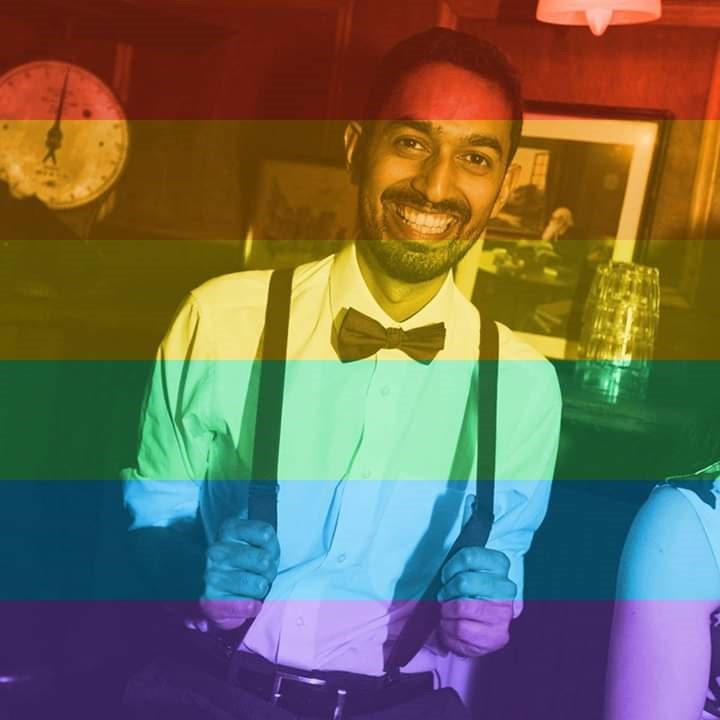






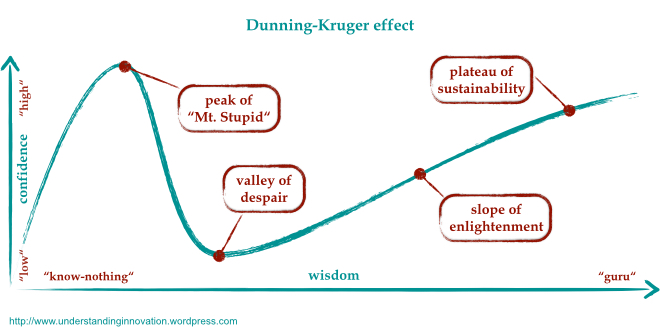
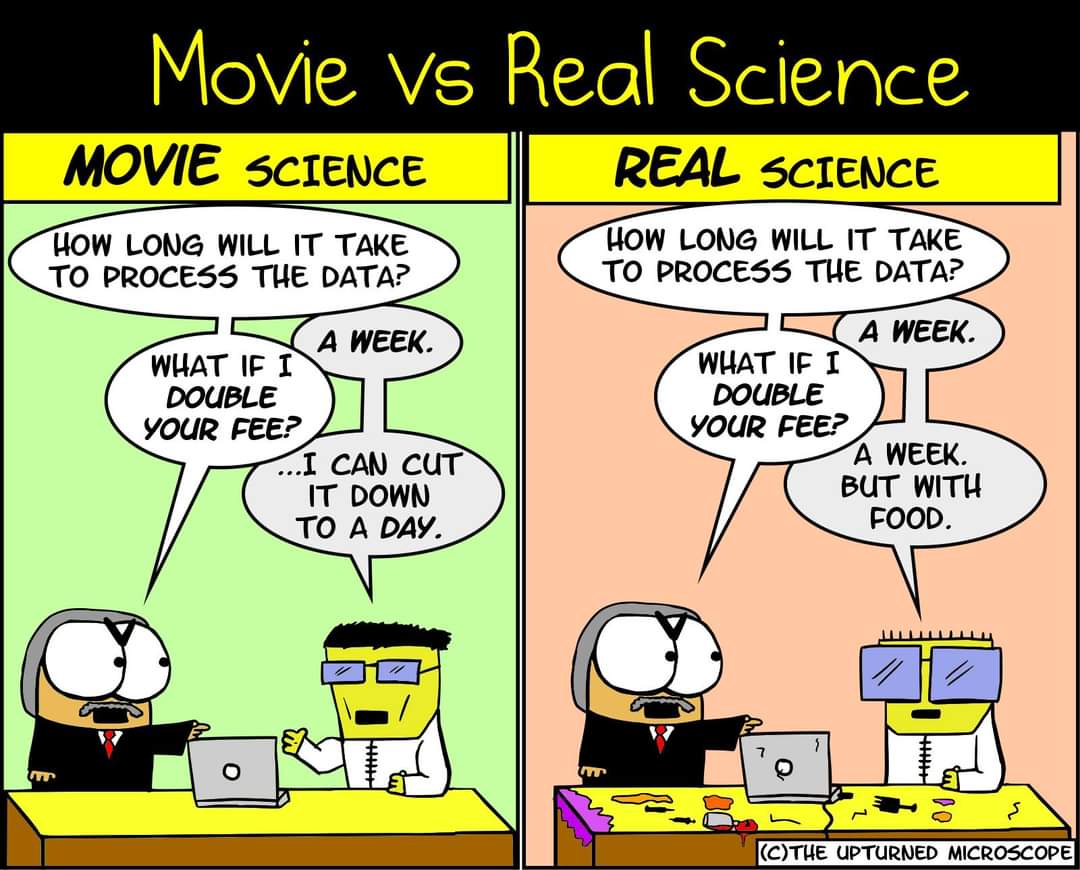

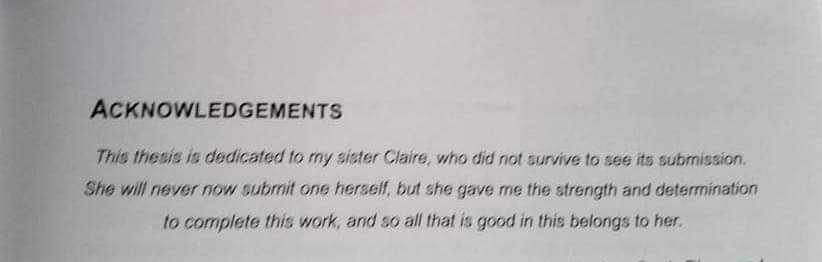
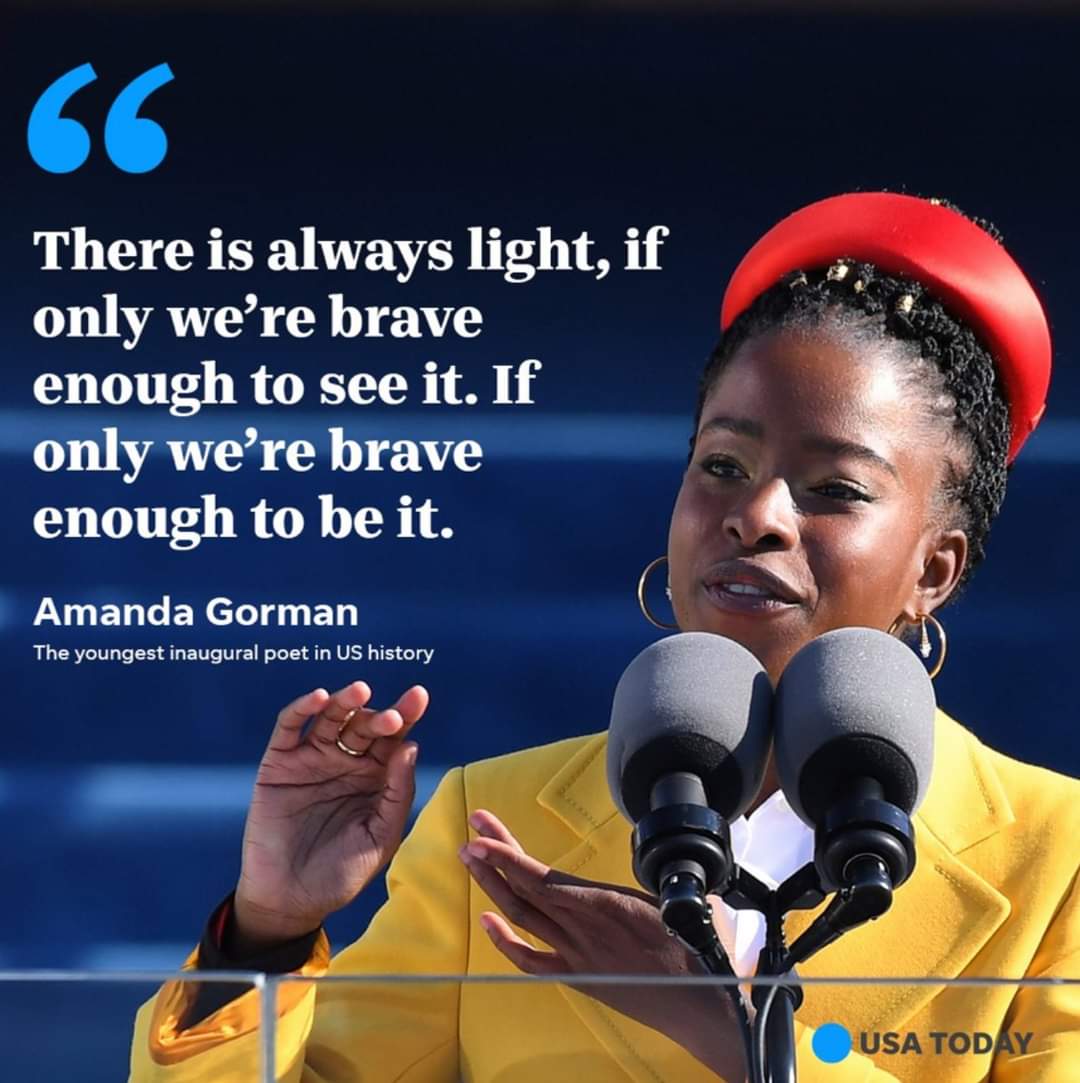
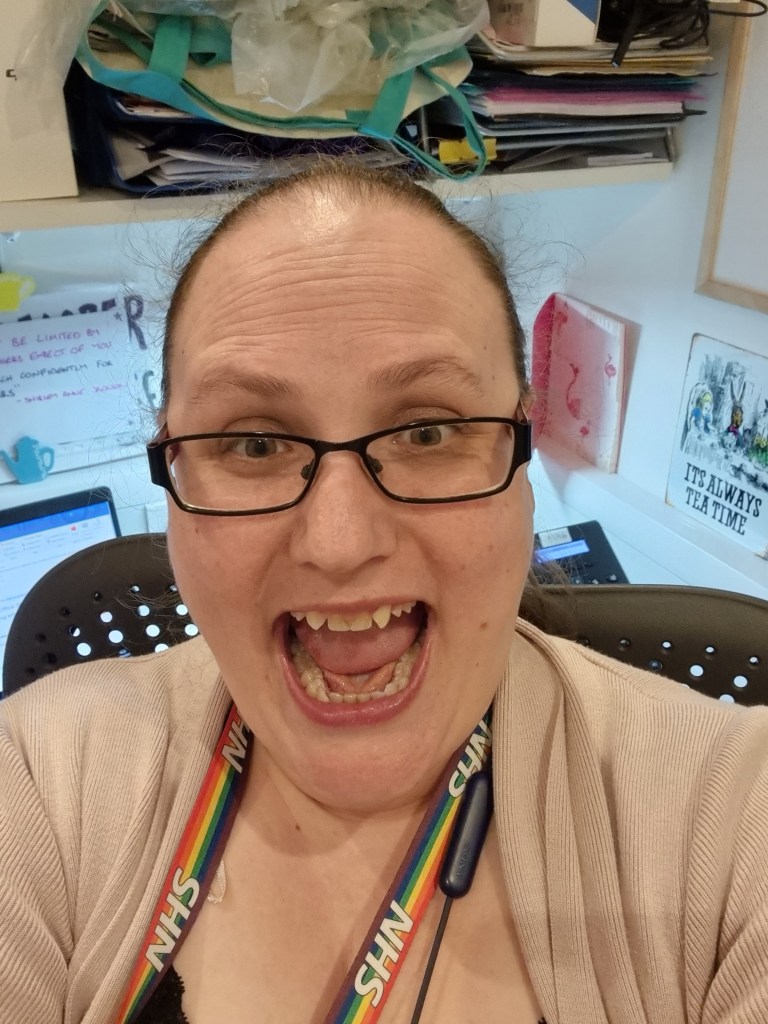


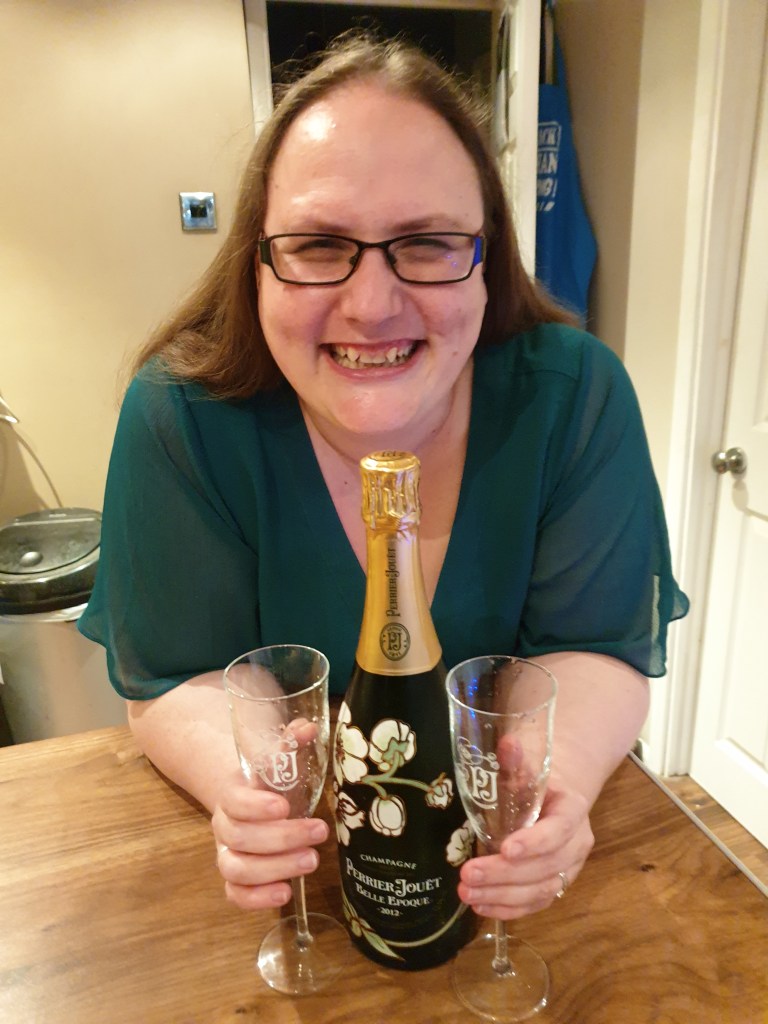
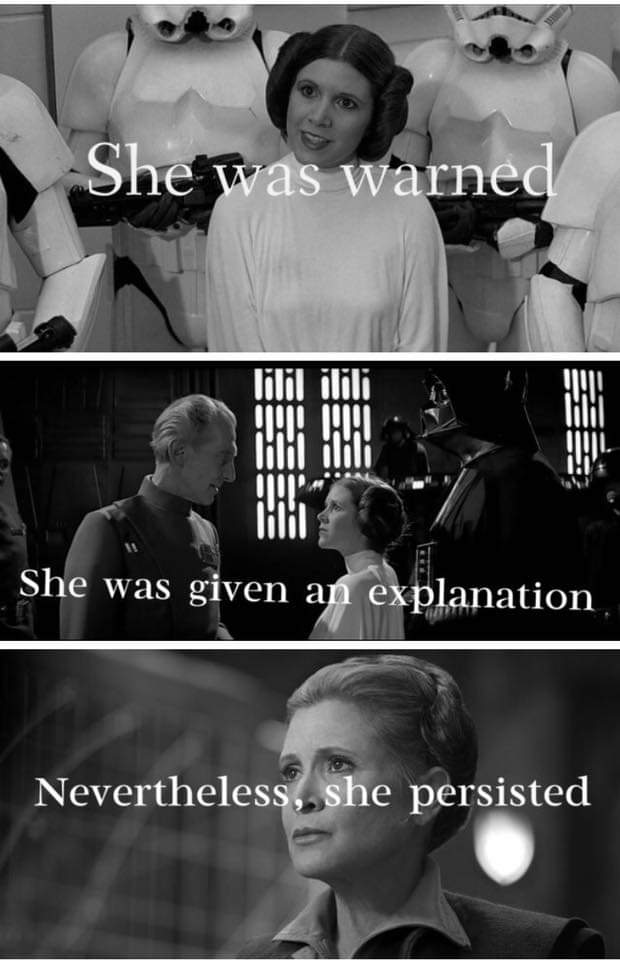
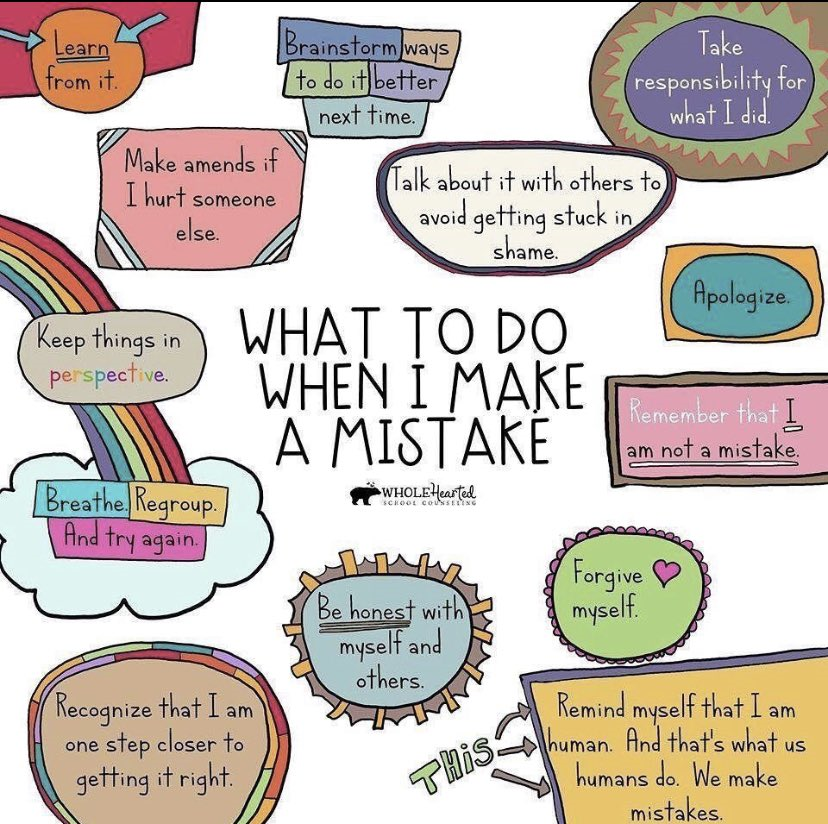

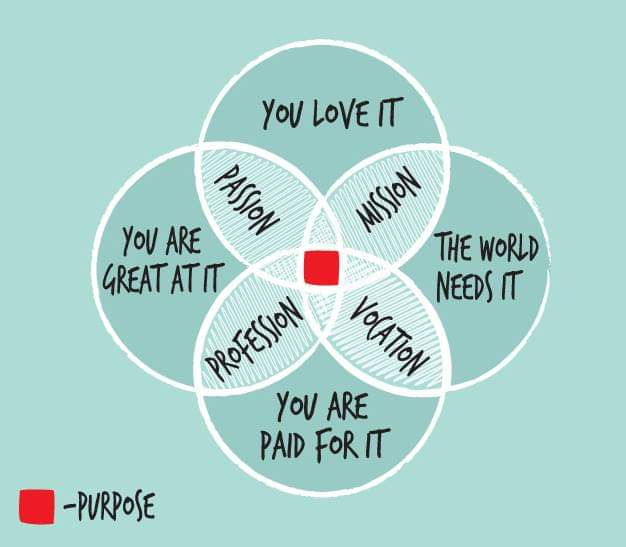
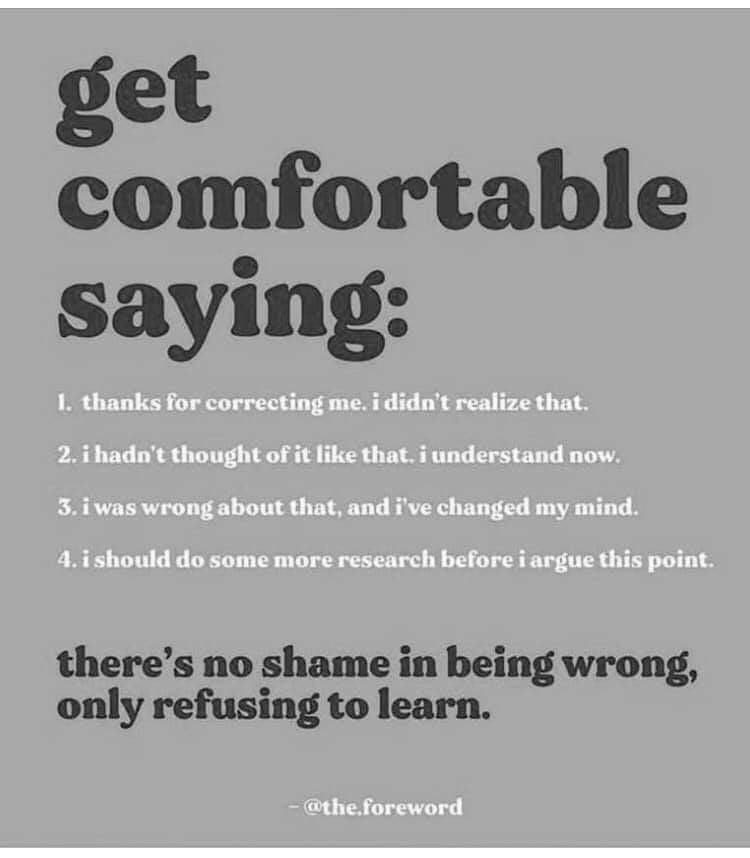

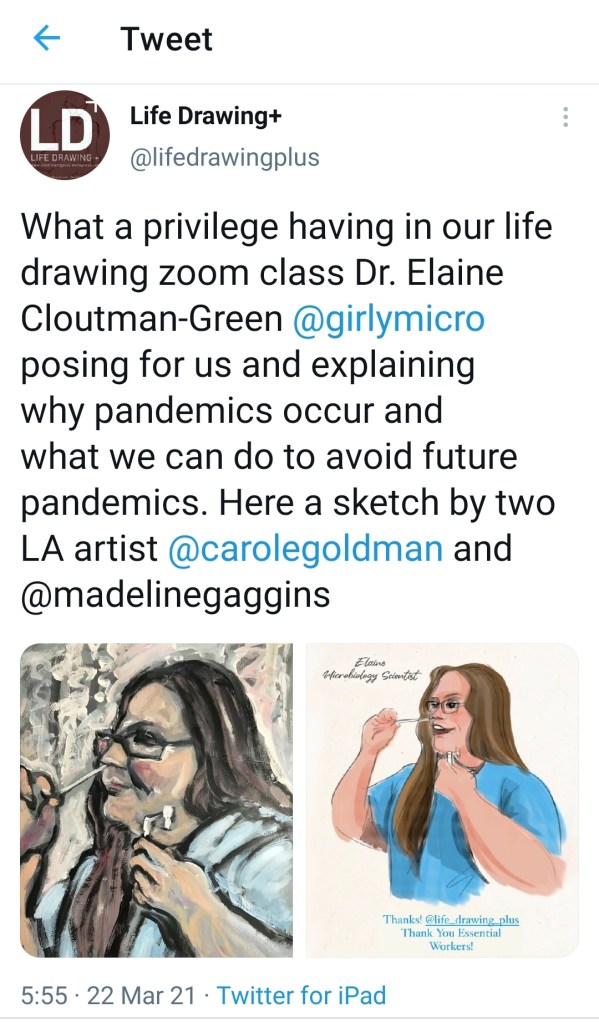


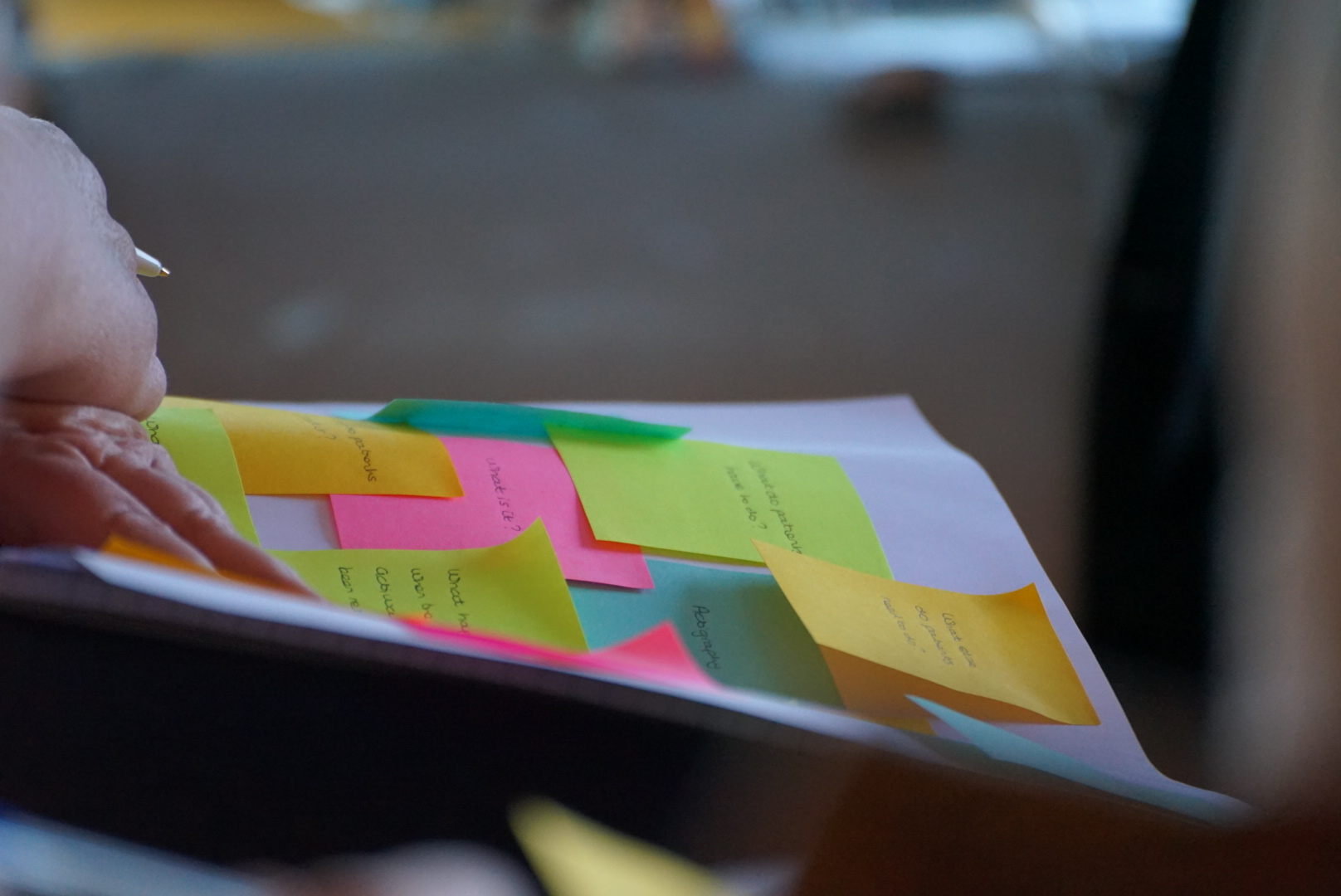




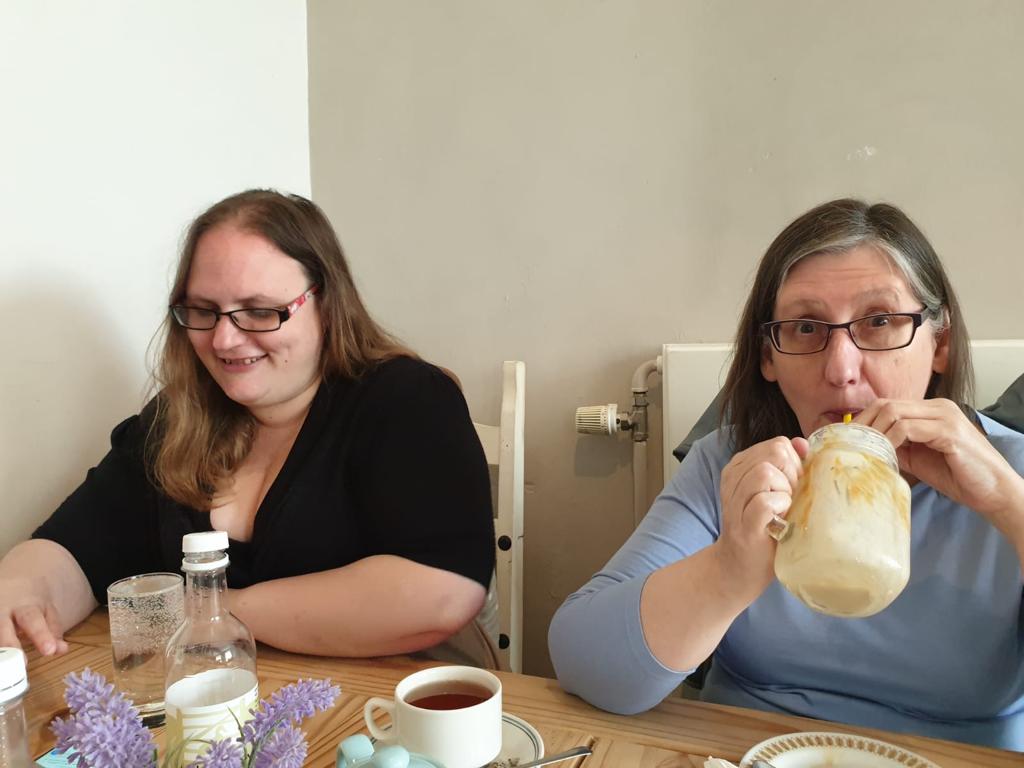


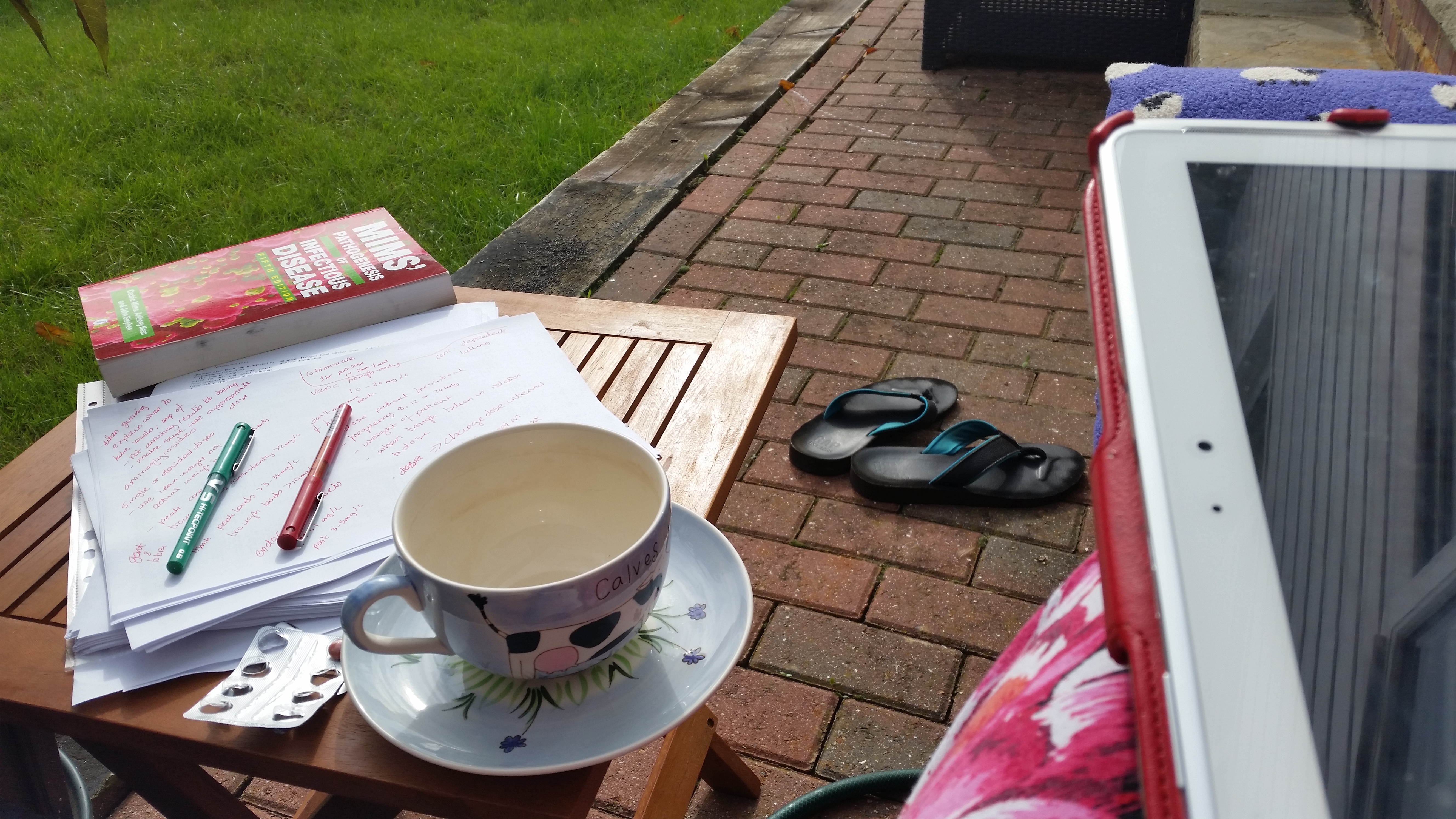
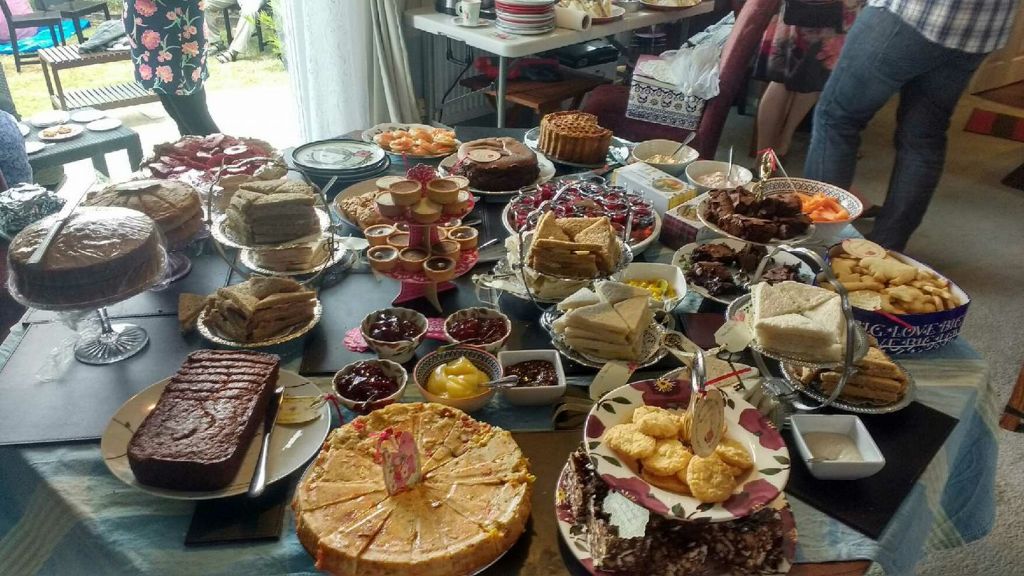
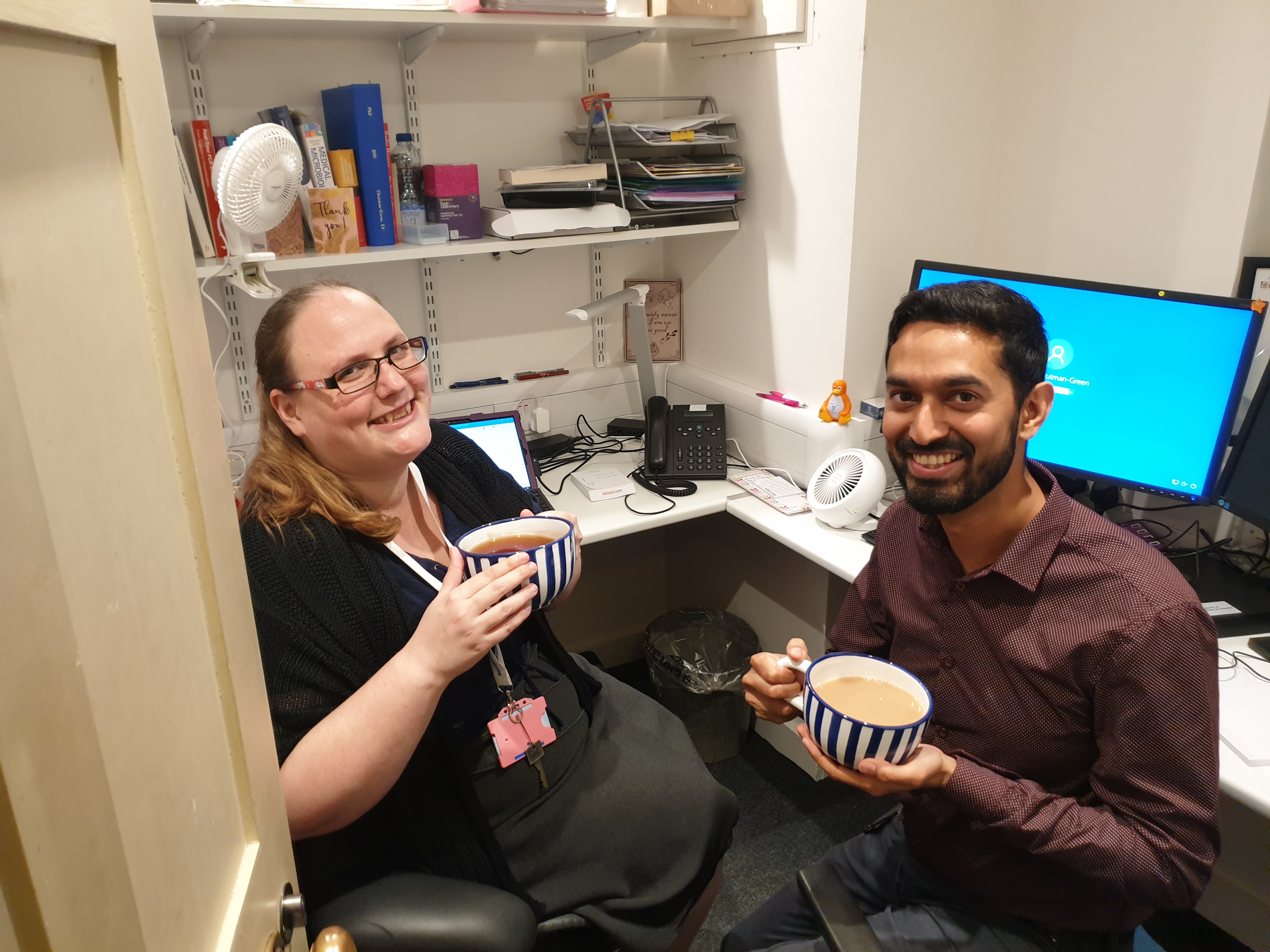


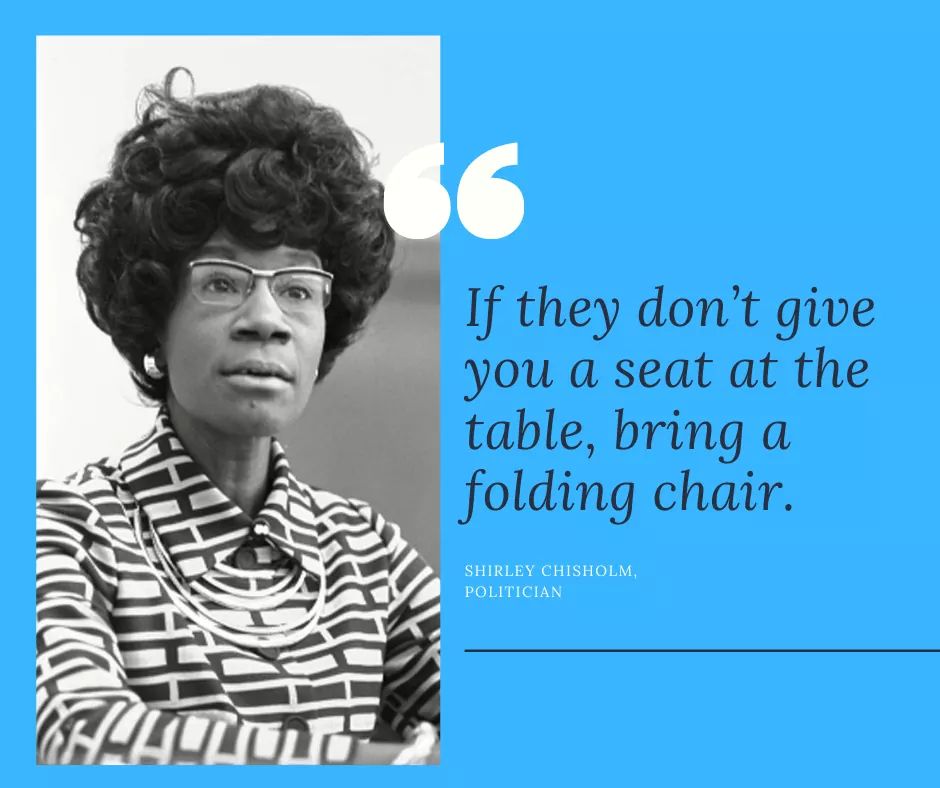
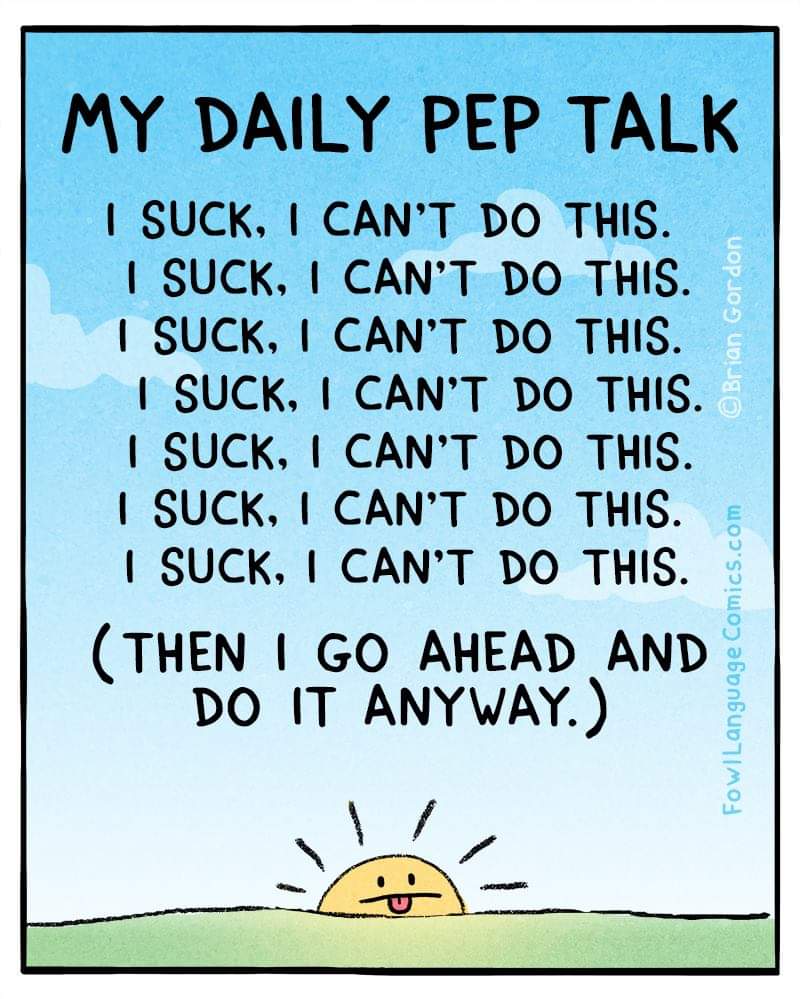

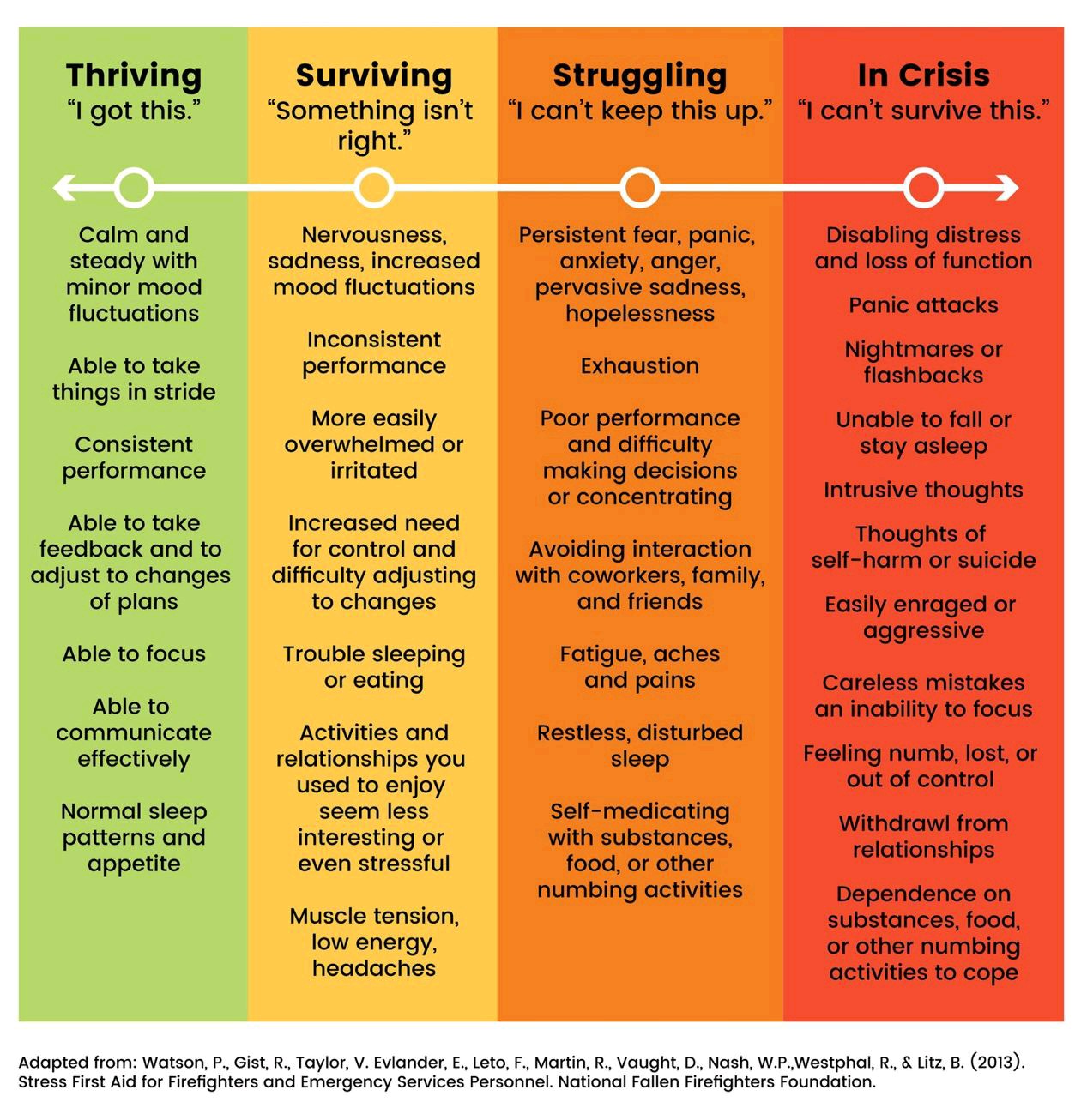


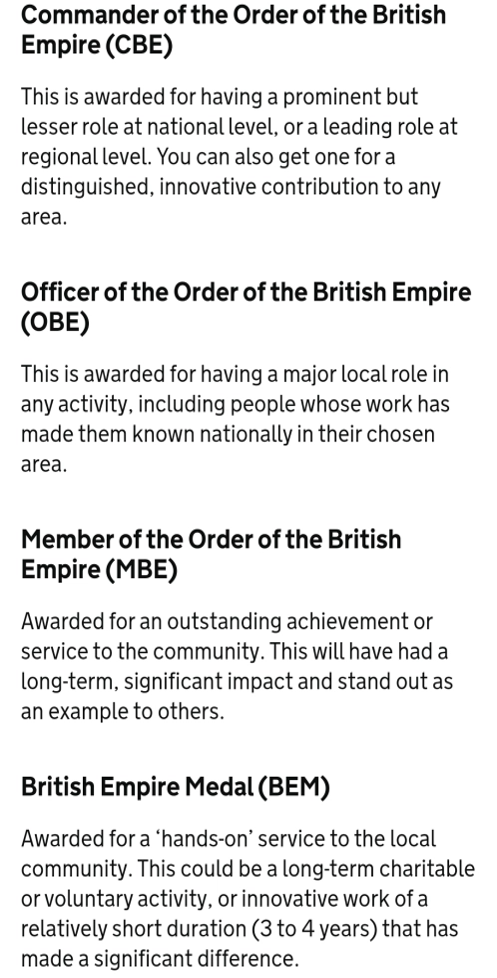




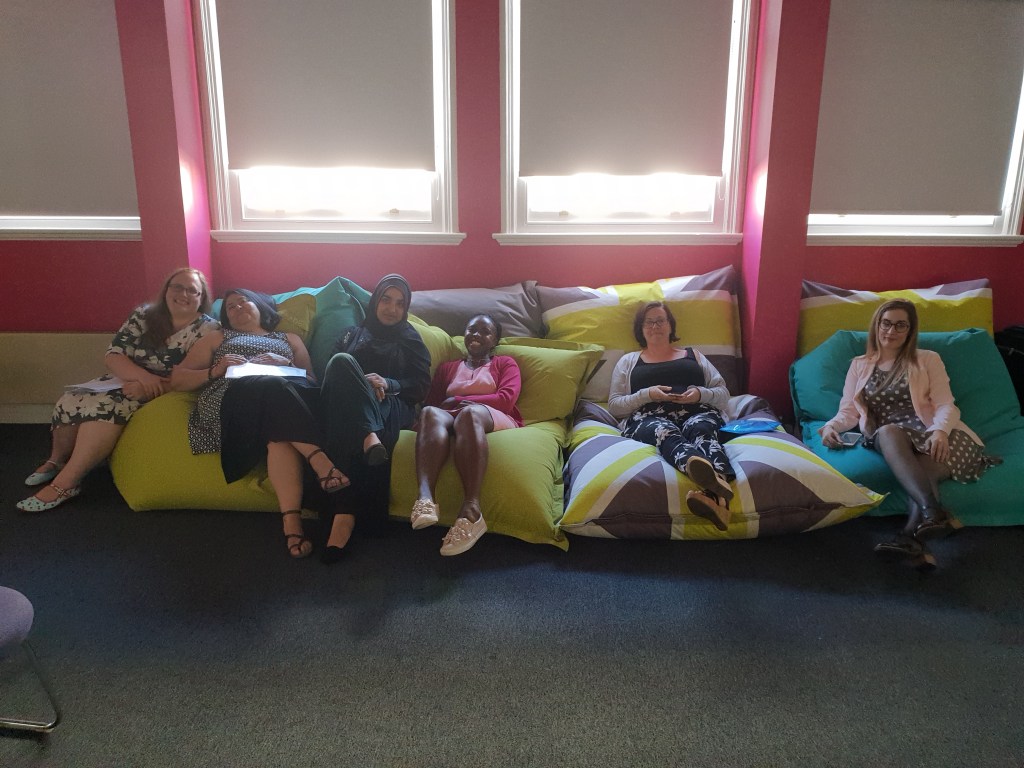


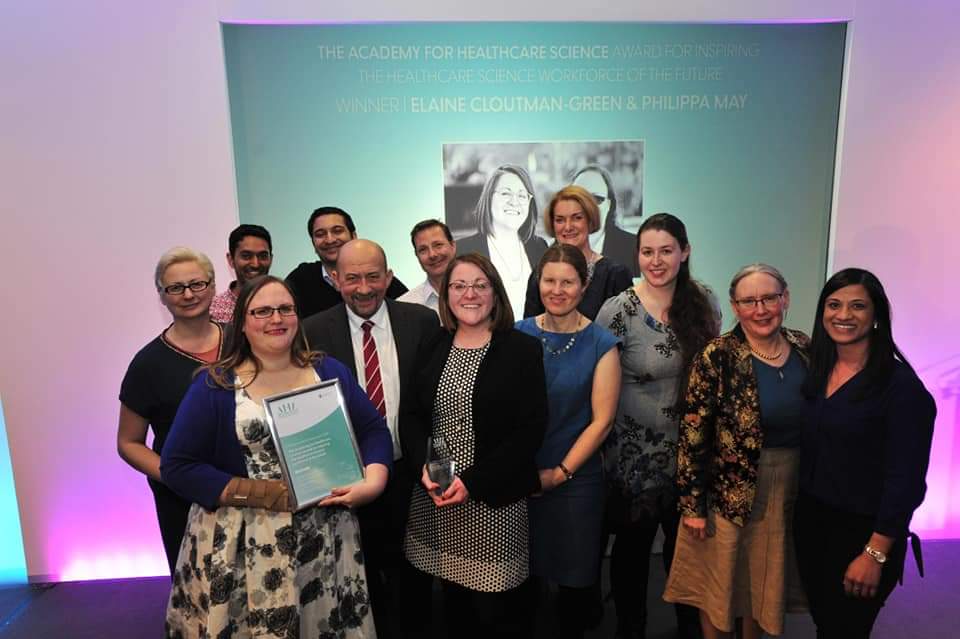


 Girlymicro