
Many of us are coming up against a lot of challenge when we are talking to patients and the public about science right now. Post pandemic, so many people just respond that they are ‘done’ and that everything is over now. The thing is, nothing is ‘done’, we are in another SARS CoV2 wave, measles is everywhere, and Bordetella pertussis (whooping cough) has already killed a number of previously healthy children this year. Sadly, infectious diseases don’t go away when we have had enough of them impacting our lives. So what can we do? How can we have these conversations differently?
I was at RIAT (Royal International Air Tattoo) last weekend for Mr Girlymicros’ birthday, and like the scientist I am, I couldn’t help but make some time to see what their STEM (science, technology, engineering and mathematics) offering was, and I was pleased to find it was so so much larger than I had expected.

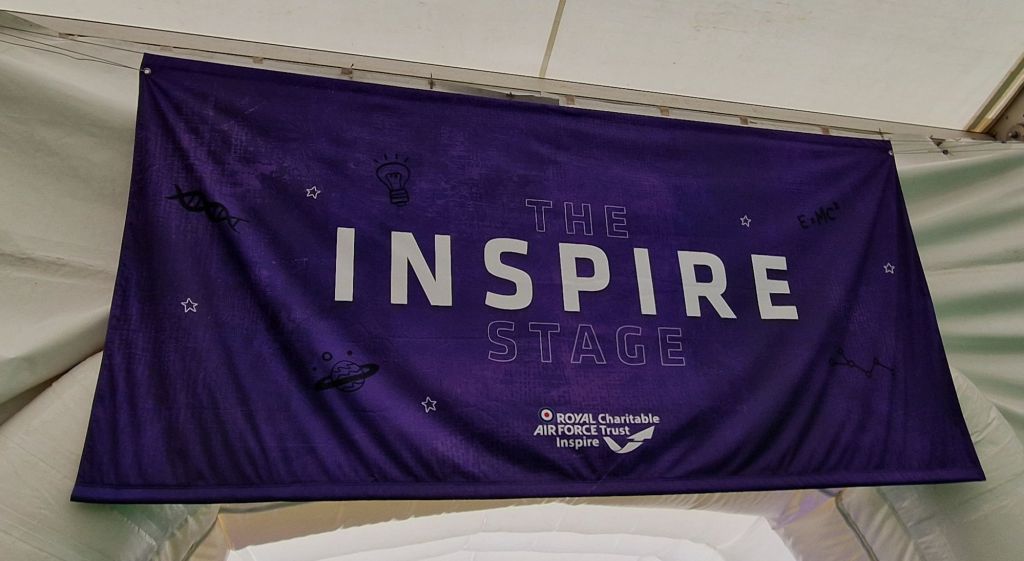
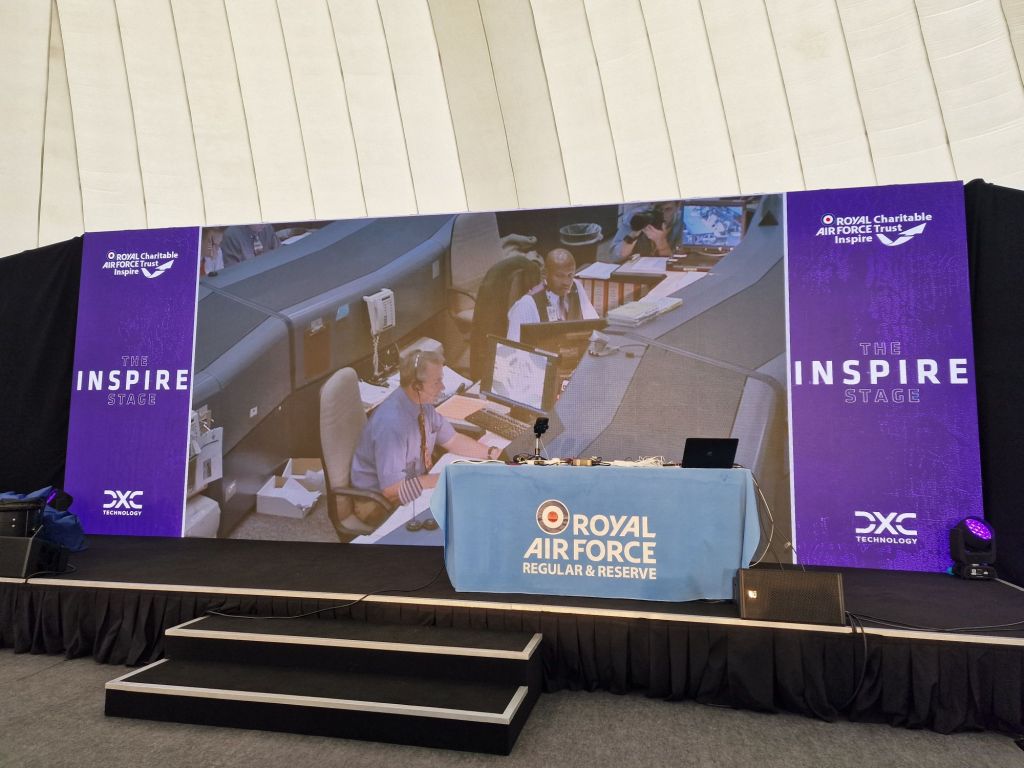
The first thing they had was an entire interactive STEM tent, called the Tech Zone, which also included an area called the Inspire Stage. This stage had full days of talks and interactive sessions covering a large range of ways to talk and engage audiences about STEM using an aviation focus.

https://www.airtattoo.com/the-airshow/plan-your-visit/show-info-hub/inspire-stage-saturday/
In addition to the talks and activities, they had something I’ve never had access to before, an entire area dedicated to science planes!!!!

Spending time attending activities, talks and walking around the planes has got me thinking, what things do you need to think about if you are running an event like this? Why do they offer advantages over standard school based teaching? What could we learn in order to think about how we talk about some of our big science challenges differently, and how could this be relevant to infection prevention and control (IPC) and microbiology?
Designing your day
During an event like this, you need to know that attendance will ebb and flow. It’s before 9 and I’m the only person here at this point, but it will get really busy as the day goes on. It is important therefore to be able to flex your expectations and approaches based on who ends up in the room in front of you. You may also need to bear in mind, when designing your session, that people may turn up late or leave early to see something else, and therefore your session needs to make sense to someone who hasn’t seen it from start to finish.
Because of this drop in and out set up, you are unlikely to get to keep people’s attention for long, so you need to plan short activities or sessions. What they may look like will depend if you have a stall with people who are walking by, where you may get them for 5 minutes, or a talk with seating where you might get 20 minutes. Making any session consist of small blocks of no more than 5 minutes, will probably stand you in good stead to be able to engage whomever is there in the moment. Either way what you are planning needs to be fun, well pitched and ideally interactive, so that the audience feel like they are part of what is going on. They have a lot of options about other places they could be after all.
You need to bring people in
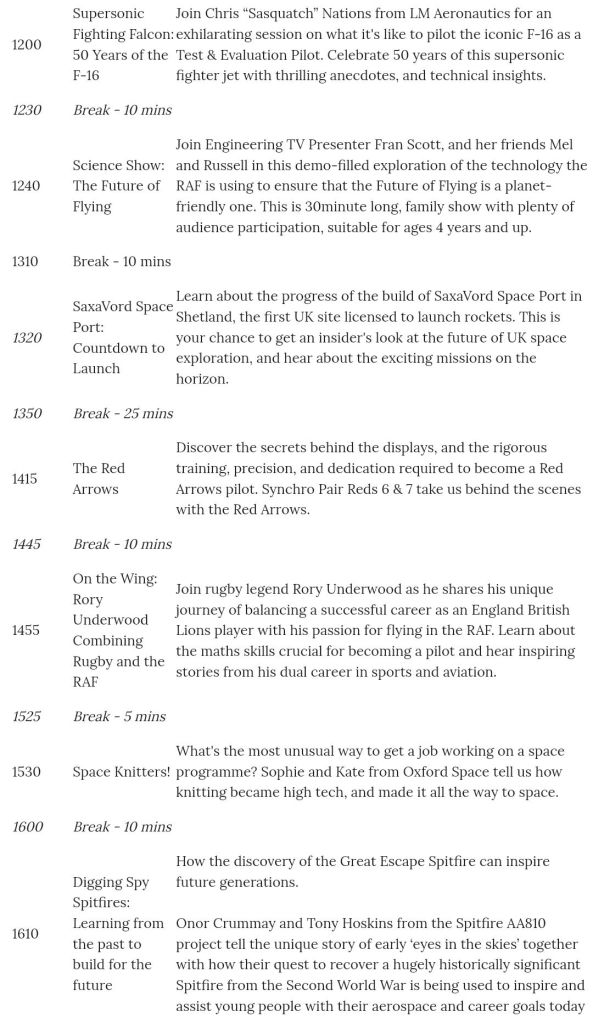
It’s important to acknowledge that different people are likely to want different things and ensure that you have a spread of different sessions that will appeal across different types of audiences. The Inspire stage had everything from the Red Arrows to knitting in space, and so serviced a wide audience. They also had a range of very interactive sessions, to ones that were more like interviews, and the interaction was therefore limited to asking questions. When choosing how to put together an agenda like this one, it’s worth thinking about what is going on elsewhere. The sessions with an England international rugby player and a pop star were scheduled when a lot of display teams were flying. Display teams are a big draw and so you may need an equally big draw to keep people in your tent when they could be elsewhere. You may also be less likely to schedule your interactive kids activities over a lunch time slot, as children are more likely to need to eat at a regular time and so are less likely to be available and may be less settled even if they are.

You need to know who you are trying to speak to
The other thing you need to decide when you are putting together your agenda is who you are actually trying to speak to? The age range, interests, and backgrounds at events like this are broad, and so you need to decide are you trying to appeal to everyone? In which case you will need different sessions that speak to different groups. You could decide instead to only target families, children, or students. All of these decisions are completely valid, but they need to be consciously made, as they impact on the content and level of embedded interaction which will be required.
I was speaking to Fran from Great Scott! Productions afterwards about the challenges of this, and she talked about how important it is to also allow the audience to always feel like they are slightly ahead of you. This enables them to feel comfortable and can give them the confidence to engage with interactions and ask questions. No one wants to sit through a session where they don’t feel like they know what is going on or be made to feel stupid for not following. Pitching your content correctly is super important.
Invisible or hard to understand concepts
Keeping your audience on board and following your train of thought is key. One of the great ways they did this over the weekend was by having segments that enabled the audience to visualise usually invisible concepts, such as energy use. One example of how they did this, was by using thermal detection from a plug socket using a camera to show energy in the form of heat. This is a great way to bring theory to life and an approach we can think about in terms of how it is applicable to infection. So many of our challenges are invisible and, therefore, hard to cognitively tackle. Making the invisible visible is a great starting point when talking about topics such as antimicrobial resistance or vaccination.

Demonstrate diversity and break down stereotypes
Many children are put off engaging in STEM topics because they don’t see reflections of themselves in the people they see talking about these subjects on TV or in the movies. Historically, there have been a lot of white men occupying this space. Events like this are a great chance to break down some of these stereotypes in order to show that anyone can undertake any of these careers. To allow people to feel seen.
My two minor niggles with the agenda for this event were that the main pull was occupied by interviews between white men. I get why. I get that you need your big ticket numbers to compete with the outside draw. I do think they could have sandwiched a session demonstrating diversity and inclusion between them. This would have meant this session may have had a bigger audience than might have been achieved otherwise, and therefore supported impact. My other comment was that, although gender diversity felt well represented, I’m not sure other diversity aspects were. That being said, I know how hard it is to get this balancing act right, and some of your speakers are always based on your networks, so it is not easy to achieve.

Engage parents as well as kids
Running events, like Reach Out for Healthcare Science, has made me aware that even when targeting events at children, it is so important to include parents in the conversation. Parental influence on career choices are really strong, and you can inspire someone, but if their parent doesn’t know what that career looks like, it can lead to nothing. Having interactive areas that include careers information to also get parents onboard can mean that you impact in a longer term way.
To a certain extent, at an air show, you probably have a lot of low hanging fruit to talk about careers in aviation, but they can also lead to wider conversations about engineering in general, or other sciences. It is a great place to have the ‘have you thought about’ conversation in order to expand horizons. It is a good idea that you have hand out material that can also be engaged with by the adults, as well as those aimed at students or different age groups attending.

Provide an idea of a day in the life


One of the great ways that RIAT helped with discussion linked to careers was in the science planes area. They not only had the planes to look at, but they had signage and stands where you could talk to scientists and pilots about what a career in this area actually entailed. They used a super cool draw to get people in and then offered them the level of detail they were happy to engage with.
I think this is so important as there are a lot of misconceptions about what a career in STEM actually looks like, and there are limited opportunities for many people to actually sit down and talk to someone who does it for a living. This informal setting means that people can ask any questions they want without having to put their hand up in front of a lot of other people or deal with a scrum to get to the front of an activities queue.


So, RIAT had a lot of cool ideas that we can use to think about designing our activities and agendas in order to talk to people about STEM, but what does it engagement on this scale offer that we can learn about in terms of thinking about the benefits with partnering our STEM offerings with large scale events?
Provides access to non-standard audiences
RIAT has a massive attendance with 80,000+ people on the day I was there, and over 200,000 over the weekend. There are very few face to face events with the possible level of reach that RIAT offers, although there are others like Glastonbury, where STEM can be and sometimes is embedded. The advantage of these events is not just numbers, it’s the fact that some of this audiences may not engage with other types of STEM engagement, such as visits to science museums or festivals. This means there is a massive opportunity to raise awareness and engage with audiences that may not normally feel like these events would be ‘for them’ or something they would seek out. It gives opportunities to drop by taster experiences without requiring any huge amount of commitment or pre-existing level of interest. Yet these small encounters can really alter individual trajectories and change lives.

Routes to talk about the big issues
One of the other things these kinds of events can enable is access to conversations about pretty big issues. Climate change was a big topic of discussion at RIAT because of the fact that it was linked to aviation. This led to lots of interesting talk about how bio fuels are a scientific and engineering solution to a number of aviation associated climate change issues. One thing that I found really interesting was the use of virtual flight and simulation training as an alternative to standard ‘in air’ flight training for the RAF. It was quoted that 50% of the flights taken by the RAF are training flights, and so the ability to use non-airborne alternatives provides great opportunities to reduce carbon emissions and impact climate change risk.

I think there is so much that could be taken away from the way these interactions were undertaken to think about how we could discuss big issues in IPC and microbiology, issues such as antimicrobial resistance. My main takeaways from those activities I attended included:
- embedding discussion of the big issues within wider activities
- make references present but not preachy
- ensure that message is about empowerment and change, rather than catastrophe and fear
- discuss how individual actions can be taken
- focus on how STEM can change things for the better
- spring board from subjects that you know the audience are already interested in
I would love us all to be inspired by these offerings and really start to think of other spaces we occupy in our non professional lives where we might be able to talk about bringing STEM in, either as part of collaborations or driven as individuals. So, if you have any ideas, or places where I could help, please please reach out and talk about how we can bring our whole selves to these spaces with the aim to inspire and help others to feel seen. To help the next generation access careers that we know are exciting, creative and impactful. To create an inclusive legacy and safe space where stereotypes don’t define who gets to access STEM professions. To leave the profession that much better than we found it.
In the mean time, whilst I cogitate on how to do all of this better, one the other great things about attending these events is that you also get to partake in the wider wonderful offering, and even when it rains, there’s are plenty of planes and tea to bring you joy. Here’s to more STEM activities on the big stages and sharing the joy of embracing science as part of your life!


All opinions in this blog are my own
 Girlymicro