I’m Still Learning After All These Years: My focus in 2025 is to continue my personal development journey

It’s that time of year. The time when New Years resolutions get shared and we all try to persuade ourselves that overnight, if we just put in a bit more effort, we can change big facets of our lives. I’m becoming increasingly aware that the big gesture and external stuff is not really the space I want to be in, however. I’m fortunate to have ticked a lot of the external boxes at this point in my career, and so, in 2025, I want to focus on me and my development as a person rather than ticking another box linked to how people see me.

One of the reasons for this shift is the nature of the job, as it feels, in a post pandemic world, like I spend a lot of time in responsive mode. This becomes a habit and a way of being. Instead of running to keep up and fire fighting, however, I want to have time to experience the joy I feel when I’m learning and developing.  This is especially important as I think many of us who went through the pandemic as healthcare workers are still very much in recovery mode, and there’s a lot to still be worked through and resolved with little time to actually do so. So, rather than create a list of tasks to be measured against, my list this year is about aspirations linked to becoming. Becoming a better version of me, becoming more joyful, and re-finding some of that pre-pandemic me.

I want to have time to catch my breath

As I sit here on a Sunday afternoon, I realise how much I need time to chill and unwind at the moment. 2024 was full on, and there wasn’t a lot of respite. It feels, therefore, that I’m hitting 2025 already pretty wound up and in need of prioritising some time off the treadmill. Even at work, having just managed to get down from just under 18,000 emails to ~200 over the Christmas break, I realise I need to stop being in responsive mode and guard my time more efficiently. I need to carve out planning time, and in a more basic way, time to make tea, have lunch, or god forbid – leave on time. I’m aware of how much better I will be at my job if I can catch my breath, see through the fog and take time to develop a plan or creative approach to the problem, rather than jumping in or going for the most obvious approach. All in all, a different strategy will have all-around benefits, so I need to work better at finding a new way to manage my time.

I want to live in a positive space

I have a tendency to swing from optimism to ostriching, and whilst most of the time I’m a ‘glass is half full’ kind of girl, it sometimes takes more energy than I have at present to live in that positive space. In 2025, however, I want to have enough energy to expend to make it happen. I want to listen to the noise, criticism, and the negative inner voices less. I want to focus less on what I lack and more on what I have. It’s easy to constantly focus on our areas of required improvements instead of celebrating how far we’ve come and where our strengths lie. There is always a space to focus on improvement, but it shouldn’t come at the cost of recognising the work we’ve already done. This year, I don’t want to benchmark myself and my progress. I want to live in a space where I accept and celebrate the place I am at. For once in my professional life, I want to be satisfied with the boxes I have already ticked and live in the moment.

I want to see my ride or dies

One of the reasons I am keen to find additional spare time and not take on more is that I want to carve out more time for me. Selfishly, this is nothing to do with work, but for me as a person outside of my professional life. The main driver for this is that I spent most of 2024 in work mode, and I didn’t spend enough of it in life mode. I’ve written about how fortunate I am with some of my friends, but in 2024, I just didn’t carve out the time to spend with them. They are super cool, and would never hold it against me, but for the sake of my soul I want to spend time with the people who see me, flaws and all, and love me any way. The people who are my ‘stick by you no matter what’ friends inspire me and drive me to do better, and I will be better for prioritising spending time with them.

I want to re-find my confidence

To be honest, I don’t know if it’s being peri-menopausal, post pandemic burn out, or just work over load in general, but my confidence has definitely taken a hit. Don’t get my wrong. I’m still the same bolshie girl, but the tendency to spiral after the moment is hitting me hard. The creeping self doubt is present in a much more apparent way than it was before the pandemic. Part of me thinks it’s because I’ve been living in ‘Professor Cloutman-Green’ mode for so long rather than having enough time in my own skin as Elaine/Dream. Whatever the reason, I want to find that confident girl again. The girl who had plenty of self doubt but didn’t let that doubt overwhelm her or take over who she was. She’s still in there, but I suspect a break and a significant amount of napping will be required to persuade her to put in a more consistent appearance.

I want to create and be inspired

Some of the things I want to make time for are pretty straight forward. I want to have time to cook when I get home and enjoy doing so with Mr Girlymicro. Cooking is something we love to do together, but time restrictions in recent years have made everything a functional task rather than an enjoyable endeavour. I want to spend the weekend drinking pots of the many different types of tea we have and languidly enjoying each others company, rather than having anxiety about the list of tasks I should be undertaking just to keep up distracting me from the moment.

A very specific thing I want to do with Mr and mummy Girlymicro in 2025 is to spend time visiting museums. Great museums, weird museums, museums that no one else visits. In 2023, we visited the Met in New York, and the joy and inspiration that filled my soul has stayed with me. In 2024, we managed a few stolen moments at the V&A, British Museum, and Natural History Museum, but I have to say I want more. London is filled with niche places to visit, and I want to wander with an open mind and just take in what speaks to me in the moment. This kind of activity is food for my soul, and I’m greedy for more. Also, if you have any recommendations, hit me up in the comments or DM/email me.

I want to invest in this blog

Being inspired helps me in many aspects of my life, but one of the biggest ones is the number of ideas I get for this blog when I’m just out and about experiencing life, and not just in scientific contexts. Focusing that inspiration into a creative endeavour like this blog then leads to even more fulfilment and joy. I know I’ve been talking for a couple of years now about developing a book out of this blog, and I’m not promising it will happen in 2025, but I want to take some serious steps in moving it forward if I can. At its most basic, I want to feel like I have time to enjoy sitting down and writing rather than squeezing in stolen moments on the tube when already exhausted.

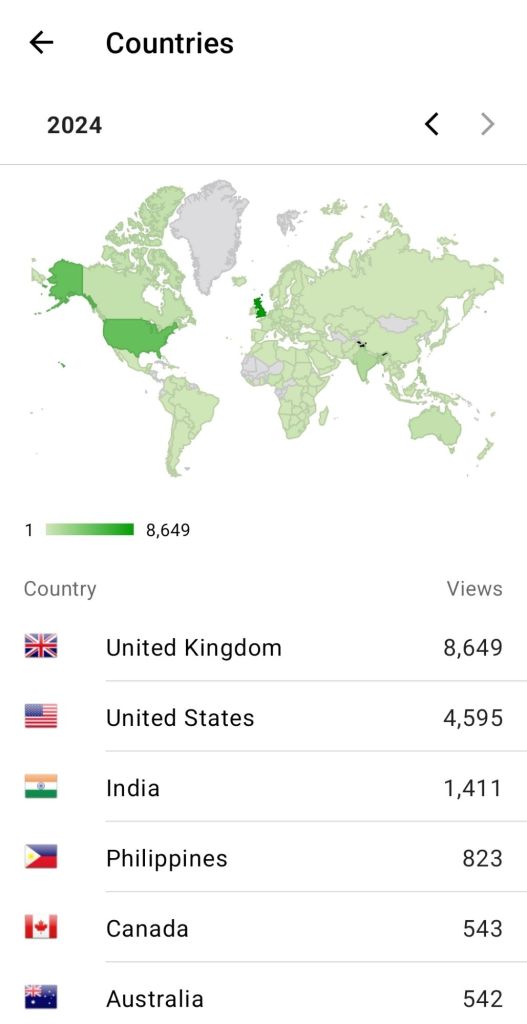
2024 delivered more reads than I could have dreamt possible, finishing the year with over 21,000 reads from over 120 countries. I can’t believe that something I thought would be seen by a handful of people is now read by so many. I want to build on that momentum. I know professional blog writers get those numbers in a month, but I’m returning here to my pledge to not bench marking against others and just to focus on measuring myself against myself to capture growth. So here is to improving year on year and to doing more of what brings us joy!

I just want more

I know it sounds greedy, but I’m not embarrassed to say it, I want more. I want to sleep, and drink tea. I want cocktails and time spent with friends. I want more cozy rainy afternoons under a blanket and getting back to reading real books, rather than only having the focus to listen to audio books. I want Sunday afternoon walks with Mr Girlymicro, talking about nothing and feeding the ducks. I want to laugh so much my chest hurts and smile so much my face aches. I want to make time for the parts of myself that aren’t linked to work and outputs and re-train my brain to not measure myself against the ‘busyness scale’. I am not the sum of what I produce and I must learn not to measure myself as such. I am so much more, and in 2025, I am OK for it to be the year of greedily wanting more and giving myself permission to need.

I need to catastrophise less

At times of high stress, and let’s be honest I feel like it’s been high stress since 2020, my brain manages that stress by running scenarios. In many ways, it is not a bad way of managing my existence. Good, bad, disaster outcomes, all run wild in my brain. The main challenge over the last few years is that that scenario running has tended more and more to the disaster scenarios taking up my bandwidth. This can make the world feel darker and more challenging than it probably is, especially if it is compared with a more objective mindset. In 2025, it’s time to put on my positive pants and try to utilise the tools I have in a more balanced way in order to not create stress and drama where no such situation exists.

I need to step off the carousel

Catastrophising means that, by it’s very nature, I’m not living in the positive space I’d like to habit. Worse than that though, it can lead to spiralling, leading to negative rabbit holes that aren’t even linked to the original trigger. I’ve posted before on what this can look like for me. This isn’t good in the moment, but it also tends to result in a lack of sleep, as this is a frequent 3am affair, and thus impact on my general well-being. Everything becomes a self-fulfilling prophecy, as the tireder I get, the less perspective I have, the more likely I am to spiral, and therefore, get less sleep. In 2025, I want to step off both the carousel that leaves me so tired that the spirals happen in the first place, and also to step off the spirals earlier when they hit. For me, it’s focusing on using what serves me rather than being a passenger in the moment.

I need to take better physical care of myself

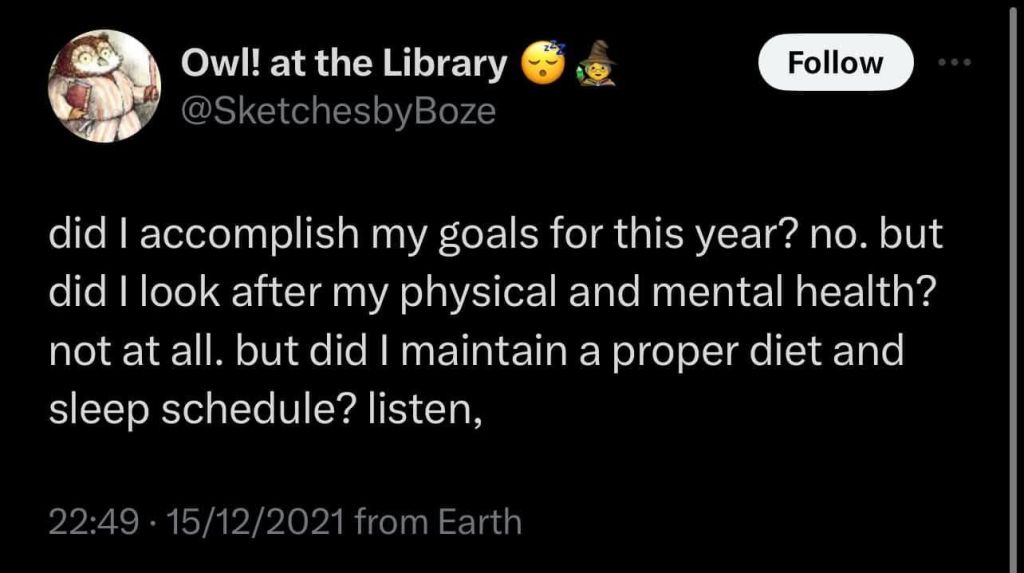
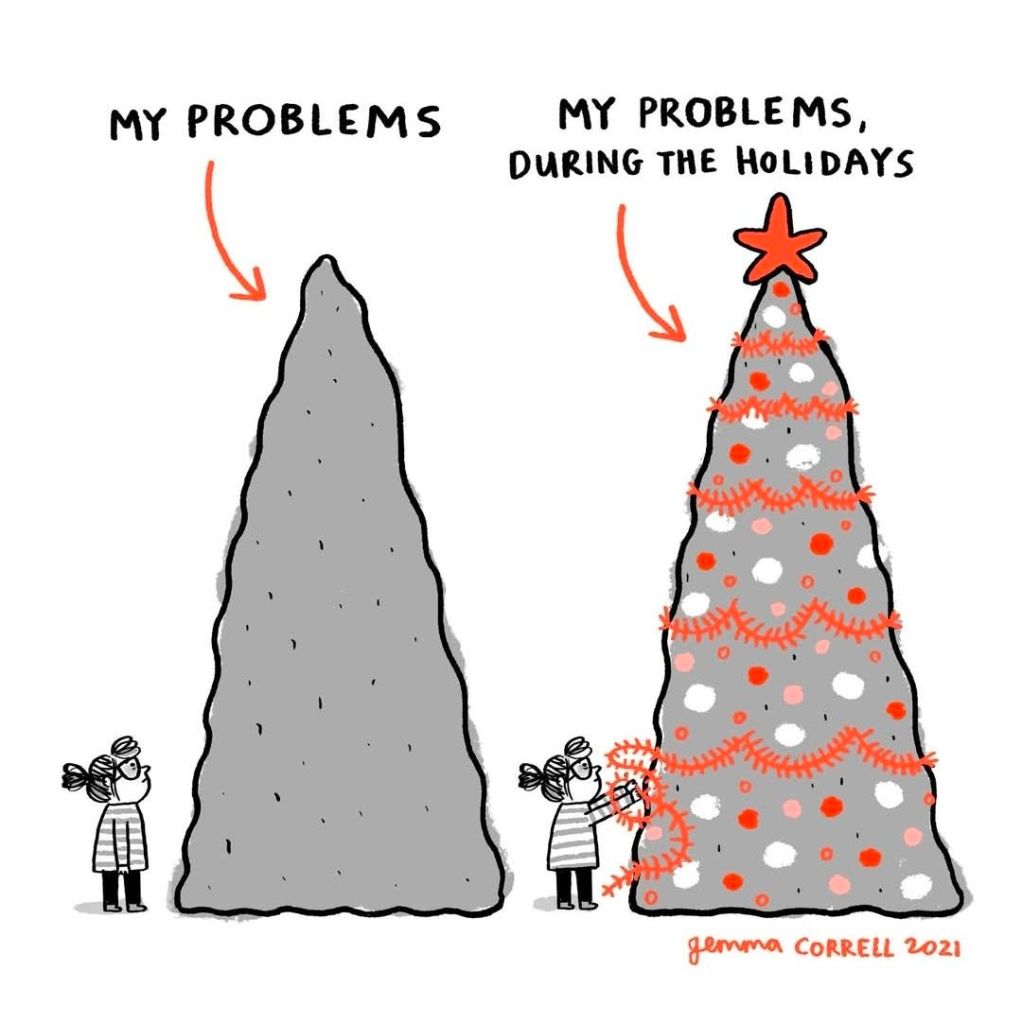
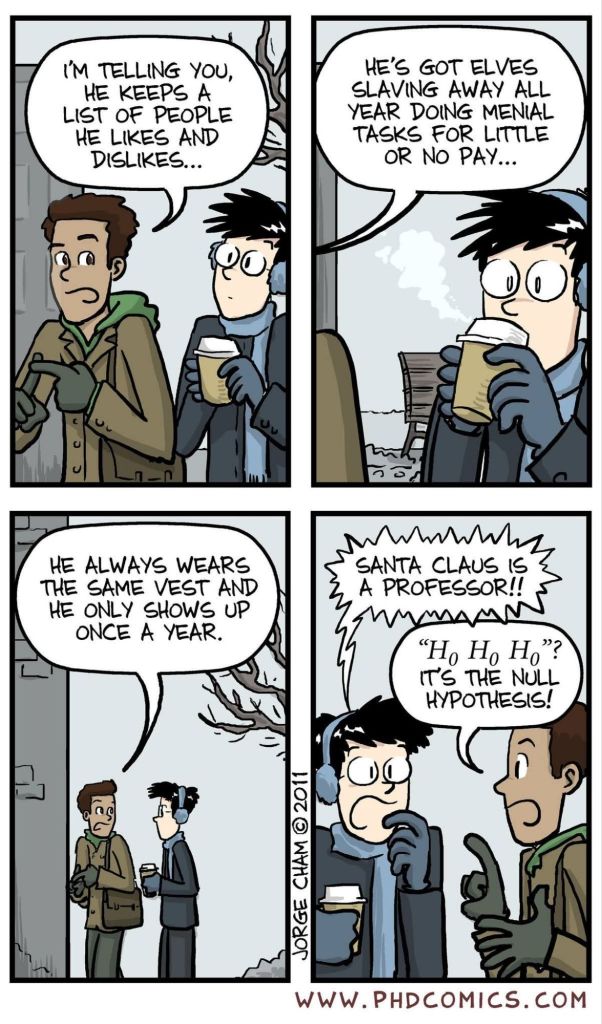
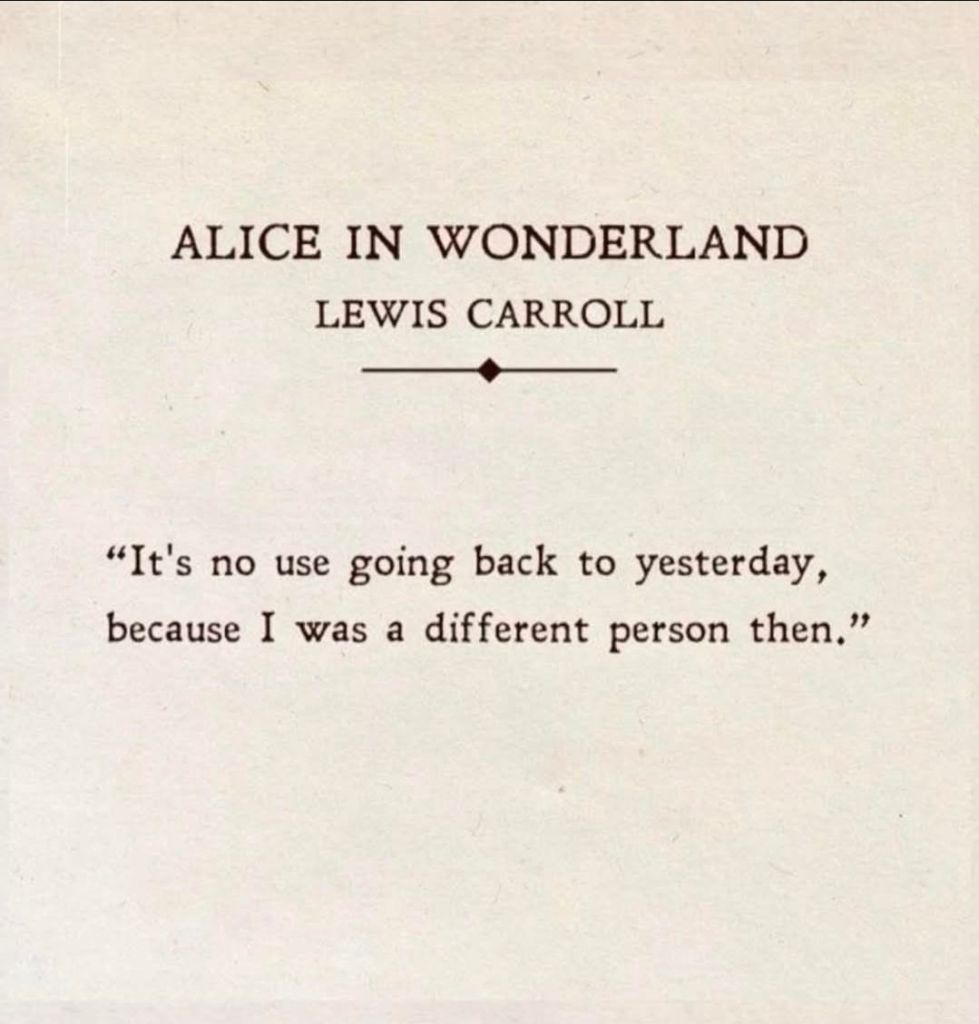
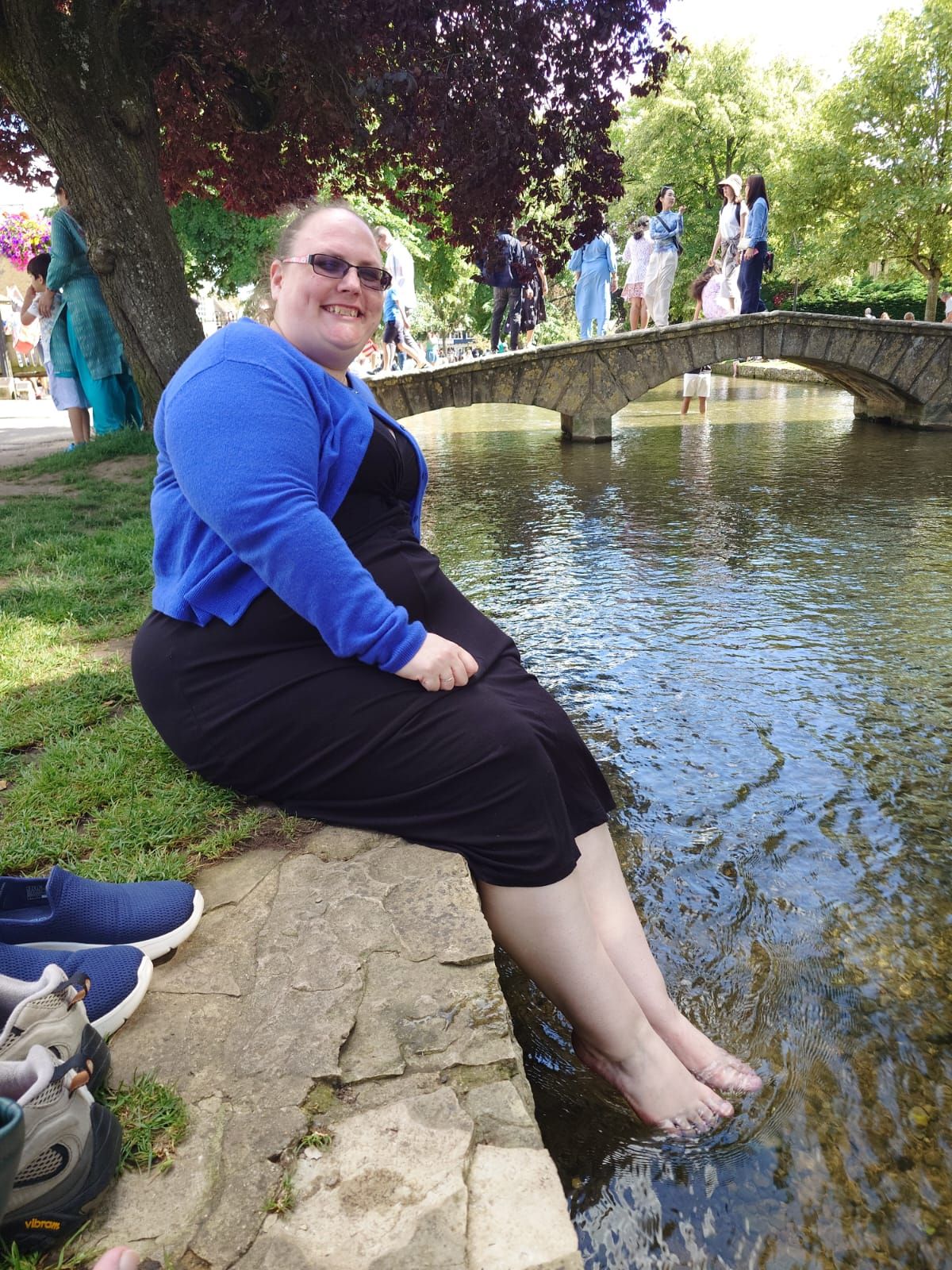
All of this brings me onto the fact that I just need to take better care of myself physically, as well as mentally. So much of my underlying health has suffered since the pandemic, and I have not allowed myself the recovery time that is required to really fix that. In 2025, I need more of option three in the pic below and way less of 4. I need to be more than intellectually active. I also need to find time to eat and drink in my work day. I often fail to help myself by forgetting or getting too busy to do the simple things, like taking meds. The reality is, I don’t have anyone to blame but myself, and I need to look after myself in the way that I would expect of others. It’s a simple thing, and I need to stop making life so complicated that it doesn’t happen.

I need to not make New Years Resolutions

Finally, and this is a big one for me. None of these things are New Years Resolutions. At best, I am saying that these are aspirations. I refuse to make a list that just adds yet more pressure to my every day life. I am a work in progress, and it is more than naive of me to think that I will wake up in a New Year and change who I am. I feel my habits make me more like the Titanic than a super yacht, and so any change in direction to avoid the icebergs takes time. 2025 is about self-love based on acceptance post self reflection and understanding that changing the dial is a choice that will need to be made daily. Starting the year by ignoring the noise of everyone elses’ proclamations and purely staying in my lane, whilst focused on what serves me, I think is a great way to kick off the year. I know some people find the resolution bit helpful, but I, for one, feel like celebrating the freedom I give myself by deciding not to comply with this particular tradition. Which ever way you decide works for you, I hope that 2025 brings you all of the joy and that you get what you need out of the next 12 months, and find the time to celebrate all that makes you you!

All opinions in this blog are my own

A Thank You to All the Cheerleaders: At the end of a tough 2024 my gratitude for all the support

2024 was always going to be tough. Wonderful colleagues were facing challenges on all fronts. Close family members were going through significant change. Things that were going to impact not just my ability to balance life and work but also how that life was lived were very obviously coming down the line. I don’t know about you, but as a planner, I sometimes find the anticipation of the bad ‘stuff’ almost worse than its arrival, and 2024 kicked off with plenty of anticipation.

Now the end of 2024 is so close I can almost taste it, and much of the ‘stuff’ has both come and gone, I find myself still standing and grateful for all of you that have supported in enabling this to be the reality.

As a result of this year, I have spent a lot of time thinking about what keeps me going, what I need, and what I’m grateful for. None of the answers to these questions were linked to productivity or achievement. The answers, as it turned out, were all linked to people and relationships. These people, connections, and relationships were the answer to all my questions and remain the foundation of my everything. So, for my last post in 2024, I wanted to put something in writing that says thank you and talks about all the reasons why you are my team and my cheerleaders. You guys are the best!

I don’t need to see you to know that you are there

When times are hard, or adversity strikes, it is easy to end up feeling isolated and alone. It can be tempting to disconnect and enter protective mode, where you share less of who you are in order to limit your exposure. One of the things this year has shown me is how fortunate I am to never really feel that way. I know that whatever the world throws at me I am not alone. I am so lucky to have Mr and Mummy Girlymicro in my life, but it’s not just them. I posted this time last year about the amazing close friendships I have with some of my girls. These people, who I may not have even managed to see in person this year, are still there supporting me, even if I haven’t had a lot of time to connect. I still know that they are there and are backing me. I know if I reached out and I needed them, they would be there in a heartbeat. I’m aware of the privilege of this, and I am thankful for it every day.

We don’t need to always agree

One of the greatest signs of trust in any relationship is feeling safe enough to disagree, whether it be in work, romantic, family or friend based relationships. In travelling uncharted territory, there is no rule book and often no guide for how to make decisions or choices. This uncertainty can therefore inevitably lead to differences of opinion about what is the right approach in any given moment. Being able to disagree and yet still feel supported whilst working through the disagreement, in an attempt to reach consensus or just accept difference, is a real blessing. Even more so if it can happen without triggering preexisting insecurities or feeling exposed to judgement. I am trying to make conscious decisions to value moments where I learn more about myself and others by going through these disagreements, whilst also knowing how fortunate I am to have people in my life who are a safe space for these moments to occur with.

You forgive me for making mistakes

The process of learning and growing is not an easy one, and sometimes we have to face difficulty truths about ourselves and our flaws. I am flawed. I make mistakes, like ALL the time. I’d like to think that I grow each time and try not to make the same mistake twice, but even that is not 100%. One of the benefits of learning from disagreements is that it helps to garner enough understanding from any negative outcome that results to help make better choices in the future. I am grateful to my wonderful colleagues, friends, family and readers of this blog, for not only forgiving me for making those mistakes but also supporting me in sharing my journey in learning from them, not only face to face but also in this blog. My hope is always, that by being open, I support others in making more informed choices as we are all learning together.

You lift me when I am low

This year has had some significant lows. It has has included the deaths of some significant figures in my life, such as Professor Nigel Klein, who had been a key part of my working life for almost 20 years. He was the person who supported me in my first steps in academia, who supported and supervised me during my PhD, and has continued to be a key figure in my clinical academic career ever since. Significant health challenges have been present for colleagues and family and this has hit me hard at times, even if I am not the person unwell. I’ve been feeling pretty mortal, and also powerless to help in any meaningful way. So many of you have been so kind and lifted my spirits, from sending memes or commenting on the blog, to unexpected treats from friends and family that have made me feel seen and loved. Having a safety net of people who are prepared to pick up the slack when I’ve struggled or to remind me that everything will be OK has been an invaluable asset in 2024.

You drive me to be the best version of myself

When the world is overwhelming, when everything feels too much, it can be so tempting to want to throw in the towel and just ride the wave. Having to try (and sometimes fail) to get this blog out every week and to continue to show up has been crucial to just keeping me going whatever my mood. There have been weeks when this blog hasn’t happened. There have been days when I haven’t delivered in the way that I would wish. I have certainly been too tired to step up and see people or do things on the weekends or in my free time. Knowing that there is an expectation of levels of engagement, be it from my PhD students, colleagues, readers of this blog, or family, has kept me going and kept me present. You support me in trying to be the best version of myself and to keep showing up in the best way I can in the moment. You support me in not just accepting but seeking out things that challenge me and keep me on my learning pathway. Hopefully, I then get to feed that back via this blog, and therefore the loop continues.

I know you would always straighten my crown without telling me it was crooked

We’ve all been there, we’ve sent an email or written a slide, and it’s not quite right. There are people who reply to you and give you a heads up so you can issue a no drama correction, and there are people who reply all or stand up at the end of the talk to point out your error. I count myself so fortunate to have so many people who sit in the former rather than the latter bracket in my life. This is a pretty basic example, but I’m hoping you see what I’m trying to say. I have so many people in my corner who will steer me back on course when I’m beginning to drift, or who will gently escort me from a conversation that I’m not in the right head space to have. People who know when I need saving from myself, from reminding me that having that dairy filled cake is not wise, to pointing out that I can’t physically manage to book myself into speaking at three conferences in different cities in a week. I know my well-being is at the centre of their actions, and having that safety net is of incalculable value to me.

We are in this journey together

When I made my first blog post in 2015 I didn’t even know what this blog was going to be. When I started posting regularly in 2020, I knew my why but I didn’t really know my how. Now, looking back on the last 200+ posts I feel like I’m more comfortable with some of the how. My next challenge is the where. I feel very much like I want to continue to grow and that this blog is a medium through which I can do that. I’ve learnt so much from the journey so far, but I am certain there is so much further I want to go. This year the blog broke 20,000 reads for the first time, and that makes me feel like we are in this journey together, wherever it might lead. I love seeing the interactions when I post. I love hearing your thoughts and feedback. I love feeling like this is something we are doing together and that I learn from you as much as you, hopefully, learn from my experiences. I don’t know where this road ends, but I know that I am determined to keep following it.

You understand that performance is not consistent

This post has been really hard to write for some reason. It’s taken me hours of staring at the screen, and I don’t know how well it will be received. Some posts spring to life, almost fully formed, and take no time at all to write. Some just make themselves harder work. I am pretty sure, therefore, that not all of them knock it out of the park. There are certainly ones that speak to some people more than others. Having spent some time thinking about it, I’ve decided that this is OK. As long as my intention is to communicate something, and I never post for the sake of posting, then how it lands is out of my control. The main thing is that I always try to do my best.

The same is true with posting frequency. I will always try to post weekly, but this year has shown me that sometimes I just can’t manage that. I used to obsess and spiral about it, and now I’ve decided that if I am not in the head space to write something worthwhile, I am better waiting until that resolves. I’ve been so grateful with the patience shown to me on this front in 2024 and that you have stuck with both me and this blog through all the random trains of thought and erratic posting frequencies.

You don’t judge me when I bear my soul

I try to always be honest in this blog. I try to share both the good and the bad, in a balanced but honest way. The concept of authentic leadership is important to me, and to fulfill it I think I need to show all sides of myself. I can only do this because I feel that I have built up a trust and feeling of safety in writing this blog over the years.

I remember when I first started to post things that were more personal, I used to brace myself for the comeback. I almost expected my confessions of inadequacy or failures to be weaponised against me. In all the 200+ posts that have been written, I’ve only had a single comment that could be considered to be less than supportive of my sharing, and even this was written (I believe) from a place that the author thought it would be helpful. As a result of this building of trust, I write from a space where I am comfortable sharing my lived experience without revision or overlay. I genuinely believe that this means that the sharing has much more value because of it. So, thank you for supporting me in getting to this place of confidence and comfort and always encouraging me to bring my full self to our interactions.

I hear you when you tell me this is valued

In my darker moments this year, when I was questioning a lot of the things that required focus or time, I reflected on whether writing this blog was something that was valued by anyone but me. Whether it was a good use of several hours of my time every week, when I didn’t have time for a bubble bath or other self care. Then every time I went to a conference I would have lovely conversations with people about the blog, and all of them were so positive, and inspired me so much.

Over the last year, I’ve even had people spontaneously mention it in meetings or 1:1 interactions. It’s hard to communicate how much this means. When I sit on my sofa and need to choose between pulling out the laptop to write or watching some trashy TV to unwind, it is these interactions that keep me reaching for my laptop. When I’m on the tube and I need to choose between closing my eyes and escaping into an audio book or doing some blog writing on my phone. It is the memory of these moments that keep me plugging away. Knowing that others value reading this blog, hearing stories in response to putting my experiences out there, make every minute spent worthwhile. So thank you, thank you for giving this blog meaning, thank you for showing the time invested has value, and thank you for taking time out of your lives to join me in this endeavour that means so much to me.

All opinions in this blog are my own

Understanding the Scope of Our Influence: Why we have to stop trying to ‘fix’ everything

I was having a retro moment recently, and I happened to hear The Mending Song from Bagpuss. It landed with me in a way that it hadn’t before. Many of us are ‘fixers’, that’s probably the reason we ended up working in healthcare. We are focussed on trying to make everything better, be that people, organisations, cultures or situations. There is no challenge that many of our ‘fix it’ nature’s won’t try to tackle.

This seemed especially poignant, as I posted last month about approaches when work life becomes challenging. A key aspect that struck me when I was writing that post was about really understanding what sits within our scope to impact and what doesn’t. There’s a really clear reason why it is important to understand this. If the thing you are trying to impact or ‘fix’ is outside your scope of impact or control, no matter how much you want it to be otherwise, you are setting yourself up for failure if your success criteria include change. You are setting yourself up for disappointment, stress, and frustration before you even start. This doesn’t mean that you can’t work to change your scope of influence or set a different set of success criteria, but that is really a different thing. If just just dive right in there, without first addressing this fundamental barrier, all you will impact is your blood pressure.

We will find it, we will bind it We will stick it with glue, glue, glue We will stickle it, every little bit of it We will fix it like new, new, new.

So, how do we understand what is in and out of our scope to impact or control. Well, there are layers to this, and it does truly depend on whether you are trying to influence or whether you are going as far as trying to control.

In terms of true control, the only person is we can exert that on is ourselves. Trying to control anything else sets us up for failure. So why did we try?

Impact and influence are a bit different. I think deep down we know the piece about control, but we are less good at having the conversation with ourselves about impact and influence. We start trying to ‘fix’ things and then see ourselves as failures when it doesn’t happen. The years during and since the pandemic have been a real life lesson in this area for me. So, in this post I’m going to talk about 6 areas where I’ve sought to undertake ‘the fix’, failed, and learnt why I’d set myself up with expectations that could not be achieved.

You can’t always ‘fix’ people

Throughout my life, I have been a somewhat collector of lost souls. From early boyfriends to PhD students who have had supervision issues, I’m a real believer that we should always be there for others and take situations as we find them, rather than judging based on hearsay or prior scenarios. Before I get started here, I’d like to say that I still strongly believe in this. What I have learnt the hard way though is that a certain percentage of time, the prior experiences of the person are so strong that patterns cannot be altered. If you take the open door approach, there will, therefore, be times when you can’t change the outcomes in the way you’d like.

When this happened to me recently, I wasted a lot of time agonising about what I should have done differently, where my flaws were in terms of response, where I had failed. I have come to realise that that time was wasted emotional energy that removed my focus from other important things. Don’t get me wrong, I think active reflection is always important, but there is a difference between that and entering into a self flagellation pity party. One is essential and productive, and the other leads to spirals and self recrimination.

Once I exited the spiral I realised I had fallen into thinking I had control rather than understanding my influence on another person, especially a person who is not a close friend or family, is always going to be highly limited. You can offer support, and you can change environments within your influence, but the person who actually has the control is the individual you are aiming to support. The work has to be done by them and not you. You can’t work harder as a surrogate for them.

As a result of this, I’m trying to be much more self-aware of where my control actually sits and using this to support my thinking in terms of boundaries and expectation setting. I’m giving myself permission to avoid entering into relationships that extend beyond support into ‘fixing’ territory. I’m also learning that this is important in maintaining my mental health and well-being. It is hard to see how badly those can be impacted until the situation is resolved, but I can’t help anyone else if I am not in a good space, and so sacrificing my mental well being is actually a short sighted response that leads to no one getting a good outcome in the end. It feels selfish, but sometimes you have to put yourself first.

You can’t always ‘fix’ situations

There are plenty of times when people come to you as someone in a leadership position and want you to ‘fix’ something. Sometimes, this is possible, often, more often than I’d hoped, you can make or help someone to make a step, but the ‘fix’ is out of your control.

On a large scale, I have previously written about some of the decision-making  during the pandemic. It was a really humbling and eye opening experience to discover how quickly scope of influence can expand and contract, and how much that scope of influence changes based on whether you are currently acting in the role of decision maker or not. Having people come to you and advocate for vastly different positions, combined with actually having a time limited ability to influence, made me realise how important it is to face up to the reality of where your scope lies. It also made me realise how much you may need to review where those zones lie in rapidly changing situations. Relationships and scopes of influence are never static and so always require periodic review, but this is even more important in changing or high stakes situations.

On a one to one level, I often experience this, not about organisational but about individual situations. A common one is the ‘I want to do a PhD’ approach. This happens multiple times each year. Sometimes, people just want more information about the pathway or what the options are. I’ve written a blog about this as I get asked the question a lot. Other times, it’s framed more like ‘what can you do to get me a PhD?’. In these circumstances, I give the information, but I often get stared at towards the end as if I’m not delivering. I then have to enter the discussion that acquiring a PhD is a self driven process and needs the individual to drive it. The same is true with a lot of postgraduate training pathways or career opportunities.  I can help and support, but I can’t do it for them. I can’t ‘fix’ the holes on CVs that need filling. Only they can do that. I can open doors, but they are the ones that need to choose to walk through them.

You can’t always ‘fix’ injustice

Sometimes, when I’m approached, it is about a situation, but just on the surface. When you dig deeper, it’s not about someone not stepping up and doing the work. It’s about a whole bunch of barriers they didn’t know about or haven’t been able to fix. Individuals either then reach out or I become aware, and of course, what I want to do is ride into those barriers, sledge hammer swinging, and break them down to bring equity and justice to the situation. This is definitely one where I thought, and do, have more influence over as I get more senior. The sad news is that although I can do more, I’m discovering I still can’t ‘fix’ everything.

I have a great number of examples on this one, anything from male colleagues not having to apply for or be interviewed for roles when female colleagues are made to jump through hoops, to scientists getting paid a third less to do the same jobs as medical colleagues. I wish I didn’t have so many, but if I started listing, I would be here all day.

So if I can’t fix it, what are my other routes of action. Well, firstly, writing things like this blog enables me to shine a light and at least raise awareness of the injustices I can’t ‘fix’. Then there are a whole bunch of active positions I can take with my leadership, even if the issue is too big for me to ‘fix’ alone. Actions such as advocacy and saying people names in rooms where they are absent in order to increase access. Being brave enough to call things out as they happen, challenging that misogynistic, racist or homophobic comment in the moment, and taking a stand. Being accountable and actively demonstrating my values, and by doing so, hopefully offering a safe space to those who might need it. Being there to support, whilst acknowledging that no sledgehammer wielded by a single person is going to be enough, so you have to lift up others so you can hammer those walls together.

You can’t always ‘fix’ cultures

Organisational cultures bring with them different values and different aims. They are complex and act almost like living beings, in that they develop and change over time. If ‘fixing’ individuals is difficult, then ‘fixing’ cultures can come with mind-boggling complexity.

One of the things I’ve found challenging is when I’ve been part of a group or organisation which started off with values that were completely aligned with my personal value set, which is the reason I joined, and then morphed into something where those two things were far from the same. It is also complicated even further when the espoused values do match, but the values demonstrated by the group decision making tell a different story.

There are a few different choices I’ve made at various points in my life and career, depending on how much continued participation mattered to me. The big one is always do you stay or do you go. Do you stay and try to influence internally, or do you call it quits and move on to something that is better aligned. The right decision, for me, is based on a) how committed you are to the purpose of said group and b) how much influence do you have to affect the change you want to make?

Large-scale organisations are even more complex as they not only have an overall culture,  but they will also consist of a number of smaller subcultures, which may be easier to change or influence. I count myself fortunate to be part of a team that I feel is super aligned with my values and beliefs. It hasn’t always been that way however. I’ve been part of other teams that haven’t been the same. On one occasion, many moons ago, my then team mates and I even had to escalate that we would leave if a change in leadership did not occur as the disconnect was so pronounced.  This was one of the most powerful examples of collective action I’ve been involved with, and it succeeded because our point of escalation was also aligned to our values and purpose. Knowing your scope of influence and the landscape you are navigating can therefore be incredibly powerful,  but understanding that scope is key to success.

You can’t always ‘fix’ the way others see the world

Firstly, and I cannot say this strongly enough, just because someone holds a different opinion, view, or vision of the world to you does not automatically make them wrong. There is room for diversity of thought in this world, and the very presence of that diversity makes us stronger as a whole. This is especially true when that diversity of thought is not causing anyone harm and drives us to better evolve our thinking in response.

The ‘not causing harm’ component of this one is key for me. If that world view is harming others by restricting access to care or opportunities, for example, I will always endeavour to challenge, as already discussed. What I’m having to learn, though, is that that challenge does not necessarily lead to changes in behaviour, no matter how many facts you put behind the discussion. Human beings are complex, and they have both intrinsic and extrinsic beliefs. Sometimes, it’s not even those that are proclaiming their beliefs that are the ones who are most firmly set in their world view and then it can be difficult to even identify where to start your discussions.

I think accepting our scope of influence in these cases is crucial to understand in order to not get disheartened.  In a world of spiralling conspiracy theories and loss of faith in science, it is important to know that it is not just a case of sitting someone down with a bunch of evidence and having a single good discussion. Changing someone’s beliefs or understanding of the world requires you to understand where the origin of those beliefs lies, and it may be no where near as obvious as we’d like to think. Additionally, long-term change is usually not seated in facts but in emotion, and that’s a whole different ball game that we may not be equipped to play.

Interestingly, for me, this ‘not causing harm’ component also extends to harm to self and links nicely back to not being able to change individuals. I’ve had people I’ve thought of as friends, who were so locked into self-destructive patterns of behaviour, based on their view that the grass was always greener elsewhere, that they couldn’t stay in any one situation long enough to start to ‘fix’ those patterns. I discovered the hard way that no matter the presented evidence you couldn’t get them to see the world in a different way. Sometimes, an external lens is just what someone needs to see themselves enough to spark change. Sometimes, that view is just so alien that discover you are not even speaking the same language.

You can’t always ‘fix’ yourself

Talking about changing people, we are not ourselves above having the same light cast upon us, and in theory, this is the one area where our scope should include control and not just variable levels of influence. The problem with discussion about ‘fixing’ ourselves is the mistaken assumption that some form of perfection can or will be able to exist. I have to tell you, as a recovering perfectionist, there is no such thing, and this is one of the biggest lies we tell ourselves. Worse than that, by aiming for such a lie, we set ourselves up to fail, over and over again.

None of us are, or can be perfect, we are constant works in progress. Perfection indicates some form of static existence,  whereas that cannot be the reality. Life is change, and we need to change and adapt with it. We learn and grow, and with that comes failure and the ability to do better next time. So my view on this has become: accept your flaws, and own your areas for improvement. After all, we are humans, not machines. The most powerful thought that I’m striving to embed is that I need to acknowledge there is sometimes beauty in both the flawed and the broken. If it is necessary for me to ‘fix’ parts of myself, as part of striving for improvement and healing, it is because I am better for it rather than because of punishing myself with the myth of perfection.

The one thing I hope we all take away from this blog is to not confuse the reality that change is outside of our area of influence with powerlessness. We always have the power to change. To change ourselves, to change our scope of influence, and eventually, if it matters enough, to work towards collective bigger change. Until then, treat yourself with the compassion that you would offer others and learn to not set yourself up for failure and distress by understanding where your current boundaries and influence lie. Stop trying to ‘fix’ what cannot be fixed, and try learning to love the flawed and different when it is right to do so.

All opinions in this blog are my own