Practicing My ‘It’s Lovely to be Considered Face’: Why we should celebrate all the moments, not just the successes

Today, I’m at the Advancing Healthcare Awards, as I’ve been shortlisted for an award from the Academy of Healthcare Science. It’s so lovely to be considered, especially as this nomination was linked to this blog, and it’s the first time I’ve ever been considered for something linked to Girlymicro. That obviously means an awful lot. In all honesty I’m highly unlikely to win, and that is nothing to do with modesty. If you don’t know the other people listed below, they are all pretty epic, and I think are much more aligned with the judging category.

The thing is for me, it’s not about the winning, it’s about sharing in the success of others, and that’s what I’m really looking forward to. Now, you may roll your eyes at me, and say that I am just saying that as everyone wants to win. I acknowledge that I won’t refuse the award if offered, but I can genuinely say that I’m OK to be the person that cheers loudly for others. I’m lucky enough to have won a number of awards in my time, and I’m even more fortunate to have been considered for many more.

At the start, I really did think it was about the winning, but over the years my appreciation of just being in the room has grown. Now, I consider the fact that someone has given their precious time to nominate me the real win. Time is the thing that no one has a lot of, and for someone to use it on something for me means the absolute world. This isn’t just true for awards, however, my point of view and how I celebrate has changed for most things, from grant writing and papers, to goals in my personal life. Doing my PhD, and writing my PhD thesis, really caused me to actively think about what works for me. So, I thought on a day like today I would share my thinking in case it helps others.

What success looks like feels different at different times

As I’ve said above, I haven’t always had the same attitude to marking progress and success as I have now. I think undertaking a PhD, and trying to make my way as a clinical academic, where so much of what happens results in failure, really caused me to actively think about how I maintained my motivation and marked progress. This is especially true for long terms goals, including those career milestones which occur over years rather than months, and where there are likely to be a lot of peaks and troughs along the way.

It’s important to also know that success feels different at different moments in life. There have certainly been times in recent years where the successes I’ve marked have not been about the big things. They haven’t been about winning large amounts of grant funding or awards. My successes have been about getting through the week, and to be honest, sometimes they have been about getting through the day. The pandemic hit me hard and I think I’m still in recovery mode. At these times, for me, it’s about finding and celebrating the small wins and setting myself small targets, in order to feel like I’m still moving forward.
If you only celebrate the successes you miss out

I wish I’d learn to change my attitude to success earlier. I feel like, in hindsight, I missed out on enjoying some of the journey of my career by being so target focused, and only appreciated the big mile stones. I’ve always been the same though. When I was at uni or doing my A-levels, I was so focused on getting through the exams, I never had the energy to go out and celebrate afterwards with everyone else. I would just go home and crash out. Making the shift to celebrating the steps along the way has made such a change to my perfectionism by making me appreciate the building blocks it takes to achieve. I also think it has made me a better mentor, supervisor and leader, as I now encourage others to do the same. Don’t just celebrate when you get a paper accepted. Celebrate when you have finished writing it and you are ready to submit. Celebrate getting a first draft of your thesis written, not just the day that you pass. Celebrate completing a section of your training portfolio, not just the day you get the completion certificate. Celebrate the fact that you have done the work, shown up and made the effort. Not just the outcome, about which you may have little control.

Acknowledge the work done

There are days when you will not achieve. That is just the reality. There will be days when you stare at the screen and manage to eek out 300 words, rather than finding your rhythm and getting down 2000 plus. To try to persuade yourself otherwise will just set you up for failure. It’s important to work out where the benchmark for celebration is, and also to match the reward to the benchmark. For me, some days that’s rewarding myself with a bubble bath if I finish a blog post early enough to make the time. Some days, it’s saying if I can make it through the next 30 minutes of meetings I’ll reward myself with a biscuit and a cup of tea. Other days, it will be that I can buy myself the dress I want if I can get back to running a continuous 5K. Not everything is worthy of a reward, in my world, I still have to set and meet a target. It’s just that target gets flexed these days based on the reality I find myself in. I still have to do the work, there is no free pass.

Marking progress in any form is worthwhile

The reason I now adjust my benchmarks is that I’ve learnt the value of movement, and not being paralysed by the size of the task ahead or the pressure I’ve placed upon myself. If you only celebrate the big moments, the end points, then in the times in-between it can be easy to feel like this movement doesn’t exist, as it’s harder to realise the progress you are making. This could just be me, but there is so much value to psychologically feeling like you have momentum. That even if the way up the hill is slow and painful, you are still getting closer to the summit. There’s a figure banded around that only 20% of grant submissions are successful. Most of the essays that get submitted will not get A’s, and for every successful interview candidate there will be multiple people that don’t get the job. If you don’t acknowledge and notice the progress it is easy to get overwhelmed by the failures. So mark progress where it happens so that you don’t just see the ‘no’s’.

There is always value in feeling seen

I’ve written before about all the reasons I think it is important to nominate others for awards. A lot of the reasons why you should nominate for awards also hold true for putting people forward for other opportunities, such as membership of committees, or inclusion on grants and papers. It can feel very lonely when you are carving out a path for yourself, especially if you are not following a well trodden path. Nominating and putting others forward can help them feel recognised, but the same is also true for you. Opening ourselves up to risk of failure, of not being chosen, or receiving feedback that may not be glowing can be hard. The thing is, this is how you build networks and get seen. This is how your name gets known. You may not get that opportunity, but it may be that the panel remember you for a future one where you may be more suited. This one comes back to celebrating the things that are in your power to control. You have control over the submission, over the putting yourself out there. You don’t have control over how your attempt lands (other than making sure you put in the work), or who you are competing against. So the success to celebrate here is the courage it took to take a chance, and step out of your comfort zone. Celebrate rolling the dice on yourself.

Feedback can be the greatest gift

I’ve received some pretty hard core feedback in my time, everything from ‘you contribute negligibly to infection prevention and control’ to ‘there does not appear to be anything that demonstrates this applicant has anything exceptional or above average for their future career trajectory’. I’ve had documents returned covered in red, comments about the fact that I can’t write, and grant rejections where I’m pretty sure they didn’t even open the form, despite the fact I’d sacrificed 6 months of my life to complete it. Needless to say, it is these comments I remember rather than any of the ones that said anything positive or nice about my submissions.

Now, I’m not saying that I celebrate the harsh ones right away, I permit myself a period of processing. This period of processing is easier and shorter if I’ve allowed myself to celebrate the work it took to get the submission in. After this period of processing/mourning, however, I make an active choice to go through and find the learning. I find the commentary that is based in fact, no matter how uncomfortable. The commentary that is actionable, and I reflect on how to make the change/improvement. I try to learn how to be better for next time. I then celebrate my engagement with the process. It may not be a party. It may be a ‘thank god that’s done’ drink, but I mark it. I mark the learning and I mark the fact that I had the courage to do the work that was hard/unpleasant. Celebration shouldn’t just be about joy. For me, it’s about acknowledgement of significant moments, and that includes failure as long as there’s learning.

Any journey worth taking is filled with moments of tantalising closeness

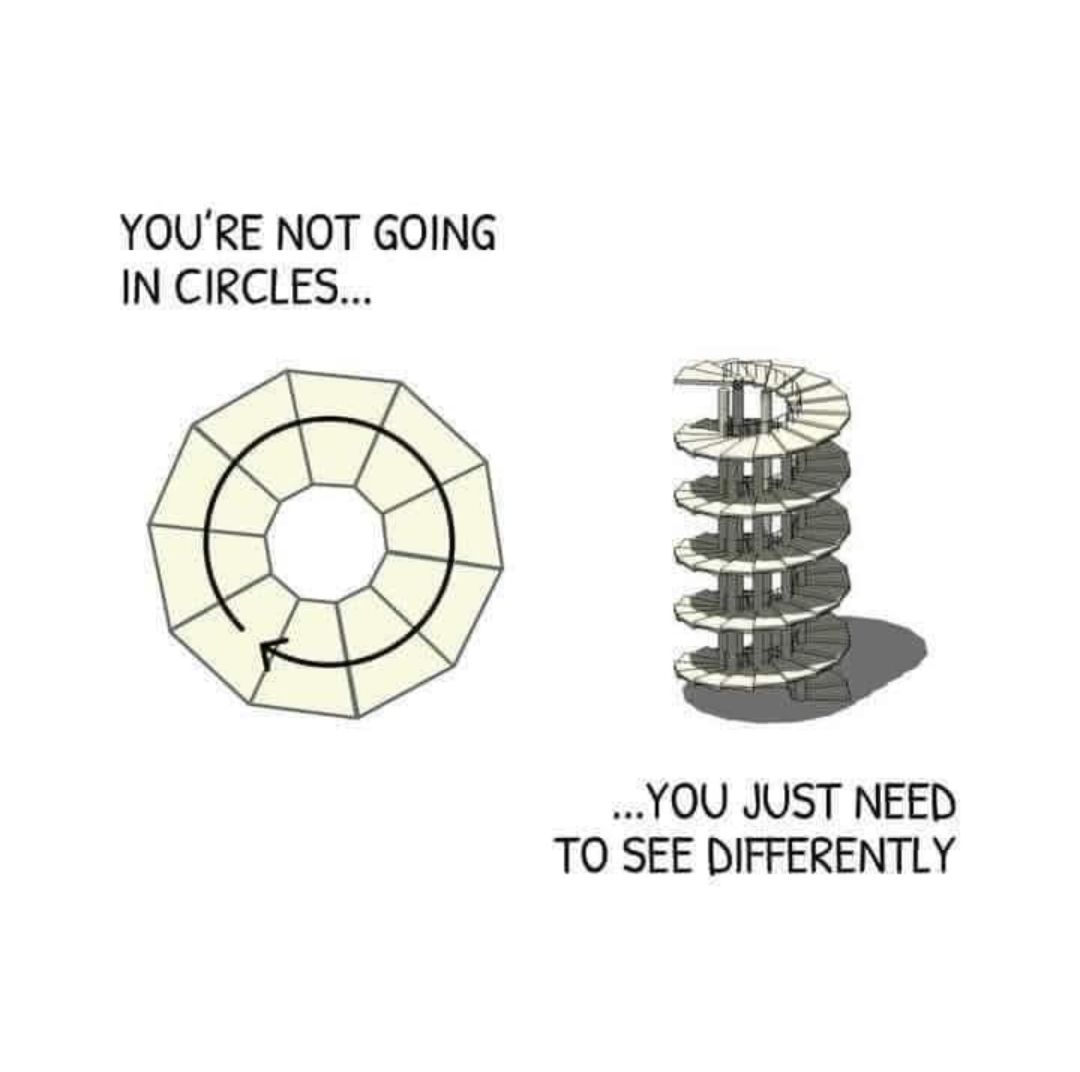
Traditionally, success is often seen as moving from point A to point B. In reality, in my experience, success is more like a series of concentric circles where improvement is cumulative, and often based on iterative improvement. Therefore any journey actually has a lot of near misses with success before success actually occurs. It’s actually important to notice when these near misses occur, rather than just discounting them as failures. These near misses represent huge steps of progress in themselves, and therefore deserve to be acknowledge as an important part of the journey. Not least because, by celebrating them, it can make it easier to take on and include the learning they provide, rather than discounting them as just another failure. The lens through which we see these moments can have a direct impact on how quickly we move from near miss to direct strike. Attitude is everything, and so make sure you embrace these as the opportunities they really are.
Sometimes the moments between successes can be protracted

There are things in life and professional practice that are the work of years, rather than weeks or months. Even if a project is over months, there can be moments when it is hard going. Writing a big report can feel soul destroying when you are on draft 54 and everyone has given conflicting feedback. Undertaking a professional portfolio can just be draining when you can’t get anyone to give you the time needed to sign off competencies or review sections. Then there are things like a PhD which run over years and are comprised of numerous stages, all of which are likely to rely on other people at various points, or to practice skills you are only just learning. All of this means the time from commencement to completion can be long, causing relying on internal motivation alone to be pretty hard going. By acknowledging that these bigger pieces of work are comprised of segments, and celebrating completion of these parts instead, can enable you to visualise progress made as well as to celebrate the learning gained along the way. It can also help you to regain momentum when you lose it.

The real learning occurs long before the end point

Talking about celebrating learning, this is an important point for me. It’s taken me a while to really stop and reflect on what ‘success’ really means. For a long time if you’d asked me I would have said it was the completion of something, but I’m not sure I would any more. The certificate at the end, or the gateway is symbolic of that completion, but for me now it’s more symbolic of the learning and change that occurred within me as part of the process. It’s the hard won changes, in either knowledge or outlook, that have been gained that are the real marker of change linked to the activity. This learning happens as you are involved in the process, and there is normally a fairly steep learning curve at the start. It therefore makes less and less sense to me to just celebrate at the end. Celebrating during the toughest moments, where the maximum learning is being gained, no matter where along the process that occurs, now makes the most sense. For me, success is getting to the point where I feel I do something better than I did before, be that decision making, leadership, or a practical skill, and so I celebrate when these breakthroughs occur, rather than relying entirely on an external evaluation of my progress.

Share the moments

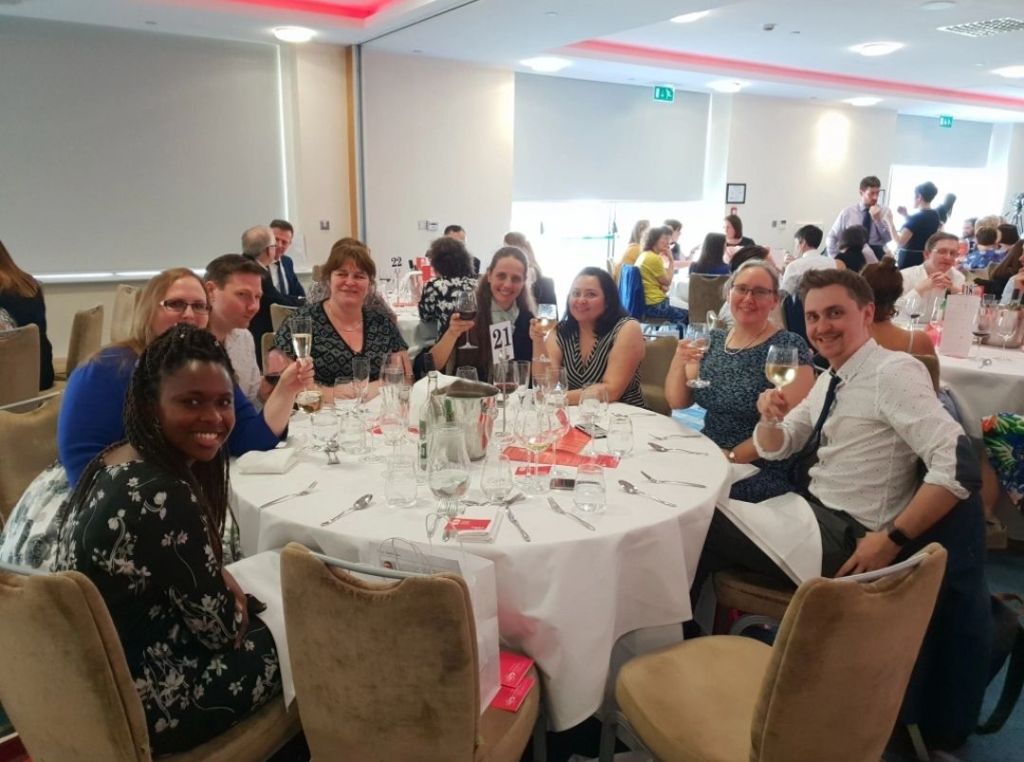
This photo was taken at another Advancing Healthcare Awards lunch, many years ago. You can see all the smiling faces of people still involved in my life even now. The thing is, I didn’t win, but that is not what I remember about the day. I remember a glorious afternoon and evening with people that I admire and care about. I remember laughing so hard that one of us fell over. I know that we still talk about that day even now. I don’t even remember what I was nominated for, because it is the people I remember, not the lack of a win.

All of this is to say, it is the people in our lives that make life worth it. It is the people who pick us up and put us back together. It is the people that celebrate our successes and cheer us on. So why would I want to have less of that, and restrict my access to these moments. Share the joy, share the progress, and share the moments that matter in making us who we are. Life is short, so seize it.
All opinions in this blog are my own
When is setting a goal, not a goal? When it’s an unattainable burden: Talking about making goals useful and fit for purpose

I’ve been thinking a lot about goals lately as I have two awesome PhD students who are currently in the thesis writing mines, and having taken a few years away, I’m preparing to re-enter the grant writing labyrinth. This thinking has led me to actively spend some time considering what can make a goal helpful, but also what can make it a millstone around your neck and something that actually makes life tougher.

As you’d probably expect, I spend a lot of my working life talking to people about goals, be they personal or organisational. I’ve also spent the last 20 or so years setting good goals and also setting some truly dreadful ones, either because they were unachievable or developed in a way that just wasn’t helpful. So I thought this might be a good moment to share what I think a good goal should look like in case it helps.

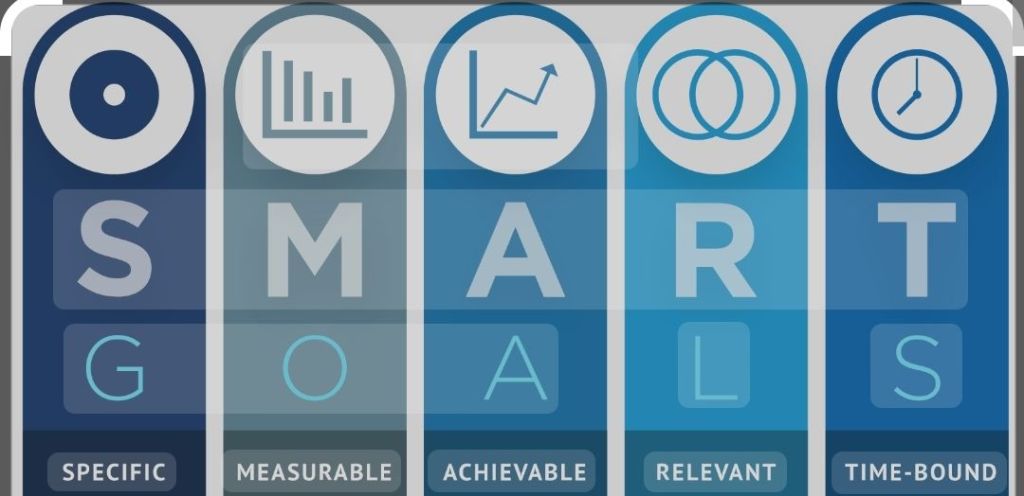
Goals should be S.M.A.R.T.

You will hear an awful lot about how goals should be S.M.A.R.T. These criteria were proposed by George T. Doran (1981) and stated that goals should be:

  • Specific: Targeting a particular area for improvement.
  • Measurable: Quantifying, or at least suggesting, an indicator of progress.
  • Assignable: Defining responsibility clearly.
  • Realistic: Outlining attainable results with available resources.
  • Time-related: Including a timeline for expected results

These principles can make goal setting sound really complex, and like their development will take a whole bunch of time. That can definitely be true if you are setting things up for a big piece of work or a project. The principles can however also be applied to more modest goals that aren’t about big things. For instance, if I manage to do a 20 minute block of writing right now, I will reward myself with a pot of the pink earl grey tea I currently love so much. Therefore getting into a habit of thinking what is achievable and embedding specificity, even into the little things, is a good routine to get into.

The right goal can get you over hump day

One of the reasons I find goal setting so useful is it can get me away from big picture thinking. Sometimes, seeing the big picture is what you need. They are other times, however, when seeing that big picture can feel overwhelming or dis-empowering, and what I need is to be able to break my task/goal into small enough chunks that I think I will be able to take the steps forward that I need.

In all honesty, sometimes those chunks have to be pretty damn small if I’m struggling. Sometimes, they can be larger. Sometimes, they can aim at controlling the next 5 minutes of my life, and sometimes, they can focus on a whole day. A key piece of learning for me has been to understand what I need to have in order to service the need, whilst acknowledging that I’m not a robot, and so some days I will need to accept that my productivity looks different.

If I’m setting up a big set of goals for a project, I therefore need to be flexible enough in my approach to allow variation in how any blocks of sub goals written can be brought together or modified based on the needs of the day. Motivating enough to get me over the hump, not so formidable that I’d rather do nothing than look them in the eye.

No goal stage should take longer than you can attain in one sitting

This is a big one, for me at least, no individual goal should take you longer than one sitting. That one sitting could be a day, on some days that one sitting could be 20 minutes, but one sitting is my time boundary for an individual sub goal.

There are a few reasons for this:

  • Different sub goals can get combined based on how I’m feeling and my capacity to be challenged on any specific day
  • Keeping them time limited means that they are easier to monitor, tick off and see progress, even when it feels like a slog
  • I find it easier to plan my total work that needs to be achieved/go into something if I have a workable unit of input that is going to be required
  • It means that I only ever have to do one achievable thing in order to feel like I’ve done something. Otherwise, failing to complete my goal because I’ve set myself too much to do, can leave me feeling like I’ve failed rather than I’ve failed to plan appropriately

A lot of this, for me, is about learning how to trick my brain so I can move forward even on those days when I just don’t really want to but it has wider benefits in terms of tracking and flexibility in terms of thinking outside of delivery alone.

Goals can be multistage

All of this doesn’t mean that you can’t use goal setting to work towards a big plan, a big vision, or a big task. If you are working towards your 5 year plan, your thesis, your fellowship, you absolutely need to have a plan and goals that encompasses everything.   The plan cannot however be ‘write a thesis’ or even ‘write a thesis by the end of 2024’. Those types of goals are the ones that become millstones as they include all the expectation aspects of a goal with none of the pathway that would enable you to achieve what’s needed.

Multistage goals require you to look at your big picture and then turn it into a 1000 piece jigsaw, where most of the time you are trying to find a home for a single piece, but you keep the lid of the box with the picture to hand in order to guide you along the way. Getting to a point where you are able to break the whole down requires you to do 2 things. One, do your research so you know about the project/larger goal in detail. This enables you to sensibly decide where you can segment it. Two, spend some time getting to know yourself, what motivates you and your rhythms, so that you can be sure you are breaking down the whole in a way that facilitates rather than hinders the way that you work. There is no point in being deluded and pretending you are or work like someone else. At this point, realism, no matter how much you like or dislike the truth, is key.

Goals should have details

I will say this once more with feeling (still one of my favourite Buffy episodes). Your goals must never be things like:  ‘write a chapter’, ‘write a paper’, ‘write a thesis’. Not unless you have a constant level of superhuman motivation. Your goals need to be much more specific and achievable.

There’s an example of a high level goal written below, but I tell you that I would find that unachievable if that is all I had. I would need sub goals below it per week and per day. I say this as someone who used to run half marathons. I would need a ‘on week one of training I will run so many miles’ and ‘on day one of week one I will do X’. Otherwise, I would get to the end of week one supposedly needing to run 30 miles that week having run none, and facing up to the fact that I would have failed at the first hurdle as there was no way I was running 30 miles on a single weekend. This kind of failure can really get into your head and change how you feel about the next stage, and ensuring you don’t make life harder for yourself is a key life lesson.

Goals should aid focus

You will not feel world beating every day. What good looks like will change on different days. It is foolish, therefore, to pretend otherwise when you are planning your sub goals. Again, you need to be planning for reality, not idealism. It is not only sensible but essential therefore to include flexibility in your goal setting that takes this into account.

One of the best ways I’ve found to do this is to make sure that I have a mix of different styles and types of goals. I include tasks for those days where I don’t have the focus for sustained deep activities, where all I can face is picking around the edges, as well as ones for those days when I can tackle the big thinking and can really dig deep. A good example of this is making sure you have a list of the essential, time consuming but slightly mindless work that always needs to be done for any paper or thesis. Things like figure checking, formatting wrinkles and cross referencing. Don’t waste your days when you have energy and focus on these, keep a list to one side so that even on days you don’t feel ‘on it’ you are able to still feel like you are moving things forwards. Be cogniscent of your state of mind and use that to make the best use of your time.

Goals should support your process not become an additional stressor

My husband has probably lost count of the number of times he’s found me crying on the sofa, and when he’s asked what’s wrong, I’ve said the world is going to end because I’m going to miss deadline X or Y. When he’s then followed up with a question linked to who has set the deadline, invariably he finds that it’s self imposed. He then looks at me with compassion and gently (or forcibly depending on my need) reminds me that if I set the deadline I could also, you know, change the deadline…..

These moments always remind me that the purpose of a goal is that it should enable you to cut out the noise and focus on the now, not become a distraction or thing to be overcome. A good goal should enable you to be motivated even when you don’t feel like it. A good goal should give you an objective way to capture progress, even when you feel you aren’t making any. The best kind of goal should mean that you don’t end up in a crying heap on the sofa as they stop you reaching that point. So develop good habits about goal setting, and your future self will thank you.

Ensure you have a way to monitor progress

I’ve said a good goal should be measurable. There a couple of reasons for this. First, at a very basic level you need to be able to tell when it’s been completed. Setting a goal like ‘improve my piano skills’ sounds fine, but how do you classify that? When will enough improvement be reached? Is sitting for 5 minutes and running scales enough, or are you wanting to be able to play more than Chopsticks?

Second, if you are involved in something that is big or multi goal, you will need to be able to see progress being made.  Part of this, if you think like me, is that I need to be able to visualise that I’m moving forward in order to maintain my motivation, and being a scientist I like quantitative data to show that I’m not just lying to myself. The other component of this is about learning for future activities. By setting measurable goals that have time scales attached, in order to can capture trends, supports you to be able to set better goals in the future . For instance, I know that I always under allocate time and have learnt the hard way that I need to add 1/4 additional time to things vs. the time I originally planned. I have also learnt that I will take an age on the initial phases of any piece of work, way way longer than I had allocated. This means, however, that my writing phases tend to be much shorter than allocated, as if I’ve done my planning/thinking, I can get 5000 words down a day.

If I don’t have goals that are not only measurable but monitored, I can only get part of the benefit of undertaking the work linked to setting the goal in the first place. So do future you a favour and make sure that you have mechanisms for doing both as part of your day to day to maximise both your outputs and your learning.

Goals should be regularly reviewed

You will only get the learning potential out of goals if you see those goals as live items. Pieces of a puzzle that should be regularly reviewed by holding them up against the box lid, which has the wider picture. Goals that are no longer helping should be reviewed, and the whole plan should remain flexible enough to change so that it can better fulfil the purpose. If you find out that you have allocated time scales that don’t work, missed out crucial stages, or just made individual goals too big and need to break them up, this is much easier to fix if you embed reflection throughout. Otherwise, you can end up crying on the sofa as you have been too inflexible or focused on the finish line to flex the details along the way.

I would advocate setting reflection points at regular time intervals, but also at the start and end of a new stage, in order to think what went well and not so well. For instance, if you are writing the first data chapter of your thesis, were your time allocations correct? How did your list of mop up activities work? Was there anything you missed out or had present that you didn’t need? Then, use this learning to adjust everything moving forward. It’s also worth having a wider review stage at the end so that you can roll any higher level themes into your learning for next time. You may not write another thesis, but you will write other large documents, so maximise the learning opportunities where ever possible.

At the end of the day, you rather than the goal, are the one who needs to be in control

The purpose of all of this thinking and preparation is not, in the end, to make extra work for yourself. The purpose of this is to give yourself a framework to support thought and mean you don’t waste time or lose direction later on. A goal is a tool to help, not a noose to choke self confidence or creativity.

The other thing to bear in mind is that a goal is not a deadline, and we should stop treating them as such. A goal is a way of helping you deliver to deadlines, but it is not an end in itself. You will have goals for things that don’t have formal deadlines, and you may even have deadlines for things that don’t require goals. Knowing the difference and seeing goal setting as just another tool in your toolkit that is there to help you achieve and reach your aspirations can really help change your relationship with goals and goal setting. If your goal does take control and end up becoming a deadline in itself, lay back and enjoy the feeling that comes with the sound of it whooshing past in order to re-set your relationship and put yourself back in the driving seat. You are the one in control after all.

All opinions in this blog are my own

If you would like more tips and advice linked to your PhD journey then the first every Girlymicrobiologist book is here to help!

This book goes beyond the typical academic handbook, acknowledging the unique challenges and triumphs faced by PhD students and offering relatable, real-world advice to help you:

  • Master the art of effective research and time management to stay organized and on track.
  • Build a supportive network of peers, mentors, and supervisors to overcome challenges and foster collaboration.
  • Maintain a healthy work-life balance by prioritizing self-care and avoiding burnout.
  • Embrace the unexpected and view setbacks as opportunities for growth and innovation.
  • Navigate the complexities of academia with confidence and build a strong professional network

This book starts at the very beginning, with why you might want to do a PhD, how you might decide what route to PhD is right for you, and what a successful application might look like.

It then takes you through your PhD journey, year by year, with tips about how to approach and succeed during significant moments, such as attending your first conference, or writing your first academic paper.

Finally, you will discover what other skills you need to develop during your PhD to give you the best route to success after your viva. All of this supported by links to activities on The Girlymicrobiologist blog, to help you with practical exercises in order to apply what you have learned.

Take a look on Amazon to find out more

Stepping Into Leadership: What becoming a senior leader actually means

I’ve had some interesting experiences over the last few years as Lead Healthcare Scientist, and inevitably, some of these experiences were things that went well, and some went not so well. As spring arrives, it makes me reflect on these and what they’ve taught me about leadership.

When I mentor, I often get asked about the difference that happens when you step into more senior leadership roles and how you know when you are ready for that next step. I’ve sometimes found it hard to articulate. In light of my reflections, though, I think I’ve made a list of what I believe are probably the biggest shifts. I’m sure there are others, but these are my big hitters.

It’s no longer about you

There is a freedom that I don’t think I recognised or appreciated in just being responsible for yourself. You can choose who to build relationships with. You can make decisions on what is best for you. You have a certain amount of license to be selfish, as you didn’t sign up to be otherwise. The more senior you become however, the less that this is either true or acceptable.

I’ve experienced what it’s like to be in a leadership space with individuals who are still behaving like they have the independence of being more junior leaders, and the impacts can be pretty catastrophic.  They have failed to recognise that they no longer have the freedom to choose not to work with people or to not engage in projects because of personal feelings about who they are being asked to work with, leading to a failure in delivering the collective vision.

When you step up, you no longer have the freedom to judge based on relationships or let that judgement impact the decisions that are being made for the greater whole. You don’t have that kind of freedom anymore as you have moved into a space where the word We, rather than I, should dominate.

You have to get out of your box

We can have pretty small worlds at work, consisting of one department or cluster of departments. This can feel pretty comfortable as you know the people, you understand the rules, and communication is much more straightforward. The thing is, when you step up, that world shifts, and to succeed, that world needs to become a whole lot bigger. At a minimum, you are likely to be working across the Trust, across professional disciplines, and with much larger numbers of people. In reality, your world is likely to be even larger and require you to engage with and understand systems you are less comfortable with in order to maximise your impact.

The expectation will be that you actively engage and independently work to develop the necessary relationships to build your leadership in this area. You will probably get introduced to people, but the follow-up steps need to be owned by you. Now, sometimes, this isn’t a comfortable process. Not everyone is an extrovert after all, but it is necessary for success, and so it is worth investing development time in these relationship building skills.

You need to have and be able to sell a vision

Many of us, as individuals, know where we are going. When stepping into leadership, however, that is no longer enough. You can’t just have a vision for yourself anymore. In fact, the vision that you create is no longer even owned by you. You have to switch mindset. You need a strong, clear vision, but it’s no longer about you and your path. It’s about your team, your workforce, your service, and your patients. You need to develop the vision enough to be able to communicate it, and then you have to share it. Sharing also needs to be bi-directional. Your vision now includes others, and so taking on their input is key so it becomes a co-produced direction of travel that can really land and embed to become a reality.

You will never be ‘in control’

Often, people think that as they step into leadership you have both more control and more freedom. This is both true and false. You have more autonomy, but in some ways less choice about how to use it.  I’m sure some people in leadership positions do feel in control, possibly because they enjoy a more micro management style of leadership than I do, but the honest truth is that I never feel in control. Now, to be clear, this doesn’t mean that I feel like I have lost control either. It’s just I have accepted that leadership is unpredictable.  You can plan all you like but there will be things that come up that mean you have to maintain a flexible approach and the ability to pivot and think on your feet.

I also want to have trust and not control of the staff I lead. I trust them to escalate as needed, I trust them to know their skills and boundaries and where I need to support them in gaining clarity when needed. This is obviously flexible, dependent on level and experience, but for me, development requires supported freedom to make decisions and learn from the process. I always say to my students that I want them to learn all they can so that one day they will become my boss, and I really mean it. It is not my job to be so in control that I clip the wings of those around me. It’s my job to support others to fly.

You can’t play favourites

This one should be obvious, but it is sometimes not as simple as it seems. It takes active effort at every stage to try to ensure that opportunities are openly shared and that individuals feel like they are open to them. One of the reasons for this is that when you advertise or offer up these opportunities you’d be shocked by the number of times no one steps forward. There are lots of reasons for this, personal circumstances, lack of individual confidence, issues with how it was disseminated, and it just not being the right moment. This can lead to you actively needing to identify and encourage individuals who you think might be a good fit. That inevitability introduces bias however, as they are likely to be individuals you are more familiar with. I’m not perfect with this but I am conscious of it and therefore am a work in progress.

I’ve also known some senior leaders who liked to pick and choose who they worked with based on comfort and existing relationships.  I’m not sure that this is the right way, for the reasons I’ve said, so if you only find yourself working with individuals you find comfortable, I think it’s worth reflecting on why, and if that is the fairest and best approach. You are probably doing yourself, your colleagues and your service a disservice without even realising it.

You will have to make the tough calls

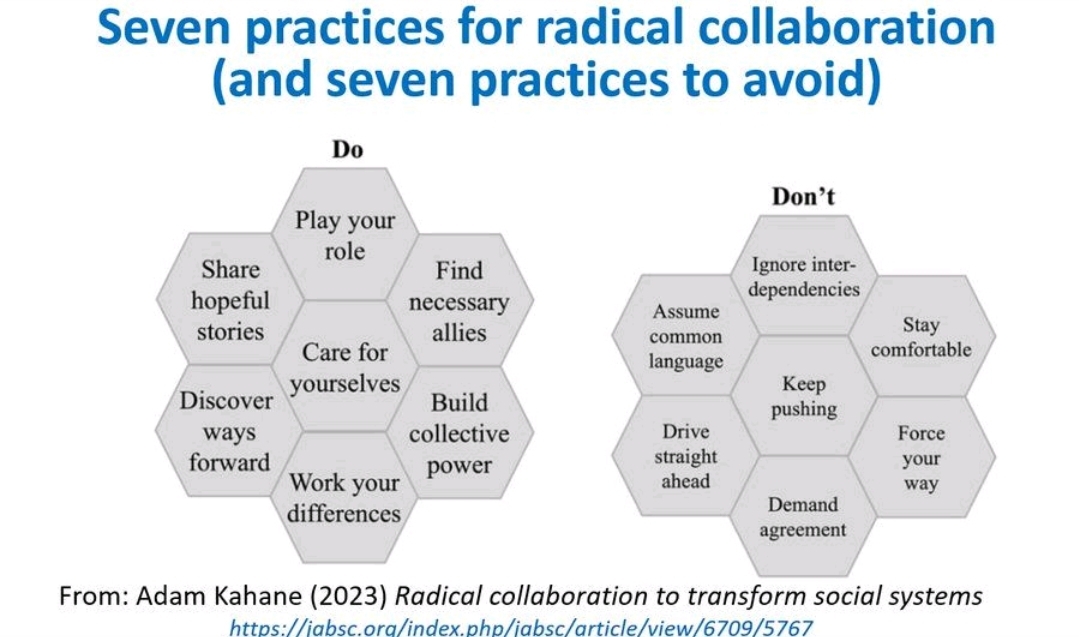
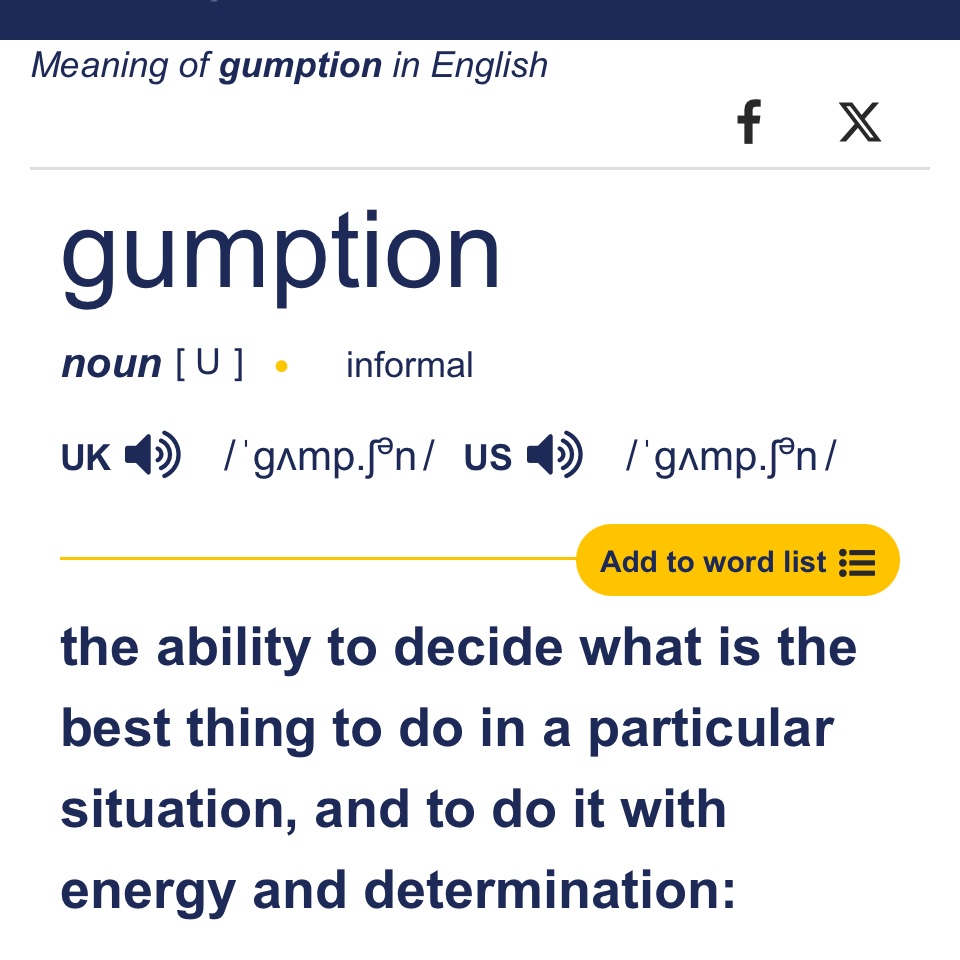
The reason this blog post is on a Monday rather than the normal Friday is that last week was tough. It was a week of tough days and tough calls. One of the things I don’t think I’d truly been able to understand, before I was in the position to make them, is quite how hard making some of those calls is. Whether clinical, scientific or leadership, you are likely to either have a) never encountered the situation before or b) not have all the information. The truth of the matter is you make the best decision you can with the amount with the knowledge you have. You have to make that decision confidently and you have to own it. People are looking at you for direction and guidance. You should always feel able to canvas opinion, seek knowledge and input, but at the end of the day the decision, and therefore the consequences, lie with you. It is not possible, nor is it acceptable, to be a leader who cannot make decisions when needed. Vacillating leads those around you to lose confidence in the decision made. It is also not fair to pass that decision making down the chain, so that those who are more junior are made to own the consequences instead. If you make the step up you have to own all of it, the good and the bad, boldly and in a way that enables others to have the confidence needed to do what they need to do. You need to spend every day striving for gumption.

You will need to own your choices, no matter how they turn out

Having said that you need to be confident in your choices, not all of them will turn out the way you hoped. I had a scenario a few years ago where I had to say no. In fact, I have them all the time, but this one sticks with me. I had to say no because otherwise, I was setting the person up to fail in a way that wasn’t wise. There are often times when, as a leader, you have to allow people to fail and grow as it’s a key part of learning.  There are circumstances, however, where the scenario is either too high stakes or risks reputational damage where a no is required. Frankly, this experience did not end well for either of us as it resulted in resentment.  That’s on me as I obviously failed to communicate the rationale in a way that aided processing. I offered, as is key in these circumstances, other options, other routes to attain the same end, but they didn’t lead to resolution. The thing is, I stand by the action, and I own the outcome, as well as the learning. As I said above, you can’t be liked by everyone, you can only try to be consistent and fair.

If you are going to be the person who says no, or make the big calls, you have to own the consequences of that decision. The same is true for when you say yes. If you are a decision maker, you need to understand that you are in a position to make decisions that impact people and patients and that those decisions should not be made lightly. You also can’t absolve yourself of any subsequent events linked to those decisions. You can only challenge yourself to make them for the right reasons and course correct and learn to be better if you get it wrong.

Sometimes, you just have to take it

Last week. again, was a great example of this one. Things went wrong. They were not under my control. I was, however, the face of the corrective actions required. Stress levels were high as well as emotions, and no matter how unpleasant, individuals needed to be able to express some of those emotions. It is much much better that those individuals expressed how the situation made them feel at me than carry them into their next encounter with a patient or different staff member. I understood the context and driver for the response in a way that the next person might not. It was, therefore, better for me to  be the conduit for that emotion. To stand there and hear the concerns and emotions in order to support processing and let them feel heard. Was it pleasant? No. Did it require tea and possibly a quick weep in my office? Yes. Was it the right thing to do? Also, yes. Sometimes, leadership is about allowing others to express unpleasant emotions so they can move past them to a space where they can take the actions needed. I’m not talking about allowing bullying or unacceptable behaviour, but about working with those impacted to move forward in what can be high stakes and very stressful situations. Sometimes being a leader is about doing what is needed to help everyone move forward, both emotionally and in action, so we can all start a new chapter together.

You have to be able to see the jigsaw, not just the pieces

One of the things that can really help with making the hard calls or dealing with the stressful moments is being able to see the whole picture and what that new chapter might look like. This is why having a vision and understanding the wider networks and landscape you are working within is key. You need to be able to take a step back and see the whole jigsaw and know whether the decisions you are making are right across the different levels of context.  That can mean making harder choices, but if you can return back to those wider drivers to sense check, it can make life easier.

One minor example of this is the choice I made to always refer to myself when possible as a Healthcare Scientist, not a Clinical Scientist.  It’s not that I’m not proud of my professional title. On a national and strategic platform, however, using a single name and description gives bigger numbers and a single voice.  It doesn’t require the person trying to navigate that landscape to understand all of the nuances that we experience if we work in the area. So I pivot based on context how I even describe myself, not for my personal benefit but to benefit the profession as a whole. It helps support a single identity and advancement for everyone, rather than any profiling raising I do benefiting just to me as an individual. I strongly advise taking this kind of active reflection across all we do, you never know when a simple change will maximise impact.

You can never be ‘just a passenger’

The final thing, and this can sometimes be hardest for me, is you no longer have the right to disengage. It’s no secret that 2024 has already been quite a challenging year, and I’d be lying if I said that I was in a great head space. My innate reaction to feeling the way I am feeling right now in to hide, to ostrich, to try to protect myself by creating distance. I can not do that. As a leader in challenging times you have to be even more present, even more engaged and involved than you would be otherwise. When circumstances and change are making everyone be unsettled the last thing you can do is become absent or disinterested. You have to step up, you have to be seen, you have to (try to be) the calm at the center of the storm. Personally I can come home and hide in my castle with the safety of Mr Girlymicro for recovery. Once I am out there professionally I need to put all that to one side and throw myself in 100%. You owe too much to your team/s and to your patients to do anything else.

I should say, this posts focuses on the things that can be challenging and the things that may be less obvious from the outside. Being a senior leader though brings so so much joy that all the challenge is more than worth it. Seeing those around you succeed, seeing things become better or change that you envisioned comes to pass, is massively rewarding. There are tough moments but if you are in the right place, with the right people, even the dark times lead to illumination. So take the next step and see what change you can make!

All opinions in this blog are my own