
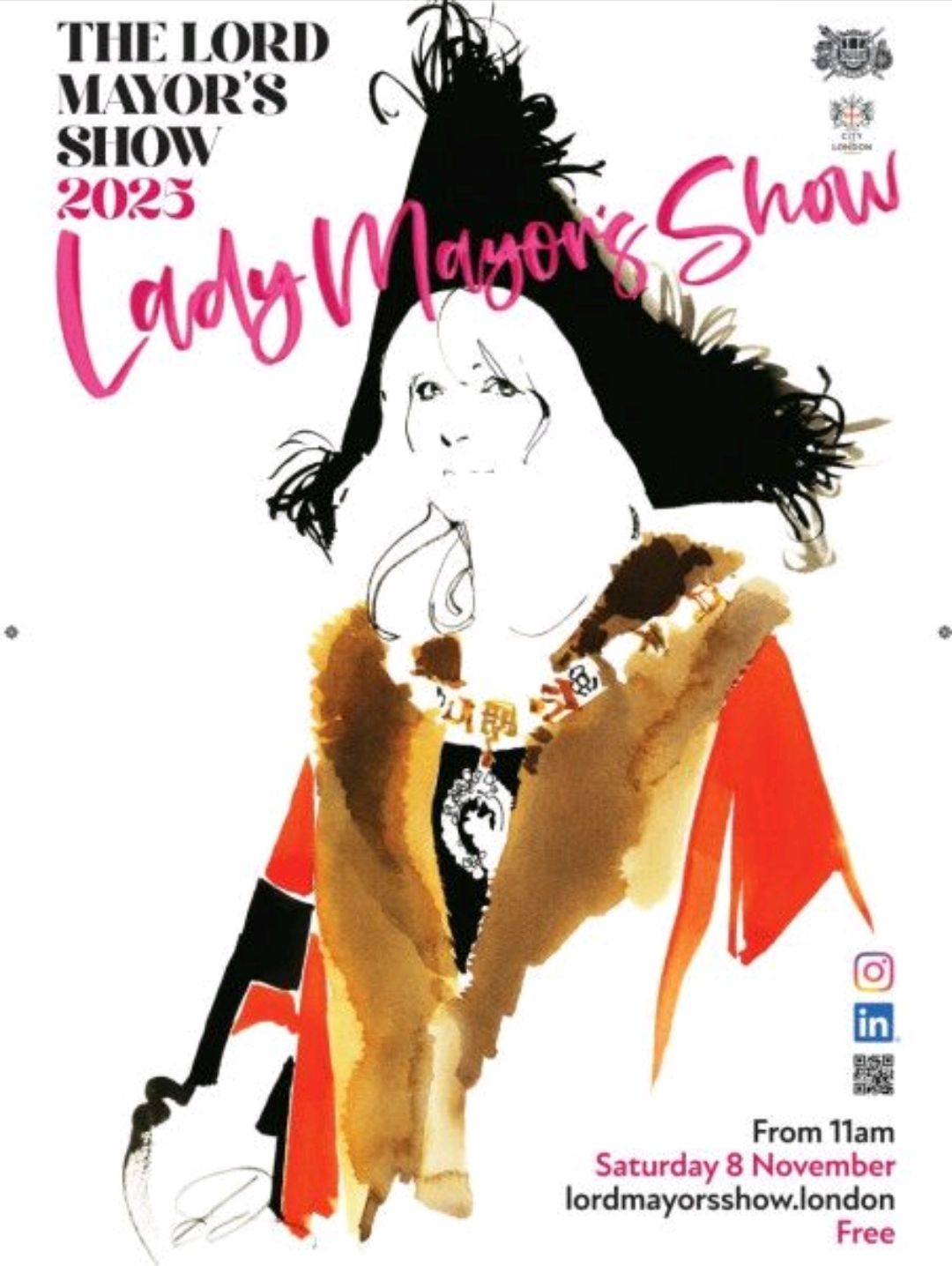
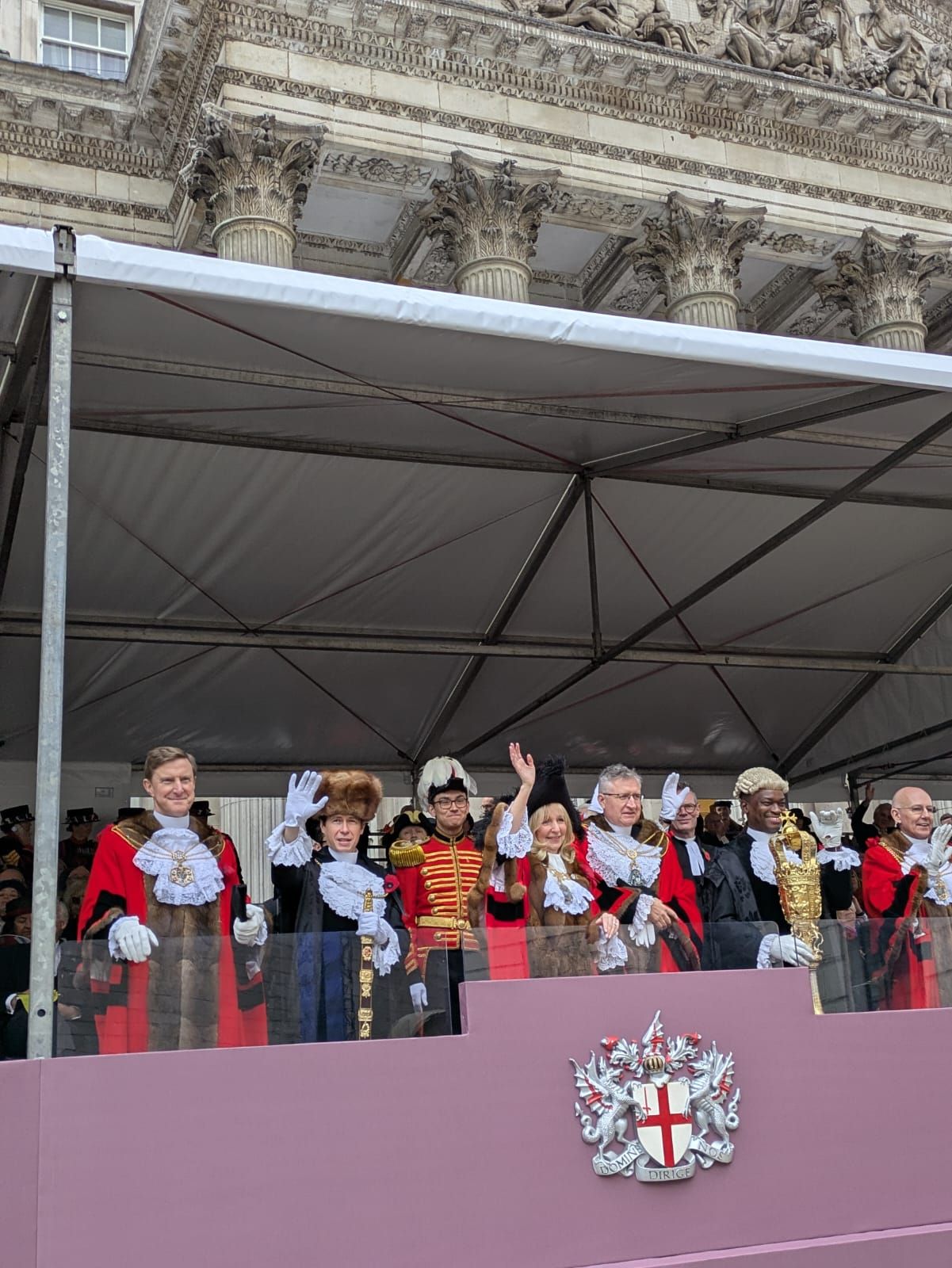
The start of 2026 has me thinking a lot about perceptions of women in science, and after my dive into women in the workplace and the importance of female visibility last week, I thought I would write something on a related topic, both in terms of London history and in terms of relatively recent changes to reflect the diversity of the city in which it is based. So today I’m talking about how I became a member of the Worshipful Company of Plumbers, what Worshipful Companies are, why they still matter, and why I decided to become involved. It felt timely to write this off the back of the one about the Lady Mayor’s parade, as it is the Worshipful Companies that elect the Lord/Lady Mayor and so it may also help you enjoy that post more.
What are the Worshipful Companies?
To start, a little bit of history…
There are 113 Livery Companies as of 2026. The term livery originated in the designed form of dress worn by retainers of a nobleman and then by extension to special dress to denote status of belonging to a trade. They are unique to London and began to be established in the 12th century as a way to guarantee that those who members hired were qualified and the goods they produced were reputable. Not only this however, being a Liveryman offered protection and had added benefits, such as the right to trade within the City of London, now commonly described as the Square Mile, an area of central London around Chancery Lane. The reason that Livery Companies are also known as Worshipful Companies, is because early companies also had religious ties, with a chosen Patron Saint and association with a local church/monastery.
Due to the reason for their creation, most of the Ancient Livery Companies are associated with specific crafts, and were formed from ‘mysteries’ or fellowships of craftsmen. For this reason they also had a role in training, where they oversaw the progression of pathways from apprentice to master craftsman. They also always had a charitable arm, where they cared for members in sickness and old age by providing alms (money, food, clothing, or other necessities given as charity to people in poverty or need, often considered a religious or moral duty).
Ancient Livery Companies continued to be established until the 17th century (1848) when a combination of civil war and growth of trade outside of the Square Mile meant creation of new companies became less viable. A number of companies have been created subsequent to 1926. The term used for these newer Livery Companies is Modern Companies, and their precedence starts with the Worshipful Company of Master Mariners (granted Livery in 1932). The newest Livery Company is the Worshipful Company of Communicators, and was granted livery status in March 2025 making it the 113th City livery company in order of precedence.
The Great Twelve Livery Companies
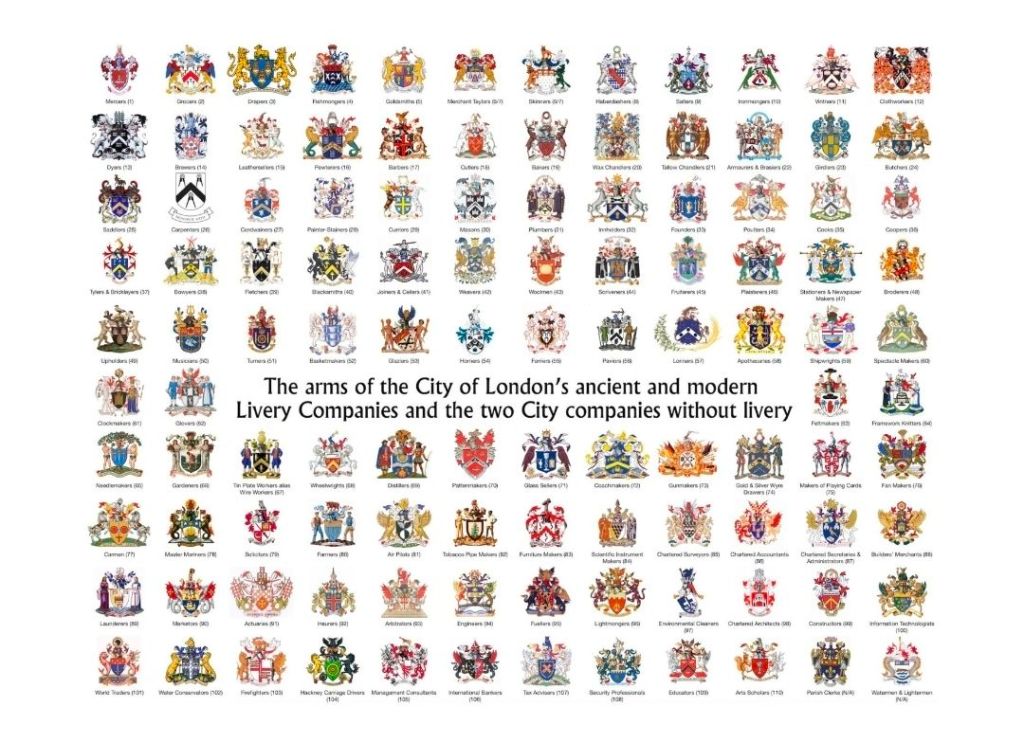
The Great Twelve Livery Companies were the ones that were considered the most prestigious, ancient, and historically wealthy trade guilds in the City of London, when they were ranked by the Mayor of London in 1515. At that time there were 48 companies and ranking was mostly based on both levels of wealth and level of influence.
The Great Twelve in Order of Precedence:
- Worshipful Company of Mercers: General merchants established 1394.
- Worshipful Company of Grocers: Originally spice/pepper merchants 1345.
- Worshipful Company of Drapers: Wool and cloth merchants 1361.
- Worshipful Company of Fishmongers: One of the oldest, dating to 1272.
- Worshipful Company of Goldsmiths: Bullion dealer, Regulates gold/silver (hallmarking) 1327.
- Worshipful Company of Skinners: Fur traders 1327.
- Worshipful Company of Merchant Taylors: Tailors 1327.
- Worshipful Company of Haberdashers: Dealers in small wares and fabrics. 1448
- Worshipful Company of Salters: Originally traders in salt/chemicals 1394.
- Worshipful Company of Ironmongers: Originally iron dealers 1463.
- Worshipful Company of Vintners: Wine merchants 1164.
- Worshipful Company of Clothworkers: Originally finishers of cloth 1528.
One of the most interesting things about the order of precedence of the Great Twelve, is that numbers 6 and 7 alternate each year. Both the Worshipful Company of Skinners and the Worshipful Company of Merchant Taylors were incorporated in the same year (1327) and grew to be among the most powerful “Great Twelve” guilds. This led to intense rivalry over which should be ranked higher in civic processions and violence broke out in 1484 during the Lord Mayor’s river procession. In order to resolve the dispute, the Lord Mayor (Lord Mayor Robert Billesden) who was a Haberdasher, settled the dispute by requiring that the companies alternate their positions each year, traditionally at Easter. This is supposed to be where the term ‘at sixes and sevens’ originates.
History of the Livery Companies and the Royal Family
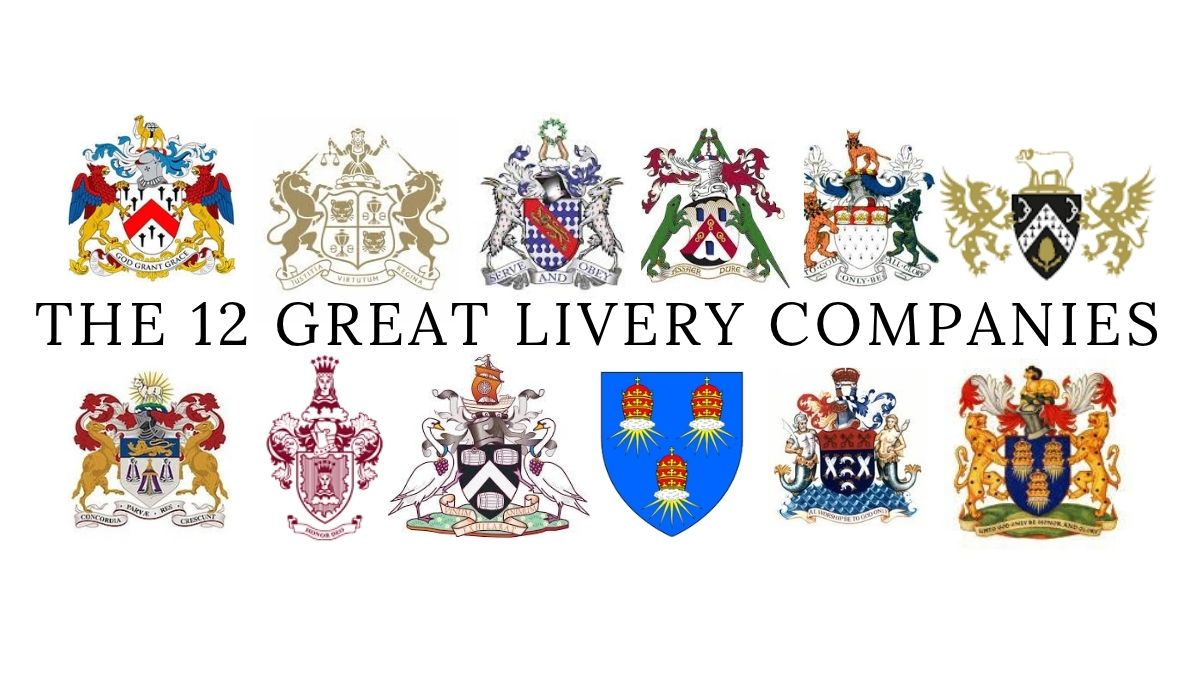
The British Royal Family maintains close, historical ties with the Worshipful Companies, with many members serving as Royal Patrons, Liverymen, or Honorary Freemen of these ancient trade guilds. These, often ceremonial, relationships involve Royal charters of incorporation, attendance at banquets, and support for the City of London’s philanthropic and civic initiatives. The relationship between the Liveries and the Royal Family date back to their creation and were an important component of the the Crown interacted with craftsman at the time.
Worshipful Companies with Royal Family Members:
- Worshipful Company of Shipwrights: King Charles III is the Patron, succeeding the late Queen Elizabeth II in 2024. The Permanent Mastership is also merged with the Crown.
- Worshipful Company of Brewers: King Charles III is a Liveryman of this company.
- Worshipful Company of Butchers: The Princess Royal (Princess Anne) is a Past Master.
- Worshipful Company of Carmen: The Princess Royal is also a Past Master of this transportation-focused guild.
- Worshipful Company of Saddlers: The Princess Royal holds the unique status of Yeoman.
- Worshipful Company of Fan Makers: Queen Camilla was clothed as an Honorary Liveryman in 2024.
- Worshipful Company of Basketmakers: The Duchess of Gloucester serves as an Honorary Liveryman.
- Worshipful Company of Coachmakers and Coach Harness Makers: The Duchess of Kent is a Liveryman. Historically, this company has included the late Duke of Edinburgh (Prince Philip) and Prince Michael of Kent as Royal Liverymen.
- Worshipful Company of Drapers: This company has a long history of royal members, including King George VI and King William III.
- Worshipful Company of Mercers: Liverymen include various members of the royal family, continuing the tradition of the company that ranks first in the order of precedence.
- Worshipful Company of Master Mariners: King Charles III is the Patron, and the late Duke of Edinburgh served as Admiral and Past Master.
Her Majesty The Queen (formerly HRH The Duchess of Cornwall) was admitted to the Worshipful Company of Plumbers on 26th January 2017.
Worshipful Company of Plumbers
As I said, there are a total of (as of 2026) 113 Worshipful Companies within London, with the Worshipful Company of Plumbers sitting at number 31 in the order of precedence. For interest to see the scope of crafts included, here is the list of the 48 Ancient Livery Companies by Precedence. excluding the Great Twelve:
- 13 Dyers
- 14 Brewers
- 15 Leathersellers
- 16 Pewterers
- 17 Barbers
- 18 Cutlers
- 19 Bakers
- 20 Wax Chandlers
- 21 Tallow Chandlers
- 22 Armourers and Brasiers
- 23 Girdlers
- 24 Butchers
- 25 Saddlers
- 26 Carpenters
- 27 Cordwainers
- 28 Painter-Stainers
- 29 Curriers
- 30 Masons
- 31 Plumbers
- 32 Innholders
- 33 Founders
- 34 Poulters
- 35 Cooks
- 36 Coopers
- 37 Tylers and Bricklayers
- 38 Bowyers
- 39 Fletchers
- 40 Blacksmiths
- 41 Joiners & Ceilers
- 42 Weavers
- 43 Woolmen
- 44 Scriveners
- 45 Fruiterers
- 46 Plaisterers
- 47 Stationers and Newspaper Makers
- 48 Broderers
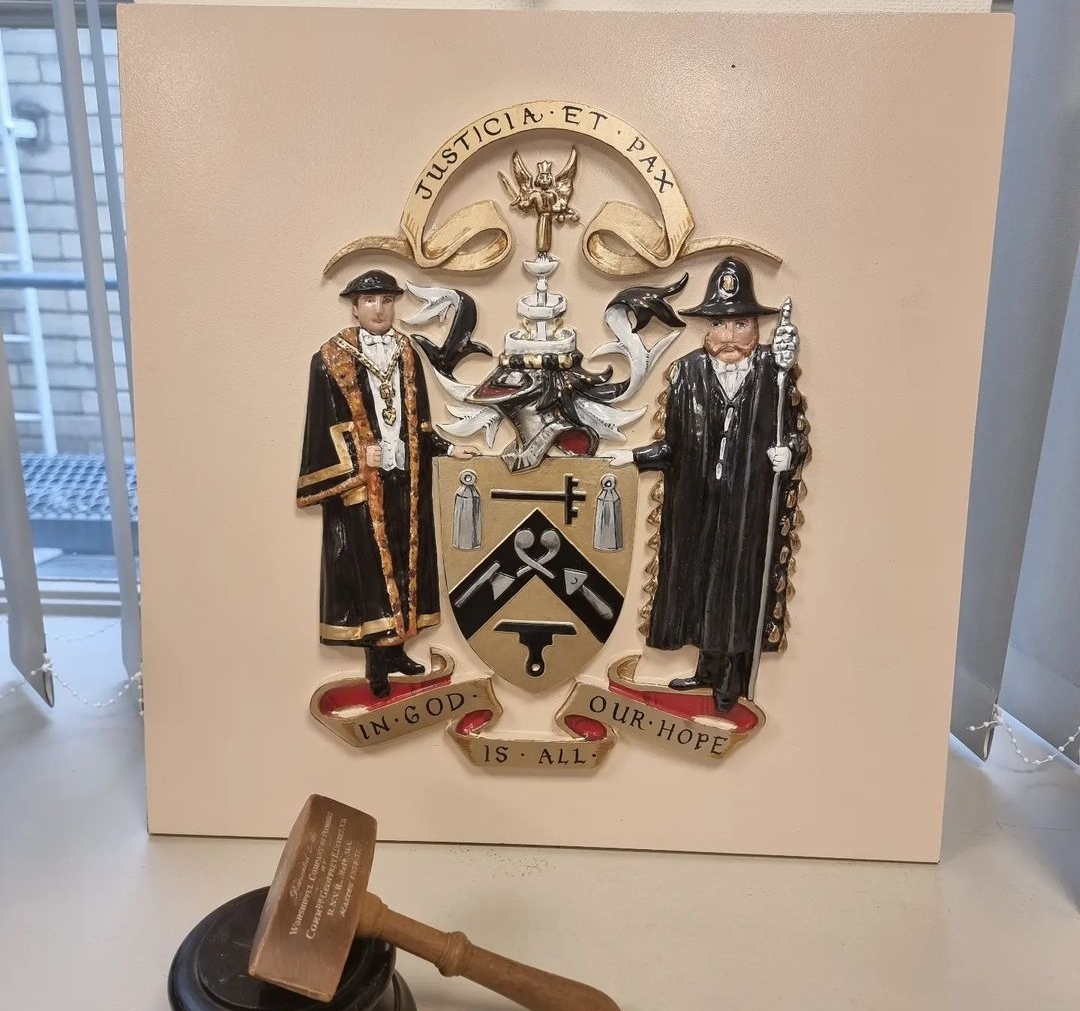
The company was formed in 1365 in order to regulate plumbers in London and to ensure the quality of the crafting linked to cisterns and sanitation in order to support public health. It was subsequently granted a royal charter in 1611. As well as ensuring quality by providing oversight, and by punishing poor work and ‘unruly behaviour’, it also had an educational role in overseeing the 7 year term of apprentices.
As it is Worshipful Company, it is associated with St Michael as its patron Saint and the St Magus the Martyr church. It retains a focus on charity and education. There are five major committees that form the work of the company: Education & Technical, Finance, Freedom & Livery, Membership, and Social, each chaired by a Court Member
Like most Livery Companies, the Plumbers’ Company has a number of different levels of involvement, consisting of:
- Freemen – this category recognises that some individuals may not be able to make a full commitment to become a Liveryman when they initially apply. The Freeman membership category limits the functions you can attend, however it gives a good insight into being a full Liveryman and Freeman are encouraged to become a full Liveryman at an appropriate time. Freeman can attend all visits and activities, but not the formal Company functions, unless invited as a guest by a Liveryman. They also cannot vote in the City of London elections.
- Liverymen – there are ~three hundred and fifty members of the company, the vast majority of whom are Liverymen. About 70% are connected with the plumbing craft and allied disciplines. The remaining members cover a wide spectrum of interests and professions including engineers, scientists, architects, builders, accountants, lawyers and many others.
- Court of Assistants – drawn from within the Livery, it reflects in its membership those disciplines which are needed for the Court to advise and help the Officers of the Company to run its affairs
- Officers of the Company – the Master, Upper Warden, and Renter Warden are installed annually in October and serve for one year
- Stewards – led by the Senior Steward, they help to ensure the smooth running of functions and organise Company visits. Stewards serve initially for three years, and then either stand-down, or continue on to become Senior Steward.
Although traditionally London based, a third of Liveryman live over 100 miles from London, and charity work is undertaken globally.
There are a number of routes to admission:
- Redemption: The most common method for new members, where an application is made followed by an interview.
- Patrimony: If a parent was a Freeman at the time of the applicant’s birth.
- Young Entry Scheme: Discounted rates (50% off) for those aged 21–40.
Applying involves being proposed and seconded by existing Liverymen, and potential members must be involved in or connected to the plumbing industry. Applications can be made online via the Company website.
How and why did I get involved?
I have been involved in looking at the role of the built environment in transmission of infection, mainly in healthcare, since before doing my PhD. In recent years I’ve been actively involved in writing a number of pieces of water based national guidance, as well as running the Environment Network and associate courses. You can see some of the papers that have come out of this work on the publications page. I also get to put some of this theory into practice by being involved in providing guidance about the design and commissioning of new buildings (hence the delightful cover picture :).
Despite working in this area for over two decades I hadn’t really heard of any Worshipful Companies, let alone the plumbers specifically. I had done a few internationally webinars for the Royal Society of Public Health and linked to this I was fortunate enough to be invited to an awards ceremony, where I met Elaine Waggott, who had just become a Liveryman herself. We started talking and she told me about the Worshipful Company of Plumbers, the work they were doing, and their ambition to get more women involved. The company was one of the first to admit women, and there has been an active push to recruit women from a variety of backgrounds. Elaine talked about the Women in Livery and Diversity (WILD) team as a determined group of members leading a drive to improve the gender balance and increase diversity in the Company, and across the Livery. As someone who cares deeply about female representation this aspect of the company really resonated. This plus both their charitable and education focus really spoke to me and so I decided to throw my name into the hat.
Stages of involvement
Once I decided to get involved there were a number of stages that I needed to progress through in order to become a Liveryman of the Worshipful Company of Plumbers.
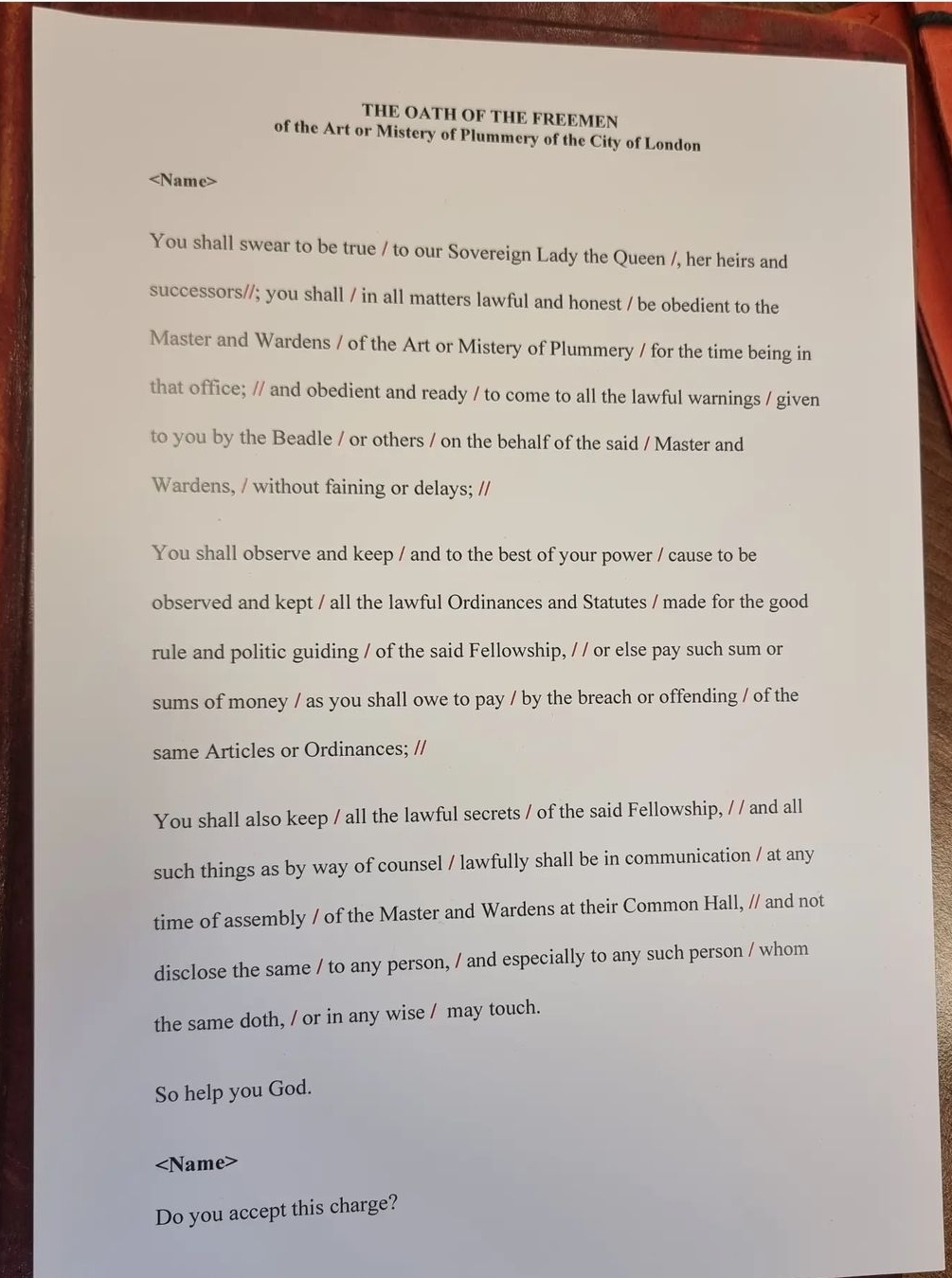
First I needed to apply to be a Freeman, have the support of several Liverymen, and go through an interview process. After which I swore the Oath of the Freemen.
Once I became a Freeman, I then had to apply and be awarded Freedom of the City of London. The Freedom of the City of London is a symbolic honour dating back to 1237, originally granting citizens rights like trading within the City and freedom from feudal service. Today, it is a largely ceremonial title recognizing high achievements, contributions to public life, or association with the City (such as being part of a Worshipful Company), and is granted by the City of London Corporation to nearly 2,000 people annually.
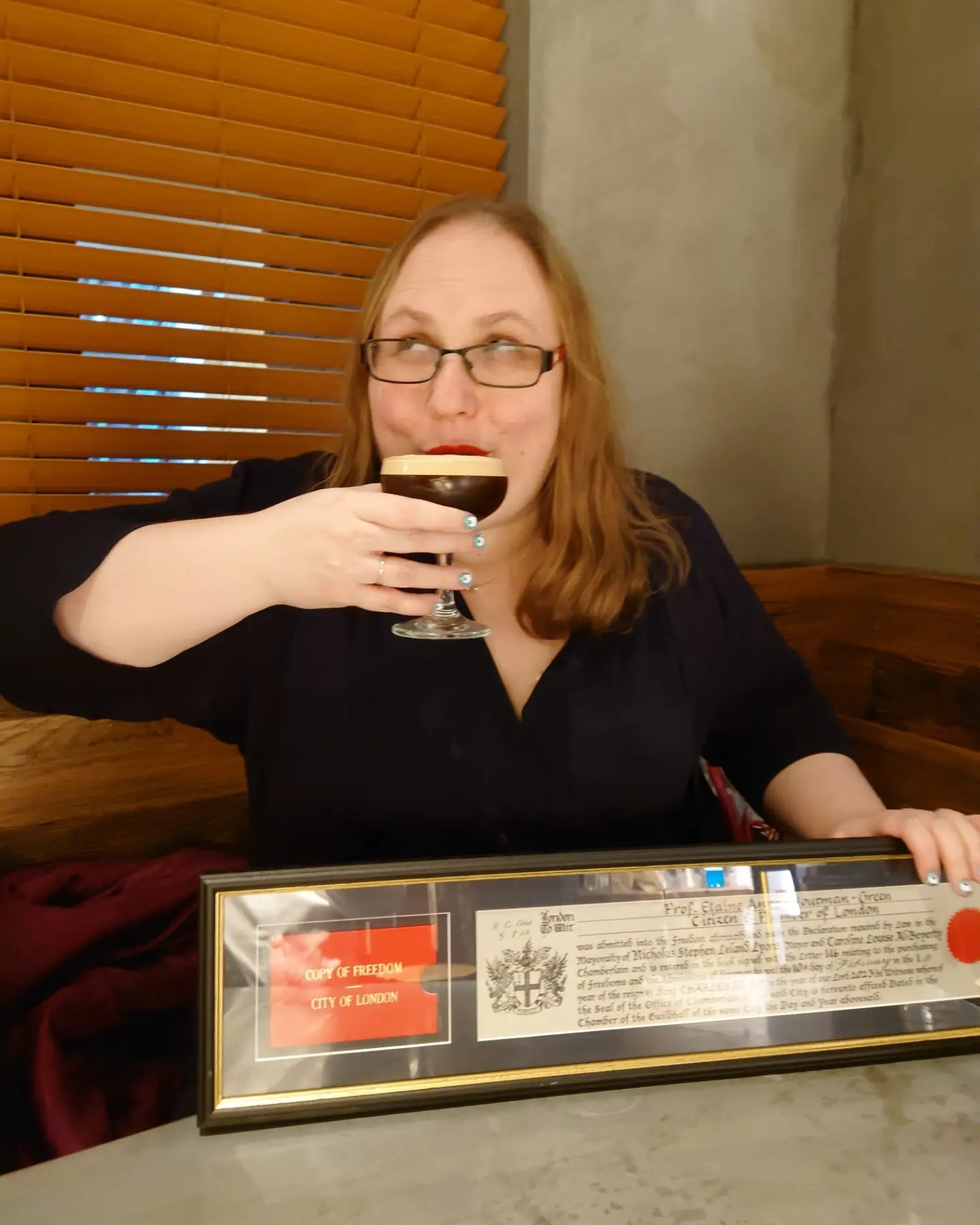
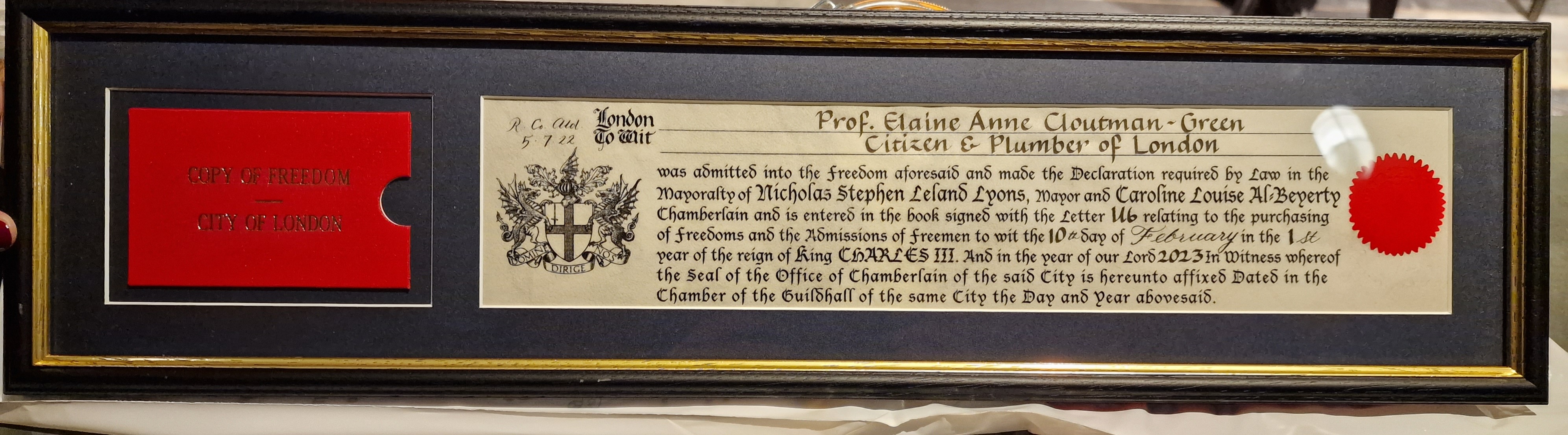
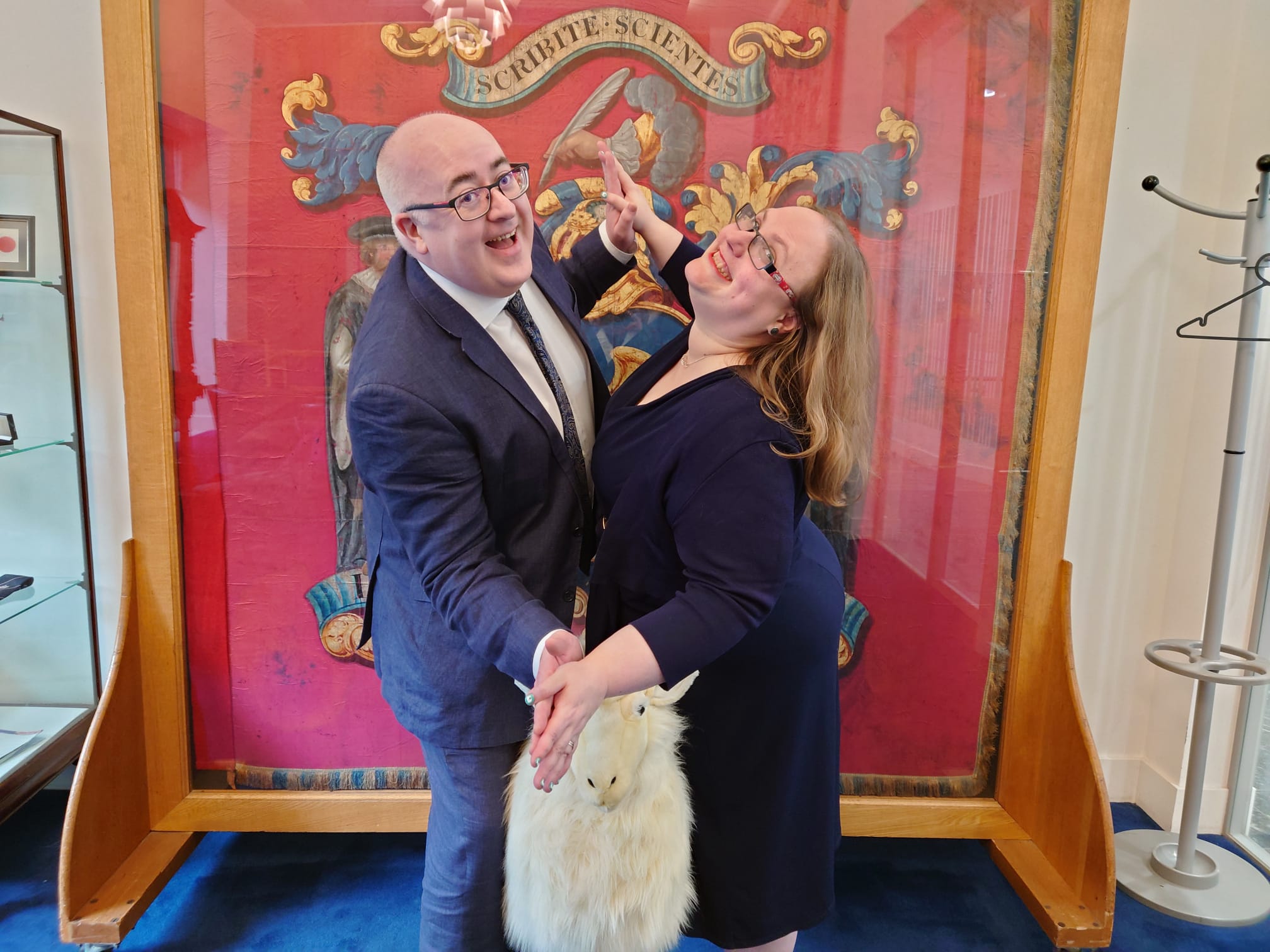
This was such fun, the ceremony felt really meaningful, and Mr Girlymicro and I even got to hang out with Florrie the sheep. Recipients are often humorously cited as having the right to drive sheep across London Bridge, carry a sword in public, or be “drunk and disorderly” with safe passage home. The main thing is that being granted Freedom of the City of London is a requirement before being accepted as a Liveryman for a Worshipful Company.
The Freedom process involves completing paper work that is included in the National Archives, as well as agreeing to follow a set of rules of conduct. Both of which give it a very historic feel.
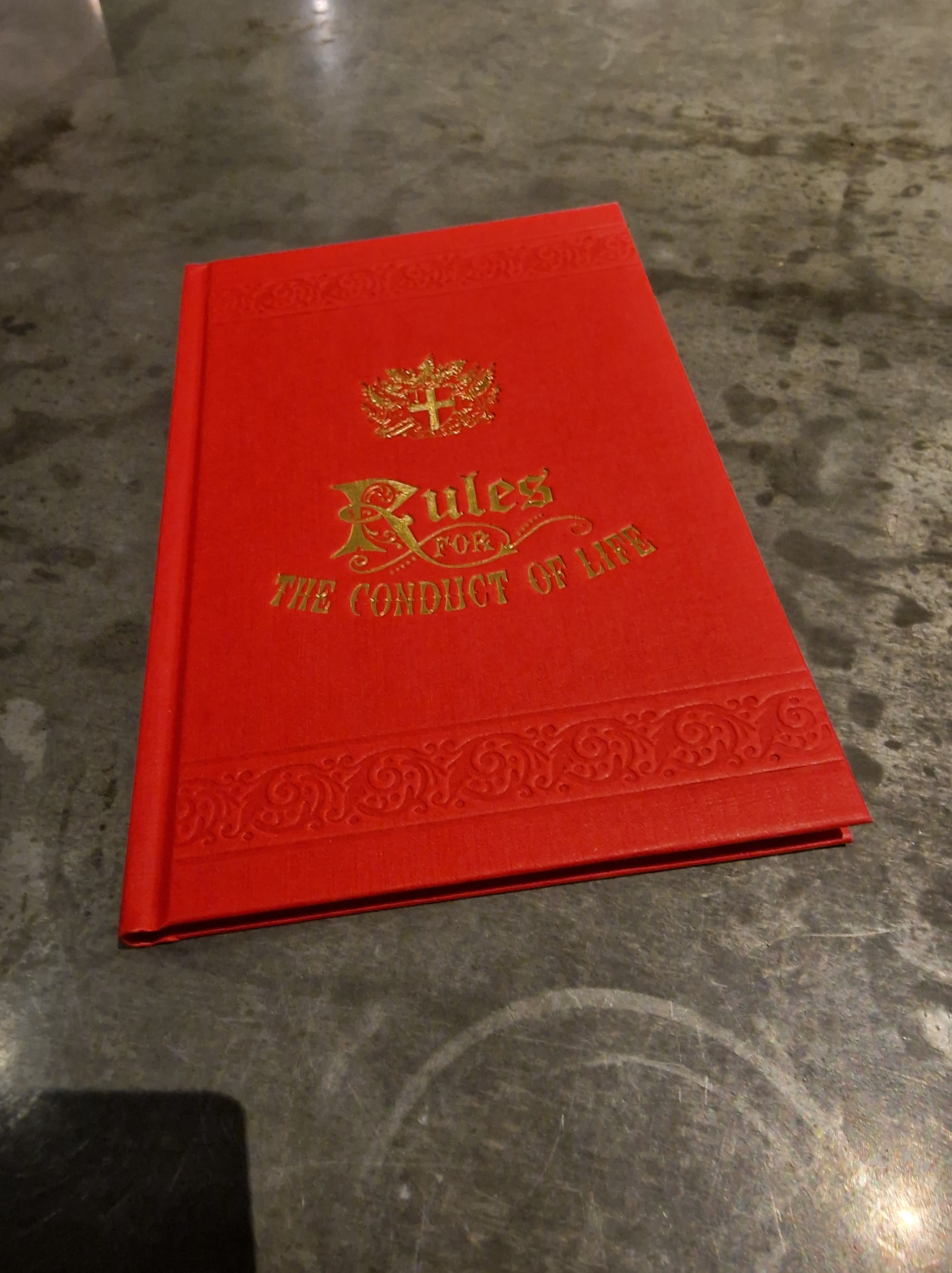
Once all of the prior stages are completed you can then be invested as a Liveryman of the Worshipful Company of Plumbers.
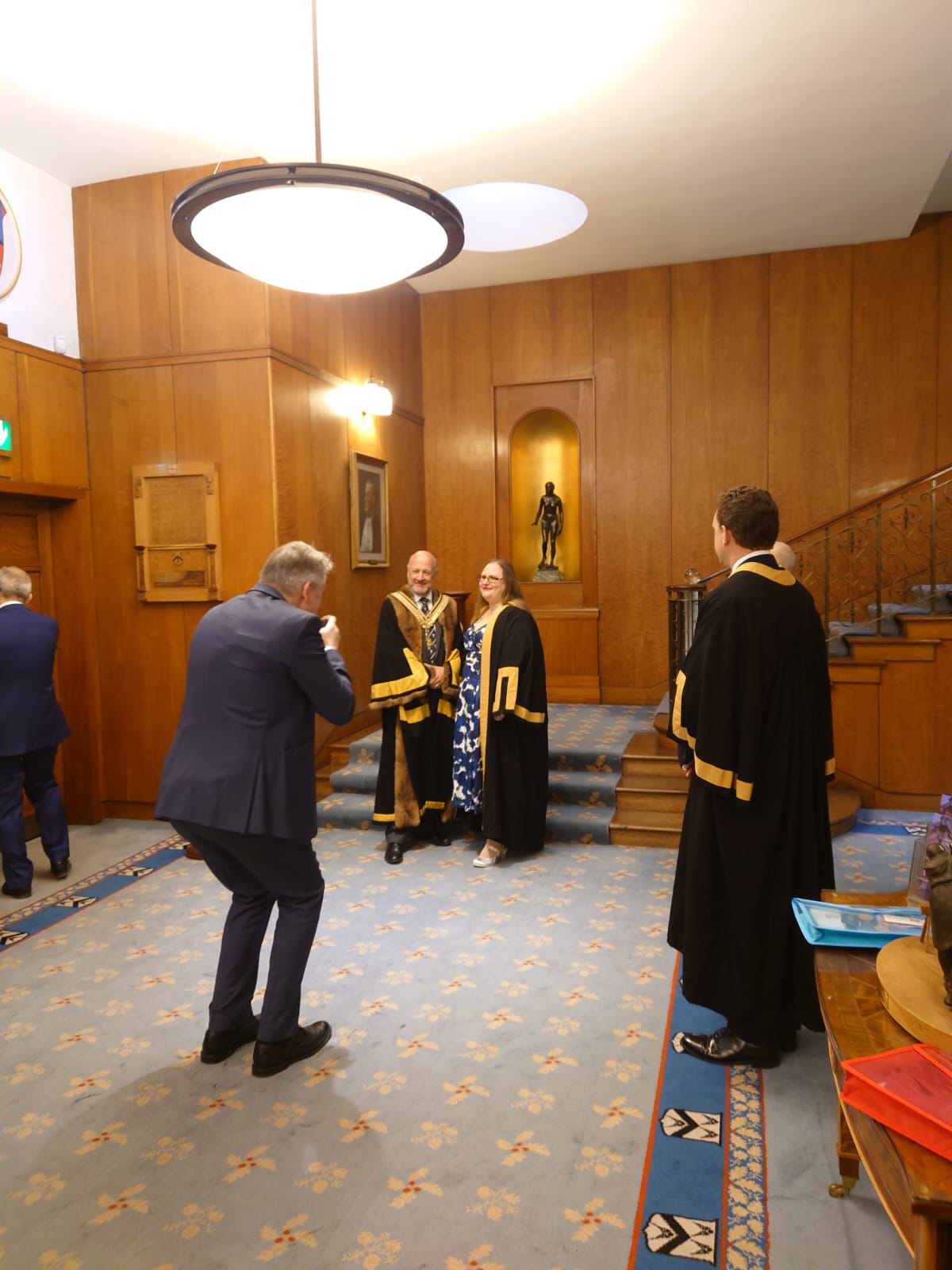
Women in the Livery
By 2020, all City Livery Companies and guilds opened their membership to women on equal terms with men, you read that right, 2020.
Like many surprising parts of the history of women at work I discovered as part of my Lady Mayor’s post, the first female Master was not elected until 1983 (Sylvia Tutt, Chartered Secretaries & Administrators). It feels like the 80’s were the beginning of a watershed change. Another milestone was passed around 2015 when the association of Female Past Masters achieved 100 members – significant because progression to Master often takes 20 years in a Livery Company (irrespective of gender), so these women started their journey to the chair of their respective companies well before the topic of gender inclusivity among the Livery Companies was widely understood or recognised.
There have been three female Masters in the history of the Worshipful Company of Plumbers in the 650 years since its charter. The first of which came into place in 2015:
- Erica Stary (2015–2016): The first woman to serve as Master of the Company
- Dame Fiona Woolf (2018–2019): The second female Master; she also served as the second female Lord Mayor of the City of London
- Sandra Raine (2025–2026): The current Master of the Company
Additionally, Janet Rivers is presently serving as the Upper Warden for the 2025–2026 term, and so is a candidate for election as the next Master,. Every woman makes it easier for the one to follow. As with the Lady Mayor, progress is happening, but the fact that much of this change has happened in the last decade just goes to show both how recent this change in approach has been, and also how far we have left to go.
So why does any of this matter?
Institutions that go back, and are as part of the cultural structure of places like London matter. They matter because they have influence. They matter because they have the capacity to drive change. As organisations with such history are often the slowest to change, the fact that change is now occurring is significant. These groups are involved in electing roles, such as the Lady Mayor, they have the capacity to drive inclusion via their education and charitable work, and they lend legitimacy to wider changes in attitude and position. Being visible matters, being accepted matters. Being both of those things in an organisation that has established links to other established institutions, such as the Royal Family, can only help to move dialogue forward.
I am probably not your typical member. I don’t have a private school education. I am not associated with the armed forces. I am not a lawyer. Yet I have been welcomed. I have been especially welcomed by Sandra Raine both before and now she is Master, who has taken such a lot of time to help me network, to include me, to help me feel like I fit in. There is a lot we can learn from the mentorship and support offered. Having Liverymen who do not fit the mold is important. Changing perceptions of what a Liveryman looks like is key to ensure that the company continues to support the workforce as it looks like now, and that it’s charity and education work remain fit for purpose.
It is easy to think that these types of organisation are not for us. To think of them as part of an establishment that doesn’t have room for someone who looks different, or who comes from a different place. There are however people working actively, passionately, to change the trajectory, whilst still maintaining the history and values that drove the organisation to exist. I for one count myself lucky to have met some of those individuals, and hope to build on the legacy they are putting in place.
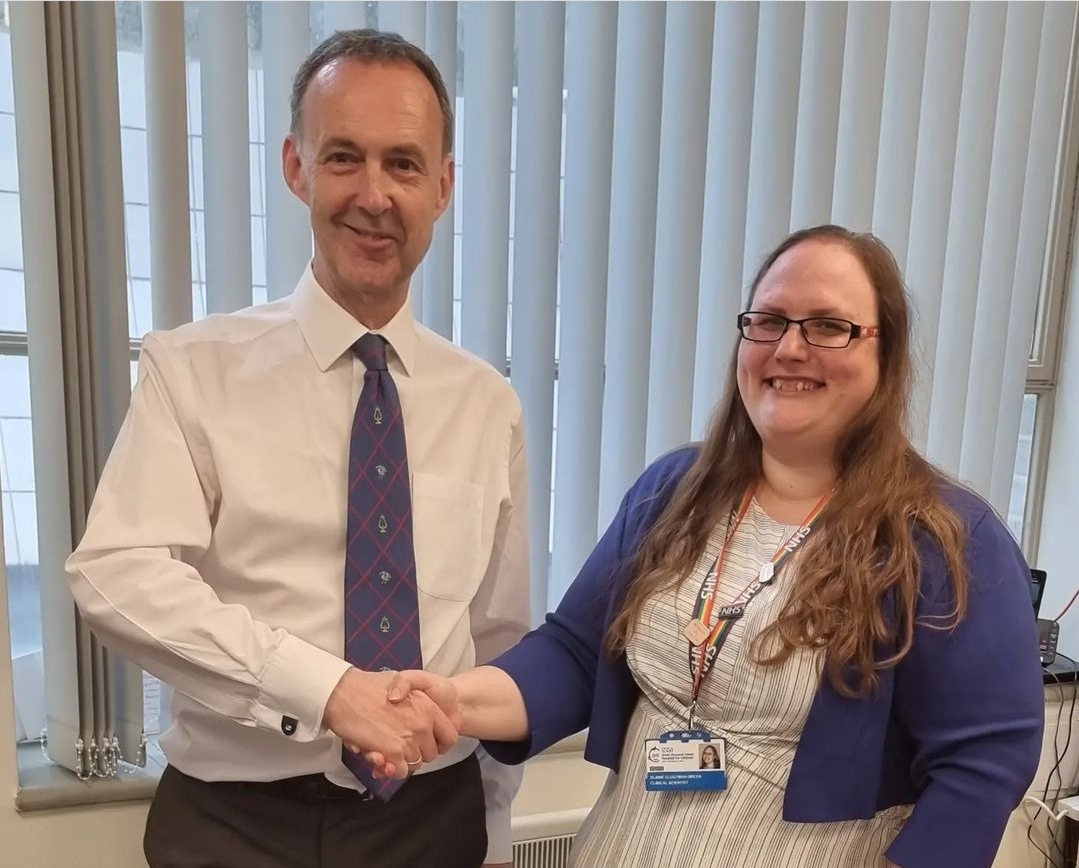
All opinions in this blog are my own




 Girlymicro