Practicing My ‘It’s Lovely to be Considered Face’: Why we should celebrate all the moments, not just the successes

Today, I’m at the Advancing Healthcare Awards, as I’ve been shortlisted for an award from the Academy of Healthcare Science. It’s so lovely to be considered, especially as this nomination was linked to this blog, and it’s the first time I’ve ever been considered for something linked to Girlymicro. That obviously means an awful lot. In all honesty I’m highly unlikely to win, and that is nothing to do with modesty. If you don’t know the other people listed below, they are all pretty epic, and I think are much more aligned with the judging category.

The thing is for me, it’s not about the winning, it’s about sharing in the success of others, and that’s what I’m really looking forward to. Now, you may roll your eyes at me, and say that I am just saying that as everyone wants to win. I acknowledge that I won’t refuse the award if offered, but I can genuinely say that I’m OK to be the person that cheers loudly for others. I’m lucky enough to have won a number of awards in my time, and I’m even more fortunate to have been considered for many more.

At the start, I really did think it was about the winning, but over the years my appreciation of just being in the room has grown. Now, I consider the fact that someone has given their precious time to nominate me the real win. Time is the thing that no one has a lot of, and for someone to use it on something for me means the absolute world. This isn’t just true for awards, however, my point of view and how I celebrate has changed for most things, from grant writing and papers, to goals in my personal life. Doing my PhD, and writing my PhD thesis, really caused me to actively think about what works for me. So, I thought on a day like today I would share my thinking in case it helps others.

What success looks like feels different at different times

As I’ve said above, I haven’t always had the same attitude to marking progress and success as I have now. I think undertaking a PhD, and trying to make my way as a clinical academic, where so much of what happens results in failure, really caused me to actively think about how I maintained my motivation and marked progress. This is especially true for long terms goals, including those career milestones which occur over years rather than months, and where there are likely to be a lot of peaks and troughs along the way.

It’s important to also know that success feels different at different moments in life. There have certainly been times in recent years where the successes I’ve marked have not been about the big things. They haven’t been about winning large amounts of grant funding or awards. My successes have been about getting through the week, and to be honest, sometimes they have been about getting through the day. The pandemic hit me hard and I think I’m still in recovery mode. At these times, for me, it’s about finding and celebrating the small wins and setting myself small targets, in order to feel like I’m still moving forward.
If you only celebrate the successes you miss out

I wish I’d learn to change my attitude to success earlier. I feel like, in hindsight, I missed out on enjoying some of the journey of my career by being so target focused, and only appreciated the big mile stones. I’ve always been the same though. When I was at uni or doing my A-levels, I was so focused on getting through the exams, I never had the energy to go out and celebrate afterwards with everyone else. I would just go home and crash out. Making the shift to celebrating the steps along the way has made such a change to my perfectionism by making me appreciate the building blocks it takes to achieve. I also think it has made me a better mentor, supervisor and leader, as I now encourage others to do the same. Don’t just celebrate when you get a paper accepted. Celebrate when you have finished writing it and you are ready to submit. Celebrate getting a first draft of your thesis written, not just the day that you pass. Celebrate completing a section of your training portfolio, not just the day you get the completion certificate. Celebrate the fact that you have done the work, shown up and made the effort. Not just the outcome, about which you may have little control.

Acknowledge the work done

There are days when you will not achieve. That is just the reality. There will be days when you stare at the screen and manage to eek out 300 words, rather than finding your rhythm and getting down 2000 plus. To try to persuade yourself otherwise will just set you up for failure. It’s important to work out where the benchmark for celebration is, and also to match the reward to the benchmark. For me, some days that’s rewarding myself with a bubble bath if I finish a blog post early enough to make the time. Some days, it’s saying if I can make it through the next 30 minutes of meetings I’ll reward myself with a biscuit and a cup of tea. Other days, it will be that I can buy myself the dress I want if I can get back to running a continuous 5K. Not everything is worthy of a reward, in my world, I still have to set and meet a target. It’s just that target gets flexed these days based on the reality I find myself in. I still have to do the work, there is no free pass.
Marking progress in any form is worthwhile

The reason I now adjust my benchmarks is that I’ve learnt the value of movement, and not being paralysed by the size of the task ahead or the pressure I’ve placed upon myself. If you only celebrate the big moments, the end points, then in the times in-between it can be easy to feel like this movement doesn’t exist, as it’s harder to realise the progress you are making. This could just be me, but there is so much value to psychologically feeling like you have momentum. That even if the way up the hill is slow and painful, you are still getting closer to the summit. There’s a figure banded around that only 20% of grant submissions are successful. Most of the essays that get submitted will not get A’s, and for every successful interview candidate there will be multiple people that don’t get the job. If you don’t acknowledge and notice the progress it is easy to get overwhelmed by the failures. So mark progress where it happens so that you don’t just see the ‘no’s’.

There is always value in feeling seen

I’ve written before about all the reasons I think it is important to nominate others for awards. A lot of the reasons why you should nominate for awards also hold true for putting people forward for other opportunities, such as membership of committees, or inclusion on grants and papers. It can feel very lonely when you are carving out a path for yourself, especially if you are not following a well trodden path. Nominating and putting others forward can help them feel recognised, but the same is also true for you. Opening ourselves up to risk of failure, of not being chosen, or receiving feedback that may not be glowing can be hard. The thing is, this is how you build networks and get seen. This is how your name gets known. You may not get that opportunity, but it may be that the panel remember you for a future one where you may be more suited. This one comes back to celebrating the things that are in your power to control. You have control over the submission, over the putting yourself out there. You don’t have control over how your attempt lands (other than making sure you put in the work), or who you are competing against. So the success to celebrate here is the courage it took to take a chance, and step out of your comfort zone. Celebrate rolling the dice on yourself.

Feedback can be the greatest gift

I’ve received some pretty hard core feedback in my time, everything from ‘you contribute negligibly to infection prevention and control’ to ‘there does not appear to be anything that demonstrates this applicant has anything exceptional or above average for their future career trajectory’. I’ve had documents returned covered in red, comments about the fact that I can’t write, and grant rejections where I’m pretty sure they didn’t even open the form, despite the fact I’d sacrificed 6 months of my life to complete it. Needless to say, it is these comments I remember rather than any of the ones that said anything positive or nice about my submissions.

Now, I’m not saying that I celebrate the harsh ones right away, I permit myself a period of processing. This period of processing is easier and shorter if I’ve allowed myself to celebrate the work it took to get the submission in. After this period of processing/mourning, however, I make an active choice to go through and find the learning. I find the commentary that is based in fact, no matter how uncomfortable. The commentary that is actionable, and I reflect on how to make the change/improvement. I try to learn how to be better for next time. I then celebrate my engagement with the process. It may not be a party. It may be a ‘thank god that’s done’ drink, but I mark it. I mark the learning and I mark the fact that I had the courage to do the work that was hard/unpleasant. Celebration shouldn’t just be about joy. For me, it’s about acknowledgement of significant moments, and that includes failure as long as there’s learning.

Any journey worth taking is filled with moments of tantalising closeness

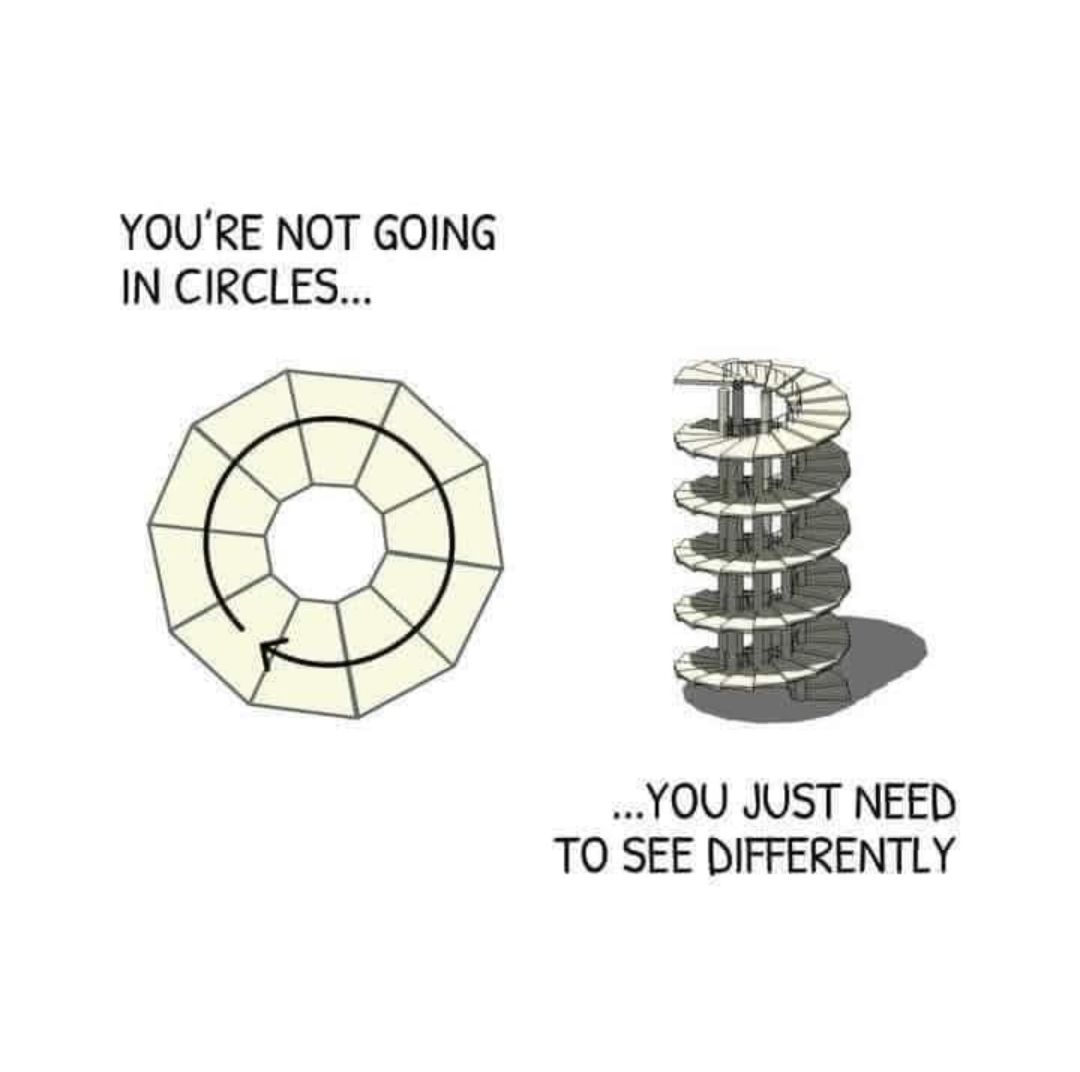
Traditionally, success is often seen as moving from point A to point B. In reality, in my experience, success is more like a series of concentric circles where improvement is cumulative, and often based on iterative improvement. Therefore any journey actually has a lot of near misses with success before success actually occurs. It’s actually important to notice when these near misses occur, rather than just discounting them as failures. These near misses represent huge steps of progress in themselves, and therefore deserve to be acknowledge as an important part of the journey. Not least because, by celebrating them, it can make it easier to take on and include the learning they provide, rather than discounting them as just another failure. The lens through which we see these moments can have a direct impact on how quickly we move from near miss to direct strike. Attitude is everything, and so make sure you embrace these as the opportunities they really are.
Sometimes the moments between successes can be protracted

There are things in life and professional practice that are the work of years, rather than weeks or months. Even if a project is over months, there can be moments when it is hard going. Writing a big report can feel soul destroying when you are on draft 54 and everyone has given conflicting feedback. Undertaking a professional portfolio can just be draining when you can’t get anyone to give you the time needed to sign off competencies or review sections. Then there are things like a PhD which run over years and are comprised of numerous stages, all of which are likely to rely on other people at various points, or to practice skills you are only just learning. All of this means the time from commencement to completion can be long, causing relying on internal motivation alone to be pretty hard going. By acknowledging that these bigger pieces of work are comprised of segments, and celebrating completion of these parts instead, can enable you to visualise progress made as well as to celebrate the learning gained along the way. It can also help you to regain momentum when you lose it.

The real learning occurs long before the end point

Talking about celebrating learning, this is an important point for me. It’s taken me a while to really stop and reflect on what ‘success’ really means. For a long time if you’d asked me I would have said it was the completion of something, but I’m not sure I would any more. The certificate at the end, or the gateway is symbolic of that completion, but for me now it’s more symbolic of the learning and change that occurred within me as part of the process. It’s the hard won changes, in either knowledge or outlook, that have been gained that are the real marker of change linked to the activity. This learning happens as you are involved in the process, and there is normally a fairly steep learning curve at the start. It therefore makes less and less sense to me to just celebrate at the end. Celebrating during the toughest moments, where the maximum learning is being gained, no matter where along the process that occurs, now makes the most sense. For me, success is getting to the point where I feel I do something better than I did before, be that decision making, leadership, or a practical skill, and so I celebrate when these breakthroughs occur, rather than relying entirely on an external evaluation of my progress.

Share the moments

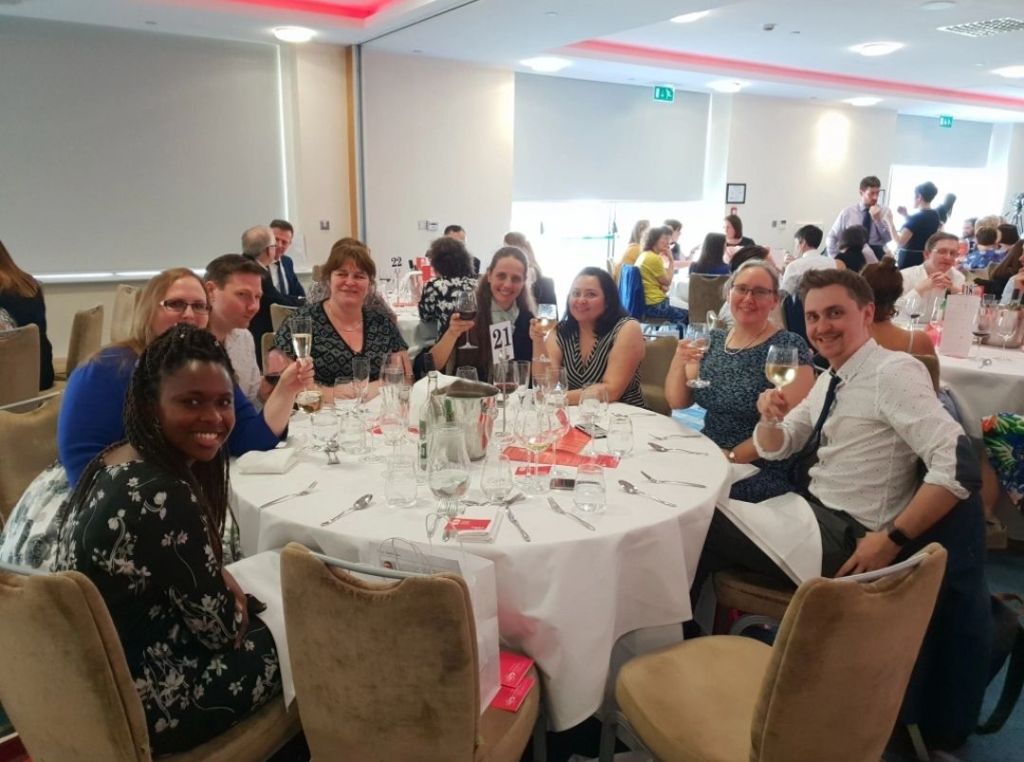
This photo was taken at another Advancing Healthcare Awards lunch, many years ago. You can see all the smiling faces of people still involved in my life even now. The thing is, I didn’t win, but that is not what I remember about the day. I remember a glorious afternoon and evening with people that I admire and care about. I remember laughing so hard that one of us fell over. I know that we still talk about that day even now. I don’t even remember what I was nominated for, because it is the people I remember, not the lack of a win.

All of this is to say, it is the people in our lives that make life worth it. It is the people who pick us up and put us back together. It is the people that celebrate our successes and cheer us on. So why would I want to have less of that, and restrict my access to these moments. Share the joy, share the progress, and share the moments that matter in making us who we are. Life is short, so seize it.
All opinions in this blog are my own

I’m Still Learning After All These Years: My focus in 2025 is to continue my personal development journey

It’s that time of year. The time when New Years resolutions get shared and we all try to persuade ourselves that overnight, if we just put in a bit more effort, we can change big facets of our lives. I’m becoming increasingly aware that the big gesture and external stuff is not really the space I want to be in, however. I’m fortunate to have ticked a lot of the external boxes at this point in my career, and so, in 2025, I want to focus on me and my development as a person rather than ticking another box linked to how people see me.

One of the reasons for this shift is the nature of the job, as it feels, in a post pandemic world, like I spend a lot of time in responsive mode. This becomes a habit and a way of being. Instead of running to keep up and fire fighting, however, I want to have time to experience the joy I feel when I’m learning and developing.  This is especially important as I think many of us who went through the pandemic as healthcare workers are still very much in recovery mode, and there’s a lot to still be worked through and resolved with little time to actually do so. So, rather than create a list of tasks to be measured against, my list this year is about aspirations linked to becoming. Becoming a better version of me, becoming more joyful, and re-finding some of that pre-pandemic me.

I want to have time to catch my breath

As I sit here on a Sunday afternoon, I realise how much I need time to chill and unwind at the moment. 2024 was full on, and there wasn’t a lot of respite. It feels, therefore, that I’m hitting 2025 already pretty wound up and in need of prioritising some time off the treadmill. Even at work, having just managed to get down from just under 18,000 emails to ~200 over the Christmas break, I realise I need to stop being in responsive mode and guard my time more efficiently. I need to carve out planning time, and in a more basic way, time to make tea, have lunch, or god forbid – leave on time. I’m aware of how much better I will be at my job if I can catch my breath, see through the fog and take time to develop a plan or creative approach to the problem, rather than jumping in or going for the most obvious approach. All in all, a different strategy will have all-around benefits, so I need to work better at finding a new way to manage my time.

I want to live in a positive space

I have a tendency to swing from optimism to ostriching, and whilst most of the time I’m a ‘glass is half full’ kind of girl, it sometimes takes more energy than I have at present to live in that positive space. In 2025, however, I want to have enough energy to expend to make it happen. I want to listen to the noise, criticism, and the negative inner voices less. I want to focus less on what I lack and more on what I have. It’s easy to constantly focus on our areas of required improvements instead of celebrating how far we’ve come and where our strengths lie. There is always a space to focus on improvement, but it shouldn’t come at the cost of recognising the work we’ve already done. This year, I don’t want to benchmark myself and my progress. I want to live in a space where I accept and celebrate the place I am at. For once in my professional life, I want to be satisfied with the boxes I have already ticked and live in the moment.

I want to see my ride or dies

One of the reasons I am keen to find additional spare time and not take on more is that I want to carve out more time for me. Selfishly, this is nothing to do with work, but for me as a person outside of my professional life. The main driver for this is that I spent most of 2024 in work mode, and I didn’t spend enough of it in life mode. I’ve written about how fortunate I am with some of my friends, but in 2024, I just didn’t carve out the time to spend with them. They are super cool, and would never hold it against me, but for the sake of my soul I want to spend time with the people who see me, flaws and all, and love me any way. The people who are my ‘stick by you no matter what’ friends inspire me and drive me to do better, and I will be better for prioritising spending time with them.

I want to re-find my confidence

To be honest, I don’t know if it’s being peri-menopausal, post pandemic burn out, or just work over load in general, but my confidence has definitely taken a hit. Don’t get my wrong. I’m still the same bolshie girl, but the tendency to spiral after the moment is hitting me hard. The creeping self doubt is present in a much more apparent way than it was before the pandemic. Part of me thinks it’s because I’ve been living in ‘Professor Cloutman-Green’ mode for so long rather than having enough time in my own skin as Elaine/Dream. Whatever the reason, I want to find that confident girl again. The girl who had plenty of self doubt but didn’t let that doubt overwhelm her or take over who she was. She’s still in there, but I suspect a break and a significant amount of napping will be required to persuade her to put in a more consistent appearance.

I want to create and be inspired

Some of the things I want to make time for are pretty straight forward. I want to have time to cook when I get home and enjoy doing so with Mr Girlymicro. Cooking is something we love to do together, but time restrictions in recent years have made everything a functional task rather than an enjoyable endeavour. I want to spend the weekend drinking pots of the many different types of tea we have and languidly enjoying each others company, rather than having anxiety about the list of tasks I should be undertaking just to keep up distracting me from the moment.

A very specific thing I want to do with Mr and mummy Girlymicro in 2025 is to spend time visiting museums. Great museums, weird museums, museums that no one else visits. In 2023, we visited the Met in New York, and the joy and inspiration that filled my soul has stayed with me. In 2024, we managed a few stolen moments at the V&A, British Museum, and Natural History Museum, but I have to say I want more. London is filled with niche places to visit, and I want to wander with an open mind and just take in what speaks to me in the moment. This kind of activity is food for my soul, and I’m greedy for more. Also, if you have any recommendations, hit me up in the comments or DM/email me.

I want to invest in this blog

Being inspired helps me in many aspects of my life, but one of the biggest ones is the number of ideas I get for this blog when I’m just out and about experiencing life, and not just in scientific contexts. Focusing that inspiration into a creative endeavour like this blog then leads to even more fulfilment and joy. I know I’ve been talking for a couple of years now about developing a book out of this blog, and I’m not promising it will happen in 2025, but I want to take some serious steps in moving it forward if I can. At its most basic, I want to feel like I have time to enjoy sitting down and writing rather than squeezing in stolen moments on the tube when already exhausted.

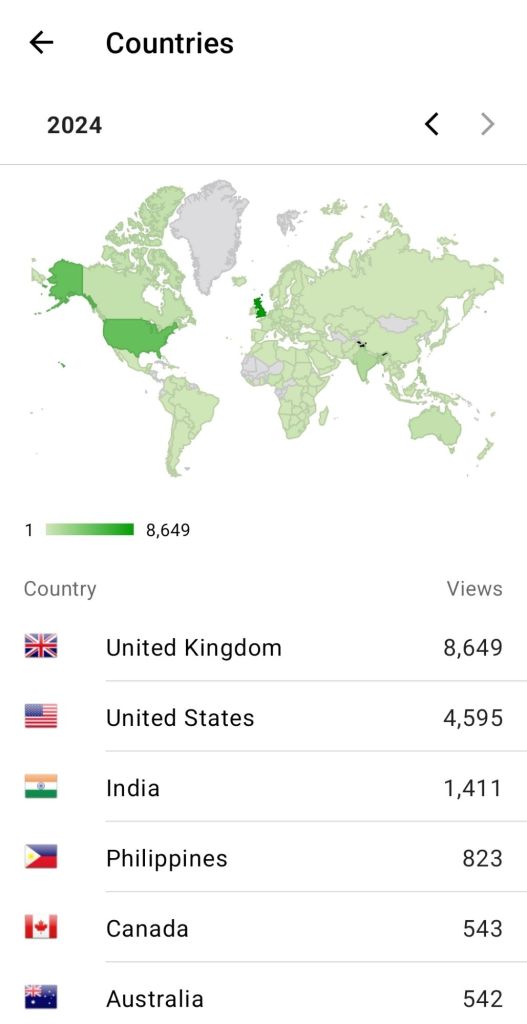
2024 delivered more reads than I could have dreamt possible, finishing the year with over 21,000 reads from over 120 countries. I can’t believe that something I thought would be seen by a handful of people is now read by so many. I want to build on that momentum. I know professional blog writers get those numbers in a month, but I’m returning here to my pledge to not bench marking against others and just to focus on measuring myself against myself to capture growth. So here is to improving year on year and to doing more of what brings us joy!

I just want more

I know it sounds greedy, but I’m not embarrassed to say it, I want more. I want to sleep, and drink tea. I want cocktails and time spent with friends. I want more cozy rainy afternoons under a blanket and getting back to reading real books, rather than only having the focus to listen to audio books. I want Sunday afternoon walks with Mr Girlymicro, talking about nothing and feeding the ducks. I want to laugh so much my chest hurts and smile so much my face aches. I want to make time for the parts of myself that aren’t linked to work and outputs and re-train my brain to not measure myself against the ‘busyness scale’. I am not the sum of what I produce and I must learn not to measure myself as such. I am so much more, and in 2025, I am OK for it to be the year of greedily wanting more and giving myself permission to need.

I need to catastrophise less

At times of high stress, and let’s be honest I feel like it’s been high stress since 2020, my brain manages that stress by running scenarios. In many ways, it is not a bad way of managing my existence. Good, bad, disaster outcomes, all run wild in my brain. The main challenge over the last few years is that that scenario running has tended more and more to the disaster scenarios taking up my bandwidth. This can make the world feel darker and more challenging than it probably is, especially if it is compared with a more objective mindset. In 2025, it’s time to put on my positive pants and try to utilise the tools I have in a more balanced way in order to not create stress and drama where no such situation exists.

I need to step off the carousel

Catastrophising means that, by it’s very nature, I’m not living in the positive space I’d like to habit. Worse than that though, it can lead to spiralling, leading to negative rabbit holes that aren’t even linked to the original trigger. I’ve posted before on what this can look like for me. This isn’t good in the moment, but it also tends to result in a lack of sleep, as this is a frequent 3am affair, and thus impact on my general well-being. Everything becomes a self-fulfilling prophecy, as the tireder I get, the less perspective I have, the more likely I am to spiral, and therefore, get less sleep. In 2025, I want to step off both the carousel that leaves me so tired that the spirals happen in the first place, and also to step off the spirals earlier when they hit. For me, it’s focusing on using what serves me rather than being a passenger in the moment.

I need to take better physical care of myself

All of this brings me onto the fact that I just need to take better care of myself physically, as well as mentally. So much of my underlying health has suffered since the pandemic, and I have not allowed myself the recovery time that is required to really fix that. In 2025, I need more of option three in the pic below and way less of 4. I need to be more than intellectually active. I also need to find time to eat and drink in my work day. I often fail to help myself by forgetting or getting too busy to do the simple things, like taking meds. The reality is, I don’t have anyone to blame but myself, and I need to look after myself in the way that I would expect of others. It’s a simple thing, and I need to stop making life so complicated that it doesn’t happen.

I need to not make New Years Resolutions

Finally, and this is a big one for me. None of these things are New Years Resolutions. At best, I am saying that these are aspirations. I refuse to make a list that just adds yet more pressure to my every day life. I am a work in progress, and it is more than naive of me to think that I will wake up in a New Year and change who I am. I feel my habits make me more like the Titanic than a super yacht, and so any change in direction to avoid the icebergs takes time. 2025 is about self-love based on acceptance post self reflection and understanding that changing the dial is a choice that will need to be made daily. Starting the year by ignoring the noise of everyone elses’ proclamations and purely staying in my lane, whilst focused on what serves me, I think is a great way to kick off the year. I know some people find the resolution bit helpful, but I, for one, feel like celebrating the freedom I give myself by deciding not to comply with this particular tradition. Which ever way you decide works for you, I hope that 2025 brings you all of the joy and that you get what you need out of the next 12 months, and find the time to celebrate all that makes you you!

All opinions in this blog are my own

When is setting a goal, not a goal? When it’s an unattainable burden: Talking about making goals useful and fit for purpose

I’ve been thinking a lot about goals lately as I have two awesome PhD students who are currently in the thesis writing mines, and having taken a few years away, I’m preparing to re-enter the grant writing labyrinth. This thinking has led me to actively spend some time considering what can make a goal helpful, but also what can make it a millstone around your neck and something that actually makes life tougher.

As you’d probably expect, I spend a lot of my working life talking to people about goals, be they personal or organisational. I’ve also spent the last 20 or so years setting good goals and also setting some truly dreadful ones, either because they were unachievable or developed in a way that just wasn’t helpful. So I thought this might be a good moment to share what I think a good goal should look like in case it helps.

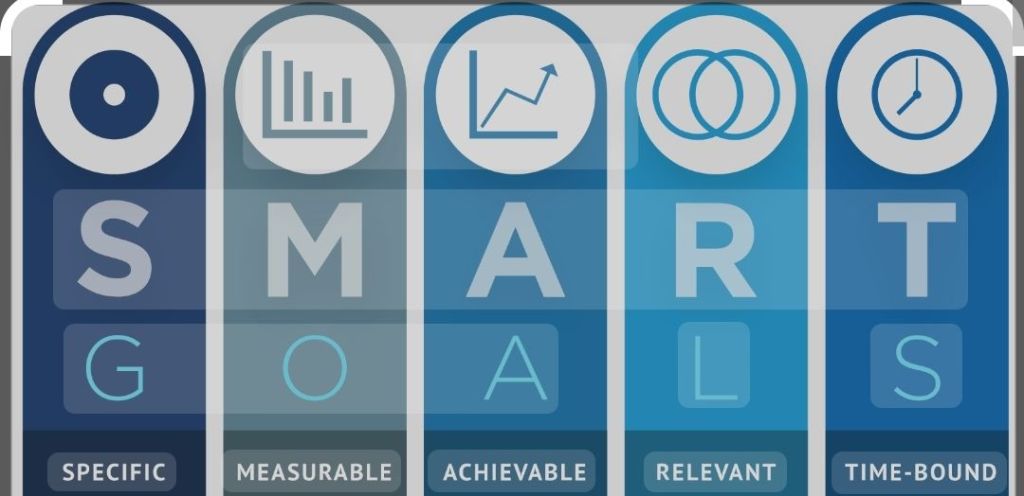
Goals should be S.M.A.R.T.

You will hear an awful lot about how goals should be S.M.A.R.T. These criteria were proposed by George T. Doran (1981) and stated that goals should be:

  • Specific: Targeting a particular area for improvement.
  • Measurable: Quantifying, or at least suggesting, an indicator of progress.
  • Assignable: Defining responsibility clearly.
  • Realistic: Outlining attainable results with available resources.
  • Time-related: Including a timeline for expected results

These principles can make goal setting sound really complex, and like their development will take a whole bunch of time. That can definitely be true if you are setting things up for a big piece of work or a project. The principles can however also be applied to more modest goals that aren’t about big things. For instance, if I manage to do a 20 minute block of writing right now, I will reward myself with a pot of the pink earl grey tea I currently love so much. Therefore getting into a habit of thinking what is achievable and embedding specificity, even into the little things, is a good routine to get into.

The right goal can get you over hump day

One of the reasons I find goal setting so useful is it can get me away from big picture thinking. Sometimes, seeing the big picture is what you need. They are other times, however, when seeing that big picture can feel overwhelming or dis-empowering, and what I need is to be able to break my task/goal into small enough chunks that I think I will be able to take the steps forward that I need.

In all honesty, sometimes those chunks have to be pretty damn small if I’m struggling. Sometimes, they can be larger. Sometimes, they can aim at controlling the next 5 minutes of my life, and sometimes, they can focus on a whole day. A key piece of learning for me has been to understand what I need to have in order to service the need, whilst acknowledging that I’m not a robot, and so some days I will need to accept that my productivity looks different.

If I’m setting up a big set of goals for a project, I therefore need to be flexible enough in my approach to allow variation in how any blocks of sub goals written can be brought together or modified based on the needs of the day. Motivating enough to get me over the hump, not so formidable that I’d rather do nothing than look them in the eye.

No goal stage should take longer than you can attain in one sitting

This is a big one, for me at least, no individual goal should take you longer than one sitting. That one sitting could be a day, on some days that one sitting could be 20 minutes, but one sitting is my time boundary for an individual sub goal.

There are a few reasons for this:

  • Different sub goals can get combined based on how I’m feeling and my capacity to be challenged on any specific day
  • Keeping them time limited means that they are easier to monitor, tick off and see progress, even when it feels like a slog
  • I find it easier to plan my total work that needs to be achieved/go into something if I have a workable unit of input that is going to be required
  • It means that I only ever have to do one achievable thing in order to feel like I’ve done something. Otherwise, failing to complete my goal because I’ve set myself too much to do, can leave me feeling like I’ve failed rather than I’ve failed to plan appropriately

A lot of this, for me, is about learning how to trick my brain so I can move forward even on those days when I just don’t really want to but it has wider benefits in terms of tracking and flexibility in terms of thinking outside of delivery alone.

Goals can be multistage

All of this doesn’t mean that you can’t use goal setting to work towards a big plan, a big vision, or a big task. If you are working towards your 5 year plan, your thesis, your fellowship, you absolutely need to have a plan and goals that encompasses everything.   The plan cannot however be ‘write a thesis’ or even ‘write a thesis by the end of 2024’. Those types of goals are the ones that become millstones as they include all the expectation aspects of a goal with none of the pathway that would enable you to achieve what’s needed.

Multistage goals require you to look at your big picture and then turn it into a 1000 piece jigsaw, where most of the time you are trying to find a home for a single piece, but you keep the lid of the box with the picture to hand in order to guide you along the way. Getting to a point where you are able to break the whole down requires you to do 2 things. One, do your research so you know about the project/larger goal in detail. This enables you to sensibly decide where you can segment it. Two, spend some time getting to know yourself, what motivates you and your rhythms, so that you can be sure you are breaking down the whole in a way that facilitates rather than hinders the way that you work. There is no point in being deluded and pretending you are or work like someone else. At this point, realism, no matter how much you like or dislike the truth, is key.

Goals should have details

I will say this once more with feeling (still one of my favourite Buffy episodes). Your goals must never be things like:  ‘write a chapter’, ‘write a paper’, ‘write a thesis’. Not unless you have a constant level of superhuman motivation. Your goals need to be much more specific and achievable.

There’s an example of a high level goal written below, but I tell you that I would find that unachievable if that is all I had. I would need sub goals below it per week and per day. I say this as someone who used to run half marathons. I would need a ‘on week one of training I will run so many miles’ and ‘on day one of week one I will do X’. Otherwise, I would get to the end of week one supposedly needing to run 30 miles that week having run none, and facing up to the fact that I would have failed at the first hurdle as there was no way I was running 30 miles on a single weekend. This kind of failure can really get into your head and change how you feel about the next stage, and ensuring you don’t make life harder for yourself is a key life lesson.

Goals should aid focus

You will not feel world beating every day. What good looks like will change on different days. It is foolish, therefore, to pretend otherwise when you are planning your sub goals. Again, you need to be planning for reality, not idealism. It is not only sensible but essential therefore to include flexibility in your goal setting that takes this into account.

One of the best ways I’ve found to do this is to make sure that I have a mix of different styles and types of goals. I include tasks for those days where I don’t have the focus for sustained deep activities, where all I can face is picking around the edges, as well as ones for those days when I can tackle the big thinking and can really dig deep. A good example of this is making sure you have a list of the essential, time consuming but slightly mindless work that always needs to be done for any paper or thesis. Things like figure checking, formatting wrinkles and cross referencing. Don’t waste your days when you have energy and focus on these, keep a list to one side so that even on days you don’t feel ‘on it’ you are able to still feel like you are moving things forwards. Be cogniscent of your state of mind and use that to make the best use of your time.

Goals should support your process not become an additional stressor

My husband has probably lost count of the number of times he’s found me crying on the sofa, and when he’s asked what’s wrong, I’ve said the world is going to end because I’m going to miss deadline X or Y. When he’s then followed up with a question linked to who has set the deadline, invariably he finds that it’s self imposed. He then looks at me with compassion and gently (or forcibly depending on my need) reminds me that if I set the deadline I could also, you know, change the deadline…..

These moments always remind me that the purpose of a goal is that it should enable you to cut out the noise and focus on the now, not become a distraction or thing to be overcome. A good goal should enable you to be motivated even when you don’t feel like it. A good goal should give you an objective way to capture progress, even when you feel you aren’t making any. The best kind of goal should mean that you don’t end up in a crying heap on the sofa as they stop you reaching that point. So develop good habits about goal setting, and your future self will thank you.

Ensure you have a way to monitor progress

I’ve said a good goal should be measurable. There a couple of reasons for this. First, at a very basic level you need to be able to tell when it’s been completed. Setting a goal like ‘improve my piano skills’ sounds fine, but how do you classify that? When will enough improvement be reached? Is sitting for 5 minutes and running scales enough, or are you wanting to be able to play more than Chopsticks?

Second, if you are involved in something that is big or multi goal, you will need to be able to see progress being made.  Part of this, if you think like me, is that I need to be able to visualise that I’m moving forward in order to maintain my motivation, and being a scientist I like quantitative data to show that I’m not just lying to myself. The other component of this is about learning for future activities. By setting measurable goals that have time scales attached, in order to can capture trends, supports you to be able to set better goals in the future . For instance, I know that I always under allocate time and have learnt the hard way that I need to add 1/4 additional time to things vs. the time I originally planned. I have also learnt that I will take an age on the initial phases of any piece of work, way way longer than I had allocated. This means, however, that my writing phases tend to be much shorter than allocated, as if I’ve done my planning/thinking, I can get 5000 words down a day.

If I don’t have goals that are not only measurable but monitored, I can only get part of the benefit of undertaking the work linked to setting the goal in the first place. So do future you a favour and make sure that you have mechanisms for doing both as part of your day to day to maximise both your outputs and your learning.

Goals should be regularly reviewed

You will only get the learning potential out of goals if you see those goals as live items. Pieces of a puzzle that should be regularly reviewed by holding them up against the box lid, which has the wider picture. Goals that are no longer helping should be reviewed, and the whole plan should remain flexible enough to change so that it can better fulfil the purpose. If you find out that you have allocated time scales that don’t work, missed out crucial stages, or just made individual goals too big and need to break them up, this is much easier to fix if you embed reflection throughout. Otherwise, you can end up crying on the sofa as you have been too inflexible or focused on the finish line to flex the details along the way.

I would advocate setting reflection points at regular time intervals, but also at the start and end of a new stage, in order to think what went well and not so well. For instance, if you are writing the first data chapter of your thesis, were your time allocations correct? How did your list of mop up activities work? Was there anything you missed out or had present that you didn’t need? Then, use this learning to adjust everything moving forward. It’s also worth having a wider review stage at the end so that you can roll any higher level themes into your learning for next time. You may not write another thesis, but you will write other large documents, so maximise the learning opportunities where ever possible.

At the end of the day, you rather than the goal, are the one who needs to be in control

The purpose of all of this thinking and preparation is not, in the end, to make extra work for yourself. The purpose of this is to give yourself a framework to support thought and mean you don’t waste time or lose direction later on. A goal is a tool to help, not a noose to choke self confidence or creativity.

The other thing to bear in mind is that a goal is not a deadline, and we should stop treating them as such. A goal is a way of helping you deliver to deadlines, but it is not an end in itself. You will have goals for things that don’t have formal deadlines, and you may even have deadlines for things that don’t require goals. Knowing the difference and seeing goal setting as just another tool in your toolkit that is there to help you achieve and reach your aspirations can really help change your relationship with goals and goal setting. If your goal does take control and end up becoming a deadline in itself, lay back and enjoy the feeling that comes with the sound of it whooshing past in order to re-set your relationship and put yourself back in the driving seat. You are the one in control after all.

All opinions in this blog are my own

If you would like more tips and advice linked to your PhD journey then the first every Girlymicrobiologist book is here to help!

This book goes beyond the typical academic handbook, acknowledging the unique challenges and triumphs faced by PhD students and offering relatable, real-world advice to help you:

  • Master the art of effective research and time management to stay organized and on track.
  • Build a supportive network of peers, mentors, and supervisors to overcome challenges and foster collaboration.
  • Maintain a healthy work-life balance by prioritizing self-care and avoiding burnout.
  • Embrace the unexpected and view setbacks as opportunities for growth and innovation.
  • Navigate the complexities of academia with confidence and build a strong professional network

This book starts at the very beginning, with why you might want to do a PhD, how you might decide what route to PhD is right for you, and what a successful application might look like.

It then takes you through your PhD journey, year by year, with tips about how to approach and succeed during significant moments, such as attending your first conference, or writing your first academic paper.

Finally, you will discover what other skills you need to develop during your PhD to give you the best route to success after your viva. All of this supported by links to activities on The Girlymicrobiologist blog, to help you with practical exercises in order to apply what you have learned.

Take a look on Amazon to find out more