Guest Blog by Kate Rennie: What am I growing in my kitchen… a gluten free sourdough journey through the eyes of an IPC nurse

I am currently in the middle of secret project, which I hope to announce more about in late August/early September. I’m really excited about it but it’s taking a bunch of my time. I’m hoping that you will be just as excited when I can share more details. The wonderful Dr Claire Walker is helping me deliver my passion project by curating the Girlymicrobiologist blog for a few weeks. This means that I hope you all enjoy getting some great guest blogs from a range of topics. Girlymicrobiologist is a community, and all of the wonderful authors stepping up, sharing their thoughts and projects, to support me in mine means the world. I hope you enjoy this guest blog series. Drop me a line if you too would be interested in joining this community by writing a guest blog.

Dr Walker who is a paid up member of the Dream Team since 2013, token immunologist and occasional defector from the Immunology Mafia. Registered Clinical Scientist in Immunology with a background in genetics (PhD), microbiology and immunology (MSc), biological sciences (mBiolSci), education (PgCert) and indecisiveness (everything else). Now a Senior Lecturer in Immunology at University of Lincoln. She has previously written many great guest blogs for the Girlymicrobiologist, including Microbial Culture: An Immunologist’s Side Project Gone Wild.

This weeks blog post continues this months fungal theme (all things yeast) and is from the absolutely amazing Kate Rennie. Kate is a born microbiologist, even if she was diverted by the world of nursing and has gone on to become a cracking Infection Prevention and Control nurse. Her curiosity and willingness to learn and expand her skill sets, makes it no surprise to me that when she decided to expand her hobbies, she decided to go down a route that touches on all things micro.

Before we get into the sour dough however, let’s start by talking what coeliac disease (the condition that leads to the requirement for gluten free bread) as written for us by Dr Claire Walker, our in-house immunologist:

Coeliac disease is a serious autoimmune condition where eating gluten, a protein in wheat, barley, and rye, triggers the immune system to attack an enzyme in the gut called tissue transglutaminase. This damages the villi, tiny structures in the small intestine that absorb nutrients. The result? Symptoms like bloating, diarrhoea, fatigue, and iron deficiency. But it doesn’t stop at the gut. Some people develop dermatitis herpetiformis, an intensely itchy, blistering skin rash. Others experience neurological symptoms such as brain fog, headaches, and numbness or tingling in the limbs. It’s often misdiagnosed or missed entirely.

Around 1 in 100 people in the UK have coeliac disease, but most remain undiagnosed. Diagnosis usually starts with blood tests (like the tTG-IgA), followed by a small bowel biopsy to confirm intestinal damage. These tests only work if you’re currently eating gluten. So if someone’s already gone gluten-free and are feeling better, they need to reintroduce it for several weeks which can cause symptoms to reappear and puts many people off testing.

There’s no cure and the only treatment is a strict, lifelong gluten-free diet. That means no “cheat days” as even tiny amounts can cause damage. It takes serious commitment: careful label reading, avoiding cross-contamination, and asking awkward questions when eating out. But for most, removing gluten thankfully leads to major improvements in symptoms and overall wellbeing.

Blog by Kate Rennie

What am I growing in my kitchen… a gluten free sourdough journey through the eyes of an IPC nurse

I’m Kate, I’m an infection control nurse at GOSH. I’ve worked in infection control since 2020 (1.5 years in primary care, 9 months in community/mental health and I’ve been at GOSH since April 2022). I was diagnosed with Coeliac disease in 2013 and decided 2025 would be the year of new hobbies and I am bored of gluten free bread that resembles cardboard.

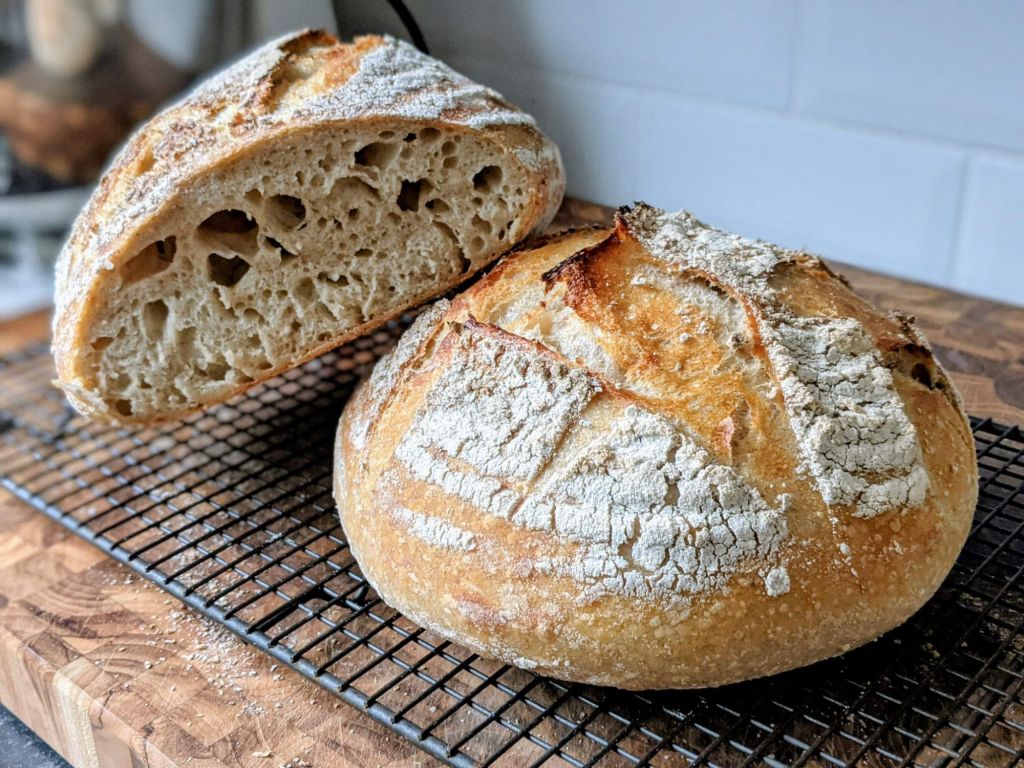
I decided to embark on my sourdough journey (albeit slightly late to the party as I know this was a lockdown thing). I didn’t actually know what I was getting into with making sourdough, I read the first few steps and thought it sounded pretty simple, flour and water in a jar.

My flour and water sat on my kitchen side in a jar for 2 weeks (gross), and I named it Marilyn (Mondough)… I nurtured her and fed her daily, for those who may remember Tamagotchi’s, this is how I can describe it and as a previous Tamagotchi owner, I loved it.

Part of me was obsessed with what have created and look forward to waking up each morning to see how it’s looking (highlight of your late 20s) but the infection control nurse in me is slightly grossed out by it. I’ve read a bit more and learnt a lot, she just needed a little bit of extra love and care (troubleshooting) at a few days old.

HOOCH – I’ve only ever known hooch as this from my late teens/early 20s.

Fast forward to my late 20s, this is a sign that your sourdough starter is hungry, it’s eaten all its nutrients, and you must feed it more frequently. I was reluctant to throw her away and start fresh so I added teff flour in the hope she would perk up and SHE DID.
But she smelt disgusting… A familiar reminder of my 16 year old, pre-nurse self, having my long acrylic nails removed in the salon. ACETONE?? Apparently, it’s a byproduct of fermentation…

So, I wondered if this was actually safe to have something fermenting in my kitchen with absolutely 0 knowledge and thinking I’m probably going to poison myself. After a bit of research, I learnt this is normal and how to fix it, yet again, she’s hungry and I’m a rubbish mother.

Whatever is happening inside that jar is creating its own yeast to make it grow which is quite cool! I’m not sure how many people have actually gone this deep into the thought of a sourdough starter, but my IPC brain is fascinated yet disgusted and I want to know more. Do I want to culture it in the lab? Probably not. Am I going to eat it? Most definitely.

Fast forward 2 weeks… My sourdough journey ended abruptly after my first loaf. I felt disheartened that it didn’t turn out like the GF loaves I’d spent too much time obsessing over on Tik Tok.
The perfectionist I am wanted the perfect loaf to happen first time, so I abandoned sourdough and ventured into making non-sourdough gluten free bread. I popped Marilyn in the fridge for when I decided to revisit sourdough making and there she stayed for a good 3 months. Apparently, this puts it to sleep, and you can later revive it… but after pulling it out the fridge and seeing a layer of black liquid on top of the starter, my IPC brain got the better of me and I decided with my limited knowledge of sourdough and fermentation at home, it probably was best that I didn’t consume this and decided to throw it in the bin and I spared a brief thought for what Marilyn was and could have been if I had more patience.

I’d hoped this would be a success story about my gluten free sourdough rather than a failure but basically, sourdough isn’t easy and gluten free sourdough, really isn’t easy. It truly is a science.

Gluten free bread making in general is a delicate science because it lacks the key protein—gluten—that gives traditional bread its structure, elasticity, and chew. In wheat-based breads, gluten forms a stretchy network that traps gas bubbles from yeast, allowing the dough to rise and hold its shape. Without gluten, you have to rely on a blend of alternative flours—like rice, sorghum, or buckwheat—each contributing unique properties such as starch, protein, or flavour. Binding agents like psyllium husk are also essential to mimic gluten’s elasticity. No single gluten-free flour can replicate all the functions of wheat flour, which is why crafting a successful gluten-free loaf requires a carefully balanced mix rather than just throwing in a single substitute flour and hoping for the best.

I have been successful on a few occasions in making non-sourdough gluten free bread which has still been a real insight into science in everyday life.

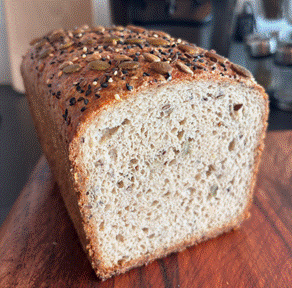
To all life’s problems there are solutions if only we are curious and passionate enough to see them and change direction in order to maximise our successes. It appears Kates’ experience with sour dough as part of her coeliac journey is no different.

All opinions in this blog are my own

Guest Blog by Dr Claire Walker: Microbial Culture – An Immunologist’s Side Project Gone Wild

I am currently in the middle of secret project, which I hope to announce more about in late August/early September. I’m really excited about it but it’s taking a bunch of my time. I’m hoping that you will be just as excited when I can share more details. The wonderful Dr Claire Walker is helping me deliver my passion project by curating the Girlymicrobiologist blog for a few weeks. This means that I hope you all enjoy getting some great guest blogs from a range of topics. Girlymicrobiologist is a community, and all of the wonderful authors stepping up, sharing their thoughts and projects, to support me in mine means the world. I hope you enjoy this guest blog series. Drop me a line if you too would be interested in joining this community by writing a guest blog.

Previous mycology posts have covered how fungal mycotoxins can cause us harm, and how the new yeast on the block, C. auris, is causing problems in healthcare, but the next two posts will talk about how beneficial fungi can be in our every day lives.

The blog posts will look at how certain yeasts can be used in something that brings me a lot of joy, bread. Many of you will know I’m dairy free, and although I know I should cut down on carbs, you can take my bread from my cold dead hands. It’s one of the few things I can eat without fear and makes me happy. In celebration of this oft overlooked area of microbiology we shall be talking all things baking over the next two weeks.

The first of these posts is written by Dr Walker who is a paid up member of the Dream Team since 2013, token immunologist and occasional defector from the Immunology Mafia. Registered Clinical Scientist in Immunology with a background in genetics (PhD), microbiology and immunology (MSc), biological sciences (mBiolSci), education (PgCert) and indecisiveness (everything else). Now a Senior Lecturer in Immunology at University of Lincoln. She has previously written many great guest blogs for the Girlymicrobiologist, including Exome Sequencing and the Hunt for New Genetic Diseases.

Before I hand over to Claire though, I thought I would talk a little about baking and fermentation. About 50% of all the PhD students I speak to have dreamt at some point of throwing their research out the window, running away and starting a bakery. This may be because baking has a surprising amount of science within it when compared to some other forms of cooking, hence the need to closely align to a recipe. A lot of this is actually because you are working with yeast, a living organism, hence the fact that we are talking about this on the Girlymicro blog, as micro is just cool in so many ways

Fermentation is an anaerobic (occurs without the presence of oxygen) process where microorganisms, like bacteria and yeast, convert sugars into energy and various byproducts, like acids, gases, or alcohol. In baking, it causes yeast and bacteria to convert sugars into carbon dioxide, among other things. This is what causes the dough to rise, as well as adding flavour, and is therefore essential to all things yummy and bread related. The most commonly used yeast is Saccharomyces cerevisiae, and this is one of the reason baking can behave so variably on times of the day or seasons, as both temperature and pH can impact on how well the fermentation process works. It can also mean, if you are impatient like me, you add water at far too high a temperature and effectively kill off your yeast so it doesn’t work at all. Fermentation, and its use in food production, is one of the many examples of how microbiology and microbes impact our every day lives, and of how much poorer our lives would be without them. So I hope you’ll enjoy the next couple of blogs about how baking has both microbiological and immunological links.

Blog by Dr Claire Walker

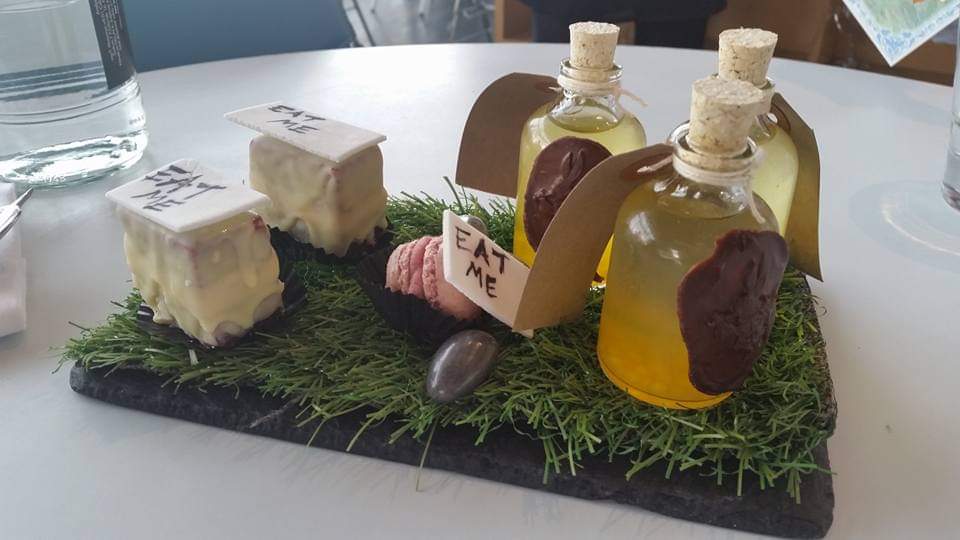
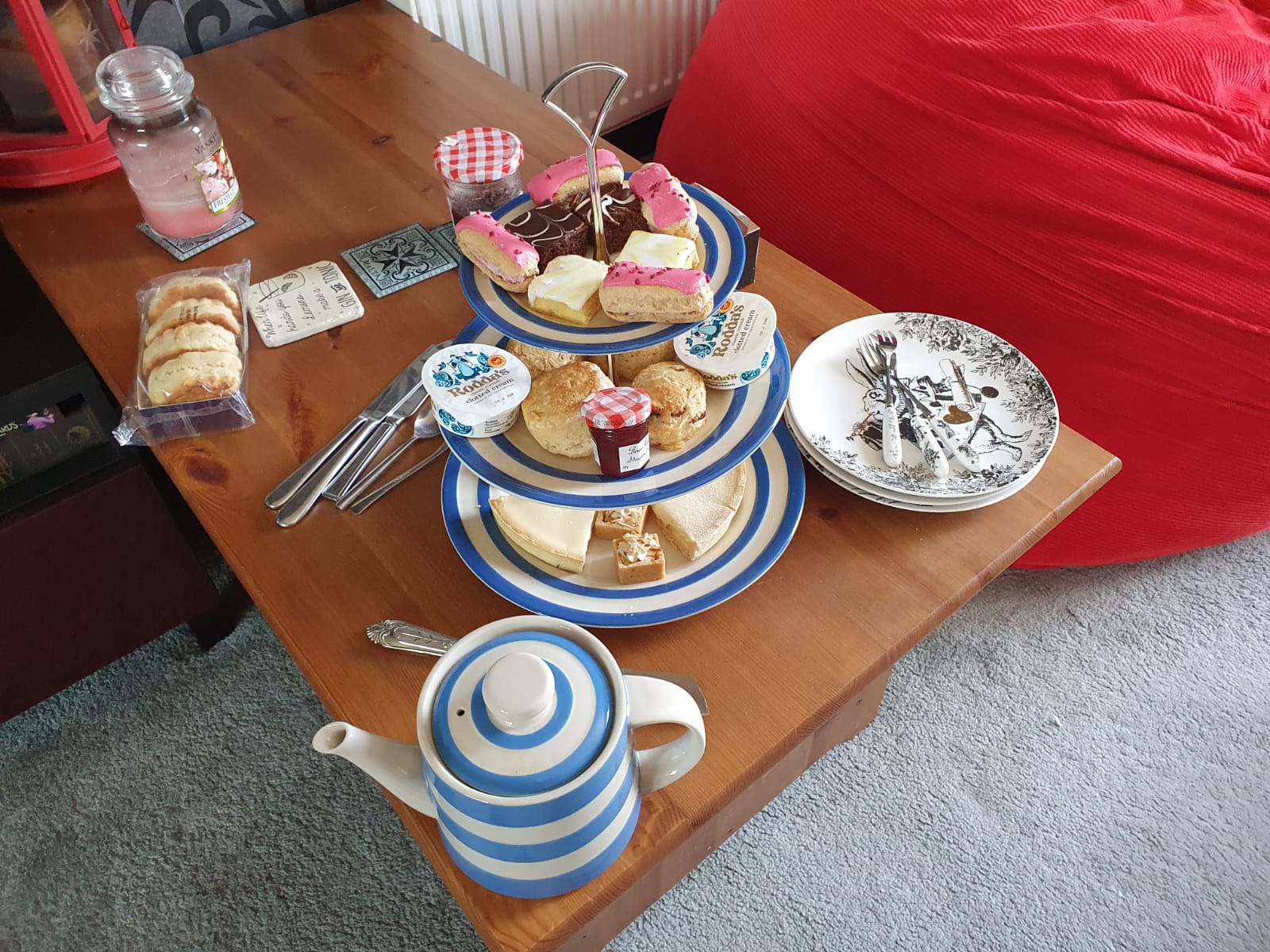
As I’ve confessed on this blog before,I am, what I like to call, a ‘failed microbiologist’. Many moons ago I completed a master’s qualification in environmental microbiology and dreamed of a career tracking pathogens through our water systems guaranteeing safe water for all. However, I graduated during a recession and started applying for any job that would have me. As luck would have it, I ended up on the immunology clinical scientist training scheme (the story of that fateful application I will save for a later date), and the rest is history. However, I’ve always loved a bit of microbiology and my fascination with all things fermented has taken me on many adventures. Including baking afternoon tea for a GirlyMicro special event!

My treat for finishing my marking this year was a fermentation course at the Welbeck School of Artisanal food learning all about the transformation of food by microorganisms. The word fermentation comes from the Latin fervere meaning ‘to boil’ after Romans watched the bubbles forming when they fermented grapes into wine. Name a scientist who doesn’t love a bit of Latin?  There are several biological processes occurring when we ferment foods like grapes, but essentially it is a process by which large chains of molecules are broken down by enzymes into their smaller, tastier, more nutritious, and more easily digestible parts.

The area of fermentation about which I am really passionate is sourdough. Yes, I lived in East London for many years, and yes, I owned a banneton before it was cool. Sourdough doesn’t just indulge my microbiology side project; it became unexpectedly personal. After picking up a particularly unpleasant microbe while travelling in India, I developed amoebic dysentery, and my gut never fully bounced back. I couldn’t tolerate shop-bought bread or much of anything, really. It wasn’t until I began incorporating fermented foods, especially sourdough, into my diet that I noticed slow but steady improvement. (Though let me be clear: this is my experience, not medical advice – if you’re unwell, definitely speak to your clinician!)

For the uninitiated, a sourdough mother, or starter, is a living culture of wild yeast and lactic acid bacteria that needs regular feeding with flour and water to stay active. As a failed microbiologist, I found something oddly fulfilling about sustaining a microbial ecosystem especially one that produces bread with real health benefits. What’s not to love about a culture that feeds you back?

Of course, I’m a dyed in the wool clinical immunologist so I can’t finish up this post without waxing lyrical about the immunology of sourdough. What makes sourdough really special, from an immunologists perspective, is how it supports our gut, which is home to about 70% of our immune cells. By encouraging a healthy mix of gut bacteria, sourdough helps produce bioactive compounds that keep our immune system balanced, strengthening our defenses without overreacting. This means it can help protect us from infections while calming down low-grade chronic inflammation that might otherwise cause problems. So, sourdough isn’t just tasty, it’s a simple, natural way to support a well-regulated immune response. Of course, sourdough isn’t for everyone, especially not for coeliacs. After all, even the most dedicated immunologist moonlighting as a microbiologist hasn’t yet figured out how to turn gluten into something completely safe. Guess some mysteries are still off the menu!

All opinions in this blog are my own

I’ve Posted About Tea Before but Have We Spoken About Cake? Why something as simple as a piece of cake can make a big difference

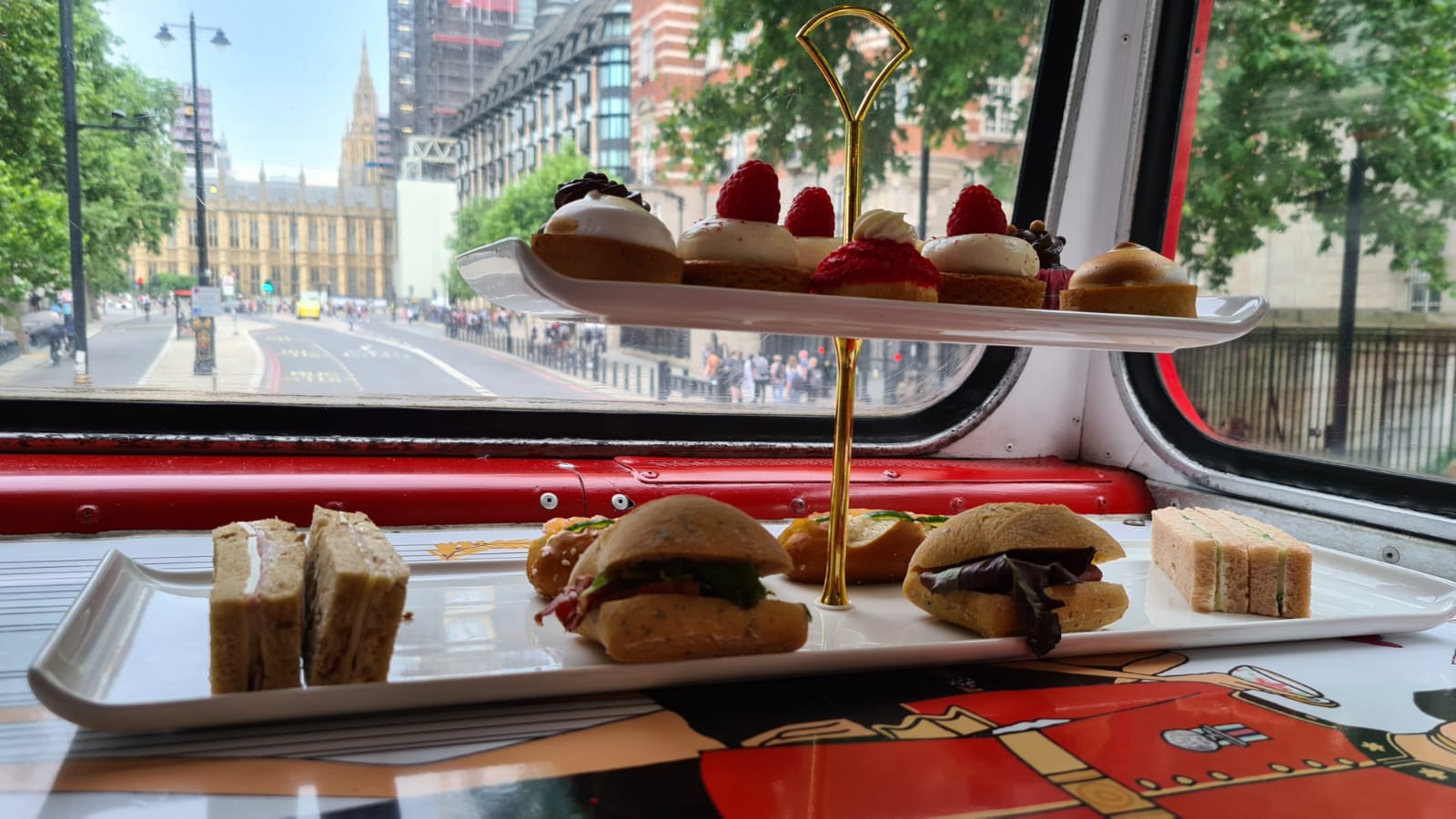
Last week I was running a course alongside some amazing Healthcare Science, IPC, microbiology and estates colleagues. It always amazes me how we start the week as a room full of strangers and by the last day you watch as they have formed bonds and built relationship, and leave having swapped contact details.  When I first started running the course it was suggested that paying for food and refreshments was a waste of resources but I stood firm, as I genuinely believe that there by providing food makes a difference, both in how people learn, but also in facilitating networking and having more time in the room. In light of these continued reflections, it felt like today was the right time to talk to you about cake!

Sometimes we all need a little self care

It’s no secret to those of you who read this blog that I love a cup of tea, I’ve posted about it enough. Sometimes tea alone may not be enough, shocker. Sometimes, we need to do a little something more that is a demonstration that we are being kind and treating ourselves. I’m not advocating daily cake or using cake as a crutch for dealing with lives daily issues. I’m advocating for balance and the occasional indulgence that shows we are putting ourselves as a priority every now and again. It’s horses for courses. Some people would go for a ramble, Sunday lunch, and a pint. I’m a cake, bath, and book kinda girl. Life is hard and sometimes taking a little of what you want is not a bad thing.

If you feed them they will come

The second place I’ve found feeding people really helpful is when I’m expecting people to give of themselves or their time, and acknowledging this by giving something back. If I’m running events, especially public engagement events, and people have turned up to contribute or participate then offering food is one small way of thanking people for that contribution. This is especially true if you are running sessions during times when people would normally be eating, such as lunch or early evening events, as you will also get less fruitful discussions if people are hungry or distracted about if they will have time for food.

Sometimes, we all need a little pick me up

I’ve already said that life can be hard and, for me, cake can also be used to enable me to provide comfort. There’s plenty of data about the link between sugar and serotonin, and the ability of a little something sweet to provide comfort is a chemical fact. This one isn’t about sugar addiction and eating our feelings. It’s about a practical step that can enable an interaction that may help someone.

It can sometimes be challenging to talk about difficult topics whilst staring someone in the face. Bringing something else into the mix that allows someone to talk whilst eating, staring at, or playing with the food on their plate, can be a surprisingly powerful tool to enable an individual to get past that particular barrier to expressing how they feel.

Can make someone feel seen

Cake isn’t just about comfort however, sometimes it’s about celebration or just acknowledgement of a change or achievement.  There’s a reason we have cakes at our big life moments after all. Taking the time to arrange/make/buy a cake demonstrates that you are invested in the other person. It demonstrates that you care or are acknowledging something that can be a big deal to the other person. It’s a way of not letting moments past by unmarked. Making people feel seen is one of the best gifts we can give, and providing cake is just one way of doing it.

Breaks down barriers

We all sometimes put our defences up when we are facing the unknown or feel at risk. This can happen in all kinds of situations, from attending an education event where you worry about sticking out to meeting a lot of new people at a friend’s social gathering. Much like the weather, food, and the quality or lack of, can be used to provide an ice breaker that can make many social situations that little bit easier. The whole ‘oh you went for the lemon drizzle’ comment can open that first difficult conversational door.

Is an act of show don’t tell

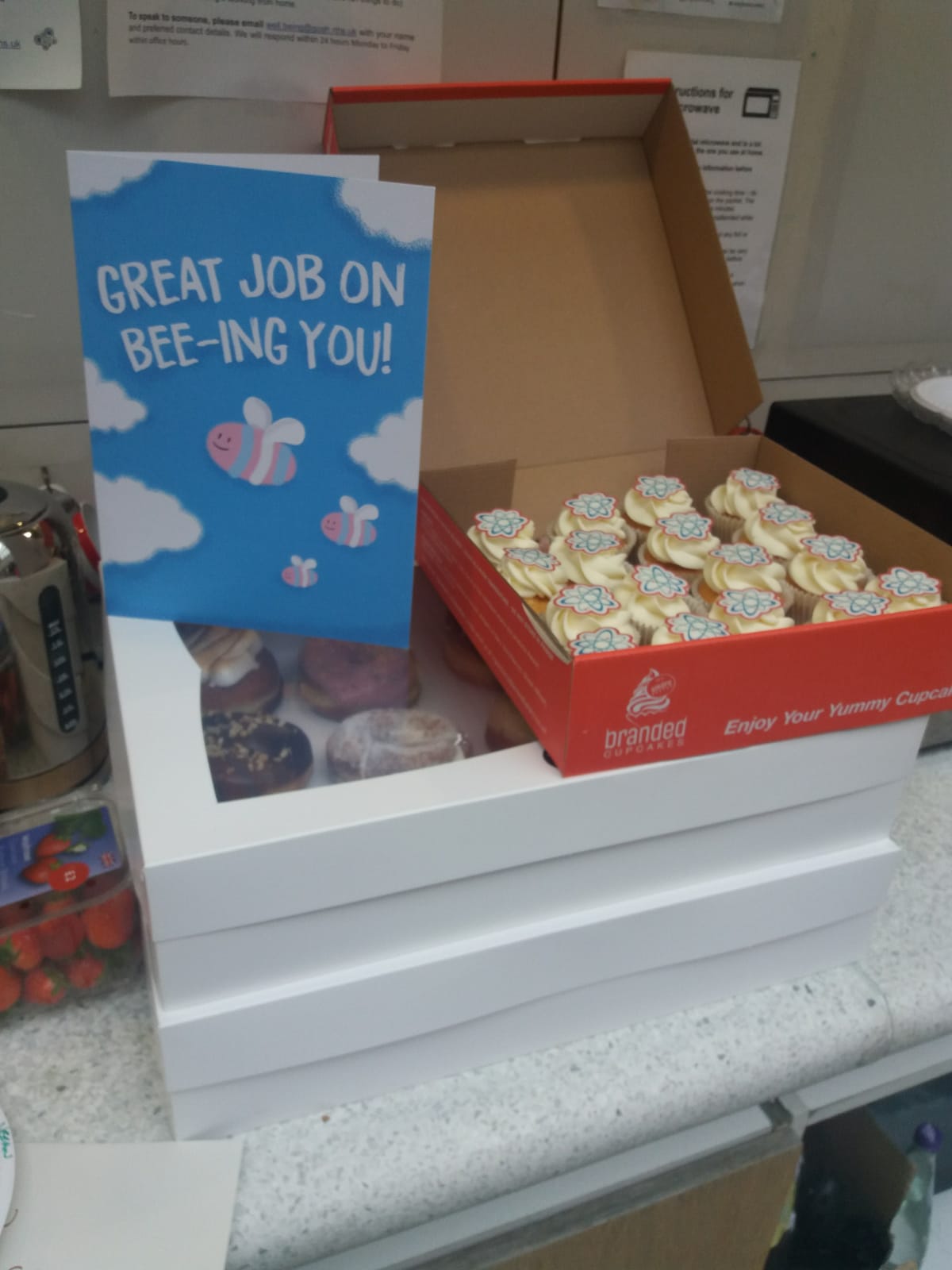
Too often, it’s easy to make conversational pleasantries, especially in leadership.  We all know of scenarios where the words that come out of the mouths of those in charge are not matched by their actions. I think it is therefore important to consciously undertake acts of ‘show don’t tell’ where possible. In these cases, simple gestures, such as a card and cakes for Biomedical Science day, demonstrate that you not only recognise that such a day exists and is important to people, but that you care enough about those people to engage with it, even if you are not a Biomedical Scientist. There are plenty of examples of this, but I think as leaders we should think more about whether words alone are enough.

Takes the financial burden off another

I spent a few months in the states on sabbatical before the pandemic and one of the things that struck me was that whenever I went to an academic meeting at breakfast, lunch or after work, there would always be food provided. It was both nice and plentiful, and at one point I was chatting with some of the students who attended about whether this was standard. They said in most good departments it was because university fees and living costs are so high that many post graduate students can’t afford to buy food despite working extra jobs. Obviously that is an awful state of ‘normal’ but it also struck me that I don’t know that my students would be so open about not being able to afford things. Since then, whenever I take any one of my team, students, or staff out, I will insist on paying just in case and as a demonstration of the fact that I care about them. As I said, life is hard, so let’s try and make it easy.

Supports levelling of hierarchy

A lot of reasons I’ve talked about so far are linked to leadership, but there are other reasons where deliberately using the offering of food to remove hierarchy is important. Conversations and openness can be inhibited by artefacts such as hierarchy. There are reasons why, in high stakes moments, hierarchy in healthcare may be beneficial, but most of the time it can run the risk of inhibiting openness and collaboration. Food can really support breaking down some of these inhibitors. Some of that is because we will often move to a more neutral, less loaded, location in order to have our tea and cake. It’s often not going to happen in a consultants office. The other reason is that food is pretty embedded as a way of demonstrating friendship in most human cultures, and therefore it works on a subliminal part of our minds to support engagement.

Buys time away to focus on each other

Another benefit of the fact that we may need to step into another environment to enjoy our tea and cake, is that you are also removing yourselves from distractions. I don’t know about you, but I feel like I have emails that drop into my inbox and pop up every few minutes. If it’s not emails, it’s calls, or someone knocking at the door. Stepping away from those distractions so you each have the mental space and capacity to undertake some active listening and really be in the moment with each other is pretty priceless, way more than the cost of some tea and cake.

Gives the gift of time

One the things I have least of in my life is time. I have very little capacity to do anything other than survive and work. Therefore, if I take the time to make Christmas puddings for my friends, or bake a cake for colleagues, I think it goes some way to showing what those people mean to me. It means that I prioritised that act over something that I could have chosen for myself, such as bath and book time. I also hope that it holds greater meaning for them because they know how hard it is for me to carve out those moments in my life. I could buy a cake, and I often do, but when I can I will also try to give the gift of time by making one myself.

Enables you to show you care about the person not just the task

I often take my team out for tea, and sometimes lunch, but those sessions are usually working sessions. Sessions where we may be eating but we are also planning a project, talking through results/feedback, or developing a strategy. It’s so important sometimes to do the same thing but without work being on the table. I can be a pretty task focussed individual. It’s one of the reasons I probably ended up as a scientist. For getting stuff done, all that is pretty great, but to really do it well requires us to value the person and not just the task. Every now and again it’s important therefore to step away from the normal and catch up without a job or agenda, and to just be in the company of people you work with. It helps you get to know them better as people. To understand the challenges that they have going on, and not just in their work life. To value them as people, not just as cogs in the machine. It’s easily forgotten but crucial to do.

Can be a great educational tool

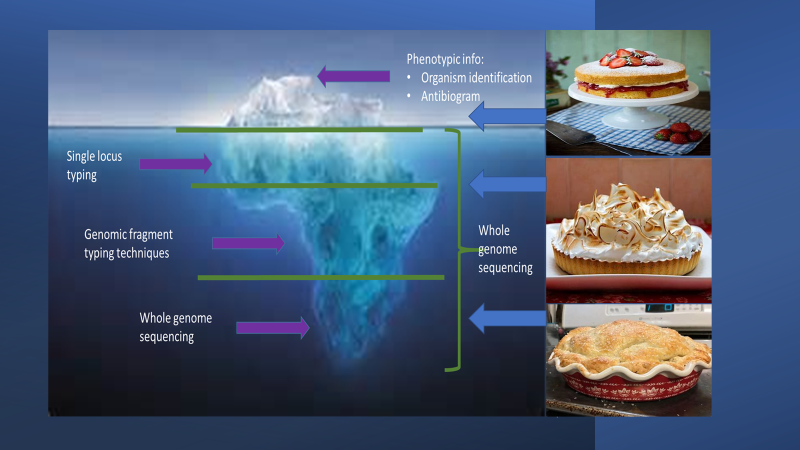
The slide below is one that I use to talk about molecular typing through the medium of cake. I find it works because most people know about cake, whereas many people don’t know about molecular typing. I talk about phenotypic, or growth based identification, being like a Victoria Sponge. You can see everything, you don’t need to cut it open to work out what it is. It’s a classic and will please most people most of the time. I then talk about fragment based typing, things like PFGE, VNTR, typing that looks at sections of the genome in order to decide on whether two things are linked or not. For the most part, this is like a meringue dessert. You can tell it from the outside that it’s meringue, but won’t be until you cut into it and get more information whether it is lime or lemon. Finally, you have whole genome sequencing, which is more like a pie. You can look at something and know that is a pie, but when you open it up you can get all kinds of information. You’ll be able to tell whether its fruit or savoury, what kind of fruit, and you’ll even be able to have a guess at what spices were used. It all depends on what level of information you need before choosing your cake.

Sometimes, it’s just nice to eat cake

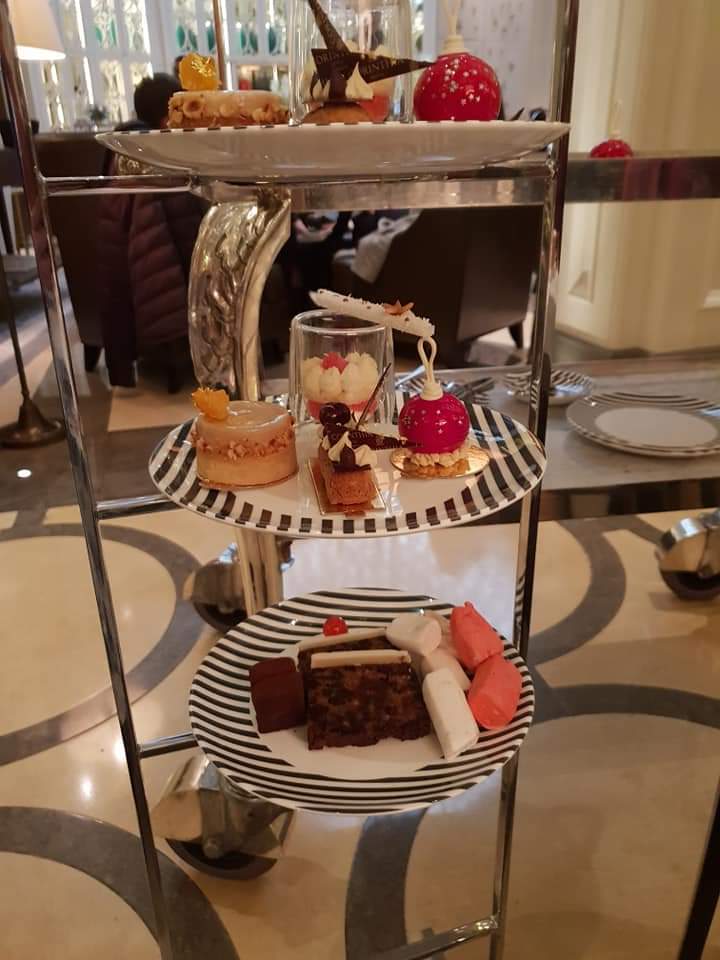
Finally, and not to be under estimated. Sometimes it’s just nice to have cake. Be it because the world is glorious, or the world is gloomy. Be it on your own in glorious solitude, or to spend time with someone you care about. Be it on your sofa, tucked up in bed, or at the Savoy. One of the best things about the joy of cake is the flexibility to enjoy it (or not) however you wish!

All opinions in this blog are my own