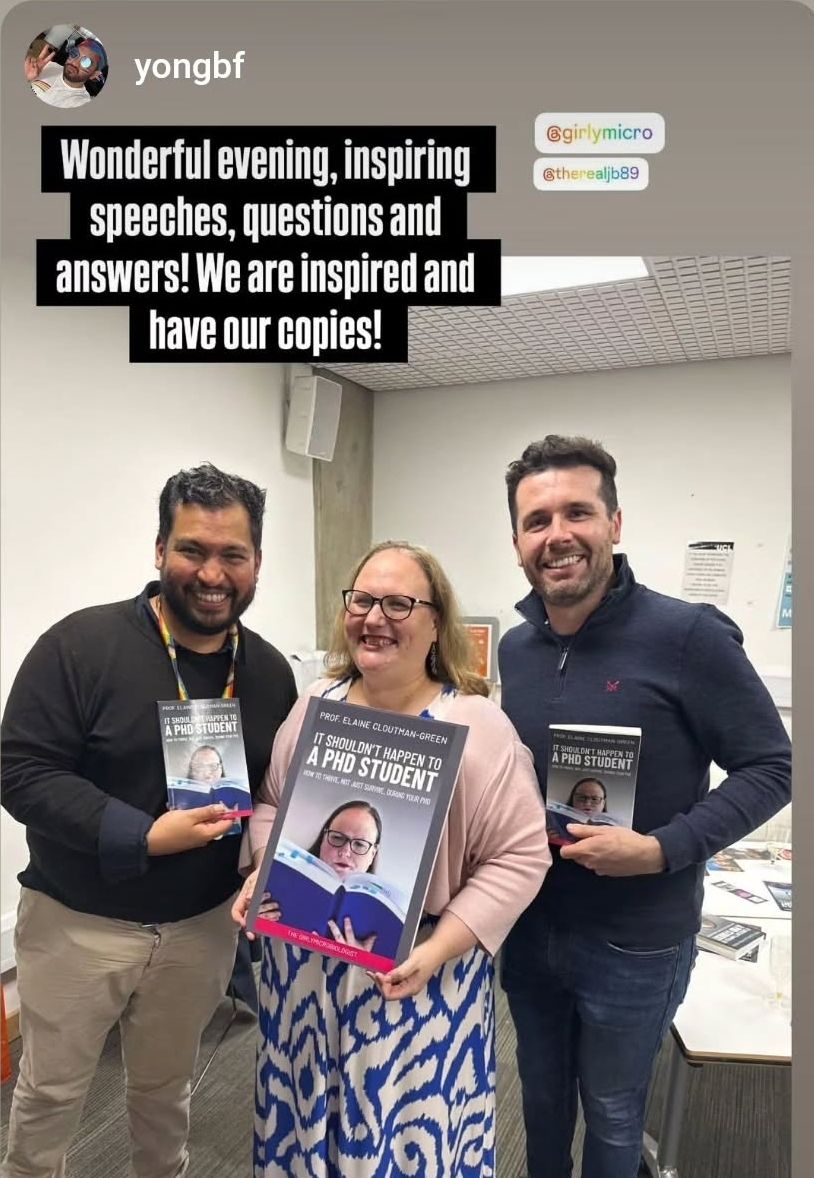
I must admit I shed a bit of a happy tear when this arrived unsolicited in my inbox, it’s been a bit of a week. My next thought was that there is no way I could share it, as it would be the epitome of self promotion, and that’s never considered to be a good look. Then I sat and thought, what would I advise a friend to do if they were in the same situation and I decided something. I decided to be proud of what I’d achieved. To be proud of the hours spent to achieve the output earned, and to be proud to have someone so invested they would take the time to write an unsolicited review for this blog. I know that is what I would advise and hope that all of you would do, and so this is my moment I decided to model the advice I would give. We all have the right to own our achievements and not make ourselves small to avoid the commentary of others.
Dr Walker is a paid up member of the Dream Team since 2013, token immunologist and occasional defector from the Immunology Mafia. Registered Clinical Scientist in Immunology with a background in genetics (PhD), microbiology and immunology (MSc), biological sciences (mBiolSci), education (PgCert) and indecisiveness (everything else). Now a Senior Lecturer in Immunology at University of Lincoln. She has previously written many great guest blogs for The Girlymicrobiologist, including one on turning criticism into a catalyst for change.
Full disclosure: I wasn’t invited to write this review, I insisted. I also haven’t been paid for it; quite the opposite, in fact. I went out and bought two copies of Professor Elaine Cloutman-Green’s book with my own money: one for me and one for my PhD students to share (or squabble over). And yes, I did get her to sign them. What can I say? I’m a lifelong fangirl.
Professor Cloutman-Green’s It Shouldn’t Happen to a PhD Student is a rare gem in academic literature a compassionate, wise, and profoundly practical guide that feels like a conversation with the mentor every research student wishes they had. Written with warmth, humour, and candour, the book demystifies the PhD journey from start to finish, transforming what can often be an isolating experience into one filled with clarity, community, and hope.
Elaine, known affectionately as my favourite Professor or the GirlyMicrobiologist, draws upon two decades of experience as both scientist and supervisor to craft a guide that balances rigour with humanity. Structured in three accessible sections; getting onto a PhD programme, surviving and thriving during it, and using it as a springboard for the future. The book serves as both a roadmap and a reassuring companion. Each chapter blends actionable advice with reflections that acknowledge the emotional highs and lows of research life, creating a tone that is both authoritative and deeply empathetic.
From the very first chapter, “Knowing Your Why,” Elaine invites readers to pause and reflect on their motivations, an exercise that sets the tone for the entire book. Rather than treating doctoral study as a mechanical career step, she frames it as a personal journey of purpose and growth. As she writes, “A PhD should be a step towards delivering on your aspirations, not just a title to put in front of your name.” It’s a line that perfectly encapsulates her philosophy that research is not about prestige, but about purpose.
What truly elevates this book above other graduate-school guides is its inclusivity and warmth. Elaine writes as a mentor who has seen it all: the sleepless nights, the imposter syndrome, the joy of a successful experiment, and the power of perseverance. Her anecdotes and checklists are peppered with practical wisdom not the vague “work harder” platitudes found elsewhere, but concrete steps to manage deadlines, develop professional skills, and build meaningful academic networks. The inclusion of “Top Tips” sections at the end of each stage provides digestible summaries that make the book easy to dip in and out of throughout the PhD journey.
And it’s not just students who need this book. Supervisors – myself included – will find plenty here that resonates. Elaine reminds us, gently but firmly, that supervisors are people too: flawed, human, and still learning alongside our students. Her reflections on empathy, communication, and shared growth are as valuable for those guiding PhDs as for those undertaking them. Every research group could benefit from having this guide on their shelf, it’s as much a manual for mentorship as it is for PhD survival.
Of course I must acknowledge my own bias, Elaine was my mentor during my own PhD, and many of the insights in this book feel like familiar echoes of the advice that got me through my hardest days. She taught me so much about science but more importantly that research, like life, is all about surrounding yourself with people who lift you up when you falter. It Shouldn’t Happen to a PhD Student captures that same generous spirit, showing that the best kind of academic success is shared success: when mentors and students grow together, celebrate each other’s wins, and keep curiosity at the heart of everything they do. Everyone deserves a mentor like Elaine someone who reminds you that with compassion, courage, and community, the PhD journey can be one of the most transformative experiences of your life. Oh, and she provides the most excellent of snacks, the occasional much needed gin and tonic, and a rousing rendition of ‘Drop it like it’s hot!’… but that’s a story for another time.
Being present on social media or even listening to the news right now can be hard and take me into a pretty dark head space. It’s easy to write negative posts as a result of this head space and to give energy to the people or situations that make life challenging, or who make us feel badly about ourselves. Those people get to spend enough free time in my mind, however, without me giving them more air time or more of my energy than they already have. So, in the spirit of active rebellion, let’s turn the world around and talk about the people who do deserve the energy and recognition. The ones who give liberally, support unconditionally, and act as the cheer leaders that we all need in our daily lives to just get through the week. Let’s focus on the good rather than being drawn into the dark.
Thank you to the people who catch us when we spiral
We all know that I have a strong tendency to spiral, especially linked to event triggered anxiety. I’ve written about it before. I wanted to take a moment to thank those people out there who recognise and actually help flag to me when I’m spiralling, as sometimes it can take me some time to even notice the deterioration in my thinking. Just recognising that you have fallen into that head space can be challenging, but recognition is the first step in managing and exiting the spiral.
The second reason having ‘spiral friends’ is super helpful is that I have a very very small list of friends who I can call (and they can call me) and say ‘I’m in a spiral’. We then support each other by talking through the source of the anxiety, the validity of the anxiety, and if there are any actions that are valid/required. People who take time out to talk through and validate responses when needed and dispel irrational thinking as required, give the greatest gift in terms of time and support.
To the people who listen to the repetitive statements until we’ve worked through our process
I not only have a tendency to spiral, but to sometimes get stuck in my thinking. When I’m fixated on something, I can be one of the most annoying people in the world to be around. Becoming hyper focussed is one of my greatest gifts, as it means that I can just sit down and write 5000 words or focus for hours at a time. It’s also one of my greatest curses, as when that fixation falls onto something that I have no control over or is more of an emotional block, it can be really challenging to stop that focus becoming an unhelpful fixation.
When I fixate on something I just can’t let it go. I have to process my way through it. Sadly for those around me that processing tends to take the form of a very repetitive conversation cycle, whilst I try to talk my way through the weeds I have gotten caught up by. This means, for Mr and mummy Girlymicro, and my besties, they get stuck also having to have these conversations with me. On repeat. I do eventually get to the point where I come out the other end, but I know it would be easier for everyone around me if I could just put it in a box and move on without the thorough exploration this process requires. So thank you for your patience and generosity with your time, I know you all have other things to do and I owe you a lot of champagne in return.
To those who love us, not grudgingly, but because they truly accept our imperfections
Having just read the last two paragraphs it should come as no shock at all that I am far from perfect. I annoy myself sometimes, let alone anyone else. The thing is, I have some people in my world that truly love me. They don’t love me despite my flaws. They love me because of them. They love all I am, despite how challenging that person can be. Knowing that is the most empowering thing I can wish for someone. It makes me feel safe enough to express and face my fears. It empowers me to share my failures, challenges and learning, through things like this blog. It is my greatest hope for all of you that you also find your people who make you feel this way, whether they are your family by blood or by choice. These people enable us to be the best versions of ourselves, and I couldn’t be more grateful.
Shout out to those who truly embrace difference as a positive
Humanity is tribal. Most primates are. That means that we can have a tendency to like people who act like us and hold similar values. The thing is, our diversity and difference is what makes us stronger, and should be something that is embraced rather than suffered. As someone who holds a rather weird and wonderful mind, that may not process and see the world in the same way as others, I sometimes really feel how I am seen at ‘other’. I often just don’t fit in and, even more than that, I frequently want to walk a path that is not valued or trodden by others. There are people out there, who rather than being baffled or thrown by this approach, fully embrace it and what this difference offers. Instead of trying to make me fit into a box that doesn’t feel comfortable, they support and encourage the risk taking that is required to walk my own path. They do not find my difference a challenge or a threat, but an inspiration and a positive trait. They see value in me as me, and that is not so common. These people are the ones that have the ability to change the world by expanding acceptance and re-defining normal. We need to find them, honour them and celebrate their vision.
Thank you to those who remind of our strengths rather than focusing on our flaws
Part of learning and growing as an individual is having the self reflection to understand our flaws as well as our strengths. It’s easy to lose perspective, as our area of change is often linked to the things we want to fix, to the extent that out flaws loom large and we forget about the strength side of the equation. Many of us are perfectionists who struggle to come to terms with the fact that we are, and always will be, a work in progress. It is also easy, therefore, to lose sight of how far we’ve come and to just see how far we have yet to go. So, this one is a shout out to the people who help us re-focus, and bring back into perspective all that is positive about ourselves. The ones who help us bench mark that, actually, we’re doing OK.
To those people who will hold us while we cry it out
I wear my heart on my sleeve, I always have. I’ve lost count of the number of times I’ve felt judged for this and when I’ve received comments such as ‘you’re too emotional to be a leader’ or other judgements that indicate you cannot be emotionally expressive and be good at your job. Comments that indicate empathy or emotional intelligence may actually be a risk rather than something to be developed. For a long time this meant that I tried not to fully engage or bring that part of myself to my working life, to try to be more remote and not express how I was feeling. Now, I’m not saying we should scream and shout, but I do think that I am a rounded individual who is not a robot, and neither are the people I work with. Therefore, to be my authentic self I need to acknowledge that I come with feelings, beliefs and biases, which need to be noted and managed, but also make me a better human being if handled appropriately.
Outside of work especially, I’m such a crier. I weep at movies, I cry with both sadness and joy, and don’t get me started on my behaviour at weddings. I am so grateful to have friends and family who allow me to safely experience all the peaks and troughs of these emotions, and know that a box of tissues or three may be required if we are going to Les Misérables.
I am beyond grateful to those who give us courage to be the true versions of ourselves
Speaking of my emotional side brings me onto authenticity. When I started my job I wouldn’t talk about being a gamer. I wouldn’t talk about movies, or other things that interested me, as people would comment ‘geek’ and roll their eyes. Over the years since I’ve realised how important it is to fully show up, and to bring my whole self to spaces, especially when in a leadership role. If I don’t lead the way, how can I expect others to. It’s not always easy however. Sometimes the comments cut deeper when they are made at our authentic selves rather than at a protective shell. It can be easier for others to try and bring us down when we offer so much of ourselves as a target. There are definitely times when I just want to retreat into my shell and take the easy road.
Even when writing these blog posts, there are times when it would be easier to hide from some of the challenges, especially when there are comments made linked to my choices. I stand by those choices however, I stand by sharing the highs and the lows, and by showing my flaws as well as my strengths. It takes courage some days. Some days more than I have available. So I want to say how grateful I am to those of you who lend me courage on days when I lack it. I look back on the many of the positive comments on this blog when I start to doubt myself, and use them to give me clarity and strength to move forward when it might be easier not to.
No matter how hard it gets, if you can find these people in your life it’s worth fighting for
It took me a long time to feel (mostly) comfortable in my own skin, and so much of that progress has been due to me finding the people in my life who told me that it was OK to be me. I’m fortunate to have a great family by blood, but I also have key members who are my family by choice. No matter where you find them, treasure them. In these difficult times, when the world can feel like you could be swallowed by quick sand any second, use them to anchor you. Use them to reflect. Ask, will this matter in 6 days, 6 weeks, 6 months or 6 years? Use them to help gain the perspective you need to pull yourself up and get out there to fight the good fight and stand up for what’s right. Just don’t forget to also thank them for the amazing role they have in your world and pay it forward so you can be that same person for others. The world is always darkest before the dawn, so lets get through this time together.
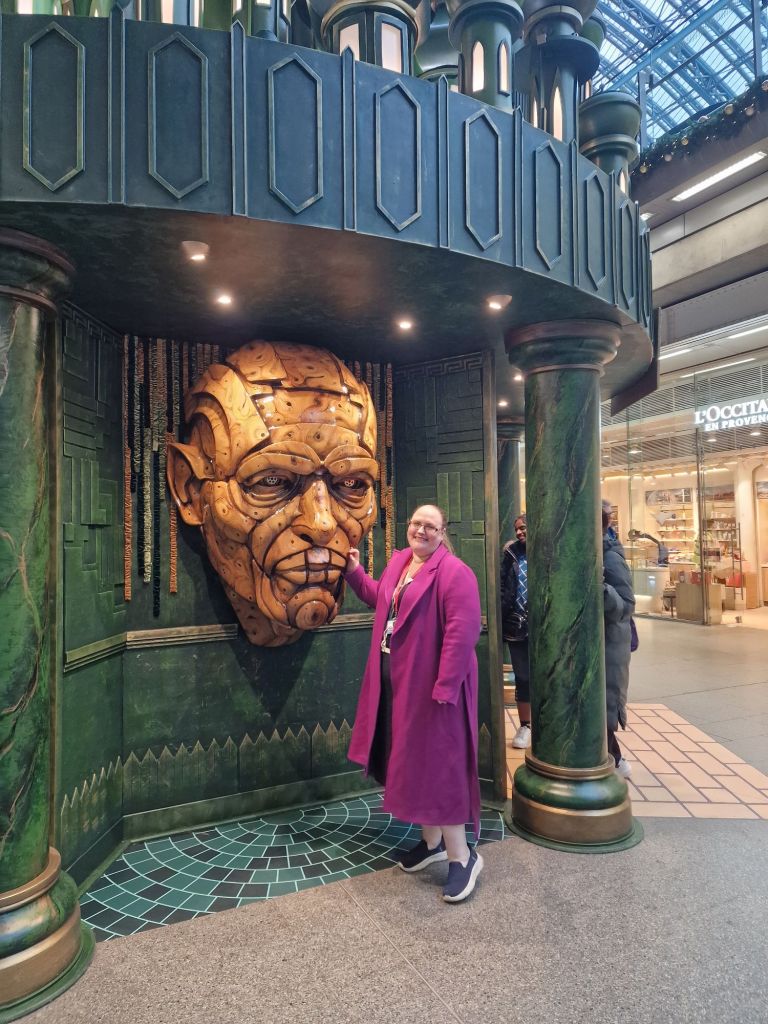
With the news of the Oscar nominations for Wicked Part 1 coming out, I thought it was finally time to dust off this post that has been languishing in draft for over a year. I guess it will surprise none of you dear readers, that I am something of a musicals fan and Wicked is one of my favourites. I saw it for the first time on honeymoon in New York with Mr Girlymicro and knew very little about it going in. Whilst watching it, the song Popular rapidly became one of mine and Mr Girlymicro’s favourite tunes (alongside What Is This Feeling?).
The words have always triggered something in me in terms of thinking about leadership, especially the line ‘It’s not about aptitude, it’s the way you’re viewed’. With everything going on in the world right now, it feels like a really important concept to explore. Is leadership all just really all about being popular? And what does that actually mean?
When I see depressing creatures With unprepossessing features I remind them on their own behalf To think of Celebrated heads of state Or specially great communicators! Did they have brains or knowledge? Don’t make me laugh! They were popular! Please! It’s all about popular It’s not about aptitude It’s the way you’re viewed So it’s very shrewd to be Very very popular Like me!
What’s makes someone popular?
I’d like to start this by saying that I don’t really think I would know what makes someone popular from first principles. If I was in a 90s school based movie, like Mean Girls or Clueless, I would definitely be the girl who hides out in the library rather than being an IT girl or one of the popular kids. So, I’m probably not coming from a position of expertise on this one. I have however put those library skills to use and come up with this from those with greater expertise:
This popularity doesn’t just impact how we interact with others, it also impacts how we are treated, opportunities that we are offered, and helps reduce negative emotions linked to social rejection. This may seem self evident but it is also backed up by research with one study defining popularity as ‘generally accepted by one’s peers’.
How we are perceived by others can, therefore, definitely impact on our working lives and likability, or popularity. Whilst how we are liked one on one is referred to as inter-personality, popularity is determined at the group, rather than the individual level, and is related to a person’s ability to make others feel valued, included, and happy on a more general level. The question is………is all popularity therefore about making others happy, and is leadership therefore all about attempting to make the most people happy in the widest possible way? Does getting ahead professionally mean that you need to be part of the ‘in crowd’ in order to succeed.
Is it all about people pleasing?
If you’ve seen Wicked, there is a great scene where The Wizard talks about how he wants to be seen. A lot of the plot across the entire musical is about superficial appearances rather than the ‘truth’. A lot of sub-par decision making within the plot is hidden behind the mask of popularity, and poor leadership is permitted because of the wide spread popularity of those making the choices.
I’ve written previously about the challenges of being a people pleaser and how it is impossible to please everyone. One of the challenges, in terms of leadership, is that if popularity is considered to be the way forward, in terms of being a good leader, you will be forced to chase good opinion rather than focusing on strategic or other vision. It also inevitably leads to your leadership being less and less authentic as you try to follow, not your central ethos, but a diluted version based on the perceived views of others.
What are the advantages of being civil?
So am I saying that it is not necessary to be nice? Just being ‘nice’ is often considered to actually be a disadvantage within work place settings, it is often good for making friends in a 1:1 setting, but as I’ve said popularity is determined on the group rather than the individual level. Within this context being nice or perceived as ‘warm’ can actually have a negative impact on careers, as warmth is often considered to be inversely associated with competence i.e. you can’t be nice and good at your job. According to Porath (2015), being seen as considerate may actually be hazardous to your self-esteem, goal achievement, influence, career, and income. So being nice alone is not enough. What does allow the switch from nice to being popular?
According to the same paper by Porath, it is about not being considered nice, but is actually linked to respect, and in this context civility, which comprises of both warmth and perceived competence:
“Civility is unique–—it leads people to evaluate you as both warm and competent. Typically, people tend to infer that a strength in one implies a weakness of the other. Many people are seen as competent but cold: He’s really smart . . . but employees will hate working for him. Or as warm but incompetent: She’s friendly . . . but probably is not smart. Being respectful ushers in admiration–—you make another person feel valued and cared for (warm), but also signal that you are capable (competent) to assist them in the future.”
Civility, in this professional context, demonstrates benefits that being nice alone does not, especially in the context of leadership, where those who reported feeling respected by their leader reported 89% greater enjoyment in their work and 92% more focus. So maybe less about pop…u…lar and more about civ…..ili….ty? Or maybe they are one and the same thing?
I do have quite a significant word of warning linked to this linking however and that is, is the ability to be civil linked to privilege? If being considered civil, and gaining the associated advantages, linked to not having to fight or voice unpopular opinions? Anything that requires warmth as part of the algorithm risks benefiting those who are in a position where they can court popular support, rather than feeling like they need to make a stand. Having the energy and resources to be able to invest in being seen as civil is in-itself linked to privilege. If you are working part time or under resourced, you are unlikely to have the time resource to invest in some of the relationship building needed to be identified as both warm and competent. There are also people who believe that they cannot invest because of the risks to their careers in coming off as warm without the associated benefits of being seen as competent. The costs in terms of income or self esteem are not ones that everyone can risk in case it goes wrong.
Is civility just another way of benefiting those already in positions of seniority?
Is it therefore that civility, and it’s associated popularity, are just another route that benefits those that are already in a position of privilege. Is popularity linked to status? Traditionally status is based on attention, power, influence, and visibility, rather than acceptance from peers, and so popularity may be more significant in informal vs formal leadership settings. This isn’t saying that senior leaders shouldn’t be civil, and that they shouldn’t come across as warm. It does mean that they are probably at lesser risk from the disadvantages and risks once they are in a formal leadership position, where they are able to draw upon different markers of power and visibility to gain influence. This can give the false impression that you need to be popular in order to be a senior leader, whereas the reality may be that you can afford to be popular as a senior leader as you are less at risk of any of the negative consequences of you only being viewed as part of the equation.
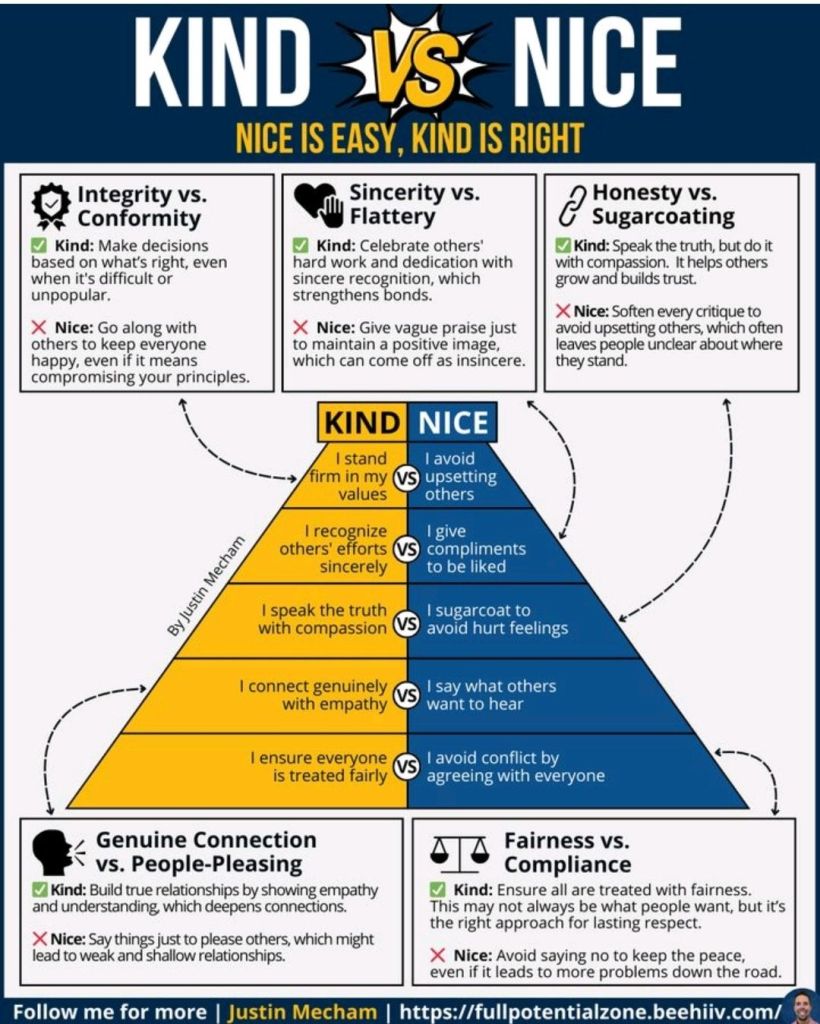
What is the difference between being nice and being kind?
So, I’ve talked about being nice as not always a risk free move in terms of career progression, but what about kindness? I’m a massive advocate of kindness, but sometimes I wonder if people have the same understanding of the term as I do or whether they use it as a proxy marker for other things. For instance, we often talk about kindness and niceness as if they are interchangeable, but I’ve been wondering if the difference between the 2 is where the perception of warmth vs civility (combined warmth plus competence) actually sits.
I have certainly met people who believe that being kind and supportive means always being in agreement or always saying yes, whereas I believe that this is more acting from a position of people pleasing and being nice. In contrast I believe that sometimes the kindest thing that you can do is to say no, either because you’re not in a position to deliver what they want or that saying yes would put the other person in a challenging position. Nice can often feel right in the moment, whereas kind considers the wider, and sometimes longer term, implications.
How do we manage kindness in a way that is authentic?
Being kind can be challenging as it is not always about taking the easy route, sometimes it’s about making hard choices in order to help yourself, others or the organisation, to be the best version of itself. It can challenge some of the behaviours linked to people pleasing in order to move towards authenticity in terms of interactions and leadership. For me, kindness is very much about doing the right thing instead of the easy thing, but to really deliver on your values, you need to invest the time to understand what those values are first. What do we stand for? What three words would we assign to our core descriptors of self? Knowing what your core values are enables you to have a self check benchmark to help identify when we are being nice over kind.
Where does social capital fit in here?
Obviously, civility and kindness are not the only factors that come into play in the ‘popular’ discussion. There are all kinds of other forms of social capital that can impact on how successful we are at network building, influencing and leadership. Especially in the world of science and healthcare, expertise comes into play quite significantly, and access to funding can never be under estimated, in terms of providing leverage and empowerment.
It is always worth being aware of, and investing in, all of these different strands for long term success. Having said that, all of these also require you to have the capacity to invest. As someone who can’t have children, and therefore have greater freedom to balance my work and home life, I’m aware that I probably wouldn’t have been able to build a clinical academic career if my life had been different. If I’d had to leave on time for school pick up or had to be lead carer on the weekends, I wouldn’t have been able to publish the papers or apply for the grants required. There is inbuilt privilege in my being able to prioritise my career at times. This blog requires hours every week. Hours that I enjoy investing and which I reap the benefits of in terms of networks and connections. These are things that I wouldn’t be able to do if I needed to pick up a second job or was caring for a parent. When we ask people to have these additional pieces of capital to progress, we need to be aware that we are putting barriers in place so that not everyone can make the most opportunities. We need to make the most of the tools we have available to us, but as leaders, we also need to understand how to support people to access opportunities in a way that doesn’t disadvantage them in relation to others.
Let’s not forget that leadership is hard
I think that one of the things that it is often easy to forget is that leadership is hard, in some ways, if it’s easy you probably aren’t doing it right or stretching yourself enough. Part of leadership is making the unpopular and challenging decisions, and sometimes there are no win wins. Being popular, being considered empathetic is always a nice thing but it is not the only thing that makes your leadership successful. So is it, in the end, actually all about popular? If you were to ask me it is instead all about authenticity. The key thing, from my perspective, is to let people know who you are, connect with people as much as possible and share/co-create the vision. Then they can make informed decisions about whether to get on board the Girlymicro train or not! On this one, I may be with Elphaba.
Buckle up, this is a long one, but I hope you’ll enjoy reading it as much as I enjoyed writing it.
Many moons ago, I did an A-level in psychology. I enjoyed it so much that I even took some modules during my degree. During my A-levels, I still remember how much I enjoyed the section on group decision making and the different roles that both exist and can influence. During my degree, some of my favourite parts were linked to evolutionary psychology but also game theory and how mathematics and behaviour combine to impact how we should make decisions.
Now, many of you will know that I am a gamer and love all things from board and computer games through to tabletop role playing and free forming.
N.B. Some of you might not know what free forming is, so a quick description is that it is like the murder mystery games you can play, unscripted, but generally much more in depth. I like to think writing them is like writing a novel, but each character only gets their bit
Over the years I’ve had plenty of time to both write and play around within the free forming space using influencing/manipulations linked to group decision making but low and behold watching The Traitors is like all my experiments rolled into one and I LOVE IT!
What is The Traitors anyway?
For those who have managed to avoid getting hooked, first of all, congratulations, as I watch not just the British but also the overseas versions and just can’t help but get sucked in. But what is it? Launched in 2022 and is presented by Claudia Winkleman, it is a TV series where the aim of the game is to find the murderous Traitors in your group before they kill you all. Have any of you played the game Werewolf, either old school or the newer card game? At its very core, The Traitors is like werewolf with the option of extra wolves and the addition of afternoon tea.
There have now been three UK seasons, and for context, I’ve included the trailer for season one below:
The structure goes something like this. Between 20 and 25 people arrive at a pretty glorious castle in the Highlands. On arrival they spend a day getting to know each other. That evening, they meet for a gathering around a ’round table’. Whilst blind folded, at that meeting, the Traitors (usually three) are chosen, and the game then begins. The rest of the players become what is known as Faithfuls. During the days, the group then as a whole compete to add money to the prize fund which will be won at the end of the game, and at night, the Faithfuls try to find the traitors by banishing a person they believe is part of the Traitors group. If there are any traitors left after the banishment phase, the traitors choose one person to murder. Everyone meets for breakfast the next day and finds out who is left, and the cycle begins again.
Over the next few weeks, the numbers are whittled down until there are a handful (5 ish) left. The game ends at the point the group banishes all the people they believe are traitors until there are only those perceived as Faithfuls left. They can choose to end the game at any point once down to these last few, but if, when they choose to end the game, there are any traitors left in the group, the Faithfuls leave with nothing and any Traitors split the remaining money between them.
There are only two ways to leave the show
Banishment
Murder
Both are based on some form of group decision making. Over the course of the game, banishment starts with a large group of poorly linked individuals and progresses to a small group of highly linked individuals in a competitive space. Whilst decisions about murder are made in a small group based on trust and risk based decision making. The dynamics of both can, therefore, change over time. To understand the challenges behind these decisions, it is key to understand that group decision making can be more nuanced and complex than it may initially appears.
Let’s talk group decision making
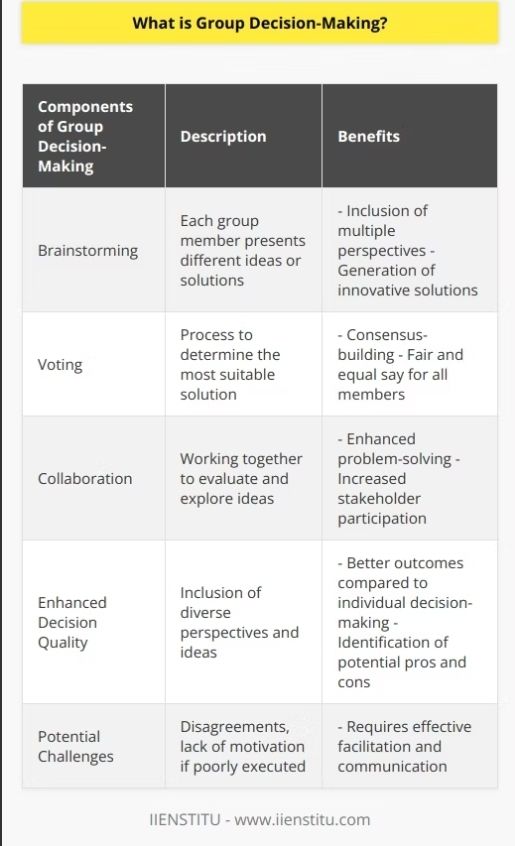
Two heads are better than one…..right? The basic principle of why we should use groups to make decisions is that a group will make better decisions over time than an individual alone, especially during complex decision making.
There are a number of steps that can be used to support sharing and evaluating of ideas, to support improvement in the decision making process over that available to single individuals. There are also a number of possible ways that the ‘decision’ part can be undertaken, consensus, majority, unanimity, etc. The thinking behind using these processes is that each person comprising part of the group then becomes additive, and therefore, more is better.
These aspects to group decision making can, if used consciously, really help bring about the most positive aspects of any decision making process. However, they all require certain things to be in place for them to actually work in the way that permits the best possible outcome, and so group decision making is predicated on how individuals work within the group to actually support its success.
What are the particular challenges of group decision making?
We all like to think that we are smart, independent thinkers who can bring something unique to the table. Partly because, as individuals, we tend to believe that we will accept and weigh all of the different perspectives that will be brought to the table equally and therefore act inclusively and positively contribute. Is this true however?
In 1981 Meredith Belbin came up with a view of how team roles. the roles that we may default into in a team, can impact how teams work and relate to each other. People generally have a preferred role that they will fall into, but roles may change based on the needs of the group and the relationships that exist, especially as these can be dictated by how the group is working.
The truth is, as demonstrated within The Traitors, we don’t necessarily value all of these roles equally. Within The Traitors, often the people centred roles are valued more highly, especially early on, and so people who are ‘different’ such as plants or ‘challenging’ such as shapers may be prone to banishment early in the process rather than being valued due to the different perspective they bring. Other roles, such as the implementer or monitor evaluator, may become isolated as too focused on task and therefore ignore the social niceties required to build social capital, which is important to be able to call on when you inevitably come under suspicion.
We see those not like us as being a source of risk or difference that can lead to distrust, which makes those that could be highly valuable, linked to their differences in perspective or approach, actually to be seen as individuals to remove from the group early. Thus making the whole task of finding the Traitors to actually become more inefficient early in the process. These challenges aren’t just present in The Traitors decision making though, and so Belbin encourages self reflection to understand the roles we take and what benefits and disadvantages they hold.
How does voting impact and a lack of facilitation impact?
We often like to think that we are useful and can actively contribute. In the case of The Traitors, participants like to believe that they know, or can spot things that others cannot, and therefore can make themselves valuable members of the group. For the Traitors, all scenarios will feel like a risk as we like to believe that others are as obsessed with us as much as we are focused on ourselves, something called the Spotlight Effect. In recent seasons, there has also been a focus from the Faithfuls on obsessing about why they have been kept in and not murdered, hence placing increased focus on themselves and the importance they play within the group. All of this plays out around the round table linked to the fact that a single round of majority voting is utilised in order to enable the group to make a decision.
Other types of voting would have different impacts on the group and how they made decisions, but may not be as dramatic, and in most cases would take longer. The issue with many of these other types of voting is how dissent and intransigence is managed in order to move discussions forward and ensure that the beneficial aspects of group decision making are actually realised.
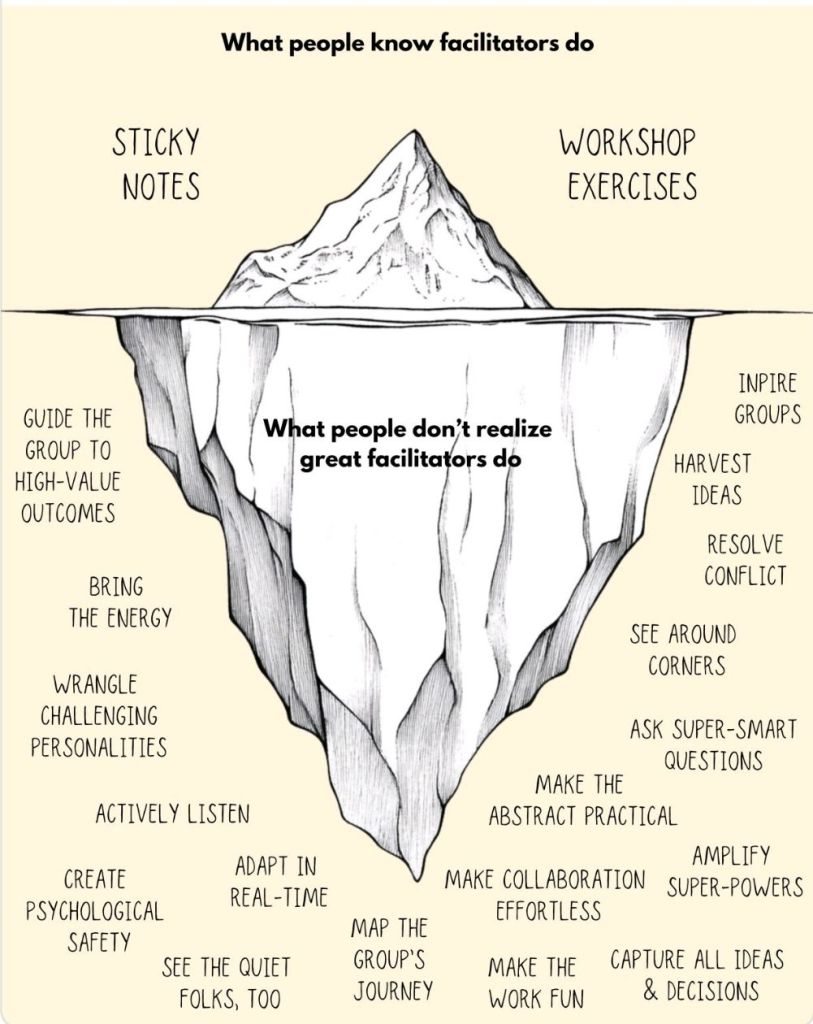
One of the reasons that these alternate methods would be challenging, even if included, is that they really rely on facilitation in order to work. In The Traitors, there is no external group facilitation, all roles are held by people in group who are driven by both group and individual needs and have an embedded interest in the selected outcome. The host acts merely as a neutral observer to the process. If setting up your own group, evaluating the success of groups you are part of, or thinking about processes, it is worth being aware of how decision making tools influence both group behaviour and group effectiveness, and ensure that the right structures are put in place to support both.
Why can the voting shift so rapidly?
As the Faithfuls become more developed as a group, or at any point where they feels like there is a dominant voice/person demonstrating confidence in their opinion, it can be surprising how quickly the conversations and prior decisions made before going into the round table can change. There is usually plenty of hanging around and talking during the day, where people get to know each other, voice suspicions, and try to capture evidence, which is usually in limited supply. The number of times this happens, and someone sounds like they are doomed to be banished, then everyone sits around the round table and suddenly everyone is voting for someone else entirely may appear surprising, but how often is group decision making truly group decision making? How often does it become the echoing of a dominant voice?
What is group think?
Groupthink was first coined as a term in 1952 but the first real published book investigating it was published by Janis in 1972.
Groupthink is a phenomenon that occurs when a group of well-intentioned people makes irrational or non-optimal decisions spurred by the urge to conform or the belief that dissent is impossible
The need to be part of the majority when voting, the need to be seen to be part of the consensus, makes the voting process and group decision making in The Traitors particularly at risk of Groupthink. This is where the desire for group consensus and harmony leads to poor decision-making. Within the round table at the traitors, especially at the start, no one wants to draw attention to themselves. You want to be middle of the road initially, as you neither want to draw the attention of the Faithfuls, thus standing out and being at risk of banishment, or of the Traitors, putting yourself at risk of murder. No one wants to be an outlier.
As time goes on, and the numbers decrease, individuals need to be seen to have a voice as not having an opinion increasingly raises suspicious. At the same time, there always seems to be a couple of players who become dominant, often due to the random luck of having found a Traitor previously, and are seen as being somehow more competent to find Traitors than others. Groupthink therefore definitely starts to play a more significant role in the middle stages of the game due to the changes group dynamics. How this Groupthink plays out can happen in a number of ways from collective rationalisation during discussions that one person is definitely a Traitor, normally based on fairly flimsy evidence, to some people being almost immune to accusations as they have come to be seen as such good Faithfuls, for equivalent light levels of data. It is often only when players reveal whether they are actually Faithful or Traitor, when banishment decisions have been made, that some members will then voice the fact that they didn’t support the wider decision or that they wish they had had the capacity to speak up.
The other interesting thing that comes into play during round table discussions, is that there are obviously traitors who are deliberately muddying the waters or throwing in dissent in order to disrupt the group decision making process. These members act like ‘mindguards’ who are group members that limit information and control dissent to influence the decision-making process. It is interestingly not only the Traitors who do this however, in varying seasons there have also been cliques that develop who have also acted in a similar way, but claim it is to protect themselves and improve the ability to identify those they perceive as untrustworthy. This tends to benefit the individuals but does not necessarily act to benefit the group as a whole, in terms of decision making quality.
Let’s talk treachery
The show wears its truth on its sleeve, it is called The Traitors after all. Trust plays a fundamental role in both individual relationships and on group dynamics. Therefore the role of trust and how this level of trust varies across the period of the show is an essential part of the entertainment factor and impacts on how successfully the group complete the given task of trying to find the Traitors in their midst. In a normal setting, trust is built over time as the group establishes itself. In the case of The Traitors, this process deliberately erodes trust, as the more the group establishes the smaller it becomes, and it becomes more likely that the person you are left talking to is actually a traitor whose considering your death. All of this leads to an ever building sense of paranoia.
The other reason that paranoia can be rife is that the role of Faithful is not static. You could therefore be sure that you had a relationships with someone based on the fact that they were ‘clearly’ Faithful, but it is possible that something could happen which means that they changed from being a Faithful to a Traitor during the course of the game. There are also moments when new group members are added later on, which means that members, and the group as a whole, lose their equilibrium and then need to re-establish. This also means that those players who are introduced later can also struggle to ever be seen as part of the group in the same way as the original players.
The reasons that players can change to become Traitors are three fold:
Original selection as a Traitor on day 1 (change from unassigned to Traitor)
Seduction – if a Traitor is banished, the Traitors can choose to recruit from the remaining Faithfuls. The Faithful can choose to join or refuse, but often even admitting that someone has tried to recruit you can lead to an increased risk of banishment
Ultimatum – if at any time there is only one Traitor left in the game, the remaining Traitor selects on member of the Faithful and they are given an ultimatum. They can either join the Traitor or they will be murdered. Needless to say, under these circumstances players almost always choose to join rather than die. This can impact dynamics later however and mean that the ‘forced’ Traitor may be more likely to turn on their fellow Traitors
The Traitors therefore have their own group dynamics that are playing out in secret amongst all of the dynamics of the wider group. All of which can impact how wider decision making processes occur, as some individuals may choose to sacrifice a Traitor to the wider group in order to establish themselves as more trusted or to change group dynamics.
So what is game theory and how does it apply here?
All of this brings us to game theory, and more specifically to the Prisoner’s Dilemma
Game theory is the branch of mathematics concerned with the analysis of strategies for dealing with competitive situations where the outcome of a participant’s choice of action depends critically on the actions of other participants.
When The Traitors is described as a game, it very much is, both as a whole and with every single decision made. The Traitors within the group are playing something called the Prisoner’s Dilemma, pretty much throughout as they decide every round table whether to support each other or sell each other out. At the end game, however, everyone ends up playing this particular example of game theory, whether they are a Traitor or a Faithful, as banishment’s continue until everyone believes there are only Faithfuls left.
Two bank robbers, Elizabeth and Henry, have been arrested and are being interrogated in separate rooms.
The authorities have no other witnesses, and can only prove the case against them if they can convince at least one of the robbers to betray their accomplice and testify to the crime.
Each bank robber is faced with the choice to cooperate with their accomplice and remain silent or to defect from the gang and testify for the prosecution.
If they both co-operate and remain silent, then the authorities will only be able to convict them on a lesser charge resulting in one year in jail for each (1 year for Elizabeth + 1 year for Henry = 2 years total jail time).
If one testifies and the other does not, then the one who testifies will go free and the other will get five years (0 years for the one who defects + 5 for the one convicted = 5 years total).
However, if both testify against the other, each will get three years in jail for being partly responsible for the robbery (3 years for Elizabeth + 3 years for Henry = 6 years total jail time).
Therefore the best move, for either Elizabeth or Henry is to defect, as this is the move with highest payoff, either because they both defect, in which case they only serve a year in jail, or because the other person doesn’t, in which case they walk away completely free and the other person pays the entire cost. This is what is known as the Nash equilibrium, where both parties should defect in order to maximise their individual benefit.
Within the context of The Traitors, this means that at some point, when the heat is on your fellow Traitors too much, you should join the rest of the group in order to banish them as a Traitor in order to validate yourself as a Faithful. It also means that during the end game phase, when players can continue to banish down until they reach the final 2, as long as you are sure that you are not one of the ones at risk of banishment, you should always continue to decrease the group to the smallest numbers possible in order to try to ensure that no Traitors are left. It is the balancing that with your individual banishment risk that is the biggest challenge however. When there is money at stake, when there is an actual individual cost to decision making, then the maths is clear about what you should do next.
What does all of this teach us, and how can we apply some of what we’ve learnt?
Apart from being a cracking piece of entertainment, I hope that this post about The Traitors has made us think that group decision making may not be as simple and issue free as we sometimes like to believe. There are a number of actions required of us as individuals in order to make it an group decision making the improved option, and a lot of individual responsibility that must not be forgotten as part of becoming a collective. When undertaking your role as a decision maker within a group setting it is worth being aware of the need to:
Self reflect on the roles you take when in groups, especially how these change depending on stress levels and how comfortable you are with other members
Actively evaluate how well your group decision making processes are supporting or impeding the effectiveness of the decisions
Not just default to majority voting because it is a) what you are most familiar with or b) quickest and perceived as easiest
Think about when to use facilitation to improve the quality of any group actions
Be aware of groupthink and attempt to have measures in place in order to reduce its impact
Know that, if the individual costs and consequences are high enough, the best mathematical choice is to defect (I say this tongue in cheek in terms of the maths, please also remember the human cost in any decision making)
Anyway, season 3 of the US version of The Traitors is just dropping now on BBC iPlayer, and so I’m off to see whether my thinking holds even if there are cultural differences. Just to finish though, I’d also like to end with flagging one of the best film examples of group decision making and how group dynamics can be utilised to impact outcomes. If you’ve never seen 12 Angry Men, it’s a masterclass, and I’d highly recommend you take some time out of your life to check it out and to think how you might respond if placed in a similar situation.
2024 was always going to be tough. Wonderful colleagues were facing challenges on all fronts. Close family members were going through significant change. Things that were going to impact not just my ability to balance life and work but also how that life was lived were very obviously coming down the line. I don’t know about you, but as a planner, I sometimes find the anticipation of the bad ‘stuff’ almost worse than its arrival, and 2024 kicked off with plenty of anticipation.
Now the end of 2024 is so close I can almost taste it, and much of the ‘stuff’ has both come and gone, I find myself still standing and grateful for all of you that have supported in enabling this to be the reality.
As a result of this year, I have spent a lot of time thinking about what keeps me going, what I need, and what I’m grateful for. None of the answers to these questions were linked to productivity or achievement. The answers, as it turned out, were all linked to people and relationships. These people, connections, and relationships were the answer to all my questions and remain the foundation of my everything. So, for my last post in 2024, I wanted to put something in writing that says thank you and talks about all the reasons why you are my team and my cheerleaders. You guys are the best!
I don’t need to see you to know that you are there
When times are hard, or adversity strikes, it is easy to end up feeling isolated and alone. It can be tempting to disconnect and enter protective mode, where you share less of who you are in order to limit your exposure. One of the things this year has shown me is how fortunate I am to never really feel that way. I know that whatever the world throws at me I am not alone. I am so lucky to have Mr and Mummy Girlymicro in my life, but it’s not just them. I posted this time last year about the amazing close friendships I have with some of my girls. These people, who I may not have even managed to see in person this year, are still there supporting me, even if I haven’t had a lot of time to connect. I still know that they are there and are backing me. I know if I reached out and I needed them, they would be there in a heartbeat. I’m aware of the privilege of this, and I am thankful for it every day.
We don’t need to always agree
One of the greatest signs of trust in any relationship is feeling safe enough to disagree, whether it be in work, romantic, family or friend based relationships. In travelling uncharted territory, there is no rule book and often no guide for how to make decisions or choices. This uncertainty can therefore inevitably lead to differences of opinion about what is the right approach in any given moment. Being able to disagree and yet still feel supported whilst working through the disagreement, in an attempt to reach consensus or just accept difference, is a real blessing. Even more so if it can happen without triggering preexisting insecurities or feeling exposed to judgement. I am trying to make conscious decisions to value moments where I learn more about myself and others by going through these disagreements, whilst also knowing how fortunate I am to have people in my life who are a safe space for these moments to occur with.
You forgive me for making mistakes
The process of learning and growing is not an easy one, and sometimes we have to face difficulty truths about ourselves and our flaws. I am flawed. I make mistakes, like ALL the time. I’d like to think that I grow each time and try not to make the same mistake twice, but even that is not 100%. One of the benefits of learning from disagreements is that it helps to garner enough understanding from any negative outcome that results to help make better choices in the future. I am grateful to my wonderful colleagues, friends, family and readers of this blog, for not only forgiving me for making those mistakes but also supporting me in sharing my journey in learning from them, not only face to face but also in this blog. My hope is always, that by being open, I support others in making more informed choices as we are all learning together.
You lift me when I am low
This year has had some significant lows. It has has included the deaths of some significant figures in my life, such as Professor Nigel Klein, who had been a key part of my working life for almost 20 years. He was the person who supported me in my first steps in academia, who supported and supervised me during my PhD, and has continued to be a key figure in my clinical academic career ever since. Significant health challenges have been present for colleagues and family and this has hit me hard at times, even if I am not the person unwell. I’ve been feeling pretty mortal, and also powerless to help in any meaningful way. So many of you have been so kind and lifted my spirits, from sending memes or commenting on the blog, to unexpected treats from friends and family that have made me feel seen and loved. Having a safety net of people who are prepared to pick up the slack when I’ve struggled or to remind me that everything will be OK has been an invaluable asset in 2024.
You drive me to be the best version of myself
When the world is overwhelming, when everything feels too much, it can be so tempting to want to throw in the towel and just ride the wave. Having to try (and sometimes fail) to get this blog out every week and to continue to show up has been crucial to just keeping me going whatever my mood. There have been weeks when this blog hasn’t happened. There have been days when I haven’t delivered in the way that I would wish. I have certainly been too tired to step up and see people or do things on the weekends or in my free time. Knowing that there is an expectation of levels of engagement, be it from my PhD students, colleagues, readers of this blog, or family, has kept me going and kept me present. You support me in trying to be the best version of myself and to keep showing up in the best way I can in the moment. You support me in not just accepting but seeking out things that challenge me and keep me on my learning pathway. Hopefully, I then get to feed that back via this blog, and therefore the loop continues.
I know you would always straighten my crown without telling me it was crooked
We’ve all been there, we’ve sent an email or written a slide, and it’s not quite right. There are people who reply to you and give you a heads up so you can issue a no drama correction, and there are people who reply all or stand up at the end of the talk to point out your error. I count myself so fortunate to have so many people who sit in the former rather than the latter bracket in my life. This is a pretty basic example, but I’m hoping you see what I’m trying to say. I have so many people in my corner who will steer me back on course when I’m beginning to drift, or who will gently escort me from a conversation that I’m not in the right head space to have. People who know when I need saving from myself, from reminding me that having that dairy filled cake is not wise, to pointing out that I can’t physically manage to book myself into speaking at three conferences in different cities in a week. I know my well-being is at the centre of their actions, and having that safety net is of incalculable value to me.
We are in this journey together
When I made my first blog post in 2015 I didn’t even know what this blog was going to be. When I started posting regularly in 2020, I knew my why but I didn’t really know my how. Now, looking back on the last 200+ posts I feel like I’m more comfortable with some of the how. My next challenge is the where. I feel very much like I want to continue to grow and that this blog is a medium through which I can do that. I’ve learnt so much from the journey so far, but I am certain there is so much further I want to go. This year the blog broke 20,000 reads for the first time, and that makes me feel like we are in this journey together, wherever it might lead. I love seeing the interactions when I post. I love hearing your thoughts and feedback. I love feeling like this is something we are doing together and that I learn from you as much as you, hopefully, learn from my experiences. I don’t know where this road ends, but I know that I am determined to keep following it.
You understand that performance is not consistent
This post has been really hard to write for some reason. It’s taken me hours of staring at the screen, and I don’t know how well it will be received. Some posts spring to life, almost fully formed, and take no time at all to write. Some just make themselves harder work. I am pretty sure, therefore, that not all of them knock it out of the park. There are certainly ones that speak to some people more than others. Having spent some time thinking about it, I’ve decided that this is OK. As long as my intention is to communicate something, and I never post for the sake of posting, then how it lands is out of my control. The main thing is that I always try to do my best.
The same is true with posting frequency. I will always try to post weekly, but this year has shown me that sometimes I just can’t manage that. I used to obsess and spiral about it, and now I’ve decided that if I am not in the head space to write something worthwhile, I am better waiting until that resolves. I’ve been so grateful with the patience shown to me on this front in 2024 and that you have stuck with both me and this blog through all the random trains of thought and erratic posting frequencies.
You don’t judge me when I bear my soul
I try to always be honest in this blog. I try to share both the good and the bad, in a balanced but honest way. The concept of authentic leadership is important to me, and to fulfill it I think I need to show all sides of myself. I can only do this because I feel that I have built up a trust and feeling of safety in writing this blog over the years.
I remember when I first started to post things that were more personal, I used to brace myself for the comeback. I almost expected my confessions of inadequacy or failures to be weaponised against me. In all the 200+ posts that have been written, I’ve only had a single comment that could be considered to be less than supportive of my sharing, and even this was written (I believe) from a place that the author thought it would be helpful. As a result of this building of trust, I write from a space where I am comfortable sharing my lived experience without revision or overlay. I genuinely believe that this means that the sharing has much more value because of it. So, thank you for supporting me in getting to this place of confidence and comfort and always encouraging me to bring my full self to our interactions.
I hear you when you tell me this is valued
In my darker moments this year, when I was questioning a lot of the things that required focus or time, I reflected on whether writing this blog was something that was valued by anyone but me. Whether it was a good use of several hours of my time every week, when I didn’t have time for a bubble bath or other self care. Then every time I went to a conference I would have lovely conversations with people about the blog, and all of them were so positive, and inspired me so much.
Over the last year, I’ve even had people spontaneously mention it in meetings or 1:1 interactions. It’s hard to communicate how much this means. When I sit on my sofa and need to choose between pulling out the laptop to write or watching some trashy TV to unwind, it is these interactions that keep me reaching for my laptop. When I’m on the tube and I need to choose between closing my eyes and escaping into an audio book or doing some blog writing on my phone. It is the memory of these moments that keep me plugging away. Knowing that others value reading this blog, hearing stories in response to putting my experiences out there, make every minute spent worthwhile. So thank you, thank you for giving this blog meaning, thank you for showing the time invested has value, and thank you for taking time out of your lives to join me in this endeavour that means so much to me.





















 Girlymicro