Walking Laps for Mental Health: How choosing to step away from your desk may be a great way to safeguard your well-being

I’ve been putting some work into trying to purposefully regain some work life balance, to re-find who I am outside of my work roles. It sounds easy but actually I’ve been so work focussed for so long I’ve been finding it pretty stressful. Trying to be at peace with not working every weekend, and therefore not being responsive or on top of my inbox, makes me feel an ongoing sense of panic. Nothing will change if I don’t however, so I’m making conscious steps to be aware of the anxiety but to carry on regardless.

Some of this had been about finding time for something as simple as having Sunday Tea Time with Mr Girlymicro, where we have a pot of tea and just spend some time together, enjoying each others company.
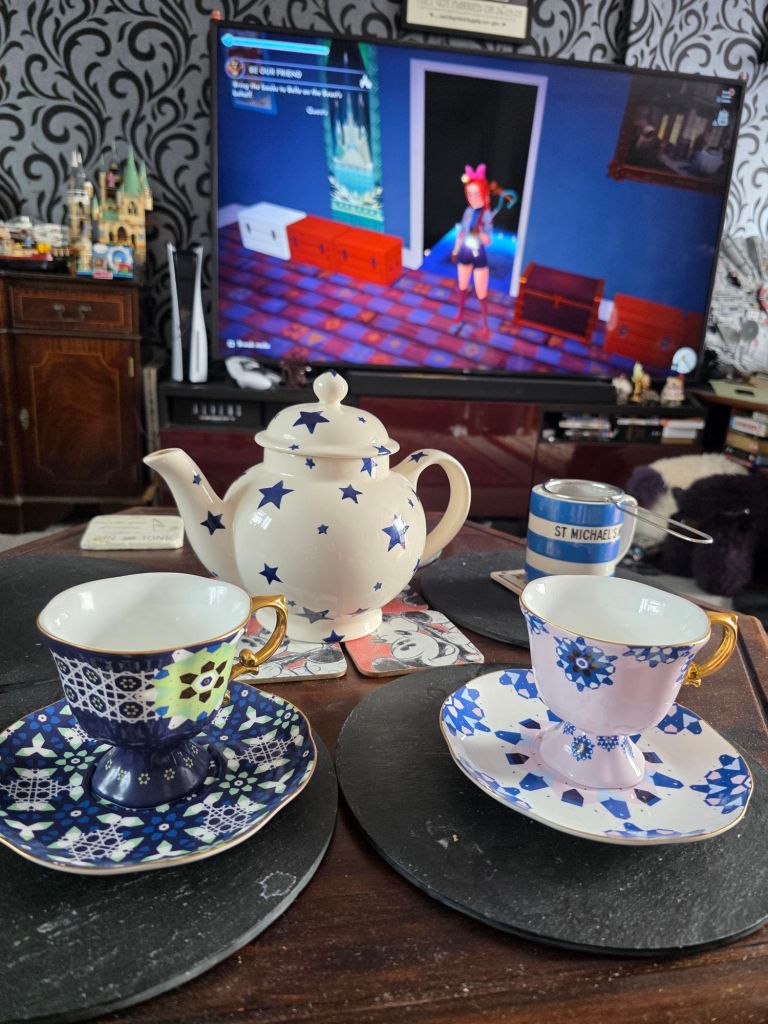
The other thing we’ve been trying to do is get out for a walk to also spend time together without the distraction of technology, as I’m a monster for always being on my phone or a laptop. Fully stepping away, removing the temptation to have ‘just one quick look’, helps me try to be fully in the moment with the man I love more than anything.

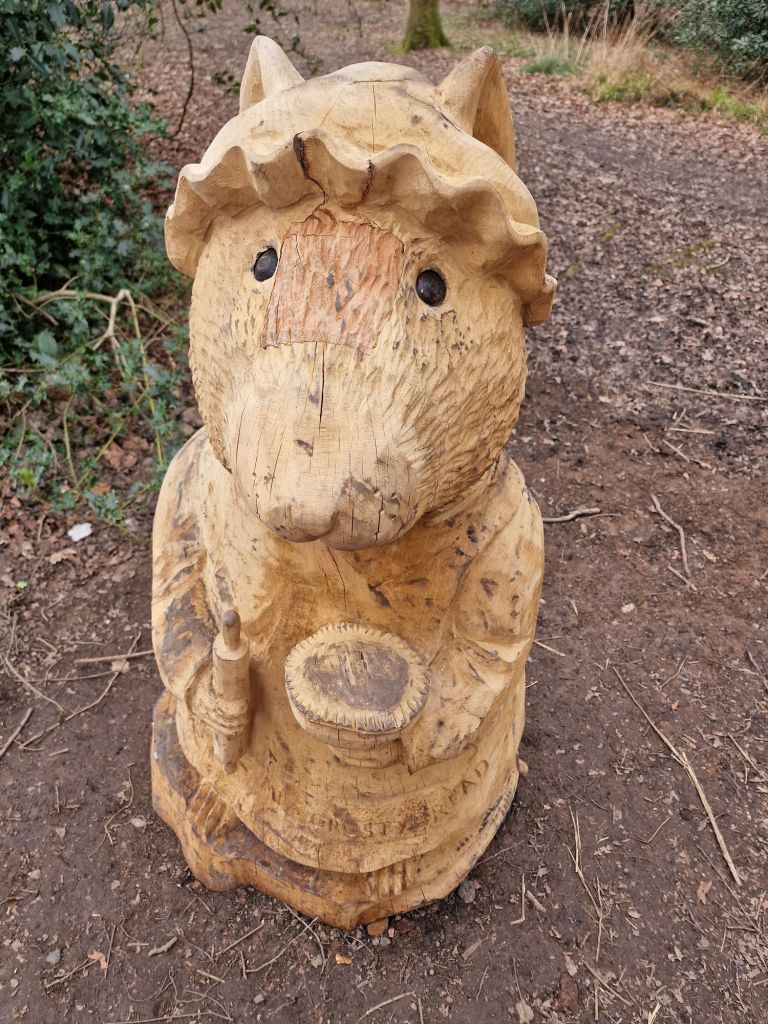
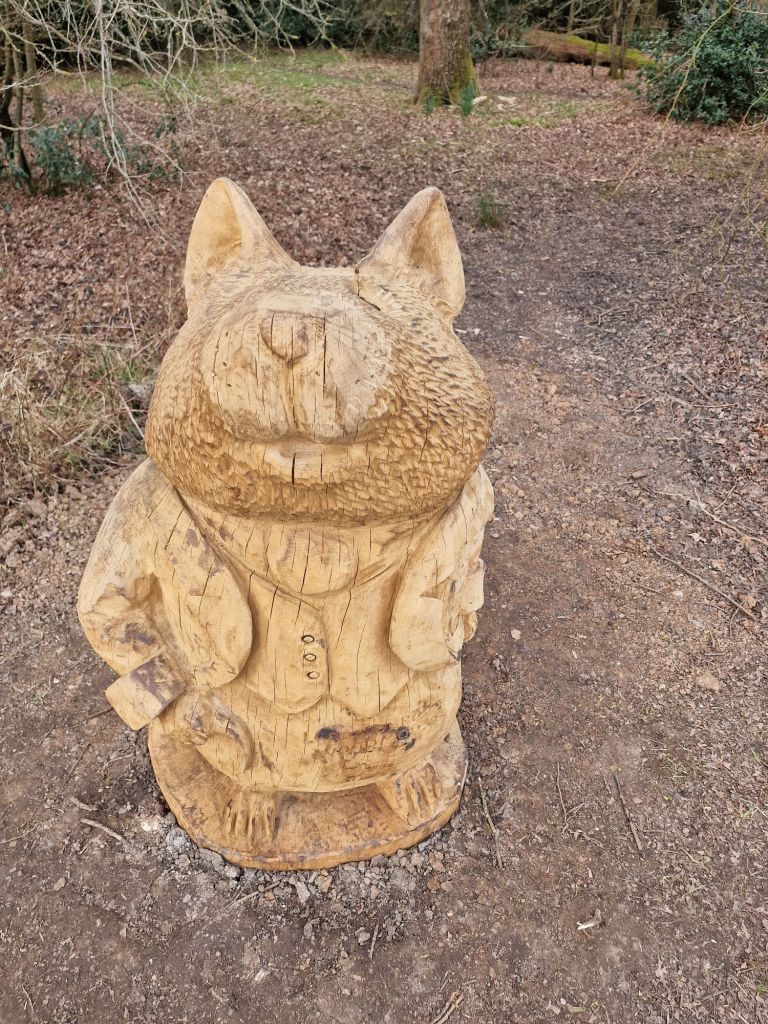
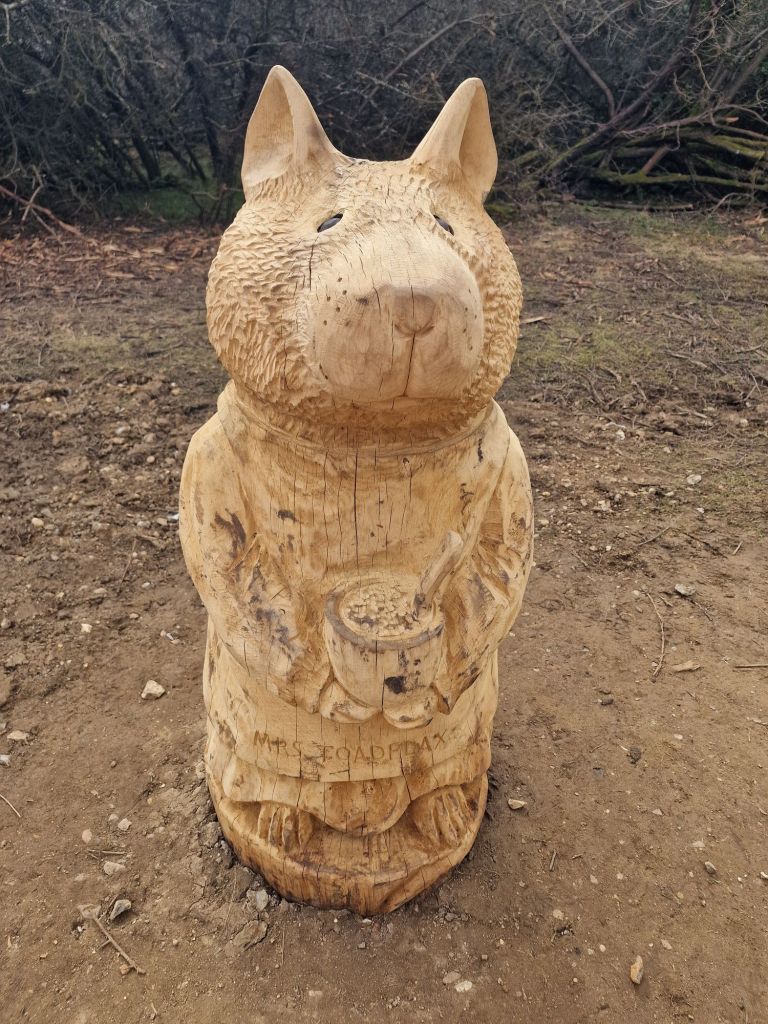
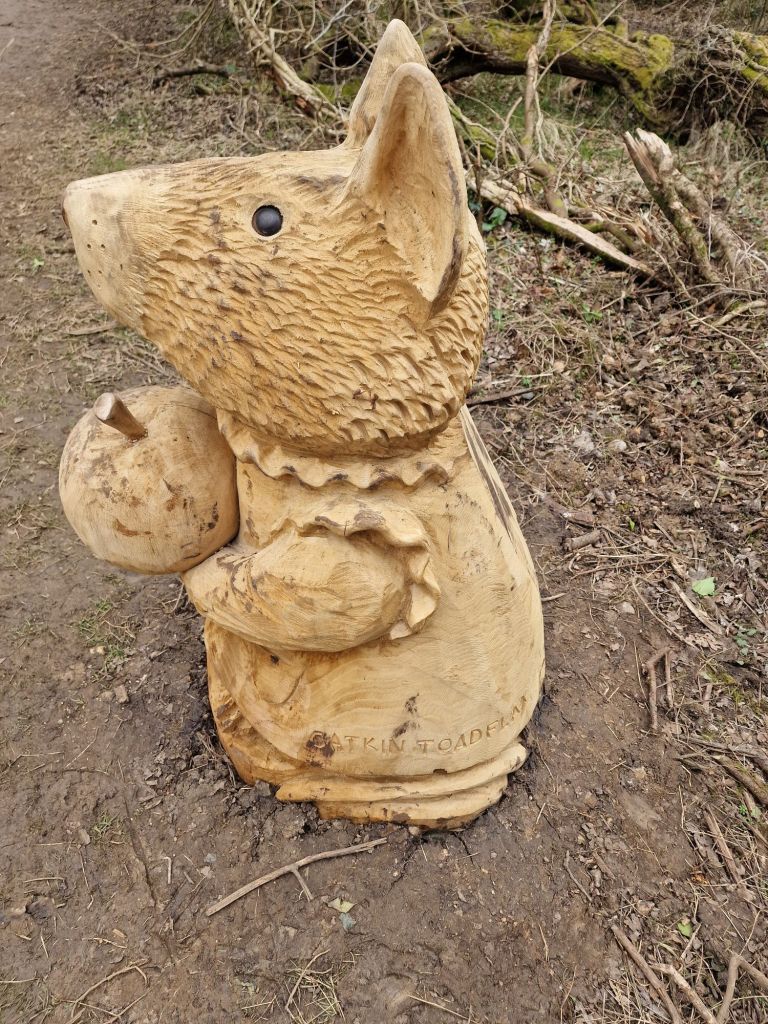
It has also, completely coincidentally, allowed me to discover a children’s book series called Brambly Hedge. On our walking route the council have commissioned wooden carvings of the characters, that then greet you as you walk around the lake, as the author was local to our home. Learning who all these woodland creatures are has also brought me great joy, and has reminded me how much we can learn and be inspired by, just by stepping out of our homes. In honour of this thought process on the benefit of taking a wander, I’ve included pictures of them in the hope they will bring a little of that joy to you when reading this post.

Counting to 10

When I was first a trainee, life was pretty tough. I wasn’t exactly welcomed in my department. I’d just moved down to London, and the learning curve was steep. My fellow trainee was also having a pretty hard time. There was no space we could go if were just having a moment, and there are only so many times a day you can cry in the toilets before someone notices. Thus the lap count was born.

The lap count was a numerical shortcut to being able to describe how your day was going. The lap in question was a full lap of the outside of hospital, and the count referred to how many of these full laps were required to enable you to pull yourself back together in order to carry on. In general, a one lap day was pretty good, and a four lap day was terrible.

Hopefully none of you need a lap count in your working lives, but the principle stands. Sometimes, walking away from a situation, and the act of being in motion, can enable you to remove yourself from a reactive space. Ideally before you react and say something that might not be pitched as well as you’d like.

Re-centering

There is something about being in motion that can also help to shake off the cobwebs or allow you to recentre yourself and decide whether things actually matter. It could just be me, but I find that I calm much more quickly if I am moving. It’s like the act itself enables me to shed unnecessary emotions and leave them behind as I walk. I don’t know if its because, when I walk to centre myself and my thinking, it’s a deliberate choice that means I’m ready to move on? Or whether it is the walking that helps, but the results are the same either way.

I suspect that part of it is because I’m removing myself from any of the external drivers of the emotion and am deliberately moving into a space that allows me to feel and process, rather than trying to ‘keep it together’ or ‘be on top of things’. The aim of the moment is to ride the wave and move through it so I can get to a logical rather than emotional place. Somehow doing this on the move, uninterrupted, feels better than trying to do it where someone could find and try to pep you up half way through. On occasion I just need to guilt free sit in my feelings, and ironically this happens best, for me, when I’m on the move.

Space for creativity

I don’t know about you, but I think for a long time I forgot the benefits of being aimless. If I do something it’s always linked to an outcome, as I’m so time limited and balancing more spinning plates than is physically possible to keep in the air. I’d forgotten that I’m pretty creative, intellectually that is, I have no capacity for practical acts. I had forgotten that if I just walk and let my mind drift the interesting spaces it will take me to. I think I have been a lesser me by not making room for that to happen.

Creating space for creativity helps me think about problems differently and gives me new insights when it comes to work, but it also enables me to be open to inspirations in my personal life, be that for this blog, cooking, or plotting a new murder for my future murder mystery writing ambitions. It may sound odd but it is in these moments that I feel fully myself and I am a happier better person for it. I guess I’m saying I need to be more purposeful about creating space for me to be aimless.

Removal of distractions

I’m a great prevaricator. If there is a way to be distracted I will find it. Sometimes, that distraction can actually help my thought process, as I continue to work through a problem without it being at the centre of my thinking. Sometimes, that’s just not an approach that will work. If I have a tricky problem that I am avoiding as I’m not sure I’ll be able to find a solution , and yet I really need to, I will find any route I can to avoid facing that possible issue as it triggers all of my fear of failure, however invalid. This can happen for work issues, like an experiment that just keeps failing, or for personal stuff where I’m trying to work out what the outcome I want actually is. In these settings sitting and staring is not helpful, as I have a tendency to create my spaces full of distractions as they please me. The best thing is to go to a new space where those things just don’t exist.

Don’t get me wrong, I think I could be distracted in a white empty box, but going to a space that isn’t mine and moving so that I don’t have time to focus on my surroundings enough to be distracted, is a great way of tricking my brain into being able to tackle the thing that needs to be resolved. It’s not that there aren’t distractions, it’s just that they aren’t ones that I’ve custom made to work for me.

Time to eat, drink and exercise

I spend so much of my time sitting and working at a laptop. I do so at work, and then when I’m at home, I’m usually writing this blog or working on other projects, such as papers, all of which include much sitting and very minimal movement. One of the things I love about walking this particular walk is that It makes me feel so much healthier, whilst enjoying myself so much feeding the ducks and other birds, sometimes even with tea. It’s many of my favourite things all rolled into one, especially when you throw Mr Girlymicro into the mix.

It’s so easy to forget that we have to find time to also look after ourselves, to move and get some steps in, as well as to look after the work stuff, or the house stuff. It’s easy to only make space in our lives for the box ticking. I know that exercise can also be considered box ticking, but if I can do it in a way that also brings me pleasure, it stops being the thing that I put off and can become something that I feel motivated to make time for, and embed in my every day approach. The more I have land on my plate the harder I find to make the time, and so making it easier and joyful is key.
Feeling the sun on your face

I work, when I’m on-site, in a windowless unventilated converted toilet as my office. I love it. I’ve written before about how much pleasure my space brings me. It does mean, however, that if I don’t find a reason to leave my office I will spend months of the year in darkness or away from natural light, as I arrive in the dark, sit in my delightful safe space, and then leave in the dark. There is always a moment in ~March where I step outside and I feel the sun, and I can quite literally feel the internal change in my mood. I always find January and February such hard going, and all of a sudden I feel energised and as if I can really tackle those changes I want to make. The sun just makes me feel like a different person.

This probably seems nonsense, but I only ever have the ‘aha’ moment in March that it is the lack of sun that has been driving my low spirits. I never seem to be able to remember when I’m in it that January and February are always grim. Knowing the difference this makes to me, and despite not really being an outdoor girlie, I am trying to remember the lesson. I am trying to remember to go out for lunch. To go for short walks if I can find a gap between meetings. I’m pretty sure that this impact probably happens all year, it’s just I recognise it more during the change from darker to lighter months. So, I’m trying to keep the sun on my face for a little every day to help cling to that feeling of being able to change the world.

Creates space for focus

I used to run, badly, and one of the things about it was that I hated the start so much that all I could focus on was putting one foot in front of the other. All other thoughts left my mind. It was like a mental stop gap, and when I got over the start, one of the things I loved about running was the mental freedom that intercept from spiralling and other thoughts gave me.  I thought until recently that I’d lost that route to focus alongside losing my running confidence, but I think I’ve kind of got it back through walking.

Now, some of this will be down to the removal of distractions I’ve already talked about, but some of it is because that I find a place where the rhythm of walking can get me to the same mental headspace. Especially if I’m walking somewhere where I don’t have to worry too much about my surroundings and safety.  It let’s me find a head space where I can locate the mental thread I want to pull on, and just keep pulling. I can walk until I’ve gone as far down the rabbit hole as I need to go. The only person placing limits is me, and that is tremendously freeing.
Dedicated time

I am a great one for doing multiple things at once. For instance, this blog gets written during the commute, or whilst Mr Girlymicro and I catch on movies/games/TV. That means I’m pretty appalling at spending focused one on one time with the people I love. My mind is always running 100 miles per hour or having a random debate with itself.  One of the reasons we’re trying to get out for walks together is to allow that rare and precious one on one time with people we care about.  Time without the distraction of devices (that would be me), or feeling like we should be doing chores rather than chilling out ( way more Mr Girlymicro).

Walking together and just valuing being in each others company, even after over 20 years together, really brings me a joy I find hard to describe. It is also a joy that is easy to miss out on if you don’t priorise and make time for it. The world screams and loads priorities upon us, and some days we just have to deliberately choose ourselves and each other, over all that noise.
Room for discovery

I like to walk in interesting places, places that have signs about wild life, places like museums, or interesting streets with Blue Plaques. Places where I will see things that make me think, remember old knowledge, or learn something new.  I would never be writing a post centred around Brambly Hedge if I hadn’t stepped out for a walk. I like making space in my life for discovery and learning. I am a curious girl at my core. Walking in this way feeds into the core of who I am as a person. I’m sure many people walk outside because they like the outside. I am not an outdoor girly. I’m allergic to most of the outside world. Love of the outdoors is never going to be my motivation to get up and go for a walk, although I acknowledge that works for many people. For me, the motivation to step foot outside is that I can engage with a different kind of learning. The accidental kind, where I never know what I’ll discover. That speaks to me and who I am at my core.

Cortisol reduction

Speaking of walking in interesting places, I thought I would also share some of the evidence base, I am a scientist afterall.

Evidence for the effects of viewing visual artworks on stress outcomes: a scoping review

There are some really nice studies out there that demonstrate the impact on cortisol, the stress hornone, from going to places like museums and art galleries, and just looking at the exhibits. I’m sure the same is likely to be true for looking at the real world exhibits outside if you go and take a walk somewhere interesting or beautiful. In the rather stressful world we live in currently,  now of all times, it’s probably time to get our walk on, lower our stress and get back to the real us.
All opinions in this blog are my own

A Thank You to All the Cheerleaders: At the end of a tough 2024 my gratitude for all the support

2024 was always going to be tough. Wonderful colleagues were facing challenges on all fronts. Close family members were going through significant change. Things that were going to impact not just my ability to balance life and work but also how that life was lived were very obviously coming down the line. I don’t know about you, but as a planner, I sometimes find the anticipation of the bad ‘stuff’ almost worse than its arrival, and 2024 kicked off with plenty of anticipation.

Now the end of 2024 is so close I can almost taste it, and much of the ‘stuff’ has both come and gone, I find myself still standing and grateful for all of you that have supported in enabling this to be the reality.

As a result of this year, I have spent a lot of time thinking about what keeps me going, what I need, and what I’m grateful for. None of the answers to these questions were linked to productivity or achievement. The answers, as it turned out, were all linked to people and relationships. These people, connections, and relationships were the answer to all my questions and remain the foundation of my everything. So, for my last post in 2024, I wanted to put something in writing that says thank you and talks about all the reasons why you are my team and my cheerleaders. You guys are the best!

I don’t need to see you to know that you are there

When times are hard, or adversity strikes, it is easy to end up feeling isolated and alone. It can be tempting to disconnect and enter protective mode, where you share less of who you are in order to limit your exposure. One of the things this year has shown me is how fortunate I am to never really feel that way. I know that whatever the world throws at me I am not alone. I am so lucky to have Mr and Mummy Girlymicro in my life, but it’s not just them. I posted this time last year about the amazing close friendships I have with some of my girls. These people, who I may not have even managed to see in person this year, are still there supporting me, even if I haven’t had a lot of time to connect. I still know that they are there and are backing me. I know if I reached out and I needed them, they would be there in a heartbeat. I’m aware of the privilege of this, and I am thankful for it every day.

We don’t need to always agree

One of the greatest signs of trust in any relationship is feeling safe enough to disagree, whether it be in work, romantic, family or friend based relationships. In travelling uncharted territory, there is no rule book and often no guide for how to make decisions or choices. This uncertainty can therefore inevitably lead to differences of opinion about what is the right approach in any given moment. Being able to disagree and yet still feel supported whilst working through the disagreement, in an attempt to reach consensus or just accept difference, is a real blessing. Even more so if it can happen without triggering preexisting insecurities or feeling exposed to judgement. I am trying to make conscious decisions to value moments where I learn more about myself and others by going through these disagreements, whilst also knowing how fortunate I am to have people in my life who are a safe space for these moments to occur with.

You forgive me for making mistakes

The process of learning and growing is not an easy one, and sometimes we have to face difficulty truths about ourselves and our flaws. I am flawed. I make mistakes, like ALL the time. I’d like to think that I grow each time and try not to make the same mistake twice, but even that is not 100%. One of the benefits of learning from disagreements is that it helps to garner enough understanding from any negative outcome that results to help make better choices in the future. I am grateful to my wonderful colleagues, friends, family and readers of this blog, for not only forgiving me for making those mistakes but also supporting me in sharing my journey in learning from them, not only face to face but also in this blog. My hope is always, that by being open, I support others in making more informed choices as we are all learning together.

You lift me when I am low

This year has had some significant lows. It has has included the deaths of some significant figures in my life, such as Professor Nigel Klein, who had been a key part of my working life for almost 20 years. He was the person who supported me in my first steps in academia, who supported and supervised me during my PhD, and has continued to be a key figure in my clinical academic career ever since. Significant health challenges have been present for colleagues and family and this has hit me hard at times, even if I am not the person unwell. I’ve been feeling pretty mortal, and also powerless to help in any meaningful way. So many of you have been so kind and lifted my spirits, from sending memes or commenting on the blog, to unexpected treats from friends and family that have made me feel seen and loved. Having a safety net of people who are prepared to pick up the slack when I’ve struggled or to remind me that everything will be OK has been an invaluable asset in 2024.

You drive me to be the best version of myself

When the world is overwhelming, when everything feels too much, it can be so tempting to want to throw in the towel and just ride the wave. Having to try (and sometimes fail) to get this blog out every week and to continue to show up has been crucial to just keeping me going whatever my mood. There have been weeks when this blog hasn’t happened. There have been days when I haven’t delivered in the way that I would wish. I have certainly been too tired to step up and see people or do things on the weekends or in my free time. Knowing that there is an expectation of levels of engagement, be it from my PhD students, colleagues, readers of this blog, or family, has kept me going and kept me present. You support me in trying to be the best version of myself and to keep showing up in the best way I can in the moment. You support me in not just accepting but seeking out things that challenge me and keep me on my learning pathway. Hopefully, I then get to feed that back via this blog, and therefore the loop continues.

I know you would always straighten my crown without telling me it was crooked

We’ve all been there, we’ve sent an email or written a slide, and it’s not quite right. There are people who reply to you and give you a heads up so you can issue a no drama correction, and there are people who reply all or stand up at the end of the talk to point out your error. I count myself so fortunate to have so many people who sit in the former rather than the latter bracket in my life. This is a pretty basic example, but I’m hoping you see what I’m trying to say. I have so many people in my corner who will steer me back on course when I’m beginning to drift, or who will gently escort me from a conversation that I’m not in the right head space to have. People who know when I need saving from myself, from reminding me that having that dairy filled cake is not wise, to pointing out that I can’t physically manage to book myself into speaking at three conferences in different cities in a week. I know my well-being is at the centre of their actions, and having that safety net is of incalculable value to me.

We are in this journey together

When I made my first blog post in 2015 I didn’t even know what this blog was going to be. When I started posting regularly in 2020, I knew my why but I didn’t really know my how. Now, looking back on the last 200+ posts I feel like I’m more comfortable with some of the how. My next challenge is the where. I feel very much like I want to continue to grow and that this blog is a medium through which I can do that. I’ve learnt so much from the journey so far, but I am certain there is so much further I want to go. This year the blog broke 20,000 reads for the first time, and that makes me feel like we are in this journey together, wherever it might lead. I love seeing the interactions when I post. I love hearing your thoughts and feedback. I love feeling like this is something we are doing together and that I learn from you as much as you, hopefully, learn from my experiences. I don’t know where this road ends, but I know that I am determined to keep following it.

You understand that performance is not consistent

This post has been really hard to write for some reason. It’s taken me hours of staring at the screen, and I don’t know how well it will be received. Some posts spring to life, almost fully formed, and take no time at all to write. Some just make themselves harder work. I am pretty sure, therefore, that not all of them knock it out of the park. There are certainly ones that speak to some people more than others. Having spent some time thinking about it, I’ve decided that this is OK. As long as my intention is to communicate something, and I never post for the sake of posting, then how it lands is out of my control. The main thing is that I always try to do my best.

The same is true with posting frequency. I will always try to post weekly, but this year has shown me that sometimes I just can’t manage that. I used to obsess and spiral about it, and now I’ve decided that if I am not in the head space to write something worthwhile, I am better waiting until that resolves. I’ve been so grateful with the patience shown to me on this front in 2024 and that you have stuck with both me and this blog through all the random trains of thought and erratic posting frequencies.

You don’t judge me when I bear my soul

I try to always be honest in this blog. I try to share both the good and the bad, in a balanced but honest way. The concept of authentic leadership is important to me, and to fulfill it I think I need to show all sides of myself. I can only do this because I feel that I have built up a trust and feeling of safety in writing this blog over the years.

I remember when I first started to post things that were more personal, I used to brace myself for the comeback. I almost expected my confessions of inadequacy or failures to be weaponised against me. In all the 200+ posts that have been written, I’ve only had a single comment that could be considered to be less than supportive of my sharing, and even this was written (I believe) from a place that the author thought it would be helpful. As a result of this building of trust, I write from a space where I am comfortable sharing my lived experience without revision or overlay. I genuinely believe that this means that the sharing has much more value because of it. So, thank you for supporting me in getting to this place of confidence and comfort and always encouraging me to bring my full self to our interactions.

I hear you when you tell me this is valued

In my darker moments this year, when I was questioning a lot of the things that required focus or time, I reflected on whether writing this blog was something that was valued by anyone but me. Whether it was a good use of several hours of my time every week, when I didn’t have time for a bubble bath or other self care. Then every time I went to a conference I would have lovely conversations with people about the blog, and all of them were so positive, and inspired me so much.

Over the last year, I’ve even had people spontaneously mention it in meetings or 1:1 interactions. It’s hard to communicate how much this means. When I sit on my sofa and need to choose between pulling out the laptop to write or watching some trashy TV to unwind, it is these interactions that keep me reaching for my laptop. When I’m on the tube and I need to choose between closing my eyes and escaping into an audio book or doing some blog writing on my phone. It is the memory of these moments that keep me plugging away. Knowing that others value reading this blog, hearing stories in response to putting my experiences out there, make every minute spent worthwhile. So thank you, thank you for giving this blog meaning, thank you for showing the time invested has value, and thank you for taking time out of your lives to join me in this endeavour that means so much to me.

All opinions in this blog are my own

Handling Criticism with Grace: Top tips for responding to reviewers’ comments

One of my brilliant PhD students had his first experience of responding to reviewers comments last week, and as we sat and talked it through I thought that it might actually be a useful topic to write a blog about. Now, Sam was responding to reviewers comments on a review, but I think a lot of the principles stand no matter the response is linked to. I feel the same way about responding to comments and reviews on any piece of work I’ve poured my heart and soul into, be that manuscripts, grants, a piece of guidance, a policy or a business case, or my current horror – book submission. It might be that I need to remind myself of this advice as much as I wanted to share it with you 🤣.

Getting the opportunity to respond to reviewers is a success in itself

No matter how rough it feels in the moment when you first open the email/attachment and read all those comments where the reviewers have blatantly failed to read your carefully crafted wording in the way it was intended remember this. Being able to respond to reviewers is itself worthy of celebration. It means you haven’t got a full on NO. It means that the people see there is value in what you have done, even if they believe that it could be improved with some tweaking. Anything that isn’t a rejection is worthy of allowing yourself a mini celebration, chocolate bar, glass of wine, cup of tea, before you tackle the trauma of starting to make the changes.

Put on your positive specs

Whilst I drink my celebratory cup of tea I always take a moment to remind myself that this is actually an opportunity, an opportunity to make something I care about better than it would be without this process, that it’s an opportunity for improvement, and that this opportunity is something to be seized and embraced. Who doesn’t want to deliver the best thing they possibly can?

Always be polite

Now, it can also be said that sometimes recognising that opportunity for improvement can be challenging. Sometimes, those responding can have missed something that you clearly stated in both paragraphs X and Y. The thing is, they won’t have spent hours and hours reading your writing, and they are unlikely to have come to know it in the exquisite detail that you do. I tell you this as the person who blocks out only an hour to review your precious creation as that is all my diary allows. The thing is, most reviewers are doing it for the good of the community/trust/committee. They are, in essence, doing us all a favour. Therefore, when responding to what they have said its important to recognise that, and always always be polite in your response that you write. You are a professional after all.

The moral high ground gives combat bonuses

I have, on occasion, seen reviewers’ comments that shouldn’t have gotten by the editor or panel. Comments that could be considered racist or sexist, or to be honest, blatantly are. I’ve also seen responses where editors return those comments and just added a comment of their own to say ignore them and don’t respond in the review. This later one is interesting to me, I feel editors shouldn’t return these comments and should really respond to the submitter to say they are not acceptable.  When responding to these, I think it’s even more important to respond with grace. I separate out the science and deliberately respond to these with my science head. I then flag and escalate the rest of it, as if it’s a completely separate incident.

Don’t respond immediately

This is my top tip, my one thing if you only take one thing from this blog post. Never ever respond immediately. Open the email, read it once, maybe twice, to really ascertain what’s been said and see the response deadline, then close it and walk away. Nothing good ever comes from responding in the moment. I personally have a 48 hour rule. I will leave that email closed for at least 48 hours before I open it again, during which time I will drink that celebratory cup of tea and try not to dwell. After 48 hours, I’m allowed to re-open and read it again. If at that point I can read it without an overt emotional response I’m ready to respond. If not, I will give it another 48 hours. Almost always, after 48 hours, I open it and it’s nowhere near as bad as I had originally perceived with my emotional goggles on and I can just get on with a response.

Bite the bullet and get on with it

I know, I know. I just told you you need space to switch from emotional to logical response and to read what’s there in an analytical way, but you also can’t wait too long to respond. This is for a number of reasons. One, there will be a deadline for you to accept or reject what you’ve been asked to do, and you have already invested a LOT of time to get to this point. Two, you want to draft your response when the original submission is still relatively fresh in your mind as it helps with rebuttals and references. Finally, if you need more than two 48 hour breaks to get your head in the right space it’s likely that this is feeding into something bigger and you probably need to find a coping mechanism and to start processing what that is, and responding is a good way to start unpicking and reflecting on what’s driving how you feel.

Decide on the structure of your response

You’ve finally got to the point where you are going to sit down and start drafting your response.  There are lots of ways that you can do this, everyone is different, but in case you haven’t had the opportunity before, I thought I’d share how I do it in case it helps.

There are two main pieces that I would work on in parallel, the response to reviewers document and the in-text changes.

Response to reviewers:

  • I do this in Word and always have my paper title as the header.
  • I open with a paragraph where I thank my reviewers for their helpful comments (whether you truly feel it or not, this goes back to always being polite, but in all honesty there’s usually a lot of good to be thankful for)
  • I then break my responses down by reviewer, so I will have a section headed reviewer 1, another headed reviewer 2 etc, also a general one for the editors comments if there are any
  • Within each section for each reviewer, I will copy and paste over the comments I have received. I then break down these comments. Some reviewers give you a lovely bullet pointed list, sometimes with line numbers, and so this is easy. Some will give you paragraphs of text where you then have to extract each point and effectively make a bullet pointed list out of it.
    • At this stage, I tend to remove commentary, things where they is no change requested. This gives me a working list to work from, and I will colour code this text so it stands out from my responses, which I will write under each bullet point. I tend to make the reviewers comments red, I don’t know why I just do. Then, when I start writing my responses, I do these in black.
    • You can also, at this point, identify whether several reviewers have given similar comments, and then you can cluster those changes.

It’s only really at this point that I can see the wood for the trees, and generally, it’s much less bad than I had initially thought.

In-text changes:

This one is pretty straight forward. You may not have this if you are responding to a business case or grant review as they will want all the information contained in the response document. This additional document is mainly for manuscripts and contains the changes that you make in response to the review in your original paper. I tend to highlight changes to the text in yellow and then make sure I cross reference back in my response to reviewers with line numbers, as well as any commentary, so they are easy to find. The main thing to remember here is, once you’ve completed your response, save off a ‘clean’ copy without the highlights as well as the highlighted version as some places will want you to upload both.

Read what is there not what you think is there

So, the above information is about how you prepare to respond, but how do you actually respond? The first thing, and I think this is key, is to read what they have actually said, not what you think they have said. This is where I find splitting the points to be addressed up really helps, as it enables you to read them in a different way.

Common features that reviewers want added/addressed include:

  • addition of references
  • spelling mistakes
  • improvements in unclear sentence structure
  • other nuance changes

For all of these the action is fairly straight forward, you just make the changes within the original document and write a comment in your response to reviewers stating ‘changed in text – line XX and YY’. If you get similar comments from more than one reviewer, I would address them in the order in which they occur. So reviewer 1 has a similar comment to reviewer 3, I’d respond in the reviewer 1 section and in the reviewer 3 section state, for instance, ‘already addressed under reviewer 1 in line XX’.

Decide where you line is

It’s actually quite lovely if you just get quick responses as described above, sometimes however the comments require a little more. Sometimes the reviewers will want new points addressed, or occasionally fresh data included. At this point you need to decide how much the paper in it’s current format is important to you to maintain. This has happened to me a few times. Normally the additional points made actually really strengthen the paper and I am more than happy to spend the few extra hours to add in, especially as they tend to be points I already had in drafts but was forced to lose due to word count. There have however been occasions where I disagreed with the reviewer on either the fact that certain points should be included or the way they had suggested that they be done. On these occasions you are entitled, and I have done, to include commentary under the reviewers’ comment where you state why you don’t feel that it would be a suitable edit. You will need to be polite and clear, and ideally evidence, why you don’t agree. The decision will then lie with the editor as to whether they agree or not.

Get a second opinion

Once you’ve completed your response, or earlier if you are deciding to rebut points, it’s valuable to get a second opinion. You should send your response documents to your other authors for sign off, but if you are a sole author you should still find someone to sense check. This process is important, both to help ensure that you have actually addressed all the points raised, but also to help ensure that your arguments are robust where needed. I have been on papers where the first author has returned the response to reviewers without showing it to the other authors, and on reading it I have seen the response hasn’t fully addressed the reviewers which has then led to another round delaying paper submission. Some papers have loads of authors and you, with their support, may not need all of them to comment, but they should have sight prior to submission and at least the 1st and senior authors should have fully reviewed.

Learn lessons for when you are reviewing in the future

My final point is that this is a great learning opportunity, not just on the subject matter, but on what and what not to do when you are reviewing papers, grants etc. I always try to review and write comments in a way that is clear and actionable for those receiving the comments, in a way that I would like to receive them if the submission was mine. I also think it is so important to consider what should and should not be included in your review. Most journals, for instance, want to know whether the level of writing is good enough for publication but I would never cross the line into making comments about the English skills of the authors, I personally don’t feel that’s appropriate, for me, I’m there to comment on the science. It’s crucial to consider what it constructive and what is not as part of this process. When writing a review it is so important to think ‘is it helpful?’ ‘is it kind?’.

I hope all of this helps you when you are thinking about the best way to take onboard comments as they come in. I would also plea that you aim to see them as an opportunity to improve and learn rather than something that puts you into a spiral and causes you distress. Just getting the opportunity to respond is a success after all!

All opinions in this blog are my own

If you would like more tips and advice linked to your PhD journey then the first every Girlymicrobiologist book is here to help!

This book goes beyond the typical academic handbook, acknowledging the unique challenges and triumphs faced by PhD students and offering relatable, real-world advice to help you:

  • Master the art of effective research and time management to stay organized and on track.
  • Build a supportive network of peers, mentors, and supervisors to overcome challenges and foster collaboration.
  • Maintain a healthy work-life balance by prioritizing self-care and avoiding burnout.
  • Embrace the unexpected and view setbacks as opportunities for growth and innovation.
  • Navigate the complexities of academia with confidence and build a strong professional network

This book starts at the very beginning, with why you might want to do a PhD, how you might decide what route to PhD is right for you, and what a successful application might look like.

It then takes you through your PhD journey, year by year, with tips about how to approach and succeed during significant moments, such as attending your first conference, or writing your first academic paper.

Finally, you will discover what other skills you need to develop during your PhD to give you the best route to success after your viva. All of this supported by links to activities on The Girlymicrobiologist blog, to help you with practical exercises in order to apply what you have learned.

Take a look on Amazon to find out more

My (possible) Mid-Life Crisis and Me 2023 Edition: Entering 2024 has left me questioning….have I peaked at 44?

Heading into 2024 is a slightly odd event for me. Let me tell me why. 2023 ticked boxes for me I had never imagined existed, let alone had on my list. I attended the King’s Coronation. I got to fulfil a lifelong dream and go to Eurovision. I even managed to tick off the last remaining thing on my professional wish list and made professor.

Coming hard on the back of 2022 and 2021, I just don’t really have words for how privileged I feel to have had the experiences I’ve had. This is all amazing and mind-blowing. When you take a moment to breathe and reflect on all of this, however, it leaves me with one over whelming thought. What next?

I’m 44 years old. This year will be my 20th as a Healthcare Scientist, my 20th year working in the NHS. I have at least another 10 years of service in me. But what does that look like? I could never imagine where I am now, so how do I envision what’s to come? How do I therefore make it happen? I, like many others, have always kind of joked about people having a mid-life crisis, but for the first time ever, I can see how people get there. I’m super fortunate that I love my job, and I don’t want a change. At the same point, I also don’t want to stagnate. I want to keep on pushing. I want to keep getting better as a person and moving things forward for others.

Recently, though I have to admit, I am recognising how much I also need to get some rest and recognise how far I’ve come. I went from finishing my PhD to making professor in 8 years. Things have happened at pace. Part of my brain screams its time to sit back and smell the roses for a while and mentally catch up with all thats happened. The other part is saying that I need a plan to climb the next mountain, whatever that might be. I enter 2024 therefore in somewhat of a no man’s land, trying to work out who I want to be as I turn 45 and enter the next phase of my career. I don’t have much of this figured out yet, but I thought I would start by talking about the few things I do know.

It’s about giving back

For me, tunnel vision was very much a thing during the early stages of my career. I knew where I was going and what I wanted to achieve. In the last year or so I’ve very much had a change of perspective. I’m lucky enough to be offered a lot of opportunities, previously when I would have said yes or thrown my hat into the ring I’ve had a change of heart. When these opportunities come up, quite a lot of the time, I actively decide to not take them up, or to pass them on. It’s hard to gain experience and make connections when you are early in your career. I never really had that person in my career who would push me into the limelight, or pass things my way. I am aware, from seeing this happen with medical colleagues, quite what a difference it can make to someone’s career progression. I want to be the person who makes conscious decisions to do that now, and to pay things forward. I also want to still be open to mentorship and coaching opportunities where I can support others to take these steps. I feel like it’s not about me anymore, it’s about growing the people who will replace me, and do the job I’m doing even better, who will grow the change even further.

It’s about inspiring others

It’s so much harder to become something if you don’t know it exists. How do you follow a road map to a destination that you don’t have a location for. Everyone has their own pathway, but it’s so much harder if you can’t make informed choices about what your options could be. I struggled with this so much for a very long time. I was lucky, in that I could picture what I wanted, but as there was no one I could find in that space I just didn’t know how to get there. It must be even harder if you dont have that strong sense of where you want to be. Now, I don’t know that I’m particularly inspirational, but what I can be is visible and work to be even more so. Visible enough so that people feel they can reach out and ask questions, visible enough that I can show possibility for those thinking about future destinations.

I still remember the scientist who came into my primary school classroom. I have so much love for all the people, like Ruth Thomsen and others, who are living embodiments of the possibilities that are available for scientific careers. I want to continue to ring fence time so that I can live up to those examples. Although I took a while to realise it, I think that visibility is another reason why this blog is so important to me and why I hope that it will continue to grow and be useful to others. So, every day I want to consciously be trying to do better and inspire more.

It’s about opening doors

I have been blessed to have a career that both challenges me and fulfils me. I have also been fairly successful and managed to tick my personal tick boxes, becoming a Consultant Clinical Scientist, maintaining a clinical academic career, and making Professor. That’s great for me, but I think that if I don’t make it so that others can achieve those things or make the pathway easier, I will actually have fundamentally failed in my goals. Now I’ve finally managed to get over the line I’ve realised that the goal was never just about me. It was about making sure that anyone who had those aspirations had a pathway that they could follow, rather than wandering in the darkness and making it up as they went alone, like I did. So that’s the job, sharing my mistakes and learning so others don’t have to repeat them and can start a bit further along the pathway. 

It’s also my job to put a wedge in the door so that others don’t have to push anywhere near as hard to get it open as I did, and by using what level of influence and privilege I have to serve those who will follow. I am fortunate enough to have access to some resources that mean I can make practical contributions to this, not just work as a mentor or from an individual standpoint. I sit on national groups and run national meetings, which I really hope means that we can build networks and change things together. We are always stronger as a group. This is something that is really important to me, and a priority I want to continue to pursue.

It’s about trying new things

Now, when I say I’m passing on opportunities, it’s not that I don’t want to be challenged or to stagnate. I still want to take on new challenges, develop skills and take on new things. I’m just aware that there are experiences I’ve already had that could benefit others more. Some of the things I want to do are work adjacent, rather than purely work based skills. I’d like to get better at doing things like this, writing my blog, structuring it into something new, but also other things like science communication. I’d also like to be a better leader and communicator in general. I think, for me, it’s about moving from pure knowledge acquisition to pass exams etc, to skill/tool acquisition and application to help me implement change. I’m still passionate about my job and excited for the scope it gives me, I just want to gain the skills to do it better in the broadest possible sense.

It’s about knowing myself

All of this change has come from feeling like I’m growing into my own skin and learning to be unapologetically me. That doesn’t mean I’m a saint, I have so so many flaws, but it’s a growing acceptance that I’m a work in progress and that that is OK. Being open to that knowledge and that improvement is something I want to embrace. The more I get to know me, flaws and all, the more I can understand my drivers and responses. The more I do that the more I can reduce the noise, the more clarity I can have to embrace where I want to move towards. In my 20s and 30s I think I was scared to look and really see myself as I was clinging to ideas of perfection. Now in my 40s I just want to be the best authentic version of myself, and that’s the journey I’m on now.

It’s about finding time and balance

Part of that knowing myself is acknowledging that I use work as a way of feeling worthy and marking progression. There is so much more to me, and my sense of self worth cannot rely on numbers of papers published, or my professional reputation. Finding value in myself through work drives a fairly unhealthy relationship, where it’s difficult to step away and leads to working an excessive amount of hours. At one point prior to the pandemic I didn’t have a weekend off for 3 years, Weirdly I was OK with this, but now I have staff and students, I’m aware of how toxic an example this is to set. Also, as my health gets more challenging, I just can’t maintain it. I need rest and relaxation. I need to have periods where I completely step away, for both my physical and mental health. I want to learn to read books for fun again and take long bubble baths. To move away from my work being quite so core to my identity for the good of everybody, especially Mr Girlymicro.

It’s about allowing time for celebration and joy

The other part of allowing space to relax and enjoy life is finding time to celebrate. I’ve been very much ‘onto the next thing’ for so long that I’ve forgotten what it’s like to really sit back and smell the roses. I’ve always been the same. I never managed to celebrate GCSE results, degree results etc. By the time I finished the exam I was so burnt out and broken all I could do was crawl into my bed to recover. Having posted last year about the importance of celebration, I want to try to learn a new healthier habit where I do celebrate things, both large and small.

Again, this is something having students and teams has taught me. I want them to embrace their successes and take time to really recognise what they have achieved. It’s not therefore just about taking time to recognise my own progress but really ensure I put a focus on celebrating the progress of others. It’s so easy to put it off and say we will do it another time, then nothing ever happens, it’s time to prioritise joy.

It’s about staying brave

Finally, I want to make sure that I stay open to failure. I don’t want to avoid trying things or embracing experiences just because I fear I will fail or what others will think of me. I want to stay brave, I want to be fierce. Being fortunate enough to have reached a position of some privilege I want to also ensure I own that position and continue to speak my truth, even if that comes with risk or discomfort, for the benefit of others. I want, when needed, to know that I will always stick my head above the parapet, be seen, be part of the conversation, and use what voice I have for the benefit of people other than myself.

I may not know where this next phase will lead me, but there is joy in the not knowing as well as fear. I genuinely think that as long as I keep to the list of the things that I do know as a cornerstone of my decision making, it will all work out. I want to strive to be kind, I want to know myself better, and I want to leave this world a better place than I found it. I hope whatever part of the journey you are on you are able to find your own signposts to the life you want to lead. Welcome to the mid-life, it’s not so scary as it seemed!

All opinions in this blog are my own