Speaking Truth to Power: Learning the hard truth of when science and politics collide

Over the last few years there have been a number of, well let’s be kind and call them learning moments, for me about how life works. I guess I’ve spent my life being pretty naive and thinking that if my evidence was good that was all that was needed to win people over or for my version of ‘good decisions’ to be made. The transition from that to knowing that a lot of decisions are not made due to evidence but due to scenario, relationships and people has been harder than I can properly describe before cocktails. Recent events, including some of the Infection Prevention kickback on social media, has led me to take this post out of my drafts section and forced me to finish it.

My hope is that by putting this out there others will be more prepared than I was for some of the conversations they will inevitably have as leaders down the line.

Know your remit

Just before Christmas last year I walked into a room as ‘the expert’ thinking that my expertise would lead to the outcome which I had deemed to be the most sensible. Worse than that, I hadn’t considered my role in that room before I stepped into it. Usually when I’m in a room I’m there to make decisions, it’s what I spend most of my day doing. My upset therefore when the information I presented was heard but my recommendation was not acted upon was pretty visceral, this was high stakes stuff after all. I hadn’t spent enough time considering my remit before I went in. My remit in that room was as an advisor, it wasn’t as a decision maker. Therefore I had set myself up to fail. I needed to set my success criteria (more on this later) linked to my presentation of information, not about the decision itself.

That day was an object lesson in being an expert in one piece of the puzzle, but not being able to access the whole picture. Not because I hadn’t done my research but because often as advisors and not decision makers in a space we are not given the full picture to understand how the decision is actually being made. This can leave someone, like me, who works based on evidence base and data, feeling lost when a decision is made that appears to contraindicate what we’ve put forward. I find it especially challenging as often I am in the room as a decision maker, and the switch in remit from one to another is not always well defined. Trying to understand what role you are occupying before you enter a space is therefore key to both the outcome and your mental wellbeing.

Sometimes you also need to understand where your remit of influence lies. Something may be happening you don’t agree with but it is not within your remit of influence to change. Knowing when this is the case and acknowledging it means that you are more likely to be able to find a way forward. Can you offer a support role? Is it something that is right for you to be involved with, or do you not have insight or expertise in that area? In which case do you need to upskill or acknowledge your involvement might be unhelpful? If we wade in without being prepared we can make situations worse for those that are actually impacted.

Collect your evidence

Having said that having evidence and information will not always change the outcome it must be acknowledged that without it you have probably lost the battle before even entering the room.

Why is this? Well without information what you are doing is appealing to emotion. This may be a good thing in politics but is unlikely to be a successful approach when you are in a position to influence due to your expertise. Hearts and minds is an important moto for change but the foundation needs to be solid. It could just be the scientist in me, but I want to enter a situation with as much information as I can access to hand so I can flex my argument and respond to challenge and come back with data.

Another thing is that by going in with information you set the expectation that you anticipate data and evidence in response. This can help in situations where you expect to be fobbed off. It can also help in emotive situations, where instead of adding fuel to the fire you are removing the judgement/emotion and presenting just the information to respond to. It can also give a way out to both sides in terms of changing their position. It is a sign of good leadership to acknowledge new information and react to it. Remember this goes both ways however, and so we should also not use evidence that is sub-selected to maintain a dogmatic argument.

Talk to your stakeholders

A key part of gathering your evidence and sense checking your argument is talking to people who are involved. This is important for a number if reasons:

  • Understand the landscape the decision is being made within
  • Understand the drivers of the key decision makers, this will help you understand whether the decision is within your sphere of influence
  • Understand the impacts of the decision, particularly on those you are engaging with
  • Help you to identify evidence gaps or other holes in your thinking
  • Help you to identify the potential consequences of speaking up for you and others

Its important when speaking to stakeholders that you speak not just to people who are likely to think the same way as you, this way leads to group think. You need to try and speak to people who are likely to disagree with your position, people who have a more strategic view of the landscape who may be able to tell you what you’re missing, and people who are likely to have influence in the room. The last are particularly key in terms of preparation as you are removing some of the unknowns. Best case, you may win over a decision maker so you know that they will support you, worst case you’ll be able to prepare for what streams of thought they might introduce during discussions.

The most important thing here is that if you are representing others as a leader, that you have spoken to those you represent enough to make sure that you are genuinely reflecting their position and thoughts within the room, not just your own.

Practice your argument

I can’t emphaise this one enough. If you are going into a high stakes meeting you need to practice your argument, preferably with others beforehand. To me there are a few reasons for this:

  • Identify flaws in your chain of thoughts, or weaknesses that you can address
  • Work through any emotion linked to what is about to happen before you get into the space
  • Find the rhythm of what you are going to say, who you will look at when, how you will evaluate how your argument is landing and flex if necessary

These situations are often emotionally charged and for the sake of the outcomes you can rarely let that emotion, be it fear or upset, show. These need to be adult – adult conversations, as the situations are often complex. I found the infographic below, which is aimed at having difficult situations with family, but I think a lot of the questions can help formulate thinking around any difficult/high stakes conversation. Things like starting out by finding common ground are so important, people are much more likely to negotiate once you’ve established similarity. Therefore, practicing structure and order, as well as content, can make all the difference.

Pick the right when and why

No one wants to be the girl who cries wolf, who constantly involves themselves in issues that don’t involve them and become perceived as a meddler, or worse than that…..a drama queen *gasp*. At the same time there are things that you do have to stand up and speak up for, be that for your team, your patients or yourself. Knowing when and why to speak up is therefore key.

Let’s start with the why. Well firstly we’ve covered remit, is it something you have the facts and information about in order to appropriately escalate? Ideally, is this somewhere within your sphere of influence? If not you may be better placed in a support role whilst someone who fulfils the above does the speaking out. There’s also something here about authentic leadership and living your values. It’s not enough to say what your values are but you have to live them and follow through. When these three things align then it is definitely time to act.

The when can be more challenging as there are multiple ways this can play out:

  • Formal meetings
  • Informal meetings
  • 1:1 discussions
  • Email
  • Public vs private

The right when/where can depend. Challenging bullying behaviour for instance may be best done in the moment but there are times when it might be better to pull the individual to one side to have a private 1:1 first. Some of this depends on what your success criteria look like and so you may not know initially until you’ve decide what it is you are trying to achieve.

Know your success criteria

This is one of those things I should have thought about more before going into the meeting discussed at the start of this post. Success criteria have to somewhat depend on your level of influence and decision making in any situation. In that case I had some influence and no decision making remit, the best I could hope for was to influence the discussion. Therefore basing my mental wellbeing on the outcome was foolish, as I had limited capacity to change the outcome. My success criteria should have been to go in and clearly define the scenario and give my recommendations as eloquently as possible. Then I would have left the room less disillusioned and questioning my role.

Success criteria can look like all kinds of things, depending on the situation:

  • Influence the decision
  • Achieve an outcome
  • Shine a light
  • Escalate to a more appropriate/different group
  • Demonstrate support
  • Achieve a change
  • Identify support/supporters

Knowing what you are trying to achieve is a key part of developing a strategy and being able to prepare properly. Sometimes we can only achieve a statement of ‘this is not right’, other times you may be able to change an outcome. It is best to be realistic about what the best case scenario actually looks like and aim for that, rather than aiming for something unrealistic and achieving nothing.

Be prepared to pay the piper

#realtalk all of this comes will come with a cost. No one likes the person who is disruptive and speaks out, at least not in my experience. They may respect you for it, but they won’t like you. There have been times when I have sat down and had serious conversations with myself about whether I am prepared to live with the consequences. I’m usually more sure of myself when I’m advocating for others rather than for myself, as that usually aligns so strongly with my values. The times I’ve had to step up and advocate for myself have been both hard and terrifying. When I have conversations with people about advocating for others, I tell them I see it as part of the job. I am here as a leader, I am here to represent my workforce, I am paid to quite literally ‘take one for the team’ on occasion. If I then have to manage the fact that I am not always well liked for giving a voice to others that is a price I decided I was willing to pay before I took the job. If I ever feel like I don’t have it in me to pay that price then that is the time I need to reconsider whether I can fulfil the job role that I am in. The role is too important to not do it well, to not step up and advocate for others. If you can’t stand the heat then it’s time to get out of the kitchen.

Be bold, be brave

So here is the truth of the matter, speaking up requires you to be brave and be bold. It requires you to put your head above the parapet for the benefit of others, even if it comes at a personal cost to you. It’s worth it because you are living your values, it’s worth it because you are advocating for change and for the benefit of others. No matter the cost to you the impact you will have will out way it. It’s in these moments we know who we really are, especially when we fail. That said, all of it can be easier if you do the work beforehand to understand what you advocating for, so you have the data to back your arguments and to ensure that you are the right person to be in the room waving the flag. We are all much braver than we think and we are many, so reach out to those who will you hold you up and support you in speaking out for those that don’t have a voice without you.

All opinions in this blog are my own

Clothes Maketh the Man or Do They? Why I want my clothes to show me, not some version of who I should be

Shortly after I was 14 I went for tea with my Great Aunt. I had long black hair (I was a goth for over a decade) and when I went into her house and we were away from the street she started to berate me: my hair was down, it wasn’t up, it wasn’t dressed. I was 14 now, I was a woman, what would people think if I wore my hair down. People would question what kind of woman I was, how would I get a husband? who would look after me? If I didn’t dress properly, learn to cook and clean and behave properly no one would want me.

Needless to say, this probably had the opposite of any intended effect  I pointed out that I would wear my hair how I wished and that I didn’t ‘need a man to take care of me’ and that I ‘was jolly well able to take care of myself’. Thus was my first introduction to how the way I dressed would be used to judge both me, and my current and future potential for success. This was only emphasised further at my girls school, where being a goth was treated as a one way street to failure at life, rather than a means of self expression. Like applying black lipstick or having black hair would immediately consign me to the rubbish heap of life. I continued to wear black lipstick and have black hair far into my 20’s in part to prove that their expectations were nonsense. 

Imagine my surprise then to find, when working at a council as my first job post university, to hear one of the inspiring female leaders there spending her time preaching a similar message. I remember her so clearly 20 years later, even though I don’t remember her name. She was very senior in the council and was on her way to Westminster to speak. I noticed that she always wore trouser suits with small shoulder pads and so I asked her whether she wore them as she felt more comfortable or empowered in them. She replied she didn’t even like them, but she’d long ago learnt that she had to dress like the men in order to succeed or be taken seriously. No long hair, no skirts, you must have makeup but it must be natural etc.

That’s politics you say, in healthcare we meet patients from all walks of life and therefore we should be able to represent ourselves and reflect back at them that same sense of diversity………….Well that is what I’ve always thought too. Until I went on my first senior leadership course run by the King’s Fund. Now this course was so hilarious in so many ways that at some point I will write a separate blog entitled ‘Taking a walk with the wheel of my life’ but for now let me share that it was the worst £9000 I have ever spent.

The course was called the Athena programme and was specifically aimed at women in senior leadership positions in healthcare. The first three day retreat involved many horrors that occurred within a monastery with no phone reception or Internet access. On the second evening there there was a three hour session on dressing for success. As part of this I was made to endure an extensive slide presentation showing that successful female leaders all wear ‘a uniform’. The uniform being a box jacket, skirt suit, chunky statement necklace and a broach. They included a picture of Margaret Thatcher and the epitome of ‘the uniform’. At this point I should have collected my things and left but as £9000 is a lot of money and I have a thing for certificates, so I stuck it out for the whole 4 modules over a year.

Why am I so offended by this?

The fact that I go by Girlymicro has probably not passed you by. In 2012 when I setting up my twitter account the name was fairly deliberately chosen. I was surrounded by successful men but I hadn’t really met any senior women that I could access for mentorship (thankfully that has now changed and I know loads). I was saddened by the continuous messaging that I needed to be someone other than who I was if I ever wanted to succeed. It wasn’t good enough to be smart, it wasn’t good enough to be driven, it wasn’t good enough to succeed at the tick boxes, instead I had to look the right way to have doors opened for me. This went one of two ways, I could be ‘the pretty one’ where doors could be opened as I was appealing to men, or I could be ‘one of the guys’ where I was accepted because I tried to be one of them, look like one of them, behave or talk like one of them.

Well sadly most days you’re lucky if I get out of bed and brush my hair, so I was never going to be one of the pretty ones. That said I don’t wear trousers, I like kooky shoes and maxi dresses, I’m not being caught dead wearing a statement necklace and you don’t have enough money to make me cut my hair.  I am not therefore ever going to be one of the guys. So where did that leave someone like me? Destined to be pretty much invisible as I didn’t fit the mould? Screw that, it left me making a deliberate decision to try to break that mould by just being me, as publicly as possible. Choosing Girlymicro as my twitter handle was the first step in this journey.

Does this mean I’m saying wear what you want?

Let’s get this one out of the way, I’m not advocating you turn up to clinic naked or in a bikini.  What I am saying is that you can be both respectful and wear clothes that represent who you are as a person rather than being forced to conform to a standard set by ‘others’.

I really believe that dress is one of those things where we use it judge whether people fit our cultural norms. If someone doesn’t fit then no matter how good they are at the role it will always be a challenge. I’ve lost count of the number of times it’s been made clear to me that if I only fit in more, played the game more that I would go further. Dress is just one example of how this is acted out in a way that it easy to assess.

Why is all of this important?

All of this matters because we don’t sit in isolation from our patients, or from our students.  We are the people that stand in front of them. This may be why you tell me that I need to dress a certain way, but is it really?

Is dressing a certain way actually only a reflection of an older version of healthcare where it was about clinician authority? If we are moving towards a model of healthcare that is more based in co-creation isn’t it actually more important that our patients and trainees see diversity and representation in us that reflects them?

I think this is also especially important when we’re talking about progression and recruitment. If people can’t see themselves in a position they will often discount the fact that it is for them. Dressing in ‘the uniform’ isn’t just exclusive in terms of making in and out crowds visible. It also requires privilege.  None of those clothing items are cheap, most of them would have been incredibly inaccessible to me until I was on a consultant salary. To be honest even now I’m on a consultant salary there are things I would rather spend my money on. Why are we making a job that is already difficult to access and viewed as inaccessible even harder, by requiring you have have money to merely fit in.

My other question is whether this reflects our diversity and inclusion aspirations? Where do braids fit into this or choosing to wear a hijab? What about those people who have alopecia or are allergic to make up? If we are serious about representation and moving towards a more inclusive working environment should we be setting implicit standards which require others to change who they are in order to conform if they wish to succeed? What kind of message are we sending about what we require to work with us, if we are saying you have to leave who you are at the entry of where you work.

Wear what empowers you!

I am always going to be the kind of person who looks like they’ve walked through a hedge on the way to work and if I manage 3 hours without dropping food or drink down myself it’s probably because I haven’t found time to have either. This is what I’ve landed on however. I will wear things that empower me. Some days that means I may wear a jacket, sometimes that means I will wear an inspirational slogan and sometimes it just means that I will wear something comfortable that will get me through the day.

I will also not judge the clothing of those who work around or for me. If you are wearing jeans in the lab I do not care. The only place you will receive judgement from me on the matter of dress is if you are working on a clinical unit and are covered with bangles and other things that mean you are increasing transmission risk to others. Even my ‘you do you’ attitude has limits when it comes to patient safety.

I want to finish however with a story that shows that you don’t need to conform to be a success. Many of you will know Dr Kerrie Davies. If you don’t she’s a truly inspirational woman, and don’t just believe me, she won last years Healthcare Scientist of the year award from the CSO, so people who are waaaaaay more senior and brighter than me agree.

I met Kerrie when we were both trainee Clinical Scientists over 10 years ago. Since then she’s won million pound grants, been a Lead Scientific Advisor for the UKHSA during the COVID-19 pandemic and been awarded a PhD. All with blue hair! Kerrie expresses who she is and is unapologetic about it, whilst simultaneously being both a super bright and empathetic leader. All I can say is that we should all ‘be more Kerrie’ and the world would be a better place.

Whilst you think about your outfit for tomorrow and how you are going to start wearing something that will help you be just a little bit more you, I’m off to have a serious think about whether I could pull off blue hair.

All opinions in this blog are my own.

Happy but Struggling: Welcome to my third year of the SARS CoV2 pandemic

Its 6am and I’m sitting listening to fire alarms go off in my hotel room at FIS/HIS. I’ve been up since just before 3 in a shame spiral of all the stupid things I said during day one of the conference and only just got back to sleep at gone 5am when the alarms started sounding. Frankly this feels like a metaphor for how my life has felt for the last 2 years, long and short the constant sound is exhausting and stressful. An hour later the alarms are still going and I’m now doing the only thing possible, which is to leave my room in some highly elegant nightwear and take myself, a laptop and a cup of tea to sit in reception to write. I may be looking a humiliating level of baggy eyed exhausted shell but at least it quieter and I have caffeine; which brings this metaphor all the way up to 2022. It’s better, I’m happier but oh lordy am I still broken. So as we sit in our 3rd year of dealing with the pandemic how are things different and how are they the same?

The things I love doing are so close to being back

One of the things that is currently saving my mental health and well being is that you can almost now envision the point where normality could return, or the new normal anyway. I know that if you have listened to politicians and social commentators recently you would think that normal is already here, but for me we’re not there yet. I can however do things like think about booking tickets for the future events (I cannot wait for Eurovision!) and hope they will go ahead, I’m contemplating planning trips and have started seeing friends in slightly less controlled ways. I’m even sitting here typing this at an in person conference, which has been surprising lovely and not stressed me out in the way I thought it would.

This being able to vision is important to me, it’s also important to me in the day job. For a long time all there was was SARS CoV2, you couldn’t plan, you couldn’t see a time when you would be able to do anything else. Now though things that give me so much joy in terms of education and research are coming back, papers are being drafted, grants are going in. I can see that we can begin to focus on other things with changes and improvements that need to happen. It may still feel like a shock but after all healthcare is NOT all about respiratory viruses and there are things beyond that which impact patient care that we need to take some time to focus on as well. All this said however, I have to re-state how tired I am and it is yet to be seen whether I have the inner resources to hit the ground running in the way that I would like.

Back on the carousel

Having just said how happy I am to be getting back to doing some of the ‘normal’ work of Infection Prevention and Control, there’s no getting away from the elephant in the room. We’re still dealing with a global pandemic, which a lot of the world seems to have forgotten. We’re still managing guidance changes, testing cases, investigating and managing hospital cases, but now with all of the funding support withdrawn and whilst being expected to also manage ‘business as usual’ on top of everything else. All that with having had 2 years of no sleep and no rest. In some ways, and this could be me, everything else is also more of a mess as we’ve been in crisis mode for so long. It’s not even as if the ‘business as usual’ is straight forward no even taking into account how much re-training needs to be undertaken.

Because of all of this sometimes it’s hard to tell whether you are on a nice gentle carousel or are actually on the waltzers, trying to manage everything thrown at you in a landscape that is still constantly changing it’s priorities and demanding responsiveness to everything that is being put in front of you.

Single interventions don’t work

Everyone in the world still appears to be an expert in IPC and there still seems to be so much reductionism linked to the idea that a single change will revolutionise everything. I’m a little ‘over’ trying to have the discussion with people that covers the fact that almost all IPC is about introducing packages of measures/interventions. It’s what is often frustrating as a researcher, in that single interventions are therefore quite difficult to evaluate for their impact, but the world we live in clinically requires us to be able to control multiple risks and therefore manage multiple risk mitigation strategies simultaneously. The truth of the matter is that a single change will rarely control risk in the complex environments that our patients are in, even without adding the complexities of human behaviours and human interactions. I’ve written about this before, but I strongly believe we need to become comfortable with complexity and that part of our role in IPC is to assimilate complex multicomponent information, process it to make a balanced risk based set of decisions to establish a strategy, and then to implement that strategy in a way that appears simple and practical to those that are implementing. Taking the complex and processing it so that it can be disseminated in an accessible way is, I believe, one of the key talents of many IPC teams. We need to communicate this better as being one of our strengths and move away from single intervention focuses.

Could do with a little less ‘interesting’

I don’t know about anyone else but i could do with less (take your pick) of monkeypox/lassa fever/polio/Burkholderia/invasive Group A Strep or any of the other ‘interesting’ alerts that we have had lately. I would normally love something novel to get my teeth into, but right now the ‘interesting’ seem to be coming thick and fast and I for one am only just managing getting back to MRSA and resistant Gram negatives. The constant ‘organism of the week’ just means that any return to balance feels like it’s going to be slow coming. I hate routine, it’s one of the reason I got into IPC, but even I could do with a little routine and boring for a while to find my centre and recover a little and recharge those batteries before embarking on the next new thing.

Summer down time isn’t so quiet

I think this has all been compounded by everything that has happened over spring/summer. Summer is usually the time in IPC where you can catch your breath a little, where you can plan for the inevitable challenges of winter and do the visioning piece to work out how you want to develop the service and move it forward so that everything works just a little better. This summer though there’s been little to no respite really, between new variants and waves earlier in the year and the new and ‘interesting’ since. Summer has been anything but quiet. This means that you know you are going to go into, what is predicted to be, a difficult winter without catching your breath and still trying to spin plates, with even more work having been pushed back to 2023. I think we will all still pull it off and I truly believe we will manage most of the things we were all hoping to achieve during the summer lull, I just fear that to make that happen we will carry ourselves into another winter running on empty. I think therefore we need to have the conversation with ourselves now about being kind, not just to other people but also to ourselves, and where you can plan accordingly.

Do more with less

All of this comes at a time when we are all very aware of the pressures on services and the resource limitation issues we are all facing. We can’t just do the same with less but we have to do more with less. The COVID-19 money has gone, the extra staffing support linked to it has gone, but a lot of that work hasn’t disappeared as we are all playing catch up on waiting lists and clinical work. It is easy therefore to feel pretty disheartened about the hill we need to climb, having already given up so much, both as individuals and as a collective.

The truth of this however is that some of the very pressures that sometimes feel like they are crushing us are also bringing some benefits. I am closer to my team than I’ve ever been. I’m more certain of the things that matter to both me and my service. I have significantly more clarity than I’ve ever had before both about my professional and personal life. Limitations on resource access have meant that we’ve had to worked harder to develop networks and build connections in order to use what we have better, and that connectivity has other benefits. So as much as I hate the words ‘better value’ I can see both sides of the coin, and not just about the money. I can see that it will make how we move forward better as we will move forward more together than we have ever been before.

The inevitable post mortem

One of the things that struck me when I went through my first pandemic, swine flu in 2009, was the way that you could do nothing right for doing wrong. One minute you are heroes and the next you are villains because it’s politically expedient and someone has to be the focus of dissent. I know people that were upset by headlines during the Tory leadership contest that basically went after many of us who had stepped up on top of our standard roles to offer help and support. We stepped up because we felt it was the right thing to do and despite (in many cases) significant personal cost. Sadly, having been here before i was not surprised. Worse than that, I think we need to prepare for the fact that this will be the theme over the next 12 to 24 months, and that we will be used as a political football by many people. Hindsight is 20:20 and retrospective data analysis is a very different beast to prospective decision making. So my advice on this one is that we all need to develop a thick skin, understand what the drivers are for the headlines, and let it wash over you rather than taking it as the personal attack it can sometimes appear to be.

So having said all of this what do I think the next few months will hold? I think we will continue to be challenged, both in terms of the patients that present in front of us and in managing the service demands this places upon us. I do think that IPC teams and healthcare professionals will continue to step up and do what needs to be done to make care happen. As leaders however, we need to be aware of what that ask looks like and have strategies for managing it in an already tired work force. For me being able to focus on the future is how I get through the present, therefore planning for normal times is key to my survival. People ask how I’m putting in grants, drafting papers and planning change. I do it not because I have time and capacity, I do it because I have no other choice. I’m aware that it’s key to my survival, to keeping me grounded and enabling me to cope with the stress that exists in the now. Some people ostrich, I plan. As people are different however, I also know that my planning can stress others and so I try to be aware of how much I talk about the future to those people who are opposite and survive by living in the present. Dealing in the best way possible right now is mostly about knowing who you are. The clarity provided by the last two years of the pandemic has helped me in this by forcing me to know more about who I am and how best to manage myself. I have learnt and I hope to continue to use this learning to grow. So I will continue to hit the day dream button and drink tea……….I hope you find a way that works for you.

All opinions in this blog are my own

Stepping Up and Stepping Out: Making the shift into a senior role

It feels like the time of year when people start new things in their lives, new jobs, new courses, new career paths. So many people I’ve been speaking to lately are moving onto bigger and better things, with many of them starting their journeys as senior leaders both within academia and the NHS. I’ve spent some time talking to them about what I found might be different and some of the challenges about stepping up into a leadership role. Now, my journey to consultant and Lead Healthcare Scientist was not particularly linear so I may have some thoughts about this that aren’t universal, but after doing some thinking the below are what I’ve come up with in terms of how I think senior leadership roles are different and how my thinking has changed whilst in post.

It’s no longer all about you

First and foremost this is the most important thing that I feel is at the heart of what I try to make my leadership decisions based on. I’m now out there representing more than myself, I’m representing a team or even a whole workforce and sometimes therefore my wants and needs will have to take a back seat. I’ve been in meetings where I have given up something I want because actually it enabled something to happen for the wider good of my workforce. I personally don’t think there’s a place for selfishness once you are in a band 8 + position, although I’m also sure that I’m not perfect and probably don’t always make the best calls, it just means I make a conscious effort to keep it in mind. That doesn’t mean that sometimes things don’t work out so you get the best of both worlds, but when you are representing more than yourself you have to do exactly that, represent.

It’s no longer all about doing

One of the things that I think can be especially challenging when stepping up into a senior role, when you are more used to an operational or service provision role, is making the switch from being the person who does to being the person who sees. What I mean by that is that a lot if my job is about constantly having one eye to the future. Where are we going next? What are our current strengths and weaknesses and how do we manage them moving forward? What are the challenges coming down the road and what can we do now to prepare as much as possible? Not only that but once I have a path in mind I have to develop how we are going to get there and communicate that vision as broadly as possible. Obviously this isn’t done in isolation, it needs to always be an inclusive process, but a lot of the thinking sits with me. If you continue to only have an operational view, it can rabbit hole you into the present, it can then be a struggle to emerge for long enough to do that vision piece. So, although it may be comforting to get back to the bed side or to the bench, you have to make sure you’re doing it to maintain skills when needed rather than avoiding seeing the landscape laid out in front of you.

It’s no longer about picking and choosing who you work with

We all have people we love working with and some people where, because we don’t necessarily share the same vision, it is more challenging. As you become more senior you have less and less choice about who you work/collaborate with, those decisions are made due to the work and not due to personal preferences. This may sound odd but I genuinely believe that this is not only right but a good thing. If you only work with people who are easy, who see the world the same way you do, are you really working to reflect the wider attitudes of your staff? Although not easy some of the best project outcomes I’ve had have come from working with people who have very different attitudes, values and objectives. If done well and professionally these relationships enable you to have constructive challenge and see work or scenarios in a way you never would alone. They may not lead you to change your direction but they will always help your thinking as to why, and often help you to develop and articulate your arguments in a way you may have not gotten to on your own. Best case, you’ll get an outcome you couldn’t have achieved on your own, worst case you’ll have clarified your thinking. This doesn’t mean that I don’t (as someone who likes to be liked) find this a particularly challenging aspect of leadership, it’s just that I also really see the value in it. Hiding is no longer an option.

All those people you thought were on top of it probably weren’t

If you are like me you probably spent a lot of time in previous roles being amazed at how productive your seniors were and at how much they achieved. Now I’m probably biased here, but rather than judge myself harshly I’m going to extrapolate instead that all those people I looked up to just covered up their failures better than I do. My experience of stepping up to leadership is that you will have more work than you can manage at any one time, you will never clear the decks and you probably won’t ever ‘finish’ anything. That’s because you will move from a task based role to one that is much more far reaching and often conceptual. Some days I really miss just being able to spend a Friday doing 16S rDNA sequencing, unless I screwed it up I knew that at the end of the day I knew that I would have achieved something and that I would then action a patient result. Now most of my days are moving things forward by inches, or if I get to the point where I get a task off my list it is so rapidly replaced by something else I barely notice it, let alone have satisfaction as a result. This isn’t to bemoan this way of working, it’s just different and if you come from a very task orientated role it can be a little demoralising at the start as it can be hard to see progress. It’s really worth therefore finding other ways to track your progress so that you can still find a way to visualise it. I sometimes try an annual wish list for instance where I check in over a period of months rather than days to see how things are coming together.

You will spend more time than you thought possible on emails and calls

It’s currently 6pm and I’m just trying to get some words down here before I leave work. I have spent since 8am this morning trying to recover from the email backlog from 3 days off work last week, I’m proudly down to 283 which need actioning. Email is the quicksand of my working life, when combined with days that often have meetings back to back from 8 – 6, they are almost impossible to keep on top of. The main thing I’ve tried to develop are some tools to try to ensure that I don’t miss anything devastating and urgent. That said if it is devastating and urgent you should probably be calling rather than sending me an email. I’m quite up front with people. If your email comes in whilst I happen to have a window and I’m staring at an inbox you will probably get a response within 5 minutes, if not it could be 5 months. If you need a response send it at least 3 times, preferably with a red flag and then at least it will get to the top of my to do list. At the height of SARS CoV2 I was getting upwards of 600 emails a day, thank god that’s reduced, I just couldn’t keep up. Over time I’ve also tried some strategies to protect my diary where I can. My fab IPC team suggested a 1.5 hold in my diary every day for urgent meetings so that they should (almost) always have a slot which they know is theirs to put it meetings when needed. I also try to go to less meetings that are just for information and not for action, otherwise to be honest I would never manage to eat or go to the bathroom. Feeling out of control is therefore pretty normal and it’s about strategising so you keep on top of the key things. You will also develop language that will help you cope and politely deflect some of the things that could be handled by someone else. I used to feel bad about delegating, but actually a lot of the time it offers development and learning opportunities for others. If done appropriately it will not only buy you a little breathing space but it will enable others to continue their own career journeys.

Sometimes it’s your job to be the shield

One of the things that comes with being the one to develop the vision is that you also (often) are the one that can see the storm approaching. This one for me goes hand in hand about the role no longer being all about you. Sometimes it’s my job to stand in the front and take the hit, sometimes that’s being shouted at by a family for the tough call, sometimes it’s dealing with the response of other senior leaders. This is why it is sometimes lonely being in a senior role and you will need support for you as an individual. Senior roles are often not that linked up and so you won’t necessarily have someone who is doing the same post as you, you will therefore need to be pro active in building your own support networks. These will also help with the visioning piece as the more connected you are the more pieces of the jigsaw you will see. The more you understand the drivers of what is going on in any particular situation the more you will be able to respond with understanding, and the greater the chance of improving a situation rather than making it worse. There is no getting away from the fact however that sometimes you just have to don your big person pants, stand your ground and deal with whatever has come your way with as much integrity and grace as you can muster.

There are weights you don’t see

I recently took hubby away for his big birthday to Disneyland Paris. Towards the end of the holiday I looked at him and I suddenly realised how different I felt. For 6 days I had not been Dr Cloutman-Green, I’d just been Dream. I’d made no decision bigger than what I wanted to eat/drink or what ride I wanted to go on next. I felt stones lighter and so much freer. I hadn’t realised the weights I’d been carrying with me. I don’t know how much of this is COVID but I find there is an unseen, and some days unbearable, weight that I carry with me and that I don’t even realise it’s there until I put it down for a while and take off my healthcare hat. This may just be a me thing, it may be a pandemic thing, but if you get afflicted you have to make sure you that you put the weights down from time to time and do whatever it takes to make you feel free again, for me it was going to a mad hatters tea party!

You will always be more than your job, you will have other roles (mother, wife, carer, sister, father, son, brother etc) and we can’t always sacrifice these for a job that can become all encompassing if we let it. In the long term it will make us poorer both at the job and as human beings. Some of these weights we will put upon ourselves and so need to work on ourselves to resolve. You will not have all the answers on day one in your new role, you are constantly going to learn and develop, in fact I hate to break it to you but you will never have all of the answers. You will fail at things more than you’d like. This is part of life, it’s part of leadership and it’s part of learning. It’s OK. The sooner you come to terms with that the sooner you can remove an unnecessary thing that might weigh you down.

I for one didn’t realise any of the above, in fact I didn’t even really realise I was a senior leader, it kind of just snuck up on me. I think the capacity to influence and lead change is worth so much more than the challenges that come with it. For me as a Trust Lead Healthcare Scientist I get the immense privilege of seeing so many people develop and flourish, who will hopefully one day give me a job, I wouldn’t change it for the world. If you have just stepped into a senior post or are thinking about it I hope the above helps and makes your realise you are not alone in the challenges you face and that overcoming them makes us better, even if the path is sometimes bumpy. For those of you not yet at that point I give you the advice that I wish someone had given me, enjoy the freedom, enjoy focussing on you and your career pathway, enjoy making choices that are your own and don’t be in too much of a rush to get to the top of the mountain.

All opinions on this blog are my own

The Power of Winning: Why I think the reason you are playing the game is as important as the outcome

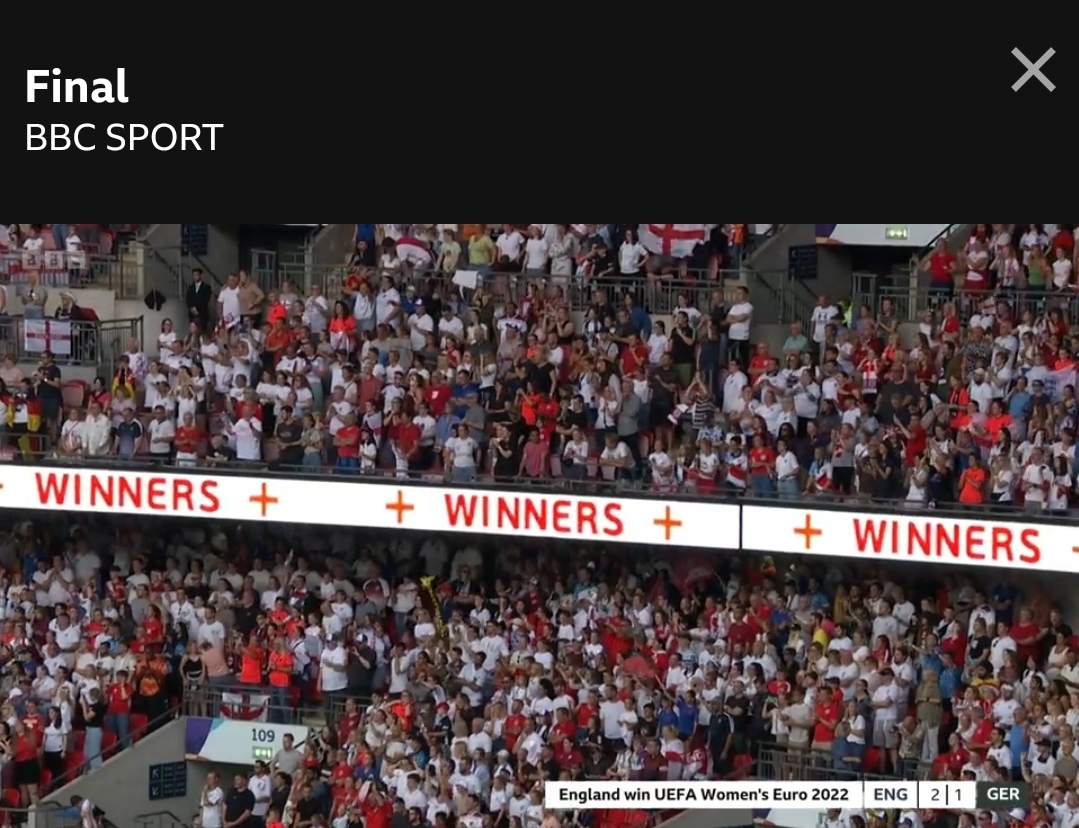
Many of us spent a glorious evening last weekend watching the Lionesses (England Woman’s Football team) finally ‘bring football home’ by winning the European Championship. If you don’t watch or have no interest in football this is significant as it’s the first Championship win for any English football squad in my lifetime and something that the male side failed to replicate last year. Listening to some of the commentary made me reflect on the power of winning to support change and why outside of sport sometimes winning can make some of us feel so uncomfortable.

I’m going to put this out there. I get called competitive A LOT. If I’m in, I’m all in. Not for the winning but for the being part of the process. For me it’s all about the learning and the growth. I’m not therefore so competitive with other people but I have a tendancy to, perhaps, push myself a little hard. I come from a family of super competitive siblings, my brother cannot stand to lose and my sister was a superwoman,  she was going to start a PhD with a newborn afterall. So I suppose I grade on a curve and when compared to them I was always the one who was happy to lose at cards/games. Still, I was raised in an environment where every dinner discussion was basically debate club and so I carry that with me.

Growing up in this environment means that being competitive is a trait in myself that I’m not particularly comfortable with. Frankly I don’t think it’s a very attractive part of my personality. It does mean that I can single mindedly focus on task though, which has advantages for exams etc. It was interesting therefore for me to see the winning of something being talked about as a really positive thing, not just for the winners, but to enable and support change. Change not just in attitudes but in the way things actually work. I’ve always told myself it’s the taking part that counts (and I stand by this) but is winning something that does enables us to achieve change beyond ourselves? If it does, is this something we should think differently about and actively use more if we are fortunate enough to have it happen to us?

Winning can be seen as superficial achievement, but is it?

Winning something, especially on a large scale, has the capacity to change us. I’ve been thinking about the difference that change makes in us that might enable us to then support the wider change we want to see elsewhere.

There are some people who have an innate confidence that they are where they need to be, there are others who are over confident and come off as arrogant. For the vast majority of people I speak to however, we spend a lot of time striving and reaching to feel like we deserve to be where we are and to belong. It struck me whilst I was watching how much these girls are likely to be the same as me. There’s been a lot of ‘well they are only girls’ and ‘when it comes to it they’ll crumble’. When you’ve spent year after year hearing words like that, I’m not sure that winning is superficial.  I know that for me having concrete markers of achievement, especially when given by or measured against my peers, really helps me feel like im doing something right and increases my sense of purpose and belonging. We shouldn’t need external reinforcement but when you have worked so hard having that acknowledged by those you benchmark against matters. It can change the way you feel about yourself and quieten some of those inner voices of doubt, at least for a while. That change in ourselves can embolden us to action,  to feel more able to make the change for others, to feel worthy enough to enter the fight. So maybe winning isn’t as superficial for some of us than I had previously thought.

Why does visibility matter?

‘You can’t be what you can’t see’ (or become aware of to be less ableist)…….for me one of the amazing bi-products of this game is that I am writing this blog or more widely that people are talking about it. I’m a Aston Villa fan so I am used to supporting teams that win little and I am certainly not the kind of girl who switches her loyalties in order to follow success. I do get however that winning draws people in. There will be a lot of people who have never watched women’s football who watched that game. There will be a lot of people who don’t normally watch football, or maybe sport at all, who watched that game. Those people who aren’t normally reached, who aren’t normally impacted are now part of a conversation that might have happened anyway but with much smaller numbers. Winning may not just have changed the conversation but also changed the reach of that conversation. Girls who may not have thought that sport was a career option for them will now know that it is something that could be on the list. Wider than that though, girls who have heard that they will never be able to compete on the same stage as men in general will now have evidence that is just not true. The change that can be born out of that one moment in history has the capacity to impact beyond sport and that really matters.

Why am I sometimes ashamed of winning?

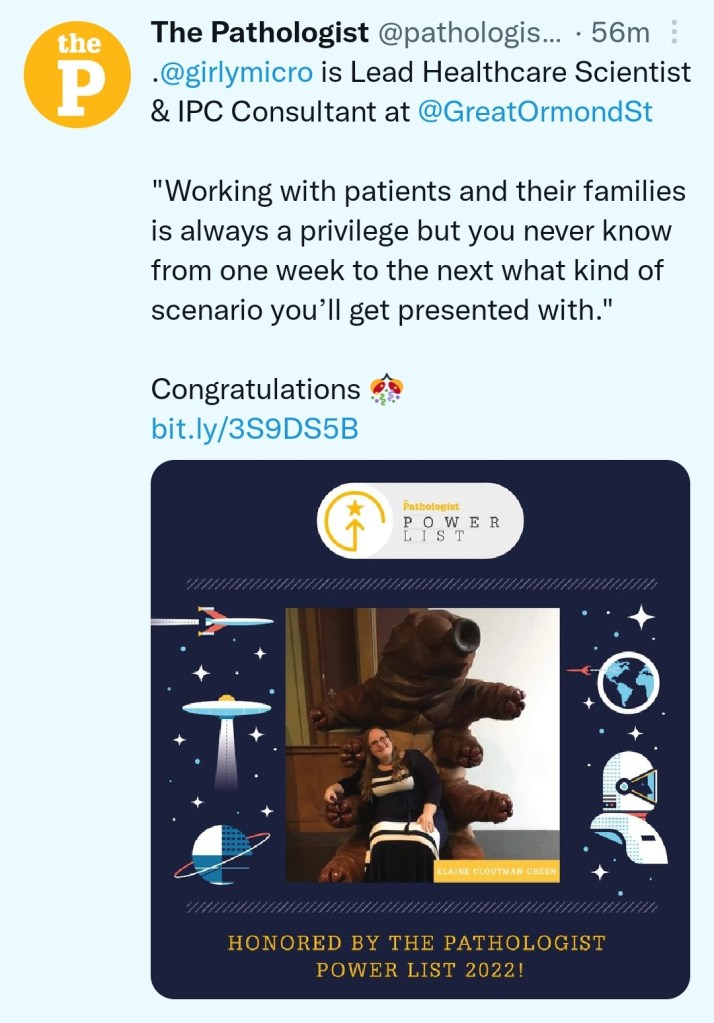
Worse than being seen as superficial, winning can actually be seen as an act of selfishness. I’m sure that this is true for a lot of men too but growing up in a competitive household it was still not seen as a particularly gracious trait to talk about winning, you won and you moved on to the next thing. I think on a wider level there has always been that thing that good girls are seen and not heard, you don’t rock the boat, talking too much about success is seen as rubbing others nose in if rather than a way to inspire others. This hit home for me as last week when the Lionesses won I was in a bit of a quandary about whether to share my own success. I was lucky enough to be on The Pathologist magazines 2022 Power List. This is really nice but also as there aren’t that many Clinical Scientists on it I wanted to share it so that more people are aware of it, so next year when nominations open we can work to get more of us nominated.

It came up on my LinkedIn and I stared at it for ages trying to decide whether resharing it was an act of indulgent arrogance or not. Then I went on the twitter and I saw the joy with which other were sharing their listings.  So I decided the right route was to share and congratulate everyone I saw who was posting as well as my own. That felt right to me as it was about joining in the celebration of others and working together to try and raise awareness of the wonderful scope of our profession and the list itself.

Like all things the why is important

The why, therefore, to me is as important as the winning. Why was I involved to begin with? What were my motivations? Why am I choosing to share or not what the result was? I think one of the things I often challenge myself to do is share as many of those things I fail at as I succeed at. To remind myself that failure is not shameful as it is often where I get my best learning. I have to challenge myself that if failure is not shameful than succeeding should also not be shameful. As long as I’m being equally visible with both then I’m not doing it for the wrong reasons. My reasons for sharing winning and success should never be to stand on a pedestal and go ‘didn’t I do well’ but to stand where I can be seen in order to offer a hand up to others. Sharing success is not an intrinsically selfish act or an act of arrogance that should elicit eye rolling.

The other way that I reflect on whether success is something to be shared is to challenge myself about how I would respond to it if that post was coming from someone else. I love seeing and resharing the success of others on Twitter and other platforms. I get joy from seeing others succeed. If I get to the point where I am not amplifying others, hopefully more than myself, then I would need to really start questioning why I am putting info out into the world. At that point I feel I would have slipped into self congratulation rather than doing it for the right reasons and I hope I would stop and give myself a talking to.

Haters gonna hate

Having said all of the above let’s just get a reality check. Someone is going to hate whatever you do. That’s just the way of the world, especially as you work to raise the visibility of yourselves and others. The Lionesses are already getting grief and are being told that their success is worth less as they are women. In my opinion this is just more reason to celebrate and push for change. I have been told that my success makes others feel uncomfortable and that I’m only a Lead Healthcare Scientist in order to laud my success over others, that I’m all about winning. The thing is that all of that only matters if its true. If it is true then it gives you the opportunity to reflect, to change and grow. If it’s not true then no one else knows your motivations and so they don’t know your why, they therefore can’t really judge the results.

So my thoughts are that winning can be just as important to others as it is for you. Sometimes the winning itself can empower you to make a change happen far more widely than you would have been able to do otherwise, either due to increased visibility or just feeling worthy to have a voice. We will always be judged but that isn’t the reason to not play the game. Just make sure that you take the time to check in with yourself to know that whatever the outcome you’re doing things for the right reason. If you are lucky enough to win, shout about it, celebrate it, just make sure you celebrate others with the same energy and enthusiasm that you use to celebrate yourself.  Winner is not a dirty word.

Anyway, I’m off to the Commonwealth Games this weekend to see more amazing individuals push themselves, break records and win. I may reflect a little more as I admire everything they’ve given to get to this point and you can be sure I will be celebrating them, win or lose, with every step they take.

All opinions on this blog are my own

You Can’t Please Everyone: Why I try to remember the rule of thirds

I don’t think that anyone enjoys being disliked, but some people are much better at dealing with it when it inevitably happens than others. That’s because trying to please everyone people is frankly exhausting and ultimately futile as people are so varied as to make it impossible. I don’t know about you but after 2 years of COVID-19 I’m too tired to do it anymore. I think having reached acceptance that I can’t and won’t be everyone’s cup of tea has come with a feeling of freedom, so I thought I’d share some thoughts of how I got here.

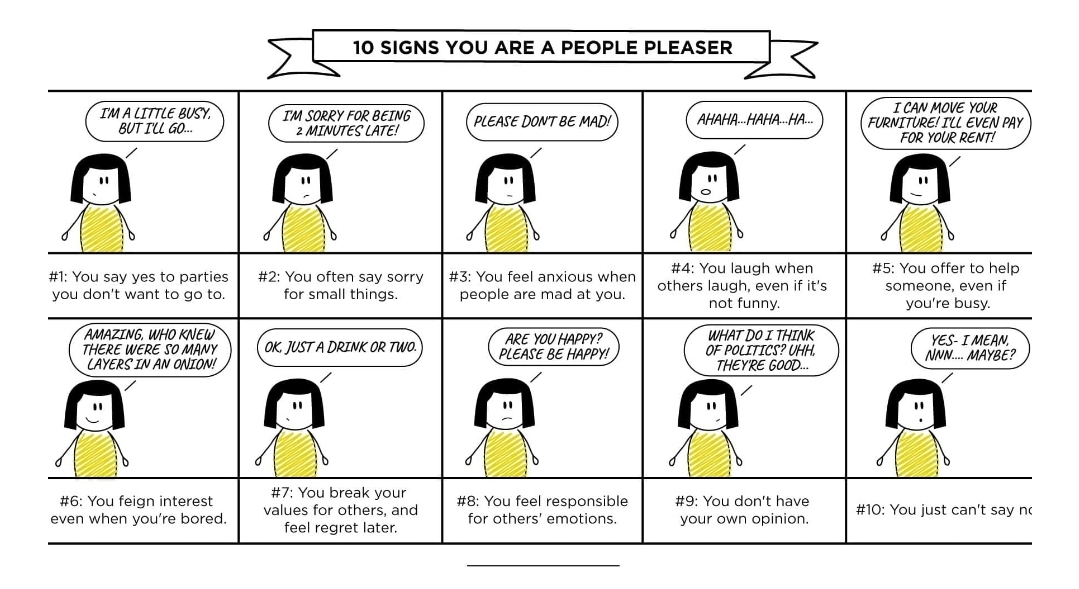
How do you know if you are a people pleaser?

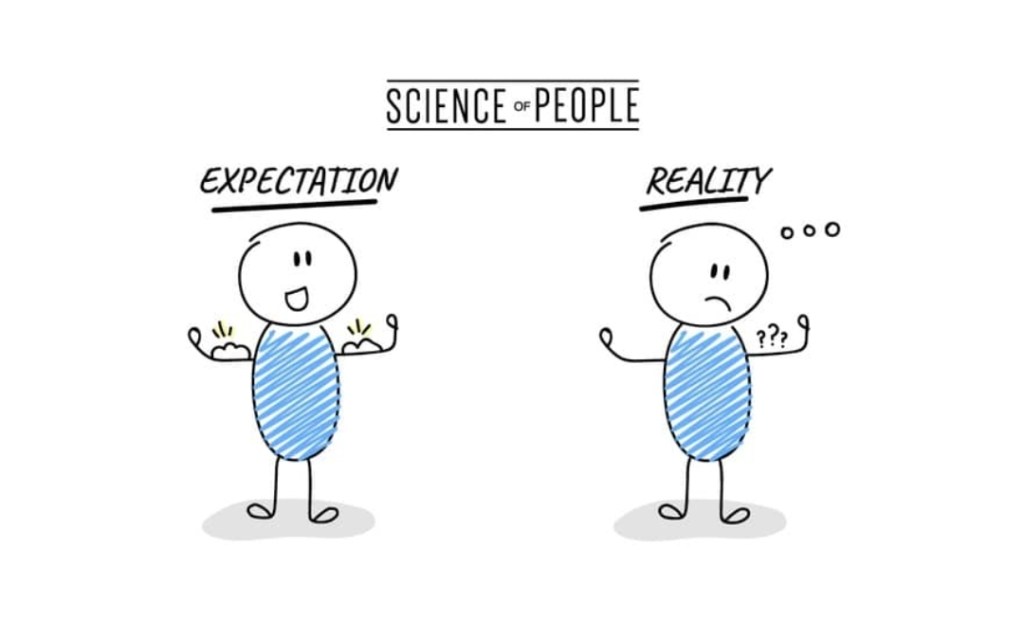
For many years I didn’t realise that everyone wasn’t like me. It meant I also didn’t understand why some people were able to behave like they did (not always badly but with independence) without suffering the crippling shame spirals that happened to me. So how do you know if you are a people pleaser? Some great examples are below.

https://www.scienceofpeople.com/people-pleaser/

You may not be a dyed in the wool people pleaser all the time. It’s true primate behaviour to become more extreme in this behaviour during times of stress, meeting new groups or in high stakes situations. Which is why I suspect that for me it’s been made worse by COVID-19. Being aware of your tendencies so you can undertake a review of whether or not they are helping you is key. For instance I have a tendency to over compensate initially when I’m annoyed at someone whilst I process that irritation. This can lead to me having less good outcomes in the long than if I’d taken a more neutral stance, as I am guilty therefore of sending mixed signals.

Playing well with others

This pleasing people can be especially challenging when it comes to working on group projects or when running events. I’ve been running events and working in groups/teams for most of my life and for all of my NHS career. Most of you won’t know this but for many years, even in my spare time, I ran role playing conventions or live role-playing events for dozens or even hundreds of people. The main thing that I have learnt in my time doing these is that it is actually impossible to please everyone. The things that were one person’s highlight will inevitably end up on the list of another’s persons disappointments – especially when events reach a certain size. Everyone is different and therefore it is almost impossible to tick the boxes of everyone attending.

When I was putting myself through the ringer and getting upset about the not universal love for a freeform I’d spent a year and over 150,000 words writing a good friend turned round, hugged me and whispered in my ear ‘remember the rule of thirds’.

Now I had never heard about this but on follow up questioning it turns out as follows:

  • A third of the people will love it
  • A third of the people will be ambivalent or think its OK
  • A third of the people will hate it

You will hear most from the lovers and the haters but what you actually need to know is how many of the ‘good enough’ people there were. If you manage to get over over a third you are probably doing something right (unless the extras all come from the lovers category). Those are the people you won’t be able to judge the numbers of unless you specifically go out there and seek their feedback – otherwise you respond to the most vocal and may react incorrectly.

The thing is as I go through my career I think the last part is really becoming a key part of my thinking. Am I or do I respond to the things that are shouted loudest or do I take the time to actually evaluate the situation that is beyond the noise to make an action plan which may work for the quiet majority?

It isn’t just about groups

I’ve started off talking about groups but obviously people pleasing can have challenging aspects in 1:1 settings. In fact overcoming people pleasing tendencies in these 1:1 settings can be key to maximising your own effectiveness both at work and at home. I’d like to state for the record that this is very different from me advocating for selfishness. We should absolutely all be team players, but it is important to also ensure that you have the capacity and reserves left to be the best version of yourself so that you deliver as fully as possible.

Below are some of the things I’ve been thinking about/learning in order to handle some of these 1:1 settings better.

Set your success criteria without bias

When I have someone in front of me asking for something I find it incredibly challenging in the moment to say no. Especially when each individual request doesn’t feel unreasonable or large. This year though I’ve been trying to move towards not seeing these 1:1 moments in isolation, but rather to measure them against a holistic whole of what is happening in my life. One important step towards being able to judge whether taking something on is people pleasing or appropriate, is to set boundaries and measure your responses against these.

These decisions can be very challenging in the moment and so one of the things I’ve started to do is to set my own success criteria, before I start projects, but also for my year. These are not another rod for my own back but are a way of checking in with myself about whether something is going in the right direction and whether the decisions I’ve been making are actually serving me and the goal.

It’s important to do this before being in the moment. When I’m in the moment emotions and other pulls can make it difficult for me to evaluate. By having a list that is done before I get into the situation it enables me to have made an unbiased set of judgements that are more reliable for me to use as benchmarks.

One example of this happened recently. This year I had promised myself and my family that after the last 2 years of work coming first I would start to regain a balance where actually my family would be my priority for a while. In May we had some news that meant that this was even more important. In that moment I was able to go back to my list and goals and re-evaluate commitments against my stated aim for this year. Although it was sad I then stepped away from a number of things I was agreeing to that were interfering with my top goal for the year, spending time with my family.

I’m aware other people may think I’m barmy to have to do things this way, but I really easily slip into a default of yes, and in many ways that’s great and where I aspire to be. Not at the costs of my main goals however.

Communicate and manage expectations

If you are going to do this though, communication is key. One of the reasons that I can get more drawn into things than I originally intended is because either myself or the other side haven’t accurately communicated their expectations.

One of the things I dropped in the above example was being a school governor. I only started the role in September 2021 and I had been told that it involved 3 2 hour meetings a year. This I had decided I could manage even in a pandemic and that giving back to my community was sufficiently important to me that I could make it work. Then the mission creep occurred. Suddenly it was 3 meetings a year plus a governor monitoring day per term, then that plus, as Health and Safety governor, I needed to do an inspection visit per term, and finally I became governor with responsibility for science teaching review. Suddenly my 3 evening meetings a year were replaced by at least 2 day visits a term plus the other meetings. Something that was simply incompatible with my goal for this year. In previous years I would have just made it work, I’d signed up after all. This year I reviewed against my goals and found that it just didn’t fit with me achieving the things I’d prioritised for my life so I quit.

The lesson for me from this is that we have to be very clear in communicating our expectations and what the situation will actually look like. That works for both sides. I should have been clearer about the commitment I could actually make and they should have been clearer about what they needed. So many things in my career have been subject to mission creep and I’m trying to be much more aware when I take on new things what they should look like and how much variability from that I’m prepared to accept.

You can’t fix everything

One of the situations that I know is a real challenge for me and my people pleasing tendancies is when I’m presented with a situation where I feel like I should help or ‘fix’. At times like this I become a real helicopter friend/manager and I try to ride in on my white horse and make things better (mixing my metaphors all over the shop and I don’t care – see that’s what I call growth). It comes from a good place, I don’t like seeing people upset or struggling. The problem with this is that a) I often then take on unexpected extra work as part of the response and b) I actually take the learning away from the person I’m trying to help. There is a big difference between assistance/support that enables learning and development and ‘fixing’ which then takes the learning experience away, although fixes the situation in the short term. I struggle to know when in the midst of these situations when to step away or hold my ground to allow space for development to occur and how much help is too much.

This brings me onto something I’ve mentioned previously. It is sometimes just not possible to please everyone. Sometimes you have to have the courage to be disliked and honestly this is definitely harder 1:1. This can happen for a number of reasons: sometimes it’s because it’s a collective decision and not everyone in the group is going to be on board, sometimes you have to make a decision that is in the best interest long term but may not garner immediate approval or understanding, and sometimes (especially in IPC) you make difficult decisions on the basis of safety. I have found this the most challenging aspect of leadership, but I have come to one conclusion and that is I need to acknowledge the noise but not be deafened by it. I have to put it into context to be able to deal with it. If I believe that have done all I can, communicated/collaborated as well as I possibly can, then I have done the best I can in the moment and I have to put my people pleasing aside.

Remember context is key

You can only control you, your responses and what you have decided to put out there. You can’t control how it is received and you definitely can’t control the responses of others. Often these responses are not even about you or what you have put into the world. They will be intrinsically caught up in the perceptions of others, their prior experiences and their current emotional state. Fundamentally it is not all about you and you have little to no control over the people you are trying to please. The more we recognise this, the more we can put our energy into focussing on success criteria and moving forward in the wider landscape.

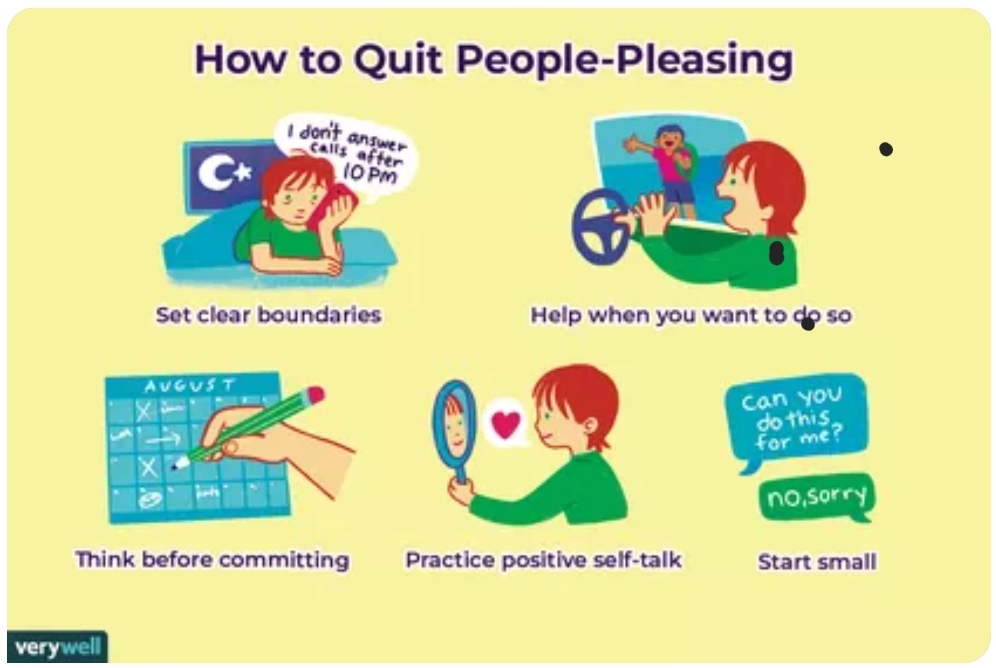
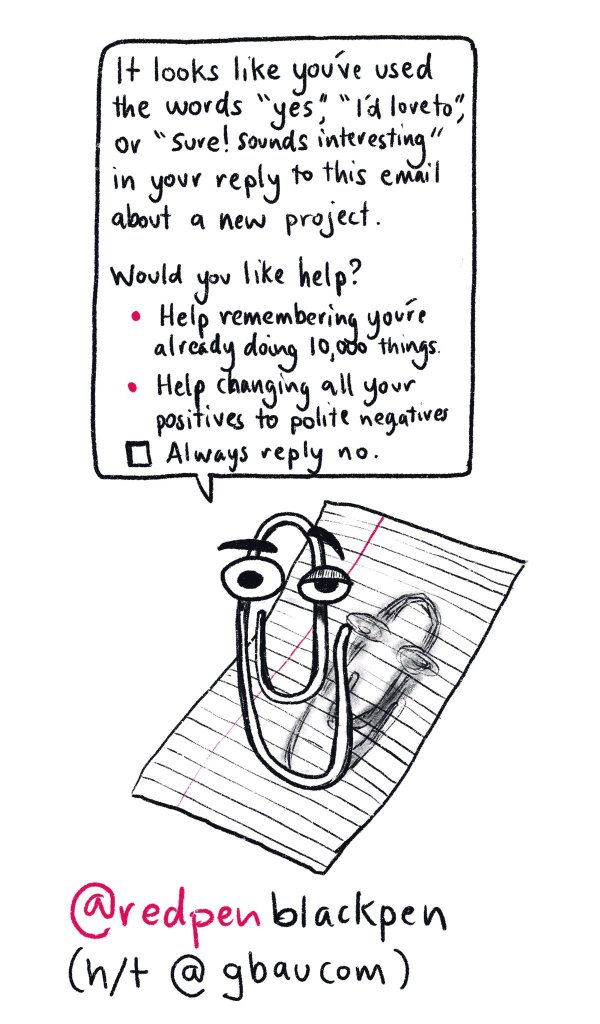
I’ve found the below image really useful in addition to checking against my success criteria. If my only motivation in saying yes is to please, then actually my answer is really no and the sooner I deal with that the better it will be for all involved.

People pleasing isn’t a zero sum game, by prioritising something over something else there is always a resource cost. If you like me have spent energy for years trying to please in situations where you have little or no control of the outcome my plea is to stop. Think. Why I am doing this? Is it actually helpful? Does it align with my values? Does it move things forward? If the answer is no, then the answer is no. You are allowed to decline, you are allowed to choose where to focus your energies, you are allowed to have your own goals. So say it with me now ‘No’ ‘Thank you for thinking of me, but I can’t right now’ ‘It isn’t the right time for me right now, but please do contact me again in the future in case I can help then’. Your world will be a better place for embracing the power of N O, you will succeed more, do more and in my case I will get to spend time with the people I love who are, after all my reason for being.