Girlymicro’s 100th Post: What I’ve learnt in my 1st year as a consultant

It has kind of snuck up on me, but this is the 100th blog post on Girlymicrobiologist.com. I’ve had such tremendous fun and learnt so much about myself writing them. Talking to people about them has also been an unanticipated joy. I don’t therefore think I’d realised how many posts had happened over the last 18 months or so. To mark the occasion I thought about writing some top tips and discussing the things I’d enjoyed most, but I cover a lot of that in my 1 year anniversary blog. Serendipitously this post coincides with me having been in a Consultant post for a year this week, so I thought instead I would share what it’s been like………….
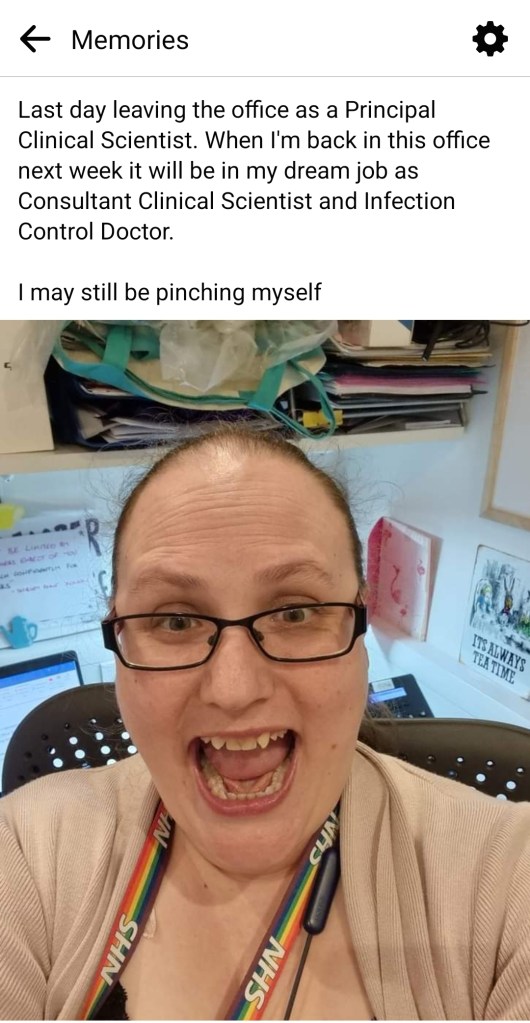
Everything I thought and more

I’d worked with a fairly single minded focus to get here. At some points it really felt like it was never going to happen. The wonderful thing is that it has been everything I hoped for and more, something that isn’t always true for dreams and aspirations.

The interesting thing for me is that the core of my job isn’t really that different from my job before, I kept waiting for it to change but it hasn’t really. The biggest change I think is the weight of responsibility I feel for my team and that, for some of the big decisions, I end up advocating on my own. I am aware some days that I’m on a trapeze without a safety net. That said, as the Consultant Nurse for IPC/DIPC and I talk every day we always have each others back. I can’t imagine having spent the last year in a pandemic doing this solo, and so this relationship has been a god send.

I must however talk about the thing that has been strangest to me. I left work on a Friday and came back on a Monday as a Consultant. From one day to the next a lot of people changed the way they interacted with me. People who had known me in both roles. On the Friday they would challenge me routinely and call me Elaine. When I came back on the Monday, the same people called me Doctor and just agreed to things. When I sent emails that I anticipated would come back with nit picking or challenge from some medical colleagues they just responded with OK thanks. Don’t get me wrong there have been plenty of difficult conversations but far fewer than I had anticipated. Anyone who believes hierarchy doesn’t exist in the NHS should experience this transformation by just sticking Consultant into their job title. I still can’t quite get my head around it.

The other thing that I’d been really fearful of when I switched was using the Infection Control Doctor title and having people telling me I couldn’t as I wasn’t a traditional medical doctor. I agonised about having it in my signature and putting people’s backs up. You know what…..not a single person has mentioned it, let alone said anything bad. I can’t tell you how grateful I am for this. It was that title more than any of the others that held real meaning for me and I was so scared of being rejected in that post. The fact that people haven’t rejected it but in fact embraced it means so much. As someone coming from a different place via a different route it is hard to quantify how much that has meant to me and given me hope for how we embrace change/difference in the future.

The whole truth and nothing but the truth

Now I’d be lying if I said the joy and acceptance described above hasn’t come with a whole of heap of challenges. I’m going to talk about the challenges of becoming an IPC Consultant in the times of COVID-19 below, and some of the bits I’m going to cover here I don’t know whether they are the same or worse because I started in a pandemic. It is worth stating that most of these existed before the big P, but that like many things in a period of change they may have been exacerbated.

I talked about about how much the IPC Doctor role has meant to me, its been the goal for 16+ years afterall. I think because I assign so much mental value to it that I doubt myself and fear that everyone is going to realise the horrible mistake they made on a pretty much daily basis. The shoes I’ve had to fill are massive ones left by such an impressive and knowledgeable individual, you can’t help but worry you will disappoint. Taking over at this point is therefore challenging when there have been big decisions and big changes every week it feels. I’ve talked before about how failure is key to learning but every action right now feels like it is too important to fail. That fuels my inner perfectionist and means I have a tenancy to spiral. Deep breaths and ‘faking it until I become it’ have definitely been my survival tools for my first year in post. I’ll let you know when the ‘become it’ happens.

The acceptance has been great, I’ve been incredibly lucky but on some level I still know I’m never going to be part of the club. My micro consultant colleagues go for coffee and lunch together but I can’t join them. I’m the person setting the guidance that says you shouldn’t mix, even after work. They will always spend more time with each other in hand overs etc which means they have enhanced relationships with each other. This isn’t a bad thing. I have relationships that they don’t have and my job role is different. I guess it’s human nature to want to be accepted and part of the group however. The strength of my position is that it is different and in many ways my strength is that I’ve always followed my own path. There have been times over the last year that I’ve needed to remind myself of that. They have been nothing but supportive and inclusive when I’ve reached out and so it has been a lesson to me that if I need help I just need to ask for it.

This leads me onto the next thing. I’m a stand alone Consultant Clinical Scientist within my department. I have nursing and medical consultants that I work with but no one like me. This has meant that sometimes it requires specific focus for both myself and others to remember the scientist part of that title. Being a scientist is a huge part of who I am and my concept of self. It’s understandable that others may not always remember that. Doing the bits that mean I am still a scientist is hugely important to me, things like undertaking research and advocating for my professional group. Some of this is tied in to re-discovering my identify full stop having focussed for so long on reaching this point. I’ve crossed the finish line and so what does the next goal look like, how does that fit in with my scientific identity. How do I ‘fit’ whilst still maintaining that of which I am proud and makes me different. This one is definitely a work in progress and as I learn more I’ll share whatever conclusions I come to.

Here’s the one that will surprise none of you = the to do list never ends. I feel like I’m constantly running to stand still, working weekends just to keep sight of what’s going on. Some of this I think is linked to me wanting to do my best and being anxious about it, some of it is because I don’t want to let go of some things I used to be involved with, but to be honest I think a LOT of it is trying to do all the pre-pandemic work on top of a pandemic work load. The ever changing guidance and the constant messaging required to keep people safe. If life is like this three years from now I will definitely need to drop things that I would love to still be engaged with, for right now I’m mostly taking each week at a time and hoping at some point to see what a consultant post in non-pandemic times might look like.

IPC doctor in the time of COVID-19

Until that day arrives when SARS CoV2 doesn’t control my every moment I continue to spin that one enormous plate on top of everything else. One of the biggest things I’ve learnt over the last year is that leadership, in all its forms, could not be more important. There have been some pretty tough lessons about seniority that I’ve had to learn as well.

I’m used to being able to make decisions, decisions based on evidence. If the data is sufficient I’m not used to people challenging or not engaging with those decisions. I’m going to post about this more in a future blog I think, but one of the lessons I’ve had to learn is that my ability to influence has limits. That the risk assessment others are making is not necessarily the same as the one that I am, and the weighting of the different factors within it are not necessarily the same as mine. Sometimes my role is to advise but if that advice is not taken up because that risk assessment is different it is not a failure of me in the role that I hold. It is the reality of advising on a single part of a much greater puzzle. Try as I may therefore I have had to acknowledge that this isn’t a battle for an outcome, but a collaboration where the outcome may or may not be the one that I would have chosen. As long as I advocate to the best of my ability, live up to my values and embody the leadership I want to see, that is all I can do. If I see it as a battle we all lose, if I see it as co-production we all win. Changing my point of view on this has been key to my surviving at certain points, especially linked to Omicron.
Talking about leadership, I don’t think embodying that leadership has ever been more important. Everyone is tired and everyone has gone through a period of extraordinary stress. I’m still asking staff to behave in ways that add to that stress i.e. by not having lunch or even drinks with their teams together outside of work. This means that a key way that we normally support each other is no longer available. We haven’t been able to celebrate or commiserate with each other for over 2 years. I’m a really strong believer in not asking others to do what I’m not prepared to do myself. Over the last year that has included me leading the way with opting in openly and discussing the pros and cons of routine asymptomatic lateral flow testing. Being open with people about my reactions to the vaccines and booster but how I went ahead and had them for the protection of myself, my colleagues and my patients anyway. It has also included me missing out on that same support I have deprived others of by reducing their contact with colleagues. To me its about fairness and showing with actions rather than words that we are all in this together.

The importance of paying it forward

There are some people in my world who went all in to get me this post, people who I will never be able to thank enough. Mentors who have been with me every step of the way and who put their names and reputations out there vocally to support me, fought battles for me that I know no detail about. Those people have changed my life. So now it’s my turn. My turn to fight for others. My turn to act as a shield and as a mega phone. I have thanked those that helped me but I don’t think they will ever really understand the difference they made, so now I honour that by vowing to make that same difference to those who follow behind.
So here I am (successfully?) having broken my way through that glass ceiling. If anything this last year has shown me that this isn’t the end of the journey but the start. If I want others to not have to have the same fights as I did, then I have to work to make sure I keep that hole open and drop a ladder through it to help those who want to follow. Those coming after me will have different challenges but it’s important to share what I’ve learnt to help them where I can along the way. It’s one of the many reasons this blog is so important to me. So as a fitting message in this 100th post I wanted to say that for as long as you guys keep reading, I will keep sharing. Sharing so we can rise up, sharing so we can make change and sharing to make sure that we are seen and to help us all work every day to leave the world a slightly better place than we found it.

All opinions on this blog are my own
Healthcare Science Week 2022 – Join us on Friday 18th March to talk about blogging, communicating and the importance of drama

Healthcare Science Week performance based on the weekly ‘Girlymicro’ blog by Dr Elaine Cloutman-Green, followed by a discussion on blogging

“So, this is my first ever blog post. Bear with me as I don’t really know what I’m doing. I’m what is known as a Clinical Scientist and I work in Infection Control.”

Thus began the first blog post by Dr Elaine Cloutman-Green, Lead Healthcare Scientist at Great Ormond Street Hospital, in December 2015. It would be five years and one pandemic before her second post, in October 2020, began her weekly blog as ‘Girlymicro’ (‘scientist changing the world one swab at a time’).

Girlymicro blogged at first about the job, to promote Healthcare Science, offering professional exam or interview advice for HCS trainees, before ranging more widely, into women in science, the challenges facing HCS, exploring the limits of what overstretched teams and individuals can achieve, saving lives in labs through insight, accuracy and interpretation.

Each blog written in a snatched hour, Girlymicro became a mental space populated with personal reflection, meditation on loss, favourite microbes, special guests, puppet shows, and… zombies; always with Elaine’s trademark humanity and humour.

‘All Opinions In This Blog Are My Own’ is a showcase of a devised work in progress based on the Girlymicro blog by The Nosocomial Project, adapted by Nicola Baldwin, performed by two actors, Becky Simon and Peter Clements, and two Healthcare Scientists, Anthony De Souza and Dr Elaine Cloutman-Green.

The short performance will be followed by a conversation on writing and blogging. Why blog? What might you learn along the way? Does writing create a safe space for reflection? Or create new pressures? To blog or not to blog…. That is the question.

All welcome

Date and time

Fri, 18 March 2022 15:00 – 17:30 GMT

Location

South Wing University College London

IAS Common Ground, South Wing

UCL Gower Street London

London

WC1E 6BT

please register to attend on this link, please take a lateral flow prior to the event and wear a mask

Continue reading →

How Do We Stop, When the Person We Are Competing Against is Ourselves?

I’ve talked a lot previously about the fact that we should only really compete with ourselves. We are all different as are our lives and therefore it makes sense that all of our success criteria will be different too. It’s too tempting to bench mark against others and find yourself wanting. This can be a great driver but it is also something that I for one find difficult some days as I don’t know if it can be turned on and off.

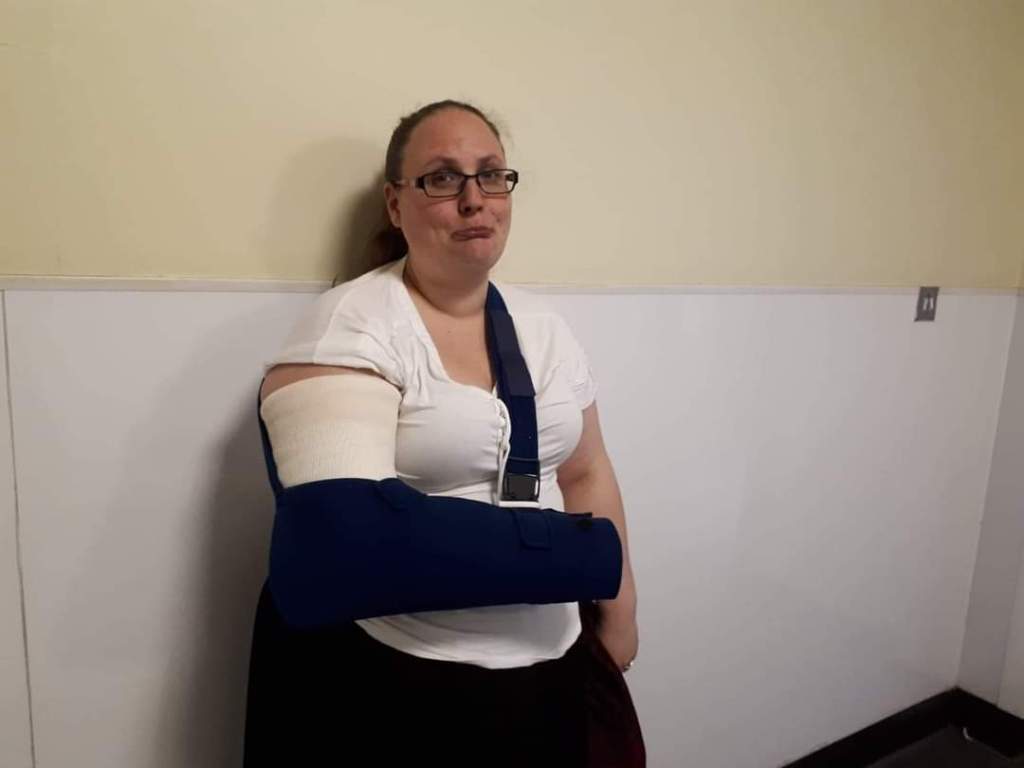
Three years ago today I ended up in a cast from shoulder to wrist. I fell out of a lift at work and protected my work laptop and phone and failed somewhat to protect myself. I’d never broken anything before and so was convinced I’d just sprained something (despite not being able to straighten my arm). I therefore took ibuprofen and paracetamol, went to three more meetings and told everyone I’d be back on Monday – this was a Friday morning. On Saturday morning I was forced to admit that maybe there was something wrong and finally went to A & E (after checking my emails). There I was told I broken my elbow and that I’d have a fracture clinic appointment in the week. I shrugged and said well it’s only and elbow and so worked from home as that didn’t mean I couldn’t type……..right. I finally turned up at fracture clinic and I had broken not only my elbow but also my wrist and then put a full arm cast on me and signed me off sick for 6 weeks. I’d never had a sick note before, I hyperventilated in the appointment and burst into tears saying that they couldn’t do it. They pointed out they could, insisted I took codeine for the pain and put me in the hands of my friend to take me home. What’s my point? My point is that that I don’t know when to stop. I was told by multiple people I should have gone to A & E on the day. I was told by many more to go home and not go to meetings? My husband was adamant that I was in pain and shouldn’t work prior to the fracture clinic as I had a broken arm. I made my wrist much worse and heal out of alignment because I typed on it for almost a week because I couldn’t stop.

So how do we stop when the person who is driving us to continue is ourselves?

I posted last week about the fact that I am often not that well, in fact today I am writing this post in bed as I just feel pretty rough. I’m used to needing to push through because if I didn’t I wouldn’t ever achieve anything very much. What’s probably worse is that I think I’m a fundamentally lazy person. Honestly if I could I would lie on a chaise longue in a library all day reading books and drinking tea. As I’m painfully aware of this aspect of my personality I do try (although my hubby may point out not always successfully) to counter it by being pro-active about doing things. The combination of these two mean that I don’t often know when it’s OK to take my foot off the gas and rest and when I need to knuckle down and push on.

There are times when this is useful

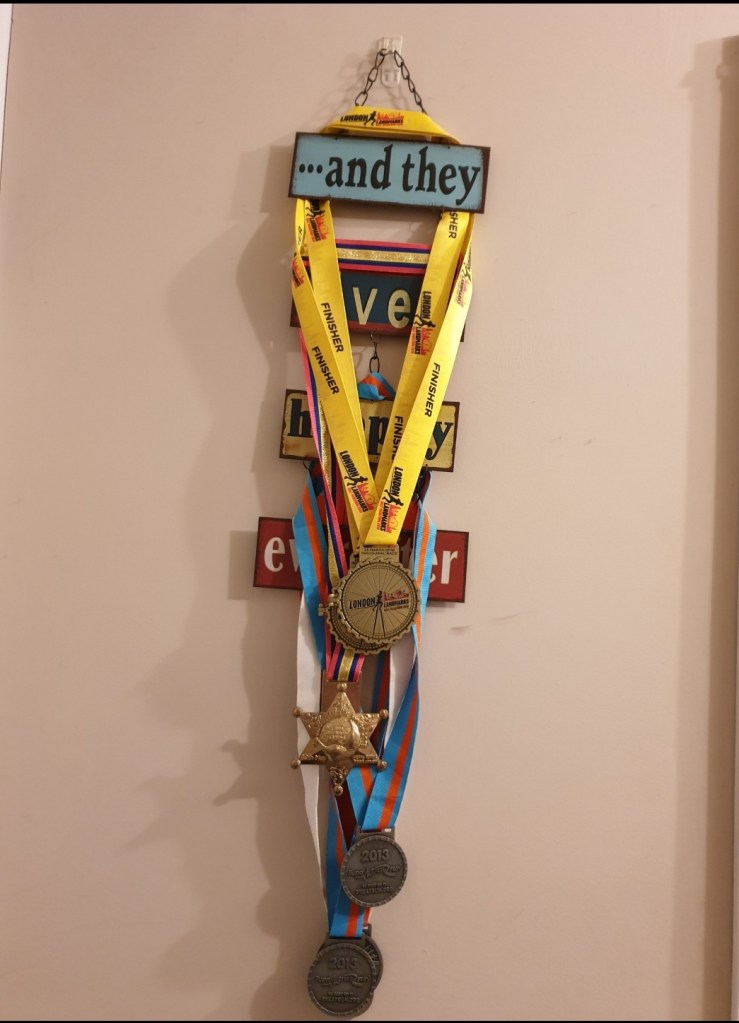
There are times when not knowing when to stop is actually useful. Pre-pandemic I used to run, badly. I’m not good at it, I’m not fast. What I am is stubborn. I continue to put one foot in front of the other no matter what. I’ve finished marathons and half marathons with blood up to calves and enormous holes in my feet but I get into a zone where I just put one foot in front of the other and the pain doesn’t matter so much.

When it comes to working in healthcare I find the same thing happens mentally as well as physically, you just keep going. No matter what the warning signs in terms of burn out of physical health, you keep going because that’s what we do. My auto immune condition entered a whole new phase when I was doing my PhD and I’d just finished a half marathon (whilst in my 3rd year of PhD) when my husband noticed I’d lost a patch of my hair. None of it stopped me. I still submitted my PhD a year early so I could do FRCPath and complete my consultant training.

I succeeded because I just pushed on, because of the habit of putting one foot in front of another. At the time finishing was everything, now I wonder if there were more sensible ways and if I should have listened to those around me, but I was on mile 9 (which I hate) and I just wanted to get the equivalent of mile 13.

Medicine and healthcare are hard places to break the habit

I work in an amazing organisation, filled with the most amazing people. They are all also super smart and world leading experts. I’ve worked there for almost 18 years, I trained there, I’ve grown into an adult there. Being surrounded by people that smart, that successful becomes an embedded driver in itself. You want to succeed for yourself but you also want to succeed for them. As someone who thrives on doing things differently I wanted to follow my own path, break glass ceilings and set the way. To do that however you have to succeed, you have to tick the boxes that people think you can’t tick and so you have to find the drive to continue even when it feels impossible.

As a Healthcare Scientist there is track that needs completing in order to reach the consultant end point I was determined to achieve, for me it was supposed to look something like this:

  • Masters (years 1 – 3)
  • State registration (year 4)
  • Membership of the Royal College of Pathologists (year 4)
  • PhD (years 5 – 10)
  • Fellowship of the Royal College of Pathologists (year 11)

Even though I’ve talked about not benchmarking against others the need to complete these goals become embedded in your psyche. You become very focussed on the track that you are on, in the same way that I run, you get into the zone and take one step at a time. Sometimes however when you are in that zone it’s hard to hear the voices that say you could do it differently, that you could take a break between stages, that you could take that afternoon off to refresh. In my case it was hard because I was on fixed term contracts for the first 13 years of my career, until after I had my PhD and FRCPath. There was therefore a ticking clock in my brain that if I didn’t demonstrate enough commitment, get enough done, that I would lose my job and a career I loved. Not only was I competing against myself but I was competing against time.

So how do we stop?

All of this drive has definitely had its benefits, as I said there are times when this self-competition is really helpful. I would not have managed to get a consultant post or tick all the boxes that needed ticking without it. The issue is that how do you stop when it is no longer useful or even harmful?

I’m still working on this one but here are some things that I’ve found useful. The first one being is to listen to the balancing voices. There’s a lot of good in social media but it’s sometimes easy to only hear the things that re-enforce the fact that we should be working harder and doing more. There are other voices out there however that should make you stop and think about whether you can stop and take a break or just do it in a different way altogether, try and pay as much attention to these as the ones that drive you to keep doing what you’re doing.

Think more about who you are listening to when getting face to face advice. The day I broke my arm at least 3 people told me to go to A and E. I knew something wasn’t right but I listened to others that re-enforced my inner voice to keep going. It was my friends and family who were the ones that said to stop, the ones who prioritise me over Dr Cloutman-Green. Do yourself a favour and listen to these people more. Their priority is you, not the roster, not the deadlines and not the work. Amplify their voices in your mind rather than listening to others.

Finally I’m trying to become my own critical friend. If I was giving advice to someone on the situation I find myself in, would I tell them to push on or would I tell them to stop and rest so they can come back stronger? This is definitely a skill and I am definitely at amateur level right now, but I am working on giving myself permission, permission to leave on time, permission to eat lunch and permission to do things I enjoy that have nothing to do with work. I know some of you out there are so much better than I am at this, and as I said, I am a work in progress. I’m trying to remember therefore to enjoy the learning and the journey. Life after all is just a ride.

All opinions on this blog are my own

I Rarely ‘Feel’ Well: Let’s talk about health privilege in the time of COVID-19 and why SARS CoV2 solutions are not ‘simple’

Firstly let’s get out of the way. This isn’t a pity post, I live a full and amazing life and can achieve anything I want to achieve. It’s just sometimes I achieve it in a different way or I accept there might be some health consequences if I choose to do so – much like other people accept the possibility of a hang over if they open a second bottle of wine. I don’t have a severe condition, I’ve not got cancer or anything major but I have a mild auto immune condition that means I rarely feel ‘well’. Most days I have at least some variety of discomfort, swelling, mild temps, bad chest, sore throat, nausea. On bad days my limbs and face swell and I can’t eat or sometimes drink. This is just life, it doesn’t stop me living and as I said it’s mild and hasn’t hospitalised me in my adult life.

If it is not a show stopper then why am I posting about it? I’ve noticed a lot of healthcare colleagues posting in recent times about the problem of presenteeism and that we should just switch to symptom based isolation for SARS CoV2 and do away with testing outside of healthcare. They make these tweets as if this is the simplest solution and is completely logical. The thing is this choice might be both the simple and logical thing IF you make it from a position of health privilege. What I mean by that is that this is simple IF you are fortunate enough to be a position where 5 days out of seven you don’t have to manage your symptoms, and IF you don’t not have to worry about how you feel on any given day as you find it easy to tell when you’re sick. For someone like me who can’t readily differentiate from the list of SARS CoV2 symptoms and my everyday life you would make my life and existence even harder.

Turning up for work

Every day in Infection Prevention and Control (IPC) we make calls linked to new staff positives so we can make risk assessments linked to patient or staff exposures. Every day we get people who find that they have been at work whilst symptomatic and every day we sigh and roll our eyes, even I do it. We top up on caffeine and wonder why it is so hard for people to recognise when they have the below symptoms and why they don’t just stay off work if the answer to any of the below is yes:

Imagine what it’s like therefore to work and be implementing guidance linked to this knowing that if you obeyed the letter of the law I would effectively be taking PCR tests every 3 days on top of daily lateral flows just to navigate getting to work. I of all people should not therefore roll my eyes but should demonstrate some compassion. If its is hard for them then I need to demonstrate both compassion to them and to myself by recognise how challenging this is. Symptom based detection has become especially an issue during Omicron with the very generic symptom list, people have pretty mild symptoms at the start and they are no where near as identifiable as the alpha symptoms. It’s much harder therefore, especially in winter respiratory season, for people to clock that they have symptoms they need to act on.

People put a lot of emphasis on presenteeism being an issue in the NHS and that that is the reason why people are attending. I think that’s true, everyone feels the pressure to be available right now. In some ways being able to work remotely and therefore being ‘always on’ has made this even harder. I also think it’s not just that. Everyone I know at work is physically broken in some way or other after 2 years of this, even if they don’t have an underlying condition. Therefore it is just harder to know when feeling physical symptoms are linked to just being a heathcare professional during a pandemic or because this is something different.

I’ve been working in Infection Prevention and Control for 18 years now and I can say that the last 2 years have been incredibly challenging. That’s not to say it hasn’t been hard for everyone. For me it’s been 2 years of constant change, long hours and weekends, challenging conversations and continuous decision making. I know IPC colleagues who haven’t had a day off in 2 years. That’s just isn’t sustainable even if you don’t have something already going on, for people like me who have conditions exacerbated by tiredness and stress the miracle would probably have been if I didn’t feel this way. I for one am so far away from ‘a two week holiday will make this better’ that it’s sometimes hard to imagine ever feeling like me again. Yet we turn up, because that is what is needed of us and that is what we require of ourselves. Let’s just acknowledge that it’s more complicated than any of us are talking about in the context of symptom based diagnostics.

Its unpredictable and so I can’t work from a baseline

If you are a healthcare worker exposed to SARS CoV2 in the community or in your household the rules are different to those if you are not. Working in healthcare if I am exposed I need to get a negative PCR test before I return and lateral flow test every day for 10 days. I then need to submit a declaration daily that I am still symptom free and upload my lateral flow test result prior to attending to work. Whilst at work I need to take all my breaks alone so that I don’t risk exposing my colleagues and I can’t take off my mask around others (I obviously would never take my mask off around patients at any point – for their protection and for my own). Again, this seems really straight forward and super sensible. It is, I’ve done a lot of work with implementation on this and it’s a sensible system that prevents chains of transmission and ensure safety. It’s also really hard for people like me. I’m not in a position to be able to declare symptom free and therefore I’m not in a position where I can be granted an exemption. That means that if I’m exposed I have to work from home. Although it is theoretically possible for me to do this for chunks of time it leaves my colleagues unsupported and therefore I don’t feel like it’s something I can risk. I therefore have spent most of the last 2 years as a hermit, not just to protect myself, but because I don’t want to place additional strain on an already stretched system because I decided to have a life. If I was in a position where I could say what my baseline symptoms are and could therefore detect a change it might be different, but I can’t, every day is different and so there is a constant choice about how much life I live and how much exposure I can risk.

One of my colleagues this week asked me why I don’t just remove the COVID tracker app. I said it’s for a couple of reasons:

  • I think that we have a responsibility to walk the walk, it is the safe and responsible thing to do in terms of public health and how can I expect others to do it when I’m not prepared to do it myself
  • I keep it precisely because I can’t easily detect if I have symptoms, when I get alerted I switch from screening every other day to daily in order to manage the increased risk. This means that there will be a shorter period of me putting others at risk if I do become positive. I also ensure I take a PCR test, which I don’t do routinely as symptom based triggers don’t work for me
  • I’m theoretically at higher risk if I do get sick, even though I’ve been vaccinated, the earlier I know the sooner I can try to ensure I manage my safety and the risk to my household

What will happen if I do get sick?

I was ventilated for acute viral respiratory illness as a child, I’ve done the waking up in intensive care as I posted about before. I have some lung damage which means that I get respiratory symptoms and chest infections easily. These also make auto immune condition worse and so all in all I’m not looking forward to my (inevitable) COVID-19 experience. I’ve spent the pandemic working myself into near exhaustion and there is always that part of my mind that worries about what would happen when my number comes up. I’ve been extremely fortunate to not have caught SARS CoV2 so far and I feel better about my risk now having been triple vaccinated. I also know that I don’t mount a good vaccine response and that 2021 was the first year I was so worn down that I got shingles, which probably doesn’t reflect that I’m in a massively good place immunologically.

At work my health is a bit of a running joke as I’m always symptomatic. When people hear me hacking it’s a running gag that people can always hear me coming and my standard response of ‘having functioning lungs is over rated’ is probably well known. I don’t really know if my fear ever really lands with others as I try to ignore it, but it’s definitely there. I also worry that I wouldn’t be able to step away from work and would therefore make it worse. I never give myself the time to be ill because in my head ‘I’m the sick girl’ and therefore I feel I always have to drive myself harder and prove myself more. This is definitely a ‘me’ thing and fighting through when I should stop is how I’ve managed to get where I am instead of spending my life on the sofa under a duvet, but not knowing when and how to stop is something that means I break myself further when all I needed to do was rest. We work in an NHS that drives these bad traits, between the Bradford Score that determines whether I can be sick and the 600 emails a day, stepping away feels nigh on impossible.

Not just about me

I have the best family, we have each others backs, but we have suffered some real loss and a lot of it is based around our collective health. When I talk about how health privilege and comments linked to symptoms not being simple, it’s not just I’m a healthcare worker. My husband and brother both have ulcerative colitis (their own auto immune conditions) and my mum has similar infection issues to me. We are just one family and there must be thousands like us. We have avoided getting COVID-19 by stopping our lives and relying on public health measures to protect us. With the government moving away from stopping that protection we feel more at risk than ever. Even if symptom based diagnosis worked how many people would adhere to them? I’m lucky, for all that I’ve talked about I have a job with sick pay, I’m not on zero hour contracts where if I don’t work I don’t pay my bills. There are huge groups within our society who will feel true pressure to attend work and leave the house if we change away from diagnostics and isolation supported by sick pay, even more than they already are. That pressure then moves risk onto people like my family who are potentially being condemned to continue to have restrictions on their every day life long term. There are no easy answers to this, as I said in my IPC post someone always has to pay, but as healthcare professionals please lets stop claiming that this is straight forward.

So I will do a better job of managing my condition, I will try and not work weekends, I will leave on time and try to get some sleep. In return if you could try to remember that none of this stuff is ‘simple’ or ‘easy’ and that it only feels that way to if you are fortunate enough to not realise that feeling ‘well’ is a privilege that not all of us are fortunate enough to enjoy.

All opinions on this blog are my own
Guest Blog by Katy Heaney: Pathology: hidden service or hiding? Lets stop being shy

This weeks guest blog is written by the ever talented Katy Heaney. The blog includes the first announcement of some super top secret work that Katy and #PathologyROAR have been undertaking linked to the #IValueLabStaff and #PathologyROAR recruitment videos. Keep your eyes peeled and followed the hashtags for me information from Wednesday 9th February. I for one (Girlymicro that is) cannot wait to finally find out what they’ve been working on.

Katy is a Consultant Clinical Scientist working for Frimley Health NHS Foundation Trust, part of the Berkshire and Surrey Pathology Services network. Currently part-time seconded to the UKHSA working as the Point of care workflow lead for Operational Supplies. She has a passion for science communication, patient focused pathology testing, baking and painting.

A cup of tea in bed on a Sunday was a rarity for me in 2020. It had been a hard year for my Point of care testing (POCT) pathology service and there didn’t seem to be any let up ahead. Recruitment had been like a revolving door – as fast as we interviewed, people moved on and there didn’t seem to be any HCPC registered pathology staff not already employed.

As I meandered through my social media on a Sunday morning I found posts advertising recruitment in other healthcare fields but with a significant lack of inclusion of pathology.

My burnt-out brain, reflected on my teams, and the monumental national pathology effort in maintaining current pathology services as well as implementing and ramping up Covid-19 testing. I reached out to the pathology Twitter community to sing our own praises; how could we have been forgotten?

But internally I wonder; Are we really the hidden service, are we hiding, or are we shy?

In my career I have enjoyed being involved in National Pathology Week events reaching out beyond our laboratory doors to sing our praises and explain our science. The Royal College of Pathologists have a fantastic web page now of day in a life for pathology, example career pathways and events that take place for all ages. I was also lucky enough to be part of the Lab Tests Online UK team when we released the free app of the website; we held an app launch event and invited anyone we could think of to join us in celebrating pathology. Channel 4’s Embarrassing Bodies’ celebrity doctors joining us was a big highlight!

The Pathology Cake; designed and produced by scientist trainees at the LabTestsOnline UK App launch event. Note: all stock was expired and saved from bin for use on this “art”

Being a POCT specialist – I don’t spend a lot of time behind lab doors, far more walking the clinical floors to see how my kit is working or helping non-lab healthcare staff use the kit for their patients. I spend a lot of time explaining pathology to non-laboratory staff. I have always advocated that science communication is a skill in itself. It takes practice and thought; we cannot expect our most fabulous researchers or complex method specialists to also be able to explain to a member of the public what pathology is without working on how to translate our science jargon and considering understandable words.

We are under-resourced and small in comparison to many other healthcare staff groups. Finding the time to advocate and advertise pathology is hard to fit into the day job. The events organised by our professional bodies give us focus, but in recent years they have been stunted by service pressure.

We have jobs available; but seem to fail to reach the target audience

Recruitment for us is a long term process; when someone joins us we invest our time and energy in their learning and development. Finding the right individuals is important for us. Doing so at pace is even harder.

A real smack in the chops recognition last year for me was – I am no longer our target demographic! In a big birthday year myself, I recognise I am trying to recruit a younger generation who use different media. They have different career goals and the things that attracted me to pathology won’t necessarily be attractive to them.

Pathology in the media is VERY different from reality. The cringe worthy moments when medical drama surgeons decide to go run a pathology test to diagnose the rarest of diseases isn’t reality! The timelines of a drama episode don’t tolerate the timeline for a complex diagnostic pathology test and certainly not the staff that it takes to achieve it. Our real-life healthcare system regretfully doesn’t either; my own GP tells me my routine pathology test will take 5 days, while I internally sigh knowing it will be done by the following morning, but my overworked/overwhelmed GP surgery won’t be able to review and report it back to me to match the service we provide in pathology.

Media portrayal of the lab; Nope, nope, nope.

The pandemic gave the smallest of glimpse into the world of pathology. PCR, lateral flow tests, and antibody levels being discussed in the news every night, but not enough spotlight was given to the 1000s of pathology staff it took to stand up NHS testing of patients. In my non-work social groups the jaw dropping shock of real life of pathology pressure on staff and service.

 If a blood transfusion laboratory stops running, an A&E will be closed to new patients: we are critical for so much more than Covid-19 testing. There is still a lot of public ignorance on pathology. I use the word here in this blog but know that for many it describes testing the dead or forensics. We are so much more.

So what is the reality of pathology?

A team of highly skilled, dedicated and evidence focused healthcare scientists. We employ those with degrees and those without, we train our own and do our own research and development. Most of our work is on the living; their blood, urine, poop, saliva; samples supplied for investigation. Some of our tests take seconds and some take weeks. IT and technology is a big part of our day. Every sample comes from a patient and everything we do is driven toward providing a better service that helps make better and quicker decisions. We are a fascinating workforce; the diversity of pathology is incredible. We are comprised of 17 different disciplines looking at every aspect of the human (and animal) body, and whether it is working and doing what it is meant to do. The tests you have heard of; glucose, urine pregnancy tests, iron, biopsies, smear tests, Covid-19 PCRs…..and 1000s more that you haven’t.

We have so many different entry points from national training programmes like the Scientist Training Programme, local trainee Biomedical Scientist trainee positions and all the support roles we require for pathology services to run; administration, stores, transport and reception support. There is a role for so many; not just the young generation I refer to earlier, but those looking for a change, a swerve in career or even a few shifts working as part of a team.

There is no denying, we need to grow more healthcare scientists. Our numbers are small, it takes time to gain experience and knowledge, and our workloads expand year on year. 1000s of students do Biomedical science degrees but not enough of these come to pathology for their career. If you are a student considering a career in pathology; consider attending the IBMS Student congress event https://congress.ibms.org/student-congress.html for talks on careers, CV writing, placements and meet the staff working in our services.

What did I do about it?

Well that Sunday morning cuppa sparked a group of us working in pathology to recognise our common goal – the desire to roar about pathology and express how much we value lab staff. We wanted that message to get out there; to students, to influencers, to anyone looking for a career change. And we wanted to do so with real-life examples of those who work in pathology to showcase the passion for their work.

On Wednesday 9th February at 8pm we will be showcasing our #IValueLabStaff videos of real pathology staff; wearing their real-life lab coat or at their desk, talking about what they love about their jobs. Join us for the #PathologyROAR and celebrate with us.

All opinion on this blog are my own