
I was fortunate enough to undertake my undergraduate degree at a time when tuition fees were not what they are now. My student loan was enough to pay for halls and my fees. It was still a shock though as I was one of the first years when student loans even existed, my sister undertook her degree when the grant system was still in play. I was painfully aware of money, therefore, when I started my academic journey. To be honest, I think my academic experience would have ended there if I hadn’t been in the right place at the right time. I couldn’t afford to even consider doing a masters degree, but my old university were starting a new biophysics course and they had lots of physicists and no biologists. I was fortunate enough to be given a full stipend to be able to take my MRes, not because of my brilliance, but because of the gift of timing. My second masters was paid for as part of my Clinical Scientist training. You’ll sense a theme here. I also would never have been able to afford to take the pay cut to be able to undertake a PhD, and so worked hard to get a fully funded fellowship from the National Institute of Health Research (NIHR) that matched my salary so I could afford to do something I love and support continuing in a career I was passionate about.
This is why this blog is so important to me, and I’m so thrilled that Ciaran volunteered to write it. Being able to undertake the academic study needed to achieve your dream job shouldn’t only be open to those who have the ability to write a massive check. Access to academia should, and I know I am old fashioned here, still have routes based on merit and the ability to contribute long term to the field. Knowing that there are fully funded routes out there is the first step to be able to access one. So, massive thank you to Ciaran for sharing he experience of how it worked out for him.
Introduction by Dr Claire Walker
I am delighted to introduce a blog from one of my newly graduated third-year students, Ciaran, who is about to start a fully funded Master’s at the London School of Hygiene & Tropical Medicine.
I first met Ciaran at an Open Day in his second year of studies, where he was serving as one of the student representatives for our course. What first struck me was just how much he was getting from university. His grades were excellent, but more than that, he had gone out on placement to ensure he could gain HCPC registration on completing his degree, worked with some of my favourite researchers, and already had a clear sense of where he wanted his career to take him.
I was delighted to see him graduate just last week with a very well-earned First Class Honours degree in Biomedical Science from the University of Lincoln. He was also recently awarded the prestigious IBMS President’s Prize here at the University of Lincoln, before going on to complete a summer internship with the Oxford Vaccine Group – a fantastic opportunity and one that seems particularly fitting for someone whose enthusiasm for microbiology (and immunology, thank goodness!) shines through in everything he does.
Ciaran has had many academic successes, but I think what really makes him stand out is that none of them simply happened to him. He has made a point of getting involved, getting to know people, seeking out opportunities and, crucially, putting in the work when those opportunities came along. He is a brilliant example of what can happen when you treat a degree as much more than lectures, labs and exams.
So I was thrilled when he agreed to write about his experience of securing a fully funded Master’s. There is a lot here that other students can learn from – not just about funding postgraduate study, but about making the absolute most of the people, opportunities and experiences that university puts in your path. Ciaran certainly did.
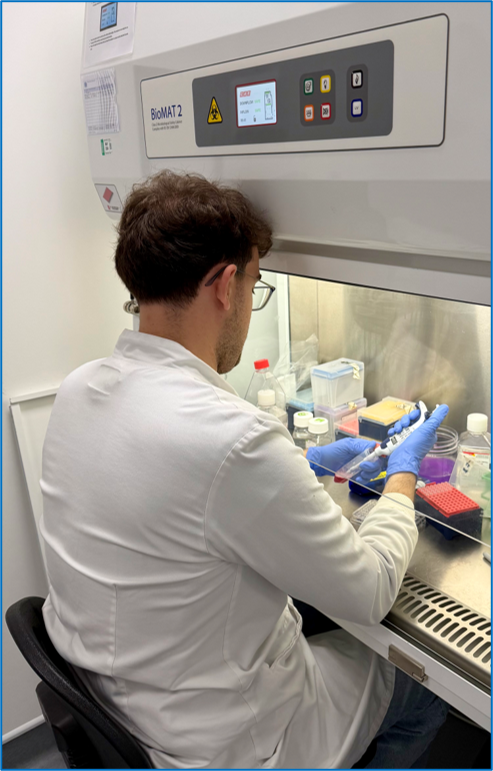
Guest blog by Ciaran Horton
Like many people coming to the end of their degree, I have had to make many important decisions. The main one being, what is next for me? Do I want to go into work? Do I want to pursue further qualifications? Or simply, do I want a break?
For myself, I knew I wanted to pursue further postgraduate study. But in what form?
There are several different types of master’s degrees that you can study; learning these felt as if I was learning a new language. An MSc, MBio, MSci, MRes and MScR. While these all sound similar, they can vastly differ; for instance, an MSc is typically what we would consider to be a master’s with taught modules, very much like my undergraduate degree, whereas an MScR is much more research-focused with little to no taught modules.
I didn’t have my life mapped out or even a carefully constructed 5-year plan laying out pros and cons. I didn’t have a spreadsheet labelled “Ciaran’s Plan to Infectious Disease Greatness”. I was simply trying to take it one step at a time, as applications can feel as if you have a full-time job alongside your coursework.

It all started with my BSc Biomedical Science degree at the University of Lincoln. During my degree, I fell in love with microbiology and immunology, through my lectures, practicals and seminars, I knew I wanted to gain some more hands-on experience. I can particularly remember two key sessions which challenged me and gave me some insight into how these can be applied to diagnostics, one of which was a series of microbiology practicals where we was given two unknown pathogens and, using selective agars we had to determine what the pathogen was, a microbiology Cluedo per say. The other practical was looking at immunofluorescence in ANCA associated vasculitis, looking at how immunological investigations help within the patient journey.
After these experiences, I decided to undertake a placement year within the NHS to obtain my IBMS registration portfolio. This experience gave me real-world experience in clinical diagnostics and how to conduct myself in a regulated laboratory environment. I loved my experience and learned a great deal; despite this, I fell in love with the research and development projects going on within the laboratory, whether looking at quality and service improvement or looking at methodological improvements.
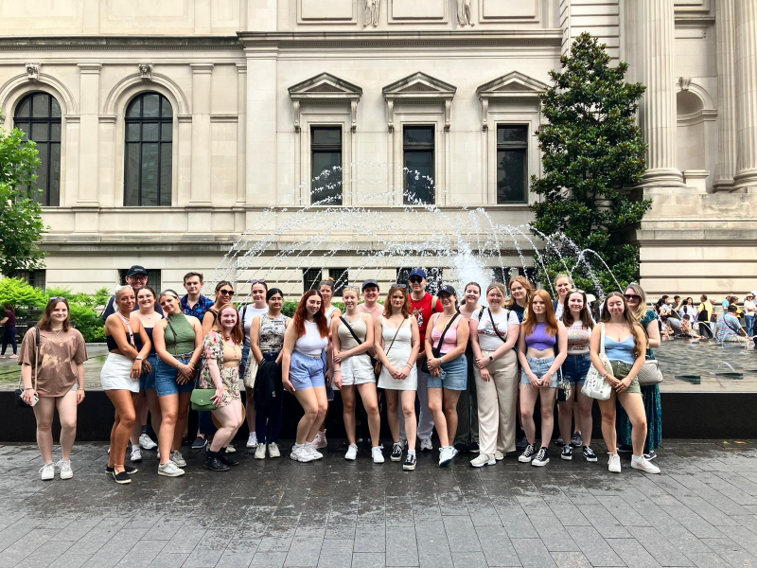
Following on from this, I had the opportunity to go to New York City for one of my optional modules. As a part of the field trip, we got to attend one of the local colleges and learn how public health measures implemented during the Sars-CoV-2 outbreak were holistically applied to relieve systemic burdens. This was of great interest to me as I got to see how public policy shapes epidemiological outcomes.
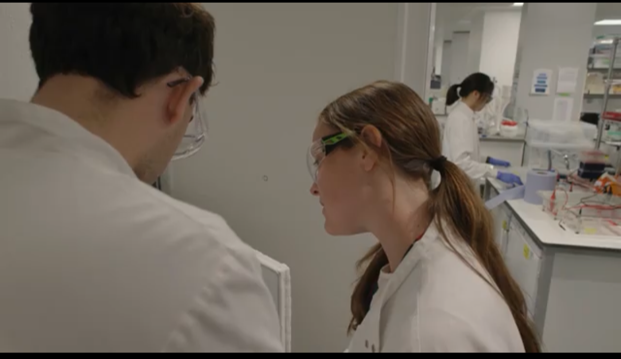
Then came the turning point: my two undergraduate dissertations. The first looked at novel methods of visualising herpesvirus replication, which did not wholly go to plan, and then the other was using LAMP as a diagnostic tool for detecting equid herpesviruses. Through these projects, I gained an appreciation for working with my hands within the laboratory environment and enjoyed learning much more subject-specific detail about topics I am passionate about.
I learned to use my experiences to my advantage and reflect upon them to see what I had truly learned. For instance, my dissertation taught me how to design experiments and troubleshoot; my placement taught me how to apply quality management to my daily practice, and my work as a student ambassador taught me how to adapt my communication style with different people. This was then applied to my CV and cover letter, where I did not just list my skills but had real examples of where I applied them!
Then came the applications. I first decided which type of master’s I wanted to do and what subject within – for me this was an MSc or an MRes in Infectious Disease. Once I had shortlisted the courses I wanted to apply for, I looked at schemes with funding; most universities offer some form of alumni scholarships, so Lincoln was a great place to start. I also looked at FindAMasters as this highlighted some funded research-specific opportunities. Individual University Scholarship pages were also incredibly useful, such as Clarendon at Oxford or College-specific Scholarships at Cambridge. Once you have considered funding, then it is time to apply! – My biggest advice is to apply early and reach out to potential supervisors before you start, as they are a great resource of information and can point you in the right direction. I did this during my summer internship at Oxford, and it made me make a great deal of new connections and offers for projects (I was even on ITV about the Ebola Vaccine, well, the back of my head).
After all of the applications, the offers started to come in. An MRes at the University of York looking at bacteriophage sequencing, an MSc in Healthcare Research at Southampton and then an MSc in the Control of Infectious Disease at LSHTM. All Funded! The MRes at York had funding applied to the specific project; the funding at Southampton was through the NIHR, and the MSc at LSHTM was funded through an internal scholarship scheme for underrepresented applicants. So, it goes to show that funding is not impossible!
I had to weigh up all of my options: what course would suit me best, where is better to live, where can I actually afford to live and what is better for my future career? Once I had made my pros and cons list, I made my choice to study at LSHTM.
And then I had to deal with an entirely new problem: how I am going to fit my life into my London apartment…
All opinions in this blog are my own

