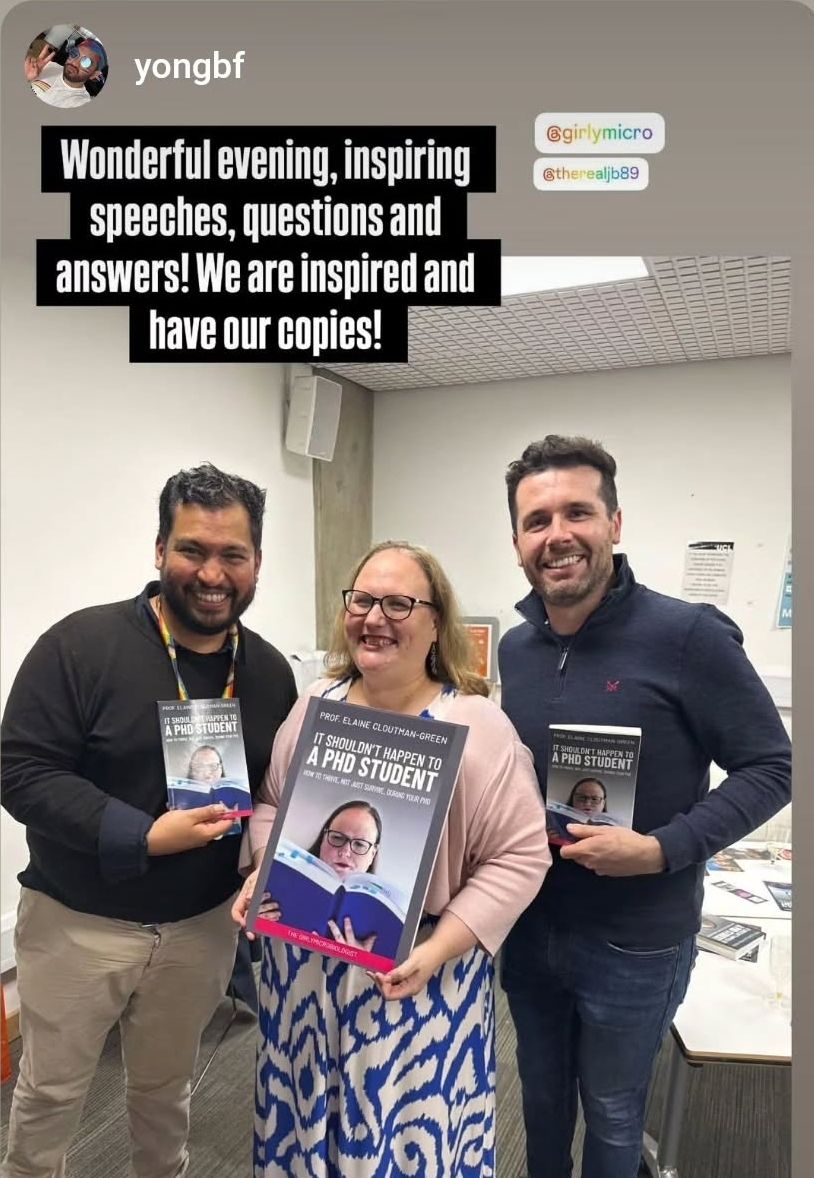
I must admit I shed a bit of a happy tear when this arrived unsolicited in my inbox, it’s been a bit of a week. My next thought was that there is no way I could share it, as it would be the epitome of self promotion, and that’s never considered to be a good look. Then I sat and thought, what would I advise a friend to do if they were in the same situation and I decided something. I decided to be proud of what I’d achieved. To be proud of the hours spent to achieve the output earned, and to be proud to have someone so invested they would take the time to write an unsolicited review for this blog. I know that is what I would advise and hope that all of you would do, and so this is my moment I decided to model the advice I would give. We all have the right to own our achievements and not make ourselves small to avoid the commentary of others.
Dr Walker is a paid up member of the Dream Team since 2013, token immunologist and occasional defector from the Immunology Mafia. Registered Clinical Scientist in Immunology with a background in genetics (PhD), microbiology and immunology (MSc), biological sciences (mBiolSci), education (PgCert) and indecisiveness (everything else). Now a Senior Lecturer in Immunology at University of Lincoln. She has previously written many great guest blogs for The Girlymicrobiologist, including one on turning criticism into a catalyst for change.
Full disclosure: I wasn’t invited to write this review, I insisted. I also haven’t been paid for it; quite the opposite, in fact. I went out and bought two copies of Professor Elaine Cloutman-Green’s book with my own money: one for me and one for my PhD students to share (or squabble over). And yes, I did get her to sign them. What can I say? I’m a lifelong fangirl.
Professor Cloutman-Green’s It Shouldn’t Happen to a PhD Student is a rare gem in academic literature a compassionate, wise, and profoundly practical guide that feels like a conversation with the mentor every research student wishes they had. Written with warmth, humour, and candour, the book demystifies the PhD journey from start to finish, transforming what can often be an isolating experience into one filled with clarity, community, and hope.
Elaine, known affectionately as my favourite Professor or the GirlyMicrobiologist, draws upon two decades of experience as both scientist and supervisor to craft a guide that balances rigour with humanity. Structured in three accessible sections; getting onto a PhD programme, surviving and thriving during it, and using it as a springboard for the future. The book serves as both a roadmap and a reassuring companion. Each chapter blends actionable advice with reflections that acknowledge the emotional highs and lows of research life, creating a tone that is both authoritative and deeply empathetic.
From the very first chapter, “Knowing Your Why,” Elaine invites readers to pause and reflect on their motivations, an exercise that sets the tone for the entire book. Rather than treating doctoral study as a mechanical career step, she frames it as a personal journey of purpose and growth. As she writes, “A PhD should be a step towards delivering on your aspirations, not just a title to put in front of your name.” It’s a line that perfectly encapsulates her philosophy that research is not about prestige, but about purpose.
What truly elevates this book above other graduate-school guides is its inclusivity and warmth. Elaine writes as a mentor who has seen it all: the sleepless nights, the imposter syndrome, the joy of a successful experiment, and the power of perseverance. Her anecdotes and checklists are peppered with practical wisdom not the vague “work harder” platitudes found elsewhere, but concrete steps to manage deadlines, develop professional skills, and build meaningful academic networks. The inclusion of “Top Tips” sections at the end of each stage provides digestible summaries that make the book easy to dip in and out of throughout the PhD journey.
And it’s not just students who need this book. Supervisors – myself included – will find plenty here that resonates. Elaine reminds us, gently but firmly, that supervisors are people too: flawed, human, and still learning alongside our students. Her reflections on empathy, communication, and shared growth are as valuable for those guiding PhDs as for those undertaking them. Every research group could benefit from having this guide on their shelf, it’s as much a manual for mentorship as it is for PhD survival.
Of course I must acknowledge my own bias, Elaine was my mentor during my own PhD, and many of the insights in this book feel like familiar echoes of the advice that got me through my hardest days. She taught me so much about science but more importantly that research, like life, is all about surrounding yourself with people who lift you up when you falter. It Shouldn’t Happen to a PhD Student captures that same generous spirit, showing that the best kind of academic success is shared success: when mentors and students grow together, celebrate each other’s wins, and keep curiosity at the heart of everything they do. Everyone deserves a mentor like Elaine someone who reminds you that with compassion, courage, and community, the PhD journey can be one of the most transformative experiences of your life. Oh, and she provides the most excellent of snacks, the occasional much needed gin and tonic, and a rousing rendition of ‘Drop it like it’s hot!’… but that’s a story for another time.
Over the weekend, whilst I was playing email catch up, Mr Girlymicro headed off do a museum tour with our long-term friend. Whilst he was wandering he fell upon part of the Taylor Swift songbook trail and sent me this picture:
Now, everyone globally now seems to be a Tay-Tay fan, but she and I go all the way back to FRCPath revision tracks. I’m currently obsessing about the track Anti-hero, which has the following bridge:
It’s me, hi, I’m the problem, it’s me (I’m the problem, it’s me) At tea time, everybody agrees I’ll stare directly at the sun but never in the mirror It must be exhausting always rooting for the anti-hero
Whilst working on a Saturday, when I would have preferred to be the one taking the photos in the Victoria and Albert Museum, these words really struck a cord. I was making my way through over 2000 emails, and it’s true, I am the problem, it is me. I am the one who apparently spends most of her time asking the questions people don’t want asked or holds the line saying ‘none shall pass’ (and not in a cool way like Gandalf).
This can feel really soul destroying. It can be hard to be perceived as the person ‘who always says no’ or the person ‘who is just being difficult’, especially when you are undertaking that role with patient safety and the best practice of all involved as your priority. So for this week’s delayed post I thought it might be useful to remind myself, and you if you need it too, why sometimes being difficult just means we’re doing the job we’ve been employed to do.
Needing to understand before agreeing
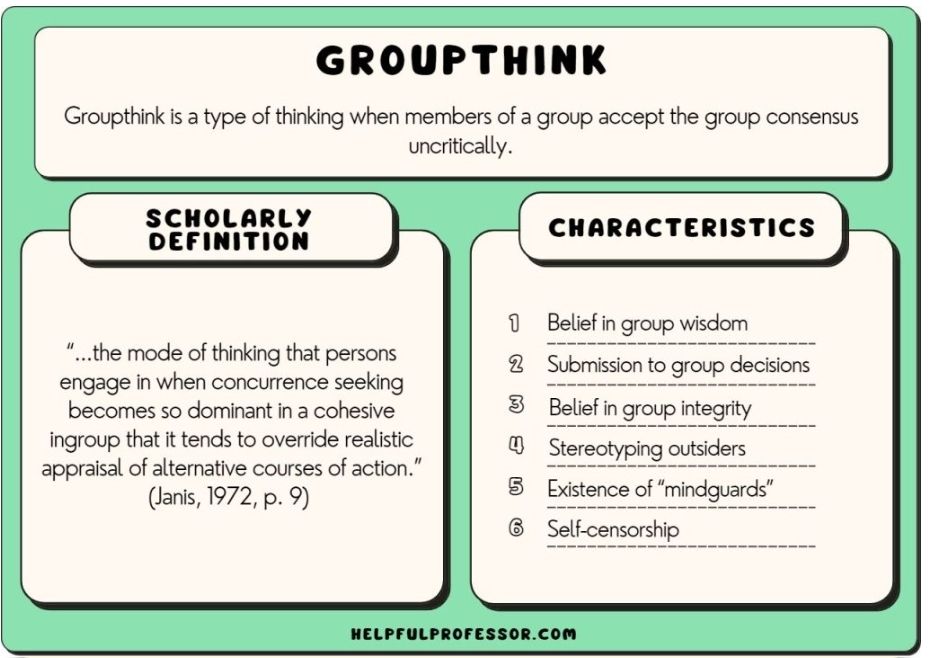
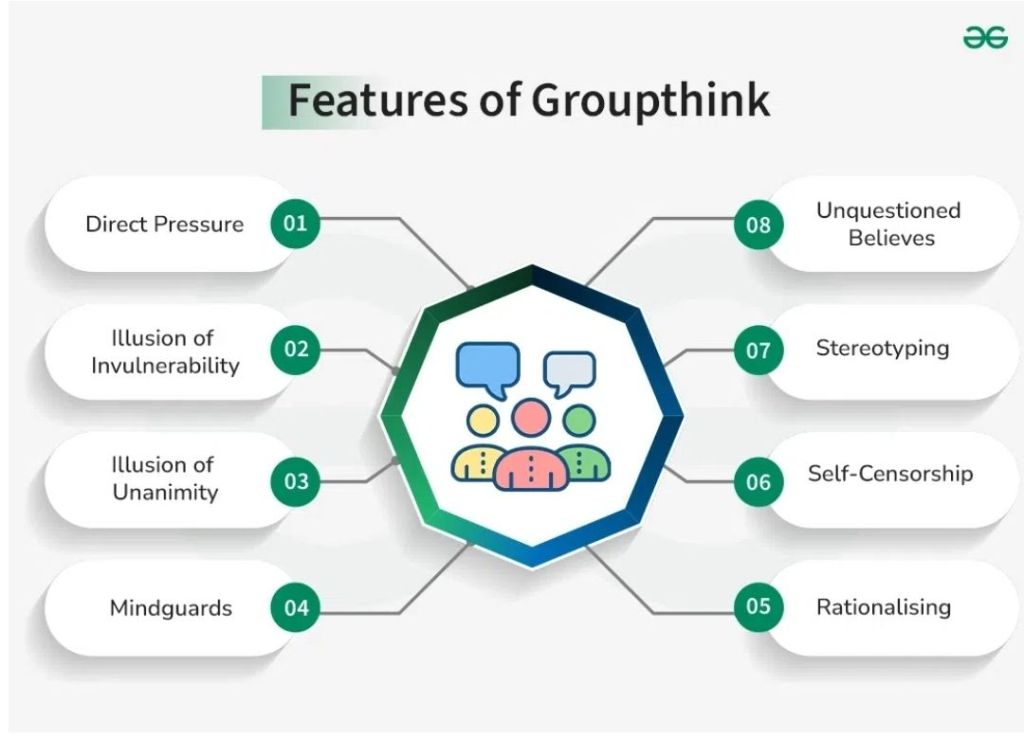
I’ve talked before about how important it is to understand what your role in the room is. Are you there as an advisor or a decision maker? Either way, I’d like to think it is crucial to understand what is being suggested in a thorough way before either advising or making a decision. This is important as Group Think is something you can see happening in a lot of rooms across the different types of spaces I work in.
Groupthink is a phenomenon that occurs when a group of well-intentioned people makes irrational or non-optimal decisions spurred by the urge to conform or the belief that dissent is impossible. The problematic or premature consensus that is characteristic of groupthink may be fuelled by a particular agenda—or it may be due to group members valuing harmony and coherence above critical thought.
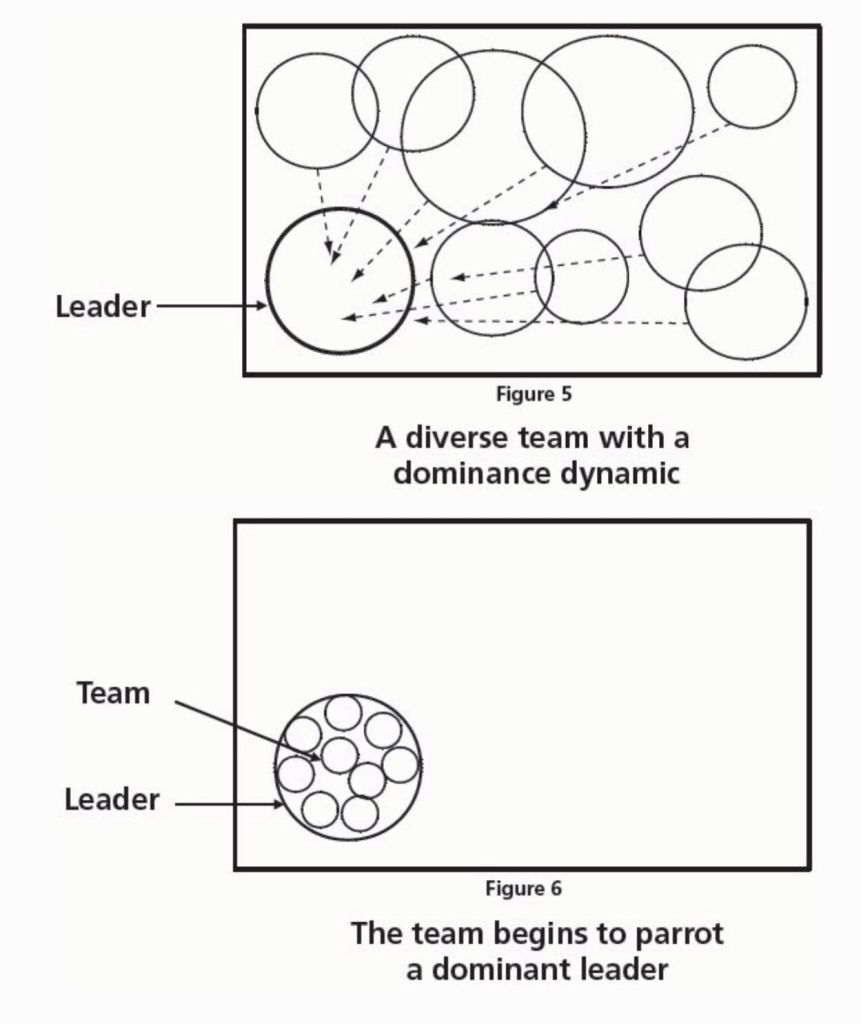
We’ve all been there. There is one dominant or senior member in the room, and they speak first. Instead of engaging in discussion or unpicking the components, other people in the room then just agree. This unchallenged agreement can come from all kinds of individual drivers:
Not really being engaged in the issue
High levels of respect and low wish to challenge
Avoidance of challenging as may impact on relationship capital
Lack of understanding combined with a wish to not draw attention
Absence of empowerment to question
Time pressures
There are obviously plenty of other reasons, and every group is slightly different. What doesn’t change, however, is that if we are in the room, we have the responsibility to ensure that the evaluation process is as effective as possible, and sometimes that requires us to be the ‘difficult’ person who drives the discussion to go that bit deeper before decisions are made.
Asking the annoying questions
One of the key ways to drive discussions to a deeper level is through the use of questions. These can help in the obvious ways to gain a greater understanding of process, evidence, or data. They can also help in other ways by increasing your understanding of the drivers behind positions and eliciting responses from those who are participating less actively.
The way in which this is done can be very audience dependent. If a rep from a company comes to see me selling a product, I will feel I am licensed to ask probing questions linked to their evidence, as they have come to me and my job in that space is to thoroughly evaluate their claims. In a room where I may not fully understand a process that is being suggested, then my questions will be aimed at clarity and come from a place of curiosity so that I can feel I have everything I need to comment. I’m quite far past a fear of looking stupid at this point. I’m OK with appearing foolish as long as it gets us to the right place. Questions are key to avoiding group uncertainty and Group Think, so buckle up, we may be here for a while.
Standing against the tide
This all sounds pretty straightforward, right? Sadly, I’ve been in rooms where it has been anything but. There are quite a lot of ways where meeting structures themselves can be manipulated, either by design or unintentionally, to make discussion and questioning difficult. A really simple example of this is the allocation of timings to agendas. This is, in general, a really great thing and allows significantly improved Chairing of a meeting. If an agenda item has only been given a 5 minute slot however, it is unlikely to get a decent level of discussion associated with it. It can then require commitment and bravery to ask the Chair for it to be re-tabled at a later date with increased time allowed. Chairs, in meeting settings, are key to facilitating good decision making. It is a hard and often thankless job. The problems really tend to happen when your dominant voice is also the Chair and doesn’t recognise the need to flex their style whilst they are in this different role. At this point making requests to change agendas, or increase discussion time can be challenging, as it depends on the Chairs appetite to support.
Pointing out the obvious
Earlier in my career, I sat in many of a room where I felt I could see obvious flaws or issues, but kept quiet as everyone else seemed OK with it, and I therefore felt I was just missing something. I’d then leave the room and point out what I’d noticed, and invariably, someone else in there had been thinking the same thing, but was also reticent to speak up, or saw things differently after the discussion. This taught me how important it is to own your role in the room. If you are there, you have a responsibility to understand and then speak up if needed.
This isn’t easy. It isn’t comfortable. If you don’t do it, however, then you are complicit, and you have to own any negative outcomes. I find this one particularly hard when you are pointing out fundamental flaws in a passion project or where others are highly invested, and therefore may only be seeing the positive aspects rather than a holistic view. Being the lone voice in this setting can be incredibly hard, but that doesn’t make it any less necessary and probably makes it more important.
Holding your ground
I’ve been called a lot of names for trying to ensure the best possible outcome, with difficult and obstructive probably being the nicest version of them. The thing is, I’m never doing this for the sake of doing it. I welcome innovation. I’m excited by change. I’m not interested in either at ‘any cost’, especially working in healthcare. For example, adding a beautiful ‘green wall’ makes complete sense from a mental health point of view, but no sense from a patient risk perspective in an immunocompromised setting. My job is to articulate that, and both draw and hold the line where needed. So, sometimes, I can be pretty intransigent on the big issues. That’s because big issues can have big consequences if we get them wrong, and my role is to put patients before my ego or comfort. To me, that’s what working in Infection Prevention and Control is all about. I suspect it’s also why I don’t get sent boxes of chocolates from other departments at Christmas.
Keeping others to account
One of the other reasons it’s important to be able to hold your ground and bring discussion to the table is that Group Think is not just how you react as part of the table, it’s about how the whole group is working. The way groups develop and work changes over time, as there are different phases of group formation, according to Tuckman’s model:
Forming
Storming
Norming
Performing
Adjourning
Depending on where the group is, in terms of its development, can influence how comfortable members are with communicating, but also how at risk of Group Think the group is.
Being a conscious participant in this process so that you can raise awareness of how well decisions are being made and how the structure of the sessions are set up to, either to help or hinder, is a key responsibility of being part of any group. Groups can become pretty toxic or non-performing, but they tend to do so by inches, and that sometimes means it takes time to notice or a big act/decision for it to become apparent.
It takes bravery to stand out and be the one who says that things aren’t working well, but it is better than becoming complicit in the process by knowing and not doing something. It can be even harder during the initial phases of a group becoming less effective, as this is often more of a feeling than a tangible change. Finding the right time and the right way to talk about it is therefore key. I often think that it is, at times like these, encouraging an active group effectiveness review is a good way to start, where you look at what the group is trying to achieve and how well they are achieving it, combine with some anonymous survey questions to capture the ‘feeling’ component. Building these reviews in from the start at period intervals can also enable any creep to be captured without relying on individuals to put their heads above the parapet.
Speaking your truth
I know I’ve said this before, but sometimes, at its most basic, it’s OK to disagree. You are allowed your opinion, and you shouldn’t have to feel silenced, or that your opinion doesn’t matter, just because you are not the most senior/dominant person in the room. You and your voice matter.
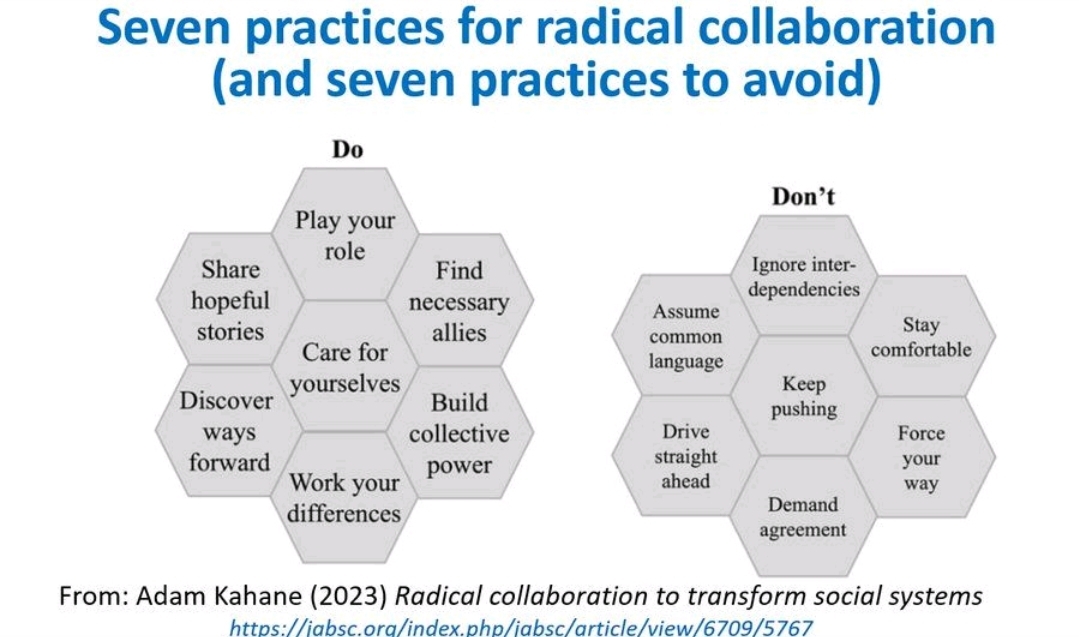
I had an interesting conversation with a colleague a few weeks ago who pointed out that from their perspective, we never agreed. Now, putting aside the dialogue about whether this is true, I don’t think that disagreement is a fundamentally bad thing, especially if it’s handled with mutual respect. We don’t want clones of each other in a room. We want diversity, we want different lenses and visions of the world, we want different lived experience, and different ways of thinking. It is only through that constructive challenge that we may find the route forward that no one can see on their own, or from their own perspective. Good discussion, good collaboration enables us to make better decisions, that’s why we have groups in the first place.
All of this is a long way of saying that I think it is crucial to speak your truth, to offer your opinion and insight, as long as you don’t believe it is the only truth or way forward. It’s OK to be the person who disagrees as long as you are doing it for the right reasons.
Keep it classy
This brings me on to the fact that I think there are different ways of handling how you speak up and associated discussions, and they can impact how the situation feels for all involved. One of the reasons that I think it’s important to start with curiosity and questioning, is not only to gain information, but to show you are not starting out with judgement. The other thing that I find helpful is to keep the focus on the task, process, object in question, rather than letting it drift into me and them territory. This can be so hard because people are often deeply invested in their position and view points. I’m no different. It can also be hard as it can feel, when someone is questioning, like the individual is being attacked rather than the item in question. This can lead to an emotional, rather than logical response on all sides and mean that discussions become much less productive. Being aware of this and how choices of approach and word selection can impact is crucial to outcome.
One of the reasons that I’m emphasising this, is because when we are worried about speaking out, we, at least I, can work myself up prior to it happening, because I expect the worst. You can then enter the scenario is a defensive stance, when really you need to focus on being as open as possible in order to facilitate the discussion. The balance between openness and holding the line can be a difficult line to walk, but both are important. I’m still learning and trying to be better at this one, but where you can, leave your emotions at the door.
Keep the faith
At the end of the day, when you get home and look at yourself in the mirror, you need to be able to face what you see. For me, although I’m a people pleaser, I also know that I need to put that aside and be OK with being uncomfortable, in order to deliver on my role and ensure that patients are the constant focus. Does that mean it is easy? No. Does that mean I should stop doing it? Hell no. Nothing in this life that is worth doing is easy. Do I sometimes wish that others would appreciate what it takes to sit as the lone woman in a room and voice an opinion that does not align with the rest? All the time. No one is going to give you a medal for the kind of bravery this takes however, the reward is knowing that you left things just a smidgen better than how you found them. So keep the faith. Keep the faith in the system, but most of all, keep the faith in yourself. You are able to make great change and achieve great things, you just have to keep going, keep moving, one step forward at a time.
I’ve had some interesting experiences over the last few years as Lead Healthcare Scientist, and inevitably, some of these experiences were things that went well, and some went not so well. As spring arrives, it makes me reflect on these and what they’ve taught me about leadership.
When I mentor, I often get asked about the difference that happens when you step into more senior leadership roles and how you know when you are ready for that next step. I’ve sometimes found it hard to articulate. In light of my reflections, though, I think I’ve made a list of what I believe are probably the biggest shifts. I’m sure there are others, but these are my big hitters.
It’s no longer about you
There is a freedom that I don’t think I recognised or appreciated in just being responsible for yourself. You can choose who to build relationships with. You can make decisions on what is best for you. You have a certain amount of license to be selfish, as you didn’t sign up to be otherwise. The more senior you become however, the less that this is either true or acceptable.
I’ve experienced what it’s like to be in a leadership space with individuals who are still behaving like they have the independence of being more junior leaders, and the impacts can be pretty catastrophic. They have failed to recognise that they no longer have the freedom to choose not to work with people or to not engage in projects because of personal feelings about who they are being asked to work with, leading to a failure in delivering the collective vision.
When you step up, you no longer have the freedom to judge based on relationships or let that judgement impact the decisions that are being made for the greater whole. You don’t have that kind of freedom anymore as you have moved into a space where the word We, rather than I, should dominate.
You have to get out of your box
We can have pretty small worlds at work, consisting of one department or cluster of departments. This can feel pretty comfortable as you know the people, you understand the rules, and communication is much more straightforward. The thing is, when you step up, that world shifts, and to succeed, that world needs to become a whole lot bigger. At a minimum, you are likely to be working across the Trust, across professional disciplines, and with much larger numbers of people. In reality, your world is likely to be even larger and require you to engage with and understand systems you are less comfortable with in order to maximise your impact.
The expectation will be that you actively engage and independently work to develop the necessary relationships to build your leadership in this area. You will probably get introduced to people, but the follow-up steps need to be owned by you. Now, sometimes, this isn’t a comfortable process. Not everyone is an extrovert after all, but it is necessary for success, and so it is worth investing development time in these relationship building skills.
You need to have and be able to sell a vision
Many of us, as individuals, know where we are going. When stepping into leadership, however, that is no longer enough. You can’t just have a vision for yourself anymore. In fact, the vision that you create is no longer even owned by you. You have to switch mindset. You need a strong, clear vision, but it’s no longer about you and your path. It’s about your team, your workforce, your service, and your patients. You need to develop the vision enough to be able to communicate it, and then you have to share it. Sharing also needs to be bi-directional. Your vision now includes others, and so taking on their input is key so it becomes a co-produced direction of travel that can really land and embed to become a reality.
You will never be ‘in control’
Often, people think that as they step into leadership you have both more control and more freedom. This is both true and false. You have more autonomy, but in some ways less choice about how to use it. I’m sure some people in leadership positions do feel in control, possibly because they enjoy a more micro management style of leadership than I do, but the honest truth is that I never feel in control. Now, to be clear, this doesn’t mean that I feel like I have lost control either. It’s just I have accepted that leadership is unpredictable. You can plan all you like but there will be things that come up that mean you have to maintain a flexible approach and the ability to pivot and think on your feet.
I also want to have trust and not control of the staff I lead. I trust them to escalate as needed, I trust them to know their skills and boundaries and where I need to support them in gaining clarity when needed. This is obviously flexible, dependent on level and experience, but for me, development requires supported freedom to make decisions and learn from the process. I always say to my students that I want them to learn all they can so that one day they will become my boss, and I really mean it. It is not my job to be so in control that I clip the wings of those around me. It’s my job to support others to fly.
You can’t play favourites
This one should be obvious, but it is sometimes not as simple as it seems. It takes active effort at every stage to try to ensure that opportunities are openly shared and that individuals feel like they are open to them. One of the reasons for this is that when you advertise or offer up these opportunities you’d be shocked by the number of times no one steps forward. There are lots of reasons for this, personal circumstances, lack of individual confidence, issues with how it was disseminated, and it just not being the right moment. This can lead to you actively needing to identify and encourage individuals who you think might be a good fit. That inevitability introduces bias however, as they are likely to be individuals you are more familiar with. I’m not perfect with this but I am conscious of it and therefore am a work in progress.
I’ve also known some senior leaders who liked to pick and choose who they worked with based on comfort and existing relationships. I’m not sure that this is the right way, for the reasons I’ve said, so if you only find yourself working with individuals you find comfortable, I think it’s worth reflecting on why, and if that is the fairest and best approach. You are probably doing yourself, your colleagues and your service a disservice without even realising it.
You will have to make the tough calls
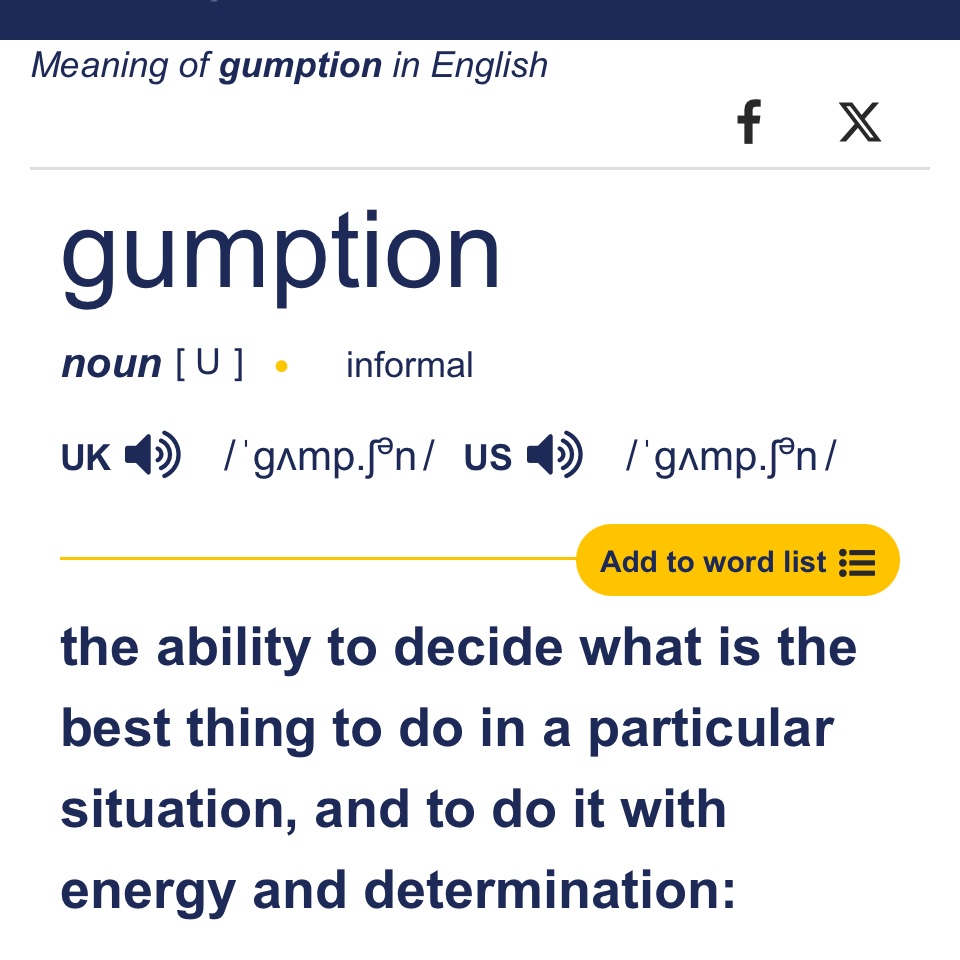
The reason this blog post is on a Monday rather than the normal Friday is that last week was tough. It was a week of tough days and tough calls. One of the things I don’t think I’d truly been able to understand, before I was in the position to make them, is quite how hard making some of those calls is. Whether clinical, scientific or leadership, you are likely to either have a) never encountered the situation before or b) not have all the information. The truth of the matter is you make the best decision you can with the amount with the knowledge you have. You have to make that decision confidently and you have to own it. People are looking at you for direction and guidance. You should always feel able to canvas opinion, seek knowledge and input, but at the end of the day the decision, and therefore the consequences, lie with you. It is not possible, nor is it acceptable, to be a leader who cannot make decisions when needed. Vacillating leads those around you to lose confidence in the decision made. It is also not fair to pass that decision making down the chain, so that those who are more junior are made to own the consequences instead. If you make the step up you have to own all of it, the good and the bad, boldly and in a way that enables others to have the confidence needed to do what they need to do. You need to spend every day striving for gumption.
You will need to own your choices, no matter how they turn out
Having said that you need to be confident in your choices, not all of them will turn out the way you hoped. I had a scenario a few years ago where I had to say no. In fact, I have them all the time, but this one sticks with me. I had to say no because otherwise, I was setting the person up to fail in a way that wasn’t wise. There are often times when, as a leader, you have to allow people to fail and grow as it’s a key part of learning. There are circumstances, however, where the scenario is either too high stakes or risks reputational damage where a no is required. Frankly, this experience did not end well for either of us as it resulted in resentment. That’s on me as I obviously failed to communicate the rationale in a way that aided processing. I offered, as is key in these circumstances, other options, other routes to attain the same end, but they didn’t lead to resolution. The thing is, I stand by the action, and I own the outcome, as well as the learning. As I said above, you can’t be liked by everyone, you can only try to be consistent and fair.
If you are going to be the person who says no, or make the big calls, you have to own the consequences of that decision. The same is true for when you say yes. If you are a decision maker, you need to understand that you are in a position to make decisions that impact people and patients and that those decisions should not be made lightly. You also can’t absolve yourself of any subsequent events linked to those decisions. You can only challenge yourself to make them for the right reasons and course correct and learn to be better if you get it wrong.
Sometimes, you just have to take it
Last week. again, was a great example of this one. Things went wrong. They were not under my control. I was, however, the face of the corrective actions required. Stress levels were high as well as emotions, and no matter how unpleasant, individuals needed to be able to express some of those emotions. It is much much better that those individuals expressed how the situation made them feel at me than carry them into their next encounter with a patient or different staff member. I understood the context and driver for the response in a way that the next person might not. It was, therefore, better for me to be the conduit for that emotion. To stand there and hear the concerns and emotions in order to support processing and let them feel heard. Was it pleasant? No. Did it require tea and possibly a quick weep in my office? Yes. Was it the right thing to do? Also, yes. Sometimes, leadership is about allowing others to express unpleasant emotions so they can move past them to a space where they can take the actions needed. I’m not talking about allowing bullying or unacceptable behaviour, but about working with those impacted to move forward in what can be high stakes and very stressful situations. Sometimes being a leader is about doing what is needed to help everyone move forward, both emotionally and in action, so we can all start a new chapter together.
You have to be able to see the jigsaw, not just the pieces
One of the things that can really help with making the hard calls or dealing with the stressful moments is being able to see the whole picture and what that new chapter might look like. This is why having a vision and understanding the wider networks and landscape you are working within is key. You need to be able to take a step back and see the whole jigsaw and know whether the decisions you are making are right across the different levels of context. That can mean making harder choices, but if you can return back to those wider drivers to sense check, it can make life easier.
One minor example of this is the choice I made to always refer to myself when possible as a Healthcare Scientist, not a Clinical Scientist. It’s not that I’m not proud of my professional title. On a national and strategic platform, however, using a single name and description gives bigger numbers and a single voice. It doesn’t require the person trying to navigate that landscape to understand all of the nuances that we experience if we work in the area. So I pivot based on context how I even describe myself, not for my personal benefit but to benefit the profession as a whole. It helps support a single identity and advancement for everyone, rather than any profiling raising I do benefiting just to me as an individual. I strongly advise taking this kind of active reflection across all we do, you never know when a simple change will maximise impact.
You can never be ‘just a passenger’
The final thing, and this can sometimes be hardest for me, is you no longer have the right to disengage. It’s no secret that 2024 has already been quite a challenging year, and I’d be lying if I said that I was in a great head space. My innate reaction to feeling the way I am feeling right now in to hide, to ostrich, to try to protect myself by creating distance. I can not do that. As a leader in challenging times you have to be even more present, even more engaged and involved than you would be otherwise. When circumstances and change are making everyone be unsettled the last thing you can do is become absent or disinterested. You have to step up, you have to be seen, you have to (try to be) the calm at the center of the storm. Personally I can come home and hide in my castle with the safety of Mr Girlymicro for recovery. Once I am out there professionally I need to put all that to one side and throw myself in 100%. You owe too much to your team/s and to your patients to do anything else.
I should say, this posts focuses on the things that can be challenging and the things that may be less obvious from the outside. Being a senior leader though brings so so much joy that all the challenge is more than worth it. Seeing those around you succeed, seeing things become better or change that you envisioned comes to pass, is massively rewarding. There are tough moments but if you are in the right place, with the right people, even the dark times lead to illumination. So take the next step and see what change you can make!














 Girlymicro