Friday the 25th April, was World DNA Day. I’ve had a series of blogs that I’ve been playing around with for a while linked to what DNA is, how we look for and investigate it and how we are exploring DNA in our everyday lives. It felt like this was the time to put these blogs out there. Linked to this I’ve also had two books I’ve wanted to talk about that were set within worlds that have changed because of genetic testing and genetic manipulation. It was fun to share reviews of these in the context of talking about the current technology and scientific/ethical questions are to see what these fictional landscapes might add to the discussion. I hope you reading these as much as I enjoyed writing them.
This month I’ve been honouring World DNA day 2025 by publishing a number of posts linked to what DNA is, how we look for it, and what it means to send it away.
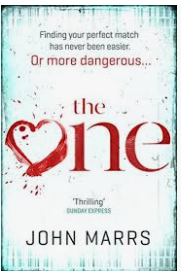
Having spent some time covering what is the current state of science in this area however, I thought I would follow up with a couple of book reviews whose fictional worlds focus on how the world of DNA, DNA editing and DNA interpretation could change the lives of everyone involved. The first of these is The One by John Marrs.
This book is set in the near future in a world very much like ours. It’s nice for me to review a book that is set in London, where I can also do a bit of location tourism and spot similarities between this fictional london and the London in which I live. The tech and the science in this book are very much just one step further open than some of the modern day science I covered, especially in part 2 of this blog collection. All this being said, this book is also a thriller and so not necessarily like life as we know it.
How far would you go to find The One?
A simple DNA test is all it takes. Just a quick mouth swab and soon you’ll be matched with your perfect partner–the one you’re genetically made for.
That’s the promise made by Match Your DNA. A decade ago, the company announced that they had found the gene that pairs each of us with our soul mate. Since then, millions of people around the world have been matched. But the discovery has its downsides: test results have led to the breakup of countless relationships and upended the traditional ideas of dating, romance and love.
Now five very different people have received the notification that they’ve been “Matched.” They’re each about to meet their one true love. But “happily ever after” isn’t guaranteed for everyone. Because even soul mates have secrets. And some are more shocking than others…
The One is set in a world where, instead of just sending off your DNA to find relatives or health characteristics, there has been a gene discovered that can be used to link you up to your one true biological match. The person you are supposed to fall in love with. This is because the discovered variant of this gene causes physiological changes and the production of a pheromone that is unique to you, and which is particularly attractive to (statistically) one other person, who has a complimentary version of this gene. Production of the pheromone means that when you encounter each other you immediately physiologically react, and experience a biological ‘love’ match. Within the setting of the novel, a company called Match You DNA, has been marketing a product where you send a swab and can be matched with the person you are genetically made for. Sending away for matching has become common, with over 1 million matches, but is neither universally undertaken or universally accepted as a good thing. The book starts with a number of characters taking their DNA tests, for various reasons, in the hopes of being matched with their soul mate. Five couples are then matched and the novel follows them through their matching journeys.
MatchYourDNA.com thanks you for choosing Match Your DNA the world 1st scientifically proven test 100% guaranteed to match you with the one and only person you are genetically designed to fall in love with. With 1.7 million people either matched or are already on our register, your perfect match is only 3 steps away:
1) Sign up here for free
2) Receive your free DNA test kit. Just send us the mouth swab in the provided container and we’ll use your DNA to find your match in our database
3) As soon as we’ve found your match we’ll contact you. For a one off fee of $9.99 we’ll put you in touch with each other. 82% of customers are matched within 7 days. If you don’t currently have a match do not worry. Thousands of new customers join match your DNA each week and 98% of matches are identified with 6 months of registering
Match Your DNA cannot be held responsible for any direct, indirect or consequential harm related to using this service including but no limited to dissolution of existing relationships, personal injury or death not resulting from.match your DNA negligence or misconduct
What about the science?
The world of The One includes science and technical details that bring up a heap of both scientific and ethical questions that I think are really important for us to think about, whether we work in science or not. Science impacts all aspects of our everyday lives, and so the more we know and think about how it impacts us, the better prepared we will be, both as individuals and as a wider society. I really enjoyed exploring this world and so wanted to share what questions the setting triggered for me, and how it relates to the world in which we currently live. If you have already read/listened to the book, or if this blog prompts you to do so, I would love to hear what it triggered for you.
How much can anyone own a gene?
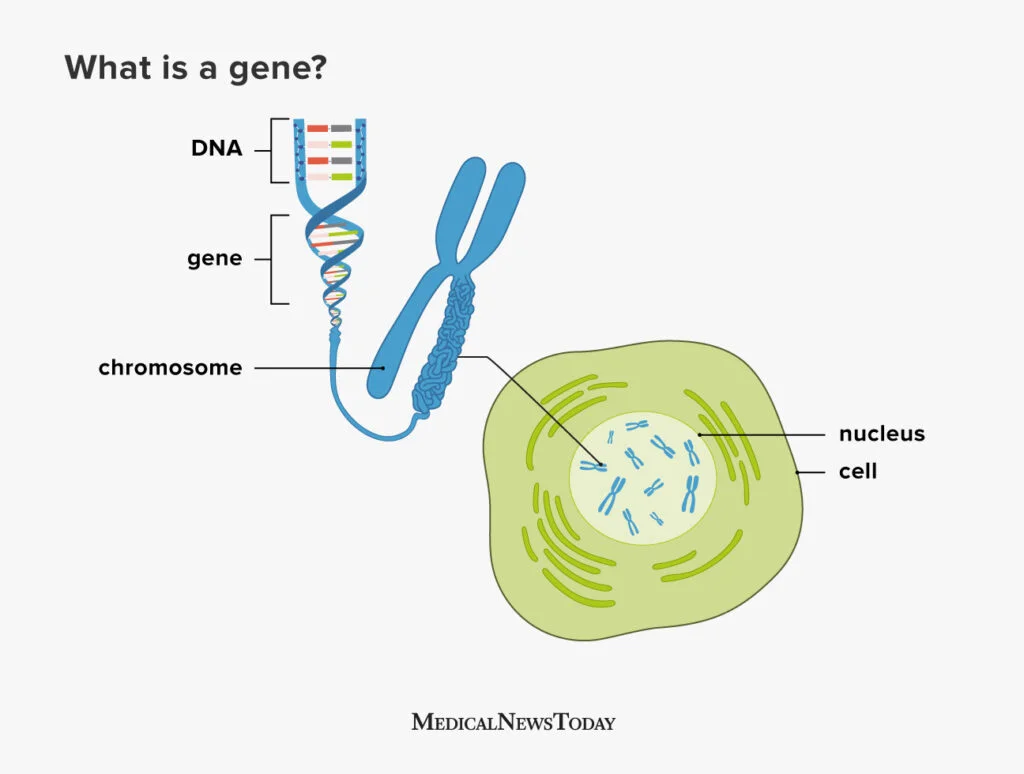
The founding premise of the world building in The One is that a single company would have sole access to this form of specific DNA matching technology, I posit via some form of patent for the gene, although this isn’t really discussed. A gene patent is the exclusive rights to a specific sequence of DNA (a gene) given by a government to the individual, organization, or corporation who claims to have first identified the gene.
So can someone own a gene? It may surprise you that the answer is both yes and no. A company can patent specific DNA sequences, such as DNA sequences that have been manipulated and altered in a lab, making them different from naturally occurring DNA. This wouldn’t help in the case of The One, as the company cannot patent naturally occurring genes, such as the genes they would need to target, as they exist already in the human body. However, patents can, and have been granted, for specific uses of genes, such as diagnostic tests or therapies, even if the gene itself is not patentable. This has happened for diagnostic tests including those for the BRCA1 and BRCA2 genes, which are linked to hereditary breast and ovarian cancer, and for the area of the Staphylococcus aureus genome where the SCCmec gene cassette inserts, leading to S. aureus displaying resistance to methicillin (MRSA). It is therefore possible that a single company would be able to corner the market, for a period of time, and be the sole provider of this kind of service, and therefore have the kind of societal influence demonstrated within the novel.
Can there really only be one true gene match?
This book is very much based on an advancement of the kind of DNA sequencing that people can currently use to check on their ancestry and relatedness, as discussed in parts one and two of this blog series. How realistic is it that there is only one copy of a gene variant in the world for each of us however?
While the human genome is highly similar across individuals (99.8-99.9%), small differences do exist, totaling 3 – 5 million variations, some of which can have profound impacts. Studies like the All of Us Study, funded by the National Institutes of Health, have discovered over 275 million previously unreported genetic variants, showcasing the immense diversity within human genomes. Whether this variation would be localised to a specific gene with each variant being present at just the right kind of frequency that there would only one person in the world for us is yet to be mathematically modelled 🙂
It is also unclear exactly how the translation of this gene variation into physical expression via pheromones, which are chemical messengers that can influence attraction, would work. The extent of their impact would need to be the topic of further research. Pheromones are known to play a crucial role in mate selection and social behavior in many animals, but the evidence for their direct influence on human attraction is less conclusive. So this bit of the world building that is inspired by science, but definitely science fiction at this point.
How does nature vs nurture work?
The nature vs. nurture debate explores how much of an individual’s characteristics are determined by genetics (nature) versus environmental factors and life experiences (nurture)
At it’s very core, much of The One is about whether nature always trumps nurture. Are we slaves to our genes? Is the development of a loving relationship with someone who is not your genetic match, developed over years, always going to be trumped by a brief encounter driven by genetics?
One of the big dilemmas that some of the couples face, and a central theme discussed in the book, links to this debate and examines how the revelation of being matched impacts on characters pre-existing, as well as their new relationships. What if those who were already married and in happy relationships from before the existence of matching, decide to swab themselves and are not in fact each others matches? What if you run into your match as part of your normal life but are already dating, is cheating then OK? Are those with relationships that have not been validated by Match Your DNA of less value, both to individuals and society, than those that are biologically prescribed? Does nature automatically trump nurture?
If you start to extrapolate even further than this, does it mean if you can’t find a match that you default into being considered a second class citizen? A short step on from that, could you be compelled to take part in matching even if you don’t want to? These are some of the future possibilities hinted at during The One. Although these conundrums are very much science fiction, they are definitely rooted in other types of discussions that are happening even now, such as whether we should sequence the genome of every baby at birth in order to provide better preventative healthcare? In fact, it is a threat that is developed in another novel within the same world, called The Marriage Act, which points a lens at the role of government in handling these issues and how once individual decisions can suddenly be adopted by society as embedded behaviours, resulting in the loss of individual freedom to decide.
One of the other interesting threads, for me, is the question of is it OK to breach other societal norms because of a DNA match? Should an 18 year old (minimum age for matching) suddenly feel like they need to date a 90 year old? Should you leave behind all of your connections and stability to fly across the globe to be with someone you don’t know on the basis of a single gene? If your match dies, does that mean you will never find another true love?
On a wider societal scale the book triggered a number of other considerations for me. Such as, what would be the consequence of people no longer going through the dating process and leaping straight to a formulated relationship? Would it impact social skill and other development? What opportunities would we take away from people to learn about others, but also to learn lessons about themselves? How can impacts that appear to be at the individual level completely change the way society as a whole begins to function?
What about giving up on self determination?
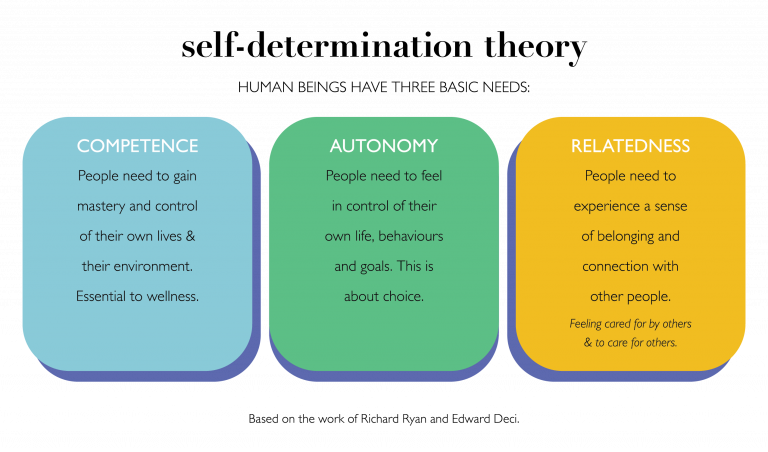
Building on the above, one of the very interesting themes for me is what happens if the person you are matched with is just not a very nice person? Does you biological compunction overwhelm your personal choice? In other words, if nature trumps nurture, what happens to self determination?
Self determination theory includes three key components. The first is that of competence, where people need to gain the skills to control their lives. Second is autonomy, where people need to feel they have control over their choices, and finally, relatedness, where people need to feel connection and belonging.
The One raises interesting questions about which of these drivers may be the strongest. Finding your DNA Match leads to intense feelings of belonging and enhances feelings of security, as you’ve found your One, and it is not supposed to be reversible. It removes doubt, but does it also remove effort? Relatedness is definitely enhanced by the concepts of gene matching. However, the concept of DNA matching also directly reduces any sense of autonomy, as you are seeding control of a key relationship to your genetics, which you have no control over at all. The sense in the book is that this causes an understandable level of conflict and cognitive dissonance* that runs within all of the characters present.
*the psychological discomfort experienced when we hold two or more conflicting beliefs, attitudes, or values simultaneously
Another question that struck me linked to this is….which biological compunctions are the strongest? The bond with a child or the instinct to reproduce are both strong biological imperatives, so if these are placed up against a link with a DNA match, which would win out? For instance, would you walk away from your child and never see them again for the love of your life? Having spent a while pondering it, my thoughts on this are that these discussions are not as binary as I have perhaps presented them and that everything is likely to be combination of nature and nurture, and it is how these unique combinations come together that drive us and make each of us even more unique than we are on a genetic level. Still, I am intrigued about whether there would be a hierarchical determinant to some of these drivers, that is if they were all real.
What about informed consent?
Not to spoil the story but there seems to be a strong temptation for people in the world of The One to not only send swabs from people other than themselves, but to also access the results of other people and therefore control access to information that doesn’t belong to them. Now, I’ve already covered in part two why taking the DNA from other people for testing could have legal consequences, but why else could it be considered wrong?
I thought it might be important here to talk about the importance of informed consent, and why some of the consent gained could perhaps not be considered to be truly informed.
Informed consent has a number of key components to it, but some of the big ones are linked to open disclosure of both the benefits and risks of any test/procedure, alongside discussion of whether there are any alternative options, so that the person deciding whether to go ahead is making that decision with access to all of the best information, i.e. the decision is informed.
Now, obviously how much informed consent is needed does vary widely depending on what is being undertaken. As I said in part two, most of the common DNA tests to send away are not considered medical tests and are not therefore subject to these kinds of gate keeping. If the world changed so that this form of testing had such impacts on lives, then should that be reconsidered so individuals truly knew what they were signing up to? Would just ticking a box on an Internet form really provide sufficient levels of understanding that the consent could be considered informed?
There are also interesting questions raised in the book about the consent linked to use of data. Is it acceptable to collect data for one thing and then use it to develop a test that wasn’t part of the acceptable use criteria for that data? Is it OK to gather a whole heap of human genomes and then utilise them for research purposes if that wasn’t part of the consent for which they were collected? Is it OK as long as it is all anonymised? All of these things depend upon the type of consent that is given.
In part two I talked about the data that is being collected for current DNA testing for non-medical testing and that the resulting sewuences are likely to be used for other purposes, and that use is probably included in the terms and conditions you sign when you send off for testing. How obvious this is will probably vary between companies. As these are non-medical devices though, the consent is unlikely to need to be informed. Most people think about the swab, but not the DNA sequence that results. If you are making an entire business based on those sequences, such as in this book however, you probably need to be certain that their use is legitimate, and covered within the purpose for which they were collected. #nospoilers
Is a single company having so much power dangerous?
In a previous book review I wrote about the Theranos scandal and the impact of a single company with massive influence who didn’t follow good scientific practice had on the lives of the people they tested. Obviously the Theranos scandal is real life, real people were hurt, and real people went to prison. The One on the other hand is a work of fiction, and a space where some of these more ethical concerns about the impacts of scientific developments on the the life of people can be somewhat more safely explored. It does call into focus whether one company should have so much capacity to influence the lives of so many. It made me think, if this were to happen right now what kind of oversight would be required? How could lobbying and other practices mean that some of the neutrality of that oversight could be impacted? Also, how much oversight would be appropriate? How do we ensure quality without negatively impacting innovation? How do we allow the good whilst minimising the bad? This is something science is constantly struggling with and there are no easy answers, but the capacity for harm if you get it wrong should be something that all scientists should live with and actively reflect on.
Hopefully this blog, and going on to read the book, will help us all to take some time to think about some of the ethical considerations that this fictional world raises, and encourage us all to think a bit more about our own and societies role in DNA testing moving forward.
One last note, if you prefer your content as visual media, The One has also been made into a TV series which is currently on Netflix. Full disclosure, I’ve only seen a couple of episodes. The feel of the series seems pretty similar to the book but the actual plot lines seem to have been changed quite a lot. Pro of this is that you can quite happily enjoy both as the series gives new aspects to new enjoy. However you decide to explore it I would definitely recommend a dive into this world and enjoying the surprises that it brings and the thoughts that it provokes.





 Girlymicro