
I got a cab this yesterday, and I said good morning and asked how the driver was doing, as I always do when I grab a cab. They looked at me and said ‘you are a happy person, so many of my rides are not’. This really got me thinking about happiness and outlook. Life is challenging for a lot of us right now. The world is a scary place. A lot of the rules that we thought existed to manage how society works are being challenged, and for those of us who work in the NHS the job feels harder than it’s ever been. It is easy to fall into what Mr Girlymicro and I describe as the pit of despair. Some days, the only thing we can control is what that pit looks like. Can you line it with pillows, blankets and Darjeeling tea, to make it manageable until you find the ladder out? On days where I find myself within the pit I try to focus on what positives I can i.e. find my pillows, and use what comfort there is to ride the wave. Here are a few of my reflections from my recent pit time about my things to be grateful for, even on bad days in case anyone else is finding it hard right now.

Allows people to show you who they are
I like to think that I approach everyone with the same baseline attitude of trust and optimism. There have been a few times in my career where this may have been an approach that ended up costing me, either emotionally or professionally. I’ve made an active decision that this is how I want to continue however, as I don’t want to be someone who is forced into a cynical existence. I want to continue to think the best of everyone and their intentions.
If I then get caught out because of this ‘glass is half full’ approach I think there are still positives, even if it can come with a cost. It may not always feel like it but knowing who people are is a gift. Seeing the person behind the mask enables you to know what really motivates their behaviour, which only makes you more empowered to interact with them in the future. In this one, reality, no matter how painful, is better than existing in your previous delusion. That said, someone told me once ‘when someone shows us they are believe them the first time’. So I now try to face up to my new reality on first exposure rather than getting stuck in a loop of second chances.
Aids with learning more about who you are
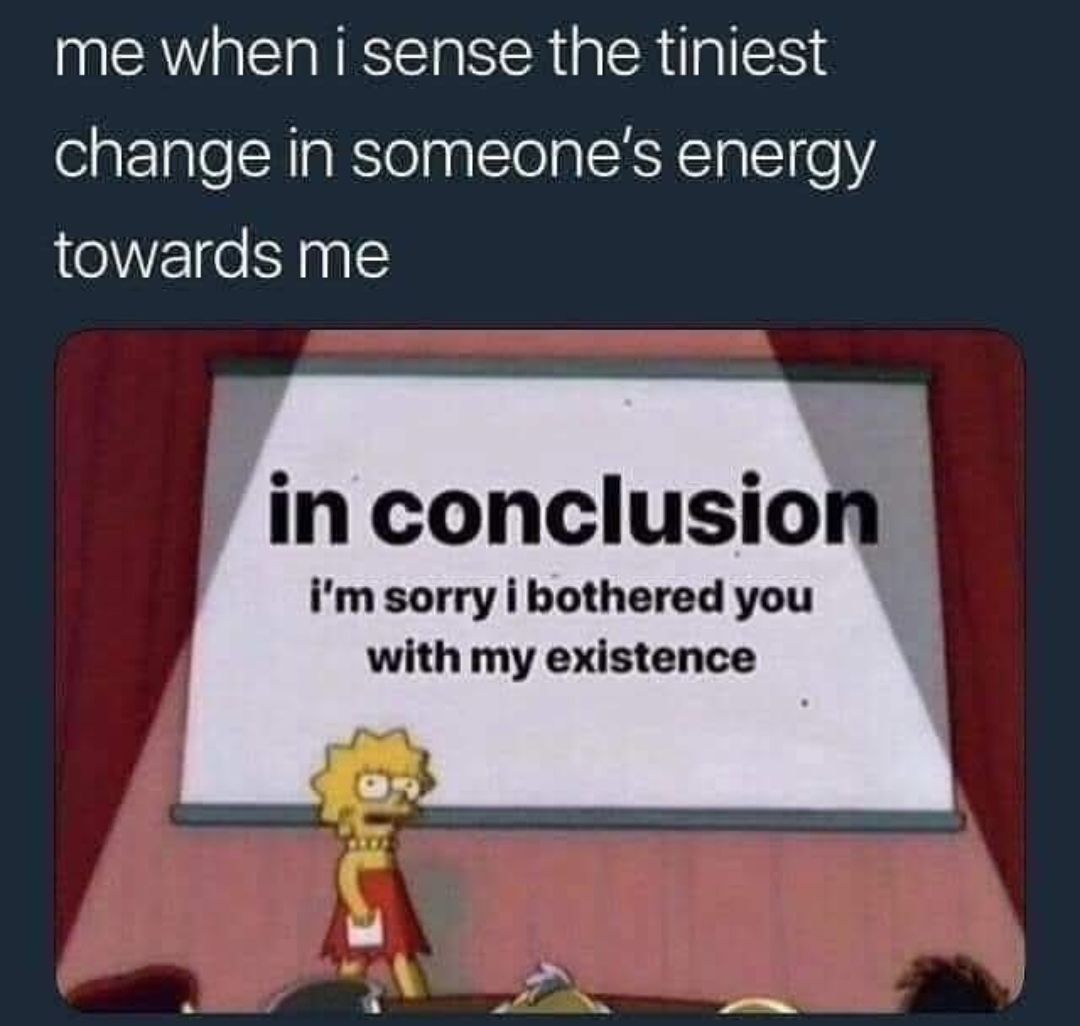
When your back is against the wall, when resources are limited or you are in a place where every interaction feels like a battle, it’s tiring, it’s draining and boy is it depressing. Part of survival in these circumstances is choosing your battles, and often doing a lot of thinking about how to manage yourself within that space. If you’re like me, there will also be a lot of questioning about how you ended up in that difficult spot. All of this can feel a bit like self flagellation in the moment, but it actually fulfils an important purpose, and it’s not just about survival. All of this strategising and reflection is an essential part of learning.
The learning, for me, is always about which decisions did I make that led me to this place, and how can I make better choices and see red flags when I have previously missed them. When making decisions about which battles to go into, what do those choices say about my priorities and the things I value? How can I use this self knowledge better? The big one though, is also what was/is my role in where I’ve found myself. The ugly and oft unwanted truth is that I have always played a role, so where was I the protagonist is the piece? Where is my learning about how to be better? A better person? A better colleague? A better scientist? Learning is a gift and we should take it where we can find it.

Motivates you to channel creativity
You may not be able to control the external forces that feel like they are whipping your existence into a hurricane, but you can control some of your responses to them. Now, I’m an emotional person, and in my hurricane I often feel like Dorothy in her house as it’s flying to Oz. For me, I need to find a way to ground myself and my thinking. I need an outlet and something that I can focus on to stop my mind from running wild. During these times I have so many thoughts but also moments of inspiration.
If I were a more creative person I suspect I would paint or write poetry. It will surprise none of you though to find that instead I tend to list possible future blog titles based around what I’m processing. If a particular ideas seizes me I will just sit and write the whole thing but often it’s about capturing the moment in the form of titles. I know that 2024 and 2025 have been hard times by the fact that I have over 300 blogs in some level of draft. Some of those will get collated, some of them will go nowhere, and some of them will keep me busy writing for the next several years. Looking back on these titles shows me that positive things can come out of difficult times, and helps me process where I’ve been, where I am now, and where I’d like to get to.

Provides you with moments to practice responses
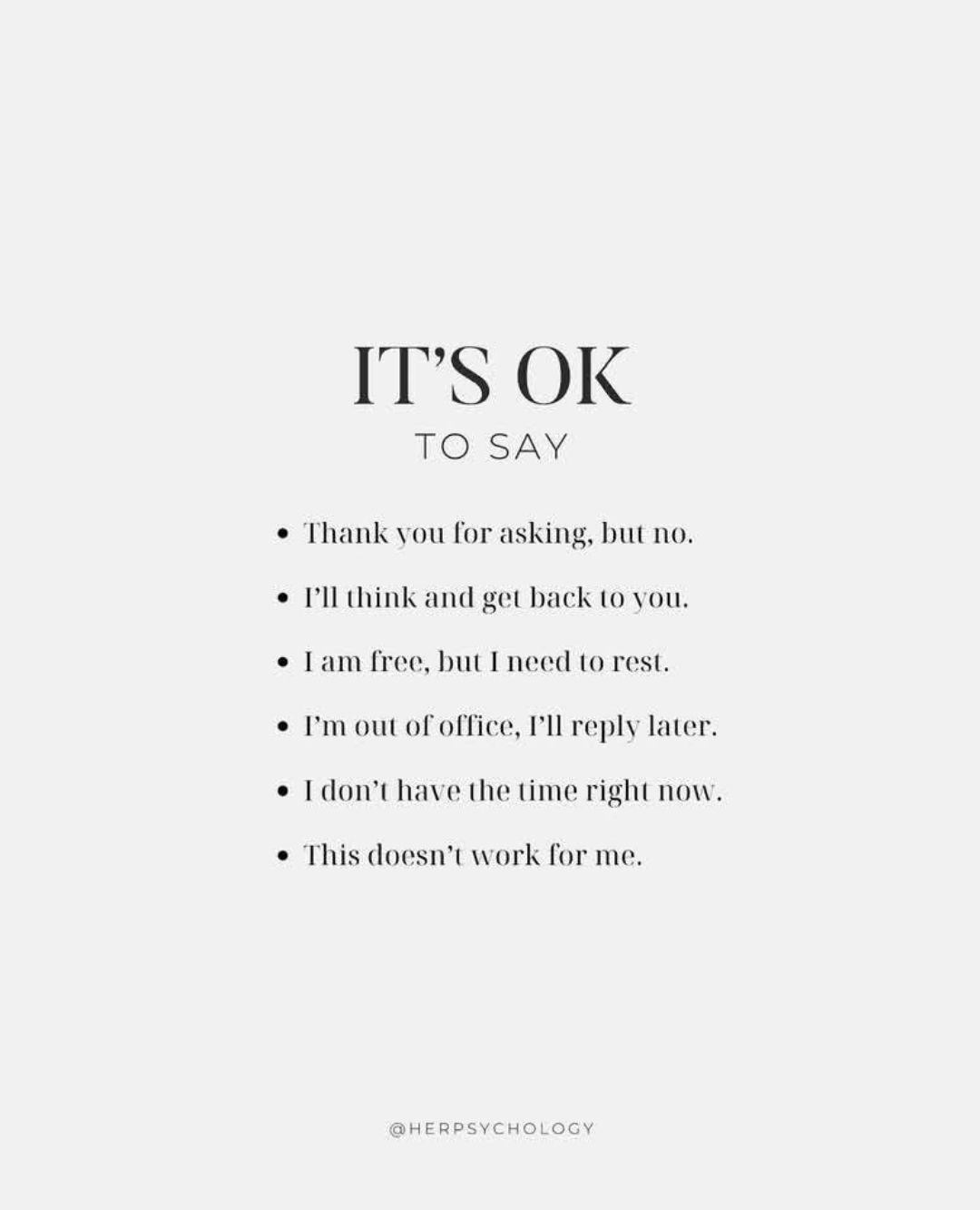
It’s not just practical skills where practice makes perfect, it’s also valid for our coping responses and communication skills. This can be anything from saying no or setting boundaries, to skills that help you manage emotional overwhelm or anxiety. No one wants to find themselves in difficult times or managing difficult relationships, but I don’t think I’ve ever met anyone who hasn’t gone through periods of challenge in their lives, so the sooner we get better at some of these responses the better we will manage when the bad times hit.
That said, you don’t want to be doing the self reflection or learning needed to identify what responses might help you when you are in the midst of things. It’s probably best to do your thinking in calmer times, and use the moments of trouble to practice applying them. I don’t want anyone to have enough of these moments to excel at the application piece, but the reality is you will hit difficult times and so having them as part of your toolbox can only help.
Helps you learn who your trusted friends are
I have a small number, and I mean below 10, of people in my life I trust with all of me. The people I trust to give me the difficult truth and help me through managing my response. The people I know who are always there to support and don’t have an agenda, or want anything from me for being in my life. When I was younger, like many of us, I thought it was nice to be popular, to have a long list of people I thought of as friends. It’s taken me time to realise that I have friends, and then I have the people I can call at the darkest and worst times in my life who would catch a flight to wherever I was and just give me a hug if that was what I needed. The people who would answer the phone if I needed them to at 3am and just listen to me cry it out. I am so grateful for these people, but you often only work out who’s who during the dark times.

Gives you an opportunity to review priorities
It is very easy to get into a vibe and just carry on down a pathway that you set your mind to without ever taking the time to review. This is especially true for healthcare careers, where you decide in your early 20’s the pathway of professional and educational development you will follow for the next 20 years. As you are going through difficult times and learning who you are however, it is also a good time to decide whether this is what you want any more? Is it worth the challenge? Is it worth the fight? Is it worth the energy you are putting in to keep going? Every time I’ve been through this exercise the answer has come back yes to the general sense of direction. I have come to a different conclusion about different components of the whole though. I’ve quit committees and other commitments, where the answer has come back as no. All to enable me to put more time and energy into the things have come back as yes. Not everything works at every phase, and so bad times give you an opportunity to drop those things that no longer serve your inner purpose.
Makes you focus on what is important
Dropping things leads me onto my next thought. Once you have reviewed yourself and your priorities the next question I ask myself is ‘what do I need to survive this?’. What are the important keystones of your life that you can focus on in order to ride out what is going on. Sometimes what you need are big things and big changes. Sometimes the thing you need is just something that will get you through the moment of struggle. For example, there are days where what I need more than anything in the world is to lie on my sofa with the lights out, the patios doors open, and to just listen and watch while the rain pours. It’s been something that calms my soul since childhood, where I would gather a duvet and sit on a swing wrapped up and warm while the rain fell all around me. It depends on the situation and the moment.
My responses to the hard moments have a tendency, in general, to be more insular. Some people, in these difficult circumstances, become extraverted and focus on spending time with people, be it for distraction or support. I tend to want to reduce my exposure to the outside world and outside stimulus, and retreat to my safe space, being at home in my castle with Mr Girlymicro. I want to pull up the drawbridge and immerse myself in things that will distract my mind, like movies and games, or calm my soul, until I’m forced to re-engage with the outside. There’s a lot to be said for understanding yourself enough to know what aids you when the world feels like it is crumbling around you. These moments can remind you of what you value, and the self care that you perhaps should have been doing more of.

Aids in future planning
I talked earlier about how being conscious of the decisions and things you prioritise during hard times in order to learn more about yourself, but I think it also goes beyond that. Bad times can provide moments where you can thoroughly review your life and start to refresh your thinking about who and where you want to be when you come out the other side. When the world is so shaken you lose your centre, it’s an opportunity to find a new balance that will enable you to strike out in a new direction when the clouds do eventually clear.
I often struggle to live in the moment. Even more so when I don’t like the moment that I am in. In order to escape the reality of where I’m at I will play with dreaming of different futures, like some people imagine outfits I imagine where I could be. If I find one that speaks to me I think ‘what do I need to find my route forward?’ ‘What could lead me there?’ Obviously a lot of this is just release via dreaming, but sometimes things stick and it can change how I plan my next steps. This is how I decided on writing a pathology murder mystery series when I retire, and how I’m even taking steps now to prepare for that aspiration as I pootle along in my everyday life. Using this method to review and map your ambitions can be a helpful use of your time, not just an escape.

Reminds you of what you are grateful for
As dear Taylor says ‘If you never bleed you’re never gonna grow.’ Growth is hard and sometimes unwelcome, but if we want to be better it is inevitably something that needs to happen. That said, we need something to get us through, and if I had to sum it up, that thing is gratitude. It’s remembering through the maelstrom who we are and what we value. Different people are grateful for different things but, for me, in terms of the big stuff, it always comes down to family. My family by blood, and my chosen family. Both of whom will be with me no matter what.
As for the smaller and everyday, during the pandemic friends of mine went out of their way to send me little gifts. A teacup to have my favourite tea in. A bottle of gin or champagne so I could enjoy what little down time I got. Many of those items sit on my dresser in the kitchen and remind me to be grateful. It’s often not the large gestures that stay with us, but the small things that remind us we are in peoples thoughts. The moments that remind us that we are seen by others, so we don’t succumb to feeling invisible in our gloom. Whatever you are grateful for though, make sure you pay it forward when you can, so your things can sit in someone else’s kitchen and remind them they matter.
Helps make you ready for what comes next
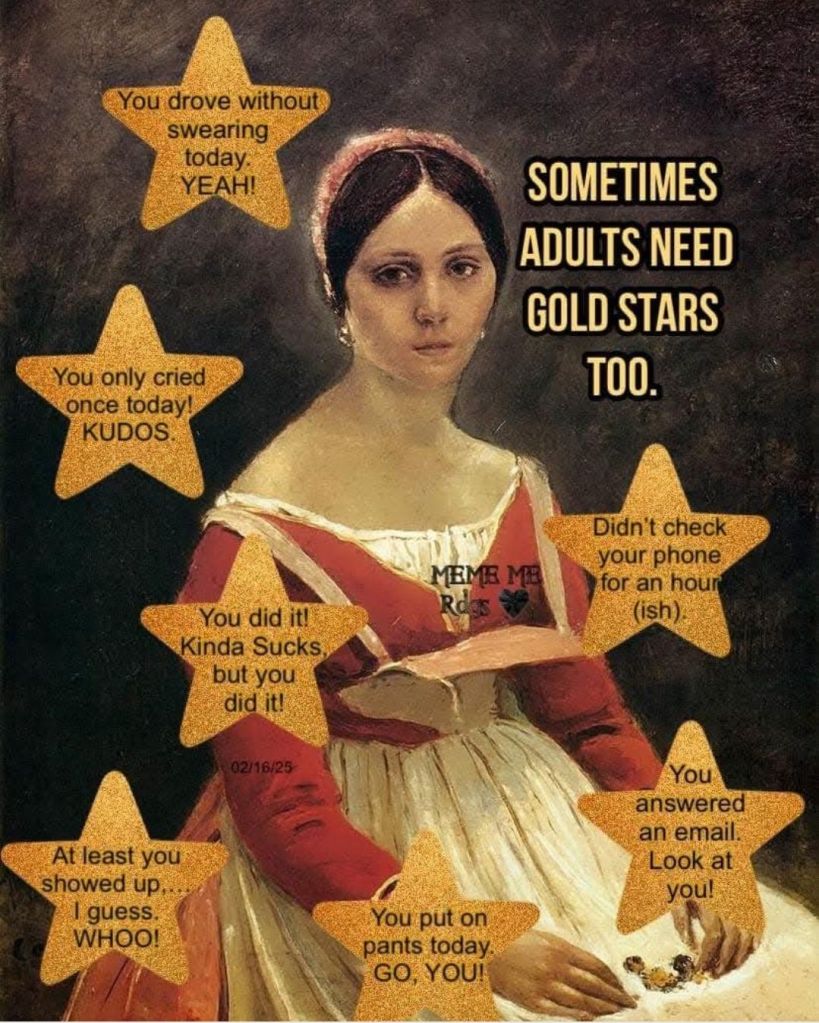
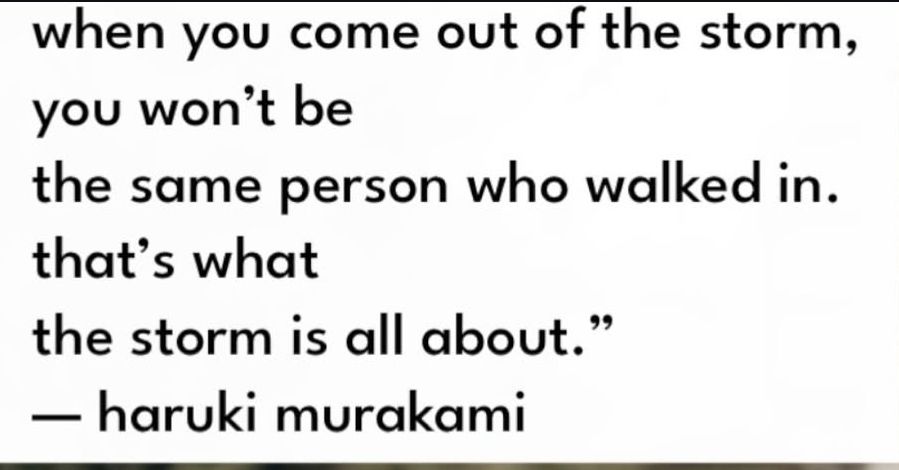
I wanted to finish with a reminder that getting through the hard times prepares us for the future. If you take on the learning, about yourself and others, you will walk out of that storm a better, more prepared person than when you entered it. There will be a future that will be brighter because of the darkness you’ve lived through it. That doesn’t make what you are experiencing right now better, it doesn’t make it fair, but sadly life is like that. What it enables you to end up being is a more defined version of yourself. A person who knows who you are and what you want. Hopefully a person who is able to go after those things. It can also help you to be a person who now knows what you don’t want, and what you are prepared to let go of carrying in order to improve your life. That too is a different kind of bonus.
When I’m deep in the darkness I tell myself if I can find my ‘second star to the right, and just keep on till morning’ I too will find my way out of the storm and end up where I want to be.
All opinions in this blog are my own


 Girlymicro