
I’ve just dipped my toe into the world of self publishing, so I am far from an expert. That said, one of the reasons it took me a while to move from ‘that is something I’m interested in knowing more about’ to ‘screw it, let’s just give it a go’ is because there is a lot to think about, and there are a lot of options. I thought it might be useful therefore to pull together some of the components that came up for me in an effort to pay it forward, so anyone else thinking about taking a leap can start a little further ahead than I did.
Fair warning, this is a long one as there’s a lot to cover.
The first thing to say, and this now sounds horribly naive, is that I thought that the writing would be the hard part, or the bit that took up most time. How wrong I was.
Do your own research
Before I properly kick off though, one quick word of warning. These are tips and reflections on the steps I took for the type and method of publishing that worked for me and the book I wanted to get out into the world. You will, of course, have your own aims, aspirations, and content type, so you will need to do research that links to the type of book that is in your mind. I found that there is all kinds of great content out there, but it is a bit like a jigsaw puzzle you need to put together to match your own personal needs. I would start by working out what personal resources you already have available to you, then go on an active search for the rest.
Places to consider accessing information include:
- YouTube
- Blogs
- Websites
- Books
- Social media
- Phone a friend
I am really fortunate to have a number of friends who have either written and published books, or who work in/with the publishing industry, and so the phone a friend option was particularly useful for me. I’m hoping that by writing this blog I am helping to pass that good fortune forward to support others.
Even without the assistance of someone who has greater knowledge than you in your friendship circle, I found places like YouTube a great way of learning some of the key phrases and structural terms that then enabled me to move onto more targeted research via other sources.
Writing is the easy part
I don’t know if I’m fortunate or cursed to live with a mind that constantly requires distraction or something challenging to process, but one advantage of it is that I will often arrive at an idea pretty fully formed as I’ve been putting it together in the back of my mind. That means that one day I just woke with a 40 chapter structure for a book that remained pretty much unchanged, even as the word count developed.
Even with this though, in my project plan most of my time was allocated to word count and far far too little of it was allocated to the other tasks. Partly this was because I just had no idea how long they would take in practice until I came to do them. In hindsight though, I think there was a fair amount of denial and ostriching as it was these other parts that triggered my anxiety and fear linked to not really being comfortable with the process. This denial got me to the finish line, but I think the whole book preparation would have gone more smoothly if I had focussed on my discomfort rather than the comfort zone that was the writing process.

What are you planning to publish?
Talking of your project plan. There are some components that it is really helpful if you make decisions about early, as they will impact not only your workload and structure, but also whether self publishing is the right route for you.
The first of these decisions is whether you are working towards a fiction or non-fiction book. I don’t think I’d ever sat down and made a list of the differences between the two until I started to plan both types of content. The first obvious difference is in the type of the content itself, but beyond the actual words, which may have legal and other impacts for non-fiction, there are differences in everything from word count expectations, to paper type, and book size, if you are thinking of including print versions.
This then brings you onto deciding what kinds of formats you are planning to publish in:
- Ebook
- Print:
- paperback
- hardback
- Audiobook
Now, I haven’t done an audiobook so I’m not going to talk too much about that here. For the other format types it’s key to know what formats you are aiming for as this will dictate all of the formatting, cover and costing decisions you will make moving forward. That said, just because you decide to aim for more than one format it doesn’t mean that they all have to come out simultaneously. You could decide to aim for an Ebook first, with a plan to bring print editions later on.
It is worth doing some bench marking with similar book topics at this stage, not because you have to do what everyone else does, but because it can give you some parameters to work with and mean you feel less overwhelmed by the number of decisions you need to make. I ended up launching all content type pretty simultaneously, as that’s what worked for me, you may choose to take a route that is kinder to yourself and launch them in stages. For instance you may launch your Ebook first so you can incorporate feedback before you move to print editions.

What are your success criteria?
The other key thing to do at this point is to decide what does success look like for you? Almost all of your next steps and decision making will depend on what success looks like and what it is that you are wanting to achieve.
No one can tell you what the answer to this is as there are many different reasons people decide to write books, all of which can be valid:
- To educate and inform
- To raise awareness of an issue/topic
- For financial reasons
- To improve the authors profile
- To entertain
- To process experiences
- To tell a story
- To connect with others
- For career development
- To inspire/empower

Once determined your success criteria should play a big part in determining your approach. If you want to make money or sell thousands of books then you probably need to aim for a traditional publishing approach, and this will then impact the kind of topic that you might choose. If your aim is to get something out there for low cost or in a relatively niche topic, the self publishing is probably a way forward.
You need to be realistic with what you are aiming for. For instance, my book topic is relatively niche as it’s linked to post graduate study, and when I did my research it looked like I could expect to sell 2 copies a month based on amazon purchasing number (I used Book Bolt on free trial to run the numbers). My goals and expectations were therefore based on those figures. My initial goal was to sell 20 books in a year, with stretch goal of selling 60. My success criteria have never been about selling huge numbers or making money, but about finding a different way to support the Girlymicro community, and therefore my goals match that. What’s happened in practice in that I’m over the moon to have reached my stretch goal in the first six weeks since publication, but I am also aware that those numbers are likely to drop off and I can’t use them to continue to judge how well the book has landed. If you don’t want to be disappointed it’s important to choose the right success criteria to match your driver for publishing in the first place.
Traditional vs self publishing
Once you’ve decided what it is you want to write, why you want to write it, and what success looks like, then you need to choose your next steps. The biggest of which is to decide whether to pursue traditional publishing or go for self publishing. Now, don’t get me wrong, both are a lot of work and require a lot of prep, but the steps are very different.
For traditional publishing you will need to start to put together a proposal, which for a fiction book will include the entire manuscript of your book plus some additional information. For a non-fiction book it will usually include at least 2 chapters and chapter outlines with descriptors for the rest of your content, plus information on other things you have written, target audience, and other books on the market taht could be used as benchmarks. The aim is to get an agent who will then pitch your book to a publisher, although for some markets you can approach a publisher directly, who will then take care of onward processes such as editing, formatting, cover production. A lot of the non-writing work is therefore forward loaded. There’s lot of advice out there on how to put together a book pitch and there are websites such as Query Tracker that can help you in finding agents to send your pitch to. For fiction this is still a mainstay of publishing, especially as you are wanting to reach wider audiences and have your book available in book stores and libraries.
In terms of self publishing, a lot of my reading indicates that up to 90% of non-fiction books now go down the self publishing and print on demand routes. Non-fiction book deals either tend to be books that have wide audience appeal, such as general popular science books, or have authors with a pre-established audience, think influencers with a million+ followers. So, although it may be worth your while pursuing a traditional publishing approach, it is well worth considering exploring the self publishing route. The down side of this route is that there a lot of tasks that you will need to organise yourself, which would have been taken care of if you’d traditionally published, so be prepared for a steep learning curve.
One extra thing to think of is how strong is your vision is. If you go down a traditional publishing route there will be co-development of your concept with a number of stakeholders. This will make the idea better, but you need to be prepared to hold onto your concept loosely, especially as a new author, and so it is worth considering this aspect of development as part of your decision making. If you go down the self publishing route you will have to fight harder for the credibility that is given to traditionally published authors however, so both routes have pros and cons to consider.

What kind of content are you planning to include?
OK you’ve decided to go down the self publishing route but what does this mean for your content? Content restrictions weren’t something I had considered when I started drafting It Shouldn’t Happen to a PhD Student, and so I included a load of exercises to support the word count that included tables and other non-text formatting. When I then started to format however, I discovered that the templates are set up for text alone, as novels only include text content. This seems obvious in hindsight I guess. That meant that when I undertook my final formatting I ended up removing this content and setting up a new web page on the girlymicrobiologist.com blog in order to host it, as it felt that it was still important to have. This was a lesson for me in how important it is to consider what type of formats are needed to support your content and embed these considerations from the start, rather than finding an eleventh hour fix.
Having discovered the format restrictions of book based content I’ve been thinking of maybe putting together an academic journal set of content that can sit alongside the book in order to host some of these exercises, but that requires finding a whole different set of templates or learning waaay more in order to set ones up myself. Honestly I’m not sure I have the mental energy for that right now. One of the things this experience has taught me is to think hard about the payoff for any energy you will need to expend in order to make something happen and be conscious in your decision making and energy allocations.
Choose your budget
Another thing to consider is that there are many ways to accomplish the tasks you will need to tick off in order to self publish, and the decisions may be more complicated than you think. There are a number of steps, each with a number of component parts, all of which could be outsourced, semi-outsourced, or managed by you:
- Editing
- Cover
- Formatting
- Marketing
- Printing
- Publishing
- Book coaching
If you decide to outsource all of these stages, the process of self publishing could, in fact, cost you thousands of pounds. If, like me, you don’t have thousands of pounds just lying around you may need to think carefully about what you can spend, and on what you are prepared to prioritise spending money on.
https://reedsy.com/blog/guide/how-to-self-publish-a-book/cost-to-self-publish/
I didn’t really have a budget for publishing It Shouldn’t Happen to a PhD student, as I didn’t have the disposable income, even so publishing the book ended up costing me several hundred pounds. Costs included things like buying ISBN numbers as I didn’t want to be completely tied into Amazon as a platform. In addition to direct book costs, you need to think about how you will get the word out there or build your community. For instance, many people aren’t aware that running this blog costs rather providing income, with a few hundred pounds a year in outlay to cover hosting costs, email address etc*, which although not directly book related is the reason the my book came into existence. This can all be important to bear in mind when looking at costing your book, and thinking about marketing exercises such as book launches, as you will have to buy in copies of your book, spend money on food etc, all of which adds to your initial outlay.
If you do have personal budget that you are prepared to invest then it is still worth being discerning with how you invest, and especially being aware of predatory publishers. There are plenty of people out there who will take your money, but spending time to look at freelancers who will undertake components is probably better than paying someone £5000 who offers to do it all, especially if there is limited evidence of what the output would look like. Just like in scientific research, predatory publishers exist, and it is important to have undertaken sufficient research to invest your money well.
*NB a good friend mentioned to me that I don’t advertise the fact that you can help with the costs associated with running this blog through a variety of options, from supporting the annual fees (mentioned on the top of the homepage where is says gift the author a wordpress.com plan), buying me a cup of tea as mentioned on the bottom of the blogs by theme page, or even engaging with my new Patreon page. There you have it, I shall swallow my pride and share the details with no expectations or requirement for anyone who might be interested in offering a helping hand.
Where are you planning to sell?
A number of your outlay and pricing decisions will be linked to how and where you wish to sell your books. Obviously, if you are traditionally publishing, all of these options are somewhat easier as they will try to make sure your book is widely available. If you are self publishing you need to decide yourself where it is that you are prepared to sell. Some simple choices, like whether to use a free Amazon ISBN or buy your own, will have significant impacts on subsequent onward options. If you use a free print ISBN from Amazon, then it limits you to only selling on Amazon. Deciding to invest <£100 on ISBN numbers for each of your print editions means that you can choose to sell on different platforms in addition, but also has requirements about providing editions to the British Library, meaning you have to buy the print copies to send off and pay for postage. If you want your book to be in libraries you also need to select these options on your print on demand platform, but they are much less likely to be taken up than if you were going down a traditional publishing route. There are no right or wrong decisions here, only the decision that is right for your success criteria and the audience you are trying to reach.
If you are happy to go down the print on demand route, there a number of different free options available to you:
- Amazon Kindle Direct Publishing (KDP)
- Kobo Writing Life
- Apple Books
- Barnes & Noble (B&N) Press
- IngramSpark
- StreetLib
- Draft2Digital (D2D)
The best option will depend on what you are publishing and the countries that you are hoping to publish in. It is worth bearing in mind that some platforms (such as KDP) require you to give exclusive rights for you to be involved in certain marketing options, such as signing up to Kindle Unlimited. This may expand your reader market but will tie you into a specific platform. There are also paid for distributions platforms that you could utilise if you have decided to allocate budget in that direction. Of note, there are some interesting YouTube videos out there where authors compare how much they sell across different platforms which can help you make decisions. Utilising multiple platforms requires you to invest energy across multiple formats, and so it is also worth being honest with yourself about what your energy budget is before committing to more than one, even if that might restrict your sales.

Finding your templates
I’ve talked about deciding on your content, and that’s because formatting is time consuming and essential. You may be a wiz at this, in a way that I am not, but if it doesn’t lie in your skill set then being able to access and utilise pre-existing templates is key. Even this can be a mine field though as there are both free and paid for versions available to you. You also need to know a number of things before choosing your template i.e. is it for print or Ebook, as the templates are very different, but also what size of book are you aiming for, as your paperback version will be a different size to your hardback. I did a bunch of research into what are the most common book sizes for non-fiction hardback and paperback versions, but even this changes by country, so you will need to look into what works best for you. I ended up going for 6 x 9 inches for hardback and 5.5 x 8.5 for paperback.
Having tried a few different options, these happen to be the best templates that worked for me and my brain, you may find others work better for you:
Print templates:
https://kdp.amazon.com/en_US/help/topic/G201834230
Ebook templates:
https://www.amazon.com/Kindle-Create/b?ie=UTF8&node=18292298011
Even with the best templates there is a good deal of fiddling once you’ve imported your content, so make sure you leave plenty of time for this part of the process. I didn’t and it meant a number of 14 hour days whilst on leave trying to ensure I could keep to my self imposed deadline.

Choosing your pricing
I, misguidedly, thought I could price my book at whatever price point I fancied, but rapidly learnt that this wasn’t the case. All of the free self publishing platforms take a cut of any print on demand book, which is how they cover their costs. Everything from number of pages to paper type will impact on what your minimum cost point will be. For Ebooks, if you want your book included in schemes, like Kindle Unlimited to maximise your reach, you will also need to have minimum pricing levels. This is one reason why you need to have decided on where you want to sell and some of the book details before you start to think about pricing. Think about the fact that certain paper types are used more commonly for certain book types, and that choosing between them will impact on cost.
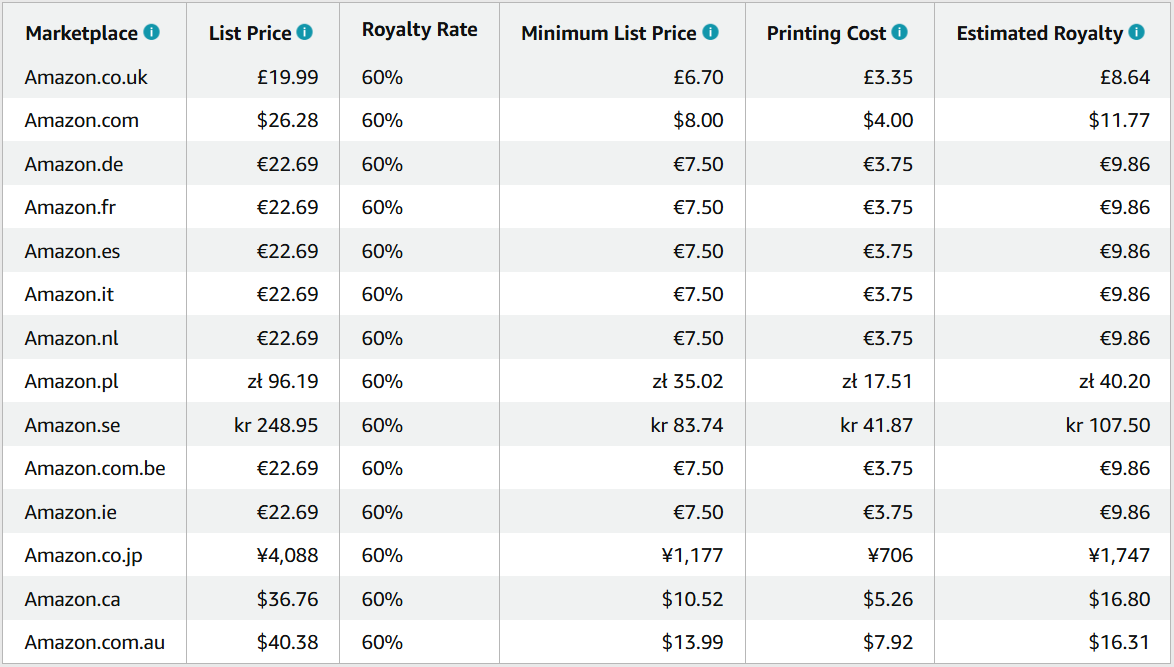
Helpfully, you can use things like the https://kdp.amazon.com/en_US/royalty-calculator in order to play around with likely book parameters to start to think about what your pricing range might be, even before you have fully completed the templates, to know what the final page counts look like. I have included a random example below so you can see the type of information required:

Once you have entered the information, the royalty calculator will tell you what the minimum price point will be, and from that you can think about what price you may need to charge to cover your costs.
If, like me, you are publishing not to make money but merely to cover costs, you should think about charging minimal amounts in order to maximise accessibility for those who may benefit from your book. If you have spent more on bringing your book to market, you are also likely to need to charge more in order to make your accounts balance. This is another reason why I invested my resources in terms of time rather than financial, as I didn’t want to have to charge more which could limit the book reaching those who would benefit most. This aspect may be less relevant to you, depending on your reason for publishing in the first place and so costing is a personal choice.

The book blurb
Once you have your book written, one of the final steps is thinking about what you are going to write on the back cover in order to help it reach its target market. I found this part, well to be honest the cover in its entirety, a bit of a nightmare. So these are the points I thought about when deciding what to write:
- Keep it 150–200 words — short enough to hold attention, long enough to inform
- Write in the third person to help you connect directly with the reader
- Test different versions — your blurb is a sales tool, not just a summary, no matter how uncomfortable that feels
Think about your structure:
- Start with a hook
- Open with a single sentence that speaks directly to your reader’s problem
- Identify the reader’s goal
- Show you understand their challenge or aspiration. Use empathetic, relatable language and speak to how you will address it
- Give your unique selling point
- Briefly explain what your book delivers and why it’s different
- Be specific
- Build credibility
- Mention relevant credentials, or experience
- Give a taste of what’s inside
- List 3–5 bullet points of key takeaways
- Finish with an invitation or call to action
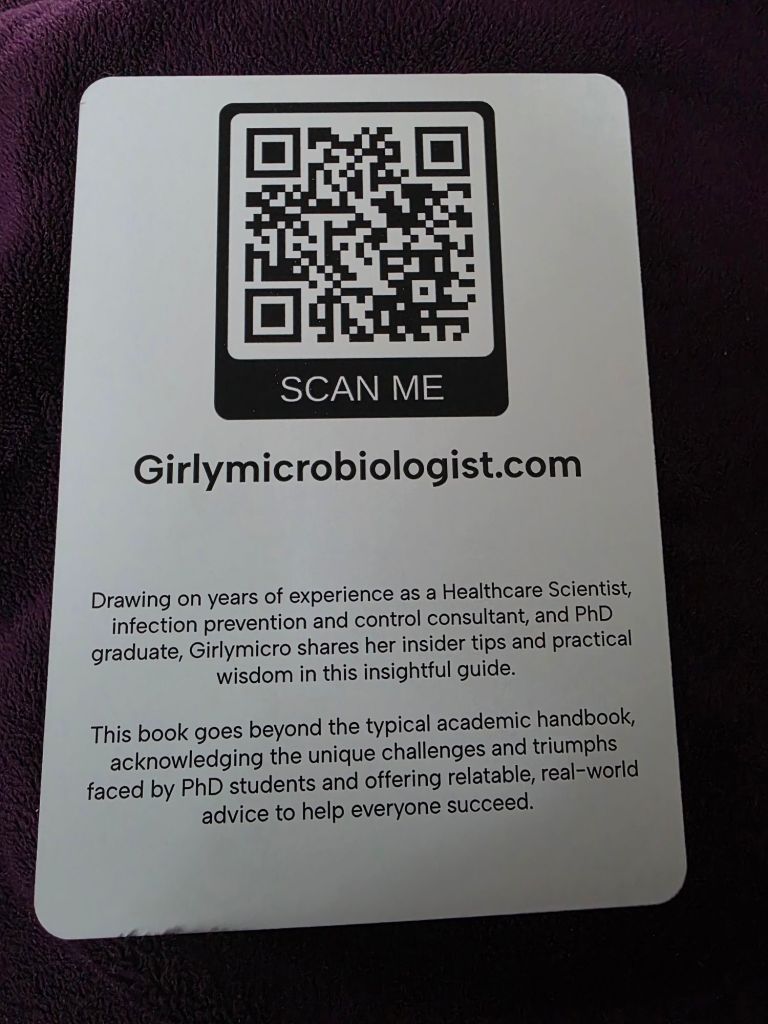
You can then also use this to help write the wording you will need for the websites you are selling on as an expanded version, and even use shortened versions of it as part of your marketing tools, such as on postcards.
Recognise the skills you have and the skill you don’t
The biggest aid in all of this planning was to be very honest with myself about the skills I have and the skills I don’t have. I am not artistic in any way, and so I knew that I would struggle with not only cover formatting, but with cover design. I know that I am able to utilise a word template, but that I don’t have the skills to make a word template. I know that editing is not my thing. All of the components that I recognised as weaknesses I actively sought out support in order to help me address. I roped in a number of people to help with copy editing, including Mummy Girlymicro. I roped in Mr Girlymicro, who is a keen photographer with an artistic eye, who worked with our good friend who works in book design and publishing Alice Wallace, to help with the cover. I found templates that made up for my lack of formatting and design skills for the internal contents. I was prepared to be honest with myself about where I fell short, and I invested time in learning what options were available to compensate. All of these weaknesses could be countered by outsourcing, but that wasn’t a financial option for me, and I feel that I’ve learnt so much in going through the process and the discussions. Something I would have missed out on if I’d paid a third party. That said, the learning feels worth it for me as I have plans to get more books out, if you have budget and you are only doing this once the decision making is likely to be different.

Find your cheer squad and support team
All of this brings me onto the importance of finding your cheer squad. I spent a lot of hours and a lot of leave on turning an idea into reality, and you can never do it alone. I used my ‘phone a friend’ system, my network, and my family, all of which helped with getting this project across the line. They helped me not only with the technical aspects, but also in managing the emotional aspects. There were a lot of highs and lows. To be honest there still are. Putting yourself out there always requires a certain level of bravery. It is always easy for people to find a way to criticise, or use this as a way to comment or target what you’ve tried to achieve. The other side of this coin though is how wonderful it is when people get behind you, cheer you on, and take the time to invest in you and your concept. When people came out for my book launch it meant the world. No one has a lot of time or money right now, so anyone investing in something I care about has such meaning, and makes the whole thing worth it. When I hear negativity, it is that which I focus on to aid in processing my responses.
The nightmare of a cover
Now, I’m just going to use this section to give the biggest ever thank you shout outs to Mr Girlymicro and Alice Wallace. I genuinely believe that there is one part of this process that I couldn’t manage, even if you gave me a month of full time capacity to play with it. I’m talking about The Cover! I’ve attached the guide link below, but even with this I don’t think I could have achieved it. It is the one part that I just couldn’t get my head around.
https://kdp.amazon.com/en_US/help/topic/G201113520
There is so much maths involved, let alone the actual design process. That maths changes based on the precise number of pages, but also what those pages are. Can you believe that cream paper is a different thickness to white. I had no idea.
I mention this in order to be transparent that you too may hit certain components that you just can’t get your head around. That’s OK, you can’t be good at everything. More than that, it’s OK to have things that just fill you with so much anxiety that you can’t face them. For me that was the cover, for you it may be something else. The main thing is to have a plan in order to counter these obstacles before you get to the point where it will impact on your delivery.

The submission process
Once all this is done, it is time to submit. I had thought this process would be much faster than it was, and so now I’ve done it I would recommend allowing at least a month window between submission and having any marketing or other components planned. Nothing is immediate. Once uploaded, and this in itself took a number of attempts, all versions need to be checked out by the platform you upload to. For print versions you will also want to build in time to order proof copies (which will need paying for) in order to check you are happy and that your formatting has worked before you release them out into the wild.

My top tip for this stage is to have pre-completed the boxes and info where possible in order to allow you to focus on just the upload when the time comes. This means that fairly early on in the process you want to have set up accounts, provided registration information, undergone identity checks, so that you can start you populate the appropriate pages. I would do the account setting up as part of the research phase of your book development.
Bits I hadn’t thought about
There were several things I had not even thought about before I started this process. For instance, I didn’t know that you had to buy ISBN numbers, let alone that you need one per format and one per edition, and so you can end up needing to buy quite a few. You don’t need an ISBN for Ebooks but if you don’t want to be tied to Amazon (who will give you a free one for use on the Amazon platform) then you will need to buy them for your print versions from here (if UK based) https://www.nielsenisbnstore.com/.
This brings me onto another thing I didn’t realise. If you have a print book you will need to submit a copy to the British Library within a month of it going live for sale. This will require you to have a copy to send and to pay for postage. They may also request that you send 5 copies to a separate address which means they can then be considered for purchase by libraries. All of which is great, but will require you to have brought enough books to post and has cost implications.
Other outlays I hadn’t thought about were the fact that you need technology to sell books, by this I mean the ability to take card payments. This one completely passed me by until Mr Girlymicro mentioned it, and then thankfully he spent a bunch of time looking at how to make it happen before recommending something. He ended up recommending Zettle, which has worked really well. Again, there was no point in spending a lot of money on this as I wasn’t planning on going to book fairs and selling thousands of copies, however it did mean I could sell copies of my book at the book launch, which made the expenditure worth it.
Finally, I was so focussed on getting the book out there that I don’t think I’d prepared myself for some of the commentary. Now, I’ve been really fortunate so far that almost all of the comments have been positive, but there have been some people who I felt were less happy about me a) getting a book out there and b) it being well received. To be honest the same has been true about this blog on occasion. Questions such as why you? Why should anyone care what you have to say? Don’t you have better things to do with your time? Nothing is going to be universally well received, and at some point someone will no doubt put up a review that breaks my heart. That doesn’t make the endeavor any less worth while. It is better to have something real out there that can support people than wait until it reaches a point of perfection and not putting something out for years. Nothing will please everyone, and so being prepared to cope with critique thrown your way is something to be prepared for.
The discomfort of marketing
Once the book is live is to a certain extent when the real work actually starts. There is no getting around the fact that if you want your book to reach the people it could help or who will find it interesting then you are going to have to tell people about it. It is not comfortable but you have to channel why you decided to do this in the first place and focus on that to overcome the discomfort.
This is one of those things that if you have gone down a traditional publishing route may have been more supported but you would still be expected to drive sales on your own. Make sure that you have an idea of where to show content on social media, make accounts if you don’t have them. Think about using stores like Vistaprint to print postcards, book marks, and in my case giant foam boards of my own head, to help with advertising. Again, this is an initial outlay to be aware of. You will also need to buy a number of copies of your own book so you will have some to sell, and that requires thought as you don’t want a hundred copies that will just sit around and do nothing, so how many is enough?
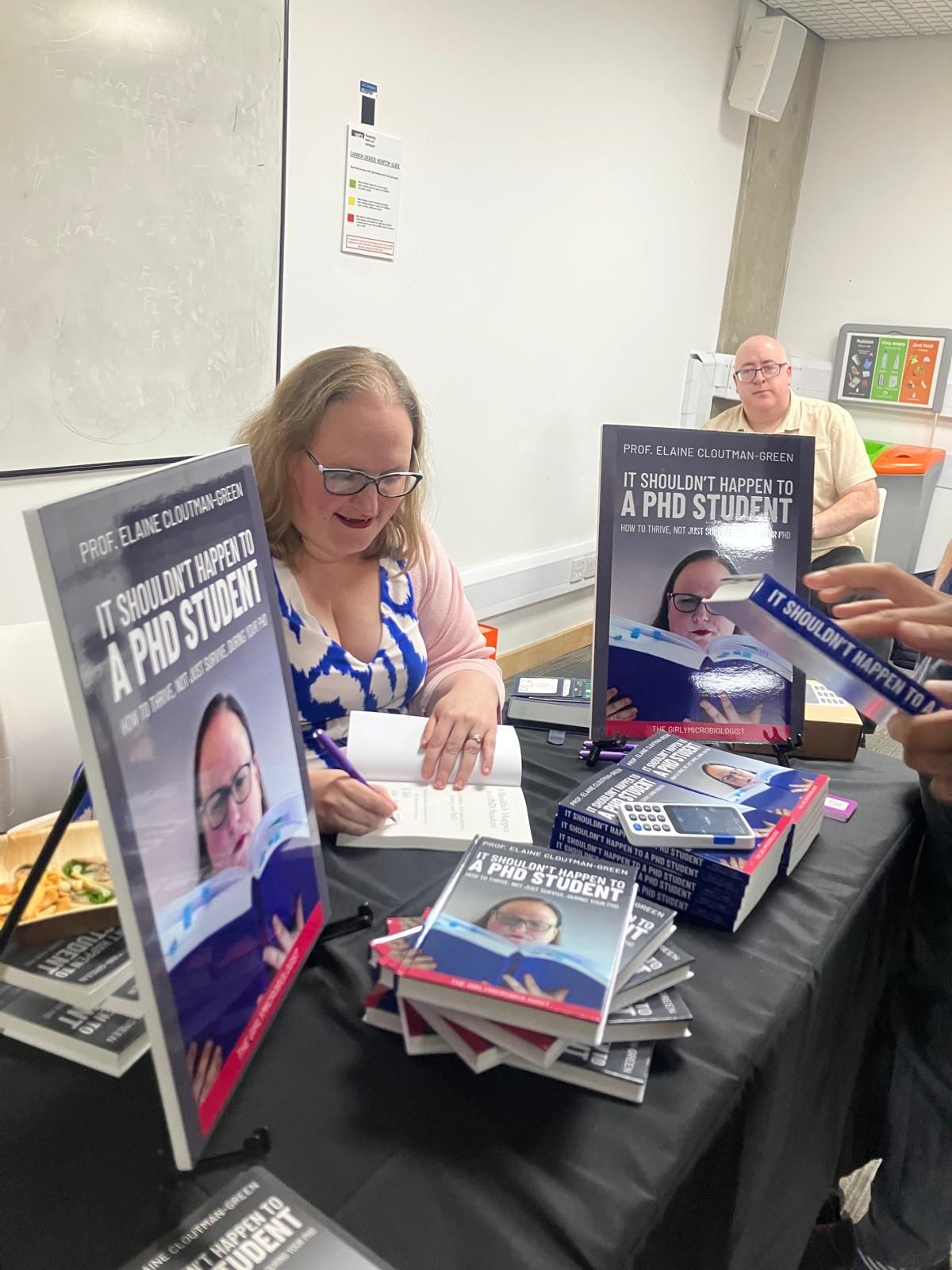
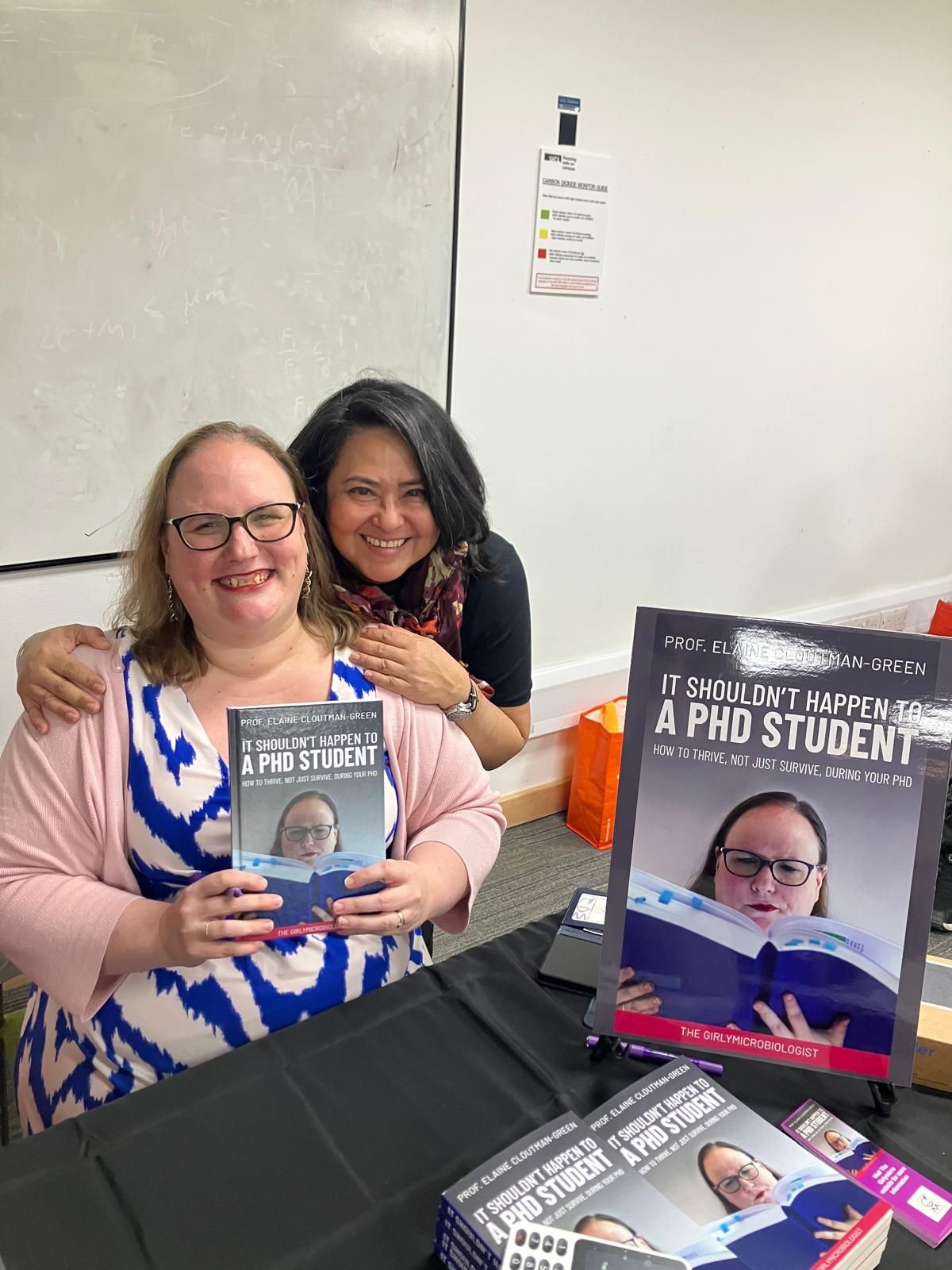
Think about having an event to kick off and celebrate that you have turned a concept into a reality. I was so worried about having a book launch, but it was actually just a wonderful event. It felt so lovely to see people hold physical copies of the book in their hands for the first time and see their reactions. You can also see the people who are really there to show up for you, and it’s a great way of giving back and thanking the cheer leaders who’ve supported you along the way. Note of caution, this is another one of those things that is lovely but will also cost you money, so be prepared to outlay a few hundred pounds if you are going to do it, as you will need to pay for everything from books to catering.
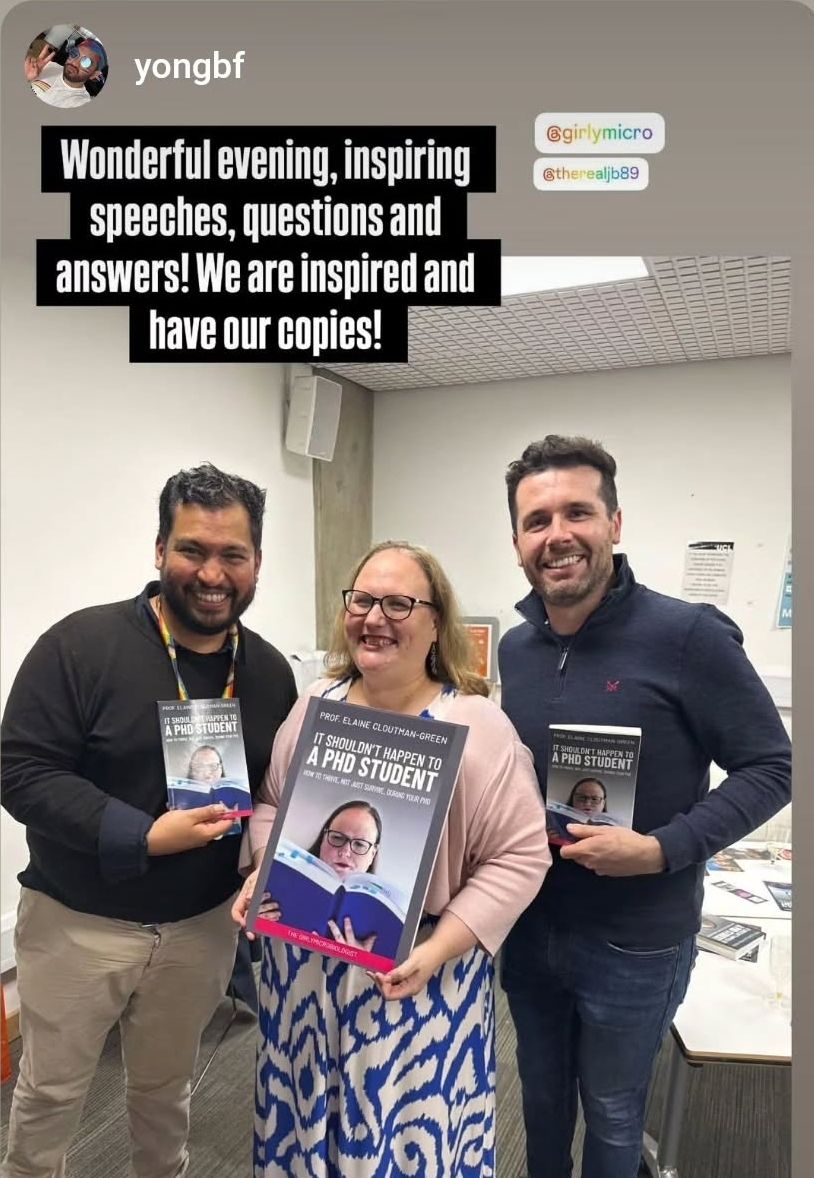
If you have budget, this is another area where you can choose to invest. There are places on the Kindle Direct Publishing page for your book where you can choose to pay money to have your book featured, social media pages will let you run adverts, and you can even pay companies specifically that do this kind of work. I don’t have the budget to go down that kind of route but if you choose to give it a try let me know what your learning and advice is and I can share in a future post, or better yet write me a guest blog.
The long and short of it is that your book won’t reach the people you’ve written it for if they don’t know about it, so suck it up buttercup and get your marketing hat on. No matter how uncomfortable it makes you, and it makes me very uncomfortable, there is no getting around it. If you can find friends and/or champions who will talk about it on your behalf that is a life saver, but you will not be able to avoid putting yourself out there. You wrote a book for a reason, this is the time to remember that reason and step out bravely in order to make your success criteria happen.
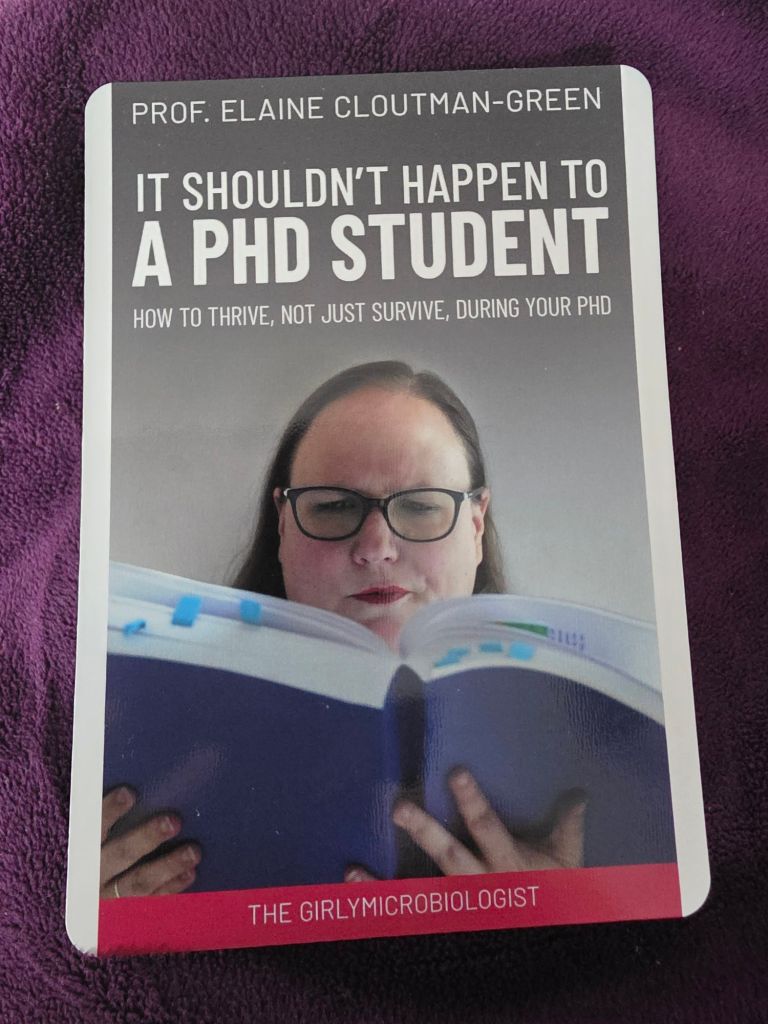
In that vein, if you want to check out the final version of my labour of love, you can find the link below:
All opinions in this blog are my own



 Girlymicro