
This blog post is late, which seems to be a bit of a theme recently. The truth is there’s a lot going on, from a colleague passing away and auto immune flares, to mummy Girlymicro being about to re-locate. All of which have meant that I’ve been struggling to get out of bed and do the day job, let alone find the time and head space needed to get words down on this blog.
2024 was always going to be hard going. There is a lot of change. There is a whole heap of challenge. There is not enough time, people, or resource to make any of those things easier. The reality is that there is little I can do about any of these things. There is only one way, and that way is forward, but knowing that and getting there are not always the same thing. So today’s post is about how to just keep going when all you really want to do it stop.
Decide what is important
I had to cancel meetings last week as, to be honest, I was so unwell I could barely manage emails, let alone speak. It amazed me when push came to shove how many meetings I could cancel and it not have any catastrophic effect. Many of them could easily be moved by a week, and some others could just be straight out cancelled. The world did not end. It struck me then that I need to be so much better at curating my diary so that I don’t spend 8 hours a day in meetings, meaning that all my other work has to be done on evenings and weekends.
The other thing I’ve had to think quite hard about in recent months is what things am I doing because they are important to me and which things I’m doing because I’ve a) always done them, or b) they are important to other people and I’ve just passively agreed. You’d be amazed at how much a and b there is. My career has progressed at a fair amount of pace, and I have failed to do any of the spring cleaning that should probably come with that. The things I need and want to do now that I’m a professor are understandably different to what was required as an early career scientist, and yet I have carried on bringing all of that workload with me into my current post. It’s frankly unsustainable and so a re-evaluation of task list was much needed.

Become a quitter
All of which brings me to spring cleaning. I hate to break it to you, but if you are like me, you need to learn to quit. You need to quit regularly and firmly. What I mean by that is, in order to keep your sanity, you need to review the things you do and decide what purpose they still serve. I’ve failed to do this. I’ve failed to do this over a period of years. I suspect partly due to a failure to recognise that I have changed and my needs are different. Partly just because I failed to recognise that my needs were even part of the equation. I feel very strongly about giving back to my profession and the community, and so, in general, I haven’t really included myself in any evaluation. This is how I’ve ended up working every weekend and 14-hour days, and sadly, my body just can’t sustain it. My mind is writing checks my body cannot cash. I’ve had to quit things that I never thought I would quit, committees I’ve sat over for over a decade, just to keep my head above water. The thing is, quitting will open up that opportunity to someone else. Someone who will benefit more than I was and open me up to new opportunities when life calms down. I’m convincing myself that it is a win-win.

Confront your FOMO
I’m a fear of missing out (FOMO) addict. I’m terrified when I say no to anything that it might be the wrong decision. That it might impact my career, or my future. Partly, this is because I spent the first 13 years of my career on temporary contracts, and that lack of security means you are always needing to have multiple plans in order to stay employed and pay the bills. Partly, this is because I’m too greedy to choose a single interest and stick to it. I want to maintain interests in my clinical work, research, and education. You can’t do everything in all areas, however. I couldn’t do that when things were going well, let alone now. Now, I’m having to ask myself ‘what’s the worst that can happen?’. If I don’t go to that event, if I don’t manage that networking, if I don’t manage to post that blog, what’s the worst that can happen? Most of the time, the answer is nothing permanent or, more frequently, nothing at all. I may miss out on the odd opportunity, but at the moment, I’m having to turn down a lot of those anyway. So hard conversations are being had with my brain where I have to challenge both my FOMO and associated anxiety.

Try to live in the moment
One of the reasons that I think I experience FOMO so badly is because I’m always looking to the future. I always have a plan. It’s how I’ve managed to survive the uncertainty of the Healthcare Science progression pathway. It’s how I’ve managed to end up in my dream job, that didn’t really previously exist. The problem with this is that when you remove things and impact the ability to plan then my stress levels go through the roof. Uncertainty and a lack of control, or ability to impact can make everything feel overwhelming, leading to me spiralling. It also means that I struggle to feel peace or achievement in the moment. Right now though, I need to deliberately move from staring at the horizon to spending more time looking at my feet. Getting through each day, each moment, for what it is, be that good or bad. Knowing that the next moment will be different and I will deal with it as it arrives. Accepting that the future is uncertain and concentrating on the concrete of the now.

Accept failure
A wise Consultant once told me that the best advice he was given when he got his first post was to become comfortable with failure. I cannot express how true I find this statement. Right now, keeping on top of everything is quite literally impossible. There are not enough hours in the day, even if I was in a position to just push through and work 20 hours a day. Failure is, in fact, my only option. This is an important realisation as it empowers you to make decisions about where those failures are going to occur, rather than letting them happen naturally by living in denial. After all, not all failures are equal. Needing to write and request a review extension on a paper is not the same as missing a clinical action. Failing to get a blog out on a Friday, and instead getting it out on a Wednesday, is not the same as missing a board report deadline. It feels horrible. I reproach myself for not being able to be more efficient and do more, but I accept it because in acceptance I regain a modicum of control and ability to manage risk.

Try being kinder to yourself
The acceptance of failure and the internal disdain for the fact that this is where I’ve landed brings me to the fact that the self judgement is not a helpful additional load to bear. I hold myself to pretty high standards and the fact that I’m not meeting those is pretty difficult to process. I keep coming back to what I would expect of a member of my team or a friend if they were going through the same set of circumstances. I would never tell them to ‘buck up and get on with it’ which is the self-talk I use. I would tell them that’s it’s OK, that they will be OK. I would tell them to give themselves a break and to deal with the things directly in front of them and ask if there was anything I could do. I would have a judgement free conversation focusing on ways forward. Those are the conversations I’m trying to learn to have with myself. Followed by some honesty about what is actually achievable and what it is that I actually need in order to keep going.
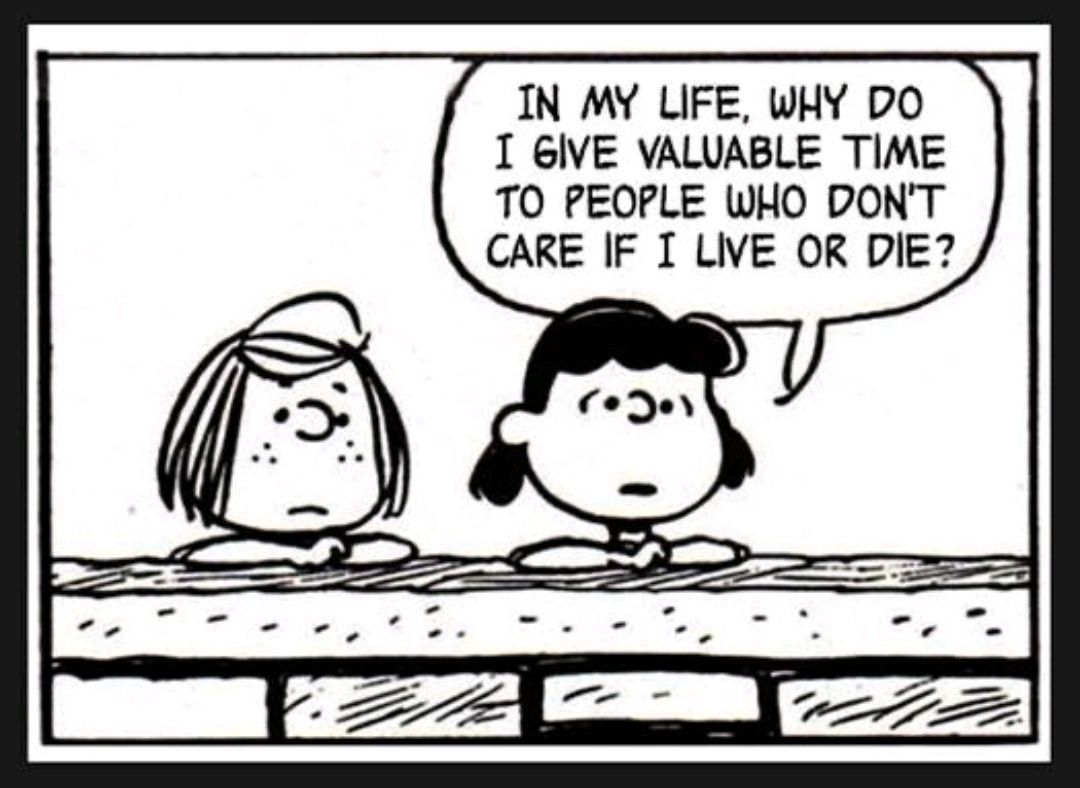
Learn to ask for help
One of the things I would immediately ask someone else if my conversations were external, rather than internal, would be ‘what can I do to help?’. Well, I’m learning to ask for help. I’m learning to use the amazing support I have around me to get meetings sorted and to remind me of what I have going on. I’m trying to ask people to cover some of those meetings that don’t specifically need me. I’m asking for some task related help or taking it up when offered. I am not a one woman army, and I need to stop acting like I am. There is no shame in asking others for support.
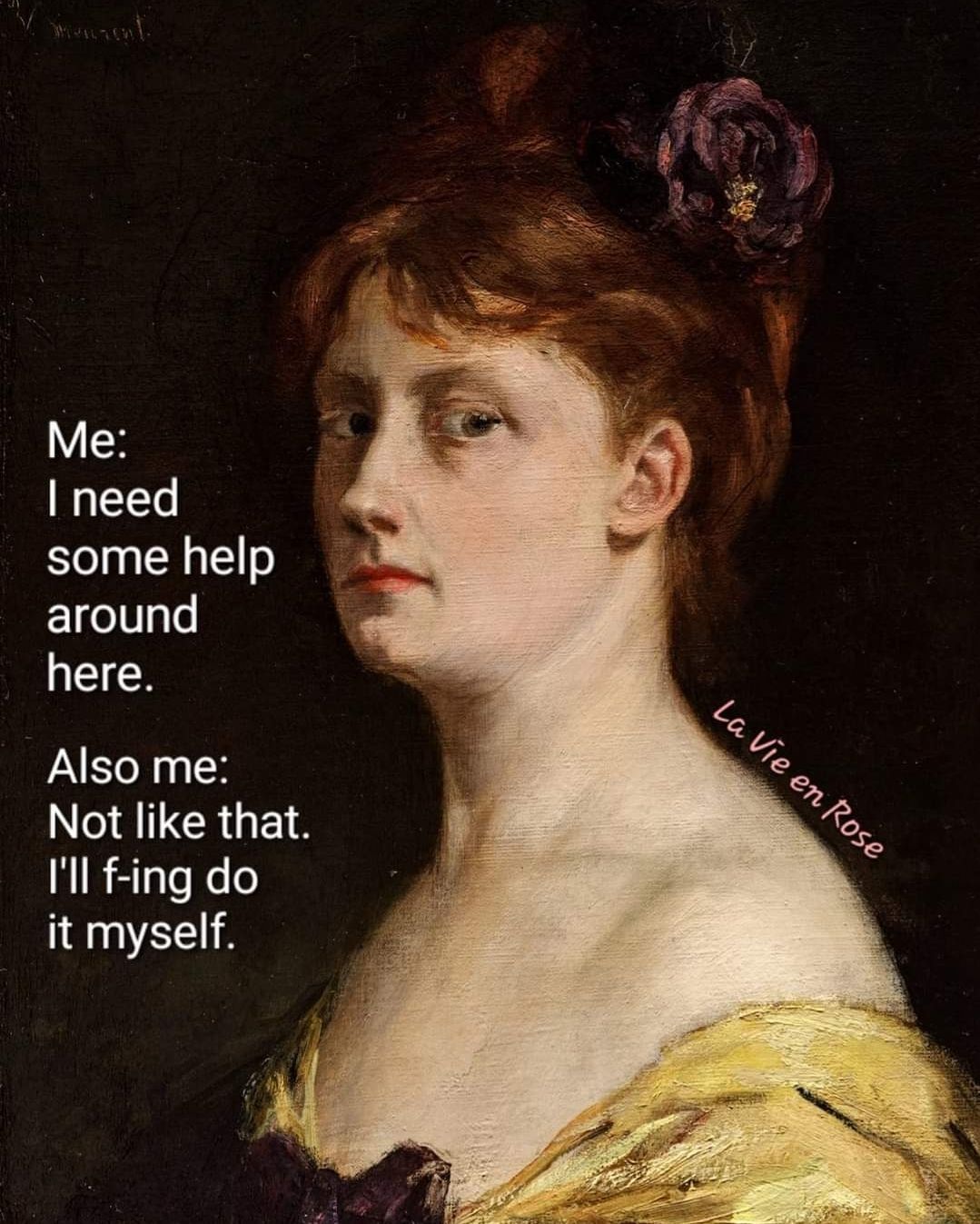
Forgive yourself for bad days
When I’m in a bad space, I become more demonstrably emotional, my fuse is shorter, my bandwidth is smaller, and my memory becomes pretty poor. All of these can combine to impact my performance and handling of individual scenarios. All in all, I probably become just less efficient at a time when I need to do more and be more efficient than I normally am. The combo is not great. It means the frequency with which I walk away from a day feeling like I’ve messed up increases, just what you need when struggling. Some days are just bad, whether it’s all self perception or not. This is a key point though. A lot of this is my perception and me measuring myself against my mental benchmarks. I don’t even know how much others see it. So, I’m giving myself some self-talk about putting the bad days behind me. Trying to use the ‘living in the moment’ approach and reminding myself that each new day is just that, new. It’s a fresh chance to try and do it better than the day before, and if some days work out better than others, that’s OK. I am doing what I can, and that needs to be enough.

Acknowledge there may be no alternative
The reason I have to be more forgiving of myself is that there is no alternative or better way forward right now. It takes years to train staff. You can’t just pluck them off a shelf. The built environment and its challenges take months or years to fix. A period of tight deadlines is just that, a period of time, which needs to be got through. My grief at losing a valued colleague will stabilise. All things will pass. Until they do this, this is the reality, and everything needs to continue moving forward. Acceptance of this reality is the first step in finding a way to just get through it. We all have periods in our lives and careers where there is no ‘fixing it’. It’s just about getting through it. That’s the real world, and it’s OK.

Plan for a better future
I’ve talked about being a planner, and that one of the things I’ve needed to realise is that broadly planning doesn’t help me right now. The one area in which it still does however, is planning for when life returns to normal. Planning for what I will be able to use my annual leave for. Planning for what fun things Mr Girlymicro and I will do with mummy Girlymicro whilst she’s living with us. Planning for nice things when I have the mental space to enjoy them. Non work things that have nothing to do with pressure or deadlines. Engaging in frivolous daydreaming. When the moment becomes too much, I give my brain permission to dream of a better future. My nickname is Dream after all.

I’m painfully aware that this post is all about me rather than tips and tricks, which was the original intention. I guess it was the post I needed to write right now. I hope that despite the rather ‘me’ focus, it is still useful. I also hope that if there is anyone out there who is having a hard time right now, you will read this and feel less alone. I hope you will read this and know that’s it’s OK to have hard days. I hope that you will read this and know that good times are coming and that we just need to hang on in there. Finally, I hope that we remember, when those good times arrive, to shed our fears, stress and worries, and fully deep dive in and embrace them for all the joy they will bring. Until then, be kind to yourself and dream!
All opinions in this blog are my own
 Girlymicro
[…] seemed especially poignant, as I posted last month about approaches when work life becomes challenging. A key aspect that struck me when I was writing that post was about really understanding what sits […]
LikeLike
[…] One Step. One Day. One Moment at a Time: My top ten tips for carrying on when life feels a bit too&n… […]
LikeLike