Realising the World Isn’t All About You: Understanding the Spotlight Effect and how it can impact perception and response

It’s been a tricky few weeks health wise, hence the lack of posts. I managed to come down with Norovirus, after writing a blog post about how much of it was out there. Post infection it sparked a whole world of inflammatory cascade symptoms that definitely did not bring me joy. I then followed it up by passing it onto Mr Girlymicro, who really wishes I’d stop bringing my work interests home with me.

All of this meant that I ended up having to take 3 days off work sick. During this time and for the week after, whilst feeling still pretty wiped out, every single little word in any messages from work, or even a lack of any, led me into a spin. Were people angry because I was off? Had I messed anything up that people were now having to fix? Was I being judged for not being on full form? The levels of anxiety that being away induced were so high, but let’s face it, in reality no one was really thinking about me.

Now I’m feeling better I am so aware of the fact that everyone was just focused on getting through their own days, dealing with their own challenges. My ability to rationalise and manage my perceptions were just highly impacted in those moments, and I lost the ability to remember that the Spotlight Effect is a thing. In light of this, and having just ridden the roller coaster of forgetting how this can impact, I thought it was worth taking some time to talk about the Spotlight Effect and its possible real world impacts on our leadership and decision making.

What is the Spotlight Effect?

We are the lead in our own dramas. By definition we should have ‘main character energy’. Being focused on self is therefore understandable. We are programmed to be the center of our own universe. It does need to be acknowledged, however, that this very positioning can bring with it a biased world view and set of perceptions.

Due to this natural tendency to be self centered we tend to interpret our worlds through the lens of ‘self’. We interpret communication and interactions with other people in a way that up playing up our importance in their worlds and down playing their own real life demands on how they interact with us. This is known at the Spotlight Effect.

This happens in positive situations, where we believe that colleagues may be more impressed by things that mean a lot to us, or over estimating relationships and the amount of influence we may have. The inverse is also true in terms of negative situations, where we believe that our failures or mess ups are noticed by others way more than they really are.

What does it mean for how you see the world?

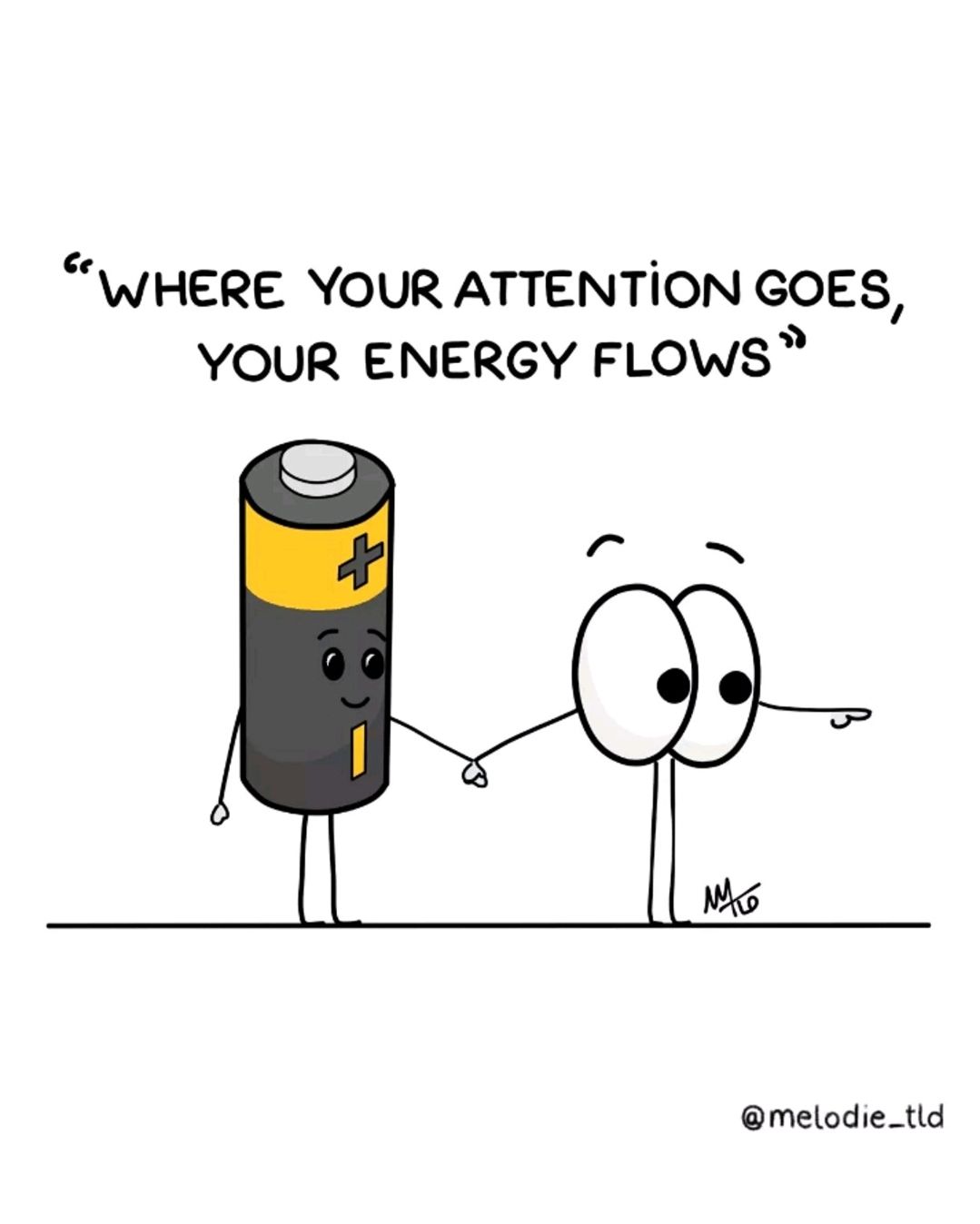
This tendency to over estimate how much others notice or are impacted by us can really impact how we see the world. It means that we can end up agonising over an off hand comment, believing that we have offended or pitched something incorrectly, when the other person has not even noticed that the moment happened. I’ve written previously about how much I can spiral, and there is no doubt that the Spotlight Effect can mean that I spiral, wasting time and energy on something that is objectively not real. Wasting energy and focus on things that aren’t real means we can miss the real opportunities for change and learning in our lives, as well as meaning we are less able to live in the moment and really appreciate the good things we have going on. Plus, let’s be honest, the stuff is exhausting and I don’t know about you, but I don’t have energy to waste right now.
What does it mean for our interactions with others?

It isn’t just spiraling and anxiety that can result as a consequence of mis-interpretation of social cues linked to the Spotlight Effect. It can actively impact how we engage with our daily lives and relationships. It may mean that we avoid others unnecessarily, as we are keen to not have to deal with the imagined slight we caused. It may also mean that we hinder relationships by talking too much about our lives and our successes, and therefore fail to demonstrate enough interest in the lives of other people. Being unaware of how this ego centric approach can impact not just ourselves but others can mean that connections are driven towards the superficial, and that our ability to lead and influence is negatively impacted.

How does it impact bad days?

There are some really concrete ways that the Spotlight Effect impacts me. For instance, I should probably have taken the whole week off work as I was in a really bad state. Instead, due to the fear of phantom errors and fictional judgement I made myself go back early, thus continuing to drive the issue. There are definitely other ways that this phenomenon impacts me in general life, if sense checking doesn’t occur. I have a tendency to hide and withdraw from interactions, as I fear judgement. It’s easy for me to assume that someone being quiet or not interacting with me is because I’ve offended them or done something, when in reality they are just busy with their own lives, and if I reached out everything would just be as it always was.

It can also impact on how I handle conflict, partly because I will usually have played out all of the different conversations in my head beforehand, and yet somehow expect the other person to have been part of those imaginary conversations. This can, if unchecked, mean that my actions can cause conflict resolution to not go the way I’d hoped because I’m listening to social cues in my head instead of the ones that are present in front of me.

How does it impact good days?

You would have thought that the Spotlight Effect would have it’s biggest impact on bad days and when you were already feeling anxious. I think the truth may be that actually the most damage can be done, if not aware, when things are going well. It can mean that just because life is going well for us, we assume that a) everyone else recognises and is similarly pleased for us and b) that life is the same for those around us, with everyone experiencing contentment.
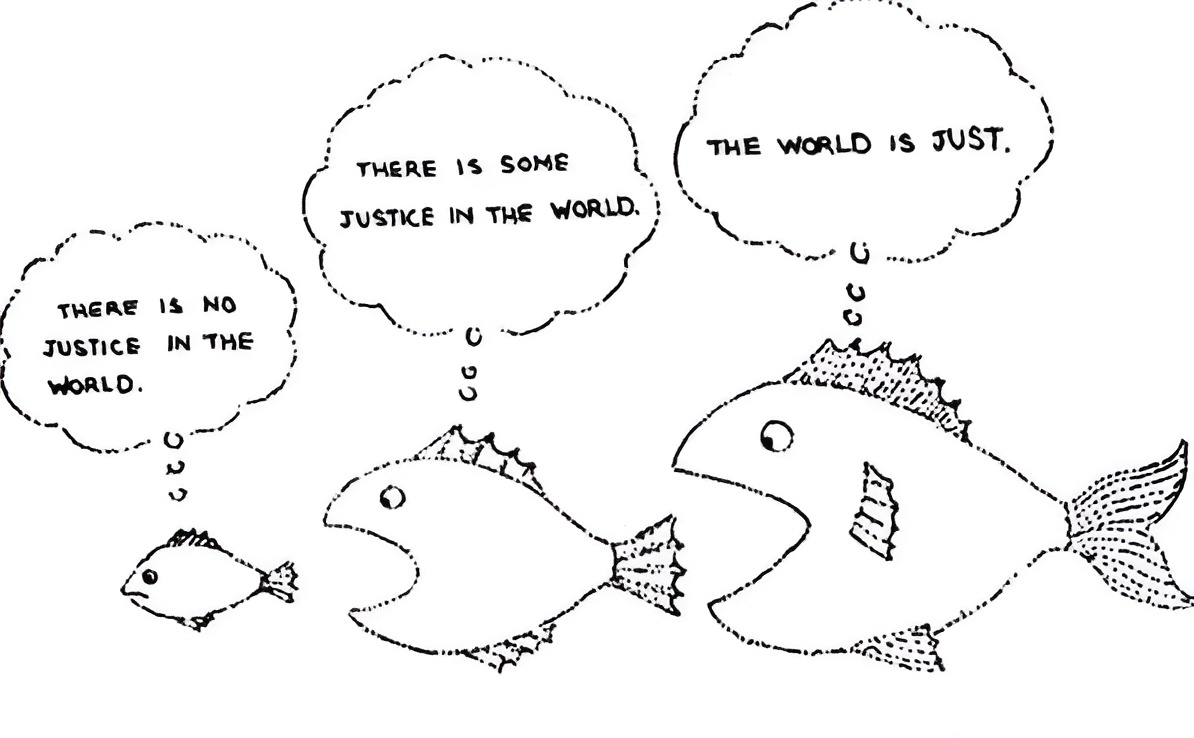
In reality, this may lead us to not hear clearly enough what others have to say or think. We may miss clues that would have enabled us to understand challenges and anxiety in others. Thus losing the opportunity to address issues early. It can also mean that we feel over looked, as our accomplishments feel like they should be obvious to others, when in reality we just have assumed that everyone is paying as much attention to our careers as we do, which is obviously not the truth.

When does it mean for your leadership?

How we communicate as leaders and decision makers is always important. Understanding how that communication is going to be received and processed, not just based on our intent, is a crucial factor that we often forget to evaluate as we focus so much on the message itself. The Spotlight Effect means that we need to think about how others receive the message, both when things are going well and when the individual may be in a more anxious state. In order to do this effectively, timing, word choice and content are all key. Choosing words that are unambiguous and judgement free is important. Taking time to explain decision making, so that individuals don’t feel like they are over looked, unrecognised, or punished, can avoid mis-understandings. Reading your audience, so you are having the communication at a time when people are able to engage with it, can also be crucial.

When individuals are interacting and responding to us, we should be cognisant of how their current thought processes are influencing how they react. It is critical to not fall into spotlight behaviours ourselves, and therefore focus on really listening to responses and actively checking on our perception of what it is that we are being told. Sub-text is key, especially if others feel like they aren’t in a position where they can be heard.

What can it mean for your well-being?

Like many moments in life, self awareness is key. Understanding and questioning how your perception of situations and your sense of self is driving your behaviour is critical to trying to make the best decisions for yourself, both personally and professionally. I think I’ve covered in this post that I am far from perfect in this regard. I can often recognise that my perceptions are skewed but cannot always enable the next step of putting that to one side and so still feel the resulting anxiety and other effects. The thing that I can usually manage, is to be aware enough that I don’t make decisions or actions on the basis of what I know is inefficient thought processes.

As well as being aware of your thought processes it is also worth being aware of your areas of focus. Are you spending a lot of time placing resource into any one thing? Is this use of resource appropriate or is it due to obsessive or faulty thinking? It’s easy to get drawn into something without realising how much energy it’s taking or quite how far down the rabbit hole you’ve travelled. A level of self-check in terms of being conscious about where you’re investing your focus and energy can save you from wasting what resources you have on a problem that may not be as you perceive.

None of us get this right all the time. When you find yourself realising you’re staring into the glare of the spotlight and all that comes with it, the most important thing is to give yourself a break by being kind to yourself. We all have moments where we’ve mis-read situations, been deaf to the commentary of others, or reacted based on an ego centric focus. It happens. The key things are the actions we take as a result of the realisation of the bias we’ve engaged with and how we develop the self awareness to do better next time. Accepting that the lessons learnt are the most constructive way forward, rather than wasting more energy on self recrimination.

How do we sense check?

Knowing that we are unreliable witnesses to our own lives can offer a major step forward in being able to improve our insight into the reality of our situations, rather than interpreting it so strongly through our own glasses, be they rose or darkly tainted. I find there are three key moments when active engagement with self reflection is key in order to try to reduce ego centric bias from my thinking:

  • Checking expectations
  • Checking perception
  • Checking responses

Having clear stop and reflect moments at these key points can help reduce the Spotlight Effect, but also enable me to realise when I’ve already veered into spotlight territory to support me in trying to step out of the glare. I would also flag here, not to under estimate how much other people can help with these moments of reflection. I drive Mr and Mummy Girlymicro crazy with my constant need to talk through my thought processes, especially when I’m struggling to gain clarity or re-frame my thinking from a less ‘me’ focus. Having those trusted companions who can assist, and if needed call you out on your ego centrism, for me, is just an important thing in all aspects of my life.

How can understanding lead to better conversations?

One of the major interventions we can build into our interactions in order to prevent the Spotlight Effect impacting our leadership and decision making is trying to ensure that we have better conversations, in order to understand the drivers of others and embed their life experience in our relationship building and social interactions. So how do we have better conversations? How do we ask better questions that enable us to engage better in order to truly be interested rather than trying to be interesting. The main switch is to the use of open ended questions so our conversations can be driven by curiosity, not by the need to re-enforce concepts we already hold.

Focus on the use of questions that start with:

  • How?
  • What?
  • Why?

You can even frame questions by saying ‘tell me about’ or ‘describe’. By actively listening to the responses and following up with appropriate further open questions based on the answers, you can build both a deeper understanding and trust.

Embedding curiosity at the heart of our leadership leads to unexpected insights and outcomes that you couldn’t achieve alone. So, whenever you find yourself too focused on how you believe the path should be walked, phone a friend and ensure that you step out of the spotlight in order to see what different routes may be available in order to move forward in ways that benefit everyone involved. Only then can we demonstrate leadership which aspires to help everyone, rather than choosing pathways that benefit us alone.

All opinions in this blog are my own


Talking About The Traitors: What can watching tell us about group think/game theory/prisoners dilemma/group decision making?

Buckle up, this is a long one, but I hope you’ll enjoy reading it as much as I enjoyed writing it.

Many moons ago, I did an A-level in psychology. I enjoyed it so much that I even took some modules during my degree. During my A-levels, I still remember how much I enjoyed the section on group decision making and the different roles that both exist and can influence. During my degree, some of my favourite parts were linked to evolutionary psychology but also game theory and how mathematics and behaviour combine to impact how we should make decisions.

Now, many of you will know that I am a gamer and love all things from board and computer games through to tabletop role playing and free forming.

N.B. Some of you might not know what free forming is, so a quick description is that it is like the murder mystery games you can play, unscripted, but generally much more in depth. I like to think writing them is like writing a novel, but each character only gets their bit

Over the years I’ve had plenty of time to both write and play around within the free forming space using influencing/manipulations linked to group decision making but low and behold watching The Traitors is like all my experiments rolled into one and I LOVE IT!

What is The Traitors anyway?

For those who have managed to avoid getting hooked, first of all, congratulations, as I watch not just the British but also the overseas versions and just can’t help but get sucked in. But what is it? Launched in 2022 and is presented by Claudia Winkleman, it is a TV series where the aim of the game is to find the murderous Traitors in your group before they kill you all. Have any of you played the game Werewolf, either old school or the newer card game? At its very core, The Traitors is like werewolf with the option of extra wolves and the addition of afternoon tea.

There have now been three UK seasons, and for context, I’ve included the trailer for season one below:

The structure goes something like this. Between 20 and 25 people arrive at a pretty glorious castle in the Highlands. On arrival they spend a day getting to know each other. That evening, they meet for a gathering around a ’round table’. Whilst blind folded, at that meeting, the Traitors (usually three) are chosen, and the game then begins. The rest of the players become what is known as Faithfuls. During the days, the group then as a whole compete to add money to the prize fund which will be won at the end of the game, and at night, the Faithfuls try to find the traitors by banishing a person they believe is part of the Traitors group. If there are any traitors left after the banishment phase, the traitors choose one person to murder. Everyone meets for breakfast the next day and finds out who is left, and the cycle begins again.

Over the next few weeks, the numbers are whittled down until there are a handful (5 ish) left. The game ends at the point the group banishes all the people they believe are traitors until there are only those perceived as Faithfuls left. They can choose to end the game at any point once down to these last few, but if, when they choose to end the game, there are any traitors left in the group, the Faithfuls leave with nothing and any Traitors split the remaining money between them.

There are only two ways to leave the show

  • Banishment
  • Murder

Both are based on some form of group decision making. Over the course of the game, banishment starts with a large group of poorly linked individuals and progresses to a small group of highly linked individuals in a competitive space. Whilst decisions about murder are made in a small group based on trust and risk based decision making. The dynamics of both can, therefore, change over time. To understand the challenges behind these decisions, it is key to understand that group decision making can be more nuanced and complex than it may initially appears.

Let’s talk group decision making

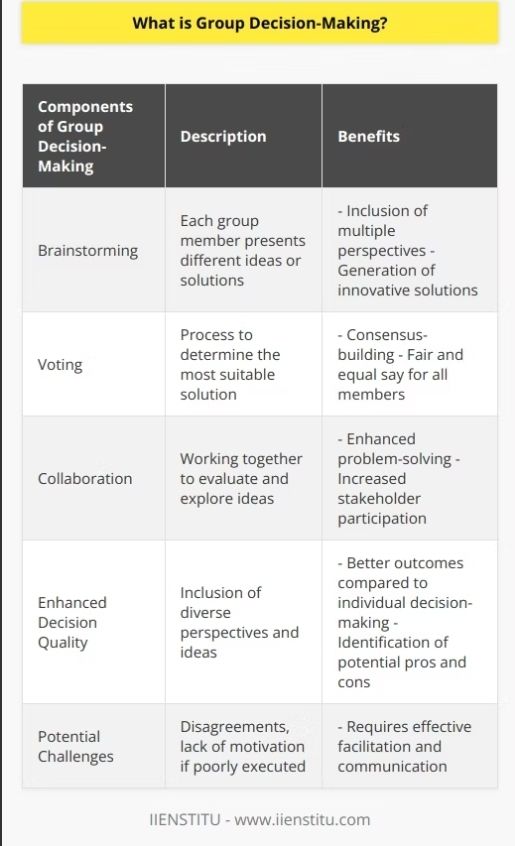
Two heads are better than one…..right? The basic principle of why we should use groups to make decisions is that a group will make better decisions over time than an individual alone, especially during complex decision making.

There are a number of steps that can be used to support sharing and evaluating of ideas, to support improvement in the decision making process over that available to single individuals. There are also a number of possible ways that the ‘decision’ part can be undertaken, consensus, majority, unanimity, etc. The thinking behind using these processes is that each person comprising part of the group then becomes additive, and therefore, more is better. 

These aspects to group decision making can, if used consciously, really help bring about the most positive aspects of any decision making process. However, they all require certain things to be in place for them to actually work in the way that permits the best possible outcome, and so group decision making is predicated on how individuals work within the group to actually support its success.

What are the particular challenges of group decision making?

We all like to think that we are smart, independent thinkers who can bring something unique to the table. Partly because, as individuals, we tend to believe that we will accept and weigh all of the different perspectives that will be brought to the table equally and therefore act inclusively and positively contribute. Is this true however?

In 1981 Meredith Belbin came up with a view of how team roles. the roles that we may default into in a team, can impact how teams work and relate to each other. People generally have a preferred role that they will fall into, but roles may change based on the needs of the group and the relationships that exist, especially as these can be dictated by how the group is working.

The truth is, as demonstrated within The Traitors, we don’t necessarily value all of these roles equally. Within The Traitors, often the people centred roles are valued more highly, especially early on, and so people who are ‘different’ such as plants or ‘challenging’ such as shapers may be prone to banishment early in the process rather than being valued due to the different perspective they bring. Other roles, such as the implementer or monitor evaluator, may become isolated as too focused on task and therefore ignore the social niceties required to build social capital, which is important to be able to call on when you inevitably come under suspicion.

We see those not like us as being a source of risk or difference that can lead to distrust, which makes those that could be highly valuable, linked to their differences in perspective or approach, actually to be seen as individuals to remove from the group early. Thus making the whole task of finding the Traitors to actually become more inefficient early in the process. These challenges aren’t just present in The Traitors decision making though, and so Belbin encourages self reflection to understand the roles we take and what benefits and disadvantages they hold.

How does voting impact and a lack of facilitation impact?

We often like to think that we are useful and can actively contribute. In the case of The Traitors, participants like to believe that they know, or can spot things that others cannot, and therefore can make themselves valuable members of the group. For the Traitors, all scenarios will feel like a risk as we like to believe that others are as obsessed with us as much as we are focused on ourselves, something called the Spotlight Effect. In recent seasons, there has also been a focus from the Faithfuls on obsessing about why they have been kept in and not murdered, hence placing increased focus on themselves and the importance they play within the group. All of this plays out around the round table linked to the fact that a single round of majority voting is utilised in order to enable the group to make a decision.

Other types of voting would have different impacts on the group and how they made decisions, but may not be as dramatic, and in most cases would take longer. The issue with many of these other types of voting is how dissent and intransigence is managed in order to move discussions forward and ensure that the beneficial aspects of group decision making are actually realised.

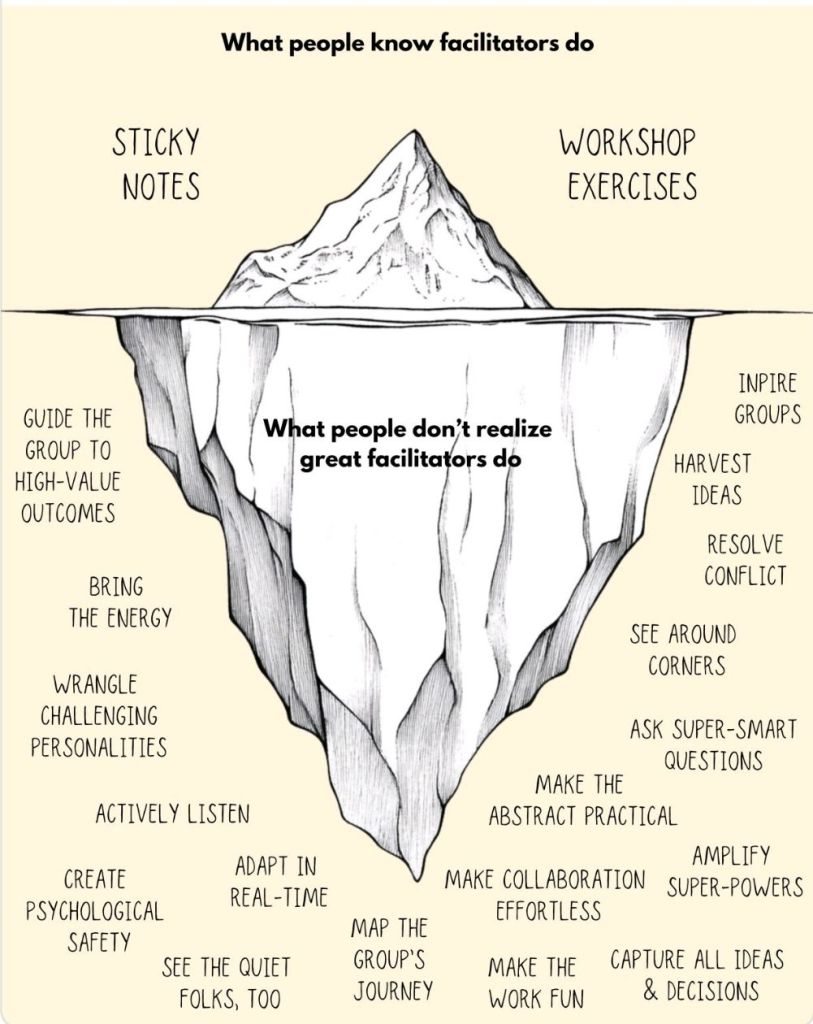
One of the reasons that these alternate methods would be challenging, even if included, is that they really rely on facilitation in order to work. In The Traitors, there is no external group facilitation, all roles are held by people in group who are driven by both group and individual needs and have an embedded interest in the selected outcome. The host acts merely as a neutral observer to the process. If setting up your own group, evaluating the success of groups you are part of, or thinking about processes, it is worth being aware of how decision making tools influence both group behaviour and group effectiveness, and ensure that the right structures are put in place to support both.

Why can the voting shift so rapidly?

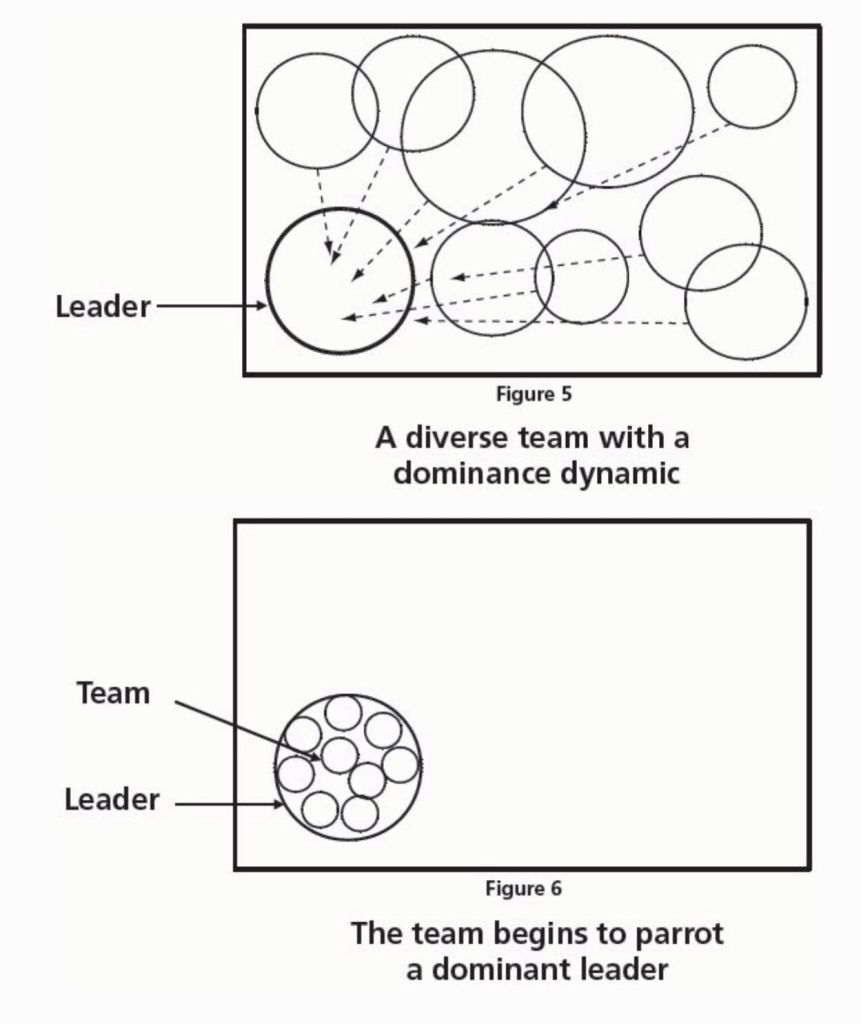
As the Faithfuls become more developed as a group, or at any point where they feels like there is a dominant voice/person demonstrating confidence in their opinion, it can be surprising how quickly the conversations and prior decisions made before going into the round table can change. There is usually plenty of hanging around and talking during the day, where people get to know each other, voice suspicions, and try to capture evidence, which is usually in limited supply. The number of times this happens, and someone sounds like they are doomed to be banished, then everyone sits around the round table and suddenly everyone is voting for someone else entirely may appear surprising, but how often is group decision making truly group decision making? How often does it become the echoing of a dominant voice?

What is group think?

Groupthink was first coined as a term in 1952 but the first real published book investigating it was published by Janis in 1972.

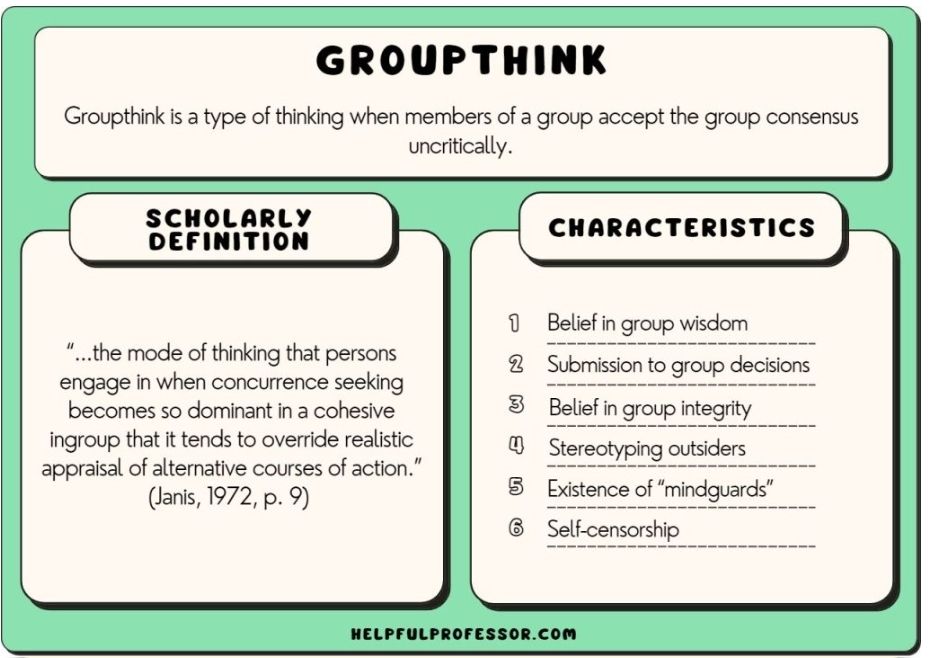
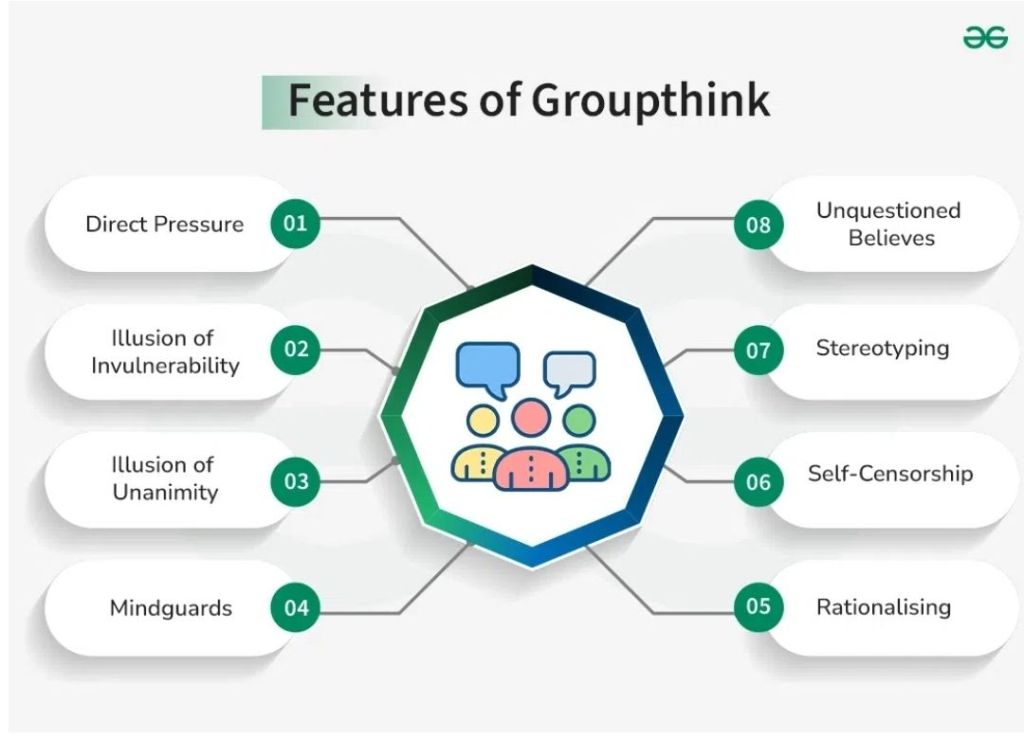
Groupthink is a phenomenon that occurs when a group of well-intentioned people makes irrational or non-optimal decisions spurred by the urge to conform or the belief that dissent is impossible

The need to be part of the majority when voting, the need to be seen to be part of the consensus, makes the voting process and group decision making in The Traitors particularly at risk of Groupthink. This is where the desire for group consensus and harmony leads to poor decision-making. Within the round table at the traitors, especially at the start, no one wants to draw attention to themselves. You want to be middle of the road initially, as you neither want to draw the attention of the Faithfuls, thus standing out and being at risk of banishment, or of the Traitors, putting yourself at risk of murder. No one wants to be an outlier.

As time goes on, and the numbers decrease, individuals need to be seen to have a voice as not having an opinion increasingly raises suspicious. At the same time, there always seems to be a couple of players who become dominant, often due to the random luck of having found a Traitor previously, and are seen as being somehow more competent to find Traitors than others. Groupthink therefore definitely starts to play a more significant role in the middle stages of the game due to the changes group dynamics. How this Groupthink plays out can happen in a number of ways from collective rationalisation during discussions that one person is definitely a Traitor, normally based on fairly flimsy evidence, to some people being almost immune to accusations as they have come to be seen as such good Faithfuls, for equivalent light levels of data. It is often only when players reveal whether they are actually Faithful or Traitor, when banishment decisions have been made, that some members will then voice the fact that they didn’t support the wider decision or that they wish they had had the capacity to speak up.

The other interesting thing that comes into play during round table discussions, is that there are obviously traitors who are deliberately muddying the waters or throwing in dissent in order to disrupt the group decision making process. These members act like ‘mindguards’ who are group members that limit information and control dissent to influence the decision-making process. It is interestingly not only the Traitors who do this however, in varying seasons there have also been cliques that develop who have also acted in a similar way, but claim it is to protect themselves and improve the ability to identify those they perceive as untrustworthy. This tends to benefit the individuals but does not necessarily act to benefit the group as a whole, in terms of decision making quality.

Let’s talk treachery

The show wears its truth on its sleeve, it is called The Traitors after all. Trust plays a fundamental role in both individual relationships and on group dynamics. Therefore the role of trust and how this level of trust varies across the period of the show is an essential part of the entertainment factor and impacts on how successfully the group complete the given task of trying to find the Traitors in their midst. In a normal setting, trust is built over time as the group establishes itself. In the case of The Traitors, this process deliberately erodes trust, as the more the group establishes the smaller it becomes, and it becomes more likely that the person you are left talking to is actually a traitor whose considering your death. All of this leads to an ever building sense of paranoia.

The other reason that paranoia can be rife is that the role of Faithful is not static. You could therefore be sure that you had a relationships with someone based on the fact that they were ‘clearly’ Faithful, but it is possible that something could happen which means that they changed from being a Faithful to a Traitor during the course of the game. There are also moments when new group members are added later on, which means that members, and the group as a whole, lose their equilibrium and then need to re-establish. This also means that those players who are introduced later can also struggle to ever be seen as part of the group in the same way as the original players.

The reasons that players can change to become Traitors are three fold:

  • Original selection as a Traitor on day 1 (change from unassigned to Traitor)
  • Seduction – if a Traitor is banished, the Traitors can choose to recruit from the remaining Faithfuls. The Faithful can choose to join or refuse, but often even admitting that someone has tried to recruit you can lead to an increased risk of banishment
  • Ultimatum – if at any time there is only one Traitor left in the game, the remaining Traitor selects on member of the Faithful and they are given an ultimatum. They can either join the Traitor or they will be murdered. Needless to say, under these circumstances players almost always choose to join rather than die. This can impact dynamics later however and mean that the ‘forced’ Traitor may be more likely to turn on their fellow Traitors

The Traitors therefore have their own group dynamics that are playing out in secret amongst all of the dynamics of the wider group. All of which can impact how wider decision making processes occur, as some individuals may choose to sacrifice a Traitor to the wider group in order to establish themselves as more trusted or to change group dynamics.

So what is game theory and how does it apply here?

All of this brings us to game theory, and more specifically to the Prisoner’s Dilemma

Game theory is the branch of mathematics concerned with the analysis of strategies for dealing with competitive situations where the outcome of a participant’s choice of action depends critically on the actions of other participants.

When The Traitors is described as a game, it very much is, both as a whole and with every single decision made. The Traitors within the group are playing something called the Prisoner’s Dilemma, pretty much throughout as they decide every round table whether to support each other or sell each other out. At the end game, however, everyone ends up playing this particular example of game theory, whether they are a Traitor or a Faithful, as banishment’s continue until everyone believes there are only Faithfuls left.

The Prisoner’s Dilemma is described like this:

The classic prisoner’s dilemma goes like this:

  • Two bank robbers, Elizabeth and Henry, have been arrested and are being interrogated in separate rooms.
  • The authorities have no other witnesses, and can only prove the case against them if they can convince at least one of the robbers to betray their accomplice and testify to the crime.
  • Each bank robber is faced with the choice to cooperate with their accomplice and remain silent or to defect from the gang and testify for the prosecution.
  • If they both co-operate and remain silent, then the authorities will only be able to convict them on a lesser charge resulting in one year in jail for each (1 year for Elizabeth + 1 year for Henry = 2 years total jail time).
  • If one testifies and the other does not, then the one who testifies will go free and the other will get five years (0 years for the one who defects + 5 for the one convicted = 5 years total).
  • However, if both testify against the other, each will get three years in jail for being partly responsible for the robbery (3 years for Elizabeth + 3 years for Henry = 6 years total jail time).

Therefore the best move, for either Elizabeth or Henry is to defect, as this is the move with highest payoff, either because they both defect, in which case they only serve a year in jail, or because the other person doesn’t, in which case they walk away completely free and the other person pays the entire cost. This is what is known as the Nash equilibrium, where both parties should defect in order to maximise their individual benefit.

Within the context of The Traitors, this means that at some point, when the heat is on your fellow Traitors too much, you should join the rest of the group in order to banish them as a Traitor in order to validate yourself as a Faithful. It also means that during the end game phase, when players can continue to banish down until they reach the final 2, as long as you are sure that you are not one of the ones at risk of banishment, you should always continue to decrease the group to the smallest numbers possible in order to try to ensure that no Traitors are left. It is the balancing that with your individual banishment risk that is the biggest challenge however. When there is money at stake, when there is an actual individual cost to decision making, then the maths is clear about what you should do next.

What does all of this teach us, and how can we apply some of what we’ve learnt?

Apart from being a cracking piece of entertainment, I hope that this post about The Traitors has made us think that group decision making may not be as simple and issue free as we sometimes like to believe. There are a number of actions required of us as individuals in order to make it an group decision making the improved option, and a lot of individual responsibility that must not be forgotten as part of becoming a collective. When undertaking your role as a decision maker within a group setting it is worth being aware of the need to:

  • Self reflect on the roles you take when in groups, especially how these change depending on stress levels and how comfortable you are with other members
  • Actively evaluate how well your group decision making processes are supporting or impeding the effectiveness of the decisions
  • Not just default to majority voting because it is a) what you are most familiar with or b) quickest and perceived as easiest
  • Think about when to use facilitation to improve the quality of any group actions
  • Be aware of groupthink and attempt to have measures in place in order to reduce its impact
  • Know that, if the individual costs and consequences are high enough, the best mathematical choice is to defect (I say this tongue in cheek in terms of the maths, please also remember the human cost in any decision making)

Anyway, season 3 of the US version of The Traitors is just dropping now on BBC iPlayer, and so I’m off to see whether my thinking holds even if there are cultural differences. Just to finish though, I’d also like to end with flagging one of the best film examples of group decision making and how group dynamics can be utilised to impact outcomes. If you’ve never seen 12 Angry Men, it’s a masterclass, and I’d highly recommend you take some time out of your life to check it out and to think how you might respond if placed in a similar situation.

All opinions in this blog are my own
It’s Me. Hi. I’m the Problem, It’s Me: Why being perceived as the ‘difficult’ one may just mean you’re doing your job

Over the weekend, whilst I was playing email catch up, Mr Girlymicro headed off do a museum tour with our long-term friend. Whilst he was wandering he fell upon part of the Taylor Swift songbook trail and sent me this picture:

Now, everyone globally now seems to be a Tay-Tay fan, but she and I go all the way back to FRCPath revision tracks. I’m currently obsessing about the track Anti-hero, which has the following bridge:

It’s me, hi, I’m the problem, it’s me (I’m the problem, it’s me)
At tea time, everybody agrees
I’ll stare directly at the sun but never in the mirror
It must be exhausting always rooting for the anti-hero

Whilst working on a Saturday, when I would have preferred to be the one taking the photos in the Victoria and Albert Museum, these words really struck a cord. I was making my way through over 2000 emails, and it’s true, I am the problem, it is me. I am the one who apparently spends most of her time asking the questions people don’t want asked or holds the line saying ‘none shall pass’ (and not in a cool way like Gandalf).

This can feel really soul destroying. It can be hard to be perceived as the person ‘who always says no’ or the person ‘who is just being difficult’, especially when you are undertaking that role with patient safety and the best practice of all involved as your priority. So for this week’s delayed post I thought it might be useful to remind myself, and you if you need it too, why sometimes being difficult just means we’re doing the job we’ve been employed to do.

Needing to understand before agreeing

I’ve talked before about how important it is to understand what your role in the room is. Are you there as an advisor or a decision maker? Either way, I’d like to think it is crucial to understand what is being suggested in a thorough way before either advising or making a decision. This is important as Group Think is something you can see happening in a lot of rooms across the different types of spaces I work in.

Groupthink is a phenomenon that occurs when a group of well-intentioned people makes irrational or non-optimal decisions spurred by the urge to conform or the belief that dissent is impossible. The problematic or premature consensus that is characteristic of groupthink may be fuelled by a particular agenda—or it may be due to group members valuing harmony and coherence above critical thought.

We’ve all been there. There is one dominant or senior member in the room, and they speak first. Instead of engaging in discussion or unpicking the components, other people in the room then just agree. This unchallenged agreement can come from all kinds of individual drivers:

  • Not really being engaged in the issue
  • High levels of respect and low wish to challenge
  • Avoidance of challenging as may impact on relationship capital
  • Lack of understanding combined with a wish to not draw attention
  • Absence of empowerment to question
  • Time pressures

There are obviously plenty of other reasons, and every group is slightly different. What doesn’t change, however, is that if we are in the room, we have the responsibility to ensure that the evaluation process is as effective as possible, and sometimes that requires us to be the ‘difficult’ person who drives the discussion to go that bit deeper before decisions are made.

Asking the annoying questions

One of the key ways to drive discussions to a deeper level is through the use of questions. These can help in the obvious ways to gain a greater understanding of process, evidence, or data. They can also help in other ways by increasing your understanding of the drivers behind positions and eliciting responses from those who are participating less actively.

The way in which this is done can be very audience dependent. If a rep from a company comes to see me selling a product, I will feel I am licensed to ask probing questions linked to their evidence, as they have come to me and my job in that space is to thoroughly evaluate their claims. In a room where I may not fully understand a process that is being suggested, then my questions will be aimed at clarity and come from a place of curiosity so that I can feel I have everything I need to comment. I’m quite far past a fear of looking stupid at this point. I’m OK with appearing foolish as long as it gets us to the right place. Questions are key to avoiding group uncertainty and Group Think, so buckle up, we may be here for a while.

Standing against the tide

This all sounds pretty straightforward, right? Sadly, I’ve been in rooms where it has been anything but. There are quite a lot of ways where meeting structures themselves can be manipulated, either by design or unintentionally, to make discussion and questioning difficult. A really simple example of this is the allocation of timings to agendas. This is, in general, a really great thing and allows significantly improved Chairing of a meeting. If an agenda item has only been given a 5 minute slot however, it is unlikely to get a decent level of discussion associated with it. It can then require commitment and bravery to ask the Chair for it to be re-tabled at a later date with increased time allowed. Chairs, in meeting settings, are key to facilitating good decision making. It is a hard and often thankless job. The problems really tend to happen when your dominant voice is also the Chair and doesn’t recognise the need to flex their style whilst they are in this different role. At this point making requests to change agendas, or increase discussion time can be challenging, as it depends on the Chairs appetite to support.

Pointing out the obvious

Earlier in my career, I sat in many of a room where I felt I could see obvious flaws or issues, but kept quiet as everyone else seemed OK with it, and I therefore felt I was just missing something.  I’d then leave the room and point out what I’d noticed, and invariably, someone else in there had been thinking the same thing, but was also reticent to speak up, or saw things differently after the discussion. This taught me how important it is to own your role in the room. If you are there, you have a responsibility to understand and then speak up if needed.

This isn’t easy. It isn’t comfortable. If you don’t do it, however, then you are complicit, and you have to own any negative outcomes. I find this one particularly hard when you are pointing out fundamental flaws in a passion project or where others are highly invested, and therefore may only be seeing the positive aspects rather than a holistic view. Being the lone voice in this setting can be incredibly hard, but that doesn’t make it any less necessary and probably makes it more important.

Holding your ground

I’ve been called a lot of names for trying to ensure the best possible outcome, with difficult and obstructive probably being the nicest version of them. The thing is, I’m never doing this for the sake of doing it. I welcome innovation. I’m excited by change. I’m not interested in either at ‘any cost’, especially working in healthcare. For example, adding a beautiful ‘green wall’ makes complete sense from a mental health point of view, but no sense from a patient risk perspective in an immunocompromised setting. My job is to articulate that, and both draw and hold the line where needed. So, sometimes, I can be pretty intransigent on the big issues. That’s because big issues can have big consequences if we get them wrong, and my role is to put patients before my ego or comfort. To me, that’s what working in Infection Prevention and Control is all about. I suspect it’s also why I don’t get sent boxes of chocolates from other departments at Christmas.

Keeping others to account

One of the other reasons it’s important to be able to hold your ground and bring discussion to the table is that Group Think is not just how you react as part of the table, it’s about how the whole group is working. The way groups develop and work changes over time, as there are different phases of group formation, according to Tuckman’s model:

  • Forming
  • Storming
  • Norming
  • Performing
  • Adjourning

Depending on where the group is, in terms of its development, can influence how comfortable members are with communicating, but also how at risk of Group Think the group is.

Being a conscious participant in this process so that you can raise awareness of how well decisions are being made and how the structure of the sessions are set up to, either to help or hinder, is a key responsibility of being part of any group. Groups can become pretty toxic or non-performing, but they tend to do so by inches, and that sometimes means it takes time to notice or a big act/decision for it to become apparent. 

It takes bravery to stand out and be the one who says that things aren’t working well, but it is better than becoming complicit in the process by knowing and not doing something. It can be even harder during the initial phases of a group becoming less effective, as this is often more of a feeling than a tangible change. Finding the right time and the right way to talk about it is therefore key. I often think that it is, at times like these, encouraging an active group effectiveness review is a good way to start, where you look at what the group is trying to achieve and how well they are achieving it, combine with some anonymous survey questions to capture the ‘feeling’ component. Building these reviews in from the start at period intervals can also enable any creep to be captured without relying on individuals to put their heads above the parapet.

Speaking your truth

I know I’ve said this before, but sometimes, at its most basic, it’s OK to disagree. You are allowed your opinion,  and you shouldn’t have to feel silenced, or that your opinion doesn’t matter, just because you are not the most senior/dominant person in the room. You and your voice matter.

I had an interesting conversation with a colleague a few weeks ago who pointed out that from their perspective, we never agreed. Now, putting aside the dialogue about whether this is true, I don’t think that disagreement is a fundamentally bad thing, especially if it’s handled with mutual respect. We don’t want clones of each other in a room. We want diversity, we want different lenses and visions of the world, we want different lived experience, and different ways of thinking. It is only through that constructive challenge that we may find the route forward that no one can see on their own, or from their own perspective. Good discussion, good collaboration enables us to make better decisions, that’s why we have groups in the first place.

All of this is a long way of saying that I think it is crucial to speak your truth, to offer your opinion and insight, as long as you don’t believe it is the only truth or way forward. It’s OK to be the person who disagrees as long as you are doing it for the right reasons.

Keep it classy

This brings me on to the fact that I think there are different ways of handling how you speak up and associated discussions, and they can impact how the situation feels for all involved. One of the reasons that I think it’s important to start with curiosity and questioning, is not only to gain information, but to show you are not starting out with judgement. The other thing that I find helpful is to keep the focus on the task, process, object in question, rather than letting it drift into me and them territory. This can be so hard because people are often deeply invested in their position and view points. I’m no different. It can also be hard as it can feel, when someone is questioning, like the individual is being attacked rather than the item in question. This can lead to an emotional, rather than logical response on all sides and mean that discussions become much less productive. Being aware of this and how choices of approach and word selection can impact is crucial to outcome.

One of the reasons that I’m emphasising this, is because when we are worried about speaking out, we, at least I, can work myself up prior to it happening, because I expect the worst. You can then enter the scenario is a defensive stance, when really you need to focus on being as open as possible in order to facilitate the discussion. The balance between openness and holding the line can be a difficult line to walk, but both are important. I’m still learning and trying to be better at this one, but where you can, leave your emotions at the door.

Keep the faith

At the end of the day, when you get home and look at yourself in the mirror, you need to be able to face what you see. For me, although I’m a people pleaser, I also know that I need to put that aside and be OK with being uncomfortable, in order to deliver on my role and ensure that patients are the constant focus. Does that mean it is easy? No. Does that mean I should stop doing it? Hell no. Nothing in this life that is worth doing is easy. Do I sometimes wish that others would appreciate what it takes to sit as the lone woman in a room and voice an opinion that does not align with the rest? All the time. No one is going to give you a medal for the kind of bravery this takes however, the reward is knowing that you left things just a smidgen better than how you found them. So keep the faith. Keep the faith in the system, but most of all, keep the faith in yourself. You are able to make great change and achieve great things, you just have to keep going, keep moving, one step forward at a time.

All opinions in this blog are my own